

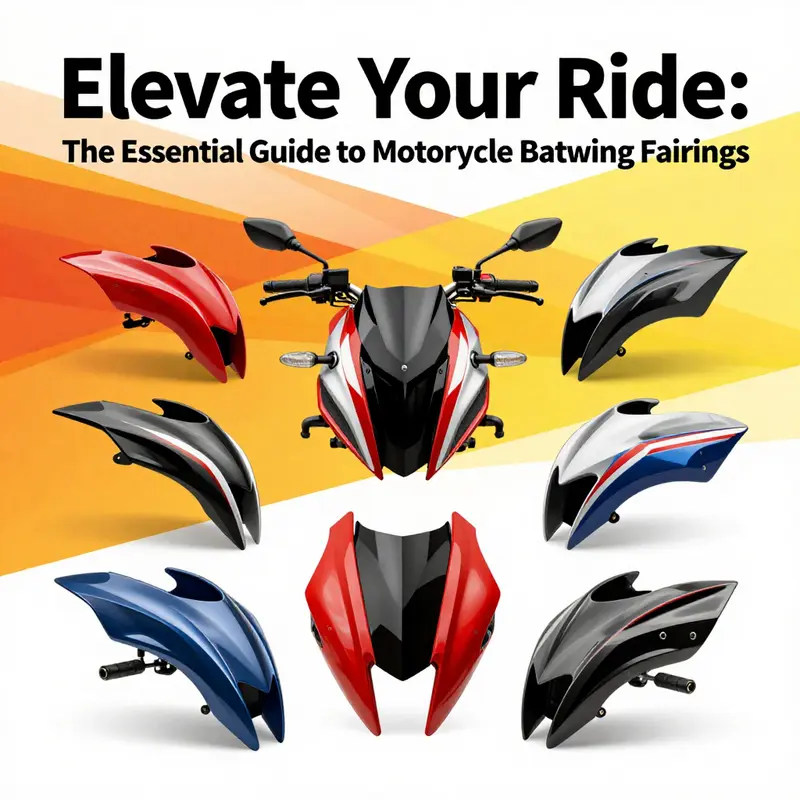
Motorcycle batwing fairings are not just aesthetic accessories; they significantly influence a rider’s experience. For business owners in the motorcycle industry, understanding this niche market is crucial. This article explores the design and aesthetics, performance and ergonomics, installation and compatibility, and emerging market trends associated with batwing fairings. Each chapter intertwines to give you a holistic view of their importance, ensuring you can better serve your customers and capitalize on this popular motorcycle trend.
null
null
Winged Equilibrium: How Batwing Fairings Forge Performance, Comfort, and the Long-Distance Rider Experience
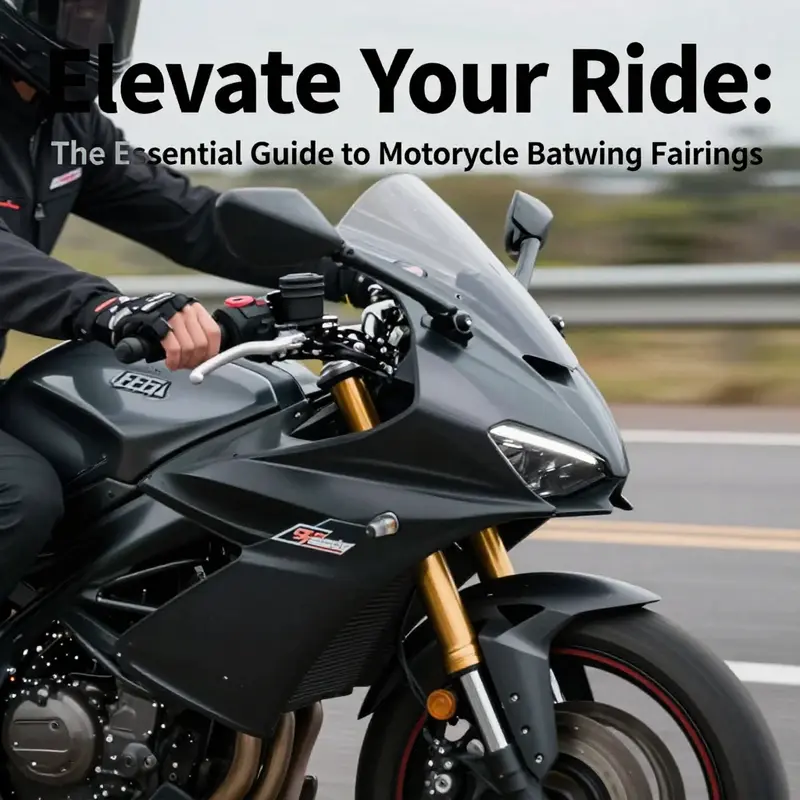
Batwing fairings occupy a distinctive niche in the world of motorcycle aerodynamics and ergonomics. They are more than a dramatic silhouette on the front of a bike; they are a carefully sculpted interface between machine and rider. Their signature curved, winglike profile channels air in a way that can noticeably alter the ride quality, especially on extended journeys where every mile demands efficiency and endurance. In the broad arc of touring and long-distance riding, the batwing is a deliberate compromise between protection, weight, and the stability of the bike at speed. The integrated windshield, a hallmark of the design, functions as a shield not just from wind but from fatigue and irritation that accumulate when wind pressure persists over hundreds of miles. As such, these fairings become a focal point for riders who want both a strong aesthetic statement and practical advantages that translate into major comfort gains and, potentially, lower fuel consumption over a highway corridor.
The aerodynamic logic behind a batwing is grounded in how air behaves around a large, relatively smooth surface that stretches outward from the headstock area toward the handlebars. The curvature and edge treatment influence how air separates from the fairing, how turbulences form near the rider, and how the wind pressure reaches the rider’s torso and head. A well-executed design minimizes buffeting, the rhythmic gusts that can cause a rider to fight the wind with shoulder and neck muscles. When buffeting is reduced, the rider experiences steadier stability at higher speeds with less mental and physical effort needed to maintain line and posture. That steadiness matters not just for comfort but for precision steering, as a cleanly managed aerodynamic profile reduces the secondary forces that can nudge a motorcycle off a desired path during long stretches of high-speed travel.
From a performance perspective, the most immediate effect of a batwing fairing is a drop in aerodynamic drag. Drag is not merely a measure of how fast air resists progress; it is a real-world factor that translates into fuel economy, engine load, and throttle response. When the fairing is shaped to coax air to follow the contours of the bike rather than crash into its face, the engine does not have to work as hard to push air around the rider and the machine in unison. The practical upshot is a smoother power demand curve during cruising, which can contribute to better miles-per-gallon figures on long highways and a modest reduction in fuel consumption over the course of a journey. This advantage is more pronounced on models designed for touring where the rider remains in a steady, extended throttle position for long periods. The streamlined silhouette of a batwing fairing becomes an ally in the wind, the kind of feature that quietly supports performance without demanding attention from the rider.
Yet performance is not a single metric but a balance among several interdependent factors. A fairing that aggressively tames wind but adds excessive weight or introduces stiffness mismatches can degrade handling feel. The steering feel at lean and at speed is a critical measure of a fairing’s overall performance. When weight is distributed in a way that compliments the bike’s front-end geometry, the fairing can contribute to a sense of planted balance rather than a tug-of-war against gusts. In practice, a well-designed batwing interacts with the chassis to maintain a predictable front-end behavior, even when crosswinds present a challenge. This harmony between aerodynamics and chassis dynamics is essential for riders who chase confidence at speed and who rely on a bike’s composure to carry them through uninterrupted miles of road.
The ergonomic benefits of batwing fairings are perhaps the most tangible for daily riders and long-distance enthusiasts alike. The wind protection offered by the integrated windshield and the enveloping form of the fairing reduces wind pressure on the head, chest, and shoulders. This translates into less muscular fatigue and a greater ability to maintain a relaxed posture across hours of riding. The result is a rider who can stay focused on line and road texture rather than fighting against wind shear and noise. This comfort dividend is delicate but meaningful; when fatigue is kept at bay, riders encounter fewer micro-distractions that would otherwise accumulate during a long ride, improving attention, reaction time, and overall trip enjoyment.
Many batwing designs go beyond wind diversion to address practical touring needs. Under-fairing compartments or integrated pockets offer a degree of storage that would be awkward in a smaller, naked fairing. The presence of accessible storage, even if modest, reduces the need to mount separate bags or tether loose items to the bike. The impact on the rider’s experience is twofold: it elevates convenience and also influences weight distribution and CG (center of gravity). When that additional storage is thoughtfully integrated, it does not simply add mass; it contributes to a more balanced weight profile that riders can perceive in cornering stability and in the ease of maneuvering at parking-lot speeds.
Material choice sits at the heart of the performance-ergonomics dialogue. ABS plastic is a common option because it offers a light footprint and favorable manufacturing economics. Its versatility allows designers to shape complex curves that contribute to an airy, expansive silhouette. However, ABS can exhibit some flex at higher speeds, particularly when the wind loads increase. That flex can subtly influence the perceived rigidity of the fairing and, by extension, the reliability of the windshield seal and the aerodynamically active edges. For riders who chase a more rigid, high-speed performance, fiberglass composites or other reinforced materials can offer greater stiffness and a steadier aerodynamic surface. These materials usually come with a cost premium but can yield advantages in how the fairing responds to gusts, how it maintains sharp edge definitions under load, and how it resists fatigue over many miles of highway. The choice between a lighter ABS design and a stiffer composite is not merely a matter of weight; it is about how a fairing maintains its intended aerodynamic form when subjected to real-world wind and road conditions. Manufacturers often provide guidance that helps riders align material choice with expected riding environments and model fitment, emphasizing that the right combination supports both safety and comfort.
Fitment accuracy is the sine qua non of a batwing’s effectiveness. A fairing that mounts cleanly to a bike’s steering head, frame, and lower triple clamp with robust fasteners ensures that the aerodynamic profile remains stable even under dynamic loads. Poor mounting systems undermine the intended protection and can introduce rattles, gaps, or misalignment of the windshield. These misalignments are more than cosmetic irritants; they can compromise weather sealing, create traffic-sense noise, and affect the fairing’s ability to work in concert with the bike’s lighting and instrument cluster. Riders who invest in a batwing fairing should prioritize models that provide precise fitment data and documented mounting procedures for their specific motorcycle category. The elegance of a batwing—its curved line and the way it frames the rider—depends on a mounting system that is both strong and precise, resisting vibrations while preserving the clean aerodynamic shape.
Compatibility with other components matters as well. The fairing should harmonize with the headlight assembly and the handlebars, ensuring that the overall silhouette remains unobstructed and that the rider’s control inputs remain unhindered. When a fairing is designed with careful attention to connector routing and shield geometry, it reduces the risk of interference and enables a smoother integration with the bike’s existing electronics and controls. The result is a cockpit that feels cohesive, where wind protection and instrument visibility work in tandem with the rider’s posture. This level of integration is crucial on bikes that boast advanced electronics and navigation systems, where wind management and cockpit clarity can influence how effectively a rider interacts with the technology that surrounds them.
Ergonomics also intersects with the rider’s seating position and handlebar geometry. A batwing that fits a bike model while accommodating rider height, riding posture, and reach ensures that the windscreen works with the rider’s line of sight rather than against it. In practice, this means choosing a fairing with an adjustable or well-positioned windshield that aligns with the rider’s natural head position. The aim is to reduce neck strain and to keep wind energy from funneling into the rider’s upper body in a way that prompts tension. A well-designed windscreen works alongside the fairing’s contour to guide air smoothly over the rider’s shoulders, down the torso, and past the helmet. This synergy between fairing geometry and rider ergonomics is where performance and comfort converge, enabling longer, more enjoyable rides without the rider feeling stretched, fatigued, or unsettled by the bike’s wind interaction.
The broader design philosophy behind batwings emphasizes a balance between style and function. While the visual appeal of a winged silhouette can be a compelling motivator for a rider seeking a classic or customized look, the most meaningful advantages reveal themselves only when the fairing integrates with the motorcycle’s dynamics, weather exposure, and everyday use. In this sense, a successful batwing is not just a fashion statement; it is a carefully engineered platform that supports rider endurance, stability, and efficiency across a spectrum of riding scenarios—from a breezy afternoon highway run to an extended, weather-exposed cross-country trek. The long-distance rider, in particular, becomes a test case for how well the fairing, materials, fitment, and storage features hold up under the demands of time, miles, and wind.
For riders evaluating options, the decision frequently hinges on a set of interrelated questions. Which material best suits the rider’s climate and riding style? How does the fairing influence the bike’s front-end weight distribution, and what does that mean for steering feel at highway speeds? Is the windshield height and curvature optimized for the rider’s height and riding posture, or does it force a compromise between visibility and protection? How robust is the mounting system, and does it offer protection from vibration and weather ingress while remaining easy to service? These questions guide buyers toward a choice that maximizes both performance and ergonomic comfort, recognizing that the right answer is contingent on the rider’s goals, the bike’s chassis characteristics, and the typical riding environment.
In the synthesis of performance and ergonomics, batwing fairings deliver a composite value that extends beyond the ride itself. They contribute to a rider’s efficiency by reducing drag and smoothing air flow, while simultaneously supporting comfort by minimizing wind fatigue and protecting vital contact zones. They also influence handling through mass distribution and the physical presence of the fairing as a stabilizing mass at the front. The aesthetics, of course, remain a compelling dimension, offering a visual language that nods to heritage while embracing modern engineering. This blend of form and function is what makes the batwing a distinctive and enduring choice for riders who value both the journey and the look of their machine.
As technology and materials evolve, the batwing fairing continues to adapt. Lighter chassis and more refined electronics in contemporary touring and cruiser platforms can be complemented by wind-management designs that preserve or even enhance the rider’s sense of connection to the road. Whether navigating a long coastal highway, slicing through a crosswind corridor, or enjoying a quiet country road at a relaxed pace, the batwing fairing has the potential to transform wind energy into a more manageable, predictable, and ultimately enjoyable aspect of the riding experience. The interplay between performance and ergonomics is a dynamic conversation between air, weight, posture, and perception. For riders who spend countless hours in the saddle, the batwing’s wings are not just a stylistic flourish; they are a practical tool that helps align body, bike, and environment into a coherent, efficient, and satisfying act of riding. In this sense, the winged silhouette carries a responsibility: to remain faithful to the rider’s needs for protection and comfort while preserving the machine’s efficiency and handling characteristics across the miles.
Informed decision making plays a crucial role in selecting a batwing that truly complements a rider’s unique profile. The specification sheets, official fitment guides, and performance data provided by manufacturers can guide choices about mounting geometry, material properties, and accessory compatibility. Riders who take the time to understand how each design decision translates into real-world riding experience often discover that a slightly different curvature, a marginally different shade of tint, or a subtly different mounting scheme can yield noticeable dividends in terms of comfort, stability, and fuel efficiency over the long haul. This attention to detail—rooted in a broader understanding of aerodynamics, ergonomics, and practical usability—helps ensure that the batwing fairing becomes an enduring element of a motorcycle’s performance profile rather than a transient visual upgrade.
In sum, the batwing fairing stands at the intersection of engineering and experience. Its aerodynamics shape speed and stability while its ergonomics shape endurance and satisfaction. The design philosophy behind it embraces a balance: wind protection without sacrificing visibility; a surface that holds its form under gusts while remaining approachable for maintenance and customization; and a realization that performance on the road is inseparable from comfort in the saddle. For the rider who views long-distance travel as a test of stamina as much as a test of machine capability, the batwing fairing is more than a component. It is a partner—one that helps maintain momentum, reduces fatigue, and aligns form with function on every mile of a journey. As riders continue to seek smoother air, cleaner lines, and more integrated cockpit experiences, the batwing remains a defining solution in the ongoing conversation about how to ride farther, more comfortably, and with greater confidence.
External resource: https://www.carinterior.com/batwing-motorcycle-fairings-guide/
Fit, Form, and Fair Winds: Installing Batwing Fairings and Navigating Compatibility
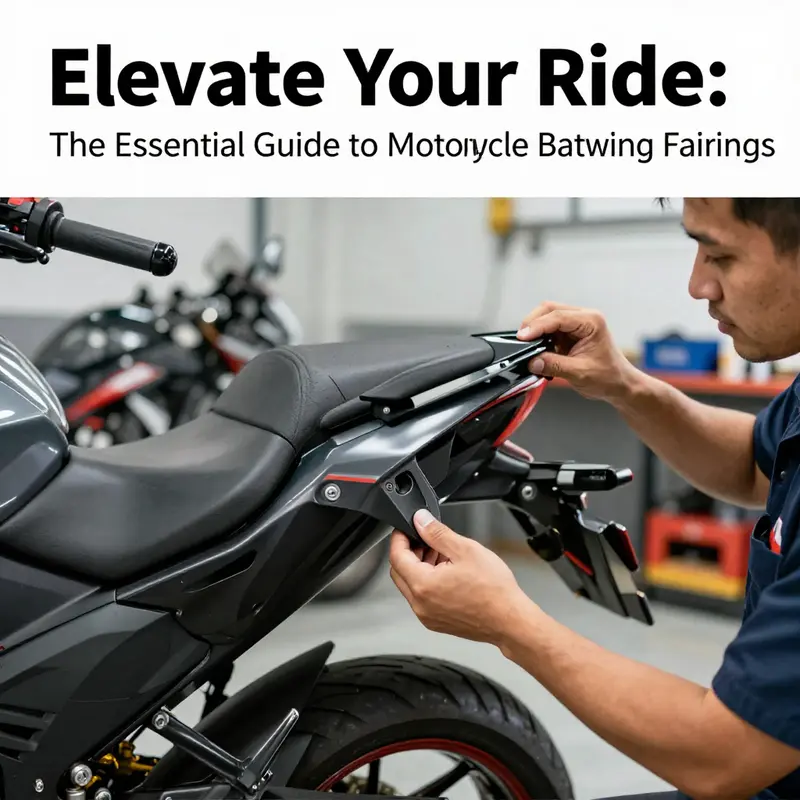
Batwing fairings have long been a signature feature on many touring and custom motorcycles, promising wind protection without sacrificing style. The installation journey, however, hinges on compatibility as much as on aesthetics. A kit may look right in a catalog, but only when it meets your bike’s frame, windscreen, control housings, and wiring harness does it truly fit. This chapter outlines how to approach installation as a systems problem: the fairing must fit the bike, the bike must accommodate the fairing, and the rider must understand how the combo changes posture, wind management, and visibility.
In 2026, batwing fairings emphasize modularity and tighter integration with modern powertrains and electronics. Many kits are designed to bolt onto a common set of mounting points, with adapters available for model-year gaps. The practical upshot is a faster, more repeatable install, but it does not mean one kit fits all. Different model years, chassis layouts, and trim packages can introduce subtle differences in mounting brackets, fairing support wear, and electrical routing. Always verify fitment for your exact bike and kit combination before committing to screws and wiring.
A good starting point is to confirm the compatibility boundaries: which model years, engine families, and frame configurations the kit is intended to support. Cross-check part numbers, consult official diagrams, and if in doubt, contact a qualified tech who can compare your bike to the kit in hand. This precaution helps prevent misaligned mounts, stressed electrical paths, or reduced air management.
With fit confirmed, plan the installation as a sequence of interdependent steps: mount the inner skeleton or rails, attach the outer fairing, route the wiring harness, and seal all weather channels. Secure mounting hardware to spec, preserve the bike’s original geometry, and avoid creating interference with lights, controls, or brake lines. When possible, use brackets designed to work with the bike’s factory bolt patterns to minimize play and maintain stability at speed.
Electrical integration is a critical axis of compatibility. Batwing fairings often host or route driving lights, signals, and infotainment power. Route wires through weatherproof gaskets and organizers, keep signal lines separate from power feeds to avoid noise or grounding issues, and follow the manufacturer’s pinouts exactly. Using adapters or adapters that preserve circuit integrity reduces the risk of flicker, interference, or failure in demanding riding conditions.
The art of a clean install lies in alignment and adjustability. Set the fairing so it follows the bike’s lines without forcing the windscreen or handlebars out of position. Check clearance with the rider’s seating height and preferred posture, then test the bike at multiple speeds and wind conditions. Small tweaks to tilt, lateral offset, or bracketing can dramatically improve wind relief and reduce buffeting without compromising steering or visibility.
Finally, document the process. Record mounting part numbers, torque specs, and wiring diagrams, and keep the original documentation from both the bike and the fairing. A well-documented install makes future service easier and supports warranty coverage should issues arise. If you’re unsure about a step, seek professional help—an experienced installer can safeguard alignment, sealing, and electrical integrity while preserving the bike’s original performance and appearance.
External resources can provide useful reference points. For example, manufacturer diagrams and dealer notes often summarize the required torque, suggested hardware, and fitment notes. Treat these as formal guides rather than optional tips, and always verify your exact combination against official compatibility lists before proceeding.
Riding the Wind: Market Currents Shaping Motorcycle Batwing Fairings
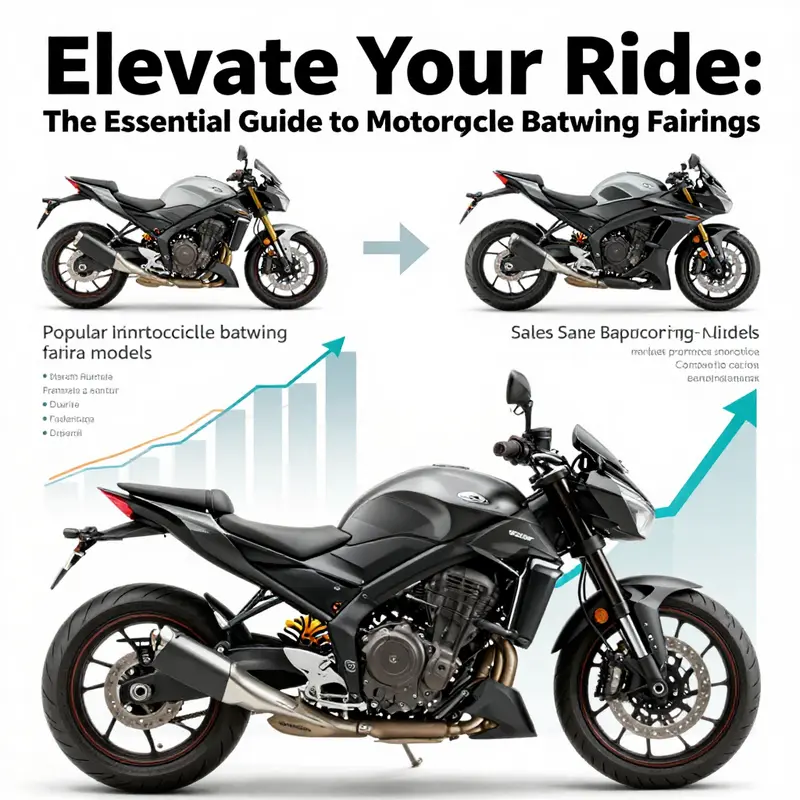
The batwing fairing has long stood as a visual and functional emblem of motorcycle design, a curved, winglike shell that seems to cradle the rider and slice through the wind with a quiet, confident efficiency. In recent years, this emblem has become more than a stylistic choice; it has evolved into a focal point of a rapidly expanding market. Across the globe, riders who value comfort on long rides, improved aerodynamics, and a strong, personalized presence on the road are turning to batwing fairings as an essential upgrade. The numbers tell a compelling story. The broader motorcycle fairing market has reached into the tens of billions of dollars, and batwing variants have moved from niche accessories to standard fare on many touring and high-performance machines. In 2025, the global fairing market is reported to be valued in the vicinity of trillions of units of currency in aggregate terms, with batwing configurations playing a pivotal role in growth. Projections place the market on a trajectory of substantial expansion, driven by a steady CAGR that latches onto new designs, better materials, and smarter integration with the bike’s electronics and lighting systems. This growth is not merely about vanity; it reflects a deeper demand for wind protection, rider comfort, and streamlined aerodynamics that reduce fatigue on long rides and maintain stability at highway speeds.
Designers and manufacturers approach batwings as more than shells. They are wind-taming platforms that must balance protection with visibility, weight with strength, and aesthetics with compatibility. The modern batwing often integrates a windshield that can be shaped and tinted to suit climate and rider preference, while the fairing itself is sculpted to minimize turbulence around the rider’s torso and shoulders. The most advanced iterations position wind drift in a way that guides air smoothly around the rider, reducing buffeting and enabling a more relaxed posture over hours on the road. It is a synthesis of form and function, where the contour of a wingline influences the bike’s feel as much as its silhouette on the horizon. In many touring configurations, the batwing becomes the central chassis-like element that harmonizes with other components—headlights, handlebars, gauges, and the rider’s line of sight—so every feature reads as part of a unified system rather than a collection of add-ons.
Within this evolving ecosystem, the market is driven by a triad of forces that together shape the current landscape and hint at what lies ahead. The first force is the ongoing integration of advanced design and technology. Across new models and updated platforms, batwing fairings are not just curved plastic; they are architectural statements that host a suite of technologies. Designers pursue wind-cutting efficiency through refined air channels and edge treatments, while display technologies—such as compact, high-contrast instrumental panels and integrated, all-LED lighting—offer practical visibility and a modern, premium visual language. Instead of relying solely on mechanical adjustments and exterior aesthetics, manufacturers embed a philosophy of digital connectivity, where the fairing becomes a conduit for information, comfort, and safety.
The second force is the evolving preferences of riders themselves. Buyers increasingly seek wind protection that genuinely reduces fatigue, precise fitment that aligns with a multitude of models, customization options that reflect personal taste, and compatibility with existing components. The move toward modularity enables a rider to tailor coverage, vents, and even aesthetics without sacrificing structural integrity. This modularity often translates into a broader ecosystem of parts and accessories that can be swapped or upgraded as the bike evolves or as a rider’s needs shift—from a daily commuter to a weekend tourer. The fairing thus serves as a platform for personalization, where color, texture, and finish options can echo a rider’s character while preserving the bike’s original identity. For riders exploring compatibility with a range of models, a practical reference can be found in guides that address fairings designed for various Honda models and other popular makes; these resources emphasize how fitment accuracy, mounting geometry, and electrical integration determine real-world performance as much as appearance. fairings for VFR illustrates how a single family of fairings can be adapted across multiple bikes without compromising safety or function.
The third force is the rising demand for touring and long-haul capabilities. As more riders pursue seasoned reliability and extended journeys, the batwing fairing is increasingly perceived as a cornerstone of comfort. The design challenge is to create a shell that reduces rider fatigue by delivering consistent wind protection at a wide range of speeds and in diverse weather conditions. The long-haul rider benefits not only from diminished wind pressure on the chest and arms but also from improved climate control inside the cockpit. By coordinating with the bike’s ventilation and shield options, modern batwings can contribute to a more stable microclimate for the rider, an attribute that becomes more valuable as temperatures swing and road conditions demand greater fatigue management. Industry analysts note that this emphasis on comfort, combined with the premium feel of well-executed aesthetics, positions batwings as a key differentiator in a crowded market.
Beyond these drivers, regional dynamics shape how markets expand and where opportunities concentrate. The global footprint of batwing fairings is widening beyond the familiar Western markets, reaching into regions where touring culture is strong and where riders increasingly seek to protect themselves against heat, wind, and rain during extended trips. Notably, emerging markets in various regions display a growing appetite for premium craftsmanship, durability, and customization options that can withstand local road conditions and climate. As consumers in these markets become more discerning and able to invest in high-quality components, manufacturers respond with fairings that balance ruggedness and refinement. The result is a more diverse catalog of shapes, sizes, finishes, and integration options, designed to accommodate a wider array of motorcycles—from classic classics to modern sport-tourers.
At the heart of the fairing market’s expansion is the interplay between form and function. ABS plastic, recognized for its resilience and impact resistance, remains a primary material in many batwing assemblies. The durability of this material supports the rigorous handling and occasional impacts that can occur on long rides, while its amenability to shaping and finishing enables designers to achieve the sweeping curves and bold lines that define the batwing’s identity. Yet, as the market matures, there is a growing emphasis on structural engineering that ensures mounting integrity and long-term alignment. A poor mounting system can compromise wind performance and even safety, undermining the benefits of wind protection with erratic movement at speed or during terrain changes. As a result, manufacturers and aftermarket suppliers alike devote substantial attention to mounting hardware, gasket seals, and alignment procedures that keep the fairing securely in place and precisely positioned relative to the rider’s line of sight.
Another layer of the market’s evolution is the relationship between traditional aesthetics and modern performance expectations. The batwing’s visual signature—its broad, curved sweep spanning from fork crown to shoulder height—continues to attract riders who value a bold stance on the road. At the same time, many buyers demand cleaner integration with headlights, instrumentation, and handlebars. The wiring harnesses, LED signatures, and instrument displays are increasingly designed to sit within the fairing’s inner curves, so the entire front end reads as a cohesive unit. The result is a product that not only shields the rider but also communicates a contemporary degree of refinement. The aesthetic trend toward contrast-cut finishes, premium paint, and sophisticated detailing aligns with higher expectations for overall bike presentation, while the engineering trend toward better wind treatment ensures practical benefits accompany the visuals.
In the marketplace, the rise of modular kits and customization options reflects a desire for riders to tailor their machines without sacrificing performance or reliability. Workshops and manufacturers promote capsule systems that allow riders to swap windshields, vents, and inner liners, or to adjust the fairing’s footprint to fit a different bike model with minimal downtime. The modular approach helps owners keep pace with evolving styles and riding needs, enabling a single fairing family to cover a broader spectrum of motorcycles. This adaptability is particularly appealing to enthusiasts who may own more than one bike or who like to refresh their look without buying an entirely new fairing assembly. The market thus rewards innovation that makes installation straightforward, accelerates alignment, and preserves the fairing’s protective and aerodynamic functions.
From a distribution perspective, the batwing market benefits from a combination of direct manufacturer channels, specialty shops, and online marketplaces that cater to riders seeking both new and used options. The breadth of choices—from fully featured, high-end offerings to more economical variants—ensures accessibility across different budgets and riding goals. This spectrum is critical for sustaining growth, as it enables new riders to experiment with wind protection and older riders to upgrade for comfort on longer trips. In many regions, the traditional sense of riding culture blends with modern consumer habits, turning the batwing into a platform central to the touring experience rather than a mere add-on. At the same time, a robust aftermarket ecosystem supports ongoing customization, maintenance, and repair, which helps extend the lifespan and value of batwing fairings across a bike’s lifecycle.
As the market evolves, the practical implications for riders and shops become clear. Prospective buyers should evaluate wind protection as more than a quantitative measure of how much air is blocked; they should consider how the fairing interacts with the rider’s posture, helmet profile, and riding style. Fitment accuracy matters because even small misalignments can create drag inefficiencies that offset the wind protection gains or create new points of buffeting. Compatibility with headlights, instrument panels, and handlebar controls is essential for a cohesive riding experience. And because riders vary in climate exposure, adjustable vents, removable insulation, and compatible windshields can translate into meaningful comfort enhancements. In short, the batwing’s value is not only measured in its silhouette but in the seamless alignment of protection, comfort, and rider intent across a spectrum of riding scenarios.
With these considerations in mind, the market’s direction seems likely to continue favoring batwing configurations that are both aesthetically bold and technically refined. Designers will pursue lighter, stiffer materials and smarter attachment systems that resist flexing under load, while engineers will seek airfoil-inspired shapes that optimize lift and downforce around the rider. The broader industry trend toward digital connectivity will push batwings to integrate more tightly with motorcycle dashboards, telematics, and rider-assist features, creating a more immersive, data-informed riding experience. The result should be a class of batwing fairings that not only protects and flatters the rider but also communicates information clearly and contributes to a more confident ride. In this context, the batwing becomes less a mere accessory and more a strategic element of a machine’s overall performance profile. The road ahead holds the promise of fairings that respond to weather, speed, and rider input with adaptive geometry and tactile feedback, while remaining faithful to the timeless appeal of their winged silhouette.
For further context on the market’s broad trajectory and current dynamics, see the external industry analysis from a prominent market-trends source, which outlines the growth patterns, regional variations, and technology integration shaping modern motorcycle fairings: https://www.linkedin.com/pulse/motorcycle-fairing-market-trends-type-application-jwvzq/
Final thoughts
Understanding motorcycle batwing fairings is vital for any business owner in the motorcycle sector. Their unique designs not only enhance aesthetics but also play a crucial role in performance and rider comfort. As the market continues to evolve, staying informed about installation processes, compatibility, and emerging trends can empower you to better serve your customers. Batwing fairings represent a blend of style and function, making them an attractive option for motorcycle enthusiasts looking to customize their rides.