
The use of epoxy resin in motorcycle fairings is essential for manufacturers and business owners aiming for high performance and enduring results. This versatile material stands out for its impressive strength and resilience against environmental stressors, making it ideal for repairs, reinforcements, and surface finishes. In this discussion, we will explore four pivotal aspects of epoxy in motorcycle fairings: techniques for repairing damage, methods for reinforcing composite structures, the protective role of surface coatings, and guidance on selecting the right epoxy formulations. Through understanding these elements, business owners can optimize their production processes and offer superior quality products to their customers.
Epoxy at the Edge: Strength, Repair, and Refinement of Motorcycle Fairings
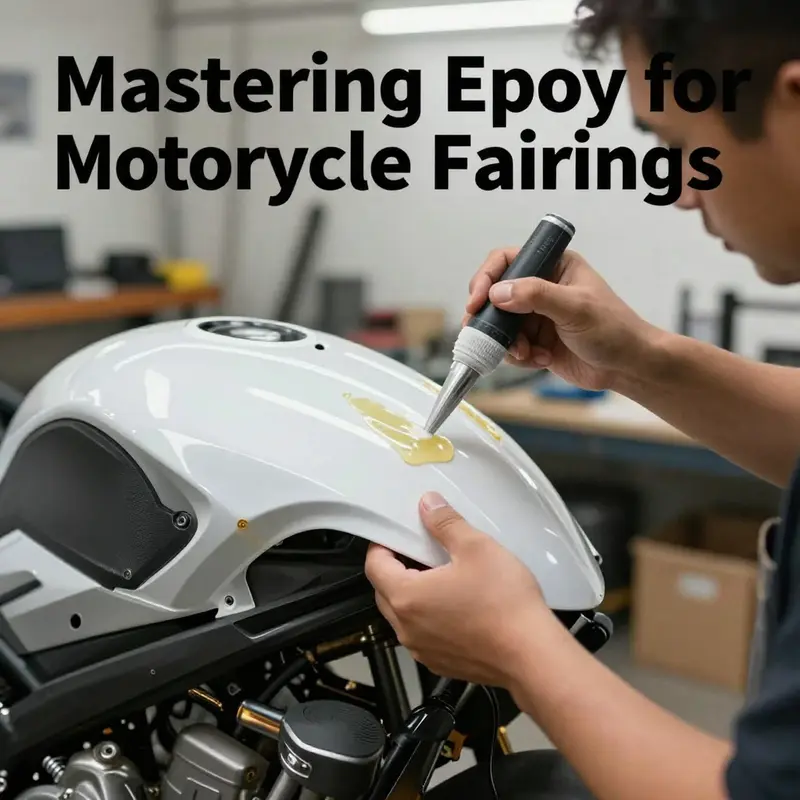
Epoxy sits at a quiet, indispensable intersection of repair, weight management, and aerodynamic fidelity for motorcycle fairings. It is not merely glue or a decorative finish; it is the bonded backbone that translates impact resistance into ride-ready resilience and that turns a damaged shell back into a smooth, paintable surface. In the high-stakes world of performance machines, fairings must survive road spray, gravel strikes, and the occasional curb encounter without surrendering form or function. Epoxy resin—when chosen and applied with care—becomes the decisive ally in restoring integrity while preserving the lightweight, sculpted lines that define a bike’s identity on the road and on the track. The material’s promise is not only strength but a controlled, predictable behavior under stress. When a fairing is damaged, the choice to repair with epoxy is a choice about longevity, not just appearance, because the repair must endure the vibrations, the sun-soaked heat of summer afternoons, and the sudden temperature swings that accompany long rides.
The appeal of epoxy in this domain rests on several molded truths about the material. First, the resin and hardener form a dense, cross-linked network that distributes loads across a broad area. This gives repaired regions a high tensile strength, helping a patched crack to resist re-opening under load and to resist the small shattering forces produced by road debris at speed. Second, epoxy systems designed for automotive and motorcycle bodywork are engineered to bond effectively to plastics and composites commonly used in fairings, such as ABS, fiberglass, and carbon fiber laminates. The result is a repair that doesn’t just fill a gap; it becomes part of the surrounding material, contributing to an integrated stiffness and a consistent surface when finished. Third, epoxy coatings can serve as a protective layer that improves resistance to environmental factors. UV exposure, moisture, and temperature changes all take a toll on fairings over time, especially when they spend hours under direct sun or on damp roads. A well-chosen epoxy, followed by a suitable topcoat, delivers a surface that resists chalking, cracking, and paint delamination, extending the life of the fairing and preserving the original lines.
In practice, epoxy’s role in fairing repair begins with a clear-eyed assessment of damage. Minor cracks or small chips are often amenable to a straightforward resin fill. The careful work here is to ensure complete coverage of the crack without leaving voids that could later trap moisture. A larger break, however, benefits from reinforcement, typically with a fabric such as fiberglass or a carbon-fiber patch laid over the wet epoxy so that the repair behaves like a laminated composite. This approach is not just about patching a hole; it is about restoring the energy flow of the fairing’s shell. The fabric acts as an internal spine, carrying some of the load and reducing the risk of a re-crack along the original fault line. When fabric is employed, it is embedded into a generous layer of epoxy while still wet and then pressed into place so that it wets out fully. The result is a repair that feels solid to the touch and behaves as a single, cohesive piece when the bike is back on the road.
Choosing the right epoxy is a decision that hinges on a few practical criteria. Automotive-grade epoxies designed for plastics and composites are preferred because they balance bond strength with compatibility across common fairing materials. The key is to select a two-part system that cures with minimal shrinkage and maintains some flexibility through thermal cycles. Excessively rigid systems can crack when the fairing expands and contracts with heat, while overly flexible systems may not transfer loads efficiently and can allow re-cracking at stress points. The working time matters as well. A reasonable pot life allows for careful mixing, application, and, if needed, the placement of a fabric patch before the epoxy sets. Typical ratios are close to 1:1 by volume, but the exact prescription should follow the manufacturer’s instructions to guarantee complete cure and predictable properties. The emphasis here is not speed but reliability: a well-mixed resin and hardener that cure uniformly across the repair zone produce a stronger bond and a smoother, paintable surface.
As the repair unfolds, surface preparation becomes the quiet unsung hero of long-lasting results. The damaged area should be thoroughly cleaned with a degreaser to remove any oil, wax, or dust. A clean surface ensures the epoxy wets the substrate and the patch uniformly, avoiding adhesion problems that would undermine the repair’s strength. After cleaning, the area should be dried completely. Any residual moisture can create air pockets or hinder the resin’s flow, leaving behind a compromised bond. Once dry, the repair can proceed. The epoxy is mixed in the recommended ratio, stirred slowly to minimize air entrapment, and then applied generously into the crack or hole. For cracks, the epoxy should fill the void completely and then be allowed to seep into any cross fissures. If using a fabric patch, it is placed over the wet epoxy and pressed firmly into place to ensure intimate contact and full saturation. The first layer should be left to set just enough to hold the patch while still being tacky; this helps the fabric anchor without shifting out of alignment.
Curing is a patient stage. Manufacturers’ specifications define the cure window, which typically spans a day or more at room temperature for a full cure. The goal is a bond that has reached its designed strength and that is free of tack or soft spots. Temperature, humidity, and air circulation all influence cure time and final properties. A controlled curing environment helps prevent warping or deformation of the surrounding plastic during the hardening process. Once cured, the repair can be shaped to blend with the fairing’s contour. Sanding with progressively finer grits follows, with care to avoid rounding or altering the fairing’s sharp edges. The objective is a smooth transition from the repaired zone to the undamaged surface so that the repaired area remains visually seamless when the final color is applied.
Finishing is the stage where repair artistry meets practical protection. A compatible primer is applied to create a uniform canvas for paint and to enhance adhesion of the topcoat. The primer should be chosen for compatibility with both the epoxy and the fairing’s material. After priming comes paint, which is then followed by a UV-resistant clear coat or a dedicated protective top layer. Epoxy by itself is a rugged, resilient resin, but it does not guarantee long-term UV stability. A topcoat provides the weatherproofing, gloss, and colorfastness that fairings demand. The rider’s eye notices the finish not just for its color but for its smoothness and the absence of fisheyes, pinholes, or orange-peel texture. A properly finished repair holds its aesthetic appeal under sunlight and over time, resisting the yellowing and surface wear that can betray a hurried or careless repair.
Beyond the repair itself lies a broader conversation about materials science and the living, breathing physics of riding. The ride is a continuous cycle of heat, vibration, and load transfer. Epoxy systems that are optimized for automotive use are designed with this dynamic in mind. The resin matrix must manage the heat generated by the sun and by engine-exposed air streams, and it must bend, not crack, when a fairing edge experiences a flexing moment during corners or a gusty crosswind. This is where layered construction—fabric reinforcement over a cured resin—comes into its own. The combination yields a repaired zone that can absorb energy without failing catastrophically, a quality that matters as much on a street ride as it does on a track. The choice of reinforcement material—whether fiberglass or carbon fiber—also guides the repair’s final stiffness and weight. Fiberglass patching is forgiving and relatively easy for DIY projects, while carbon fiber patches offer higher stiffness for high-performance builds but require careful handling to maintain alignment and prevent moisture entrapment.
The practical logic of epoxy repair also intersects with the broader ecosystem around fairing restoration and customization. When the objective is not only to repair but to preserve or enhance aerodynamics and aesthetics, the repair must meet both functional and cosmetic criteria. A well-executed repair will vanish beneath a fresh coat of paint, leaving no obvious crack lines and restoring the fairing’s original curvature and reflective quality. This is where surface chemistry matters: the epoxy’s texture must be compatible with sanding, priming, and painting processes, ensuring that the final finish is uniform and durable. For riders who care about long-term performance and appearance, this means paying attention to UV-protective coatings and a topcoat that resists abrasion and chalking after months of exposure to sun and road grit. In the end, the repair should feel like a single, continuous surface, a testament to the discipline of preparation, the science of bonding, and the craft of finishing.
For readers curious about browsing options that complement a repair-minded approach, a logical next step is to explore the broader ecosystem of fairings and replacement shells. If you are weighing whether to repair or replace, consider how a well-chosen shell can align with the repaired panel’s performance characteristics. For readers seeking a quick gateway to compatible shells, explore Honda fairings, which hosts a broad selection that can complement a repaired panel and help you maintain the bike’s aerodynamics and aesthetic harmony. This internal reference provides a practical entry point into the world of replacement shells that pair with the repair work described here, helping you plan a cohesive cosmetic and structural package rather than approaching the project in isolated steps.
As this chapter threads through the practicalities, it is important to acknowledge the guidance that specialized resources offer to the technician who treats epoxy as a core tool rather than a last resort. The authoritative guide from the Motorcycle Mechanics Institute on epoxy repair of motorcycle fairings provides industry-standard procedures and safety recommendations, offering an essential complement to the experience of a motivated rider or shop technician. The lessons in that guide—precisely how to mix, how to layer patches, and how to cure and finish—shape the reliability of a repair while keeping safety and durability in the foreground. It is a reminder that the best epoxy repair does not merely seal a gap; it preserves the integrity of the fairing’s geometry and the rider’s confidence in the machine. A sound repair is as much about the discipline of process as it is about the chemistry of resin, and this synergy is what keeps fairings strong, light, and visually compelling after the road tests and the race days.
Ultimately, epoxy for motorcycle fairings is a story of engineering pragmatism meeting hands-on craft. It rewards patience, precise preparation, and an eye for detail that extends beyond the repair itself. When properly chosen, mixed, applied, and finished, epoxy repairs restore not only the surface but the confidence that a rider places in a bike’s integrity. The healed crack becomes a memory of a tire lift and a moment of impact, while the new bond stands as a quiet guarantee that the fairing, and the bike it shelters, will endure another season of high-speed moments and long, winding rides. Epoxy, in this sense, is less about a single formula and more about a reliable approach to keeping performance, aesthetics, and safety in harmonious balance on the open road.
External resource for deeper guidance: Motorcycle Mechanics Institute – Epoxy Repair of Motorcycle Fairings
Layered Strength: How Epoxy Shapes Durable, Aerodynamic Composite Motorcycle Fairings
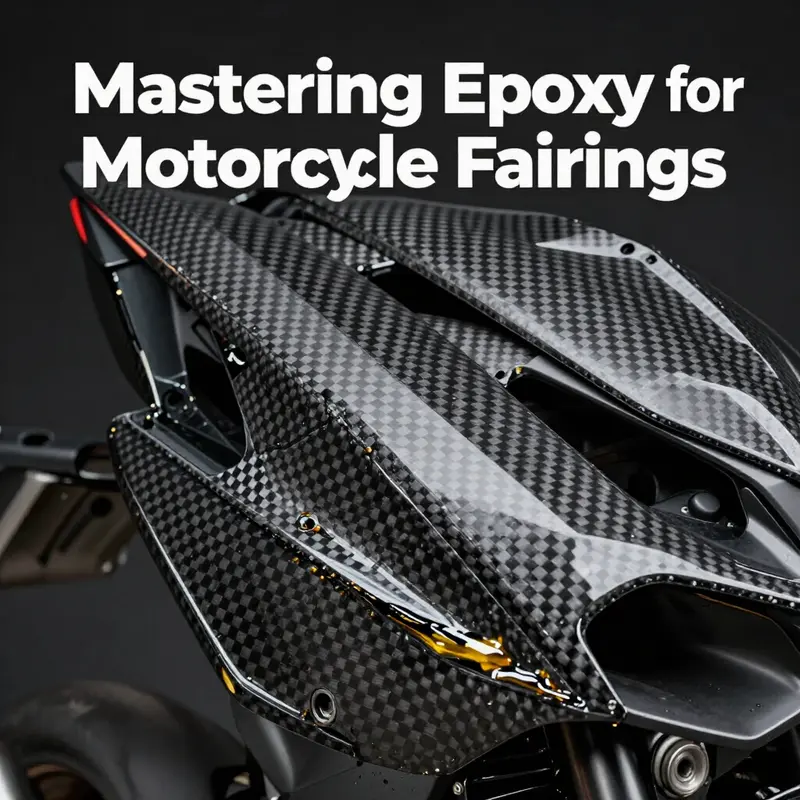
Epoxy resin is the quiet workhorse behind the modern motorcycle fairing. In the push and pull of high-speed dynamics, a fairing must be light enough to minimize drag, yet tough enough to withstand impact from debris, micro-cracks from vibration, and the years of weather exposure that come with riding in sun, rain, and cold. Epoxy-based systems excel here because they form a robust, well-bonded matrix when paired with reinforcing fibers such as glass or carbon. The resin binds the fibers into a coherent, layered structure where the matrix transfers loads between fibers, converts into a stiff yet not brittle composite, and provides a surface that can be precisely shaped during manufacturing or after aggressive riding. This layered architecture—fibers embedded in a cured epoxy—drives the aerodynamics, energy absorption, and long-term durability that riders rely on when performance matters most. Beyond raw strength, epoxy’s resin chemistry supports tight tolerances and smooth finishes, enabling aerodynamically efficient fairings that also carry a high tolerance for thermal cycling and environmental exposure.
The science of reinforcement within a motorcycle fairing hinges on two intertwined factors: the quality of the interfacial bond between fiber and resin, and the way the composite distributes and resists loads under actual riding conditions. Epoxy resins are celebrated for their adhesive performance, bonding reliably to both glass and carbon fibers as well as a range of performance fabrics used in advanced composites. That adhesion is not merely surface-level; it governs how effectively stress can be shared from the matrix to the fibers when the fairing experiences bending, torsion, or impact. A strong interfacial bond reduces the risk of delamination, a common failure mode in which layers separate under load. It also enables efficient load transfer, which means a lighter fiber network can achieve the same stiffness as a heavier alternative—an important consideration for riders chasing performance without sacrificing ride quality.
The benefit of using epoxy in fairings is also seen in the precision with which these materials can be cured. Epoxy resins typically exhibit low shrinkage during curing, a crucial factor when shaping and maintaining the tight tolerances required for aerodynamically efficient panels. When a fairing is molded or laminated, even small shrinkage variations can warp surfaces or alter the intended airflow characteristics. The low shrinkage of epoxy helps keep the fairing dimensions true, allowing designers to reproduce exact geometries that optimize lift, downforce, and stability at high speeds. The result is a panel that not only resists deformation over time but also remains paintable and repairable, a practical blend for enthusiasts who want to maintain an appearance as steady as the performance.
Processing those resins and fibers is a careful balance of chemistry, technique, and timing. In composite fairings, glass fibers offer a good blend of density, cost, and impact resistance, while carbon fibers deliver superior stiffness-to-weight ratios and refined torsional stiffness that benefits handling and high-speed behavior. Epoxy matrices must be chosen with curing behavior in mind, and the resin system must be compatible with the chosen fiber preforms. The layup process—whether hand-wrapped cloth, unidirectional tapes, or woven fabrics—requires careful alignment and impregnation to avoid voids, which can become stress concentrators under load. Preserving even fiber wet-out while controlling resin-rich zones is essential to prevent weak spots that could compromise impact resistance. In practice, skilled fabricators anticipate the heat of curing, the exothermic peaks, and the resin’s viscosity changes to achieve a uniform, void-free laminate. The ability to tailor viscosity and cure profile means epoxy can be adapted to small, tight panels as well as larger, load-bearing sections that demand higher stiffness.
Once cured, the epoxy composite emerges as a coherent, smooth-surfaced component that is ready for finishing. Surface preparation is key: slight abrading removes release agents and micro-impurities, while a proper primer ensures adhesion for paints and clear coats. Epoxy coatings often serve as the final protective layer, improving resistance to UV exposure, moisture, and minor abrasions that can occur on track days or long road trips. A well-prepared epoxy surface accepts topcoats evenly, producing a finish that resists chalking and color fading while preserving the underlying mechanical integrity. In practice, this combination of a strong structural matrix and a stable surface finish translates into fairings that maintain their aerodynamics and aesthetics over extended service.
Repair and repairability sit alongside performance as practical realities for riders. Scratches, chips, or cracks in plastic or fiberglass fairings can be effectively repaired with epoxy-based systems. The repair approach benefits from the same properties that make epoxy ideal for original fabrication: strong adhesion, good wet-out, and low shrinkage. A crack can be reinforced with backing patches or fiducial inserts that are bonded with two-part epoxies engineered for automotive bodywork. This ensures the repaired section shares load with adjacent material, reducing the chance of re-cracking under the aerodynamic and vibrational stresses typical at highway and track speeds. Because epoxy repairs can be painted and blended with surrounding panels, owners can restore both structural integrity and appearance without resorting to heavier or less compatible materials.
Of course, safety considerations temper enthusiasm for any polymer used in vehicle components. Like many resin systems, standard epoxies are flammable and can release toxic smoke when exposed to fire. This is not a theoretical concern; it informs how repairs are carried out, how coatings are selected, and how materials are stored and handled in workshops and garages. Fire-retardant additives or reactive flame retardants are often integrated into epoxy matrices to improve performance in the event of exposure to high heat or flames. The trade-off, as with many engineered materials, is a careful balancing act: adding retardants can alter mechanical properties, processing times, and surface finish. The industry has responded by exploring more advanced strategies, including the use of geopolymer coatings or hybrid systems that can provide enhanced fire resistance without severely compromising stiffness or toughness. These developments aim to satisfy escalating safety standards while preserving the core advantages epoxy brings to composite fairings.
The cutting edge of fire safety research in epoxy composites is moving toward layered approaches that combine traditional epoxy matrices with protective interlayers and advanced inorganic or geopolymer-based coatings. Geopolymers, for example, can act as a fire-protective envelope that dissipates heat and slows flame propagation without adding substantial weight or compromising the matrix’s mechanical performance. In the context of motorcycle fairings, where weight and stiffness matter almost as much as aesthetics, such multilayered solutions offer a promising path forward. The goal is not to replace epoxy but to augment it with a fire-safe backbone that still delivers the necessary adhesion, fatigue resistance, and environmental durability riders expect. For engineers and hobbyists alike, the evolution of fire retardancy is a reminder that epoxies are not static materials; they are part of a broader system that evolves with safety codes, testing protocols, and the realities of high-speed riding.
Those who want to explore practical examples of material choices in real-world builds can consider the broader ecosystem of motorcycle fairings available to riders. For instance, the Honda fairings category showcases how composite panels are designed, reinforced, and finished to meet performance needs while maintaining an appealing look. The category also demonstrates how epoxy-based components integrate with other materials and with the bike’s overall aerodynamics. Readers can browse these options to gain a sense of how a well-made fairing combines structural reinforcement with surface quality, even as individual riders customize weight, stiffness, and finish to suit their riding style. Honda fairings illustrates the diversity of configurations and the practical outcomes of epoxy-reinforced composites in contemporary builds.
For readers seeking deeper scientific grounding, the literature on fire performance and reinforcing strategies offers valuable context. A comprehensive review highlights how glass-fiber reinforced epoxy composites can benefit from additive and reactive flame retardants, and it points to the potential of geopolymers as a frontier in fire safety. The synthesis of mechanical performance, safety, and environmental resilience remains a dynamic area of study, with implications for automotive and motorcycle applications alike. This broader research informs the practical choices riders and builders make when selecting materials and processing routes for fairings that must endure high-speed exposure, weathering, and the occasional impact without compromising safety or aesthetics. External exploration of these topics can provide a strong foundation for anyone seeking to balance speed, durability, and responsibility in fairing design.
External reading and deeper technical context can be found in a recent review that surveys fire-retardant strategies and the potential of geopolymers in epoxy composites. This resource helps connect the hands-on practices of repair and reinforcement with the safety and regulatory considerations that increasingly shape automotive and motorcycling materials choices. For a broader technical perspective on how these fire-safety strategies interface with the durability and performance of composites used in transportation, see the following external resource: https://www.sciencedirect.com/science/article/pii/S2352409X23001768
The ongoing evolution of epoxy-reinforced fairings is a reminder that the rider’s experience—stability, grip, and predictability at speed—depends on a careful balance of material science and engineering judgment. Epoxy is not just about stiffness or color. It is about a resilient, composite-based architecture that can absorb energy from impacts, distribute loads across fibers, and hold its geometry under the heat of sun and the stress of speed. This is the layered strength at the heart of modern motorcycle performance: an epoxy matrix that binds careful reinforcement to durable, finish-ready surfaces, enabling fairings that are as capable on a race track as they are on a long highway ride.
Armor of the Wind: Epoxy Surface Coatings as the Durable Shield for Motorcycle Fairings
Epoxy surface coatings sit at a crucial intersection of protection, performance, and aesthetics for motorcycle fairings. They are more than a glossy layer; they are a carefully engineered shield that preserves the structural integrity of composite skins while outwardly presenting the machine’s character. The fairing, often a blend of plastic, fiberglass, and modern carbon fiber composites, faces a constant onslaught from high-speed airflow, ultraviolet radiation, accumulating debris, and the chemical realities of road salts and fuels. Epoxy coatings respond to all of these pressures with a balanced chemistry that emphasizes adhesion, toughness, and environmental resistance. In this sense, epoxy-based surface coatings are not simply a final touch but an active, structural contributor to the overall durability and performance of the fairing over time.
At the heart of the epoxy coating’s effectiveness is its ability to form a robust bond with the diverse substrates found in modern fairings. Epoxy resins, when cured, create a crosslinked network that resists moisture ingress and thermal cycling. This is especially important on polymeric and fibrous substrates where differential movement can undermine weaker finishes. The epoxy matrix acts as a continuous phase that binds filler particles, pigments, and any reinforcing fibers that may be present in the surface layer. The result is a coherent shell with high cohesive strength and a strong adhesive interface to the underlying material. This dual strength—adhesion to the substrate and cohesion within the coating—helps prevent microcracking, delamination, and wear that would otherwise compromise both appearance and protection.
A key virtue of epoxy coatings in this context is their versatility. Epoxy systems can be formulated to cure with minimal shrinkage, a critical factor for maintaining a uniform, defect-free surface across complex fairing geometries. For a motorcycle fairing that must remain aerodynamically pristine, any unevenness can trap moisture, harbor microabrasions, or disrupt paint films. By controlling shrinkage, formulators reduce the risks of edge-peel, pinch-off at corners, and later cracking as the resin expands and contracts with temperature changes encountered during rides or in parking conditions. The same chemistry that reduces shrinkage also tends to offer excellent early-film strength, which helps the coating resist impacts from gravel, small stones, and tire spray in real-world riding.
Beyond mechanical performance, epoxy coatings bring notable environmental resistance. UV stability is a central concern; prolonged exposure to sunlight can degrade many organic coatings, leading to chalking, color fading, and weakened surface hardness. A well-designed epoxy coating includes UV-stabilizing additives and, if needed, a UV-blocking topcoat to extend service life. The result is a surface that maintains gloss, color fidelity, and resistance to surface abrasion even after thousands of miles under bright sun. The protective capability extends to chemical exposure as well. Epoxy-coated surfaces are relatively impermeable to moisture and many contaminants, offering a barrier to salt, fuel residues, and road grime that would otherwise permeate and degrade the underlying resin or fiber.
The role of epoxy in fairing coatings also extends to the preparation and finishing stages. Surface prep is not a ritual of appearance alone; it is a performance prerequisite. The substrate must be cleaned of waxes, mold release agents, and oils that would otherwise hinder adhesion. Depending on the substrate—whether it is ABS plastic, polyester gelcoat, fiberglass, or carbon fiber—the surface may require mechanical roughening or chemical activation to maximize the epoxy’s grip. Adhesion promoters or primers may be employed to bridge the gap between the polymer substrate and the epoxy matrix. When these steps are executed with care, the resulting bond is not merely surface-deep; it is a durable integration that resists lift under wind shear and thermal stress.
In practice, coating a fairing is rarely a single-layer affair. A well-considered process balances multiple layers to achieve optimum performance. The base layer often provides adhesion and a degree of moisture barrier performance. A pigmented or clear mid-layer contributes to color, depth, and UV protection while offering an additional buffer against mechanical damage. A protective topcoat—typically a UV-stable clear or pigmented layer—serves as the primary defense against environmental wear and as the canvas for color and graphics. For enthusiasts who customize their machines, the topcoat also provides a surface that is paintable, buffable, and capable of accepting decals without premature peeling or orange-peeling effects. In all cases, compatibility across layers is essential. The curing regime, solvent emissions, and ambient conditions during application influence final properties and long-term durability.
The mechanical narrative of epoxy coatings cannot be separated from the broader composite context used in fairing construction. Epoxy is not only a surface barrier but also the matrix that binds fibers and particulates within the fairing’s core structure. When fairings are built or reinforced with carbon fiber or fiberglass, epoxy serves as the binding medium that creates a stiff yet lightweight shell. The same resin that holds together the structural layers can also be engineered to form a compatible outer surface. This synergy reduces the potential for delamination between layers and fosters a more unified response to aerodynamic loads, impact resistance, and environmental exposure. It also simplifies maintenance; with a coherent matrix-coat system, re-coating or re-finishing tends to be more predictable and reliable, enabling riders to preserve their fairings’ integrity without repeated, invasive work.
A contemporary thread in the research on epoxy for fairings touches on natural fiber composites. A notable study by Medina Agurto in 2025 investigates how fiber volume fraction in manually laminated jute-epoxy composites influences mechanical properties. While much of the motorcycling world leans toward synthetics for surface performance, natural fibers in the core laminate offer intriguing benefits in terms of damping, cost, and sustainable manufacturing practices. The study highlights that the selection of the resin matrix—epoxy in this case—plays a decisive role in achieving the desired mechanical and protective performance. The conclusions reinforce a principle often observed in practice: a robust epoxy matrix, combined with wisely chosen fiber reinforcements and careful processing, can deliver composite structures and coatings that endure the rigors of road use while preserving surface fidelity. This insight does not merely apply to the internal layers; it informs the surface system as well. An epoxy coating, when engineered with compatible resin chemistry and fiber-inclusive substrates, can work in harmony with the underlying composite to deliver predictable performance under temperature cycles, humidity, and abrasion.
The practical implications of these findings ripple through the way fairings are designed and maintained. For any builder or rider contemplating a repair or a refresh, the resin matrix choice matters as much as the type of reinforcement. Epoxy systems designed specifically for automotive and motorcycle bodywork are engineered to cure with minimal shrinkage, to maintain flexibility under thermal cycling, and to provide a smooth, paintable surface. This combination supports both the long-term mechanical integrity of the fairing and the visual quality that owners prize. In addition, the resin’s compatibility with base coats and topcoats—whether the goal is a high-gloss finish, a matte aesthetic, or a color-shifting effect under light—depends on the elimination of surface irregularities during cure. A well-formulated epoxy system ensures that pigment dispersion remains uniform, gloss retention is preserved, and color saturation stays true as the coating ages.
For readers who are curious about how this knowledge translates into hands-on practice, the essential roadmap begins with substrate assessment. Identify the fairing’s material and any pre-existing coatings. If the surface shows signs of cracking, chips, or delamination, repair strategies typically involve reinforcing the affected area with a small, compatible epoxy repair system, then returning to the surface coating sequence. When the goal is to repair and restore, the epoxy resin choice must marry strength with flexibility to accommodate the fairing’s thermal expansions and contractions. In addition, the repair layer should not suffer from excessive shrinkage that would create new stresses or surface irregularities. The narrative around epoxy in fairing repair highlights that the same chemistry responsible for structural integrity also governs the success of aesthetics after repair. A properly executed repair that uses a suitable epoxy compound can restore the surface to its original curvature and finish, while maintaining the protective barrier that resists moisture and environmental exposure.
From a rider’s perspective, the aesthetic dimension of epoxy coatings matters as much as the technical. Epoxy-based surface coatings can be formulated to preserve gloss and color depth across a broad range of temperatures. A durable finish reduces the frequency of touch-ups and repainting, allowing owners to enjoy the look of the bike over the course of seasons without sacrificing performance. The surface can still be refined with polishing and detailing techniques, but the epoxy layer provides the backbone of protection against the wear and tear that characterize spirited riding. When gloss and color are preserved, the fairing maintains its aerodynamic silhouette, which is essential for downforce and drag considerations at high speeds. The protective layer also contributes to a smoother, more comfortable ride by reducing surface roughness that could affect airflow around the bike.
In the broader ecosystem of motorcycle customization and repair, the choice of surface coating reflects a philosophy: treat the fairing as a living shield rather than a passive shell. Epoxy coatings embody this mindset by delivering adhesion, protection, and compatibility with subsequent finishes. The approach remains pragmatic and evidence-informed. The understanding that epoxy forms a cohesive bridge between substrate and topcoat—while also offering mechanical resilience—helps explain why so many riders and builders rely on epoxy-based surface systems for fairings. They provide a durable, paintable, and UV-resistant surface that stands up to the realities of weather, speed, and road debris without surrendering the aesthetic ambition that motivates many to customize their machines.
For readers seeking concrete examples in the shop or workshop, consider the practical implications of selecting a surface coating approach for a given fairing project. If the goal is maximal environmental resistance and long-term color retention on a carbon-fiber fairing, you would typically design a multi-layer system where the epoxy primer ensures adhesion, followed by a pigmented epoxy mid-coat providing both color and barrier protection, and finished with a UV-stable clear topcoat that resists yellowing and micro-scratches. If the substrate is a high-gloss gel-coated fiberglass, you might emphasize surface leveling and UV stability while ensuring the epoxy topcoat can be polished to restore the desired reflection. In all cases, the process hinges on meticulous surface preparation, proper curing conditions, and an understanding of how thermal cycling will affect layer interactions over time. To keep the conversation grounded, a recurring theme emerges: the epoxy layer is more than a single step in painting or finishing; it is a performance-critical component that shapes the fairing’s life and the rider’s experience of the bike’s protection and style.
As a closing note, the exploration of epoxy’s role in surface coatings for motorcycle fairings invites a broader contemplation of how materials science translates into everyday riding realities. The science behind adhesion, crosslink density, and environmental resistance translates into fewer cracks, less maintenance, and more miles spent in confidence. It also invites ongoing experimentation with fiber-reinforced core materials, resin matrices, and coating architectures to achieve ever-richer finishes and longer service life. The interplay between repair, protection, and aesthetics defines the craft of fairing design and maintenance. In this space, epoxy is not merely a resin; it is a practical language that communicates durability, precision, and a commitment to performance at the edge of speed.
External reference: https://www.researchgate.net/publication/397841236ManufacturerMotorcycleFairingsCompositionClassificationandIndustrialApplications
Epoxy at the Edge: Choosing, Repairing, and Reinforcing Motorcycle Fairings for Performance and Longevity
Epoxy is the quiet backbone of motorcycle fairings, the unseen force that lets a smooth, aerodynamic shell resist the weather, the road, and the occasional encounter with a rock or a curb. It binds, seals, reinforces, and finishes in ways that transform a fragile plastic or composite shell into a resilient surface that can carry high-speed loads, maintain a clean appearance, and accept paint with lasting adhesion. In practice, epoxy is not a single miracle substance but a family of two-part systems engineered to match the demands of automotive and motorcycle bodywork. The right choice depends on the shape, material, and expected service life of the fairing, but a few constants apply across most scenarios. The ideal epoxy adheres strongly to plastics such as ABS and polycarbonate, stands up to sun and heat cycling, and preserves enough flexibility to ride out the vibrations and thermal shifts without cracking. When a rider considers a fairing repair or a modification, this trio—adhesion, durability, and flexibility—guides the selection process and informs how the material will perform under real-world conditions.
A typical motorcycle fairing presents a mix of challenges. The curves and edges of ABS or PC-ABS blends demand an adhesive that can wet the surface effectively and fill micro-voids without sagging on a vertical plane. UV exposure is relentless at highway speeds, so the resin system should resist yellowing and embrittlement that would otherwise show through the finish. Temperature swings—from cool night rides to sun-baked afternoon heat—can push materials toward porosity and microcracking if the resin is too stiff or lacks resilience. Finally, the fairing must tolerate road buzz and contact with fasteners, leg guards, and rubbing seams, which means a little elasticity in the bonded zone helps prevent crack propagation. In short, the best epoxy for motorcycle fairings marries strong bonding to plastics with UV stability and a modest, controlled elasticity that keeps the surface intact through many miles.
For riders and builders, the practical question often comes down to what repair or fabrication is needed. Minor repairs—chips, shallow cracks, or surface imperfections—benefit from a two-part epoxy formulated for automotive plastics. These systems are designed to cure to a bond that can be sanded smooth and painted over, creating a seamless repair that resists the next scrape or stone strike. When the damage is more extensive, structural integrity may demand reinforcement. Epoxies used for such work are typically paired with reinforcing fabrics like fiberglass or carbon fiber weaves, which are laid into the epoxy to create a composite patch. The resulting repair or new layup forms a stiffer, lighter structure that preserves the aerodynamic profile while improving endurance against impact. The idea is not to overbuild but to place reinforcement where loads are highest and where damage is most likely to propagate if left untreated. In practice, a fairing with high-stress areas near mounting points or along the lower edge often benefits from a reinforced approach, while undamaged sections can rely on a standard adhesive film and fill.
A well-executed repair begins with surface preparation. Preparation is not glamorous, but it is decisive. The work must start with thorough cleaning to remove waxes, oils, and silicone residues that would sabotage adhesion. Old paint should be removed from the repair zone, not just smoothed over, to expose a fresh, receptive surface. Light sanding then creates a micro-roughness that helps the resin lock in. Dust and oil-free surfaces are essential, so the area is wiped down with an appropriate cleaner and allowed to dry completely. The aim is to give the epoxy something to grab onto and to ensure a feathered transition between the repair and the surrounding fairing. This feathering is critical for both structural performance and the final aesthetic, because a properly blended edge reduces the likelihood of a visible seam after sanding and painting.
Mixing and application follow a disciplined rhythm. Two-part epoxies require precise ratios and thorough mixing to reach a uniform cure. The pot life—how long the mixture remains workable—depends on ambient temperature and the exact formulation, so the mixer must work efficiently but with care to avoid introducing air bubbles. When fillers are used to build up a chip or shallow gouge, they should be added sparingly and blended to maintain a smooth surface. For larger or deeper structural repairs, the epoxy can be combined with a reinforcing fabric. The fabric is laid dry on the prepared area and then wetted with resin to saturate the fibers, ensuring there are no dry pockets that would create weak points. Once the patch is in place, the area is pressed and smoothed to remove excess resin while avoiding squeeze-out that could intrude into the finish. Clamping or masking off nearby features helps keep the repair stable as it cures. The goal is a bond that feels solid to the touch, with no voids or uneven spots that would complicate finishing.
Once cured, attention turns to feathering the repaired edges, smoothing the surface, and preparing for paint. Sanding is a delicate operation: smooth enough to remove ridges but not so aggressive as to erode the repair or surrounding fairing. A sequence of progressively finer grits is typically used, finishing with a last pass that reveals a uniform plane that accepts primer and color. The primer must bond to the epoxy layer and the underlying plastic, providing a receptive base for topcoat paints and clear coats. A well-prepared finish minimizes the risk of peeling or micro-blistering, particularly on curved surfaces that face the brunt of wind pressure. If the repair is near a joint or mounting area, the finish must remain flexible enough to accommodate movement without cracking. This is where selecting epoxies with balanced flexibility and adequate UV stability makes a tangible difference in the long run.
In a broader sense, choosing the right epoxy for motorcycle fairings is about aligning material properties with the fairing’s design and the rider’s expectations. A good epoxy system offers strong adhesion to plastic substrates like ABS and polycarbonate, maintains its bond through UV exposure and temperature swings, and preserves enough elasticity to absorb vibration without cracking. A modular approach often serves best: use a high-bond, UV-stable epoxy for the base repair and a compatible, lightly flexible outer layer for finishing when multiple weathering cycles are expected. For riders who ride with Honda fairings or other popular aftermarket shells, the practical realities of curved geometry and tight tolerances reinforce the need for careful surface preparation and the use of compatible substrates. For riders with Honda fairings, the landscape of stock shapes and aftermarket variants means selecting adhesives that tolerate curved surfaces, edges, and intricate joints is essential. This is where the guidance from automotive repair literature and experienced hobbyists becomes especially valuable, as the principles translate across brands and designs.
Beyond the repair itself, epoxy is also a core component in constructing or reinforcing new fairing sections. When carbon fiber or fiberglass reinforcements are added, the epoxy acts as the matrix that binds fibers, transfers loads, and sets up a lightweight, rigid structure that still behaves gracefully under load. In performance-focused builds, engineers and builders often design patches around critical load paths, ensuring that the patch or new layup harmonizes with the overall stiffness of the panel. The result is a fairing that can withstand the stresses of high-speed wind forces and occasional track or street debris while keeping mass low and aerodynamics favorable. The artistry of this process lies in balancing resin content with fiber volume, ensuring thorough wet-out, and avoiding excess resin that would add unnecessary weight or create voids. The finished surface should be smooth and uniform enough to accept a base coat without grain or ridges, with a finish that protects the underlying composite from UV degradation.
Safety and handling can never be overlooked. Epoxy resins and curing agents should be used with proper ventilation, eye protection, and gloves. The curing process can generate heat and off-gassing, particularly in enclosed spaces or with large repair volumes. Reading and following the manufacturer’s instructions for mixing ratios, pot life, cure times, and recommended temperatures is essential. While working on a fairing, the rider should consider environmental factors such as humidity, ambient temperature, and direct sunlight, which can affect cure rates and final properties. Plan repairs during moderate weather when possible, and provide ample time for curing before any test fits or paint applications. The risks of poor adhesion, warpage, or paint failure are significantly reduced when the preparation is thorough and the resin is allowed to cure fully in a controlled environment.
In interpreting repair results, the broader literature and practical guides emphasize that epoxy is not a one-size-fits-all solution. The best outcomes come from selecting a system designed for automotive plastics, applying it with attention to the surface, and using reinforcement judiciously where needed. Such an approach yields a fairing that not only looks good but also carries the marks of durability. The result is a shell that maintains its aerodynamic profile, resists the rigors of exposure, and continues to serve riders across miles of road and track. For readers seeking a practical, step-by-step resource aligned with real-world practice, a widely used automotive repair guide on epoxy-based fairing repair offers a thorough walkthrough that reinforces these principles and demonstrates how a disciplined process translates into reliable performance. External resource: https://www.autoglassrepair.com/motorcycle-fairing-repair-with-epoxy.
The craft of epoxy work on motorcycle fairings thus sits at the intersection of chemistry and geometry. It is where material science informs design decisions, where the subtle balance between rigidity and flexibility determines how a surface will age, and where attention to surface preparation, mixing, and finishing determines whether a repair will vanish beneath paint or remain visible. The epoxy is not merely a glue; it is the matrix that defines the fairing’s life cycle—from the first test ride after repair to the long seasons of rain, sun, and road grime. And as riders push toward faster laps and more aggressive aesthetics, understanding how to select, apply, and finish epoxy systems becomes not just a technical skill but a practical philosophy: that resilience in a fairing comes from a thoughtful combination of adhesion, toughness, and adaptability. The road ahead for epoxy in motorcycle fairings is about refining formulations for even better moisture resistance and fatigue tolerance, improving ease of repair, and expanding the range of materials and shapes that can be reliably bonded and reinforced. In the hands of thoughtful riders and skilled builders, epoxy remains the dependable ally that makes the edge of the bike—its fairing—stronger, lighter, and more capable than ever before.
Final thoughts
Understanding the multifaceted applications of epoxy resin in motorcycle fairings not only elevates the quality of repairs but also enhances the overall durability and performance of motorcycle components. By mastering the techniques outlined in this article—repairing cracks, reinforcing structures, applying surface coatings, and selecting suitable epoxy products—business owners can effectively meet customer demands for high-quality and reliable motorcycle fairings. Investing in the right epoxy solutions translates into better performance, customer satisfaction, and continued market relevance.