
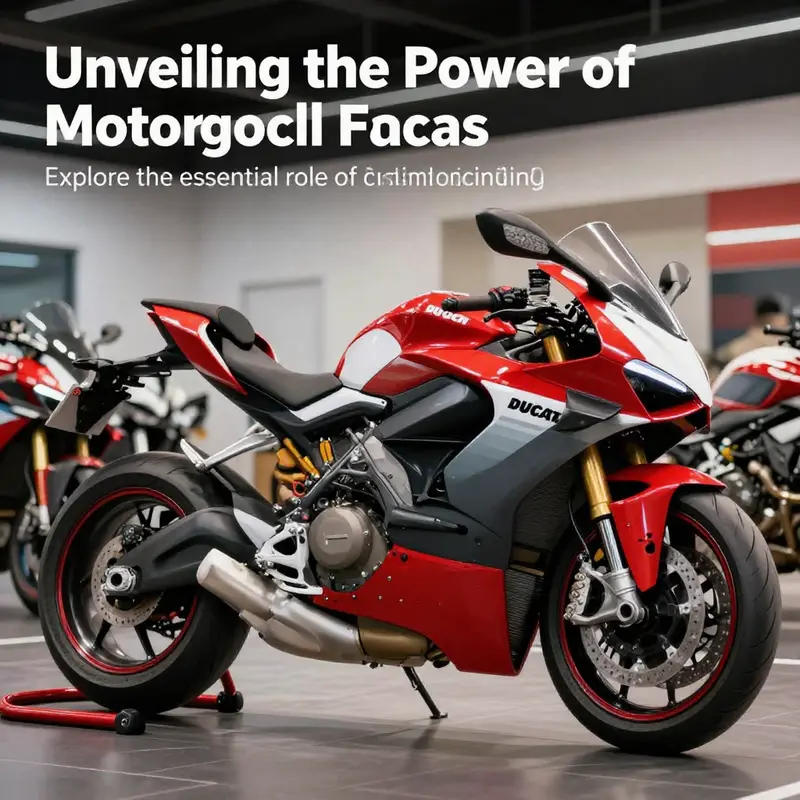
Ducati motorcycle fairings are not just a visual enhancement; they are crucial for improving performance, aerodynamics, and rider comfort. As a business owner in the motorcycle industry, understanding the significance of fairings can help you guide your customers in choosing the best options for their bikes. This article delves into the multi-faceted aspects of Ducati fairings, covering their aesthetic and functional roles, compatibility across models, customization avenues, the impact on aerodynamics and efficiency, and essential tips for purchasing and maintaining these components. Each chapter is designed to help you navigate the complexities of Ducati motorcycle fairings, ultimately enhancing your customer service and product offerings.
Aero-Armor in Motion: How Ducati Fairings Merge Aerodynamics, Safety, and Style
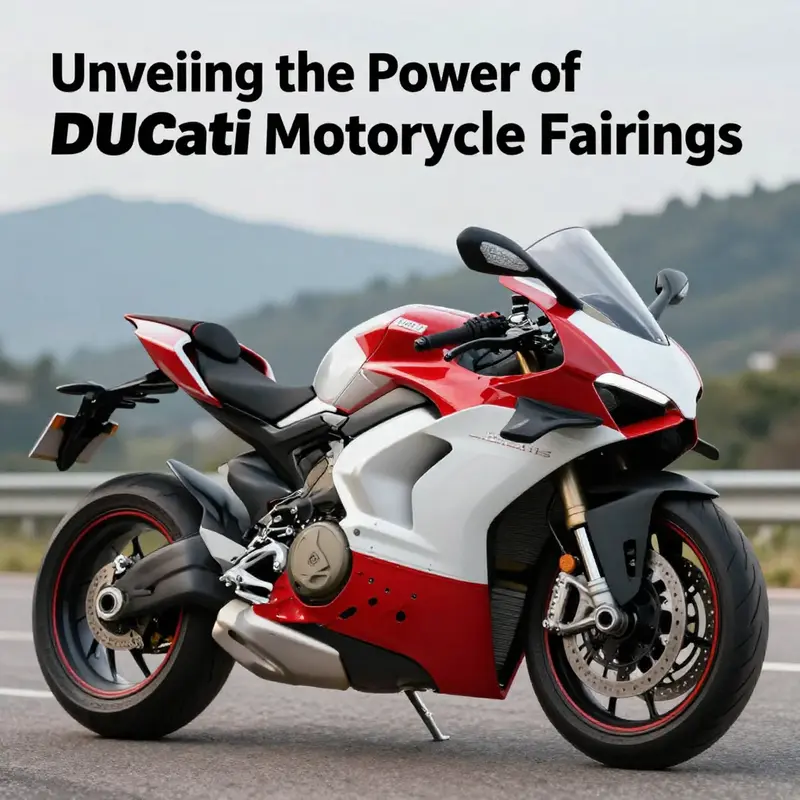
Fairings are often perceived as a bike’s cosmetic shell, a skin that covers the mechanical core and adds a hint of aggression to the silhouette. Yet on a high-performance machine, the fairing is so much more than style. It is a carefully engineered partner in motion, shaping the air that flows around the rider and machine, guiding stability at speed, and shielding the rider from wind, rain, and debris when the road is less than perfect. The Ducati approach to fairings embodies this fusion of art and engineering. The lines and contours are not arbitrary. They are the result of deliberate decisions about how air interacts with a moving body. Every sweep of the curve, every tapering edge, every opening for the rider’s line of sight or for cooling momentum is a contribution to a larger performance objective. In practice, that means the fairing reduces drag and manages pressure differentials in a way that supports smoother handling, quicker response, and a more composed ride as speeds climb and the road becomes a blur of motion and choice.
To appreciate the function of the fairing is to recognize how wind behaves as fuel for velocity. When the air meets the bike, it produces lift, friction, and turbulence. The fairing acts as a shield, deflecting a portion of that energy away from the rider and toward a controlled path around the machine. This is not about concealment; it is about channeling forces in a way that keeps the bike feeling planted in corners and steady when the throttle is opened wide. The effectiveness of this approach becomes most evident at racing-like speeds, where even small improvements in drag coefficient and stability translate into measurable gains in acceleration, cornering confidence, and rider endurance. A well-designed fairing also contributes to comfort by smoothing the air around the torso and helmet, reducing fatigue over long rides and allowing the rider to stay focused on the line and the line ahead rather than fighting errant gusts or relentless buffeting.
The shaping of a fairing is a study in continuity. The nose, the side panels, the windscreen, and the tail are not isolated features; they are interconnected components that must work together with the chassis, suspension geometry, and the rider’s posture. On a high-performance Ducati, the philosophy often centers on moving the leading edge back relative to the front wheel. This shift alters the air’s path in a way that makes the front of the bike feel quicker and more agile without sacrificing the protective envelope around the rider. In practical terms, that translates to a bike that can feel nimble through rapid direction changes at speed, with the aerodynamic load still driving forward rather than pushing back against the rider. This is the kind of subtlety that comes from a long lineage of wind-tunnel testing, computational fluid dynamics modeling, and real-world riding feedback, all converging to produce a surface that is at once elegant and relentlessly functional.
But aerodynamics does not exist in a vacuum. Safety is a core aspect of what a fairing does, and it begins with the rider’s experience in the saddle. By smoothing the flow of air over the torso and helmet, the fairing reduces turbulence that can disrupt breathing and attention. It also offers a shield against weather and road debris, a practical line of defense during cold mornings, rain squalls, or long stretches of highway where fatigue accumulates. The protective role extends to protection from low-speed gusts that can destabilize a wind-blasted rider during rapid deceleration or strong crosswinds. The effect may be hard to quantify in everyday riding, but the benefit is clear in the steadier, more composed feel the bike offers under diverse conditions. In addition to performance and safety, fairings become a canvas for personal expression. They invite riders to select raw, unpainted, or custom-painted finishes, transforming a machine with a factory silhouette into a personal statement on speed, terrain, and taste.
From a construction standpoint, the fairing is part sculpture, part structural member. It is attached to the frame with a precise set of mounting points and fasteners that must tolerate the stresses of aggressive riding and benign daily use alike. The materials—often composites or advanced plastics with stiff, light characters—need to withstand temperature swings, UV exposure, and road grit, all while maintaining a tight, precision-fit that minimizes rattles and misalignments. The result is a seamless integration with the engine, radiator, and exhaust layout, so that the bike breathes efficiently and remains a coherent whole at every speed. The aero contours are designed with a view toward maintenance and serviceability as well; the parts should be removable with a reasonable amount of effort for routine checks or race-day tune-ups, without forcing a rider into a calculus of disassembly every time a fairing needs attention.
The decision to pursue official or aftermarket fairings is not merely about appearance. It is a choice about fit, finish, and the assurance that the parts originate from a supplier who understands the nuance of mass production together with the precision demanded by performance. Official options typically offer exact fitment for specific variants, ensuring bolt alignment, gasket integrity, and consistent mating with the bike’s other aero components and electronics housings. Aftermarket offerings expand the palette, extending possibilities for personalization and, in some cases, targeted aerodynamic tweaks. Regardless of path, the objective remains the same: to honor the bike’s chassis geometry while optimizing airflow and rider comfort. In this sense, fairings are a bridge between factory design and rider-led customization, a space where engineering meets individual taste to shape both the look and the ride.
For riders who crave a fully authentic aesthetic that aligns with the manufacturer’s performance doctrine, the fairing becomes part of a broader configuration of accessories. Full fairings, whether in raw form or finished in paint, are designed to sit as a deliberate extension of the bike’s line. The compatibility is not a mere matter of color or texture; it is about the precise geometry that preserves intended rider ergonomics, cockpit protection, and the balance of weight distribution. An authentic approach also means attention to specialized elements such as headlight fairings made from carbon fiber, which can reduce weight while maintaining structural integrity and the ability to integrate with a variety of lighting configurations. The resulting ensemble is a coherent package that honors the engineering logic of aero performance and the rider’s desire for a personalized silhouette.
Amid discussions of performance and protection, the fairing also plays a role in the bike’s identity. The visual language of a Ducati, expressed through its sculpted panels and the interplay of shadow and light across the surfaces, communicates intent. It signals confidence, precision, and a readiness to engage the road with a single-minded purpose. When a rider sits astride such a design, the fairing becomes part of the experience: it frames the rider’s view, guides the air around the shoulders, and frames the centerline of the machine’s action as the throttle opens and the road narrows beneath the tires. The result is a unified sensation where form and function are inseparable, and the line between cosmetic enhancement and performance optimization blurs into a single, coherent effect.
For readers who want to explore real-world options while keeping the conversation anchored in authentic design philosophy, a practical path is to examine the catalog of official accessories and to observe how the same design principles translate across different model families. The official resources emphasize not only compatibility and finish options but also the integrity of fitment that comes with factory engineering. A fairing is most effective when it aligns with the bike’s overall aerodynamics, the rider’s posture, and the vehicle’s control dynamics. In this sense, even a seemingly small update—a carbon headlight fairing or a revised side panel—can ripple through the bike’s profile, shifting how air moves across the surface and how the rider perceives and responds to the bike’s behavior at the limit. If you’re curious about where to begin, consider the Ducati fairings catalog as a starting point for authentic components and accessory configurations. ducati fairings provides a spectrum of options that maintain factory-level fitment while inviting a personal touch.
The narrative of Ducati fairings, then, is a story of careful balance. It is about shaping air so speed comes with control, about shielding the rider without dulling sensation, and about granting a platform for personal expression without sacrificing performance. It is a chapter in a longer dialogue between human intention and machine dynamics, a conversation that continues as new materials, new computational tools, and new riding ambitions push the boundary of what a fairing can accomplish. In that sense, the fairing is not merely a cover or a shield; it is a programmable interface between rider and road, a dynamic element that translates the rider’s intent into a confident, controlled, and stylish ride. And as the road unfolds, that interplay between aerodynamics, safety, and aesthetics remains at the heart of what makes a Ducati motorcycle more than a machine: a statement of purpose worn as a shell and driven by a heartbeat of speed.
External reading for those who want a deeper dive into aerodynamic considerations and the broader context of high-performance bike design can be found on the official sport-bike page. https://www.ducati.com/en-us/motorcycles/superbike/panigale-v4
Form, Fit, and Flair: Navigating Ducati Fairing Compatibility and Customization
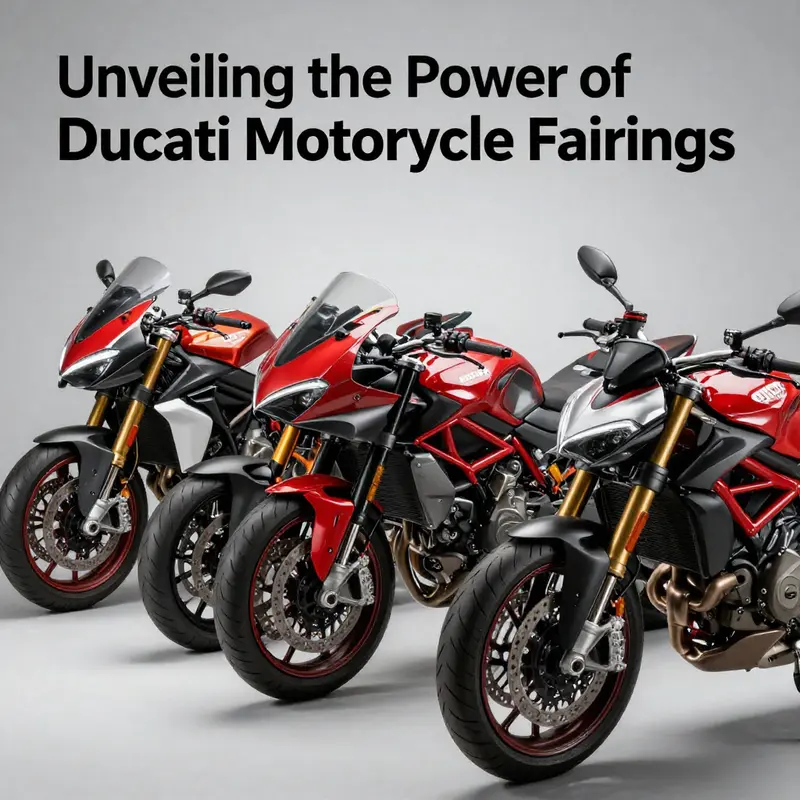
Fairings are more than skin. They define how a motorcycle cuts through air, protect the rider from wind and weather, and express the bike’s attitude. In the Ducati universe, fairings sit at the intersection of art and engineering. The official Ducati accessories program treats fairings as a complete system: full kits, panels, headlight fairings, windscreens, and the mounting hardware that ties everything to the frame. Buyers choose between raw, unpainted pieces ready for customization or factory-painted sets that align with the bike’s color language. This dual approach makes fairings a practical upgrade as well as a cosmetic statement. The choice is not simply about color or style; it is about preserving the bike’s intended geometry, cooling flow, and protection from the elements, while giving the owner a chance to tailor the silhouette to their riding philosophy.
Compatibility in Ducati’s world is intensely specific. The same bodywork that anchors a kit on one year might not align on another because the frame geometry evolved, the headlight shape changed, or the routing for sensors and electronic harnesses shifted. A fairing that looks identical on a showroom page can require different mounting points, different grommets, or even a different radiator side cover for a proper seal. This is why OEM or OEM-aligned aftermarket offerings emphasize exact fitment by model year and variant. For someone who values factory integrity, the path is straightforward: confirm the precise year and variant, then select the corresponding kit from the official catalog or from an authorized dealer. In practice, this means scanning a compatibility chart, or speaking with a dealer who can verify fitment before any order is placed. In a modern cycle, the fitment check is not cosmetic; it is a safety and performance check that ensures fairings do not interfere with cooling, electrics, or the steering sweep at lock.
Within the broader sportbike family, high-end fairing sets are designed to preserve or improve aerodynamics while offering an aggressive stance. The engineering intent is to minimize turbulence around the rider and engine, which yields more stable handling at speed and reduces drag. Yet the optimization cannot ignore access to maintenance items, headlight replacement, or the ease of service. A well-designed fairing system should enable straightforward removal, with access panels that feel precise and sturdy, not flimsy. The balance between rigidity and lightness is also central; a fairing that is too heavy or flexes under load can dull steering and alter weight distribution. The art here is to harmonize the fairing with the bike’s chassis, not merely to cover the frame with a glossy shell. This is where the official catalog stands as a reliable compass, because it lists kits with the dimensioned interfaces that align with the frame rails, mounting brackets, and instrument housings that define the bike’s silhouette year after year. For those curious about the full breadth of options, the official catalog is the best starting point, and it can be explored online with an accurate fitment filter that matches your bike’s year and variant. See the Ducati fairings catalog for a consolidated view of what is designed to fit what, including options to purchase raw or painted finishes and to confirm compatibility before any checkout step. Ducati fairings
Manufacturers of OEM and aftermarket components often emphasize finish and material as much as geometry. In addition to the standard fiberglass or plastics, carbon fiber headlight fairing components exist as part of the refinement process for riders who chase both performance and a premium aesthetic. A carbon fiber headlight fairing piece, for example, is offered as an accessory that replaces or complements the stock cover, with the caveat that it does not include an integrated illumination unit. The benefit of this approach is twofold: weight savings and a sharper, more taut visual line that signals high performance without compromising the headlight’s function when properly integrated. The availability of such carbon components varies by year and variant, which again underscores the importance of confirming exact compatibility before purchase. The market recognizes that enthusiasts want to push their bikes toward a more aggressive look while keeping the core structure intact, so the catalog system across official channels helps balance form and function.
From a consumer perspective, the path to acquiring a fairing kit starts with a clear sense of what you want to achieve. If the aim is to preserve factory geometry and color cohesion, the safest route is to select official parts intended for your bike. If, instead, the goal is to establish a bold, customized aesthetic that still honors the bike’s performance profile, after explaining your desired color story, one can consider unpainted components that invite a bespoke paint job. A crucial choice is between purchasing through the official accessories program or through a trusted dealer who can validate the fitment against the exact year and variant. The compatibility verification step remains essential. Because electronics, sensors, and cooling systems weave through the fairing, a mismatch can create fitment tension that does not surface until the bike is reassembled. This is exactly why reputable sellers provide compatibility guarantees or return policies that reflect the risk of misfit if the wrong variant is ordered. The ripples of this decision reach beyond the immediate installation; they shape how easy it will be to service, repaint, or replace panels during the life of the motorcycle. For those who want options beyond the showroom, the market does accommodate a spectrum of configurations, from full kits to targeted panels and windscreens that tune wind protection and rider posture, while retaining overall aerodynamics.
On the topic of sourcing and verification, the journey often starts with a reliable map of the official accessories landscape. The Ducati brand maintains dedicated pages where the current lineup of fairings and related components is organized by model families and by year. These pages offer precise fitment statements, part numbers, and purchase paths that minimize the guesswork of compatibility. For buyers who frequent third-party marketplaces, a careful approach is essential: filter by model year, check the listing’s compatibility notes, compare mounting hardware, and examine photos for mounting pattern matches. The habit of cross-checking part numbers against the manufacturer’s data reduces the chance of an expensive misfit. And because the bike’s fairing is a high-visibility feature, taking the time to verify finish options—raw, painted, or partially finished—helps ensure the final appearance aligns with the owner’s expectations and the bike’s existing color scheme. A thoughtful purchaser also considers whether the fairing’s surface requires prep work or priming before painting, as this can affect the ultimate finish quality and durability. In this landscape, an informed buyer benefits from both official sources and trusted dealers who can confirm model-year compatibility and guide choices about the level of finish that suits a rider’s ambitions. The integration of knowledge across channels reduces the risk of surprises after the package arrives from the warehouse.
Finally, there is a design discipline that binds function and identity together: the way fairings interact with cooling air, rider protection, and the rider’s sense of the machine as an extension of themselves. The fairing forms channel air toward the radiator and engine compartment while shielding vital electronics from weather and debris. They also define the rider’s posture by shaping wind pressure on the torso, shoulders, and arms at speed. When these systems align, the rider experiences a cockpit that feels both secure and connected to the chassis, a sensation that is hard to reproduce with a loosely assembled shell. The right fairing set works with the bike’s frame geometry to preserve the intended handling characteristics, ensuring that cornering response, stability, and feedback through the handlebars remain consistent with the design intent. This coherence between form and function is the core reason many riders are drawn to the factory or factory-aligned options and why the compatibility story matters as much as the aesthetics. It is not only about looking fast; it is about feeling fast when the air interacts with the machine in a precise, predictable way.
To the reader navigating the crossroads of performance, personalization, and reliability, the overarching message is simple: compatibility is not a bureaucratic gate but a practical guarantee that your investment remains faithful to the bike’s design language and to your own riding goals. With a clear understanding of model-year boundaries, a willingness to work through official channels, and a measured plan for finish and mounting, a rider can achieve a look that is as coherent as its performance. The dialogue between the builder and the design remains ongoing, with fairings acting as the visible bridge between mechanical precision and expressive style. In this light, choosing a fairing is less about chasing trends and more about respecting the design grammar that defines the motorcycle family. The reader can carry forward a mindset that blends curiosity with caution: research, verify, and connect with credible sources before committing to any purchase. And when it is time to install, the result is a panel set that fits with elegant certainty, protecting the rider and the machine while enabling the rider’s personal aesthetic to emerge with confidence and clarity.
Within this narrative, the role of fairings extends beyond protection and appearance. They are, in effect, a modular expression of performance engineering. They translate the raw power of a high-revving engine into a coherent silhouette that the wind respects. They protect the cockpit from weather and debris, support the rider’s posture, and influence how heat and air flow around the engine, which in turn can affect throttle response and engine temperature management. The interplay between material choices, mounting accuracy, and finish options yields a spectrum of outcomes, from clean, race-inspired lines to more restrained, street-ready aesthetics. The choice, ultimately, rests on the rider’s goals, the level of alignment with factory geometry, and the patience to verify fitment across model year boundaries. When this careful approach is adopted, the fairing becomes more than a cosmetic shell. It becomes part of a system that enables the rider to perform at the edge of speed, while maintaining reliability and a cohesive visual identity across a journey of miles and seasons.
With all these points in mind, the reader is reminded that a Ducati fairing project is as much about process as product. The path from concept to installation includes understanding compatibility maps, selecting the right finish, and choosing a purchase channel that offers clarity and support. It is a path that rewards diligence: the right piece slides into place, the finish mirrors the bike’s tone, and the rider experiences a sense of unity between machine and destination. In the end, a well-matched fairing set sustains the bike’s integrity, enhances its presence on the road, and honors the rider’s choice to tailor a machine that embodies both performance and personality. The result is a motorcycle that looks, feels, and performs as one integrated system. External reference: https://www.ebay.com/itm/Ducati-Performance-Genuine-Monster-Fairing-and-Smoke-Windshield-for-M900-900-M750/364815254625
Between Factory Fidelity and Personal Flair: Navigating Ducati Fairing Customization
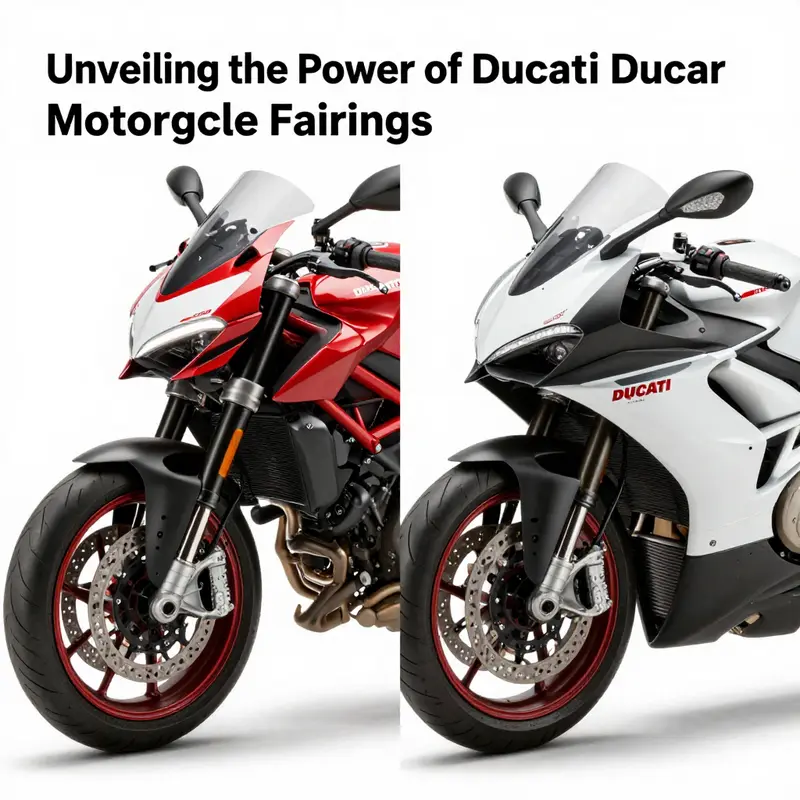
A Ducati’s fairing is more than a stylish shell; it guides air, protects components, and communicates the rider’s intent. Choosing between OEM and aftermarket panels becomes a decision about fit, electronics, and how the bike feels at speed.
OEM fairings offer predictable geometry, factory finishes, and documented install steps. They tend to integrate cleanly with lighting, harness routing, and sensors, preserving resale value and ensuring consistent support from the manufacturer.
Aftermarket kits expand color, texture, and contour options, letting riders tailor weight distribution and airflow. But fitment can vary by model year, and some kits require extra trimming, alignment work, or repainting to achieve a cohesive look. The best path often blends caution with creativity: verify model-specific fitment, check clearances, and consider professional installation to protect warranty and reliability.
In the end, the choice reflects priorities: authenticity and reliability with OEM, or expressive breadth and potential cost savings with aftermarket. A staged approach – test fit, compare hardware, and plan color and finish – helps ensure the result harmonizes form, function, and road presence.
Wings of Downforce: How Ducati Fairings Shape Aerodynamics, Efficiency, and Riding Precision
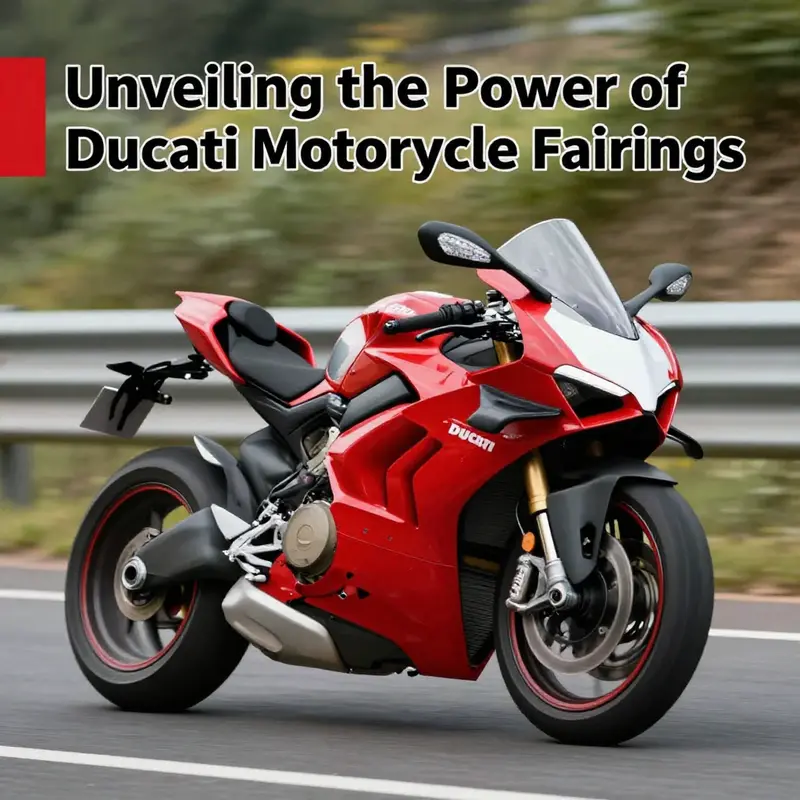
The fairing is more than a sculpted shell wrapping a motorcycle; it is the controlled interface between wind, heat, weight, and rider intent. On a machine built for blistering acceleration and razor-sharp handling, fairings are the carefully tuned wings that translate raw power into traction and control. This chapter moves beyond the cosmetic appeal of curves and color to explore how Ducati’s aero-conscious approach turns lightweight shells into a comprehensive performance system. The story is one of precision: how shaping air over and around the bike reduces drag where it saves time, channels cooling where it protects performance, and channels that same air into a more confident, intuitive ride. The result is a motorcycle that feels faster not merely because it is faster in a straight line, but because it remains controllable, stable, and predictable when the pace climbs in corners, on brake revivals, or when the throttle is teased wide open after a sweep of compression and treeline wind. In the arena of high-performance riding, the fairing is a language—the grammar through which speed, stability, and rider feedback become a single, readable experience.
The racing pedigree behind Ducati’s aerodynamic program is a reminder that even minute gains matter. In the high-stakes environment of competitive sport bikes, every improvement in downforce, air separation, or cooling airflow can alter the outcome of a race. The aero developments borrowed from racing workflows show up on the streetable models as a philosophy: design for downforce to keep the front end planted and the rear wheel engaged with the road, while also smoothing the airflow to prevent the engine, brakes, and radiators from overheating during sustained hard riding. When a rider tucks in on a fast section, the fairing’s role becomes almost tactile—the way it whispers to the wind and to the rider through a carefully contoured surface, guiding air around fork crowns, fairing flanks, and the upper curves that define the machine’s silhouette. In this balance between drag reduction and downforce, the bike gains not just top speed but a sense of composure that makes a rider feel more connected to the machine, as if the wind itself becomes part of the ride rather than a resistive force to overcome.
A closer look at the engineering reveals a simple, transformative truth: more efficient airflow lowers the work the engine has to do and reduces the likelihood of heat soak in demanding conditions. Ducati’s aero package, developed in collaboration with its racing division, demonstrates that wing configurations and carefully placed air channels can generate meaningful vertical load. In quantified terms, aero upgrades on a flagship model have been shown to increase downforce by roughly thirty percent compared with the base configuration, a figure that translates into improved tire grip and cornering confidence at higher speeds. The most extreme iterations of the aero program push that downforce even further—toward a fifty percent uplift—dramatically elevating the rider’s ability to push into bends and accelerate out of them without the stability tug that unsettles traction. These figures are not abstract theoreticals; they describe a disciplined cascade of effects: more pressure on the front tire, more consistent tire temperature, and the ability to carry more speed into the apex with less slip risk. The cumulative benefit is a ride that feels more planted, more communicative, and more precise at the limit.
Beyond downforce, the fairing architecture actively optimizes how air flows around the bike’s body and through its cooling pathways. Redesigns that incorporate corner-sidepods and refined winglets help distribute aerodynamic loads more evenly across the chassis. This distribution matters because it reduces turbulence and helps front-end stability, even as the rider leans aggressively into a corner. In addition, these elements contribute to more efficient cooling by guiding fresh air toward the radiators and braking systems. When engines and brakes perform under sustained load, heat management becomes a limiter; better airflow helps keep temperatures in check, preserving performance and reducing the likelihood of thermal throttling. The result is a bike that can accelerate hard, maintain a high pace, and do so without sacrificing reliability or the rider’s confidence. The air that would otherwise buffet the machine becomes a partner in the ride, supporting grip, speed, and control rather than opposing them.
The story of aerodynamics is also a story of simplification, a paradox that is at the heart of true performance engineering. In practical terms, advances in aerodynamics allow riders to rely less on electronic aids and advanced mappings to maintain control. By shaping the air to deliver more traction and stabilize the chassis, the aero package makes it easier to translate power to the ground. The rider experiences a more intuitive response to throttle input—the sensation of being able to open the throttle earlier and hold the line with less fear of spinning the rear or washing wide. In this way, the fairing serves as a bridge between raw horsepower and human control: it doesn’t replace skill, but it makes the rider’s skill more forgiving and more effective. The philosophy here is that a well-designed fairing does not merely reduce drag or increase speed; it enriches the riding experience by making the bike more predictable and easier to ride at the edge of performance.
Hardware and materials further reinforce the aero story without breaking the day-to-day usability that riders value. Lightweight composites and carbon-fiber components are integrated with the bike’s structure to minimize weight while preserving strength where aerodynamic loads are highest. A carbon-fiber headlight fairing option, for instance, demonstrates how material choices can shave grams from the front profile while maintaining stiffness and impact resistance. In addition to weight savings, the use of high-strength materials helps achieve the delicate balance between aggressive aero shaping and the rider’s visibility, ensuring that the wind remains a friend rather than an enemy. This approach—where performance, durability, and aesthetics cohere—embodies the broader ethos: optimal aerodynamics should amplify a rider’s confidence, not complicate the riding experience with unintended drag or buffeting.
For riders and builders alike, the fairing is also a gateway to customization and personalization. Authentic and aftermarket fairings offer unpainted, raw, or pre-painted options, with fitment tuned to a wide range of models and configurations. The choice between unpainted and finished units is not merely about color; it reflects how a rider intends to engage with the bike’s aero package. A bare carbon surface may emphasize the race-bred heritage of the machine, while a color-matched shell can highlight the street-ready elegance of the design. Either way, the fairing is a modular system that integrates with other components—brackets, vents, and glazing—to create a ride that aligns with a rider’s goals, whether those goals are scalding acceleration on a track or a more composed, visually striking presence on the street. The catalog of options invites riders to consider how each piece contributes to the overall balance of speed, cooling, downforce, and handling.
As a final note on the broader picture, the fairing is a core element of Ducati’s identity—one that links the brand’s manufacturing philosophy with its racing heritage. The integration of aerodynamics with power delivery, chassis geometry, and rider ergonomics forms a continuum where each design choice reverberates through the entire motorcycle. The result is a bike that embodies a working philosophy: performance is holistic, and every surface, every contour, and every intake is chosen because it serves speed and stability as a single, coherent objective. In this sense, the fairing becomes more than a component; it is the conduit through which Ducati translates a deep racing lineage into a remarkably accessible riding experience. The dialogue between air, heat, and rider intent is not a series of isolated improvements but a unified strategy that makes the machine feel faster, more efficient, and more precise. For enthusiasts exploring the breadth of what is possible in Ducati’s aero language, the catalog of fairings—where each piece supports the ride’s demands—offers a practical gateway to experiencing how aerodynamics and efficiency shape everyday performance.
To explore the available fairing options and configurations, you can browse the Ducati fairings catalog here: Ducati fairings catalog.
External resource: for a detailed, model-specific perspective on aerodynamics and performance, see the official racing-inspired aero documentation at https://www.ducati.com/en-us/motorcycles/panigale-v4/panigale-v4-my25-aerodynamics-performance
null
null
Final thoughts
Ducati motorcycle fairings serve as both an aesthetic enhancement and a functional necessity. For business owners in the motorcycle sector, understanding the complexities of fairings—including their aesthetic and performance contributions, compatibility with various models, customization opportunities, and purchasing insights—can greatly enhance customer engagement and satisfaction. By offering informed advice on fairings, businesses can not only cater to motorcycle enthusiasts but also create opportunities for deeper client relationships over time. Emphasizing high-quality fairings, whether OEM or aftermarket, can truly differentiate your offerings in the competitive motorcycle market.