
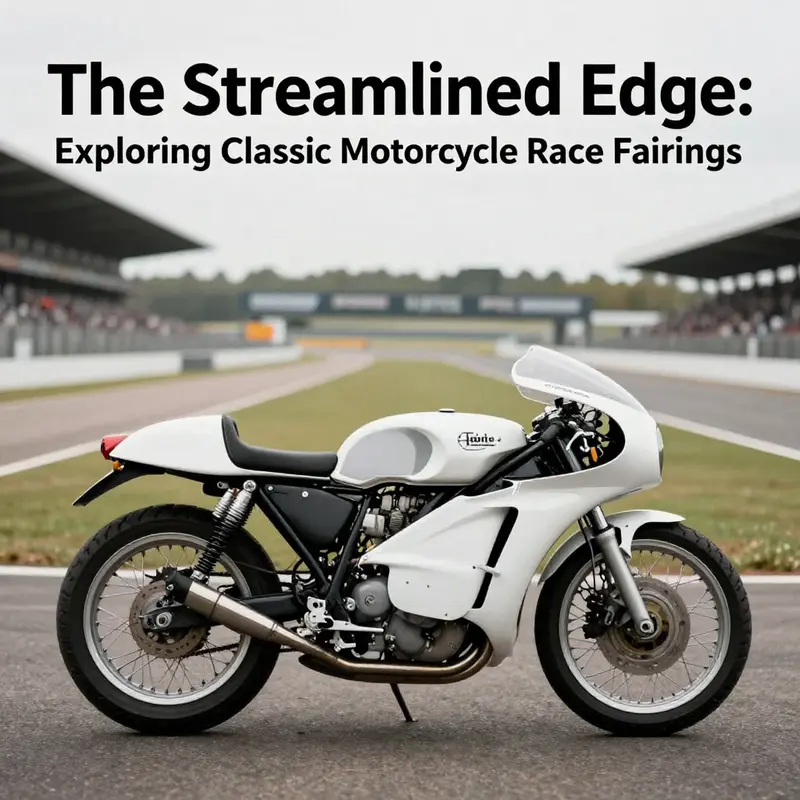
Classic motorcycle race fairings are not just about looks; they are crucial for optimizing performance on the track. For business owners in the motorcycle industry, understanding the mechanics of these fairings can lead to better products and informed business decisions. From their aerodynamic properties that minimize drag, to the materials that enhance their durability, and the evolution of their designs that connect modern engineering with vintage charm, the insights gained will elevate your offerings. This article will delve into the aerodynamics, materials, design evolution, and performance impacts of classic motorcycle race fairings, providing a comprehensive overview that could reshape your understanding and approach within the market.
When Form Meets Velocity: The Aerodynamics and Art of Classic Motorcycle Race Fairings
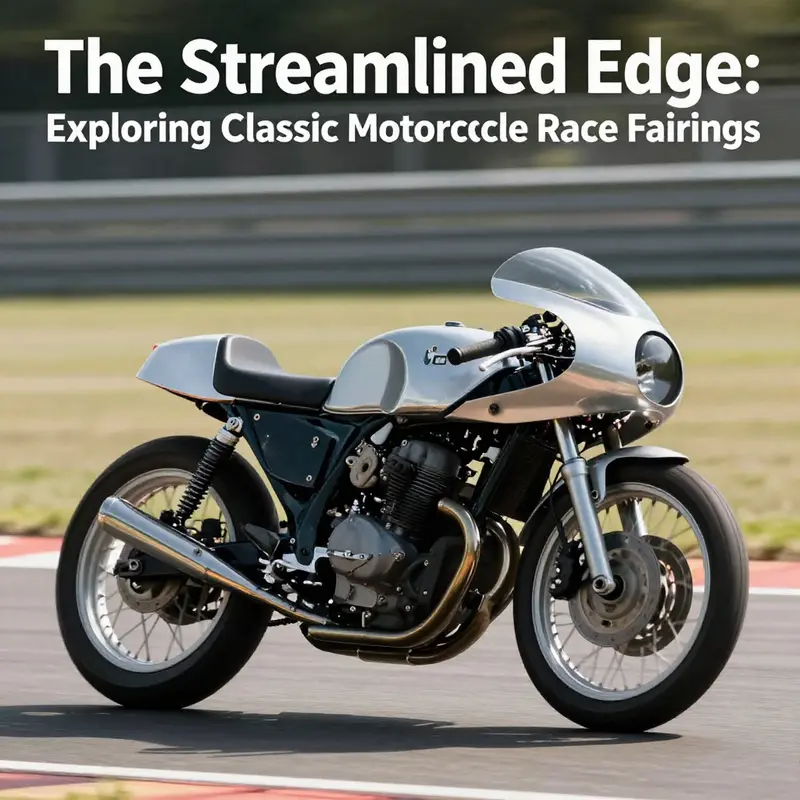
In the annals of motorcycle racing, fairings are far more than decorative shells. They are active tools that guide the machine through air with intention, converting wind resistance from a blunt adversary into a manageable force that supports speed, stability, and rider confidence. The classic race fairing embodies this philosophy at the intersection of material science, historical design, and aggressive riding. Its purpose is to sculpt airflow so the bike can slice forward with less effort, while still accommodating the rider in a compact, controlled envelope. The rider’s body becomes part of the aerodynamic equation, not merely a passenger in the wind. At high speeds, where drag grows with the square of velocity, the fairing’s task is to minimize that drag and to keep the flow attached, avoiding separation that would create turbulent wake and reduce cornering stability. The result is a silhouette that looks as purposeful as it feels, a legacy of decades of incremental improvements and a testament to how form and function can align under the pressure of constant competition.
The fundamental geometry of a classic race fairing is a study in balance. It envelops the engine, front forks, and fuel-tilling components in a streamlined contour that directs air along the bike’s length rather than allowing it to hit hard surfaces head-on. This enclosure is not a simple cloak; it is a carefully tuned system, where the shape of the nose, the curvature of the windscreen, the transition from the cockpit to the shoulder line, and the taper of the tail work together to control the pressure distribution around the bike. Narrow, pointed noses can reduce frontal area and push the peak of pressure aft, but they also raise the risk of buffeting on the rider’s helmet and shoulders. A broader, more gently curved nose may reduce that buffeting but at the cost of a slightly higher drag. Designers thus negotiate a spectrum of compromises, always with the rider’s ergonomics in view and the track’s demands in mind. On classic designs, these choices reflect a period when the sport was transitioning from raw mechanical gusto to a more calculated, wind-aware discipline.
Materials carry the weight of this engineering ethos. Carbon fiber entered the scene as a high-strength, ultra-light option that could be molded into complex, sculptural forms with minimal mass. Its stiffness helps the fairing resist deformation at speed, preserving the intended airflow even as the bike leans into a corner. Fiberglass offered a versatile, more approachable path to rapid prototyping and limited production runs, delivering good impact resistance and forgiving damage characteristics. High-grade ABS plastic provided a robust middle ground, combining durable surface finish with relatively straightforward manufacturing. The choices are about more than weight; they shape how the panel absorbs impact, how easily repairs can be made after a weekend of racing, and how faithfully the surface can be finished to reduce friction at the boundary layer where air meets the fairing. Each material contributes a distinct whisper to the fluid dynamics of the machine, a subtle signature that shows up in handling, throttle response, and the rider’s sense of the air’s behavior at the limits of adhesion.
Weight matters in multiple ways. Reducing the fairing’s mass improves the power-to-weight ratio and can enhance acceleration, braking stability, and corner speed. But lightness must be earned without sacrificing stiffness, impact resistance, or the ability to maintain a consistent aerodynamic profile under load. A well-engineered panel carries its strength in the right places—where the airflow exerts the most strain—and curves that support the bike’s natural buoyancy in the air. A common approach is to craft fairings with layered laminates that maximize stiffness while allowing controlled flex where it contributes to aero performance, a subtle but real effect on how the bike responds to sudden throttle application or a quick chop of the brake into a corner. The surface, too, matters: a perfectly smooth finish reduces microscopic drag and helps the air alleviate and reattach itself gracefully, even as the bike punches into a strong crosswind.
The design language of these fairings speaks to the era that gave birth to modern racing aesthetics. They honor a vintage silhouette—the long, flowing lines that sweep toward a cockpit cocoon and a tail that tapers to minimize wake—while employing contemporary materials and manufacturing techniques. The aesthetic is not mere nostalgia: it is a performance statement. The shape implies a history of experimentation, where engineers and riders learned that a certain curvature could suppress lift at high speed, and that a careful transition from the nose to the cockpit could steady the rider’s hands and eyes. The visual identity—soft curves meeting tight lines, a seamless transition from tank to tail—invites the eye to follow the air’s journey around the bike, tracing a line that correlates with the rider’s lean angle and the bike’s velocity. In that sense, the classic fairing is as much a story about design language as it is about aerodynamic physics.
Among the practical realities, coverage and aerodynamics form a duo of trade-offs. The classic full fairing often envelops a large portion of the bike to maximize drag reduction and fuel efficiency at race speeds. This coverage improves the bike’s streamlining, but it also reduces rider wind protection, especially for upper-body exposure. On the track, the priority is speed and control, not long-haul comfort, so this formulation makes sense. It encourages a bike that is lithe and quick through the corners, with a cockpit positioned for optimal air smoothing and minimal buffeting. The rider’s armor—helmet, leathers, boots—complements the fairing, but the combination remains a trade, a solution tailored to the track’s demands rather than a universal touring setup. For enthusiasts who chase authenticity, the discussion extends to whether a restoration should preserve period line work or embrace a modernized laminate while retaining the same silhouette. Either path seeks the same end: a machine whose bodywork communicates speed in a language that is instantly recognizable to those who have followed the sport through its evolving decades.
The story of fairing engineering is inseparable from the workshop and the race track. The production of a classic fairing requires a disciplined approach to molding, curing, and finishing. The mold defines every line, the layup sets the stiffness, and the curing process locks in the resin’s properties. Vacuum bagging and autoclave curing are not merely production conveniences; they are essential practices that ensure uniform resin distribution, minimize voids, and achieve the ideal thickness in critical areas. A fairing panel that arrives under-dressed for the stress of a race will flex and flutter, which in turn disturbs the airflow and erodes precision through the turns. Conversely, an overbuilt panel adds mass, negating some of the performance advantage that aero-conscious design seeks to deliver. The craft, therefore, stands on the knife-edge between rigidity and resilience, a balance that a true enthusiast will appreciate every time the bike roars out of pit lane.
In the wider racing ecosystem, fairings contribute to a rider’s identity and the sport’s culture. Vintage racing communities celebrate the look that defined an era while embracing the reliability offered by new materials and manufacturing discipline. For the contemporary racer, an homage to the classics often means combining the familiar silhouette with modern composites and improved safety standards. The challenge is to maintain the sparkle of authenticity—the lines that evoke the bikes of yesterday—while ensuring that the components meet today’s standards for durability, crash resistance, and consistency under varied weather conditions. This synergy of heritage and modernity is what keeps classic fairings relevant and aspirational among builders and racers who want to honor the past without sacrificing performance in the present.
For those drawn to the practical side of fitment and compatibility, it is essential to consider how a fairing aligns with a bike’s chassis. The question is not simply how a panel looks, but how it attaches, how it complements the frame geometry, and how it preserves the intended airfoil characteristics across the travel range of the suspension. When authenticity matters, builders seek fairings that respect the bicycle’s original geometry and the rider’s seating perspective, ensuring that mounting points align and that the curve of the shell does not push the front wheel into unstable air when the bike is pushed toward the limit. In some cases, manufacturers or custom shops offer full fairings tailored for classic-line bikes, designed to preserve the period look while offering the precision and durability that modern materials provide. This approach is appealing to riders who want to honor the past while enjoying performance advantages compatible with today’s track environments. A reader drawn to this approach may explore the Yamaha fairings category to see how category-specific choices align with the chassis and rider ergonomics of vintage-inspired builds. Yamaha fairings category.
The aerodynamics chapter of classic race fairings continues to resonate because it frames speed as a collaborative process. The fairing is not a single, dominant factor; it is part of an ecosystem that includes the engine, the cooling system, the rider’s posture, the suspension’s geometry, and the track’s demands. A well-designed fairing reduces drag without compromising cooling, reduces lift without compromising steering feel, and maintains a surface that can be finished to a factory-like sheen while withstanding the abuse of a race weekend. These are the quiet wins—the drag reduction that translates into lower fuel use on long practice days, the steadier air behind the windscreen, and the smoother airflow that allows a rider to commit to a tighter line in the apex.
As the sport evolves, these classic shapes anchor a broader conversation about speed, form, and the culture that celebrates both. They remind us that the air a motorcycle must move through is not an enemy to be defeated but a phenomenon to be understood and guided. The fairing’s lines tell a history of trials, refinements, and the relentless pursuit of performance that defines racing itself. They also remind us that the present is often measured against a horizon set by those who first learned to read the wind and to translate its pressure into speed. The timeless dialogue between aerodynamic theory and practical, on-track demands continues to shape how enthusiasts approach restoration, customization, and competition. In that sense, the classic race fairing remains a living artifact—at once a museum piece and a high-performance component that presses the bike toward its ultimate potential.
For a wider, science-based perspective on how fairings influence speed and fuel efficiency in modern or classic contexts, see an external resource that delves into motorcycle aerodynamics: https://www.bikeexif.com/motorcycle-aerodynamics/
What Classic Race Fairings Are Made Of: Materials, Trade-offs, and Why They Matter
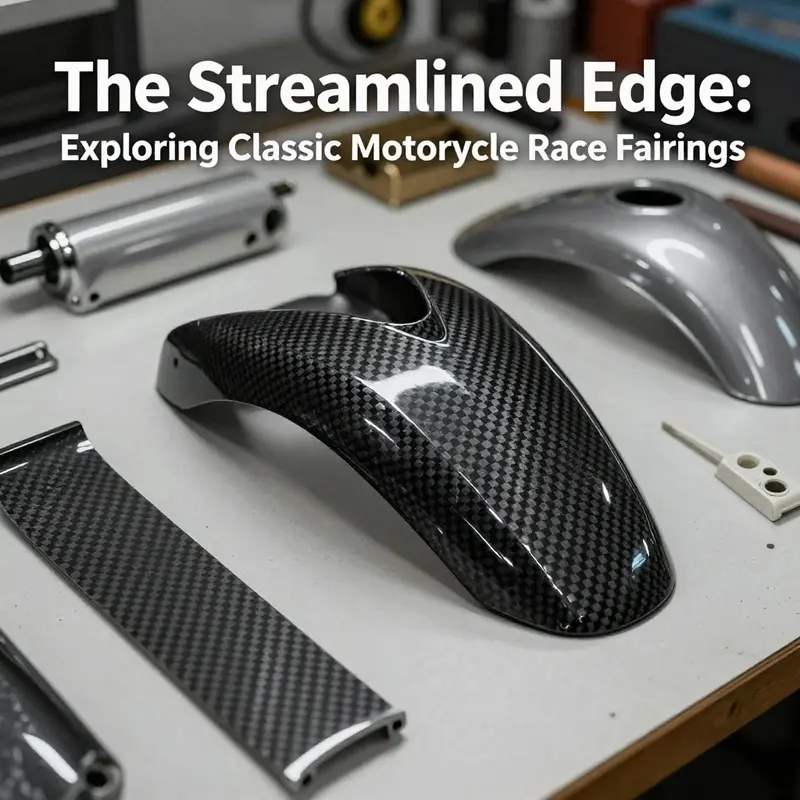
Materials shape performance and personality. Classic motorcycle race fairings are more than cosmetic shells; their material choices define how a bike behaves at speed, how it survives contact, and how faithfully it evokes racing heritage. For restorers, racers, and custom builders, understanding the strengths and compromises of fiberglass, carbon fiber, polyurethane blends, and plastics is essential. This chapter walks through the common materials used in classic race fairings, explains why each one became popular, and shows how modern techniques and expectations influence the classic look.
Fiberglass has long been the backbone of classic fairings. Composed of glass fibers embedded in a resin matrix, fiberglass offers an excellent balance of stiffness, toughness, and cost. Its greatest strength is moldability: complex curves, twin-eye headlight openings, and flowing single-piece tails can be produced relatively easily. The material absorbs impact energy without shattering, so in a low-speed crash a fiberglass panel will often crack or deform rather than snap into dangerous shards. For period-correct restorations that aim to replicate the 1970s through 1990s race bikes, fiberglass reproduces the original texture and flex characteristics most faithfully. It is forgiving in repair work too; small cracks and stress areas are straightforward to patch with resin and additional cloth, allowing a damaged fairing to be returned to track-ready condition without replacement.
Carbon fiber occupies the opposite end of the spectrum. When ultimate lightness and rigidity are the priority, carbon fiber delivers. Its tensile strength and stiffness per unit weight surpass fiberglass, allowing thinner shells with equal or superior structural performance. Riders seeking the sharpest handling and the quickest acceleration often specify carbon because saving kilograms from the frontal assembly improves the bike’s power-to-weight ratio and steering feel. Carbon’s aesthetic is also a key factor: the woven cloth pattern and deep, glossy finishes signal high performance. There are trade-offs. Carbon is costly and demands precision in layup and curing to avoid flaws such as dry spots or resin-rich areas that undermine strength. When damaged, carbon repairs are possible but more complex, often requiring partial replacement or expert re-lamination to restore original properties. For classic silhouettes that blend heritage looks with modern performance, carbon can be used selectively—reinforcing mounting points or inner skins while preserving outer surfaces that mimic original fiberglass shapes.
Polyurethane foam and resin composites occupy a niche between pure fiber composites and injection-molded plastics. These materials allow sculptural freedom and excellent impact absorption. A polyurethane core can be shaped and then coated with a reinforced skin to yield panels that withstand knocks and retain shape under repeated stress. Builders of sympathetic replicas or small-series classic fairings use PU composites to balance cost, impact resistance, and finish quality. The material’s energy-absorbing properties make it practical where slight deformation is preferable to brittle failure—important in club racing and vintage events that favor repairable damage over catastrophic breakage.
ABS plastic represents the lower-cost end of the spectrum and appears most often in replica or commuter-oriented fairings rather than professional race kits. Thermoplastic ABS is easy to injection-mold, permits tight dimensional tolerances, and accepts paint well. It tends to flex under load and may not offer the same high-speed stability as fiber-reinforced panels. Its resilience to small impacts and resistance to cracking make ABS suitable for road use and for riders who want the classic silhouette without the expense or fragility of premium composites. However, ABS has limitations in heat resistance and long-term UV stability unless specifically formulated and treated.
Resins—epoxy and polyester—are the unsung but vital components of composite fairings. They are the matrix that binds fiber reinforcement into a homogeneous panel. Polyester resin has historically been the workhorse for fiberglass fairings: it cures quickly, is inexpensive, and bonds well to glass fiber. Epoxy resins have gained ground where superior mechanical properties and adhesion are required. Epoxy yields stronger, more fatigue-resistant laminates with better moisture tolerance. For carbon fiber especially, epoxy is the resin of choice because it maximizes strength and stiffness. The resin choice affects not only performance but also repairability and finish quality. Epoxy repairs, for instance, bond exceptionally well and can be sanded to produce flawless surfaces for painting.
Understanding the trade-offs clarifies why fiberglass remains the hallmark of classic race fairings. It replicates period performance, offers easy repair, and keeps costs manageable for teams and enthusiasts. Yet modern restorations increasingly blend materials: fiberglass exteriors for authenticity, carbon fiber reinforcements for weight savings and strength where it counts, and polyurethane elements at impact-prone zones. This hybrid approach respects the classic aesthetic while leveraging modern reliability.
Manufacturing techniques also shape final performance. Hand-laid fiberglass kits allow artisans to control fiber orientation, tailoring stiffness and flex at strategic points like mounting tabs or around cutouts. Vacuum-bagging and autoclave curing—common in high-end carbon work—eliminate air voids and produce denser, more uniform laminates. Thermoforming ABS requires molds and fixtures but delivers consistent panel thickness and fitment, which suits large production runs. For one-off or small-batch classic fairings, gelcoat finishes applied to fiberglass give that period-accurate sheen and texture; painters can then add period-correct lacquer finishes or modern clearcoats depending on the owner’s preference.
Mounting and fitment are material-dependent concerns that often get overlooked. Fiber composites and PU parts behave differently at fasteners. Fiberglass has moderate creep resistance and needs well-distributed mounting points to avoid stress concentrations that can crack the shell over time. Carbon’s stiffness transmits loads more directly to mounting hardware, so engineers often integrate reinforced boss inserts or backplates to prevent localized failure. ABS can flex around fasteners, sometimes resulting in a looser fit unless reinforced with metal or composite inserts. Understanding these behaviors helps builders design subframes, brackets, and backing plates that protect the fairing while preserving serviceability.
Weight is an ever-present consideration in racing contexts. Even modest reductions in fairing mass translate into tangible handling gains. Removing unsprung weight near the front of the bike sharpens steering response; lowering overall mass quickens acceleration and braking. Carbon delivers the best returns here, but diminishing returns and budget constraints mean many teams find fiberglass layups optimized for minimal thickness provide a competitive compromise. The key is to place material where it matters—stiffer, lighter skins forward; tougher, slightly heavier materials in areas likely to be struck or to house instrumentation.
Repairability and lifecycle matter just as much as initial performance. Fiberglass shines in this respect because it can be repaired trackside with basic tools. For vintage racing organizations that value accessibility and cost control, the capacity to mend a cracked nose quickly can determine whether a rider continues in the event or is sidelined. Carbon repairs, while effective when done correctly, often need shop-level facilities and skilled technicians, which drives up turnaround time and cost. ABS and PU parts can be reshaped and heat-treated, but long-term structural integrity often demands replacement after significant impacts.
Aesthetic authenticity and finish options also guide material choices. Gelcoat textures and the way paint adheres differ between fiberglass, carbon, and plastics. For historically accurate restorations, the tactile and visual qualities of fiberglass—its slight give under the paint, the way it develops hairline stress lines—contribute to the period-correct look. Carbon offers a distinct modern visual. When period appearance is primary, builders often finish carbon parts with painted or veneered surfaces that mimic fiberglass while retaining the underlying performance advantages.
Finally, safety and regulations inform material selection. Racing bodies and classic series often set rules about fairing construction, materials allowed, and required mounting strength. These rules aim to ensure predictable failure modes and reduce hazards from shattered components. Compliance may dictate the use of certain fiber types, minimum thicknesses, or reinforcement of mounting points—factors that influence both design and cost.
For riders and builders seeking parts that fit specific models, many suppliers tailor fairings to make installation straightforward, accounting for frame geometry and mounting patterns. To explore model-specific options, see the selection of Yamaha fairings available for classic and modern bikes.
For technical background and official guidance on materials and manufacturing standards for motorcycle race fairings, refer to the Motorcycle Racing Association’s materials and manufacturing guide: https://www.motorcycleracingassociation.org/technical-resources/fairings-materials
Aero Craft Through Time: The Evolution of Classic Motorcycle Race Fairings
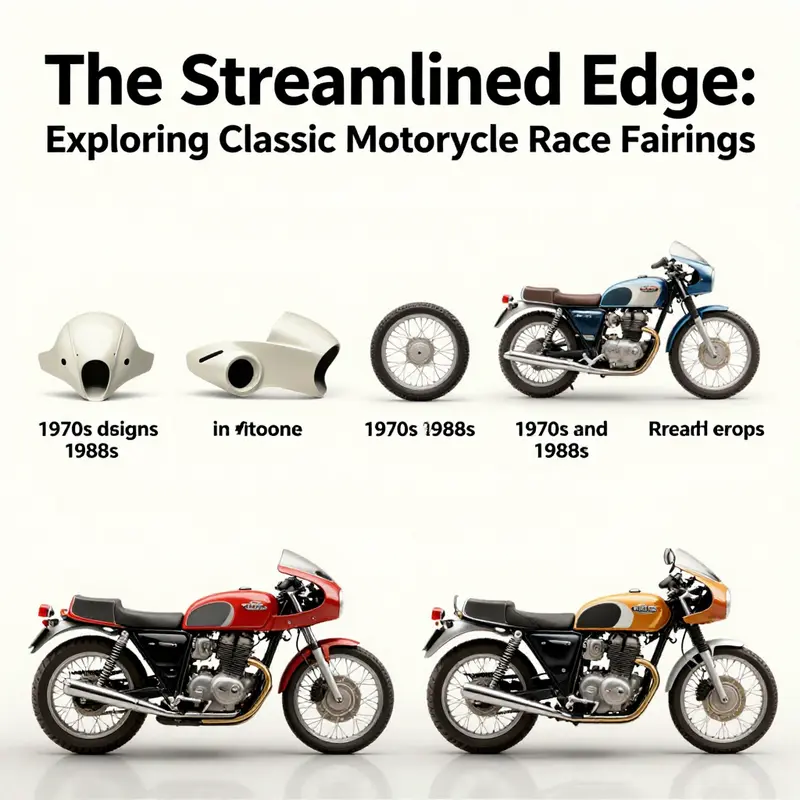
Air and metal, plastics and carbon, silhouette and stance—these are not just elements of a motorcycle’s look. They are the story of how a race machine learns to kiss the air with less resistance and more acceleration. The evolution of classic motorcycle race fairings reads like a careful negotiation between protection, performance, and personality. In the earliest days, fairings served as rudimentary shells, a practical step beyond bare engine casings to shield the rider from wind and debris. The emphasis then was functional: offer some shield, some rough protection, and a durable shell that could survive the harsh environment of a race track. As circuits demanded faster speeds and sharper handling, the fairing grew into more than a shield. It became a continuous, integral part of the motorcycle’s aerodynamic package, a shaping of air that could influence downforce, stability, and the rider’s own control over the machine. The arc from boxy, protective forms to sleek, integrated contours traces a path through design, material science, and engineering philosophy, all seeking to coax more performance from a given chassis without sacrificing rider safety or the classic identity that drew riders to these machines in the first place.
In the earliest phases, materials were straightforward and readily workable. Sheet metal, simple plastics, and lightweight composites were chosen not primarily for their surface finish but for their ability to be shaped with available tooling and to endure the rough realities of racing. The aesthetic of these early fairings was a byproduct of practicality. They tended to be more permissive of seams and blunt angles because the priority was to cover and protect rather than sculpt. At the time, aerodynamics as a discipline was still evolving; the understanding of flow separation, vortex formation, and the nuanced interplay between rider and bodywork was advancing in laboratories and on wind-tunnel benches, not yet fully integrated into the showroom floor. The rider’s position, the bike’s geometry, and the track’s demands created a rough recipe: a fairing that could stay intact under heat and vibration, with lines that shielded the rider while presenting the least possible obstacle to the engine’s cooling system.
As racing technology progressed, the shapes began to shift from pragmatic shells toward more deliberate aerodynamic forms. Designers observed that airflow around a rider and engine was not merely a side effect but a primary protagonist in the performance story. The fairing began to alter itself with purpose, evolving toward integrated contours that wrapped more completely around the rider and the powerplant. The aim was to manage airflow with surgical precision: guiding streams of air to critical components, delaying boundary-layer separation, and reducing parasitic drag that sapped speed on the straightaways. The improvement was tactile as well as numerical. Riders reported enhanced high-speed stability, reduced buffeting, and greater confidence in the bike’s behavior as it approached and exceeded the 150-mph mark. The transition from simple, boxy shapes to more curved, continuous surfaces reflected a growing consensus that the rider’s silhouette and the engine’s intake and cooling pathways could be harmonized through thoughtful, aerodynamically informed design.
Alongside shape, the fairing’s functional integration began to matter more. The era that followed saw fairings grow not only in size or smoothness but in their ability to house essential performance elements. Intake ducts, cooling vents, ram-air feeds, and guided airflow tubes moved from afterthoughts to essential components of the engine’s life support system. A well-designed fairing could channel cooler air to radiators and intakes while also acting as a conduit for air to the rider’s chest in a controlled, stable fashion. This functional integration transformed the fairing from a cosmetic shell into a lightweight, performance-critical system. It was no longer enough to simply shield the rider; the fairing had to contribute directly to the bike’s thermodynamic balance, its engine efficiency, and its predictive handling under braking, cornering, and acceleration.
Material innovations emerged in tandem with these shifting design priorities. The shift from heavier metals to advanced composites—particularly carbon fiber and fiberglass, with high-grade ABS plastics for certain applications—was a watershed moment. The advantages were clear: reduced weight, improved stiffness, and the ability to craft thinner, more aerodynamic forms without sacrificing structural integrity. The weight savings were not abstract; they translated into tangible shifts in the power-to-weight ratio and agility. A lighter fairing means less moment of inertia to manage, which, in turn, grants the rider and the chassis greater responsiveness in quick direction changes and high-G cornering. At the same time, composite materials offered the possibility of complex layups and curvature that were simply impractical with traditional metals. The surface could be tuned with precision, delivering a factory-like finish while enabling more aggressive shapes that optimized camber, rake, and ride height relationships on the bike’s frame.
The aesthetic dimension of classic race fairings should not be overlooked. As performance engineering matured, designers paid homage to vintage racing motorcycles by preserving the iconic lines and color schemes that defined an era. The retro silhouette—long, sweeping fairings that enclosed the rider and integrated air management with a sense of speed even when stationary—remains a beloved hallmark of classic kit styling. Yet within those timeless outlines, modern engineering pushed the boundaries of what was possible. The result is a synthesis: fairings that carry the memory of an earlier era while leveraging contemporary materials, manufacturing methods, and aerodynamic theory to deliver real-world performance benefits. This is where the romance of retro aesthetics meets the discipline of modern fabrication, creating components that are authentic in look and relentless in function.
A practical example of this synthesis can be seen in how fairings are tailored to fit classic models and chassis geometries while still realizing contemporary performance goals. Modern suppliers design full fairings that align with the frame geometry and aerodynamic profile of older bikes, ensuring a seamless integration with the rider’s seating position and the engine’s cooling demands. The result is not a generic aftermarket shell but a carefully engineered package that respects the original bike’s proportions while providing improved stiffness, better surface finish, and more precise tolerances. In this context, the fairing becomes a customized performance system rather than a one-size-fits-all add-on. Such an approach is essential for vintage racing series and for enthusiast builds where authenticity and capability must coexist. It also underscores the importance of compatibility with the bike’s line, weight distribution, and the centers of gravity that govern handling and feedback at speed.
The manufacturing narrative of modern classic fairings complements this story of form and function. Composite layups, resin systems, and curing methodologies—whether vacuum-assisted resin transfer or autoclave curing—allow mass production to approach the polish of a hand-laid finish without sacrificing repeatability and performance. The ability to control resin content, fiber orientation, and void content translates into predictable mechanical properties and more reliable high-speed behavior. In practice, this means fairings that resist deformation under pressure, maintain aerodynamic integrity through heat cycles, and sustain the sharpness of line work when exposed to track-day grits, oils, and weather. The resulting surfaces exhibit a factory-grade sheen that makes them visually coherent with the bike’s classic heritage while signaling a modern commitment to engineering discipline.
As the design language matured, wind tunnel testing and computational fluid dynamics became standard tools in shaping the final forms. Designers could simulate how a given silhouette would interact with air streams around the rider, engine, and radiator without the cost and time penalties of iterative, full-scale testing. CFD and wind tunnel data revealed subtle truths about drag coefficients, lift forces, and flow separation that would have been difficult to glean from on-road trials alone. Every curve—every crease in the fairing’s surface—was chosen to optimize the balance between front-end stability and mid-corner downforce, all while preserving a rider’s line of sight and leg clearance. The modern fairing thus becomes a kind of aerodynamic instrument, calibrated to work in concert with the chassis and the rider’s control inputs rather than a passive external shell.
For those drawn to the nuances of how design reflects legacy, the logical thread is unmistakable. The classic fairing embodies a philosophy: honor the lineage of the racebike while embracing the tools and insights of present-day engineering. This dual allegiance—memory and method—drives a continuous refinement of shape, material, and process. Material science, in particular, has opened doors to forms that could not have existed a generation ago. Carbon fiber’s high stiffness-to-weight ratio, for instance, allows for tight three-dimensional contours that reduce drag without compromising impact resistance. Fiberglass balances affordability with performance, enabling aggressive styling and robust repair options after a scratch or a tumble. ABS plastics provide resilience and surface finish versatility, helping maintain the sharp, factory-like appearance that enthusiasts prize. The interplay of these materials, chosen for specific regions of the fairing based on load, airflow, heat, and impact exposure, demonstrates how modern race fairings are truly composite systems—physical embodiments of aerodynamic theory, structural engineering, and design language.
From the perspective of a rider or a collector, the fairing’s evolution is also a narrative about identity. The bike’s silhouette, the colors and lines that mark its heritage, and the way the fairing catches the eye at a standstill or in a paddock all contribute to the story of speed and craft. The retro-inspired shapes emerge not merely as homage but as testaments to what happens when a classic frame is reimagined through the lens of contemporary materials science. In practice, these fairings offer a tangible return: improved handling, quicker response, and better heat management, all while preserving the look that makes a vintage race bike instantly recognizable on the grid. Enthusiasts value this balance, seeing fairings as an entry into a broader culture of restoration, customization, and competitive vintage racing where authenticity, performance, and a modern engineering mindset converge.
For readers who want to explore the broader catalog of bodywork options while staying rooted in the classic aesthetic, the landscape offers a spectrum of choices that honor the past and push toward the present. A look at the Yamaha fairings catalog, for example, demonstrates how contemporary composites and precise fabrication can translate a vintage silhouette into a ride that remains faithful to its origins while delivering measurable performance gains. Such catalogs illustrate how the essence of classic design persists even as production methods and performance targets evolve.
The story of classic race fairings, then, is a continuous dialogue between form and function, material and morph, heritage and optimization. It is a narrative of how a panel of lightweight, carefully engineered skin can influence a motorcycle’s behavior as surely as any engine tune or suspension adjustment. It invites riders to experience speed not as a raw transfer of power but as a carefully choreographed interaction with air. It invites designers to honor what came before while inventing what comes next. And it invites enthusiasts to see fairings not as mere covers or cosmetic additions but as essential, living components of a racing machine—where every line carries purpose, every angle serves a function, and every performance gain is measured not just in speed, but in the rider’s confidence and the machine’s enduring character.
External reading and deeper material science context can extend this understanding. For a more technical exploration of the materials that have enabled these advances, see the ScienceDirect article on fairing materials. This resource complements the historical arc with a rigorous look at how composites perform under the thermal and mechanical demands of high-speed racing: https://www.sciencedirect.com/science/article/pii/S014296122300789X. For a practical glimpse into how these ideas translate into real-world builds and catalogs, explore internal references to the broader fairing categories, such as the yamaha-fairings collection, which showcases how traditional silhouettes are realized with modern fabrication methods.
In sum, the evolution of classic motorcycle race fairings is a story of precision and personality. It chronicles a design journey from protective shells to high-performance aerodynamic surfaces, all the while preserving the expressive lines that mark vintage racing’s identity. It is a testament to how careful engineering, advanced materials, and a respect for history can combine to keep the oldest forms of speed alive in a world where every gram, every curve, and every airflow path matters on the stopwatch.
How Classic Race Fairings Transform Speed, Stability, and Rider Control

How classic race fairings transform speed, stability, and rider control
Classic motorcycle race fairings do more than dress a bike in nostalgic paint and period graphics. Their shapes, materials, and integration with rider ergonomics actively reshape the physics of two-wheel performance. When a fairing is designed with purpose—honoring the lines of vintage racers while employing contemporary engineering—it becomes an aerodynamic tool, a structural asset, and a comfort system all at once. This chapter explores how those combined roles translate into lap-time gains, improved handling, and a safer, more consistent ride under the demands of competitive and enthusiast riding.
At the core of a race fairing’s influence is drag reduction. Airflow that encounters a naked frame and rider produces form drag and turbulent wake. A well-contoured classic fairing smooths the leading edge presented to the wind, directing air in planned paths. That streamlining reduces the coefficient of drag and lowers the force opposing forward motion. The effect is not only higher top speeds on straights but also a less taxed engine at race pace. Reduced aerodynamic load allows riders to sustain higher average speeds across a lap, particularly where successive acceleration zones follow brief deceleration.
But drag is only one facet. Lift and stability change dramatically with bodywork geometry. Classic fairings evolved to tame lift at high speeds by shaping the upper surfaces and the transition around the rider. Subtle curvature and lip features that once emerged from rider experience are now refined through flow analysis and wind-tunnel testing. The outcome is improved downforce where it matters: across the front wheel and the bike’s centerline. That increased vertical load enhances front-end grip and reduces the tendency for the chassis to become light and twitchy when the throttle is opened. For riders pushing the limits, this translates to confidence entering high-speed sweepers and a reduced margin for suspension upset caused by aerodynamic surge.
Integrated into these aero gains is the critical relationship between fairing weight and the motorcycle’s dynamics. Classic race fairings built from advanced composites—lightweight fibers and resins—trim kilograms from the machine without sacrificing strength. Lower mass improves the power-to-weight ratio directly and benefits transient responses. Reduced rotating mass and unsprung weight allow the chassis to change direction more willingly. In practice, this means quicker direction changes, faster corner entry and exit transitions, and more forgiving behavior when a line correction is required mid-corner. The weight savings also lessen rider fatigue over a race distance: less energy is required to reposition the bike, and the machine feels more agile through successive corners.
Stability and agility can seem at odds, yet an effective classic fairing harmonizes them. Designers balance long, smooth surfaces that favor straight-line stability with tapered rear sections that reduce turbulent wake. The result is a compromise that keeps the bike planted at speed without blunting its responsiveness in technical sections. For vintage-style fairings fitted to modern chassis, careful attention to mounting points and stiffness is necessary. A flexing fairing can introduce unpredictable aero behavior, so reinforcing panels at key attachment zones preserves the intended airflow and prevents load-induced distortion. Riders perceive the difference: a stiff, well-fitted fairing feels like an extension of the chassis rather than an accessory.
Rider positioning is another area where classic race fairings exert influence. Traditional race posture—tucked chin, shoulders low, knees tight—minimizes frontal area. Classic fairings are designed to complement this posture by providing a sheltering pocket that channels air around the rider instead of against them. The smoother the transition from windscreen to torso, the less turbulent wake forms behind the rider, and the less compensatory torque the rider must apply. On longer stints, this aerodynamic assistance reduces energy expenditure and helps maintain focus. Additionally, a fairing’s screen profile affects sightlines and head stability. A well-shaped screen minimizes buffeting at helmet level, reducing neck strain and improving the rider’s ability to scan corners and apexes consistently.
Thermal management and ventilation are practical, performance-driven elements often overlooked in aesthetic discussions. Classic race fairings with integrated ducting and vent ports provide airflow where it matters: to the rider and to critical engine components. Ventilation reduces cockpit heat, preserving rider stamina and mental acuity during races where temperatures climb. Cooling airflow directed through the fairing can also aid engine and brake cooling, maintaining power delivery and reducing fade. Thoughtfully located vents maintain aerodynamic continuity while delivering targeted cooling—another area where retro styling and modern engineering meet to preserve form and function.
Durability under race conditions is essential. Advanced composites used in modern interpretations of classic fairings resist impact, flex, and fatigue better than many original-era materials. When a rider makes light contact with barriers or the ground, the fairing’s composition determines whether it shatters or slides and whether it retains structural integrity. Resilient composites can absorb energy, reduce sharp fragments, and protect mounting hardware. That protection extends to the rider and the machine, minimizing secondary damage and allowing faster pit repairs. In vintage racing series, where authenticity is prized, this balance between period-correct lines and modern materials is a key reason classic fairings remain popular.
The interplay between fairing design and suspension tuning is subtle but important. Aero loads change how a motorcycle responds to the track surface and rider inputs. Increased downforce can call for suspension re-valving to maintain optimal contact patches and prevent the chassis from becoming overly stiff at certain speeds. Conversely, a lighter fairing might reveal previously masked chassis flex, requiring reinforcement or changes to geometry. Experienced teams treat the fairing as part of the suspension system: they test and tune with fairings fitted to ensure spring rates and damping match the altered aerodynamic and weight characteristics. This integrated approach yields predictable chassis behavior across varying speeds and conditions.
Beyond the track, classic race fairings shape the rider’s emotional connection to the machine. When performance upgrades respect historical design cues, they deliver a psychological boost. Confidence, after all, is measurable on lap times. A rider who trusts their bike’s stability and feels sheltered from turbulent wind will ride smoother lines and brake later. That trust is reinforced by the tactile feedback a fairing provides—how wind noise is shaped, how the bike resists buffeting, and how predictable the motorcycle feels entering irregular surfaces. These sensory factors complement the measurable aerodynamic and weight benefits.
Adapting classic fairings to modern engines and frames requires careful attention to fitment and air management. Full kits for specific models often include belly pans, tail sections, and modified mounts to respect frame geometry and ensure weight distribution remains balanced. Kits tailored to a model consider the original bike’s center of mass, steering axis, and rearset positions, preserving handling characteristics while delivering aerodynamic advantage. For owners of classic machines upgraded with modern components, fairings must be matched to keep cooling passages accessible and to avoid obstructing routine maintenance.
Testing and validation remain essential. Computational fluid dynamics and on-track measurement tools can reveal how subtle contour changes alter pressure fields and separation points. Wind-tunnel testing confirms real-world behavior and helps refine elements like screen angle and chin shape. Iterative testing—ride days, looped runs, and timed sessions—ensures theoretical gains translate to lap-time improvements. When such development is combined with rider feedback, the result is a fairing that blends historical silhouette with contemporary performance criteria.
Finally, the ongoing appeal of classic race fairings lies in their versatility. They suit professional competition, vintage racing classes, and custom builds where period aesthetics meet performance upgrades. Riders and builders can preserve the look of a golden racing era while benefiting from modern materials and engineering practices. That fusion keeps classic fairings relevant: they offer tangible aerodynamic and handling benefits, improved safety through stronger materials, and rider-centered comforts that sustain performance over distance.
For riders seeking fairings tailored to specific models, manufacturers offer fitment-focused kits that maintain the bike’s geometry and improve its aerodynamic profile; for example, dedicated fairings for well-known sport models are widely available and engineered to match frame lines and intake paths. Practical resources that describe aerodynamic design and safety considerations further illuminate how classic design principles remain valid when updated with modern materials and analysis. See this external resource for an example of aerodynamic refinement applied to rider equipment: https://www.shoei.com/en/products/x15/
An internal resource that connects these ideas to specific model applications is the selection of fairings designed for YZF series machines, which illustrates how model-specific kits balance vintage form with modern fitment and performance: https://ultimatemotorx.net/product-category/yamaha-fairings/fairings-for-yzf/
Final thoughts
Classic motorcycle race fairings serve as a pivotal element in both performance and aesthetics, bridging the gap between retro charm and cutting-edge technology. For business owners, understanding the integral role these fairings play can enhance product offerings and cater to a discerning clientele seeking authenticity and performance. By investing in high-quality materials and embracing design evolution, you can meet market demands while enhancing your brand’s reputation in the motorcycle racing community.