
Introduction
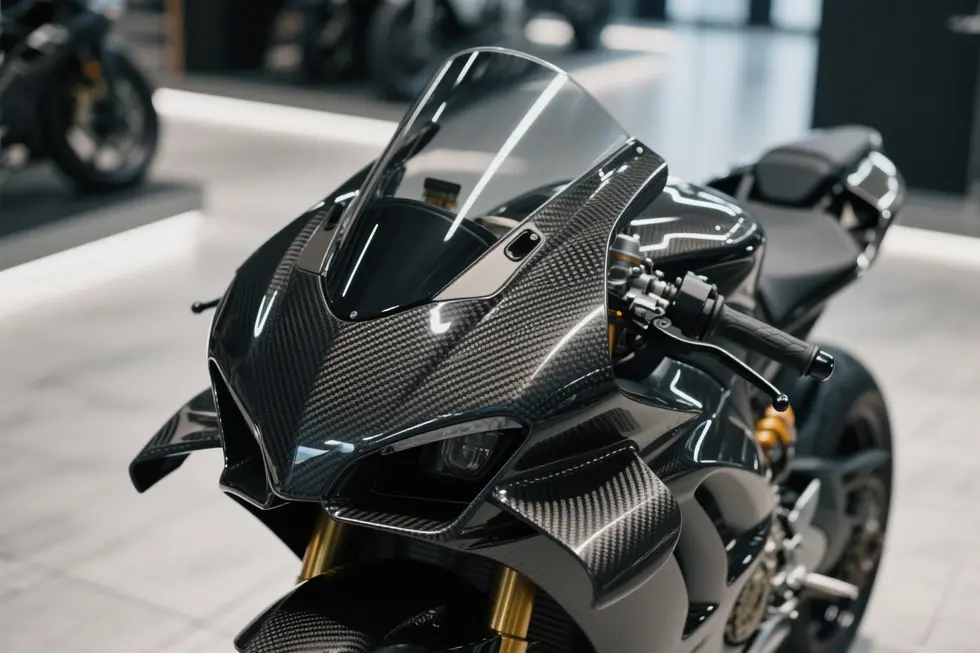
Carbon fiber motorcycle fairings have evolved from niche performance add-ons to strategic assets for brands seeking to differentiate on weight, strength, and aesthetics. For business owners across the motorcycle ecosystem—original equipment manufacturers, component suppliers, aftermarket distributors—these panels represent not just a product line, but a pathway to competitive advantage. Real carbon fiber delivers superior strength-to-weight and corrosion resistance that can translate into better handling, acceleration, and fuel efficiency, while high-quality ABS with carbon-fiber aesthetics offers cost-conscious options that still capture consumer demand for a premium look. Manufacturing choices—from raw material selection to pre-drilled OEM-fit holes and six-layer paint finishes—shape fit, installation ease, and warranty risk, all of which affect brand reputation and after-sales support. Moreover, market dynamics—from OEM partnerships to aftermarket adoption—are influenced by global supply chains, geopolitical developments, and shifting consumer preferences for race-inspired styling. This article unfolds the topic in three interlocking chapters: first, how aerodynamics and weight reduction translate into tangible performance and business value; second, the material science, production processes, and the competitive play between OEM-grade and aftermarket solutions; and third, the market landscape, cost structures, and societal considerations that affect pricing, sourcing, and long-term strategy. By connecting engineering realities with business decisions, owners can make informed bets on carbon fiber fairings that align with brand positioning and growth objectives.
Tables of Contents
Chapter 1: Chapter 1: Carbon Fiber Motorcycle Fairings—Aerodynamics, Weight Reduction, and Performance Implications
- From Weave to Wake: Technological Innovations and Aerodynamic Optimization in CFRP Motorcycle Fairings
Chapter 1: Chapter 1: Carbon Fiber Motorcycle Fairings—Aerodynamics, Weight Reduction, and Performance Implications
1. From Weave to Wake: Technological Innovations and Aerodynamic Optimization in CFRP Motorcycle Fairings
Carbon fiber reinforced polymer (CFRP) fairings sit at the intersection of material science, aerodynamics, and practical engineering. They are not merely cosmetic upgrades or lightweight skins; they are carefully engineered systems that influence how a motorcycle moves through air, how weight is managed under load, and how the rider experiences handling at limits of grip and speed. The appeal rests on a simple truth: when a panel remains stiff and strong while shedding mass, the motorcycle can respond more precisely to rider input, accelerate more readily, brake more confidently, and cut through air with less resistance. Yet achieving those benefits requires more than selecting a high-strength weave. It demands an integrated approach where layup architecture, manufacturing reality, and aerodynamic expectations are aligned from the first sketch to the final assembly. In this subchapter, the journey from carbon fabric to cockpit interface is traced through a continuous thread of design decisions that shape heat exchange, airflow management, and the nuanced dance between drag reduction and stability.\n\nThe core advantage of CFRP is its exceptional stiffness-to-weight ratio. The fibers themselves carry the load, while the resin binds and distributes stress, allowing the skin and any embedded components to resist bending and torsion with a fraction of the mass compared to traditional plastics or metals. This property translates directly into ride dynamics. Lighter fairings reduce parasitic inertia that otherwise jerks the front end during steering, improve engine and chassis response to rider inputs, and lower the effort required to maintain high-speed stability. But weight alone does not define performance. The sheer rigidity of CFRP enables designers to craft more aggressive, sophisticated shapes without the fear of warping, allowing air to flow along surfaces with fewer seams that act as flow disruptors. In practice, this means lower parasite drag and better power reserve to achieve higher top speeds or quicker acceleration, especially when cooling and engine bay ventilation are optimized in tandem with the skin’s geometry.\n\nMaterial selection and layup strategy are the primary levers through which performance is tuned. CFRP is anisotropic: its properties are directionally dependent, strongest along the fiber axis and weaker across the fabric weave. An intentional stacking sequence can tailor in-plane stiffness to resist wing-like bending under crosswinds, while still offering sufficient out-of-plane resistance to minor impacts. Engineers must balance these stiffness characteristics with the need to accommodate mounting points, radiators, vent ducts, and sensor housings. The art lies in orienting plies to reinforce critical load paths—such as near the chin, belly, and side panels—without creating stiff zones that could crack when the fairing is struck by road debris or subjected to repeated engine heat cycles.\n\nManufacturing reality sets practical boundaries on what is feasible. Prepregs cured in an autoclave deliver high quality, low void content, and predictable mechanical properties, but they demand controlled environments and lengthy cycles that elevate unit costs. Out-of-autoclave processes offer affordability and scalability, yet they require careful process control to avoid voids and excessive resin-rich areas that can compromise stiffness or surface finish. The chosen method influences not just performance metrics but also repairability and lifecycle costs. A fairing may boast extraordinary stiffness in theory, yet if it cannot be reliably repaired after a minor impact or is priced beyond race budgets, the design may fail to deliver its promised performance in the real world. Consequently, the design must weave together material science, process engineering, and economic considerations into a single narrative about value and performance.\n\nAerodynamic optimization in CFRP fairings hinges on more than sleek lines. It incorporates the full spectrum of flow physics: boundary layer behavior, flow separation, trailing-edge wake interactions, and the subtle interplay between the rider’s wake and the front-end geometry. In practice, designers aim to minimize parasitic drag while preserving or enhancing downforce and steering stability. A fairing’s geometry dictates how air accelerates around curves, how pressure gradients manage the formation of vortices at the wing-like corners, and how heat-exchange passages influence local temperature fields that can alter air density and flow behavior. Surface finish matters as much as shape because even microscopic roughness can seed boundary layer disturbances, increasing skin-friction drag. The most advanced CFRP skins are crafted not only for strength and lightness but also for a satin or gloss profile that helps air slip smoothly along the surface, reducing energy lost to viscous forces.\n\nTo translate aerodynamic intent into verifiable performance, engineers rely on an ecosystem of tools and tests. Computational fluid dynamics (CFD) provides a first-pass map of how proposed contouring interacts with the most common riding conditions, yaw angles, and crosswinds. But CFD is only as good as its boundary conditions and its mesh fidelity; it must be validated with wind tunnel data or track measurements to ensure that predicted drag coefficients and downforce figures hold under real-world turbulence. The synergy between simulation and experiment becomes a continuous loop of refinement: a new weave orientation may reduce drag by a few percent, but without reliable measurement, it remains a hypothesis. In practice, teams iterate on nose curvature, side-vent placement, belly-pan shaping, and the interplay with the radiator’s intake ducting until a cohesive aerodynamic package emerges. The result is not a single perfect shape but a family of shapes tuned for different operating envelopes—low-speed maneuverability on street riding and high-speed stability on track days while never compromising essential cooling pathways.\n\nThe design of CFRP fairings also interacts with cooling and packaging strategies. The radiator and cooling ducts must be fed with sufficient airflow, and the path of that air often travels through, rather than around, the bodywork. This creates a design constraint: the fairing cannot close prematurely around the engine compartment if it obstructs necessary air intake or traps heat in critical zones. The embedding of vents, ducts, and even sensor housings within the CFRP surface requires precise alignment of layup sequences with the intended flow channels. When done well, cooling air follows a predictable, efficient path that stabilizes engine temperature under varied conditions, thereby preserving power output and preventing performance penalties that could arise from thermal throttling. In addition, the integration of heat shields, which are sometimes supplied as part of a complete kit, exemplifies how protective layers and aerodynamic surfaces can be co-optimized, combining heat management with drag reduction and surface finish quality.\n\nFor readers seeking a tangible sense of how a catalog of CFRP options translates into real-world configurations, a practical route is to examine the CFRP fairing options in the product-category/c61 catalog. While the catalog ranges across multiple platforms and styling goals, its essence lies in offering modular choices that preserve OEM-fit precision while providing a path to visual customization. This approach echoes the broader design philosophy: maintain precise mounting geometry, enable aesthetic customization, and preserve aerodynamic integrity. It is this alignment of fit, form, and function that makes modern CFRP fairings compelling across rider ambitions—from street enthusiasts seeking lighter, more aggressive looks to track riders pursuing every possible advantage in handling and speed. The result is a transparent value proposition: lighter weight and optimized aerodynamics do more than shave seconds off lap times; they reshape the rider’s capacity to exploit power, moisture, air, and momentum with greater confidence and precision.\n\nIf we look beyond the surface of these systems, the conversation becomes about how innovations in CFRP extend into the broader design space of two-wheeled performance. The continuous improvement in fiber resins, cure chemistries, and layup techniques enables new possibilities, such as multi-material stacks that combine CFRP skins with aluminum or honeycomb cores to strike a balance between stiffness, impact resistance, and cost. Hybrid architectures can be tailored to specific sections of the fairing—more robust in regions prone to contact with road debris and more flexible where rider comfort and vibration isolation are paramount. The trade-offs become a matter of context: in racing environments with predictable boundaries, a higher stiffness-to-weight ratio may be prioritized for maximum aero efficiency; on public roads, a balance with durability, repairability, and long-term environmental resistance becomes crucial. In either case, the core objective remains consistent: to extend the envelope of what is possible in air management, weight distribution, and rider feedback through the disciplined use of carbon fiber composites.\n\nThe journey from design concept to finished fairing is inherently iterative and collaborative. It requires close cooperation among aerodynamicists, materials scientists, process engineers, and bike dynamics specialists. This collaborative mindset helps ensure that every panel’s curvature, every edge treatment, and every seam is not just a cosmetic flourish but an active participant in the motorcycle’s overall performance system. It also means acknowledging the realities of production—cycle times, tooling costs, and repair workflows—which often drive clever design choices. For instance, pre-drilled mounting holes and standardized connection interfaces can ease OEM-fit installation and field replacements, while surface finishes like six-layer paint systems can enhance color stability and UV resistance. The net effect is a fairing that behaves as an integrated system rather than a collection of independent components. When the system functions well, the rider experiences more predictable response, more consistent handling through corners and wind gusts, and a sense that the motorcycle is moving through air with purpose rather than fighting against it.\n\nLooking forward, the trajectory of CFRP fairings points toward smarter materials and smarter manufacturing. Thermoplastic CFRP offers easier thermoformability and potentially more straightforward recycling, while hybrid composites can deliver tailored impact resistance without sacrificing aero performance. Embedded sensing technologies, such as fiber-optic strain sensors integrated within the laminate, could provide real-time health monitoring, alerting riders or teams to developing damage before an impact becomes critical. Additive manufacturing is poised to play a growing role in tooling, mold inserts, and lightweight conformal cooling channels that thread through the fairing without introducing additional joints that disrupt flow. All of these innovations feed back into aerodynamic optimization by enabling more complex, aerodynamically efficient shapes that would be challenging to realize with conventional tooling alone. The overarching theme is clear: as materials, processes, and simulation tools advance in lockstep, the once-simple aspiration of a lighter, more aerodynamic motorcycle fairing becomes a deeply integrated design problem. Each improvement, whether in fiber architecture, resin chemistry, or air-path routing, compounds the potential to improve top speed, acceleration, stability, and rider confidence without forcing an incremental drag penalty.\n\nIn the end, CFRP fairings embody a philosophy of performance that is both precise and expansive. Precision comes from the disciplined arrangement of fibers, the exacting tolerances that ensure a perfect OEM fit, and the meticulous testing that proves those designs behave as intended under the full spectrum of riding conditions. Expansion comes from embracing new materials, processing techniques, and design methodologies that continually push the envelope of what weight reduction and aerodynamic shaping can achieve. The result is a class of components that not only alter the way a motorcycle looks but—in practical terms—alter the way it moves through air, responds to rider input, and sustains performance across a range of operating environments. This is the core ethos of technological innovation in CFRP fairings: to convert the science of materials and air into tangible, rideable gains that riders can feel at the throttle, in the corner, and when the line between speed and control is tested on the edge of traction.
Final thoughts
Across aerodynamics, materials, and markets, carbon fiber motorcycle fairings present a multi-layered opportunity for business leaders. The lighter, stiffer panels can unlock performance advantages that resonate with riders and OEM partnerships, but they also demand careful supplier selection, process discipline, and a clear understanding of total cost of ownership. By aligning product strategy with engineering realities—whether real carbon fiber or high-quality carbon-looking ABS—and by navigating the geopolitical landscape of global supply chains, business owners can optimize pricing, installation reliability, and after-sales support. The most successful players will blend performance storytelling with rigorous process control, ensuring that carbon fiber fairings deliver consistent value from first bolt-in to long-term durability.
Upgrade your ride with UltimateMotorX’s premium motorcycle fairings—durably crafted, precision-fitted, and stylish. Meeting OEM standards for easy installation, our collection suits upgrades or replacements. Shop now for fast shipping, secure checkout, and expert support. Give your bike the ultimate quality it deserves!
About us
At UltimateMotorX, we’re rider-founded experts in top-tier motorcycle fairings. We source premium materials, partnering with trusted manufacturers to ensure perfect fits and lasting durability. Our team delivers expert guidance, hassle-free returns, and a seamless shopping experience. From initial concept to installation readiness, we help brands and retailers deliver performance, style, and reliability. Ride with confidence—style and quality guaranteed.