
Motorcycle fairings play a crucial role in both the performance and aesthetic appeal of bikes, particularly within the vibrant Australian motorcycle market. As riders increasingly seek enhancements in style and functionality, understanding the advancements in fairing technology becomes essential. This knowledge not only helps businesses align with trends but also empowers them to cater to the growing demands of riders. The economic landscape of motorcycle fairings in Australia reveals a unique interplay of consumer preferences and market dynamics, shaping businesses around the nation. Furthermore, the cultural impact of these fairings highlights the deep-rooted connection between motorcycle design, community identity, and the freedom of the open road. Together, these chapters provide a comprehensive insight into the motorcycle fairing industry, equipping business owners with the information necessary for robust participation in this exciting market.
Smart Skins on Australian Roads: The Technological Transformation of Motorcycle Fairings
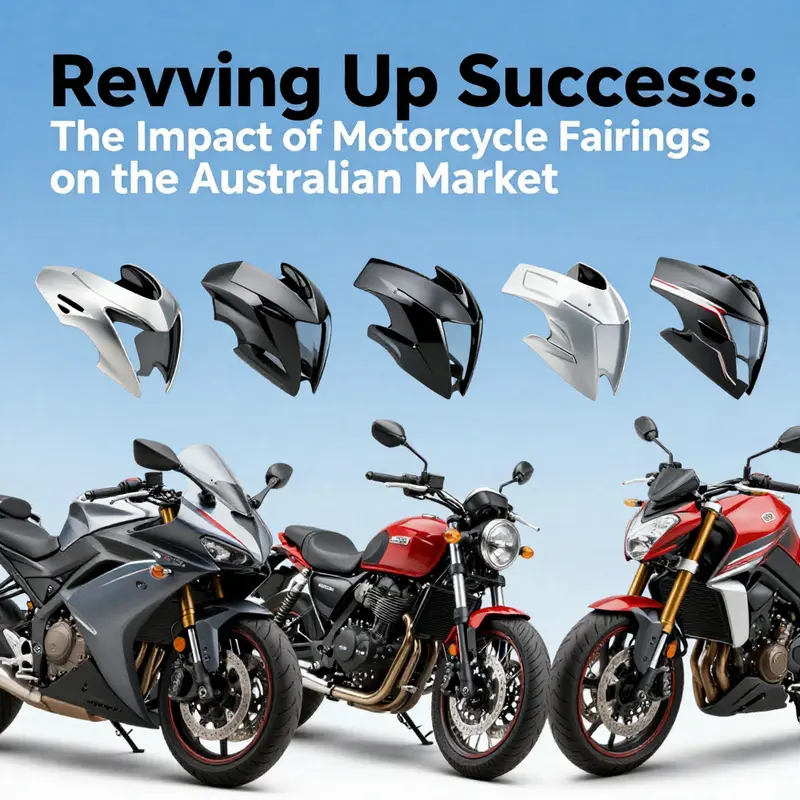
External resource: https://www.researchandmarkets.com/reports/514328/australia-motorcycle-modification-market-report-tech-enabled
Riding the Winds of Change: The Australian Fairings Market and Its Economic Horizon
Across the vast stretches of Australia, riders increasingly view fairings not merely as protective shells, but as essential investments in performance, comfort, and personal expression. The Australian market for motorcycle parts and accessories sits within a broader economy marked by steady growth, resilient consumer confidence, and a growing appetite for customization. As riders chase longer trips, greater efficiency, and a more immersive riding experience, fairings—lightweight, aerodynamically refined shells that wrap around the bike—become a focal point for choice and style. This convergence of engineering, aesthetics, and consumer desire crafts a distinctive chapter in the nation’s motorcycle culture. The trend line is clear: more riders are willing to upgrade, personalize, and optimize their machines for the road ahead. They seek not just a shield against wind, rain, and fatigue, but a tailored interface with aerodynamics, electronics, and comfort that aligns with individual riding goals. In this sense, fairings are at once a practical component and a statement of intention, signaling how a rider plans to explore Australia’s varied landscapes—from coastal highways to inland twists, from desert crossings to alpine byways.
The growth drivers behind this shift are as much behavioral as they are economic. Australians have long valued the freedom of the open road, but recent years have amplified the willingness to invest in performance and customization. The market observes a rising cohort of enthusiasts who treat their motorcycle as a platform for self-expression and a tool for extended journeys. To meet this demand, the industry offers a spectrum of options, from OEM-style fairings that preserve factory fit and warranty, to aftermarket kits that introduce sharper lines, increased rigidity, and tailored aerodynamics. The emphasis is on products that reduce wind fatigue over long rides, enhance stability at highway speeds, and provide opportunities for integrated technology—such as audio, navigation, and display interfaces—without compromising the bike’s core handling. This blend of practicality and personality helps push the market beyond mere replacement parts into a realm of performance upgrades and aesthetic storytelling.
The Australian context adds further texture to this narrative. Weather conditions across the country demand materials and finishes that resist UV exposure, heat buildup, and harsh sun glare. Coastal climates bring salt spray and higher humidity, while inland routes expose riders to abrasive dust and temperature swings. Consequently, fairings designed for the Australian market often feature coatings and materials engineered for colorfastness, corrosion resistance, and ease of maintenance. Lightweight construction is another priority, as it translates into improved handling and fuel efficiency without sacrificing impact resistance. The material mix commonly seen today includes ABS plastics and carbon fiber blends, where cost and performance are balanced to meet a premium segment’s expectations. ABS offers impact resistance and cost efficiency, while carbon fiber delivers stiffness and a high-end aesthetic that many riders associate with performance touring. This material synergy helps the market deliver products that feel both robust on rough Australian roads and refined enough for long-distance comfort.
One of the most intriguing aspects of the Australian fairings market is how it reflects broader supply chain and retail dynamics. The presence of official dealer networks and authorized service channels means riders can access genuine parts, comprehensive fitment information, and warranty-backed options. This structure fosters confidence among buyers who value longevity and compatibility with existing systems on their machines. At the same time, a robust aftermarket ecosystem provides choice, enabling riders to explore custom body kits, protective covers, and aerodynamic refinements that suit regional riding needs. For riders who crave a mix of authenticity and personalization, the marketplace offers a compelling balance: OEM-style components that fit like the original but carry updated engineering, alongside aftermarket designs that push boundaries in aerodynamics and styling. This dual-path approach keeps the market dynamic, with competition driving better materials, more precise fitment, and improved finish quality.
Inventory and distribution play a central role in shaping what is possible for Australian riders. Authorized dealerships across the country curate catalogues that reflect both global design tendencies and local preferences. They provide guidance on fitment guides, which are essential when bringing a new fairing onto a touring bike with a complex array of mounting points and integrated components. The availability of protective covers and weatherproof finishes also speaks to a market that plans ahead for regional climates. It is not merely about owning a piece of plastic; it is about investing in a thermal envelope that supports comfort, noise reduction, and a sense of security on long journeys. For riders who pursue customization, online catalogs and local showrooms offer a staged pathway: select a fairing design, verify compatibility, consider color and finish, and finalize installation through a trusted technician. This careful decision-making process reinforces the premium perception of fairings as quality upgrades rather than incidental add-ons.
In this environment, design philosophy has shifted toward integrating aerodynamics with practical usability. Aerodynamic efficiency translates into reduced rider fatigue, better fuel economy, and more stable high-speed behavior. Those gains matter for Australian riders who undertake multi-day tours across vast distances where the road conditions vary as dramatically as the weather. The newer generation of fairings often features sculpted surfaces that manage separation and vortices more effectively, alongside mounts and inner channels that accommodate cables and electronics with minimal fuss. The result is a product that feels cohesive with the motorcycle’s overall architecture rather than a separate, bolted-on piece. Yet the emphasis on aerodynamics does not come at the expense of aesthetics. Modern fairings balance wind deflection with visual identity—lines, contours, and surface finishes that communicate purpose and style. Aesthetic refinement matters because for many riders the fairing is the face of the bike, a first impression that pairs with performance to convey a rider’s intent.
The narrative of materials and engineering inevitably leads to the question of cost and value. Australian riders often weigh upfront price against long-term benefit, including durability, serviceability, and potential resale value. The value proposition for a high-quality fairing hinges on a triad: weight savings that translate into better acceleration and handling, rigidity that maintains alignment with the rest of the bike at speed, and environmental resistance that reduces maintenance needs in harsh climates. When these attributes converge, the fairing becomes a financial and experiential asset rather than a disposable accessory. The market’s progression toward premium segments reflects a rational reaction to a consumer base that expects more from each upgrade. In this sense, the growth forecast from industry analysts—toward a steady expansion through the late decade—reflects not just demand, but an alignment of product capabilities with buyer expectations. As more riders seek to extract maximum mileage and enjoyment from their machines, fairings evolve from optional enhancements to strategic components of the riding experience.
The story of the Australian fairings market is also a story of information flow and education. Riders increasingly rely on fitment guides, dealer consultations, and online resources to understand how a given fairing will integrate with their bike’s geometry, electronics, and accessories. The availability of genuine parts and clear compatibility data reduces friction in the upgrade path. This transparency helps sustain a healthy aftermarket economy, where skilled technicians, color-matched finishes, and precise mounting solutions contribute to a satisfying end result. For those who want to explore options beyond the factory look, there is room to experiment with custom body kits and protective armor that preserve core ride characteristics while offering new expressions of personality. The Australian scene rewards thoughtful choices: a fairing that integrates with a rider’s gear, a navigation system, or audio setup—without compromising balance or heat management—becomes part of a holistic system designed for comfort and convenience on long roads.
In terms of regional insights and practical guidance, riders can identify a broad spectrum of sources that shape their purchasing decisions. Local showrooms and online catalogs provide comparative assessments of different fairing families, with emphasis on fitment, color options, and finish quality. The market also benefits from a growing cadre of workshops that offer professional installation and tuning, ensuring that aerodynamics, headlights, mirrors, and electronic modules function cohesively after an upgrade. The consumer journey, in this context, resembles a careful construction process: select a fairing line that promises wind protection and elegance, verify accessory compatibility, secure reliable mounting, and complete the installation with a professional finish that preserves the bike’s integrity and warranty. The result is a riding experience that feels designed for the Australian environment—where performance, comfort, and resilience are not mere luxuries but practical necessities for dependable long-distance travel.
To offer a sense of the market’s broader significance, consider the aspirational aspect that many riders attach to their machines. A well-chosen fairing signals a rider’s intent to pursue roads with confidence, to protect eyesight from glare, and to enjoy a quieter, more controlled cabin of wind behind the screens. It also signals an identity compatible with Australia’s diverse riding routes and climates. In this sense, fairings are not simply shells but enablers of travel narratives—the stories riders tell themselves about how, where, and why they ride. The economic landscape thus reinforces a cultural one: as more riders invest in higher-quality fairings, the market witnesses an upward shift in demand, prompt product development that prioritizes durability and finish, and a strengthening of the service ecosystem that supports sustained use over many seasons. The net effect is a market that feels both dynamic and rooted in practicality, responsive to the needs of a nation famous for wide-open roads and the culture of adventure that accompanies long, scenic journeys.
For readers seeking a snapshot of how this market is evolving relative to global trends, the Australian scene mirrors a broader pattern: consumers favor materials that provide a blend of performance and aesthetics, paired with engineering that supports long-haul riding. The shift toward carbon fiber or carbon-reinforced composites in premium options illustrates a clear aspiration toward stiffness and weight reduction, while the continued relevance of ABS plastics keeps production costs manageable for a wider audience. This dual-path strategy creates a tiered market where entry-level riders can still access protective, well-fitting fairings, and dedicated enthusiasts can push into high-tech, performance-focused configurations. As retailers and manufacturers respond to these layered demands, the Australian market becomes a microcosm of a global appetite for better, lighter, more integrated riding gear.
The chapter would be incomplete without acknowledging the value of accessible information in nurturing informed choices. Riders will benefit from clear, local guidance on fitment with popular bike platforms, as well as practical advice on care and maintenance that preserves gloss and impact resistance. The availability of dealer locators across Australia helps connect buyers with technicians who understand regional road conditions and climate influences. This accessibility supports a healthier aftermarket ecosystem, encouraging innovation while ensuring riders can rely on professional installation and aftercare. In the end, the Australian fairings market is not simply about new shells; it is about a network of decisions—design, materials, fitment, maintenance, and regional knowledge—that together enable riders to pursue their roads with confidence and style.
For further context on market dynamics beyond the regional lens, researchers point to a comprehensive external resource that analyzes the broader Australia motorcycle parts and accessories sector from 2025 through 2031. This deeper analysis provides a structured view of consumer behavior, market segmentation, and the competitive landscape as it relates to fairings and related components. External resource: https://www.marketsandmarkets.com/Market-Reports/australia-motorcycle-parts-accessories-market-469783783.html. As the Australian market continues to mature, the synthesis of consumer desire for customization, performance gains through aerodynamic design, and durable, climate-ready materials will shape which fairing options rise to prominence and how retailers organize their assortments to meet rider expectations. To connect with a practical, brand-focused catalog that aligns with Australian fitment expectations, readers might explore online categories such as Honda fairings, which illustrate how manufacturers and retailers present OEM-style options alongside aftermarket variants. This helps bridge the gap between factory-intended fitment and the artist’s studio that is customization, a space where riders in Australia continue to write their own riding narratives through the fairings they choose.
Riding with Wind and Metal: How Australian Fairings Shape a National Riding Identity
Across the vast horizons of Australia, a motorcycle’s fairing does more than slice through air; it defines how riders move, speak, and belong. The open road here is not merely a strip of pavement but a shared stage where design, climate, landscape, and community collide. In this sense, fairings become cultural artifacts as much as aerodynamic components. They carry the imprint of the land—its glare, its dust, its long straightaways and winding coastal byways—and they translate that imprint into a language of line, color, and texture that riders wear as publicly as a badge of belonging. What begins as a practical solution to wind and weather soon evolves into a register of identity, a canvas on which individuals mark their values and affiliations while simultaneously inviting a broader conversation about what it means to ride in a country where the road is both a conduit and a ceremony. The Australian riding community, with its distinctive blend of rugged individualism and communal camaraderie, treats fairings as both shield and symbol, tools for comfort on long distances and markers of shared taste in a landscape that rewards bold choices with equal parts admiration and scrutiny.
To tread through the cultural significance of fairings in this setting is to acknowledge that aesthetics and function no longer exist in separate silos. A fairing’s lines—the sweep of a front profile, the way it frames the rider’s silhouette, the manner in which it channels air across the chest and shoulders—always carries a subtext about place. In Australia, designers and riders respond to conditions that are as dramatic as the scenery: sun glare that paints the highways in white heat, dust that settles in the folds of every crease, sudden gusts that compress or release the wind in ways that demand constant attention. The result is a design bias toward durability, weather resistance, and ease of maintenance. Finishes need to stand up to UV on long summer roads, while the coatings must resist the abrasive grit of outback travels. Vivid color stories, meanwhile, often echo the country’s natural palette—from the copper reds of dusty plains to the deep blues of the southern sea—so that a bike’s profile becomes a miniature map of the landscape it traverses. The rider is thus not merely protected; they are reimagined as a walking cursor through space, a moving emblem of weathered resolve.
Within this milieu, fairings are more than protective shells; they are sites of personal storytelling. A rider may choose a full-profile front panel for its formidable presence, or lean toward a more sculpted, streamlined silhouette that suggests speed and precision even at rest. In both cases, the choice signals a stance toward freedom, efficiency, and the daily negotiation of risk. The act of customization—adding graphics, choosing color, integrating functional updates—becomes a social ritual. It is through these choices that riders communicate their values to others on the road: a preference for straightforward practicality, a bold sense of style, or a subtle nod to heritage without shouting. The conversations that emerge from these visual signals—whether a fellow traveler admires the contrast of a striking accent, or a passer-by reads a sequence of symbols that encode allegiance to a rider’s preferred subculture—are part of a larger, ongoing dialogue about what it means to belong to a community that travels together yet often rides alone with a certain weathered autonomy.
In Australia, the cultural scripts around fairings are also entwined with regional rituals and the rhythms of the countryside. Remote rides, charity events, and cross-country rallies transform the fairing into a practical sign of preparedness and a moral statement about participation. The open-road ethos—speed not as reckless bravado but as a pursuit of autonomy tempered by responsibility—gets voiced through the choice of fairing design. A robust, utilitarian aesthetic communicates a readiness to face harsh climates and demanding terrains, while more expressive finishes announce a willingness to be seen, to join a conversation, to invite critique and collaboration. These narratives are reinforced by the way communities gather to celebrate broad-and-bumpy routes that demand endurance and mutual aid. In such contexts, a fairing’s role expands from wind protection to a conversational platform for sharing routes, weather tips, and repairs—an unofficial ledger of the places ridden and the memories made along the way.
The visual language of Australian fairings is also shaped by the country’s distinctive brand ecology. Local riders draw on a spectrum of influences—from international design trends to homegrown graphics studios that understand the textures of red dirt and sea spray—and fuse them into profiles that feel simultaneously familiar and new. This blending is visible in the way finishes shift with the seasons, how protective panels take on subtle patinas, and how the gloss on a particular tone mirrors the light’s mood on coastal mornings or inland evenings. The result is a dynamic marketplace where durability meets daring, where the aesthetics of efficiency exist alongside the aesthetics of rebellion, and where the rider’s kit—gloves, jacket, helmets, and fairing—reads as a coordinated statement about readiness and taste. Because Australia’s riding culture prizes speed and resilience in equal measure, fairings are designed to optimize long-haul comfort and reduce fatigue on the endless stretches that define the country’s geography. A well-chosen fairing can soften the impact of wind shear, stabilize the rider’s posture, and preserve visibility through the glare of low sun, all while housing the modern conveniences that keep long trips navigable and enjoyable.
Authored by riders who see the road as a pedagogy, the culture around fairings thrums with practical knowledge. Workshops and paint shops that populate major cities and regional hubs provide more than prettied shells; they offer a language of care: a fairing is prepared, sealed, and finished to withstand the climate and the miles. This is not a purely aesthetic exercise but a discipline that blends engineering insight with a sensibility for place. The collaboration between rider and craftsman—each learning from the other how wind, heat, and terrain change the experience of riding—creates a lineage of design that travels with the bike. It is common to see fairings that carry not just color but stories: a serial motif from a long road trip, a tribute to a local landmark, or a set of decals that marks membership in a particular riding circle. The iconography that emerges from these collaborations becomes part of the public lexicon of the Australian riding scene, a vocabulary that newcomers and veterans alike decode in the moment of a glance as a bike passes on the highway.
This cultural fabric is reinforced by the structural support of the broader market. Authorized dealerships and official catalogs—while steering clear of naming any single model or manufacturer—provide a framework within which riders access what they need for reliability and customization. The experience of shopping for fairings in Australia often includes guidance on fitment, compatibility with fellow components, and care routines tailored to the country’s climate. Riders value the assurance of genuine parts and precise fitment when they are replacing or updating panels, because a well-fitted fairing is not simply a matter of appearance. It contributes to aerodynamics, cooling, and the longevity of the bike’s electrical systems. In practice, this creates a robust ecosystem in which the authenticity of parts, the availability of local service, and the accessibility of technical information converge to reduce downtime on the road and strengthen the rider’s confidence. The relationship between rider, dealer, and technician then becomes another axis of cultural exchange, through which stories of road trips, weather, and weathered repairs circulate as widely as the bikes themselves.
As design language travels globally, Australian riders bring a distinctive sensibility to the interpretation of international trends. Fairing shapes and colorways can be inspired by distant markets, yet they are filtered through local preferences for clarity, practicality, and resilience. The result is a hybrid aesthetic that respects global design vocabulary while insisting that every panel play a functional role in the rider’s comfort and safety. This cross-pollination fosters a broader sense of belonging to a world riding community, even as riders celebrate the pleasures and challenges of the Australian landscape. Within this exchange, one can observe the subtle pedagogy of design: how a panel’s curvature, a vent’s placement, or a shield’s edge can either invite or deter wind exposure, similarly how a graphic layer can either enhance readability of the instrument cluster or steal attention from the horizon. In short, fairings are a compact, portable philosophy of travel, built to endure the heat and the wind while still inviting the rider to tell a story with every mile.
The cultural resonance of fairings in Australia thus emerges from a trifecta of convenience, character, and community. They reduce fatigue on the long stretches that define the country’s interior and unify riders around a shared experience of road and weather. They dramatize individuality without sacrificing reasoned function, allowing a rider to express personal taste while still prioritizing protection and stability. And they anchor riders within a living network—of dealers, repair shops, custom studios, and riding clubs—where every modification, every color choice, and every emblem on the panel becomes part of a collective memory. In this sense, fairings are not merely components of a machine but mutable cultural artifacts, capable of telling a tale about how Australians move through their land and how they choose to be seen on it. The fairing thus embodies a negotiation between the self and the road, between personal freedom and communal belonging, and between the myth of the open country and the pragmatic demands of modern touring. When viewed through this lens, the Australian fairing is less a commodity than a conductor—carrying the tempo of the nation’s riding life, shaping conversations on the highway, and inviting each rider to add their own verse to a long, ongoing road song.
To illustrate the breadth of this ecosystem, consider the diversity of options that surface in the marketplace. The design spectrum ranges from boldly utilitarian panels that prioritize wind protection and weather sealing to more sculpted configurations that emphasize a sleek silhouette and optimal airflow. Some riders favor simple, rugged finishes that fade gracefully with miles and weather, while others opt for vibrant palettes and graphic motifs that reflect personal narratives or local landscapes. The common thread is resilience—the conviction that a fairing should perform reliably in the conditions it is asked to endure. In the end, every choice feeds back into the culture, reinforcing a shared vocabulary that helps riders read one another on the road. A rider who spots a certain fairing language immediately understands that this is someone who values endurance, who plans for extended trips, and who welcomes the challenge of remote travel with a sense of camaraderie rather than isolation. This mutual recognition is at the heart of the Australian riding community’s sense of place, an unspoken agreement that the road is more meaningful when navigated together and when the equipment we rely on is as honest as the stories we tell along the way.
For readers intrigued by the broader landscape of fairings across brands and markets, one practical touchstone is the ongoing availability of a wide range of models and styles through the industry’s diverse distributor networks. Within this ecosystem, a notable segment of the market includes dedicated categories for certain manufacturers, which demonstrates how the same design principles travel and adapt. This cross-brand dynamic is a reminder that the appeal of fairings lies not only in their ability to bear up against the wind but in their power to resonate with riders’ ambitions, climates, and landscapes. When a rider encounters a new design, they are not simply looking at a shell; they are reading a map of what the road can be and what they can become on it. And as Australia’s riding culture continues to evolve—blending tradition, innovation, and regional flavor—the fairing remains a central instrument in shaping how a community sees itself on the move.
For those who want to anchor this discussion in a concrete example of the broader market, see the BMW fairings product category as a reference point for how one segment organizes its offerings and communicates fitment and style. The link offers a window into how a major brand structures its accessory range and helps riders imagine what a compatible, well-designed panel can contribute to an overall riding experience. BMW fairings, as a case in point, illustrate how a well-curated catalog translates into real-world choices for protection, aerodynamics, and aesthetics, which in turn informs the Australian rider’s eye for balance, durability, and value. This is not a call to imitate a single design language but a reminder that good fairing design—where form serves function—translates across borders and climates, enriching the local culture with a global vocabulary.
External reference for further reading: A Visual Ethnography of Harley-Davidson in Australia. This resource offers a complementary perspective on how motorcycle culture is observed and interpreted in Australia, shedding light on the subtleties of rider identity and community dynamics within a global brand’s presence. https://www.researchgate.net/publication/392145678AVisualEthnographyofHarley-Davidsonin_Australia
Final thoughts
Motorcycle fairings are not merely accessories; they are integral to the identity and performance of motorcycles in Australia. Technological advancements have led to innovative designs that improve not just aesthetics but also functional performance, enhancing rider comfort and safety. The economic landscape reveals a thriving market with opportunities for growth as consumer preferences evolve. Lastly, fairings contribute significantly to the cultural tapestry of the riding community, fostering connections and shared experiences among enthusiasts. As the market for motorcycle fairings continues to develop, embracing these dynamics will empower business owners to not only meet but exceed the expectations of their customers.