

Suzuki GSXR 600 Race Fairings and the Belly Pan Oil Containment Problem
Track day riders and club racers have leaned on the Suzuki GSXR 600 for years. The power comes on predictably and the chassis turns without much fight, which makes it an easy bike to build confidence on. Most owners swap the stock bodywork for Suzuki GSXR 600 race fairings because race glass survives a slide better and is cheaper to repair afterward. The belly pan is part of that swap, but its job has nothing to do with aerodynamics. It is the tray under the engine that has to catch fluid when something lets go.
A belly pan oil containment system catches oil, coolant, and anything else that escapes when an engine component or line fails mid-session. Keep that fluid off the racing surface and the riders behind you stay upright. Plenty of aftermarket kits do not manage it. Pans that look fine in the paddock leak at the seams or hold too little, and they fail track tech inspection before the bike ever reaches the grid.
The rules below matter whether you are prepping your own bike for a track day or building customer bikes in a shop. Requirements change from one organization to the next, and the differences decide which bodywork you can buy. If you are new to how panels affect performance and safety, the overview of motorcycle fairings covers the basics first.
Why Belly Pan Oil Containment Matters for Track Safety
On a race bike the belly pan is not just the bottom half of the fairing. On Suzuki GSXR 600 race fairings it forms a sealed basin under the engine, and that basin has to hold oil if a case cover cracks, an oil line fails, or the engine vents. Race organizations treat the pan as safety equipment, not styling.
Oil that reaches the track spreads fast. A small spill smears across the racing line and leaves a low-friction patch that the next rider through the corner cannot see in time. Contained inside the lower fairing, the same fluid pools in the base and drains out later instead of coating the asphalt at speed.
The Core Benefits of Proper Oil Containment
- Keeps spilled oil and coolant off the racing surface, where the next rider through the corner will not see it
- Meets the sealing and capacity rules in the host organization’s rulebook, so the bike stays legal for track days and club racing
- Keeps fluid away from the rear tire so the drive wheel does not lose grip
How It Fits Into Fairing Design
Race bodywork is built around the containment rule. A compliant belly pan has a continuous lower shell, seams that are bonded or welded shut, and usually a drain plug. Some riders add absorbent material, but it eats into the usable volume. This is how motorcycle fairings are constructed for racing, and it is why a stock or street-style lower often fails tech.
The GSXR 600 is one of the most common club-racing platforms, and its lower fairing is often what decides a scrutineering pass. Seal the pan properly and a cracked case stays a mechanical problem instead of turning into a track-wide hazard.

The cross-section shows the idea: a closed tray under the engine collects whatever escapes instead of letting it drip onto the racing surface.
Track Tech Inspection Requirements for Belly Pan Oil Containment
Tech inspection is the gate between the paddock and the grid. The inspector is asking one question: will this pan keep oil off the racing surface if something fails at speed?
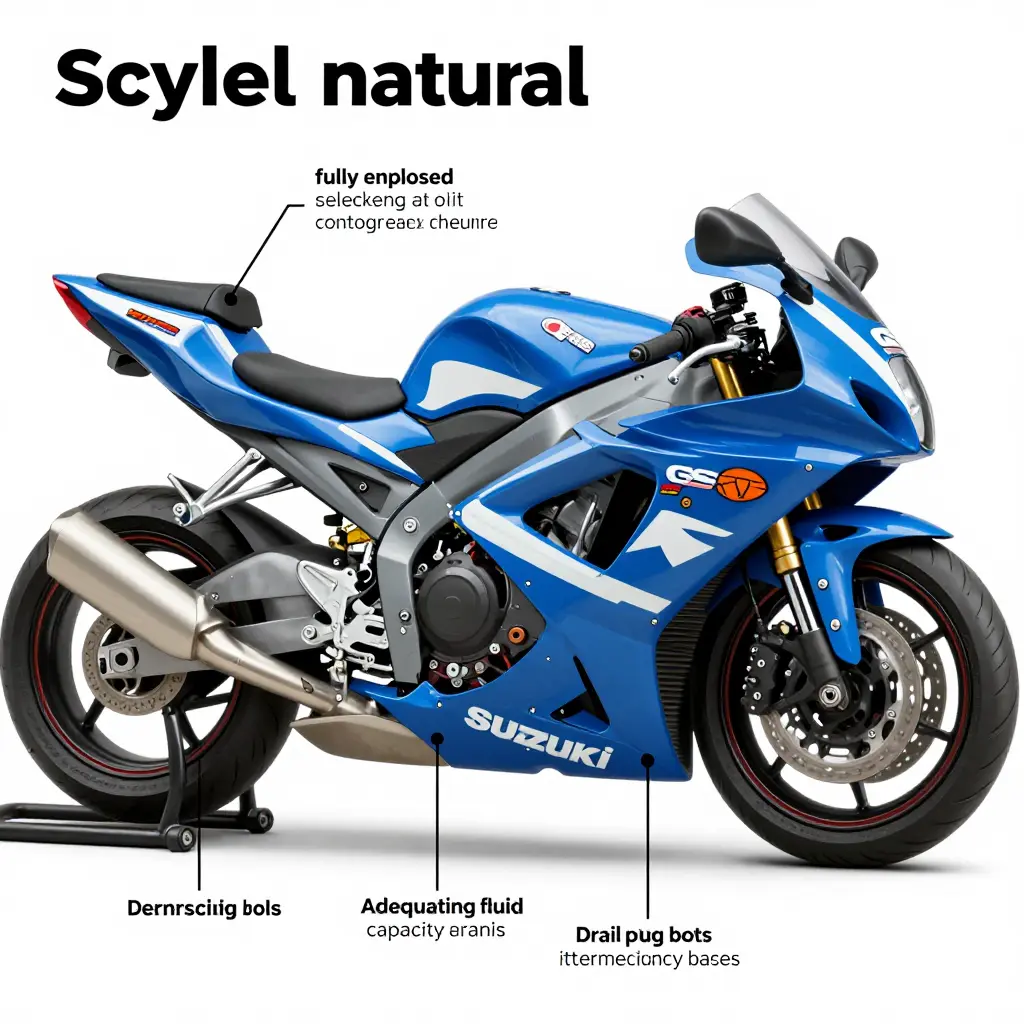
Fully Enclosed Base
The base has to be closed, with no open seams, gaps, or holes at the bottom. Inspectors will put a light under the pan or run a hand along the underside to check. Pans trimmed for exhaust clearance, or cut down from a street lower, usually fail here first.
Adequate Fluid Capacity
Capacity is where the rulebooks part ways. AFM requires a belly pan that holds 3 quarts, or the engine’s oil capacity if that is less. WERA requires a lower fairing capable of holding 5 quarts. A GSXR 600 holds roughly three quarts of oil, and the coolant adds more on top of that, so a pan built to WERA’s number will clear just about any rule you run into. Depth matters as much as volume: the pan has to be shaped so fluid cannot slosh out under braking, hard cornering, or a lowside.
Secure Mounting
Fasteners matter. Inspectors check that the pan bolts to the frame or fairing stay with real hardware, not zip ties, and that no mounting tabs are cracked. AFM wants at least three solid mounting points. Push on the pan; if it flexes or shifts, it will not pass.
Functional Drain Plug
A drain plug lets you empty the pan after a spill or at service time. Inspectors check that it seals, that it sits at the low point so the pan actually drains, and that it cannot be knocked open. Some clubs require the plug to be safety-wired.
How Standards Vary
Requirements differ by organization and by track day provider. Road-racing bodies set a sealed pan, a drain plug, and a capacity number. Track day providers are looser, and some will accept a plain lower with oil-absorbent material. Read the host organization’s rulebook before the event, since choosing quality aftermarket fairings that already meet the strictest rule in your area saves a rework later.
How belly pan oil containment on Suzuki GSXR 600 race fairings holds up at tech inspection. The capacities below show what each type of pan can hold against the two rules that matter most: AFM’s 3-quart minimum and WERA’s 5-quart requirement.
| Containment Type/Material | Fluid Capacity | Seal Quality | Drain Plug Included | Typical Inspection Outcome | Best Use Case |
|---|---|---|---|---|---|
| OEM-style belly pan (thermoplastic) | Low; a shallow tray holds roughly 1 to 2 quarts | Basic gasket seal; leaks at worn joints | Often yes, but small and easy to strip | Fails on capacity under either rule, and weeps at the seams | Street bikes that rarely see a tech lane |
| Budget aftermarket ABS belly pan | Moderate; a wide flat tray holds about 2 to 3 quarts | Variable; thin walls flex and gaps open under heat | Sometimes; low-grade plug on cheaper units | Meets AFM’s 3-quart rule only if it truly holds 3; fails WERA’s 5-quart check | Budget track days and light club use |
| Premium race-spec fiberglass belly pan | High; a deep sealed basin holds about 5 quarts | Reinforced flange and closed-cell gasket seal fully | Yes, large captive drain plug standard | Passes AFM and WERA when fitted and sealed correctly | Serious club racing and sanctioned race events |
| Race-spec carbon fiber belly pan | High; deep basin, similar volume to fiberglass | Rigid shell keeps mating surfaces true | Yes, threaded drain plug | Passes both rules; inspectors usually note the rigidity and fit | Weight-focused competitive racers |
| Deep-sump aluminum containment tray | Very high; oversize sump holds well over 5 quarts | Welded seams eliminate gasket leakage | Yes, large bolt-type drain plug | Passes easily; the choice when volume is the deciding factor | Endurance racing and large-displacement conversions |
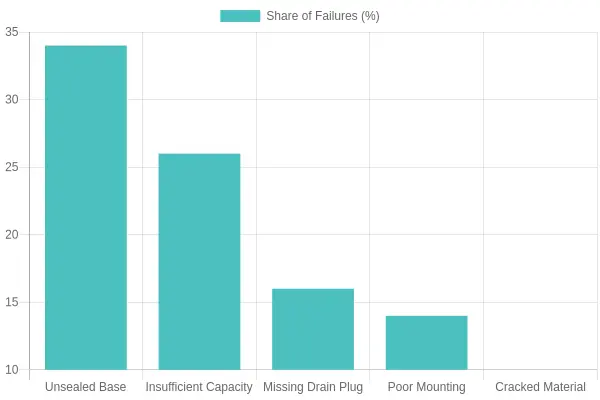
Containment is one of the simpler tech items to get right, and still one of the most common reasons a bike gets turned away. Riders assume a closed lower is enough. Inspectors are checking sealing, capacity, and mounting, and a pan can fail on any of the three. The usual reasons:
- Unsealed base. The biggest culprit is a pan that looks closed but has open seams, rivet gaps, or pinholes where the base meets the side walls. The rule calls for a liquid-tight basin, and any leak path lets fluid escape under load.
- Insufficient fluid capacity. Many stock and low-cost pans hold less than 3 quarts, which fails AFM outright and misses WERA’s 5-quart rule by a wide margin. When the pan is too shallow, a spill overflows the basin and fails the volume check.
- Missing or blocked drain plug. A pan without a drain bolt, or one whose plug is cross-threaded, glued shut, or packed with debris, cannot be drained and inspected. Officials flag it on sight because it defeats the point of the system.
- Poor mounting that leaves gaps. Vibration, missing fasteners, or flexing brackets let the pan pull away from the engine case and open gaps where oil escapes. A pan that moves when you push on it will almost certainly fail.
- Cracked ABS material. Inexpensive ABS race fairings crack at stress points, along mounting tabs, and near the drain. Even a hairline crack breaks containment, and it usually goes unnoticed until an inspector points it out.
- Incorrect fairing fitment. A pan built for another model or model year often leaves the header, sump, or exhaust exposed. Poorly fitting Suzuki GSXR 600 race fairings tend to leave the bottom open enough that real containment is impossible.
Most of these failures are cheaper to prevent than to repair. Start with a pan whose seams are sealed and whose capacity is documented, then check it against the rulebook before the event.
Choosing the Right GSXR 600 Race Fairing Belly Pan
The belly pan is the one panel that can keep a GSXR 600 out of a race on its own. Most organizations require a sealed lower that holds a defined volume of fluid, and the pan either meets that number or it does not. There is no middle ground at inspection.
A Prioritized Buyer’s Checklist
- Material type. Fiberglass is the default for race fairings: stiff, repairable, and easy to reinforce around the sump. ABS is lighter and cheaper but softens and flexes with engine heat, which can open the seams. For containment duty, fiberglass or carbon holds its shape longer.
- Base sealing quality. The bottom must be fully closed. Seams bonded or welded, no rivet holes or mounting slots below the fluid line, and any drain opening capped.
- Fluid capacity. Match the number to the rule you ride under. AFM asks for 3 quarts or the engine’s oil capacity, whichever is less; WERA asks for 5 quarts. Absorbent material reduces usable volume, so account for it.
- Drain plug design. A threaded plug with a proper gasket drains cleanly after a session. Tool-free or loosely fitted plugs are likelier to leak or come open.
- Mounting hardware. Look for OEM-compatible tabs and reinforced brackets that match the GSXR 600 frame. AFM wants at least three solid mounting points; weak ones let the pan shift at speed and break the seal.
- Overall fitment. Gaps between the pan and the upper fairing give fluid a path out. A well-fitted pan follows the exhaust and the lower engine cases closely.
For the broader picture of how the panels fit together, the custom motorcycle fairings overview is a good place to start before ordering.
Run the checklist before you order, not in the tech line.

The diagram follows an inspector’s sequence: sealed base first, then capacity and drain plug, then a pass or fail. Use it as a pre-tech check. If you cannot answer yes to the first three boxes, fix them before you get in line.
Conclusion: Getting Belly Pan Containment Right
Belly pan oil containment is a compliance item, not a cosmetic one. Organizers require it because a single spill at speed takes out everyone behind it, which is why belly pan oil containment sits near the top of the list when a marshal walks your bike through track tech inspection.
The failures are rarely mysterious. Loose pans, unsealed drain plugs, missing gaskets, catch trays never drilled for safety wire. Thin shells flex under vibration and seep along the seams. Overfill the engine and the pan cannot hold what escapes. Every one of these is avoidable with a few minutes of inspection before you load up.
Choosing the right belly pan comes down to specification and fit. A properly designed pan for Suzuki GSXR 600 race fairings should bolt to your existing lower fairing mount points, seal at every joint, hold the volume your rulebook requires, and accept a drain plug you can wire shut. If aftermarket bodywork still feels like a pile of parts, the motorcycle fairings overview walks through the fundamentals.
At UltimateMotorX, we build and ride these bikes, so we set our standards the way we would want them set for our own machines. Seal the pan, size it to the rule, bolt it down, and the GSXR 600 goes through inspection without a second look.