
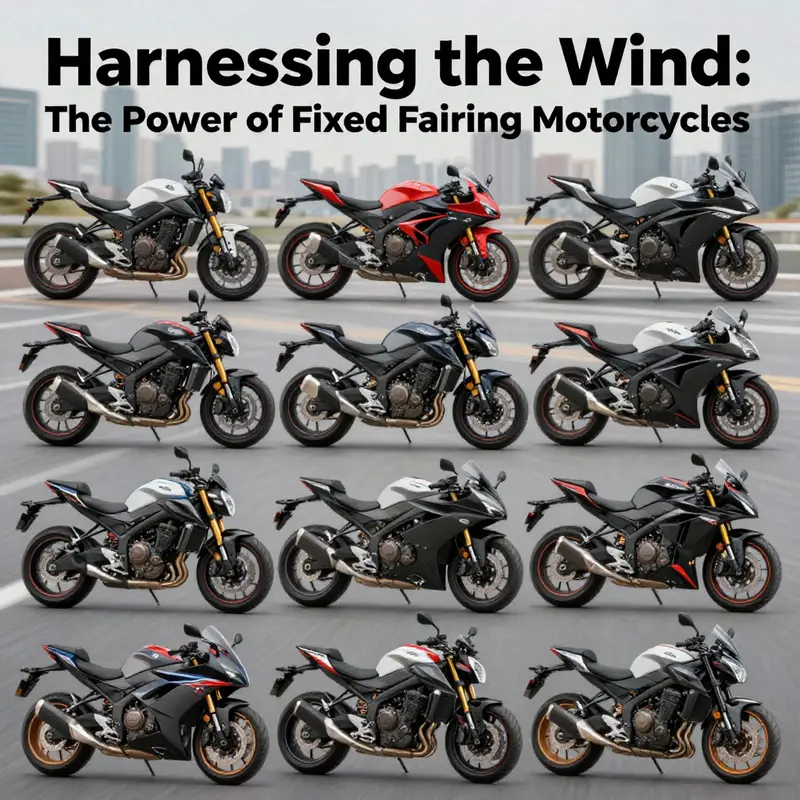
Fixed fairing motorcycles have rapidly evolved, becoming a cornerstone for performance enthusiasts and long-distance riders alike. Their distinctive aerodynamic designs are not merely aesthetic; they serve to enhance riding stability and rider comfort, particularly in challenging weather conditions. This article explores how these motorcycles leverage aerodynamic benefits, optimize long-distance touring experiences, upgrade performance, and showcase meticulous engineering. The subsequent chapters delve deeper into each of these elements, offering business owners insights into the competitive advantages associated with fixed fairing motorcycles, potentially informing strategic decisions in product offerings or inventories.
Unified Form: How Fixed Fairings Channel Air, Define Speed, and Shape the Ride
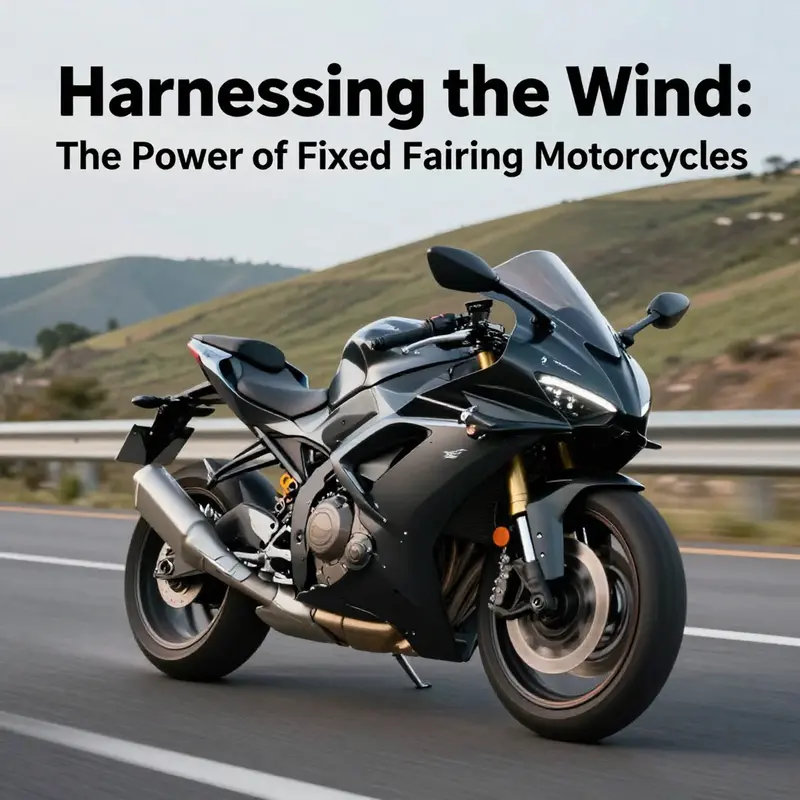
When air becomes a co-pilot on two wheels, the shape that riders adopt becomes more than aesthetics; it is a kinetic instrument that determines speed, stability, and comfort in equal measure. Fixed fairings—permanent, non-removable shells tightly integrated into a motorcycle’s frame—are not merely cosmetic overlays; they are engineered systems that choreograph the flow of air around the machine and rider. In this chapter, the discussion follows how form and function collaborate to maximize aerodynamic efficiency, minimize fatigue on long rides, and sharpen the sense of precision at speed.
A well-integrated fairing reduces drag so the engine can work with less opposing air resistance at high speeds. Beyond drag, these shells are shaped to deliver controlled downforce, a subtle downward push that improves grip during fast cornering. The result is steadier steering, more confident lean, and more consistent tire wear on long highway sections.
The physics is practical and test-driven—wind tunnels, CFD, and on-bike testing inform the geometry of the fairing, the placement of vents, and the way air flows over fork crowns and along the rider’s silhouette. The goal is a coherent aerodynamic system where shell, chassis, and rider form a single, predictable envelope rather than competing surfaces. Weight, stiffness, and junctions matter because the fairing must remain rigid at speed while absorbing vibrations and accommodating cooling, fuel lines, and electronics.
Finally, fixed fairings influence riding experience beyond speed. They shield the rider from wind fatigue and help maintain posture with less conscious effort, enabling longer rides with steadier throttle response and more energy for control inputs. In short, fixed fairings are not cosmetic covers but an integrated engineering solution that translates air into speed with cadence and confidence.
The Unbroken Line: Fixed Fairings and the Craft of Endurance Touring
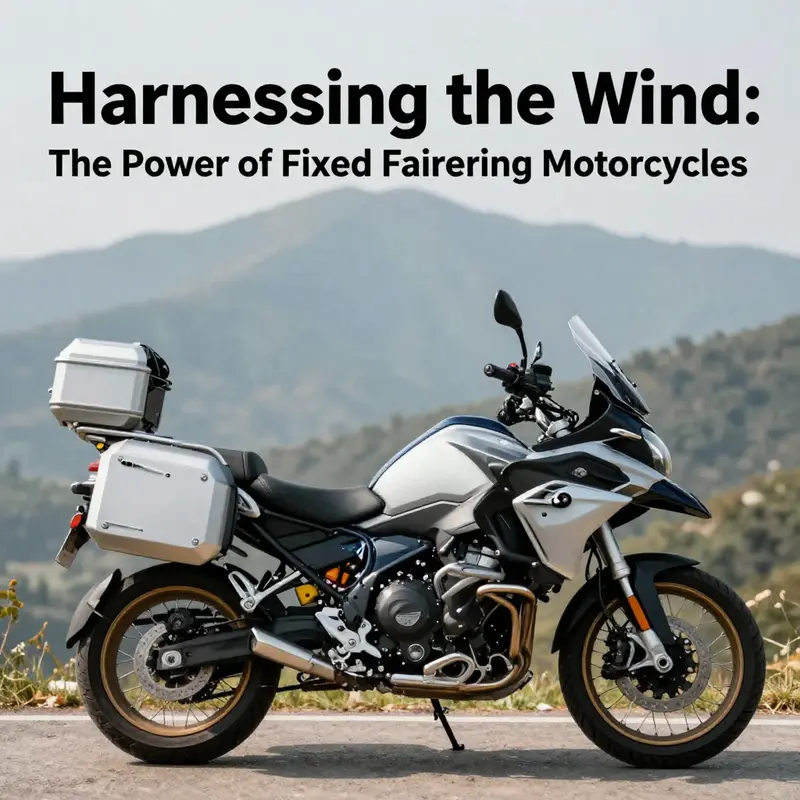
Wind is not merely a backdrop for the rider; it is an active participant in the journey, shaping fatigue, pacing, and the rhythm of miles. In the world of long-distance motorcycle travel, fixed fairings are more than a stylistic choice or a cosmetic flourish. They are a strategic partnership between rider and machine, a sculpted interface that channels air, shields the body, and harmonizes the bike’s dynamics with the demands of endurance riding. When a frame and its bodywork come together in a single, non-removable shell, the result is a coherent aeroform that behaves like a living part of the chassis. The rider perception of fatigue, the machine’s stability at highway speeds, and even the availability of luggage space all hinge on the way this shell is conceived, integrated, and trusted to perform mile after mile.
The essence of fixed fairing design lies in its seamless integration with the motorcycle’s architecture. Rather than a separate add-on that must contend with gaps, fasteners, and joints, a fixed fairing is built as an extension of the frame and substructure, a continuous line that begins at the headstock and arcs toward the tail. From this continuity flows a cascade of performance benefits. The most conspicuous is aerodynamic efficiency: a well-shaped, non-removable fairing reduces form drag by guiding air smoothly around the rider and the bike’s silhouette. On the open highway, where wind gusts, crosswinds, and gust-driven buffeting become constants, that smooth air path translates to steadier steering feel and a more predictable front end. The rider senses this as reduced steering effort at speed and a quieter, more consistent ride, even when the asphalt stretches to the horizon.
With this aerodynamic backbone, the rider can focus more on the sequence of decisions that define a long ride: when to drink, when to rest, how to read traffic patterns, and how to pace the body so joints stay relaxed for hours. A fixed fairing also mitigates the most exhausting aspect of long-distance riding—the sensation of wind pressing directly on the torso and helmet. A broad, sculpted shield pushes the wind away from the rider’s upper body, carving out a sheltered corridor. This is not about cranking up speed alone; it is about maintaining a stable, controlled tempo where the body remains buoyant, comfortable, and capable of enduring the demands of hours in the saddle. The effect is cumulative: even modest improvements in wind protection and stability compound into genuine increases in range and mental clarity as the day wears on.
The structural advantages extend beyond wind. Because the fairing is part of a unified assembly, the bike experiences a refined distribution of forces. The fairing’s mass is situated and tuned with the chassis so that air pressure acts in concert with front-end geometry, reducing micro-instabilities that can emerge as speeds rise or as the road welcomes a crosswind. The rider recognizes this in the bike’s demeanor: a sense that the front end maintains its line with less corrective input, enabling a more relaxed, confident posture that pays dividends in comfort after hours on the road. Long-distance touring is a sport of patient, incremental gains—every degree of stability earned through careful fairing geometry counts toward a smoother, more economical journey.
The practical realities of touring—luggage, controls, and cabin-like armor for the rider—are inextricably linked to the fixed fairing’s design language. On this class of motorcycles, the fairing often forms the foundation for integrated storage solutions: side panniers that honor the silhouette while expanding the bike’s capacity, top cases that nestle within the line of sight and weight distribution, and internal channels that guide wiring for lighting, navigation, or audio systems. In a carefully engineered layout, the fairing accommodates these elements without creating additional drag-inducing protrusions or gaps. Riders who haul gear for weeks appreciate the calm sense that everything has a place and that the aerodynamics won’t be compromised by clutter.
From the rider’s perch, the seating position is interwoven with the fairing’s geometry. The fairing’s rake, sweep, and height influence wind exposure to the arms, chest, and helmet, which in turn governs breathing patterns, shoulder tension, and neck angle. An effectively designed fixed fairing mitigates the fatigue that arrives when the upper body fights wind pressure and turbulent eddies. Even the chin and jaw can stay relaxed when the airflow is steered away from the helmet’s vulnerable zones. The result is a riding posture that settles into a steady cadence rather than a constant battle against wind onslaught. For those who ride two-up, the fairing becomes a counterpart to the passenger seat, shaping a shared envelope of protection and quiet that makes long hours a collaborative endurance test instead of a one-person push toward exhaustion.
The aesthetic reading of fixed fairings is not incidental. On touring-focused platforms, lines become a narrative of purpose. The fairing’s curves sculpt a sense of speed even when the bike stands still, and the treatment of edges and transitions signals a deliberate tension between protection and visibility. The rider’s eye reads these cues as evidence of a purposeful design that respects both the silhouette of the machine and the physics of wind. A clean, integrated fairing can make the entire bike look like a singular instrument, a well-tuned tool built to cover vast distances rather than a sculpture meant for display at a showroom. This is a subtle but influential aspect of long-distance travel: the way a machine looks often mirrors the trust the rider must place in it to perform under pressure.
Material choices and construction techniques further dictate how a fixed fairing behaves across a life of miles. Early, brittle shells have given way to composites that blend stiffness with lightness. Glass-fiber-reinforced plastics, carbon fiber-reinforced polymers, and advanced polycarbonate laminates offer a spectrum of trade-offs between weight, impact resistance, and cost. A well-chosen material stabilizes the fairing against flutter at high speed, resists the fatigue of long highway days, and absorbs sound in a way that contributes to the overall quietness inside the cockpit. The thickness and grain of the shell, the firmness of its joints with the headstock and triple clamps, and the precision of the fit across the bike’s bodywork collectively shape how the fairing behaves as a structural member during real-world riding. When maintenance cycles occur, the fixed nature of the fairing means that its connections to the frame demand careful tolerances and reliable fasteners that resist loosening under vibration. In turn, riders develop a sense of reassurance that their shelter from the wind remains intact after thousands of miles.
The fixed fairing’s role in heat management is an underappreciated nuance. The engine and exhaust system give off heat that can influence rider comfort, especially in slower city traffic or during inclement weather when the bike’s heat exchange interacts with the rider’s microclimate. A thoughtfully designed fairing can channel airflow to remove or redistribute heat from the rider’s legs and torso without creating uncomfortable drafts. It can also shield electrical components and connectors from weather exposure, contributing to reliability on remote stretches where a small system failure could become a major disruption. In this sense, the fairing is not just about wind and beauty; it is a system component that supports durability, reliability, and the ability to keep moving when conditions demand consistent performance.
The Road is long, and the rider learns to read it as a language written in wind, road texture, and elevation. Fixed fairings translate that language into a readable map of comfort and control. They anchor the experience of long-distance travel in a set of predictable responses: the wind deflects along a stable arc, the bike holds its line with fewer micro-cadjustments, and the rider’s limbs settle into a rhythm rather than a flurry of micro-tremors caused by turbulence. The result is not merely a vehicle that can cover many miles; it is a purpose-built companion that invites endurance, curiosity, and exploration. In a world where petrol stops, weather changes, and the body’s energy budget governs the journey, the fixed fairing becomes a quiet partner in crime—an ally that allows the traveler to travel further with less friction between intention and execution.
Within this broad landscape, compatibility and adaptability remain important. The fixed fairing must harmonize with controls, instrumentation, and passenger accommodations in ways that feel natural, not forced. The instrument cluster might be nestled in a clear window that remains readable at a glance, with windscreen height and angle yielding an ergonomically favorable line of sight. The rider’s hands crave access to switches and tactile feedback that remains consistent as air resistance shifts with speed and posture. When a fairing is designed with these ergonomic cues in mind, it reduces the cognitive load required to operate the bike on long miles. The rider does not have to search for a comfortable position while maintaining pace; the position already harmonizes with the wind and the machine’s geometry, so the mind can stay focused on the road and the scenery rather than the discomfort roping from wind and fatigue.
The category of fixed fairings also invites a broader reflection on how motorcycles are designed to meet the needs of serious touring. Those who ride for days or weeks know the value of an integrated shell that can carry weight, shield against weather, and maintain performance across diverse climates. A well-executed fairing contributes to predictable behavior on wet roads and in gusty crosswinds, where small differences in airflow can lead to big changes in handling. It supports a rider’s confidence to accept boundary-pushing weather or long, remote stretches, knowing that the aero package will not suddenly betray them with a sharp, unpredictable gust. In this sense, the fairing is less a cosmetic fixture and more a functional partner that embodies the philosophy of endurance: design for reliability, comfort, and calm under pressure.
To understand the practical breadth of fixed fairings in touring contexts, consider the interplay between form, function, and rider psychology. The form is the shaping of air; the function is the reduction of fatigue and the enhancement of stability; the psychology is the sense of control that comes when wind pressure is no longer a constant distraction. A fairing that achieves this delicate balance does more than shield the rider. It creates a space in which the traveler can think clearly, pace steadily, and savor the ride as well as the destination. In the continuum of motorcycle design, fixed fairings signal a commitment to long-distance satisfaction, a pledge that the machine and rider will arrive with energy conserved rather than squandered. This is not merely about making a ride possible; it is about making the journey meaningful, and with a fixed fairing, the journey becomes a dialogue between rider, air, and road—one that rewards patience, preparation, and a respect for the physics that govern endurance travel.
For readers curious about how these design principles translate into real-world choice, the landscape includes a spectrum of touring-oriented platforms where fixed fairings anchor the experience. Among the broad family of fairings, designers emphasize a harmonious blend of wind protection, access to controls, and integrated luggage solutions. The fairing’s geometry is tuned not only for high-speed comfort but also for mid-range cruising where wind pressure remains a constant companion. The most successful executions deliver a seamless balance: the rider stays shielded without feeling boxed in, the bike remains easy to maneuver at parking-lot speeds, and the shell contributes to a quiet interior that makes long hours feel shorter. In this context, fixed fairings elevate the touring experience from a test of endurance into a pursuit of exploration, where every mile is earned through intelligent design rather than sheer grit alone.
Within the broader ecosystem of motorcycle accessories and bodywork, a fixed fairing anchors itself as a core element of the touring narrative. It serves as the anchor of the bike’s identity and performance profile, signaling a commitment to long-haul capability. Riders who value distance riding understand that the bow of the fairing—the point where air meets the machine—changes not only the bike’s tactile feel but also its character at speed. The difference between a wind-pressured slog and a confident highway cruise often rests on the degree of wind control a fixed fairing can deliver. It is this quiet confidence—born of engineering, testing, and thoughtful integration—that makes fixed fairings a defining feature of motorcycles designed for endurance, exploration, and the quieter miles between cities.
For enthusiasts who want to explore more about how fairings are designed and how they interface with brand ecosystems, the broader catalogues and technical guides provide a window into the practical realities of production. For instance, one recognized reference on fairing structures and applications highlights the way fixed, integrated shells are engineered to meet the demands of modern engines and long-distance use. These resources offer insights into material choices, joinery, and the challenges of maintaining a smooth aerodynamic surface across years of travel. While the specifics can vary by manufacturer and model, the underlying principles remain consistent: a fixed fairing should deliver wind protection, stability, and practical integration without compromising access or serviceability. See the Honda fairings page for a sense of how these concepts translate into a vendor-specific implementation. Honda fairings.
The chapter’s arc returns to the rider’s journey, where consistency of wind protection and stability fosters not just comfort but also confidence. A fixed fairing, properly conceived, becomes a polite houseguest that does not overstay its welcome, guiding the ride with a calm, almost invisible hand. The wind becomes a background character rather than an active antagonist. The road reveals itself in a steadier light, elevation changes are perceived with less fatigue, and the mind has space to reflect on scenery, routes, and the day’s tempo. In this way, fixed fairings support a philosophy of touring that prizes endurance, curiosity, and the simple pleasure of moving forward, mile after mile.
External resource: https://www.harley-davidson.com
Toward a Seamless Arc: The Performance Equation of Fixed Fairing Motorcycles
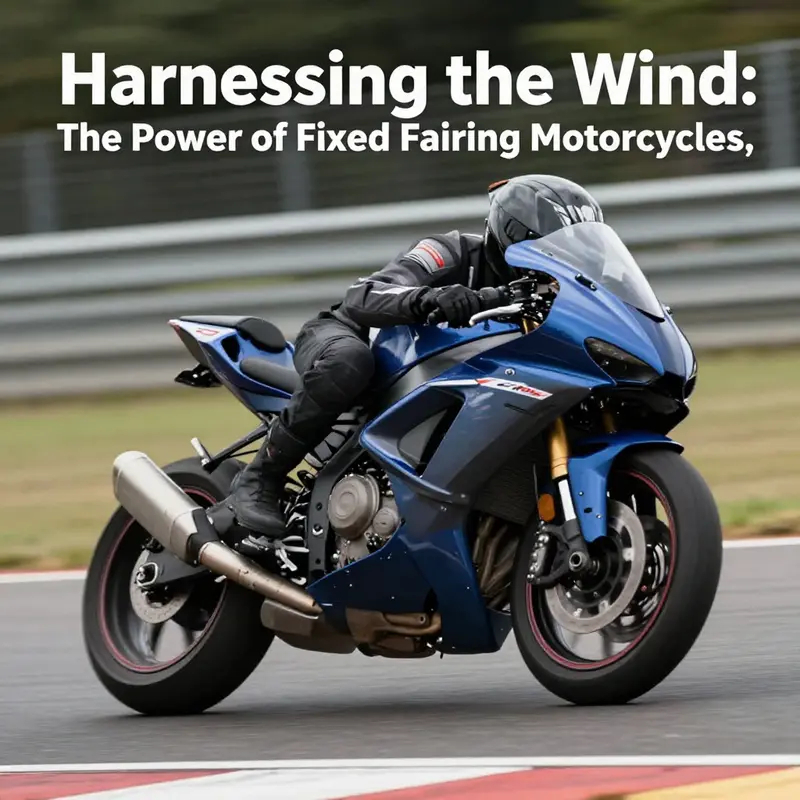
The fixed fairing is more than a stylistic signature or a shield against rain. It is a deliberate, integrated solution to how a motorcycle slices through air, carries a rider, and operates across long distances. When a fairing becomes a permanent feature of the chassis, its shape and rigidity are bonded into the bike’s behavior. The result is not merely a sleeker silhouette but a coherent performance system where aerodynamics, protection, and handling reinforce each other. This chapter follows that logic—exploring how fixed fairings set up a flow of advantages that are felt by the rider in the seat and by the engine in the heart of the machine. It is a narrative about the arc the rider traces through wind and road, and how a single, permanent surface can influence momentum, comfort, and endurance over the course of a journey or a mission. In a world of variable plastics and adjustable panels, fixed fairings offer a different kind of predictability. They establish a consistent boundary layer of air that the bike must negotiate, a boundary that, when shaped with care, converts a potential drag penalty into a controlled, useful force. The aerodynamic logic is as old as flight, yet it is applied here with a motorcycle-specific temperament: a streamlined profile that respects the rider’s posture, the engine’s torque curve, and the stiffness of the chassis. The practical upshot is a machine that sits more confidently on the highway, feels less buffeted by crosswinds, and pursues efficiency with a quiet, almost taciturn persistence. This is the essence of the performance equation at work: the more seamless the arc between the bike’s nose and its tail, the more the rider can extract from the engine without paying a heavy price in fatigue or fuel. The fixed fairing is a partner in that effort, not a decorative shell. It speaks to why the design ethos of fixed fairings—permanent integration, disciplined airflow management, and durable protection—appears so often on sport-touring machines and other long-range platforms. It is not about sacrificing personality for function, but about ensuring that function becomes an integral part of the bike’s character. In practical terms, the shape of a fixed fairing determines how the air travels around the machine at speed, where turbulence is created, and how much the rider’s body is exposed to wind pressure. A well-proportioned fairing reduces the wake behind the rider, which in turn lowers drag and noise, helping both the engine and the rider to endure extended stretches of highway with less effort. Where a removable fairing might negotiate wind with a compromise between accessibility and rigidity, a fixed fairing tells a different story: it is designed to stay in place, to sustain its form under the stresses of high-speed riding, and to contribute to a cohesive whole that rewards the rider with steadier stability and steadier fuel consumption. It is this sense of cohesion that links the aesthetic, the technical, and the practical in a single, continuous arc of performance. The rider feels this most clearly as a reduction in fatigue. A wind-free torso, calmer shoulders, and less strain on the neck and arms translate into fewer micro-adjustments and a longer comfortable riding window. Over long rides, that translates into sharper concentration and a more precise control input, which in turn improves trail and terrain adaptability. The effect is not a one-note improvement; it resonates through the entire riding experience, from throttle application to cornering confidence. Beyond comfort, the aerodynamic stability that a fixed fairing provides becomes a real asset when the bike is pressed into the upper reaches of its performance envelope. The air’s interference with handling—its tendency to push on the front wheel, or to buffet the rider into an exaggerated line—reduces as the fairing’s shape minimizes wake turbulence and manages the separation points where flow can detach and cause yaw or pitch instabilities. The result is a chassis that feels more alive at speed, with a sense of participants instead of spectators in the wind. The rider’s seat, the rider’s arms, and the torso all become part of a single, harmonized system where the air is neither enemy nor mere obstacle but a partner to the bike’s momentum. The implication for the engine is also meaningful. When drag is trimmed, the engine does not have to work as hard to overcome wind resistance at cruising speeds. This can translate into more favorable fuel economy and a leaner operating regime, especially at sustained highway velocity. The fairing thus performs a double duty: it shapes the body’s interaction with air and shades the body from the elements, enabling longer days in the saddle with less peeving wind pressure and fewer micro-restraints on rider posture. The ultimate promise is simple in conception yet demanding in execution: create a flow that is predictable, quiet, and supportive, and the machine becomes more efficient, more capable, and more capable of delivering the rider’s intent under a wider range of conditions. The practical truth is that fixed fairings, when correctly engineered, align with the bike’s core strengths—balanced chassis dynamics, stable steering geometry, and a torque curve that rewards steady airflow management rather than abrupt turbulence. The rider then experiences a train of benefits that compound over time. A well-designed fairing helps the engine breathe with less resistance, reduces fatigue-inducing buffeting, and keeps sensitive components shielded from rain and debris. These advantages are not merely theoretical; they translate into tangible operational gains, such as extended range between refuels, fewer wind-induced handling anomalies, and a smoother, more predictable response from the chassis when entering or exiting curves at speed. The result is a riding experience that is more intuitive and less fatiguing, especially on long-distance journeys where the body and machine must work in concert for hours on end. A fixed fairing, in this light, is not an accessory but a fundamental element of the motorcycle’s performance architecture. It defines how the machine cuts through air, how it protects the rider, and how the rider translates intention into motion with minimal counterproductive effort. This integrated approach yields a synergy between shape, strength, and sensory feedback that is hard to achieve with detachable panels. It is a reminder that performance is not a single metric but a constellation of interdependent effects—drag, lift, stability, protection, and endurance—that, when managed through fixed, well-considered design, create a transportation tool that feels easier to ride fast, farther, and longer. Of course, the choice of fixed fairing does not exist in a vacuum. It sits within a broader ecosystem of design philosophy, material science, and manufacturing discipline. The ongoing challenge is to balance aerodynamics with rider ergonomics, to tailor the fairing’s curvature to the rider’s riding posture, and to ensure that the result remains durable in real-world conditions where debris, weather, and maintenance scheduling all test the edge of engineering. In the end, the fixed fairing’s performance gains are not about a single win at the wind tunnel or a single moment of acceleration. They accumulate through continuous, disciplined integration: a smoother windline meeting a stable chassis, a blade of metal or composite that resists the weather and the road, and a rider who feels less fatigue and more control as miles unfold. That is the pragmatic arc of fixed fairings: a continuous, reliable performance thread that binds aerodynamics, protection, and handling into a single, fluid line. For readers curious to explore how these elements translate in practice, a catalog of mounting options and fairing silhouettes can be browsed in the 2023 new arrivals section, which provides a snapshot of contemporary approaches to fixed fairing design. 2023 new fairings
The broader field also benefits from a structured understanding of how fairings interact with the surrounding machine. A fixed, sealed configuration ensures that environmental shielding remains consistent, an important factor when weather, rain, and road spray threaten both rider comfort and component longevity. The absence of removable panels removes one axis of variability, producing a predictable boundary for the flow field. In practice, this translates to fewer points of flex under load, more consistent alignment of the bodywork with the frame and engine, and fewer opportunities for gaps that can disrupt the air’s path. The structural implications are non-trivial: a rigid fairing system contributes to overall chassis stiffness, which improves steering precision and the bike’s ability to hold a line through fast corners. When the bike reaches highway speeds, the fixed fairing’s interaction with the wind becomes a stabilizing factor rather than a destabilizing one. Riders report a calmer ride even as gusts buffet the front end; the net effect is a bike that responds with a more linear, predictable attitude. This stability is particularly valuable in professional contexts—where police patrols or long-haul fleets require consistent performance, day after day, weather after weather. In those scenarios, the fairing’s secure shield and predictable aerodynamics can translate into tangible advantages: lower fuel costs, reduced maintenance due to fewer wind-driven stresses on components, and the mental clarity that comes from knowing the bike behaves as expected at high speed and in rough conditions. The industrial implications are not just about the rider’s experience; they extend to the fleet’s operational realities. A fixed fairing’s ability to maintain a sealed configuration protects critical systems—engine, electronics, and cooling ducts—from the elements and road spray, reducing the likelihood of water ingress, debris accumulation, and corrosion. This, in turn, supports longer service intervals and more consistent performance across a fleet’s duty cycle. Maintenance becomes more straightforward when there are fewer removable parts to manage, and the risk of misalignment after field servicing decreases because the fairing is part of the established geometry rather than a add-on with adjustable clamps. A fixed approach also simplifies inspection routines. Technicians know exactly where to look for stress, cracks, or wear in a system that was designed to operate as a rigid, integrated unit. The predictability of fixed fairing geometry is, in itself, a reliability feature. It means that as the bike ages, the aerodynamics remain stable, the rider’s experience remains consistent, and the machine’s most important performance attributes—stability, protection, and efficiency—remain within known bounds. This reliability is especially valuable when the bike is tasked with demanding roles. Modern fleets and performance-oriented touring platforms demand endurance: the capacity to cover long distances with predictable fuel usage, the ability to handle sudden crosswinds without dramatic steering corrections, and the assurance that the rider’s approach to corners does not require constant, micro-adjustments to compensate for variable airflow. The fixed fairing helps deliver those traits. It creates a cohesive envelope around the bike’s mechanical and thermal systems, guiding air to where it matters most and shielding the rider from disruptive forces that would otherwise erode performance over time. As technology evolves, this envelope can be refined without abandoning the core principle: permanence of the bodywork. Advances in materials—strong, light composites; optimized laminates; and improved joints—allow fixed fairings to become even more efficient, without sacrificing the durability that long-haul work demands. The ongoing challenge is to expand the envelope of benefits without increasing weight or compromising serviceability. The interplay between fixed fairings and instrumentation is another area of growth. Modern displays and controls demand clean, protected airflow to avoid heat buildup and glare while ensuring the rider’s line of sight remains unobstructed. A well-designed fairing accommodates instrument placement, cooling ducts, and wiring with a careful arrangement that preserves aerodynamics while offering practical access for maintenance and upgrades. This synthesis—airflow management, rider comfort, instrument visibility, and system protection—embodies the essence of the fixed fairing performance story. It is a narrative braided with engineering discipline, material science, and real-world practice. The rider’s experience remains the central measure: reduced fatigue on long rides, steadier control at speed, and a sense of confidence that comes from a machine that behaves as a single, well-tuned organism rather than a collection of disparate parts. The fixed fairing, then, emerges as a masterstroke of integration, not merely a cosmetic coating. It is a design solution that makes high-performance motorcycles more practical and more usable in daily life and in mission-critical scenarios. In the chapters that follow, the conversation will broaden to consider how this integration intersects with ergonomics, electronic aids, and evolving signaling and protection technologies. The overarching thread remains the same: when the fairing is fixed and thoughtfully shaped, every ride is a testimony to a continuous arc of efficiency, stability, and endurance. External resource: for a practical overview of fairing fundamentals, see What Is a Motorcycle Fairing? A Practical Guide. https://www.carinterior.com/motorcycle-fairing-guide
Shaped for Speed and Stability: The Integrated Science of Fixed Fairings in Modern Motorcycles
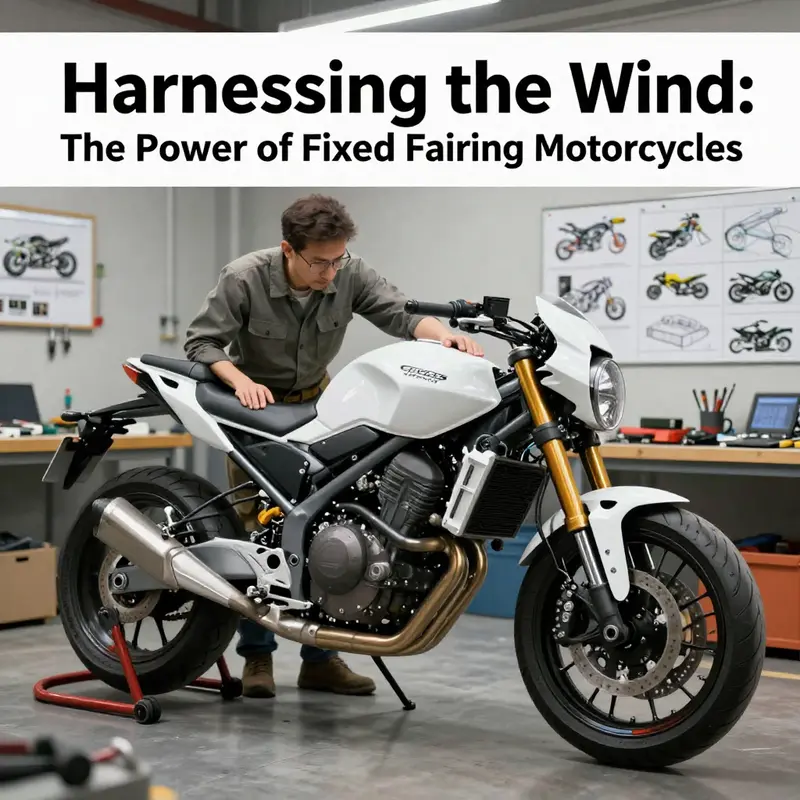
In the world of motorcycles, the fixed fairing stands as a singular statement about how form and function can fuse into a seamless whole. It is not merely a decorative shell slapped onto a chassis; it is a carefully engineered system that reshapes the air around the machine, guides it along a designed path, and anchors itself to a frame with a precision that makes the difference between slicing through wind and fighting it. A fixed fairing, permanently bonded to the motorcycle’s body, is a determinant of performance, comfort, and even identity. The rider sits beneath a sculpted silhouette, and that silhouette, through is curvature and surface quality, dictates how air moves around the engine bay, around the rider’s torso, and along the length of the chassis. The result is a machine that looks purpose-built for speed while offering a protective cocoon against the gusts and turbulence that intensify at highway velocities. The relationship between a fixed fairing and the rider is intimate; the fairing doesn’t just shield the rider, it defines the experience by shaping the wind that becomes the stage for the ride itself. In this sense, the fixed fairing is less a cosmetic accessory and more an aerodynamic and structural decision—a statement about what a machine can do when its skin becomes a working part of its performance envelope.
The aerodynamic role of a fixed fairing is its primal duty. Drag is energy not converted into forward motion but lost to the atmosphere, and in high-speed riding, every percent of drag matters. The fairing is sculpted to guide airflow with minimal interruption. It channels air in smooth streams around the engine and through the rider’s field of exposure, reducing wake turbulence that can cause buffeting and fatigue. When air flows cleanly over a streamlined surface, the motorcycle achieves higher efficiency at speed, improved stability in gusty winds, and a quieter cockpit inside the rider’s helmet. The geometry is not accidental; it is the product of wind tunnel data, computational fluid dynamics simulations, and empirical testing at velocity ranges that test both the bike and the rider. The beauty of this process lies in the quiet, almost surgical, reduction of drag while maintaining or enhancing the visual identity of the machine. The rider experiences less fatigue on long rides because the wind pressure becomes a manageable presence rather than an aggressive force pounding the torso and shoulders.
Yet the aerodynamic advantages of a fixed fairing are inseparable from its structural and thermal realities. The fairing must be integrated into the frame so it can bear its own loads and also contribute to the bike’s overall stiffness. High-speed riding subjects every attachment point to vibration, gust-induced loads, and alternate steering forces. The fairing, then, becomes part of a load pathway that must transfer wind-induced forces into the frame without compromising handling. Achieving this balance demands a blend of lightweight materials, precise joinery, and reinforcement schemes that keep the fairing rigid while allowing a degree of resilience to protect the rider from minor impacts and road irregularities. The goal is to avoid any flutter or resonance that could creep in at speed, as even small deflections at the skin can degrade the intended air stream and reintroduce flow separation. A well-integrated fixed fairing contributes to a stable ride by shaping the air mass in front of the rider and by providing a predictable pressure distribution that the chassis and suspension can respond to with confidence.
Material choices form the backbone of this integration. The earliest fairings relied on fiberglass and thermoplastic compositions—materials that are forgiving, relatively easy to mold, and cost-effective for mass production. As performance demands intensified, manufacturers began exploring carbon-fiber composites and advanced polymers. The shift toward composites offered higher specific strength and stiffness, enabling more intricate, aerodynamically efficient forms that would have been heavy or structurally fragile with traditional materials. The modern fixed fairing often employs a multi-material layout: a tough outer skin for weather and gloss finish, a resin-rich core to absorb impact energy, and internal spars or frames to intercept loads. This layered approach allows the skin to act as a structural element, distributing stress across the surface and into the substructure where it belongs, instead of placing all the duty on bolt-through hardware alone. The material science story here is not simply about strength. It is about damping, heat management, weather sealing, and the ability to sustain a pristine surface under highway wind, rain, and sun. The finish must survive UV exposure while maintaining the smoothness critical to laminar flow, so surface chemistry and coatings are as much a part of the aerodynamic equation as the underlying substrate.
Engineering techniques have evolved in step with materials. Topological optimization has become a mainstay of modern fairing development. By removing material where it does not contribute to stiffness or load bearing, engineers can reduce weight without sacrificing rigidity. This approach is particularly important for the internal substructures that connect the fairing to the frame, often referred to as the fairing spider or related assemblies. In a 2022 study published in Cogent Engineering, researchers demonstrated how computational methods can deliver a lighter yet equally rigid support geometry by rethinking traditional gullwing or spider-like internal members. The upshot is a sturdier yet more efficient path for force transfer and airflow management. The same study underscores how additive manufacturing and advanced simulations can accelerate iterations, allowing designers to test multiple configurations quickly and to fine-tune the mass, boundary conditions, and stiffness distribution that govern flutter and resonance. When the fairing is designed with such precision, every curve and junction has a purpose: to serve aerodynamics while resisting the environmental and operational loads placed on the machine at speed.
The design workflow now often begins with a precise CAD representation that feeds into finite element analysis to reveal stress concentrations and vibration modes. Beyond static strength, engineers must anticipate dynamic behavior under real-world conditions: crosswinds, lane changes, accelerating through a curve, and the rhythm of highway miles. Only then does the manufacturing process begin its intricate sequence of mold creation, layup, curing, or injection and forming that yields the final shell. Surface finish is not mere decoration. It affects boundary layer behavior, particularly at transitions between components or around instrument clusters and mounting points. The smoothness and curvature must be consistent enough to prevent premature boundary-layer separation while also presenting an interface that is aesthetically coherent with the rest of the bike’s design language.
This is where the fixed fairing also becomes a design language. A bike’s silhouette, its line continuity from nose to tail, and the way the fairing shades the rider can flow as a single, cohesive expression. Even in the absence of bold branding, the fairing communicates a story—the idea that the machine is built for endurance, speed, and a connection with the road. In many contemporary designs, the best fixed fairings balance retro cues with modern aerodynamics, delivering a form that looks timeless while behaving with the precision of modern engineering. The integration of the fairing with the rider’s position is critical; the cockpit, windscreen height, and the angle at which the rider sits must be considered as part of the aerodynamic system. A fairing that looks fast but makes the rider cut into air at an awkward angle defeats the purpose. Conversely, a fairing that is comfortable but poorly shaped risks sacrificing the efficiency that could unlock smoother, more economical long-haul rides.
The rider experience under a fixed fairing is also defined by climate control and acoustic comfort. A well-executed fairing reduces wind noise, channels cooling airflow toward radiators or engine bays, and minimizes buffeting that would otherwise destabilize the rider’s helmet and neck. In long-distance riding, the difference between fatigue and endurance can hinge on how quiet and balanced the wind forces feel at cruising speeds. The fairing’s edges, radii, and transitions are crafted to keep a consistent pressure distribution around the helmet, reducing the sweep of turbulent eddies that can lash at the rider’s ears and jaw. In addition, the surface treatment must resist stone impacts and spray while preserving a glossy finish that maintains the laminar flow characteristics engineers hunted for during the design phase. These concerns—comfort, protection, and efficiency—are all bound together by the same engineering discipline: make the surface work with the air, rather than against it.
One practical area where the fixed fairing demonstrates its value is in durability and maintenance. A fixed, integrated skin means fewer removable panels and fewer gaps where water can collect or where panels can misalign after a heavy impact or a rough road. This can simplify maintenance but increases the responsibility on designers to ensure long-term durability and repairability. The choice of joints, bonding methods, and the quality of the seal around the edges are important because degradation in any of these areas can reintroduce air leakage, noise, or even secondary flutter. The reality is that fixed fairings are both symbolic and utilitarian: they present a compact, unified profile, yet they demand thoughtful attention to how every seam is sealed and how the surface is finished to preserve its performance advantages over the lifetime of the bike.
In terms of manufacturing realism, fixed fairings embody the intersection of tradition and automation. The tooling, molds, and paint processes must deliver consistent geometry across thousands of units, while still offering enough tolerance to accommodate minor adjustments in assembly lines. Precision in molding and painting helps maintain a visually pristine surface that supports the aerodynamic goals. Precision is not just about aesthetics; it preserves the integrity of the airflow, ensuring that the surface remains smooth and continuous across the fairing’s entire surface. This is a practical demonstration of engineering becoming art: curves are sculpted not just for speed but for the way they look when a rider banks into a corner or glides along a straight, the light catching the contours and revealing a language of speed that is both visible and measurable.
For riders who want to customize or replace parts without breaking the continuity of the system, there is a meaningful option in the community of aftermarket offerings that align with the fixed-fairing philosophy. Custom or replacement fairings can be selected to fit within the same structural envelope and aerodynamic intent, preserving the bike’s overall behavior while letting the owner express a personal aesthetic. When shopping for such upgrades, the emphasis should be on the compatibility of mounting points, the rigidity of the attachment scheme, and the integrity of the surface finish. It is also worth considering how the chosen fairing interacts with the rider’s seating position and line of sight. A faithful continuation of the design language can be achieved by ensuring that the replacement parts mirror the flow and curvature of the original design, so the air continues to behave as predictably as possible. For readers curious about specific fitments, the Honda fairings page offers a useful reference for understanding how aftermarket components relate to a fixed-fairing system and to the broader ecosystem of compatible accessories, including color-matched finishes and integrated mounting hardware. Honda fairings.
This chapter has traced how fixed fairings marry aerodynamic efficiency with structural discipline, how materials choices expand the designer’s toolkit, and how computational methods push the envelope on efficiency and performance. The story is not just about speed; it is about the rider’s experience at the point where air, speed, and human endurance converge. The fixed fairing is the vehicle’s first line of response to air as a force and a partner in performance. It is the skin through which the machine speaks to the world, narrating a tale of engineering that blends gravity with grace, mass with momentum, and protection with poise. The ongoing evolution of fixed fairings — from material innovations to optimization-driven structures and from retro-inspired aesthetics to modern production methods — signals a future where every curve is a data point and every junction a decision about efficiency, safety, and identity. The discipline of shaping air is not a footnote in motorcycle design; it is its guiding compass, directing how speed is achieved, how comfort is sustained, and how riders connect with the road through a unified, efficient and confident form.
External resource for deeper reading: https://www.tandfonline.com/doi/full/10.1080/23311916.2022.2075443
Final thoughts
In summary, fixed fairing motorcycles are more than just visually appealing machines; they represent a synthesis of cutting-edge design and engineering that amplifies performance and rider comfort. This exploration reveals their unique advantages in aerodynamics, long-distance touring capabilities, and overall performance enhancements. For business owners, understanding the significance of fixed fairing designs can refine product offerings and attract a customer base that values both style and functionality. As the motorcycle landscape continues to evolve, those who leverage the benefits of fixed fairings will undoubtedly lead the market in innovation.