

DZUS motorcycle fairing fasteners stand as a pivotal component within the motorcycle industry, offering a unique blend of quick-release functionality and secure attachment. Ideal for body panels and fairing systems, these fasteners provide not only durability but also ease of maintenance, a critical aspect for both manufacturers and enthusiasts alike. This article delves into the intricacies of DZUS fasteners, beginning with their sophisticated design and mechanism, exploring their applications in custom motorcycle builds, and offering crucial sizing and specification guidance. It further examines the impressive durability and performance these fasteners impart to racing applications. Lastly, we will discuss emerging market trends and insights from suppliers that encapsulate the ongoing relevance of DZUS fasteners in the motorcycle sector.
Quarter-Turn Precision: The Design and Mechanism of DZUS Motorcycle Fairing Fasteners

DZUS motorcycle fairing fasteners have transformed the way riders, builders, and technicians approach access, maintenance, and aesthetic precision on a bike’s skin. These micro-mechanisms embody a philosophy: secure attachment that does not demand costly tools or protracted downtime. At the core of the system lies a simple yet revolutionary action — the quarter-turn. With a 90-degree rotation, a panel seals itself against the frame or chassis and, with the same decisive move, can be disengaged to reveal the inner workings beneath. This is not mere convenience; it is a design choice that harmonizes aerodynamics, serviceability, and reliability. When the fastener is in its locked state, it lines up with the overall contour of the bodywork, minimizing gaps and drag while ensuring that every panel remains steadfast at high speed. The elegance of this approach is that it leverages precise cams and mating surfaces to translate a small movement into a substantial clamping force, each component calibrated for repeatable performance over many cycles. The result is a system that feels almost invisible when closed, yet instantly responsive when opened, a quality that appeals equally to factory teams, dedicated enthusiasts, and apparel-minded builders chasing a clean, race-inspired silhouette.
The design features of a DZUS-style fastener start with the two fundamental elements: a threaded stud that is permanently mounted into the frame or bodywork, and a captive nut or latch that threads onto the stud. The interaction of these parts is what makes the fastener perform so consistently under vibration and wind load. The latch itself typically features a distinctively shaped head — often a star-shaped, crosshead, or D-ring button head — which is not merely a tool grip but an integrated part of the locking geometry. When the head is rotated, a cam surface within the fastener’s interior engages with the stud and pulls it into a locking position. The geometry of that cam surface is crucial: it must translate the torque into a uniform, linear clamp that presses the panel squarely against the frame without bowing or misalignment. This uniformity minimizes the risk of loosening caused by the engine’s rumble, the tires’ impact with the road, or the occasional off-road excursion that a sport or adventure bike might encounter.
Materials play a steadying role in this equation. The heads are commonly forged from high-strength stainless steel or titanium, balancing resistance to corrosion with the need to stay light and compact. Weight is not merely a performance metric for the chassis; it also informs the inertia of the paneling system. The DZUS philosophy understands that a fastener’s mass, when aggregated across dozens of attachment points on a bike, can influence handling and fuel economy during both the ride and the service procedure. Resistance to environmental exposure matters too. Bikes spend time in rain, salt, humidity, and even the occasional track day under bright sun. Materials chosen for fasteners must endure such conditions while preserving the finish and the ease of operation. The aesthetic implications are not incidental. The polished heads, the clean lines of the surrounding bodywork, and the subtle reflections that travel across the fairing all contribute to the perception of a well-sorted machine. A well-executed DZUS installation looks purposeful and deliberate, a small detail that communicates discipline in engineering and care in maintenance.
The mechanism’s efficiency hinges on precision and consistency. The cam-driven action is designed to deliver a constant clamping force across the life of the fastener. Unlike standard screws that can back out or loosen with cumulative vibration, the DZUS system is engineered to maintain a stable seal even under demanding conditions. That stability is not only about keeping panels attached; it is about protecting sensitive components mounted behind the fairing, from the electrical harnesses and sensors to the radiator and cooling lines that might be shielded by the skin. When a panel is sealed, its joints become an extension of the frame, contributing to the overall stiffness and aero profile of the bike. It is this interplay between secure attachment and minimal intrusion that makes the quarter-turn mechanism particularly compelling for both race gear and street builds. The reliability of the system is reinforced by the straightforward geometry of stud engagement and the predictable path of the cam, so technicians can anticipate how the fastener will respond under repeated disassembly and reassembly.
Beyond the core geometry, the DZUS approach emphasizes compatibility and modularity. The system is designed to be adaptable across a wide range of models and configurations, from compact, lightweight street setups to more elaborate racing-focused frames. End users and builders appreciate the ability to select a stud length, a nut type, and a head style that suits the ride’s geometry and aesthetics. There is a practical logic to this flexibility: fairing panels must align with the underlying frame to preserve the bike’s silhouette and its aerodynamic envelope. The presence of standard thread types, such as M5 or M6, provides a familiar path for technicians familiar with common automotive and motorcycle fastener practices, enabling easier sourcing and replacement when a panel is damaged or when an upgrade is chosen. The fact that a single system can span OEM applications and aftermarket kits underlines the trust industry professionals place in the design, and it helps explain why DZUS-inspired fasteners appear across professional racing and enthusiast projects alike.
The conversation about fairing fasteners is also a story about maintenance practicality. The quarter-turn action is not just a feature for speed in an on-track pit or a roadside repair; it is a way to keep the fairing in serviceable condition with minimal scrap and waste. When panels need to be accessed to inspect wiring, replace a light, or check the cooling system, the operator can perform the task without the risk of stripping threads or over-tightening. This ease of access is especially valuable in tight engine bays or complex electrical layouts, where a traditional multi-screw removal could require repeated alignment checks and delicate handling of fragile connectors. The modular nature of the DZUS system means an individual fastener can be replaced if it shows any wear, preserving the rest of the assembly and maintaining the overall integrity of the paneling. In practice, that translates into fewer trips to the shop and more time spent riding, tuning, and customizing rather than wrestling with hardware.
The topic of customization is inseparable from the performance narrative. For riders pursuing a bespoke look or a high-gloss, race-inspired finish, the fasteners’ heads and caps offer visual cues about intent and craftsmanship. Decorative covers or finishes can complement the bike’s color scheme and texture, turning a functional component into a design feature. The choice of head shape, finish, and any protective coatings can be coordinated with non-ferrous or coated hardware to maximize weather resistance and reduce the potential for galvanic corrosion with adjacent alloys. In this way, fasteners cease to be merely a means of retention and become a tactile and visual bridge between engineering and artistry. The design ethos echoes across aftermarket kits and model-specific packages that cater to riders seeking a streamlined look without sacrificing the speed and reliability that DZUS-style fasteners promise.
For riders considering upgrades or replacements, it is essential to verify fitment details such as the correct thread type and mounting depth. Compatibility is not only about thread size; it is about the panel’s geometry, the degree of flushness with the surrounding surface, and how the head interfaces with any protective caps or trim. A thoughtful choice respects both the mechanical demands and the interior routing of cables and hoses behind the fairing. In the broader ecosystem of motorcycle customization, DZUS-style fasteners symbolize a balancing act between form and function, a design language that honors the rider’s desire for clean lines, quick access, and robust performance. For riders exploring exterior updates and compatible panels, the Honda fairings category can be a resource for panels designed to accommodate fasteners of this type, ensuring a cohesive look that remains faithful to the bike’s original geometry while enabling efficient service.
As the conversation shifts from the single fastener to the system as a whole, the picture that emerges is one of enduring relevance. The DZUS mechanism, with its quarter-turn precision, offers a practical blueprint for any design where accessibility, reliability, and aesthetics converge. The principles embedded in this system — cam-driven locking, consistent clamping, modular components, corrosion-resistant materials, and an emphasis on repeatable serviceability — remain applicable to a wide range of bodywork beyond motorcycles. They inform how engineers think about joints, seams, and panels when weight, aerodynamics, and rapid maintenance are at stake. And they remind builders that even the smallest hardware, when chosen and engineered with intent, can elevate the entire machine. For a deeper technical dive and official specifications, you can consult the authoritative resource that documents these innovations: the official DZUS Fasteners site.
null
null
Sizing for Speed: Quick-Release Fairing Fasteners and Aerodynamic Integrity
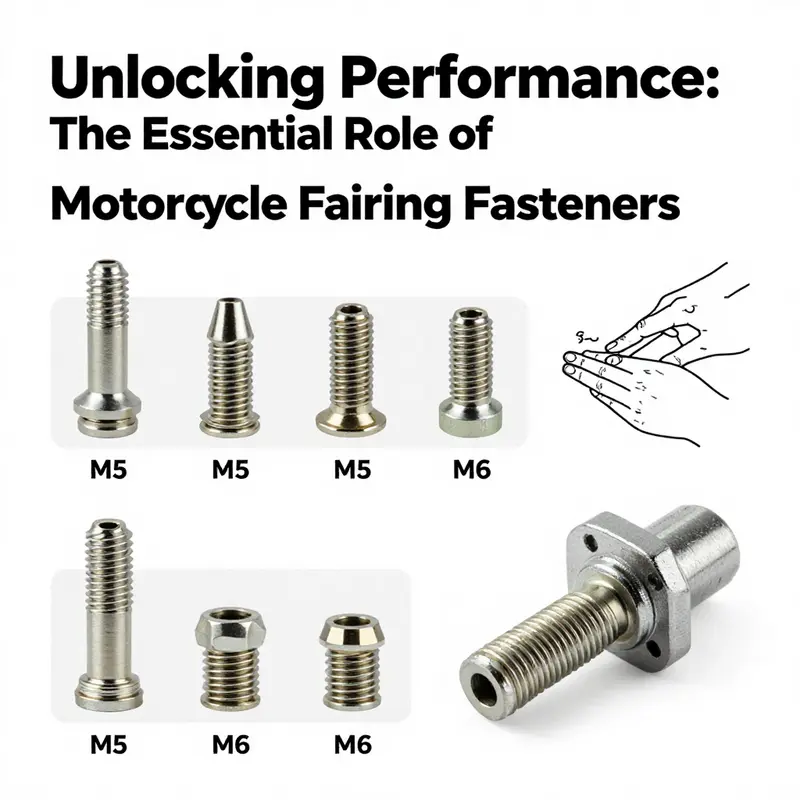
Every panel on a modern motorcycle is a careful compromise between appearance, aerodynamics, and serviceability. The fairing is more than a decorative shell; it is a primary contributor to airflow, rider protection, and the overall silhouette of the machine. In that delicate balance, the fasteners that secure the fairing play a surprisingly large role. They must hold tight at high speeds while remaining easy to release for maintenance, adjustments, or upgrades. The sizing and specification of these quick-release fasteners are not afterthought details but part of the performance equation. When you start a project—whether you are restoring a classic model, building a race-lean kit, or upgrading for a cleaner look—the correct fastener length, diameter, and thread engagement determine everything from clamping force to long-term durability. A misstep in sizing can manifest as panel flutter at speed, misaligned gaps that ruin the visual line, or a stubborn panel that refuses to come off without tools and a curse.
The typical fastener used in these applications features a simple two-part system: a male stud and a female socket. The combination locks together with a twist or push, then holds with a spring-loaded or knurled mechanism that resists the wind pressure and vibration that dominate a bike’s bodywork. The practical benefit is easy access without sacrificing security. But ease of use does not excuse a lack of precision. In the best installations, the system becomes almost invisible—a seamless seam of aero efficiency and panel alignment. The key to that illusion is correct sizing, a detail that sounds dry until you realize how much depends on it. The shaft diameter, the locking end, and the overall length all influence how firmly a panel clamps to the frame and fairing fastener bosses, how closely body lines sit, and how reliably the assembly engages after repeated removal and reattachment.
Size begins with the shaft. In the standard configuration, the shaft diameter is 5 millimeters. That 5 mm is not arbitrary; it is chosen to provide a balance between sufficient shear resistance and minimal local thinning of the mounting bosses in the fairing. The locking end, the head or knurled end that the user manipulates, is typically 6 millimeters in diameter. This dimension ensures a comfortable grip for quick operations, even while wearing gloves, and it also helps in creating a robust locking interface with the corresponding receptacle. These precise numbers are not a marketing footnote; they are the foundation of repeatable performance. They determine how much surface area is available to bear clamping force and how the bodywork will respond to the loads imparted by wind, vibration, and rider input.
But size is not a single number; it is a small ecosystem of metrics that work together. The overall length of the fastener is perhaps the most variable parameter. To pick the right length, you must account for the entire stack that the fastener will bite into. Measure the combined thickness of the panel being secured and the depth of the mounting receptacle or nut that the fastener engages. If the fastener is too short, the clamping force can be insufficient, allowing panel movement under wind buffeting and potentially loosening over time. If it is too long, the fastener may bottom out before it can apply a proper clamp, or it could protrude into internal components, interfering with wiring or internals. The correct length results in a snug, even clamping feel with the panel sitting flush against the mating surface. It is a reminder that the fairing’s crisp lines and clean edges depend on a careful measurement rather than a rough estimate.
Accompanying these measurements are practical guidelines that come from the manufacturers and from experienced hands in the field. Before you even place a single fastener, you should consult the specific installation guide for your bike model and fairing design. These guides translate the physical realities of panel thickness, cutouts, and boss depth into a recommended fastener length. If you are working on an aftermarket kit, you may encounter a small range of lengths to accommodate slight variations in panel construction. In any case, rely on the documented specifications rather than assumptions. The precise guidance often appears in a chart or a downloadable guide, reflecting the dimensioning that evades casual measurement but governs reliable fitment.
To make sizing as reliable as possible, many suppliers provide interactive sizing tools or application charts. These digital aids walk you through the measurement process step by step. You input the panel thickness, the receptacle depth, and sometimes mounting depth within recessed pockets, and the tool returns a recommended fastener length and sometimes even a suitable range. The goal of these resources is not to complicate installation but to prevent common errors. A wrong length can compromise the seal between panel and frame, create gaps that disrupt airflow, or simply fail to engage with the locking mechanism at all. By using these tools, you propagate a standard of precision that scales across different bike models, panel styles, and riding purposes—from calm street rides to aero-focused race setups.
There is also a material and finish dimension to consider, because corrosion resistance or finishes that resist the library of road hazards—salt, humidity, heat, and vibration—affect long-term reliability. The choice of material and coating is not merely cosmetic; it impacts how the fastener ages under discipline and exposure. A robust option will resist galling and thread wear, even after frequent removal and reattachment. Finishes may range from corrosion-resistant coatings to knurled surfaces designed to improve grip, especially when gloves are worn and tactile feedback is reduced. When deciding on finishes, you balance appearance with function. A fastener might look perfect in the showroom, but if its finish wears through after a season, the panel’s line and the overall aesthetic suffer. The best practice is to select a finish compatible with the other hardware in the area and with the environmental conditions your bike faces.
Thread type is another dimension of compatibility. In many applications, the standard thread types include M5 and M6 variants. These threads align with common fastener receptacles used across many fairing designs. Verifying thread compatibility is essential; mismatched threads can strip receptacles or prevent proper engagement. If you are replacing a missing fastener or upgrading from an OEM kit, confirm the thread size and pitch before purchasing. An accurate match ensures that the fastener both anchors the panel securely and clears the internal components with no binding or contact.
The broader context of fitment also matters. OEM and aftermarket programs often emphasize not just the mechanical hold but the visual cadence created by the fastener placement. The head shape, knurling, and any decorative covers can influence how the fastener integrates with the panel. Aesthetics matter because a clean, uninterrupted line along the fairing increases perceived speed and reduces drag by smoothing the transition between surfaces. Conversely, a misfit or a protruding head can spoil the silhouette and interrupt airflow in subtle ways. In high-speed conditions, even small misalignments can create microturbulence that, while invisible at rest, becomes measurable at track speed.
The reliability story for these fasteners also includes maintenance discipline. Even with correct sizing, the system requires periodic checks and, as part of a routine service, a quick inspection of mounting points and locking engagement. If a panel is removed and reattached, re-check the alignment and readjust as needed. A panel that returns with a slightly different gap may indicate that the fastener did not engage evenly or that the receptacle depth has changed due to a minor shift in the mounting surface. Consistency comes from a method: measure, verify, and test the engagement. The goal is to reach a state where the panel reads true to line, the fastener’s head sits flush against the knurled surface, and the locking mechanism secures with a confident feel when twisted or pressed into place.
In practice, approaching sizing and specification as a continuous refinement process yields the best results. Start with a measured panel thickness and a verified receptacle depth. Use a locally appropriate length within the manufacturer’s recommended range and confirm the engagement with a test fit. Then ride or simulate the ride condition to ensure no panel flutter occurs and that the space between panels remains consistent. If you notice any looseness or misalignment after installation, revisit the measurement, recheck the mounting depth, and confirm the thread engagement. These steps may seem painstaking, but they protect the bike’s aerodynamics and the rider’s confidence.
As you consider the broader ecosystem, remember that the fastener choice does not live in isolation. It interacts with the fairing’s geometry, the panels’ composite structure, and the overall system’s maintenance rhythm. The aim is a precise, repeatable interface that respects the line of the bike while enabling swift service. In that sense, sizing is not simply about choosing a number; it is about engineering a reliable conversation between every panel, every bolt, and every rider who expects the machine to respond with immediacy when the switch is flipped or the panel is nudged back into place. The result is a clean, purposeful assembly where the fasteners disappear in plain sight, yet their role is undeniable.
For readers pursuing deeper guidance on the official dimensioning and specification data, the authoritative documentation provides verified dimensions, torque guidelines, and material specifications that support long-term performance. These resources ensure that every build or restoration uphold the same standards of fit, function, and aesthetic integrity that define quality in the sport and hobby alike. Official data can be found in the technical documentation section of the manufacturer’s site, offering precise charts and notes that translate measurement into reliable practice. For those who want to cross-check the formal data, the standard references are readily accessible and widely consulted by professionals and enthusiasts who demand predictability in their rapid-release systems. Their guidance helps ensure that a panel’s stay and its release remain consistent across seasons and miles.
In the end, sizing quick-release fairing fasteners is a discipline that rewards patience and attention to the details that riders rarely see but always feel. The correct sum of shaft diameter, head size, and engagement length forms the backbone of a fairing system that looks perfect and works flawlessly. When these elements are aligned with the panel geometry and the rider’s needs, the result is not just a panel that comes off easily and goes back on with a clean snap. It is a system that supports the bike’s aerodynamics, preserves its aesthetics, and keeps maintenance steps simple enough to be performed on the road or in the pit. The geometry of a fastener is a microcosm of engineering—small, precise, and essential to the overall performance of the machine.
For further authoritative reference, see the official sizing and specification guide: https://www.dzus.com/support/technical-documents
Durability Under Pressure: Quick-Release Motorcycle Fairing Fasteners in Racing

Racing demands precision not only in chassis setup and tire compounds but also in the tiny hardware that keeps the fairings aligned at blistering speeds. The outer panels shape the airflow, shield vital electronics, and carry sensors, yet every clip and rivet must be removable in moments for maintenance and repairs between sessions. This places the fasteners at a unique intersection of reliability and speed, where a single misfit can ripple through aero balance and cooling. In practice, the most successful systems are engineered to withstand relentless vibration, thermal cycling, and the varied stresses of aggressive cornering, while offering a simple, controlled action to release and reattach a panel. The result is a workflow that respects rider focus and crew discipline alike, enabling a bike to shed and regain its integrity without sacrificing precious track time. The best implementations feel almost invisible—the rider notices them only when the panel snaps into place with that reassuring, low-profile click and stays quiet under pressure at the far end of the straightaway.
These quick-release fastening arrangements originated in aerospace contexts, where weight, stiffness, and repeatable engagement are non-negotiables. On motorcycles, they arrive as a two-part system: a male stud and a female receptacle that lock with a quick twist or push. The essence of the design is to deliver a balanced retention force—strong enough to resist wind shear and engine heat, yet light enough to pop free with gloves on during a pit stop. Precision tolerances reduce play that could otherwise loosen the panel and disturb the clean line of the bodywork. The locking mechanism is engineered to resist accidental opening while accommodating rapid cycling through repeated removals, a necessity when electronics bays, cooling ducts, and lighting behind each panel demand fast access. In the hands of a skilled mechanic, the action becomes almost ceremonial: a deliberate turn, a smooth release, and the panel is free to be swapped or inspected without fumbling in a corner of a crowded pit.
Material choice matters as much as geometry. High-grade aluminum alloys and stainless steel are common because they offer lightness without sacrificing rigidity. Aluminum provides excellent stiffness-to-weight ratios, while stainless resists corrosion from humidity, rain, and fluids that track along a bike’s skin during a race. Some designs employ hardened steels for internal threads or contact surfaces where the stud seats within the socket, with coatings that reduce galling and protect against wear after hundreds of cycles. The combined effect is a system capable of tolerating thermal swings from pit-lane shade to sun-blasted hot track, as well as the micro-mags of engine heat and braking temperatures. Weight reduction remains a central aim because every gram spent on mounting hardware lowers the mass elsewhere, a nuance racers understand intimately because it translates into faster acceleration and a more agile return to the pit.
At the heart of reliability lies engagement force and anti-loosening features. The engagement must feel deliberate yet effortless, so a technician can operate it by touch in a crowded pit stall or while wearing racing gloves. The strongest systems use a cam or spring-loaded retention method that preserves panel position even as the bike experiences gusts, curbs, and the micro-shocks of rough pavement. Loosening remains a real risk; a loose panel can flutter at high speed, create drag, or even detach and compromise aero performance or wiring behind the panel. Engineers counter this with tight-tolerance mating surfaces, sometimes a secondary locking element, and careful consideration of vibration modes that panels sharing adjacent mounting points can encounter. The goal is a snug, uniform seating that avoids a single stress point. In racing, the pursuit of a clean silhouette is not purely aesthetic; any flutter or misalignment wastes energy in the air and unsettles the rider’s sense of direction at the limit. The result is a kit that blends ease of use with rugged retention—an armor for the fairing that remains trustworthy through the most punishing sessions.
Where this elegance meets reality is in maintenance and field service. Teams rehearse pit-stop routines to capitalize on the smallest margins. A panel may come off in seconds, and the same retrieval cycle should require the same smooth operation every time. The fasteners must tolerate repeated cycling—hundreds of engagements and disengagements—without degrading the threads, socket, or surface finish. Motorcycle owners thoughtful about upgrades often select kits designed for universal compatibility, with some options offering decorative caps or finishes to match a bike’s livery, while others emphasize a near-surgical fit for a specific model. The choice hinges on whether the rider needs rapid access to the electronics bay, radiator shroud, or air intake ducting, each area susceptible to heat, vibration, or debris intrusion. A well-chosen system preserves not just function but the visual language of a bike that communicates speed through its lines as much as through its powerplant. The nuance is practical: a panel that removes in a controlled motion avoids snagging on wiring harnesses, while a panel that reassembles with a clean, exact seam preserves the aero geometry that carries the rider down the long straight.
For riders contemplating upgrades or replacements, the practical steps are straightforward when approached methodically. Confirm the mounting depth and the compatible thread standard to ensure the stud and socket pair will seat cleanly in the panel frame without the risk of cross-threading. Measure the countersunk area where the panel sits so that caps, if included, do not impinge on the fairing’s curvature. Look for kits that balance light weight, corrosion resistance, and a tactile, confident action. If you’re exploring bodywork options for a particular platform, you can explore the Honda fairings category to review compatibility and finish options. This internal link provides a quick reference to how different kits interface with common panel geometries, helping practitioners compare how various fasteners behave with the same underlying panel design rather than focusing on a single brand. The objective remains clear: a cohesive system that respects both the physics of airflow and the visual language of a race-proven bodywork ensemble.
Ultimately, the story of quick-release fairing hardware in racing is the story of keeping lines clean and velocity constant. It is how a crew chief translates brutal track conditions into repeatable, repairable performance. It is how a rider feels the bike respond when a fairing snaps back into place with a satisfying, confident click after a pit-stop swap, ready to rejoin the pursuit with minimal drag and no distraction. In a sport where fractions of a second decide outcomes, the reliability of these fasteners matters as much as engine tuning or tire choice. The material science, precision engineering, and rigorous in-field testing converge to deliver a fastening system that marries simplicity of use with stubborn durability. The result is hardware that stays faithful under the most demanding circumstances, letting teams push the envelope while preserving the integrity of the aero profile. In this light, the fasteners are not mere hardware; they are a quiet ally that upholds performance when the pace never slows for a second.
External reading and further technical insight can be found through the following resource that discusses the engineering behind motorcycle fairing fasteners and their role in maintaining aero integrity under race conditions: https://www.dzus.com/products/motorcycle-fairing-fasteners
The Edge of Engineering: Market Trends, Authenticity, and the Promise of DZUS Motorcycle Fairing Fasteners
DZUS motorcycle fairing fasteners sit at the quiet intersection of speed, precision, and modular design. They are not just hardware; they are the invisible choreography that keeps a motorcycle’s silhouette sleek while granting rapid access to the breath of its innards. These quick-release mechanisms trace their lineage to aviation and high-performance motorsport, where every twist of a pin or a turn of a fastener carries consequences for aerodynamics, weight, and reliability. On a crowded grid of aftermarket dreamers and OEM engineers alike, DZUS-style fasteners have emerged as a system that embodies a core engineering ethic: maintain integrity under pressure, yet allow for swift transformation when the moment calls for it. The modern market for these components has evolved beyond the initial novelty of a clever twist. It has grown into a disciplined demand for consistency, traceability, and a visual language that harmonizes with the fairing’s edges and lines. That evolution reflects a broader shift in motorcycle aesthetics and maintenance philosophy—where speed and customization are not at odds but mutually reinforcing goals.
The current market pulse is driven by sport and custom motorcycles that prize both performance and the ability to reconfigure for different purposes. Riders who track days, attend shows, or simply enjoy personalizing their bikes want panels that can be removed quickly for routine maintenance, bodywork changes, or electronics upgrades. In racing contexts, the advantage is tangible: every second saved in panel access translates into reduced downtime and more time on the track. For the broader enthusiast community, the value proposition extends beyond speed. A fairing that can be taken apart and reassembled with predictable, repeatable results reduces the risk of misalignment, stripping, or accidental damage during teardown and reassembly. The DZUS system is prized not only for its speed but for its ability to maintain an aerodynamic profile when closed. The clean, uninterrupted skin of the fairing, free from protruding fasteners, is part of what many riders perceive as the bike’s true form—functional art shaped by rational engineering.
From a market perspective, modularity is more than a design trend; it is a practical response to the fluctuating needs of riders who demand customization without sacrificing reliability. The same fasteners that enable a quick swap of cosmetic panels also support more ambitious configurations—panels with embedded electronics, light arrays, or cooling ducts that must be accessed without disassembling the entire body. This modular mindset feeds supplier strategy as well. The market now leans toward premium-grade, authentic components that are manufactured to high standards. Consumers have become more discerning about material quality, fit, and finish, and they recognize that the precision found in aviation and motorsport-grade fasteners is not a luxury but a baseline expectation. In response, suppliers emphasize traceability and documentation that can reassure enthusiasts who demand accountability. They highlight the stringent manufacturing controls and quality assurance processes that underwrite performance under extreme conditions, where the difference between a good fastener and a compromised one could be measured in milliseconds of missing track time or in the certainty of a panel staying firmly in place at speed.
The supplier landscape mirrors this shift toward authenticity. Against a backdrop of cheaper imitations, the market is increasingly capable of distinguishing components that are merely adequate from those that conform to a higher standard. Buyers now look for products that can be traced to specific production runs, with certificates of conformity and clear material specifications. This emphasis on certification and provenance resonates with riders who treat their motorcycles as extensions of their own reliability standards. It also aligns with a broader consumer education trend in gear and accessories, where brands distinguish themselves not only by performance but by the clarity of their technical documentation and the ease with which a customer can verify specifications. In practice, this means more robust product guides, improved packaging that protects delicate components, and clearer installation instructions that reduce the risk of misfit or damage. The result is a marketplace where genuine components command respect for their engineering, and where the presence of proper documentation becomes a tangible signal of value.
As the market matures, the conversation around DZUS fasteners extends beyond pure performance into the realm of aesthetics and fit. The distinctive look of these fasteners—whether the pins, the housings, or the finishing touches like decorative caps or customized coatings—contributes to the overall visual language of the bike. The ability to tailor appearances without sacrificing function is a powerful differentiator for riders who want both aggression and refinement in their machines. The debate around authenticity versus imitation often centers on build quality and long-term performance. A genuine DZUS component is engineered for accuracy in threading, pin engagement, and spring-loaded or locking actions that resist vibration. Cheaper variants may save money upfront but can exhibit lag in engagement, inconsistent clamping force, or wear patterns that become apparent after a few sessions on the road or the track. This makes the appeal of authentic parts enduring: consistency, reliability, and a design vocabulary that respects the rider’s expectations for both form and function.
To understand how a rider translates this market reality into practical choices, consider the core compatibility considerations. Size, thread type, and mounting depth are not mere specifications; they are the currency of a correct fit. Mismatched threads can damage the panel, reduce clamping reliability, or create alignment issues that compromise aerodynamics. The simplest rule of thumb is to verify that the diameter, thread pitch, and mounting depth align with the faring’s attachment points. For a track-ready setup, precision tolerances matter even more, as vibration and airflow can showcase microscopic deviations in panel fit. In practice, riders and builders often work with a kit designed to be broadly compatible across popular models, while choosing options that offer tighter tolerances for a race-focused application. The emphasis here is not on a single best solution but on selecting a kit that offers predictable performance, clear documentation, and a credible support ecosystem.
With this in mind, the value of authentic DZUS components extends into the realm of safety and reliability. In high-speed environments, any compromise in fastener performance reverberates through the entire fairing system. A fastener that disengages unexpectedly or feels inconsistent in its engagement creates not only a maintenance headache but a potential safety concern. Enthusiasts increasingly expect suppliers to stand behind their products with traceability and service information that helps them diagnose issues quickly and accurately. That trust hinges on visible markers of quality—material certifications, manufacturing tolerances, and a transparent supply chain. The emphasis on authenticity also dovetails with consumer education. Brands and retailers invest in educating buyers about the differences between genuine DZUS fasteners and imitations, outlining what sets authentic components apart and how to recognize reliable sources. This educational dimension helps builders avoid costly missteps that could arise from incompatible sizes or inferior materials. It also reinforces a philosophy of responsible customization: value is not merely in quick panel removal but in preserving the integrity of the bike’s structure and its performance envelope over time.
For those who want to explore real-world applications and get a sense of how DZUS fasteners integrate with established fairing designs, a practical starting point is the category of fairings for a particular brand’s lineup. This resource offers a window into how a complete panel system can incorporate quick-release hardware without compromising the fairing’s geometry or surface finish. See the Honda fairings category for an example of how these fasteners can harmonize with a broad range of panels, from upper fairings to side panels and fenders, while maintaining a coherent aesthetic and reliable closure. Honda fairings.
As the market continues to mature, riders and builders will increasingly expect more than just a functional fastener. They will demand a complete package: high-precision components, robust documentation, and a credible performance story that ties back to the origin of the technology in aviation and motorsport. That convergence—speed, aesthetics, and reliability—defines the current trajectory for DZUS motorcycle fairing fasteners. It is a trajectory that rewards those who invest in genuine optimization, who honor the engineering principles that make these systems dependable in extreme conditions, and who communicate clearly with customers about what authentic parts offer. The net effect is a market where the leverage of a well-executed quick-release system extends beyond maintenance convenience. It elevates the rider’s experience, preserves the bike’s aerodynamic integrity, and reinforces the trust that comes from choosing components whose performance can be traced back through a documented lineage of design and production.
External resources and further exploration of specifications and supplier guidance can be found at the official technical resource page for quick-release fasteners.
External resource: https://www.dzus.com/products/quick-release-fasteners
Final thoughts
DZUS motorcycle fairing fasteners represent a significant advancement in motorcycle maintenance and aesthetics, providing essential features that cater to both manufacturing needs and consumer preferences. As their applications continue to evolve in custom builds and racing, the importance of understanding sizing, durability, and market trends cannot be overstated. By integrating DZUS fasteners into your motorcycle projects, business owners can not only enhance their product offerings but also meet the growing demand for reliable and high-quality fastening solutions.