
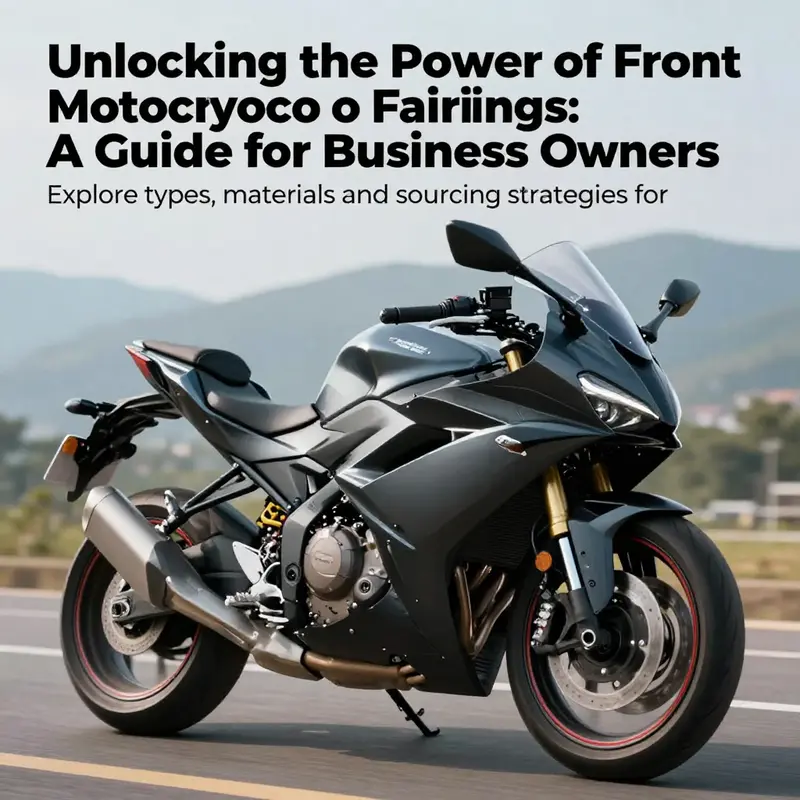
Front motorcycle fairings play a crucial role in the motorcycle industry, affecting not only performance but also aesthetics and safety. For business owners involved in manufacturing or retailing, a deep understanding of these components is essential. This article delves into the various types of front motorcycle fairings, focusing on half and full fairings, and explores material options such as ABS, fiberglass, and carbon fiber. Additionally, we will assess the impact of aerodynamics on motorcycle performance, discuss sourcing strategies aligned with industry standards, and highlight customization opportunities to meet consumer demands. By comprehensively examining these elements, business owners will be better equipped to make informed decisions that enhance their offerings.
Half vs Full Front Fairings: Crafting Aerodynamics, Protection, and Ride Quality
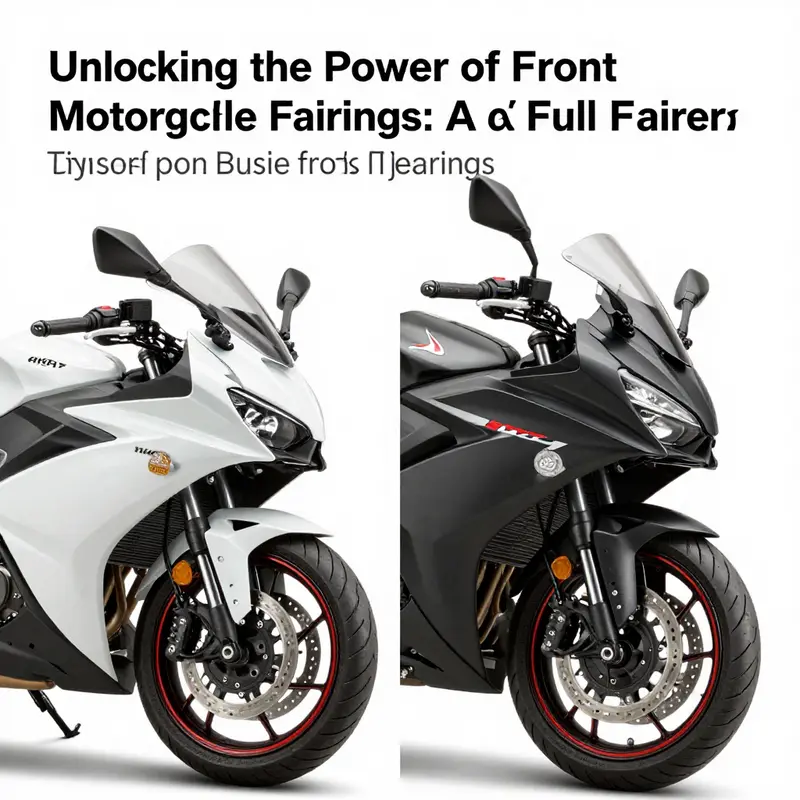
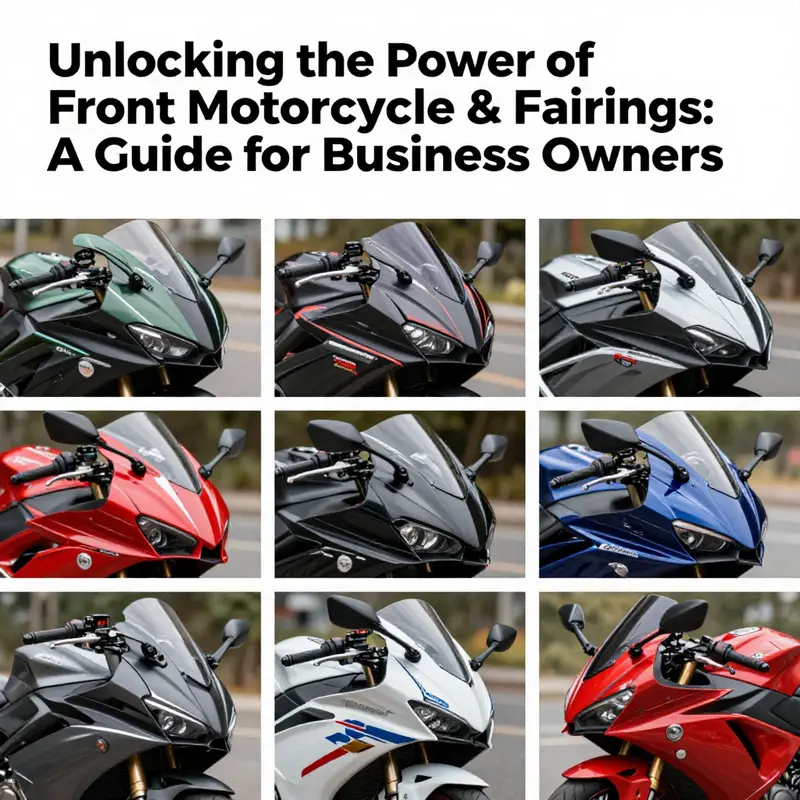
A front motorcycle fairing is a design element that interacts with the air, the rider, and the bike chassis. The choice between a half fairing and a full fairing expresses priorities in aerodynamics, weather protection, maintenance, and riding style. A half fairing covers the upper front portion of the bike, frames the headlight and cockpit, and leaves the engine and lower sections exposed. It adds less weight than a full enclosure, which translates into more agile handling and easier maintenance. For riders who value maneuverability, sport riding, or daily riding that doubles as a weekend road tour, the lighter package can feel almost instinctive. The half fairing also simplifies service because there are fewer panels to remove and fewer seals to worry about.\n\nWind protection with a half fairing is real but focused. It primarily shields the chest and head at moderate to high speeds, supporting comfort and reducing fatigue. The lower body still experiences wind pressure and weather, so in rain or gusty crosswinds you may notice more buffeting than with a full enclosure. On many urban and mixed road trips, this targeted wind management provides a satisfying balance. The visual language of a half fairing tends to emphasize precision and rider contact with the machine, presenting a lean and mechanical character.\n\nMaterials matter. ABS plastic keeps costs down and repair work straightforward, while fiberglass offers weight reduction and customization without the cost of more exotic composites. Carbon fiber remains the premium option for weight savings and strength, but it comes with a higher price tag. The material choice affects long term durability and repairability after a tip or a fall, and it interacts with mounting geometry and heat management.\n\nFor riders who spend much time in urban traffic or on winding back roads, the half fairing offers a blend of performance and practicality: wind reduces fatigue on longer rides, access to the engine remains straightforward, and replacement parts tend to be affordable.\n\nTurning to the full fairing shifts the focus toward aerodynamic efficiency and rider protection. A full fairing encloses the front and sides and often shields the top of the radiator and parts of the engine. It creates a smoother air path that reduces drag, lowers wind noise at highway speeds, and stabilizes the machine in gusty conditions. The rider can adopt a more compact posture, which improves control and reduces wind pressure on the upper body. The full enclosure also offers superior weather protection for the arms, hands, and torso, an advantage on long trips or in variable climates. In addition, it helps protect sensitive electronics and helps seal out road spray and dust.\n\nOn the downside, a full fairing adds weight, increases complexity of mounting and service, and can limit engine access for maintenance and radiator checks. Disassembly and panel replacement after damage is typically more involved and costly, and some riders feel that the lines of a full fairing reduce opportunities for customization and rapid cosmetic changes. In some models, heat management and cooling airflow are more challenging to tune with a fully enclosed shell.\n\nChoosing between halves and fulls comes down to riding miles, climate, terrain, and personal tolerance for wind exposure. If agility, quick maintenance, and a lean profile are the priority, a half fairing is appealing. If highway confidence, weather resilience, and a streamlined silhouette matter more, a full fairing can be the better choice. Some projects explore hybrid approaches that borrow elements from both styles, offering wind management with easier access and customization. The best approach is to assess typical routes, test fit, and consider how the fairing shape interacts with rake, trail, seat height, and rider reach. A good rule of thumb is to start with a fairing that matches your bike geometry and then adjust windscreen height and padding to tune comfort.\n\nFinally, plan for future needs. Catalogs that group fairings by year and compatibility can illuminate evolving shapes and mounting standards, helping you anticipate fit and service implications. While external references and reviews can help your decision, the core idea remains clear: the front fairing is a tool to shape the rider experience, balancing wind, weather, and access to the bike. A thoughtful choice between a half and a full fairing should reflect how you ride, where you ride, and what you value most in everyday performance.
From Plastic to Prestige: How ABS, Fiberglass, and Carbon Fiber Shape Front Motorcycle Fairings
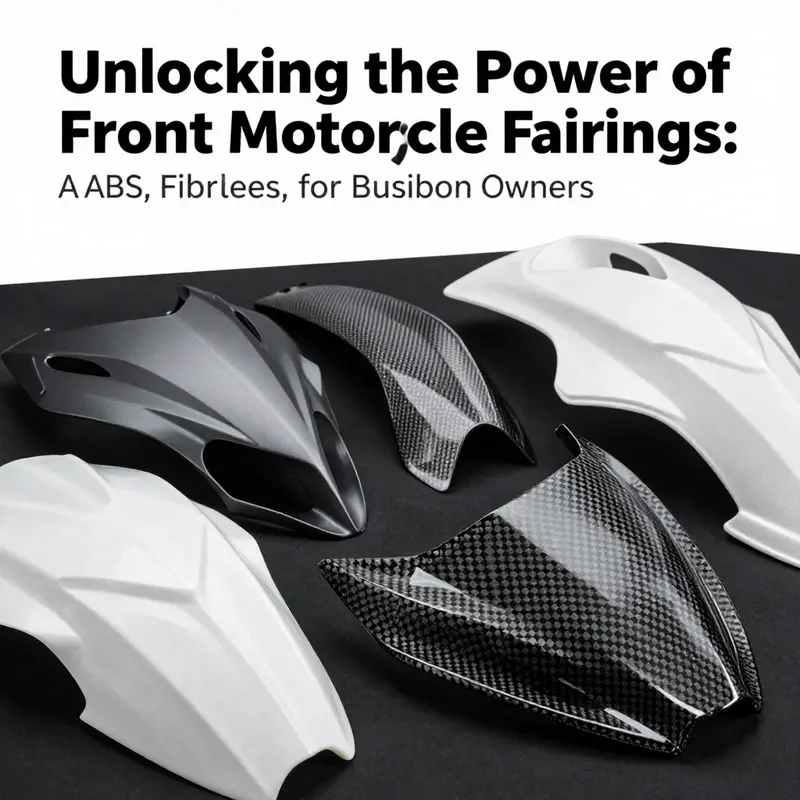
The front fairing of a motorcycle is more than a cosmetic shell; it is a design decision that blends materials science with rider comfort, aerodynamics, and durability. The three dominant materials shaping front fairings are ABS plastic, fiberglass, and carbon fiber, each offering a different balance of weight, stiffness, cost, and finish. ABS is affordable, easy to mold, and forgiving under impact, making it ideal for mass production and broad customization, while also helping to reduce wind buffeting and shield the engine and electronics. Fiberglass offers a lighter, craftable alternative that can support sharper lines and complex contours, but can be more brittle and requires careful repair. Carbon fiber delivers the highest stiffness-to-weight ratio and a premium aesthetic, but comes with higher costs and specialized fabrication and repair considerations. In practice, riders choose based on goals: everyday reliability, performance on track, or a blend. Hybrid approaches—such as a fiberglass core with carbon fiber veneer or an ABS shell with carbon accents—are common to balance weight, cost, and availability. Maintenance and durability follow material choice: ABS tolerates weather well but benefits from UV protection, fiberglass needs careful handling and reinforced areas, and carbon fiber demands regular inspection for matrix cracking. Ultimately, the material you choose for the front fairing reflects how you want wind to meet your bike and how much you value speed, look, and long-term ownership. For deeper dives, manufacturers and enthusiasts reference resin systems, weave patterns, and curing cycles, along with model-specific fitment guides such as Honda fairings for real-world context.
Wind at the Edge: The Aerodynamic and Performance Impacts of Front Motorcycle Fairings

A front motorcycle fairing is more than a decorative shell. It is an engineered interface between the rider, the machine, and the air it travels through. When a bike cuts through atmosphere at speed, the shape and surface of the fairing govern how air splits and reattaches around the machine. The result is not simply a smoother ride or a cleaner silhouette; it is a measurable shift in drag, stability, and fatigue. A well-designed fairing channels flow in a way that minimizes wasted energy and channels momentum toward the wheel and engine rather than into turbulent wakes behind it. In practice, this means riders can cover longer distances with less effort, maintain higher sustained speeds with less wind drift, and experience a calmer cockpit where instruments, mirrors, and switches stay legible and within easy reach instead of being buffeted by gusts and noise. The aerodynamic story of a front fairing begins with its job: to shape the air as it meets the bike, to guide streams smoothly around the handlebars, around the headlight cluster, and along the sides where the engine and chassis would otherwise create drag-inducing eddies. The most immediate impact is a reduction in form drag—the sort of resistance that rises with speed and converts into heat and fuel use. But the aerodynamic payoff is not measured in a single number; it emerges from a series of effects that combine to improve efficiency and riding confidence across a broad spectrum of scenarios.\n\nThe distinction between different fairing configurations matters here. Half fairings, which cover only the upper front and wrap modestly toward the sides, offer a lighter footprint and a sportier look. They contribute to a more exposed engine area and a chassis that remains visually legible, which some riders value for its tactile connection to the bike. Full fairings, by contrast, envelop the front and the sides of the motorcycle, forming a continuous aerodynamic surface that streamlines the whole nose, the area around the headlight, and even portions of the upper engine bay. The drag reduction achieved by a full fairing can translate into higher top speeds on sustained runs and better fuel economy on long rides. Yet there is a trade-off: the overall system becomes heavier, more complex to repair after impacts, and sometimes less forgiving to customization. The rider’s experience is a product of these choices, and the best option hinges on priorities—whether the rider seeks the ultimate speed envelope, extended weather protection, or a balance that favors daily usability and maintenance ease.\n\nIn forming a picture of how these shapes perform, engineers pay careful attention to flow behavior around the head area. The headlight fairing, the possible curvature around the instrument cluster, and the transition zones where the fairing meets the fork tubes and the handlebars all influence the formation of vortices—swirling pockets of air that can disrupt smooth travel. Reducing such turbulence near the front of the bike lowers pressure drag and helps stabilize the rider’s line through crosswinds and rapid steering transitions. The aim is a harmonious distribution of pressure as air travels over and around the bike, rather than a patchwork of high-pressure pockets and trailing wake. When air remains attached to surfaces longer and detaches cleanly at a controlled point, the overall drag coefficient drops and the bike experiences less energy loss to the air column. Riders feel this as steadier handling, less wobble at high speeds, and lower need to wrestle the bar against gusts that seem to yank the front end toward either shoulder.\n\nBeyond the pure physics, the fairing’s design contributes to rider comfort and perceived performance in ways that matter on real roads. Even at moderate speeds, wind pressure on the chest and thighs can translate into fatigue if it becomes a persistent drumbeat against the rider’s body. A thoughtfully shaped fairing reduces this load by guiding a shield of air upward and outward, deflecting wind away from the torso and helmet. The resulting reduction in noise and vibration has a direct effect on mental stamina, enabling a rider to keep focus on line, tempo, and road texture over longer distances. The sense of stability that comes with an aerodynamically efficient nose is not only about top speed; it is about predictable behavior in day-to-day riding, where a bike may encounter undulating pavement, lane changes, and the occasional crosswind. In such conditions, the fairing helps to maintain consistent airflow over the windshield and instrument cluster, keeping the rider’s field of perception clear and undisturbed.\n\nMaterial choices shape not only weight but also how reliably a fairing preserves its aerodynamic edge through temperature swings and road hazards. Reinforced ABS plastics, common in many production components, offer a robust balance of stiffness, impact resistance, and cost. They hold fine lines and edges well enough to maintain a precise aerodynamic silhouette under varied conditions, while also withstanding ultraviolet exposure and typical road debris. Fiberglass provides a different set of properties: it’s usually lighter than traditional plastics, with good impact resistance and the ability to form complex geometries. For riders chasing premium performance and reduced weight, carbon fiber offers the strongest weight-to-strength ratio, enabling sharper lines and slimmer profiles that shave grams from the windage budget and help minimize oscillations at the highest speeds. The caveat with carbon fiber, of course, is cost and repair considerations; its resilience under abuse is excellent, but the material commands a premium and repairs can be more involved than with conventional resins. In practice, the choice among these materials becomes a dialogue between intended use, budget, and the tolerances a rider has for maintenance and replacement. The performance implications go beyond raw weight; they extend to how well a fairing preserves smoothness and shape when the sun’s heat softens edges, when cold compresses materials, or when a road ding nudges a panel out of its optimal contour.\n\nIf one looks at the big picture, the journey from design sketch to road-tested aerodynamics is many steps. Modern fairing development typically begins with computational insights—simulations that map how air would flow across a proposed geometry at different speeds and lean angles. These models help identify potential drag hot spots, wake regions, and pressure gradients that could destabilize the bike or waste energy. They are followed by wind tunnel testing or on-road validation to confirm the real-world behavior of the proposed shapes. The results are never a single metric; they accumulate across several dimensions: lower drag and lift forces, reduced crosswind sensitivity, more stable headlight and windshield performance, and improved acoustic signatures. Each metric contributes to a calmer, more efficient, and more confident riding experience. Rather than treating the fairing as a cosmetic layer, the designer is treated as an aerodynamic engineer who respects the bike’s geometry, rider posture, and the evolving demands of highway cruising and cornering tempo.\n\nIn the end, the continuous refinement of fairing design—driven by measurements, certifications, and performance goals—keeps front fairings at the core of modern motorcycle engineering. They are not mere coverings but active components that shape the interaction between machine and air. They enable riders to harness the air’s energy with less resistance, to ride longer with less fatigue, and to enjoy wind-managed serenity at speeds that once felt unattainable on two wheels. The conversation about front fairings, then, is a conversation about efficiency, control, and perception. When the air comes under disciplined control, the bike feels lighter on its feet, the ride becomes more predictable, and the rider’s attention remains where it belongs: on the road ahead.
Sourcing the Shield: Industry Standards and Global Hubs Behind Front Motorcycle Fairings
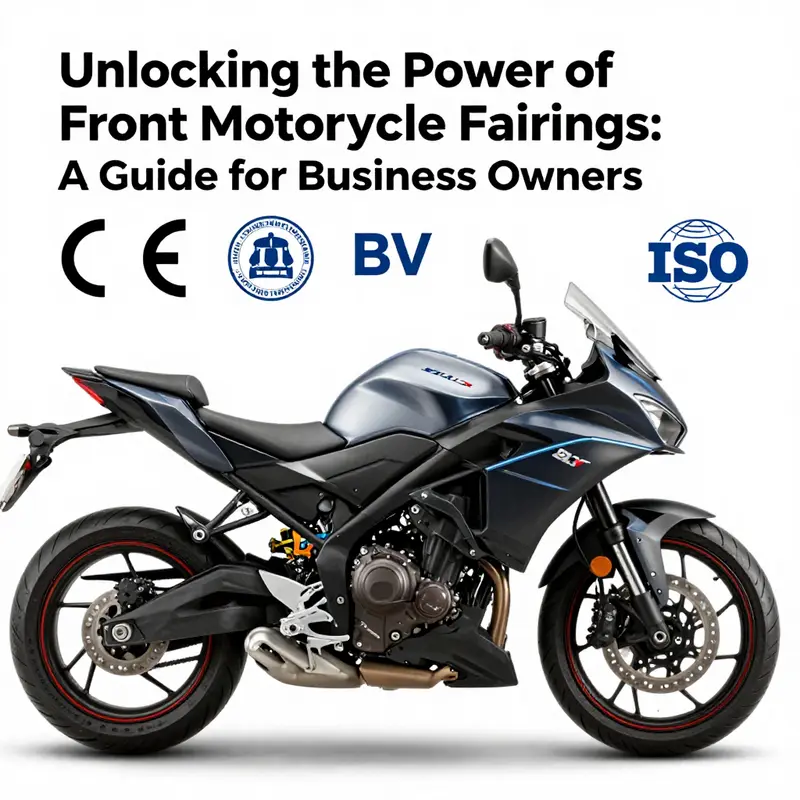
A front motorcycle fairing is more than a stylish shell. It is a functional, precision-tuned interface between a rider, the machine, and the atmosphere. In high-speed air, a well-proportioned fairing slices through wind, shaping pressure fields that reduce fatigue and improve stability. In urban rides, it shields the rider from weather and debris while keeping the cockpit readable and comfortable. The best fairings do all of this without forcing the rider into an uneasy compromise between handling and aesthetics. Yet the look and feel of a fairing rest on a foundation that most riders never see: a carefully sourced supply chain and a set of industry standards that govern performance, safety, and durability. The chapter that follows, then, is not about parts in isolation but about the ecosystem that makes them reliable, repeatable, and scalable from the first design sketch to the last bolt on the line.
Global sourcing for front fairings has evolved into a study of regional specialization. For B2B buyers—OEMs, aftermarket distributors, and specialty brands—the path to a successful program lies in balancing quality, cost, lead times, and compliance. In practice, sourcing begins with an understanding of how regional strengths translate into a predictable end product. In large-scale production, clusters in Asia have matured into ecosystems where material science, tooling, and logistics converge to shorten cycle times and reduce variability. The central idea is simple: align supplier capabilities with the part’s design demands and the rider’s expectations for performance and protection. The result is a front fairing that is not merely a cover but a carefully engineered component that interacts with the bike’s aerodynamics, electronics, and even its paint system.
Regional hubs offer distinct advantages that shape every stage of the supply chain. In fast-moving, high-volume environments, Guangdong Province—encompassing cities like Guangzhou, Foshan, and Dongguan—dominates injection-molded ABS and polycarbonate-ABS blends. These materials are popular because they deliver a balanced profile: adequate stiffness, good impact resistance, and acceptable weatherability at a cost that keeps mass production viable. The ability to move from mold design to finished part in under 30 days for bulk shipments is not just a bragging point; it is a practical capability that underpins the iterative testing cycles required during model refreshes and aftermarket replenishment. For engineers and buyers, this means lower risk when deploying new colorways, revised shapes, or subtle aerodynamic refinements that depart from the established baseline.
Meanwhile, Zhejiang Province, particularly Ruian, is renowned for precision engineering that targets higher tolerances and more demanding surface finishes. In this hub, the emphasis shifts toward technically complex fairings made from reinforced materials such as fiberglass and carbon fiber composites. The tooling excellence here translates into tighter tolerances and smoother surface textures, which are essential when a fairing’s surface needs to integrate with a sculpted cockpit, a windscreen, and a seamless blend with the bike’s chassis. For performance-minded clients, this region offers a route to lightweight, high-performance parts that can withstand the rigors of aggressive riding and the ingress of high-speed air without compromising fit or finish.
Export-oriented Fujian, with its ports and logistics networks, complements the other hubs by offering turnkey solutions that address packaging, labeling, and regulatory readiness. For overseas distributors, the ability to coordinate air and sea freight, ensure compliance with common certifications, and deliver products in ready-to-paint condition reduces time-to-market and rework at the dealer level. This is particularly valuable when a brand seeks to maintain a consistent paint code across global markets or needs white-kit bases that can be color-matched to a factory scheme without extensive rework.
Anhui represents the frontier of automated mass production. As factories adopt robotics and lean manufacturing, Anhui-based operations can deliver standardized or semi-customized fairing lines with high consistency and lower labor variability. For replacement-part programs that require large volumes of identical components—where a fleet of bikes in a single model year must be equipped with uniform covers—this hub’s advantage is predictable quality at scale. The modern supply chain thus often resembles a three-hold strategy: high-volume, cost-optimized parts from Anhui; technically advanced, surface-finish-sensitive parts from Zhejiang; and design-rich, material-innovative components from Guangdong. The combination yields a balanced portfolio that can satisfy both the rider who wants a premium aero aesthetic and the fleet operator seeking reliability and uniformity across thousands of units.
The conversation around materials and performance is inseparable from the standards that govern them. UV resistance, impact protection, chemical stability, and long-term color retention are essential when a fairing remains under rooftop sun, road grime, and sudden weather changes for years. In the materials spectrum, UV-stabilized ABS and polycarbonate-ABS blends are workhorses for their price-to-performance ratio. They withstand sunlight and rain while maintaining form under temperature cycling. For riders chasing performance, pre-preg carbon fiber remains the benchmark for strength-to-weight ratio. The manufacturing discipline here is exacting: vacuum bagging and autoclave curing to minimize voids and resin pooling, which ensures a predictable stiffness and a pristine surface that tolerates clear coats and decals without telegraphing imperfections. Fiberglass reinforced plastics still find a place, especially in custom or semi-custom projects where engineers need a tuned balance of weight, stiffness, and cost. The deliberate choice of material often reveals the intended role of the fairing within the motorcycle’s overall dynamics: a sport-focused bike may prioritize stiffness and aerodynamics, while an adventure machine may favor impact resistance and weather sealing.
The finishing stage is as critical as the raw material. Surface treatments, electrostatic painting, and clear coatings protect the underlying structure from UV attack and environmental exposure. The finish must be durable enough to endure not just the ride quality but the dealer’s maintenance cycle and the rider’s cosmetic expectations. In many cases, suppliers provide unpainted white kits that align with factory color codes, reducing rework time for repair shops and dealerships. For manufacturers who demand exact color fidelity and minimal repair downtime, this capability translates into fewer incidents of mismatch after a panel replacement and a more seamless aesthetic across the bike’s front end.
All of this would be for naught without a rigorous appraisal framework for suppliers. Strong performance indicators go beyond simple certifications. They measure how quickly a supplier responds to inquiries, with top-tier partners in these hubs often delivering initial replies within a couple of hours. Delivery consistency remains a critical stress test; targets above 95% on-time delivery are not merely aspirational but a necessary condition for maintaining launch calendars and service-reliant aftermarket networks. Customization prowess—whether it means accommodating specialized tools, exact color matching, or CAD file integration—defines the difference between a generic line item and a partner capable of supporting bespoke models or limited-edition runs. Even sustainability matters now, with buyers favoring suppliers that implement waste reduction and promote recyclable materials where feasible. In practice, a buyer’s due diligence weighs these factors alongside numerical metrics like defect rates, lead times, and change-control traceability.
The practical implication for buyers within this framework is not simply choosing the lowest bidder but selecting a partner whose regional strengths align with the product’s intended lifecycle. For example, a new model rollout that requires quick iterations and tight tolerances would benefit from Ruian’s precision ecosystem, complemented by Guangdong’s rapid tooling and color-matching options. An export-driven line that prioritizes packaging and regulatory readiness would lean on Fujian’s logistics capabilities to ensure regulatory compliance across markets. And a standardized replacement-part program would find its sweet spot in Anhui’s automated mass production, yielding predictable parts at scale with consistent fit across hundreds or thousands of identical bikes. The synergy among these hubs enables buyers to balance speed, quality, and cost in a way that single-source suppliers often cannot replicate.
From the rider’s perspective, the result is a front fairing that performs as intended from the moment it is installed: it reduces drag on the highway, provides a shield against wind and rain, and presents a flawless surface that can be matched to the bike’s identity. For the retailer and distributor, the process delivers predictable inventory performance, reliable back-end support, and a pathway to customization that does not derail manufacturing schedules. The chain that starts with a CAD drawing and a material choice ends with a rider who notices how the wind feels, how the cockpit remains quiet at speed, and how the bike’s face reflects the brand’s design language. This connection—between the engineering discipline in the factory and the subjective experience on the road—defines the value proposition of a well-sourced front fairing.
For readers exploring model-specific fit and long-term ownership considerations, a quick look at the Honda fairings category offers a sense of the precision demanded by OEM-style fitters. The way these parts align with the bike’s headlight, instrument cluster, and fairing transitions illustrates the level of design coordination that specialized suppliers can deliver. It is not only about achieving an exact silhouette; it is about ensuring that every attachment point, every fastener, and every paint edge consistently meets expectations across thousands of units. This coherence across design, engineering, and production is what transforms a front fairing from a cosmetic shell into a trusted component of the bike’s performance system.
As the industry continues to mature, buyers increasingly demand transparency about source regions, material choices, and testing outcomes. They look for data-driven proofs of capability: updated CAD-driven prototyping, wind-tunnel validation when necessary, and traceable quality-management practices that tie back to ISO or equivalent standards. The international nature of the supply chain means that a fairing’s performance is the result of a global conversation—one that moves with the cycles of model development and the rhythms of aftermarket demand. The right sourcing strategy can shorten time-to-market without compromising on crash-test durability or UV stability. The right standards can ensure that a part, once installed, behaves predictably under the rigors of real-world riding. And the right partnerships can translate a bold design concept into a fairing that is as dependable on a rainy ride as it is on a dry-day sprint.
External resource: https://www.motorcycleparts-sourcing.com/china-suppliers-2025/
Internal link reference: For more context on model-specific fit and aftermarket customization, explore the Honda fairings category: Honda fairings.
null
null
Final thoughts
Understanding front motorcycle fairings—especially the nuances of their types, materials, aerodynamic impact, sourcing standards, and customization options—is vital for business owners seeking to excel in the motorcycle market. By leveraging this knowledge, businesses can enhance their product offerings, cater to diverse customer preferences, and remain competitive. As the motorcycle industry continues to evolve, staying informed about these elements will help business owners adapt and thrive, ultimately leading to increased customer satisfaction and growth.