
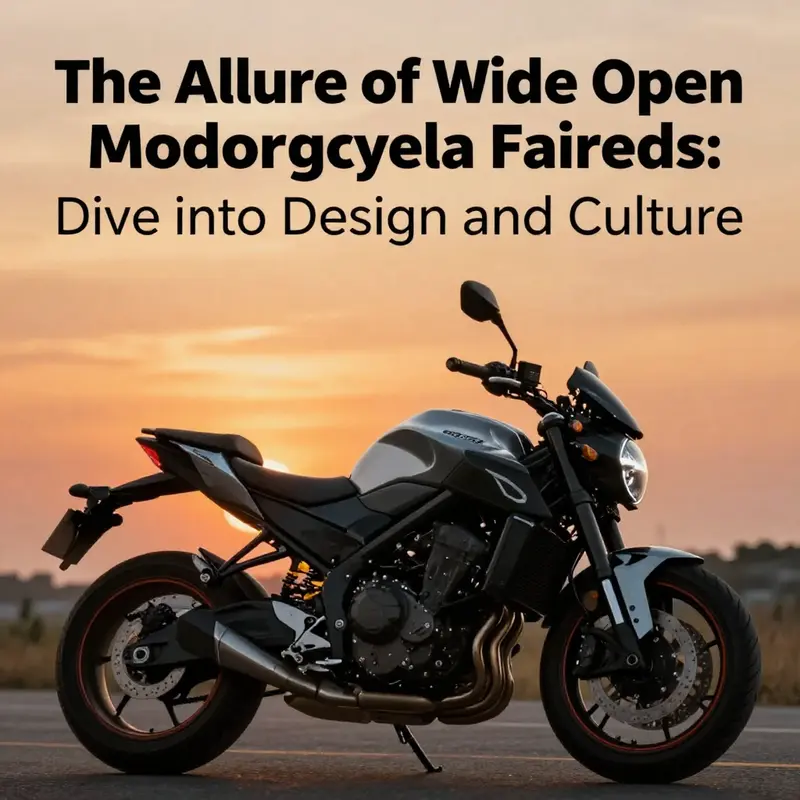
Wide open motorcycle fairings represent more than a mere aesthetic choice; they embody a design philosophy that champions performance, ease of maintenance, and cultural significance in the motorcycling community. By focusing on the aesthetics of exposure, these motorcycle designs strive to create an unfiltered riding experience. In the following chapters, we delve into the intricate design philosophy behind these fairings, their unique performance characteristics, and how they stand in comparison to traditional full fairings. We will also highlight practical maintenance considerations and explore the cultural impact such designs have on biking communities. Together, these insights will paint a fuller picture of why wide open fairings appeal to riders and businesses alike, driving innovation and individuality in the motorcycle industry.
null
null
Under the Open Sky: Aerodynamics, Freedom, and the Bare-Bones Charm of Wide Open Fairings
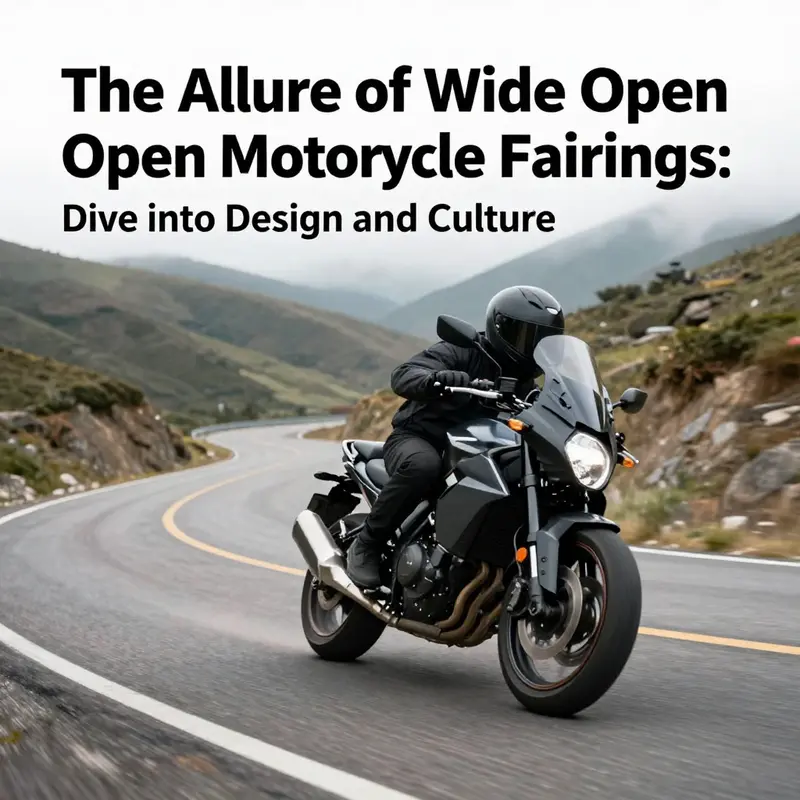
The term wide open fairings does not correspond to a formal category in motorcycle design, yet it captures a distinct philosophy that has shaped a large slice of the riding experience. It is less a label and more a mindset: a choice to reveal the machine, to let the engine, frame, and optics breathe, and to trust the rider to read the road with fewer shields between skin and air. In practice, wide open design lives at the intersection of naked bikes and quarter fairings. It emphasizes openness over enclosure, minimalism over spectacle, and speed over shelter. The open aesthetic is a statement of intent: this is a machine built for immediacy, for direct feedback, and for a driving dynamic that feels almost tactile in its honesty. The result is not merely style; it is a kinetic equation where airflow, rider position, and mechanical visibility are tuned to maximize the raw sensation of riding itself.
A core pillar of this philosophy is aerodynamic efficiency, but it is a nuanced efficiency. Traditional full fairings are designed to channel air around the chassis, smoothing the ride and shielding the rider from wind gusts. Wide open configurations invert that logic. They reduce the amount of cover over the upper torso, enabling air to flow in more freely and to exit with less turbulence in key breathing zones. The objective is not to be weightless or invisible to wind, but to manage wind in a way that minimizes fatigue over long miles while preserving the rider’s sense of speed and connection to the bike. This is real-world aero, not a wind-tunnel ideal. When you sit on a naked or semi-exposed setup, you feel the air as a partner rather than an opponent. The rider learns to read the wind as a co-pilot—shifts in gusts alter your line, and every highway seam or street breeze becomes part of the ride rather than an obstacle.
Another practical feature of the wide open approach is the ability to tailor airflow with intent. Custom-formed windshields are central to this. In many designs, three distinct sizes are offered to accommodate rider preference and the typical environmental mix of urban streets and open highways: 5½ inches, 8 inches, and 10 inches. These aren’t merely cosmetic differences; they change the way air interacts with the helmet, shoulders, and chest in a way that can dramatically alter fatigue levels and perceived speed. A small windshield tends to leave the rider more exposed to buffeting at higher speeds, which some riders welcome for the direct feedback it provides. A mid-range shield can soften the air while preserving that essential open feel, and a larger shield can significantly reduce wind pressure on the torso and helmet. Between smoke and clear finishes, riders gain a tool to balance visibility with airflow. A smoke tint can mute glare and reduce the visual impact of rushing air, while a clear shield gives maximum optical clarity and the sense that the bike is almost unprotected from the wind’s kiss. These three options become a quick, practical dial on the machine’s personality, enabling a rider to adapt to a new route, a new season, or a new commute without swapping the bike’s core identity.
The design intent behind a wide open fairing is not solely about comfort; it is also about dynamics. when a fairing is pared away, the rider is exposed to a more direct sense of the bike’s weight transfer and inertia. In a naked or quarter-faired layout, handling becomes a dialogue: the rider talks to the front end with subtle body shifts and micro-adjustments in the grip. The air that once pressed against a fairing now spirals around the shoulders and arms, offering a kind of controlled wind resistance that, paradoxically, can sharpen steering input and improve feedback through the bars. This is why many riders who crave connection—whether for urban weaving, canyon carving, or long banner runs—gravitate toward wide open setups. The absence of heavy shielding invites a pace that is less about sheltered cruising and more about precise, incremental control. It is a choreography with the road that rewards rhythm and attentiveness.
Heat management and engine feel also shift in a wide open configuration. When the covering around the engine and exhaust is pared down, airflow around those components can become a cooling ally rather than a barrier. The breeze has a direct route to critical heat sources, which helps maintain tight temperature bands during extended rides. This can translate into more consistent performance when riding through long, undulating stretches where a bike might otherwise overheat with a bulk of bodywork in the way. At the same time, the same open layout can make engine heat feel more pronounced to the rider in slow-speed traffic or during standstill idling. The rider’s strategy, posture, and choice of wind protection all become part of a broader equilibrium: enough shielding to stay comfortable and focused at urban speeds, but not so much that the machine’s heat management becomes a slave to the weather or the clock.
From a maintenance perspective, wide open designs tilt the balance between accessibility and protection. With fewer panels locking in place, the mechanicals tend to be easier to inspect and service. The view of the engine, valve train, and front-end components is more transparent, which can speed up routine checks and the detection of developing issues. Yet this accessibility comes with its own caveats. The exposed areas may require more frequent attention to the effects of the elements, and some riders accept that the simplified skin of the bike demands a stricter maintenance routine to keep aesthetics pristine and parts aligned. The net effect, for many riders, is worth the trade: they gain a bike that breathes like a living machine and rewards proactive upkeep with dependable performance.
Riding context—where these machines truly shine—also helps explain their appeal. In city streets, the open profile translates into a nimble, responsive ride with an instantaneous sense of the bike’s geometry. The rider sits in a position that communicates with the road and traffic, making quick lane changes and tight squeezes feel natural rather than forced. The urban path is a classroom for learning how wind pressure shifts with speed, how a smaller shield changes the feel of air on the chest, and how posture can transform the ride from a wind tunnel into a dance with the bike. On mixed roads and highways, the dynamic remains lively but gains a different texture. The wind can become a companion rather than a burden, and the windshield options let a rider sculpt that companionship to taste: a hint of shield for long highway stretches, a lighter feel for city streets, or a blended approach for an extended weekend ride that crosses the seam into the countryside.
Aesthetics cannot be dismissed here, not when the charm of a wide open setup rests on more than pure function. The stripped-down silhouette reveals the motorcycle’s architecture—the frame lines, the engine’s contours, the exhaust path—so the machine’s mechanical poetry becomes part of the visual experience. It is a philosophy of honesty and speed. For some riders, that exposure is liberating, a reminder that riding is not about hiding the machine’s muscle but about listening to it. For others, it is a deliberate customization choice—an invitation to shape a ride with windshields, fairing cutouts, and minimalist masks that preserve the open look while adding a practical layer of protection and comfort. The balance between exposure and shielding is never absolute; it is a spectrum that each rider negotiates, often with a single sentence in mind: I want to feel the road, not the wind, but I still want enough wind to sharpen my senses without draining my energy.
This philosophy also interfaces with the broader ecosystem of aftermarket options and brand ecosystems that riders explore as they chase a personal equilibrium. The concept of select windshields and light fairing elements is common across many makes and models, and riders often research a range of choices to see how different geometries affect line, lean, and wind buffering. The idea of a few specific windscreen heights—5½, 8, and 10 inches—illustrates the practical mindset: make the bike’s air handling adaptable without becoming a complex puzzle of parts. A rider can tailor the stage for each trip, from a day in town to a weekend sprint along a coastal road, without fundamentally altering the bike’s core character.
In the broader narrative of motorcycle design, wide open fairings remind us that form follows function in a nuanced way. The intention behind openness is not to abandon protection or to ignore aerodynamics; it is to reframe them. Protection becomes a modular, rider-centric feature rather than a fixed envelope. Aero performance becomes a dialogue instead of a monologue. And the rider, perched in a stance that communicates with air and asphalt, is invited to participate in the shaping of the ride rather than simply endure it. In that sense, wide open fairings offer a form of freedom—freedom to perceive the road with less visual and tactile fog, to modulate wind and heat with deliberate choices, and to celebrate the machine’s mechanical truth at every mile.
For readers curious about how this philosophy translates across brands and model lines, one can explore the broader catalog of fairings that respond to similar needs. The category pages for different manufacturers and styles provide a map of how openness, wind management, and rider comfort converge in modern design. See, for example, the dedicated BMW fairings section, which showcases how a variety of minimal or semi-enclosed configurations can be tuned for different riding contexts and preferences. BMW fairings. These pages illustrate that the wide open concept—when filtered through the lens of diverse engineering approaches—remains a dynamic, evolving idea rather than a fixed blueprint.
As with any design approach, experience matters. The rider who chooses a wide open layout does so with the knowledge that wind, heat, and air will define many moments of the ride. Yet the same rider gains a direct line to the machine’s heart: a sense of speed, a level of control, and an openness to the road that is hard to replicate with a fully enclosed shell. In the end, the wide open fairing is not simply about how little covers the bike; it is about how transparently the machine communicates with the road and how clearly the rider can hear, feel, and respond. It is a design choice that foregrounds the joy of riding—the thrill of flight-like air, the tactile feedback through the bars, and the promise that the next mile will unfold with a human-scale sense of tempo and proportion.
External resource: https://www.harley-davidson.com/en_us/products/motorcycles/softail/wide-open.html
Breathing Room and Bare Metal: The Craft, Care, and Consequences of Wide-Open Motorcycle Fairings
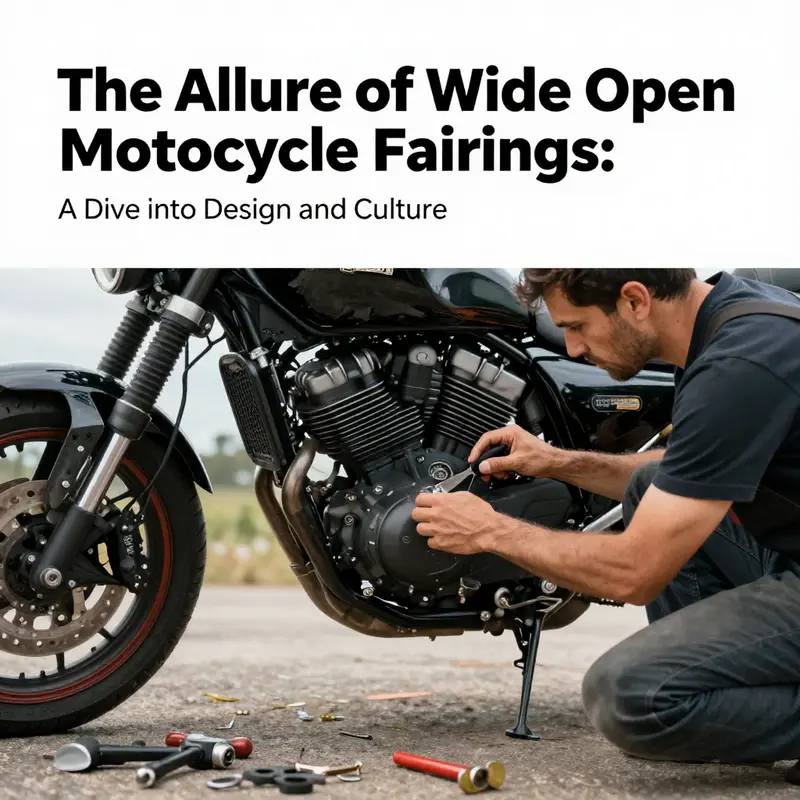
A motorcycle’s fairing has long been a battleground between protection, aerodynamics, and the rider’s sense of connection to the machine. When designers and riders talk about wide-open fairings, they are pointing to a philosophy that embraces exposure as a form of performance. This is more than a styling cue or a simplified windbreak; it is a deliberate choice about how a bike feels when it moves, how it breathes through speed, and how a rider reads the world at the end of the handlebars. In this design language, the naked bike and its near-minimal, quarter fairing cousins become laboratories for sensation. The fairing almost vanishes as a barrier, leaving the engine’s pulse, the frame’s geometry, and the road’s texture to shape the riding experience. The result can be intoxicating: a cockpit that feels intimate with the road, a mass that responds with a quick, almost tactile reflex, and a visual honesty that reveals the bike’s mechanical soul. Yet openness comes with trade-offs, especially when one considers maintenance, repair, and long-term durability. The choice to ride with wide-open fairings is, at its core, a decision about balancing flight and focus, speed and sustainability, protection and personality.\n\nThe most immediate consequence of a wide-open approach is aerodynamics. Traditional full-coverage fairings channel air smoothly around the rider and the machine, reducing drag and shielding the rider from wind pressure. In naked and quarter-fairing configurations, that shield is minimal or nearly absent. The rider becomes a single point in the airflow, and the bike’s contours—the engine cases, frame spars, and exposed fasteners—play a larger role in how air flows across the machine. At city speeds, this can feel liberating: the wind is a companion rather than a barrier, and the bike’s character is laid bare in every gust. On the open highway, however, the same openness can invite more wind pressure, turbulence, and fatigue. The rider’s shoulders, chest, and helmet become primary interfaces with air, which can sharpen steering feedback but demand a stronger core and neck endurance. The trade-off is not just comfort; it’s a shift in how the bike communicates weight transfer, lean angles, and throttle response. The absence of a large, imposing panel means there is less mass behind which air can be sculpted, so any turbulence that forms around the front end tends to travel directly toward the rider. That is not a flaw, but a design reality that riders learn to harness through posture, line choice, and the bike’s chassis geometry.\n\nThe materials that form wide-open fairings also shape the maintenance conversation. These components are often built from composites such as fiberglass or polycarbonate blends. The appeal is clear: such materials can be lightweight, tough, and capable of holding complex shapes without the bulk of traditional plastics. But composites bring their own maintenance passport. When a fairing cracks after a road impact or chips from a gravel strike, repairs can be more involved than with simple ABS panels. Delamination, resin bleed, or warping after exposure to heat or sun can complicate both repair and replacement. Because the fairing is part of the bike’s aerodynamic surface, any misalignment or mismatch after a repair can reintroduce turbulence and affect handling. Consequently, owners of wide-open setups often encounter a higher bar for maintenance training and repair accuracy. Repairing composite fairings frequently requires specialized knowledge, materials, and sometimes parts that are not as readily available as mass-market plastic components. Those extra steps translate into time and cost, which is a practical reminder that openness is an asset in feel and exposure, but a commitment in upkeep.\n\nRecognizing the structural role of the fairing remains essential, even when it is intentionally minimal. In a fully enclosed aerodynamic sleeve, the fairing’s job includes shaping flow, reducing buffeting, and protecting some substructure from the worst of the elements. In a wide-open arrangement, that job shifts toward preserving a clean intake and guiding air smoothly around the rider, rather than wrapping the rider in a shield. The fairing’s attachment points, mounting hardware, and surface integrity all influence how airflow behaves at speed. If the fairing walls begin to buckle, warp, or detach in a manner that alters the rider’s profile, the result can be more than cosmetic; it can become a source of turbulence that unsettles the bicycle-like dance between rider and road. This is why routine inspection becomes a central maintenance practice. Riders tend to check for surface wear—fading paint, micro-scratches, and any signs of delamination after long tours or harsh weather—and assess the fitment of fasteners. In time, bonded joints and gaskets may require re-sealing to preserve a predictable aero surface and quiet operation.\n\nA practical maintenance rhythm emerges from these realities. Cleaning must respect the material. Composite surfaces may benefit from gentle cleaners that do not attack resin or integrity; harsh chemicals can weaken the finish or encourage micro-cracking. The use of manufacturer-recommended products, or at least cleaners designed for the specific composite and finish, helps preserve color, gloss, and the bond between layers. Regular inspection after intense rides, hot sun exposure, or long highway stints is prudent. Riders often become adept at spotting fading in paint, micro-scratches that accumulate into fine lines, or small areas where the surface seems to separate from the underlying shell. Early detection makes repairs more straightforward and preserves the aero profile that contributes to handling at speed.\n\nWhen repairs are needed, professional intervention is not just about matching color and texture. It is about restoring the fairing’s original shape and its interaction with airflow. An improper repair risks creating new drag, buffeting, or misalignment that can alter steering feel. For a rider who cherishes the tactile connection of a wide-open setup, an OEM replacement or a factory-approved repair path often ensures the most reliable aerodynamic continuity. This is especially true when a bike relies on a barely-there wind deflection—every millimeter counts for the rider’s comfort and the bike’s handling at the edge of performance. Parts compatibility becomes a cycle’s lifeblood; mismatched panels can create seams that trap air in unpredictable ways, undermining both the look and the ride.\n\nThe rider’s experience in a wide-open configuration is both the heart and the proof of the approach. The naked or near-naked aesthetic foregrounds the engine’s character and the chassis’ geometry, letting the rider feel the engine’s bark at idle, the snap of throttle, and the micro-adjustments of steering as power travels through the frame. On a practical level, this translates into exceptional maneuverability and a direct sense of road feedback. The weight reduction that accompanies fewer covers also contributes to lighter steering and quicker transition through corners. In urban settings, this agility becomes a daily joy; in open-road stretches, the sensation of speed is almost tactile—the wind becomes an element to negotiate with posture as much as with throttle. Yet the price of this sensory intimacy is endurance. Long rides demand more from the rider: a stronger neck, a more resilient core, and a willingness to accept wind pressure as a constant companion rather than a seasonal side effect. And the rider must continuously weigh the desire for an unfiltered contact with the machine against the reality that wind, debris, and weather are ever-present co-pilots on a naked or semi-exposed machine.\n\nFor riders curious to explore the spectrum of openness without losing the sense of a protected airframe, the idea of a quarter fairing offers a compelling compromise. It preserves a hint of shielding at the upper front, provides a modest windscreen, and retains much of the weight- and visibility-friendly ethos of the open design. This is where a small windbreak and minimal contour can preserve some aero stability while still revealing the engine’s architecture and the rider’s posture. The choice between naked, quarter-faired, or fully faired configurations becomes a tactile equation: what level of wind management can be tolerated, and how much of the bike’s raw character is worth guarding through a light, targeted shield?\n\nIf an owner wants a concrete touchpoint for exploring these ideas, a visit to the Honda fairings category can illustrate the balance between minimal cover and open presentation. The category demonstrates how a compact, structurally integrated shell can preserve a clean silhouette while providing essential protection and improved aerodynamics, without burying the bike’s mechanical lines. This is a good reminder that wide-open concepts are not merely about removing parts; they’re about thoughtful design choices that keep the bike’s core identity intact while offering a controllable, exhilarating relationship with speed. For riders who want a deeper dive into how different fairing choices affect fit and feel, an internal resource like a dedicated fairings catalog can be a helpful compass as they map out a personalized balance of exposure and edge.\n\nExternal references and extended guides can offer deeper context on the evolution of fairings and how various materials perform under stress, heat, and impact. A well-curated external resource outlines how different fairing types—ranging from full enclosures to minimal shells—contribute to the bike’s overall performance envelope, including weight distribution, center of gravity effects, and aero stability. Such guides illuminate why a rider might choose a wide-open stance for track days, a daily commute, or a weekend sprint, and why the maintenance discipline accompanying these choices matters just as much as the ride itself.\n\nUltimately, wide-open fairings embody a design philosophy that privileges the rider’s direct relationship with the bike’s mechanical core. The openness invites honest feedback from the machine and from the road, rewarding riders with a sensation of speed and a clarity of connection that is hard to find behind a fully enveloping shell. They demand a careful maintenance ethos, an honest assessment of durability, and a willingness to invest in repairs and parts that preserve the aero integrity and the thrill of the ride. This is not a rejection of protection so much as a redefinition of it—protection as a function of balance, visibility, and shared airflow, rather than a shield that isolates the rider from the machine’s truth. In that sense, wide-open fairings are less about melting away enclosure and more about sharpening the rider’s perception: a reminder that the power to ride fast is as much about how a motorcycle reveals itself as it is about how it moves.
Open Air, Closed Lines: Weighing Wide-Open Fairings Against Fully Enclosed Front Ends
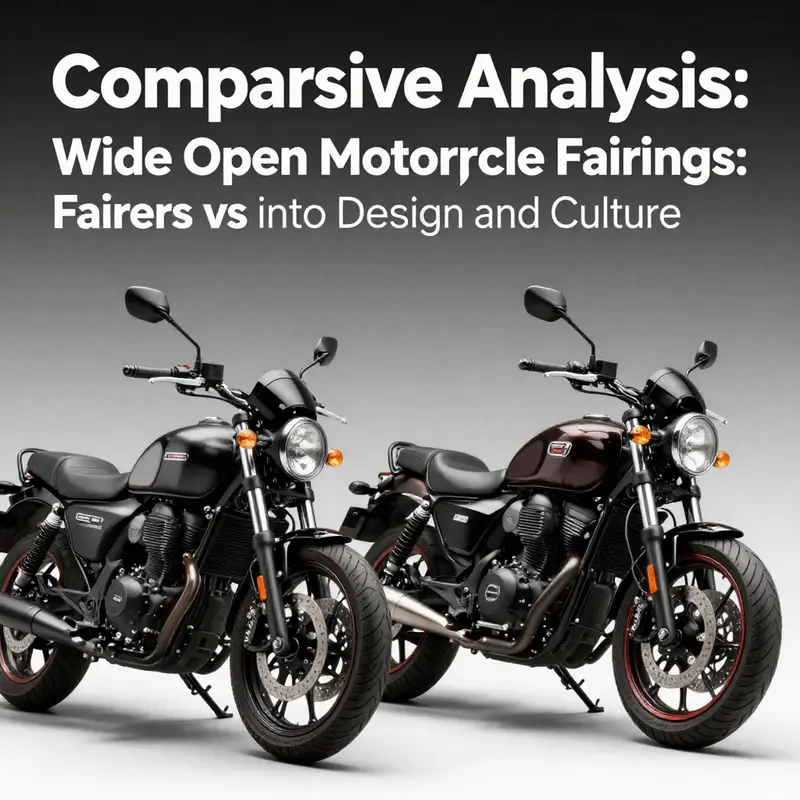
The phrase wide-open fairings never settled easily into motorcycle vocabulary. It’s not a formal category, yet it evokes a design philosophy as much as a physical form. In practice, what riders mean by wide-open are naked bikes and their close relatives, often described as quarter fairings. The distinction is more about intent than anatomy: a philosophy that privileges exposure, immediacy, and a sense of being part of the road over the promise of maximum wind protection. To grasp what this means in real riding terms, it helps to unfold three layers of the conversation: aerodynamics, rider experience, and the practical realities of maintenance and ownership. Across these layers, the comparison with full fairings reveals not a simple right or wrong, but a spectrum of choices aligned with different journeys and riding personalities. The essence of the wide-open approach is a deliberate openness that invites the rider to feel more of the environment, even as it imposes a more direct wind and weather conversation on the ride ahead. The full fairing, by contrast, is a disciplined craft of enclosure, aiming to slice through air, dampen buffeting, and shelter the rider from fatigue on longer horizons. The two ends of the spectrum frame a continuum, not a competition, and riders find value in both depending on where their riding takes them and how they want to experience the motorcycle as an extension of themselves.
At the heart of the wide-open stance is aerodynamics as a functional partner rather than a shield. Full fairings are engineered to create a clean, low-drag profile that channels air around the bike and past the rider’s body. They often feature sculpted windshields, carefully shaped side panels, and integrated belly pans that smooth the approach of air at highway speeds. The result is a machine that feels almost gliding at speed, with less wind shear and reduced buffeting. The engineering logic is straightforward: more surface area through which air can be redirected translates into lower drag coefficients and a more stable ride on long straights. But the trade-off is not only weight; it is the perception of air itself as a factor in riding. Some riders relish the clarity of air rushing past a full fairing, a sense of being tucked into a wind-formed cocoon. Others crave the sensory intensity of open air, where the engine’s heartbeat is audible and the rider is a more intimate participant in the machine’s mechanical symphony.
Wide-open designs, including naked bikes and quarter fairings, invert this equation. They expose more of the engine, frame, and cooling radiators, which creates a different aerodynamic character. The air sees more exposed surface, which raises wind resistance relative to a fully wrapped body. But the payoff is worth noting: lighter weight, fewer panels to bend or crack in a mishap, and a rider experience that emphasizes agility and feedback. With less mass enveloping the front end, the steering feel often appears more direct, the front wheel reveals more precise signals from the road, and the bike’s mass centralization—along with the rider’s own balance—can feel easier to maneuver at urban speeds and during quick lane changes. For a city-dweller or a weekend road rider chasing twisty asphalt, that sense of nimbleness and direct control can be deeply satisfying. The engine, too, is more of a feature than a background, inviting inspection and appreciation. A naked bike reveals a mechanical character that some riders prize above all else: the visible timing belts or chains, the radiator fins, the exhaust headers bending toward the back. The visual poetry of exposed machinery becomes part of the ride itself, a living sculpture that changes with maintenance, upgrades, and even dirt and grime earned from daily use.
The rider’s experience in a wide-open configuration is braided with wind, weather, and fatigue factors. At low to mid speeds, the wind is a companion—present but manageable, allowing a rider to interpret the environment with a heightened sense of context. At highway pace, the absence of a full windscreen means a stronger wind assault on the upper body and helmet. The effect is not merely about comfort; it changes the rider’s posture, breathing, and even concentration. Some riders love the feeling of being actively buffeted by the elements, finding that the wind’s pressure sharpens their focus and promotes a more aggressive, sport-oriented stance. Others find the fatigue that accompanies sustained high-speed exposure to be a limiting factor, particularly on longer commutes or touring sessions. The absence of a large fairing often also means more wind noise, which, over hours on the bike, can become a factor in overall fatigue. Yet even here the wide-open approach has its countermeasures: lighter weight reduces the energy cost of handling, and riders can opt for minimal screens or small adjusters that offer a compromise between wind protection and the raw, unfiltered sensation that defines the philosophy.
Maintenance and accessibility form another axis of difference. A naked or quarter-fairing chassis generally offers easier access to the engine, cooling system, and electrical components. With fewer panels folding away into tight corners, technicians and home wrenchers often find routine inspections and maintenance simpler and faster. This practical advantage complements a broader design ethos: mechanical honesty. When the engine and exhaust system are visible, the rider may feel a stronger everyday connection to the bike’s inner workings. That visibility also makes heat management a more immediate consideration. In some naked-bike configurations, the engine radiates a touch more warmth toward the rider in heavy traffic or standstill conditions. In return, for many riders, the heat becomes a reminder of the machine’s power rather than a nuisance. In contrast, full fairings wrap heat sources more efficiently, diverting and dispersing heat in a way that can reduce rider discomfort in stop-and-go riding. If long stints in sunlit environments or during the hottest days of the year are part of the plan, that difference can be meaningful.
Aesthetics and personal identity play no small role in the decision. The fully enclosed front end is a sculpted silhouette, delivering a smooth, aggressive, highly modern face. The visual language of the full fairing communicates speed even when the bike is at rest; it is a statement of engineering discipline and aerodynamic purpose. The wide-open approach, with its exposed engine and minimal shielding, communicates transparency and raw engagement. It invites view and modification; it rewards customization with a stage that is unencumbered by large shell pieces. The choice can reflect a rider’s priorities: a desire for simplicity and a compact profile, or a passion for the industrial beauty of the machine’s core mechanics. For some, the appeal lies in the wind’s tactile contact with skin and helmet, a reminder that riding is as much about perception as propulsion. For others, the appeal is in the illusion of seamless speed offered by a smooth, fully contoured shell that seems to slip through air almost by magic.
The practical reality of ownership threads through these considerations. Half-fairing and naked-bike riders often prioritize versatility—city commuting, weekend rides, occasional track days, and a willingness to trade some wind protection for weight savings and a clean, mechanical aesthetic. Full-fairing enthusiasts frequently point to long-distance comfort, reduced wind noise, and better weather resilience as decisive benefits. They are often drawn to the idea of a machine that forgives a rider’s form in unfriendly conditions, enabling longer horizons with fewer disruptions. The choice, thus, becomes a mapping exercise: a rider’s routes, climate, and preferred tempo dictate whether the wind’s embrace is a friend or a foe. When feeling uncertain, a practical test ride can illuminate the decision more than any spec sheet. Some riders discover that a well-chosen quarter fairing offers a middle ground—preserving the open aesthetic while delivering a modicum of front-protection that helps on brisk mornings or windy highways.
In the marketplace, this spectrum translates into a broad array of options, from minimalist tubes and clamps to fully sculpted front ends. For those who want a concrete reference point, a look at specific fairing categories can illuminate how design decisions unfold in practice. For instance, there is value in exploring how fairings are engineered for Honda CBR models, where the balance between cover and exposure mirrors the general debate. A fairing set designed for CBR variants can illustrate how a manufacturer negotiates airflow, rider comfort, and maintenance access within a compact footprint. Yet the broader principle remains clear: the debate between wide-open and full fairings is really a dialogue about where a rider draws the line between vulnerability and control, between the thrill of environmental engagement and the shelter of engineered wind protection.
As riding cultures continue to evolve, so too will the vocabulary around fairings. The rise of customization culture has amplified the appeal of wide-open forms, inviting riders to tailor exposure through removable screens or lightweight shields. Meanwhile, advances in materials and molding techniques continue to push the performance envelope for full fairings, shrinking drag while maintaining a protective envelope. The middle ground—the quarter fairing—remains a popular compromise for riders who want a touch more wind management without giving up the essential openness of the machine’s core personality. In practice, most riders will not be asked to choose one path to the exclusion of the other. Rather, they will align their setups with the kinds of rides they value: daily commutes, weekend canyon runs, cross-country treks, or a mix of all three. The most compelling motorcycles in this space are those that honor the rider’s intention, allowing the wind to either carve the path or fade into the background as the rider and machine move as a single unit through the world.
For readers seeking a deeper dive into the aerodynamic and performance implications of fairing design, a broad overview of motorcycle fairings explains how different configurations influence drag, stability, and noise. You can explore related concepts and examples in external references that expand on these ideas and provide broader context for how fairings shape the riding experience across styles and markets. External resource: Motorcycle fairing overview
Internal link for readers who want to see how one brand approaches the balance between exposure and coverage is found in the Honda fairings category for CBR models. This collection demonstrates how manufacturers tailor front-end geometry to achieve a specific blend of protection, performance, and aesthetics while keeping the mechanical heart visible to enthusiasts who want to celebrate and maintain their machines. For a direct look, see Honda fairings for CBR models.
In sum, the choice between wide-open fairings and full fairings is a reflection not only of physics but of personal philosophy. It is about how riders want to engage with wind, how much heat and noise they can tolerate, and how they want their machine to present itself at a standstill and on the move. The wide-open path is not a rejection of protection; it is an embrace of immediacy, accessibility, and authenticity. The full fairing path is not a denial of character; it is a disciplined commitment to the virtues of air, speed, and endurance. Either route offers a legitimate way to ride, and the real skill lies in understanding which approach aligns with the rider’s goals, conditions, and the weathered intimacy a rider develops with their machine over miles of road and countless sunsets. The road itself, after all, proves to be the true calibrator of a bike’s fairing philosophy, testing how openness and enclosure each translate into the living, breathing practice of riding.
null
null
Final thoughts
Wide open motorcycle fairings encapsulate a unique blend of design, performance, and cultural resonance within the motorcycling community. Their minimalist aesthetic not only emphasizes the raw beauty of mechanical engineering but also enables a riding experience that fosters a deeper connection between rider and environment. As evidenced across the chapters, these designs are not merely for show; they offer agility, ease of maintenance, and an engaging identity that appeals to a diverse range of riders. For businesses in the motorcycle industry, understanding and embracing these characteristics could mean tapping into a vibrant market that values individuality and performance. As we move forward, wide open fairings may continue to inspire innovation and shape the future of motorcycle design.