
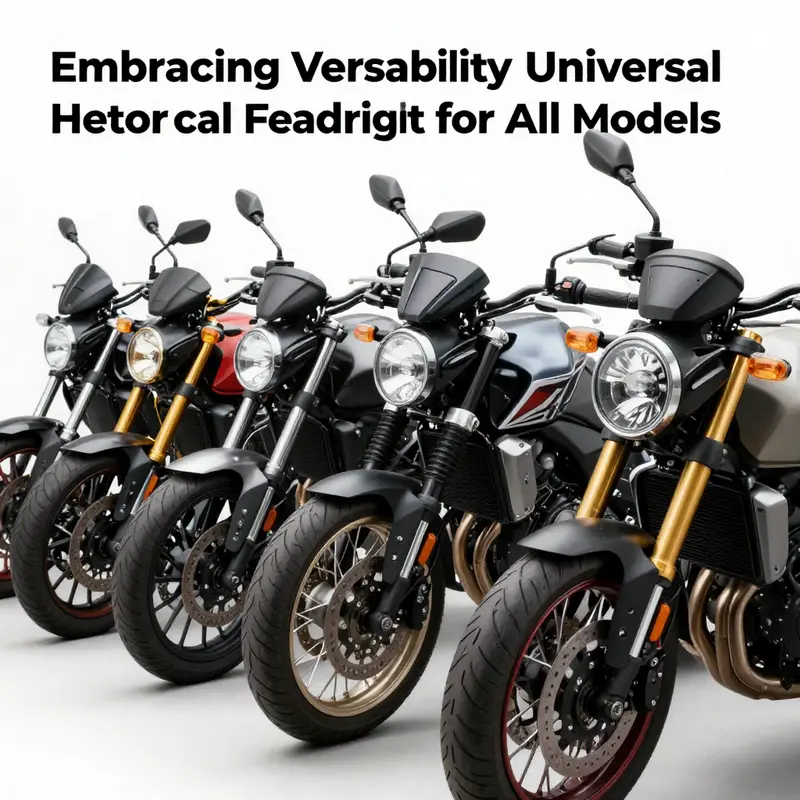
Motorcycle headlight fairings represent a pivotal accessory that marries functionality, safety, and style. These universal components serve as protective covers that fit various motorcycle models, enhancing the overall design while providing added visibility and aerodynamic benefits. For business owners in the motorbike industry, understanding these fairings is critical in catering to an increasingly competitive market. This article explores five key chapters that detail the construction and durability of universal motorcycle headlight fairings, above-free installation processes, emerging design trends, performance impacts, and the current market landscape. Each chapter builds on the relevance of universal fairings, equipping businesses with the knowledge needed to make informed decisions about product offerings and customer engagements.
Durability in Motion: Crafting Universal Headlight Fairings for Endurance, Fit, and Style

A universal motorcycle headlight fairing sits at the intersection of function and form, a front-panel solution designed to shield vulnerable components while shaping the rider’s experience at speed. Its appeal lies in versatility: a single fairing that can span a broad range of models with only light adjustments, offering protection from wind, debris, and weather, while delivering a clean, integrated silhouette. The core question for durability, however, hinges on material behavior under real-world conditions. Riders encounter heat from the engine bay and sun, wind abrasion, rain, and the inevitable occasional impact with a stray rock or a low-speed tumble. The material choice—primarily fiberglass or ABS plastic—plays a decisive role in how a fairing performs across long distances and varied climates. Each material carries its own balance of weight, rigidity, and resilience, and the decision often comes down to the rider’s priorities: uncompromising durability and heat endurance on the one hand, or lighter weight and budget-conscious manufacturing on the other. In this light, the universal fairing becomes more than a cosmetic upgrade; it is a strategic element of the motorcycle’s performance envelope, shaping aerodynamics, protection, and the long-term wear of the headlight assembly it surrounds.
Fiberglass, a composite formed from strands of glass embedded in a resin matrix, is renowned for its high heat resistance and rugged impact tolerance. When a rider spends hours on the road, the fairing is consistently exposed to radiant heat from the engine and muffler areas, as well as the sun’s ultraviolet rays. Fiberglass handles these thermal swings with a steadier profile than many plastics, reducing the risk of warping or softening that can loosen mounting points over time. Its durability shines in scenarios where the fairing might encounter light collisions or road debris; the laminated structure can spread impact forces, helping preserve the integrity of the headlight housing and its seal. Yet this durability comes with a caveat: fiberglass tends to be heavier than plastics, which can influence the overall weight of the front end and shift the bike’s balance slightly during maneuvering and braking. For riders who traverse rough back roads, mountaintop passes, or extended touring routes where reliability matters more than marginal gains in mass, fiberglass fairings offer a degree of confidence that is hard to match.
ABS plastic, forged through modern injection-molding techniques, presents a different, equally compelling set of properties. It is notably lighter, which appeals to riders seeking to preserve or improve handling characteristics without sacrificing the fairing’s presence on the bike. ABS is also highly manufacturable, allowing smooth, consistent surfaces that resist scratches and UV degradation when properly formulated. Contemporary ABS-based fairings combine wear resistance with color stability, enabling a glossy or matte finish that remains visually fresh after months of exposure to road grime and sun. For builders who value rapid iteration and cost-conscious customization, ABS fairings offer a practical path to achieving a sharp, modern aesthetic without heavy post-processing or bespoke fabrication. The trade-off tends to be a modest reduction in heat tolerance and impact stiffness relative to fiberglass, but advancements in resin chemistry and reinforcement techniques have narrowed this gap considerably. Taken together, fiberglass and ABS cover a broad spectrum of rider needs, from endurance-focused touring to value-driven custom builds.
Beyond material choice, construction quality defines how a universal fairing actually performs in practice. A well-made piece should demonstrate precise fitment, aligning cleanly with the motorcycle’s chassis and fork architecture, and it should maintain that alignment across the full range of motion encountered during riding. The mounting geometry is particularly critical: adequate clearance around the fork tubes ensures that steering remains unimpeded and that vibrations do not reverberate through the fairing, which could loosen fasteners or distort the headlight housing over time. A robust fairing should also present consistent edge radii and a stable edge line that resists catching on boots, levers, or the headlight bezel during dynamic handling. The surface finish matters as well, not merely for aesthetics. A fairing that resists UV-induced fading, pigment separation, or chalking will maintain its appearance and protect the underlying headlight assembly from environmental exposure. In this regard, surface integrity—scratches, microcracks, and finish uniformity—acts as a proxy for the overall health of the assembly, and it can predict how a fairing will perform after a winter in the shed or a season of spirited riding.
Compatibility remains a practical compass for any universal option. Industry standards commonly reference 7-inch (178 mm) round headlights as the de facto benchmark, a size that has become a default for a broad swath of cruisers and custom platforms. This standardization allows riders to choose a universal fairing with a high degree of confidence, provided they verify key dimensions before purchase. Fork diameter, headlight housing size, and available mounting space are the triad of measurements that determine whether a fairing will sit cleanly against the bike without fouling steering movement or the instrument cluster. Those who ride heavily modified machines or vintage-inspired builds should still approach universal fairings with a careful eye toward fitment tolerances and any necessary adjustments to brackets or fairing-to-bike adapters. The goal is a near-seamless integration where airflow is interrupted as little as possible by hardware, so the rider benefits from a more stable ride at speed and a headlight beam that travels unobstructed into the night.
With fitment criteria in place, the design philosophy of universal fairings comes into sharper focus. They are engineered not only to meet a consumer desire for a modern, cohesive look but to deliver tangible aerodynamic gains. A well-formed fairing directs a portion of the wind around the rider, reducing the harsh wind blast that can cause fatigue on longer rides, especially at highway speeds. The result is improved rider comfort and, in some setups, a modest uptick in fuel efficiency due to lower drag. This aerodynamic role dovetails with highway practicality: a fairing that cleanly wraps around a headlight can help maintain laminar flow along the front of the bike, which in turn reduces fuel-sapping turbulent wake behind the rider’s torso. The fairing’s edges and contours should be designed to minimize turbulence at typical wind angles encountered when the motorcycle is upright, accelerating, or leaning slightly through a bend. In an ideal scenario, the combination of fairing shape, material resilience, and accurate mounting yields a front end that stays stable, preserves the headlight’s alignment, and contributes to the bike’s overall personality rather than merely covering the silhouette.
For riders who lean toward customization, the universal approach offers a sanctuary of possibilities. It enables a modern silhouette without the burden of bespoke fabrication or the more invasive modifications required for model-specific parts. Café racers, retro-styled builds, and dirt-road accents all benefit from a front-clip that looks integrated, while still allowing the rider to swap between different lighting configurations, if regulations permit. When paired with a compatible LED headlight, a universal fairing can enhance illumination performance while sharpening the bike’s aerodynamics, producing both a safer, brighter beam and a more efficient airflow pattern across a broad operating envelope. The combination of material choice, construction precision, and thoughtful fitment translates into a front end that feels engineered for endurance.
To guide purchasers through these choices, it helps to consider the practical realities of installation and maintenance. Many universal kits arrive with mounting hardware and a clear set of instructions, designed with DIY enthusiasts in mind. A qualified or careful amateur can often complete the retrofit in a weekend, provided they take time to check alignment and torque levels and to test the headlight beam pattern after initial assembly. Regular maintenance—checking fasteners for tightness, inspecting mounting points for signs of flex or cracking, and cleaning the surface to prevent UV-induced dulling—will extend the life of the fairing and keep the headlight properly aimed. It is worth noting that cheaper or poorly finished options may exhibit faster wear of edge lips, mounting brackets, or paint finish, potentially compromising both aesthetics and safety. In the end, material choice and build quality are inseparable from how a rider uses the fairing day after day, year after year.
For riders seeking a model-accurate reference even within a universal framework, one might explore model-specific families as touchpoints. A convenient starting point is the Honda fairings category, which provides a spectrum of compatible shapes and mounting philosophies that reflect common dimensions and mounting philosophies across many universal implementations. This can be a helpful way to understand tolerances and mounting interface expectations while keeping the broader universal approach in mind. Honda fairings category.
As a final note, for those who want a grounded, evidence-based approach to choosing a fairing based on material durability and fitment accuracy, the field provides practical guidance that complements hands-on testing. A comprehensive guide from CarInterior offers structured criteria for evaluating headlight fairings, including surface quality, impact resistance, and long-term performance under UV exposure. This external reference can complement a rider’s own assessment, helping to balance price with measurable durability and fit. For readers seeking that deeper dive, see the external resource here: https://www.carinterior.com/motorcycle-headlight-fairing-guide-how-to-choose-right/.
In sum, a universal headlight fairing is more than a cosmetic upgrade. It represents a careful negotiation among material properties, construction quality, and fitment realism. Fiberglass provides robust heat resistance and high impact tolerance at the expense of some weight, while ABS offers lightness and manufacturing efficiency with excellent wear resistance and UV stability. The best choice for a given rider emerges from evaluating how these traits align with riding style, climate, budget, and the desire for a seamless, contemporary look that remains functional as the bike ages. When approached with attention to mounting geometry, standard headlight sizing, and a willingness to verify exact measurements, universal fairings can deliver a durable, stylish upgrade that enhances visibility, comfort, and the overall character of the motorcycle without requiring a complete customization overhaul.
The Seamless Fit: Mastering the Installation of a Universal Motorcycle Headlight Fairing

A universal motorcycle headlight fairing stands at the intersection of practicality and style, offering a front-end skin that can adapt to many models with the right alignment and a careful hand. The installation process is less a single bolt-on moment and more a choreography of fit, balance, and visual harmony. When done well, the fairing doesn’t just shield the rider from wind and debris; it sharpens the bike’s silhouette, tightens its aerodynamics, and creates a contemporary air that blends with both retro lines and modern frames. The essence of a successful install is in approaching the task with respect for the bike’s geometry and a methodical mindset that keeps safety, function, and aesthetics in constant conversation.
Begin with safety as the baseline. Before you touch any wiring or fasteners, switch off the ignition and disconnect the battery. It’s a simple step, but it prevents accidental activation of lights or relays that could startle you or cause shorts during the procedure. The absence of electrical drama makes the rest of the installation feel like a controlled, precise craft rather than a rushed, improvisational job. As the fairing’s future home is on the front end, you’ll be dealing with wiring harnesses, the headlight aperture, and the frame’s mounting points, all of which deserve a steady, unhurried approach. The preparation phase sets the tone for how the entire process will unfold.
If you’re replacing an existing fairing, the removal step will anchor the subsequent work. Unscrew or unclip the old panels with care, resisting the urge to yank or pry too aggressively. The paint around mounting points is a finite resource; damage here can complicate the new fit or require touch-ups later. Gently detach the fairing while shielding nearby components from dust and scratches. If you encounter stubborn clips, a soft prying tool and patient pressure will save the mounting points for the new piece. Once the old fairing is out of the way, it’s time to prepare the mounting area for the new system. Cleanliness is non-negotiable. Dirt, old adhesive residue, or grease on the mounting surface can compromise the new fairing’s fit, cause vibration, and invite water ingress. Wipe the area with a clean cloth, using a mild degreaser if needed, then dry it thoroughly. A dry, clinging surface means the fairing’s seals and gaskets can do their job without fighting through grime.
With the mounting area prepped, you can begin the actual alignment of the universal fairing. The design intent of a universal piece is adaptability; the rider must negotiate a degree of fine-tuning to make it sit flush and square. Position the fairing so that its headlight aperture aligns with the bike’s headlight housing or reference points on the frame and forks. You’ll likely find you need to nudge the fairing slightly up, down, or laterally to achieve a balanced look and a proper light beam direction. It’s helpful to use painter’s tape or soft clamps to hold the fairing in roughly correct position while you assess clearance to the fork crowns, gauges, and windscreen. The goal is a harmonious front end where no edge fights another component, and the fairing’s edges feel integrated with the bike’s lines rather than sitting on top of them.
Universal fairings typically come with a set of mounting hardware. If your kit relies on standard screws and clips, you’ll want to plan a criss-cross tightening sequence to prevent warping or misalignment. Start by loosely threading the fasteners so you can adjust the fit without straining the plastic. Then tighten gradually and evenly, pausing to recheck alignment after each pass. Plastic fairings deserve a gentler touch than metal components; overtightening can crack the material or strip threads in mounting points. A light, even hand is your ally here, and a small amount of torque control—just enough to hold the fairing firmly in place without deforming the surface—is what preserves the long-term integrity of the installation.
When it comes to selection and fit, many riders reference mounting geometry and compatibility cues by looking across model families and fairing categories. If you’re scanning through a catalog or a retailer’s category for reference points, consider how mounting points line up with the bike’s frame and whether the fairing invites additional spacers or brackets. A universal design is strongest when it respects the bike’s original geometry, offering a bridge rather than a clash between factory lines and aftermarket customization. As you secure the fairing, keep a close eye on the gap uniformity around the edges. Gaps that vary from one side to the other suggest a misalignment that will show up as wind noise, water ingress, or a skewed aesthetic once you’re riding at speed. After you’ve snugged the fasteners in a balanced way, step back and visually inspect the front end. If the fairing sits unevenly—or if one edge protrudes more than the other—you’ll want to release a couple of fasteners, shift the fairing, and re-tighten. Small readjustments now prevent bigger headaches later.
A critical but often overlooked part of the installation is the windscreen and its relationship to the fairing. The universal panel should not disrupt rider visibility or the instrument cluster. If the fairing pushes against the windscreen or obscures gauges, you’ll need to make strategic tweaks. This might involve relocating small gasket cushions, adding shims, or reorienting the fairing’s angle so that the wind flows cleanly over the crest of the bike rather than colliding with the rider’s line of sight. In many setups, a modest tilt or a millimeter or two of forward or backward adjustment can dramatically improve aerodynamics and comfort. The rider experiences less wind turbulence on the chest and head, which translates into a calmer, more controlled ride at highway speeds.
Electrical considerations come into sharp focus once the fairing’s physical fit is settled. The universal design often accommodates the stock wiring harness or a simplified harness that passes behind the fairing with minimal friction. Before reconnecting anything, you should inspect the wiring pathways for sharp edges, rubbing points, or potential interference with moving parts. The goal is a clean, protected routing that minimizes heat buildup and reduces the risk of chafing. If the kit involves a new headlight configuration or an LED option, ensure that the headlight’s beam pattern will align with the fairing’s cutouts and that the lens area is unobstructed. Beam alignment is not a cosmetic detail; it affects night visibility, rider safety, and compliance with local lighting regulations. Once power is reconnected, test the lights. A quick cycle of the headlight, high beam, and indicators tells you whether any wiring adjustments or grommet placements are needed to avoid misrouting or shorts.
As you finalize the process, take a moment to consider the sealing and weatherproofing around the join lines. Universal fairings rely on a combination of gaskets, edge seals, and the mounting hardware to keep water and dust out. If you detect gaps around the edges, consider applying a weather-rated sealant or a thin gasket strip. The aim is a snug interface that resists rain ingress without creating a brittle seam that might crack in cold weather. If you ride in varying climates, you’ll appreciate how a proper seal minimizes rattling noises caused by wind-induced vibrations and helps preserve the fairing’s structural life.
Beyond function, the installation is a statement of a rider’s personal taste. The fairing’s lines should echo the bike’s silhouette and complement its color, trim, and stance. That aesthetic balancing act often requires a final round of minor refinements to the edge alignment and visible fasteners. The result is not just a protected, better-guided bike; it’s a customized statement that respects the original design while embracing modern aerodynamics and a contemporary sense of proportion. The rider feels this harmony most clearly during a confident twist of the throttle—when the wind is tamed, the headlight glow is direct, and the façade looks integrated rather than added on.
For readers seeking a broader sense of mounting geometry and stock-reference points, exploring the BMW fairings catalog can be instructive. It offers a sense of common mounting architectures and tolerances that often reappear across universal fairing kits. This reference helps calibrate expectations about how a universal piece may align with fork crowns, triple clamps, and the mark points on many sport and naked bike frames. The compatibility mindset is a practical lens through which to approach any universal fairing: you want a fit that respects the bike’s fundamentals while delivering the added benefits of protection and aerodynamics. Of course, always consult the installation guide supplied with your specific kit, since the exact steps can vary with different products and bikes.
In closing, the installation of a universal motorcycle headlight fairing is a blend of careful preparation, precise alignment, and thoughtful finishing. It rewards patience and a measured approach more than brute force. When you move from the first test fit to a final tightened state, you’re not just attaching a piece of plastic to a bike. You’re shaping airflow, enhancing safety through improved headlight alignment, and weaving a modern aesthetic into a frame that might have looked very different before. The result is a front end that feels both protected and expressive—one that can be easily adjusted as the bike evolves and as new fairing designs enter the market. External references provide additional guidance for those who want to deepen their understanding of installation nuances and mounting strategies. For a deeper dive into installation guidelines, see CycleWorld’s detailed motorcycle headlight fairing installation guide. https://www.cycleworld.com/motorcycles/tech/2025/09/23/motorcycle-headlight-fairing-installation-guide/
null

null
Performance in Motion: Aerodynamics, Visibility, and the Quiet Power of Universal Motorcycle Headlight Fairings
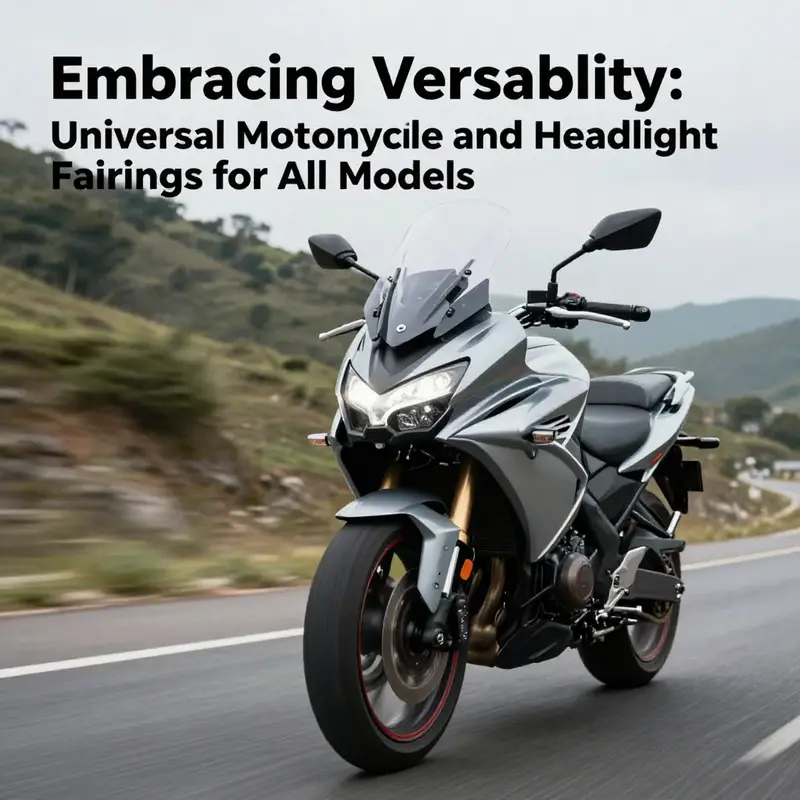
A universal motorcycle headlight fairing embodies a practical blend of form and function, a front-panel philosophy that speaks to riders who want a cohesive, modern appearance without committing to a full custom rebuild. Its core promise rests on two interwoven benefits: better aerodynamics and enhanced visibility. When these two elements converge, the rider gains not only a more efficient ride but a more confident sense of road presence. The fairing acts as a dedicated interface between the rider and the machine, shaping the air that meets the bike’s silhouette while also shaping the way the rider perceives and is perceived by the world ahead. The result is a front end that looks purposeful and performs with a calm, predictable logic rather than an ad hoc patchwork of components.\n\nFrom an aerodynamic standpoint, universal fairings are designed to smooth the front profile of the motorcycle. The goal is to reduce the abruptness with which air meets the vehicle, guiding flow toward a calmer wake around the engine and frame. This streamlined approach translates into decreased drag, a factor riders feel most directly as steadier handling at highway speeds and improved efficiency on longer rides. When the wind has a gentler course to follow, the rider experiences less turbulent buffeting at the chest and helmet, translating into reduced fatigue over hours on the road. In this sense, the fairing serves a dual purpose: it protects underlying components from the worst of the elements while simultaneously guiding the air in a way that supports the bike’s overall efficiency and stability. The design emphasis on lower fairings and carefully contoured lines further aids this effect by shielding vital parts from direct wind pressure and by helping maintain a clean airflow that doesn’t ricochet around the rider’s torso or the bike’s vulnerable areas. The practical payoff is a calmer, more controlled ride that rewards both sport-minded riders and long-distance travelers who spend hours in the saddle.\n\nBut the aerodynamics story is not complete without considering how a fairing interacts with the bike’s lighting and the rider’s field of vision. A universal fairing is most effective when it acknowledges the light itself as part of the system. Integrated or compatible LED lighting, chosen for brightness and beam control, can complement the fairing’s shape to deliver a forward-projected, well-defined beam pattern. Bright, consistent illumination helps the rider identify hazards—debris, potholes, wildlife, or slick patches—sooner and with less distraction. Importantly, the goal is to illuminate the road without creating glare for oncoming traffic. Properly designed beam patterns can be shaped by the fairing’s geometry, ensuring that light is distributed where it is most needed on the road while minimizing stray illumination that can blind others. This balance between visibility for the rider and consideration for other road users is central to how a well-chosen universal fairing contributes to safer night riding, a time when the risk factors for motorcyclists rise sharply.\n\nThe safety argument for better lighting is underscored by real-world data. Nighttime visibility is a critical factor in motorcycle crashes, and a brighter, more reliable lighting setup helps riders detect hazards earlier and respond more quickly. When coupled with a fairing that manages wind resistance effectively, the combination produces a ride that feels more controlled and confident, especially at highway speeds where wind pressure is a constant companion. In this sense, the fairing’s aerodynamic role and the lighting system’s visibility role are not competing goals but two halves of a single performance equation. The rider benefits from improved perception of the immediate roadway and from a machine that behaves more predictably in varying wind conditions, which reduces the cognitive load required to stay safe on the road.\n\nBeyond the physics of air flow and the science of illumination, the rider’s comfort and practical protection remain essential components of what universal fairings deliver. By deflecting wind away from the torso and helmet, the fairing reduces fatigue, particularly on longer journeys or when riding into headwinds. This wind deflection also helps minimize drawn-out fatigue, allowing a rider to maintain focus and reaction speed across miles. A well-fitted fairing remains a shield against weather and road spray, helping keep both rider and instrumentation drier and cleaner, which in turn preserves the readability of the dashboard and the efficiency of the lighting system. The ergonomic benefits ripple through the entire riding experience: better control at speed, less muscular strain, and the quiet confidence that comes from a cohesive, purpose-built front end.\n\nOf course, selecting the right universal fairing requires thoughtful attention to compatibility and installation. Not every panel will fit every make and model out of the box, and the risk of gaps, misalignment, or imperfect seals is real if the fit is not precise. A responsible approach starts with a careful comparison of the bike’s dimensions and mounting points to the fairing’s specifications, and it extends to the hardware and instructions included with the kit. Good kits provide mounting hardware and clear guidance to make installation approachable for DIY enthusiasts, but even then, paying attention to seal integrity and beam alignment is essential. A sloppy fit can negate the aerodynamic gains, introduce wind noise, and degrade lighting performance by creating misaligned beams or unintended reflections. When in doubt, riders should verify that the selected fairing honors the bike’s geometry and complies with local lighting and safety regulations. The practical reality is that a universal solution works best when it respects the gentle balance between aerodynamics, visibility, and the mechanical realities of a rider’s machine.\n\nMaterial choice also matters in the overall performance story. Most universal fairings rely on durable plastics such as ABS or on fiberglass composites to balance rigidity with weight. ABS plastic brings impact resistance and weather tolerance, helping a panel withstand road debris and changing temperatures without deforming. Fiberglass, while potentially heavier, can offer refined lamination and a tailored finish that stands up to the road’s daily rigors. The finishing details—clear lenses, UV resistance, and the transparency of the headlight cover—play into visibility as much as durability. Lenses must remain optically clear and unblemished to preserve the intended beam pattern, and the fairing’s surface should be treated to resist fading and cracking. In practice, the best outcomes come from a holistic approach: the fairing’s shape works in concert with the headlight’s optics, the mounting system preserves alignment under load, and the material choices endure the realities of street riding without sacrificing aesthetic cohesion.\n\nFor riders exploring options to match their preferred look or to slot into a broader customization project, the fairing is often viewed as a gateway piece. It offers a modern, integrated aesthetic that can complement cafe racer builds, retro-inspired machines, or adventure-touched platforms, all while delivering meaningful performance benefits. The allure lies not just in the immediate visual transformation but in the tangible ride quality: smoother air, clearer night illumination, and a more confident feel as speed increases. In practice, the best universal fairings become a kind of canvas—one that respects the bike’s identity while enabling a clean, streamlined silhouette that supports performance across a range of riding styles. The result is a front end that communicates intent, supports safer riding at night, and reduces rider fatigue over time, a quiet but persistent enhancement kit that respects the long arc of the ride.\n\nAs with any modular enhancement, the conversation about installation extends into compatibility and regulatory considerations. Riders should confirm that the kit aligns with their motorcycle’s make and model and that the installation preserves or improves the original sealing against weather and moisture. This caution is not a barrier but a practical precaution; it helps ensure that the aerodynamic advantages and lighting gains are realized rather than compromised. In the end, a well-chosen universal headlight fairing serves as a balanced upgrade: it reduces drag where it matters, sharpens the rider’s forward vision, and preserves comfort across miles. It is, in essential terms, a measured compromise that honors both form and function, a small front-end revolution that travels with the rider into the next road and the next night.\n\nInternal link: For riders exploring compatible options across popular motorcycle families, see the Honda fairings collection. This resource provides a sense of how universal fairings are adapted to specific models while preserving the general aerodynamic and lighting benefits that define the category. Honda fairings collection\n\nExternal resource: https://www.motorcyclesafetyfoundation.org/resources/fairing-types-and-performance
Markets in Motion: Availability, Pricing, and the Promise of Universal Headlight Fairings

Across the motorcycle aftermarket, universal headlight fairings have become a quiet force behind the wave of rider customization. They offer a practical bridge between factory styling and bespoke design, allowing riders to upgrade protection, aesthetics, and aerodynamics without committing to a model-specific panel. In markets that span continents, these fairings are produced in a spectrum of materials and finishes, making them accessible to beginners and seasoned builders alike. The core appeal is simple: a front panel that can be mounted on many different bikes with minimal, if any, trimming or fabrication, and that pairs with modern lighting systems to deliver a coherent, integrated visage.
The material story behind these products matters as much as the styling. ABS plastic and fiberglass have long served as the backbone of universal fairings, prized for their durability and reasonable weight. More recent options favor polycarbonate for its clarity and impact resistance, especially when paired with clear or lightly tinted lenses. The choice of material influences not only aesthetics but how well a fairing withstands road punishment and weather exposure. A fairing that remains glossy after months of sun, rain, and highway heat is as valuable to a rider as one that turns heads. Alongside the shell, the mounting hardware and the design of the cutouts affect fitment. Many universal kits ship with brackets, screws, and a step-by-step guide intended to simplify installation for DIY enthusiasts who want a cleaner, more purposeful front end without the risk of mismatched dimensions.
Availability—the practical reality for most riders—has grown remarkably since the rise of global e-commerce. A broad range of options is accessible across major online marketplaces, regional retailers, and specialized shops that serve the motorcycle customization community. The appeal here is that a single piece can transform a bike. A 7-inch front fairing, for example, remains a popular choice because it pairs well with a wide variety of headlight configurations and brackets. The shape and mounting footprint determine compatibility, and this is where the universal design earns its keep: it tolerates a spectrum of fork crowns, triple clamps, and headlight diameters with adjustments that are straightforward for a competent home mechanic. Price, of course, follows this spectrum. At one end, slim, budget-minded fairings begin around the low tens of dollars, appealing to riders who want a quick visual refresh or a test fit before committing to a broader overhaul. At the opposite extreme, more premium builds incorporate tougher polycarbonate shells, reinforced interiors, and meticulously finished edges, sometimes reaching into the hundreds of dollars, and in rare cases above eight hundred. The drivers of such pricing lie in material thickness, finishing, and, crucially, how easily the unit resists warping under heat and wind at speed. The broader lesson for buyers is to weigh the cost against long-term durability and the absence of chafing on critical wiring paths.
Availability and practicality come with caveats. While the catalog of universal fairings is large, not every design can accommodate every model. Some bikes, especially those with distinctive tank shapes or aggressive radiators, may require more bespoke elements or additional brackets. Bespoke or limited-run variants can push lead times beyond typical shipping windows, and the total cost may rise as custom fabrication adds labor. In that sense, universal designs still represent a balance: fast, affordable customization versus the perfect, model-specific fit that a bespoke panel would deliver. Yet even in this broad landscape, the promise remains clear—owners can achieve a coherent, modern look, reduce wind noise, and soften head-on wind pressure at speed, all while preserving the motorcycle’s character and silhouette. The windscreen and fairing pairing, when executed well, can lower rider fatigue on longer rides and give the front end an integrated, welded look that feels designed rather than retrofitted.
From a technical standpoint, the integration of universal fairings with modern lighting is a natural fit. Clear lenses allow for maximum headlight output and a clean beam pattern, while the fairing’s geometry helps sculpt the air around the rider. When paired with an efficient LED headlight, these components can produce better illumination characteristics than some older, mismatched configurations. The aerodynamic benefit is practical: a well-chosen fairing reduces drag by guiding a smoother air flow around the torso and shoulders, which translates into less wind fatigue on fast stretches or highway cruising. The beam pattern remains sharp, and the design often leaves room for adjacent safety features like reflectors or marker lights placed at key angles for day and night visibility. It is important to match the headlight diameter and the fairing’s intake cutouts to ensure that the beam remains unobstructed and that any lenses stay free of fogging and condensation. Simultaneously, careful routing of the wiring harness is essential to protect connections from road spray and vibration.
For riders who want a tangible path toward a specific look without committing to a model’s original panels, a gateway remains the broad, well-lit catalog of universal designs. Such a path invites experimentation—leveling a cafe racer vibe with a compact, retro silhouette, or giving a dirt-oriented build a sharp, street-ready edge. The clever compromise is a fairing that is resilient, light, and adaptable, with a finish that holds up under weather and sun. The practical decision often boils down to how the kit’s mounting system aligns with the bike’s geometry and how forgiving the fairing is if minor adjustments are required. The corners, edges, and cutouts should present a clean line when viewed head-on, ensuring that the front end does not appear piecemeal or mismatched. A well-chosen universal fairing can also host LED lighting components that convert standard headlights into a brighter, more uniformly lit unit, while preserving the necessary space for reflective elements and the underlying electrical harness.
For readers who want to explore a compatible, model-focused path as a complement to universal solutions, the Honda fairings catalog offers a curated range of panels designed for common mounting standards while preserving the language of the bike’s original lines. This option can be particularly appealing to owners who value a factory-like integration and are willing to invest in a group of matched parts rather than a single, stand-alone piece. See the Honda fairings catalog for a model-typical approach that still respects the universal aim of simplification and upgrade: Honda fairings catalog. The choice between universal and model-specific components becomes, in many cases, a matter of personal preference and mechanical confidence rather than a rigid rule.
Still, every buyer should examine regulatory requirements before committing to a purchase. Local regulations often specify minimum lighting standards, lens integrity, and electrical safety practices that must be observed when replacing or augmenting front-end components. Fairings that obscure the headlight or alter the beam pattern can fail inspections or require adjustments to meet glare and illumination limits. Therefore, a careful fitment check—before riding beyond the driveway—is a prudent habit. The absence of a proper seal against weather and road spray can shorten the life of internal wiring and connectors, while a poorly sealed joint can invite moisture and corrosion that degrade performance over time. In this context, the universal fairing’s versatility is matched by a responsibility: the rider must verify fit, seal, and compliance, and, where necessary, seek a competent professional to perform final adjustments. The balance between do-it-yourself satisfaction and road-ready legality often defines the value proposition of universal headlight fairings in the modern aftermarket.
In sum, universal motorcycle headlight fairings occupy a robust niche where accessibility meets design intent. They respond to riders who crave both protection and attitude, who want a streamlined front end without the delays and commitments of full custom fabrication. They support a spectrum of visual styles—from minimal, low-profile lines that emphasize the bike’s form to a more aggressive, wind-cut silhouette that channels speed even when stationary. The market’s breadth ensures that there is a reasonable entry point for budget-minded buyers and a path to higher-end finishes for those pursuing premium aesthetics and performance. The ongoing material innovations promise lighter, stronger shells and clearer, more durable lenses, underscoring the idea that affordability and durability can coexist in a single, cleverly engineered front end. For anyone plotting a front-end upgrade, the universal headlight fairing remains a compelling option that respects the bike’s original architecture while delivering a new silhouette, improved aerodynamics, and safer, brighter illumination.
The landscape continues to evolve with new finishes, improved mounting hardware, and clearer lens options, all aimed at helping riders pull a cohesive look together without sacrificing performance or safety. For a broader sense of options and up-to-date listings, refer to a general retailer resource: https://www.amazon.com/s?k=universal+motorcycle+headlight+fairing
Final thoughts
Universal motorcycle headlight fairings are vital components that offer practical benefits for safety and bike aesthetics. Their durable construction ensures long-lasting use, while the ease of installation caters to enthusiasts and professional mechanics alike. Observing current design trends reveals an increasing preference for sleek, modern looks, which appeal to diverse riders. Performance enhancements related to aerodynamics and visibility are significant selling points that business owners should leverage when marketing these products. Understanding market availability and pricing strategies will empower businesses to meet customer demands effectively, ensuring that both style and functionality are at the forefront of their offerings. By tapping into the potential of universal motorcycle headlight fairings, businesses can enhance their stock and meet the evolving tastes of motorcycle enthusiasts.