
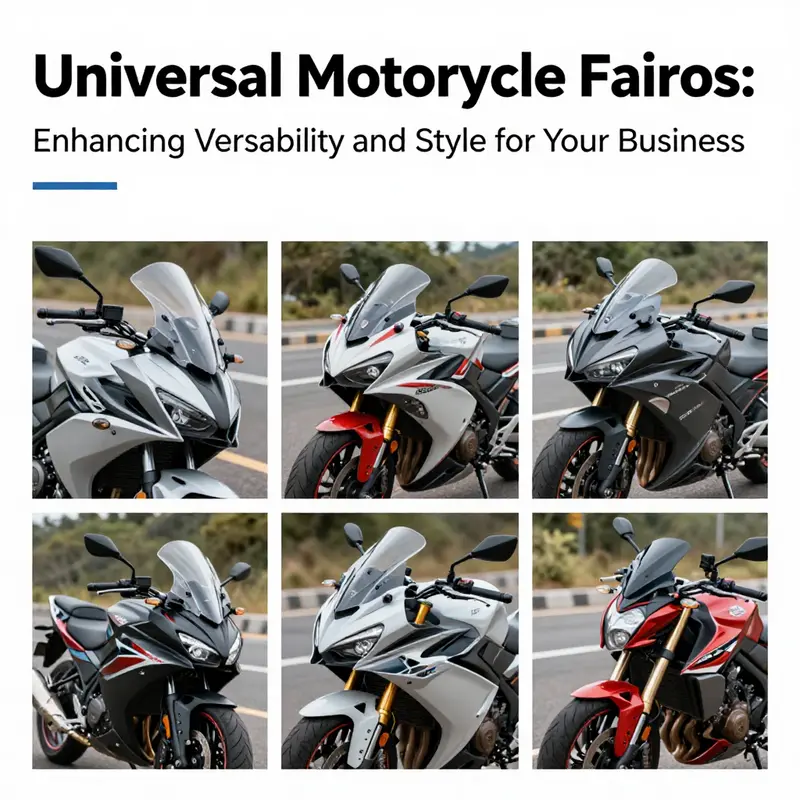
Universal motorcycle fairings have become a crucial component for business owners in the motorcycle industry, offering significant benefits in aesthetics, aerodynamics, and comfort. These versatile components cater to a wide array of bike models and serve as indispensable upgrades, particularly for naked bikes lacking factory fairings. In this article, we delve into three critical aspects of universal motorcycle fairings: their adaptability and design, the challenges faced during installation, and the current market trends influencing sourcing decisions. Each chapter will provide insights that empower business owners to make informed choices and capitalize on opportunities in this burgeoning market.
Adaptive Armor for Any Bike: Designing Universal Motorcycle Fairings for a Seamless Ride
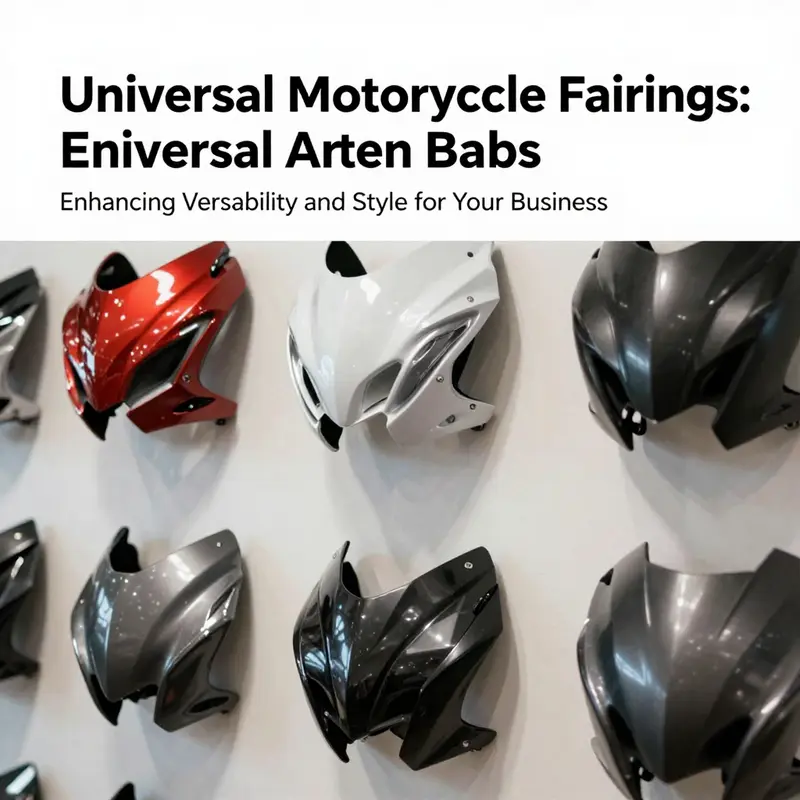
Universal motorcycle fairings stand at a unique intersection of versatility and engineering discipline. They are not bound to a single model or brand; instead, they are conceived to embrace a wide spectrum of frame geometries, handlebar configurations, and riding styles. This breadth of compatibility is exactly what makes them compelling for riders who own naked bikes, retro builds, or custom projects, where the front end needs a cohesive face without committing to a factory-specific partnership. The fairing becomes more than a cosmetic upgrade it is a functional platform. It can redefine aerodynamics, shield a rider from wind and weather, and present a unified silhouette that can be tuned to match personal aesthetics. The advantage of such universality is not simply about fitting a wide range of motorcycles. It is about enabling a form of experimentation in which form and function are iterated together, allowing riders to test different wind flows, different cabin pressures, and different visual narratives without being locked into a single OEM sleeve or a bespoke fabrication job. In practice, universal fairings are front-end installations that often cover the headlight area and integrate, or work alongside, windshields. They can lift the visual language of a bike, especially when the rider wants a cleaner line across the front end or to evoke a retro vibe that nods to earlier eras of sport and street performance. Because they sit in the liminal space between aftermarket personalization and structural addition, universal fairings demand a careful balance of fit, texture, and weight. The goal is to deliver a package that looks purposeful and performs under real-world riding conditions, from smooth highways to windy backroads where air pressure can become a constant companion. The design imperative here is not to force a one-size-fits-all shape but to craft a practical envelope that can accommodate minor deviations in mounting points and component layouts. This begins with how the fairing is shaped, but it ends with how it moves with the bike as speed changes, as the rider shifts position, and as weather and terrain vary. When a rider gazes at a stock front end after removing a factory fairing, the temptation to fill the negative space with something that feels purposeful can be strong. A universal fairing offers a way to achieve that sense of intentional design without surrendering the benefits of modular customization. The result is a front-end treatment that can be styled to complement a wide range of motorcycles, whether the rider seeks vintage resonance, a sport-tocused stance, or a contemporary, chiseled look. To understand why these products have become more than a passing trend, it helps to look at how they are engineered to adapt to different bikes while preserving the essential physics of aerodynamics and rider comfort. The heart of adaptation lies in the mounting system. Unlike OEM parts that are anchored to a single frame geometry, universal fairings employ adjustable brackets and flexible attachment schemes. These features are engineered to accommodate variations in handlebar width, the spacing of steering head bolts, and even the profile of the headstock itself. The adjustability is not merely a convenience; it is a functional requirement that allows the fairing to align with a rider’s preferred seating position and line-of-sight. If the rider sits higher or lower, or if the handlebars are wider or narrower than a reference model, the fairing’s interface with the bike changes how air flows across the rider’s torso and shoulders. A well-designed universal fairing anticipates such shifts by providing a range of mounting offsets, staggered holes, or slotted fastener configurations that can be tightened with common tools. This flexibility can reduce the need for custom fabrication while still delivering a precise, snug fit once the adjustments are dialed in. In the best cases, the result feels almost singular in its coherence: the rider and the bike appear to have grown together through thoughtful engineering rather than through ad hoc additions. The broader appeal of this approach is anchored in the way it respects the bike’s existing personality. A naked bike, for instance, often presents a clean, unforgiving air profile where wind directly meets the rider. A universal fairing can soften this experience, introducing a shield that redirects air, lowers fatigue, and reshapes the pressure distribution around the rider’s chest and helmet. The aerodynamic intent is not to push the bike into a new class but to reduce buffeting and drag enough to make long rides more comfortable, maintainable, and enjoyable. The shape of the fairing itself becomes a negotiation between two objectives: creating a visually integrated front end and delivering functional benefits through airflow management. This is where the design language matters. Even when the intent is to offer broad compatibility, the lines of the fairing should communicate purpose. Narrow, tapering profiles often evoke modern sport aesthetics, presenting a sculpted look that implies speed even when the motorcycle is stationary. Conversely, broader, more enveloping contours can deliver a retro or cafe racer mood, creating a nostalgic but usable front mask that pairs well with classic or custom builds. Designers frequently lean into retro-inspired cues because they harmonize with the way many riders perceive a front fairing as the bike’s face. ACafe Racer-styled expression, for instance, can be realized through a combination of curved lips, a subtle drop to the chin, and a windscreen that looks more like a visor integrated into a single element than a separate addition. It is in this blend of vintage sentiment and modern performance that universal fairings find their place. In terms of materials, durability and weather resistance are non-negotiable for a part that lives in the open and endures a spectrum of temperatures, humidity, and road debris. Aluminum alloys are a common choice for the core frame or substructure because they provide rigidity without excessive weight. A well-designed aluminum component offers corrosion resistance and the ability to hold precise alignment over time. ABS plastics, another staple, bring impact resistance and ease of molding into complex shapes. A hybrid approach—combining metal subframes with plastic outer shells—can optimize stiffness and weight while enabling more intricate surface detailing, like integrated venting channels or subtle venting grilles for engine cooling air. The combination of materials also affects how the fairing responds to heat from the engine and radiator, as well as how it behaves under rain and road spray. The choice of materials reverberates through the entire riding experience: the texture of the surface, the sound and feel of the fasteners, and the sense of sturdiness when the bike is parked or leaned into a turn. The result is not just a piece of hardware but a visible expression of the rider’s relationship with the machine. The design and material decisions also influence maintenance and longevity. A modular fairing system can be disassembled and reconfigured if a rider wants to change the look with minimal downtime. Modularity supports personalization, enabling the owner to swap panels, replace a damaged section, or upgrade components without replacing the entire assembly. This flexibility is appealing for riders who crave ongoing customization, who want to experiment with different color schemes, or who regularly attend shows and events where the bike’s front-end presentation can be swapped to suit a particular theme. It is essential to acknowledge that universal fairings, by virtue of their broad compatibility, can introduce some fitment challenges. The very feature that makes them versatile—the ability to accommodate a range of geometries—can also be a source of compromises. Tight spaces around the engine, exhaust routing, or suspension travel can require careful planning, trimming, or additional brackets to prevent interference. Some setups may demand supplementary windshields or windscreen spacers to achieve the desired wind protection and visual alignment. In practice, this means riders should expect to invest time in mounting and adjustment. A patient, methodical approach yields the best outcomes: measure the bike’s geometry, test fit the fairing in various positions, check clearances with the exhaust and radiator, and verify that the windshield does not translate to reflections or glare at the rider’s line of sight. The testing process is as much a design exercise as a mechanical one. It reveals how a front end interacts with real-world riding dynamics, including how air flows around the head and torso at different speeds and in different postures. The result is a tailored feel—a front end that seems to belong to the rider’s own chassis rather than appearing as a borrowed add-on. Design for universality also embraces the aesthetics of color and surface treatment. Paint, wraps, or decals can unify the fairing with the rest of the bike or establish a bold contrast that makes the front end a focal point. The modular nature of many universal fairings supports creative experimentation with two-tone schemes, gloss versus matte finishes, and variations in texture to highlight the lines of the fairing’s form. Simplicity in color can emphasize the silhouette, while a more complex scheme can echo the bike’s character or the rider’s personality. When considering installation on a broad set of motorcycles, the fairing’s interface with other components becomes a central concern. If a frame geometry differs enough—in terms of fork offset, steering-head angle, or seat height—the resulting changes in air distribution can alter how the fairing feels at speed. In some instances, riders discover that adding a supplementary windshield improves both wind protection and the visual balance of the overall bike. The fairing then becomes a platform for a personal wind management strategy, where the rider can experiment with different screen heights and angles to achieve a comfortable, controlled ride. The market response to universal fairings has been shaped by a combination of demand signals from riders seeking personalization and the realities of manufacturing at scale. Because the parts are intended to work across multiple models, pricing tends to reflect the additional engineering work required to support this breadth of compatibility. While some universal fairings can be priced competitively against OEM options, others sit at a higher end, reflecting the complexity of their mounting systems, the range of adjustability, and the quality of materials used. For many riders, the premium is justified by the time saved in avoiding model-specific orders, the ease of swapping to a different bike later, and the opportunity to experiment with different front-end identities without committing to a new fairing every time. The availability of such products often exists through global supply networks that connect designers, manufacturers, and retailers with a diverse base of customers. From the perspective of a rider, a universal fairing is not just a purchase but a commitment to a process of learning how this tool interacts with a particular machine and a rider’s own comfort profile. The concept of retro styling, for instance, has a way of expanding the perceived value of a universal fairing. A café racer-inspired front, with its compact headlight cutouts, clean lines, and a windscreen that blends into the fairing’s top edge, can deliver a nostalgic taste without sacrificing efficiency. These designs often use specific headlight sizes as reference points, such as 7 inches or 9.45 inches, to anchor the proportions while letting the rest of the fairing flex to fit a broad range of bikes. This approach demonstrates how universal fairings can honor the past while serving present-day performance goals. The potential for retro-inspired shapes to coexist with modern aerodynamics is a testament to the maturity of the design language behind universal fairings. They can offer a sense of continuity across eras, letting riders satisfy both a desire for classic aesthetics and a need for practical wind protection. In the broader landscape of aftermarket customization, universal fairings occupy a distinctive niche. They are less about replicating OEM lines and more about offering a flexible canvas that engineers can tune to the rider’s preferences. This is why many riders who migrate toward universal components appreciate the sense that they are participating in a long conversation between rider, road, and machine. The negotiation is ongoing: the rider tests fit, tests the wind, and gradually settles on a configuration that feels right for a given ride, a given jacket of weather, a given highway silhouette, and a given set of personal priorities. The result is not a static accessory but a dynamic starting point for ongoing refinement. Looking ahead, the appeal of universal fairings is likely to grow as riders increasingly seek to customize their motorcycles without being constrained by model-specific parts. The design vocabulary will continue to evolve toward even more precise adjustability, finer control over aero balance, and smarter integration with accessories such as turn signals, auxiliary lighting, and storage options mounted in harmony with the fairing’s geometry. For those who want to explore a broader range of options, manufacturers and retailers often present brand-category catalogs that illustrate how universal fairings can align with particular styling languages. This can provide a reference framework for new-builds or restorations, helping riders align their aesthetic ambitions with practical performance outcomes. In discussing universals, it is worth acknowledging the potential for brand-neutral benchmarks to emerge—standards for mounting spacings, windscreen heights, and edge radii that enable even smoother cross-compatibility. If such standards take root, the community of riders and builders could experience faster iteration cycles, clearer expectations about fitment, and more reliable performance across a spectrum of motorcycles. The narrative of universal fairings, then, is not merely about a product category but about a disciplined approach to front-end design that honors both the machine and the rider. It is about shaping the first impression of a motorcycle while ensuring that impression is grounded in tangible benefits: reduced fatigue, better shielded optics, and a front end that looks intentional, not improvised. It is also about a philosophy of accessibility: the ability to achieve a cohesive, personalized look without needing bespoke fabrication, while still enabling a degree of customization that respects the unique character of each bike. As with any aftermarket modification, success rests on thoughtful evaluation and careful installation. Riders should measure and compare, anticipate potential fitment concerns, and be prepared to adjust mounting points or add windscreen components as needed. The result is a riding experience that feels more comfortable and more in tune with the rider’s own posture and preferences, and a bike that presents a unified, expressive face to the world. For enthusiasts who want examples of how universal components connect with individual preferences, a look at brand-category collections, such as the BMW fairings category, can illuminate how a general front-end philosophy translates into model-specific expectations. This cross-pollination of ideas—between universality and specificity—helps explain why universal fairings occupy such a resonant position in contemporary motorcycling. In this sense, universal fairings are not a compromise but a deliberate design strategy: a pathway to reframe how riders conceive the front end of their machines, moving from a singular factory appearance to a signal of personal intent, versatility, and forethought. They invite riders to imagine a front end that can shift with their priorities, from sport-touring shelter to retro-styled charisma, all while keeping the bike’s core geometry intact and reliable. For the curious reader seeking to deepen their understanding, a deeper dive into the topic reveals how specific mounting schemes, materials, and finish options influence long-term performance and satisfaction. The conversation extends beyond aesthetics into practical considerations like maintenance access, windscreen wear, heat management, and the repeatability of alignment after occasional impacts or routine servicing. Each installation becomes a small case study: how the fairing’s geometry interacts with the bike’s engine cover, how mounting hardware remains accessible for quick adjustments, and how the rider’s posture translates into aerodynamics in real-world conditions. In sum, universal motorcycle fairings are a mature response to a diverse riding population. They embody a design mindset that values adaptability without sacrificing function, aesthetics without surrendering performance, and customization without demanding a bespoke engineering solution. They enable riders to craft a front-end identity that is distinctly their own while remaining compatible with a broad ecosystem of motorcycles. This is the essence of universal fairings: not a generic afterthought, but a thoughtfully engineered envelope that invites ongoing experimentation, refinement, and expression. For readers who want to explore the practical and stylistic dimensions further, a catalog of brand-specific fairings can offer concrete reference points that illustrate how universal ideas translate into model-aligned realities. BMW fairings catalog. External resources can also provide technical depth on materials and construction. For a practical look at the components and configurations that inform universal designs, see the external resource here: https://www.alibaba.com/product-detail/Universal-Motorcycle-Fairing-Batwing-with-Windshield_1600732186575.html
Fitting the Flexible Frontier: Mastering Installation for Universal Motorcycle Fairings
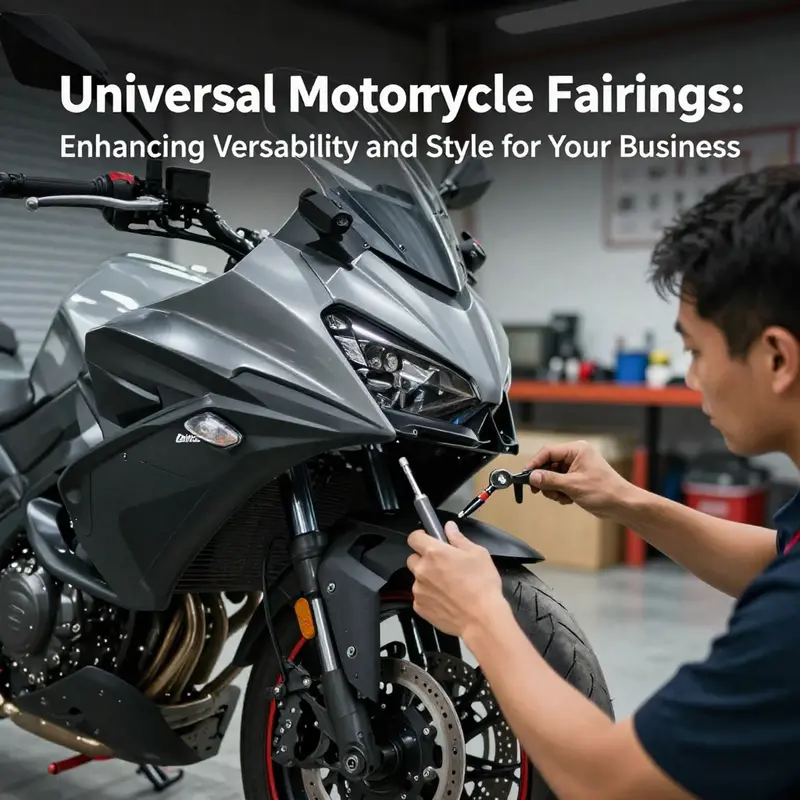
Universal motorcycle fairings promise a practical bridge between form and function. They are designed to adapt to a broad spectrum of bikes, offering riders a chance to tame wind, refresh aesthetics, and add a layer of protection without buying model-specific components. Yet, this promise comes with a set of installation realities that test patience, technique, and a rider’s willingness to tailor. The narrative of installing universal fairings is less about plugging in one-size-fits-all parts and more about guiding a process where alignment, hardware, and an eye for compatibility converge. In the hands of a meticulous rider, a universal kit can transform a naked street machine into a smoother, more confident traveler. In the hands of a less careful installer, it can amplify wind noise, introduce gaps, and create a look that betrays the bike’s original character. The difference lies in understanding the terrain of fit and the choreography of mounting, which begins long before the first bolt is tightened and ends only when the wind is truly orchestral rather than disruptive against the rider’s chest and helmet.
To begin with, fit and alignment are not merely a matter of truing up a panel with gaps. They are the first sentence of a longer conversation between the bike’s frame geometry, the fairing’s curvature, and the rider’s posture. Universal fairings are engineered to be adaptable, which demands flexibility in mounting points and a tolerance for minor deviations. The inherent challenge is to honor the bike’s original geometry while allowing the fairing to present a clean, cohesive silhouette. The consequence of misalignment can be more than cosmetic. Gaps at the edges invite turbulence, which, at highway speeds, translates into wind noise, buffeting, and perceptible flutter. Aesthetic misalignment can also affect the perceived quality of the installation, which matters to riders who value a tidy, professional finish. The skill here is not to force the fairing to fit but to coax it into alignment through careful measurement, strategic positioning, and a willingness to adjust based on real-world riding feedback rather than static diagrams alone.
The variability of mounting points across different makes and models is a core reality. Even with a comprehensive universal kit that includes a broad range of brackets, spacers, and dampers, the task can resemble solving a complex jigsaw puzzle where every piece is reversible and some pieces appear in multiple sizes. This is not a flaw in universal design; it is the practical consequence of seeking one kit to serve many disguises. The installation process becomes an exercise in detective work: identifying the most reliable anchor points on the frame, evaluating potential interference with the engine, radiator, or suspension components, and choosing attachment strategies that minimize vibration without compromising rigidity. For riders tackling older bikes, or machines with aftermarket or nonstandard bodywork, this detective work becomes even more essential. The goal is to establish a stable baseline from which minor adjustments can be made without sacrificing safety or aerodynamics.
Achieving a professional finish hinges on two intertwined factors: secure mounting and careful finishing touches. Properly secured fairings resist vibration, reduce the risk of mid-ride panel shift, and maintain a sleek line that enhances aerodynamics rather than randomizes it. The process begins with using all provided hardware as intended, including rubber grommets, vibration-dampening washers, and torque values that reflect the material and the bike’s design. A common misstep is to over-tighten fasteners in an effort to feel secure instantly. Over-tightening can warp brackets, stress mounting points, and create micro-movements that become audible or even visible under load. Conversely, leaving bolts under-torqued invites looseness, panel flutter, and potentially dangerous misalignment at speed. The discipline is to follow the torque specs and to verify with periodic checks after a few rides, especially if the bike is subjected to rough roads or aggressive riding styles. The narrative here is not simply about hardware; it’s about building confidence through consistent accuracy.
The installation toolkit is a quiet hero in this story. While universal kits are designed to be adaptable, the real win comes from using precision alignment tools and a measured approach to positioning. A dependable starting point is to establish three reference lines on the bike: the headlight axis, the centerline of the frame, and the rider’s line of sight when seated. With these references, the fairing panels can be oriented to minimize wind drag and maximize rider comfort. In practice, this may mean loosening a handful of fasteners, sliding a bracket into a more favorable position, and rechecking the fit against the rider’s posture and seating height. Each iteration brings the panels closer to the intended aerodynamic profile and a visually cohesive front end. For riders seeking even greater accuracy, laser guides or aftermarket alignment tools can aid in achieving precise positioning, especially when dealing with complex curves or multiple fairing sections that must align across a shared plane.
A central tension in universal fairings is the balance between stability and adaptability. To keep the balance, many riders reinforce critical joints with a combination of adhesive bonding and supplementary brackets. Adhesive reinforcement can be beneficial in providing an even distribution of load across a panel’s contact surface, reducing micro-movements that translate into vibration. Brackets, when correctly chosen and riveted or bolted in, can offer a second line of defense against flex. The decision to reinforce is often a function of riding style and road quality. A rider who spends most of their time on smooth highways may get away with a lighter touch, while someone who regularly faces potholes and rough surfaces may prefer additional reinforcement. The goal is not to eliminate all movement—that would be impractical and can cause other issues—but to ensure the fairing remains in the intended geometry under dynamic load without introducing new sources of vibration.
Custom-fit options and hybrid approaches offer a pragmatic path for riders who want the best of both worlds. A fully universal kit can be excellent for experimentation and short-term projects, but long-term satisfaction often calls for a hybrid: universal components combined with model-specific modifications. The hybrid approach recognizes that some sections of a bike’s fairing envelope are more forgiving than others. The top line is to assess each area’s criticality: the windscreen or shield, the headlight sector, and the lower fairing panels near the engine and exhaust. If a region presents a chronic fit issue, riders can explore local reinforcement or selective trimming to harmonize the panel’s boundary with the bike’s contours. The mindset is not to force a universal solution into a bespoke space, but to tailor universal elements with careful, reversible adjustments that preserve the bike’s originality and potential resale value.
Retro styling adds another layer of nuance to installation. Designs inspired by classic aesthetics often play with proportion and headlight dimensions, such as widely used sizes that fit common headlight housings while offering a retro charm. While retro fronts can be visually striking, they also introduce new fit demands. A fairing that evokes a vintage look may not align perfectly with modern radiators, fairing curves, or today’s sensor placements. The user must weigh nostalgia against practical realities: the presence of a larger, integrated windscreen, the curvature required for clean airflow, and the possibility of higher wind buffeting at certain speeds. The nuanced outcome is a front end that captures the spirit of a bygone era while delivering contemporary comfort and protection. The installation narrative evolves into a design conversation: where the retro silhouette meets modern tolerances, where an old-school appearance can be married with reinforced joints and measured gaps to achieve a balanced, ride-ready stance.
For those who want to broaden their understanding of fit across models, it can be instructive to consider how universal fairings interact with the bike’s existing features. They are most effective when chosen with attention to the rider’s intended use, the bike’s typical riding conditions, and the rider’s physique. A taller rider may demand a higher screen alignment to reduce helmet buffeting, while a leaner rider may benefit from offset brackets to optimize airflow around the chest and shoulders. Engine clearance matters too; if the fairing edges run close to the cooling fins, it may be necessary to trim or relocate nearby components or to choose a panel with a slightly different contour. The interplay between fairing geometry and engine layout is a dynamic puzzle that rewards careful measurement, patient iteration, and, when necessary, consultation of model-specific guidelines or community experiences. Even when a rider relies on a universal kit, the installation becomes a collaborative process—between rider, fairing, and the bike’s unique character—where every adjustment yields a small but meaningful improvement in performance and perception.
Documentation and support remain essential allies in this journey. While a universal kit may be designed for broad compatibility, the most reliable path to a polished result is to engage the available documentation, including installation guides and verified user experiences. These resources can illuminate common pitfalls, offer dimensionally informed tips, and propose configurations that have proven effective on a range of models. The value of credible, model-aware guidance cannot be overstated when the goal is a clean, secure, and durable front end. The reader is reminded that reliable support can come from multiple channels: official documentation accompanying the kit, user reviews from riders with similar bikes, and retrospective posts that analyze fit after several thousand miles. The practical takeaway is simple: invest the time to read, measure, and compare before committing to a final assembly, and remain open to small, reversible modifications that improve alignment and comfort without sacrificing the bike’s essence.
In the broader arc of the universal fairing conversation, installation is as much about rider confidence as it is about panel geometry. Confidence is earned by predictable outcomes: a fairing that sits true to the bike’s line, moves with the bike’s dynamics, and does not introduce new risk vectors. Confidence grows when a rider can anticipate the effect of a slight bracket shift on wind flow, or when a real-world road test confirms that the fairing reduces drag without creating harsh contact with suspension components. The temporary, iterative nature of installation—loosen, reposition, recheck, tighten—becomes a practice of mindfulness. It teaches care in measurement, respect for the bike’s architecture, and an appreciation for how a well-installed universal fairing can soften wind pressure, improve rider comfort, and elevate the machine’s presence on the street. It is in this steady, patient progression that universal fairings reveal their true value: not a quick cosmetic upgrade, but a meaningful extension of comfort, capability, and identity.
For riders seeking deeper, model-specific resonance within a universal framework, the question becomes how to navigate the balance between simplification and fidelity. The answer lies in strategic adaptation rather than rigid standardization. A thoughtful approach might reserve the universal kit for the primary outer panels, while sourcing targeted, model-specific pieces for areas where precise fit matters most—near the engine or around critical suspension travel. This strategy preserves the universal kit’s flexibility while safeguarding performance and reliability. It also invites a broader principle: a well-executed installation respects both the generic logic of universal design and the idiosyncrasies of a particular motorcycle. In spite of the diversity of bikes and riding styles, the sense of shared purpose—the desire for weather protection, improved aerodynamics, and a refreshed visual stance—binds riders in a common practice. The fairing becomes less about a single, fixed object and more about a modular philosophy: adaptable, revisable, and ultimately personal.
A final thread in this installation story is the importance of community knowledge. Riders often learn more from shared experiences than from specifications alone. When a specific mounting challenge arises—the fairing edges catching on a frame brace, or a windscreen interfering with a speedometer cluster—the solution is rarely found solely in a diagram. It emerges from careful notes, trial and error, and the exchange of practical tips in forums, reviews, and how-to guides. This spirit of communal problem-solving aligns with the universal nature of the product: it invites riders to contribute their learnings, to refine their setups, and to help others avoid common missteps. The installation journey, then, becomes a collaborative evolution rather than a solitary procurement. As a rider progresses, they collect micro-optimizations—adjusted bracket angles, strategically placed shims, or revised grommet locations—that gradually transform fuzzier, inconsistent mounting into a dependable, ride-ready system. The result is a front end that not only looks purposeful but feels integrated, a testament to patient craftsmanship and the quiet artistry of turning a universal concept into a personal, practice-ready reality.
For readers who want to explore related paths, consider examining a broader catalog of fairing design and compatibility. If you are curious about how a specific rider’s experience translates to your own bike, you can start with a model category that aligns with your ride’s brand family. For example, the Honda fairings category provides a lens into how universal components harmonize with different CBRs and VFR lines, shedding light on fit nuances that recur across platforms. This perspective helps frame the installation as a measurement-driven activity rather than a guess-and-check exercise. The journey toward a clean and confident fit is, in essence, a careful negotiation between universal flexibility and the bike’s intrinsic architecture. When approached with patience, precision, and a willingness to customize, universal fairings can deliver a striking balance of protection, aerodynamics, and personality that remains true to the rider’s vision and the bike’s heritage.
As guidelines and best practices cohere into a reliable installation workflow, the rider’s confidence grows. The final result—the front end of the motorcycle presenting a unified, purposeful line—signals a successful integration of universal parts with individual bike geometry. Gaps shrink, wind noise recedes, and the rider senses a smoother ride as the fairing’s influence extends from cosmetic appeal to functional performance. The story of installation is thus a story of transformation: from a package of adaptable panels to a rider-ready front end that respects the bike’s engineering while offering new possibilities for weather protection and aesthetics. This outcome is not accidental; it is the cumulative effect of measurement, alignment, reinforcement, and patient iteration. It is the practical realization of universal fairings as a versatile solution that, when installed with care, expands the capabilities and enjoyment of riding while honoring the machine’s original character.
References and further reading are often found in the installation guides and community forums that discuss fitment experiences across different bikes. For riders seeking model-specific context to complement the universal approach, a dedicated source of fairing categories can be informative. For instance, the Honda fairings category offers a structured view of how universal components align with common CBR and VFR configurations, illustrating how flexible mounting strategies map onto a variety of engine layouts and frame geometries. The goal is not to prescribe a single method but to illuminate a range of practical options that empower riders to choose a path that fits their bike and their riding style. By embracing a thoughtful, iterative approach, riders can transform the universal fairing experience from a theoretical concept into a tangible improvement in comfort, protection, and appearance. The installation narrative becomes a testament to curiosity, patience, and craft, reinforcing the idea that universal does not mean arbitrary when the rider’s intent is to ride with confidence and character.
Internal link note: For riders exploring compatibility within specific bike families, see the Honda fairings category. Honda fairings
External resource: A practical external reference on installation guidance and rider experiences can be consulted here: https://www.motorcyclesuperstore.com
Riding the Wave: Market Dynamics and Global Sourcing of Universal Motorcycle Fairings
Riding the Wave: Market Dynamics and Global Sourcing of Universal Motorcycle Fairings
The term universal motorcycle fairings signals more than a shopping category; it marks a philosophy about how riders shape machine identity while negotiating performance, protection, and price. In a world where motorcycles span naked, sport-tour, and retro-styled silhouettes, universal fairings promise a single solution that can cradle a wide range of frames and front-end geometries. Yet behind the sleek curves and bold graphics lies a complex ecosystem where design teams, material scientists, and supply chain managers chase a moving target. The market’s energy is fueled by a growing appetite for customization without the premium cost of bespoke, model-specific parts. Riders who want wind protection, aerodynamics, and a visible persona on a budget are increasingly turning toward standardized, adaptable fairings that can be retrofit onto multiple platforms. This demand isn’t simply about cosmetics; it is about reimagining what a bike can be when the bodywork is treated as a modular, upgradeable system rather than a fixed purchase tied to a single model year.
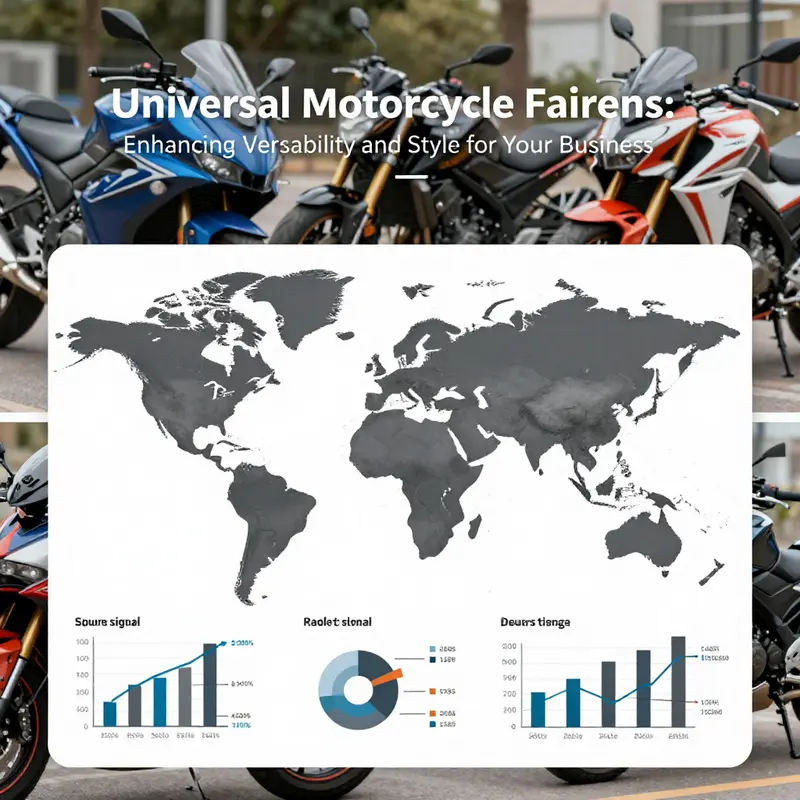
The market size and trajectory reflect this shift. Current analyses place the global motorcycle fairing market around the neighborhood of USD 11.09 billion in 2025, with an expected compound annual growth rate (CAGR) of roughly 11.5 percent from 2026 through 2033. Those figures aren’t just noise in a business dashboard. They map a broad expansion into aftermarkets and light manufacturing capabilities that lower the barrier to entry for riders seeking both style and function. Universal fairings, in particular, benefit from this momentum because they align with the rising consumer interest in sport-touring and urban commuting—segments that prize a balanced blend of aesthetics, wind protection, and riding comfort. The appeal is practical as well as aspirational: a single component can transform a naked or semi-exposed bike into a more comfortable daily rider or a weekend sport tourer without forcing a model-specific redesign. In that sense, universal fairings are both a value proposition and a design philosophy.
Sourcing dynamics sit at the heart of this growth. The modern supply chain for universal fairings leans heavily on China’s expansive polymer processing ecosystem, which has evolved into a network of specialized clusters that provide scale, consistency, and rapid delivery. Guangdong’s manufacturing prowess in high-volume production and logistics, Zhejiang’s Rui’an concentration for precision-engineered fairings using reinforced materials, and Fujian’s Fuzhou area for cost-competitive, standardized designs together form a triad that supports a broad spectrum of buyers—from large OEMs to nimble aftermarket distributors. These regions aren’t just producing parts; they are shaping a global narrative about how fairings are conceived, tested, and shipped. Because universal fairings must fit a wide array of frames and handlebars, suppliers rely on adaptable mounting philosophies—adjustable brackets, modular mounting points, and, in some cases, semi-universal shapes that can be fine-tuned on the road. The result is a marketplace that rewards flexibility as much as it rewards speed and price.
Material science remains a decisive factor in universal fairings. ABS plastic and polycarbonate appear as the most common base materials because they blend lightness with impact resistance and offer workable molding properties at scale. For performance-minded or premium applications, reinforced composites such as fiberglass and carbon fiber blends are deployed to tune stiffness, vibration damping, and overall aerodynamics. The choice of material has cascading effects: wall thickness, typically in the 2.5–3.0 millimeter range, influences rigidity without unduly increasing weight. Surface durability hinges on UV-protected gloss clear coats to resist yellowing in sun-exposed environments. In the most demanding designs, true 3K twill weave pre-pregs for carbon fiber variants can be a consideration, though these come with higher costs and more intricate manufacturing demands. A robust supplier program therefore prioritizes material integrity, mold longevity, and surface finish quality measured in precise gloss units. These technical touchpoints translate directly into ride quality, long-term cosmetic appeal, and repairability after a stone-nick or collision incident.
To a buyer, the conversation around universal fairings often circles back to fitment realities. The very essence of universality is flexibility, yet that flexibility is not free from compromise. The need to cover headlights, de-emphasize exposed engine components, and accommodate a spectrum of handlebar configurations means designers must design around tolerances and non-ideal geometries. Adjustable mounting brackets are a practical solution, but they add build complexity and sometimes increase installation time. In some installations, additional modifications or even a supplementary windshield may be necessary to achieve optimal wind deflection, glare management, and rider comfort at speed. This is not a flaw; it is the acknowledgment that a universal shape must perform across a chessboard of motorcycles with distinct centerlines, front fairing radii, and suspension clearances. Riders who value a snug, stock-like fit may encounter minor gaps or contact points if components are pressed into unusual setups. Yet those same riders often gain the benefits of wind protection, reduced fatigue, and a fresh visual language that updates an older chassis without an expensive retrofit.
The design space for universal fairings has also grown richer with retro and vintage-inspired options. For enthusiasts drawn to the classic silhouettes of earlier decades, universal front fairings that mimic era-appropriate headlight sizes—such as 7.5 inches and 9.45 inches—offer a path to nostalgia without sacrificing modern weather sealing and mounting robustness. The appeal here lies not just in nostalgia but in the creative tension between historical aesthetics and contemporary performance requirements. Integrated windshields or hybrid configurations allow riders to preserve a timeless look while benefiting from today’s aerodynamics and wind management. When designers experiment with batwing silhouettes or wide, curved lines, they must still respect the core physics of airflow, engine heat dissipation, and rider comfort. The result is a product category that can simultaneously nod to the past and push toward more efficient, safer, and more enjoyable riding experiences.
From a market perspective, consumer education and expectations also shape the sourcing equation. Buyers need clarity about what universal fairings can realistically deliver across different bikes. Material choice, mounting flexibility, and surface finish all influence perceived value and actual performance. Ensuring accurate fitment statements, clear installation guides, and honest warranty coverage is essential for building trust in a category that is inherently cross-model. In practice this means suppliers invest in transparent data packages: precise dimensional tolerances, defined minimum bend radii for complex curves, documented UV resistance tests, and explicit guidance on any necessary alterations for particular frame geometries. The best suppliers turn the complexity of universality into a simple, actionable user experience—one that lets riders preview fitment with confidence and pursue installation without the fear of unintended interference with braking lines, wiring harnesses, or exhaust components.
The interplay between OEM and aftermarket channels further colors the market landscape. While many universal fairings enter the market via aftermarket distributors eager for diverse catalog breadth, OEMs sometimes incorporate universal design principles into new platforms, offering a starting point for customization that preserves warranty and aftermarket support. Even within aftermarket ecosystems, the sourcing decision is a blend of cost discipline, speed to market, and long-term reliability. In this context, the supply chain’s health hinges on supplier capability, mold longevity, and the ability to scale production while maintaining consistent quality. Buyers who can connect with suppliers that demonstrate robust process controls, material traceability, and post-production inspections often secure a more predictable, lower-risk path to market. A strategic, relationship-based approach—rather than a price-only sprint—tends to yield more stable outcomes in volume, consistency, and aftersales service.
One practical implication of this sourcing reality is the emphasis on regional specialization. Guangdong’s logistics networks, Zhejiang’s precision engineering, and Fujian’s cost-competitive production form a triad that lets buyers align supplier strengths with project goals. If a distributor prioritizes rapid turnarounds and large runs, Guangdong’s high-volume capacity can be a decisive advantage. If a project calls for tighter tolerances and a more refined surface finish, Zhejiang’s capabilities in reinforced composites may offer the best value. For cost-sensitive standardized designs, Fujian’s production ecosystems provide a compelling balance of price and reliability. These regional skills aren’t just about the parts; they encode a broader approach to risk management, supplier diversification, and supply chain resilience. Global buyers increasingly map their sourcing plans to these regional strengths, using them as levers to optimize lead times, minimize bottlenecks, and stabilize pricing across diverse markets.
From an advocacy standpoint, the market for universal fairings also reflects a broader consumer trend toward responsible manufacturing and lifecycle thinking. Environmental considerations—weight, fuel efficiency improvements from improved aerodynamics, and the potential for longer product lifecycles through universal designs—are not afterthoughts but essential criteria. Material selection, recyclability, and end-of-life options influence not just the immediate purchase decision but the long-term value proposition. The capacity to refurbish or retrofit an existing fairing, rather than discarding it, resonates with riders who view their motorcycle as an evolving platform rather than a fixed asset. In this light, universal fairings become a practical instrument for extending a bike’s relevance across years, model updates, and changing riding needs. The result is a market that rewards durability, modularity, and a shared vocabulary between rider expectations and supplier capabilities.
Understanding the sourcing narrative is incomplete without considering the digital and logistical dimensions that bind the market together. Modern supplier networks rely on digital catalogs, virtual fitment simulations, and data-driven quality assurance processes. For buyers, this means a more transparent evaluation of fit, finish, and fatigue performance before a single bolt is turned. It also means a heightened emphasis on risk management: confirming material certificates, ensuring mold maintenance cycles sustain consistency, and validating coating durability through accelerated aging tests. As the world becomes more interconnected, the ability to negotiate terms, secure consistent supply, and manage currency and freight risk becomes part of the value proposition of universal fairings. These capabilities translate into cheaper unit costs at scale, steadier supply chains, and the possibility for larger, more ambitious design iterations that still honor universal compatibility.
For readers navigating the catalogs, it helps to keep a few practical guides in view. One can explore the broader universe of fairings by looking through general catalogs that group components by mounting approach, material class, and intended riding style. When scanning for fit across brands and models, it is particularly useful to pay attention to mounting patterns, fastener types, and the potential need for shims or adapters to mitigate misalignment. The reality is that universal fairings often inhabit a space between highly engineered OEM parts and more forgiving aftermarket products. They require a balance between quick installation and robust, long-lasting performance. The best choices deliver not only wind protection and a refreshed look but also predictable maintenance needs, reliable weather sealing, and sympathetic interaction with the bike’s existing electronics and lighting systems.
As this market evolves, the balance between cost and sophistication remains central. Buyers who want premium performance may accept higher upfront costs in exchange for a more precise fit and longer service life, while budget-conscious riders may prioritize broad compatibility and lower purchase prices with the understanding that some adjustment work could be necessary. In either case, the objective of universal fairings—unlocking versatility without surrendering safety or ride quality—drives a continuous loop of design iteration, material science, and supply-chain refinement. The result is a product category that not only fills a practical niche but also acts as a catalyst for riders to rethink how their motorcycles can be upgraded, personalized, and optimized over time. In this sense, universal fairings are more than a component; they are a strategic instrument in how riders engage with speed, shelter from the elements, and the evolving language of modern motorcycling.
To further explore tangible sourcing options in this space, buyers can consult general product catalogs that showcase cross-brand compatibility and mounting adaptability. For those who want to immerse themselves in a broader selection, a catalog devoted to a major European brand’s fairings can serve as a reference point for how universality translates into standard bolt patterns and common headlight interfaces. This approach helps demystify the process of selecting a universal front fairing and underlines the idea that universality need not be a compromise on style or protection. In practice, the most successful projects blend careful planning, credible material choices, and precise fitment strategies with a clear understanding of the rider’s priorities—comfort, performance, and a distinctive look that remains viable across multiple bike configurations. The future of universal fairings will likely hinge on tighter integration with advanced simulation tools, more responsive supply chains, and increasingly modular designs that can be swapped or upgraded with minimal downtime.
For readers seeking a direct gateway into product-wide exploration, the following internal resource offers a hands-on overview of how fairing catalogs are organized and how fitment assumptions are communicated. BMW fairings catalog, for instance, provides a practical model for understanding how mounting points, headlight compatibility, and windscreen interfaces are standardized across a family of bikes. This kind of resource helps demystify the universal approach and offers a concrete reference for evaluating fitment across different platforms while preserving the sense of individuality that riders crave. Accessing this internal resource can help riders visualize how a single fairing might function across multiple platforms, supporting a more confident, informed purchasing decision.
In conclusion, universal motorcycle fairings exist at the intersection of design ingenuity, material science, and global logistics. They embody a pragmatic response to the desires of riders who want more from their machines without paying a premium for bespoke, model-specific components. The market’s current trajectory—anchored in robust growth, regional manufacturing strengths, and a continued emphasis on adaptability—suggests that universal fairings will remain a central theme in how riders customize, protect, and stylize their motorcycles for years to come. The ongoing evolution of materials, production processes, and digital tools will only strengthen the case for universality as a core strategy for both manufacturers and enthusiasts seeking practical, scalable bike personalizations that don’t sacrifice performance on the road. External resources continue to shape best practices in sourcing, quality verification, and supplier collaboration, ensuring that universal fairings remain a reliable, value-driven solution in a dynamic market.
External reference for further sourcing insights: https://www.motorcyclefairingsupplier.com/supplier-guide-china
Final thoughts
In summary, universal motorcycle fairings represent a strategic investment for business owners looking to enhance both the functionality and aesthetics of motorcycles. Through their adaptable designs, understanding the installation process, and awareness of market trends, professionals can better navigate the complexities of the aftermarket parts industry. By staying informed and reactive to customer demands, business owners can leverage the growing popularity of universal fairings to drive sales and satisfy a diverse range of riders.