
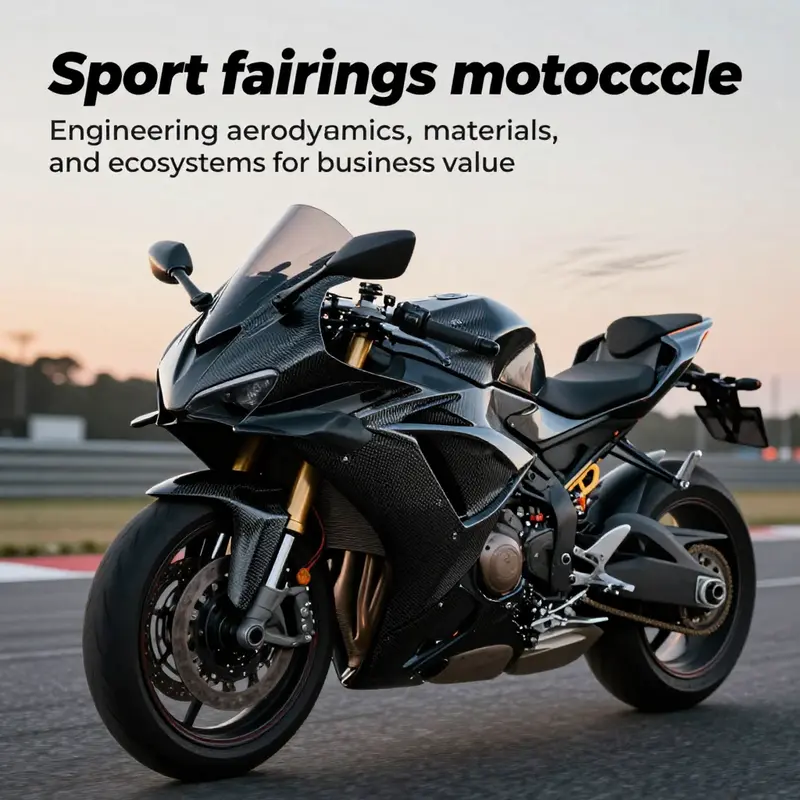
Sport fairings are more than cosmetic armor; for motorcycle businesses they represent a strategic lever to differentiate products, reduce operating costs, and capture new market segments. Proper fairing design accelerates aerodynamics, enabling higher top speeds with lower drag while improving rider comfort through controlled wind loads. For shop owners, the right fairing strategy translates into better performance ratings, easier service life, and stronger aftermarket partnerships. This article breaks down the economics and engineering behind sport fairings into four practical chapters. The aerodynamics, top speed, and rider comfort chapter explains how fairings shape air flow and rider fatigue in competition and street use. The materials chapter compares fiberglass, carbon-kevlar composites, and ABS, outlining trade-offs between weight, strength, and repairability. The compatibility chapter surveys how manufacturers and aftermarket ecosystems create option breadth and margins. The Yamaha R6 case study demonstrates how a race fairing kit can unlock performance gains, brand value, and resale prospects. By connecting performance science with business considerations—fitment accuracy, supply chain reliability, and warranty implications—owners can make informed decisions that align with their markets, climate, and service capabilities.
Winds of Speed: How Sport Fairings Shape Aerodynamics, Top Speed, and Rider Comfort
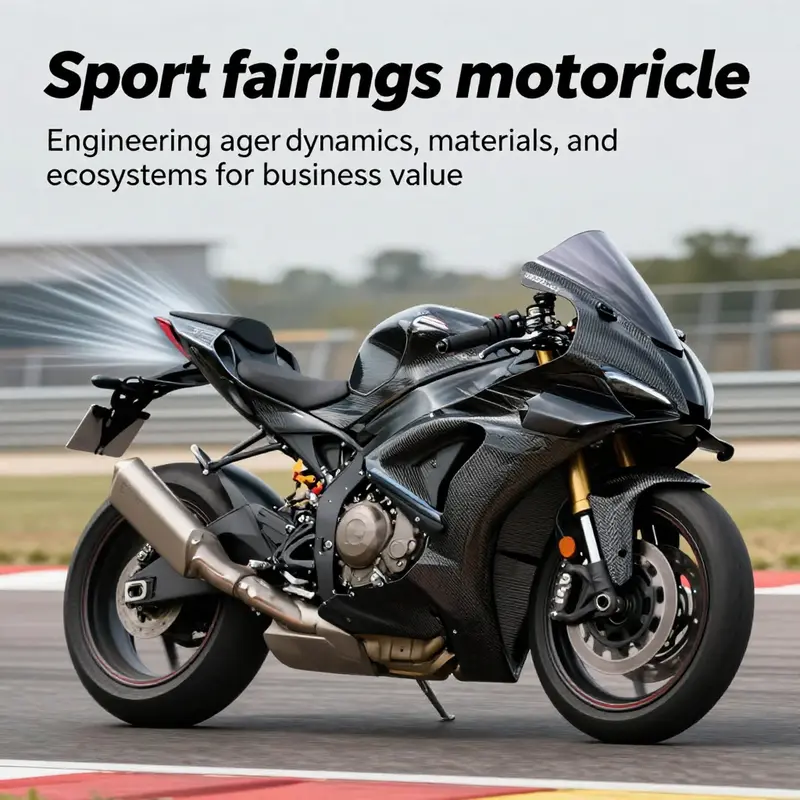
On a race-inspired machine, the bodywork is more than a cosmetic shell. Sport fairings are sculpted to kiss the air in just the right way, turning a naked silhouette into a streamlined profile that slices through wind with less resistance and more precision. When a rider leans into the throttle, the fairing acts like a passive teammate, smoothing the boundary between machine and atmosphere. The result is not merely a higher top speed, but a calmer rider, a bike that feels more planted at the edge of its performance envelope, and a system whose efficiency translates into better endurance on long sessions at the track or on the highway.
The essence of aerodynamics on two wheels rests on how the forward body shape interacts with the air as the bike accelerates. A full or partial fairing reduces drag by guiding the air smoothly around the chassis, the rider, and the engine bay. When drag is reduced, the engine does not have to work as hard to reach and sustain high speeds. That reduction in resistance not only contributes to a higher theoretical top speed but also improves stability in transient conditions. At speed, the air pressure distribution over the rider’s torso and limbs becomes more uniform, lessening buffeting that can disrupt steering inputs and fatigue the upper body. The sensation is a bike that feels more eager to glide, with a silencing of the wind’s harshest effects and a steadier rhythm between rider and machine.
The practical impact of this aerodynamic streamlining extends beyond raw speed. A well designed fairing kit often delivers noticeable gains in fuel efficiency, especially during highway cruising where wind resistance dominates energy use. Even modest reductions in drag compound into meaningful savings over longer rides. More subtle, yet equally important, is the ride quality on long days in the saddle. When the rider’s torso is tucked behind a protective shaping of the bodywork, sustained exposure to wind shear is mitigated. Fatigue becomes a smaller factor, and the rider can maintain focus on control and technique rather than bracing against the air. For track enthusiasts, where every millisecond counts, the fairing’s smooth silhouette supports predictable handling at high speed through fast corners and straightaways alike, reducing the workload on the suspension and tires as wind forces stabilize around the chassis.
Choosing the right fairing involves a careful assessment of how the bike will be used and how the material responds to stress. High-performance materials such as carbon-kevlar composites bring remarkable strength-to-weight benefits. They embody the idea that lightness and stiffness can coexist at the heart of race-oriented construction. A carbon-kevlar fairing can withstand the inadvertent knocks of track days, while its lightness preserves handling agility and acceleration. The trade-off tends to be cost and repair considerations; composites require careful repair procedures and can be less forgiving of certain impact scenarios than their more affordable counterparts. Budget-conscious riders often gravitate toward impact-resistant ABS plastic, a resilient material that provides a predictable level of rigidity and ease of repair. ABS has the practical advantage of cost-effectiveness, straightforward manufacturing, and broad compatibility with a wide range of models. It offers a reliable platform for street and sportbike applications, especially where the rider wants a balance of performance and practicality—without surrendering too much in the way of aerodynamic shaping or UV resistance.
The material choice directly informs the fairing’s ability to maintain efficacy under different conditions. If a fairing is too rigid or non-absorbent to minor impacts, a rider can quickly find that microcracks and deformation erode the aerodynamic profile, diminishing the marginal gains gained at speed. Conversely, a fairing built with the right combination of toughness and lightness remains resilient through routine track use and occasional off-track slips, preserving the aerodynamics well beyond a single riding season. For serious track work, some builders emphasize laminated composites with layered reinforcements that resist crack propagation and maintain shape under thermal stress. Such attention to material behavior at elevated speeds and varying temperatures helps ensure that the fairing’s performance becomes a repeatable asset rather than a fragile ornament.
Fitment is the practical hinge that seals the theory of aerodynamics to the rider’s experience. Precision in mounting, alignment, and venting determines how effectively the fairing interacts with the air path around the engine and rider. Proper fitment reduces gaps that can generate turbulent air pockets—zones where drag rises and stability can falter. In addition, the fitment scheme influences engine cooling, especially in stop-and-go traffic or tight pit sessions where air channels must remain clear. A well-designed fairing kit accounts for these considerations with vent placement and airflow routing that minimize hot spots while maintaining an aggressive silhouette. Riders who install a kit with a meticulous installation profile often report fewer maintenance headaches down the line; the weathering of mounting points, the integrity of fasteners, and the alignment of parts can translate into more consistent performance over miles of riding.
One practical consequence of high-quality fairings is their impact on daily usability. While track-focused skins may emphasize ultimate lightness and a razor-edge in airflow, street-oriented fairings need to handle everyday riding realities. The need to tolerate street debris, UV exposure, and occasional curb hits pushes the material choice toward resilience without sacrificing too much in the way of aerodynamics. The result is a spectrum of options—from lightweight, highly optimized race fairings that maximize speed and control for track days to robust, forgiving fairings designed for everyday sport riding. In all cases, compatibility with the specific motorcycle model remains a fundamental constraint. A fairing must not only copy the general lines of a bike but also align with mounting points, electrical harness routing, and the engine’s cooling ducts. Without precise fitment, even the best aerodynamic concept can become a source of rattling noise, misdirected airflow, or compromised safety.
For riders who prioritize performance and comfort simultaneously, the portfolio of fairing kits tends to converge on a few core principles. First, the mass of the fairing assembly should be minimized without sacrificing stiffness or impact resistance. A lighter shell reduces inertia in steering and allows the rider to exploit the chassis’ nimbleness while negotiating corners at speed. Second, venting must be carefully engineered to avoid recirculating hot air around the rider and engine. Proper venting channels keep the engine and radiators within their optimal temperature window, preventing heat soak that can degrade performance and comfort alike. Third, the finish and surface quality contribute to a clean airflow regime. A smooth, well-polished surface reduces frictional drag, while a consistent paint or clear coat helps preserve the fairing’s shape and integrity over time. These considerations reveal why riders often seek well-engineered fairing kits that come with robust installation profiles and precise mounting templates. They deliver measurable improvements in riding comfort and reduced maintenance needs over time, especially when the installation is performed with attention to alignment, sealing, and post-fit checks.
The pursuit of optimal aerodynamics does not exist in a vacuum. It interacts with the rider’s posture, the motorcycle’s chassis geometry, and the prevailing riding regime. An aerodynamic profile that works on the track may feel less advantageous on a windy highway if the rider’s position exposes more torso surface to crosswinds. Likewise, the balance between rider protection and drag reduction is not a universal constant; it shifts with climate, riding gear, and personal preference. Some riders prefer a full fairing for the wind protection and the sense of enclosure it provides, while others opt for semi-faired configurations that offer a compromise between wind shielding and weight. The beauty of modern sport fairings lies in this adaptability. The right kit can transform a bike into a well-behaved, high-speed partner with a protective envelope that still allows broad, intuitive control of the machine.
In considering a fairing upgrade, riders often consult catalogs and suppliers that emphasize OEM-style or inspired-by designs, underscoring the importance of precise fitment with models across major brands. The underlying message is clear: when a kit is engineered to the exact contours of a bike and its bodywork interfaces, the resulting aerodynamics are more reliable and repeatable. This reliability translates into performance gains that are not merely theoretical but tangible across a spectrum of riding contexts—from track days to weekend blasts on open roads. It is in this practical translation of wind-tunnel logic into everyday riding that the value of a high-quality fairing kit becomes most evident. The rider learns to trust the silhouette that guides the air, and the bike responds with steadier lines, smoother acceleration, and a sense of effortless speed that becomes a natural part of riding rather than an ongoing experiment in aerodynamics.
Finally, the broader ecosystem surrounding sport fairings—manufacturing expertise, material science, and installation know-how—shapes the choices riders make. Factory-based manufacturers that focus on race-oriented components, along with shops and distributors who emphasize fitment accuracy and material performance, form a continuum that supports riders across budgets and ambitions. Whether the aim is ultimate track performance, a blend of efficiency and style for daily use, or a cost-conscious upgrade that preserves the bike’s original character, there exists a fairing solution that respects the machine’s architecture while elevating its aerodynamic capability. As riders explore these pathways, they discover that the pursuit of speed is inseparable from the pursuit of control and comfort. The wind becomes a collaborator when the fairing shapes are chosen with care and installed with precision. And with the right combination of materials, fitment, and ventilation, a sport motorcycle can achieve a harmony where top speed, stability, and rider endurance reinforce one another rather than compete for attention.
For readers seeking a concrete starting point in the journey toward a more efficient and comfortable ride, a practical path is to explore OEM-style fairing kits offered by reputable suppliers that emphasize exact fitment for a given model. This approach minimizes the most common issues that arise after installation, such as misalignment, gaps that create turbulence, or improper venting that could hamper cooling. It is worth noting that the topic extends beyond mere aesthetics; it encompasses an engineering mindset about how air, heat, and human factors interact at high speed. In this sense, the fairing becomes a vital partner in the motorcycle’s performance narrative, a tool that helps the rider and machine pair their strengths to meet the demands of track days, spirited riding, and long-distance journeys alike. The outcome is a bike that feels both lighter on its feet and more capable of sustained, controlled power delivery, with a rider who experiences less fatigue and more confidence when pushing toward the limits of speed.
Internal link note: For riders exploring OEM-style upgrades for specific models, the Honda fairings category is a relevant starting point for catalog options and compatibility checks. See the collection here: Honda fairings.
External resource for further technical context on fairing materials and design can be found in a detailed technical overview of race fairings and their material properties, which discusses the performance characteristics of carbon-kevlar composites and related laminates. External reading: https://www.bikeexif.com/2025/11/27/fairings-honda-cbr600f-overview-technical-details-material-properties-industrial-uses/.
Thin Skin, Strong Frame: The Engineering of Sport Motorcycle Fairings for Speed, Comfort, and Reliability
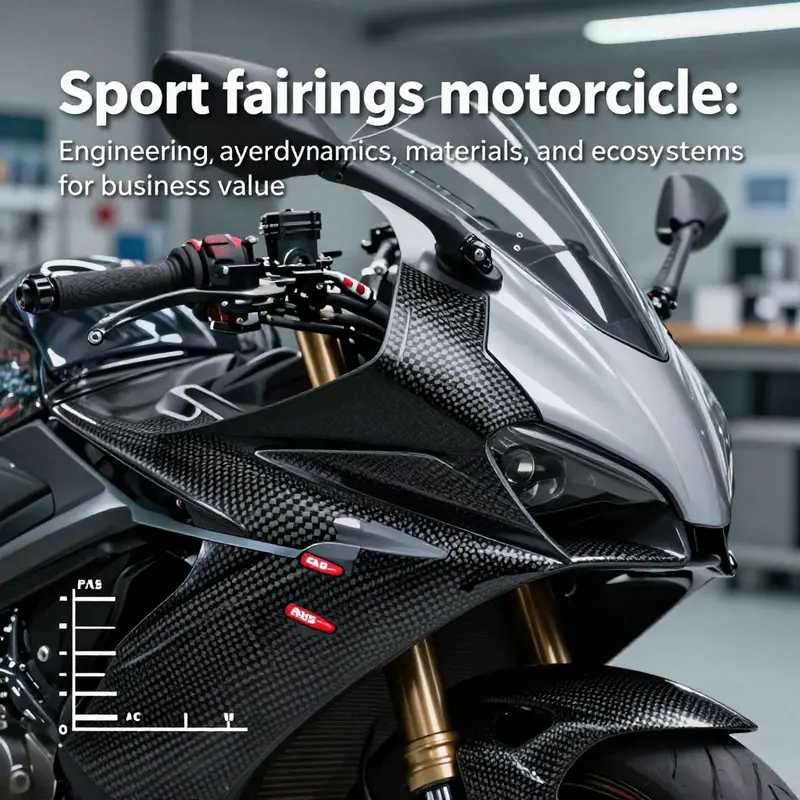
Sport fairings do more than dress the bike. They shape the air that rushes past the rider and chassis at triple-digit speeds, turning a naked silhouette into a controlled, responsive package. The best fairings thread a line between aggressive aerodynamics and practical durability, a balance that lets riders push toward the edge of performance without paying in rider fatigue or maintenance costs. The fundamental goal is simple: to hollow out the air that would otherwise fuse with the rider’s torso, the fuel tank, and the engine compartments, creating buffeting that saps steering feel and drains energy. A well-designed fairing reduces drag, soothes the wind pressure around the torso, and guides the air in a way that complements the chassis geometry rather than fighting it. The result is a bike that feels lighter in the hands at speed, more stable in crosswinds, and more predictable when the throttle is opened late in a straight or through a sweeping corner.
Materials are at the heart of that equation. High-performance sport fairings rely on a spectrum of engineered plastics and composites that share one promise: weight can be saved without surrendering strength. ABS plastic, prized for its impact resistance and easy repair, offers a robust shield against stray road debris and the occasional drop or low-speed crash. Its resilience under UV exposure and its forgiving nature make it a staple for street and sportbike configurations where cost and serviceability matter. Yet ABS sits in the middle of the performance spectrum; it is durable but not as stiff or light as advanced composites. For riders who chase lighter weight with uncompromised rigidity, fiberglass offers a step up. It can be laid with precision to exact curves and thicknesses, and it’s a natural ally to complex aerodynamics because it allows for thin, stiff shells that still resist flex at high load.
Yet the most ambitious projects lean toward carbon-kevlar composites, a material set that represents the pinnacle of strength-to-weight ratios in the fairing world. Carbon fibers provide exceptional stiffness and fatigue resistance, while Kevlar threads contribute impact resistance and tear resistance without adding excessive weight. The synergy of carbon-kevlar when layered with resin systems and carefully designed layups yields shells that resist the flutter and denting found in track conditions, even when small debris smacks into the edge of the fairing at speed. These materials, however, carry a cost—both in raw material expense and in manufacturing complexity. The result is a spectrum of options, with carbon-kevlar prized by racers and aggressive track enthusiasts, fiberglass serving riders seeking high performance with cost discipline, and ABS meeting the needs of riders who require durable, repairable, and readily available replacements.
Manufacturing methods matter as much as material choice. Techniques like vacuum forming and precision molding let engineers sculpt aerodynamic shells that are simultaneously thin and stiff. A carefully controlled layup, correct resin selection, and uniform cure processes translate to a shell that carves through air with minimal parasitic drag while maintaining enough ductility to absorb minor impacts. The balance is delicate. If the skin is too brittle, it cracks on impact; if it’s too flexible, it develops buffeting or changes shape at speed, robbing feeling in the handlebars and altering steering geometry. In the best systems, the fairing is not a single shell but a composite assembly with internal bracing, ribs, and sometimes a secondary layer of reinforcement near critical load paths. The focus is not merely on how the fairing looks in a showroom photo, but on how it behaves under wind pressure, engine heat, and rider movement.
A clean fit is crucial. Since fairings encapsulate or surround essential sections of the motorcycle—headlights, upper cowl, side panels, and sometimes even the instrument cluster—their integration with the frame is a surgical art. Precision fitment reduces gaps that can generate unnecessary drag, and it minimizes the risk of high-speed vibration. Designers and technicians aim for an enclosure that complements the bike’s silhouette while preserving serviceability. Access panels, removable subframes, and well-placed fasteners contribute to a system that can be repaired or refreshed without dismantling the entire bodywork. In practice, riders who upgrade to well-engineered fairings report smoother rides at speed, less air-induced fatigue, and fewer maintenance headaches when it’s time to service the engine or replace a panel after a mishap. The calm that comes from a snug, well-supported shell translates into confidence on track days and long rides alike.
The spectrum of fairing styles speaks to different missions. Full-fairing kits deliver maximum wind protection and reveal a sculpted aerodynamic profile that can shave seconds off a lap time when tuned to the right bike geometry. Semi-fairings, which cover the front portion of the bike as well as instruments and headlights, offer a lighter, more modular option that preserves easier access to the engine for maintenance and upgrades. Three-quarter fairings sit in between, providing a compromise between wind protection and serviceability, a practical middle ground when riders transition from street use to occasional track days. Each style imposes its own considerations for weight distribution, rider posture, and peak performance. The right choice depends on the climate, the rider’s distance between weekend rides and weekday commutes, and the tolerance for maintenance complexity when an edge-case repair becomes necessary. In this sense, choosing a fairing is not only about weight or drag numbers; it’s about shaping a riding experience that remains controllable when the speed climbs and the weather changes.
The theme that threads through all these decisions is reliability. Weight reduction, if driven by careful design rather than removal of material, does not compromise safety. Modern fairings are engineered with energy-absorbing features in mind. The stiff outer skin helps resist flexing that could transmit jolts to the rider, while internal bracing and multi-layer coatings add impact resistance and environmental protection. Beyond durability, this approach supports long-term maintenance. A well-fit shell with robust bracing tends to resist cracking in the long run, which reduces the frequency of panel replacements and the potential misalignment that can degrade aerodynamics over time. That reliability is especially important for track days, where a rider may push a machine to its limits repeatedly. The payoff is a more consistent, repeatable riding experience that encourages precision in handling and smoother throttle transitions as speeds accumulate. Riders learn to appreciate the subtle ways a fairing’s stiffness and fit can alter steering feel, corner entry, and stability in gusty conditions. The narrative of weight and strength is thus not a simplistic trade-off but a systems-level optimization, where each gram saved is a tool for agility and each reinforcement is a shield against fatigue and vibration.
The practical implications extend beyond peak speed. Aerodynamics also influence fuel efficiency, engine cooling, and heat management. A well-designed fairing not only reduces drag but channels air toward radiators or directs it to minimize the heating of sensitive components near the engine compartment. In this light, fairings become part of the thermal management strategy, supporting both performance and longevity. This integration becomes even more important for riders who rack up long distances on fast roads, where wind fatigue and heat soak can accumulate. When the air is managed intelligently, the rider experiences a calmer cockpit, with less need to compensate through body position or muscle tension. Comfort in motion—often overlooked in performance debates—emerges as a practical result of the skin’s aerodynamics, the shell’s rigidity, and the maintenance-friendly design that makes replacements and repairs straightforward rather than disruptive.
Within the broader context of a sport bike’s evolution, fairing engineering also intersects with branding aesthetics and production realities. The material science behind a fairing must meet the constraints of mass production, serviceability, and supply chain stability. Mass-produced ABS parts are often designed for rapid replacement and repair, which helps keep operating costs manageable for a wide user base. In more specialized builds, carbon-kevlar composites can be molded and cured with tighter tolerances to achieve a consistent finish and predictable mechanical properties across many units. The choice of material, therefore, is a statement about the rider’s goals: whether the priority is budget-friendly maintenance, cutting-edge performance, or a blend of lightweight material and rugged durability. These decisions shape not just a single bike, but a broader culture around riding—one that values engineering insight, precision manufacturing, and the confidence that a well-fitting fairing provides when the road inexorably accelerates into the unknown.
For riders curious about how to approach upgrades, the advice often centers on alignment with the bike’s intended use and climate. Track-focused riders will benefit from lighter, stiffer shells that deliver more responsive handling and quicker lap times, while street riders might favor a balance of protection, weather sealing, and ease of replacement after occasional droppings. Touring-oriented riders may prioritize a more conservative, thicker-walled construction that reduces wind buffeting during long days on the highway and across open landscapes. Across these scenarios, precision fitment remains a through-line. The fairing’s curves must follow the bike’s lines with minimal gaps, the mounting points must integrate cleanly with brackets and fasteners, and the edges must meet the rest of the bodywork without catching air unsafely. As designers and builders iterate, they often test pieces on wind tunnels or with computational simulations to validate how changes in curvature affect drag, lift, and separation. This attention to aerodynamic fidelity is what elevates a fairing from a mere shell to a component that partners with the entire vehicle system.
The decision framework for choosing a fairing is personal as well as technical. The rider’s budget, the condition of the chassis, and the local climate all shape the choice. A more modest fairing can still deliver meaningful improvements in comfort when the body’s posture is optimized, the wind hits at a less intrusive angle, and the fit is precise enough to avoid turbulent gaps. In contrast, a premium carbon-kevlar assembly offers stiffness and lightness that enable more aggressive positioning and sharper handling, especially on a track where millimeters of change in air flow can translate into measurable time savings. The key is to focus on engineering fundamentals: how mass is distributed, how the shell resists impact, how reliably it aligns with mounting points, and how cleanly it can be repaired after a mishap. The rider’s experience is a synthesis of all these details—throttle control, cornering confidence, and the quiet, consistent feel of the fairing as speed climbs.
In this light, a single, well-considered fairing choice can influence a rider’s confidence and momentum over the entire ride. The performance dividends come not only from reduced drag but from a more stable motorcycle that invites precise inputs and consistent throttle use. The end result is a package that facilitates a rider’s ability to focus on the line, the entry speed, and the timing of each apex rather than wrestling the bike’s wind-blasted profile into submission. This is the craft behind sport fairings: the art of turning wind into a controllable ally rather than a relentless adversary. And while the spectrum of options—from affordable ABS to advanced carbon-kevlar composites—adds a layer of complexity to the buying decision, the overarching principle remains clear. The fairing is the skin of the machine, the interface between rider and road, and a structural element that upholds both safety and speed in equal measure. A thoughtfully chosen fairing, installed with care and maintained with attention, yields a more confident, capable ride on every mile.
For riders exploring upgrade paths, it can be helpful to view hands-on examples of how fitment and geometry translate into real-world performance. The Yamaha fairings category provides a practical window into how different shells align with the bike’s lines and mounting points, illustrating how even subtle curvature changes influence airflow pathways and rider feedback. This lens helps bridge theory and practice, showing how weight savings and stiffness translate into tangible handling benefits without requiring a leap into exotic materials or impractical maintenance demands. You can explore that category here: Yamaha fairings category.
External reference for further reading and comparative context: https://www.motorcycleparts.com/best-fairing-kits-2025
null
null
Aero Precision on Two Wheels: Yamaha R6 Race Fairings as a Case Study in Modern Track Aerodynamics
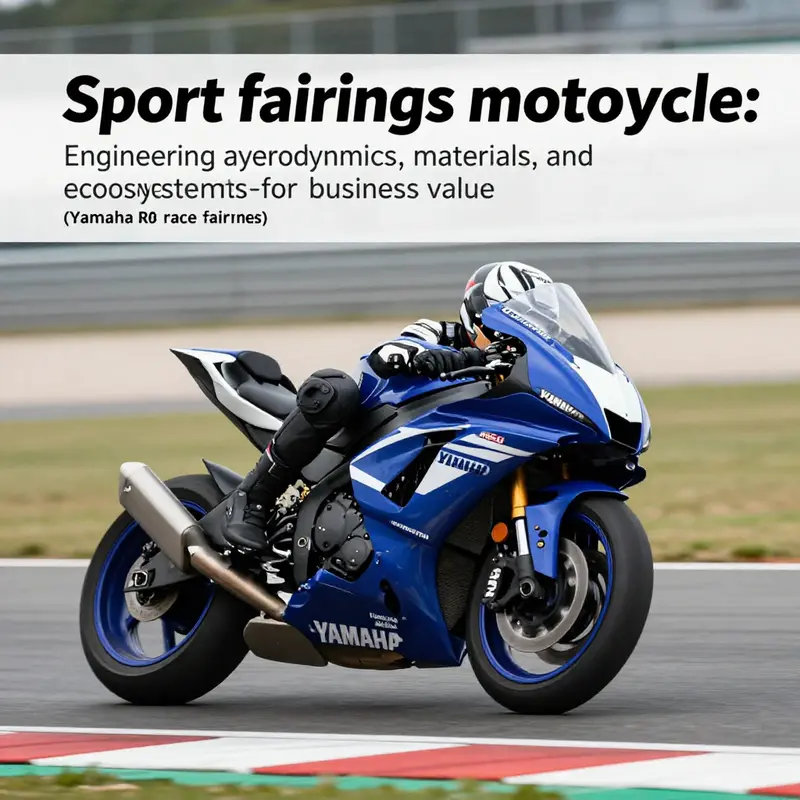
On the racing circuit, the fairing is more than a shell. It is a molded ally in the pursuit of speed. Every curve, cut, and vent is chosen to blend air and rider with the bike’s own geometry. The goal is to shave seconds by reducing drag, guiding cooling air, and preserving stability as the rider hones throttle and lean angle. In this light, sport fairings emerge not as cosmetic armor but as an integral aerodynamic system that must harmonize with the chassis, engine, and rider stance under the demanding conditions of high-speed track work. The Yamaha YZF-R6, as a case study, crystallizes how a focused design philosophy can translate narrow aero gains into meaningful, race-level performance. The chapter that follows threads together material choices, fitment philosophy, aero features, and validation practices, illustrating how a sophisticated fairing kit becomes a controllable variable in a rider’s performance envelope rather than a static cover. It also reflects how the broader industry absorbs these insights to improve both race-ready packages and street-performance solutions.
Material choice is the first battlefield in race fairing design. Lightweight composites, especially carbon fiber, paired with resin systems tuned for stiffness and durability, are the standard bearers for serious track work. The reasons are straightforward: carbon fiber delivers an exceptional stiffness-to-weight ratio, which translates into more predictable behavior under aggressive cornering and rapid throttle changes. When paired with Kevlar or similar reinforcement, the resulting shell maintains integrity even when brushed by gravel traps or track debris. In a race context, engineers pursue the most favorable balance of weight savings and structural rigidity because every gram saved at the front of the bike yields a measurable improvement in acceleration, braking response, and how the chassis squares up through the mid-corner arc. Carbon fiber is often not used alone; it is part of a layered system that may include fiberglass or other reinforcements in select areas to manage impact resistance while keeping core regions ultra-light. For teams and riders seeking performance with a tighter budget, advanced ABS plastics offer a pragmatic alternative. ABS provides impact resistance, repairability, and cost advantages, enabling more riders to experience sport riding performance with fairing kits that still respect alignment tolerances and rider ergonomics. The trade-off, of course, is a higher overall weight and nuanced differences in stiffness, which can alter the way the bike responds to load during late apex transitions. The balance between these materials is not an aesthetic choice but a calculated decision that affects weight distribution, handling, and cooling pathways. A notable example in the practice of race fairings is the way boutique manufacturers employ carbon-kevlar hybrids. The combination leverages the best of both worlds: carbon for stiffness and weight savings with Kevlar for additional impact resistance and improved fatigue life when the panel endures repeated track-day cycles. In this ecosystem, a factory-based producer like BIKESPLAST demonstrates how such combinations are engineered for track use, refining layups, resin content, and cure cycles to produce a panel that behaves consistently under high load and temperature. The result is a shell that not only looks purpose-built but also performs with a predictable, repeatable response from the rider’s steering inputs. The end-user benefit is clear: a fairing that remains stable, minimizes unwanted flutter, and supports consistent cooling and airflow around the engine and brakes. Yet for the broader market, ABS remains a popular baseline, offering affordability and straightforward repair options for street and sportbike applications where extreme aero demands are less pressing but where durability and maintenance practicality remain essential.
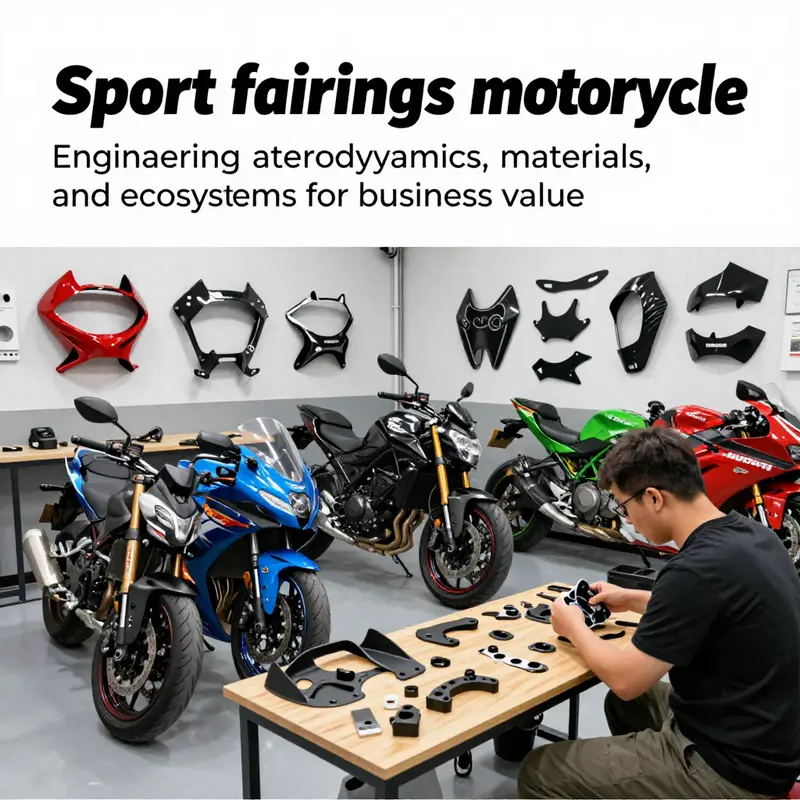
Compatibility and fitment stand as perhaps the most underestimated but critical factors in the value of a sport fairing. A fairing that doesn’t align with the frame’s geometry, radiator routing, or fuel-tuel system layout can introduce gaps that not only ruin the aerodynamics but also create safety hazards. That is why reputable suppliers emphasize precise fitment profiles, OEM-style mounting points, and accurate contouring that mirrors the bike’s original bodywork lines. When a rider installs a fairing kit, the goal is not merely to replace a shell but to preserve the tight packaging that keeps cables and hoses routed cleanly and protected while ensuring the rider’s shoulder and knee remain within the intended ergonomic envelope. In practice, this means that the assembler must respect the bike’s frame downtubes, radiator cores, and the air-intake geometry feeding the cooling system. The Yamaha R6, with its compact engine package and specific rider stance, benefits from a fairing that matches the chassis’s silhouette and the rider’s crouched position. For teams and individuals who pursue performance as a discipline rather than a hobby, the alignment between the fairing and the chassis is validated through a cadence of testing—wind-tunnel measurements, balance checks on the scales, and on-track runs where handling, turn-in, and tire wear reveal how well the fairing supports the bike’s overall dynamics. Market suppliers who produce OEM-style kits extend this philosophy by offering mounting systems and panel profiles tailored to brand families, easing swapovers between stock and race configurations. The approach underscores a central truth: precise fitment is a prerequisite for any aero gain to translate into real-world performance rather than just a cleaner silhouette.
From there, the discussion turns to the aerodynamic features that define race fairings. In a high-velocity regime, the trade-off between drag and downforce becomes decisive. The primary goal is to minimize form drag while preserving enough streamline to keep the air attached along the rider’s line of sight and the bike’s leading edges. Contoured surfaces, sharp chines, and strategically placed strakes help shepherd the air where it needs to go—around the radiator, past the fork, and over the rider’s torso. This careful shaping reduces turbulent wake that would otherwise propagate behind the rider, complicating throttle response and micromoments in steering through a corner. Integrated ducts and vents find a dual purpose: they extract heat from critical components while shaping the local pressure fields to support a controlled flow, not a chaotic tumble. The effect is a fairing that contributes to straight-line stability—an understated but crucial benefit for track sessions that stretch into long, high-speed stints. The R6’s race fairings exemplify how such features operate in concert with the bike’s frame geometry and the rider’s posture to maintain a consistent air-ride balance.
Cooling management sits at the heart of this balancing act. The fairing must shepherd air toward radiators, oil coolers, and brake systems without creating bottlenecks or excessive pressure losses. In track environments, where engine temperatures can find a new equilibrium, airflow channels and ducting patterns are tuned to deliver just enough cooling capacity under strain while avoiding parasitic drag. This requires a packaging discipline that respects both the aero performance and the engine’s thermal needs. The interplay between cooling ducts and aero surfaces is a defining feature of modern race fairings, where even small changes in duct diameter, vent positions, or duct exit geometry can shift temperatures by tens of degrees and alter the rider’s confidence in a high-speed session. The Yamaha R6 exemplifies how a well-integrated cooling plan aligns with aero goals, allowing riders to push deeper into corners without the fear of overheating or fuel-lean cutbacks.
Validation and lifecycle come next in the fairing’s story. Factory race programs rely on a blend of wind-tunnel validation and real-world on-track data to close the loop. Wind tunnel testing provides quantifiable measurements: drag coefficients, projected areas, and downforce figures that can be compared across geometry changes. On-track evaluation serves as the ultimate test, revealing how the fairing interacts with a dynamic rider, changing weather conditions, and race-day debris. This dual approach ensures that aero gains are not merely theoretical but translate into time-saving advantages. The lifecycle aspect—how quickly a fairing can be swapped, repaired, or rebranded between sessions—becomes a practical constraint in a race weekend. In that context, a race fairing must not only perform well but also be serviceable under real-world race conditions. The result is a system that couples performance with reliability, a necessity for any competitive program. The Yamaha R6 race fairings embody this philosophy: they are designed to be aggressively optimized for the track while maintaining a pragmatic approach to maintenance and replacement.
The influence of such designs extends beyond a single model. Lessons learned from factory race programs ripple through the broader industry. The push for efficient air management, refined venting, and robust, light-weight construction informs how subsequent fairings are engineered for a wide range of machines. The design ethos—maximize aero efficiency without compromising cooling, weight, or rider ergonomics—shapes how producers conceive contours, side panels, and integrated features. In this sense, the R6 case study is not just about a bike but about a design discipline that continually pushes the envelope of what a fairing can achieve on the track. The geometry that proves stable at speed, the flow patterns that minimize wake, and the careful routing that preserves radiator capacity all become part of a library that engineers draw from when crafting future generations of sport fairings.
When evaluating Yamaha R6 race fairings, or similar race-oriented kits, several practical considerations emerge. Material and manufacturing details—specific carbon fiber layups, resin systems, and curing methods—directly affect weight and stiffness. Aerodynamic performance data, including drag coefficients, CdA values, and downforce measurements, shape expectations about on-track behavior. Cooling integration—radiator clearance, air pathways, and oil-cooler routing—determines whether performance can be sustained through long stints without temperature-induced degradation. Mounting geometry and compatibility with the bike’s electronics and sensors are essential to ensure reliable data collection and predictable engine control responses. Finally, real-world performance must be weighed against cost, durability, and maintenance realities. The synthesis of these factors helps a rider judge whether a particular fairing kit will deliver the expected gains on a given track, with a specific riding style, and within a given budget.
For readers exploring this topic further, a focused look at Yamaha’s fairing catalog can be instructive. For a closer look at available Yamaha fairings, see the Yamaha fairings collection. This internal reference spotlights how OEM-style contours align with factory engineering philosophies and how suppliers translate that alignment into ready-to-install kits for diverse models and setups. Yamaha fairings
In addition to the internal resources, the broader technical landscape offers a wealth of context. For those seeking deeper technical grounding on the YZF-R6’s aero approach and the performance implications of race fairings, the official Yamaha Motors Racing page for the YZF-R6 provides technical specifications, aero features, and material considerations. This resource complements the narrative by offering a professional baseline for the dimensions, materials, and testing methodologies that define modern sport fairings. Further details can be found at https://www.yamahamotor.com/motorcycle/racing/yzf-r6/.
Final thoughts
Sport fairings translate engineering disciplines into tangible business value. Aerodynamic efficiency lowers drag, enabling higher effective speeds and improved fuel and energy efficiency for track and street applications. Material choices drive the critical balance between weight, durability, and cost, directly impacting warranty exposure and service profitability. Compatibility and ecosystem breadth determine both the speed of time-to-market and the flexibility to meet diverse customer needs, while real-world case studies like the Yamaha R6 race fairings demonstrate how precision engineering can elevate brand perception and resale value. For business owners, a disciplined approach to sport fairings—aligning design intent with market segment, climate, and service capabilities—yields measurable returns in performance, reliability, and margin.