
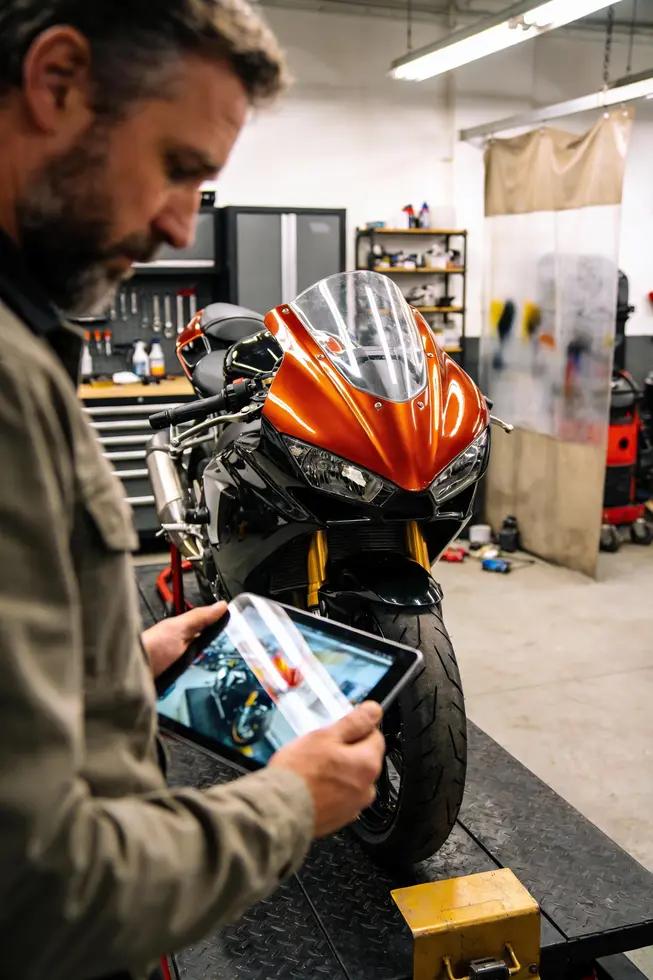
Introduction
Repainting motorcycle fairings blends material science, surface preparation, color matching, and finish protection into a cohesive service that can elevate a shop’s value proposition. For business owners, this capability unlocks opportunities in aftermarket customization, collision repair add-ons, and resale-ready refurbishments. A well-run repainting operation delivers OEM-like durability, consistent color accuracy, and a finish that resists UV exposure and abrasion, all while controlling material costs and turnaround times. This article translates the technical essentials into actionable business guidance, showing how foundations, process discipline, and strategic positioning intersect to create a high-quality, scalable offering. Across three chapters, we connect substrate realities to workflow design, outline quality-control checkpoints, and compare DIY versus professional services from an economic and societal perspective. By treating repainting as a system—one that touches supplier relationships, shop floor discipline, and customer perceived value—owners can tailor operations to fit their market, regulatory environment, and growth ambitions.
Tables of Contents
Chapter 1: Chapter 1: Repainting motorcycle fairings — Technical foundations and materials
- From Substrate to Surface: The technology, prep, and material choreography behind durable fairing repainting
Chapter 1: Chapter 1: Repainting motorcycle fairings — Technical foundations and materials
1. From Substrate to Surface: The technology, prep, and material choreography behind durable fairing repainting
Repainting motorcycle fairings sits at the intersection of science and craft. It demands an understanding of how plastics behave under heat, solvent exposure, and flex, paired with a steady hand for applying color and clear. The journey from raw substrate to a showroom-smooth finish is not just about choosing a pretty pigment; it is a carefully choreographed sequence where adhesion, flexibility, and environmental resistance must be built in at every stage. Fairings are most commonly ABS plastics or composite blends. Each material brings distinct challenges: ABS can be forgiving with proper surface treatment but may migrate oils or plasticizers if not cleaned and primed correctly; composites can offer excellent rigidity yet introduce different permeability and adhesion concerns. The core goal is consistent, durable adhesion of the paint system to a substrate that will bend and flex with ride vibration and temperature shifts, while delivering a uniform appearance that remains faithful to color under UV exposure and miles of road grime. The layering philosophy is straightforward in concept—adhesion-promoting primer, a base color, and a clear protective topcoat—but the details determine long-term success. Primer must play nicely with plastic, base coats must adhere to that primer and layer evenly, and the clear must cap the work with resilience to abrasion, moisture, and sunlight. The final look should be aesthetically pleasing and, more importantly, durable enough to withstand the daily realities of riding, cleaning, and weathering. This is why the preparation phase matters as much as the color, and why material compatibility cannot be an afterthought. It is a synthesis of chemistry, technique, and patience, where every thin film matters and every pass of the spray matters less than the uniformity with which it is laid down and cured.
Technological foundations begin with a clear understanding of substrate behavior. Plastic fairings, unlike metal panels, have a degree of elasticity and a tendency to creep, which means coatings must accommodate movement without cracking or delaminating. This is why plastic-specific primers exist: they balance adhesion with the flexibility needed to handle micro-movements without forming rigid pockets that fail under stress. The layering approach—bond surface, color, protection—depends on a reliable bond at the interface between each layer. A primer that bonds well to ABS or composite, and that itself forms a compatible interface with the base color, is crucial. Without this, color can peel or fade from the edge of a panel, or the clear can peel away as soon as flex occurs. The final clear coat is not merely decorative. It acts as a UV shield, a humidity barrier, and a sacrificial layer that blunts scratches and helps the color stay vibrant. In practice, the best outcomes come from using a complete system designed for plastic substrates rather than piecing together automotive paints with generic primers. This reduces the risk of topcoat failure, such as cracking, orange peel, or hazing that undermines the overall finish.
Surface preparation, often called the most critical stage in repainting, is a discipline that blends meticulous cleaning with measured abrasion. Start with a thorough cleaning to remove dirt, grease, and silicone contaminants that sabotage adhesion. Warm, soapy water followed by a rinse ensures surfaces are free of film residues that can trap contaminants under paint. Inspection then reveals scratches, gouges, or cracks that will need attention before color goes on. Deep scratches may require repair filler designed for plastic, executed with patience to avoid creating ridges that would telegraph through the finish. In the absence of significant damage, the surface is ready for the next step: sanding. Sanding serves multiple purposes—removing gloss, providing a mechanical key for the primer, and smoothing transitions around any repaired areas. The typical progression starts with coarser grits (240–600) to address deeper imperfections, moving toward feathering with 400–600 grit to blend edges into the surrounding paint. The goal is to produce a surface that looks dull and uniform, with no distinct ridges or scratches visible in normal light. A feathered edge is essential where a repair meets original material, and careful cross-hatch sanding helps prevent unevenness from becoming visible after clear. Wet sanding often follows primer application, helping to reduce texture and produce a more uniform surface while preserving the integrity of the primer film. Keeping the surface slightly wet during wet sanding minimizes heat buildup and prevents deep micro-scratches that can ruin the final appearance.
Concrete as this process is, it relies on a cohesive system of materials chosen for compatibility with plastic. Primer selection deserves particular attention. Primers formulated for plastic provide stronger adhesion and more appropriate elasticity than standard automotive primers, which can be too rigid and prone to cracking on flexible substrates. Multiple thin coats of a plastic-specific primer are typically applied, rather than a single thick layer, to build a uniform bonding layer and minimize solvent entrapment that could lead to blistering. After each primer coat, light wet sanding helps ensure a velvety, uniform surface that is ready for color. When the primer has adequately cured, the base color layer is applied in several thin passes. The base coats must be automotive-grade or equivalent, chosen not only for their color fidelity but also for their UV resistance and ability to adhere to the primer. Thin, sweeping passes are preferable to heavy, thick coats, which can run or sag and obscure edge definition on tight fairing curves. The aim is a color field that appears evenly wet in motion, with consistent tone across all panels. The truly critical transition occurs at the interface between the color and the primer: a clean, crisp edge that remains adhered under stress. That is why surface chemistry matters: a well-prepared surface combined with the right primer lays a foundation that lets the color maintain its depth without microcracking as the fairing flexes.
Clear coats complete the system, binding the color to its environment. A well-applied clear not only delivers gloss and depth but protects against UV radiation, moisture, and minor abrasion. The technique typically starts with a tack coat to level the surface and minimize dust entrapment, followed by multiple lighter, full wet coats. The standard advice is to apply at least three layers of clear, with careful control of spray angle and distance to avoid runs. Curing varies with product and climate, but a 24–48 hour window before handling is common, with full cure taking longer. The choice of finish—gloss, metallic, pearl, or candy—impacts the color maintenance strategy and the care required to preserve the effect. Gloss and metallic finishes tend to be the most forgiving in daily use and easier to maintain, while matte and pearl finishes call for a gentler cleaning regimen to avoid marring or uneven appearances. Regardless of finish, the clear coat is the bulwark against the environment, acting as a rigid shield that keeps the color from yellowing, fading, or dulling with exposure and abrasion.
The finishes themselves trade off in behavior and maintenance profile. Gloss finishes are the most straightforward to maintain and polish, offering vivid color and easy correction of minor imperfections. Metallics introduce light-reflective particles that can reveal dust and micro-scratches more readily, demanding a steadier hand during application and a meticulous cleaning routine. Pearls add depth and shifting color with angle but can be more sensitive to uneven lighting and require more precise color matching and layering. Candy finishes, which rely on a deep, translucent color layer over a tinted base, demand exceptional control over color density and color depth, since the final appearance depends on precise layering and curing. Matte finishes, by contrast, emphasize a smooth, non-reflective surface but demand extra care to prevent micro-scratches from becoming visible. Each finish carries a distinct maintenance footprint: gloss and metallics benefit from regular wax or sealant to preserve clarity and glaze, while matte and pearl effects typically require more cautious cleaning methods to avoid altering texture and tone.
The practical workflow, when viewed as a single arc, proceeds from surface preparation to primer, base color, and clear coat. In practice, this means starting with a clean, dry surface, masking off areas not to be painted, and checking for any hidden damage that could affect adhesion. Once the surface passes inspection, the applicant moves through coarse to fine sanding, with attention paid to feathering and edges to ensure seamless transitions. Primer is applied in multiple light coats, followed by light sanding to prepare a uniformly receptive base. The color layer then follows in rapid, repeatable passes, each coat thinner than the last to avoid drips and sags, with a final pass to even out any density differences. Finally, the clear coat, composed of multiple delicate passes, seals the color while imparting the desired gloss and depth. The entire procedure is susceptible to environmental variables. Temperature and humidity influence drying times, solvent evaporation, and film formation. Direct sunlight during curing can cause excessive heat, leading to solvent escape too quickly and the potential for solvent pop or cracking. Ventilation must be managed to minimize solvent buildup, which can impact both worker safety and the quality of the finish. Achieving a flawless result becomes a test of endurance—balancing speed with patience, layer thickness with uniformity, and color fidelity with a tolerance for minor deviations that may occur during color matching.
A practical note on materials compatibility helps bridge theory and practice. Primer must be chosen with the substrate in mind; ABS, common in many fairings, responds best to primers designed for plastics that promote adhesion without creating a brittle film. Composite panels, with different resin systems, may require primers with distinct compatibility characteristics or adhesion promoters. In all cases, avoiding generic primers that do not account for the substrate’s flexibility and permeability reduces the risk of delamination or cracking under use. The paint itself should be appropriate for plastic substrates, with properties that resist UV degradation and chemical exposure from cleaners and solvents riders may use. The clear coat should be designed to resist yellowing and maintain gloss under prolonged sun exposure. A well-chosen system improves scratch resistance and ease of maintenance, helping to preserve the finish through regular cleaning and occasional polishing. Even the most robust finish requires ongoing care: regular cleaning with non-abrasive products, periodic wax or sealant applications for gloss finishes, and judicious maintenance routines for matte, pearl, or candy finishes to avoid altering surface texture or uneven appearance.
Maintenance considerations extend beyond the booth. The market for repainting fairings is shaped by consumer appetite for personalization and the realities of resale value, as well as the ongoing maintenance culture among riders. A high-quality finish that withstands exposure can add value and longevity, while a poorly prepared job may peel or fade quickly, affecting both aesthetics and resale potential. Environmental considerations, including volatilization and solvent use, influence material choice. Practices such as using low-VOC formulations or incorporating waterborne base colors where feasible can reduce emissions without compromising finish quality. The goal is a finish that remains faithful to color and gloss through the ride life, while still being practical for the DIY enthusiast or professional shop to reproduce reliably. The balance between ease of application, color accuracy, and durability is the essence of material compatibility in this context.
For readers seeking to translate these foundations into practice, the routes are twofold: a disciplined DIY approach and a professional pathway. The DIY route emphasizes thorough surface preparation, careful masking, and controlled environment setup, with the added responsibility of iterating on color matching using OEM codes or careful custom mixing. Professionals bring access to calibrated spray equipment, controlled spray booths, and a more precise understanding of color science in a high-throughput workflow, along with the ability to reproduce complex finishes such as pearl or candy with a high degree of repeatability. Regardless of the path chosen, the emphasis remains on choosing plastic-specific primers, automotive-grade base colors, and a durable, UV-resistant clear coat that can withstand the typical conditions of riding and cleaning. The process should be viewed as a system, not a sequence of isolated steps; each stage informs the next, and each choice—primer formulation, sanding sequence, color formulation, and clear-coat strategy—creates a cohesive end result that respects the substrate while delivering color fidelity and protection.
Within this framework, a thoughtful integration of practical resources can be helpful. As you plan, you may wish to explore accessory kits or color-matching aids that align with the substrate type and finish you aim to achieve. Open resources and catalogs provide guidance on color systems, primer compatibility, and protective topcoats, helping to align expectations with what is technically feasible. If you would like a concise, step-by-step DIY checklist tailored to a specific fairing color or a model variant, I can provide that in a structured format so you can follow the workflow with confidence. In addition, you may find it useful to consult broader painting references that discuss plastic-primer compatibility, adhesion testing, and clear-coat techniques in detail. These concepts are universal across plastic repaints and form the basis for a reproducible, high-quality finish on motorcycle fairings.
For readers who want to explore compatible coatings and accessories within an organized catalog, a relevant resource can be consulted to supplement this discussion. See for example the product category focused on coatings and components that support plastic surface preparation and finishing: product-category/c62/c71/. This category aggregates items that pair with plastic substrates, including adhesion promoters, primers, and protective topcoats, offering a practical reference point as you build a cohesive repainting system. The goal is not to prescribe a single product but to emphasize that the most durable finishes arise from a coherent system: the right primer for plastic, color that adheres to that primer, and a sealed clear coat that stands up to use. When these elements are aligned with diligent surface preparation, the resulting finish is more than just cosmetic—it is a protective, enduring layer that preserves the fairing’s aesthetics and functionality as it encounters sunlight, rain, and road debris over time.
The broader implication of this discussion extends beyond the workshop. The repainting of motorcycle fairings is a microcosm of materials science in action. It demonstrates how understanding substrate behavior, adhesion science, and coating technology translates into practical outcomes. It also shows how process discipline—careful cleaning, methodical sanding, controlled layer deposition, and mindful curing—drives quality more than any single high-cost tool or fancy technique. A well-executed repaint balances the mechanical realities of plastic, the chemistry of coatings, and the rider’s desire for a personalized appearance, producing results that endure through miles and seasons. This integrated approach—where technology, technique, and care converge—illustrates why painting plastic fairings is a technically accessible yet quality-sensitive skill set with real implications for hobbyists, small shops, and customization services alike.
In the next segment, we can translate these foundations into a practical, reader-friendly checklist that begins with preparation and ends with maintenance guidance. The aim is to provide a clear pathway from surface evaluation to a durable finish, without compromising the nuances of color fidelity or protective performance. If you’d like, I can tailor a step-by-step DIY plan that aligns with your specific fairing material, color choice, and available tools, while preserving the discipline of proper surface preparation and material compatibility that underpins a successful repaint.
(End of subchapter excerpt. This integrated discussion remains faithful to the themes of technological foundations, surface preparation, and materials compatibility, while maintaining a cohesive narrative that transitions smoothly to practical guidance and future subchapters.)
Final thoughts
For business owners, repainting motorcycle fairings is more than aesthetics—it’s a measurable service with substrate knowledge, disciplined execution, and value drivers that influence customer satisfaction and repeat business. By grounding operations in the right materials and adhesion strategies for plastic substrates, designing a repeatable process with robust quality controls, and thoughtfully comparing DIY versus professional offerings, a shop can optimize cost, speed, and finish quality. The market rewards consistency: customers seek OEM-like color accuracy, durable clear coats, and reliable turnaround. Invest in training, standardize surface preparation and priming, and maintain inventory controls that align with OEM color systems or scalable custom palettes. When executed well, repainting fairings becomes a strategic capability that differentiates a business, supports higher margins, and strengthens the overall service portfolio.
Upgrade your ride with UltimateMotorX’s premium motorcycle fairings—durably crafted, precision-fitted, and stylish. Meeting OEM standards for easy installation, our collection suits upgrades or replacements. Shop now for fast shipping, secure checkout, and expert support. Give your bike the ultimate quality it deserves!
About us
UltimateMotorX is a rider-founded specialist in top-tier motorcycle fairings. We source premium materials and partner with trusted manufacturers to ensure perfect fits, durability, and a premium finish. Our teams provide expert advice, hassle-free returns, and a seamless shopping experience. Whether upgrading performance, refreshing aesthetics, or restoring resale value, riders and shops can rely on UltimateMotorX for high-quality, OEM-style finishes and reliable support. Ride with confidence—style and quality guaranteed.