
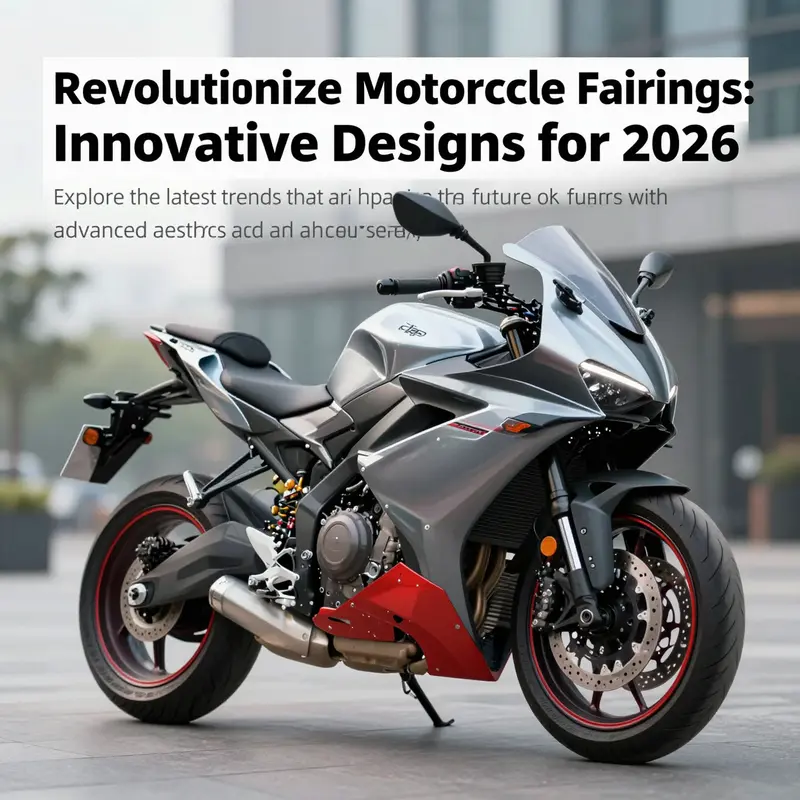
As the motorcycle industry evolves, so do the designs and functionalities of its crucial components, particularly the motorcycle fairings. The 2026 models are expected to showcase a convergence of aesthetic appeal, advanced technology, and safety features. Business owners in the motorcycle sector must stay alert to these trends that signify not just stylistic changes but also critical advancements for rider safety and performance. In the following chapters, we will delve into the mecha aesthetic approach shaping fairing designs, explore the integration of advanced lighting technologies, and review the essential safety features being prioritized in new motorcycle fairings.
null
null
Shaping Light and Form: The Integrated Lighting Revolution in New Motorcycle Fairings
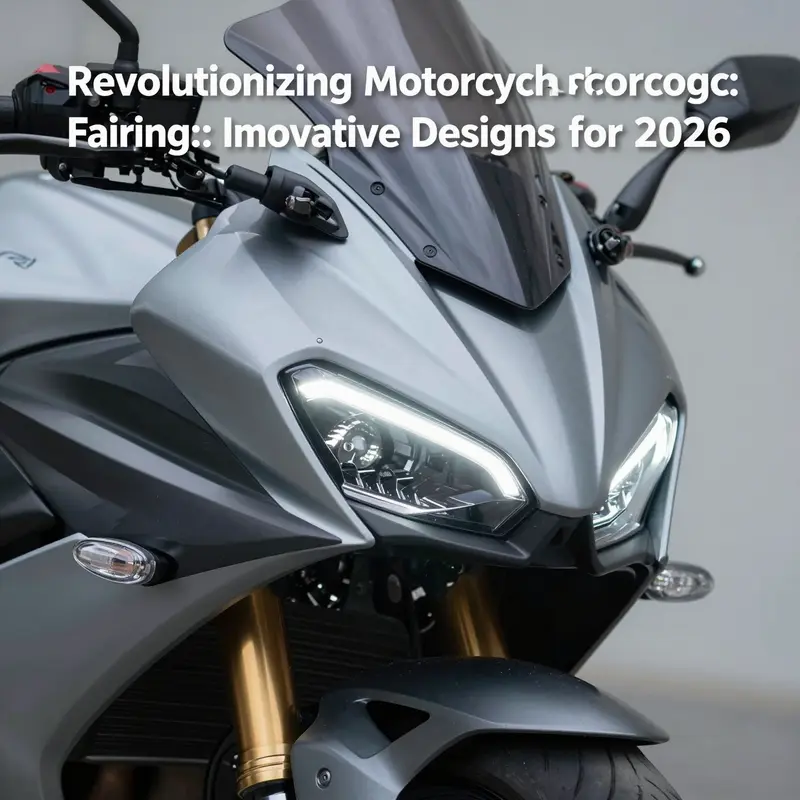
The fairing has long been a symphony of wind, weight, and width, a shapely envelope that carves through air as much as it frames the rider. Yet the newest iterations of motorcycle fairings are rewriting that old equation. They no longer exist merely as aerodynamic shells; they have evolved into dynamic platforms where lighting, sensors, and surface language fuse to create a holistic riding experience. The design language leans toward a machine aesthetic where hard lines, layered textures, and sculpted voids communicate speed even when the bike is at rest. Lighting is not a garnish; it is a core element of the fairing geometry, with LEDs, projectors, and adaptive systems integrated so tightly that the headlights, daytime running lights, and turn indicators read as a single coherent element. This convergence of form and function reshapes what riders see and how they perceive the machine beneath the light.
LEDs, with their efficiency and compactness, have become the primary drivers of this integration. Their small footprint allows designers to push light sources deeper into the fairing planes, turning the face of the bike into a multi layered architectural element. The bright line of a headlight can be sculpted into a broad, soft edged beam that blends with the fairing contours, while slim daytime running lights trace the upper edges or carve through the centerline to reinforce the bike silhouette. The real win lies in capabilities rather than appearance. LEDs deliver high luminous intensity with low heat, enabling longer life and consistent performance in tight, compact housings. That reliability is critical because fairings must endure vibration, temperature swings, and airflow at speed. Where once lighting was a separate add on, it is now a fundamental language of the fairing surface, shaping how the bike interacts with darkness and visibility alike. The result is a front end that reads with immediate clarity, even at a glance, and that can transform its expression as conditions change from bright daylight to rain, dusk, or night.
Beyond basic brightness, the smart integration of lighting is redefining safety. Adaptive beam technology and projector optics are allowing the front end to respond to riding conditions in real time. Sensors detect lean angle, speed, and ambient light, informing microcontrollers that recalibrate the beam pattern to avoid glare for oncoming traffic while maximizing illumination for the rider path. A cornering light, for example, can open a dedicated shadow-free cone when the rider enters a turn, expanding the field of view without requiring a broader, more conspicuous headlamp. This is not a future feature; it is becoming a practical expectation as electronics, sensors, and power efficiency come together in the fairing spine. The complexity of these systems is carefully balanced with the need for reliability. The goal is to create a seamless experience where the rider notices the light only as improved clarity and predictability, not as a chorus of individual components fighting for attention. In this sense, the fairing becomes a smart interface with the road, translating the rider intentions into a precise, responsive illumination map.
Projector headlights illustrate another layer of sophistication. Their design uses precision lenses and controlled apertures to deliver a focused, glare-free beam with exceptional road coverage. The optics are often paired with internal shading systems or shutters to modulate the beam as conditions shift. When integrated into the fairing, these projectors sit within sculpted recesses that emphasize a three dimensional front end, almost like robotic eyes that adjust to the viewer stance. Although the exact configurations vary across models, the underlying principle is consistent: optics and geometry are co designed with the fairing so that light becomes a deliberate sculpting tool. The result is a front end that can communicate speed and intent without loud graphics or loud color. The fairing lines, cutouts, and surface transitions coordinate with the light edges, creating a coherent visual language. The rider gains not only superior illumination but a more expressive, modern face for the motorcycle, a face that can switch moods from aggressive to refined, depending on riding mode and ambient conditions.
Safety ready lighting also pushes the envelope in terms of durability and environmental performance. Modern fairings must withstand rain, dust, and the rigors of rapid temperature changes without compromising light output or optical alignment. To meet these demands, manufacturers are using robust lens materials, anti reflective coatings, and mechanically resilient housings that resist micro vibrations at high speed. In addition, the integration often includes weather and fog fighting features, such as hydrophobic or anti fog coatings, to maintain clarity in challenging conditions. The lights location is no accident; it is tuned to reduce blind spots while preserving an aerodynamic profile. Signals and indicators can be embedded in the fairing s soft edges or hidden behind translucent sections that glow with a crisp, legible signal at a distance. This approach preserves the clean, futuristic look while delivering practical, real world benefits the rider can signal intent clearly even in low visibility scenarios, and other road users can read the bike s position and movement quickly.
Material choices and manufacturing processes further enable these sophisticated lighting solutions. Lightweight composites and advanced polymers allow fairings to house more complex lighting assemblies without adding excessive mass. Multilayer constructions create depth and texture, serving both aesthetic and functional roles. For example, layered surfaces can house light channels, cooling channels, and sensor arrays in a single precinct, making maintenance easier and more predictable. The design must also consider thermal management; LEDs, while efficient, still generate heat. The fairing internal channels and heatsinks are often integrated into the structure so that heat flows away from critical lighting areas without creating thermal hotspots that could affect plastics or coatings. These considerations push designers toward monocoque like assemblies where aesthetic geometry and mechanical stability reinforce the lighting system long term performance. In this context, the fairing ceases to be a merely external component and instead becomes a carefully engineered habitat for light, air, and electronics working in concert.
From a consumer point of view, the shift toward lighting integrated fairings changes what riders expect from a motorcycle in appearance and behavior. A modern fairing can convey a brands DNA through light signatures as much as through form. The illusion of speed is reinforced by continuous light lines that sculpt the bike silhouette toward the horizon. Customization becomes less about stickers and more about programmable lighting scenes, material finishes, and the way light interacts with the fairing geometry at different angles. Riders can imagine a bike whose front is tuned to their preferences, more aggressive beam patterns for canyon riding, or gentler daylight friendly profiles for urban commutes. The integration of lighting into the fairing also opens opportunities for storytelling through color and animation on special occasions or within riding modes. This capability does not merely enhance visibility; it deepens the emotional connection between rider and machine, making the fairing an active participant in the riding experience rather than a passive shell.
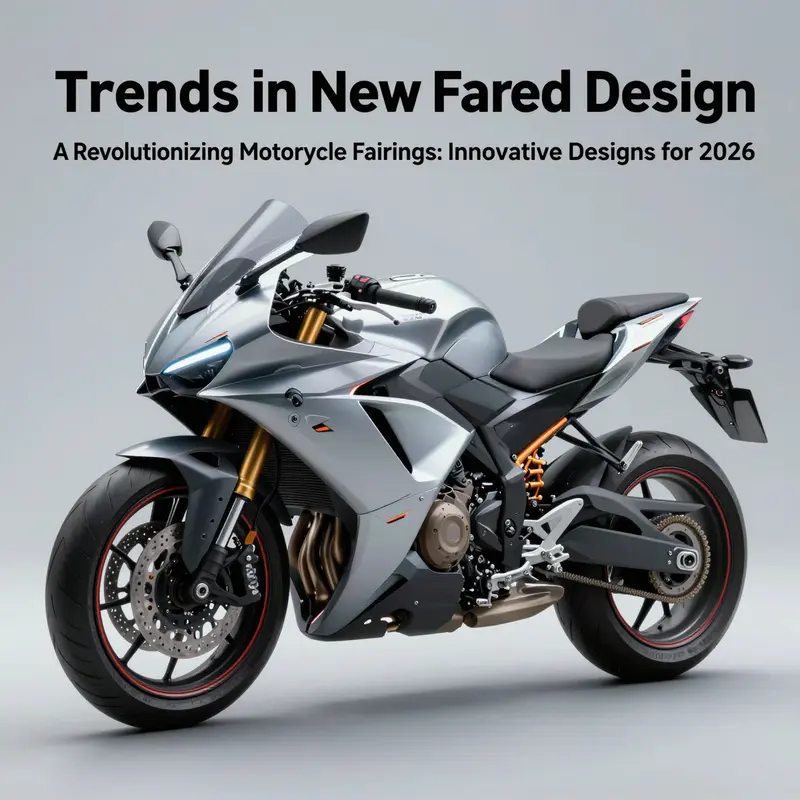
Alongside the aesthetic and safety benefits, the market implications of lighting forward fairings are notable. Designers must balance performance with manufacturability, ensuring that complex lighting systems do not complicate serviceability or raise maintenance costs excessively. The trend toward modular lighting units where illumination modules can be swapped or upgraded without a full fairing replacement addresses some of these concerns. It also enables ongoing evolution as lighting technology advances, a practical pathway for keeping older platforms current without overhauling the entire shell. The design language associated with light forward fairings tends to favor clean planes, sharp radii, and hollowed or shadowed interiors that can host lighting elements in a way that feels intentional rather than decorative. This approach supports a mature premium appearance that aligns with the expectations of riders seeking both performance and sophisticated styling. In short, the next generation of fairings is as much about how light is used as about how air is managed, and the two are increasingly inseparable in the path from concept to showroom floor.
To those drafting product catalogs and design briefs, the emphasis on lighting integration invites a more unified narrative driven approach. Instead of catalog pages that merely show a front profile, the fairing becomes a canvas where wind, light, and electronics create a cohesive story. A catalog may present the front end as an engineered skin with a luminous identity sections that glow with consistent brightness, with cross cut lighting that emphasizes the bike geometry, and with cornering indicators that read as part of the fairing architectural language. The narrative is not just about visibility; it is about creating a recognizable lexicon of form and function. As designers push toward even more advanced lighting concepts, such as adaptive color temperature for different riding modes or daylight visible indicators that reduce energy draw, the fairing will solidify its status as a platform where engineering prowess and aesthetic poise converge. This convergence is only achievable when the fairing is treated as a system, not a collection of separate parts. When the headlight, DRL, indicators, optics, sensors, and control software are co developed from the outset, the result is a riding experience that feels seamless and revolutionary.
For readers exploring product lines and catalogs as they consider upgrading or customizing their machines, a practical entry point is to browse the current 2023 new listings as part of the ongoing evolution of fairings. A catalog that emphasizes production ready, lighting integrated options can provide a tangible sense of what is feasible today and what might become standard tomorrow. 2023 new listings anchor users to a concise, current snapshot of offerings that reflect the direction described here. This is not simply about aesthetics; it is about a coherent future facing design language that makes the most of modern lighting technologies while maintaining the performance and protection riders expect from a contemporary fairing system. In pursuing this approach, the industry is not only improving visibility and safety but also crafting a new cultural standard for motorcycle design, one where the face of the bike is a lit articulate statement embedded in the very fabric of its geometry.
External examination of these developments shows a global pattern: lighting authority and AI enabled sensor integration are becoming standard foundations for new motorcycles. Industry analyses point to a global market in which smart lighting and adaptive systems are not optional add ons but essential components driving design and safety decisions. The convergence of lighting with sensing, control, and connectivity elevates fairings into intelligent platforms. Riders experience higher situational awareness, improved night time visibility, and more confident cornering. This integrated approach reduces cognitive load, enabling riders to focus more on the road and less on reading the bike signals. The fairing is no longer a passive shield but an active partner in the riding experience. The result is a more compelling product narrative across brands and markets, where the language of light is as important as the language of aerodynamics. As this evolution continues, expect to see even tighter integration, smarter materials, and more refined optical systems that push the boundaries of what a fairing can achieve in both form and function.
External resource for further reading on the broader lighting market and its impact on motorcycle design and safety can be found here: https://www.linkedin.com/pulse/motorcycle-lights-market-2026-2033-trends-technologies-impact-ai-integration-7vq5g/
Armor by Design: Safety-Centric Innovation Driving the Next Generation of Motorcycle Fairings
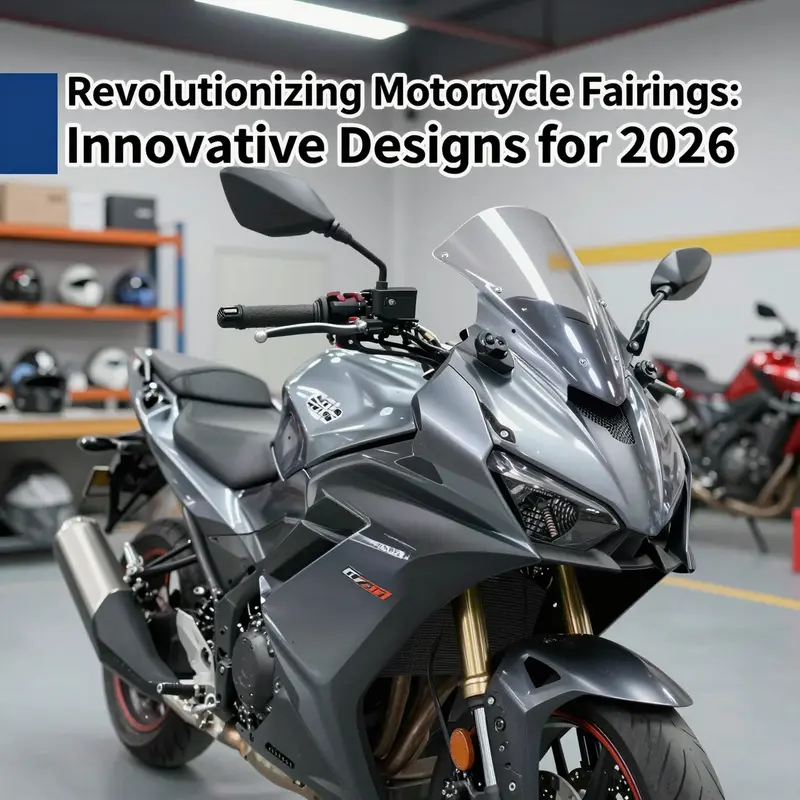
The development of new motorcycle fairings is converging on a single, compelling aim: to fuse safety with performance in ways that do more than slice through wind. Fairings are evolving from mere windbreaks and cosmetic shells into integral components of a rider protection system. This shift is driven by advances in materials science, aerodynamic engineering, and the growing expectation that every feature on a motorcycle should contribute to rider safety without compromising agility or speed. In this context, modern fairings are being conceived as protective envelopes that manage energy during crashes, regulate temperatures, optimize airflow for engine cooling, and even interface with smart sensing networks. The result is a cohesive architecture where form follows protective function, and where every contour, layer, and connection serves a dual purpose: to reduce drag and to cushion impact. The narrative of safety driven design is not a sum of isolated innovations but a disciplined integration of multiple disciplines, where structural reinforcement, material choice, and airflow management work in concert with advanced lighting and subtle modularity to create a more resilient rider experience over the entire life of the machine.
At the heart of this evolution is a rethinking of how energy is absorbed and redirected during a mishap. Contemporary fairings increasingly incorporate energy-dissipating elements that go beyond the obvious shock absorption found in helmets or crash bars. These elements are typically made from high-density foams or layered composites that are carefully layered within the fairing’s laminate or core. The aim is not to create a rigid shell that merely resists deformation, but to design a controlled deformation sequence that spreads crash forces across a larger area and into adjacent structural components. When a rider is thrown or a bike slides, the upper torso and shoulder region are particularly vulnerable. By introducing tactful, strategically placed energy absorbers within the fairing, designers can mitigate peak loads on the rider’s chest and neck, reducing the likelihood of contusions and contusions that can worsen with momentum and impact duration. This energy management is a nuanced balancing act: materials must be stiff enough to preserve aerodynamic integrity and protect vital systems, yet compliant enough to cushion impact without cracking or splintering under high strain.
A second pillar of safety-driven fairing development is the strengthening of the fairing’s own structural integrity. Modern designs feature internal reinforcements that stiffen the fairing envelope and improve overall chassis rigidity. These reinforcements are not simply extraneous lattices; they are optimized pathways for load transfer, intended to prevent the fairing from folding or snapping under extreme cornering loads, high-speed buffeting, or a slide across pavement. The outcome is a stabilizing effect on handling characteristics that can be crucial in the moments after a mishap—when precise steering input and predictable response of the bike matter as much as the rider’s protective gear. The integration of these reinforcements also contributes to durability under harsh weather conditions, where repeated exposure to temperature cycling and moisture can otherwise embrittle materials or loosen fasteners. Designers thus adopt a holistic view: the fairing must withstand years of minor impacts, vibrations, and environmental exposure while remaining capable of absorbing significant energy in a crash.
Talking about safety would be incomplete without addressing the way modern fairings manage airflow and cooling. Aerodynamic optimization remains a primary driver for performance, but it now intersects more deeply with safety objectives. Air ducts and internal channels are shrinking the boundary between the rider and the engine bay while reshaping how heat is removed and where it is dissipated. The most effective systems create a controlled turbulence regime that reduces drag and lowers the risk of hot spots on the rider. By channeling air with precision, engineers can also improve the efficiency of engine cooling, maintaining stable operating temperatures in demanding conditions such as sustained high-speed use or steep climbs. In turn, this supports reliability and safety, since an overheated engine can suddenly falter, threatening control and balance. The geometry of the front face and the inner fairing passages is carefully tuned so that cooling air and fresh air for the rider are distributed where they are needed most without sacrificing protection against direct impact.
Lighting integration marks a third pillar in the safety-forward fairing agenda. Lighting is no longer an afterthought or a purely cosmetic feature; it is an essential element of early rider visibility and of conspicuity in traffic. The forward portion of the fairing is increasingly conceived as a housing for multi-layer lighting schemes that can be tuned for different riding modes and weather conditions. Conceptual designs explore sophisticated, layered headlamp assemblies that balance high-intensity illumination with power efficiency. The lighting configuration is not merely about brightness but about shaping the perception of the machine’s footprint on the road. For riders, this translates into improved recognition by other road users, which lowers the probability of collisions in complex urban environments or at dusk when visibility is compromised. The integration is harmonized with the fairing’s overall aesthetic, ensuring that the headlights, DRLs, and turn signals appear as a single, purposeful silhouette rather than a random assortment of parts. This level of integration requires not only optical and electrical design but also mechanical strategies that keep lighting fixtures protected from vibrations, impacts, and moisture while allowing for straightforward replacement when maintenance is required.
A forward-looking aspect of safety in fairing development is the rhythm of modularity and repairability. The industry is pushing toward designs that can be replaced selectively rather than the entire shell being scrapped after a fall or bump. Semi-fairings, which balance wind protection with lighter weight and easier replacement, are especially relevant for riders who commute daily or take longer sport touring trips. The idea is to create pockets of protection that can be swapped or upgraded with minimal labor, preserving the overall protective envelope while enabling riders to tailor wind protection to their local climate or riding style. This modularity also supports safer repair strategies in the event of minor damage, allowing owners to restore protective capability quickly and at lower cost. The move toward modular fairings aligns with broader sustainability goals by reducing waste and extending the service life of each fairing system.
Beyond mechanical and thermal performance, the next generation of fairings is placing renewed emphasis on sensing and smart integration. Embedded sensors can monitor temperature, vibrations, and even structural strain in real time. These data streams offer an early warning of potential mechanical issues, letting riders and service technicians respond before failures occur. In the broader context of vehicle safety, these sensors act as a proactive layer that complements helmet safety and protective gear. They also enable better fault reporting and maintenance planning, which can prevent cascading failures that might arise from unnoticed wear. While the presence of sensors inside the fairing adds a new dimension to the design process, it is harmonized with the goal of preserving a clean, aerodynamic exterior. Sensor housings and wiring are tucked with precision so that protection and airflow remain uncompromised, and the electronics are shielded from moisture and chemical exposure during wet rides.
All these features are not arbitrary add-ons but part of an integrated safety architecture that respects standards and real-world riding needs. International safety and durability standards drive the testing protocols that govern fairing design. Manufacturers subject materials and joints to impact tests, climate cycling, and fatigue evaluations to ensure long-term integrity. The fairing must perform reliably in a broad spectrum of weather conditions while continuing to protect the rider and maintain the bike’s stability. This testing philosophy aligns with advances described in leading technical literature, where researchers emphasize the importance of material selection, impact absorption, and aerodynamic optimization in a safety-first design framework. The emphasis on robust performance under extreme conditions ensures that every component—whether it is a primary load-bearing panel or a decorative trim piece—contributes to rider protection rather than merely cosmetic appeal.
Material choice remains a central lever for achieving safety goals without sacrificing performance. A trend toward lightweight yet robust materials, including carbon fiber composites and advanced thermoplastics, allows for highly engineered three-dimensional geometries that can absorb energy, resist damage, and shape airflow with little weight penalty. The compatibility of these materials with joining methods, coatings, and sealants is crucial for maintaining protective seals against water and debris while also enabling repair or replacement of damaged sections. The material system must endure the same temperature swings and vibrational environments that riders experience, from cold starts to sun-baked highways. In addition, some designers are exploring multi-material assemblies where a soft inner core blends with a stiffer outer shell, providing a gradient of stiffness that helps dissipate energy progressively rather than concentrating it in a single hard layer. Such strategies help prevent brittle failures and extend the life of the fairing in real-world riding conditions.
From a design and production perspective, the push toward safety-oriented fairings is also a push toward smarter design processes. Computer-aided engineering and simulation tools enable engineers to model crash scenarios, airflow interactions, and thermal behavior before a single prototype is built. The ability to predict how an impact energy will traverse the fairing and where it will be dissipated guides material selection, reinforcement locations, and the geometry of the cooling ducts. The result is a more robust product that can be tuned for different use cases, whether a rider prioritizes track performance or all-day commuting comfort. In practice this means a fairing that not only reduces drag but also supports predictable behavior when the bike is pushed to the limit or when a rider must react quickly to an unforeseen hazard. The same design ethos informs maintenance considerations, as modular, accessible joints and standardized fasteners simplify inspections and replacements, reducing downtime and improving safety outcomes over the bike’s life cycle.
The visual language of safety also matters. The newer fairings carry an aesthetic that communicates protection through form. The front profile often features a sculpted, layered appearance with careful transitions between panels, as if the fairing itself is a kinetic shield. These design cues do more than attract attention; they guide the eye toward the most protective regions and help riders instinctively perceive the bike as a cohesive system rather than a patchwork of parts. The layered geometry supports both aerodynamics and energy management, making it easier to tune the balance between airflow and bump tolerance. While the look can be dramatic, the engineering under the skin remains highly pragmatic, with every ridge and channel serving a clear protective or thermal function. This synthesis of aesthetics and safety reflects a broader industry understanding that form and function should reinforce each other, rather than compete for attention.
For readers curious about how these principles translate into real-world practice, a look at the BMW fairings catalog offers a concrete illustration of the balancing act between protection and performance. The catalog showcases how a structured approach to reinforcement, modularity, and integrated lighting can be realized in a production line, with panels designed to be swapped or upgraded in line with evolving safety expectations. This example also highlights the importance of carrying through safety considerations into cost planning, supply chain resilience, and serviceability, so that protective features remain accessible and durable for riders across climates and road conditions. BMW fairings catalog
In the context of the broader article on new motorcycle fairings, the trajectory outlined here emphasizes that the safest fairings are not merely protective shells but smart, adaptable systems. They combine energy absorption, structural fortification, thermal management, lighting integration, sensing capabilities, and modularity into a single envelope that enhances rider confidence. The design challenge is to weave these aspects into a cohesive package that respects weight constraints, manufacturing realities, and serviceability while delivering a tangible safety margin. The industry researchers and engineers pursuing this path recognize that each new material, each redesigned joint, and each integrated channel can contribute to a safer riding experience without compromising the ride quality that motorcyclists expect. As the market moves toward 2026 and beyond, the pace of innovation in fairing safety and functionality will hinge on continued collaboration across disciplines, ongoing validation through rigorous testing, and a willingness to rethink conventional assembly methods in favor of more resilient, adaptable architectures. The result promises not only better protection but also smarter, more reliable performance that riders can trust in any weather, at any speed, and on any road.
External reference for deeper technical context: the SAE International technical paper on the latest advancements in motorcycle fairing design, including material selection, impact absorption, and aerodynamic optimization, is a foundational resource that informs industry practice and academic study. See https://www.sae.org/publications/technical-papers/content/2023-01-0789/ for more details.
Final thoughts
The landscape of motorcycle fairings is on the brink of a significant transformation as we approach 2026. The fusion of mecha aesthetics, advanced lighting technologies, and enhanced safety features marks a pivotal shift in motorcycle design, emphasizing not only the visual impact but also the practical benefits for riders. For business owners, embracing these trends will be essential in catering to an increasingly discerning market that values innovation and safety. By integrating these advancements, companies can enhance their appeal and ultimately drive success in the motorcycle industry.