
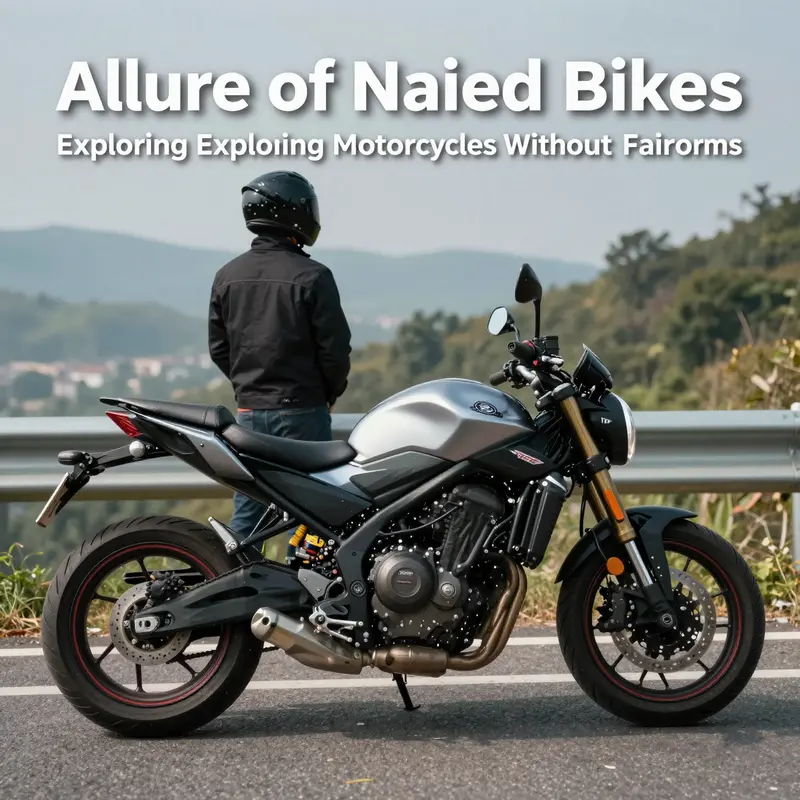
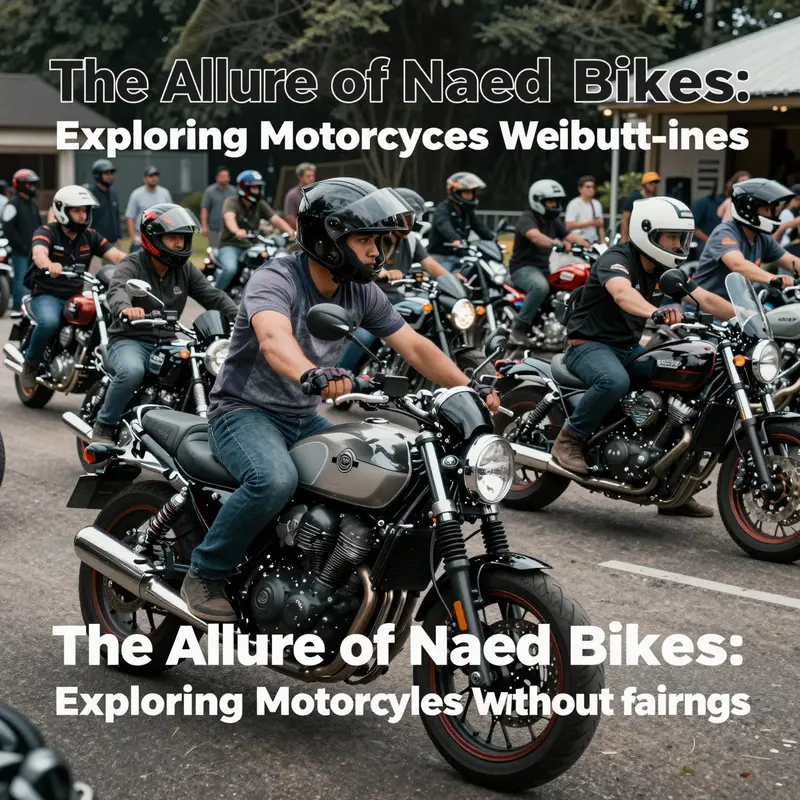
Motorcycles without fairings, often celebrated for their minimalist aesthetic and raw mechanical appeal, hold a unique position in the motorcycling community. These ‘naked bikes’ prioritize simplicity and rider engagement while offering an accessible riding experience, particularly in urban settings. This article delves into the intricate characteristics of these motorcycles, examining their design, performance, economic implications, and cultural significance. Each chapter sheds light on how these elements interact, providing a comprehensive perspective that can inform business owners in the motorcycle industry, enthusiast groups, and prospective buyers alike.
Beyond the Shell: Design Characteristics and Rider Connection in Motorcycles Without Fairings
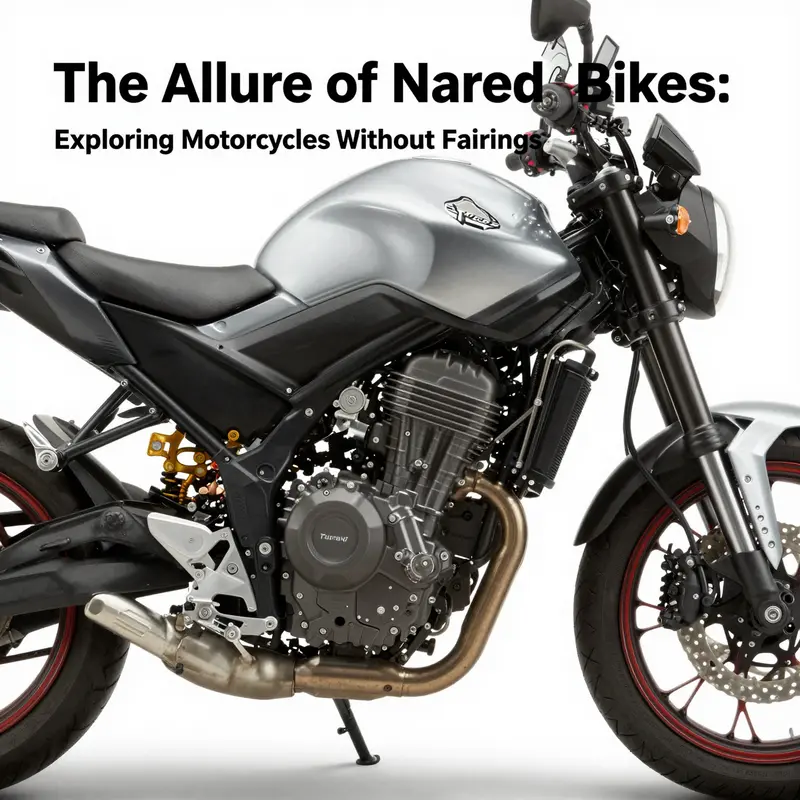
Design discipline in motorcycles without fairings begins with an open frame concept. Naked bikes tend to feature a frame that is openly visible, with only the essential components shielded by the slightest skin. This openness is not merely a stylistic choice; it is a practical design feature. By exposing the engine and key mechanical interfaces, engineers can optimize cooling and airflow around the core of the bike. The absence of bulky body panels means air can circulate more freely around the engine bay, aiding cooling efficiency during aggressive riding or high-load conditions. While some riders worry about cooling at extreme temperatures or in slow urban crawl, the inherent geometry of these machines often makes heat dissipation predictable and manageable, especially when the radiator and oil-cooling pathways are positioned for direct exposure to incoming air. The visual absence of fairings also accentuates weight considerations. With less mass in the bodywork, these motorcycles typically carry a lighter overall footprint. A leaner mass tends to improve the power-to-weight ratio, a key factor in nimble handling and responsive throttle behavior. This reduction in non-structural mass does not imply fragility; rather, it aligns with a philosophy that values resilience through simplicity. The frame itself—often a tubular steel or similarly robust chassis—becomes a prominent, almost sculptural element. The exposed geometry is not hidden; it is celebrated as part of the bike’s personality. In many cases, the engine cooling system, the exhaust headers, and the air intake pathways are clearly visible, offering a transparent view of how air and fuel meet the combustion chamber. For riders, this clarity translates into a visceral sense of control. When you see the intake plunging toward the throttle bodies and the exhaust routing toward the headers, you gain a mental map of how the propulsion system responds to throttle input and cornering forces. This visibility also influences maintenance. With fewer panels to remove and less cavity to navigate, routine checks—such as inspecting the air filter, topping up fluids, or ensuring the chain tension—become straightforward tasks. Practically speaking, the open architecture means easier access to the components that matter most to reliability and performance. The mechanical purity conveyed by the naked design extends to the chassis. A compact, well-integrated suspension setup sits within a visible, purposeful frame. The absence of fairings often makes the linkage, the fork tubes, and the rear shock more accessible for tuning and inspection. Riders who enjoy hands-on involvement with their machine frequently appreciate this accessibility, as it lowers the barrier to experimentation and personal setup. In design terms, this openness communicates a philosophy: the bike’s capability does not rely on cloaking aerodynamic tricks behind sculpted shells; it is built into the core of the machine and validated on the road. The riding position in naked bikes reinforces this conversation between rider and machine. The ergonomics tend to favor an upright or slightly forward-leaning stance, enabling a direct line of sight to the front wheel, the road ahead, and the instrumentation mounted on the bars. This posture fosters a heightened sense of balance and feedback. The rider’s knees grip the tank; the wrists and shoulders align with the steering axis; the eyes focus on the horizon rather than peering over a high fairing windscreen. The result is a cockpit that communicates through touch, sound, and sight. A minimalist dashboard might feature compact instrumentation that prioritizes essential data—speed, rpm, and temperature—making the rider read the information quickly and without distraction. In many naked-bike configurations, the lack of integrated storage and fairing-specific mounts means riders lean toward simplicity in their packing solutions. Helmets, gloves, and tools occupy the readily available space in a more exposed, utilitarian arrangement. This constraint, far from being a hindrance, often steers owners toward a deliberate riding philosophy: pack for the ride, not for weatherproof opulence. If weather protection becomes a concern, aftermarket attention shifts to windshields and bar-mounted screens that preserve the naked aesthetic while adding a degree of shelter from buffeting. Yet these additions remain modest, because the goal of the design is to preserve direct perception of wind and air, not to suppress it entirely. Aesthetic impact follows function. The exposed engine, with its castings and cooling fins, delivers a muscular silhouette that communicates strength and immediacy. The stripped-down look aligns with a cultural appreciation for performance-driven simplicity. It is a stance that suits urban environments where visibility, maneuverability, and ease of maintenance translate into practical advantages for daily riding and weekend spirited sessions alike. Although the absence of fairings sacrifices some aerodynamics, it does not erase the potential for high-speed exhilaration. On the contrary, the straightforward aerodynamic profile—unfettered by cavernous wind tunnels and complex fairing geometries—often yields a predictable, direct response to throttle input and lean, particularly when combined with a well-tuned chassis and tire package. The rider can interpret the feedback from the front end with greater nuance, sensing how the bike loads the front wheel under braking, how the rear settles into a corner, and how the engine responds as suspension travel compresses. It is this transparency of handling that many riders chase when they choose a naked setup. In terms of practical riding experience, wind protection remains a notable constraint. The naked design exposes the rider to the crosswinds, road debris, and the gusts that can make long commutes physically tiring. This reality encourages careful seat and bar-height considerations, and it often drives a preference for shorter rides in less extreme weather. Yet for many enthusiasts, the sensory honesty of the ride—the wind on the torso, the soundscape of the engine and exhaust, the feel of the handlebars in the hands—outweighs the trade-off. It becomes part of the charm: a machine that refuses to hide behind a shell, inviting the rider to engage more deeply, more consciously, with the act of riding itself. Beyond raw sensation, the naked design offers a distinct maintenance narrative. The exposed mechanicals mean the rider can identify wear and potential issues more readily. Oil leaks, coolant lines, and electrical diagnostics can be spotted quickly without dismantling layers of bodywork. The simplicity of the external surfaces translates into a streamlined maintenance routine, where the emphasis rests on keeping the heart of the bike healthy rather than chasing cosmetic perfection. This straightforward approach to upkeep can reduce downtime and facilitate quicker servicing, an appealing proposition for riders who log many miles and rely on their machines for daily transport or weekend excursions. The design vocabulary of motorcycles without fairings thus blends function with a minimalist aesthetic. The engine, the frame, the suspension, and the wheels are not hidden features but central storytellers. The personality of the bike emerges through the honest, no-nonsense presentation of its mechanical soul. In the broader ecosystem of motorcycle design, the naked paradigm occupies a unique niche. It offers a counterpoint to fully faired machines, where wind tunnel optimization often dominates but rider feedback is mediated by the shell’s complexity. For those who crave engagement, immediate throttle response, and a direct line of sight to the engineering, the absence of fairings provides a compelling promise: a machine that communicates in a language of bare metal, air, and torque, with a rider who is part of the equation rather than a distant observer behind a shield. For readers who want to explore the broader spectrum of aftermarket options that coexist with this philosophy, the discussion of fairings and their ecosystem can be informative. A relevant treatise on the topic can be found in dedicated product categories that illustrate how bodywork decisions shape aesthetics and performance across different brands. For instance, a representative category that reflects the broader aftermarket environment is available here: BMW fairings. This reference helps underscore how fairings and their design language influence the perceived silhouette and functional performance of motorcycles, even when riders opt for a naked configuration. The overall takeaway is that design choices in a fairings-free motorcycle are not accidents of economics or fashion; they are deliberate engineering and stylistic commitments that shape the rider’s experience in a direct, tangible way. The bodywork, or lack thereof, communicates a philosophy of accessibility, maintenance practicality, and an uncompromised connection to road feel. Much of the appeal lies in the way the bike presents itself as a tool for riding—one that invites the rider to become fluent in its language, to read its cues, and to respond with precision and confidence. As with any design choice, there are trade-offs. The absence of fairings reduces the aerodynamic efficiency and limits weather protection, but it also enhances cooling efficiency and maintenance accessibility. The result is a ride that is bright, immediate, and unfiltered in its feedback — a quality that resonates with riders who value a direct relationship with their machine and a view of the engine’s heartbeat that is rarely possible with fully clad sport machines. External Reading: https://www.bikeradar.com/uk/road/technical-features/motorcycle-without-fairings-pros-and-cons/
Naked Velocity: The Performance and Handling Truth of Motorcycles Without Fairings
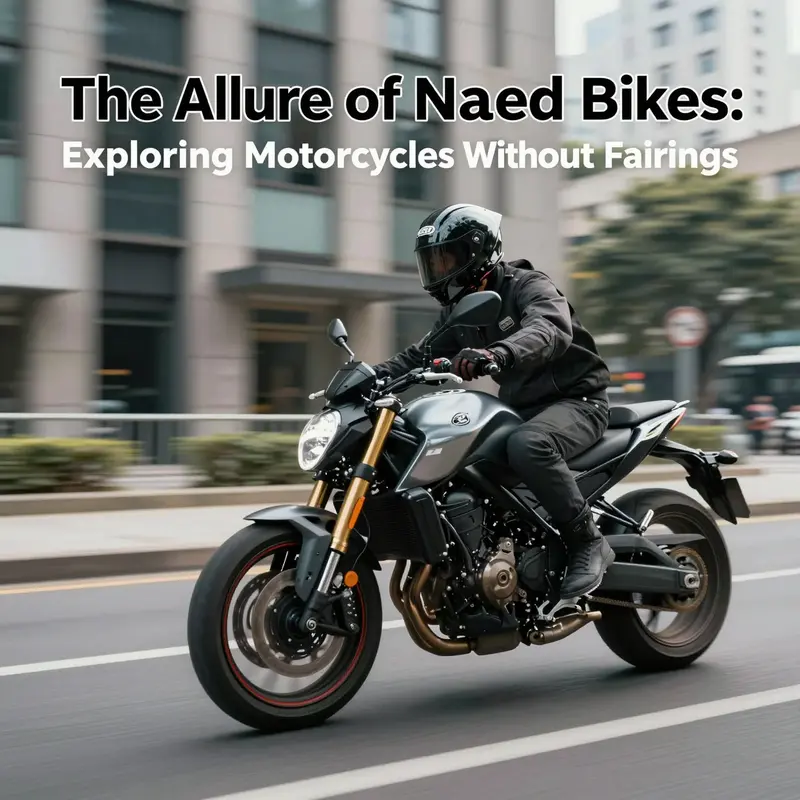
A motorcycle without fairings invites a purer, more tactile dialogue with the machine. The absence of sculpted plastic and aluminum armor exposes the engine, frame, and exhaust as more than components; they become the visible heartbeat of the bike. In this stripped-down form, the motorcycle invites a direct, almost intimate connection between rider, suspension, and tires. The riding position tends to be upright or lightly leaned forward, with weight more evenly distributed and a center of gravity that can feel more compact than on heavily canted, fully clothed rivals. This simplicity translates into a distinct kind of agility: lean angles become more predictable, changes of direction feel immediate, and the rider’s inputs through the bars translate to swift, confident responses from the chassis. The result is a motorcycle that rewards precision, corner work, and the kind of quick transitions that urban streets and twisting backroads demand. It is a design philosophy built not on protecting the rider from air but on strengthening the rider’s relationship with the bike’s mechanical core.
In practice, the naked bike’s lightweight ethos is felt across a spectrum of riding scenarios. In crowded city streets, the lack of additional mass from bodywork means the motorcycle feels lighter on its feet. Steering becomes almost surgical in its immediacy, and the bike’s footprint, narrower in profile and simpler in silhouette, slices through traffic with a nimble confidence that many riders come to rely on for daily commutes and spirited rides alike. The balance of weight between the front wheel and the rear becomes clearer to the rider, which translates to more intuitive feedback through the handlebars when negotiating tight corners or avoiding sudden obstacles. The upright stance returns a wide field of view, aiding lane position and hazard detection, an attribute those who navigate urban grids frequently prize. When the road opens and speed increases, the same simplicity that enhances maneuverability can begin to present its own set of challenges, and the rider’s discipline becomes the fulcrum of performance.
A central advantage of this bare-bones approach is the lightweight construction that accompanies the absence of fairings. With less mass to propel and less panelwork to carry, naked bikes tend to respond more briskly to throttle input and have a natural tendency toward crisp, communicative steering. The chassis is free from the subtle drag-inducing effects that broader, more aerodynamically contoured shells can impose. In twisty asphalt, the combination of a compact riding position, lower inertial mass, and direct engine feedback creates a sensation of immediacy: you can alter line on a dime, adjust your lean angle with a degree of confidence that comes from feeling the frame settle and the tires seek grip under you. This immediacy is not merely about speed; it is about a moment-to-moment sense of control that makes technical roads feel almost curated for those who relish precision and finesse.
Yet this clarity comes with trade-offs that mirror the naked bike’s ethos. The most conspicuous compromise is wind exposure. Without fairings to deflect air, the rider contends with a more direct wind blast at moderate and high speeds. The result is a wind pressure that can translate into fatigue over longer distances, particularly on highways or sustained high-speed cruising. The absence of aerodynamics means more energy is spent maintaining stability against the wind, and that effort compounds over time if the ride stretches into hours rather than minutes. The air that rushes past the rider also carries more noise and turbulence, which can alter comfort levels and make long rides feel more strenuous. Even with a well-balanced chassis and a forgiving seat, the rider’s torso and shoulders brace against the year-round push of air, a sensation that, for some, becomes a defining characteristic of the naked-bike experience.
Stability at speed is another nuanced chapter in the naked-bike story. Aerodynamic aids do more than reduce drag; they contribute to the bike’s stability by shaping the air flow around the motorcycle. Without them, the craft relies more heavily on structural rigidity, suspension damping, and tire contact patches to maintain composure in gusty crosswinds or when riding through uneven pavement. The resulting stability profile can be exquisitely direct at moderate speeds, yet at highway velocities the rider may feel the wind’s influence more keenly. It is here that experience matters: an adept rider learns to anticipate gusts, adjust posture, and modulate throttle to keep the chassis balanced. In contrast, riders who prioritize long-distance coverage often gravitate toward the added protection and stability that fairings can provide, especially when weather, highway speeds, and fatigue converge.
Maintenance and accessibility form another dimension of the naked bike appeal. With minimal bodywork, the engine and components are easier to reach for inspection, service, and quick maintenance tasks. The absence of panels removes several layers of closure between the rider and the mechanical heart, making routine checks—oil level, chain tension, cooling system access—less of a scavenger hunt. This transparency is not just functional; it is instructional. Riders who want to understand their machine intimately tend to appreciate how the engine breathes, how heat dissipates, and how a subtle adjustment in the suspension or tire pressure translates into a tangible difference in feel and performance. That intimacy, in turn, deepens the rider’s confidence and fosters a sense of ownership that is less common on forged machines with more extensive protective skin. It is a practical benefit, but it also aligns with the ethos of riding as a craft rather than a consumer experience.
However, naked bikes carry a level of vulnerability that more’s the pity deflectors and fairings help manage. Exposed engine components, exhaust headers, and fragile hardware become more susceptible to road debris, weather, and stone chips. The rider who chooses this path often accepts a higher likelihood of cosmetic wear and the need for more frequent cleaning and protection of engine cases and pipes. The same exposure that grants such tactile, direct access to the bike also increases the risk of damage in less-than-ideal conditions. Some riders, recognizing this, tailor their riding style to suit the environment and time of year, benefitting from the bike’s lightness and agility in dry, clean road conditions but adopting more cautious routes when grit and spray are in play.
From an aerodynamic standpoint, the naked-bike philosophy is less about conquering air and more about embracing the balance between drag, weight, and rider input. In a fairing-equipped machine, wind tunnel wisdom often yields a compromise where top speed, fuel economy, and stability can be optimized across a broader performance envelope. Naked bikes, striving for agility, forgo much of this optimizing hardware, focusing instead on the chassis’s precision and the rider’s ability to extract performance through technique and timing. The result is a bike that often excels in rapid corner exits, quick direction changes, and presentations of speed in more intimate slices of the road. It is a performance narrative rooted in contact with the asphalt and the rider’s willingness to interpret feedback from the front wheel and the throttle with subtlety and rhythm.
Aesthetics, too, informs the performance and handling conversation, shaping rider expectations and the way a bike is perceived as a tool for speed versus a statement of style. The exposed engine and frame present an industrial, almost sculptural clarity—lights, gauges, and exhausts appear as integral parts of a living, working system rather than decorative accessories. For many riders, this honest, minimalist look reinforces the sense that they are riding a machine built for action, not for concealment. The allure lies in the sense of authenticity: the bike communicates through sound, vibration, and feedback rather than through glossy fairing work or aerodynamic bells and whistles. The rider’s senses become the primary instruments of judgment, with wind, heat, vibration, and tire grip providing constant, real-time data about performance. In this light, the naked bike is not simply a vehicle; it is a platform for a direct, unfussy engagement with speed, control, and road texture.
Among riders who crave a particular kind of purity—where performance is earned through rider skill rather than through aerodynamic assistance—the naked format can feel revelatory. It rewards crisp, clean riding lines and a disciplined throttle hand. It invites experimentation: braking early for a corner, loading the suspension progressively, and choosing mid corner exit speed to coax maximum grip from the tire. The result is a riding experience that can feel highly responsive and thoroughly immersive, especially on winding back roads where the absence of drag aids contact between tire and tarmac. In this space, performance is less about chasing peak horsepower at redline and more about harnessing the machine’s lightness, balance, and the rider’s own sensitivity to weight transfer and steering input. The sum of these parts is a category that values immediacy, honesty, and a direct line from rider intention to road reaction.
For readers weighing the choice between naked and faired configurations, the decision often boils down to riding goals and climate. If the aim is tight, technical steering, quick urban commutes, and a raw mechanical connection that feels almost artisanal, the naked bike’s virtues shine clearly. If, instead, the priority is long-distance comfort, high-speed stability, and shielded wind interaction that reduces fatigue, a fairing-equipped machine may better align with those needs. It is not a matter of one being universally superior; rather, each form unlocks a different spectrum of capabilities and demands a distinct riding discipline. The naked bike teaches riders to read the road with their hands and hips as much as their eyes, to anticipate and adjust a chassis that favors immediacy over inertia, and to revel in the tactile drama of a machine that wears its heart on its sleeve.
As you explore the broader landscape of aerodynamic choices, you can find related discussions that highlight how riders perceive the trade-offs between exposure and protection. A useful reference for understanding these dynamics is a reputable comparison of naked bikes versus faired motorcycles, which delves into performance, handling, and rider comfort across contexts. For additional reading on the design and performance implications of motorcycles without fairings, you can explore detailed technical insights from a reputable source: Motorcycle Without Fairings: Pros and Cons. And for navigational context toward related parts and accessories, you may also consider visiting the Honda fairings category page. This internal link serves as a practical pointer to how fairings can influence a bike’s behavior when present, offering a tangible counterpoint to the naked-inspired riding experience.
Ultimately, the choice to ride a naked bike is a statement about priorities: a crave for directness, a preference for lightweight responsiveness, and a willingness to accept wind and weather as constants of the journey. The absence of fairings does not deny the machine its capability; it reframes performance as a conversation between rider and road, a dialogue conducted in real time through the handlebars, the seat, and the tire’s contact patch. The result is a riding experience that is at once unadorned and electrifying—a reminder that speed, control, and connection do not always require the protection of aerodynamic skin, but rather a meticulous balance between chassis design, rider technique, and the road’s ever-shifting truth. For riders who seek that direct line to the essence of riding, naked motorcycles offer a captivating, energizing channel to pursue pace with precision.
External resource: For a broader comparison and deeper analysis of naked versus faired motorcycles, see this external resource: https://www.motorcycle.com/2026/03/naked-bikes-vs-faired-motorcycles-performance-and-handling-considerations/.
The Ledger of the Naked Rider: Economic Winds Shaping Motorcycles Without Fairings
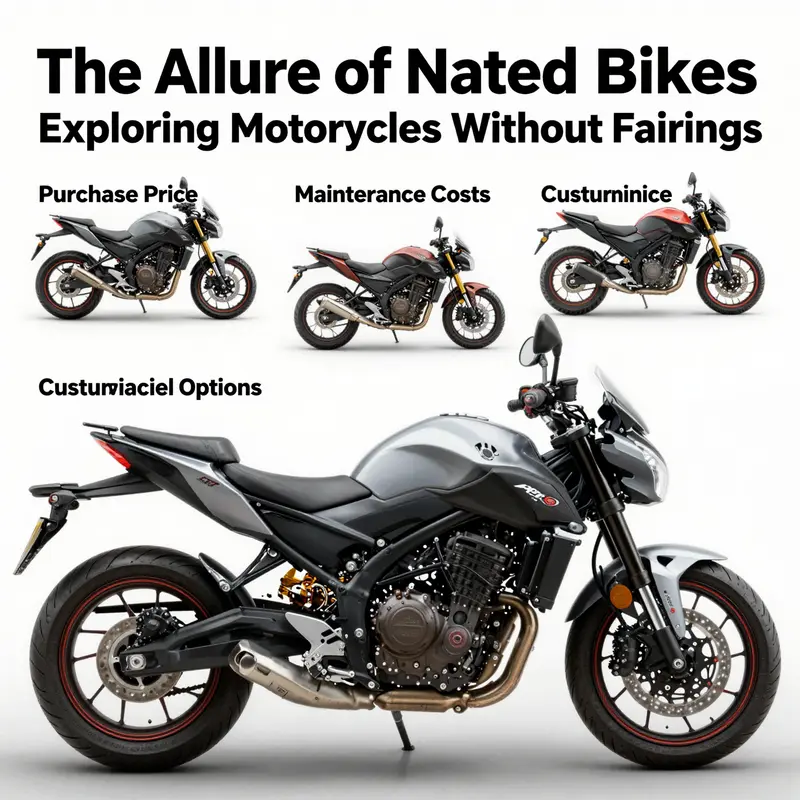
The naked bike, with its exposed core and minimal skin, has always invited a particular kind of rider: one who values simplicity, tactile feedback, and a direct line to the mechanical heart of the machine. Yet the appeal of a stripped-down silhouette does not exist in a vacuum. In markets where the cost of living climbs and borrowing costs rise, the economics surrounding any motorcycle—let alone a model that forgoes the protective and aerodynamic cover of fairings—takes on a sharper, more consequential edge. This chapter looks beyond aesthetics to reveal how macroeconomic forces ripple through the naked bike segment, shaping who buys, what they expect to pay, and how manufacturers respond when the balance sheet becomes a louder voice in the showroom than the brochure’s performance metrics. It is a narrative of price, risk, value, and the stubborn practicality that drives a subset of riders toward a form that is lean by design and pragmatic in its implications for daily life and long-term ownership.
Rising costs ripple through every turn of the purchase cycle. When the cost of living moves upward, households tighten. The same pressure that makes a weekly grocery shop more expensive also tightens the budget for leisure gear like motorcycles. Financing sits at the center of this squeeze. Higher interest rates translate into higher monthly payments for new machines, and even the most affordable models grow comparatively dear when the total cost of ownership is mapped across years of use. The effect is not merely a smaller number on a price tag; it is a changed calculation that values not just the upfront outlay but the cumulative cost of maintenance, insurance, taxes, and the inevitable accessories that riders accumulate. In such moments, buyers gravitate toward options that promise enduring value, reliability, and a lower friction pathway to ownership. Naked bikes, with their simpler construction and fewer moving parts hidden behind a panel line, frequently align with that mindset. The absence of fairings reduces the expense tied to bodywork and the risk of expensive cosmetic repairs after a tip or a slide. It also lowers the risk of hidden repair costs, where a damaged fairing might unlock a cascade of panel replacements, wiring harness checks, and paint work. For many, the logical conclusion is a bike that behaves well in urban and mixed-use settings, has predictable maintenance intervals, and can be kept riding without the premium often attached to more sophisticated, fairing-laden machines.
But the economic story of naked bikes is not only about the sticker price. It is about the market’s broader health. The 2025 motorcycle market, like many sectors, is in a transitory phase marked by uncertainty and tighter borrowing costs. When dealers and distributors signal a market in retreat, both brand-new models and the second-hand pool adjust in response. For naked bikes, the effect is pronounced in two ways. First, there is a shift toward models that emphasize value rather than glossy spec sheets. Second, there is a subtle pressure to trim production complexity. If inflation tightens margins across the supply chain, a factory may choose to simplify lines, reduce option packages, or favor components that minimize upfront material costs. The naked bike’s very essence—a stripped shell, a clean silhouette, a machine that invites rider customization—readily adapts to such a shift. The same economy that tempts buyers with lower initial outlays also invites manufacturers to lean into pragmatic engineering choices: simpler chassis setups, more accessible service procedures, and a platform that can be produced with leaner, less expensive tooling. This is not a retreat from performance; it is a recalibration of how performance is packaged given an environment where every line item on a bill of materials matters more than before.
The production cost dynamics that accompany inflation likewise reshape the supply landscape. Inflation touches every corner of manufacturing—from raw materials to components, from logistics to labor. When these costs rise, the pressure to protect margins becomes acute. For naked bikes, the absence of fairings is one lever a manufacturer can pull without compromising core performance or rider safety. Fewer panels mean less material to purchase, less paint to apply, and a simpler assembly process. The net effect can be a lower baseline price point or improved cost resilience in the face of fluctuating input costs. However, cost discipline does not occur in a vacuum. As companies seek to balance price with quality, they must also consider how the naked form is perceived by buyers who are watching every dollar. The result is a delicate tension: offer a product that remains attractive on the showroom floor while not eroding the long-term perception of value through perceived cheapness or compromised durability.
Consumer priorities shift under economic pressure in ways that align surprisingly well with the naked bike ethos. When people are constrained by budgets, practicality rises in importance. A motorcycle that is easy to inspect, easy to service, and economical to operate becomes more appealing. The exposed engine and lack of costly bodywork reveal a straightforward design philosophy: what you see is what you ride, and what you ride is what you own. The absence of fairings also means fewer potential points of impact in a collision with the object world, which, from a risk budgeting perspective, translates into a different kind of financial calculus about insurance premiums and repair costs over time. The rider who prioritizes simplicity often values the straightforward maintenance schedule that comes with a minimal body plan. There is texture to this preference: it is not a denial of complexity but a measured approach to complexity, where the rider respects the idea that fewer panels mean fewer separate failures, easier access to the vital organs of the machine, and a workflow that remains intelligible long after the first maintenance interval has passed.
In urban settings, where the daily commute and the occasional weekend escape intersect, the naked bike becomes a practical instrument of mobility. The rider experiences a direct line of sight to the engine, the exhaust rhythm, and the mechanical heartbeat that underpins the ride. This transparency is not simply aesthetic; it becomes a form of cost-of-ownership transparency. When a rider can identify a potential issue at the source—a fuel line, a sensor, a valve—all of a sudden the maintenance scenario feels within reach. The absence of fairings does not create a void; it creates a kind of economic clarity. There is a tangible relationship between form and function, where the rider understands that the simplest package can deliver the most predictable service life. The practical, daily utility of a naked bike—its upright seating, balanced weight distribution, and easy maneuvering—also plays into the budget narrative. In traffic-dense cities, this design translates into lower fatigue, more precise handling, and the kind of ergonomic advantage that reduces the intangible but real costs of the ride: time, comfort, and the willingness to ride rather than abandon the plan because a long shift of highway miles becomes a trial.
From the perspective of the aftermarket and the consumer surface, the economy nudges buyers toward a particular path of customization and ownership. When buyers seek value, they often turn to bikes that can be upgraded gradually rather than those that require a fat upfront investment to access higher performance or a modern aesthetic. The naked category is well suited to that long-tail approach. Its minimalism invites a language of personalization that does not hinge on extravagant fairing kits or boutique exhaust systems. A rider can begin with a clean, lean platform and build toward a distinctive, personal machine over time, adding light modifications that suit the budget as it evolves. This market behavior is not merely a consumer preference; it is a response to the constraints and opportunities that come with economic uncertainty. It signals a readiness to invest in the riding experience in measured steps, rather than to chase a single, all-encompassing upgrade cycle.
For readers curious about how fairings influence price, coverage, and customization options—even when a bike starts out without them—the market reality is instructive. A fairing’s absence highlights the base package’s value proposition while also underscoring the potential tradeoffs in aerodynamics, wind protection, and comfort on longer rides. The economics of maintenance and repair become more transparent when there is less inert mass to project costs outward. At the same time, the potential buyer can still imagine the path to a more protected configuration, if ever desired, by exploring aftermarket routes that align with budget and intent. A single, well-considered decision about buying a naked bike can cascade into broader choices about how to tailor the machine for urban daily use, weekend carving, and everything in between. As the market shifts and the economy tests new equilibria, the naked bike occupies a unique niche: a vehicle that embodies value through simplicity, reliability through straightforward design, and freedom through a lack of ornate, costly panels that can complicate budgeting and maintenance alike.
Within this economic frame, decision-making becomes less about chasing the latest graphic and more about the predictability of ownership. Consumers assess depreciation, resale value, and the durability of the core mechanicals, while also weighing the practical realities of commuting, storage, and insurance. The naked bike, when viewed through this lens, emerges as a tool for rational mobility. It offers the potential for lower initial outlay in some markets, stable maintenance routines, and a long-term adaptability that can accommodate shifts in lifestyle and finances. The broader industry response to macroeconomic stress is likely to favor models that satisfy those core preferences while continuing to deliver the essence of excitement and engagement that nudges riders toward two wheels in the first place.
For those who wish to explore how the design language of minimalism translates to value, the browsing experience around fairing options can be informative. Some riders still imagine future upgrades or variations that might bring a touch of aerodynamic refinement without sacrificing the core profit-and-value equation. A practical path is to examine the spectrum of aftermarket panels and accessories that could be considered should the rider wish to alter wind exposure gradually rather than in one all-encompassing transformation. In this sense, the naked bike remains a living platform, capable of growing with the rider’s budget, ambitions, and tolerance for wind in the face during highway miles. The economic backdrop thus does not merely constrain; it guides a trajectory toward a rational, durable, and personally meaningful riding experience.
Engagement with these economic currents is not about surrender to market forces. It is about understanding how a minimalist motorcycle form aligns with a society that increasingly values cost-conscious, practical mobility. The naked bike’s appeal is reinforced when buyers feel that they can rely on the bike to deliver daily transportation with fewer gatekeepers—fewer decisions about panel fit, paint, and complex electronics, and more confidence in core maintenance. In a time when financing conditions tighten and the market contends with volatility, the simplest, most robust package often proves the most enduring. The result is not a passive concession to macro trends but an active alignment with a rider’s budget, a manufacturer’s efficiency goals, and a shared sense of what modern motorcycling can be when form follows function in its most transparent, unadorned shape.
In addition to these price and maintenance considerations, the naked bike’s economy is enriched by its versatility. It serves a diverse spectrum of riders: those who require a compact, affordable option for daily commutes, those who want a low-friction platform for weekend exploration, and new entrants who test the waters of motorcycling with a machine that offers a clear relationship between rider input and machine response. The absence of fairings translates, in a practical sense, into a bike that can be understood and serviced with relative ease, a quality that becomes increasingly valuable as the economic climate pushes buyers toward safer bets and longer ownership cycles. It is a reminder that, sometimes, the most meaningful innovations are not only about performance gains or aesthetic breakthroughs but about constructing a machine that makes economic sense to own, maintain, and enjoy over time. The naked form, by virtue of its simplicity, can be the form that partners best with the realities of modern mobility: a ride that is affordable to acquire, straightforward to maintain, and satisfying in the everyday rhythm of life on two wheels.
For readers who want a tangible sense of how such a reduced, economical footprint plays out in the broader ecosystem of motorcycling, a quick glance at how riders discuss and compare fairings and their absence can be revealing. The conversation is not merely about wind and heat; it is about the lifecycle costs that define a motorcycle’s value proposition. If the market continues to reward straightforward, serviceable engineering, the naked bike may well prosper as a category that simultaneously appeals to newcomers and to veterans who value practical ownership. It is a compelling reminder that economics does not erase passion; it channels it through a prism of affordability, reliability, and real-world utility. The wind, in this case, is not just a force to overcome; it is a signal that the simplest, most honest package can still deliver a rich, engaging riding experience when the rider’s priorities align with the market realities of the moment.
Where this leads in the near future remains a dynamic question. If economic conditions favor restrained investment and measured upgrade cycles, the naked bike could emerge as a durable backbone of urban and transitional riding. It might attract those who prize simplicity as a form of resilience, those who want a job-ready platform that does not demand constant, high-cost modifications. In such a scenario, the bike’s bare chassis becomes a canvas—worthy of customization, affordable to maintain, and capable of delivering consistent, predictable performance across a range of city landscapes and weekend adventures. The chapter on economic factors, then, is not a footnote to a stylistic choice. It is a narrative about how price, risk, and practicality converge to shape a motorcycle category that has always valued clarity over complexity and function over spectacle. It is a reminder that a bike with less skin can still offer a generous sense of freedom when bought, owned, and used with an eye toward value and longevity.
Internal link for readers exploring aftermarket customization paths that might accompany a naked platform is a practical avenue to understand how fairing panels contribute to price and aesthetics in a broader sense. Explore the breadth of component options at the BMW fairings catalog.
External reading to situate these micro-dynamics in the larger economic landscape can broaden understanding of how macro trends influence the motorcycle market as a whole. For a deeper dive into the pros and cons of riding without fairings, see the comprehensive analysis at https://www.bikeradar.com/uk/road/technical-features/motorcycle-without-fairings-pros-and-cons/.
null
null
Final thoughts
Naked bikes encapsulate a unique blend of minimalist design, performance, and cultural significance, appealing to a diverse array of riders. Their economic viability and ease of maintenance further enhance their attractiveness. For business owners in the motorcycle industry, understanding the nuances of motorcycles without fairings can help tailor marketing strategies, product development, and customer engagement. Ultimately, these motorcycles offer a refreshing perspective on riding, inviting both new and experienced riders to experience the road in its purest form.