
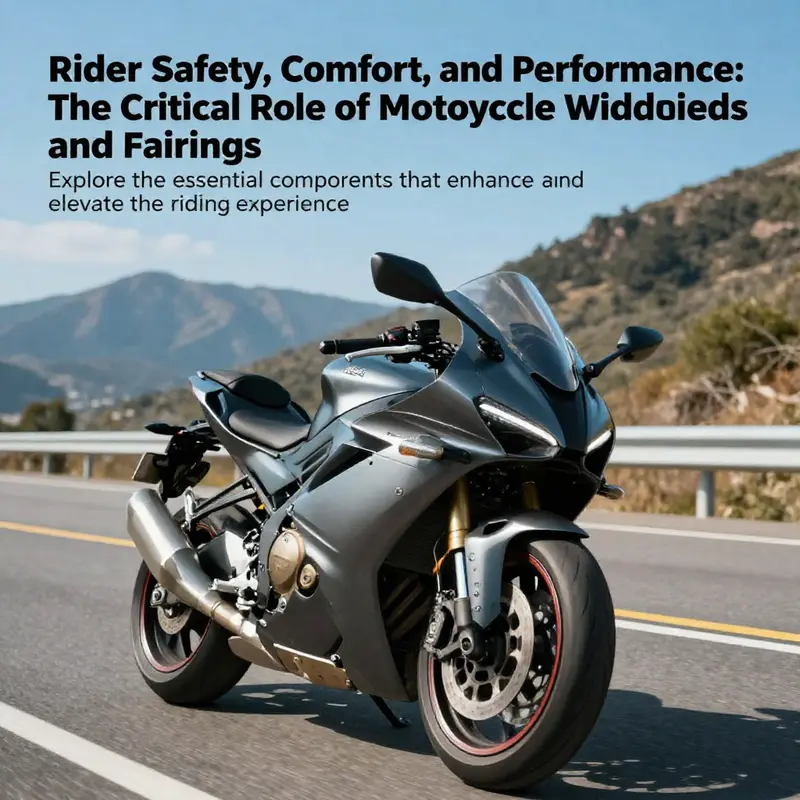
Motorcycle windshields and fairings play a pivotal role in ensuring not just aesthetics but also rider safety and comfort. These components serve as protective barriers that shield riders from adverse weather conditions, while also optimizing the motorcycle’s aerodynamic efficiency. In an era where performance is paramount, understanding the technical specifications behind these parts is crucial for both manufacturers and riders. This article will delve into the importance of motorcycle windshields and fairings for rider safety, providing a technical overview of the materials used, exploring how they impact aerodynamics and performance, and offering best practices for maintenance and installation. By the end, business owners will grasp the significance of investing in high-quality windshields and fairings.
Shielding the Ride: How Windshields and Fairings Shape Safety, Comfort, and Control
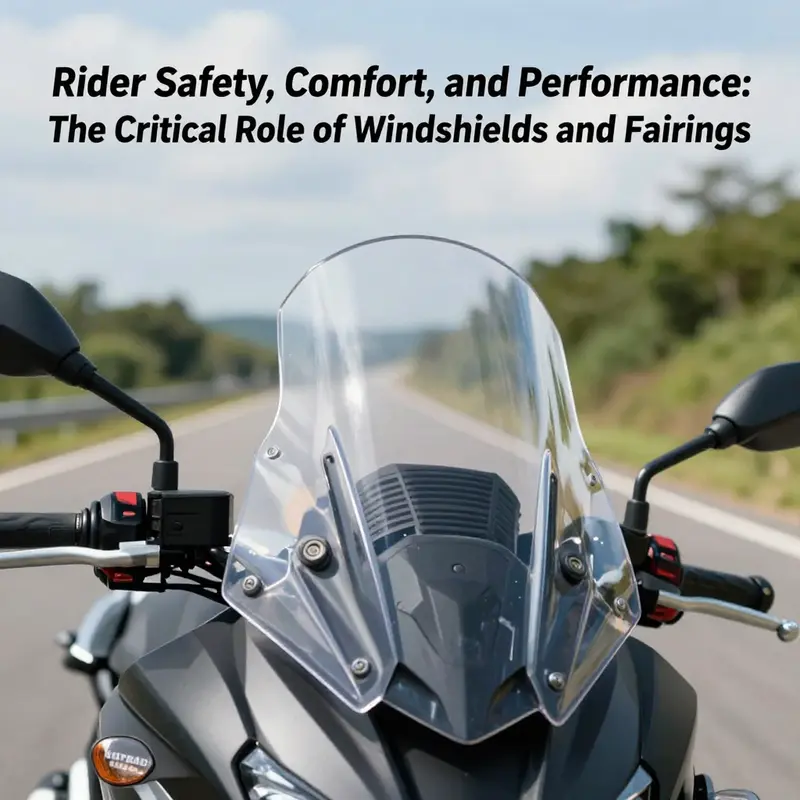
Windshields and fairings are often perceived as the outer skin of a motorcycle, yet their true role runs much deeper. They are dynamic safety systems that interact with rider posture, weather, road texture, and the bike’s own aerodynamics. When designed with intention, they do more than push wind aside; they guide it, dampen its most punishing effects, and sustain a rider’s focus long after the sun has climbed high or the rain has begun to fall. This is not a marketing claim but a practical truth learned by engineers and riders alike. The windshield, usually fashioned from polycarbonate or tempered glass, acts as a shield against wind pressure, rain streaks, dust, and debris that would otherwise assault the face and eyes. The buffeting caused by fast air can push a rider’s helmet up, crease the brow, and create micro-adjustments in steering as the body fights to maintain a stable line. The shield mitigates these forces by deflecting the wind in a smoother, more predictable arc. The impact of this is immediate and tangible: lower windblast at speed reduces fatigue, which in turn helps preserve mental bandwidth for hazard perception and quick reaction. This is crucial on long rides where the mind must stay crisp while the body handles thousands of minor inputs from the road and weather. And it matters most on surfaces where fatigue compounds quickly, such as on open highways, through gusty corridors, or on days when rain mixes with grit and insects to create a fragile, smeared lens that taxes sight lines and attention. The relief offered by a well-calibrated windshield is not mere convenience; it is a safety differential that compounds with longer journeys and varying weather conditions.
The interaction between rider and wind is a dance of trust between the rider’s sensitivity to air pressure and the design of the shield. A properly contoured windshield helps manage airflow around the rider without forcing a rebalancing of posture to compensate for turbulence. In a well-tuned setup, the air splits cleanly off the shield, then negotiates a smoother wake behind the rider, reducing vibrations transmitted through the helmet and torso. This stability matters when a rider must scan a mirror, glance at instruments, or pick a line through a pothole while wind pressure remains a constant backdrop. In harsher conditions—sudden rain, a sandstorm, or a swarm of insects—the windshield becomes a barrier that preserves visibility and concentration, letting the rider keep eyes on the road rather than fighting weather.
Beyond shielding, windshields contribute to aerodynamic stability in more subtle ways. A shield that directs air efficiently reduces drag and minimizes the pull of crosswinds, which can destabilize a rider, especially at high speeds or in gusty terrain. When the airflow is well managed, the bike feels lighter in the hands; the rider experiences steadier steering inputs and a more predictable response to brake and throttle changes. Touring and adventure machines, which often traverse a mix of weather, terrain, and speed, frequently employ larger, adjustable windshields to strike a daily balance between protection and visibility. They may offer height and tilt adjustments, or two-position setups that allow a rider to tailor the wind boundary to personal height, seating position, and cargo load. The goal is not to shrink the wind to zero but to shape it into a friend rather than a foe—an ally that aids endurance and eliminates the kind of micro-fatigue that quiet lanes and long straights can induce when wind forces a rider into a tense, compensatory posture.
Fairings extend the protective envelope from the windshield to the rest of the motorcycle’s body. They do more than streamline appearance; they cradle and redirect the air as it interacts with the rider and mechanical components. A well-designed fairing reduces turbulent pockets that would otherwise reach the rider, guiding airflow to minimize pressure fluctuations around the chest, shoulders, and helmet. The most effective fairings integrate with the windshield to form a cohesive barrier against weather and debris while shaping wake for stability. They also serve a practical role by housing instruments, lighting, and sometimes cooling elements or radiator paths. This integration creates a holistic system in which aesthetics and function reinforce each other. The protective shell becomes a shield for critical controls and indicators, ensuring they remain legible and reliable in a rainstorm or at speed. When a fairing is poorly designed or misaligned, the result can be a whiplash of air across the chest and arms, a nose dive of wind into the visor, or a chorus of creaks and vibrations that distract attention from the road. The difference between a shield that protects and a shield that distracts often comes down to precision in fit, materials, and the subtleties of curvature.
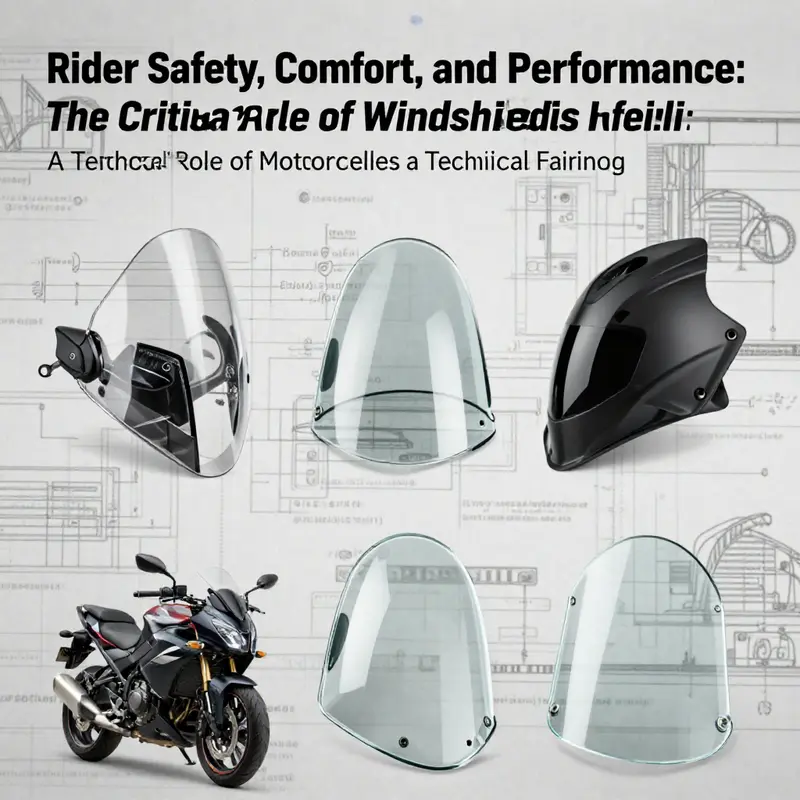
Choosing the right combination of windshield and fairing is about more than blocking wind. It is about integrating materials and form with riding discipline, posture, and climate. The materials themselves carry responsibilities: polycarbonate offers impact resistance and resilience, able to absorb energy without cracking and to shed minor impacts with gentler rebound. Tempered glass, when used, adds a different kind of rigidity and optical clarity, though it demands careful handling due to its vulnerability to impact in certain scenarios. The coating story matters as well. Anti-scratch coatings preserve visibility over many miles, while hydrophobic or anti-fog finishes improve clarity in rain or mist. A shield that fogs or scratches easily is a liability because it forces the rider to repeatedly adjust position, squint through rain, or wipe a surface that should be clear with every move. The choice of thickness, bending radius, and edge finish all contribute to a shield that feels like a natural extension of the rider’s line of sight rather than a barrier to it.
Fit and installation are the operational agents that convert design into safety. A windshield that is mounted with flexible, high-quality fasteners and a robust quick-release system can be adjusted for rider height in minutes, reducing the risk of fighting the setup in the rain. Precisely aligned hardware ensures that the shield remains in the intended plane under wind load, preventing flutter or sudden movement that would otherwise disrupt vision or weaponize unintended air currents against the rider. The fairing’s fit is equally critical. Gaps, misalignments, or a skewed approach can generate a chaotic wake that grows at speed and translates into vibration across the rider’s torso. It is not enough to select a well-made shield or a capable fairing; the entire mounting system must be compatible with the motorcycle’s frame geometry, the rider’s seating posture, and the typical loads encountered on the road. This is the practical reason why professional installation matters. When a shield is not torqued to spec or when a fairing is flexing at speed, the rider pays with fatigue, reduced visibility, and compromised control.
Maintenance is the ongoing partner to design. Regular inspection for cracks, scratches, and edge integrity helps maintain protective performance. A tiny gouge can become a crack under the cumulative stress of vibrations and temperature cycles. Cleaning must be conducted with nonabrasive, non-ammonia-based products to avoid degrading coatings or edge treatments. Simple checks, such as verifying that mounting points hold alignment and that hardware remains snug, can prevent micro-movements that escalate into flutter or rattling. In addition to physical upkeep, riders should monitor for UV degradation in plastic elements, which can embrittle over time and reduce energy absorption or clarity. A well-kept shield and fairing system contributes to a consistent ride quality that remains predictable across seasons and miles. The cumulative effect of good materials, precise geometry, and dependable maintenance is safety that feels almost invisible because the rider simply experiences less wind, less noise, and fewer interruptions to perception and judgement.
The conversation around windshields and fairings also touches the broader engineering discipline of balancing performance with practicality. In the 550cc class and similar segments that value nimble handling and reliability, riders rely on carefully engineered shields that do not overly complicate handling or add unnecessary mass. Aerodynamic efficiency, rather than sheer bulk, often becomes the guiding principle. A clean, efficient ambient flow around the rider reduces the energy cost of riding and supports better control, which translates to safer responses in cornering, braking, and sudden lane changes. The fairing’s form must complement the chassis; a well-integrated assembly does not fight the rider when shifting weight or changing line through curves. Instead, it becomes part of the feedback loop that informs the rider about wind, air pressure, and visibility in a way that enhances decision making rather than complicating it. As the riding environment changes—day into night, dry into rain, calm into gusting wind—these components respond by preserving a steady baseline of safety and comfort. When they do this well, they empower riders to make more precise choices, whether they are negotiating a rapid switchback or settling into a steady highway rhythm for hours on end.
For riders who seek to tailor this protective envelope, aftermarket options provide a spectrum of choices. A carefully chosen aftermarket shield and compatible fairing can be sized, tuned, and adjusted to align with a rider’s height, seating position, and preferred wind exposure. In this process, the relationship between rider and machine becomes more intimate and more responsive. This is not about chasing a single solution but about achieving a personal equilibrium where protection, visibility, and control all align with the rider’s goals. The concept of a modular approach—where the windshield can be swapped for height adjustments, or the fairing can be reconfigured for improved airflow—becomes not a luxury but a practical strategy for riders who spend long hours in varied conditions. The ability to dial in that balance, with predictable outcomes and repeatable setups, is what separates a shield that merely shields from one that supports reliable, confident riding.
In this larger ecosystem, the design mission is to deliver protection without imposing a penalty on handling, sightlines, or comfort. The shields and fairings should merge with the rider’s natural posture and the bike’s geometry, so that wind resistance becomes a predictable, manageable factor rather than an uncontrollable variable. The ultimate test of success lies in everyday riding: clean, clear visibility in a sudden downpour; reduced fatigue after hours in the saddle; the quiet confidence of knowing that the air around the rider has been shaped rather than fought. When these elements come together, the rider can focus on the road ahead, reading it with the same clarity that a shield maintains on the visor. The result is not merely a more comfortable ride but a safer one, because the rider is less distracted, less fatigued, and more capable of perceiving and reacting to hazards as they arise.
For readers exploring the practical side of safety in this domain, a good starting point is to consider the entire windshield and fairing system as a single, living interface between rider and road. The right materials, correct curvature, secure mounting, and thoughtful integration determine how well the system serves at speed, in weather, and across the miles that separate one journey from the next. A well-considered setup can increase confidence in overtaking, lane changes, and highway cruising, while a poorly matched configuration can introduce turbulence, increased fatigue, and diminished visibility. The chapter that follows will build on this foundation, examining how design choices intersect with daily riding realities, and how riders can approach upgrades and maintenance with a balanced plan that protects both safety and enjoyment. For now, the core message remains clear: windshields and fairings are not merely cosmetic upgrades. They are active safety systems, shaping how riders perceive, respond to, and survive the road environment over time.
External reference: For a deeper dive into the engineering behind windshields and fairings, see the official safety features page from the manufacturer’s technical site. https://www.bmw-motorrad.com/en/technical-data/protective-equipment.html
Internal resource: If you are exploring aftermarket fairings for a specific motorcycle, you may find options described in categories such as this: fairings-for-bmw-s1000rr. This section illustrates how a single URL can anchor a broader conversation about fit, style, and function without losing sight of rider safety as the central aim.
null
null
Bending the Wind: The Aerodynamic Art of Windshields and Fairings in Modern Motorcycling
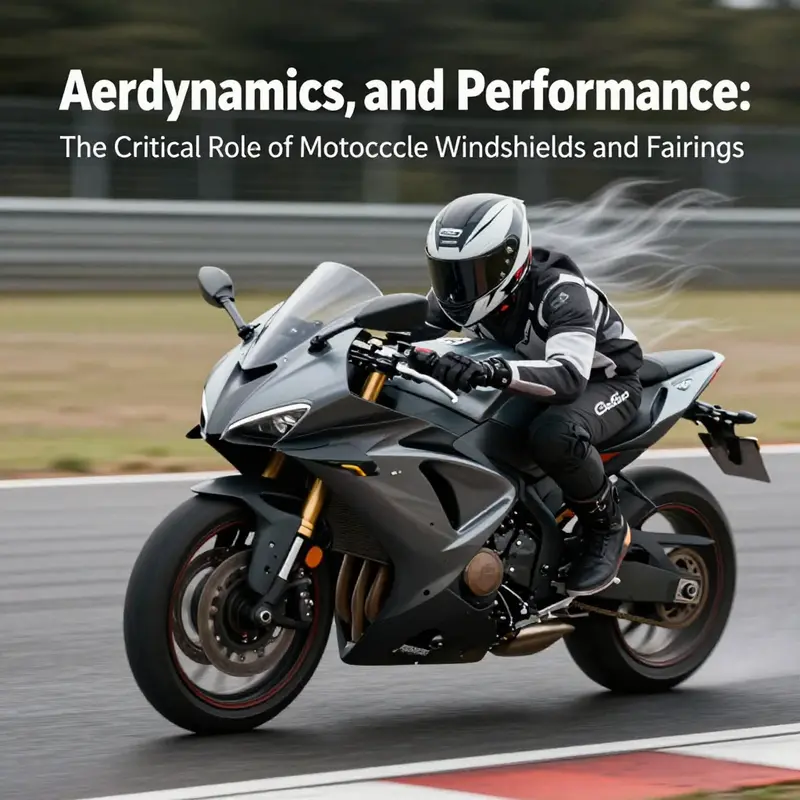
Wind is not merely a weather condition for motorcycle riders; it is a physics partner that can either amplify effort or smooth the ride. The windshield and the surrounding fairing work together as a tuned airframe, guiding air around the rider and the machine with a precision that blends comfort, safety, and performance. This is not a story of cosmetic upgrades, but a careful negotiation with air that reshapes the rider’s experience. Materials such as impact-resistant polymers and carefully tempered glass form the first line of defense, protecting the rider from wind pressure, rain, and debris while maintaining visibility. But the true choreography happens as air meets form. A shielded rider encounters less buffeting, finds the wind’s pressure curl away from the neck and shoulders, and experiences a calmer cockpit where body fatigue decays and focus sharpens. In a landscape where riders traverse long distances or chase high-speed laps, the aerodynamics of windshields and fairings become a deciding factor in endurance, handling, and even fuel efficiency. The acceleration of comfort is not a lucky byproduct but a deliberate outcome of engineering that treats air as an active, measurable element of performance.
Aerodynamic efficiency begins with sophisticated shapes born from computational fluid dynamics and wind tunnel studies. The modern windshield is not merely a flat pane; it is a carefully contoured surface that interacts with the rider’s silhouette and the bike’s profile. The goal is to redirect airflow upward and over the rider, reducing drag and minimizing turbulence behind the rider’s helmet. When the airflow detaches cleanly from the surface, wind noise drops and the rider can maintain a steady line of vision and concentration. In sportier configurations, the fairing extends to the sides and integrates smoothly with the windscreen to sculpt a predictable, stable pocket of air around the rider. This is crucial at highway speeds and during aggressive cornering, where errant gusts can otherwise destabilize posture and line. The shaping process is iterative, a dialogue between form and function that seeks to minimize drag without compromising visibility or access to controls. The result is not a single magic shape but a family of forms tuned to riding style, height, and the motorcycle’s geometry.
In practice, a touring-oriented setup favors a taller, wider shield that interrupts direct wind impact at the chest and helmet, creating a sheltered cocoon that supports longer days in the saddle. The deflected air lowers fatigue, which translates into better posture, more precise steering input, and longer attention spans when navigating complex traffic or open-road stretches. For riders who spend hours on the highway, this translates into more comfortable top-speed cruising and less need to fight the wind’s onslaught. Yet the same principles apply to sport bikes and mid-displacement platforms, where a well-designed shield reduces turbulence and helmet buffeting, allowing riders to focus on precision and throttle control rather than fighting a chaotic air column. It is a subtle but meaningful shift: the machine’s aerodynamics become an extension of the rider’s intent, translating muscle memory into cleaner lines and steadier control.
The fairing’s role extends beyond air management. It works in concert with the windshield to influence the bike’s overall stability, engine cooling, and even lighting integration. When air streams around the bike with intention, it helps to keep the engine temperatures within a safe band by promoting a steady, attached flow across radiators and cylinders. A well-integrated fairing can also house instruments and lights in ways that minimize wind disturbance to the rider’s eyesight and the dimming of glare. The objective is a cohesive skin that reduces drag penalties, enhances aeration for cooling, and preserves a clean, aggressive silhouette that still serves practical needs. This fusion of aesthetics and engineering is particularly important for high-performance or mid-power motorcycles where every vent and panel is optimized for a courteous compromise between speed, protection, and temperature management.
The interplay of wind and rider is also a matter of sound. Wind noise, while seemingly a minor irritant, becomes a cognitive load that can fatigue the rider’s ears and concentration. A high-quality windshield and carefully shaped fairing reduce wind-induced turbulence behind the surface and smooth the cushion of air that reaches the rider’s helmet. A quieter cockpit improves situational awareness, enabling better communication with riding partners, clearer hearing of road sounds, and, crucially, quicker reaction times in hazardous scenarios. The most successful designs do not merely lower volume; they restructure acoustics by shaping the path of air so that it bypasses the rider’s ears with less shock, creating a more composed auditory environment for safer riding.
From a safety standpoint, the integration of windshields and fairings into the overall chassis geometry embodies a forward-thinking approach to protection. Aerodynamic design has downstream effects on stability and control. Buffeting—a chaotic wake that can rear up behind a rider’s head at certain speeds or yaw angles—can destabilize posture and alter the intended steering input. By smoothing the airflow, designers minimize buffeting, keeping the rider comfortably planted and more responsive to steering cues. In performance contexts, this stability is essential for maintaining cornering lines at lean angles where sudden crosswinds could escalate into a loss of traction. The aerodynamic package thus becomes a safety feature in its own right, protecting both rider and machine by preserving predictable handling under varying wind conditions.
Material choices for windshields and fairings further shape performance and daily practicality. Polycarbonate, for instance, offers outstanding impact resistance and lightness, qualities that matter when a gust or pebble threatens the shield or a rider experiences a mishap. Tempered glass brings scratch resistance and clarity advantages but must be handled with care given its rigidity and weight. Coatings and laminates are common enhancements, providing UV protection, anti-fog properties, and improved scratch resistance. The choice between a clear shield and a lightly tinted one is more than aesthetics; it’s about maintaining visibility in diverse lighting while ensuring the surface remains reliable across temperature swings and road debris. The durability of the mounting system and the bond between the shield, fairing, and frame is equally important. A shield that shifts under load or a fairing that cracks at high speeds undermines aerodynamic integrity as surely as a poor shape would.
Designing an aerodynamic package means acknowledging rider variability. Height, torso length, seat position, and riding posture all affect how air interacts with the body. An otherwise well-formed shield can feel optimal for one rider and overly constraining for another if it fails to account for the rider’s line of sight and helmet profile. Adjustable windshields and modular fairings address this diversity, letting riders tailor the airflow to their needs. The result is a more personalized sense of control and comfort, a subtle but pervasive gain in confidence that translates into better riding decisions, smoother throttle application, and steadier braking under varied conditions. This adaptive approach also acknowledges the realities of multi-condition use—wind at speed, rain, or heat—and the rider’s desire to preserve performance across a broad range of scenarios.
The practical implications extend into the realm of maintenance and installation. A windshield and fairing system that is easy to install, adjust, and service reduces downtime and ensures that the aerodynamic benefits remain active. Misalignment or looseness not only diminishes performance but also invites vibration, glare, and potential safety risks. Regular inspection of mounting points, fasteners, and seal integrity helps sustain the aerodynamic performance that the design promises. Likewise, choosing materials and finishes that resist yellowing, hazing, or lacquer peel keeps the shield clear and the airflow predictable over time. In sum, the aerodynamic advantage is only as reliable as the system’s physical integrity and its ongoing care.
For riders who lean toward customization, the catalog of fairings and windshields is a reminder that performance and personality can coexist. The aesthetic of a machine—the way panels sweep toward the air, the crisp line where shield meets fairing, the light interaction with the surface—contributes to a rider’s sense of empowerment. A well-tailored aerodynamic kit does not erase the rider’s identity; it elevates it by reducing the friction between rider intent and road reality. In practical terms, it means faster confidence when lines tighten, smoother transitions at corner entry, and a steadier sense of acceleration and deceleration all the way through the rev range.
As with any advanced engineering, there is no one-size-fits-all solution. The best designs emerge from understanding the specific motorcycle geometry, the rider’s physiology, and the typical riding envelope. A robust chassis, a well-integrated aerodynamics package, and thoughtful materials deliver a compound benefit: riders experience less fatigue, more consistent handling, and a cockpit that feels engineered for their goals, whether they are carving canyon roads, touring across the country, or chasing lap times on a track. The windshields and fairings thus become not just protective shells but active contributors to comfort, control, and confidence on every mile traveled.
For those exploring upgrades or new builds, a prudent approach combines performance testing with rider feedback. Even small changes in airfoil contour, shield height, or fairing angle can ripple through the rider’s interaction with the air, altering everything from helmet level noise to the rate of heat transfer from the bike’s core to the rider’s torso. The conversation between air and machine is ongoing, a living aspect of motorcycle design that evolves with materials science, computational methods, and rider experience. In this light, windshields and fairings are less about trend and more about an enduring principle: if air is treated as a partner rather than an adversary, the riding experience becomes more fluid, accurate, and rewarding. This is the aerodynamics of everyday riding—an invisible framework that lets humans ride with greater ease and intention.
To connect the technical with the tangible, consider how such a framework informs the decisions of riders seeking a balance between performance and practicality. A practical rider might prioritize an adjustable shield that can shift in response to changing weather or load, maintaining comfort without sacrificing visibility. A performance-focused rider may favor a shield that preserves clean airflow across high-speed regimes while still accommodating rapid, precise steering. In both cases, the design language remains consistent: wind and surface work together, not against each other, and the rider’s experience is enhanced by a measured harmony of air, protection, and machine precision. Acknowledge the aerodynamic realities, and the ride becomes more than the sum of its parts. It becomes a deliberate partnership with wind, one that rewards attention to detail, careful selection, and ongoing tuning.
Internal link for further exploration: BMW fairings.
External resource: Motorcycle Windshield Design: How Aerodynamics Enhance Rider Comfort. https://www.motorcyclistmagazine.com/features/aerodynamics-motorcycle-windshields/
Balance, Clarity, and Armor: Mastering Maintenance and Installation of Windshields and Fairings on Modern Motorcycles
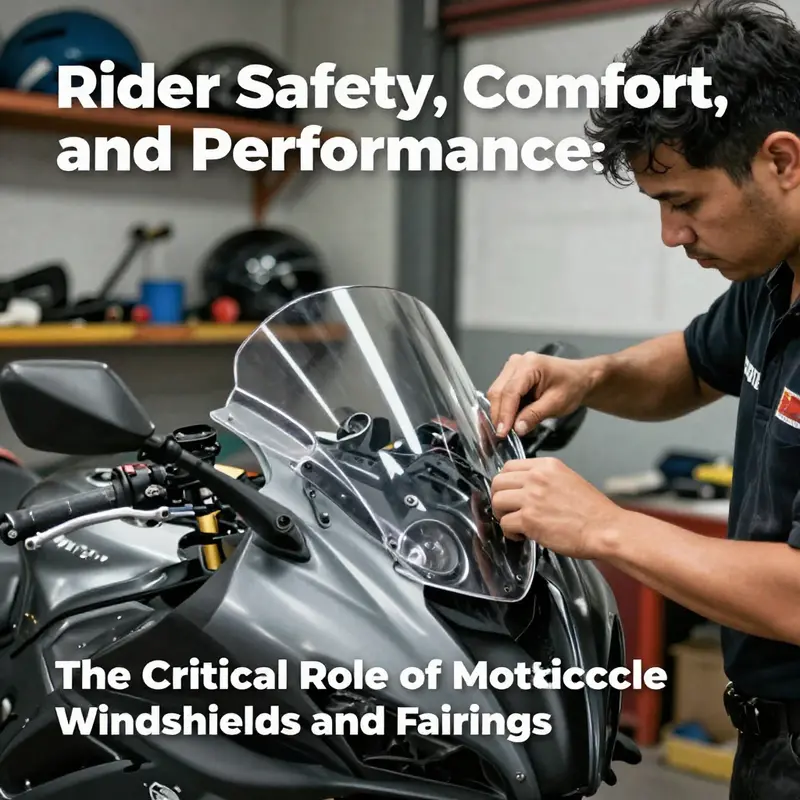
Windshields and fairings are more than cosmetic shells on a motorcycle; they are active components that shape the machine’s character at speed. For riders chasing comfort and safety, these assemblies do not simply shield the rider from wind and rain; they organize the airflow to reduce fatigue, protect against debris, and influence overall handling. The older, simpler deflectors have given way to integrated windshields and sculpted fairings that blend form and function. Materials matter here. In most modern setups, the windshield is crafted from polycarbonate or tempered glass, with coatings that resist scratching and UV wear. The fairing, which extends beyond the shield, is chosen for rigidity and aerodynamics, with careful attention paid to seams and mounting points. This is especially important for midweight and high-performance machines where the rider spends long hours on the highway and in varied weather. A well-chosen combination can cut wind pressure on the helmet, lower cockpit noise, and create a calmer riding environment, even when crossing open plains or negotiating gusty corridors between hills. The performance benefits go beyond comfort; they translate into steadier lines through transitions and less rider fatigue over long days in the saddle. In practice, the best setups emerge from a balance between the shield’s height and curvature and the fairing’s contour, so that the two pieces work in harmony rather than at cross purposes. This cohesion matters most when riding at sustained highway speeds, where even small misalignments can become sources of flutter, noise, or unwanted vibrations that propagate through the rider’s posture over time. The goal is a system that stays visually coherent while delivering predictable protection and a quiet cockpit, regardless of weather or terrain. Materials and coatings play a pivotal role in how often maintenance is needed and how easily issues can be diagnosed during a ride. Polycarbonate offers outstanding impact resistance and flexibility, which helps it weather road debris and minor projectiles without cracking. Tempered glass, while heavier, provides pristine clarity and excellent scratch resistance, which is a virtue in bright sun and over long durations. Regardless of the material, most high-performance designs rely on scratch-resistant coatings and UV protection to preserve visibility year after year. The coatings, however, require care: aggressive cleaners or abrasive tools can erode the protective layer and invite micro-scratches that reduce clarity and magnify glare. When riders invest in a larger, more enveloping windshield, they also invest in a fairing that must carry and protect instruments, lights, and sometimes cooling components. This integrated approach reduces the number of exposed mounting points and channels air more smoothly across the bodywork, which in turn lowers noise and improves stability. The rider benefits from a calmer cockpit and a more predictable aero profile, especially in gusting crosswinds or at high speeds where turbulence can otherwise throw the rider off balance. It’s this synergy—between shield and fairing—that yields not only comfort but a measurable improvement in control and confidence in challenging riding conditions. The emphasis on compatibility never ends in maintenance. Installation is a precise craft that starts long before the first bolt is threaded. The process begins with a careful assessment of compatibility: the windshield and fairing must align with the bike’s mounting points, as well as with any dash components or instrumentation housings. Some windshields rely on a tall mounting kit for the right height and angle, and the surrounding fairing must provide a clean edge that mates smoothly with the shield’s curvature. A floating bracket design, where available, helps absorb vibration and reduces stress on edges and screws; this design feature contributes to longer life and steadier visibility by dampening road-induced movement. Regardless of design, precise alignment is critical. A shield that sits too high or too far forward can channel wind into the rider’s line of sight, while a shield that sits too low may fail to shield the chest and shoulders, increasing fatigue. A misaligned shield can also alter the bike’s wind tunnel characteristics, potentially causing helmet buffeting at speed. The mounting hardware itself must be chosen to match the bike as well as the shield. The manufacturer’s torque specifications are not merely recommendations; they are safety-critical guidelines designed to ensure the fasteners hold under vibration and temperature changes without inducing cracks or loosening. When assembling, riders should tighten in a cross pattern, then recheck after a short ride. Heat cycles will shift parts slightly, so a follow-up torque check after the first 50 miles is a sound precaution. The goal is a secure fit that holds its shape through a full day of riding. To assist with the comparison of mounting philosophies and let riders gauge a fit across bikes, a category page that presents a range of fairing shapes and mounting strategies can be exceptionally helpful. See the collection here: fairings-for-cbr-600rr. While the URL denotes a model-specific category, the page represents a spectrum of contours and mounting philosophies that can inform a broader decision about how a shield and fairing should interact with a bike’s frame, cockpit position, and rider posture. The practical takeaway is simple: compatibility and alignment reduce stress on materials and extend service life, while ensuring the rider gains the anticipated protection and comfort. When installation challenges arise, do not hesitate to consult manufacturer resources for model-specific torque specs and installation steps. These guidelines exist to prevent damage during assembly and to guarantee the system remains within its designed wind management envelope.
Final thoughts
Understanding the intricacies of motorcycle windshields and fairings is crucial for ensuring rider safety, comfort, and performance. These components, often overlooked, play an instrumental role in improving the riding experience. By recognizing the materials used, the aerodynamic benefits they provide, and the importance of proper maintenance and installation, business owners can make informed decisions that enhance both the functionality and appeal of their motorcycle offerings. Investing in high-quality windshields and fairings can lead to higher customer satisfaction and loyalty, ultimately contributing to a brand’s success.