
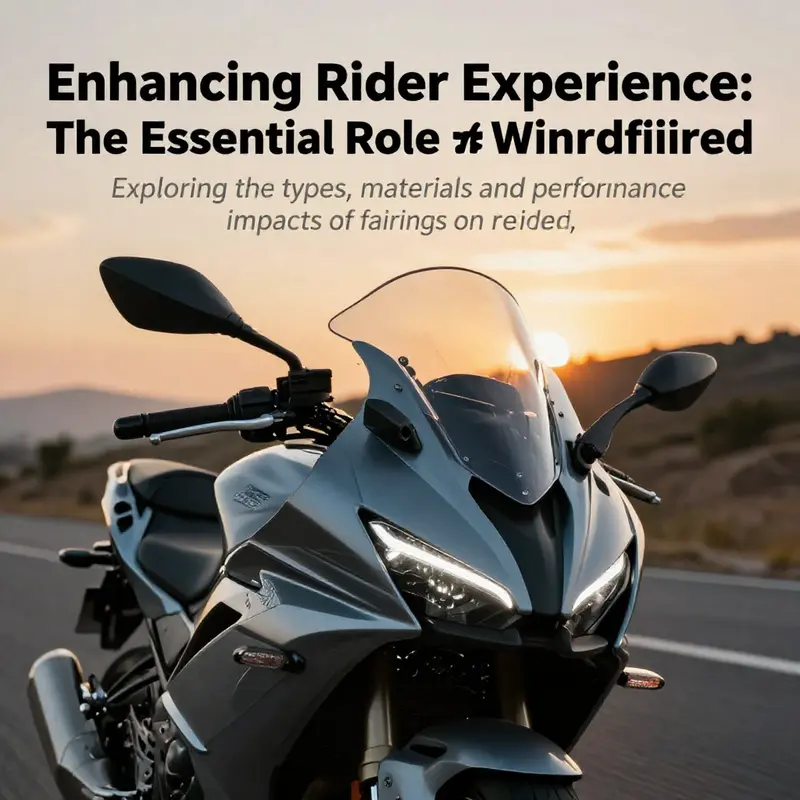
Motorcycle windshield fairings are not merely accessories; they are essential components that enhance the riding experience. By significantly reducing wind resistance, these aerodynamic structures promote rider comfort and improve safety. This article delves into the various types of motorcycle windshield fairings, their material composition, and their impact on motorcycle aerodynamics and performance. Understanding these elements is crucial for business owners in the motorcycle industry, as they directly affect product offerings and customer satisfaction. Each chapter will provide valuable insights into the benefits and considerations surrounding motorcycle fairings, empowering business owners to make informed decisions.
Wind in the Right Direction: Exploring the Types and Benefits of Motorcycle Windshield Fairings
From the first silent glides of a cafe racer to the long, wind-burnished cruises of touring machines, the windshield fairing is more than a decorative shield. It is a carefully engineered element that tunes how a motorcycle moves through air, how a rider feels the ride, and how efficiently the machine lists its energy into forward motion. Wind is not a mere backdrop; it is a dynamic partner that breathes at the front of the bike, pushing, lifting, and twisting the bike’s momentum. A well-designed fairing sculpts that interaction, smoothing the path through air, guiding turbulence away from the rider, and shaping the bike’s overall stability. The materials chosen, the curvature of the surfaces, and even the subtle angles where the windshield meets the body all work together to create a balance between protection, visibility, and performance. This balance is not abstract theory; it translates into measurable differences in comfort on multi-hour rides, in fuel efficiency on long highway stretches, and in the way a motorcycle behaves in gusty crosswinds or when passing between lanes in windy weather. The windshield therefore occupies a central place in the design language of a bike, serving as both a functional shield and a aerodynamic instrument that communicates intention through its form as much as through its function.
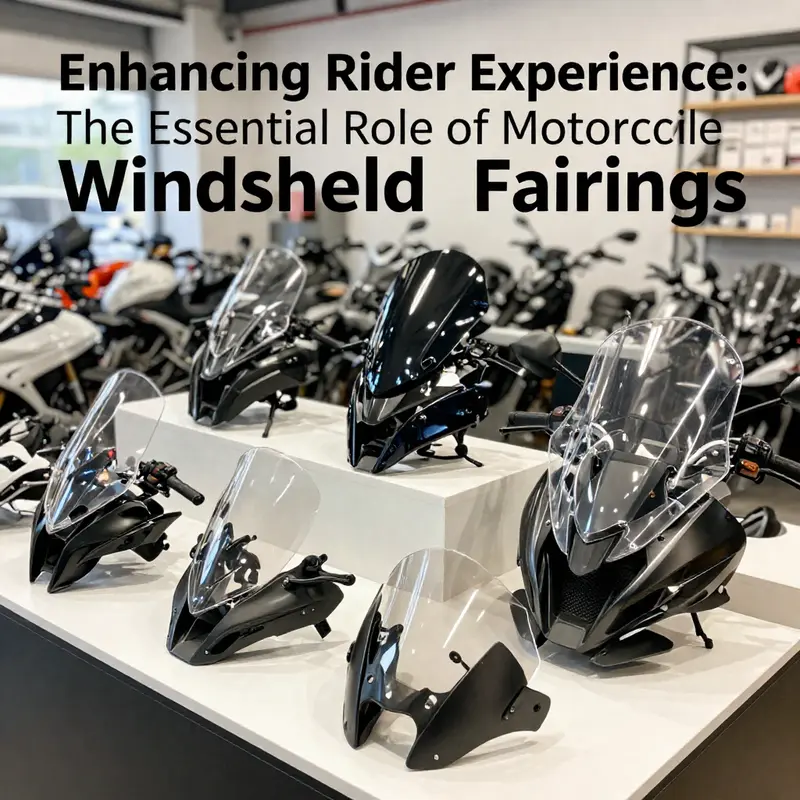
Fixed, adjustable, split, full, and aftermarket variants each tell a different part of the same story. The choice among them depends on how a rider prioritizes certain outcomes: unwavering protection and predictability, on-the-fly adaptability, a sense of openness paired with wind management, or the maximum drag-reduction a sports-focused machine can achieve. In combination with the bike’s geometry, the chosen fairing type becomes a shaping factor for ride quality, stability, and even the perception of speed. The materials that make up the windshield itself—polycarbonate for impact resistance, acrylic for clarity and polish, or advanced composites for reduced weight—also influence long-term performance. Clarity remains essential; a warped or scratched surface can distort vision, create visual fatigue, and subtly undermine the rider’s confidence in the front end. The fairing’s surface is thus a study in optical and structural discipline: a surface that must be crystal-clear, resistant to impacts, and capable of maintaining its aerodynamic edge through years of exposure to sun, rain, and road grime.
Fixed windshields, sometimes described as standard fairings, are the stalwart workhorses of motorcycle aerodynamics. They are rigid, non-adjustable shields mounted in solid joints that deliver a steady wind profile over a wide range of conditions. The advantage of this steadfastness is predictability. Riders know what to expect in rain, sun, or wind and can set a baseline that the bike’s aerodynamics can optimize around. The integration with the motorcycle’s bodywork is deliberate: the curve and thickness are chosen to provide a consistent shield while minimizing reflections and visual distortions that could hamper visibility. Yet the rigidity comes with a trade-off. A rider who seeks to tailor the wind exposure to their height or riding stance may find a fixed screen less accommodating. Even so, designers often craft fixed fairings with generous, carefully contoured shapes that maximize aerodynamics without sacrificing rider comfort, resulting in a front end that feels cohesive with the bike’s lines and contributes to a stable, confident ride at speed. In practice, the fixed design emphasizes the predictability of airflow, a feature many touring riders prize during long-distance journeys where fatigue can compound any misalignment between rider posture and wind exposure.
Adjustable windshields expand the concept by granting the rider control over the wind itself. Raised or lowered to suit posture, helmet height, or weather, these screens respond to a rider’s needs on the fly, offering a dynamic solution to wind management. The mechanical choreography behind adjustability must preserve optics, seals, and structural strength. A well-engineered adjustable windshield remains smooth in its operation, with precise detents that lock in place without introducing play or wobble. In practice, this flexibility makes a tangible difference for riders who spend hours on the road. A taller screen can deflect air away from the chest and neck, reducing fatigue and glare on long straights, while a shorter setting can lower wind noise around the helmet and improve upper-body flexibility for aggressive riding positions. The design task for the manufacturer is to deliver consistent performance across travel ranges, not just at a single height.
Split fairings embody another meaningful compromise. They combine a front windshield with a partial fairing that covers the engine up to the fuel tank, creating a buffer that reduces drag while preserving a more open, agile feel. This configuration is particularly appealing to sport and dual-sport riders who want some shield from wind without the heavier, more enveloping sensation of a full fairing. The engineering challenge lies in harmonizing the airflow paths around the rider with the open areas around the engine bay. The split design must ensure the upper airflow remains attached and laminar as it grazes the rider’s torso, while allowing sufficient cooling airflow to reach the radiator and heat exchangers. The result is a front end that looks lean and reactive, designed to minimize flow separation while preserving a cockpit that still whispers freedom to the rider. The emotional appeal is clear: a sense of speed and agility tempered by wind protection where it matters most in real-world riding.
Full fairings push the aero envelope to its limits. They envelop the front end, sometimes wrapping around the sides to form a continuous, low-drag silhouette. The payoff is substantial when measured in drag reduction and stability at high speeds. A well-executed full fairing reduces turbulence at the nose, encourages the air to stay attached across the rider’s line of sight, and guides the flow smoothly around the forks and under the belly where it can influence steering feel. The engineering complexity increases with full coverage because every aperture—headlight, instrument cluster, radiator intake, and cooling ducts—must be carefully integrated without letting the airflow break away. High-performance machines rely on this precision to achieve top-end speed and fuel efficiency; the gains come not just from the line itself but from every junction where air can separate. A full fairing’s elegance lies in its ability to disappear as a frontal silhouette while performing as a highly deliberate aerodynamic system. Yet this sophistication comes with weight and manufacturing challenges; the more surfaces and deeper the shapes, the more careful the assembly and protective sealing must be to prevent water ingress and rattling under vibration.
For riders who crave personalization or model-specific fit, aftermarket fairings offer a canvas for customization and sometimes performance gains. Aftermarket options can be crafted from fiberglass, carbon fiber, or other advanced composites to balance weight with stiffness and strength. The aesthetic impact matters as much as airflow management: a well-chosen fairing can set a bike apart with a unique silhouette that echoes a rider’s personality and riding philosophy. But aftermarket parts are not inherently superior in aerodynamics; their benefits hinge on precise geometry, fit, and alignment with the bike’s frame and fairing mounting points. A misfit can introduce new drag, gaps that trap air, or buffeting that makes the cockpit uncomfortable. Installation may demand careful trimming, bespoke brackets, and exacting alignment of headlights and instrumentation. In short, aftermarket fairings offer a path to both improved airflow control and visual customization, but they require deliberate engineering judgment and meticulous mounting to realize their potential.
Beyond the surface appeal of a sharp look, the fairing’s true value lies in how it shapes the air that surrounds every ride. Aerodynamics, at its core, is about guiding unseen forces into predictable patterns. A well-formed fairing reduces the energy the engine must expend to push air out of the way, lowering drag and allowing the machine to breathe more easily at highway speed. This is where fuel efficiency can see a tangible uptick, especially on longer journeys where small gains compound. The rider’s body, shielded from the most direct onslaught of wind, can ride longer with less fatigue, and the upper torso, shoulders, and neck feel less strain. A refined profile also contributes to stability; the bike tends to track straighter, with fewer yaw-induced corrections required by gusts. At higher speeds, the smoother flow helps keep the front wheel planted and the steering light. Windshield design, then, is not merely a matter of comfort; it is a core element of an integrated performance package where handling, efficiency, and even tire wear can be influenced by the aerodynamics of the front end. The ripple effects extend to maintenance choices, as a more stable aerodynamics profile can reduce the need for frequent steering corrections that wear tires unevenly or unsettle the chassis geometry during long rides.
The choice of materials for the windshield itself is a practical down-to-earth decision with long-term consequences. Polycarbonate offers high impact resistance and excellent optical clarity, though it can scratch if not protected and may yellow with age when exposed to UV light. Acrylic, known for its scratch resistance and clarity, may scuff more easily, but it can be easier to shape and polish after an impact. Some riders pursue aftermarket options that blend advanced composites, such as carbon fiber or fiberglass, to shave weight while sustaining strength. The inner structure that supports the windshield—mounting brackets, sliders, and the surrounding fairing panels—must be able to withstand vibrations, water ingress, and the daily grind of road use. Because fairings live in a harsh, variable environment, they rely on weather-sealing gaskets, durable fasteners, and corrosion-resistant hardware. The best designs maintain a balance between stiffness and flexibility; they resist cracking under impact but allow enough give to absorb vibration without transferring too much shock into the rider’s hands and chest. In practice, the material selection becomes a chorus of trade-offs: durability versus weight, rigidity versus resilience, and clarity versus resilience to UV exposure.
Integrating a windshield with the rest of the bike’s bodywork is a test of systems thinking. The fairing cannot be an isolated shield; it must talk to the radiator, the headlight cluster, the instrumentation, and the fuel tank’s contours. The curves should align with the bike’s lines, the gaps must be minimized, and the transitions between windshield, side panels, and lower belly should present a continuous, clean surface that reduces separation and drag. The interaction with the front fender and the wheel is particularly delicate at high speed; bad coverage can create turbulent pockets that degrade stability. Designers must account for the rider’s sitting position, which can vary from one domain to another: tuck under a sport stance, an upright touring posture, or a protective cruiser. The windscreen’s height, curvature, and angle can be tuned to target a range of rider heights and postures, sometimes even within a single model line. This design philosophy extends to the optics of the windshield as well; the surface must be free of distortion and glare, ensuring a clear, undistorted view. In this respect, the windshield becomes as much a visual interface as a protective shield, blending clarity with a sculpted aerodynamic profile.
Engineering teams rely on both wind tunnel testing and computational fluid dynamics to evaluate candidate shapes before committing to production. Tests measure how air streams separate from the surface, where wake zones form behind the fairing, and how changes in curvature affect drag and lift. A key performance indicator is the drag coefficient, often expressed in conjunction with the frontal area, to give a CdA figure that can be compared across designs. Trials also assess the wind noise generated by the interface with the rider’s helmet; excessive wind noise can negate comfort benefits even if drag is reduced. Ride-quality experiments look at buffeting at various speeds, analyzing how the airflow interacts with different riding postures. Field testing offers the ultimate reality check: how the fairing behaves on real roads in wind, rain, and changing temperatures. In the best cases, the data align with subjective rider feedback, confirming that the fairing contributes to a calmer cockpit, less fatigued shoulders, and more consistent steering response. Those results are not merely numbers; they translate into riders feeling more connected to their machines and more confident in their ability to push through long days on the road.
Durability is another critical thread. A windshield must withstand stone impacts, gravel splashes, and inevitable minor collisions with branches and brush in rural riding. The combined effect of UV exposure and temperature fluctuations can degrade materials over time, causing yellowing, crazing, or loss of clarity if the protective coatings wear thin. Regular cleaning with appropriate cleaners and careful polishing can preserve optical clarity and gloss. When a fairing experiences damage, the path to restoration can vary; some cracks can be repaired with resin and structural patches, while more extensive damage calls for replacement. The mechanical fasteners and mounting points should be inspected for loosening or corrosion. Weather seals ought to remain flexible to prevent condensation or water intrusion into the cockpit. The aesthetic life of a fairing is also tied to its ability to retain a factory-like finish after years of exposure to sun, rain, and road debris. A well-maintained fairing not only preserves performance but also sustains the bike’s visual language and perceived value.
Beyond the technical advantages, fairings contribute to a motorcycle’s identity. The silhouette of the front end speaks to a rider’s expectations: sport, touring, or a hybrid ethos. A clean, purposeful fairing says something about control, efficiency, and commitment to the ride. Repair shops and enthusiasts alike understand that the right fairing can refresh a model’s look and feel, extending its relevance years after its first release. For riders who value model-specific fit and heritage, a robust ecosystem of manufacturer and aftermarket options exists, including dedicated lines for particular brands. For riders who appreciate tailored versatility, a design language that gracefully fuses aerodynamics with aesthetics can transform a motorcycle from an everyday nuisance through wind into a refined partner for long-distance journeys. When choosing a fairing, the decision touches on comfort, performance, appearance, and the bike’s future potential to adapt to evolving riding needs. This integration is a reminder that the windshield is not merely a shield but a central element of how a machine communicates with the road and its rider. For those who want a tangible link between design intent and practical execution, model-specific options provide a way to preserve the bike’s visual identity while optimizing the air in which it travels.
From a practical standpoint, riders often seek model-specific fit and curated accessory ecosystems. For those who value brand-aligned styling and precise compatibility, exploring dedicated fairing families can be a prudent choice. For instance, BMW fairings offer a structured path to maintain the bike’s visual and aerodynamic continuity while ensuring reliable mounting and sealing. This approach helps riders preserve the intended character of the machine while still allowing room for personal taste and performance goals. The balance between identity and function is not just about appearance; it is about ensuring that every fastener, seal, and contour contributes to a cohesive whole that performs as described on the road. In the end, the windshield is a gateway between rider and machine, shaping not only the air around the bike but the rider’s experience of speed, weather, and distance. It is a small component with a disproportionate influence on how a motorcycle feels, handles, and ages.
External resource: https://www.example.com/motorcycle-faring-types-properties
Material Alchemy: How Composition Shapes Durability and Performance in Motorcycle Windshield Fairings
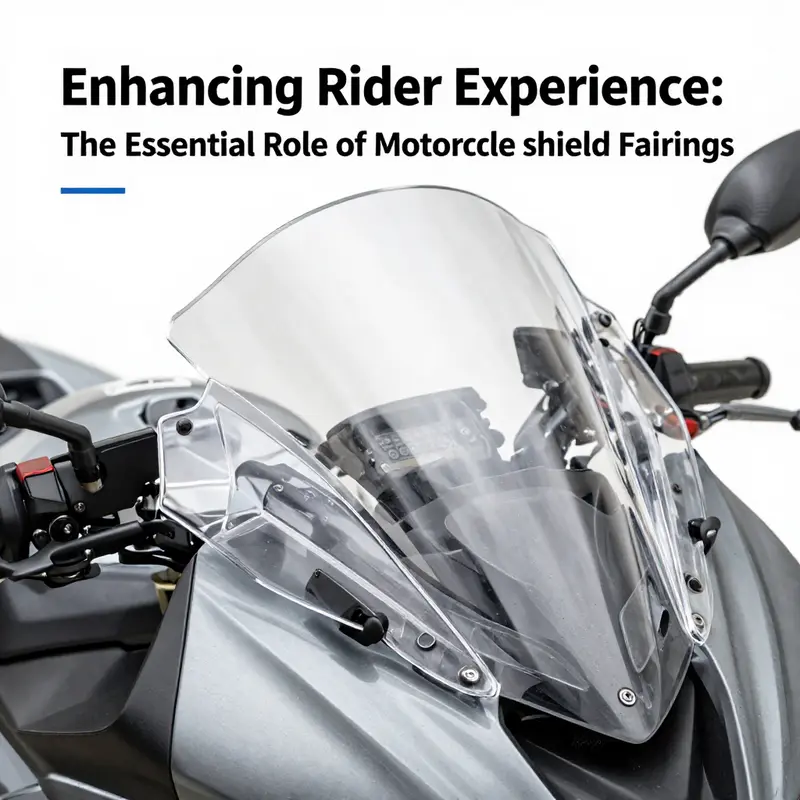
The windshield fairing on a motorcycle is more than a curved sheet of plastic draped across the front. It is an aerodynamic partner, a shield against wind and weather, and a structural element that helps define how a bike cuts through air at speed. When riders speak of comfort, fuel efficiency, or stability on high-speed straights and in gusty crosswinds, they are really talking about how the fairing balances three core virtues: optical clarity, impact resistance, and rigidity without excessive weight. Those traits do not emerge by accident. They arise from material choices and the way those materials interact with the forces of riding, road, and climate. A fairing must remain clear enough to see through, tough enough to resist stone strikes and gravel, and stiff enough to hold its aerodynamic shape under the pressure of dynamic airflow. In modern designs, engineers achieve this delicate balance through a thoughtful combination of materials, each with its own strengths and trade-offs. Acrylic, commonly known for its excellent optical clarity and scratch resistance, is prized for areas where visibility must remain pristine and the surface must resist minor abrasions. It provides a bright, distortion-free plane that riders rely on when looking through the shield at distant landmarks or road signals. Yet acrylic’s vulnerability to impact and its relative brittleness in cold or flexing conditions means it is rarely used in isolation for the most exposed, high-load portions of a full fairing. The other end of the spectrum is polycarbonate, a material celebrated for its outstanding impact resistance. Polycarbonate can absorb and dissipate energy from debris impacts or a minor collision, reducing the chance of catastrophic cracking. This toughness makes it a preferred choice for large, curved surfaces that bear the brunt of road strikes. However, polycarbonate is more prone to scratching than acrylic, and it can yellow or craze under certain UV and thermal conditions if not properly treated or coated. In practice, many windshields are designed as layered systems or hybrids, where a scratch-resistant outer surface protects a core of polycarbonate that carries the structural and aerodynamic load. This layering approach leverages the best of both worlds: the clarity and resilience of clear acrylic in areas that demand visibility, and the high-energy absorption of polycarbonate where impact resistance matters most. A high-performance partner to polycarbonate is a class of materials known as glass fiber-reinforced polymers, a family of composites that blend a reinforcing phase with a resin matrix. In full fairings, especially those that serve more than simply channeling air, composites provide an exceptional strength-to-weight ratio. The fiber reinforcement distributes stress efficiently, so the fairing can maintain structural integrity under high-speed airflow and gusts without adding significant weight. The result is a panel that behaves like a lightweight, curved shell rather than a flimsy shield. The use of composites becomes particularly attractive when the fairing has to absorb not just minor road debris but also the energy associated with a rider-righting moment in a crosswind or with a rider who grits the throttle at speed. In this context, the material’s ductility, its ability to deform slightly without yielding, and its resistance to fatigue under repeated bending can influence how the entire motorcycle responds to a rider’s input. ABS, another widely deployed polymer, offers a different blend of properties. Its impact resistance and flexibility, along with relatively low cost and good processability, make ABS a practical choice for commuter and urban motorcycles where durability under everyday conditions is a priority. ABS can absorb minor shocks and resist cracking in conditions that would stress more brittle plastics. Yet ABS lacks some of the surface hardness and optical performance that acrylic or polycarbonate provide, and it may not be the first choice for long, uninterrupted highway runs where glare, vibration, and UV exposure demand higher performance from the outer surface. The picture is rarely about a single material. Instead, it is about how these materials work together inside a single fairing system. A modern fairing may combine an exterior layer with scratch resistance, a core that provides stiffness and impact energy absorption, and a bottom or edge treatment that contributes to sealing, weather sealing, and UV stabilization. The result is a composite skin that holds its shape under high-speed flow while staying clear of distortion and wearing well against highway grit. It is this orchestration of materials that determines how long the shield remains functional, how easy it is to maintain, and how it feels to ride with it on a wet or sunny day. In the design space where form meets function, even the coating and surface finishes play a crucial role. Scratch-resistant coatings can prolong clarity and reduce the need for aggressive polishing that can wear down the surface. UV-stable surfaces protect against yellowing, while anti-fog or anti-reflective treatments reduce glare that could otherwise blur vision in changing light conditions. The durability story is thus not only about the base polymer but also about the protective strategies applied to the surface and the resistance of those surfaces to weathering. For riders who want a more tangible sense of how these material choices translate into real products, a broad catalog of models can be explored in the BMW fairings catalog. This resource demonstrates how manufacturers translate material science into aerodynamic shapes, ensuring that the shield both fits the bike’s lines and contributes to the rider’s experience of wind, weather, and speed. The catalog offers a practical reference point for understanding how different shapes, combined with specific materials, influence clarity, resilience, and performance in real-world riding. As with any complex system, the durability of a windshield fairing is a function of material behavior under load, exposure, and time. The beginner’s question—will a shield survive a gravel splash at highway speeds?—unfolds into a more nuanced inquiry about impact energy distribution, scratch resistance, and environmental aging. The answer depends on a mix of material properties and design strategies: a resilient outer layer, a tough core, thoughtful edge treatments, and well-chosen mounting hardware that preserves the integrity of the overall load path. A fairing that falters under stress often does so at interfaces—where different materials meet, where coatings wear away, or where adhesives degrade under heat or UV exposure. Accordingly, durability testing for windshield fairings increasingly emphasizes not just static strength but also environmental conditioning. Tests mirror the rider’s reality: temperature cycling from cool mornings to hot noons, UV exposure that accelerates aging, abrasion simulations that reproduce gravel and rain, and impact tests that gauge how the surface behaves when struck by road debris. The measurements gathered in such tests inform decisions about film coatings, the thickness of the outer layer, the choice of resin systems in composites, and the alignment of the fairing’s mass with its stiffness. The weight of a fairing is not a trivial consideration. In a sport or touring motorcycle, every gram added to the front of the bike affects rotational inertia and the energy required to overcome wind resistance. A light but strong composite panel can afford an aerodynamic edge without compromising handling, while a heavier, stiffer shield can improve high-speed stability but at the cost of added load. Engineers walk this line by selecting materials with the best balance of stiffness, toughness, and density, and by optimizing the wall thickness for each portion of the fairing to resist deformation under the pressures of slipstream and roadside debris. The maintenance implications of material selection also matter. Clarity must be preserved, so surfaces are often finished with scratch-resistant coatings or treated with UV stabilizers. Over time, even the best coatings may wear or delaminate if exposed to harsh weather or improper cleaning. Maintenance strategies thus emphasize gentle cleaning methods that avoid micro-scratches, periodic inspection for micro-cracks or crazing, and careful polishing when blemishes threaten visibility. In terms of lifecycle, a fairing built with a layered or composite approach can demand more sophisticated repair techniques than a single-material panel. Damage assessment becomes a matter of understanding where a crack may propagate, how the laminate layers distribute loads, and what replacement or repair options preserve the original performance targets. The durability story, then, is as much about long-term behavior as it is about initial strength. It is about how surfaces cope with UV rays on a glare-filled day, how edges resist peel and craze when a panicked rider ducks under a low bridge, and how the entire assembly maintains its shape as wind pressure fluctuates with engine output and riding posture. The practical truth is that no single material perfectly solves every challenge. Acrylic offers clarity and surface resilience; polycarbonate delivers impact resistance; composites provide unmatched strength-to-weight; ABS supplies durability at a lower cost. The best designs recognize that a windshield is a dynamic interface between rider, machine, and environment. They exploit the strengths of each material while acknowledging the limitations of others. And in doing so, they create a shield that supports safe riding, comfortable cruising, and confident maneuvering, regardless of whether the road is smooth or scarred with seasonal grit. The narrative of windshield fairings thus becomes a story of how material science translates into everyday riding experience. It is a story of how glass-like clarity can be married to the toughness of polymers, how a well-engineered edge treatment can defy wear, and how a balanced, layered construction can deliver predictable performance in a world where wind is a constant companion. Every rider feels the effect of these choices, from the quiet assurance of clean visibility on a sunlit highway to the shield’s steady behavior in a crosswind that would otherwise push a bike off its intended line. The transition from concept to product hinges on a disciplined approach to material selection, testing, and integration with the bike’s overall design. It is this approach that makes modern windshield fairings not just protective shells but active contributors to safety, comfort, and efficiency on the ride. External references illuminate the science behind these materials, offering technical detail on how different polymers respond to energy, weather, and wear. External reference: The Science Behind Motorcycle Fairing Plastic Parts.
Shaping Speed, Silence, and Sight: The Role of Motorcycle Windshield Fairings
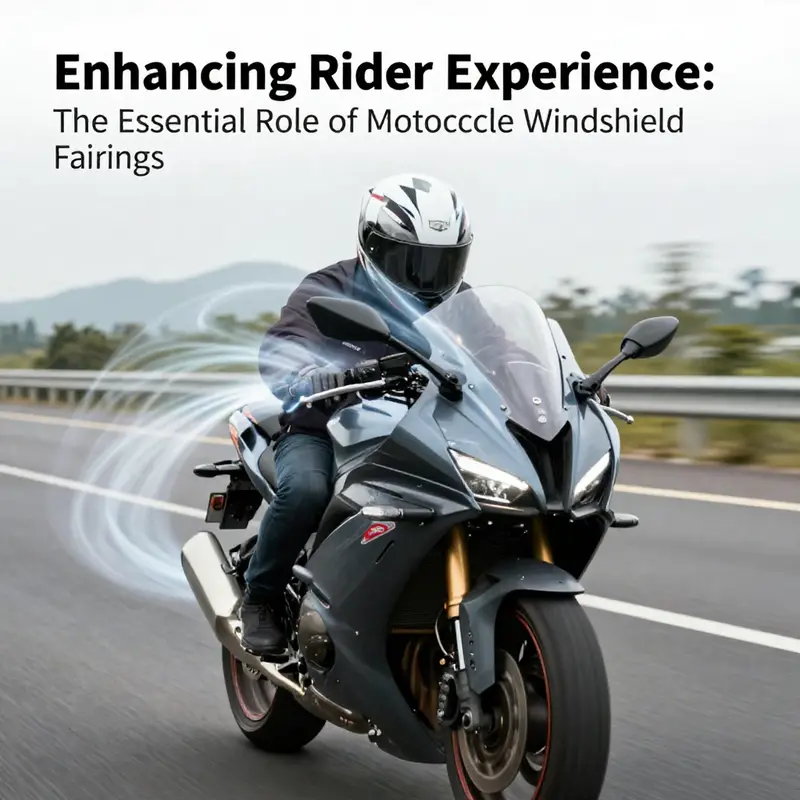
When a rider leans into a wind blown horizon, the motorcycle becomes more than a machine; it is a conduit between speed and sensation. The windshield fairing sits at the gateway of that dialogue, a carefully sculpted surface designed to coax air into a calmer, more predictable pattern around the bike and the rider. It is not merely a shield against rain or an ornament on the front end; it is an aerodynamic partner that changes the way a motorcycle slices through the air, how efficiently it moves, and how gracefully it handles at highway speeds. In this sense, the windshield fairing embodies a core principle of motorcycling: reduce turbulence, lower fatigue, and invite a more composed, confident ride without sacrificing the character that makes riding feel alive. The result is not a single metric but a tapestry of outcomes that touch on efficiency, comfort, control, and even the bike’s long term behavior on the road.
The most immediate effect of a well designed windshield fairing is a measurable reduction in wind resistance. Air, as it flows around a motorcycle, behaves like a living thing: it seeks the path of least resistance. A properly shaped profile reroutes air away from the rider’s chest and helmet, guiding it upward and outward rather than slamming into the torso. This redirection matters because the rider’s body acts like a bluff body in the airstream; without a fairing, the flow becomes unstable and creates turbulent pockets that sap energy and amplify fatigue. With a fairing that aligns with the bike’s geometry, the air forms a smoother, more laminar glide over the front half of the machine. The rider experiences less buffeting—the pulsating push pull of air that can rattle helmet visors and jar the spine—while the engine faces a steadier, shorter pressure wave as speed climbs. In practical terms, the wind load on a large highway speed motorcycle can drop enough to marginally improve fuel economy and help the bike sustain higher speeds with less effort from the engine. The relationship between aerodynamics and performance, once seen as a narrow engineering concern, reveals itself as a comprehensive rider experience. The smoother airflow reduces drag, but it also reduces the vibration and the strain that accumulate during long hours on the road. The body’s large muscle groups shoulders, neck, upper back are put at ease, and the mind can focus more on line choice and rhythm rather than fighting the wind.
Behind the scenes, the math of windshields is rooted in the same discipline that shapes race cars and aircraft: careful curvature, predictable cross sections, and strategic thickness. Materials like polycarbonate and acrylic are chosen not only for clarity and impact resistance but for their capacity to retain shape under thermal cycling and sunlight. A windshield must hold its contour when the sun bakes the fairing and when rain cools it; it must resist micro scratches that would cloud vision and obscure the rider’s peripheral awareness. The process of choosing thickness, edge radius, and mounting geometry is a balancing act. Too aggressive a curve may yield excellent top end protection but could induce new turbulence at certain angles or ride heights. A gentler profile might blend more easily with the bike’s lines but fail to shield the torso effectively or to deflect spray and rain away from the rider’s gloves. In other words, the windshield is a piece of a larger aerodynamic conversation, not a solitary shield. Its success hinges on harmony with the bike’s overall fairing architecture, which frequently includes the front fender, side panels, and lower shaping that tuck air around the engine and undercarriage. The best designs thread together a low drag silhouette with the visual language of the machine, a quiet synergy that says the bike was designed as a whole, not assembled from disparate parts.
From a rider’s perspective, the windscreen’s impact extends beyond drag numbers. Comfort is the sum of many sensory experiences, and fairing design often becomes the deciding factor between a ride that feels sustainable and one that becomes taxing after a few hours. When the rider’s forward posture remains relatively upright, the wind hits the chest and shoulders and travels upward toward the helmet. A well tuned windshield shapes that interaction so that the resulting air pressure is smoother on the torso and more predictable around the helmet. This translates into a more even wind noise profile, with less sharp, high pitched buffeting that can erode concentration and make long slabs of highway feel exhausting. Even the soundtrack of the ride changes: a calmer, lower toned wind noise tends to blend with exhaust notes and engine cadence, allowing the rider to hear important cues from the machine—gear shifts, throttle transitions, brake action—without the harsh undertone of a perturbed airstream intruding into the cockpit.
Yet the benefits do not arrive without trade-offs. While windshields deliver real gains in aerodynamics and comfort, they can complicate the bike’s aesthetic coherence and, more pragmatically, maintenance access. The integration with rear bodywork is a frequent point of tension; some designs assert a strong visual protrusion that can disrupt the bike’s lines or require adjustments to the side panels to keep everything flush and visually continuous. The simple goal of a shield between rider and air becomes a more nuanced exercise in geometry and articulation when the bike needs engine service, radiator access, or easy removal for cleaning or customization. The very craft that reduces drag can, in some configurations, create new challenges. For example, a windshield mounted with a heavy hardware system or one that sits at an angle to the fairing’s main curve can introduce micro gaps where air becomes trapped, producing a miniature current that manifests as a hollow tone or a faint rattle at certain speeds. Likewise, very tall windscreens, while excellent at shielding, can create a pocket behind the rider’s head where turbulent flow lingers, increasing drag again in a way that counteracts some of the cleanliness of the upfront design. The rider who travels at speed is not chasing a single score on a wind tunnel chart; they are seeking an integrated experience where the front of the bike, the rider’s posture, the helmet, and the surrounding air work in concert.
The practical decision making process for selecting a windshield fairing flows from the rider’s intended use and the bike’s architecture. For many, highway jaunts and long distance touring are the primary canvas. In that context, the aim is to maximize sustained comfort and to keep fatigue at bay while preserving a sense of momentum. This often means leaning toward a windshield with ample height and a curvature that shepherds air smoothly over the rider’s line of sight and down the torso, minimizing disruption to shoulder and neck muscles during hours of riding. For sportier riders who crave a more aggressive, compact silhouette, the emphasis may shift toward integrating the wind screen with the fairing’s sculpted forms so that the bike retains a sharp, aerodynamic profile without sacrificing the rider’s field of view or the mechanical ease of servicing important components. It is here that the dimension of maintenance access becomes a decisive criterion. A fairing should not be so deeply wedged into the bike’s frame that routine checks oil, coolant, air filters, brake lines require dismantling adjacent panels or removing the entire cockpit fairing. The best designs succeed in marrying form and function: they cradle air as it moves, while also allowing hands on ease for maintenance, testing, or performance tuning.
There is also an environmental and economic dimension to consider. Windshield fairings are typically made from polycarbonate, prized for its impact resistance and clarity, or from acrylic, known for optical transparency and lightweight quality. Each material carries a different suite of trade offs related to scratch resistance, yellowing under UV exposure, stiffness, and scratch repairability. A rider who plates the fairing with a constant, rigorous cleaning regimen and a thoughtful approach to preventive care will preserve clarity longer and maintain favorable optical conditions through miles of sunshine and rain. The coating choices whether anti scratch layers or UV protective finishes play a part here as well. Over the lifecycle of a fairing, a well protected shield retains its transparency; the rider benefits not only from better visibility but also from a more consistent interaction with the airflow that the screen helps shape. The economics of this choice initial outlay, replacement intervals, and the potential improvement in ride quality becomes part of the calculus riders perform when deciding how to equip their motorcycles for a given climate, geography, and riding discipline.
In this landscape, the role of fairing design emerges not as a vanity project but as a critical factor in safety and control. A properly chosen windshield does more than cut drag or reduce wind pressure. It helps stabilize the bicycle’s response to gusts, crosswinds, and the micro-pressures that travel along the body at speed. At highway velocities, wind can become a disconcerting partner; a shield that channels air effectively allows the rider to maintain a steady posture, which translates into more precise steering, more reliable throttle control, and more consistent braking inputs. As a result, an investment in the right fairing design becomes, in effect, an investment in ride quality and confidence. The rider may find that the motorcycle feels more planted, more predictable, and more capable of absorbing the occasional wind gust without sudden shifts in heading or weight distribution. This enhanced sense of control can alter risk perception, encouraging longer distances and more deliberate, relaxed riding strategies rather than hurried, edge of control maneuvers.
If you are exploring options for a specific machine family, a practical step is to examine how aftermarket and OEM fairings interlock with the bike’s existing geometry and with the rider’s preferences. The selection is rarely about a single feature such as height or tint, but about how those features work together with the bike’s frame, fairing lines, and mounting points. For riders who prefer a balanced blend of aesthetics and aerodynamics, the design language matters as much as the performance attributes. A windscreen that echoes the machine’s contour can feel almost invisible in its contribution, a seamless part of the whole that improves efficiency without shouting for attention. For others, a more pronounced fairing becomes a statement of intention an outward sign of a commitment to speed, control, and touring capability. In every case, the decision rests on a clear eyed assessment of riding style, climate, and the kind of road that calls to the rider most often. There is no one size fits all solution; there is, instead, a spectrum of designs that accommodate the diverse theater of motorcycle riding.
For riders who want to explore options tailored to a particular platform, one avenue is to look at a broad catalog of fairings for the brand you ride. The Honda fairings category, for example, showcases a range of shapes and configurations that illustrate how a single lineage can support multiple aerodynamic intents while staying true to the bike’s identity and performance goals. This is a reminder that even within a single brand’s ecosystem, there is a plurality of solutions each designed to fit different rider physiques, riding styles, and weather conditions. Such a catalog is not merely a shopping list; it is a guide to understanding how windshields interact with the bike’s overall design language and how that interaction influences air flow, rider comfort, and mechanical access. In a broader sense, the fairing ecosystem reflects a philosophy: shaping the bike’s presence in the wind is as much about enabling a better, safer ride as it is about presenting a compelling silhouette to the world.
Ultimately, choosing a windshield fairing is an exercise in balancing aerodynamic efficiency with practical usability. A rider who values long distance comfort will likely favor a design that reduces fatigue and preserves energy for the miles ahead, even if it means a slightly more conservative look. A rider chasing corner speed and throttle response at higher clock speeds may opt for a profile that integrates tightly with the bike’s geometry, reducing turbulence near the rider’s upper body and delivering a more compact, assertive stance. In each case, the goal remains the same: to harness air, not fight it; to invite a sense of control that comes from a harmonized conversation between man, machine, and wind. The windshield fairing thus stands as a quiet but essential protagonist in the drama of riding an aerodynamic partner that helps transform potential resistance into a smoother, more confident journey. For riders who seek to understand this transformation more deeply, the available literature and testing resources offer practical insights into how real world aerodynamic strategies translate into measurable gains on the road. A thoughtful choice of windscreen considering height, curvature, mounting method, and compatibility with the bike’s fairing family can yield lasting benefits in comfort, safety, and the pure feeling of riding well. For further reading that explores the physics, testing results, and practical takeaways from fairing design, see a respected explainer on aerodynamics and motorcycle fairings.
For additional context on how wind pressure, drag, and rider position interact in real world testing, refer to the following external resource: https://www.motorcycle.com/riding-tips/aerodynamics-motorcycle-fairings/.
If you want to explore compatible options for your bike family, you can also browse a specific brand catalog that situates wind protection within a broader ecosystem of fairings and bodywork. For example, the Honda fairings catalog offers a range of shapes designed to complement riding styles while maintaining accessibility to essential maintenance. You can explore those options here: https://ultimatemotorx.net/product-category/honda-fairings/.
Final thoughts
Motorcycle windshield fairings play a vital role in enhancing the riding experience by providing comfort, safety, and improved performance. For business owners, understanding the types, materials, and aerodynamics associated with these components is essential for staying competitive in the motorcycle market. By offering well-designed fairings, you can cater to customer needs for improved riding conditions and satisfaction. Investing in quality fairings not only benefits riders but can also lead to increased business opportunities and loyalty. Embrace the significance of motorcycle windshield fairings and leverage their advantages to foster growth in your business.