
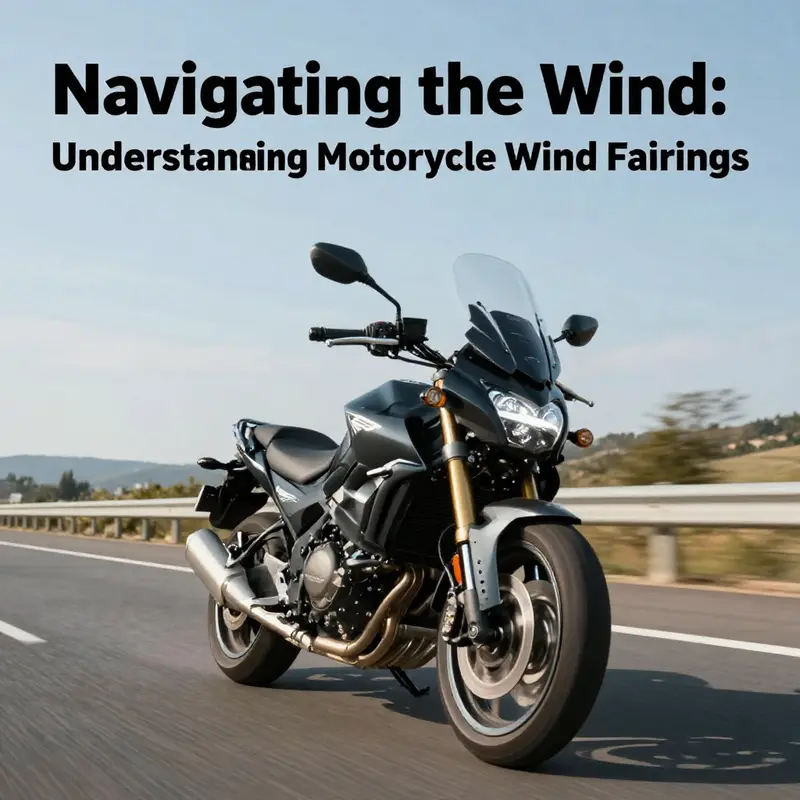
Motorcycle wind fairings play a pivotal role in enhancing rider comfort and performance, making them an essential consideration for motorcycle enthusiasts and business owners alike. This article delves into the varied types of motorcycle wind fairings, their impact on aerodynamics, and the potential for customization through aftermarket options. Furthermore, we will explore the technological advancements in materials and designs that elevate these components. By understanding these elements, business owners can better cater to the needs of their customers and enhance their product offerings.
Riding the Stream: How Wind Fairings Shape Comfort, Control, and Character Across Motorcycles
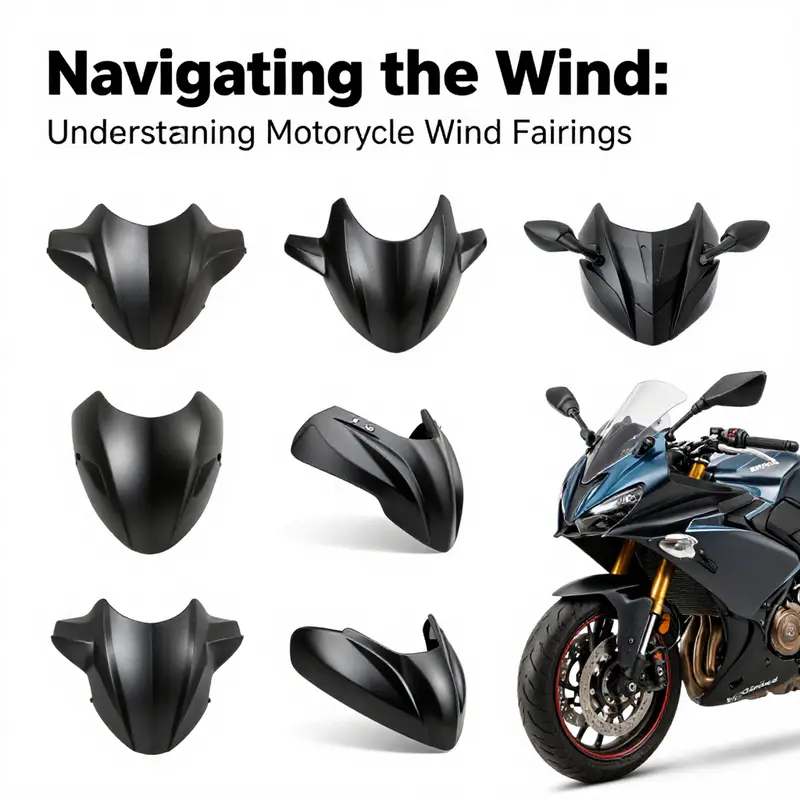
Air is a constant companion on the road, a force as steady as the horizon and as personal as the rider’s posture. A wind fairing is the hand that shapes that force into something manageable, predictable, even comfortable. It is not merely a shield of clear plastic but a carefully engineered interface between rider, machine, and atmosphere. The most successful wind fairings do more than keep the wind off the chest; they tune the air around the bike to reduce fatigue, stabilize handling, and create a riding character that matches the bike’s purpose. The spectrum of wind deflection starts with a simple shield and widens into a family of shapes, each tailored to a different riding goal. This is not a matter of fashion alone; it is a matter of physics, ergonomics, and the evolving dialogue between rider and machine. When a rider sits at speed with shoulders relaxed, elbows flexible, and the torso aligned with the wind stream, the ride becomes less a battle and more a conversation with the road. In this sense, wind fairings are not decorative garnishes but functional refinements that determine how long a journey feels and how far a motorcycle can go before fatigue erodes performance.
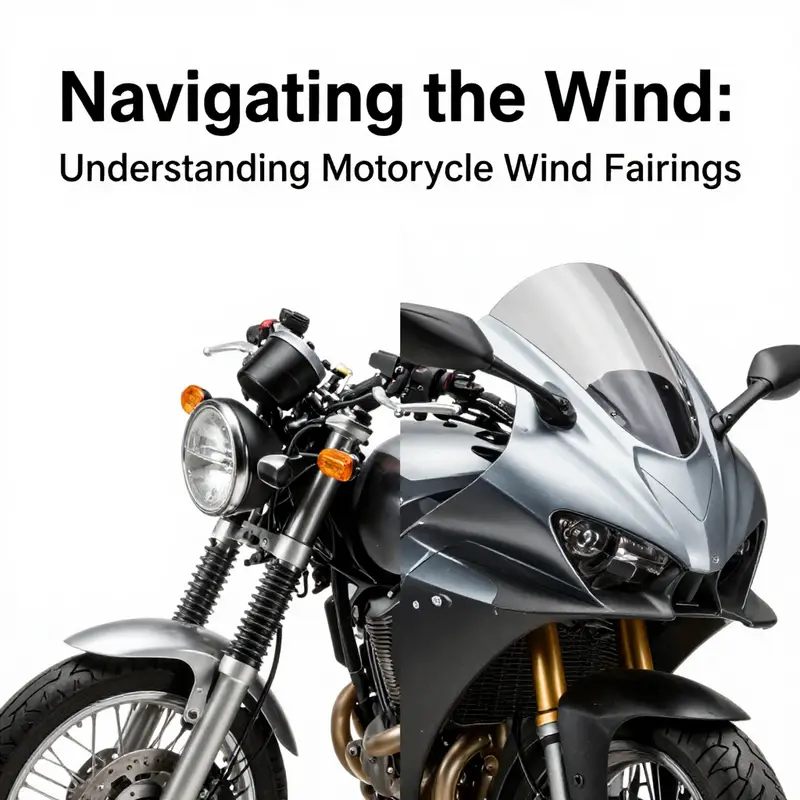
To understand wind fairings, one must first acknowledge the range of designs that engineers bring to the front of the bike. The full fairing encases the upper body and the front of the machine, shaping air from the headlight to the wheel. It is the archetype of aerodynamic efficiency, often favored by sport and touring motorcycles that prize maximum wind protection and a streamlined silhouette. The benefits are tangible: reduced wind pressure on the chest and arms, smoother air separation from the rider’s torso, and a deeper suppression of side winds that can nudge the bike off its intended line. With that protection, riders can maintain a comfortable posture at higher speeds, which translates into less muscle tension and steadier steering inputs. The flipside is cost and complexity. Full fairings are more intricate to manufacture, repair, and customize, and their protected surfaces demand diligent maintenance to preserve their optical clarity and structural integrity.
Half fairings offer a more modest but still meaningful approach to wind management. They shield the rider from wind above the handlebars while leaving the lower body and engine area exposed. This configuration preserves a sense of openness and maneuverability, which many riders associate with a more agile, street-oriented ride. The wind load is reduced enough to ease shoulder strain on longer commutes or weekend rides, yet the asymmetry of wind pressure can introduce a different kind of buffet at certain speeds or crosswinds. The half fairing thus becomes a practical compromise, especially for standard or naked bikes that balance a leaner look with a functional wind profile. It is in this middle ground that the air management strategy most clearly reflects the rider’s priorities: comfort without surrendering a sense of contact with the road and wind.
A split fairing introduces another approach to wind deflection, pairing a front section with side or lower portions. This design can be favored by custom or retro-styled machines where the aesthetic calls for flair as well as function. The aerodynamic impact is targeted rather than all-encompassing; the front deflects a portion of the stream, while the sides help steer air around the midsection and engine. The result is a practical, individualized wind pattern that can mitigate buffeting without the heavy, enclosed feel of a full fairing. For riders who value character and a certain nostalgic elegance in combination with modern materials, split fairings present a harmonious balance between form and function.
Clip-on fairings represent the lightest end of the spectrum. These minimalist deflectors attach near the handlebars and are designed to reduce turbulence around the rider’s torso at high speeds without encasing the front end. The aerodynamic payoff can be substantial in reducing rearward buffeting and allowing a clean, responsive riding stance. The trade-off is obvious: less overall wind protection and, in some configurations, a wind flush that can still reach the rider at certain angles or speeds. Clip-ons are commonly found on sport bikes and other machines that prize quick handling and focused protection for aggressive riding without the weight and bulk of a full fairing. In practice, the choice among full, half, split, or clip-on fairings rests on the rider’s goals—speed versus comfort, outright protection versus openness, and the bike’s intended role on road and track alike.
Beyond the geometric family, the materials that form these screens matter just as much as the shapes themselves. Polycarbonate and acrylic are the stalwarts of modern wind protection. Polycarbonate offers notable impact resistance, which pays dividends in long-term durability and safety. Acrylic, with its clarity and scratch resistance, remains a reliable alternative in many models. Both materials can be milled and molded into complex curves that tame air streams without introducing weak points where vibration, UV exposure, or temperature cycles might crack or haze the surface. Clarity is a practical concern, because a windshield that warps or fogs impairs vision as surely as a damaged mirror. Additive coatings—anti-UV layers to ward off sun-induced yellowing and scratch-resistant finishes to preserve smooth airflow and aesthetics—further extend the life of wind screens that face miles of grit, sun, and weather. Yet coatings and materials do not just preserve function; they also influence feel. A clear, pristine shield can appear almost invisible, letting the rider focus on the horizon, while a tinted, well-finished surface can subtly alter perceived depth and wind pressure, contributing to a sense of control and ease at speed.
A well-designed wind fairing also interacts with the bike’s overall aerodynamics. The front profile sets the tone for how air attaches and separates around the vehicle, influencing not only rider comfort but stability and fuel efficiency at higher speeds. The interplay of fore-aft seam lines, curvature radii, and edge thickness can either dampen or amplify vibrations and buffeting. This is a subtle, systems-level effect: even a small change in curvature can shift the flow regime from a chaotic wake to a smoother, laminar pattern that travels along the fairing and around the rider. When a wind stream follows predictable contours, the rider experiences less fatigue, which contributes to the ability to sustain concentration and maintain precise control for longer periods. It is this synergy between rider, air, and machine that explains why wind fairings occupy a central place in motorcycle design, especially for bikes expected to perform at high speeds or endure long-distance travel.
Rider ergonomics is another crucial piece of the equation. The height, reach, and seating position of the rider determine how air interacts with the body. Adjustable or modular wind fairings—whether through varying screen height, curvature, or angle—enable riders to tailor the airflow to their anatomy and riding posture. For some, a slightly higher screen reduces neck strain when cruising on the motorway; for others, a screen with a gentler angle mirrors a more upright posture and keeps wind off the chest without pushing air directly into the helmet. The goal is to flatten the air pressure gradient that travels along the torso and arms, creating a more stable zone behind the screen and reducing the dynamic forces that can lead to fatigue. Although the specifics of fit are individual, the underlying principle holds: the right fairing helps the body conserve energy so that the rider can extend endurance, concentrate on line selection, and respond with steadiness to changing road conditions.
This practical design language also intersects with the broader ecosystem of motorcycles and their riders. Sports bikes, tuned for speed and aerodynamics, tend to favor fairings that sculpt air to minimize drag and maximize high-speed stability. Touring machines, built for comfort over miles, lean toward larger, more enveloping screens that shield the torso and arms for hours on end. Adventure-touring machines often demand a flexible balance, with screens that can be raised or removed to adjust for off-road wind and varied weather. The aftermarket landscape mirrors this diversity, offering a spectrum of shapes, heights, and finishes that let riders tune not just the bike’s performance but its personality. A fairing becomes part of the bike’s narrative—an expression of intended use, riding style, and the rider’s relationship with wind and road.
A practical reality for riders exploring these choices is the need to balance protection with accessibility. A screen that is too tall can introduce optical distortion at the top edge or create new aerodynamic disturbances, while one that is too short may do little to interrupt the wind at highway speeds. The ideal setup often involves an iterative approach: start with a baseline that suits your height and riding position, then assess wind pressure, buffeting, and helmet comfort across a range of speeds. Small adjustments—adding a lift here, a tilt there, replacing a curved panel with a more aggressive contour—can produce outsized gains in comfort and confidence. When done thoughtfully, wind fairings reduce fatigue so thoroughly that riders report feeling fresher after long stints, more endurance on loops, and a sharper sense of control when lanes shift or gusts bite from the side.
In discussions of brand and aftermarket ecosystems, it is common to encounter a wide spectrum of configurations. Factory kits and aftermarket options both aim to fit a broad range of models while preserving the bike’s aesthetic language. The lure of aftermarket parts is not merely cosmetic; it lies in the potential to tailor curvature, height, and edge treatment to a rider’s exact measurements and preferences. This tailoring is where a community of riders, designers, and technicians converge, exchanging notes about what works in different climates, riding styles, and performance envelopes. The result is a body of knowledge that transcends individual models and becomes a shared language about comfort, efficiency, and the ride’s emotional resonance. Within this ecosystem, riders who invest in thoughtful wind management often describe a more cohesive riding experience: a machine that feels less like a challenge to overcome and more like a partner that responds predictably to steering inputs, throttle, and body posture.
For readers seeking a practical point of reference in the vast landscape of wind protection, certain brand-specific options and category pages can offer a curated starting place. For example, you can explore the broad spectrum of models and styles under the Honda fairings category, which gathers a range of front-end protection solutions designed to fit various bikes while preserving core performance characteristics. This resource can help illuminate how a wind fairing integrates with other design elements, such as headlight integration, venting, and mounting interfaces, all of which influence how smoothly air behaves around the machine. Whether you are considering a full enclosure for maximum highway comfort or a lighter, sportier shield that keeps the wind at bay without sacrificing maneuverability, the journey toward the right fairing is as much about fit and feel as it is about numbers and curves. The final choice often reflects a rider’s priorities: endurance and comfort for long rides, confident handling at speed, or a distinctive silhouette that communicates something about the journey itself.
The broader takeaway is that wind fairings are part of a holistic approach to motorcycle design. They are not accessories to be tacked on after a bike is built but integral components that influence performance envelopes, rider comfort, and even the way a machine communicates with the road. The most successful setups are those that harmonize aerodynamic efficiency with ergonomic clarity, producing a ride that is stable, predictable, and personally satisfying. In this sense, choosing a wind fairing is not just about wind protection; it is about shaping the rider’s experience of speed, distance, and control. The wind becomes a character in the story of the bike, not a force to fear or fear to adapt to. And as technology evolves, new materials, coatings, and morphable shapes promise to push this relationship even further, enabling riders to tailor their machines to the exact contours of their journeys.
External resources can provide additional perspectives on selecting the right windshield and understanding the trade-offs between visibility, protection, and aerodynamics. For a detailed guide on choosing the best motorcycle front windshield based on fit, materials, and aerodynamics, see: https://www.bikeandride.com/guide-to-motorcycle-windshields-2026
Riding the Wind: How Motorcycle Wind Fairings Sculpt Aerodynamics and Rider Comfort
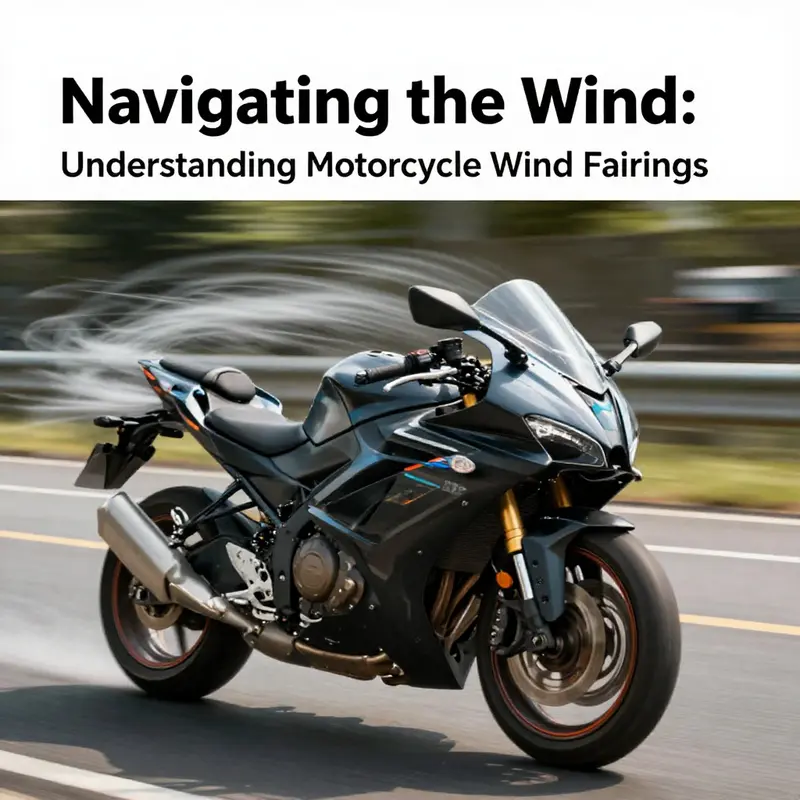
The air around a moving motorcycle is a living barrier and a shifting canvas. Every rider learns, often the hard way, that the first line of defense against the raw force of wind is not merely a shield for the eyes but a carefully shaped friend for the body and the bike as a system. A wind fairing, whether a compact shield mounted high on the fork or a sweeping portion of a full fairing, is more than a translucent barrier; it is a deliberate instrument designed to guide air in a way that reduces resistance, stabilizes the bike, and eases fatigue. The wind that would otherwise slam into the rider’s chest, scramble the helmet’s quiet, and tug at the handlebars becomes a managed flow that hugs the front of the machine, negotiates the rider’s posture, and merges with the bike’s overall aerodynamics. In this sense, the fairing is a bridge between the rider’s comfort and the machine’s performance, a visible reminder that every curve on a motorcycle has a reason beyond aesthetics. The performance of a wind fairing can be felt in the quiet hum of a long highway ride, in the steadier pull of the handlebars during gusty crosswinds, and in the subtle economy of torque and fuel that accrues when the air meets a well-behaved contour instead of a stubborn, stalling obstruction.
Design is the language through which wind becomes virtue. A well-designed fairing makes air slip along the bike with minimal separation, a condition that translates into lower drag, reduced buffeting, and better stability at speed. The principle is straightforward: a smooth, curved profile guides air to follow the bike’s contours rather than breaking away in turbulent pockets. When air separates from the surface, it creates eddies that pull the machine backward, raise the rider’s fatigue level, and increase the required power to maintain speed. A fairing that achieves a harmonious flow acts like a sail with a refined keel, catching energy from the wind in a way that supports the bike rather than fights it. The rider feels this as a calmer, more predictable ride. It is not magic; it is the result of careful geometry, smooth transitions between surfaces, and an understanding of how air behaves around a moving object at highway and sport speeds alike.
The essence of aerodynamic optimization in wind fairings rests on a few core principles. First, the surface must be as continuous as possible, with transitions between the windscreen, side panels, and fairing plates kept to gentle, gradual curves. Sharp edges or abrupt changes can act as air brakes, producing early separation and unwanted turbulence just where it matters most—around the rider’s torso and the bike’s leading edge. Second, the angle of attack—the way the front face meets the oncoming air—needs to be carefully balanced. Too steep, and the air is pushed up and over with aggressive pressure; too shallow, and the air kisses the surface, creating a stalled, stalled-like condition that saps stability. A fairing that sits at the right synthesis of height, slope, and setback can guide air over the rider’s helmet and shoulders, reducing buffeting when the wind shifts and enhancing deflection as the bike dives into a corner or leans into a straightaway.
Beyond the shape, materials and finishes contribute to the aerodynamic story. Modern wind fairings often use transparent, impact-resistant polymers such as polycarbonate or acrylic. These materials combine clarity with durability, allowing riders to maintain excellent visibility without sacrificing strength. The clarity is not merely cosmetic: poor visibility through a scratched or hazed surface can force riders to adjust posture or position to compensate, inadvertently altering the intended flow as they lean into a bend or glance through the windscreen. Some fairings feature anti-UV coatings and scratch-resistant finishes, preserving optical quality and reducing the need for replacement due to sunlight exposure or micro-abrasions from debris kicked up by the road. In practice, the material choice supports the geometry by retaining a clean surface that remains smooth under highway winds and minor impacts. When a rider glides at speed, a clear, well-supported surface reduces noise and flutter as air streams over the surface, further smoothing the experience and contributing to a perception of quiet efficiency rather than a constant wind tunnel assault.
The benefits of a well-executed wind fairing extend beyond rider comfort. Aerodynamically tuned shapes contribute to lower drag, which in turn can translate into improved high-speed stability and better fuel efficiency. Drag is not simply about a number on the dyno; it is the sum of how air resists the bike and rider as they move forward together. A streamlined profile minimizes the wake behind the motorcycle, delivering a more stable crossing of air currents and reducing the likelihood that crosswinds will push the bike off its intended line. In this sense, fairings do more than shield the rider from discomfort; they shape the energy management of the machine as a whole. The rider benefits from a quieter cockpit, less fatigue on long rides, and a bike that feels more planted in gusty conditions or when entering a bend at speed. The riding experience becomes less about fighting wind and more about channeling it in a controlled, predictable direction.
But the other side of the coin must be acknowledged. Not every design excels, and not every fairing is ideal for every rider. Irregular shapes or excessively large windshields can perform like air brakes, creating irregular drag profiles that drag on fuel consumption and reduce acceleration, particularly at higher speeds. The same misstep can magnify handling issues during strong crosswinds, as a bulkier leading edge generates uneven lift and a wake that can buffet the rider and destabilize the bike. When airflow detaches unevenly, it creates a cascade of secondary effects—from increased rolling resistance to vibrations that travel through the footpegs and bars. These issues become more pronounced as speeds rise or as the rider changes posture, height, or riding position. A fairing must be designed with the understanding that every rider is unique, every motorcycle has its own front-end geometry, and the wind’s behavior changes with temperature, humidity, and altitude. A one-size-fits-all approach is rarely, if ever, optimal; the best designs are those that invite adjustments and fit with a rider’s height, seating position, and preferred riding style.
The conversation about fairings is also a conversation about the bike as an integrated system. The fairing does not operate in isolation; it interacts with the chassis, the suspension geometry, the tire contact patch, and even the rider’s helmet and clothing. A well-integrated fairing helps align the rider’s line of sight with the bike’s forward energy flow, reducing the mental strain of scanning the horizon through a gusty wind. When a rider is calm and focused, their inputs become more precise, and the bike responds with the same disciplined predictability that aerodynamics promises. This synergy is why many riders value fairings not just for their direct drag-reducing effect but for the way they contribute to stability, confidence, and endurance on long journeys, where fatigue can creep in as much from the wind as from the road’s surface or the bike’s weight distribution.
From the perspective of engineering practice, the fairing’s geometry is often refined through an iterative process that blends fluid dynamics with real-world testing. Modern development can rely on advanced computational tools that simulate airflow around the bike, assess pressure distributions, and reveal how small geometry changes translate into lift, drag, and separation characteristics. Concepts such as flow attachment, boundary-layer behavior, and vortex formation around the leading edges are not abstract ideas; they are the levers designers pull to tune stability and comfort. A curved transition from the windscreen to the side panels, for instance, can reduce the formation of a large, turbulent wake behind the rider, thereby diminishing buffeting and enabling smoother air over the helmet. Subtle features—like slightly angled sides, gentle winglet-like protrusions, or tailored curvature near the rider’s shoulder line—can disrupt detrimental eddies and stabilize the overall airflow. Some modern approaches even consider tiny winglets or micro-spoilers to manage lift at the bike’s front end, especially on higher-performance machines where lift can interact with lean angles and crosswinds in challenging ways. Altair’s exploration of motorcycle aerodynamics highlights how these precise geometries, when optimized, can yield meaningful gains in efficiency and stability, underscoring the point that the fairing’s value lies in precision as much as in protection.
For riders curious about the practical options that support these aerodynamic goals, exploration at the marketplace of fairings can be enlightening. A wealth of configurations exists, from compact shields that minimally alter the rider’s position to larger, more integrated shapes that form a broader shield around the cockpit. The choice is not simply about blocking wind; it is about shaping a flow that harmonizes with the rider’s posture and the bike’s geometry. Even small changes—such as the height of the windscreen, the curvature of the top edge, or the way the fairing transitions into the fuel tank and side panels—can influence comfort and handling. Designers often consider the rider’s height, seating position, and the typical riding posture when specifying a fairing’s geometry. A taller rider, for instance, benefits from a windscreen that rises just enough to deflect air away from the helmet but not so high that it creates excessive pressure above the rider’s line of sight. A shorter rider might prefer a more moderate height to avoid looking through a large shield, while still enjoying a calmer wind stream around the chest and shoulders. The interplay between rider and fairing becomes a collaborative dance, where the rider’s feedback helps fine-tune the balance between protection, visibility, and airflow efficiency.
Understanding the aerodynamic impact of wind fairings also invites a broader appreciation for how engineering translates to everyday riding. The simplest way to recognize this is to notice how a rider’s experience changes as conditions shift—from a calm, clear afternoon to an exposed highway with gusts. In the calm moments, even modest fairings can deliver comfort through reduced fatigue and a stable front end. In windy environments, the same fairing can keep crosswinds from tugging at the handlebars in a way that demands constant corrective input. When you ride with an aerodynamically tuned fairing, the air’s work is split between being deflected safely and being leveraged to support the bike’s forward momentum. It is not about forcing air to do something magical; it is about steering air in a way that preserves energy, maintains stability, and keeps the rider connected to the machine’s sense of balance.
For the curious reader who wants to see how these ideas translate into real-world options, consider exploring collections that categorize fairings by fit and model range. There is value in seeing how various shapes adapt to different front-end geometries and how fitment can influence overall aerodynamics. By examining the way different bikes respond to the same airflow challenges, riders gain a deeper understanding of why some fairings feel more responsive at high speed, while others excel in long-distance comfort. The lesson is not only about choosing a shield that looks good; it is about selecting a geometry that aligns with the bike’s identity and the rider’s ambitions, whether those ambitions lean toward high-speed stability, long-haul endurance, or a blend of both. You can begin this exploration with careful attention to a dedicated Honda fairings category, which showcases a range of fitments designed to harmonize with specific bike geometries and rider preferences. Honda fairings
In sum, the wind fairing is a critical, often understated element of motorcycle performance. Its purpose extends beyond simple wind protection to encompass a disciplined approach to steering energy, reducing drag, and enhancing stability across a spectrum of speeds and conditions. The most effective fairings are those that acknowledge the rider as an active participant in the aerodynamics equation, offering a design that respects the rider’s posture, visibility, and comfort while optimizing the bike’s forward motion. This is where the science of aerodynamics meets the art of riding—where a carefully shaped shield becomes a capable ally, smoothing the air so that the rider can focus on the road, the curve, and the rhythm of the ride. For those who crave a deeper technical perspective on how modern tools shape these choices, an external reference on optimized geometry, winglet profiles, and lift reduction provides a detailed look at the engineering behind motorcycle aerodynamics. See Altair’s discussion on this topic for a broader technical context: https://www.altair.com/optimizing-motorcycle-aerodynamics
Tailored Aerodynamics: How Aftermarket Wind Fairings Redefine Comfort and Performance
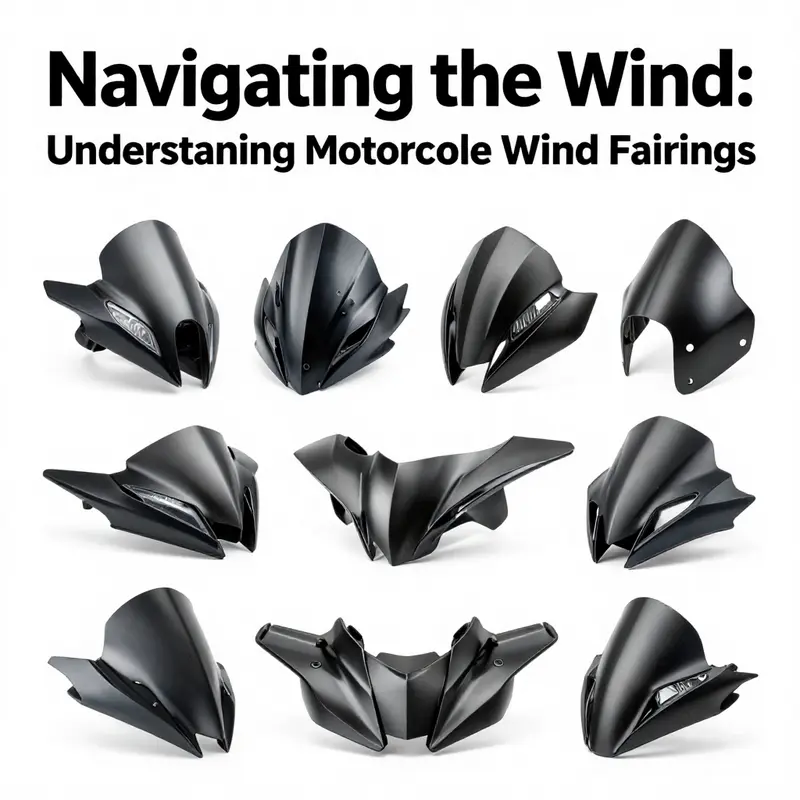
A motorcycle wind fairing belongs to the quiet machinery of long-distance riding, a shield that sits between rider and air and, in doing so, quietly governs comfort, fatigue, and the rhythm of a journey. The aftermarket wind fairing movement grows from the same impulse that shapes performance tires and tuned exhaust notes: to make a machine feel more like an extension of the rider rather than a barrier to the rider’s own momentum. These wind deflectors and partial fairings are not simply cosmetic additions; they are carefully engineered surfaces that negotiate a delicate balance between shielding wind and inviting air to flow in a way that supports stability, reduces noise, and lowers the rider’s strain over hours in the saddle. When you consider wind protection as a design problem rather than a mere accessory, the value of aftermarket options becomes clear: they offer a way to tailor protection to a rider’s height, posture, and preferred cruising speed, without forcing the bike into a one-size-fits-all shape.
At the core of aftermarket wind fairings is a thoughtful choice of materials. Polycarbonate and fiberglass are the two workhorses cited in practical discussions of unibody or modular wind defenses. Polycarbonate brings impact resistance and clarity, qualities that matter when a stray stone or a stray branch meets the highway. Fiberglass, lighter and easier to shape, offers a balance of rigidity and flexibility that skilled bodyworkers can translate into a fairing that looks and feels integrated with the bike’s front geometry. Acrylics and other plastics appear in some designs, but durable, impact-resistant plastics tend to dominate the field because they tolerate the shocks of road debris while maintaining optical clarity. The goal is a surface that remains transparent and scratch-resistant through the miles, not a delicate shell that demands careful handling after every procedure in a workshop.
Aesthetics intersect with aerodynamics in a way that many riders find compelling. The fairing is not merely a shield; it is a form that channels air around the head, shoulders, and chest in a predictable path. The shape can minimize buffeting which, at higher speeds, translates into fatigue, head toss, and spread of fatigue down the arms and back. A well-designed wind fairing directs air to stay attached to the bike’s profile rather than chattering against it, reducing turbulence and giving the rider a calmer cockpit. This is where customization becomes a performance tool as much as a stylistic choice. Riders can select among a spectrum of curves, heights, and edge treatments to fit their riding stance, whether they sit upright on long tours or adopt a crouched posture for sportier runs. In the aftermarket ecosystem, the goal is to offer a modular continuum—from compact, low-profile screens to more expansive shields that resemble the feel of full fairing systems—so that a rider can dial in the precise amount of wind deflection their body can tolerate without sacrificing the bike’s overall balance.
The customization dimension is where flavor and function often meet. A wind fairing can be adjusted in several practical ways: height, curvature, and the degree of frontal exposure all influence the rate at which air flows over the rider. Some designs incorporate adjustable height mechanisms or detachable panels, enabling a rider to tailor the footprint of protection for a weekend sport ride or a cross-country journey. The materials themselves contribute to the look as well as the feel. A glossy finish catches light and gives a bike a clean, integrated presence, while a matte or textured surface can reduce glare for daytime visibility. Finishes and colors become a more subtle form of personalization, allowing a rider to harmonize the wind deflector with the bike’s lines or to create a striking contrast that signals a rider’s intent and confidence on the road. Importantly, the design must respect structural integrity and mounting integrity; the best-looking fairing that rattles at highway speeds defeats the very purpose of protection.
From a performance perspective, the wind fairing acts as a shape-altering device at speed. The most notable benefit is a reduction in wind resistance, or drag, which can have tangible effects on fuel efficiency and top-end stability. Even when the rider is not chasing a peak speed, improved aerodynamics translates into smoother airflow around the front of the motorcycle, which can lower the amount of gust-driven buffet that the rider experiences. Reduced drag means the engine can breathe with less resistance, a subtle but meaningful factor in mileage over long trips. The better the airflow is managed, the less the rider must actively brace against wind pressure, which translates into less muscular fatigue and a tendency to ride longer with more consistent posture. In practical terms, this is about enabling a rider to sustain a comfortable position and breathing rhythm without the body fighting the wind, a difference that often becomes clear after several hours on the road.
Designers and riders alike also note how aftermarket wind fairings influence stability at speed. Buffeting, a phenomenon where alternating pockets of high and low pressure buffet the rider, can be disorienting and fatiguing. A well-fitted fairing shifts the peak of that turbulence away from the rider by shaping the airflow smoothly around the chest and shoulders. This leads not only to comfort but to a steadier hands-on experience when steering through gusts or cooling crosswinds. The result is a cockpit that feels more planted and confident, a difference that becomes especially apparent when riding into open sections on a long highway or climbing into rolling crosswinds on a mountain road. In these contexts, riders often report that the front end feels more predictable, a condition that reduces the cognitive load required to maintain lane position and speed in variable wind.
Durability is another central thread in the aftermarket wind fairing narrative. The mechanical properties of the chosen materials—impact resistance, thermal stability, and long-term rigidity—determine how a fairing stands up to road-use realities. Polycarbonate, known for its toughness, can absorb and dissipate impact energy without cracking, an important trait for commute and touring riders who do not want to be sidelined by a minor collision or a road debris strike. Fiberglass offers a different set of benefits, including processability for more aggressive shapes and a favorable strength-to-weight ratio, though it may require more attention to moisture and delamination in extreme conditions. A fairing also benefits from a protective coating system: anti-UV finishes to slow yellowing and maintain clarity, scratch resistance to preserve visibility, and sometimes a clear or tinted layer that helps with glare control. These details matter because a wind fairing is not just a protective shield; it is a long-term component that has to remain reliable and legible across seasons and miles.
A practical consideration for owners contemplating aftermarket wind fairings is the scope of the product’s integration with the bike’s front frame and cockpit. Some designs are modular, covering a large portion of the front chassis and leaving only the handlebars and the windscreen exposed. Others are more restrained, providing a focused shield that deflects direct airflow without altering the bike’s overall geometry too drastically. The degree of integration affects maintenance, repair costs, and the risk of misalignment after a crash or a fall. Because the fairing interacts with mounting points, fasteners, and the rider’s own line of sight, precise fitment is essential. A misaligned edge can catch wind in unintended ways, creating new buffeting rather than eliminating it. For riders who want to customize with confidence, it is prudent to review mounting options, ensure compatibility with existing handlebars and dash components, and verify that the fairing’s profile harmonizes with the motorcycle’s front fascia. The process of selection thus becomes a careful interplay between engineering, personal ergonomics, and aesthetic refinement.
For riders seeking even more control over their riding experience, aftermarket wind fairings can be integrated with other aerodynamic features, including curved edges that direct air into a controlled wake and, in some cases, lightweight aerodynamic spoilers. These elements can further tune airflow around the front end and help the rider manage crosswinds or side gusts. While these enhancements can amplify performance, they also intensify the need for precise alignment and high-quality materials. In the best cases, the combination creates a coherent front end that not only reduces drag but also stabilizes the steering feel and reduces fatigue over long durations. The price of such sophistication can be higher, and the maintenance footprint may expand to include checks for seal integrity, mounting hardware wear, and finishes that must be touched up to maintain the intended look and performance.
The economics of customization should also be weighed. Aftermarket wind fairings offer a spectrum of price points, influenced by material choice, manufacturing precision, and finish. A well-made, properly fitted unit can deliver years of service, whereas a poorly matched, ill-fitting piece can lead to increased repair expenses and even safety concerns if it interferes with instrument visibility or rider control. The trade-off is not simply dollars versus cents; it is a question of long-term value and peace of mind. For some riders, the reward of a tailored cockpit—one that aligns with their height, seating posture, and preferred wind exposure—justifies the investment. For others, a more conservative approach, focusing on focal points of wind control or a modest increase in deflection, may be preferable. Either way, the path toward better comfort and efficiency is paved with deliberate choices about shape, material, finish, and mounting strategy.
In the broader ecosystem, aftermarket wind fairings sit alongside a portfolio of wind-management strategies. The windscreen or wind deflector can be complemented by full fairing kits that wrap further around the bike’s front, or by smaller screens that emphasize minimalism and discretion. The rider becomes an editor of airflow, balancing coverage with the ability to perceive and react to weather, road texture, and riding style. This balance is as much about psychology as it is about physics: riders are more likely to push through a long ride when they feel protected, yet they also value a cockpit that communicates feedback clearly and does not mute essential cues from the road. A well-chosen wind fairing contributes to this sense of control, providing an interface where the rider and machine respond coherently to the changing conditions of a journey.
As you navigate the landscape of aftermarket options, the practical steps of evaluating and selecting a wind fairing become less daunting and more strategic. Begin with a clear assessment of your riding posture and typical speeds. Consider how much protection you want at different times of the year and in various climates. Then assess the fitment requirements: mounting points, potential interference with handlebars, instrument panels, or mirrors, and whether you prefer a fixed or adjustable arrangement. It is also worth examining the edge geometry and the degree of transparency or tint—clarity matters when facing glare and at dusk. Finally, examine maintenance needs: how easy is it to clean, whether it supports UV protection, and how resistant the surface is to scratches and heat exposure. The more you align these elements with your riding reality, the more the wind fairing will feel like a natural extension of the bike, a shield that heightens comfort while preserving the rider’s connection to speed, road, and weather.
For readers who want to explore more about how wind fairings types, properties, and performance impacts are understood in the field, a comprehensive external resource offers deeper technical context and practical insights: Motorcyclist Online’s overview of wind fairings types, properties, and performance enhancement. This broader discussion helps frame the choices that go into aftermarket wind deflectors and the way they influence overall efficiency and ride quality. You can delve into that resource here: https://www.motorcyclistonline.com/motorcycle-fairings-types-properties-and-performance-enhancement/ .
Whether you pursue a subtle, sport-oriented profile or a more enveloping touring shield, the core idea remains consistent: the wind fairing is a design instrument that shapes your ride by shaping the air you cut through. The right choice harmonizes body, bike, and wind, delivering a ride that feels effortless at speed and restful after hours in the saddle. If you are curious about specific options and how they might fit your chassis, you can start with a catalog that categorizes different wind deflectors and fairings in relation to their mounting requirements and intended riding posture. And for those who want to see how a particular category is represented on the market, one well-structured source to browse is the dedicated category page for fairings that focuses on a broad range of models and configurations: Honda fairings category. This reference helps ground the discussion in real-world, shop-floor considerations while keeping the emphasis on ergonomics, performance, and long-term durability.
In sum, aftermarket wind fairings invite riders to think about aerodynamics as a personal tuning tool. They enable a smoother, more controlled ride, and they offer a way to express the bike’s character while delivering tangible benefits in comfort and efficiency. The result is a riding experience that is more tailored to who you are on the bike, what you want to do with it, and where you want to go with it—and that is the essence of turning a simple windshield into a purposeful, performance-enhancing companion on the road.
Breath of the Bike: How Advanced Materials and Modular Design Redefine Wind Fairings for Comfort, Control, and Efficiency
A motorcycle wind fairing is often perceived as a simple shield against air. Yet the modern wind fairing is anything but a passive cover. It is an integral part of a motorcycle’s performance envelope, shaping aerodynamics, rider ergonomics, and even the perception of speed itself. In the decades since wind shields first moved beyond glassy surfaces into purpose-built, sculpted forms, engineers have merged form with function through a disciplined alliance of materials science, computational design, and modular psychology. The result is a wind fairing that does more than deflect air; it orchestrates how air, rider, and machine interact at speed, across weather, terrain, and the subtle variations of sitting posture that define a rider’s comfort and control.\n\nThe most visible shift in wind fairings over the last two decades is not the silhouette alone, but the way that silhouette is conceived, validated, and tuned. Digital design tools and computational fluid dynamics have moved the design process from iterative trial to a more predictive, data-driven practice. Engineers begin with a three-dimensional model and simulate how air streams swirl around the front of the bike, how pressure builds on the rider’s chest and shoulders, and how the entire flow field influences buffeting, noise, and even the stability of the chassis at triple-digit speeds. CFD does not replace wind tunnel testing; it complements it by offering a rapid, repeatable way to explore the tradeoffs between frontal area, curvature, edge sharpness, and the undercut contours that control separation. The result is fairings that are not only more aerodynamic but also more considerate of rider fatigue. Reducing drag at high speed has a direct payoff: less energy is wasted pushing air around the body, and that translates into improved fuel efficiency and a calmer, more predictable ride in gusty crosswinds.\n\nBeyond the software, the materials chosen for wind fairings have become a central axis of innovation. Traditional fiberglass and ABS plastics gave way to advanced composites and reinforced polymers that offer a higher strength-to-weight ratio, deeper impact resistance, and more resilient surface finishes. Carbon fiber, long revered in high-performance applications, has become more accessible in mid- and even entry-level sport and touring motorcycles. Its unusually high stiffness combined with low weight means fairings can be made thinner without sacrificing structural integrity. The payload of a lighter front end translates into quicker steering response and more stable handling, especially when the rider is leaned into a corner or confronted with a sudden gust. But carbon fiber is not the only star. Reinforced polymers that blend glass fibers with high-performance matrix materials deliver a balanced mix of rigidity and impact resistance at a more economical price point. For many riders, this translates to a fairing that holds its shape under stress, resists UV degradation, and maintains clarity under continuous exposure to sun and road grime.\n\nMaterial science also invites more nuanced considerations of rider comfort. The clarity of the material matters, not only for the rider’s line of sight but for reducing glare and distorting reflections that can strain the eyes on long rides. Modern wind fairings frequently incorporate polycarbonate or acrylic substrates with anti-UV coatings and scratch-resistant finishes. These coatings protect against sun damage and micro-abrasions from highway debris, ensuring that the rider’s view remains unobstructed and clear. Engineered surface finishes also play a subtle role in aerodynamics: a smoother surface supports laminar flow over larger portions of the fairing, while micro-texturing at strategic boundaries can help manage boundary layer behavior without introducing a noisy or buffeting-prone wake. The material choice thus becomes a conversation between transparency, strength, lightness, and long-term durability, all balanced to meet the rigors of daily commuting and extended touring alike.\n\nIf materials provide the backbone, the design language provides the brain. Modern wind fairings increasingly adopt modular concepts that offer a blend of customization, serviceability, and growth potential. A modular approach allows sections to be replaced or upgraded as a rider’s needs evolve, without necessitating a full fairing rebuild. This modularity is evident in the way some front-end assemblies are designed to accept swappable deflectors, vents, and panels. The idea is to tailor the wind profile to the rider’s height, posture, and preferred riding stance, whether a rider sits upright on a long-distance tour or crouches over a sport-focused cockpit. The modular approach also reduces maintenance downtime. If a creased panel or a scratched lens emerges, it can be swapped out quickly, rather than pulling the entire front end apart. In this way, modularity is not merely cosmetic; it is a functional strategy to sustain performance in a living, changing riding life.\n\nIntegrating electronics into the fairing is another hallmark of current design culture. The fairing has become a vehicle system component, not just a shield. Built-in LED lighting, turn signals, and even connectivity interfaces with onboard diagnostic systems are becoming standard in new fairing configurations. Integrated lighting improves visibility to surrounding traffic and can be better targeted than aftermarket add-ons, because the lighting and the fairing contours are designed as a single system. The same philosophy informs the placement of sensors, breathers, and aerodynamic features that double as mounting points for auxiliary devices, from navigation screens to ride-enhancing sensors. Yet, such integration is not simply about adding gadgets. It is about ensuring that electronics do not act as a source of buffeting or weight. Designers must preserve clean airflow around the headlight area and integrate cables and housings in a way that minimizes disruption to the boundary layer. The net effect is a cockpit that feels more seamless and a rider experience that reads as more cohesive rather than a collection of add-ons.\n\nAmong the clever evolutions in design are adjustable air deflectors and vented features that offer dynamic control of wind pressure. Riders can fine-tune airflow to match their speed, posture, and weather. At lower speeds, a deflector with a gentler angle reduces direct wind impact on the chest while preserving a broad field of visibility. At highway speed, vents and adjustable contours can channel the airflow away from the torso and toward the helmet zone, reducing fatigue and improving focus. These features can be calibrated for rider height and torso length, a practical acknowledgment that riders come in many shapes and sizes. In some configurations, universal fairings that can fit a range of models provide an adaptable solution for riders who want to mix and match with their existing hardware or experiment with different riding styles. The engineering challenge is to preserve a coherent aerodynamic profile while offering a useful degree of on-the-fly adjustability. When done well, such systems feel almost responsive, as if the bike itself is tuned to the rider’s breathing and posture rather than the rider bending to fit a fixed wind envelope.\n\nThe broader implications for performance are tangible. In a wind tunnel, subtle changes to a fairing’s contour may yield drag reductions on the order of a few percentage points. In the real world, those incremental gains compound with speed and distance. The rider experiences smoother airflow around the chest and helmet, a quieter cockpit, and more predictable yaw behavior in gusty crosswinds. The result is not only lower fatigue but improved control, especially at edge-case speeds where buffeting can suddenly amplify, threatening stability. For long-distance riders, a well-tuned wind fairing can meaningfully extend comfort margins, reducing the energy drain of maintaining posture and shielding the eyes from wind buffet. For sport riders, the same fairing may shave seconds from a track lap by enabling a more confident, steadier line through high-speed sections. In each case, the wind fairing becomes a performance partner rather than a passive barrier.\n\nThe evolution of materials and design patterns signals a broader industry trajectory. Rather than simply protecting the rider from wind, wind fairings are increasingly treated as functional, adaptive systems that align aesthetics with aerodynamics and electronics with ergonomics. This reflects a growing consumer expectation that components should not only perform well but also communicate performance through form. The surface becomes a canvas for light and shadow that accentuates the bike’s silhouette while maintaining a stable airframe around the rider. It is a synthesis of art and science, where advanced materials meet precise curvature, where digital simulations translate into tactile improvement, and where a modular, upgrade-ready philosophy makes the wind fairing a living, evolving platform.\n\nRiders who crave customization in a familiar, accessible way can explore options within a broader catalog of fairings, looking for configurations that express their riding persona while preserving the core benefits of wind protection. The modular approach, in particular, supports a spectrum of riding styles and climates, from cool mornings to hot afternoons; from canyon carving to highway cruising. When selecting a system, riders weigh weight, stiffness, optical clarity, and the ease of integration with existing dashboards and lighting. The goal is a package that blends effortlessly with the bike’s geometry, avoids introducing new points of vibration, and remains compatible with the rider’s visibility and alertness. In this sense, wind fairings have moved from being a specialized accessory to becoming a strategic feature—one that can influence the rider’s comfort, confidence, and even the feeling of safety.\n\nAs this chapter surveys the state of the art, it is worth acknowledging the practical realities that accompany rapid advancement. Manufacturing complexity increases as more layers of composite materials, coatings, and integrated electronics converge in a single front-end assembly. The design workflow must balance performance with durability, weather resistance, and serviceability. Prototyping cycles have become shorter, gradually moving toward digital twins that animate both air and rider interaction across a life-cycle of expected maintenance. The economics of fairing production have also evolved. While high-end materials and bespoke integration can elevate the price, modular platforms and standardized mounting points enable scalable manufacturing and easier aftermarket support, widening access to high-performance aerodynamics for a broader range of riders. This democratization signals a future where riders can pursue enhanced comfort and performance without sacrificing reliability or value.\n\nFor readers seeking a deeper understanding of the materials and standards guiding today’s wind fairings, a comprehensive external resource offers detailed specifications and common applications. It reflects the industry’s growing emphasis on formalized material composition, testing standards, and practical guidelines for implementation. https://www.factordirectfairings.com/material-composition-technical-standards-common-applications\n\nInternal link note: for riders who want to explore a curated catalog of compatible, purpose-built options, the following catalog provides a practical starting point: Honda fairings. While the catalog is model-specific in its organization, the underlying principles—material performance, aerodynamic shaping, ease of maintenance, and modular compatibility—apply across brands and configurations. The aim is to help riders find fairing systems that integrate smoothly with their bikes, support their typical riding positions, and withstand the demands of daily use without compromising the clarity of vision or the quiet of the cockpit.\n\nUltimately, the story of motorcycle wind fairings is not a tale of a single breakthrough but a chapter of steady improvement and thoughtful integration. It is not only about achieving lower drag or higher top speed; it is about delivering a more comfortable, confident ride where the air itself becomes a collaborator rather than an adversary. When wind deflectors and fairing panels move with precision, and when materials resist wear yet stay light, the rider experiences a subtle, almost seamless alignment between machine and body. That alignment—born from sophisticated materials, intelligent design, and purposeful modularity—defines the modern wind fairing as a living component that extends the rider’s reach, enhances stability, and shapes the long arc of every journey on two wheels.
Final thoughts
Understanding motorcycle wind fairings is crucial for business owners who want to optimize their offerings in the motorcycle accessory market. From types and aerodynamics to the customization available in aftermarket products and the latest technologies, every aspect contributes to improved rider experience. By leveraging this knowledge, businesses can better meet customer demands and enhance rider satisfaction.