
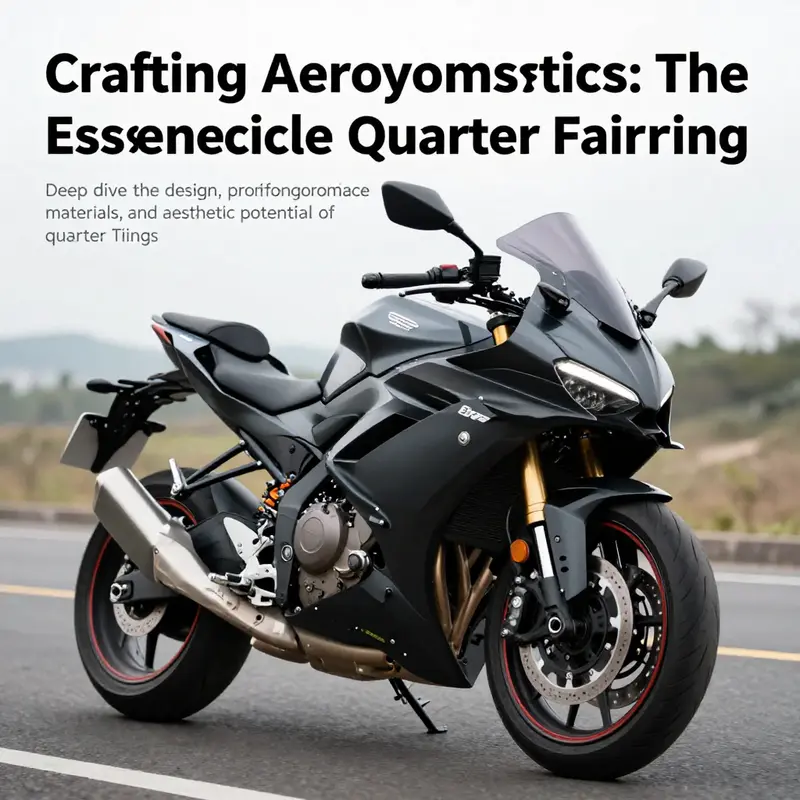
Motorcycle quarter fairings represent a unique blend of performance enhancement and style, catering to riders needing minimal wind protection while retaining a dynamic experience. Understanding their design principles is crucial for business owners aiming to cater to the motorcycle community efficiently. Each chapter discusses core aspects, from fundamental design concepts and aerodynamic benefits to the materials used, installation guidelines, and the customization possibilities they offer. By exploring these facets, business owners can better appreciate the value of quarter fairings and how to serve this niche market effectively.
Beyond the Basics: The Quiet Aerodynamics and Aesthetic of Motorcycle Quarter Fairings
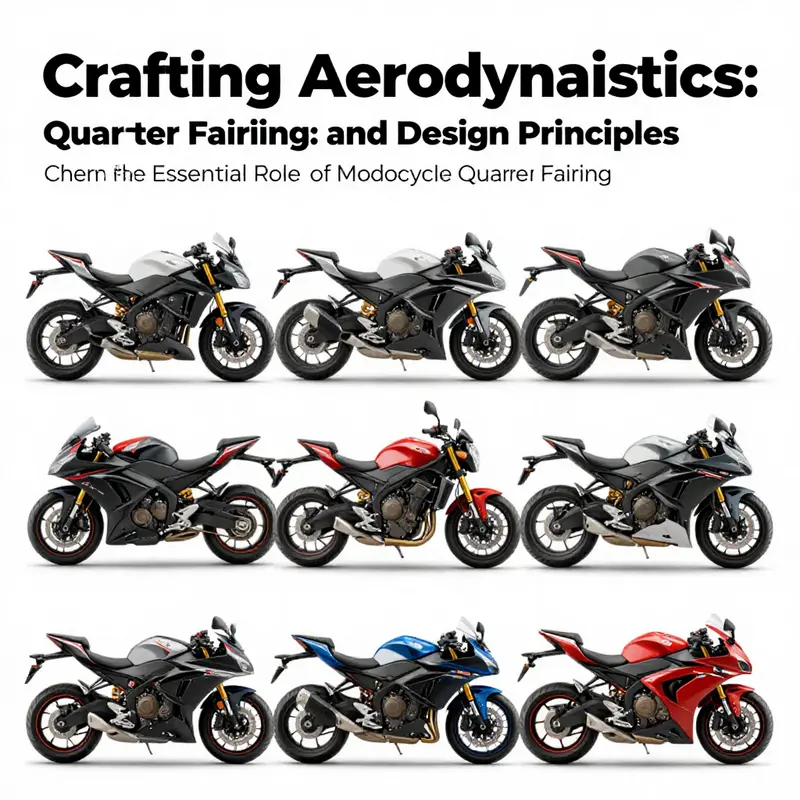
A motorcycle quarter fairing sits at the delicate seam between performance and personality. It is a minimalist piece of bodywork that wraps just enough of the front end to influence airflow without swallowing the bike’s naked face or complicating access to the engine. On many bikes, especially naked bikes, standard models, and cafe-inspired builds, the quarter fairing acts as a sharp-edged compromise. It reduces wind drag and smooths the rider’s line of sight to the horizon while preserving the open feel that makes aggressive riding feel immediate, unfiltered, and almost elemental. The appeal lies not in turning the motorcycle into a protected capsule, but in shaping a clean silhouette that enhances speed apparentness without hiding the frame’s mechanical honesty. When riders seek a blend of agility, ease of maintenance, and a distinctive look, the quarter fairing emerges as a pragmatic aesthetic choice with real, practical upside.
To understand why this component matters, it helps to picture the air as a living, moving medium that always seeks the path of least resistance. A full fairing can be a brake on that air’s whim, guiding it to envelopes that shelter the rider and the engine from wind, rain, and debris. A quarter fairing, by design, tames just the upper portion of that flow. It nudges the air around the headlight, around the upper fork, and across the top of the fuel tank. The aim is not to eliminate wind altogether but to reduce the buffeting and turbulence that increase fatigue on longer rides and to manage the lift and downward pressure that develop near the front wheel at speed. The rider experiences a more stable front end, a little less weight on the wrists, and a more confident sense of control at highway pace. In urban riding, where traffic gusts and variable wind directions tilt the bike’s balance, the quarter fairing contributes to predictable handling without the encumbrance of a larger panel.
From a design perspective, the quarter fairing embodies a philosophy that many riders appreciate: form should meet function in a way that respects the bike’s core character. Modern iterations often take cues from race-bred aerodynamics, translating blistering cold-weather wind tunnel insights into lines that look alive even when the bike is parked. The shapes are typically streamlined yet understated, with a focus on minimizing weight while preserving impact resistance. Materials reflect this dual aim: high-grade ABS plastic or composite resins deliver a resilient shell that resists stone impacts and minor crashes while keeping the overall weight low. The choice of material matters as much as the contour. A well-chosen quarter fairing can endure a few rock chips and weather cycles without cracking, while also keeping surface finish details—edges, seams, and mounting points—lined up for straightforward maintenance or replacement.
The practical benefits extend beyond drag reduction and aesthetics. The quarter fairing preserves access to essential maintenance tasks. Oil changes, spark plug inspections, and the removal of ignition components can be accomplished with a minimum of disassembly. This accessibility is a meaningful advantage for riders who want to service their machine at home or in a compact shop. It also keeps repair costs reasonable. Because the fairing covers less surface area than a larger piece, damages tend to be localized. A crack or a scuff is easier to assess and repair, which is a tangible point of interest for riders who ride hard but value repairability and budget-conscious ownership.
When it comes to the ride experience, compatibility is the foundation. A quarter fairing must align with the bike’s geometry, mounting points, and the headlight or instrument cluster arrangement. The front-end geometry determines who can install a particular fairing, and how the fairing interacts with the wheel’s projection, radiator scoops, and frame rails. Compatibility checks are essential to avoid misalignment that can create new wind pockets or interfere with components like the headlight bezel or instrument housing. Beyond fit, the fairing’s silhouette should harmonize with the bike’s overall line. A cafe racer-leaning bike looks distinct with a narrow, tapering fairing that echoes its elongated tank line, while a sport-touring machine benefits from a slightly broader upper edge that channels air toward the sides more smoothly. This balance between aerodynamic efficiency and visual coherence is not merely cosmetic; it’s a reflection of the rider’s intention for the build.
In the realm of customization, the quarter fairing is especially forgiving and expressive. It can be finished in solid tones, splashed with graphics, or treated with textured or metallic finishes that echo the bike’s paintwork. Graphic schemes can elevate the quarter fairing from a mere aerodynamic add-on to a significant styling statement. The material choice interacts with these finishes as well; ABS plastics can hold complex paint schemes and decals, while composites may offer unique surface textures that align with a high-performance look. For many riders, the fairing becomes a canvas that reinforces the bike’s personality—whether that personality runs toward understated track-ready aggression or a colorful, retro-modern fusion. The Purple Abyss Denim example from contemporary design language underscores this point: a visually striking surface that still adheres to practical aerodynamic goals demonstrates how form and function can cohabit without compromise. The key is to select a fairing that respects the bike’s existing sensory cues—the line of the headstock, the shape of the tank, the stance of the forks—so the final assembly feels inevitable rather than tacked on.
A broader consideration for any quarter fairing is how it integrates into ongoing ownership and riding goals. For urban commutes, the fairing’s wind-shielding contribution is modest but meaningful. It can shave a few gusty degrees from the rider’s wind exposure, reduce fatigue on longer city-to-suburb hops, and help define a comfortable cruising envelope. For moderate-long-distance touring, the same fairing contributes to a calmer upper-body wind experience while preserving the bike’s light, agile feel. For riders chasing a cafe racer or minimalist aesthetic, the quarter fairing is nearly essential. It frames the rider’s silhouette against a clean, uncluttered machine, enabling a look that communicates speed and intent even when the bike is at rest.
There are practical dimensions to consider that often shape a buyer’s decision. Aftermarket options have grown increasingly competitive, offering affordable alternatives to OEM parts while enabling broad customization. The market now supports a spectrum of shapes, contours, and mounting kits that accommodate different years and brands. The result is a robust ecosystem in which a rider can tailor the balance of wind deflection, weight, and maintenance requirements to the exact expectations of their riding life. It’s important, though, to match any new fairing to the model’s specific frame geometry and mounting points. A mismatch that seems minor in appearance can yield misfit issues that ripple through alignment, quick-release fasteners, and even the integrity of the headlight mounting. A careful fitment check—often accompanied by a review of mounting brackets and hardware—ensures the fairing remains a beneficial companion, not a source of ongoing adjustments.
In evaluating the broader implications of choosing a quarter fairing, it’s worth acknowledging how this component interacts with the bike’s thermal and electrical architecture. Because it sits above the engine and near the headlight, the fairing has the potential to influence airflow around cooling intakes and the instrument cluster. Designers tend to optimize the fins and intake paths beneath the fairing to avoid obstructing airflow to the radiator or to create subtle, intentional air channels that reduce drag without compromising cooling. The balance here is delicate. The rider’s comfort and the bike’s reliability can hinge on whether the fairing’s form supports steady thermal performance at speed, especially in warmer climates or during spirited road sessions. It is precisely this attention to the interplay between aerodynamics, access, and thermodynamics that elevates the quarter fairing from a cosmetic choice to a considered performance feature.
Ultimately, the decision to adopt a quarter fairing rests on how well the component aligns with the rider’s priorities: light weight, ease of maintenance, and a distinctive visual footprint; a controlled but not oppressive wind experience; and a cockpit that remains inviting rather than claustrophobic. The compatibility considerations should be treated as a core stage of the process, not an afterthought. Matching the fairing to the bike’s headlight size, instrument cluster depth, and mounting framework ensures a clean install with a lasting, stable surface that can withstand adventure and daily use alike. The right choice also harmonizes with the bike’s steering geometry and overall weight distribution to avoid any unintended changes in handling. In sum, a quarter fairing that fits well does more than improve aerodynamics; it enhances the bike’s character and the rider’s confidence, letting performance, style, and practicality coexist on the same line.
For readers interested in expanding their exploration of fairings, the conversation naturally extends into a broader ecosystem of aftermarket options, brand lines, and customization paths. The quarter fairing is a versatile choice that invites experimentation while remaining rooted in principle. It offers a pathway to sharpen the bike’s stance, refine airflow, and express a personal design language without surrendering ease of service or daily usability. The journey toward a well-chosen quarter fairing is as much about understanding the bike’s personality as it is about studying its wind behavior. When done thoughtfully, the result is a machine that looks ready for the track and feels ready for the street, all while preserving the open, direct connection between rider and machine that makes motorcycles so compelling.
Riders who want to dig deeper into the practicalities of integration can explore the quarter fairings category as a starting point for options and fitment guidance, while keeping in mind the importance of compatibility and maintenance. Quarter fairings category provides a useful overview of how different chassis and mounting schemes translate into practical choices. For broader context and a deeper dive into design and performance considerations, an external resource can offer disciplined insight into the forces at play behind these small but meaningful panels: https://www.bikeride.com/quarter-fairings-guide/.
Winglets on the Edge: Quarter Fairings as Subtle Shapers of Speed, Stability, and Style
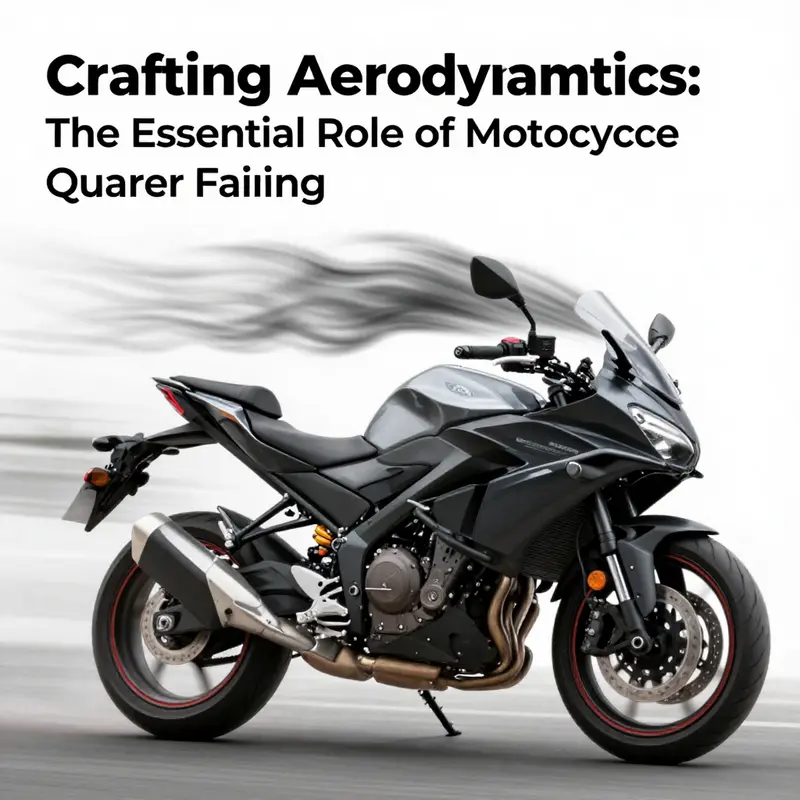
In the spectrum of motorcycle fairings, the quarter fairing sits at a unique crossroads. It is small enough to preserve the naked, agile feel many riders prize, yet purpose-built to guide air where it matters most. Far from being merely decorative, this minimalist shield tucked around the headlight and upper fork is a carefully engineered piece of the bike’s aerodynamic conversation. It is designed to tame the air that rushes toward the front end, reduce the whistling and buffeting that can fatigue a rider on long stretches, and, in select designs, contribute a measure of downforce that helps the chassis breathe with more confidence at speed. The quarter fairing thus becomes a practical statement about how performance and personality coexist in modern motorcycling.
Aerodynamics, in the narrow sense, is about reducing drag and shaping the air that the machine must cut through. A well-executed quarter fairing creates a smoother path for the wind as it encounters the front wheel, fork, and headlight housing. The air that would otherwise swirl into turbulence is redirected along a contoured surface, following the bike’s lines rather than clashing with them. The effect can be subtle, yet at highway speeds or on windy days, those small reductions in drag compound with the bike’s natural momentum. The rider experiences a quieter cockpit, steadier steering inputs, and a more predictable feel when the bike is pressed into a line or hustled through a lean into a curve. It is a practical lesson in how restraint, not excess, yields more efficient motion.
Beyond drag, the quarter fairing is increasingly seen as a pathway to controlled downforce. In the high-stress environments of MotoGP and other top-level racing, aerodynamic elements are tuned to stabilize the front end and improve tire grip. Modern quarter fairings borrow that thinking and implement it in a lighter, smaller package. Their form can generate a slight pressure differential between the air above and below the fairing as air moves over its upper surface. This differential nudges the front of the bike downward rather than upward, increasing the load on the front tire at critical moments. The result is improved front-end feedback, more confident turn-in, and a reduced tendency for the head to snap aft in gusting crosswinds. It is not the same as a full-blown wing, but the principle—harnessing airflow to press the chassis into the road—becomes an important part of how the bike handles at speed and in aggressive riding scenarios.
These aerodynamic traits, however modest, interact with the rider’s perception of how the machine behaves. A quarter fairing can alter the way air flows around the rider’s torso and arms, changing the feel of wind pressure on the chest and shoulders. This, in turn, affects fatigue levels and comfort, especially on longer rides where wind noise and blast become more noticeable as speed climbs and weather changes. Riders who lean toward sport-touring or cafe racer aesthetics often value this balance between performance and openness. They want the sensation of direct front-end feedback and a lean, uncluttered silhouette, but not the cost of strain or distraction caused by raw wind forces. The quarter fairing helps secure that balance by shaping not just the air but the rider’s experience of that air.
Material choice and construction play a critical role in realizing these aerodynamic ambitions without sacrificing durability. ABS plastics, reinforced composites, and other lightweight resins are common choices because they offer a blend of impact resistance, flexibility, and ease of molding. The materials must withstand road debris, UV exposure, and the stresses of vibration at highway speeds, all while remaining responsive to minute changes in airflow as temperature and wind direction shift. A well-made quarter fairing will not warp or crack with a single impact or under rapid heat cycling. Instead, it will resist fatigue and maintain a consistent profile. The geometry itself—how the fairing curves, where it terminates, and how it connects to the forks and headlight assembly—must be tuned to the bike’s overall geometry. This tuning ensures compatibility with the rider’s posture and with the bike’s suspension travel, steering rake, and wheelbase so that the fairing does not introduce new clearance issues or alter steering geometry in unintended ways.
Beyond function, the quarter fairing is a canvas for styling. The bike’s silhouette takes shape not just from the frame and tank, but from the small, carefully placed planes that define its front end. A quarter fairing can emphasize a bike’s sportier character, add a note of aggression to a cafe racer’s profile, or soften the lines of a standard bike toward a more refined, touring-leaning look. The visual impact matters because riders often view their machines as expressions of their riding philosophy. A well-designed fairing aligns form with function: it looks integrated, feels purposeful, and communicates a sense of speed even when the bike is standing still. That synergy between aesthetics and aerodynamics is not an accident. It is the result of iterative design, wind tunnel testing, and field experience—where the rider’s feedback complements laboratory insight to refine how a single curve in the bike’s skin influences overall behavior on the road.
Fitment and compatibility are the practical foundations of any quarter fairing’s value. A fairing that improves airflow but cannot be mounted securely or interferes with the steering lock, the headlight’s aim, or the radiator shrouds quickly becomes more trouble than it’s worth. As the market has broadened, manufacturers and builders have recognized that compatibility with a spectrum of makes and models matters just as much as the raw aerodynamic gain. The procurement decision rests on precise fitment for a given model’s bracket points, the available wrap-around around the fork crown, and the way the fairing works with the bike’s electrical and lighting systems. Even the mounting hardware—brackets, fasteners, and gaskets—holds significance because it directly affects vibrational characteristics and long-term durability. A thoughtful quarter fairing will come with a mounting strategy that respects serviceability, allowing quick removal for maintenance or a change in weather conditions without compromising the bike’s alignment or the integrity of the fairing’s seal against the elements.
Choosing the right quarter fairing is thus about more than appearance. It is an evaluation of how much airflow control one wants, how much wind protection is acceptable, and how the fairing’s presence aligns with riding goals. A rider who spends weekends sprinting between twisty roads will prioritize optical alignment with the bike’s chassis and a profile that minimizes weight while delivering a measurable gain in stability at speed. A rider who commutes long distances may favor a design that reduces wind pressure and noise without introducing bulk or complexity. And those who drift into cafe racer territory often seek a look that echoes a heritage of stripped-down machines while maintaining contemporary aerodynamic benefit. The beauty of a quarter fairing lies in its ability to be a personal statement without overpowering the bike’s essential character.
To bridge the conceptual with the practical, consider the case of how these fairings influence maintenance and longevity. The front end is a harsh environment: exposed to stone impacts, weather, and road spray. The quarter fairing, being a relatively exposed shield, must tolerate abrasion and flux in temperature that can lead to material fatigue if poorly designed. Accessibility matters. The rider or technician should be able to remove the piece without disassembling large sections of the bike, perform a quick inspection for cracks around fastener points, and reattach with confidence. The idea is to preserve the balance between lightness and strength, so the fairing remains a faithful performer across seasons and miles. In a sport-touring mindset, where the machine travels through various climates, the fairing’s role extends beyond aerodynamics to include a degree of environmental shielding around the fork and headlight area, protecting seals and aiming mechanisms from direct exposure when the weather turns. The result is a more predictable, rideable machine regardless of conditions, which in turn reinforces the rider’s confidence and the bike’s reliability as a tool for expression and travel.
As the design language of modern motorcycles continues to evolve, the quarter fairing will likely embrace more sophisticated forms and adaptive airflow concepts. Computational fluid dynamics and wind tunnel studies will push the boundaries of what a small, contained surface can accomplish. Designers will experiment with subtle changes in curvature, edge geometry, and integration with other front-end components to coax even more efficient airflow, with an eye toward minimizing unintended drag while maximizing steering fidelity and ground grip. The narrative of the quarter fairing is thus not a dead-end but a continuing conversation about how a modest piece of skin, placed at the right angle to the wind, can enhance a machine’s ability to cut through air, stay planted in corners, and carry a rider’s intent with a quiet, confident presence on the road.
For readers who want to explore the broader ecosystem of fairings and their place in motorcycle customization, the conversation about quarter fairings is a doorway, not a destination. The category pages that group fairings by manufacturer or model-family provide a sense of how different geometry philosophies translate into actual riding experiences. The BMW fairings category offers a sense of how a category approach to front-end skin can align with a bike’s architecture, without getting lost in the specifics of any single model. It is the abstraction of fit, form, and function that matters here—the idea that a small, well-tuned piece of skin can harmonize with a rider’s style, a bike’s balance, and the road’s ever-shifting breath. External resource: the broader aerodynamic philosophy that informs quarter fairing design is echoed in high-level discussions about airflow control and downforce in racing contexts. For a deeper technical read, see the MotoGP discussion on airflow control and downforce in MotoGP: https://www.motogp.com/en/news/airflow-control-and-downforce-in-motogp/.
Shaping Speed and Style: The Materials and Craft Behind Motorcycle Quarter Fairings
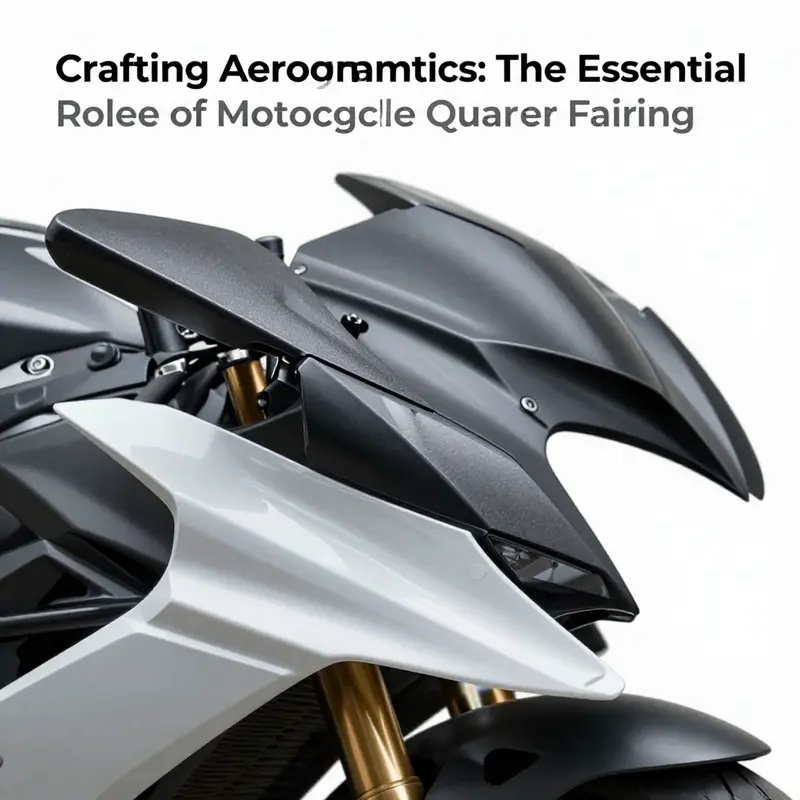
The quarter fairing sits at the intersection of form and function. It is not the largest or the most protective panel on a bike, yet it wields outsized influence on how a machine slices air, how it feels to ride, and how its lineage is read by onlookers. In the small, highly visible front-side sweep near the headlight and upper fork, the material choice and the construction method determine how readily the fairing can be molded into a clean, daring line while withstanding wind, weather, and the occasional tip-in with a low curb or a careless gravel patch. To understand why these panels matter so much, one must look at the materials themselves, the techniques used to shape them, and the practical realities that riders encounter when they upgrade or replace a quarter fairing on a street machine, a café racer, or a sport-touring mount.
Among the most common materials, ABS (acrylonitrile butadiene styrene) has become a staple for modern quarter fairings. It strikes a practical balance: good impact resistance, lightness, and the ability to be molded into the sleek, tight contours that define contemporary aero styling. ABS also accepts paint with a high-gloss, glassy finish that can make even modestly sized fairings appear premium through the depth of color and the smoothness of the surface. The material holds shape well under a wide range of temperatures, which is an essential trait for motorcycles that see sun-drenched rides and chilly early mornings alike. While ABS sits toward the higher end of cost among thermoplastics, its durability and finish quality often justify the expense for both manufacturers and riders who value long-term aesthetics and rigidity.
Polycarbonate, often used in combination or as part of ABS/PC blends, occupies a different niche. Where ABS emphasizes surface quality and ease of production, PC brings superior impact strength. This makes PC a logical choice for higher-performance or racing-focused fairings where resistance to cracking and shattering is paramount. In practice, PC-backed or blended quarter panels can survive sharper impacts with less deformation, a characteristic that translates into a piece that remains visually coherent after a mishap or a heavy scrape. However, PC can be more prone to scratching than ABS, which has spurred protective coatings or films in many builds. The result is a fairing that can endure rougher use without surrendering its reflective, pristine look entirely.
Fiberglass remains a favorite among customizers and aftermarket enthusiasts who prize moldability and the ability to push the limits of form. Hand-laid fiberglass gives designers and builders extraordinary flexibility, allowing dramatic curves or intricate detailing that might be harder to achieve with thermoplastics alone. The trade-off is weight and the need for skilled craftsmanship. Fiberglass can be tuned to a strong strength-to-weight ratio, but it is more prone to cracking under certain impacts and relies on careful resin work and curing to achieve a durable, weather-ready shell. For riders who seek a distinctly personal silhouette—an edge that reads as both mechanical art and performance hardware—fiberglass is a proven route, provided the build and the finish are tended with care.
Another material that occasionally surfaces in the quarter-faring dialogue is polypropylene. In the broader world of plastics used in fairings, PP is noted for ease of processing and cost efficiency. Yet for primary structural panels subjected to sun exposure and reliability demands, PP’s Achilles’ heel is its UV susceptibility and comparatively modest impact resistance. It is more often found in secondary panels or budget-friendly applications where the rider is prioritizing weight and budget over peak durability. The material choices, then, map to a rider’s priorities: lightweight agility, maximum gloss and color fidelity, or a focus on rugged durability and a custom, hand-finished look.
The construction techniques behind quarter fairings reinforce the material properties and translate them into real-world performance. Injection molding stands as the workhorse for ABS parts, delivering consistent dimensional accuracy and a repeatable surface finish that supports precise paint jobs and durable, chip-resistant coatings. This process makes it feasible to produce fairings with tight radii, refined edges, and complex features such as vent channels or integrated mounting points that align perfectly with stock frames. Vacuum forming, another staple in thermoplastic fabrication, is particularly useful for larger panels or forms that require careful control of surface contour with fewer tooling steps. It allows designers to shape large, clean surfaces while preserving the feel of a solid exterior that can be painted and polished without the telltale seams of lesser methods.
Fiberglass construction, by contrast, often involves hand lay-up or spray-up techniques, followed by sanding, resin curing, and finishing. The result is a panel that can be tailored to the subtle irregularities of a bike’s geometry, a feature that is invaluable in the world of café racers and custom builds. The craftsmanship involved yields unique one-off shapes that look and feel personalized, though that same process demands time and expertise to achieve consistent results. The weight penalties, when present, can be managed through careful lay-up strategies and the use of lighter resin systems, but the inherent variability of hand-built parts means owners often compare the feel of a fiberglass panel to that of a bespoke exhaust or a selectively tuned chassis—something that must be earned, not assumed.
Across all these materials, the surface finish plays a pivotal role in how the fairing performs in daylight and night alike. A smooth, well-prepped surface reduces drag and ensures paint sits evenly, while a durable topcoat guards against abrasion, UV fading, and chemical exposure from road grime and fuel additives. UV resistance is not just about color fidelity; it also preserves structural integrity in the long run by minimizing microcracking and brittleness that can accompany prolonged sun exposure. The finish is, in its own way, a shield that protects the core material from the harsh environment and preserves the panel’s appearance as the bike ages.
Compatibility is another axis in which the stress of design meets the reality of ownership. Quarter fairings must align with specific makes, models, and sometimes even production years. Even when the external shape appears similar, subtle differences in mounting points, bolt patterns, and clearance can determine whether a panel fits cleanly or requires adapters, notching, or alignment shims. This is where the balance between aftermarket possibilities and factory-backed reliability comes into play. An ideal quarter fairing concept is one that respects the bike’s geometry and mounting architecture while offering a surface that can hold a pristine finish and a robust bond to the frame at the required speeds and wind pressures. For riders who want to explore fit across a family of bikes or a range of aftermarket options, an internal reference point can help anchor expectations. For example, a broad category such as the BMW fairings provides a sense of how different materials and build processes translate into practical fit and form, even if the exact panel you choose may diverge in the details.
When choosing a quarter fairing, riders weigh several practical considerations beyond material type. Weight is a primary concern, especially for sport-touring and café racer builds where the rider experiences every gram as it translates into handling and steering inertia. A lighter panel can contribute to a feeling of nimbleness and quicker airflow management, but it must remain stiff enough to maintain a clean aero profile at highway speeds. Meanwhile, stiffness and impact resistance influence how the panel behaves in windy gusts or in the case of a minor collision with a road obstacle. An overly flexible panel may flutter at speed, generating noise and possibly compromising alignment with the headlight or fork components. Durability in temperature extremes matters too. A quarter fairing needs to resist warping or softening when exposed to sun-baked heat in summer and rapid cooling in mountain passes. The right blend of thermo-mechanical stability and surface integrity ensures a panel remains visually convincing and aerodynamically predictable across seasons.
From a maintenance perspective, the material choice guides repair routes and long-term upkeep. ABS, for instance, tends to respond well to standard fiberglass or plastic repair techniques, with patches and refinishing that restore both strength and appearance. PC, with its toughness, may demand additional care in the finish to avoid scratching, and protective coatings can help reduce scuffing from belts, zippers, and bag lids that brush against the panel during entries and exits from parking spots. Fiberglass repairs can be more involved, requiring careful resin selection and full curing to avoid re-cracking under stress. The maintenance routine often includes precautions such as protective films or wax-based finishes to keep the surface vibrant, while also planning for repairability—understanding where to access mounting points and how to remove the panel without compromising its edge reinforcement.
Beyond the technical, there is a narrative about culture and craft. Quarter fairings capture a rider’s intention—whether that is the sleek, open feel of a café racer’s silhouette or the practical, weather-conscious stance of a sport-touring machine. The material and construction choices are not abstract specs; they translate into the ride’s first impression—the way light skims across a panel, the cadence of the wind as you lean into a corner, and the confidence you feel when you know the fairing will hold its line under load. In this sense, the quarter fairing is a translator of performance intent. It speaks the language of speed without shouting, offering a surface that can be sculpted to reflect a rider’s taste while preserving the bike’s core personality. The craftsmanship behind the panel—injectors and forms in the factory, resin and fiber in a workshop, or a mold crafted in a studio—becomes part of the bike’s story, a quiet testament to how material science and artistic restraint can meet on the same axis of speed.
When the discussion moves toward durability and long-term value, the choice of material and its method of construction must align with the rider’s climate, riding style, and maintenance habits. In desolate, sun-scorched climates, UV stability becomes less negotiable; the finish must resist yellowing and micro-scratches. In urban environments, impact resistance and repairability can take precedence, favoring blends or composites that tolerate minor impacts without sacrificing aesthetic integrity. In racing or aggressive street riding, the priority often shifts toward higher impact strength and rigidity, even if that means accepting a higher price tag or more challenging repair work when necessary. In all cases, understanding how ABS, PC, fiberglass, and PP behave in real-world conditions helps riders manage expectations and plan service intervals, paint schemes, and protective strategies that keep the quarter fairing performing and looking as intended.
The exploration of materials and construction is not merely a catalog of options; it is a lens through which riders can interpret the design language of a bike. The panel’s silhouette, its edge treatment, the gloss of its surface, and the way it sits against the fork and headlight—all these cues are informed by how the panel is built. The conversation between a designer’s intent and a rider’s needs is realized through clever material choices and disciplined manufacturing. In the end, the quarter fairing is a small but telling piece of a larger performance puzzle. Its material backbone and the craftsmanship applied to it determine how faithfully a bike expresses its character while remaining reliable under the unpredictable demands of real-world riding. As riders continue to seek that balance between agile handling, distinctive look, and practical durability, the quarter fairing remains a testament to how thoughtful materials and careful construction can shape both the feel and the face of a motorcycle.
External reference for further reading on fairing materials offers a concise technical overview that complements this discussion: https://www.motorcycle-mag.com/features/motorcycle-fairing-materials-explained/.
Balanced Speed and Style: Precision Installation of Quarter Fairings for a Clean, Agile Front End
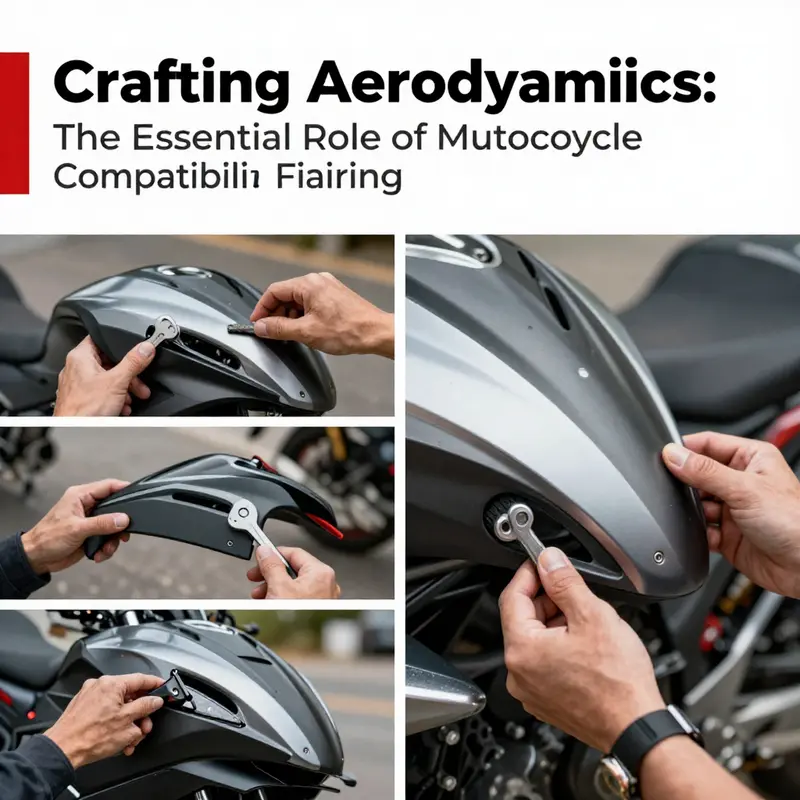
A motorcycle quarter fairing sits at the border between form and function. It is intentionally minimalist, covering only the upper fork and headlight area to shave a little wind across the rider’s chest while preserving the openness of the cockpit that sport and naked-bike enthusiasts often value. The quarter fairing’s job is not to weatherproof the rider or to hide the machine behind a sheet of plastic. Instead, it offers a dash of aerodynamic refinement and a strong visual statement, a way to hint at streamlining without sacrificing the quickness of maintenance, the accessibility of the engine, or the tactile presence of the handlebars. In that sense, it is a design compromise that pleases riders who want a crisp road feel without the bulk of larger fairings. The right choice aligns with the bike’s geometry, riding intent, and even the rider’s personal sense of aesthetics, so the installation becomes almost as important as the piece itself. Without careful alignment and compatible mounting, even the best-looking quarter fairing can transform from a styling flourish into a source of wobble, interference, or aesthetic mismatch at speed.
Choosing a quarter fairing is not about chasing the latest look or slipping on anything that appears similar. It is about compatibility with the motorcycle’s frame, fork, and headlight assembly, and about ensuring the fairing’s mounting points align with existing hardware or with brackets that preserve factory finish. In this sense, specificity matters more than universality. A fairing designed for a specific make, model, and year will typically align with the frame geometry, provide reliable mounting points, and maintain the intended balance between steering, weight distribution, and wind flow. When a rider encounters a kit that claims universal fitment, the probability of misalignment, excessive vibration, and required permanent modifications rises. It is worth the time to verify that the fairing you choose was formed with a particular motorcycle in mind, and to seek out brackets or hardware that preserve the original finish and structure of the bike.
The installation landscape is as important as the fairing’s external line. A detachable windscreen fork-mount bracket that can be installed without drilling is a valuable option for riders who want wind protection without committing to permanent modifications. It preserves the factory finish and allows a clean return to stock if needed. The practical upshot is clear: compatibility and ease of install translate directly into confidence on the road. The rider gains a sense that the front end remains true to its intended steering geometry, while the fairing’s lines remain visually coherent with the bike’s overall silhouette. The goal is not to force the bike into a silhouette it was never meant to wear, but to add a calibrated portion of aero shaping that complements the machine’s existing geometry.
In the realm of fairing types, the three-quarter and half fairings provide distinct philosophies of wind management and accessibility. A three-quarter fairing generally covers about three-quarters of the front and sides, delivering enhanced aerodynamics and greater protection for the upper engine and rider without encasing the entire front end. This makes it a compelling choice for riders who enjoy long-distance comfort and a degree of weather resistance, yet still want engine access and straightforward maintenance. The half fairing, by contrast, focuses on the upper front section—around the headlight and the handlebars—while leaving the engine exposed. It yields moderate wind protection with less mass and fewer maintenance hurdles, preserving the light, responsive feel that many sport and café-racer configurations prize. The choice between these two kinds of quarter fairings hinges on how a rider intends to ride, how much weather exposure is acceptable, and how much access to the engine and electronics is desired for on-the-fly maintenance.
Compatibility considerations begin with the mounting points. Every fairing kit is built around a set of attachment points that must line up with the motorcycle’s frame, fork, and any existing hardware. If a kit’s mounting holes do not align, the installation becomes a patchwork of brackets, drilling, or, worse, compromised structural integrity. It is not uncommon for manufacturers or reputable aftermarket suppliers to provide a detailed set of brackets tailored to specific models. Those brackets simplify alignment and ensure the fairing sits in the correct plane relative to the headlight, forks, and fairing lines. This is not merely about aesthetics; misalignment can alter the aerodynamics in unintended ways, affecting stability at high speed or changing the effective steering feel near the limits of lean and lock. The post-install check is a moment of truth: the fairing must not collide with the handlebars at full lock, must not obscure mirrors or lights, and should sit true under after-market winds or road debris. A thorough inspection after a first test ride is essential, looking for any flex, unusual vibrations, or gaps that indicate a mounting or clearance problem.
Clearance is another pivotal factor. The rider’s line of sight, the handlebar sweep, and the angle of the mirrors all come into play. The fairing cannot impede steering input, nor can it press against the headlight housing, hoses, or wiring. This is where careful measurement and, if possible, a mock install without final fasteners can save time and risk. The fit should leave enough room for heat expansion, even in hot climates where engine heat and radiant wind pressure can cause slight shifts in how the fairing settles against its mounting points. It is also wise to consider future maintenance. If you plan to service the headlight, radial fork seals, or the electrical harness, you want to be sure components can be accessed without removing the entire fairing every time. Some brackets are designed to allow quick-release or tool-free removal, which can be a big practical advantage, reducing downtime when maintenance becomes necessary.
Materials matter, too. Quarter fairings are typically manufactured from durable ABS plastic or composite resins. ABS offers a balance of impact resistance, weight, and cost that appeals to riders who want a robust, affordable upgrade. Composite resins can provide a stiffer, more rigid shell with high lightness and a premium feel, though they often come at a higher price and require more careful repair techniques if damaged. The exterior finish matters as well. A high-quality finish can resist UV exposure and road grime, preserving the fairing’s color and gloss despite long miles and frequent wash cycles. The joining lines between fairing and tank or forks should be neat, with consistent gaps, to convey a sense of precise engineering rather than improvised assembly. Even the way the fairing meets the light assembly can influence the overall look—well-defined margins and clean edges contribute to the impression of a machine that is both fast and thoughtfully built.
Choosing and installing a quarter fairing is also a matter of consulting source material and documentation. Manufacturer documentation and trusted aftermarket guides provide essential details on how the shell’s geometry interacts with a particular motorcycle’s structure. They offer guidance on recommended brackets, torque ranges for fasteners, and cautions about potential interference with wiring or hydraulic lines. Those resources bridge the gap between a dream of a sleeker front end and the practical reality of fitment on a specific bike. They remind riders that while the quest for faster, cleaner lines is appealing, it must be grounded in the actual mechanical architecture of the motorcycle. In this sense, the installation becomes part of a broader conversation about maintaining the bike’s integrity while expanding its character. For riders who seek additional model-specific guidance, resources such as a manufacturer’s technical documentation and a curated catalog of fairings can provide detailed, model-aware insights. See a practical reference to model-specific catalog guidance in the Honda fairings catalog for context and examples of how fitment is handled across different configurations.
Towards a mindful, well-informed approach to quarter fairings, many riders also turn to catalog-style resources that group fairings by model families and practical use cases. These catalogs help translate top-line aerodynamics into real-world fitment, highlighting which kits were designed with particular headlight shapes, fork diameters, and mounting rails in mind. When engaging with a catalog, it is advisable to cross-check the model year with the kit’s stated compatibility, since small changes in frame geometry or headlight housings from year to year can shift whether a given fairing will align with the existing hardware. This careful cross-checking reduces the risk of incompatibilities and ensures the fairing’s aerodynamics can be realized without compromising the bike’s handling or maintenance access. For riders who wish to explore catalog options that align with their bike’s design language, a practical starting point is to peruse the Honda fairings catalog to understand how fairing lines, mounting strategies, and finish options converge on a coherent aesthetic and performance goal. Honda fairings catalog.
In short, installing a quarter fairing is not simply about adding a cosmetic layer. It is about thoughtful selection, precise alignment, and careful consideration of clearance and mounting. The rider who treats this as a small, critical project tends to achieve a front end that feels both lighter in weight and more purposeful in stance. The right quarter fairing, supported by compatible brackets and a clean installation, can transform the motorcycle’s presence on the road—without changing its fundamental character. It respects the rider’s desire for a more streamlined look, while preserving the machine’s natural agility and accessibility. The result is a nuanced balance: a front end that looks and feels faster, a rider experience that remains direct and unfiltered, and a bike that carries itself with a disciplined, understated elegance. For those seeking deeper technical grounding, manufacturer manuals and the broader reference literature offer concrete instructions and cautions about installation procedures, including model-specific fitment notes, bracket choices, and the importance of maintaining proper clearances during operation. For model-specific guidance and installation context, consult the Honda owner-manual and official documentation as a baseline for safe, accurate fitment. And, as always, avoid improvising structural changes that could impact steering geometry or rider safety. External technical references can provide additional insight into design intent and safe installation practices: https://www.hondacare.com/owners/manuals/2026-honda-cbr1000rr-owner-manual.pdf.
Slim Lines, Bold Identity: The Aesthetic Power and Personalization of Motorcycle Quarter Fairings
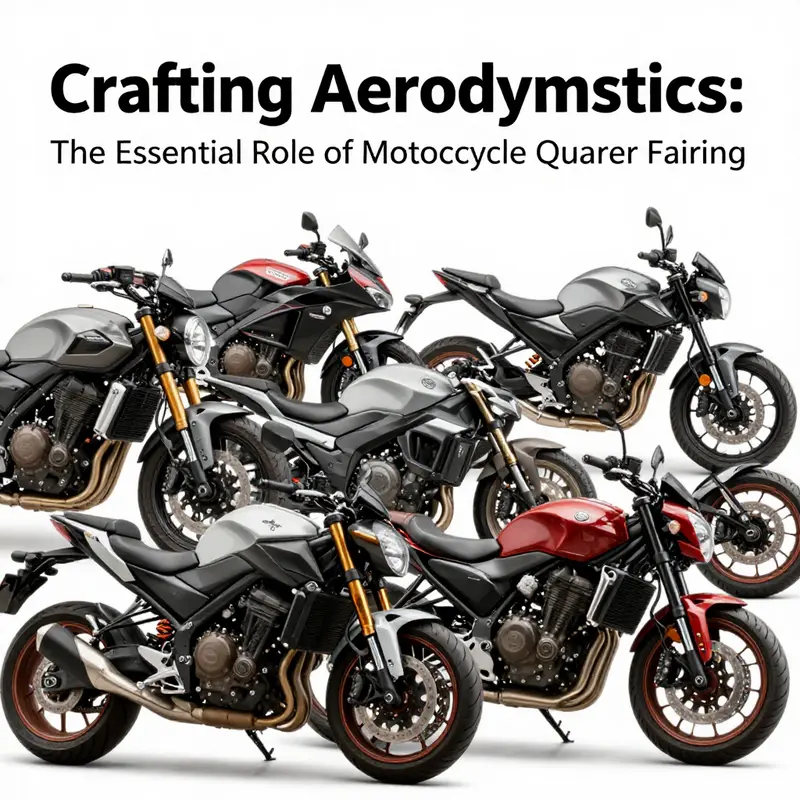
A quarter fairing is often described as the minimalist of motorcycle bodywork, but that description belies its quiet potential. It sits at the front end, just around the headlight and the upper portion of the fork, a small sculpted panel that can alter the bike’s demeanor without overwhelming its silhouette. In the realm of two-wheeled design, where every curve communicates something about speed, precision, and personality, the quarter fairing operates like a subtle punctuation mark. It can sharpen the bike’s lines, accentuate a rider’s stance, and cue a story about the rider’s tastes. The simplicity of its airfoil and its restrained footprint invites a different kind of dialogue between machine and person—one that favors selective drama over theatrical spectacle. This is not about transforming a bike into a different category of machine; it is about refining what you already ride, giving it a distinct identity while preserving the essential breathing space that other, larger fairings might erase.
The aesthetic value of quarter fairings grows from their ability to harmonize contrast and continuity. They preserve the bike’s original look, yet introduce a refined, almost whispered statement: we value speed and form, but we do so with restraint. For many riders, especially those drawn to sport-touring, café racer, or custom builds, that restraint becomes a feature in itself. A quarter fairing can frame the headlight’s character, echo the lines of a fuel tank, or pull a single color into the bike’s front end to unify a look that might otherwise feel disjointed. The result is a streamlined appearance that remains legible at a glance. The rider’s eye reads motion in the bike’s face, even when the machine is at rest, because the fairing reinforces rhythm—verticals, horizontals, and the subtle arc of the front profile—without shouting over the rest of the motorcycle’s architecture.
Customization becomes the most tangible avenue through which quarter fairings express individuality. They are lightweight and generally affordable, and their installation is often straightforward enough to invite experimentation without a parade of specialized tools. These factors convert customization from a high-cost hobby into an accessible practice, allowing riders to explore color, texture, and finish in ways that echo the broader shift toward modular, designer-ready motorcycle aesthetics. A hand-painted motif can be limited only by the rider’s imagination and the skill of the artist; a vinyl wrap can deliver a dramatic upgrade in color or pattern with minimal downtime; a carbon-fiber or fiberglass veneer can provide a high-tech look without the price tag of a full carbon panel. Each option invites a different relationship with the bike’s geometry, turning the quarter fairing into a surface on which to cast identity rather than a mere shield against wind.
The appeal of customization is reinforced by the way quarter fairings fit into diverse riding contexts. On a daily commuter, a clean and restrained front face can reduce visual clutter and contribute to a calmer, more intentional ride. In a sport-touring setup, the fairing can echo performance cues while maintaining a practical, rider-friendly profile. Café racers, who often prize vintage silhouettes and precise, minimalist lines, can use a quarter fairing to reinforce a retro look without resorting to a heavy, full-body assembly. The spectrum of fitment across models—covering upper forks and headlight assemblies—means a broad audience can experiment with different configurations, scales, and styles. The wearable design language of these fairings shifts the focus from pure function to function-with-artistry, recognizing that the rider’s mood and the road ahead can be communicated through a few carefully chosen panels.
For riders who crave a tangible sense of customization, the quarter fairing serves as a practical canvas. Lightweight by design, it invites experimentation with materials that range from durable ABS plastic to composite resins. Abs plating or panels with a woven or matte finish can alter the textural signature of the front end, while the choice of color or a graphic scheme can drastically change how the bike is perceived in motion. A crisp accent line along the perimeter can guide the eye along the bike’s geometry, highlighting the fork crown, the headlight’s shape, and the fall of the tank line. The result is a cohesive front-end language that feels deliberate, like a designer’s sketch brought to life on metal and plastic.
The interplay between material choice and visual effect is more than cosmetic. It informs how a rider experiences the bike in real-world conditions. ABS plastic generally offers a good balance of impact resistance, light weight, and affordability. Composite resins can push the premium look further, offering deeper depth in color and a more integrated surface that can resemble a single, sculpted piece. The choice matters in how the panel takes paint, or how a carbon-fiber veneer catches the light in a café-lit alley or sunlit highway. Even the finish—gloss, matte, or satin—contributes to the bike’s overall mood. A gloss finish can amplify a bright, high-contrast color scheme, making the front end feel more aggressive and lively. A matte finish can soften the lines, lending a classic or understated vibe. These decisions ripple through the visible language of the bike and influence how bystanders, photographers, and riders themselves perceive velocity and attitude.
Rider-specific considerations come into sharper focus when thinking about fit and compatibility. Quarter fairings must align with a given motorcycle’s geometry, mounting points, and headlight configuration. The design intent is to preserve original clearance while adding a sculpted face that looks integrated, not tacked on. The best installations respect the bike’s lines and the rider’s posture, avoiding bulk that could obscure the instrument cluster or crowd the steering head. In practice, this means checking model-specific mounting provisions and ensuring that the panel sits flush with the existing bodywork, with precise gaps and seals that keep out spray and rain where possible. It also means recognizing that different riders might want different outcomes: some prefer a minimal edge that hints at sport aesthetics, while others want a more pronounced, statement-making front end that anchors a custom narrative.
The cultural dimension of quarter fairings deserves attention. In contemporary motorcycle design, riders increasingly seek modular, easily updatable components that can evolve with taste and riding needs. Quarter fairings fit neatly into that trend, serving as a low-cost, low-commitment gateway to personalization. They enable a steady progression from stock, unknown front ends to customized expressions without the heavy investment or long downtime that larger fairings entail. This modular mindset reflects a broader shift in the customization scene, where riders value personal storytelling through the bike’s surface language as much as through its mechanical tuning. The fairing becomes a facet of a living, changing machine, capable of shifting its look as easily as it shifts gears on a back road.
For riders who want to see examples and guidance that speak to modern styling and customization, a broader view of fairing strategies can be illuminating. These resources gather perspectives on how builders balance form and function, and how the front end serves as a canvas for color, texture, and graphic language. They emphasize that the most satisfying upgrade is one that respects the bike’s original character while elevating it with a refined, intentional touch. As design conversations in motorcycling continue to evolve toward personalized, modular options, the quarter fairing remains a practical and expressive option. It is both a shield and a screen: a modest barrier against wind and weather, and a surface upon which riders project their own sense of style and speed.
From a rider’s perspective, the choice to add or upgrade a quarter fairing is as much about mood as mechanics. It is about how a machine communicates with its owner on the road—the way light glints off a satin edge, how a color choice refracts on a sunlit highway, and how the front end frames the rider’s stance in a way that feels both comfortable and intentional. It is about a bike that looks ready for the next corner and is also dressed to reflect the rider’s personality at a glance. Such design decisions matter because they influence how a rider feels when they ride. They shape the anticipation of acceleration and the satisfaction of a well-placed line through a sweepers’ bend. In this sense, the quarter fairing is not merely a piece of plastic; it is a medium through which riders craft their own riding narrative—an aesthetic tool that couples identity with the practicalities of daily life on two wheels.
For readers seeking practical inspiration, consider exploring a catalog of fairings by brand as a starting point for fitment and style. The Yamaha fairings collection, for instance, offers a spectrum of shapes and finishes that illustrate how even a small panel can make a meaningful stylistic statement while remaining focused on the bike’s original lines. This approach aligns with the broader principle that customization should enhance compatibility and ride quality, not complicate maintenance or handling. It also harmonizes with a rider’s ongoing project of tailoring a motorcycle to personal taste, climate, and road type. The key is to approach the upgrade with an eye for balance: how the front end’s silhouette interacts with the headlights, the fork crown, and the wind within and around the rider’s field of view. In the end, the goal is clear—achieve a front-end presence that reads as cohesive, confident, and uniquely yours. Yamaha fairings can serve as one entry point into this broader exploration of style and fit, while remaining mindful of the necessity to harmonize with your specific model and riding goals.
For a broader external perspective on how fairings shape contemporary builds and styling evolution, see the following resource: https://www.bikeradar.com/uk/motorcycles/gear/best-motorcycle-fairings-for-custom-builds/
Final thoughts
Motorcycle quarter fairings provide an intriguing convergence of functionality, style, and performance. By understanding their design principles, aerodynamic advantages, construction materials, installation challenges, and aesthetic customization options, business owners can better meet the needs of targeted motorcycle enthusiasts. Recognizing the value these fairings add not only enhances product offerings but also strengthens customer engagement in the competitive motorcycle market.