
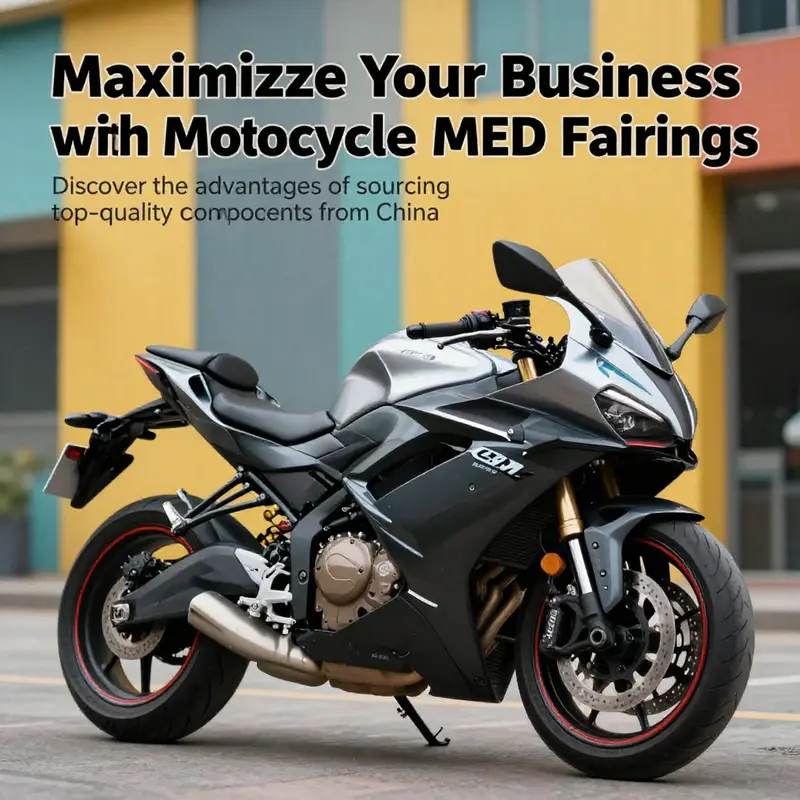
In the competitive realm of motorcycle manufacturing, OEM fairings play a crucial role in both performance and aesthetics. These body panels, designed specifically for various motorcycle brands and models, not only enhance the appearance and aerodynamics of motorcycles but are also vital for ensuring structural integrity. As the demand for customized and cost-effective motorcycle parts continues to rise, understanding the trends, technologies, and supplier landscapes in China becomes imperative for business owners. This article explores the regional advantages in China related to motorcycle OEM fairings, examines the critical technical standards and production capabilities, and outlines effective procurement strategies, all aimed at helping business owners make informed decisions.
区域集群的韵律:江门蓬江与中国摩托车OEM车体件的制造生态
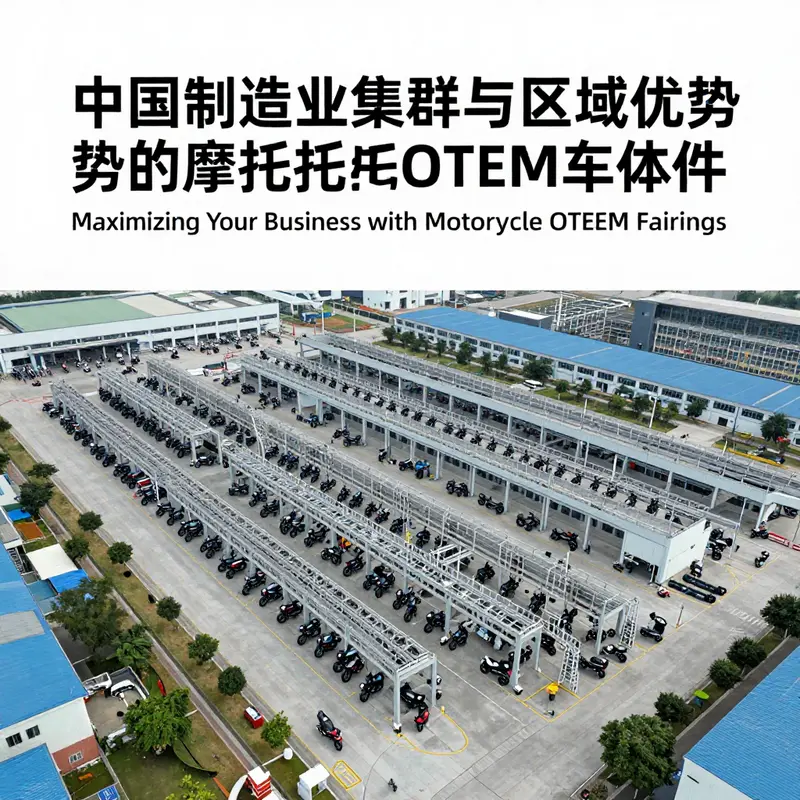
当摩托车的外衣被提及时,人们往往想到的是曲线优雅的外观、空气动力学的设计以及那一抹耐用的涂层。然而,对行业内部从业者来说,真正决定一辆车在市场中能否迅速亮相、以怎样的成本实现高质量的量产,以及在全球供应链中具备多大可控性,往往来自车体件的背后工艺与区域生态。OEM车体件,即原始设备制造商生产的前罩、侧板、尾罩等部件,承担着将设计语言从蓝图转化为可生产形态的核心任务。全球对个性化、定制化以及成本敏感度的提升,使得中国成为这条供应链的关键枢纽之一。在这个背景下,区域级的制造集群并非简单的地理聚合,而是由长期积累的材料供应、模具开发、成型工艺、表面处理、物流体系与出口能力共同编织出的协同网络。此章节将以江门蓬江区为核心,展开对中国摩托车OEM车体件区域生态的解读,探究它如何在全球市场中发挥独特的“制造+文化”双向赋能作用,并揭示这一生态在未来市场中的关键驱动力。
蓬江区的定位不仅是一个地理标签,更是一种产业纵深的体现。它代表了一个在全国乃至全球摩托车产业链中具有重要影响力的产业基地,凭借多年的产业沉淀、完善的上下游配套体系以及强大的出口能力,逐步形成了覆盖材料、零部件、整车制造、销售与售后服务的完整链条。在这条链条中,原材料供应商、模具制造商、注塑与表面处理企业、连接件和关键部件的本地化生产基地,以及对外贸易和物流服务共同构成了一个高度自洽的生态系统。这种自洽并非静态,而是在区域内持续进行的技术协同、成本优化与生产节奏调整的过程。以蓬江区为例,区域内的企业以服务本地整车企业和海外市场为目标,推动了从传统制造向智造的转型升级,推动了产能扩张、技术升级和产品结构优化,使得区域在全球供应链中的地位不断提升。
在区域层面,蓬江的成功并非偶然。它是“侨都”文化背景与开放型经济演进的直接结果。自20世纪80年代以来,江门凭借海外华侨网络的资源优势,逐步从零部件加工走向整车制造,形成从贸易到制造的跨越。如今,区域内已汇聚着若干整车制造企业与数百家核心零部件供应商,形成了一个高度聚集的产业生态。这个生态不仅降低了采购和物流成本,更通过密集的企业互动与信息流通,催生了快速的技术迭代和工艺创新。核心零部件的本地化生产,如变速器、减震器、制动器、车架、轮毂和电喷系统等,显著提升了供应链的自主可控性与响应速度,降低了对外部波动的脆弱性。区域内的高新技术企业数量逐年攀升,财政激励和产业政策的引导使得创新型企业与传统制造企业在同一生态中并肩前行,形成了强大合力。
统计数据与现实案例共同证实这种合力的强大。蓬江区在2024年的摩托车出口额达到82.7亿元,同比增长58.1%,这不仅是区域经济的增速标尺,也反映出全球市场对中国制造车体件的持续高需求。与此同时,区域内的核心企业在产能方面也展现出强大的放大效应。主导性整车企业的产能达到年产数十万台级别,远在海外市场销售的比例高企,显示出区域对外部市场的强烈依赖度极低、对内部供应链的掌控力极高。以此为基础,区域正通过进一步的产业升级与结构优化,推动更高层次的“智造”发展。
在区域协同的推动下,蓬江区不仅具备系统性产能,还在探索更高端的材料与制造工艺。区域内的复合材料加工能力、涂层技术、表面处理与结构件成形能力,逐步形成了从ABS注塑到碳纤维车体件的全链条能力。ABS注塑是普通替换件的主流工艺,其尺寸公差通常控制在±0.5毫米以内,并需要具备耐紫外线的稳定涂层,以抵抗长期暴露下的泛黄问题。对于那些追求轻量化与高性能的改装与高端车型市场,干碳纤维(3K干法编织)配合热压罐固化等工艺成为主流解决方案,带来更高的结构刚性和优越的表面质量。这些工艺的成熟,离不开区域内从原型开发到量产交付的全流程技术支持能力,以及与全球模具设计与材料供应的深度协同。值得注意的是,区域在模具开发与高精度成形方面的优势,得益于浙江等地的成熟模具产业带的协作,以及南部沿海地区在高性能材料加工方面的专业化水平。通过跨区域协作,蓬江区得以在成本与质量之间维持微妙的平衡,确保对新车型与新材料的迅速响应。
采购与供应链管理在这一过程中的作用同样关键。对OEM车体件的采购决策,已经不仅仅局限于价格比较。区域企业逐步建立起综合评估体系,覆盖技术能力、生产效率、质量管理体系(如ISO 9001等认证)、交货周期、MOQ(最小起订量)以及售后服务响应速度。面对全球市场的多样化需求,阿里巴巴等B2B平台成为获取真实数据、对比报价、产能、历史订单与客户评价的重要渠道。通过对比多家供应商的综合实力,企业能够在成本、质量和交期之间实现更优的权衡。此外,靠近广州、深圳、宁波等主要出口港口的工厂还能提供更高效的FOB或CIF运输服务,进一步缩短跨境物流时间,降低总成本。这种“近港、近源、近配”的供给逻辑,使蓬江及周边地区在全球供应链中具备显著的时间与成本优势。
市场的向前推动力并非仅来自现有需求的延展。电动两轮车的快速普及、新兴品牌的涌现以及全球对高性价比、快速交付与多样化材料解决方案的追求,正在推动行业走向模块化设计、制造自动化和绿色生产。这一进程在区域层面体现为对整个产业链的延链、补链、强链的综合提升。区域内的企业通过协同创新,提升模具设计效率、实现更高程度的材料替换与组合应用,并在表面涂层、耐候性、轻量化等方面进行突破,以应对不同市场对外观与性能的双重诉求。未来几年的趋势预计将在以下几个方面逐步落地:一是高端车型需求对复杂几何与高精度模具的持续放大,需要区域内的模具开发能力与产能匹配;二是碳纤维与复合材料在车体件中的更广泛使用,将推动区域在原材料供应、加工工艺与质量控制方面的升级;三是自动化与绿色制造的结合,将成为区域内企业成本结构改造的核心。
在这一系列演进中,区域文化也发挥了不可忽视的推动力。江门的摩托产业文化周等活动,将制造与文化相互渗透,提升本地品牌形象与国际认知度。这种“制造+文化”的双向赋能,为企业的创新氛围与人才吸引力提供了温床。每年的文化周不仅展示了本地的制造实力,也吸引了来自各地的摩托爱好者参与巡游体验,这种跨地区的互动带来新的设计灵感与市场反馈,进一步缩短了从设计到市场的周期。正是在这样的生态中,区域内的企业与海外市场的需求实现了更高效的对接,也促使生产线向更高端的工艺和更灵活的产能配置转型。
对未来的展望,区域生态的核心仍将是“以更高的性价比、更快的交付、更多样化的材料解决方案”来支撑全球市场对摩托车车体件的持续需求。电动化与智能化浪潮的推进,将对材料选择、结构设计与制造工艺提出新的挑战与机遇。区域内的企业需要在保持成本优势的同时,进一步提升设计与工艺的协同水平,以实现快速迭代与量产并举的能力。与此同时,区域对高端市场的进军也将深化对碳纤维等高端材料的应用探索,通过与模具设计、材料加工和涂层技术的深度融合,打造更具竞争力的产品组合。江门蓬江及其周边地区在全球供应链中的定位,因这股协同与创新的力量而不断提升,成为中国制造业集群中最具代表性的摩托车OEM车体件生产基地之一。
在这一章节的叙述中,一个不可忽视的细节是对内部协作与对外连接的强调。区域内的各环节并非孤立的企业,而是彼此之间形成了紧密的协同网络。供应商与整车企业之间的交流、模具厂与表面处理厂之间的技术对话、海关与物流企业之间对运输节拍的把控——所有这些环节共同决定了交付周期与产品一致性。为了更好地理解这一网络的实际运作,可以借助一个专门的行业类别页来观察不同品牌的车体件在市场中的定位与设计风格差异。对于感兴趣的读者,可以参阅 Honda fairings 的类别页,了解在不同品牌设计语言下,车体件如何通过统一的制造工艺实现各自的风格表达。 Honda fairings
将视角拉回到区域的宏观层面,江门市及蓬江区的案例并非孤立存在。它们代表了中国制造业集群在全球摩托车产业中的一个重要样本:通过区域化的协同、以市场为导向的创新、以及对高端材料与工艺的持续投入,形成了能够在全球范围内快速响应、稳定交付、并在成本与质量之间保持平衡的生产体系。这种体系不仅支撑着区域经济的稳健增长,也为全球品牌提供了可预见、可重复的供应能力。在未来,随着区域内更多创新型项目的落地、对绿色制造与自动化水平的持续投入,以及对跨区域协同与国际贸易规则的更深入理解,蓬江区及周边地区的摩托车OEM车体件生态将继续扩大其全球影响力,成为推动全球摩托车设计与生产方式演变的重要力量。
From Precision to Performance: How Technical Capability and Production Standards Define OEM Motorcycle Fairings
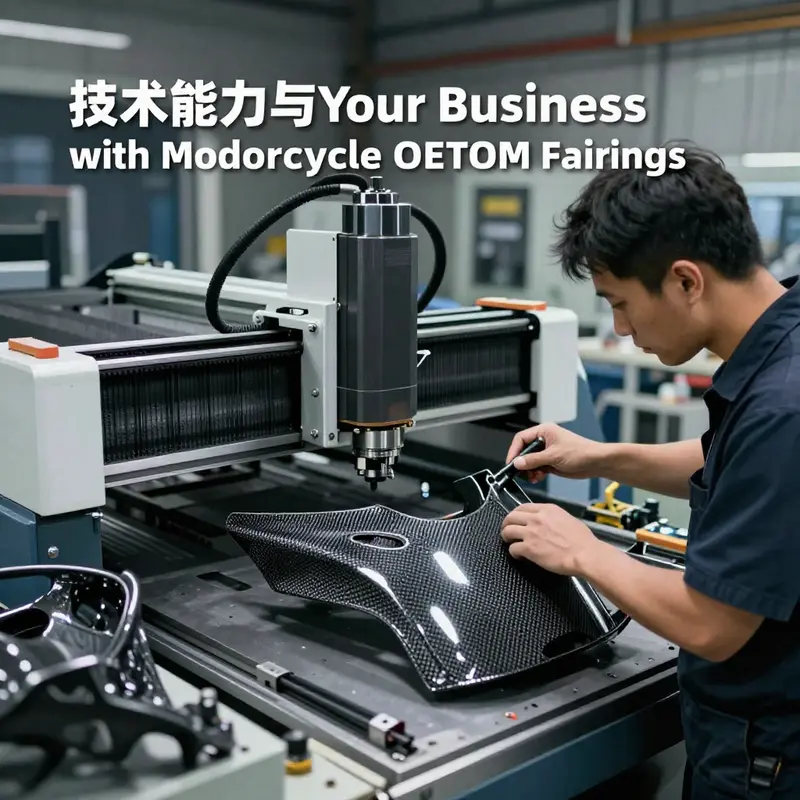
The OEM fairing, in its quiet stead beneath the rider’s line of sight, is more than a cosmetic shell. It is a system component that must endure vibration, heat, moisture, and the checksum of countless real-world variables. When we zoom out from the glossy surface and the rapid prototyping stories, the essence of successful motorcycle OEM fairings rests on two interlocking pillars: technical capability and production standards. These pillars don’t just assure fit and finish; they determine performance, safety, durability, and the market’s willingness to embrace a design as a reliable part of a whole vehicle. In an era when modularity and customization coexist with the demand for cost efficiency, the way a supplier demonstrates technical depth and enforces rigorous standards becomes the ultimate differentiator, shaping everything from mould design to the end-of-line inspection pass rate. The narrative that follows treats these two threads as a single fabric, showing how capability and conformity intertwine to raise the bar for OEM carapaces that cover engines, frames, and fuel systems alike, while still allowing room for modularity and speed of delivery that today’s竞争 climate demands.
Technical capability is the wellspring of what a fairing can be and how it behaves once mounted. At the core, capability encompasses design philosophy, materials science, and manufacturing know-how that translate a two-dimensional concept into a three-dimensional, aerodynamically stable, aesthetically coherent component. The journey begins in the design studio, where computational tools turn ideas into precise geometries. Finite element analysis, for example, is not merely a high-tech curiosity but a practical instrument that predicts how a panel will deform under road shocks, wind pressure, and the thermal cycling that accompanies a day’s ride. The chassis and subframes to which the fairing attaches are themselves sculpted to harmonize with the panel’s stiffness and mass distribution. A well-calibrated model ensures that the fairing contributes to overall vehicle rigidity rather than becoming a loose, rattling element that undermines handling or accelerates fatigue. As the design matures, the choice of materials comes into sharper focus. In mass-market roles, ABS injection-molded plastics offer cost efficiency and impact resistance that suit high-volume production. But the demand for lighter weight, greater durability, and improved surface quality pushes some programs toward advanced composites, including carbon fiber prepregs cured in autoclaves to achieve exceptional stiffness with minimal weight. Here, technical capability is tested by the supplier’s ability to integrate material science with structural engineering. It is not enough to know the material properties in a datasheet; engineers must understand how a specific polymer system behaves under thermal stress, how UV exposure alters surface chemistry, and how surface care and coating choices interact with the parent substrate to maintain gloss and colorfastness across years of exposure.
This relationship between material, geometry, and process is also where the integration with other vehicle systems becomes a practical design constraint. A fairing must accommodate mounting points, routing channels for cables and sensors, and openings for cooling airflow, all while preserving aerodynamic stability. The optimum solution is often a tightly coupled set of parts designed in unison rather than as disparate modules. In practice, this means a supplier who can deliver a complete package—from a 3D-printed or digitally fabricated prototype to a fully mass-produced panel—with traceable design data, precise tolerances, and predictable performance in the final assembly. Precision is not an ornament; it is the baseline that guarantees repeatability and interchangeability. Tolerances such as ±0.5 millimeters for critical dimensions are not arbitrary steps in a spec sheet. They define the permissible deviation that still allows a panel to fit across the entire model range without forcing rework on the assembly line. When tolerance control is embedded in the design and validated through rigorous first-article inspections and ongoing process validation, the risk of production stoppages drops dramatically. Precision, in this view, is a form of reliability that feeds the entire supply chain.
Meanwhile, production standards are the governance framework that turns capability into consistent quality. The transformation from a promising concept into a durable, safe product requires a disciplined approach to manufacturing. Standards—whether they are ISO 9001 quality management systems, or more specialized automotive-focused norms—specify how processes are planned, controlled, and improved over time. For fairings, this means that every stage of production—from mold fabrication and injection molding to surface finishing and final assembly—must be covered by standard operating procedures, clear work instructions, and robust quality checks. It is common to see a multi-layered validation protocol: dimensional checks with high-precision metrology, surface roughness measurements to ensure paint adhesion and visual appeal, and functional tests that simulate impact and vibration scenarios to verify panel resilience. An environment that enforces these standards cannot rely solely on the skill of the operator; it requires a repeatable system that yields identical results irrespective of shifts, sites, or batch variability.
An illustrative anchor point is the interplay between process choice and product performance. In the traditional ABS injection-molded fairing, the production standard aligns with the end-use requirements in a very direct way. The control of mold cooling, tie-bar alignment, and shot size becomes a chain of checks that ensures the part remains within the defined tolerances across time and temperature. The choice of UV-stable coatings is another example of standard-driven reliability. UV stabilization prevents yellowing and loss of gloss after prolonged sun exposure, an effect that would otherwise degrade both appearance and perceived quality. The coating process must be stable across lots, with consistent film thickness and adhesion properties. In high-end or performance-oriented segments, where lighter weight or higher stiffness is demanded, a carbon fiber option adds a new layer of standard considerations: prepreg layup schedules, resin systems, autoclave pressure and temperature profiles, and post-cure handling all become essential elements of the production standard. The supplier must demonstrate process capability indices (Cpk) for critical dimensions and maintain traceability on raw materials to meet audit and regulatory expectations.
The manufacturing landscape in which OEM fairings are produced reinforces the inseparability of capability and standards. In today’s globalized environment, a cluster-based production model has emerged, with regions dedicated to complementary steps: mold making and surface finishing in one locale, late-stage assembly and logistical support in another. In the context of motorcycle fairings, such clustering allows for a seamless flow from design to tooling to molding, with the additional advantage of rapid knowledge transfer and shared best practices. The clusters that have grown in major manufacturing ecosystems excel not only because of their scale but because of the tight feedback loops they sustain. A deficiency detected during a QA check in one facility can prompt a design windback or a process tweak that propagates through the whole network. This is the essence of a mature supply ecosystem: capability translates into consistent output, and standardization ensures that such output remains predictable and auditable.
The alignment of these elements with environmental and sustainability considerations is no longer optional. Environmental responsibility seeped into production standards through the demand for greener processes and materials. Lightweight fairings reduce vehicle energy consumption, while processing choices influence energy use, waste generation, and emissions. The industry increasingly rewards contractors who integrate life-cycle thinking into design and production. For instance, the use of recycled or plant-based fillers in ABS composites, or the adoption of more efficient curing methods in carbon fiber processes, can reduce environmental footprints without compromising performance. This is where capability becomes a driver of sustainable innovation. Engineers who understand both the physics of the part and the ecology of its manufacture are better positioned to choose materials and workflows that deliver the required performance while respecting environmental constraints.
The sourcing and supplier evaluation process that accompanies these capabilities is itself a measure of a company’s maturity. A robust evaluation framework goes beyond price comparisons. It weighs technical capability, process control maturity, quality management systems, delivery reliability, flexibility to accommodate design changes, and after-sales support responsiveness. A well-structured supplier relationship recognizes that OEM fairings are not a single part but a certificate of workmanship that underpins the wheel of the entire vehicle program. The nuance here matters: a supplier that can articulate not just what they produce but how they verify it, how they trace defects, and how they respond to nonconforming material, earns a different kind of trust—one that translates into fewer production interruptions, fewer reworks, and a tighter alignment with program milestones. In practical terms, this means routine audits, clear Key Performance Indicators, and transparent sharing of manufacturing data that allow the OEM to maintain a continuous improvement loop. The reliability of a fairing supplier is a proxy for the reliability of the vehicle program as a whole, and so it becomes a strategic priority in the procurement process.
The market trends shaping demand for OEM fairings also reflect the dynamics between capability and standardization. As electrification of two-wheeled mobility accelerates, the requirements for fairings shift. Lightweight, aerodynamically efficient shapes become even more critical as electric powertrains demand different cooling and thermal management profiles. The fairing that once served primarily as a protective shell now plays a role in aerodynamics, heat management, and even acoustics, shaping the rider’s experience in new ways. Engineering teams respond with more advanced materials and refined manufacturing methods, including high‑precision layups for composite skins and more precise control of joins and seams to minimize drag and noise. In parallel, standards evolve to embrace new materials, new test protocols, and new environmental obligations. The upshot is that the balance between technical capability and production standards is not a fixed point but a moving target, one that riders indirectly feel through improved performance, better aesthetics, and longer service life.
From the supplier’s perspective, the synthesis of capability and standards translates into concrete capabilities: rapid prototyping for design validation; modular tooling that enables quick design iterations; and scalable processes that accommodate large-volume programs without sacrificing precision. The practical value of such capabilities is evident in how a panel can be redesigned to improve airflow or reduce weight without triggering a wholesale change in assembly lines. A competent supplier can deliver a family of fairings that share a common core geometry, varied surface textures, and customized colorways—all while maintaining rigorous tolerances and repeatable quality across batches. This modular approach is not merely a convenience; it is a strategic advantage that supports brands seeking to offer differentiated products within a standardized platform. When the design language is consistent and the production processes are robust, the resulting fairings become credible canvases for personalization and brand storytelling, rather than a series of one-off parts that complicate the supply chain.
The narrative of capability and standards also touches the human element—the engineers, technicians, and quality professionals who translate theory into tangible parts. The best teams cultivate a culture of disciplined problem-solving, where data-driven decisions replace guesswork. They leverage digital twins and real-time manufacturing execution systems (MES) to monitor process health, track deviations, and trigger corrective actions before problems cascade into defects. Such practices do more than improve yield; they create an organizational memory that accelerates future projects. A mature culture treats design intent as a living contract that must endure the test of time, not a one-off declaration that expires with the first batch. In this light, technical capability and production standards become not just requirements, but the language that unites engineering, operations, and supply management in a shared mission: to deliver fairings that protect, perform, and persist, ride after ride, season after season.
As readers explore the landscape of OEM fairings, it is important to recognize that the most successful programs do not rest on a single advantage. They synthesize a spectrum of strengths—from the depth of material science and the sophistication of CAE tools to the rigor of quality management and the clarity of supplier collaboration. They are adept at balancing price with performance, speed with accuracy, and customization with scalability. This is no small feat given the diverse demands of global markets and the varying regulatory environments in which manufacturers operate. Yet the underlying principle remains constant: when capability is real and standards are enforced, the fairing becomes more than a cover for the motorcycle’s core components. It becomes an integral contributor to the vehicle’s overall performance envelope, its brand promise, and its long-term reliability. In the final analysis, the journey from concept to certified production is what turns an OEM fairing from a design exercise into a trusted component that riders depend on, season after season.
For those curious about how these principles play out in practice, a practical entry point is to examine brand-neutral discussions of fairing categories and how suppliers organize around them. Readers can explore a broader catalog of fairings for specific models within the OEM ecosystem to observe how consistent measurement, standardized finishing, and repeatable fitment underpin the perceived quality across different manufacturers. A useful entry point is the Honda fairings category, which illustrates how a mature market segment organizes design language, tooling, and process controls to deliver consistent parts across a family of models. This example demonstrates how the same capabilities and standards that govern a single-part development also support broader line-wide efficiency, enabling a faster cycle from concept to market while preserving the integrity of each individual panel. Honda fairings.
The conversation about capability and standards would be incomplete without acknowledging the external references that connect industry practice with rigorous, peer-reviewed evidence. An authoritative discussion of advanced manufacturing techniques for motorcycle frame design and production underscores how laser welding, CNC machining, and digital-twin simulations intersect with quality management to reduce weight, increase stiffness, and improve service life. This body of work, while focused on frames, reflects the same engineering maturity required for fairings: integrated design with manufacturing, validated by data and sustained by standard processes. It reinforces the view that progress in OEM fairings comes from a disciplined synthesis of innovation and reliability, not from isolated breakthroughs.
In closing, the trajectory of OEM fairings is defined by the alignment of technical capability with production standards. This alignment enables more ambitious designs, more consistent quality, and more resilient supply chains. It supports the industry’s move toward modular, customizable, and efficient manufacturing that can respond to diverse consumer desires without compromising performance or safety. As the market evolves toward electrification, smarter materials, and broader customization options, the symbiotic relationship between capability and standards will only strengthen. The fairing is, after all, a frontline ambassador of a motorcycle’s performance story. When engineered with precise capabilities and governed by rigorous standards, it carries not just aesthetics but trust—trust that the product will perform, endure, and delight across the miles ahead.
External reference: https://www.sae.org/publications/technical-papers/content/2022-01-0365
从首单到长期同盟:在摩托车OEM车体件市场打造高效采购与供应商评估体系
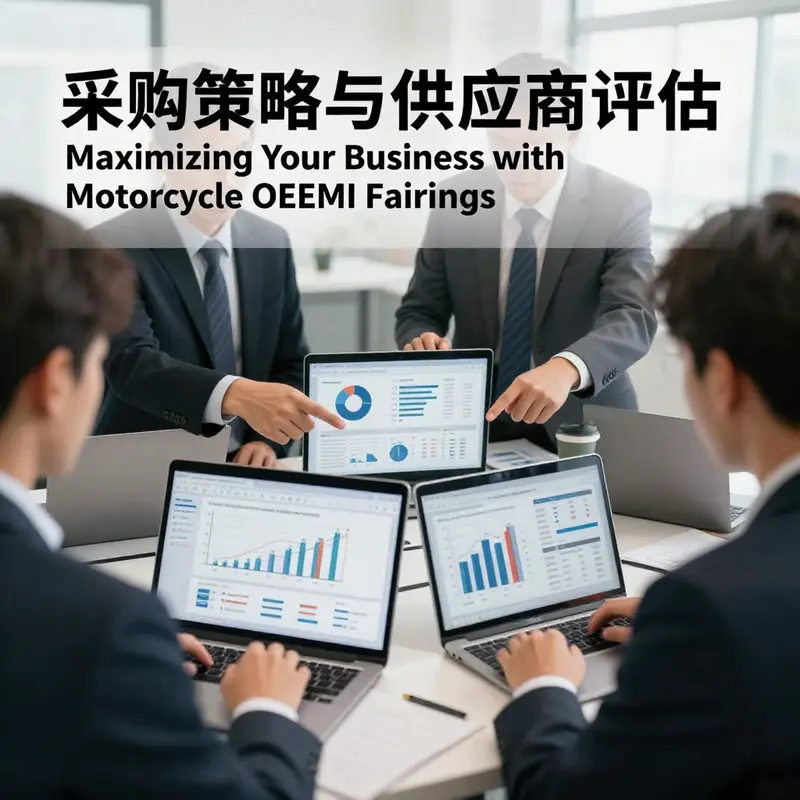
在全球摩托车行业对个性化、可靠性与成本控制诉求日益增长的背景下,OEM车体件的采购与供应商评估成为整车厂与配套件供应商之间最关键的协作纽带。车体件,作为整车外观与结构性能的重要承载者,既要符合严格的公差与性能标准,又要在量产阶段保持稳定的供货节奏与绿色生产。这种需求不仅来自最终用户的期望,也来自各大整车厂对全球供应链可追溯性、风险管理与持续改进能力的高要求。因此,本文将以一个贯穿始终的视角,探讨在摩托车OEM车体件市场中,如何通过科学的采购策略和严谨的供应商评估体系,帮助企业从最初的单点供货走向广泛的伙伴网络,最终实现从“配套”到“共赢”的转变。整个论述的出发点,是对中国制造业在全球供应链中的定位、区域集群的协同效应以及在高性价比与快速交付之间寻求平衡的现实考量。通过这一视角,可以理解采购与评估并非简单的成本控制工具,而是推动设计创新、工艺升级与可持续发展的战略驱动器。为了使讨论更具可操作性,以下内容将以系统化的路径展开,强调策略的落地性、评估体系的全面性,以及数字化协同在现代供应链中的关键作用。接下来,我们将从两方面展开:一是采购策略的制定与实施,二是供应商评估体系的构建与执行。两者相辅相成,构成企业在摩托车OEM车体件市场中持续竞争力的核心底座。
Final thoughts
Business owners in the motorcycle industry stand to benefit significantly from understanding the dynamics of sourcing OEM fairings from China. The combination of advanced manufacturing capabilities, regional expertise, and cost efficiencies empowers businesses to achieve higher quality products and shortened time-to-market. By implementing effective procurement strategies and fostering strong supplier relationships, companies can not only enhance their product offerings but also secure a competitive edge in the ever-evolving motorcycle market. Prioritizing collaboration with skilled suppliers will drive innovation and growth, ensuring long-term success.