
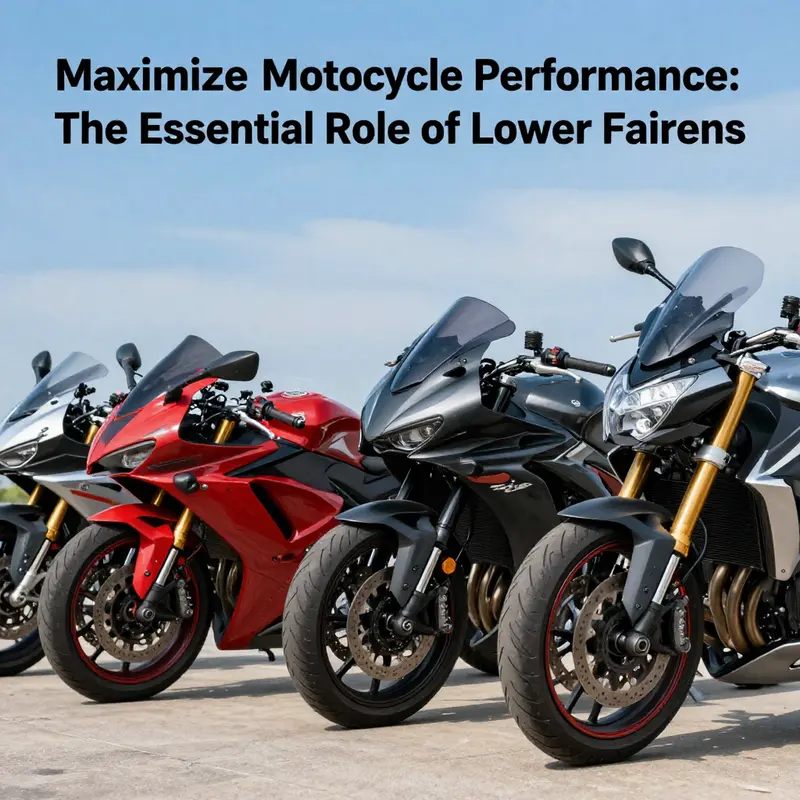
Motorcycle lower fairings have become indispensable in modern motorcycle design, merging functionality with visual appeal. For business owners in the motorcycle industry, understanding the multifaceted benefits of lower fairings is crucial for both product development and customer satisfaction. These components not only enhance the bike’s aerodynamic profile, improving performance, but also provide essential protection for critical engine components. Furthermore, lower fairings elevate the aesthetic quality of motorcycles, making them more attractive to consumers. In this article, we delve into each of these key aspects—exploring the aerodynamic advantages, protective features, aesthetic enhancements, and the materials and manufacturing processes that define motorcycle lower fairings, thus providing a holistic understanding of their significance in the market.
Slicing the Wind: The Quiet Power and Practical Craft of Motorcycle Lower Fairings
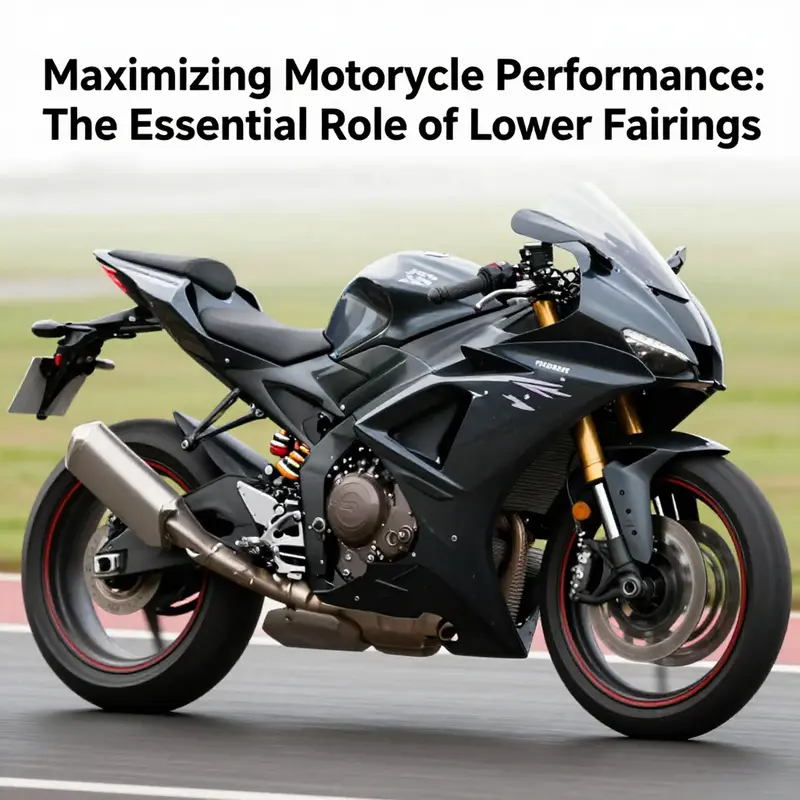
Lower fairings sit beneath the fuel tank and along the bike’s lower body, but their value isn’t merely cosmetic. They are in many ways the unsung engineers of the motorcycle’s dynamic performance. When riders pin the throttle on a long highway stretch or lean into a twisty road at speed, the air around the machine becomes a physics playground, and the lower fairings are active participants in shaping that interaction. They do more than shield the engine from dirt and water; they mold airflow, reduce drag, calm the wind around the rider, and contribute to the bike’s sense of direction through the air. The way these parts are designed, manufactured, and integrated with the rest of the motorcycle’s aerodynamic toolkit determines how efficiently air can flow, how stable the front end feels at high speed, and how fatigue might accumulate on a multi-hour ride. In this sense, lower fairings are a critical lever for performance and comfort that often gets overlooked in conversations about horsepower and torque, yet they influence both the numbers on a dyno sheet and the rider’s day-long experience on the road or the track.
From a performance standpoint, the core purpose of a lower fairing is to tame the boundary layer—the thin layer of air that clings to the surface of the bike and is dragged along by the machine’s motion. A well-designed lower fairing directs air away from the engine’s most exposed zones, channels it through carefully contoured gaps, and avoids creating turbulent wakes that rob speed and stability. The most striking evidence of the aerodynamic impact comes from controlled testing of new designs that rework the fairing’s profile. In a standout example from contemporary sportbike development, a redesigned lower fairing achieved a drag reduction on the order of four percent. While the exact figures can vary with different chassis geometries and riding positions, the magnitude is meaningful: a few percentage points of drag reduction translates into better top-end speed potential, reduced fuel consumption at sustained highway speeds, and a lighter, more responsive front end, especially when the throttle is asking for acceleration while the bike is already moving fast. The practical upshot is that a rider can breathe easier at the lever and feel less resistance as they push toward the speed limit, and the bike can carry momentum with less straining engine work.
Yet the drag story is only part of the picture. A lower fairing’s influence on airflow is also about creating a more coherent and predictable air pattern around the bike’s lower body. The term that often appears in design discussions is a “bubble” of calmed air around the rider. The idea isn’t that the rider sits in a vacuum, but that the air pressure and flow that press against the rider’s torso, arms, and helmet become steadier and more uniform. When air comes at a rider with jagged, swirling patterns, it can buffet the torso and helmet, generating fatigue and distraction. A fairing that smooths the path of air toward the rear can help minimize those buffeting effects, making long rides less demanding physically. This is not an abstract benefit; rider comfort translates into sustained concentration, more consistent body positioning, and better control at the bar in long, open-speed sections where micro-adjustments matter as much as raw power.
The interaction with other aerodynamic elements is where modern fairings reveal their integrated design philosophy. Lower fairings seldom act in isolation. They work in concert with winglets concealed or incorporated into the fairing’s upper corners, with vented channels that serve as cooling conduits for the engine and intercoolers, and with the bike’s overall chassis geometry to maintain a balanced distribution of pressure across the front wheel. The net effect can be a small but tangible sense of downforce at higher speeds, which helps to stabilize the front end during quick direction changes or when the rider is loading the front tire in corners. The primary function remains drag reduction and air management, but the engineering reality is that the front axle must feel planted and predictable, even when the rider is pushing the machine toward the edge of its performance envelope. In this ecosystem of aero features, lower fairings anchor the air, while winglets or integrated spoilers contribute modest downforce and enhanced straight-line stability. The synergy matters: drag reduction is not a single-number pursuit; it is part of a system that governs how the front of the bike interacts with air across a wide range of speeds and angles.
If you examine the broader market for lower fairings, you’ll notice a spectrum driven by material choice, manufacturing precision, and the intended riding context. OEM (Original Equipment Manufacturer) lower fairings are engineered to match the bike’s exact specifications for fit, finish, and long-term durability. They’re the harmonized pieces that preserve the aesthetic language and the electrical routing, mounting points, and heat management schemes designed by the manufacturer. Aftermarket options, by contrast, offer opportunities for customization, both in appearance and in function. Fiberglass, ABS, polycarbonate, and carbon fiber each bring a different blend of weight, stiffness, impact resistance, and cost. ABS and polycarbonate fairings tend to be more affordable and impact resistant, which makes them popular for street riders who want protection and a versatile appearance. Carbon fiber options, while costlier, are prized for their lightness and the crisp tonal and visual benefits they deliver. The choice isn’t only about weight; it’s about durability under road hazards, the level of surface finish required for a particular look, and how the material behaves in heat during long rides or at open throttle on a track. The design process also factors in ease of installation and maintenance. A well-made lower fairing should align with the mounting points on a bike’s frame with a minimum of fuss, and it should stay true over time, resisting flex that can introduce gaps or misalignment that negate aerodynamic gains.
Riders seeking to refresh or customize their ride often weigh the practicalities alongside the aerodynamics. A lower fairing can be configured with integrated features that amplify both comfort and utility. Some designs incorporate vented grilles or ducts to improve cooling pathways for the engine, an area where airflow management intersects with thermal performance and reliability. Others may offer built-in speaker pods or mounting points for accessories such as phone holders or small storage solutions, making the bike more amenable to long trips or urban commuting. The inclusion of these features should be evaluated against the overall aerodynamic performance. If a vent adds complexity or closes off a critical flow path, it can undermine the lower fairing’s core mission. The best designs balance ventilation with smooth air channels that maintain the calm air concept without surrendering necessary cooling capacity. In practice, this balance is achieved through careful contouring, testing in wind tunnels or on track, and iterative refinements that preserve the intended airflow pattern while delivering practical benefits.
For riders who are curious about scale and scope, the selection process also centers on model compatibility, the quality of materials, and how easily the fairings can be installed or removed. Compatibility is more than a match of bolt holes; it includes the way electrical connectors, coolant hoses, and sensor housings are accommodated. If an installation requires re-routing a dozen cables or fabricating new mounts, the process can add cost and downtime that might otherwise be avoided with a component designed for straightforward replacement. Material quality matters beyond aesthetics. A brittle plastic may save weight on a racetrack but could crack or deform after a week of gravel on a backroad ride. Conversely, a sturdy ABS shell may tolerate more abuse while still delivering the clean lines and precise fit that the bike’s geometry demands. In this sense, the lower fairing becomes not only a tool for aero performance but also a barometer of how well the entire system—engine cooling, steering geometry, and rider ergonomics—works together.
Even the visual dimension of lower fairings should not be dismissed. The bodywork around the lower half of the bike frames the silhouette, contributes to the perceived speed, and reinforces the machine’s stylistic identity. A profile that appears taut, with a clean line running from under the tank toward the wheel, communicates a sense of purpose and performance. The aesthetics are more than skin-deep; they can influence how a rider perceives the bike’s behavior. A smoothly integrated lower fairing that looks like a natural extension of the chassis often mirrors the way airflow behaves—stable, predictable, and confident. The most compelling designs achieve this harmony: they are not merely added on to look lawfully aggressive but are crafted as integral parts of a cohesive aerodynamic and mechanical system.
In conversations about popularity and accessibility, riders frequently encounter a spectrum of options and perspectives. Some riders prefer to source lower fairings from established manufacturing ecosystems that emphasize exact model fit and verified compatibility with the bike’s electrical and cooling systems. Others are drawn to aftermarket options that enable broader color palettes, surface textures, and lightweight materials. The decision often reflects how a rider values customization versus universality. And while the desire for a fresh look can be strong, it should be balanced with a careful appraisal of how changes will affect noise, vibration, and heat management in real-world riding conditions. The best practice is to view the lower fairing as part of the bike’s aerodynamic story—one chapter that interacts with the fairing’s upper sections, the wheel’s coverage, the exhaust outlets, and even the rider’s seating height and posture. In other words, the fairing is a system component with a tangible impact on ride quality and performance metrics, not a cosmetic add-on.
For those who want a tangible path forward, a practical approach to assessing lower fairings begins with a clear picture of riding goals. If the aim is improved highway fuel efficiency, prioritize designs that minimize drag with streamlined curves, smooth transitions, and tight radii where necessary. If the goal is high-speed stability and refined cornering behavior, look for designs that integrate with other aero features and whose internal channels avoid creating secondary vortices at lean angles. If rider comfort is paramount, assess how the air around the torso and head is managed and whether the lower fairing contributes to a consistent wind pattern rather than a patchwork of turbulent pockets. In all cases, quality installation and precise alignment matter because even a small misfit can degrade the aerodynamic gains that the design promises. The rider’s feedback about front-end feel, wind noise, and perceived heat also provides valuable qualitative data that complements the quantitative measures obtained on a wind tunnel or in on-road testing.
The broader takeaway is that the motorcycle lower fairing is a sophisticated blend of engineering and aesthetics. It is a key control surface that shapes how air flows around and under the bike, how the rider experiences wind, and how efficiently the engine breathes. The four-percent drag reduction figure is not a standalone victory; it is a signal of a well-integrated approach to design that respects the principles of fluid dynamics while delivering practical benefits for everyday riding. As wind tunnel testing and real-world trials continue to refine fairing geometry, riders can expect to see continued evolution in the way these panels merge form and function. The dialogue between aero performance and rider comfort remains central to how manufacturers and suppliers approach lower fairings, ensuring that every bolt added and every curve honed contributes to a ride that is faster, steadier, and more enjoyable—not at odds with each other, but in concert.
For readers who want to explore a representative segment of the broader ecosystem, a practical path is to examine the range of lower fairings within a category that emphasizes sportbike customization. This path reflects how design language and functional performance co-evolve, and it highlights how a single component can carry multiple responsibilities across the ride’s lifecycle. A thoughtful selection process will consider the fairing’s geometry, the materials used, the expected riding context, and the ease of maintenance. And while no single design can be the perfect answer for every rider, a well-chosen lower fairing, installed with care and tuned for the bike’s overall aero profile, can transform how a motorcycle slices through air, how it feels under wind pressure, and how far it can push toward its potential on a twisty road or a fast highway segment.
In closing, lower fairings are more than protection and style. They are active aerodynamic instruments that, when properly designed and integrated, reduce drag, smooth airflow, contribute to front-end stability, and enhance rider comfort. They form part of a larger aero system that supports better fuel efficiency and improved high-speed handling. As new materials and manufacturing techniques open up lighter, stronger, and more complex geometries, the potential for even more pronounced aerodynamic gains grows. The rider’s experience—clarity, focus, and confidence—rests closer to the bike’s core when the wind is managed as it should be, not fought as an external adversary. And in that sense, the lower fairing, with its combination of engineering rigor and visual appeal, stands as a quiet but decisive contributor to the modern sport motorcycle’s performance narrative. For a deeper technical exploration of how air moves around motorcycles and how fairings influence those flows, see the external resource linked at the end of this discussion. The industry continues to refine these elements, and riders who appreciate the subtle art of aerodynamics will recognize how even a seemingly small reshaping of the lower body can translate into meaningful, rideable benefits on the road and on the track.
Internal resource for further exploration: Ducati fairings.
External reference for deeper technical context: https://www.motorcycle.com/technology/aerodynamics-on-motorcycles-explained
Guardians Beneath the Bike: The Protective Science and Subtle Art of Lower Fairings

Lower fairings—often considered the quiet workhorses of the motorcycle, tucked beneath the fuel tank and running along the sides of the frame—do more than just hide the engine from naked sight. They are an interwoven system of protection, aerodynamics, and practical utility that underpins how a bike behaves, how long it lasts, and how comfortable the rider remains on every kind of ride. Their protective role begins with shielding the heart of the machine: the engine, transmission, and exhaust. In urban traffic, gravel and grit kicked up from tires, splashed water, and errant road spray threaten the vulnerable lower body of the bike. Lower fairings form a kind of armor plate that intercepts debris before it can graze exposed surfaces, dampening the chances of chipped paint, fractured housings, or corroded fasteners that, over time, would translate into costly maintenance. The protection, however, is holistic. It extends to protecting delicate cooling lines in some designs, guarding vulnerable wiring tucked low along the frame, and helping to deflect spray that can degrade rubber seals and electrical connectors if left unchecked. In this sense, the lower fairing is not merely a cosmetic shield but a functional barrier that contributes to the bike’s longevity and reliability as a daily rider, a tourer, or a machine built for long stretches of open road.
But protection is only part of the story. The modern lower fairing is a carefully engineered component designed to manage the air that rushes under the chassis at speed. Aerodynamics is a language of shapes and seams, of vented vents and smooth radii that coax air to follow the bike’s contours rather than quarrel with them. When air is allowed to slip cleanly past the underside, drag drops, the engine works with less resistance, and fuel efficiency improves. The rider feels a connectedness to the bike’s momentum, a sense that the machine is gliding rather than being buffeted by gusts and wakes from nearby traffic. This is not a dramatic, showy effect. It is a practical one, delivering a steadier stability at high speed and a more predictable discharge of the bike’s energy when the throttle is rolled on. For touring and sport-touring models, where miles accumulate as reliably as the miles themselves, that subtle wind management translates into less fatigue, a more composed ride in crosswinds, and a broader envelope of comfort for longer days on the road.
Material choice is where the protective and aerodynamic ambitions intersect most clearly. The spectrum runs from robust, impact-tolerant plastics to high-performance composites. Traditional ABS plastics and polycarbonate blends remain common because they strike a balance between stiffness, impact resistance, ease of manufacturing, and cost. These materials can be molded into complex geometries that align with the bike’s lines, forming a seamless skin that both protects and enhances the silhouette. For riders who demand even more in terms of resilience, reinforced plastics and composite polymers—often with internal honeycomb or fiber-reinforced cores—offer superior abrasion resistance and a higher tolerance for bead-on-rough-road encounters. Carbon fiber, prized for its stiffness-to-weight ratio, is deployed in higher-end builds where every gram matters and where riders expect performance with a premium look. In off-road or adventure-touring configurations, the demand for ruggedness pushes the design toward modular concepts. Panels can be swapped after a collision with a rock or a fall, and the overall system is built to take repeated hits with minimal impact on the rest of the chassis. The ability to replace rather than repair a damaged panel supports a lower total cost of ownership for riders who frequently push into challenging environments.
Among these constructions, drainage and surface texture play unexpected but critical roles in keeping performance consistent. Textured surfaces and integrated drainage channels help shed water and mud, reducing the likelihood that moisture collects in corners where corrosion might begin or where mud could clog cooling fans and vents. Efficient drainage is particularly valuable in wet climates or when crossing damp gravel roads. A well-designed lower fairing includes channels that guide water away from sensitive areas, preventing pooling that could interfere with electrical connectors or create a slippery surface for the rider’s boots during entry and exit from the bike. This attention to water management is part of a broader philosophy: protect the machine in every weather, and maintain performance with minimal maintenance discipline from the rider.
Protective capability does not exist in a vacuum. It is increasingly paired with environmental awareness and maintenance practicality. As of early 2026, manufacturers and aftermarket producers are offering tailored coating solutions that respond to the rider’s typical environment. City riders, who face constant exposure to road salt, grime, and humid air, benefit from corrosion-resistant and easy-to-clean finishes. These coatings reduce the effort required to keep panels looking sharp and functioning well, while minimizing corrosion risk at the panel-to-frame interfaces where moisture and salt tend to accumulate. Adventurers and off-road enthusiasts face a different challenge: wear- and impact-resistant coatings that hold up against stone chips, abrasion from brush and trail debris, and the occasional collision with an obstacle. The coatings are paired with reinforced substrates and sometimes with micro-surface textures that help shed mud more effectively, preserving visibility and airflow passages. The result is a lower fairing that can contribute meaningfully to durability without sacrificing appearance or aerodynamics.
From a mechanical standpoint, the lower fairing is a modular system for many models. It is designed to be aligned with exacting tolerances, ensuring that gaps are uniform and that the panel lines complement the bike’s geometry. Proper alignment is more than a matter of aesthetics; it is a matter of safety and function. If a panel sits too far inward or too loose, it can rub against the tire, interfere with steering under lock, or become a leaky seam that welcomes water into places it should not vent. Fastening systems—rivet points, mounting brackets, and clip designs—are engineered to stay secure under vibration, heat, and the bouncing realities of city streets, highway wind, and rough dual-sport routes. When a lower fairing is damaged beyond repair, a modular design simplifies replacement. Panels that can be swapped quickly reduce downtime and keep maintenance costs predictable. This approach aligns with a broader trend in motorcycle design: components that are easier to service, easier to upgrade, and easier to customize without dismantling the entire chassis.
Compatibility remains a practical criterion for most riders when they consider lower fairings. OEM panels are crafted to integrate with the bike’s cooling architecture, electrical routing, and fuel system protections, offering a precise fit and an appearance that matches the original lines. Aftermarket options expand the palette of textures, colors, and features. A rider who wants a clean, understated look may favor panels that mimic the factory finish, while those seeking bold styling cues might opt for panels with dramatic contours or a finish that highlights the bike’s silhouette. Many lower fairings offer additional features such as integrated speaker pods, ventilation grills for cooling airflow, or mounting points for accessories like side bags or phone holders. The choice involves balancing fit, finish, weight, and the intended usage—city commuting, long-haul touring, canyon carving, or rugged adventures.
Within this decision-making landscape, one can also find practical guidance on choosing a lower fairing that aligns with riding style and maintenance habits. The compatibility check is not just about model year and engine size; it encompasses the shape of the fairing, the clearance with the exhaust, and the way panels shift with suspension travel. The ease of installation matters, too. A well-designed lower fairing should not require specialized tools or a complete disassembly of the bike to mount. It should be possible to torque fasteners to spec without stripping plastics, and to reseal joints when oil changes or splash guards are removed for service. For riders who want to explore a make-specific collection, the BMW fairings catalog offers panels designed to integrate with the bike’s lines and heat management. This link provides a sense of how OEM styling and engineering philosophies translate into a cohesive, factory-finished look while still allowing for personal expression in a dedicated aftermarket ecosystem. BMW fairings catalog
The visual impact of lower fairings should not be underestimated either. A well-integrated lower fairing creates a seamless transition from the tank to the lower body, enhancing the bike’s overall proportion and face. It communicates intent, suggesting a design language of efficiency and purpose rather than mere speed rhetoric. The aesthetic value ties into practical concerns as well: a cohesive appearance can ease ownership experience by reducing the perception of maintenance needs and increasing confidence in the bike’s condition after several seasons of use. At the same time, design must remain mindful of heat rejection and accessibility. If the fairing obstructs air pathways too aggressively or hides critical vents, it can hamper cooling and elevate thermal stress on the engine and oil system. The best designs strike a balance—guiding air smoothly, shedding water and debris efficiently, and presenting a clean, durable surface that ages gracefully under sun and rain alike.
The role of lower fairings in the broader ecosystem of motorcycle maintenance and performance follows a practical arc: protect, optimize, and endure. They guard fragile and essential components from the hazards of daily life and the assaults of the environment. They optimize by shaping airflow to reduce drag and improve stability, making highway cruising less taxing on the engine and offering a more confident ride in gusts. They endure by embracing materials and coatings that resist corrosion, abrasion, and impact, while offering modularity to simplify replacement after a mishap or an upgrade. The rider, in turn, gains a piece of the machine that quietly influences energy efficiency, reliability, and comfort. The lower fairing is not a flashy hero; it is a steadfast ally that makes the experience of riding smoother, safer, and more pleasurable across a spectrum of conditions and journeys.
For readers looking to connect these ideas to their own bike’s story, the conversation does not end with a single choice. It unfolds with a careful assessment of how the panel aligns with the bike’s heat management, how easily it can be cleaned and maintained in wet climates, and how it integrates with the rider’s daily rhythm—whether that rhythm includes a daily commute on busy streets, weekend scrambles along gravel backroads, or long-distance, weather-worn highway miles. The lower fairing becomes, in effect, a strategic investment in the bike’s long-term performance and visual cohesion. It is the kind of component that benefits from a thoughtful blend of engineering rigor and personal taste, a blend that recognizes the realities of weather, road conditions, and the rider’s commitment to care. The modern fairing range thus embodies a philosophy: one that respects the bike’s mechanical needs while celebrating the rider’s unique pathway through the world of two-wheeled travel. And as riders continue to demand more durable materials, smarter coating technologies, and modular designs that can grow with their needs, the lower fairing stands as a testament to how contemporary motorcycle design can keep protection, performance, and personality in harmonious balance.
External resource for further reading on under-body panels and aerodynamics:
External resource: Best motorcycle under-body panels for protection and aerodynamics
Contours of Speed: Crafting the Aesthetic Language of Motorcycle Lower Fairings
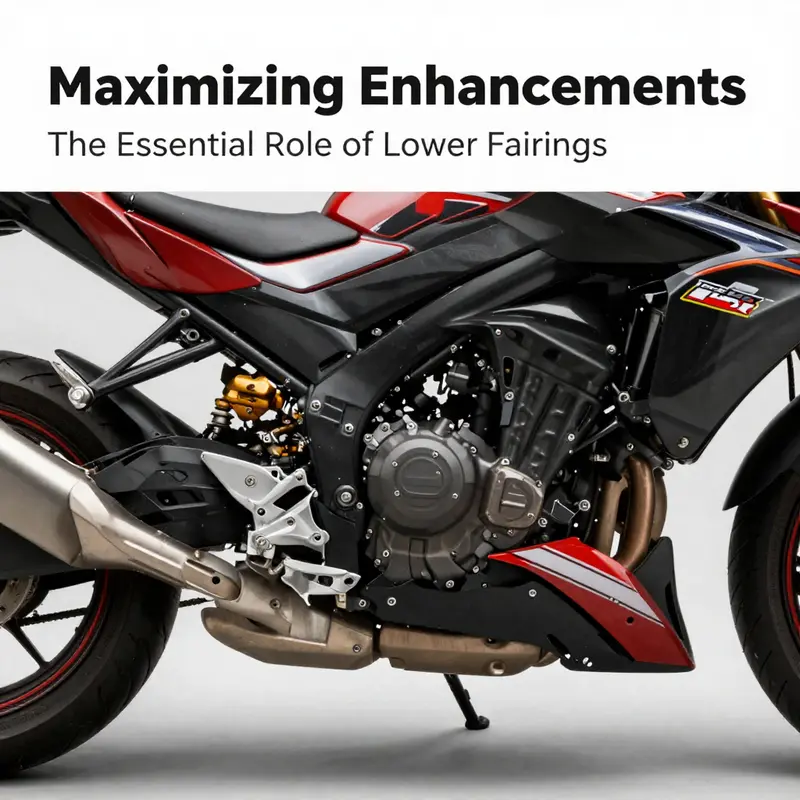
Lower fairings aren’t merely protective shields for the engine and lower chassis; they are active participants in a bike’s visual dialogue. They shape the first impression of a motorcycle the moment it comes into view, turning a machine built for performance into a sculpture that communicates speed even when it stands still. The way lower fairings sweep along the sides, tuck under the fuel area, and merge with the lines of the upper fairing creates a unified silhouette. This silhouette speaks in a language of continuity and purpose, suggesting a single design intention rather than a collection of disparate parts. When done well, the lower fairings deliver a factory-finished look that feels inevitable, as if every angle was conceived in concert with the bike’s entire geometry rather than added as an afterthought. They manage to hide complexity while revealing an essence: speed, control, and refined engineering. The aesthetic value lies not in loud statements but in quiet precision—the way a long, uninterrupted contour draws the eye through a frame and implies airflow, stability, and restraint at the same time.
To understand their impact, it helps to imagine the bike as a single, kinetic sculpture. The lower fairings act as the artist’s base and rails, guiding perception rather than merely covering components. Their job is twofold: visually, they enhance cohesion by extending the lines of the upper fairing downward and outward; functionally, they conceal, protect, and manage perception of structure. This dual role matters because perceived quality often translates into perceived performance. A carefully shaped lower fairing can make the rider feel connected to the bike’s engineering even before the throttle is touched. It’s a subtle alchemy—the interplay of line, surface, and finish—that elevates a machine from mere transport into an object of craft.
The aesthetics of lower fairings are inseparable from the way a bike communicates its intent at different speeds. At a standstill, the fairings frame the engine in a way that reads as disciplined and restrained. On the move, their geometry is read as velocity, channeling air and guiding it along the machine’s flank. This visual choreography matters because riders don’t only ride for function; they ride to express a stance, a mood, and a story about their relationship to speed. The lower fairing becomes the canvas upon which this story is painted, often in subtle tones and textures that catch light and shadow in a way that makes the bike feel both grounded and dramatic. A gloss finish can emphasize a polished, modern aesthetic, while a matte texture may evoke a rugged, industrial sensibility. A carbon-fiber weave, when exposed or simulated, adds a high-tech, performance-oriented aura that resonates with enthusiasts who equate form with function.
The language of contour is another crucial aspect. Designers use gentle transitions that avoid abrupt breaks, allowing the eye to glide along the bike’s lower half. Subtle ridges and counter-slopes can echo the lines of the upper fairing, creating a sense of harmony from front to rear. When the lower fairing mirrors a twin-tone or gradient finish, the transition becomes a visual bridge that amplifies the machine’s overall stance. The result is a visual balance that reads as coherent rather than compartmentalized. In this light, lower fairings become essential punctuation marks in a sentence that begins at the front wheel and ends at the tail. The rider’s perception of the bike’s width, length, and even its perceived weight is subtly altered by those carefully sculpted edges. A well-proportioned lower fairing makes a bike look longer and more planted, even if the physical dimensions are unchanged.
Riders who want a cohesive, high-end aesthetic often seek components that can be integrated with minimal visual disruption. In practice, that means lower fairings designed to align with the curvature of the tank, the rake of the front end, and the slope of the seating position. The best examples reveal a quiet confidence: cladding that seems to have grown from the frame rather than clamped to it. When existing lines align, the eye experiences a continuous surface that reads as crafted rather than altered. This is where the craft of manufacturing enters the story. The precision with which panels fit together, the uniformity of gaps, and the consistency of edge radii all contribute to the perceived value. Inaccurate gaps or ill-fitting contours break the illusion, reminding onlookers that the bike is a collection of parts rather than a unified sculpture. OEM (original equipment manufacturer) lower fairings are typically engineered to exacting standards to minimize these visual cues. Yet even within the aftermarket sphere, there are opportunities to preserve the sense of unity. The best aftermarket options honor the bike’s original geometry while offering personalization, letting riders tune the look without sacrificing cohesion.
Color and texture play pivotal roles in this aesthetic dialogue. A surface’s finish can transform how light travels across the fairing, turning a flat plane into a living surface that shifts with walking shadows and changing sunlight. A deep, saturated paint can convey authority and refinement, while a bright, electric hue signals sportiness and youthfulness. Metallic flecks catch the eye as the bike moves, offering a dynamic shimmer that enhances perceived speed. Carbon fiber, in its many representations, delivers a tactile cue of performance; it hints at a material science story—the convergence of strength, stiffness, and lightness. Even when the fiber is not visible in full, the impression of carbon can influence how riders evaluate the bike’s overall quality. Texture also matters: a smooth, glassy finish reads as meticulous, whereas a fine-grained or brushed texture can give the machine a tactile presence that invites a closer look.
Aesthetic value is not simply about how a bike looks when parked. It is also about how the lower fairings relate to the rider’s engagement with the machine in motion. The eye travels along the panels, then rests at the transition points where light changes direction, where the surface narrows or broadens in response to the rider’s posture and the bike’s lean angle. A graceful silhouette helps the rider feel connected to the road even before turning a wheel. This connection is more than emotional; it is a sensorial cue that translates into the rider’s sense of safety and control at speed. When a rider senses that the bike’s form is harmonized, confidence grows. The lower fairings, in effect, become ambassadors of confidence, offering a visual assurance that every line has been considered and every joint is purposeful.
From the restoration corner to the show-floor, lower fairings are a focal point for those who want to tell a story through finish and contour. For people who love a cohesive look across a complete bike, these parts are essential. They provide the canvas on which a cohesive paint job or carbon finish can be realized, whether the aim is a factory-inspired look or a bespoke, personal statement. Custom projects often begin here, with color matching, blending, and surface finishing that ensure the lower fairings read as an integral element rather than as an add-on. A well-executed finish can harmonize the entire loom of panels, linking the tank, the side fairings, and the tail into a unified sculpture that communicates velocity without saying a word. When paired with other fairing components such as the upper kit, lower fairings help craft a balanced, visually striking form that emphasizes both performance and craftsmanship. It is in this balance—between concealment and display, protection and polish—that the aesthetic potential of lower fairings truly comes alive.
Material choices also shape the visual story. ABS plastic offers a clean, smooth surface that accepts a variety of paints and finishes, making it a reliable workhorse for OEM styling and simple customization. Polycarbonate shares many of ABS’s advantages but provides heightened impact resistance and clarity, which can translate to crisper graphics on the surface. Carbon fiber, by contrast, is less forgiving of rough handling but rewards careful attention with a weave that catches the light and a premium, high-tech veneer. The visual impact of carbon fiber is more than a look; it communicates engineering choice and a commitment to performance. For riders and builders who crave both aesthetics and function, these materials offer a palette of possibilities. OEM fairings provide a baseline of fit and finish, ensuring that every edge aligns, every seam sits flush, and the overall look remains cohesive with the manufacturer’s design language. Aftermarket options expand that palette, offering a broader spectrum of colors, textures, and detailing that still respect the bike’s original proportions while allowing for personalized touches. The trick is to choose pieces that complement the lines rather than fight them, preserving the quiet elegance that makes the lower fairings a true aesthetic asset.
The discussion would be incomplete without acknowledging the practical aspects that undergird beauty. Ease of installation, alignment, and secure fastening matter as much as the look. A fairing that looks stunning but doesn’t sit correctly on the motorcycle quickly loses its appeal in real-world use. Good fitment ensures that the lines between panels remain visually continuous and that the bike’s stance appears unwavering even in transmission of torque or while cornering. When riders evaluate aesthetics, they are also assessing how the forms perform in the living world: how they resist heat and vibration, how they shed water and debris, and how they endure long miles without losing their gleam. In this sense, aesthetics and engineering are two sides of the same coin. The lower fairings earn their keep not just by catching eyes but by delivering a stable, thoroughgoing impression of quality that endures under use.
For those who want to explore the visual potential of lower fairings in concrete terms, a visit to category pages that group by model or browser-friendly classifications can be a useful way to imagine how a given silhouette might fit a specific bike family. For riders who are seeking to align the look with a particular aesthetic, there are curated options within the Honda fairings category that illustrate how finishes, contours, and color schemes come together to form a cohesive whole. This is where the design aspiration meets the practicality of sourcing and installation. The right choice sustains the look across lighting conditions, road surfaces, and viewing angles, and it preserves the sense of motion even when the motorcycle is at rest. See the Honda fairings page for a sense of how these elements translate into real-world styling decisions. Honda fairings.
In sum, the aesthetic impact of lower fairings arises from their ability to harmonize line, texture, and finish into a single, readable statement about speed and workmanship. They are the quiet enactor of a bike’s visual identity, translating technical capacity into a form that people want to ride and display. When designed with attention to contour language, material response, and finish quality, lower fairings help articulate an identity—one that signals control, precision, and a refined philosophy of performance. They may be one component among many, but as this discussion shows, they carry the capacity to define a bike’s personality as surely as the engine or the chassis. That’s why, in any serious conversation about motorcycle aesthetics, the lower fairing deserves a place at the center of the dialogue.
External resource for further reading: For a foundational overview of why fairings matter in motorcycle design, see this resource: https://www.motorcycle.com/motorcycle-fairings-what-they-do-and-why-they-matter/.
From Mold to Mirage: Material Mastery and Manufacturing of Motorcycle Lower Fairings

Material choices and manufacturing methods sit at the heart of what a lower fairing can do for a motorcycle. These components do more than shield the engine and the rider from wind and weather; they shape the bike’s silhouette, influence its aerodynamics, and determine how reliably the vehicle performs at speed, in rain, or on a long, open highway. Every facet of a lower fairing—from the stiffness of the panel to its resistance to sun, heat, and impact—stems from a deliberate fusion of material science and production technique. When you look beyond the surface gloss and see the fairing’s weight, its mounting precision, and its long-term durability, you are witnessing the outcome of a tightly choreographed process that starts with raw resin or fabric and ends with a part that can be painted, fitted, and trusted on tens of thousands of miles of road. The balance between form and function here is not cosmetic indulgence; it is a foundational engineering decision that reverberates through handling, fuel economy, and rider confidence at speed.
At the core of most mass-produced lower fairings is thermoplastic engineering, with ABS plastic leading the field. ABS delivers a practical blend of impact resistance, stiffness, and excellent moldability. It accepts paint and clear coats well, enabling a glossy finish that resolves into the bike’s overall styling language. ABS’s compatibility with high-volume injection molding makes it the workhorse of standard-production motorcycles. It tolerates the heat and flex that come with spirited riding, and it stands up to the daily grind of road debris, gravel, and spray without absorbing stains or warping easily. Yet, the material is not without its caveats. Prolonged exposure to ultraviolet light can fade color tones unless UV-stabilized coatings are applied. It can become brittle at very low temperatures, and while it resists impacts better than many plastics, a hard, direct hit can still crack it.
Polypropylene, or PP, offers a lighter alternative in some lower fairings. It is praised for its chemical resistance and fatigue properties, which can translate to a marginal weight advantage. But PP typically offers less impact resistance and dimensional stability than ABS, particularly in edge areas where corners and mounting tabs bear repeated loads. Some designers use PP in conjunction with ABS or in non-load-bearing sections to optimize cost and flexibility. The result is a fairing that can flex with the chassis and adjust to different rider positions, though it may require more careful inspection for stress cracking after rough road use. The decision to use PP often reflects a broader philosophy: tailor the material to the expected service environment and the targeted price point, rather than chasing an ideal for every scenario.
Fiberglass represents a different design philosophy altogether. It is a favorite in custom builds, sport-touring, and premium mid-range applications where strength-to-weight is a priority but carbon fiber is not yet economical. Fiberglass fairings can be molded into complex geometries that support distinctive styling cues and better fit on bikes with unusual frame shapes. They are sturdier than simple sheet plastics in many configurations and can be repaired with relative ease in a shop setting. However, fiberglass is heavier than carbon fiber and can be more challenging to achieve perfectly smooth finishes without meticulous lay-up techniques. The trade-off often comes down to the intended rider experience and the budget available for both production tooling and labor.
Carbon fiber sits at the apex of weight savings and stiffness. In high-performance or premium sport bikes, carbon fiber lower fairings bring a noticeable reduction in weight, improved torsional stability, and a sleek, high-tech appearance that many riders associate with advanced engineering. The visual impact is unmistakable; carbon fiber weaves catch the eye just as surely as the part’s performance benefits catch the ride. Yet, carbon fiber is expensive to produce, demands careful handling during installation to avoid micro-cracking, and requires specialized tooling and finishing to preserve its integrity. Its cost can be a barrier for mass-market motorcycles, but in racing-inspired or top-tier configurations, carbon fiber reflects a strategic choice that prioritizes performance and aesthetics in equal measure.
The manufacturing process mirrors these material choices with distinct workflows and quality considerations. Injection molding is the dominant technique for ABS and PP lower fairings. This method leverages high-pressure melt streams to fill complex molds with consistent density and tight tolerances. The automation and repeatability of modern injection lines enable thousands of units per day, with integrated systems that manage resin heating, venting, and cooling to minimize warpage. In regions where manufacturing clusters dominate, such as parts of East Asia, injection molding can be paired with rapid prototyping, in-mold labeling, and multi-color or multi-layer finishes that keep throughput high while preserving finish quality. A well-managed injection molding line does more than replicate a design; it calibrates shrinkage, ensures uniform wall thickness, and creates the surface texture that accepts paint or clear coats with minimal post-processing.
For fiberglass and carbon fiber fairings, the path is distinctly manual and labor-intensive. Hand lay-up followed by vacuum bagging remains common where designers seek tailored, high-strength structures. The craftsman’s touch matters: the fabric layers, resin saturation, and the vacuum pressure all influence the final resin content, surface finish, and consolidated voids. While this route is slower, it offers design flexibility that is essential for custom or boutique builds. It also allows the integration of unique features—ventilated grilles, airflow channels, or molded contours that support cooling or rider comfort—without forcing a factory-standard negative space around them. The final step—curing, trimming, sanding, priming, and painting—shapes the piece into a visually cohesive part that cannot be produced with a single, universal mold alone.
Coatings and finishing are not mere aesthetic indulgences; they project durability and resilience into the long run. UV-protective clear coats, weather-resistant primers, and layer-by-layer paint systems guard against sun exposure, rain, and road salt. Even the most robust base materials benefit from a thoughtful finishing regimen, because pigment stability can influence shade matching across multiple panels and bike generations. In practice, these finishing steps also improve the panel’s resistance to scuffs and scratches, helping maintain a bike’s showroom appeal long after the original purchase.
The end-to-end journey from resin or fabric to a mounted, finished lower fairing hinges on more than raw materials and labor. It rests on the ability to integrate the fairing with the frame and with ancillary components—ventilation ports, speaker or accessory mounting points, and stealth channels that manage air and water. The engineering brief must anticipate the mounting geometry, the heat flux from the engine, and the rider’s interaction with the panel through the foot pegs and the body position. The result is a fairing that not only envelopes the undercarriage in a protective shell but also communicates a coherent design language, matching the bike’s lines, stance, and character. The balance between a clean aesthetic and robust function is the hallmark of a well-considered lower fairing.
The story of materials and manufacturing is inseparably linked to global supply chains and regional strengths. The industry has, for years, leaned on established manufacturing clusters where tooling, resin systems, fabricators, and finishing houses converge. Guangdong Province, in particular, has defined a significant portion of the global fairing supply. The region’s ecosystem supports rapid prototyping, high-volume production, and a suite of services from mold making to post-finish assembly. This specialization translates to shorter lead times and more predictable delivery for buyers who rely on consistent quality and specific tolerances. Vendors in these hubs frequently operate with bonded warehousing near major ports, enabling faster re-supply and more efficient just-in-time delivery. The practical implication for riders and tune-up professionals is clear: the material and process choices that originate in these centers ripple outward, shaping the price, availability, and performance of lower fairings across markets.
For buyers and engineers, the decision matrix extends beyond a single material choice. Compatibility with specific motorcycle models becomes a critical constraint, as fairings must align with double-wulled frame rails, mounting points, and engine cutouts. It is not enough to select a panel that looks right; the panel must slot into an exacting envelope, maintain gap tolerances when subjected to wind pressures, and resist deformation under heat cycling. This is where the industry’s broader capabilities—tooling accuracy, quality control standards, and the management of coatings and adhesives—become as important as the raw material itself. A well-behaved ABS fairing, for instance, gains from a precise mold that minimizes shrinkage and a paint system that remains stable through years of exposure. A carbon-fiber panel, conversely, depends on resin infusion quality and carefully controlled curing to preserve its stiffness-to-weight advantages without compromising surface rigidity.
Within this intricate web of materials and methods, design teams also consider the fairing’s role in energy efficiency and thermal management. Aerodynamics engineers look for smooth, continuous surfaces that minimize turbulence beneath the fuel tank and along the bike’s lower flank. A well-finished fairing reduces drag and, consequently, reduces engine load at highway speeds. In some designs, carefully placed vents or channels guide air toward cooling fins and radiators, and even subtle sculpting can influence flow separation at critical yaw angles. These considerations—how the panel behaves in real-world wind, how it channels heat, and how it resists environmental assault—are realities of the manufacturing choice, not afterthoughts to be patched on later.
The industry’s trajectory toward higher performance shows up in material science as well. Carbon fiber variants, for example, invite not only lightweight gains but also an emphasis on precise, sometimes time-consuming production steps that demand specialized skill sets. The same push toward lighter weight drives innovations in sealants, bonding agents, and surface finishes to prevent delamination and keep the appearance pristine. But even as carbon fiber climbs in prominence among premium lines, ABS and fiberglass remain essential for mainstream motorcycles, where a predictable cost-to-performance ratio matters most. The result is a spectrum of options, each with a clear rationale: ABS for broad accessibility and consistent mass production; fiberglass for customization and robust durability; carbon fiber for ultimate lightweight performance and visual impact.
For readers who seek practical guidance about sourcing and production practices, the path is rarely a straight line. It often involves weighs the benefits of a globally integrated supply chain against the flexibility needed for rapid customization. On the sourcing side, a mature market affords suppliers who can promise consistent material supply, standardized testing, and reliable post-processing services—from priming to clear coating—to ensure the final piece meets technical standards across regions. The trade-off between speed, cost, and customization becomes a constant negotiation, where the optimal solution is defined not by the most exotic material, but by the right material for a bike’s intended use and market positioning. In this sense, the craft of lower fairings becomes a story about engineering decisions as much as about the surface they present to the rider.
In practice, riders who are curious about the variations in lower fairings can explore the ranges available for specific model families by visiting category pages that collate model-compatible options. For example, a rider looking to tailor the look and feel of a bike in a particular brand family might explore the options within the Honda fairings category. This approach helps ensure that any new panel you consider will fit within the bike’s established geometry and mounting system, avoiding the friction that comes from incompatible attachments or misaligned gaps. The process emphasizes not just the appearance of the panel but its compatibility, the longevity of the finish, and the ease with which it can be integrated with existing components. As you evaluate different materials and finishes, you gain a more complete perspective on how every choice—from resin chemistry to mold texture—contributes to the ride’s overall character. See the Honda fairings category for a sense of how a brand-family approach translates into a coordinated set of panels that maintain line, balance, and function across the bike’s lower exterior.
The broader takeaway is that the material and manufacturing story behind motorcycle lower fairings is an ongoing dialogue between design ambition and production practicality. Material selection sets the ceiling for performance and aesthetics, while manufacturing methods determine the floor for cost, precision, and repeatability. When these elements align—when a panel is light yet tough, when it can be finished to a showroom standard without onerous post-processing, and when it can be produced in the quantities that a given model’s sales forecast demands—the bike’s entire dynamic quality improves. This is the quiet strength behind every visually striking, weather-ready lower fairing and the reason riders experience both performance gains and lasting satisfaction from a well-made panel. The next chapters will continue to unfold how fitment, customization, and on-bike behavior grow from these foundational choices, revealing how fairings can evolve from protective shells into integral expressions of a motorcycle’s philosophy.
External resource for further reading: For a broader look at global sourcing and manufacturing practices in the motorcycle components sector, see https://www.motorcyclefairingsupplier.com/sourcing-guide-china-b2b-buyers.
Internal link reference: For those exploring sub-model compatibility within the same brand ecosystem, you can browse the Honda fairings category here: Honda fairings category.
Final thoughts
In summary, motorcycle lower fairings are not just an accessory but a crucial component that enhances performance, protects vital parts, and adds aesthetic value to modern motorcycles. For business owners, understanding these benefits is key to making informed decisions in product development, marketing, and customer engagement. By prioritizing the integration of high-quality lower fairings in their offerings, businesses can attract discerning riders looking for optimal performance and style. As the market evolves, the demand for beautifully crafted, functional lower fairings will only continue to grow, making it an essential focus area for motorcycle manufacturers and aftermarket suppliers.