
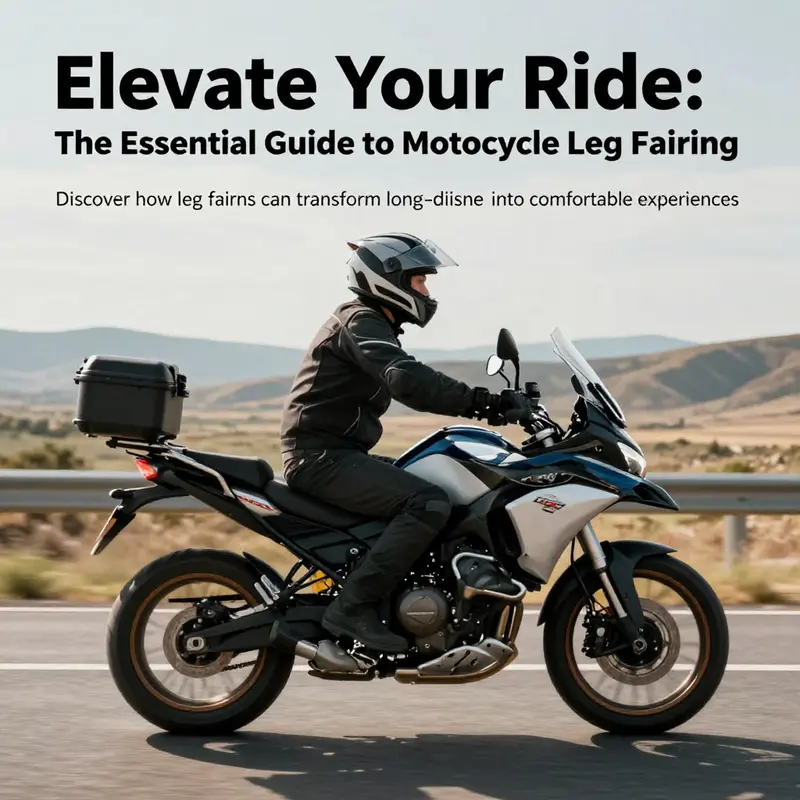
Motorcycle leg fairings have become increasingly vital for riders seeking enhanced comfort and performance on long-distance tours. These specialized body panels not only improve wind protection but also contribute to thermal regulation, aerodynamic efficiency, and overall aesthetics. For business owners in the motorcycle industry, understanding the advantages of these fairings can guide product selections and enhance customer satisfaction. This article explores the multifaceted benefits of motorcycle leg fairings, delves into materials and design features, assesses compatibility across various models, examines market trends, and provides installation and maintenance considerations. Each chapter crafts a comprehensive understanding of why motorcycle leg fairings are significant for both riders and retailers alike.
Shielding the Ride: The Quiet Power of Leg Fairings on Long-Distance Journeys

Long-distance riding demands comfort and consistency. Leg fairings are the lower side panels that shield the rider’s legs from wind, weather, and road spray. They reduce wind blast on the thighs and calves, helping maintain a relaxed posture and reduce fatigue over hours in the saddle. Properly designed fairings improve airflow around the legs, lower drag slightly, and can contribute to a calmer cockpit with a bit less wind noise. In cold or wet weather they act as a barrier against wind chill and spray, while in hot weather they provide shade and a measure of sun protection. A well-integrated set respects the bike’s geometry and mounting points, so the rider gains protection without compromising handling or aesthetics. Material choice, fitment, and ventilation are important: ABS panels with clean lines, venting that balances comfort and airflow, and precise mounting to preserve lean angles. For riders planning an upgrade, look for durability, good fit, included hardware, and color-matched finishes for a cohesive look.
null
null
Fitment by Generation: Navigating Leg Fairings Across Touring Bike Generations

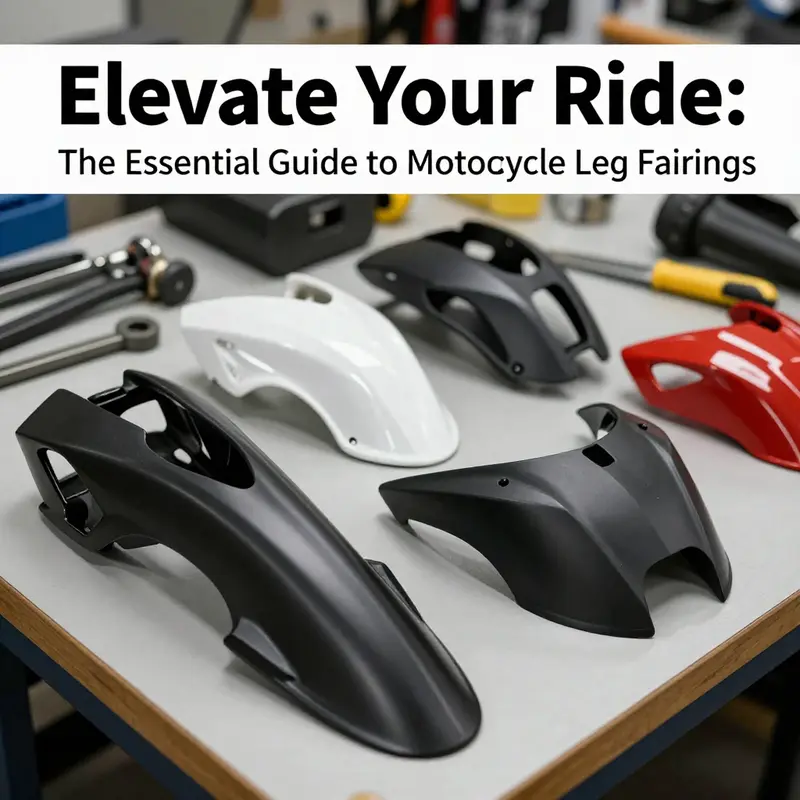
A rider’s decision to add lower vented leg fairings is often driven by comfort and practicality. The wind buffet at highway speeds, the chill that settles into the calves on early morning rides, and the calm that comes from a slicker, more controlled breeze all suggest a clear benefit. Yet the promise of a simple bolt on upgrade quickly meets the reality of model year differences, variant specific design changes, and the way a factory was configured years after a frame left the line. The result is a topic that rewards careful reading of compatibility notes and precise matching of parts to the exact machine. A well executed fit is less about chasing a universal panel and more about aligning a kit with the bike’s unique geometry, mounting points, and the way other accessories interact with the lower fairing area. The path to this alignment is paved with attention to detail, from the identifying codes in the official catalogs to the subtle distinctions in how brackets, guards, and vents integrate with a given generation of touring machines.
The core constraint in leg fairing compatibility is specificity. Kits that claim broad compatibility may seem tempting, but the reality is that the lower fairing’s attachment points, the surrounding weather guards, and the engine-side brackets can shift with model year, trim, or factory upgrades. In practical terms, a kit designed for a mid cycle refresh may not align with a bike that received a chassis tweak or altered engine guard configuration a few years later. The mounting hardware set—the left and right supports, the engine guard clamps, and any fasteners that are part of the kit—often comes with a precise blueprint. If a kit omits a required bracket or assumes a different clamp size, the result can be rattling, misalignment, or even interference with moving parts. Buyers frequently encounter this reality when reading installation notes that link the kit to a particular part number or designation. Those markings are not cosmetic labels; they are the map to correct fitment.
From the buyer’s perspective, the best practice is to start with the exact model designation and year in hand, and to cross-check that information against the part catalog entry. The catalogs typically separate options by the bike’s production window, sometimes listing exclusions for later variants that inherit a revised fairing footprint or a different engine guard shape. It is not merely a matter of color or style; it is about whether the lower panel and its supports can anchor cleanly to the frame and enclosure without colliding with nearby components. A fairing that looks the same on the outside can be a poor match if, behind the surface, the mounting geometry has diverged. This is why many installations hinge on verifying a precise part number rather than trusting a generic size claim.
Color and finish, while often treated as cosmetic, play a practical role in compatibility as well. A color matched ABS panel may offer a striking visual upgrade, but if the finish is chosen from a catalog that assumes a particular base color and underlayer, mismatches can appear once the panel is mounted. In some cases, a kit will offer a black gloss or a color that mirrors the bike’s original tone, but the exact shade can vary by production batch. Riders who value a seamless look benefit from requesting samples or checking color match guarantees before painting. Equally important is the vent design. Many leg fairings include vents to maintain airflow through the lower leg area, reducing heat buildup and preventing a generalized hot spot effect for the rider’s knee and shin. These vents are engineered with the bike’s air path in mind; if a mounting arrangement shifts due to an incompatible kit, those vents can become misaligned or obstructed, defeating their thermal purpose.
The installation narrative itself is a reminder that these panels are not just decorative components. They are part of a broader ecosystem that includes brackets, engine guards, and sometimes auxiliary trim pieces that complement the fairing line. Some kits assume factory-style brackets that exist on the bike from day one, while others rely on aftermarket or dealer supplied hardware to bridge gaps created by a model’s design evolution. In the latter case, the installation instructions may note that certain hardware is included only for specific design generations, or that some hardware must be purchased separately to ensure a secure, vibration-free fit. The level of required modification can range from a straightforward bolt-on process to a more involved step that calls for minor trimming or careful alignment of the lower edge with adjacent panels. Even when the goal is a clean, factory-like appearance, precision in alignment pays dividends in longevity and weather resistance.
Beyond fitment, there is a practical conversation about how these panels interact with riding habits and climate. For touring riders who spend long hours on the road, the wind protection provided by leg fairings translates into reduced fatigue and a more comfortable posture. By shielding the inner leg from crosswinds and cold air, the rider experiences less thermal shock during transitions between highway speeds and on-ramps, where gusts can briefly alter the air pressure around the rider’s legs. For riders contending with variable weather, the extra barrier against rain, dust, and road spray translates into fewer spares in the cockpit and a cleaner riding environment over long distances. The trade-off, naturally, is weight and marginal complexity in maintenance—two factors that manufacturers weigh when specifying compatibility and installation guidelines. In a well-considered setup, those factors are balanced against the rider’s goals: fewer interruptions on a grueling ride, a more consistent climate around the legs, and a look that feels integrated rather than tacked on.
The shopping mindset that emerges from this compatibility reality emphasizes due diligence and clear expectations. When evaluating a lower vented leg fairing kit, the first question should be whether the part number and model year designation align with the bike in your garage. Don’t rely on a broad compatibility statement; confirm that the kit’s left and right supports, as well as any required hardware, exist in the package and correspond to the bike’s designated frame and engine guard style. If a kit promises compatibility with a family of bikes, dig into the exclusions and understand which variants are supported and which are not. The installation narrative should make clear whether the brackets are factory-like or require an additional mounting system. As always with any bodywork, ensure the color finish matches or is easily matched to your bike’s colorway, and verify that the vent design will clear all nearby components without interference.
For readers seeking practical guidance beyond the catalog pages, a useful stepping-stone is reviewing related resources that categorize fairings by type and by brand-agnostic design philosophy. A trusted reference point is a catalog that groups options by rider intent touring cruising and sport focusing on a lower leg panel that offers wind protection, weather resistance, and a clean aesthetic. This broader view helps translate the catalog’s technical terms into real-world implications for fitment, mounting ease, and weather performance. To deepen the practical understanding, consider exploring a catalog that presents a broad range of fairings and their fitment logic, and when ready to verify exact fit, consult the official parts catalog for the precise designation that matches your bike’s year and variant. For a catalog-oriented resource, see the Honda fairings collection as a useful reference point for seeing how a general fairing family is organized across generations and design updates. That page can be found here: https://ultimatemotorx.net/product-category/honda-fairings/.
In the end, the secure path to a satisfying leg fairing upgrade lies in a disciplined approach to compatibility. The perfect pair is not about choosing the most visually striking panel but about choosing the one that threads into the bike’s existing architecture with exact precision. It means confirming part numbers, understanding the exact mounting geometry, anticipating any needed hardware purchases, and reconciling finish and vent design with riding goals. When these elements align, the lower fairing becomes much more than a cosmetic improvement. It acts as a tuned piece of the bike’s airflow and climate-control system, quietly contributing to rider comfort on long stretches of highway, while preserving the machine’s clean lines and weather-ready stance. The result is a more comfortable ride and a more cohesive look—an upgrade that respects the bike’s generation while offering tangible ride-ready benefits for years to come.
External resource for official fitment notes and model year exclusions can be found here: https://www.harley-davidson.com/us/en/shop/road-glide-fairing-support-kit-gloss-black/p/47200278
null

null
Tuning Comfort and Control: Installation, Maintenance, and Performance of Motorcycle Leg Fairings
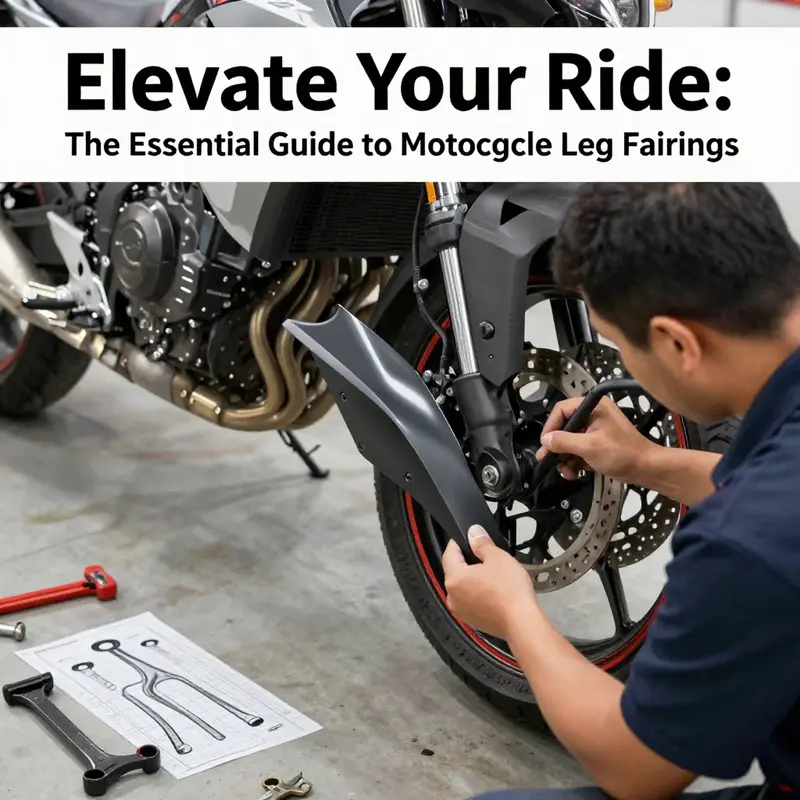
Installing leg fairings is more than a cosmetic upgrade; it is a careful negotiation between wind, warmth, and the motorcycle’s lines. These lower panels perform a quiet yet persistent job: shaping the air that brushes the rider’s legs, shielding against cold gusts, rain, and road spray, while contributing to a bike’s overall silhouette and perceived quality. A well-fitted leg fairing can transform long-distance riding from a test of endurance into a steadier experience of focus and ease. The essence of their value is not merely in the protection they offer, but in how precisely they integrate with the machine’s geometry and the rider’s posture. As such, the installation becomes a test of both patience and respect for the craft of bodywork, where alignment, fasteners, and finish must harmonize with the frame and the other panels that define the bike’s aerodynamics.
Key to this harmony is precision. When a set is mounted, the panels must align with the frame and adjacent bodywork so that air does not leak through gaps that would disrupt smooth airflow or create unwanted flutter. Even small misalignments can produce a subtle, nagging wind on the leg or a rattling at highway speed. The bolt torque, while seemingly a minor detail, anchors these panels so they do not drift under vibration. Most manufacturers specify torque in a narrow range, typically around 8 to 12 Newton-meters. Adhering to this range protects the plastic from excessive stress while maintaining the intended clamshell fit that seals gaps and supports the panel’s stance. The importance of torque is not merely about staying tight; it’s about ensuring that the fairing’s stiffness remains within design tolerances so that air follows the intended contour instead of catching on a loose edge.
Beyond the numbers, installation also means scrutinizing fasteners as part of a routine maintenance mindset. It is prudent to inspect all fasteners every thousand miles or after a ride that tests exposure to harsh weather, gravel, or salt. Loose hardware not only loosens the fairing but can degrade alignment and introduce noise or vibration that bleeds into the cockpit. The approach to maintenance should be proactive rather than reactive: check, re-torque if needed, and replace any worn or damaged hardware. The good news is that most modern leg fairings are designed with replacement in mind; if a clip or bracket shows signs of fatigue, it can be swapped without rewriting the entire installation plan. In practice, the best installations are those that anticipate wear, not those that react to it after it appears.
Maintenance of the fairing’s surface itself is a quiet discipline that pays dividends over years of riding. Cleaning should be performed with mild soap and water, avoiding harsh chemicals that can degrade the surface or alter the finish. High-pressure washes are similarly to be avoided, especially near seams or along routed vent passages, where micro-cracks can begin. Over time, ultraviolet exposure can embrittle or discolor ABS plastic, which remains the industry standard for its durability and light weight. A periodic UV-protective wax or coating helps preserve gloss and prevents premature aging. The environmental exposure on a long tour—sun, rain, road salt, and varying temperatures—tests the finish, so the upkeep plan matters as much as the initial polish. When a rider takes the time to maintain the surface, the fairing retains its aesthetic appeal while continuing to contribute to the bike’s airflow management.
The role of materials and ventilation is central to understanding performance. ABS plastic remains a mainstay because it blends impact resistance with lightness and ease of finish matching. The color and texture of these panels can be matched to the bike’s original scheme, which helps preserve a cohesive look. Ventilation is another subtle but meaningful feature. Some leg fairings incorporate vented designs that allow air to pass through without sacrificing protection. This helps dissipate heat that can build up inside the fairing cavity and around the rider’s legs, reducing the potential for warmth-induced fatigue on long rides. A well-vented design balances wind protection with heat management, a nuance that becomes especially important on extended highway stretches where the body’s thermoregulation is taxed by continuous airflow.
As riders consider adding or refreshing leg fairings, compatibility remains a practical concern. These panels are typically designed for specific model families and frame geometries, so fitment checks are essential before purchase. A model-specific fit reduces fitment guesswork and enhances alignment accuracy, which in turn improves weather protection, air handling, and overall appearance. When considering a kit, riders should verify whether mounting brackets and installation instructions are included and whether any additional hardware is necessary. Some configurations may require minor trimming or customized adjustments to achieve the ideal line and gap control around the bike’s lower contours. The goal is a seamless beltline of panels that looks natural on the bike rather than an add-on that sits awkwardly on the frame.
The functional benefits of leg fairings extend beyond wind and weather defense. For riders who spend significant time on highway speeds or in variable climates, the quiet shield around the rider’s legs helps maintain leg warmth, reducing stiffness and improving circulation over long distances. This practical comfort translates into a more relaxed riding posture, which, in turn, enhances control and reduces fatigue. Even the perceptible drag reduction from smoother airflow around the legs can contribute to marginal gains in efficiency, all else equal. While the gains may be incremental, they compound over hours of riding, especially on touring or adventure setups where long days on the road are the norm.
From an aesthetic standpoint, leg fairings contribute to the motorcycle’s presence. They provide a clean, integrated look that can emphasize the bike’s lines and stance, making it appear more purpose-built for touring, sport touring, or cruising. The extended versions, with greater coverage, offer additional splash and spray protection, which can be particularly valuable in rainy climates. The sport variations, while smaller in coverage, can sharpen the bike’s silhouette and reduce visual mass, appealing to riders who want a leaner look without sacrificing wind protection. The choices reflect a balance between protection, practicality, and style, and the right choice depends on the rider’s typical riding conditions and personal aesthetic.
In navigating these decisions, riders often turn to community and technical resources. Practical guidance is not solely the domain of manufacturer manuals; it is also found in hands-on reviews and technical discourse that emphasize the realities of ongoing maintenance, fitment challenges, and the courage to adapt. For those seeking a broader frame of reference on fairings as a component category, the Honda fairings category offers a useful overview of how model-specific lines influence fitment, aerodynamics, and color-matching considerations. See Honda fairings category.
For deeper technical guidance and official maintenance guidance, reference remains essential. Car interiors and fairing guides provide reliable, up-to-date advice on preserving fairing performance and longevity across the lifecycle of these parts, including cautions about chemical exposure, UV protection, and the importance of gentle cleaning practices. External resources can complement hands-on experience and dealer guidance, reinforcing best practices for torque control, alignment checks, and routine inspections. For riders who want to explore this further, a comprehensive articulation of maintenance strategies can be found in Car Interior’s Motorcycle Fairing Guide, which consolidates practical tips for care, checks, and safety considerations. External resource: https://www.carinterior.com/motorcycle-fairing-guide/
In sum, leg fairings are a nuanced blend of engineering and craft. They are not simply added to a bike; they are integrated into the rider’s flow, climate comfort, and the machine’s aerodynamic personality. Installation requires respect for torque, alignment, and compatibility. Maintenance rewards riders with lasting protection and a finish that remains true to the bike’s original intent. The result is a motorcycle that meets the road with steadier wind, warmer legs when needed, and a cleaner, more cohesive appearance—an embodiment of thoughtful engineering that makes long rides more enjoyable and less taxing on the body. The right panels do more than shield; they harmonize the rider, the bike, and the miles ahead, turning the journey itself into a smoother, more confident experience.
Final thoughts
Incorporating motorcycle leg fairings into your product offerings can significantly enhance rider comfort and satisfaction during long journeys. These enhancements not only provide functional benefits like wind protection and weather resistance but also improve the overall aesthetic of motorcycles, especially for touring models. As the demand for these features grows, understanding materials and compatibility ensures your business can effectively meet the needs of today’s riders. By prioritizing installation ease and maintenance considerations, you can foster a base of loyal customers who appreciate the comfort and style that motorcycle leg fairings provide. Ultimately, investing in knowledge about leg fairings positions your business for success in a competitive market.