
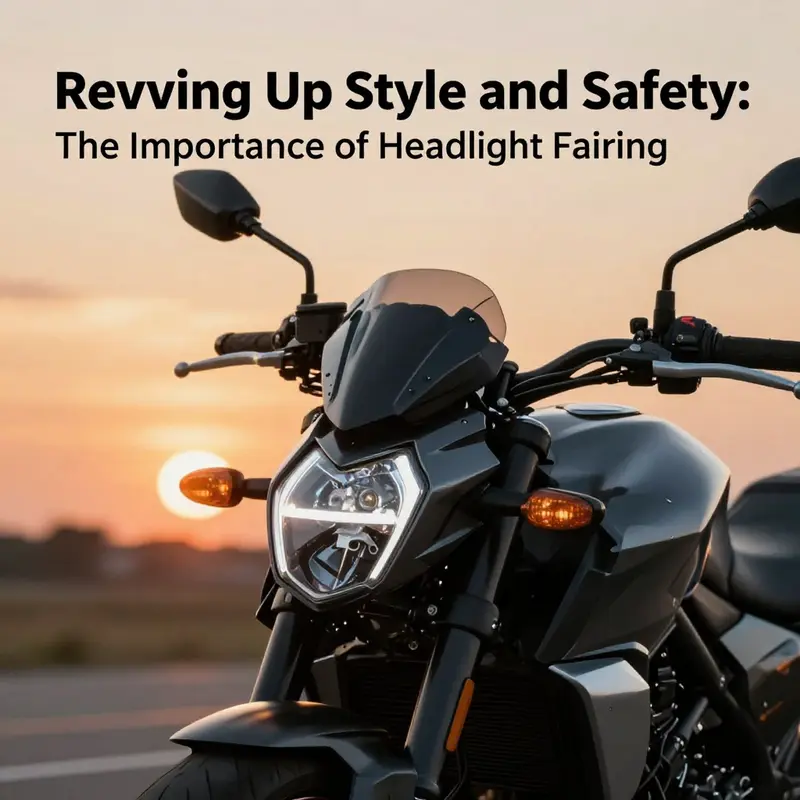
Motorcycle headlight fairings play a pivotal role in defining the performance and aesthetic appeal of modern bikes. As a business owner in the motorcycle industry, understanding these components can help you better cater to customer needs and enhance your offerings. Headlight fairings not only protect vital components but also contribute to the motorcycle’s aerodynamic properties and overall appearance. As we delve into the intricacies of motorcycle headlight fairings, we’ll explore the various types available, the materials that enhance durability, the technological advancements that improve functionality, and how to choose the right fairings for specific motorcycles. Each chapter provides insight relevant to enhancing your business strategy.
Aero, Armor, and Aesthetics: The Evolving Language of Motorcycle Headlight Fairings

The headlight fairing sits at the improbable crossroads where engineering discipline meets design impulse. It is one of those motorcycle components that riders notice most when it is missing or misaligned. Yet it quietly shapes the ride in tangible ways: directing the air around the rider, shielding key front end systems from grit and weather, and giving the bike a silhouette that communicates speed before the engine revs. The story of fairings unfolds through a simple question of coverage but grows richer when you consider how coverage, shape, and materials interact with riding style, climate, and maintenance habits. The evolution of headlight fairings mirrors a broader arc in motorcycle design: from pragmatic wind shields to integrated aero forms that blend protection, accessibility, and personality into a single statement.
Among the earliest ideas is the round universal headlight fairing. This round approach housing a headlight and shaping the front bodywork aimed to reduce wind resistance without sacrificing visibility. The circular form is efficient for guiding the airstream around the wheel and front frame, and even as headlights evolved to smaller or squarer configurations, the round fairing left its mark. Riders seeking marginal gains in ride comfort found that the round fairing could lessen wind blast on long highway stints. Today, these universal units persist as nods to legacy configurations or as low cost upgrades for retro styled builds. They remind us that aerodynamics does not always demand complexity; sometimes the simplest geometry that harmonizes with the bike’s lines is enough.
Yet most riders encounter fairings that move beyond round and toward forms that balance coverage with accessibility. The half fairing represents a deliberate compromise: it encloses the upper portion of the machine—primarily the headlight and instrument cluster—while leaving the lower engine and frame exposed. This design is not purely aesthetic; it preserves serviceability and heat dissipation, allowing easier access to engine and electronics during maintenance or upgrades. For riders who want a nimble feel of a standard or naked bike but still crave wind protection and a more integrated cockpit, the half fairing offers a hybrid solution. The interface between fairing and windshield, the angle of attack, and the curvature around the instrument panel all contribute to a precise rider experience: a defined shield that deflects air away from chest and neck while preserving an open, accessible character.
The full fairing, by contrast, casts a broader spell across the front of the bike. It encloses more of the bike’s front end and often extends to the sides, delivering maximum aerodynamic benefit and rider protection. The full fairing can streamline the overall silhouette, reducing drag and smoothing airflow around the rider, engine, and frame. This is particularly valued on sport oriented platforms or long distance machines where high speed stability, reduced turbulence, and rider protection from spray and debris are central. The aerodynamic payoff is compelling, but full fairings also bring engineering considerations: they must permit efficient heat management, they should not hinder routine maintenance, and their mounting must align with the bike’s steering geometry to avoid handling quirks. The best full fairings feel as if they grew from the bike itself, not bolted on later, translating the bike’s character into an integrated front-end language.
Material choice serves as a practical compass for selecting a fairing. The most common materials are durable polymers, with ABS plastic playing a starring role because of its light weight, impact resistance, and ease of fabrication. A glossy finish on ABS shields against UV damage and wear and suits a broad range of color schemes and decals. Beyond ABS, riders may encounter composites and reinforced plastics each offering different stiffness, resilience, and surface finish. The material choice matters for durability and for how the fairing behaves in real riding conditions: how it resists cracking from road debris, how it holds its shape under sun and heat, and how well it accepts adhesives, paints, and decals. The finish—gloss, satin, or textured—also communicates a bike’s personality, from track-ready intensity to understated elegance.
In recent years, lighting technology within the fairing has advanced in step with overall illumination. LEDs offer bright, energy efficient light with long service life and a clean white beam. Inside the fairing, LED modules can be arranged as reflectors for budget builds or as projectors that concentrate beam patterns for crisper illumination on the road ahead. The projector approach provides sharper light and reduces glare for oncoming drivers. The choice between reflector and projector is influenced by the rider’s typical routes, the bike’s electrical architecture, and the fairing’s internal space for lighting modules. Beyond light quality, the fairing’s geometry interacts with the beam pattern; the shape of intake ducts and mirror surfaces requires careful tuning to illuminate the road where the rider looks.
Choosing a headlight fairing is a conversation about compatibility, climate, and riding habit. Compatibility means fit with the frame, mounting points, and electrical system. Retailers increasingly offer guaranteed-fit options with finishes ranging from high gloss black to nuanced tones and textures. For riders exploring options that match a particular aesthetic, a fairing selection can be a deliberate extension of the bike’s personality. If you are personalizing or upgrading, consider catalog notes on fitment and installation to ensure proper alignment with your bike’s frame and bodywork. If you want a clean minimal look with easy access to mechanical components, a half fairing may be the right choice; if you prefer maximum protection and a tour-ready silhouette, a full fairing could be ideal. In any case, installation and alignment of the fairing and headlight are critical to ensure correct light distribution and to prevent glare.
The rider’s climate and maintenance habits further influence fairing choice. Harsh weather, dirt roads, and long wet commutes push toward greater coverage, while urban environments and versatile machines may favor the nimbleness of a half or quarter fairing. Maintenance habits matter: a fairing that is easy to rinse, clean, and inspect reduces the risk of UV cracking or paint delamination. Regular checks on mounting hardware, seals around edges, and headlight alignment are essential. When done with care, installation yields a front end that feels integrated, balancing the bike’s lines with the rider’s sense of safety and control.
Finally, the aesthetic dimension of fairings extends beyond cosmetics. A cohesive front end communicates intent and ownership. A glossy black finish can emphasize refinement and lines, while brighter finishes signal a bold or retro statement. Personalization becomes a dialogue between function and identity: the rider chooses coverage, the line and curve of the fairing, and the finish that matches their world on two wheels. The fairing therefore becomes a living component that can be refreshed with aftermarket options while preserving performance characteristics.
To connect theory with practice, a practical route is to inventory the bike’s current front-end geometry, note the headlight configuration and mounting space, and consider typical riding environments to decide between full, half, or universal fairing. Examine finish options and a maintenance plan. Verify compatibility with the engine, cooling system, and electrical setup, and plan the installation with attention to fit, sealing, and alignment. The goal is a thoughtful upgrade that harmonizes light, airflow, and rider comfort with the bike’s inherent character.
For readers exploring related catalogs, consider looking at brand-specific fairings to understand how a given design language translates to fitment across generations. The journey from round universal units to modern, LED-enhanced fairings reveals a continuum of design choices, each answering how to meet the road with less drag, more protection, and a stronger sense of identity.
In sum, the fairing is more than a cover; it is a hinge between rider and road, shaping posture, wind pressure, and even sound. It is a collaborative device that invites aero knowledge, mechanical practicality, and personal taste to converge. The evolving language of motorcycle headlight fairings is a story of how form and function meet on the front end, and how that meeting looks to the rider who sits behind it.
Material Matters: How Polymers Forge Performance and Style in Motorcycle Headlight Fairings

The headlight fairing is more than a pretty shell riding over the front of a motorcycle. It is a carefully engineered barrier between the rider, the lighting system, and the elements that would dim, distort, or degrade performance. The materials chosen to build these fairings must balance several demanding requirements at once: they must resist impact from road debris, endure heat from the headlight and engine, withstand years of sun exposure, and preserve optical clarity so the rider receives a bright, well-focused beam. The material choice influences every stage of a fairing’s life, from how smoothly it can be molded and painted to how reliably it transmits light and remains clear after thousands of miles. In other words, the polymers and resins that form the fairing front lines—pun intended—are as consequential as the overall geometry of the piece itself. A thoughtful material strategy translates rider safety, longevity, and even aerodynamics into real-world performance on every ride.
Among the plastics that dominate modern headlight fairings, polycarbonate stands out for its impressive combination of toughness and stability. Polycarbonate, with its high impact resistance, is less prone to cracking when stones or gravel strike the fairing at highway speeds. Its heat resistance is also a practical asset, since headlights generate heat that must be managed without warping the outer shell. Importantly, polycarbonate shows exceptional UV stability, often rated to withstand extensive sun exposure—up to 2000 hours in some formulations—without yellowing or becoming brittle. That UV resilience matters because fairings live outdoors, enduring seasons of sunlight and weathering. The same material that keeps a headlight housing intact under impact also helps ensure the transparency and light transmission needed for the headlight to do its job effectively. The front cover must not scatter or distort light; it must remain optically clear enough to preserve beam quality while withstanding direct sunlight and heat without deteriorating.
A second pillar in fairing construction is acrylonitrile butadiene styrene, or ABS. ABS is the workhorse of many manufacturers because it blends good impact resistance with rigidity and excellent surface finish. It is also highly moldable, which matters when designers push the boundaries of form to create sleek lines, integrated air channels, and subtle contours around the headlight housing. For fairings that require strong, lasting paint adhesion and a glossy aesthetic, ABS delivers a reliable canvas. The material’s weather resistance is another practical asset: it handles rain, humidity, and temperature swings without warping or delaminating in ways that could compromise fit or finish. Designers can introduce complex features—tight radii, recessed mounting points, and sculpted bezels—without sacrificing structural integrity or stability in the paint layer. In applications where a lower margin of cost is important without sacrificing durability, ABS can be an especially attractive choice.
Beyond polycarbonate and ABS, other plastics such as polypropylene or specialized engineering resins appear in less critical components or in functions that demand particular properties. Polypropylene, for instance, can offer excellent chemical resistance and impact performance at lower densities, which can be advantageous for certain exterior features that see less direct contact with road debris but require good flexibility. Specialized resins can be designed with tailored strengths, such as improved heat deflection, enhanced chemical resistance for certain cleaners and fuels, or added surface hardness for scratch resistance. These materials provide a toolkit for engineers to dial in the right combination of stiffness, weight, and resilience for a given design. The choice often hinges on a balance between performance under load, ease of manufacture, and the intended aesthetics of the final product. In practice, many fairings combine multiple materials or additives to meet the exacting demands of modern motorcycles.
The interplay between material choice and lighting performance is particularly consequential as headlight technologies evolve. High-definition LED headlights offer sharper, more efficient illumination than older halogen systems, but they also demand precise light transmission and controlled glare. The fairing’s outer shell must not degrade or obscure the beam pattern, and it must resist yellowing or surface hazing that could alter color temperature or brightness. UV-stable PC helps safeguard transmission and keeps the surface clear over time, while the surface finish—whether a glossy paint or a clear, UV-protective topcoat—must be compatible with the underlying polymer to prevent crazing or delamination from heat cycling. The optical clarity of the material is not merely an aesthetic concern but a safety one: any haze, scratch, or micro-crack can scatter light and reduce the headlight’s effectiveness in rain, at dawn, or on a dimly lit highway.
In practice, the fairing’s design process must weigh the manufacturing realities of each material. Injection molding remains the dominant method for producing high-volume, consistent parts from PC, ABS, or blends. The choice of material affects cycle times, wall thickness, and the ability to incorporate complex geometry that improves airflow and aerodynamics. Thermoforming, while often used for larger or more flexible sections, demands careful control of material stiffness and thickness to prevent sagging or warping under heat. Surface finishing decisions—paint, clear coats, protective layers—must be compatible with the base resin to avoid issues such as solvent blooming, paint peel, or UV-induced paint fading. Each step can influence not only the look but also the long-term performance of the fairing, from how it ages in sunlight to how it responds to repeated heat cycles near the headlight.
Maintenance and care are also material-dependent realities. Polycarbonate benefits from UV-protective coatings that resist yellowing while still allowing bright, clear light to pass through. ABS, with its solid surface finish, can enjoy durable paint coatings and resist minor scuffs; however, poorer UV stability in some ABS formulations can lead to surface degradation if a UV-inhibiting layer is not present. When riders wash or polish their bikes, the choice of cleaner and cloth can influence the fairing’s surface integrity. Abrasive cleaners or aggressive polishing compounds can scratch or dull the glossy finish, especially on lighter colors where scratches are more visible. The design and selection of a fairing thus extend beyond the raw polymer into the realm of coatings, primers, and sealants that help maintain clarity, color depth, and gloss. For those who want more than a factory look, aftermarket or custom fairings may lean into reinforced blends or specialty coatings to optimize light transmission while preserving aesthetics in a harsh riding environment.
A practical consequence of material selection is how a rider perceives durability over time. A PC-based fairing may retain its transparency and structural integrity for longer under direct sun, but it can be less forgiving when subjected to sharp impacts if the wall thickness is not adequately engineered. ABS offers excellent impact resistance but can suffer from surface scratching or crazing if the formulation lacks proper stabilization or if the paint system is not matched to the substrate. The best designs often deploy a layered approach: a tough core material, reinforced by a clear or tinted outer layer that can resist weathering, while still allowing the headlight to perform its function without interference. In some designs, designers incorporate subtle features that help dissipate impact forces or direct airflow in a way that reduces vibrations and noise, while the underlying material remains the primary guard for the light and instrument cluster.
The decision to emphasize full, half, or quarter fairings can also steer material choices. A full fairing, enclosing more of the front of the bike, may require stiffer resins with excellent impact resistance to guard against road debris and crosswinds. A half or quarter fairing prioritizes access to the engine and mechanics but still demands enough rigidity to hold the headlight housing in precise alignment. For riders who crave customization or a tailored look, the material strategy must accommodate modifications, such as drilled vents or added mounting points, without compromising the light’s performance or the surface finish. In all cases, compatibility with the motorcycle’s frame, mounting points, and electrical harnesses is essential, and this is a reminder that the practical realities of installation are inseparable from the material science that made the part possible. The relationship between form, function, and material science becomes a story of endurance, safety, and style rather than a simple color and shape problem.
Within this broader landscape, a single sentence can illuminate a guiding principle: the material behind a headlight fairing should harmonize light transmission, impact protection, and environmental resilience without forcing a trade-off that the rider will feel at night. This balance is not merely technical—it is experiential. A clear, bright beam that is visually untainted by yellowed plastic, combined with a surface that remains smooth and glossier for years, creates a perception of reliability that complements the rider’s confidence on the road. The right material also communicates intent through aesthetics; a glossy, uniformly finished surface can accentuate the headlight beam and the surrounding contours, contributing to the bike’s overall silhouette. To the observer, the material is almost invisible, but to the rider, it is the quiet workhorse that keeps light steady and the finish pristine.
For readers who are curious about the practical reach of these material choices, consider how design decisions translate into options available in the aftermarket landscape. Whether for a sportier stance, a more touring-friendly shield, or a customized look, the material backbone governs what is achievable. In the broader context of the article, these material choices connect with considerations of compatibility, fit, and installation that will be revisited in later chapters. While HD LED headlights promise brighter performance and more precise light distribution, their success depends on a surrounding fairing that preserves clarity, resists deterioration, and maintains a clean optical path. The dialogue between material science and lighting technology thus becomes a continuous thread running through every decision a rider makes when choosing or customizing a headlight fairing. The material is the quiet partner that amplifies safety and style without drawing attention to itself.
Internal link reference: As you explore the range of available options, you can examine a broad catalog of fits and finishes linked to specific makes in the aftermarket catalog, such as Honda fairings. That collection showcases how ABS and PC blends are deployed to achieve a balance of toughness and clarity while supporting a glossy, durable finish that can be coated and sealed for long life. The example emphasizes that even when aesthetics are at the fore, the material strategy underpins every practical outcome, from the ease of molding and painting to the reliability of beam alignment and long-term performance. Ultimately, material choice is not just about what the fairing looks like; it is about how it behaves when the wind howls, the lights illuminate the night, and the rider relies on a shield that is both protective and performance-forward.
External resource for further reading: for a deeper dive into the core polymers discussed here, see https://en.wikipedia.org/wiki/Polycarbonate
Shaped Light, Safe Ride: The Technology-Driven Evolution of Motorcycle Headlight Fairings
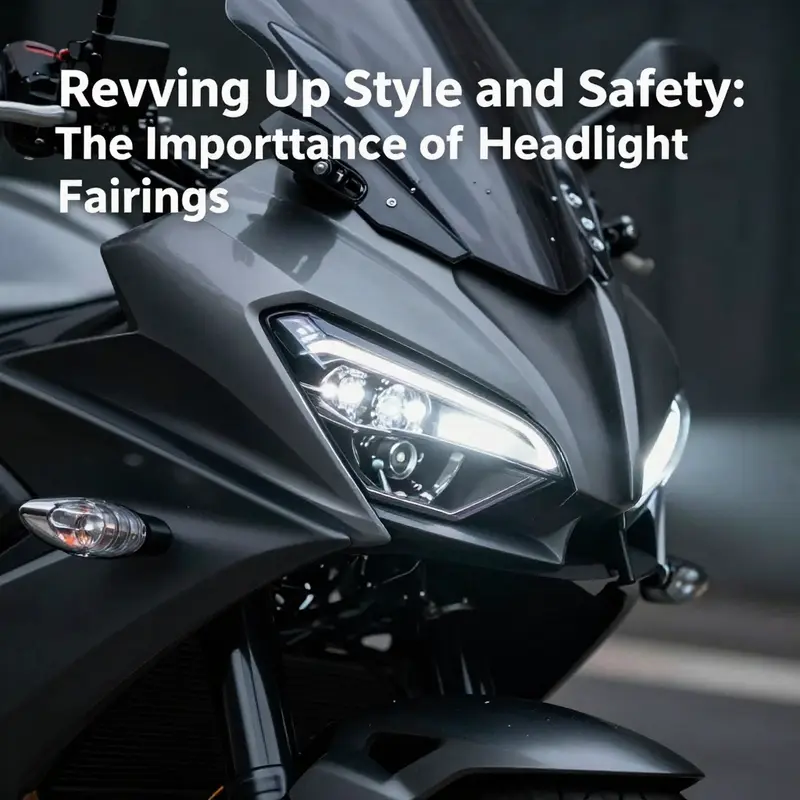
Across motorcycle design, headlight fairings have evolved from simple shields into sophisticated carriers of safety, efficiency, and identity. They are not just cosmetic frames around a lamp; they are engineered envelopes that influence light, airflow, and rider perception at speed. The modern fairing blends several layers of function. It protects the headlight and instrument cluster from rocks, rain, and sun, while shaping the air that rushes around the bike at highway velocity. This aerodynamics-first mindset helps stabilize handling and reduce fatigue on long rides. The result is a practical, integrated system where technology, materials, and design converge to improve visibility, comfort, and reliability long after the paint has cooled in the sun. The evolution of headlight fairings mirrors a broader shift in motorcycle engineering: form and function are inseparable, and the gap between aesthetic and performance has all but vanished.
At the core of this evolution is a material choice that supports both protection and precision. The housing of contemporary fairings is typically crafted from high-impact-resistant polycarbonate. This material offers excellent scratch resistance and robust debris protection without adding unnecessary weight. Polycarbonate’s clarity remains steady as it ages, and its resistance to UV radiation helps preserve the gloss and color of the fairing over many seasons. The combination of toughness and lightweight properties means designers can sculpt more aggressive, wind-shedding shapes without compromising durability. The result is a sleek, aerodynamic silhouette that preserves headlight integrity even when the bike encounters gravel, grit, or the occasional misjudged curb while parking. The broader effect is a fairing that stays visually sharp and materially resilient, mile after mile, season after season.
Technology within the fairing has evolved in parallel with the materials that encase it. Light-emitting diode, or LED, technology now sits at the center of most installations. LED headlights are energy-efficient, consuming up to 80 percent less power than traditional halogen bulbs while delivering comparable or superior brightness. The implications extend beyond a brighter beam; LEDs generate less heat and respond more quickly, which can improve the rider’s ability to detect hazards at critical moments. In the European market, E-Mark approved components—part of a rigorous safety and performance standard—are increasingly common in headlight assemblies. An E-Mark certification signals that the installation adheres to tested criteria for illumination, glare, durability, and environmental resilience. This regulatory alignment matters because a headlight that performs well in controlled conditions still has to meet the varied demands of real-world riding.
Another strand in this technological tapestry is the way light is distributed. LED systems can be designed as reflector-based or projector-based configurations. Reflector-based headlights often provide broad, forgiving illumination that suits rural or mixed-road riding, whereas projector-based systems concentrate light into a sharp, well-defined beam that enhances long-range visibility on highways and urban arterials. Many fairings now combine features to offer dual-mode functionality, enabling riders to switch between wider and longer-range coverage as conditions shift. Daytime Running Lights, or DRLs, have become a common inclusion as well. DRLs improve daytime conspicuity, making a motorcycle more noticeable to drivers in dawn, dusk, and cloudy periods when shadows and silhouettes can blur in the visual field. Integrated windshields and bumpers are other practical touches that align rider comfort with performance. A well-designed windscreen reduces wind fatigue and turbulence for the rider, especially on longer journeys, while a bumper or lip at the lower edge of the fairing helps redirect air away from the rider’s midsection, providing a calmer breathing space as speed climbs. All of these elements come together to create a system that is as much about perception and safety as about brightness and reach.
The promise of an integrated lighting system within the fairing is more than just brighter light. It is a carefully calibrated emission pattern that minimizes glare for oncoming traffic while maximizing forward visibility for the rider. Therapy for the eyes, so to speak, is achieved through thoughtful design choices that balance beam intensity, color temperature, and cut-off lines. This attention to glare management is essential because a fairing that redirects too much light toward other road users can create discomfort or distraction, even if the rider benefits from a stronger central beam. Installation quality matters here. Proper alignment ensures that the beam is directed toward the road where it will do the most good and away from the eyes of drivers in opposite lanes. A misaligned headlight can negate the advantages of an advanced LED array and undermine safety just as surely as a dim bulb would.
The topic of compatibility threads through every design choice. Many riders select fairings that fit a broad spectrum of models, particularly universal round headlight configurations that can be adapted to sport-touring and naked bikes alike. The idea is to offer a balance between style and function, a sketched line where aerodynamics and aesthetics converge. Of course, compatibility is not a mere afterthought. It governs how the fairing attaches, the way the headlight sits within the housing, and how wiring routes through the structure to power LED arrays and integrated DRLs. For riders who seek a precise, guaranteed fit, retailers frequently offer fit guarantees and model-specific options. This is not about buying a one-size-fits-all shell; it is about choosing a system that respects the electrical, mounting, and geometry constraints of a particular motorcycle family while still offering a modern, high-performance aesthetic.
From a maintenance perspective, the story is equally important. Polycarbonate housings resist the kinds of surface scratches that acrylics might show after a few seasons of gravel and wash mitts. The material also cleans easily, which helps retain transparency and optical clarity for the LED lenses beneath. Proper cleaning is essential, not merely for appearances. A clear, unclouded lens ensures the LEDs can project their intended pattern with minimal scattering and glare, preserving the efficacy of the beam and the rider’s field of view. The LEDs themselves, when paired with the right lens geometry and reflective surfaces, produce a reliable, long-lived light source. Unlike older lighting technologies, LEDs require careful thermal management; fairings designed with heat-dissipating channels or venting paths avoid heat buildup that could degrade lens materials or reduce brightness over time. In this way, the fairing acts as both a housing and a micro-thermal management system, keeping illumination steady in rain and shine alike.
The practical considerations extend to installation and alignment. A headlight fairing is not just a cosmetic addition; it is a component that shapes visibility, weather protection, and rider ergonomics. Poor alignment can create hot spots or shadows in the beam pattern, while a loose mounting can shift under wind pressures at speed, spilling light in the wrong direction. Riders who live in climates with persistent rain, snow, or salty roads often prioritize full fairings for maximum protection of the headlight and instrumentation. Those who value quick serviceability or easier access to the engine and other components may lean toward half or quarter fairings. The decision rests on riding habits, climate, and maintenance preferences. Regardless of the chosen style, the installation should follow manufacturer guidelines and use the appropriate hardware, seals, and grommets. A well-executed installation translates into consistent lighting performance, predictable beam spread, and reduced glare for other road users.
To weave these threads into a coherent design philosophy, picture the fairing as an extension of the rider’s perception and a shield in the mechanical sense. The shift toward LED technology and polycarbonate housings reflects a broader trend in motorcycle engineering: when you upgrade the lamp and its enclosure, you unlock more than brightness; you unlock a more reliable, safer riding experience across a variety of riding conditions. The combination of DRLs, dual-mode lighting, and integrated wind protection creates a rider experience that is calmer, more confident, and more focused on the road ahead rather than the elements around it. The fairing becomes a partner in the ride: providing protection, smoothing airflow, signaling presence, and delivering efficient illumination exactly where it is needed. In this light, it is clear why modern fairings deserve consideration not as a single bolt-on accessory but as a carefully engineered system that can redefine a motorcycle’s character, performance envelope, and day-to-day usability.
For riders seeking broader perspectives on fit and availability, a quick look at model-specific catalog options can be illuminating. For example, exploring the BMW fairings category offers insights into how manufacturers and aftermarket suppliers approach modular fit and styling across generations. The catalog demonstrates how mounting points and interior geometry can be reconciled with contemporary LED assemblies and weather-sealed connectors, ensuring reliability in both dry and wet conditions.
Shaping the Wind: A Manual for Choosing the Right Motorcycle Headlight Fairings
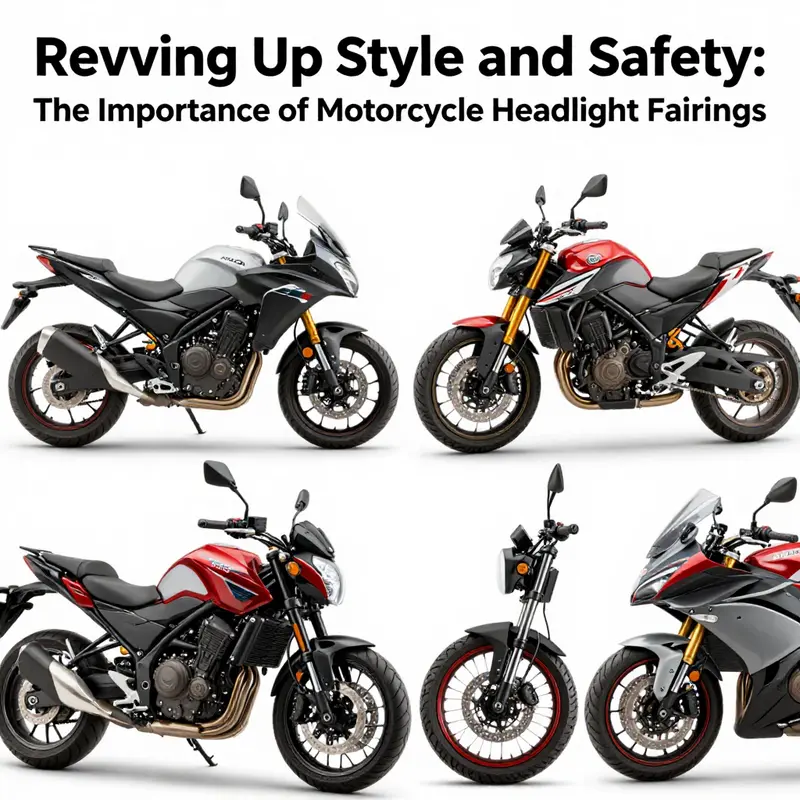
The front end of a motorcycle is more than a shield for lights and instruments. It is a conversation between performance and personality, a sculpted surface that determines how air, heat, and noise meet the rider. Headlight fairings sit at the crossroads of these concerns. They guard the lamp and the dash from rocks, rain, and road debris, while guiding the flow of air around the bike to reduce drag and improve stability at speed. They also signal a riding persona, from the pared-down efficiency of a cafe racer to the rugged confidence of an adventure bike. In this moment, choosing the right fairing becomes a decision that touches safety, comfort, and the visual language the bike communicates on every highway and back road.
To begin, compatibility is the foundation. Fairings must align with the motorcycle’s structural geometry, mounting points, and the shape of the headlight itself. It is essential to verify that any chosen piece fits within the frame and that the mounting hardware aligns with the factory anchors. A precise fit is not a cosmetic luxury; it governs how securely the fairing stays in place and how accurately the headlight beam is aimed. This matters not only for glare management at night but for maintaining the intended illumination pattern on the road ahead. When checking compatibility, riders should consider the bike’s class and general frame design, rather than chasing a single model’s look. A fairing that fits a broad family of motorcycles will typically share the same mounting philosophy, even if tiny variations exist in the shielding curves or the instrument cluster housing.
Material choice directly influences durability, weight, and cost. Plastic and ABS are common due to their lightness and ease of shaping, but metal components offer rugged protection when a rider faces rough terrain or high-speed debris. The weight of the fairing matters, especially on lighter machines where a heavy shell can alter handling characteristics. UV resistance is another practical concern; exposure to sun and weather over years can cause fading, brittleness, or crazing in less robust plastics. For riders who demand longevity and robust protection, stainless steel variants exist for select models, delivering increased impact resistance and a different tactile feel when handling the bike in a paddock. Those who prefer a lighter approach toward performance may lean toward high-quality plastics reinforced with modern composites. In all cases, the internal surface finish and the quality of the paint coat matter just as much as the exterior profile because they determine resistance to chipping and the uniformity of color and gloss over time.
Style and design are where the eye meets the road. Fairings run the gamut from retro silhouettes that whisper of classic café culture to aggressive, aerodynamic shells designed for high-speed sport riding. The adventure or dual-sport crowd often favors larger, more enveloping shapes that shield the rider from wind and weather, while naked or standard bikes lean toward minimal, purpose-built shrouds that preserve engine access and a naked, mechanical aesthetic. Within these broad families, textures and details can evoke a mood: clean lines and smooth curves for a streetfighter look, or rugged angles and vent-inspired inserts for a utilitarian vibe. Within this spectrum, some riders gravitate toward more theatrical statements, such as “ghost” or “pighead” motifs—styles that emphasize striking visual impact. The key is that the chosen design should feel integrated with the bike’s overall silhouette and the rider’s goals, rather than fighting the geometry or the rider’s posture.
Beyond looks, features matter in practical, day-to-day riding. A well-conceived fairing offers straightforward installation, reliable waterproofing, and compatibility with modern lighting systems. Advances in lighting have moved many fairings toward integrated headlights or compatibility with high-definition LED modules. LED headlights can be more efficient and brighter, yet they demand careful alignment to prevent glare for oncoming traffic and to preserve the intended beam pattern on the road. There are two common LED concepts to understand: reflector-based and projector-based headlights. Reflector designs are often easier and cheaper to upgrade, suitable for riders prioritizing broad, even illumination. Projector designs concentrate light into a sharper beam, useful on highways and urban roads where precise light focus can improve visibility without excessive dazzle. When choosing a fairing, riders should confirm whether it accommodates LED or halogen bulbs and whether gaskets and seals keep moisture at bay. A fairing that looks superb but leaks after a rain shower is a poor investment, and a leak can compromise the electrical system and the optics over time.
Material and finish also influence maintenance. ABS plastic finished with a glossy paint will resist scuffs and UV degradation better than some cheaper materials, but it benefits from regular cleaning and cautious handling. Gloss finishes tend to highlight scratches and micro-damage, which makes proper washing technique and wax protection worthwhile. Matte finishes, while stylish, can reveal weathering more readily and may require different care routines to maintain their texture and color. A fairing designed with easy access in mind can simplify routine checks and bulb replacements, reducing the time the bike spends off the road during maintenance. Water ingress is a persistent enemy of any fairing, so riders should look for seals around joints and around the headlight housing. Easy installation features—such as quick-release fasteners or modular panels—can dramatically reduce setup time and the frustration of a first ride after a modification. A thoughtful design also considers the vehicle’s existing electrical paths. If the fairing is built to accommodate integrated LED lighting or a particular headlight shape, alignment guides and mounting notches should streamline the process and minimize the risk of misalignment that could create glare for other road users.
If you are exploring options, it can be helpful to study the broader assortment available in the market and to assess how the designs reflect different riding priorities. For riders who frequently confront adverse weather, full fairings can offer superior protection for the rider and the sensitive components of the cockpit. In milder climates or for riders who prize faster serviceability and easier access to the engine and fuel system, half or quarter fairings might be preferred. The question is not merely which style looks best, but how the shape interacts with wind, rain, and the rider’s posture. The wind tunnel or road-time tests behind a given design shape can reveal how the air flows around the rider’s torso and shoulders, and how that flow helps or hinders stability when lane positioning and shoulder checks are part of normal riding. A fairing that aids stability at highway speeds, while still permitting quick engine access, often represents a balanced compromise between performance and practicality.
When it comes to choosing between a wide range of options, it helps to explore the broader catalog of compatible designs without losing sight of the bike’s intended use. For example, those curious about the scope of fitment and design language can browse the available catalog that categorizes options by compatibility with a wide range of bikes and by stylistic territory. If you want to explore a broad catalog of compatible options, https://ultimatemotorx.net/product-category/bmw-fairings/ offers a sense of how a factory silhouette translates into aftermarket form and how various mounting philosophies handle similar headlight shapes while preserving instrument readability and lighting performance.
Another practical dimension is the source and reliability of information. Prospective buyers should cross-check fitment notes with the manufacturer’s guidelines, and review guidance about the compatibility with LED or halogen bulbs, waterproofing, and the ease of installation. While some listings promise a guaranteed fit, riders should still measure and verify mounting points against their bike’s service manual. This careful due diligence reduces the risk of purchasing an ill-fitting shell that forces compromises on alignment or clearance, potentially affecting heat management around the headlight or blocking essential cooling paths for nearby components. The goal is to arrive at a fairing that not only protects and beautifies but also integrates seamlessly with the bike’s electrical system and its natural ventilation scheme.
As riders weigh the trade-offs, it is worth considering the long view: a fairing is a durable investment that should honor both the bike’s heritage and its future. The most successful choices emerge when the mind’s eye and the workshop’s measurements align. A thoughtfully selected fairing respects the bike’s geometry, preserves readability of the instrument cluster, and positions the headlight to illuminate the rider’s intended line of sight. It should survive the road and the weather while still enabling quick customization or reconfiguration should needs change. The right combination of compatibility, material quality, aesthetic intent, and practical features creates a harmony of form and function that supports both safety and style on every ride. The journey toward that harmony is less about chasing the newest trend and more about understanding how a front-end shell interacts with the rider’s posture, the bike’s balance, and the road’s variable demands.
External resource: https://www.alibaba.com/trade/search?fsb=y&IndexArea=product_en&CatId=&SearchText=Motorcycle+Headlight+Fairings
Final thoughts
In summary, motorcycle headlight fairings are crucial not just for protection and improved aerodynamics, but also for aesthetic appeal and functionality. Understanding the variety of types, materials, and technologies can empower you as a business owner to meet the needs and preferences of your customers effectively. Whether you focus on full, half, or custom fairings, recognizing how to select the right components for different makes and models will enhance your service offerings and help foster customer satisfaction. Keep in mind that the right fairing can make all the difference in performance and style, paving the way for enhanced sales and customer loyalty.