
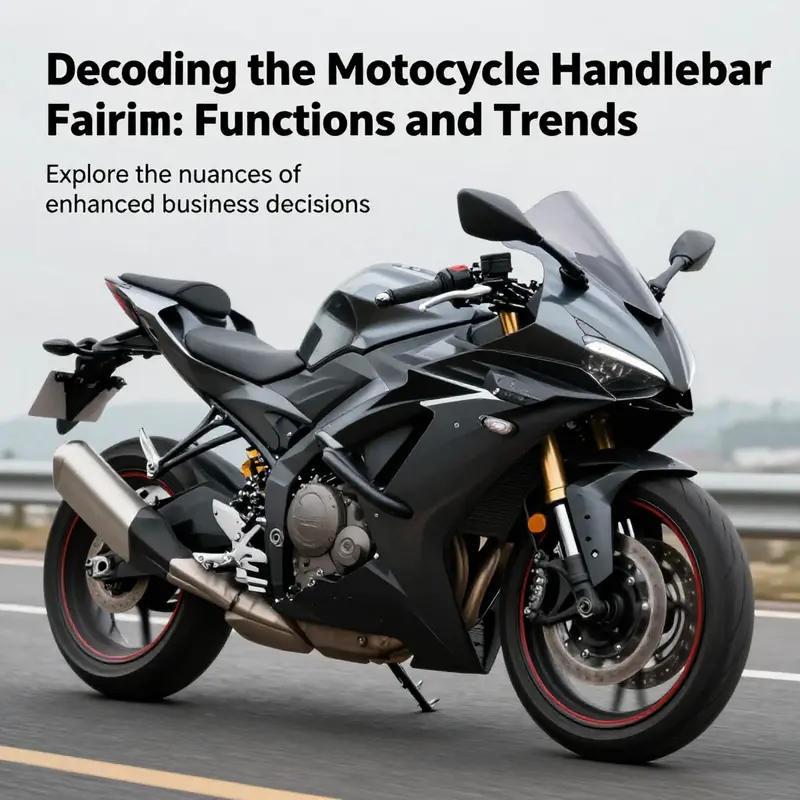
The motorcycle industry embodies a multitude of components, each contributing uniquely to performance and rider experience. Among these, fairings play a crucial role in aerodynamics and protection, while handlebars serve as vital control elements for steering and stability. This comprehensive exploration of the so-called ‘motorcycle handlebar fairing’ aims not only to clarify common misconceptions but also to delve into distinct motorcycle fairing types, the intricate dynamics of handlebars, unique custom modifications, and current market trends. As motorcycle enthusiasts and business owners navigate this landscape, understanding these components and their relevance is paramount for informed decision-making and enhanced customer satisfaction.
The Shape of Speed: How Motorcycle Fairings Shape Aero, Comfort, and Control

Riding a motorcycle is as much about the rider’s relationship with the air as it is about power and tires. The term fairing refers to the sculpted panels that wrap the front and sides of a bike. Yet the idea of a handlebar fairing can be confusing because handlebars and fairings serve different ends. In practice a fairing is a purpose built body component that reduces drag, shields the rider from wind pressure, and protects engine and electrical components from weather and debris. The handlebar remains the primary control interface, shaping how a rider sits, reaches, and steers. This distinction matters when riders consider upgrades because the goals of comfort, efficiency, and handling depend on understanding how fairings interact with rider posture and bike geometry. Fairings are a system that blends form and function to affect fuel efficiency, fatigue, wind noise, and maintenance access beneath the bodywork.
For many riders the aerodynamic benefit is about more than lap times; it is about a shield against fatigue, climate control, and a cockpit that stays calm at speed. A well designed fairing redirects flow around the rider and around critical components, smoothing the air over the tank, torso, and helmet. The result is a quieter, more stable ride, where wind pressure becomes a controllable element rather than an exhausting force. The fairing thus becomes a partner to the bike’s performance envelope, not a mere ornament.
Choosing a fairing starts with your riding goals. Full fairings give the most coverage and can improve top end stability but may complicate engine access for maintenance. Half fairings balance style and practicality by covering the upper bike while leaving space for inspections and quick checks. Quarter fairings offer a compact profile that emphasizes fast looks and easy maintenance. Touring fairings prioritize comfort with larger windshields and extended panels to create a sheltered cockpit for long days in the saddle.
Beyond the main categories, the bike’s geometry and your posture guide the final choice. Upright riders benefit from fairings that deflect air away from the chest while aggressive tuck shapes can squeeze extra drag reduction with tighter footprints. Material choices impact durability, weather sealing, and repair options. Modular or removable fairings can offer flexibility for weather adaptation and maintenance without permanently altering the chassis.
In practice the best fairing design respects the bike geometry, supports reliable access for service, and aligns with the rider’s ergonomics. The right configuration should feel almost invisible in use, quiet, calm, and capable of balancing speed with endurance. If you are shopping for a setup, consider how the fairing works with your typical riding posture, the kinds of roads you ride, and your maintenance tolerance. For further reading see a practical guide at https://www.carinterior.com/motorcycle-fairings-guide/
The Rider-Front Interface: Handlebars, Dynamics, and the Real Role of Fairings in Motion

At first glance, handlebar and fairing belong to different conversations about motorcycles. The handlebar is the rider’s direct link to steering. The fairing is the wind- and heat-shielding shell that shapes airflow around the bike. Yet in practice, people sometimes speak of a ‘handlebar fairing’ as if the two were one piece. The design literature, however, treats them as distinct systems whose effects intersect. Fairings reduce drag and protect engine components; handlebars control direction and posture. This chapter maps that relationship, not as a mere taxonomy but as a practical framework for understanding how grip, protection, and aerodynamics co-author the ride.
Direction control rests in the hands and wrists as the rider applies torque through the bars. The bar’s geometry—rise, sweep, width—tunes posture and weight distribution, shaping how inputs translate into front-wheel response. Higher bars promote an upright position, easing long rides; lower, narrower bars invite a more aggressive stance and quicker leverage. These choices are not cosmetic; they change the rider’s load on the frame and the front end’s steering feel. Even small changes can shift the bike from steady mid-corner to a sharper, quicker lock into a turn, influencing stability during transitions.
Beyond steering, the bar assembly contributes to front-end rigidity. Many bikes use a crossbar or balance bar that ties the bar to the fork or frame. The result is a stiffer front when the tire bites or the brakes bite, delivering crisper feedback and less unwanted flex. This stiffness helps maintain geometry through abrupt inputs and rough pavement. In a fall or impact, the crossbar can also absorb some shock, reducing damage to the bar and rider’s hands. Material and diameter choices affect resonance and fatigue, making the intersection of bar and frame a quiet but crucial design detail.
The handlebar area hosts essential controls, so ergonomics are safety. The throttle, brakes, levers, indicators, and switches must fall within a comfortable, repeatable reach. Riders frequently tweak bar height, sweep, and angle with risers or different clamp positions to balance reach with control leverage. Grips and bar-end weights influence vibration and comfort, while mirrors and protection devices must stay within line of sight and safe reach. The goal is not a cosmetic rework but a trustworthy interface that allows the rider to input precise commands without conscious thought, especially when the pace quickens or the road throws a surprise.
Fairings shape the air around the motorcycle and are primary tools for drag reduction and stability. They guide airflow to minimize buffet on the rider and engine, influence cooling, and help define body position at speed. The rider’s posture interacts with that flow; a tall, exposed torso encounters more wind, while a tucked position lets the fairing manage a smoother envelope. The handlebars affect this picture by how they position the rider’s torso and arms; a more upright stance can be comfortable, but it shifts wind exposure unless the fairing compensates with a better windbreak. In sum, airflow, body position, and front-end geometry work together to determine ride feel.
Misunderstandings persist about a ‘handlebar fairing.’ While some aftermarket setups include mini-deflectors near the bars, you will not find a standard ‘handlebar fairing’ in factory designs. The practical reality is separate systems completing the same mission: reduce drag, shield the rider, and stabilize the steering. When riders modify, they either tune the bar arrangement for better control or adjust the bodywork for aero gains, but they rarely attempt to merge the two into one component. Respecting the roles of each part helps maintain predictability and safety, especially at highway speeds or on uneven surfaces.
From an engineering perspective, ergonomics and safety are codified in guidelines that treat rider interface as a core factor in handling. They emphasize predictable front-end behavior, clear feedback through the hands, and consistent response under load. The separation of handlebars and fairings is not a rigidity but a design convenience that allows specialists to optimize steering inputs independently from airflow management. The result is bikes that feel communicative—whether carving a corner or cruising—because the rider experiences honest input translated into reliable movement, rather than a vague or deferred reaction from the front wheel.
For riders aiming to optimize fit, the path is careful adjustment and verification. Changing bar height or width demands compatibility with cables and lines; clamps must be torqued correctly; alignment checked to ensure consistent steering. Customization choices—risers, different grips, or sportier levers—can boost precision but must be matched with checks for binding and interference. Additionally, the choice of fairing must harmonize with riding conditions and maintenance routines. A well-fitted system reduces fatigue, supports accurate steering, and preserves the rider’s sense of the bike as a coherent extension of the body.
Materials reflect the different roles: handlebars favor strength-to-weight in aluminum, steel, or carbon fiber, while fairings rely on composites designed for stiffness and impact resistance. The mounting interface—where the fairing attaches to the fork crown or frame—and the bar clamps are engineered to prevent unwanted flex or fatigue points. The design philosophy is pragmatic: separate the structural task of steering from the aerodynamic task of sweeping wind, and let each system evolve within its own material logic. When done well, the bike communicates a crisp sense of control at the bar and a smooth, stable feel through the fairing at speed.
Looking ahead, riders may see more nuanced wind management without sacrificing control. Concepts like active or adaptive screens promise to tailor aero support to speed, posture, and load, but safety and predictability remain essential. The challenge is to integrate such features without introducing dithering or delayed input through the bars. The outcome should be a more comfortable ride without dulling the rider’s sense of steering. For now, the enduring lesson is simple: empower the rider with clean, direct input at the bar while the fairing quietly holds the wind at bay. That balance remains the touchstone of good design.
For a brand-oriented view of how fairing families fit into a machine’s silhouette, see the BMW fairings collection. It offers a practical example of how designers balance form and function across a family of models while respecting the distinct roles of wind protection and steering control. BMW fairings.
External reference: Motorcycle Fairings Explained: https://www.britishmotocycle.com/motorcycle-fairings-explained
Separating Myths from Metal: Why ‘Handlebar Fairings’ Aren’t a Standard Part of Motorcycle Design

If you step back and listen to the language riders use about front-end aerodynamics, a curious phrase tends to pop up: the so-called ‘handlebar fairing.’ It feels plausible. After all, a motorcycle is a machine of air and motion, and the area around the handlebars is one of the first places where riders encounter wind resistance. Yet when you examine the anatomy of a motorcycle’s front end, the phrase doesn’t map onto a recognized, standardized component in design manuals or engineering practice. Fairings are the streamlined shells that enshroud the front of the bike, spanning from the forks to the engine, sometimes wrapping around the radiator and wheel if the model’s geometry demands it. They are part of the bike’s aerodynamics, built to smooth the flow of air across the machine and around the rider, to reduce drag, to shield vital parts from the buffeting of wind, and to provide some protection in a tip. Handlebars, on the other hand, sit above the front end as the rider’s interface with the machine—the control posts, the leverage points, and the posture that defines balance, weight distribution, and how precisely the bike responds to steering inputs. The two components occupy distinct roles, spatially and functionally, and yet it’s easy to see why the misconception persists: when people perceive any panel that sits near the handlebars, they could reasonably assume it partakes in the same aerodynamic game as the larger fairing. The truth, however, is more nuanced and reveals why the term itself should be treated with caution. To understand why, it helps to examine what a real fairing does, how it is designed, and why the scope of aerodynamic improvement extends far beyond anything that could be attached to the bars without changing the bike’s fundamental behavior.
Fairings are not cosmetic add-ons but engineered surfaces that negotiate air as the motorcycle accelerates. Their primary mission is to shape the boundary layer—the slim region of air in direct contact with the bike’s surface—and to minimize the separation of flow that creates turbulence behind the machine. When a rider reaches highway speeds, the air has a direct say in how the bike feels: it influences steering stability, throttle response, and even the rider’s fatigue levels. A properly designed fairing smooths the passage of air, reducing high-pressure wake behind the front wheel and around the engine compartment. In doing so, it lowers drag and can improve high-speed efficiency and stability. This is not a minor payoff; research-influenced designs show measurable differences in aerodynamic coefficients, particularly for bikes built for speed, crosswinds, or long-distance comfort. The fairing’s shape—its curves, transitions, and edges—reflects careful compromises between downforce, weight, cooling needs, and rider protection. It is why manufacturers invest in wind tunnel testing and Computational Fluid Dynamics to simulate how every contour behaves under a range of throttle and wind conditions. The result is a front-end geometry that prioritizes a clean, steady flow over a simple attempt to fence in the rider with a rigid panel mounted near the bars.
What trips people up is the presence of wind management devices that do sit on or near the handlebars but do not constitute a full fairing. Wind deflectors, wind screens, and small top-mounted panels are common accessories designed to redirect the gusts that meet the rider’s upper body. Their intent is comfort: to lessen the feeling of wind on the chest, neck, and helmet. These devices can help reduce fatigue on a long ride, especially in late-day gusts or when a rider sits upright rather than tucked into a sport posture. But there is a crucial distinction: these bar-mounted pieces do not create the comprehensive, integrated aerodynamic environment that a full fairing provides. They trade breadth for targeted relief, altering local airflow rather than the entire flow field around the front of the bike. The net effect on drag is modest, and in some setups, if oversized or out of proportion to the rest of the bike’s geometry, they can even increase local turbulence and drag. The difference between a wind deflector and a fairing is a matter of scale, integration, and the scope of airflow management. By recognizing this, riders can set more realistic expectations about what an add-on near the bars can and cannot achieve, avoiding the simple trap of assuming that any extra panel translates into a fairing-level aerodynamic boost.
This distinction also matters when we consider how a bike is ridden. A fairing’s effect depends on its alignment with the frame’s lines and with the rider’s position. If a bike’s cockpit is designed for a tucked, sport-oriented posture, the fairing’s primary benefits come from its integration with the rider’s body position; it guides the air around the rider and around the engine as one continuous body. In contrast, a bar-mounted deflector is designed to shield a portion of the torso but does not engage with the lower part of the body, the legs, or the engine bay in the same integrated way. When riders retrofit a handlebar-area panel with the expectation that it will replicate the performance gains of a true fairing, they often misjudge the effect on drag and stability. The result can be modest improvements in comfort at best, or, in the worst case, a subtle degradation of handling due to added weight, increased frontal area ahead of the rider’s torso, or introduced turbulence near the steering axis. In practical terms, such misapplied modifications can force the front end to behave differently under gusts or in corner entry, requiring more careful throttle and steering input to maintain a desired line. This is not a fatal flaw of the idea itself, but it demonstrates why a blanket term like ‘handlebar fairing’ is misleading and—more importantly—why a clear understanding of aerodynamics matters when people decide how to modify their bikes.
Designers and engineers do not throw panels onto handlebars as a quick fix for performance because the front end is a sensitive region where weights, mass distribution, and the rider’s control interface all intersect. A full fairing’s mounting points are anchored to the frame and, increasingly, to the steering head and triple clamp assemblies. These points are selected to maintain structural integrity, minimize added unsprung mass, and preserve steering feel. The fairing’s weight is distributed along its major attachment zones, and its presence changes the bike’s moment of inertia about the steering axis. When a rider adds anything that changes the front-end geometry—whether by altering weight distribution or adding aerodynamic surface in an area that is not designed to integrate with the bike’s cooling or lighting systems—the result can be a shift in steering feel, a change in front-axle load under braking, and a new dynamic that needs to be learned. In short, a true front fairing is more than a panel; it is a carefully integrated system that engages with the bike’s chassis, cooling requirements, rider posture, and wind environment. A small, additive piece near the bars can hardly replicate that breadth of integration without introducing some new physics into the mix.
If you want a more concrete sense of how fairings are categorized and how they interact with different motorcycle architectures, consider the way manufacturers and aftermarket suppliers present fairing options. The categories often reflect front, full, half, and sport-oriented forms, each designed to balance protection, aerodynamics, cooling, and aesthetics in unique ways. The exact effect on performance turns on the bike’s existing geometry, the rider’s size and posture, and the intended riding regime. For instance, a sportbike designed for high-speed stability might rely on a deep, aerodynamic front underblade that channels air efficiently around the rider’s torso, while a touring-oriented model might favor a larger, more enveloping fairing that protects against wind fatigue on long journeys. These decisions underscore why a generic term like ‘handlebar fairing’ is misleading; it blurs the line between a comprehensive aerodynamic solution and a small relief device, leading to misaligned expectations about performance gains and handling characteristics. A more precise vocabulary, together with a careful inspection of how air flows around a given configuration, helps riders separate wishful thinking from engineering reality. In practice, if you’re seeking to optimize aerodynamics, focusing on the entire front-end geometry and your riding posture yields far more reliable results than adding any single bar-mounted piece.
For readers who want to see how manufacturers organize their fairing offerings and to explore legitimate catalog options without conflating parts, a practical route is to browse the fairings catalog that inventories front-end options and their fitment to specific models. This resource helps illustrate how real fairings are designed to integrate with a bike’s lines, cooling, and cockpit geometry, without implying that anything attached to the bars takes on the role of a full fairing. By approaching the topic with this distinction in mind, riders can separate the myths from the metal and make informed decisions about what will genuinely improve aerodynamics, comfort, and stability on the road or the track. To explore a representative range of fairing options, you can visit the catalog page linked here for reference: the fairings catalog.
In the end, the discourse around a supposed handlebar fairing reveals more about language and expectation than about a new class of motorcycle hardware. The front end is a complex, integrated system where aerodynamics, rider ergonomics, and mechanical design converge. A true fairing’s value lies in its contribution to that integration, not in a superficial attempt to sandwich a panel onto the bars. The bars are, and will remain, the rider’s primary control interface, a place where leverage, reach, and feedback determine how a bike responds in a corner or a gust. When we respect the difference between a full front fairing and a wind-deflecting accessory, we gain a clearer understanding of why some modifications deliver real aerodynamic dividends and others merely alter the air in a way that feels, at best, slightly more comfortable, and at worst, less predictable. It is this nuanced understanding that will guide riders toward improvements that are both technically sound and genuinely beneficial across a range of riding contexts.
External reference for technical grounding: https://www.bikeride.com/motorcycle-faring-types-properties-and-how-it-enhances-industrial-performance/
null

null
null

null
Final thoughts
Understanding the components such as fairings and handlebars in motorcycles is essential for both business owners and enthusiasts alike. This article has clarified the misconception surrounding the term ‘motorcycle handlebar fairing’ and offered insights into their true functionalities. By distinguishing between the various types of fairings, recognizing the essential role of handlebars, exploring custom modifications, and analyzing market trends, stakeholders can make more informed decisions that contribute to customer satisfaction and business growth. As the motorcycle industry continues to evolve, staying informed about component dynamics and customer preferences will key to success.