
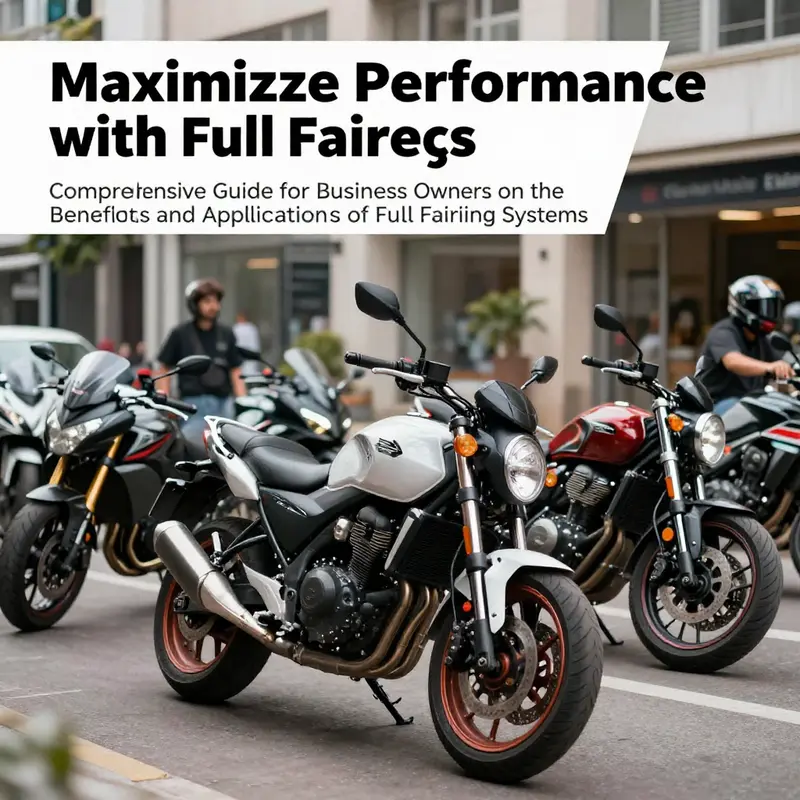
Motorcycle full fairings are not just aesthetic enhancements; they play a crucial role in boosting performance, safety, and rider comfort. For business owners in the motorcycle industry, understanding the intricacies of full fairings can lead to better product offerings and improved customer satisfaction. This article navigates through the aerodynamics that contribute to a motorcycle’s performance, the materials used in constructing these essential components, the significance of compatibility and customization for varied models, and the practical applications and manifold benefits full fairings provide. By delving into these areas, business owners will gain insights that can help them capitalize on emerging market opportunities and cater effectively to evolving consumer needs.
The Wind-Sculpted Shield: Aerodynamics, Performance, and the Full Motorcycle Fairing
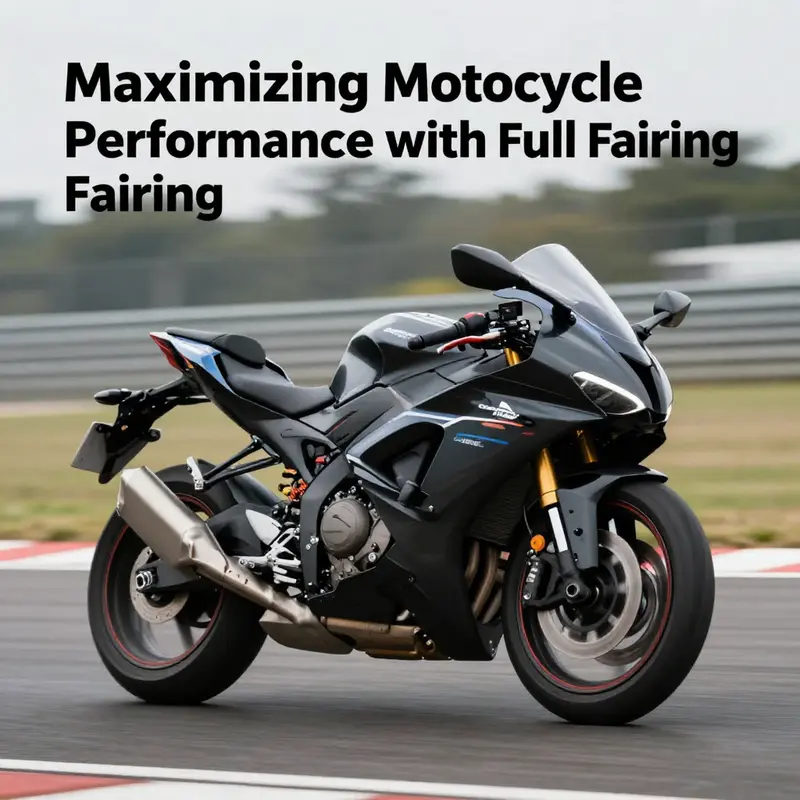
A full motorcycle fairing is more than a cosmetic shell. It is a carefully engineered system that wraps the front and sides of a machine, shaping how air moves around the bike and how the rider experiences every mile. When a rider climbs aboard, the fairing acts like a wind-driven exoskeleton, guiding the streamlines so that the vehicle can slice through the air with less resistance. The result is a blend of speed, stability, and endurance that changes riding from a simple act of propulsion into an integrated aerodynamics exercise. This is not about chasing a single number on a spec sheet; it is about the way air behaves around an accelerating machine and how that behavior translates into tangible benefits on both highway stretches and winding race laps. In that context, a full fairing becomes one of the most consequential upgrades a rider can make, a design feature that simultaneously adds protection, modifies handling, and alters the sensory experience of the ride.
At the heart of the full fairing’s appeal is its aerodynamic efficiency. When a bike is fully enclosed, air follows a smoother path along the profile rather than encountering abrupt transitions from exposed chassis to scattered panels. The fairing serves to reduce form drag, which is the bulk of the resistance an air mass offers to an object in motion. The smoother the surface and the cleaner the airflow, the less energy the engine must expend to maintain a given speed. This improvement in aerodynamic efficiency tends to manifest in several practical ways. A rider can reach higher top speeds with fewer shifts in power, and the engine can sustain cruising speeds with a lower fuel burden. The long-distance rider notices this as reduced fatigue because the engine works less strenuously, and the rider faces a less turbulent air environment at higher velocity. The aerodynamic equation is not about one magic shape, but about a cooperative geometry: the fairing, the cockpit, and the rider’s posture all contribute to a coherent flow that minimizes drag while avoiding buffeting and flow separation.
The fairing’s impact on stability is another central pillar of its value. At high speeds, a cleanly contoured body reduces the tendency of the air to push the bike around, which can be especially pronounced when winds shift or pass through crosswinds. A well-designed full fairing creates a stable aerodynamic footprint, helping the rider maintain a confident line through a set of turns or a long straight. That stability is closely tied to the fairing’s ability to manage airflow around the front wheel, the fork region, and the engine bay, where turbulent wake can otherwise induce wobble or steering yaw. The rider’s sense of control becomes more linear and predictable as the wind pressure is distributed across a broader, smoother surface rather than jostling exposed components. In practical terms, that means fewer micro-adjustments required at speed, allowing the rider to focus more on navigation, line selection, and throttle control. The feeling is subtle but meaningful: a chassis that communicates through air as clearly as it communicates through tires and suspension.
Fuel economy threads through this aerodynamic narrative as well. When drag is reduced, the engine’s power output does not have to climb as aggressively to maintain speed, especially on highway segments where the air is the primary opponent to forward motion. The same energy that pushes a bike forward at the same velocity can be redirected toward efficient propulsion rather than overcoming air resistance. In touring configurations, where riders spend many hours on highways, the cumulative effect of lower drag translates into meaningful gains in miles per gallon and fewer stops for refueling. It is important to note, however, that the relationship between fairing design and fuel economy depends on a choreography of elements: the rider’s posture, the fairing’s surface quality, and even the mountings that hold the panels in place. A fairing should be optimized for the intended riding envelope—the sport-oriented bike, the adventure tourer, or the supersport track machine—so that its aerodynamic benefits align with how the bike is meant to be ridden.
Beyond pure air physics, the full fairing contributes to a broader protective framework. It shelters vital elements such as the engine and exhaust from weather, road debris, and the occasional impact during a low-speed tumble. This protective envelope can extend component life by reducing exposure to abrasion and moisture, thereby easing maintenance and reducing the risk of weather-related wear. It also keeps the rider shielded from wind chill and micro-dust intrusion, which matters on long journeys and in adverse weather. Yet the protective function is not simply about keeping things safe; it also influences cooling. A fairing that presents a continuous surface can guide ambient air toward the radiator and through the cooling channels with fewer interruptions. The result can be a more consistent cooling performance, essential for sustained performance on hot days or when riding at elevated speeds where heat buildup is a constant consideration.
From a materials standpoint, modern full fairings are built to balance stiffness, weight, and cost. High-density plastics such as ABS are a common choice for mass-market kits, offering a resilient, impact-tolerant structure that can be shaped into complex contours. The advantage here is twofold: a lighter overall bike and a surface that can be produced in a cost-efficient manner while still delivering a convincing aero silhouette. For riders seeking a higher-end aesthetic and performance edge, carbon fiber finishes provide a distinct look and a favorable strength-to-weight ratio. The carbon aesthetic often signals a performance-oriented build, while the underlying composite’s rigidity helps preserve panel geometry at speed and under a range of wind loads. The choice of material is not just about weight; it also affects how the panels respond to temperature changes, UV exposure, and road debris, all of which influence long-term durability and maintenance needs. In practice, some riders mix and match: an ABS-based full fairing for everyday reliability and a carbon-finished shell for a dedicated track or showcase bike. The key is to align material selection with the rider’s goals, climate, and riding style.
Compatibility is another essential thread in the fairing story. A full kit must align with a bike’s frame, electrical harnesses, lights, mirrors, and mounting points. The era of modular design has made this easier, with adjustable or multi-point mounting schemes that accommodate a range of configurations and rider preferences. A properly matched kit integrates with the bike’s geometry, preserving ground clearance, rider position, and windscreen height. When a fairing is not matched to a specific model, issues can arise: misaligned mounting tabs, lights that don’t fit the intended bezels, or airflow that disrupts rather than enhances the intended aerodynamic profile. For riders contemplating upgrades, the take-home message is that a model-specific or carefully engineered multi-model kit tends to yield the most predictable outcomes in terms of fit and performance. This reduces the risk of unwanted air vortices, increased drag, or handling quirks that can come from a mismatched shell. In this sense, a thoughtful upgrade becomes, in part, a calibration exercise, aligning the bike’s geometry, rider posture, and air management into a coherent whole.
The installation and maintenance narrative is equally important. A full fairing changes access to the engine and related components. While a complete shell can reduce maintenance interruptions by guarding sensitive areas, it can also complicate routine service tasks that require panel removal or detachment for access. For a rider who enjoys periodic checks, timing belt or chain maintenance, and air-filter service, the modular fasteners and quick-release panels of modern fairings are a boon when they function as intended. However, when fasteners loosen or a panel warps, access can be hindered, turning a simple service into a longer job. This is why quality fitment, secure fasteners, and panels that resist warping are valued. In practice, the best fairing systems are designed with serviceability in mind, providing straightforward access to the intake ducts, the radiator, and the engine cover without sacrificing the aero integrity of the shell.
Aesthetics and personalization round out the fairing’s appeal. A full fairing is an instrument of style, shaping a bike’s silhouette, color story, and even the way a rider is perceived on the road. The visual language of a fully enclosed front end conveys purpose and speed. Riders often choose color schemes and graphic treatments that reflect their riding persona and preferences, while staying mindful of the fairing’s practical needs. Modern kits frequently offer modular designs, allowing changes to specific panels without replacing the entire shell. This modularity supports evolving taste and changing configurations as a rider moves from daily commuting to weekend track days or long-distance touring. In short, the fairing is both a functional tool and a canvas, enabling riders to express performance intent while maintaining practicality.
Riders across different disciplines share a common thread: the desire for an integrated aero package that does not merely cover a bike but enhances its behavior in real-world riding. The narrative of full fairings is not a single-solution story; it is a spectrum of choices—materials, fitment, and design philosophies—that must match the rider’s goals and the bike’s mission. For those who seek model-specific confidence and predictable performance, a purpose-built fairing kit offers the best odds of realizing the aerodynamic promise while preserving mechanical accessibility and reliability. For the weekend enthusiast who values a lighter touch and an edgy look, lightweight plastic shells with refined shapes can deliver much of the aero benefit at a fraction of the cost and weight. And for the real performance pursuer, carbon-infused shells paired with precisely tuned fairings can provide a distinct edge through improved stiffness and airflow management, especially when combined with a rider’s disciplined stance and deliberate throttle discipline.
In sum, the aerodynamic and performance profile of a motorcycle full fairing emerges from a carefully balanced equation. It fuses air, machine, and rider into a unified system where every curve, panel, and mounting point has a purpose. The result is not merely improved numbers on a spec page, but a measurable shift in riding experience: more confident highway cruising, better high-speed stability, and a tireless, fatigue-resistant journey over long distances. The fairing represents a practical synthesis of engineering and artistry, a modern shield that lowers wind resistance while amplifying control, comfort, and expressive potential. When approached with a clear sense of riding goals and a thoughtful eye for compatibility and maintenance, a full fairing can redefine how a rider interacts with the road and with the machine itself.
For riders considering a deeper dive into the practicalities of upgrading, a good starting point is to explore model-compatible options that align with the bike’s frame geometry and electrical architecture. You can find a broad selection of fairings for different brands and models at the Honda fairings category, which provides a useful reference for fitment and design philosophy across a range of bikes: Honda fairings. As you compare options, pay attention to the mounting points, the footprint of the air intake or radiator openings, and the overall silhouette the panels will create when viewed from the front and side. The goal is to preserve or improve the bike’s balanced aero profile rather than simply achieve a dramatic appearance.
For a more technical backdrop on how these aerodynamic principles translate into real-world performance, see the following external resource that surveys the aerodynamic role of full fairings on motorcycles and how wind-tunnel and field data inform design choices: https://www.motorcyclecruiser.com/tech/aerodynamics-of-full-fairings-on-motorcycles.
Under the Skin of Speed: Materials and Construction in Modern Full Fairings
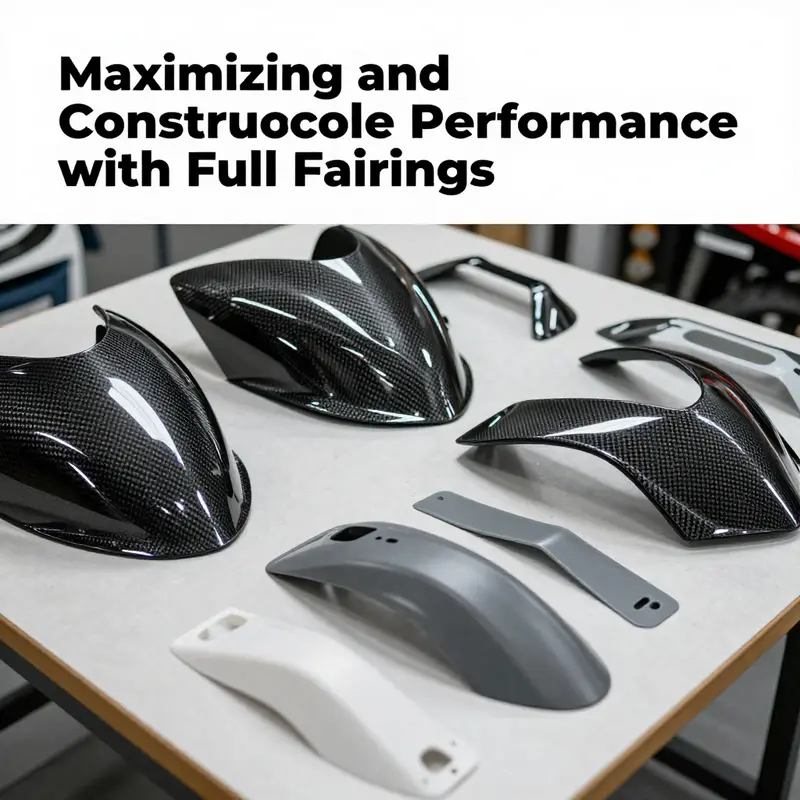
Every motorcycle full fairing is more than a cosmetic shell; it is the primary interface between rider, machine, and the air that rushes past at speed. The material chosen and the way it is built shape not just how the bike looks, but how it handles wind, heat, and even small debris that can change a ride’s comfort and safety. In a contemporary full fairing, engineers balance five priorities: strength and impact resistance, lightness, stiffness for aero stability, heat resistance near the engine, and cost that makes the design viable for mass production or selective racing builds. The result is a family of composites and plastics that can be molded into curves that manage boundary layer flow, split winglike air paths around the rider, and create microchannels that guide cooling air to critical components. This is the real chassis of the exterior, where science meets craftsmanship and every kilogram saved translates into measurable gains in performance and endurance during long rides or blistering laps on the track.
ABS remains the most common base material because its impact resistance and processability align with high-volume manufacture. It loves injection molding and can carry complex geometry with good surface finish. PC+ABS improves on this by adding polycarbonate, which raises heat tolerance and impact strength. This is crucial when the fairing experiences sun on a long highway or is pressed into service under track lighting, where temperatures climb and the panel must resist cracking. The tradeoff is a small weight increase and higher material cost, but the gains in durability and heat stability often justify the premium for sport and racing bikes and even well-traveled touring machines. For riders contemplating a fairing upgrade on a midrange platform, PC+ABS often provides a practical middle ground between simple ABS replacements and more expensive composites.
Fiberglass reinforced plastic gives a different set of properties. It is stiffer than basic plastics, can be tuned with a layup to achieve surfaces close to the smoothness of molded plastics, and remains cheaper than carbon fiber. Yet it carries a weight penalty over carbon and can require careful finishing to prevent surface waviness. For those who crave a custom look or a high-end finish without the maximum cost, FRP offers a versatile road to performance gains. Carbon fiber represents the premium end of fairing construction. Its light weight and high stiffness reduce overall vehicle mass and improve dynamic response. A carbon skin, especially when joined with an internally engineered skeleton, can lower drag and allow crisper throttle response. The downside is price, manufacturing complexity, and sensitivity to heat if not properly resin-impregnated and cured. In racing contexts, carbon fiber fairings may be infused in an autoclave to achieve a tight weave with minimum voids, a process that demands specialized tooling and skilled labor.
Alongside these core materials, manufacturers often rely on polyurethane or epoxy resins as coatings and protective layers. These resins provide weather resistance, impact absorption at the surface, and a smooth base for paint and decals. When the fairing is molded from fiberglass or carbon fiber, the resin system becomes a crucial part of the laminate, influencing fatigue performance, UV resistance, and long-term color stability. The outer surface might receive a gel coat or a clear coat that adds scratch resistance and a high-gloss finish. Such coatings must endure the friction of boots and leathers, wind-driven sand, and rain while remaining visually consistent across years of use. The finishing steps also include sanding, priming, base coats, and clear coats, each layer playing a role in both aesthetics and micro-surface aerodynamics, where even slight waviness or mottling can disrupt laminar flow and local pressure distribution.
Constructing a full fairing begins with a digital design and a physical mold. Engineers compare airflow simulations with mechanical fit to ensure the final geometry works with the chosen mounting points, radiator openings, and the rider’s line of sight around the cockpit. If the design will be mass-produced using traditional ABS or PC+ABS, the next step is typically injection molding or thermoforming, followed by trimming and assembly. For carbon fiber, a different route emerges: a hand laid prepreg or a wet lay process feeds layers of carbon fiber fabric into a mold, with resin carefully infused or applied, then cured under heat and pressure. The result is a panel whose physical properties are tuned by the orientation of the fibers and the density of the weave. When resin infusion and vacuum bagging are used, technicians can achieve near optimum stiffness with less weight, a combination particularly appreciated on light, track-focused builds. The complexities increase when modular designs are adopted, where multiple fairing pieces must assemble with precise gaps, align with light clusters, and accept aftermarket windscreen options.
Compatibility remains a defining constraint. A fairing kit must align with the bike’s frame geometry, mounting studs, and the geometry of the instrument cluster, headlamps, and mirrors. Even if two bikes share a similar engine and frame, the fairing geometry can differ enough to require different inner shells or mounting brackets. This reality fuels a thriving market in model-specific kits and modular attachment points. The rise of modular designs—parts that can be swapped or adjusted without reworking the entire structure—allows riders to experiment with aero balance, rider protection, and cosmetic schemes without starting from scratch. In practice, this means a kit might offer adjustable mounting points and pre-made cutouts for sensors or vents, reducing the amount of on-bike fabrication and preserving the integrity of the original frame. Inside a well-made kit, the compatibility extends beyond mere fit; it includes environmental sealing around the edges to keep moisture away from fasteners and the engine bay, and it anticipates the need to preserve heat extraction from the radiator and cylinder head area, where overheating would counter aero gains with performance penalties. For readers exploring model-specific fitment and options, many prefer manufacturer-backed solutions such as the Honda fairings category. Honda fairings provides a practical illustration of how exact fit and integrated electronics influence both shape and function.
In terms of aerodynamics, the choice of material interacts with surface finish and geometry. A fairing that is too heavy may blunt the benefits of a slick profile by adding unsprung weight and altering the weight distribution. A lightweight carbon skin, matched with a supportive internal framework, can maintain a clean, aggressive silhouette that reduces drag without sacrificing impact resistance. The surface finish matters as much as the form; a glossy exterior can help reduce boundary layer separation, but a matte or textured finish can provide grip for airflow under certain conditions. The paint system must remain pliant enough to avoid cracking under vibration while also resisting microcracks caused by stone strikes at highway speeds. The overarching principle is that the fairing’s materials are not merely a cover but part of the aerodynamics package, and they must be chosen in concert with the bike’s gearing, suspension tuning, and brake hardware to deliver consistent stability during acceleration, braking, and mid-corner transitions at high speed.
Durability and repairability shape the real-world lifespan of a full fairing. ABS is forgiving in minor impacts; it can be repaired with hot air or solvent-based methods and often accepts cosmetic repairs without cracking the base structure. Carbon fiber, while offering unmatched stiffness, can be damaged by sharp impacts; a deep crack may require replacement panels or careful patching by specialists. FRP is somewhere in between, offering good workability but often requiring more rigorous post-cure finishing to prevent delamination or surface degradation. Maintenance involves more than buffing and waxing; it includes inspecting mounting hardware, checking for cracks at the attachment points, and ensuring seals around lights and vents remain intact. Weather and UV exposure can cause color fading and material embrittlement if coatings are not maintained. Some riders opt for protective film or clear bra to shield high-wear areas from abrasion and stone impact, extending the visual life of the fairing without altering its structural characteristics.
Beyond styling and performance, safety considerations come into play. Vehicle safety standards governing external body parts often require materials and constructions that meet regulatory criteria for impact resistance and resilience under normal use. While the standards may vary by region, the underlying requirement is consistent: a fairing should not fail catastrophically in a way that endangers the rider. The manufacturing process also relates to sustainability: as the market shifts toward lighter, stiffer laminates and high-performance resins, there is increasing attention to recycling and waste reduction. Recyclability depends on the material mix; ABS and PC+ABS are more amenable to recycling streams than carbon fiber composites, which require specialized processes to separate resin from fiber. This conversation influences not just performance choices but the lifecycle planning of a bike’s bodywork, from production to replacement.
For someone selecting a full fairing, practical concerns trump fashion. Weight, fit, finish, and the ease of installation matter as much as the final aero profile. The color and gloss are simpler to manage if the base resin accepts a broad range of paints, while the surface preparation determines how well decals adhere and how long the finish will hold. A fairing kit with a well-mated mold line will show fewer gaps and a cleaner installation. Because real-world riding exposes panels to wind, rain, and stones, buyers should consider protective options such as edge protectors, mount hardware that resists corrosion, and the availability of replacement parts with compatible mounting points in case of field repairs during long trips. This practical lens—weight, compatibility, protection, and serviceability—often guides a rider’s decision more than the theoretical aero numbers.
To explore model-specific options and to see what kits are available for different platforms, many riders browse dedicated category pages that catalog fairings by manufacturer and model family. Model-specific kits are widely used for precise fit and official alignment with the bike’s steering geometry and electronics. A well-chosen kit integrates with the headlights, instrument cluster, and mirrors while preserving the air intake strategy. For readers seeking a starting point, the Honda fairings category provides a clear snapshot of how a complete, OEM-aligned solution can look when matched to the frame geometry and accessory layout. Honda fairings serves as a practical case study in matching panel geometry to mechanical interfaces and aerodynamic intent. This connects to broader discussions about how different materials behave under stress and how a fairing’s construction determines not just its appearance but the bike’s overall character on the road or track.
Further reading on materials research and performance considerations in motorcycle fairings can be found in dedicated technical resources. For a deeper technical overview, see Motorcycle.com. https://www.motorcycle.com
Precision and Personalization: Navigating Compatibility and Customization in Motorcycle Full Fairings
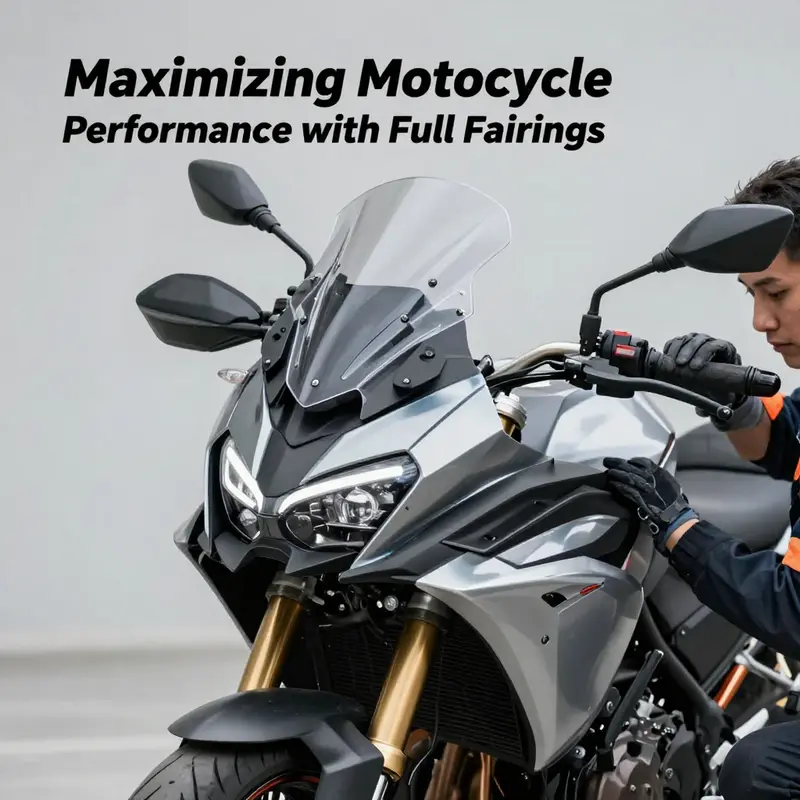
The decision to add or swap a full fairing is never merely cosmetic. It is a disciplined exercise in precision where fit, form, and function must align with the rider’s aims and the bike’s geometry. A full fairing wraps around the bike’s core, covering the front and sides to stream air, shield the rider from wind and debris, and present a cohesive silhouette that communicates purpose as clearly as it does speed. Yet the elegance of that silhouette hinges on something quieter but far more consequential: compatibility. If the mounting points don’t align, if the panels sit off by a few millimeters, or if the fairing interferes with steering, brake lines, or the cockpit controls, the result is not a sleek upgrade but a liability that compromises handling, safety, and comfort. This is why reputable aftermarket lines place just as much emphasis on precise fitment guides, templates, and mounting hardware as they do on the visual finish and airflow performance. The modern fairing ecosystem has evolved to recognize this truth, offering a spectrum of options that promise both a seamless install and a tailored riding experience, rather than a one-size-fits-all look.
Underneath the aesthetic appeal lies a field of careful measurement. Compatibility begins with the bike’s make, model, and year, but it does not end there. Subtle differences in frame geometry, shifting suspension settings, or even changes in the position of mounting studs across production runs can shift where a panel sits. A high-quality full fairing kit typically ships with detailed fitment guides and, in many cases, custom mounting brackets or templates. These tools are not just conveniences; they are the practical language of a correct installation. Without them, even a well-made panel set can create gaps that trap heat, rub against the tire on full turn, or press against the windscreen when the fairing flexes at high speeds. The correct choice is to consult the kit’s documented compatibility matrix and cross-check it against your bike’s exact year, trim, and any regional variations that affect electrics or body mounting.
Customization, by contrast, opens the door to a more personal and expressive riding identity without sacrificing the rig’s integrity. Beyond the stock curves and lines, riders frequently pursue a broader palette of options to reflect taste, goals, and riding context. A full fairing is not just a shell; it is a platform for refinement. Custom paint jobs are a classic path, but modern options extend far beyond color. Graphics, decals, and texture treatments can transform the fairing’s presence on the road or the track. Integrated LED lighting systems offer practical enhancements—improved visibility to other road users, distinct daytime presence, and even the possibility of programmable light patterns for track signaling—while requiring careful planning to ensure electrical compatibility and heat management. The most successful customization programs treat aesthetics as an extension of aerodynamics and ergonomics rather than a separate layer; the finish should harmonize with the bike’s silhouette, the rider’s posture, and the cockpit’s visibility.
The materials that compose a full fairing carry a similar balance between performance and practicality. ABS plastic remains a workhorse for mainstream kits, prized for its resilience, cost efficiency, and ease of molding into precise shapes. It is forgiving when margins are tight during installation and generally resilient enough to withstand highway debris without dramatic weight penalties. Fiberglass and carbon fiber composites occupy a higher rung on the spectrum. They bring stiffness and a potential weight reduction that can contribute to slightly crisper handling and reduced gyroscopic moment. Carbon fiber, in particular, earns praise for its lustrous finish and notable strength-to-weight ratio, yet it carries a higher price and a more demanding repair pathway if damage occurs. The choice of material is not merely a financial decision but a practical one: heavier panels can stress mounting points and alter the bike’s balance if not offset by proper reinforcement or adjusted mounting hardware. Conversely, lighter panels are more demanding to install; minor misalignments can become immediately obvious as gaps widen or edges catch on adjacent components.
The interaction between weight, balance, and aerodynamics is more than theoretical arithmetic. A full fairing can dramatically influence a bike’s wind flow, cabin pressure, and rider fatigue. When aerodynamics are tuned, the rider experiences smoother airflow, reduced drag, and a more stable platform at higher speeds—factors that matter greatly for sport riding and long-distance touring alike. But weight and balance must not be ignored. If a kit is substantially heavier or if it shifts the center of gravity, the rider may perceive slower steering response or a different feel in corner entry and exit. Good design anticipates this, offering modular mounting points, optional lighter-weight sections, or targeted reinforcements that preserve the bike’s original intent while delivering the desired aerodynamic gains. In practice, that translates to a careful pairing of the panel geometry with the bike’s frame rigidity, wheelbase, and suspension travel. The result is a cohesive system in which the fairing contributes to stability at speed, without compromising the precision steering that riders rely on in corners or during rapid transitions.
From a practical standpoint, compatibility is not a cosmetic obstacle but a hardware and electrical puzzle. Modern full fairings must accommodate lights, indicators, and mirrors, which are not merely decorative elements but essential safety features and road-legal requirements in most regions. Some kits are designed with modular panels that align around existing lights and hardware, while others require bespoke brackets or cutouts. This is where the value of a well-documented fitment guide becomes evident; it helps a rider anticipate where to trim, which brackets to fabricate, and how to route cables without pinching or stressing the harness. Windscreen height and curvature are another critical integration detail. A fairing and windscreen must form a smooth aerodynamic continuum to avoid buffeting at motorway speeds and to keep rider helmet visibility free from turbulence. Even the routing of vent passages and cooling ducts deserves attention, particularly on bikes with compact engines that rely on the fairing to channel air toward critical components.
Riders who seek a balance of practicality and personalization often gravitate toward kits that acknowledge the bike’s original concept while providing room for tweaks. The modular design philosophy—that is, panels with adjustable mounting points and interchangeable sections—offers a practical path to fitment convergence. With modular mounting, a rider can tailor the stance and airflow by adjusting panel offsets, swapping in lighter sub-panels, or selecting a different lower belly piece for ground clearance or heat management. Such modularity is not a mere convenience; it is a safeguard against an ill fit that could otherwise lead to uneven panel gaps or interference with the suspension’s travel under compression. The flexibility also enables long-term ownership satisfaction, because the bike can be reconfigured as riding goals evolve—from a sport-oriented street bike to a dedicated track machine or a restrained but effective tour weapon.
For riders who want a direct route to a well-fitting and aesthetically coherent kit, there is practical value in exploring model-specific lines. Instead of relying solely on a generic, one-size-fits-many approach, many manufacturers and aftermarket brands publish fitment matrices that align panels to the exact frame geometry and mounting sequences for each model year. This attention to model-specific fit is especially important for bikes that underwent mid-cycle revisions, where subtle changes in subframes, fairing mounting bosses, or electrical harness routing can alter the alignment of a universal kit. When fitment is precise, gaps disappear, the panel seams align with body contours, and the overall illusion of a factory finish becomes tangible for the observer and the rider alike.
As a practical note, the selection process should also consider the alignment of light assemblies, mirrors, and indicators. An incompatible kit may look flawless at rest but can cause glare, misalignment, or interference when the bike is in motion or when mirrors are folded. Because many riders depend on integrated lighting for signaling and visibility, an accurate fit ensures that all electrical connectors reach their destinations without modification, and that weather seals remain effective. A thoughtfully designed kit may provide plug-and-play harness adapters or integrated routing channels to reduce the risk of pinched cables and to keep the electrical system robust under vibration and temperature swings. In short, compatibility and customization work best when they are treated as a unified design problem: how to preserve safety, performance, and comfort while expressing personality through form.
The choice of a specific internal route for customization—such as selecting a factory-like finish with color-matched textures or choosing a stark, high-contrast graphic language—becomes part of the rider’s narrative. For riders who want a tangible, ride-ready sense of identity, a well-chosen fairing kit can translate their riding philosophy into the road presence of their machine. A well-executed customization plan respects the engineering boundaries of the chassis and the electrical harness, while still delivering the distinctive personality that makes a bike feel truly theirs. It is a conversation between engineering and artistry, with compatibility serving as the common language and customization as the expressive dialect. When done well, the result is not merely a new shell on a bike; it is a cohesive, optimized platform where aerodynamics, weight, balance, and aesthetics converge to amplify riding pleasure and confidence.
For riders who want to explore specific, model-related options, a practical first step is to review a dedicated category that groups fairings by the vehicle family. This approach makes it easier to confirm model-year compatibility and to review the range of mounting configurations available for that particular platform. It also helps a rider assess which panels are designed to work with existing lights and mirrors, and which may require additional hardware or modifications. As one practical note, many riders find it helpful to print or trace the mounting templates before ordering, to ensure the chosen kit will align with the bike’s frame anchors and to anticipate any trimming or sanding that might be required for perfect clearance. This proactive step reduces the chance of receiving a kit that looks right in a box but does not fit as intended on the bench. And if you are curious about a targeted, model-focused selection, you can explore broader online resources that curate fitment information by vehicle family, making it simpler to compare options across manufacturers and materials without getting lost in a sea of ambiguous dimensions.
Beyond the mechanics of compatibility, the aesthetic dimension of customization deserves equal attention. If you are after a look that reads as integrated and professional, the finish should follow the panel lines rather than clash with them. When you pair a paint job with graphics, you establish a dialogue between lines and shapes across the bike. The goal is continuity: a seamless transition from nose cone to chin piece, from side panels to tail sections, and from the fairing’s edge to the rider’s field of view. Visual cohesion often relies on careful alignment of color, texture, and gloss level with other bodywork components, including the fuel tank cap, side panels, and instrument cluster rim. A consistent finish conveys not only taste but also an understanding of how a well-integrated fairing influences perception of speed and form. When the customization respects both the bike’s original character and the rider’s personal narrative, the entire chassis reads as a single, purposeful instrument rather than a patchwork of separate pieces.
For readers who want a concrete pathway toward compatible and customizable options, a broad takeaway is to anchor your decision in fitment accuracy first and then expand into personalization. Start with a model-specific kit that offers a clear compatibility chart, detailed mounting instructions, and, ideally, templates or brackets that reduce fabrication work. Proceed to decide on materials based on riding priorities: weight savings and stiffness for track use, or durability and cost-effectiveness for daily riding. Then, plan your aesthetic upgrades with attention to how paint and graphics will interact with the fairing’s geometry and with the bike’s other finishes. Finally, consider how optional lighting and electronic integrations can be harmonized with electrical routing and heat management. This sequence helps ensure that the final installation delivers predictable performance, reliable durability, and a compelling, personal look—all while preserving or even enhancing the bike’s ergonomic and aerodynamical integrity.
The broader takeaways extend beyond a single season or a single model. Compatibility is a discipline that benefits from disciplined preparation, precise measurements, and honest assessments of what a given kit can and cannot do for a particular machine. Customization, meanwhile, is a celebration of why riders choose to invest in their machines in the first place: to reflect a unique vision while maintaining the reliability and safety of a carefully engineered platform. When these two strands converge—sound fitment and thoughtful personalization—the resulting full fairing becomes more than a protective shell or a race-inspired look. It becomes a carefully tuned extension of the rider, capable of delivering smoother air, sharper control, and an unmistakable presence on every road and every track.
For readers seeking practical, model-specific guidance that respects both fitment and customization, sites focused on dedicated fairing categories can be an invaluable resource. A structured catalog can help you quickly validate model-year compatibility and compare mounting options across designs, reducing trial-and-error and enabling a more confident purchasing decision. As you navigate the options, remember that the best choice is rarely the most expensive or the shiniest. It is the option that best aligns with your bike’s architecture, your riding style, and your willingness to invest in a careful, professional installation. The result is a unified system that honors the bike’s original intent while unlocking new dimensions of comfort, control, and visual impact. When you approach compatibility and customization with that mindset, a full fairing program becomes a strategic enhancement rather than a reactive upgrade.
To explore a dedicated catalog that emphasizes model-specific fairings and the practicalities of fitment, you can start with the Honda fairings category, which provides a structured overview of kits designed to fit various Honda platforms. Honda fairings offers a practical reference point for assessing compatibility and the spectrum of customization options available within a family of bikes. This approach helps ensure your selection aligns with both the bike’s mechanical geometry and your riding ambitions, whether you are chasing wind-free long-distance comfort, high-speed stability on the track, or a bold street presence that pairs with your personal style. In the end, a well-chosen and well-fitted full fairing elevates the entire riding experience by harmonizing engineering precision with individual expression.
External resource for further guidance: For a detailed, practical primer on choosing the right motorcycle fairing, see this external guide. https://www.carinterior.com/motorcycle-fairings-guide-how-to-choose-the-right-one/
Flow, Shield, and Speed: The Integrated Role of Full Fairings in Modern Motorcycling
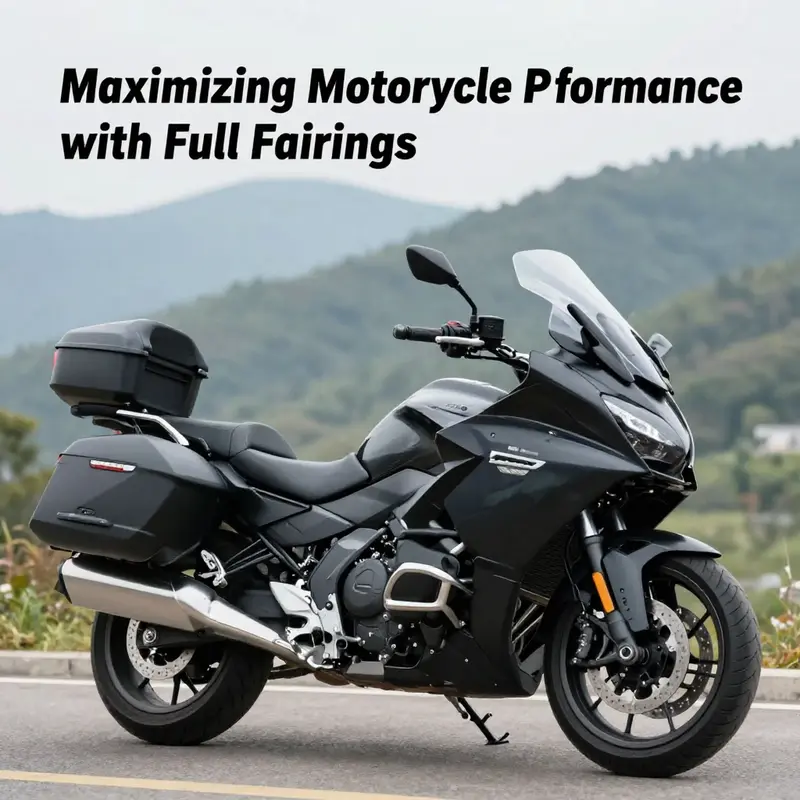
A motorcycle full fairing is more than a plastic shell wrapped around a bike. It is a deliberate integration of airflow management, rider protection, and visual language that speaks to speed even when the engine is idling. In this sense, the full fairing embodies a philosophy where form and function are inseparable. It is designed to guide air as a cooperative partner, not merely to block the wind. When done well, the fairing reduces drag, buffers the rider from gusts and chill at speed, and frames the engine and chassis in a silhouette that signals purpose and performance. This is not a single improvement but a suite of effects that unfold together, changing how a motorcycle feels at the command of the handlebars and how it behaves as it slices through air at speed. The result is a machine that seems to move with less effort, more security, and an air of precision that is as much psychological as mechanical. For riders who spend long hours in the saddle or who chase track times, the fairing’s influence is measured not just in numbers on a spec sheet but in the steadiness of the ride and the sense of connection between rider, machine, and road.
Applications of full fairings span a wide range of riding styles and ambitions. Touring and sport touring motorcycles find in full fairings a shield that protects against wind pressure over long horizons, turning what could feel like a relentless push into a steady, manageable breeze. The front and sides become a protective envelope that helps to keep the torso and shoulders from bracing against a constant crosswind, which in turn reduces fatigue and allows focus to be directed toward steering precision and throttle control. For riders who venture into varied weather or late in the day commutes, the fairings full coverage acts as a barrier against rain and spray, preserving visibility and comfort without requiring constant wardrobe changes or heated gear adjustments. In more dynamic contexts, sport and light track configurations rely on the same aerodynamic principles to minimize turbulence around the rider and to stabilize the nose of the bike at higher speeds. The result is a motorcycle that feels planted, almost glued to the road, as the air around it is shaped to flow smoothly with the chassis rather than slipping unpredictably past the rider.
The core benefit, however, is aerodynamic efficiency. By sculpting a smooth exterior that directs air along the body and past the engine, a full fairing lowers parasitic drag and reduces the form factor that opposes forward motion. This translates into higher sustained speeds with the same power output, or the same speed with less fuel burn. The practical consequence is tangible: less wind buffeting on the chest and helmet, which translates to lower upper body effort and reduced fatigue over long distances. A well designed fairing also contributes to stability. Air can wrap around or over a bike in patterns that sometimes amplify oscillations if the rider is exposed to strong gusts. A properly contoured panel set reduces this turbulent wake, smoothing the downwash and helping the front tire maintain traction and directional confidence during quick lane changes or rapid steering inputs.
Weather protection and weather resilience are another important thread. For adventure riders, commuters, and even some sport riders who ride year round, the fairing buffers the rider from rain, road spray, and cold air at speed. This protective function extends to shielding vital components as well. The engine bay, intake stack, and electrical harness sit beneath panels that limit exposure to weather and debris. Keeping these parts shielded can reduce maintenance cycles and help sustain peak performance across a wider range of riding conditions. The fairing reach into the rider domain can also extend through integrated features such as storage pockets, mounting points for essential accessories like GPS devices, and strategic guides for mounting cameras or reflectors. The design ethos here is about creating a practical ecosystem around a high performance platform rather than a simple cosmetic upgrade.
The materials and construction of full fairings are central to their performance and longevity. Modern options typically rely on high impact thermoplastics such as ABS, which bring a balance of stiffness, impact resistance, and cost efficiency. Thermoplastics can absorb minor impacts without fracturing, a property valuable in the kind of everyday riding where curb scrapes or debris contact can occur. In higher end applications, composite materials particularly carbon fiber in some segments offer a superior strength to weight ratio. The allure of carbon fiber is the potential for substantial weight savings and stiffness, which can contribute to more responsive handling and slightly reduced inertial forces in the upper shell during gusts. Yet carbon fiber comes at a price premium and requires careful integration to avoid thermal expansion mismatches with other plastics and metals in the surrounding structure. The modern fairing kit, therefore, is often a blend: a stiff, impact resistant outer layer with a lighter core and strategically reinforced sections where the fairing is most likely to experience flex or impact. This blend maintains rigidity where it matters for air separation and mount integrity, while allowing other areas to flex just enough to absorb vibrations without transferring them to the rider.
Durability remains a practical concern because fairings live in a demanding environment. They must resist UV exposure, temperature swings, and the cumulative impact of road hazards. The outer surface endures the sun’s rays and the occasional stone chip, so finishes are often engineered for weathering and color stability. Internally, mounting points and attachment hardware must tolerate repeated assembly and disassembly, especially for riders who customize or replace panels after a drop or a crash. A modular approach to mounting where panels clip or bolt onto a framework with adjustable points addresses two realities. First, it makes compatibility across model years and variants more achievable. Second, it supports personalization, allowing riders to tailor airflow and protection to their preferences without compromising safety. The modular design is not just about aesthetics; it is a functional decision that keeps maintenance manageable and repairs practical, easing the path from factory settings to a rider’s preferred configuration.
The aerodynamic and protective advantages of full fairings have a direct bearing on handling and ride quality. At higher speeds, clean air around the rider reduces turbulence that can otherwise disrupt stability. With the rider less buffeted, cornering inputs respond more crisply, and throttle adjustments can be more precise because the rider is not fighting wind induced fatigue or compensating for erratic airflow. In track or sport oriented applications, this translates into more consistent lap times and the confidence to push through sections that demand steady air management and alternative lines. At the same time, a fairing’s shape and mass distribution can affect the motorcycle’s center of gravity and overall balance. Designers optimize the mass distribution so that the fairing works with the chassis rather than against it, sometimes using cutaways or internal channels to manage heat buildup and to reduce the risk of trapped air near the engine or rider.
Compatibility is a practical reality riders face when choosing full fairings. The fit must align with the bike’s frame geometry, the placement of lights, mirrors, and other accessories, and the scooter’s or motorcycle’s own cooling and intake paths. Manufacturers often offer model specific kits to guarantee a clean, seamless integration. The goal is not simply to cover components but to create a cohesive system where each panel, mounting point, and cutout serves a clear purpose. For riders exploring options online or at a shop, the idea of compatibility becomes a central criterion. The right fairing kit should evoke a sense of continuity with the bike’s original lines while offering newer materials or finishes that enhance durability and aesthetics. For those who want a direct route to resources that align with their makes or models, the Honda fairings category provides a straightforward model aware gateway to compatible kits and replacement panels, enabling a smoother upgrade process while preserving the bike’s identity. https://ultimatemotorx.net/product-category/honda-fairings/ is a useful starting point for riders pursuing a precise fit and a cohesive look.
Maintenance and upkeep are part of the lifecycle of any full fairing system. Cleaning, protecting finishes, and inspecting fasteners become regular rituals, especially after long rides or rough weather. Because the panels are exposed to the road and weather, periodic checks for cracks, loose mounting points, and edge wear are prudent. A modular system makes these checks easier because individual panels can be removed and inspected without disassembling the entire assembly. The care cadence is straightforward: wash with mild soap, avoid harsh solvents that can degrade plastics, and apply appropriate UV protectants to preserve color and gloss. For riders who ride aggressively or frequently ride through debris laden routes, a quick glance inspection after each significant ride helps catch issues before they escalate into panel deformation or mounting failure. In this light, the full fairing becomes not just a passive shell but a living part of the motorcycle’s reliability profile, one that contributes to ongoing performance and safety. The broader implications of full fairings reach beyond the rider’s immediate comfort and performance. They reflect a design approach that embraces the relationship between machine and environment. The way a fairing shapes the air around the bike can affect fuel economy, vibration levels, and even the perceived quietness of a ride at highway speeds. They also offer a canvas for personal expression, enabling riders to choose colorways, textures, and finish levels that align with taste and branding, while preserving the bike’s aerodynamic intent. In this sense, full fairings are not merely functional upgrades but a synthesis of engineering discipline and rider personality. They translate wind and speed into a ride experience that feels both controlled and exhilarating, a quiet thrill that emerges with each mile where the air becomes a partner rather than an adversary. As the riding community continues to push for ever better efficiency, more thorough weather protection, and more refined aesthetics, the fairing remains central to that evolution. Its value is measured not only by the miles it protects or the speed it enables but by how it supports rider confidence and comfort. A well chosen system can soften the rigors of travel, reduce fatigue, and create a more intimate connection with the machine. The chapter’s thread, from aerodynamics to modular design and compatibility, underscores how integral the full fairing is to the modern motorcycle experience. It is a reminder that performance is a holistic property one that arises when airflow, protection, materials, and fit are treated as a single carefully orchestrated system. For riders seeking to enhance their bike’s capabilities without compromising its character, the full fairing offers a coherent path that aligns efficiency, protection, and style in a single, comprehensive solution. External resources such as industry studies and supplier overviews provide deeper context on materials and standards that shape today’s fairing designs. For a broader exploration of the topic, you can consult the resource at https://www.alibaba.com/product-detail/Understanding-Chinese-Motorcycle-Fairings-Composition_1600527487394.html?spm=a2700.details.popular-seller.2.6e9a5b2f1d1c6b5c355c1c1e.
Final thoughts
Understanding the multifaceted benefits of motorcycle full fairings allows business owners to make informed decisions when choosing products for their customers. Full fairings not only enhance aerodynamics, leading to improved performance and rider comfort, but also offer a wide array of customization options that cater to specific motorcycle models. By recognizing the significance of materials and construction techniques, business owners can ensure they provide high-quality offerings that meet market demand. As the motorcycle landscape evolves, embracing the advantages of full fairings will position businesses to thrive, offering riders the performance and aesthetics they seek.