

Motorcycle fairings are more than just aesthetic enhancements; they are pivotal components in motorcycle design and functionality. Serving crucial roles in aerodynamics, rider protection, and performance enhancement, understanding the intricacies of motorcycle fairings is vital for business owners in the motorcycle industry. The efficiency of fairings can directly impact rider experiences and, by extension, affect sales and customer satisfaction. This guide will delve into the types of motorcycle fairings, the materials used in their construction, and their impact on functionality and performance. By grasping these aspects, business owners can make informed decisions that optimize both product offerings and customer experiences.
Shells of Speed: A Cohesive Exploration of Full, Half, Quarter, and Touring Fairings in the Motorcycle Fairings Wiki
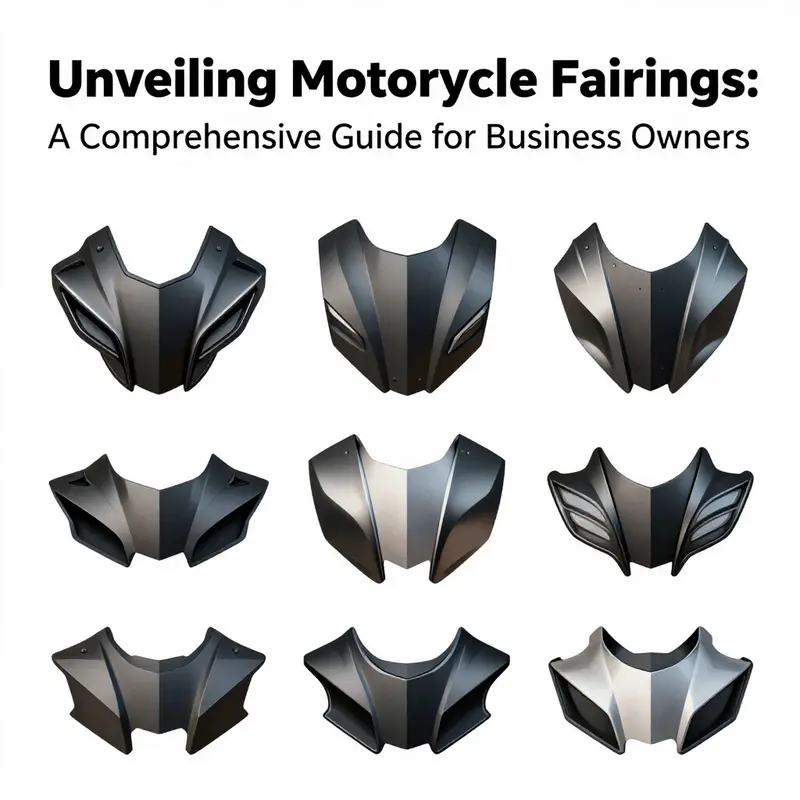
Fairings shape a motorcycle’s aerodynamics and rider experience. This article surveys full, half, quarter, and touring fairings, explaining how each type balances protection, efficiency, maintenance, and comfort. Full fairings offer maximum protection and high-speed stability but can complicate cooling, service, and repairs. Half fairings strike a balance between coverage and access, reducing wind on the torso while keeping components accessible. Quarter fairings provide minimal coverage, emphasize aesthetics and ease of maintenance, and are common on custom or classic builds. Touring fairings prioritize rider comfort and weather protection on long rides, at the cost of added weight and drag. The choice depends on use case, climate, and maintenance priorities, and should harmonize with frame geometry, engine cooling, and rider posture. In practice, fairing design is an integrated system that influences handling, cooling, and overall ride quality.
Fairing Materials Unpacked: How Plastics, Fiberglass and Carbon Define Motorcycle Fairings (Motorcycle Fairings Wiki)
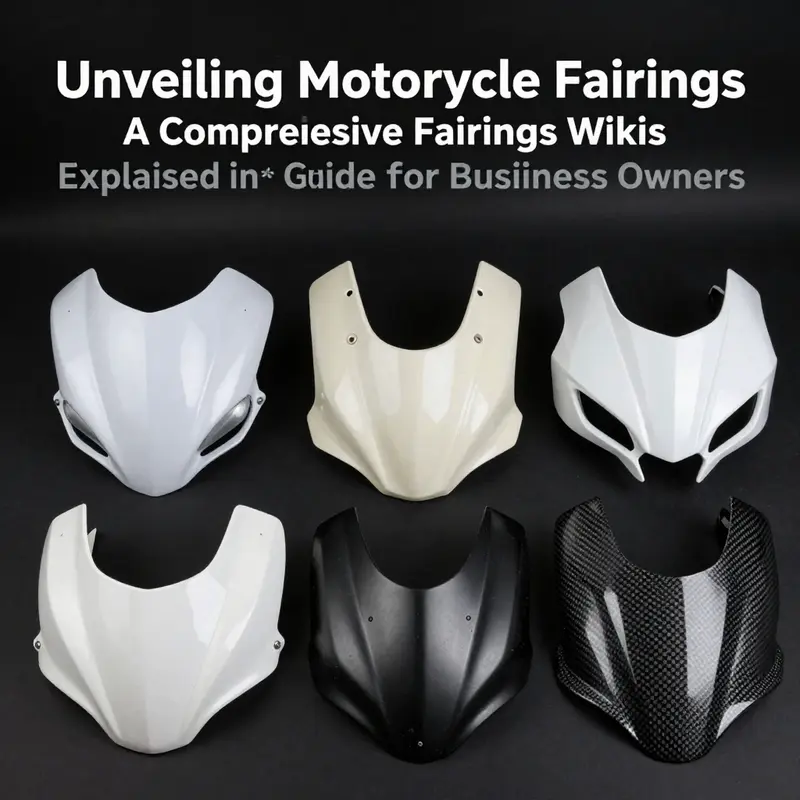
Motorcycle fairings are more than a cosmetic shell. They are a carefully chosen assembly of materials that balance weight, strength, cost, durability, and aerodynamics. The choice of material determines how a fairing behaves during normal riding, under stress, during a fall, and over years of exposure to heat, sunlight, and fuel. Understanding the properties of common materials used for fairings helps riders, builders, and designers make informed decisions. This chapter explains those materials, how they are made, how they fail, and what to consider when choosing or repairing fairings for different riding goals.
Materials fall into two broad families: thermoplastic polymers and fiber-reinforced composites. Each family includes multiple options with distinct behaviors. Thermoplastics are molded in large volumes. They bend without cracking under certain loads. Composites combine fibers and resins to create stiff, lightweight panels. Composites are often molded or hand-laid and require different skills to repair. Familiarity with both types clarifies trade-offs between cost, manufacturability, stiffness, and repairability.
ABS plastic is the most common thermoplastic for modern fairings. It offers a strong blend of impact resistance, toughness, and ease of molding. ABS accepts paint well, and complex aerodynamic shapes are produced cheaply with injection molding. That cost advantage explains why many production motorcycles use ABS for full and half fairings. ABS resists moderate impacts without shattering. It flexes and returns to shape in many cases. That flexibility helps absorb minor knocks and road debris.
However, ABS has limits. Under severe impact, it can crack or tear. Repeated UV exposure can cause surface fading or become slightly brittle over many years. ABS parts typically require replacement after major damage because structural repair is often less effective than replacement. Still, ABS can be repaired with plastic welding or solvent-based adhesives when damage is minor. Repairs need careful surface preparation to ensure the adhesive or weld bonds through paint. For riders seeking durable, affordable coverage for daily commuting or touring, ABS often strikes the best balance.
Polycarbonate is another thermoplastic occasionally used for fairings. It is best known for exceptional impact resistance. Polycarbonate will absorb and distribute force without cracking easily. That makes it attractive for areas where impact tolerance is critical. Polycarbonate is tougher than ABS, yet also more expensive. It is prone to surface scratching without hard coatings, so manufacturers often apply protective layers or use polycarbonate where wear is limited.
Because polycarbonate costs more, it appears in selective or high-safety applications rather than broad cosmetic panels. Designers sometimes pair polycarbonate with other plastics to get a mix of impact resistance and dimensional stability. While polycarbonate resists shattering, note that deep scratches and chemical attacks can reduce clarity and finish. Repair options for polycarbonate differ from ABS. Plastic welding is possible, but the technique and filler must be compatible with polycarbonate chemistry.
Polypropylene is a lighter, lower-cost option found on budget models. It weighs less than ABS and resists many chemicals and fuels. Polypropylene also exhibits good fatigue resistance. However, it lacks the rigidity and impact resistance of ABS in terms of higher-speed impacts or structural loading. Polypropylene’s lower stiffness can produce a looser, less precise fit. That is acceptable for cost-conscious designs where formality of fit is less critical.
Repairing polypropylene is more challenging. Solvent bonding is difficult due to its chemical inertness. Heat welding often works but demands skill. Because of these limitations, polypropylene is common on lower-tier motorcycles and for small, non-structural panels rather than premium sport shells.
Moving away from molded plastics, fiberglass represents the entry point into composites. Fiberglass fairings are heavier than most plastics, yet they offer high stiffness and good strength for their weight. They are popular among custom builders, track-day riders, and racers on limited budgets. Fiberglass is formed with glass fiber mat or woven cloth and a thermosetting resin. The layup process sets the panel into a rigid, predictable shape.
Fiberglass responds well to repair. Cracks, chips, and punctures are usually fixed with resin and additional cloth overlays. Surface imperfections are easily filled and sanded, making fiberglass forgiving for cosmetic work. For a rider who expects to modify or frequently repair panels, fiberglass offers a practical compromise: durable, serviceable, and cheaper than carbon.
Carbon fiber is the high-performance end of composite fairings. It provides exceptional stiffness at very low weight. Carbon fiber’s strength-to-weight ratio improves acceleration, braking, and handling. Its stiffness helps maintain precise aerodynamic shapes even under high loads. That stability benefits high-speed stability and lap times on track. Carbon fairings also offer a premium visual appeal, with visible weave patterns that many riders value.
The downside of carbon lies in cost and damage behavior. Carbon is expensive to produce. The manufacturing often involves sophisticated processes such as vacuum bagging or autoclave curing for the highest grades. Impacts that would merely dent plastic can break carbon plies or cause delamination. Damage is often brittle and can compromise the structural integrity of a panel. Repairs are possible but require knowledge of composite repair techniques and sometimes specialized equipment. On street bikes, a carbon fairing may be overkill unless the rider seeks weight savings or a distinct look.
Combinations and hybrids also exist. Manufacturers sometimes sandwich foam cores between composite skins or use chopped fiber molds for mid-tier performance. Some fairings mix ABS in visible areas and carbon in stress zones. Hybrid layups aim to capture the best properties of each material. For instance, a composite front cowl with a flexible, impact-tolerant lower piece can balance damage resistance with aerodynamic rigidity.
Manufacturing method affects material performance. Injection-molded ABS yields precise, repeatable panels with thin, consistent walls. Blow- or compression-molded thermoplastics provide cost-effective volumes. Hand-laid fiberglass or carbon uses layered cloth and resin, allowing thicker, more tailored layups. Processes like resin transfer molding offer consistent composite parts for medium volumes, reducing manual labor. High-end carbon typically uses pre-impregnated fiber and autoclave cure cycles. That yields the highest strength-to-weight parts at premium cost.
Thermal and environmental factors matter. Plastics expand with heat differently than composites. Fasteners must accommodate thermal movement to avoid stresses and cracks. UV exposure weakens certain polymers without stabilizers. Salt, oils, and fuels can attack vulnerable resins over time. Proper coatings mitigate these effects. UV-resistant paints or clear coats prolong the life of ABS and polypropylene. Gelcoats and specialized topcoats protect fiberglass and carbon from UV and road wear.
Painting and finishing differ across materials. ABS accepts primers and paints with predictable adhesion after surface scuffing. Fiberglass requires sealing and primer to hide porous surfaces. Carbon often receives a clear coat to preserve the visual weave. When painting carbon, priming is crucial to prevent show-through and to ensure color consistency. Surface prep is the key step. Improper prep causes paint to peel regardless of base material.
Repair strategies depend on material. Small ABS cracks often respond to plastic welding or cyanoacrylate adhesives combined with fiberglass backing for strength. Polypropylene may need heat welding or specially formulated adhesives. Fiberglass repairs use resin, cloth patches, and filler sanding. Carbon repair uses matched-fiber patches and controlled curing, often followed by clear coating. For structural load-bearing failures, replacement is frequently safer than repair.
Fastening and fitment must match material behavior. Thermoplastics tolerate flexible clips and captive nuts well. Composites favor mechanically fastened points reinforced with metal inserts, bonded backing plates, or internal support frames. Over-tightening bolts into composites can cause localized crushing or cracking. Use washers, inserts, or bonded tabs to spread load and prevent damage.
Weight and stiffness affect handling. Even small weight savings at the front or rear influence steering weight, inertia, and the bike’s responsiveness. Carbon fairings reduce rotating and sprung mass, improving turn-in and agility. Conversely, heavier fiberglass or polypropylene can dull feel. For touring riders, slightly heavier but resilient plastics might deliver comfort and longevity. For racers, stiffness and weight savings justify the cost of composites.
Cost considerations and lifecycle should guide material choice. ABS offers a favorable lifecycle cost for most riders. It is affordable at the factory and cheaper to replace. Fiberglass sits in the middle: lower initial cost than carbon and easier to repair. Carbon provides lifetime performance but at a significant price. The long-term value depends on the rider’s priorities, expected exposure, and maintenance willingness.
Environment and recyclability matter increasingly. Thermoplastics like ABS and polypropylene can be recycled in some streams if cleaned and separated. Composites are harder to recycle due to mixed materials and thermosetting resins. Emerging recycling technologies address composites, but for now composite disposal remains a lifecycle concern for sustainability-focused riders.
When choosing materials, consider three practical questions. First, what is the intended use? Street commuting, long-distance touring, occasional track days, regular racing, or show purposes each push choices one way. Second, what is the budget? Affordable thermoplastics suit everyday needs. Third, how much maintenance and repair work will you accept? Fiberglass and ABS are easier to fix than carbon.
Installation and mounting require attention regardless of material. Ensure brackets align and fasteners engage without friction or distortion. When replacing a fairing, check backing plates and rubber mounts. These interface points absorb vibration and offset minor misalignment. Using correct torque values prevents stress concentrations that lead to cracks. For composites, consider using thread inserts or bonded metal plates where bolts pass.
Customization and aftermarket options expand choices. Aftermarket vendors may offer ABS, fiberglass, or carbon reproductions. Each carries its own fitment expectations. Aftermarket ABS can match factory tolerances closely. Fiberglass pieces often require trimming and fitting. Carbon aftermarkets vary in finish and layup quality. Always plan for trimming, drilling, and finishing work when selecting aftermarket panels.
Maintenance keeps any fairing performing and looking its best. Regular washing removes harmful road salts and debris. Inspect mounting points periodically. Address chips or cracks early to prevent propagation. For painted plastics, gentle polishes restore shine. For composites, maintain clear coats and repair chips to protect underlying fibers. Protect UV-sensitive materials with shaded parking and periodic treatment.
Safety is fundamental. A fairing that fails catastrophically near a fastener or a support structure can create hazards. Properly designed and installed fairings should deform predictably, shedding energy and protecting critical components and the rider. When in doubt after an impact, replace suspect panels rather than risk a hidden failure.
Choosing the right fairing material aligns riding needs with material properties. ABS provides a resilient, cost-effective foundation for most riders. Polycarbonate finds niche roles where impact resistance matters. Polypropylene serves budget and non-structural applications. Fiberglass supplies a repairable, strong option for custom and track use. Carbon delivers elite stiffness and low weight for performance-oriented applications.
For riders exploring upgrades or repairs, consider visiting a curated contemporary catalog of available designs and materials. The latest model collections can reveal typical material choices across manufacturers, aiding comparison shopping. See a practical example of current offerings in the 2023 new fairings catalog. (https://ultimatemotorx.net/product-category/2023new/)
For a concise technical overview of fairing materials and manufacturing techniques, consult the industry-focused resource that informed much of this chapter. It summarizes material properties and common manufacturing processes. https://www.bikeradar.com/uk/features/motorcycle-fairings-materials-manufacturing/
Streamlined Truths: How Motorcycle Fairings Shape Speed, Safety, and Sensation

Fairings are often noticed first for their visual language—their sweeping lines, the way they frame the rider, and the way they define a motorcycle’s silhouette. Yet beyond the aesthetic, fairings function as a precise marriage of form and physics. They are not mere shells; they are active components that sculpt airflow, protect the rider, and influence how a machine behaves at the very edge of its performance envelope. The most fundamental contribution of a well-designed fairing is aerodynamic efficiency. By smoothing the path that air must travel around the bike, fairings reduce drag, the unseen resistance that acts against forward motion. This drag reduction translates into real frictionless gains: improved fuel economy on long rides, steadier energy use on sustained highway speeds, and the potential for higher top speeds with the same power output. But efficiency is not a single number; it is a tapestry of effects. The reduction in drag often accompanies a corresponding drop in wind-induced instability. At high speeds, wind gusts, shifting pressure, and buffeting can disturb the rider’s balance, sapping concentration and increasing fatigue. A well-executed fairing design channels these airs more predictably, creating a smoother flow that shelters the rider from abrupt pressures and reduces wind noise to a more tolerable level. In this way, the rider’s comfort becomes a measurable performance factor. When fatigue is minimized, reaction times and focus improve, and that endurance is itself a performance amplifier. The wind you feel is not only a matter of comfort; it can influence steering inputs, body position, and even how the suspension behaves under load. By shaping the air around the bike, fairings also contribute to directional stability. The rearward exhaust of a headwind may unsettle a naked chassis, but a fairing’s skin helps manage the wake produced by the front wheel and the engine’s own drag. The net effect can be a more predictable feel at the bars, a steadier line through corners, and a reduction in the tendency of the bike to “hunt” at speed when air shifts unpredictably. This is where the design philosophy matters. Full fairings, which enclose a larger portion of the bike, tend to provide the strongest shield against turbulence and weather while delivering the most aggressive aerodynamic profile. They enact a continuous surface that glides over the air, minimizing eddies and splinters of disturbed flow. Half and quarter fairings, by contrast, trade some of that all-encompassing coverage for nimbleness and ease of maintenance. For a rider whose priorities skew toward urban commuting, sport-touring versatility, or track-racing sensitivity, the choice between a sweeping, enveloping skin and a more modular, openings-oriented solution reflects the balance between drag reduction and practical usability. In all cases, the aerodynamic payoff hinges on attention to transition points and junctions—the places where flow can separate or stall if misaligned. The tail, the belly, the chin, the windscreen, and the way the fairing meets the engine’s contours all contribute to the overall lift, drag, and downforce profile. Subtle detailing can yield outsized returns. A carefully sculpted leading edge reduces flow separation; a well-judged angle of attack around the windscreen minimizes buffeting; a smooth underside prevents the formation of turbulent pockets that would otherwise propagate toward the rider’s torso. The cumulative effect is not merely the absence of drag but an optimized aerodynamic ecosystem that supports stability and comfort across the spectrum of speeds a motorcycle might encounter. Materials play a critical role in this ecosystem because the static shape is only part of the story. ABS plastic, fiberglass, and carbon fiber each bring distinct properties that influence how the fairing behaves under load, how it responds to impact, and how it ages under the sun and rain. ABS plastic offers a resilient, impact-absorbent core with a favorable balance of stiffness and flexibility. It can be shaped with precision and kept relatively affordable, making it the common starting point for many fairing assemblies. Fiberglass provides enhanced stiffness and a different tuning of mass, which can be advantageous when a particular curvature dictates a tighter load path through the laminate. Carbon fiber, the lightest and strongest among the three, offers an uncompromised stiffness-to-weight ratio and a premium aesthetic. Yet carbon fiber’s benefits come with costs, including manufacturing complexity and the need for careful mounting to preserve its structural integrity. Beyond weight considerations, the ring of interfaces between the fairing and the rest of the motorcycle—where panels meet the frame, the tank, and the handlebars—demands careful engineering. The installation demands precision and often specialized tools. Even a small misalignment at a joint can create a cascade of airflow disturbances, producing chatter, rattles, or worse, chamfered edges that become stress risers. In practice, tuning for aerodynamics is as much about fitment as about the panel shape. That is why professional-grade fairings often sit in a careful balance: the outer shell carries the air while the internal mounts, brackets, and fasteners ensure that the desired profile remains consistent through heat cycles and road shocks. The interplay between styling and physics becomes particularly evident when considering the rider’s position. The arc of the fairing’s surface interacts with rider posture, windshields, and even helmet height. A fairing designed to reduce drag on a seated, upright posture may require adjustment for a more crouched stance on the track. Conversely, a fairing tuned for hands-on control and lower wind noise might impose a profile that benefits a sport-oriented posture but slightly increases the drag in a cruising position. Designers therefore often adopt modular or adjustable elements—windscreens with multiple height settings, vents that can be closed or opened, and panel gaps that can be tightened or relaxed—to tailor airflow to the intended use. The human factor, too, matters. A rider’s height, torso length, and even how they lean into a curve will alter the effective cross-section the air sees. Given this, performance is not a single stat but a spectrum: a result of integration across the bike’s geometry, the rider’s physique, and the chosen fairing configuration. It is easy to think of fairings as passive covers, but the truth is that they are performance enablers that demand a careful alignment of engineering discipline, rider feedback, and ongoing refinement. In this sense, the fairing becomes an instrument—a tuned surface that translates the physics of air into a tangible riding experience. One might also consider the way fairings consolidate practical function with protection. Wind and weather are constant adversaries for riders. A fairing’s envelope helps shield the torso and arms from cutting rain, chill, and gusts, which can blunt reaction times or limit the duration of comfortable riding. Integrated elements, such as headlights and instrumentation housings, illustrate a design philosophy where form serves multiple purposes: aerodynamic efficiency, weather protection, and the consolidation of essential systems into a compact, streamlined package. The result is a cockpit that remains readable and accessible at speed, with controls and displays that remain visible and within easy reach even as the air around the rider remains on a fast, relentless march. It is also worth noting that fairings carry implications for maintenance and repair. In accident scenarios or routine servicing, the panels must be removed and reinstalled with care to preserve the intended aerodynamic coherence. This means that the mounting hardware, the panel shapes, and the connection points need to tolerate the vibrations and thermal cycling a bike experiences in daily life. The goal is to preserve alignment and weather sealing without introducing new leak paths or loose panels that could become a hazard at speed. For the enthusiast who wants to optimize performance, the choice of fairing type should be guided by purpose. Track-oriented riders may prioritize more aggressive, aerodynamically contiguous shells with rigid mounting and a refined transition to the tail, appreciating how each line reduces drag and stabilizes the bike under high-lap stress. Street riders might favor a more modular or lighter approach, where quick swaps and reasonable protection take precedence over absolute aero perfection. Meanwhile, riders who value a balanced blend of protection, aesthetics, and everyday usability will look for fairings that harmonize with their existing chassis geometry and yield predictable performance across mixed riding conditions. The available vocabulary for discussing these choices—drag coefficient, lift, downforce, flow separation, wake, and buffeting—belongs to fluid dynamics and vehicle performance analysis, but the consumer experience translates these terms into something palpable: steadier steering at speed, less fatigue after hours in the saddle, and a broader world of riding where the machine feels poised, controllable, and responsive. This is the brightness of a well-executed fairing design: it makes complex physics legible to the rider through a seat-of-the-pants sensation and a measurable steadiness that can be felt in frames per second of reaction under changing air. As much as any component, fairings encapsulate a philosophy about how a motorcycle should meet the road. They are a daily reminder that the boundary between speed and safety is negotiated through careful shape, considered materials, and thoughtful integration with rider and machine. For riders who seek to understand how to optimize this relationship, the path begins with recognizing that fairings are not add-ons but essential contributors to performance, comfort, and confidence. They influence not only the machine’s efficiency and stability but also the subjective experience of riding—how it feels to press into a straightaway, how the wind settles over the helmet, and how long a ride can feel before fatigue becomes a factor. In that sense, the study of motorcycle fairings, and the practical choices they entail, becomes a study of rider experience as much as vehicle dynamics. If you want to explore a specific avenue within this broad field, you can look at dedicated sections that catalog different fairing configurations and their compatibility with various chassis geometries. A curated category page of fairing options offers a useful reference point for understanding how different shapes and mounting schemes map onto riding goals and performance expectations. In other words, fairings are not just about speed; they are about shaping a safer, more controllable, and more enjoyable riding experience while recognizing the practical realities of maintenance, repair, and daily use. For readers who wish to dive deeper into the catalog of configurations and to compare how subtle changes in line, edge, and closure influence the overall airflow, a cataloged collection of fairing variants can be a practical resource. This approach aligns with the broader aim of Motorcycle Fairings Wiki: to case-study the relationships between aero design, material choice, and rider comfort in a way that informs ongoing experimentation and personal customization. The conversation about fairings, then, becomes a conversation about how we ride and why certain shapes resonate with specific riding philosophies more than others. The science under this conversation is accessible and intuitive. It invites riders to think about their own needs—whether they ride for track days, daily commuting, or long-distance adventures—and to weigh the aerodynamic and protective benefits against maintenance considerations and the realities of street use. The result is a measured, thoughtful approach to selecting or designing fairings that harmonize with a bike’s character and the rider’s ambitions. For those who want a structured starting point, the fairings-for-cbr catalog, though just one among many categories, provides a concrete example of how a specific silhouette is curated for a particular riding context and how that silhouette translates into a broader conversation about efficiency, protection, and control. fairings-for-cbr This kind of framing helps connect the abstract physics of aerodynamics with the tangible realities of riding practice, encouraging enthusiasts to move beyond cosmetic concerns toward a more holistic understanding of why fairings matter, precisely where the wind meets the road and the rider meets the machine. External resources can further illuminate these ideas. For a detailed compilation of fairing types, their implications for aerodynamics, and practical considerations for installation and maintenance,see the Motorcycle Fairings Wiki: https://www.motorcyclefairingswiki.com/.
Final thoughts
In summary, motorcycle fairings play a critical role in the overall performance, safety, and aesthetic appeal of motorcycles. For business owners, a deep understanding of the various types of fairings, the materials that compose them, and their significant impacts on functionality and rider experience is invaluable. This knowledge not only aids in making informed decisions regarding product offerings but also enhances the overall customer experience, fostering brand loyalty. As the motorcycle industry continues to evolve, keeping abreast of developments in motorcycle fairings will ensure your business remains competitive and relevant.