
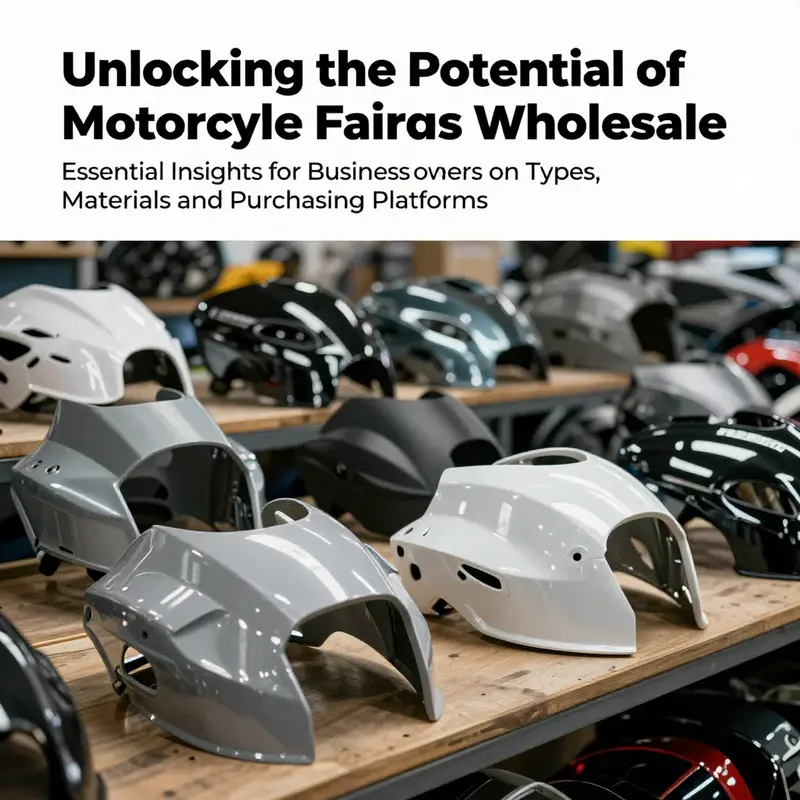
Motorcycle fairings play a pivotal role in enhancing performance and aesthetics for riders while creating lucrative opportunities for businesses in the wholesale market. Understanding the types and functionalities of motorcycle fairings, the materials used in their construction, and the best practices for wholesale purchasing are crucial for business success. This comprehensive guide will delve into these themes, ensuring that business owners can navigate the motorcycle fairings marketplace effectively and make informed decisions that will benefit their operations.
From Form to Function: Understanding Motorcycle Fairings in Wholesale Markets
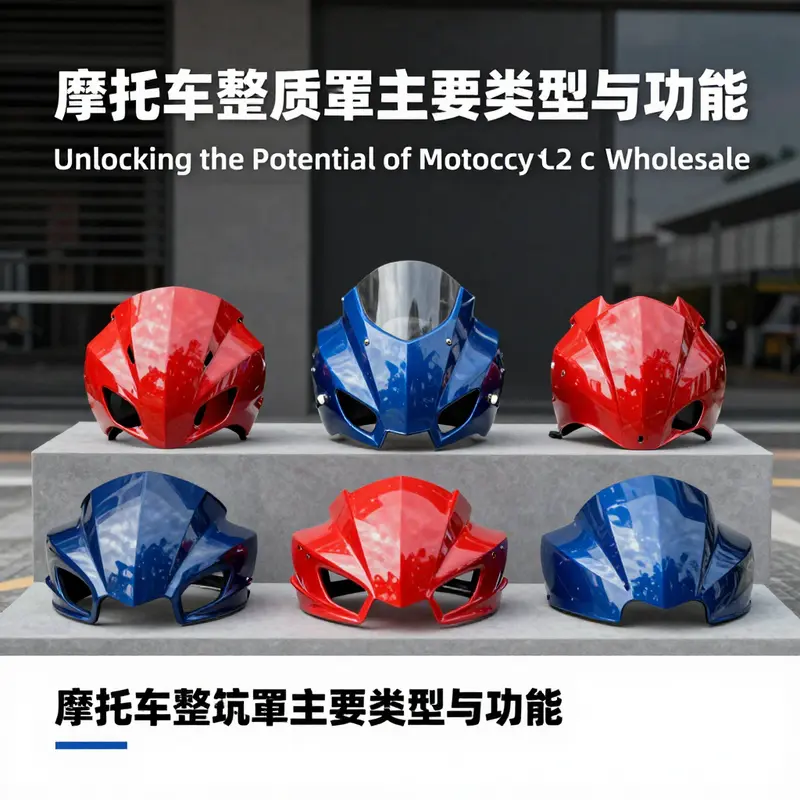
Motorcycle fairings are more than cosmetic shells that dress the bike’s silhouette. In wholesale contexts they function as essential interfaces between aerodynamics, rider protection, engine cooling, and brand storytelling. A well-chosen fairing package can shave drag, stabilize at high speeds, shield vital components from debris, guide airflow to the radiator and brakes, and present a visual identity that communicates performance and reliability. For buyers operating at scale, the challenge is to balance performance gains with manufacturing realities, supply chain constraints, and the predictable needs of a diverse customer base. The wholesale decision-making process starts with understanding what fairings do, how they differ, and which trade-offs are acceptable for different segments of riders. When a distributor or workshop contemplates a bulk order, the goal is not simply to fill a bike with a stylish shell but to ensure every piece fits, polishes, and lasts under the stress of real-world riding, weather, and maintenance cycles. This requires a clear map of the main types, the most common materials, and the practical criteria that separate worthwhile wholesale options from those that will disappoint the end user or strain the supplier’s workflow over time.
The core taxonomy of motorcycle fairings rests on coverage and function. Full fairings cloak the engine and much of the frame, delivering the strongest aerodynamic profile and comprehensive front-end protection. They are the standard choice for sport and race-oriented builds, where every gram of drag reduction translates into measurable performance gains and where the rider’s riding position and airflow management are optimized for speed. Full fairings often integrate the nose, side panels, belly pans, and tail sections into a single, cohesive shell. Because they enclose large portions of the motorcycle, their manufacturing precision matters more, and the tolerances required to achieve a smooth finish and reliable mounting can be tighter. In wholesale channels, full fairings demand consistent supply of molds, precise color-matching, and robust packaging that can withstand long transit without warping or color shift.
Semi-fairings, by contrast, cover the front portion of the bike—think headlight assemblies, upper fairing panels, and portions of the fuel tank area. They provide a compromise between protection and weight, maintaining a sharp, aggressive look while reducing the cost and complexity of production and installation. Semi-fairings are popular with standard and naked bikes that rely on an understated aesthetic but still benefit from improved wind management and front-end shielding. The quarter fairing represents the leanest approach, mainly encircling the headlamp area to offer basic protection and a degree of styling with the smallest material footprint. Quarter fairings appeal to riders who prize minimalism, affordability, or the ease of customization. Finally, the custom or aftermarket category stands apart. These are the playgrounds of customization culture—materials can be tuned for weight, strength, or look, and finishes can range from matte to gloss, with decals and textures that serve as a canvas for branding or personal expression. In wholesale practice, the custom path requires flexible production scheduling, reliable color matching, and clear communication channels with manufacturers who can interpret bespoke orders into scalable outputs.
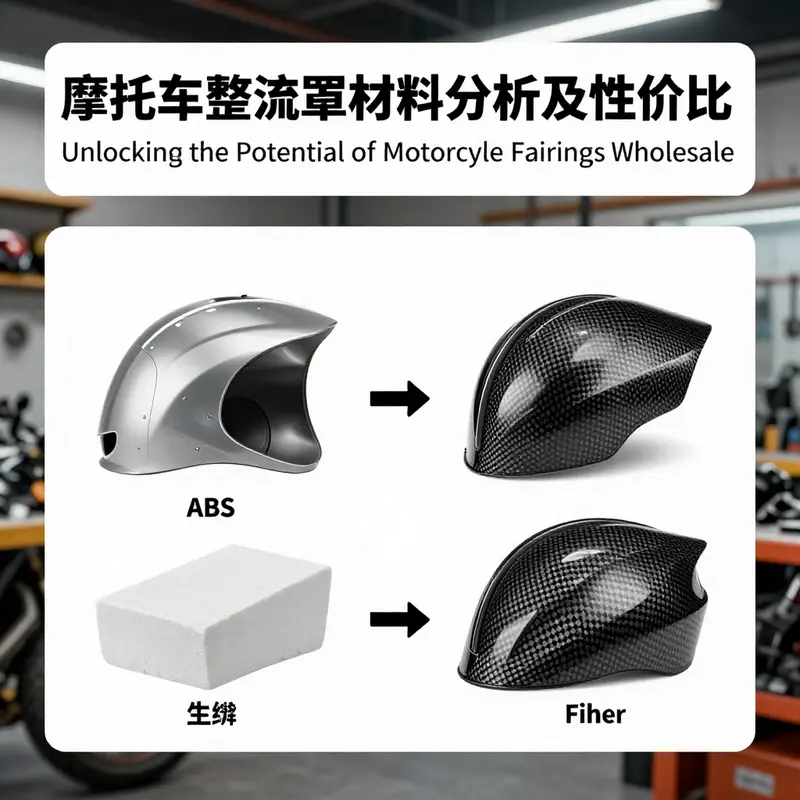
Material choice is the hinge on which all these forms turn. ABS plastic remains the most common material in OEM and aftermarket offerings, prized for its balance of impact resistance, heat tolerance, machinability, and cost. ABS is compatible with injection molding processes that deliver consistent geometry, smooth surface finishes, and reliable replication of complex curves. This makes ABS-based fairings attractive for wholesalers who must meet broad demand with predictable lead times and uniform quality. Fiberglass, or FRP, sits at a mid-high tier in the performance spectrum. It provides higher stiffness and durability than basic plastics while remaining more affordable than carbon fiber. However, fiberglass is heavier and can require careful post-processing to minimize surface imperfections. It also calls for more meticulous repair and finishing work in a production environment. Carbon fiber, by contrast, is the premium material that trades price for weight savings and superior strength-to-weight ratio. In the world of wholesale, carbon fiber fairings are often reserved for high-end builds or limited runs where performance signaling justifies the cost. The clear takeaway for wholesale buyers is pragmatic: if a budget constraint is tight, prioritize high-quality ABS with proven compatibility and reliable finishing; if a customer base demands racing finesse or extreme lightness, carbon fiber or mixed composites may justify a higher unit price and longer lead times.
Beyond raw materials, the manufacturing process itself can be a decisive factor in wholesale outcomes. Injection molding stands out as the dominant technique for plastic fairings. It yields consistent wall thickness, accurate part geometry, and smooth surface ready for painting or decals. For fiberglass and carbon fiber variants, handcrafted or semi-automated layup methods can achieve exceptional strength but impose longer cycle times and higher variability. A wholesale supplier that can demonstrate strict process control, transparent testing protocols, and traceable materials will stand out when competing for bulk orders. The finish quality—surface smoothness, edge sharpness, and the absence of cosmetic flaws such as sink marks or fiber print-through—affects both customer satisfaction and the ease of installation. The latter is crucial: a fairing that fits snugly with standard mounting points and requires minimal wedging or trimming reduces labor costs and post-sale returns, especially in a wholesale scenario where many units ship to different shops or regions.
Compatibility is another non-negotiable filter in wholesale procurement. Each motorcycle architecture has its unique geometry, fastener locations, and panel relationships. In practice, that means wholesale buyers must verify fitment for a given year range and model family, rather than relying on generic sizing. The most effective wholesalers build an internal library of fitment data, enabling quick confirmation that a particular fairing assembly will align with the bike’s frame, subframes, radiator shrouds, and instrument clusters. This reduces installation friction and ensures that the wholesale catalog remains reliable across a broad spectrum of customers. It also makes it possible to offer value-added services such as color customization, decal packages, or texture treatments aligned with a brand’s identity, without compromising the fit. The artwork and color strategies used on a fairing can dramatically alter perceived value. A customer who sees a cohesive, race-inspired colorway with precise line work and consistent gloss levels is more likely to accept a higher price in a wholesale program than one who encounters mismatched hues and rough surface finishes. Customization, then, becomes not just about aesthetics but about preserving and signaling quality in a volume-driven supply chain.
In wholesale environments, the economics of fairings come into sharper relief. The unit cost must reflect material choices, processing times, and the scale of orders. A bulk order for full fairings will typically benefit from standardized mold sets, consolidated pigment lots for colors, and a shared packaging system designed to protect a large number of units during air or sea transport. The logistics of shipments—whether grouped into complete sets or broken into regional bundles—must be planned to minimize damage, streamline unloading, and speed up the installation process once the product reaches a dealer or workshop. Pack alignment, protective films, corner guards, and color-matching documentation are more than niceties; they are demands of a professional wholesale operation that wants to keep returns to a minimum and maintain a reputation for reliability across multiple markets. While this narrative may sound logistical, it is ultimately about the rider’s experience. A fairing that arrives undamaged, fits as promised, and looks consistent with the rest of the bike’s styling reinforces trust in the wholesale partner and strengthens the brand’s long-term relationship with retailers and service centers.
The discussion so far connects the tangible choices—type, material, manufacturing, fitment—with the softer yet critical dimensions of wholesale success: consistency, lead time reliability, and service support. A capable wholesale supplier does more than supply shells; they offer a stable pipeline of parts that can be matched to a bike’s actual build. They provide installation guidance, drawings or digital fitment data, and after-sales backing that covers a period during which riders may decide to change the color scheme or upgrade to a more protective finish. This is where the wholesale ecosystem begins to resemble a supply chain designed for performance and longevity, rather than a catalog of individual products. In the broader market landscape, a platform that aggregates many factories and offers standardized terms makes it easier for retailers to scale. For buyers, the goal is to align with partners who can deliver predictable quality and consistent service across orders of varying sizes, while also allowing space for customization that differentiates their offerings in a competitive market.
To illustrate how wholesale channels translate these principles into concrete options, consider the global marketplace dynamics that have reshaped fairing procurement. A prominent wholesale platform operates with a large catalog of fairings covering a wide range of motorcycles and design aesthetics. It emphasizes injection-molded plastic fairings, which align with the cost and performance sweet spot many retailers seek. The platform often lists starting wholesale prices, outlines the available configurations, and highlights customization possibilities such as color and decals. For buyers, the practical takeaway is straightforward: assess the catalog for fitment breadth, confirm the manufacturing process, and verify the availability of essential after-sales protections, such as limited-time warranties or swap options if defects surface. The platform may also provide batch ordering, which makes it feasible to secure multiple sets for a shop, a dealer network, or an importer who distributes across several regions.
At this juncture, it is helpful to anchor these reflections with a concrete, widely used wholesale resource that many buyers consult when expanding their inventory. The platform is known for its extensive model coverage, including multiple generations of popular sport and street configurations, and for facilitating bulk purchases with flexible customization options. It also notes the importance of clear product details, including model compatibility, whether the listing includes mounting hardware or installation instructions, and the expected finish quality. This emphasis on precise product data reduces the risk of mismatches that can lead to costly returns and dissatisfied customers. A responsible buyer, therefore, will dedicate time to cross-check fitment pages, confirm whether the set includes necessary brackets and accessories, and review any installation guidance offered by the seller. A disciplined approach to these checks preserves margins and reinforces brand trust when scaling a wholesale operation across markets that may vary in service expectations and support infrastructure.
For those exploring category-specific paths, one practical strategy in wholesale sourcing is to navigate into the regional or model-specific sections of a supplier’s catalog. In many cases, dealers will find that color options, decal packages, and surface textures vary by region, reflecting local preferences and regulatory considerations about vehicle aesthetics. A capable wholesaler will offer a streamlined customization workflow that translates a retailer’s branding or regional marketing campaigns into finished fairing sets with consistent color fidelity and surface texture. The goal is not merely to produce a set of shells but to deliver a cohesive, showroom-ready presentation that a dealer can confidently install and price with a margin that sustains the business. A key feature to look for in suppliers is the presence of documented color codes and paint finishes, sample swatches, and clear guidance on how decals align with the fairing contours under various lighting conditions. The more transparent and thorough the supplier’s documentation, the easier it is for a retailer to project finish quality in catalogs, in-store displays, and online listings.
In the practical orbit of wholesale decision-making, it is essential to treat the fairing as integrated with the rest of the motorcycle’s ecosystem. The radiator shrouds, fork protectors, and lower panels must harmonize with the frame geometry and the bike’s silhouette across all the bikes in a given SKU family. This means that when a buyer selects a full fairing set for a bulk purchase, the purchasing team should technically validate the alignment of the fairing with the bike’s particular year range, confirm that mounting points match with standard hardware, and verify that the finish will remain stable through the bike’s operating temperature, which can fluctuate dramatically with climate and riding style. If a wholesaler can deliver a well-documented compatibility matrix, reliable molding tolerances, and a robust color-control regimen, the risk of misfit or rapid chipping over time decreases significantly. It is in these details that wholesale excellence is found, because the rider who purchases a complete set expects a seamless upgrade that looks right and performs well without requiring expensive modifications.
Finally, the conversation about heat management and aerodynamics, which is central to fairing design, deserves emphasis in the wholesale context. The fairing’s job in temperature regulation is twofold: it shields the engine bay from direct ambient airflow and channels air toward core cooling pathways, such as radiators or oil coolers, through carefully designed ducting and intake inlets. In the wholesale arena, the engineering nuance behind these features translates into design specifics that dealers must understand when advising customers. A well-engineered fairing system will provide adequate clearance for moving parts, avoid contact with fuel lines or wiring harnesses, and maintain structural integrity under vibration. Dealers who understand these design rationales can better explain the value proposition of the fairing set to potential customers and thus close sales with greater confidence. This comprehension also supports warranty conversations, as buyers and technicians can reference the engineering intent behind the fairing’s geometry when diagnosing issues or planning color or texture changes after installation.
As wholesalers evaluate the landscape, one practical takeaway emerges clearly: the best options are those that balance a broad compatibility footprint with strong manufacturing discipline, clear fitment data, and reliable after-sales support. The market rewards suppliers who can consistently deliver sets that mount cleanly, finish well, and provide predictable performance across diverse riding environments. In turn, retailers can build durable relationships with customers who value a holistic upgrade—the fairing that improves speed and protection while also shaping an unmistakable aesthetic narrative on the road. This integration of performance, protection, and personalization is what makes motorcycle fairings a compelling category in wholesale commerce. The chain from factory to showroom to rider’s hands is only as strong as the weakest link, and the strongest links are those built on transparent product data, rigorous quality control, and a shared commitment to helping riders feel both safer and more stylish as they roll toward the horizon.
For readers who want to explore practical sourcing options while maintaining strong checks and balances, a widely used wholesale catalog emphasizes the breadth of model coverage, the efficiency of injection-molded production, and the capacity for customization—features that align well with a strategy aimed at scalability and customer satisfaction. The catalog’s descriptions highlight how fairings can be configured for whole-bike kits or modular upgrades, with clear indications of what is included in each package and what optional add-ons are available. The emphasis on standardized processes helps wholesalers manage risk in large orders, ensuring that lead times remain predictable even as demand expands. This is particularly important when retailers pivot to new markets or adjust to seasonal surges in demand for performance and styling upgrades. The wholesale ecosystem rewards foresight: investing in robust fitment data, consistent color control, and dependable after-sales coverage now helps secure a smoother path through the ebb and flow of global distribution.
Looking ahead, buyers who want to stay ahead in the wholesale game should align themselves with suppliers that demonstrate clear attention to fit, finish, and functional integration. The pathway to success involves a disciplined approach to evaluating compatibility across models and year ranges, confirming that the chosen manufacturing technique yields the right surface quality and structural integrity, and ensuring the supplier can support repeated orders with stable pricing and responsive service. When these pieces come together, the wholesale experience becomes less fraught with misfit stories and returns, and more a confident, repeatable process that reliably delivers upgraded bikes and satisfied riders. In the broader arc of the article, this chapter’s exploration of the primary types and functions of motorcycle fairings provides the essential framework for navigating wholesale choices with eyes open to both performance outcomes and long-term value. For readers ready to translate these principles into concrete procurement actions, the next sections will illuminate how to balance cost, customization, and reliability while engaging with platform-based sourcing and supplier vetting practices that scale with your business.
If you would like to explore category-specific opportunities that align with particular bike families and styling directions, you can begin by examining the dedicated product categories that reflect the needs of common model lines. For instance, a practical step for a wholesale buyer is to browse the Honda fairings category to see how different models are represented, how color options are organized, and what kind of installation guidance is provided. This approach helps establish a baseline understanding of typical configurations and enables you to compare similar offerings across suppliers with greater clarity. By building a mental catalog of what a complete kit looks like in terms of composition—front nose cone, side panels, rear fairing, and necessary brackets—you can more readily assess whether a given wholesale listing provides the right value, coverage, and finish quality for your network. As the market continues to evolve, the core principles outlined here—fit, finish, and function—remain the compass guiding wholesale decisions, ensuring that every set not only sells but stands the test of time on the road and in the workshop.
External resource for further reading: https://www.aliexpress.com/w/wholesale-cheap-motorcycle-fairing.html
null
null
从型号到供应链:摩托车整流罩批发的选购要点与市场平台洞察
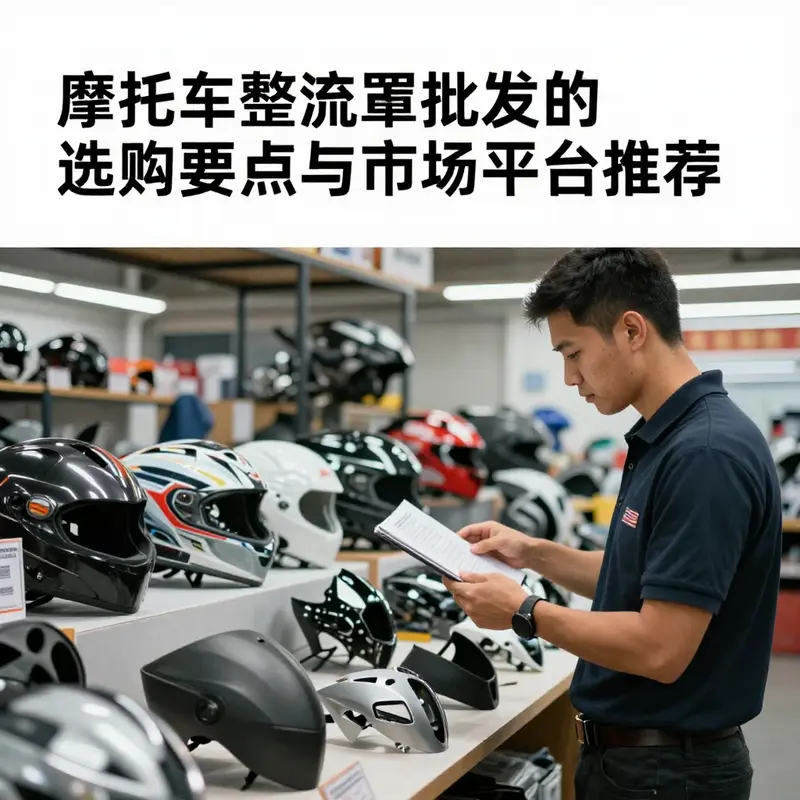
在全球摩托车市场持续扩张的背景下,整流罩作为外观、空气动力学与防护性的重要载体,正成为商家和改装爱好者关注的核心部件之一。批发采购在这个环节里承担着将设计理念转化为可量产、可重复采购的现实任务。要在海量供应商和多变需求之间做出明智抉择,必须同时把握产品质量、装配适配、成本效益以及可靠的供应链管理。只有把这几个维度整合起来,批发采购才不只是一次简单的买卖,而是一个能稳定放大利润、提升用户满意度、并为品牌背书的长期协作过程。对很多企业和经销商而言,这意味着在早期阶段就建立清晰的标准、选对评估维度,并将这些标准转化为可执行的采购流程。以下内容以一个贯穿全局的视角,探讨在批发层面上如何评估、筛选与合作,尽可能减少试错成本,同时保持灵活性,以便在市场波动时仍能保持稳健的供给能力。要点并非孤立的单句提示,而是一个连贯的决策框架,帮助你从初步筛选走到批量采购,再到后续的质量控制与持续改进。若将整流罩看作一个由材料、工艺、设计、价格和服务五个维度组成的系统,那么在批发场景下最重要的任务,就是在这五个维度之间找到最佳折中点,使之既符合目标车型的要求,又能在成本、交付与风险之间形成稳健的缓冲区。要把这种框架落地,需要对车型适配、材质特性、工艺工序、定制能力、批量定价、质量管控与售后服务等要素进行全面审视,而不是只关注单一指标。整流罩的选购要点可以被看作是一个从“能否合身”到“能否长期供给”的演变过程,沿着这个路径,批发采购逐步从“买到货”转变为“买得值、买得安心”。在此过程中,市场平台的选择也不再是次要环节,而是直接影响到成本结构、交付周期和供应稳定性的关键变量。一个成熟的采购策略,会以供应链的鲁棒性为核心,同时保留对成本、运输与关税等隐性成本的敏感度,以确保总体拥有成本(TCO)在可控范围内。为实现这一目标,第一步是建立对车型与型号的精准匹配能力,这也是本文的首要原则。不同品牌、不同年份、甚至同一车型的不同版本,其车架结构、前护板的安装点位、进气导流的布局都可能存在显著差异。要避免因为尺寸不符、安装孔错位或配件缺失而带来的返工或退货风险,采购方需要要求供应商提供详尽的适用车型清单,并在下单前进行严谨的对照。更进一步,材质与工艺也在很大程度上决定了性价比与使用寿命。当前市场主流的整流罩材料包括ABS工程塑料、聚碳酸酯PC以及碳纤维。ABS具备良好的冲击韧性、耐热性和成本优势,是批发市场的最常见选择,适合绝大多数日常使用场景;PC更轻、韧性更强,但成本和刮花风险需要额外涂层保护;碳纤维则在重量与强度上表现突出,更多出现在高端改装件或赛车级请求中,价格也明显偏高。采购时应要求提供材料成分说明,审查表面平整度、是否存在气泡与毛刺,以及边缘裁切的整齐程度。这些细节往往在大批量生产中显现出差异,直接影响到涂装前的底材处理和后续表面质量。与此同时,设计与功能也决定了整流罩在实际使用中的价值。除了基础的空气动力学优化,越来越多的整流罩设计在前大灯区域、风挡高度、通风口布局以及导流槽的布置上考虑到目标市场的审美偏好与驾驶体验。一个合理的设计不仅要兼顾外观,还要确保与选定车型的散热系统、油箱轮廓、以及仪表盘区域的贴合度,避免 Installation issues 在安装过程中引发不必要的工时成本或返工。更进一步的定制化能力,是批发采购的另一大驱动。许多供应商支持颜色、贴花、纹理等个性化定制选项,这不仅能提升品牌识别度,还能帮助经销商在同类品类中实现差异化竞争。对于追求高端风格和品牌宣示的市场,这样的定制能力往往成为议价的重要砝码。以批量采购为核心的交易逻辑,当然离不开成本与价格的博弈。批发的核心优势在于议价能力与规模效应,但这需要在明确数量、交付时间和运输成本等因素后,建立清晰的阶梯定价机制。比如在达到一定采购数量后,单件成本如何下降、是否包含配件、是否提供整套安装说明与支架组件等,都应在合同层面明确。运输与关税等隐性成本也是总成本结构中的关键组成。不同目的地的清关要求、运输方式(空运、海运或经由中间节点的组合运输)、包装方式与货物保险等,都会对最终的到货时间和成本产生影响。对于出口导向的批发业务,质量控制与认证亦是不可忽视的环节。供应商应提供工厂质检报告、材料检测证书、以及必要的安全和合规认证信息。就外部合规而言,确保整流罩在目标市场符合相关安全标准与认证要求,能够降低后续的海关查验与合规风险,从而推动更顺畅的国际贸易流程。除了上述要点,批发采购还要关注可定制化的实现路径与供应链的弹性。制造工艺方面,注塑成型(Injection Molding)等高精度成型工艺的产品通常在尺寸公差、表面平整度和喷涂适应性方面表现更稳健。因此,在评估供应商时,除了看成品样品,还应关注工艺流程描述、质量控制点、批次追溯体系以及第三方检测报告。对供应商的售后保障,也应作为长期合作的关键考量。部分市场参与者在批发层面对售后服务提供三个月甚至更长时间的承诺,这样的保障虽看似成本较高,但对于大额采购和跨境交易而言,能够显著降低返修成本与客户不满的风险。对品牌及经销商而言,这样的售后机制更像是对长期关系的一种投资,在未来的产品迭代与市场扩张中提供稳定的支撑。与之相匹配的,是对可定制化选项的把控能力。定制通常涉及颜色、纹理、贴花、以及特定图案与品牌标识的呈现,若批发商具备灵活的生产排程与与品牌方对接的能力,便能以较短的交付周期实现小批量个性化的市场试水。与此同时,批发采购也需要对车型目录的广度与深度保持敏感。在全球市场中,主流车型的覆盖通常决定了供应链的规模与稳定性。一个广泛覆盖的目录能在不同地域的销售中实现更高的周转率,降低单一缺货对销售的冲击。对经销商而言,若能在早期就建立与提供商的稳定关系,便能在高峰季节获得更可靠的供货保障,减少因缺货带来的销售损失。此外,市场平台在整个采购过程中的作用不可忽视。一个成熟的全球批发平台应具备多车型、多材质选项、强大的定制能力、透明的价格梯度以及完善的交易保障机制。这些特性共同决定了平台能否成为跨境采购的高效杠杆。对于企业来说,选用一个综合性的平台,能在短时间内完成从供应商筛选、样品确认、价格谈判到大规模下单的全流程。与此同时,批发采购的有效性还取决于对供应商风险的管理。这包括对供应商的资质核验、生产能力评估、历史交付记录、以及对突发事件的应对能力评估。特别是在跨境交易中,政治风险、运输瓶颈、汇率波动及关税政策变动都可能对项目产生冲击。因此,将风险分散到多个稳定的供应源、设立安全库存、以及制定应急计划,成为提升采购韧性的重要方法。整合上述要点时,可将采购流程设计成一个分阶段的执行方案:第一阶段,明确目标车型与数量,建立适配性核对清单;第二阶段,初步筛选具备必要材质证书与工艺描述的供应商,索取样品以进行对比评估;第三阶段,进行小批量试单,验证交期、质量与安装兼容性;第四阶段,依据试单结果,谈判阶梯价格与配件清单、运输安排以及售后承诺;第五阶段,进入大规模采购并建立持续的质量追溯与评估机制。这种分阶段的执行方案有助于企业在保留灵活性的同时,将风险降至可控水平。对于更新换代、跨车型扩展或进入新区域市场的企业,这一框架还能作为改进与扩张的基础模板。需要强调的是,选择合适的平台与渠道其实也是一个策略性决定。市场上存在多种采购模式,从直接工厂下单到经销商网络,从区域代理到全球B2B交易平台,各有利弊。一个稳健的策略通常包含多渠道并行:在核心批量交易中通过一个或多个具备深度车型覆盖的渠道实现规模化采购,同时通过其他渠道进行小批量、快速测试与地域适配的探索。这样既能保持成本的弹性,又能迅速响应市场变化,提高对新车型与新款式的响应速度。对于任何追求规模化的整流罩批发业务而言,目录的广度与深度、材质选择的稳定性、以及对设计与定制需求的柔性响应,是决定长期竞争力的三大支柱。目录广泛意味着在不同市场的车型分布差异性被有效覆盖,减少断供风险并提升周转效率。材料的稳定性确保不同批次之间的外观与性能一致性,降低返修率,提升客户信任。定制能力的灵活性则让品牌在同质化市场中实现差异化,吸引更广泛的经销网络与终端消费者。将这三大支柱有机结合,便能在批发层面实现更高的购买力与更低的运营成本。若将整流罩批发视作一个从“制造端到终端市场”的生态系统,那么要在它之中实现高效运作,必须对信息流、物流和资金流三者进行同步管控。信息流方面,确保车型适配、工艺参数、质量报告与供应商绩效等信息在各环节透明可追溯,是提升协同效率的关键。物流方面,需设计以需求预测为基础的库存策略与交付计划,确保在不同地区的交付周期尽可能稳定;资金流方面,建立以采购批量与交付里程碑为驱动的付款条件,结合阶段性验收与质量确认,降低资金风险。通过这样的综合管理,批发商不仅能降低因供应波动带来的经营不确定性,还能在价格波动时期保持相对稳定的利润水平。总之,牙齿般清晰的适配性、稳定的材料与工艺底线、可观的成本结构以及可靠的售后与定制支持,是摩托车整流罩批发成功的四条主线。把握这四条主线,企业就能在琳琅满目的市场中找到可复制、可扩展的竞争路径。与此同时,平台与渠道的选择也需要以战略性眼光来审视。以全球化的采购平台为核心,可以实现对多车型、多材质的集中采购与快速试单,而通过区域性代理或经销网络来完成更细分市场的落地,双线并行能在不同阶段提供不同的增益。最终,批发采购的成效不仅仅体现在单件成本的下降,更体现在对供应链的韧性、对市场需求变化的响应速度以及对品牌声誉的长期维护上。对于希望把整流罩业务做大做强的企业而言,建立一套以数据驱动的采购流程、以风险管理为前提的协作模式,将成为未来竞争中的关键差异化点。最后,若你正在筹划批量采购并希望在车型覆盖、材料选择与定制服务之间取得更好的平衡,可以从一个更广的视角去审视目录与供应商关系。让目录覆盖尽可能多的主流车型,让材料与工艺具备跨批次稳定性,同时为高端需求预留定制能力与快速响应的沟通渠道。这样,你的批发采购就不再只是为了获得价格优势,而是在稳健的供应链与可持续的品牌建设之间,找到了一个长期的增值路径。为了帮助你更好地扩展视野并与潜在供应商接触,以下资源可以作为进一步参考。对于了解不同车型覆盖范围的目录与样式,可以查看 Yamaha fairings collection 的在线目录,以获得对齐国际市场偏好的设计方向与安装适配的直观印象。外部资源方面,也可参阅全球性批发目录与交易平台的通用信息,以帮助你建立对市场普遍规律的理解。External resource: https://www.alibaba.com/trade/search?fsb=y&IndexArea=product_en&CatId=&SearchText=%E6%91%A9%E6%89%98%E8%BD%A6%E6%95%B4%E6%B5%81%E7%86%94
Final thoughts
In conclusion, navigating the motorcycle fairings wholesale market requires an understanding of the types of fairings available, the materials that impact performance and cost, and strategic purchasing methods. By leveraging this knowledge, business owners can enhance their inventory, meet customer needs effectively, and ultimately drive growth in their operations. The insights shared in this guide serve as a foundation for intelligent decision-making in the motorcycle fairings space, empowering businesses to succeed.