
Motorcycle fairings represent a crucial aspect of biker aesthetics and aerodynamics, deeply connected to the craftsmanship and innovation found in American manufacturing. This article delves into the significant role that American companies, particularly renowned brands like Harley-Davidson, play in the development and production of motorcycle fairings. Each chapter provides insights into different facets of this niche market, starting with a detailed look at Harley-Davidson’s leadership and influence, followed by a discussion on independent manufacturers who contribute to diversity in design and options. We will also explore material innovations that enhance functionality and durability, consumer trends that shape preferences, and the regulatory and economic environment affecting production. Collectively, these chapters illustrate not just the products but the profound culture and community surrounding motorcycle fairings made in the USA.
American Cruiser Fairings: Craftsmanship, Assembly, and Domestic Supply Chains
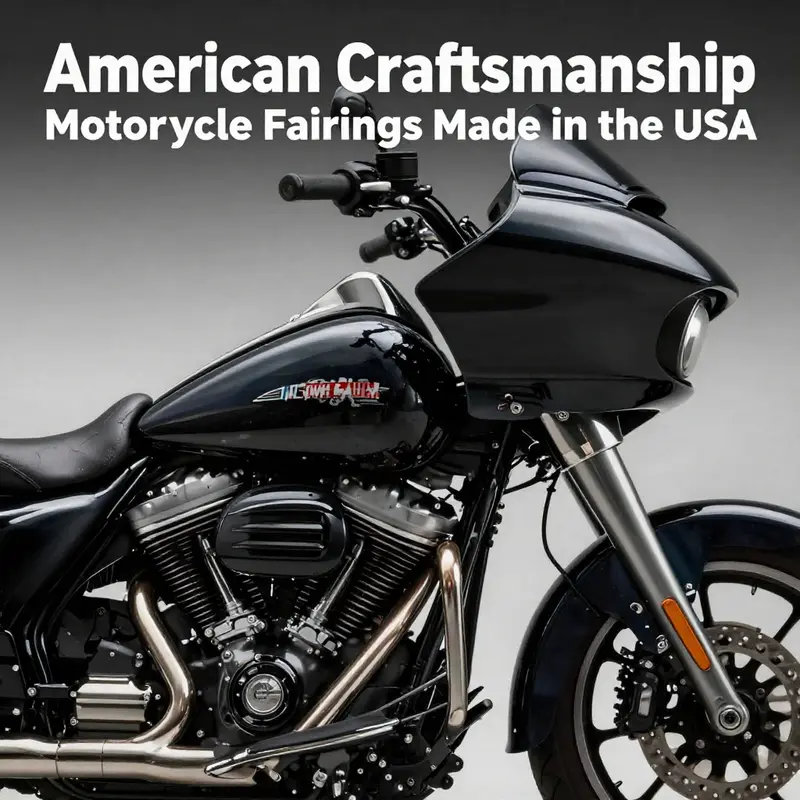
American-Made Fairings on Modern Cruisers
Fairings are more than cosmetic panels; they define how a cruiser wears speed, comfort, and identity on the road. In the United States, a close-knit relationship between design teams, regional suppliers, and final assembly facilities has kept a strong tradition of domestic fairing production alive. For riders who prioritize components designed and assembled on American soil, this integrated approach delivers consistent fit, controlled quality, and an aesthetic continuity that aftermarket copies often miss.
The story begins with design priorities that reflect decades of cruiser heritage: wind deflection for long-haul comfort, a silhouette that complements heavy touring posture, and mounting systems that accommodate electronics and luggage. Design teams focus on how a fairing will perform at highway speeds, how it will reduce rider fatigue and wind noise, and how it will marry with handlebars, instrumentation, and storage systems. These considerations drive material choices, reinforcements, and mounting geometry long before the first mold is cut.
Materials matter. Domestic fairings commonly use high-strength plastics, fiberglass composites, and aluminum alloys capable of withstanding the vibrations and road stresses unique to large-displacement cruisers. Injection-molded thermoplastics deliver tight dimensional control and consistent surface finish, which make them ideal for mass-produced parts that require repeatable fit. Fiberglass and composite techniques are often reserved for specialty or low-volume pieces; they allow more sculpted forms and can be repaired in the field. Aluminum and stamped metal are used where structural stiffness or heat management is necessary. American manufacturers typically source raw resins and alloys from a mix of domestic and international suppliers, then perform fabrication, finish work, and assembly stateside to ensure that the final product meets strict quality benchmarks.
Manufacturing in the U.S. tends to concentrate in regions with engineering talent and legacy supply chains. Design and engineering offices refine aerodynamic profiles and attachment systems within those hubs, while component shops in nearby states handle molding, trimming, and reinforcement. Final assembly lines bring subcomponents together under controlled conditions. This arrangement shortens lead times and helps with rapid design updates when new electronics or accessory packages are introduced.
One advantage of this domestic pipeline is the availability of factory-supported installation kits tailored to specific cruiser models. These kits are engineered to integrate seamlessly with wiring harnesses, headlights, and instrument clusters, reducing compatibility headaches. For riders who value an authentic look and reliable performance, factory-approved kits represent a compromise between pure OEM parts and generic aftermarket solutions. They preserve factory ergonomics and mounting tolerances while allowing some personalization through finishes and trim options.
Customization is a major reason many buyers choose U.S.-made fairings. Independent shops across the country offer paint, trimming, and reinforcement services that respect original engineering while adding bespoke touches. When panels are designed and assembled domestically, custom shops can obtain accurate templates and mounting details more easily. That access speeds modifications and reduces fitment surprises. It also means that warranty and post-sale support are simpler to manage because the supply chain is local and documentation is concentrated.
Quality control is another important benefit. Domestic assembly shops use standardized checking protocols and in-line inspections to catch fit and finish issues early. Tolerances for panel alignment, screw torque, and sealing surfaces are measured against established benchmarks. These processes translate into lower rates of wind whistling, water ingress, and vibration-induced noise—issues that often plague poorly engineered panels. For riders planning long trips or frequent touring, a well-assembled fairing significantly improves comfort and reliability.
Beyond ride quality, U.S.-based fairing production has broader economic and regulatory implications. Domestic manufacturing supports local machining shops, finishing houses, and electronics integrators. It also simplifies compliance with regional safety and emissions-related accessory standards, since manufacturers are familiar with federal and state requirements. When components pass through local certification channels, consumers gain clearer expectations about installation legality and the potential need for supplemental lighting or signaling.
Aftermarket options are plentiful, and a thriving domestic market includes authorized dealers and specialty retailers who stock genuine fitment kits and accessories. For buyers weighing factory kits against aftermarket alternatives, the decision often comes down to fit versus cost. Factory-compatible kits usually cost more but are engineered to mate precisely with mounting points, trim, and instrumentation. Aftermarket panels can offer bold styling or weight savings but may require additional brackets or trimming. Riders who prioritize a clean, factory appearance and long-term reliability often opt for the factory or factory-approved path.
Installation and maintenance are straightforward when panels are designed for the actual model. Modular mounting systems allow individual panels to be removed for access to electronics, controls, or storage compartments without disturbing adjacent components. Reinforcement points and captive nuts reduce the risk of stripped threads and make periodic service faster. For DIY enthusiasts, detailed install guides and dealer support reduce the learning curve; for professional shops, compatibility with existing tooling speeds turnarounds.
Electronics integration shapes modern fairing design. Today’s cruisers frequently incorporate audio systems, charging ports, and ride modes that rely on secure mounting and internal routing. Panels assembled in the U.S. typically include cable channels and reinforcement points sized for the exact accessories they will host. This foresight minimizes rattles and preserves signal integrity for radios and navigation systems. Moreover, integrated antenna and speaker placements are tested for interference, providing better in-vehicle performance than aftermarket adaptations that are tacked on after the fact.
Aesthetic consistency is also a hallmark of homegrown fairings. Designers balance functional aerodynamics with brand language—curves, vents, and surface treatments that echo the motorcycle’s overall styling. When panels are produced and painted locally, color matching and finish quality are easier to control. Paint shops accustomed to the brand’s color standards can achieve deeper metallics and more consistent clearcoat thicknesses than distant suppliers. That attention to finish matters to owners who view their bikes as rolling expressions of personal style.
Still, buyers should approach any purchase with a practical mindset. Confirming origin and compatibility is crucial. Check part numbers, ask for documentation on mounting hardware, and verify return policies. For true American-made assurance, consult authorized channels or dealers that can confirm where final assembly occurred and whether key components were domestically fabricated. This step reduces the chance of getting parts with ambiguous provenance or incompatible fasteners.
Domestic production of fairings for cruisers blends tradition with modern engineering. It protects craftsmanship, shortens response times for design updates, and strengthens local supply chains. For riders who prioritize fit, finish, and long-term support, investing in components planned and assembled stateside often pays dividends in reduced noise, easier maintenance, and a look that fits the machine rather than forcing it. For those exploring contemporary offerings, a useful place to see new releases and specialty kits is the 2023 new fairings collection.
For factory accessory listings and further details on model-compatible fairing kits, see the manufacturer’s accessories page: https://www.harley-davidson.com/us/en/motorcycle-accessories/fairings.html
Independent Spirit, Domestic Craft: The US-Made Motorcycle Fairings
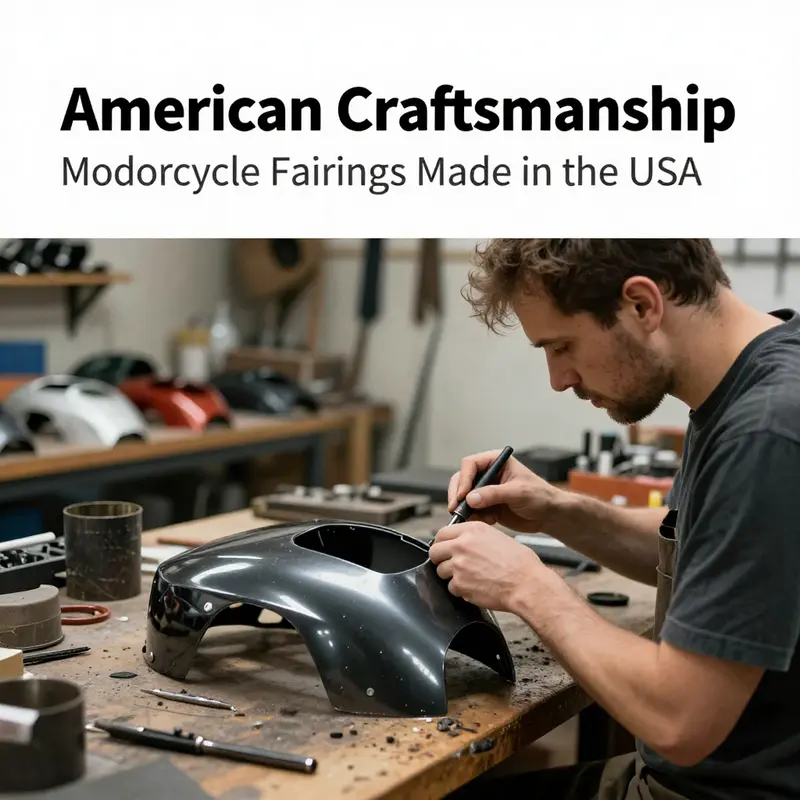
Across the motorcycling landscape, fairings are more than shells. They shape aerodynamics, aesthetics, and the rider’s experience. In the United States, the fairing story unfolds with a distinctive blend of design discipline, manufacturing capability, and service networks that keep supply and support close to home. Rather than a single onshore producer, the US fairing ecosystem is a tapestry of brands that design in the U.S., source materials globally, and complete tooling, molding, finishing, and assembly within American facilities. This arrangement underpins consistency, repairability, and a responsive aftermarket.
The core job remains: to reduce drag, modulate buffeting, and protect rider and machine at speed. Achieving that balance requires a careful choice of materials—polycarbonate for impact resistance, fiberglass and carbon-augmented composites for stiffness-to-weight, and aluminum for structural lightness—paired with domestic tooling and skilled labor. Even when the raw materials come from abroad, the design intent and the critical manufacturing steps stay anchored in the United States, aligning with the local engineering culture and rider communities.
From concept to finished fairing, the workflow follows a disciplined path: aerodynamic goals translate into 3D models and wind-tunnel validation, tooling for molds or high-precision formed panels, and meticulous finishing that preserves fit, surface quality, and color durability. Domestic assembly ensures mounting tolerances, weather sealing, and repaintability are optimized for ongoing maintenance and customization. The result is a line of fairings that remains adaptable to the evolving landscape of American bikes and riding preferences, while sustaining a robust service and parts network at home.
Alloyed Edge: The Material Revolution Behind USA-Made Motorcycle Fairings
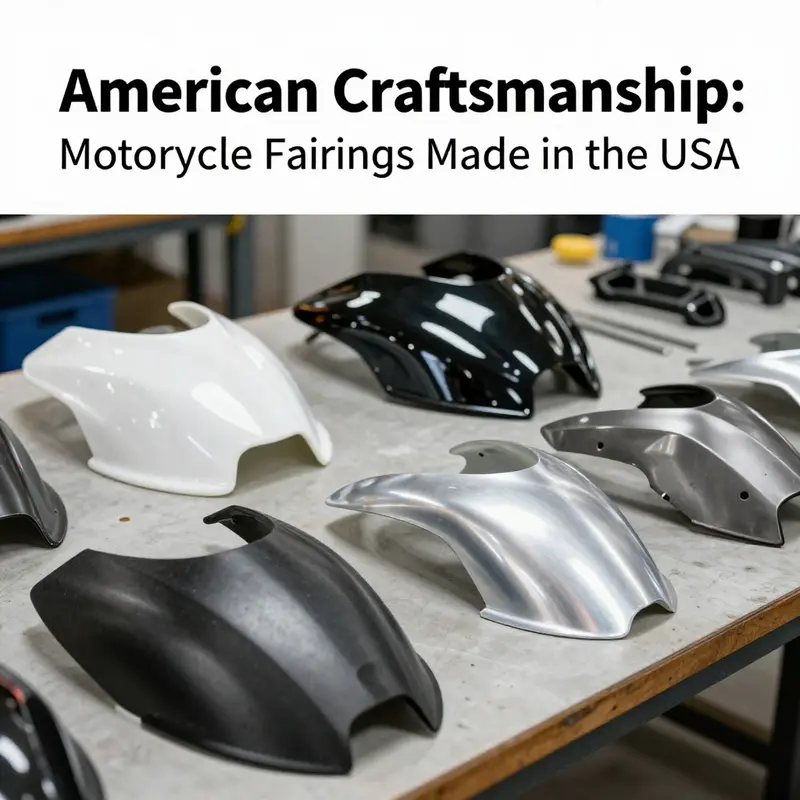
The race toward lighter, stronger, and more sustainable motorcycle fairings in the United States is not merely a tale of new shapes and glossy finishes. It is a narrative about materials in motion—how designers, engineers, and machinists in American shops are rethinking every layer of a fairing from core to skin. The result is a blend of time-honored craftsmanship and cutting-edge science, a synthesis that keeps riders protected, aerodynamics precise, and a brand’s engineering ethos intact. In this climate, the material choices behind fairings do more than influence how a bike looks; they determine how it behaves on the road, how efficiently it consumes energy, and how the manufacturing ecosystem evolves to meet growing demands for performance and responsibility. Traditional baselines like ABS and polycarbonate remain the workhorses of molding and cost efficiency, but they no longer define the ceiling. In the United States, a new tier of materials is moving into the spotlight—composites, bio-based resins, and recycled plastics that promise a superior strength-to-weight ratio while reducing environmental impact. This shift is as much about sustainability as it is about speed, torque, and stability in wind tunnel testing and real-world riding. The story of USA-made fairings today is best understood as a weight-leaning, aero-conscious, and environmentally aware evolution that respects the craft of fabrication while embracing the innovations that drive performance forward.
Where the industry once leaned heavily on a single, economical plastic stream, the current path favors a layered approach. ABS and polycarbonate continue to offer the predictability of molding cycles, the stability of dimensional control, and a reasonable cost-per-part. They form the baseline, a dependable substrate upon which engineers can build more ambitious structures. Yet beneath the surface, a more nuanced menu is being explored. Recycled plastics, sourced from domestic streams, are being reformulated to meet the exacting standards of impact resistance, heat tolerance, and UV stability required for fairings that sit in the sun at highway speeds. In addition, researchers are experimenting with bio-based composites—materials derived from plant fibers and resins that can reduce the carbon footprint of the final product without sacrificing performance. The flax fiber-reinforced resins that appear in some experimental programs illustrate a broader truth: the best material choice is not a single substance, but a tailored blend that leverages the best properties of each component. In practice, this translates to sandwich structures and hybrid composites in which lightweight carbon fiber reinforcements are interleaved with tougher, impact-mitigating matrices. The result is a fairing that can resist high-velocity impact, maintain rigidity under load, and still corral turbulence with the aerodynamic finesse required for modern motorcycles.
This material mindfulness is deeply tied to the American manufacturing mindset. Domestic design and assembly capabilities mean that iterations can be tested quickly, changes implemented with relative speed, and quality controlled with a level of rigor that keeps the end product consistent across models and production runs. The industry’s emphasis on local engineering excellence, while sourcing raw materials globally when necessary, creates a robust, resilient supply chain. It reduces some of the vulnerabilities that arise when design teams are far removed from the factory floor, allowing for more responsive adaptation to new test data, new performance targets, or new regulatory requirements. In practice, this translates to fairings that not only ride true to the intended aerodynamic profile but also stay compliant with evolving standards for emissions, noise, and crashworthiness. The synergy between design intent and manufacturing capability in the United States nurtures a culture where high-performance materials and craftsmanship go hand in hand, rather than existing as separate disciplines.
The drive toward sustainability has become more than a moral or marketing claim. It is a material performance criterion. Recycled plastics, when properly processed, can meet or exceed the impact resistance required by helmet and bike-body standards, while the reduced virgin material input helps conserve energy and resources. Bio-composites, such as flax fiber-reinforced resins, bring a tangible advantage: favorable strength-to-weight ratios and the potential for targeted stiffness where the fairing must hold its shape under wind pressure. In the realm of aerodynamics, lighter components mean lower inertial loads during acceleration and deceleration, contributing to more predictable handling characteristics. In touring and sport-focused models alike, such improvements can translate to better fuel efficiency and less fatigue on long rides. The challenge, of course, is ensuring that these materials can be consistently molded, finished, and painted to the same precision as traditional plastics. Here, the American manufacturing ecosystem shines through. Advanced injection molding techniques, followed by precision finishing and surface treatments, allow designers to exploit the unique properties of new materials while preserving the glossy, durable exterior expected by riders and technicians alike.
A second axis of innovation centers on the geometry and assembly logic of fairings themselves. The advent of injection molding with highly engineered mold geometries enables more complex surface curvatures without sacrificing repeatability. Combined with 3D printing for rapid prototyping and tooling, engineers can test shape variants that push the envelope of aerodynamics and wind noise reduction. The tactile and aesthetic quality of a fairing—its ability to look and feel premium—depends as much on the material science inside as on the finish on the exterior. When designers can tune the stiffness gradient across a panel or integrate stiffening ribs with minimal weight penalties, the fairing becomes not just a protective shell but a carefully tuned aerostructural element. In that sense, the modern fairing is as much a product of material engineering as it is of exterior styling. The American approach to this integration—where materials science, ergonomics, and aesthetics converge—emphasizes reliability, repeatable performance, and enduring quality that riders can feel in everyday use and in the extremes of performance riding.
This convergence of material science and practical engineering does not happen in a vacuum. U.S.-based manufacturers leverage a network of specialized suppliers and small-batch producers who contribute advanced fibers, resins, and composite processing know-how. The ecosystem supports rapid customization for riders who demand personal touches or brand-specific performance characteristics. It also underpins the growing demand for premium, boutique, and custom fairings that blend classic curves with modern materials. In such settings, a local team can tailor the layup schedule, adjust resin infusion protocols, and refine surface preparation to ensure optimum adhesion, color consistency, and durability. When a rider or builder seeks a fairing that adapts to a particular motorcycle geometry, the ability to iterate quickly in the factory translates to a shorter time-to-market and a more precise final product. The result is a class of fairings that honors traditional American craft while exploiting the most advanced materials science available today.
For riders who crave connection to the broader ecosystem of motorcycle culture, these developments also map onto a wider landscape of aftermarket and custom options. A practical thread in this narrative is the accessibility of diverse configurations and finishes that allow a bike to express its rider’s identity while maintaining the performance envelope defined by the materials and their processing. The contemporary USA-made fairing thus reflects a layered approach to design: a strong, lightweight core built from composites or recycled polymers, a carefully engineered surface that yields a smooth aerodynamic profile, and a finish that preserves gloss and color through sun exposure and temperature cycles. The end result is a product that feels integrated with the machine’s overall architecture, one that contributes to the rider’s confidence at high speeds and long miles alike.
As consumers explore options, the path toward informed choices becomes clearer. Manufacturers often disclose the general material strategy behind each fairing line, emphasizing the balance among weight, cost, durability, and environmental responsibility. While the exact formulation—whether a carbon-reinforced hybrid or a flax-reinforced bio-composite—may vary with the model, the guiding principle remains consistent: maximize aerodynamic efficiency while maintaining structural integrity and manufacturability in domestic facilities. This philosophy echoes the broader narrative of American engineering excellence, where design intent is paired with manufacturing discipline to deliver predictable, repeatable performance across weather, rugged roads, and track days.
For readers seeking more context on how these innovations translate into real-world design and performance, a broader industry overview highlights the trajectory of next-generation fairing materials and their practical applications. As the landscape evolves, the American market continues to push the envelope, driving improvements that ripple through supply chains, training programs, and the next generation of engineers and builders. This ongoing dialogue between material science and manufacturing capability is guiding the evolution of fairings from mere protective shells into highly optimized aerodynamic components that support riders in every riding scenario.
If you’re curious about the scope of aftermarket options and design variations available in this space, you can explore related catalogues that present the breadth of fairing configurations across brands. For example, a comprehensive collection of Yamaha fairings showcases how standardized pathways can coexist with bespoke enhancements, allowing riders to tailor fit and finish while preserving critical aerodynamic characteristics. This type of exploration helps illustrate how USA-based production and design manage to maintain continuity with global supply chains while delivering locally engineered and assembled solutions that reflect American craftsmanship. Yamaha fairings provides a representative glimpse into how diverse styling and technical options can be presented within a coherent framework that respects both performance demands and consumer expectations.
In the final analysis, the material innovations behind USA-made motorcycle fairings reveal a disciplined, forward-looking approach. Engineers balance the trade-offs among weight, stiffness, impact resistance, and processability. They seek materials that lend themselves to efficient, accurate manufacturing while aligning with sustainability goals and regulatory requirements. The result is a fairing ecosystem that supports high performance without compromising reliability or environmental commitments. It is a testament to how American industry can blend enduring manual skill with modern composites and digital tooling to create products that not only look the part but also perform with precision under the most demanding riding conditions. The chapter of material innovation in USA-made fairings thus stands as a microcosm of a larger movement—where innovation and tradition ride together on the road, shaping how riders experience speed, wind, and safety for years to come.
External resource for deeper exploration: For a comprehensive overview of these innovations and how American manufacturers are advancing next-generation fairing materials, see the following external article: https://www.motorcycleindustrynews.com/material-innovation-motorcycle-fairings-usa-2026
Riding on Craft: The Rise of American-Made Motorcycle Fairings and the Demand for Local Quality
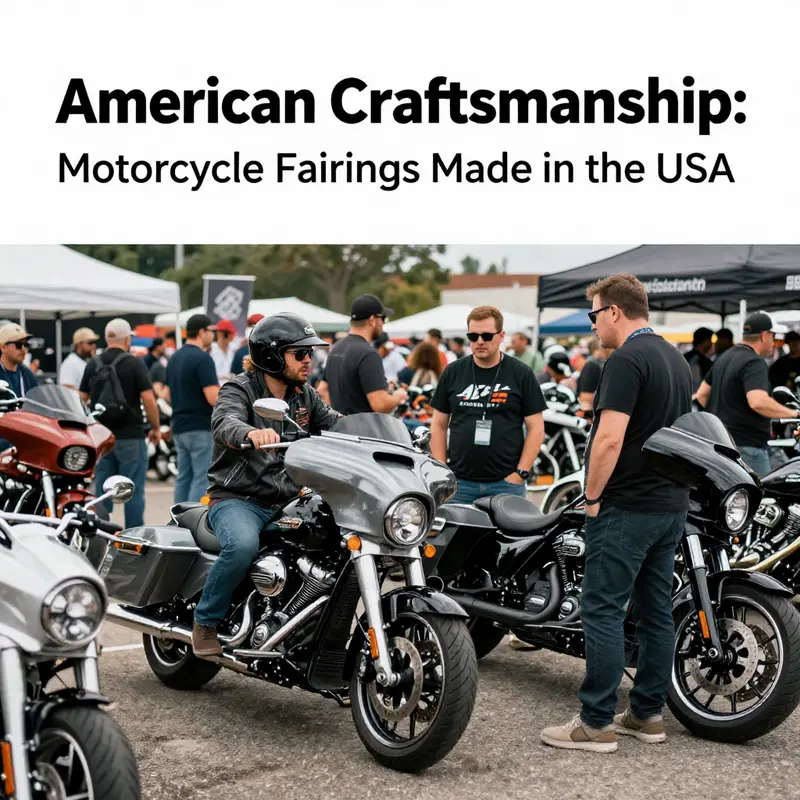
In the landscape of motorcycle design, fairings are more than plastic shells or aluminum skins. They are the convergence point where aerodynamics, aesthetics, and the realities of a domestic supply chain meet the rider’s desire for a product that feels made for the road and the weather it faces. The United States market for motorcycle fairings is expanding, driven by dueling forces: a thirst for high-performance components that can withstand the elements and a growing appetite for customization that ties a rider’s identity to the machine. When a fairing is marked Made in USA, it signals an alignment of engineering rigor, material resilience, and craftsmanship with values that many riders prize—local labor standards, traceable quality control, and the confidence that the product was designed and assembled in a region with a long history of manufacturing expertise. This is not simply an economic trend; it is a cultural turn that recognises how the origin of a fairing can influence the entire riding experience, from precise fit and finish to the tactile reassurance of a product built under predictable schedules and accountable processes.
Market dynamics underpin this shift. A 2025 snapshot places the North America motorcycle fairing market at about 8.88 billion USD, with projections showing a compound annual growth rate around 11.31 percent from 2026 through 2030. Those figures matter because they are a reflection of broader consumer behavior. Riders are not chasing novelty alone; they seek durable, high-quality materials that perform consistently across seasons. The materials most commonly used in American-made fairings—hard plastics, fiberglass, and aluminum—are chosen not just for their lightness or strength, but for the way they behave under heat, rain, and long highway miles. Hard plastics deliver the surface finish and impact resistance needed for daily riding and for the aesthetic life of a bike, while fiberglass offers a balance of rigidity and ease of repair in customization shops. Aluminum, with its combination of stiffness and slender manufacturing options, is often chosen for premium projects that demand precise tolerances and a certain industrial sheen. In a country where climate and road conditions vary dramatically from coast to coast, these material choices are not cosmetic; they are functional commitments to durability and performance that riders can rely on, season after season.
The consumer mindset around fairings has evolved in tandem with manufacturing realities. Today’s riders are drawn to products that deliver aerodynamic efficiency without compromising comfort or sound. They want wind management that reduces fatigue on long rides, reduces wind noise at highway speeds, and allows for a more controlled airflow over the rider’s torso and shoulders. These are not abstract performance metrics; they translate into longer rides, better focus, and a more enjoyable overall experience. If the wind is managed well, the ride becomes smoother, quieter, and more predictable, with less buffeting in the helmet and less vibration throughout the cockpit. As a result, the fairing becomes a central element in what a rider expects from a machine—part performance, part personal statement, and entirely connected to the brand’s identity. The customization wave further amplifies this effect. Riders seek fairings that reflect personal aesthetics while maintaining the visual coherence of the bike’s lines and the brand’s ethos. In the United States, customization is not a sideline; it is a core marketplace driver. The availability of OEM options that can be tailored within a maker’s design language or the willingness of independent shops to modify and enhance fairings with finishes, textures, or color palettes strengthens the case for domestic production. There is a certain logic in preferring local manufacturing in a market where fast turnarounds, precise color matching, and reliable supply chains translate directly into faster, more predictable project timelines for customized builds.
For brands, this purchasing logic intersects with the stature of heritage and the appetite for innovation. Harley-Davidson, a symbol of American motorcycle culture, has long emphasized the integration of design, material choice, and riding feel as a single experience. The fairing systems associated with road-ready and touring-oriented models are not merely protective shells; they are signature elements that communicate a rider’s relationship with the machine. When production or assembly occurs within the United States, the benefits extend beyond the assembly line. Quality control becomes more transparent, the patchwork of suppliers is simplified, and the feedback loop from riders to designers can be shorter. These dynamics foster a sense of trust, a crucial factor for riders who invest in the aesthetics and performance of a machine that will carry them on decades of miles. It is no accident that the market for U.S.-made fairings sits at the nexus of performance engineering and design language that resonates with a strong domestic identity.
The consumer’s preference for locally made components also touches environmental and ethical considerations. Domestic manufacturing often provides clearer visibility into labor practices and environmental standards. Riders who care about where their products originate may view a Made in USA label not only as a guarantee of quality but also as a proxy for responsible manufacturing. This is particularly salient in a marketplace where supply chains stretch across continents and the provenance of raw materials can become a subtle, often-unseen factor in the final product’s story. The appeal of local production is not solely about pride; it is about predictable supply, consistent quality control, and the assurance that the entire lifecycle—from design to assembly to finish—happens within a framework that riders can examine, question, and trust.
Within this ecosystem, the relationship between OEM and aftermarket or custom suppliers becomes especially important. For many riders, a fairing is a starting point for personal expression. They want something that respects the bike’s proportions while offering a canvas for color, texture, and detail. The OEM path ensures compatibility, a perfect fit, and adherence to original alignment and mounting points. The aftermarket or custom path offers the opportunity to push boundaries—thinner profiles, more aggressive aerodynamics, or finishes that echo a rider’s memory of a favorite race or a beloved era. American-made fairings sit at a unique intersection here, because domestic production can straddle both ends of the spectrum with consistent quality control and the option for rapid, high-fidelity customization. The result is a market where engineering discipline meets storytelling, and where riders feel that what they buy is not just a component but a crafted solution that respects both the machine’s history and its future.
The nuance of consumer choice becomes even clearer when considering the broader offer set. A product sourced and manufactured in the United States benefits from shorter lead times and easier post-purchase service. If a finish requires touch-ups or repair, having a local production footprint means technicians can access the same processes and materials used in the original assembly. This is not merely a matter of convenience; it is a practical advantage that translates into lower total ownership costs and less downtime for riders who use their machines for daily commuting, weekend trips, or cross-country adventures. In other words, the value proposition of American-made fairings extends beyond the initial purchase. It includes the long arc of maintenance, customization, and the personal satisfaction that the rider gains from knowing the work was done in a familiar industrial environment built on shared standards and a tradition of careful craftsmanship.
The practical implications of this trend are visible in the shops and showrooms where riders evaluate options. They look for consistent texture and color in the finished surface, for a precise alignment that matches the bike’s geometry, and for that sense of a product tuned to the road it will conquer. They ask about weather resistance, UV stability, and the ability of a finish to hold up under harsh sun and wet conditions. They expect a fairing’s edge to be sharp and its seams invisible, a level of finish that can withstand the rigors of highway miles and the occasional stray stone or bug with minimal repair. They want to know that the components they choose are backed by a domestic supply chain that supports local jobs, supports environmental stewardship, and aligns with the culture of high standards that defines American manufacturing. It is a holistic expectation—performance, style, durability, and moral clarity all rolled into a single purchase decision.
As the market evolves, one trend remains clear: American-made fairings are more than a niche product. They are a symbol of a broader shift toward domestic craftsmanship that couples tradition with modern engineering. The demand for high-quality, durable fairings—crafted from hard plastics, fiberglass, and aluminum—reflects a sustained confidence in domestic production. For riders who value both heritage and innovation, the promise of a fairing that is designed, manufactured, and assembled in the United States carries a resonance that goes beyond performance on the highway. It speaks to a shared belief in quality, accountability, and the pride that comes from supporting a manufacturing ecosystem that keeps knowledge and jobs within the country’s borders. Drivers of this market understand that a fairing is a critical interface between rider and machine, a shield, a shield’s aesthetic, and a conduit for the sense of place and purpose that defines American motorcycling today.
For readers looking to explore how this philosophy translates into actual products, a broader scan of the category reveals the depth of options available across styles, finishes, and fitment schemes. Within the ecosystem, the conversation about fairings ties directly into the broader narrative of American manufacturing excellence, a narrative that honors both the past and the future of motorcycling in the United States. As riders weigh the choice between OEM and aftermarket offerings, between tradition and innovation, the truth becomes evident: the value of American-made fairings lies in their ability to deliver consistent performance, precise fit, and a tangible sense of local craftsmanship that remains relevant as the market continues to grow.
External resource: For a broader, data-driven view of current market dynamics and regional growth, see Market Research Future’s North America Motorcycle Fairing Market report: https://www.marketresearchfuture.com/reports/north-america-motorcycle-fairing-market-2294. Embedded within this landscape, the brands and shops that champion Made in USA fairings offer a compelling case study of how local production, material choice, and rider expectations converge to shape a market that is both practical and aspirational. To further explore related category options and how different manufacturers approach fairings, readers can examine a range of product lines across different brands and categories, including regional and global players alike, with an emphasis on fitment and finish accuracy that serves as the cornerstone of modern American manufacturing in this space.
How Regulations and Economics Shape U.S.-Made Motorcycle Fairings
The decision to design and produce motorcycle fairings in the United States rests on a practical intersection of regulation, cost, market demand, and brand positioning. Regulatory frameworks govern safety, labeling, and aftermarket changes. Economic realities determine whether a component is produced domestically or sourced overseas. Together, these forces shape manufacturing choices, supplier relationships, and buyer expectations across the fairing market.
At the regulatory core are federal safety and equipment standards intended to protect riders and other road users. Fairings affect aerodynamics, structural behavior, and crash dynamics. When a fairing modifies the original design, or when an aftermarket system replaces a structural or wind-deflecting element, regulators expect compliance with applicable standards. Certification can take several forms, including national approvals or recognized marks that indicate the part has met performance or safety benchmarks. Proper labeling and documented certification matter: they reduce the risk of failed registrations or inspection disputes, and they limit legal exposure after an incident where a part’s conformity may be examined.
For manufacturers and suppliers operating in the U.S., compliance is more than a checkbox. It influences product development cycles, tooling choices, and material selection. Meeting safety standards often requires laboratory testing, iterative prototypes, and engineering documentation. Tests may include material impact resistance, retention under load, and the interaction of the fairing with lighting and signaling systems. Those requirements add time and cost, but they also create a defensible value proposition. A certified, domestically produced fairing can be marketed on the basis of traceable quality, warranty clarity, and known compatibility with local regulatory regimes.
Economically, domestic production carries higher direct costs than production in many low-cost regions. Labor rates, overhead, environmental compliance, and smaller production runs increase per-unit costs. Conversely, U.S.-based manufacturing offers advantages that matter to certain customer segments. Shorter lead times reduce inventory carrying costs and improve responsiveness to design changes. Proximity to assembly lines and end customers reduces logistics complexity. Stronger control over manufacturing processes enables better quality assurance and faster corrective action if defects appear. For businesses that prioritize supply chain resilience and premium craftsmanship, these benefits can outweigh higher prices.
The market implications are nuanced. For price-sensitive mass-market accessories, offshore sourcing remains dominant because scale and automation deliver lower unit costs. For high-end or bespoke fairings, domestic producers can command premium prices by combining regulatory compliance, higher-quality materials, and closer collaboration with customers. Fleet buyers, specialty shops, and OEM procurement teams often value the predictability of certified local suppliers. For them, an American-made fairing is not merely an aesthetic purchase; it is a risk-management decision tied to warranty performance, parts traceability, and legal compliance.
Regulatory alignment also affects aftermarket adoption. Installers and custom shops prefer parts that carry clear certification, because those parts are easier to justify during vehicle inspections and when registering modified motorcycles. When a part lacks proper approval, shops may face pushback from inspectors or liability exposure should an issue arise. That reality encourages a conservative approach: either use certified parts or perform documented engineering assessments to support custom installations. Domestic producers that invest in certification reduce friction for installers and widen their buyer audience.
Beyond direct regulations, trade policy and tariffs influence cost comparisons. Import duties or changing trade relationships can narrow the price gap between domestic and overseas manufacturing. At times, localized incentives such as state tax credits, manufacturing grants, or workforce development programs help offset higher domestic costs. Smart suppliers take advantage of these programs and build cost models that highlight long-term savings from reduced transit times, lower inventory risk, and easier returns processing.
The interplay between regulation and economics also drives innovation. To stay competitive, U.S. manufacturers pursue process improvements that lower costs without compromising compliance. Common strategies include selective automation, lean manufacturing techniques, and the adoption of advanced composites that reduce weight while maintaining strength. Investment in engineering teams who understand both regulatory requirements and aerodynamic performance yields fairings that meet safety marks and deliver real-world benefits for riders.
For procurement professionals and consumers, verifying compliance is straightforward if you know what to look for. Check for recognized certification markings and ask suppliers for test reports. Request documentation of material specifications and manufacturing location. Ask about warranty coverage and indemnity terms that relate to regulatory non-conformance. A clear audit trail from raw material to finished product not only protects end users, it also protects installers and fleet managers.
Manufacturers should also adopt practices that reduce downstream risks. Maintain full traceability of resin batches, fiber lots, and fasteners. Keep records of testing and supplier audits. If a fairing alters vehicle dynamics, provide clear installation guidance and warnings. Consider third-party testing to validate claims. These measures mitigate liability and add tangible value in sales conversations. Emphasize repairability and parts availability, because long-term support is a competitive advantage for domestically produced accessories.
The commercial landscape for U.S.-made fairings is shifting. Rising interest in customization and in locally sourced parts supports niche growth. At the same time, mainstream buyers remain sensitive to price. Domestic manufacturers that position themselves correctly can capture demand from consumers who prioritize quality, compliance, and speed. Strategic partnerships with local assemblers and custom shops further strengthen market position by embedding domestic suppliers into the service ecosystem.
One practical route for smaller manufacturers is to focus on segments where compliance is a clear selling point. For motorcycle models used in touring, long-distance riding, or commercial fleets, certified fairings that improve comfort and reduce fatigue are easier to justify. For custom builds, the promise of a locally produced, well-documented component often trumps the lowest possible price. Promoting domestic production as part of a sustainability and jobs narrative adds appeal in certain buyer communities without relying solely on emotional marketing.
For buyers, a pragmatic checklist helps navigate options. First, insist on documented certification and test evidence. Second, evaluate supplier responsiveness and lead times. Third, confirm warranty terms and claims processes. Fourth, verify material and finish consistency across production runs. Fifth, consider the total cost of ownership: installation complexity, potential regulatory hurdles, and long-term serviceability. These criteria often point buyers toward suppliers that balance compliance and craftsmanship, even at a higher sticker price.
As the North American market grows, opportunities will expand for domestic producers who can align product development with regulatory demands and buyer priorities. Key differentiators will include demonstrable compliance, clear supply-chain transparency, and the ability to deliver consistent quality at competitive volumes. Companies that invest in testing infrastructure, supplier control, and lean production will be better equipped to translate domestic manufacturing into a sustainable advantage.
A practical next step for industry professionals and buyers is to consult focused regulatory analysis and procurement guidance. For an in-depth, up-to-date examination of compliance and market trends, see this resource: https://www.motorcycleinsider.com/fairings-compliance-guide-2026. Additionally, those exploring recent domestic product introductions can review the 2023 new fairings collection for examples of locally produced offerings: https://ultimatemotorx.net/product-category/2023new/.
Final thoughts
Understanding the landscape of motorcycle fairings made in the USA provides valuable insights for business owners looking to engage in this sector. Harley-Davidson leads the charge with iconic design and robust manufacturing, while independent manufacturers add creative diversity. The innovative materials employed enhance performance, attracting a consumer base that values customization and quality. As regulatory frameworks shift and economic factors play a role, staying informed about the trends and preferences of consumers will position businesses effectively within this competitive marketplace. The combination of tradition, innovation, and community engagement continues to drive the appeal of American-made motorcycle fairings.