
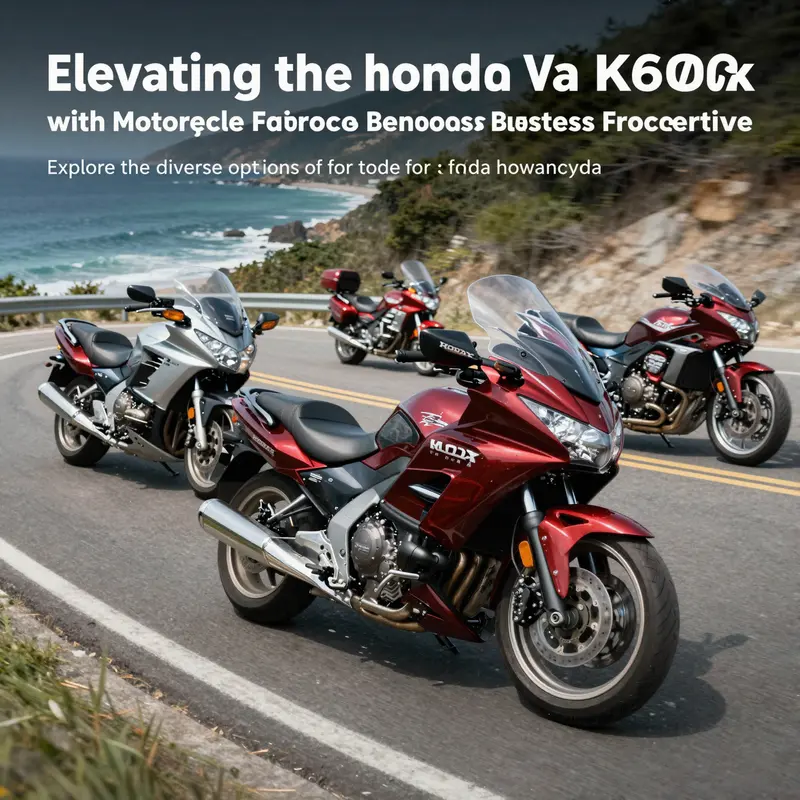
The Honda VTX 1800 stands as a beloved model in the motorcycle community, popular for its classic American cruiser aesthetics and performance capabilities. For business owners in the motorcycle accessories market, understanding the various options for motorcycle fairings is crucial. Fairings not only enhance the aesthetic appeal of the bike but also improve aerodynamics and functionality. This article delves into four essential chapters, each focusing on different aspects of VTX 1800 fairings, from factory-style and universal options to performance enhancements and market trends, providing a comprehensive overview for potential investment and business growth in this niche.
From OEM Silhouette to Custom Aerodynamics: Navigating Honda VTX 1800 Fairings
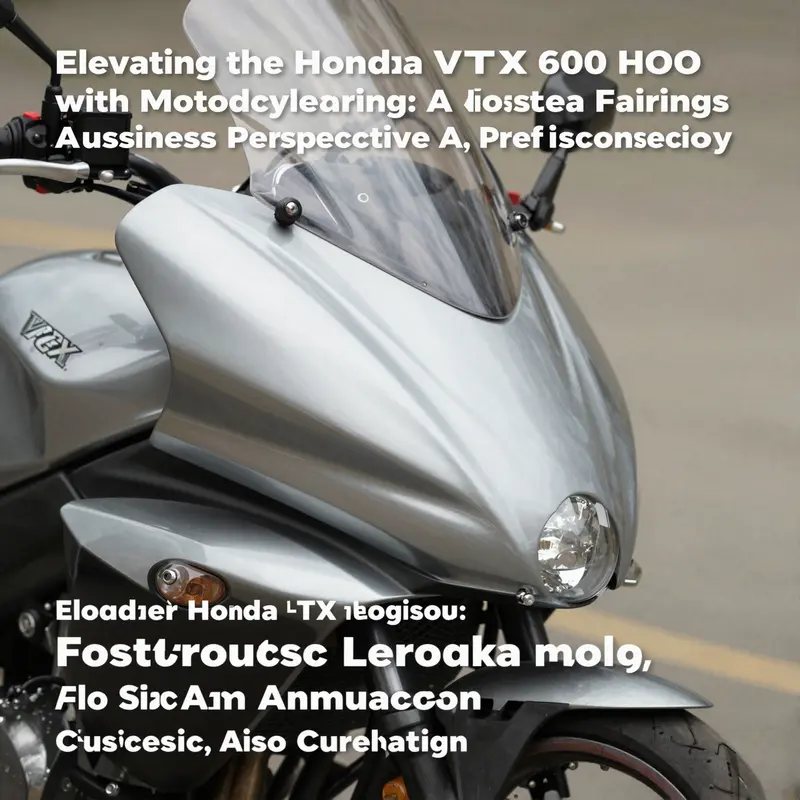
The Honda VTX 1800 lives in a space where the rider’s sense of proportion and the machine’s presence on the road are inseparable. It is a cruiser by birth, built for long, relaxed miles and a silhouette that speaks of classic Americana. Yet the conversation around its fairings reveals a deeper curiosity: how far should one push the look and aero profile without losing the bike’s character? The answer is not a single path but a spectrum. On one end lies factory-style fairings that honor the original lines and riding experience; on the other lies a wide array of aftermarket, universal, and custom designs that extend beyond the stock aesthetic to embrace sportier edge, louder personality, or tailored touring comfort. The choice is shaped by three intertwined factors—fitment and compatibility, aerodynamic and acoustic considerations, and the practical realities of installation and upkeep. As riders weigh these, the decision becomes a dialogue between heritage and possibility, a negotiation with weight, balance, and the road that lies ahead.
Factory-style or OEM-inspired fairings are, at their core, fidelity projects. Their designers lean into the bike’s established proportions—long shoulders, a broad stern, and a windscreen that reads as an extension of the rider’s line of sight. The aim is seamless integration rather than dramatic deviation. In material terms, these fairings are typically molded from sturdy ABS resins or comparable composites that combine impact resistance with a finish that accepts paint and clear coat with predictable results. The goal is not only a surface you can see but a shape that interacts with the wind in a predictable, disciplined way. The VTX 1800’s traditional intake, radiator shroud, and headlamp cluster present converging points where the fairing must sit, align, and seal softly. When a rider chooses this path, the result is a subtle, almost invisible augmentation: added protection from wind fatigue during long highway stints, a refined, integrated look that preserves the cruising aura, and a sense that the machine remains a product of its makers rather than a collage of parts cobbled together by chance.
In practical terms, OEM-style fairings emphasize compatibility and ease. They are designed to fit specific model lines or closely related variants, with mounting points that line up with factory brackets and hardware. They tend to emphasize a clean, continuous contour that echoes the bike’s original geometry. Because of that deliberate conformity, installation—while requiring careful alignment and sometimes a patient fitment session—usually avoids the pitfalls of misaligned turn signals, windscreen mismatches, or rattling at highway speeds. For riders who prize a classic, coast-to-coast impression—the VTX’s proud silhouette preserved with minimal alteration—these options offer a straightforward path to refresh worn parts, recover small cracks, or restore a tired look without shaking the bike’s essential personality.
To broaden the scope a touch without abandoning the fidelity objective, one encounters the broader category of universal or semi-universal aftermarket pieces. Here the emphasis shifts from replication to reinvention. A batwing-inspired design, for example, can dramatically alter the perceived width and stance of the VTX 1800, drawing the eye toward a broader upper profile and a more aggressive, road-facing silhouette. These designs often come in finished fiberglass or composite materials that accept paint and trim with an emphasis on sculpted lines and air-channel considerations. They can incorporate integrated provisions for audio systems, speakers, or additional instrumentation, and they frequently provide mounting plates or adjustable brackets to accommodate a range of forks, headlight assemblies, and windshields. The trade-off, of course, is a heightened need for precision during installation and a willingness to engage with the bike’s geometry in a more active way. The result can be exciting: a cruiser that carries itself with the gravity of a sportier machine, ready for open-road acceleration yet still usable for long rides with wind protection and weather sealing that makes sense for daily use.
The most compelling aspect of aftermarket fairings, in this context, is the degree of creative control they offer. A rider can tune not only the visual heft but the bike’s wind deflection characteristics. A larger upper curve can push the wind away from the rider’s chest and shoulders, reducing fatigue on long commutes. A deeper air dam or sculpted side panels can influence the way the bike moves air around the engine bay and rider position, potentially trimming buffeting at highway speeds. In interior terms, universal designs often provide options for integrating a slightly different headlamp mask or a windshield with a different curvature, so the rider can tailor the front-end profile to personal preference and regional riding conditions. This flexibility is the core strength of universal or semi-universal fairings: the ability to craft a personal stance that still remains anchored to the bike’s fundamentals.
In a landscape that blends practical upgrades with bold expression, there are stories of ambitious builds that illustrate the extremes of customization. One workshop, renowned in certain circles for pushing the envelope, embarked on a project that reimagined the rear flow of the VTX 1800. The team grafted a sportbike tail section onto the cruiser framework, a move that immediately shifted the bike’s profile from traditional long-tail cruiser to something with a lean, racing-inflected tail. The visual impact is striking: a line that cuts more sharply toward the rear, a cockpit silhouette that reads as more aggressive, and a weight distribution that subtly shifts the bike’s balance in a way that feels at once startling and purposeful. Such a transformation—but it remains important to acknowledge the realities behind it. The tail graft alters not only aesthetics but also aerodynamics, weight distribution, and the structure that supports the bodywork. It invites careful attention to fasteners, routing, under-seat space, and vibration management. It also challenges the owner to consider how the modification affects the bike’s center of gravity, heat dissipation, and ergonomic fit for the rider. In short, it demonstrates what is possible when a builder treats the VTX 1800 as a platform for experimental aerodynamics and a canvas for personal narrative, rather than simply a shell to protect rider and engine.
For riders contemplating a transition between these paths, a few practical considerations can help guide the choice. First is model compatibility. The Honda VTX 1800 comes in several variants, each with its own mounting geometry and fairing-hosting points. A fairing that fits the VTX1800R may not align with a VTX1800S without modification. This means prospective buyers should confirm fitment against the exact model, year, and any sub-variants, and be prepared for possible bracket customization if the product is designed as a more universal solution. Second is material and finish. ABS resin provides reliable rigidity and a smooth paintable surface, but fiberglass or composite options can offer lighter weight and a different texture. The choice can influence not just weight but also durability, repairability, and the depth of the paint job that can be achieved. Third is installation support. Some sellers provide brackets, mounting plates, and instructions, while others offer only the fairing shell. If the kit requires new brackets or repositioning of components, the owner should budget the time and potential professional help needed to ensure a precise fit and secure mounting that won’t rattle at speed.
Another layer to consider is the aesthetic trajectory riders want for their machines. OEM-style fairings preserve the classic cruiser aura, enabling a rider to maintain a long, uninterrupted line of chrome and leather that harmonizes with the VTX’s original proportions. In this direction, the fairing’s role is to complement rather than contest; it’s a collaborative addition that enhances comfort and protection while maintaining the bike’s storytelling. On the other hand, a sportier fairing or a high-contrast, graphic-led design can pull the eye toward the mechanical heart of the bike—its engine, its exhaust tone, the stance of the rider as highway lines stretch out ahead. The choice then becomes an extension of riding purpose: a touring cruiser seeking maximum everyday comfort and enduring style, or a showpiece that leans toward performance visuals and a more assertive street presence.
As readers consider how all these lines come together, it helps to visualize a road map for the decision process. Begin with a clear sense of the ride you want: are you chasing the nostalgia of the original look, or are you chasing a new silhouette that charges the bike with a different energy? Next, inventory the bike’s existing hardware and mounting points. Confirm whether the fairing is designed for a direct bolt-on installation or whether it will require brackets and perhaps a reshuffle of the headlight or windshield assemblies. Then, weigh the maintenance angle. A factory-style fairing is typically easier to service because its fit is intended to remain compatible with the stock layout. A more aggressive, aftermarket fairing may demand more attention to the sealed gaps, weatherproofing, and the routing of cables and hoses. Finally, budget for a complete makeover that includes painting and finishing, because the investment in color-matching and surface treatment matters almost as much as the structural fitment. In the end, the choice reflects not only a technical preference but a narrative intention—a rider’s personal statement about how the machine should speak when it meets the road.
For riders curious to compare options within a curated catalog, the Honda fairings category hosts a range of designs and configurations that can serve as a practical starting point. Honda fairings category offers a snapshot of what is commonly available and helps narrow the field to pieces that align with a given VTX 1800 variant. This approach preserves the continuity of the bike’s voice while enabling a measured step toward customization, whether that step is modest and reversible or bold and transformative.
In closing, the journey through fairings for the Honda VTX 1800 is less about choosing a single perfect component and more about negotiating a relationship between form and function. OEM-style options honor the bike’s legacy, providing a clean line and predictable performance. Universal or sport-oriented fairings invite a conversation about aerodynamics, weight distribution, and personal expression, offering a canvas that can emphasize aggression, comfort, or a hybrid of both. The most satisfying outcomes emerge when the selection harmonizes with the rider’s intent, the bike’s geometry, and the road ahead. It is a reminder that the VTX 1800, while rooted in a classic cruiser ethos, remains a platform capable of evolving without losing its core identity. For riders who want to explore further visuals and options, a longer view into fairing design and fitment can be pursued through the broader resources that map the landscape of accessible styling choices. A practical visual reference with real-world examples can be found here: https://www.youtube.com.
Shaping Speed and Style: Custom Fairings for the Honda VTX 1800
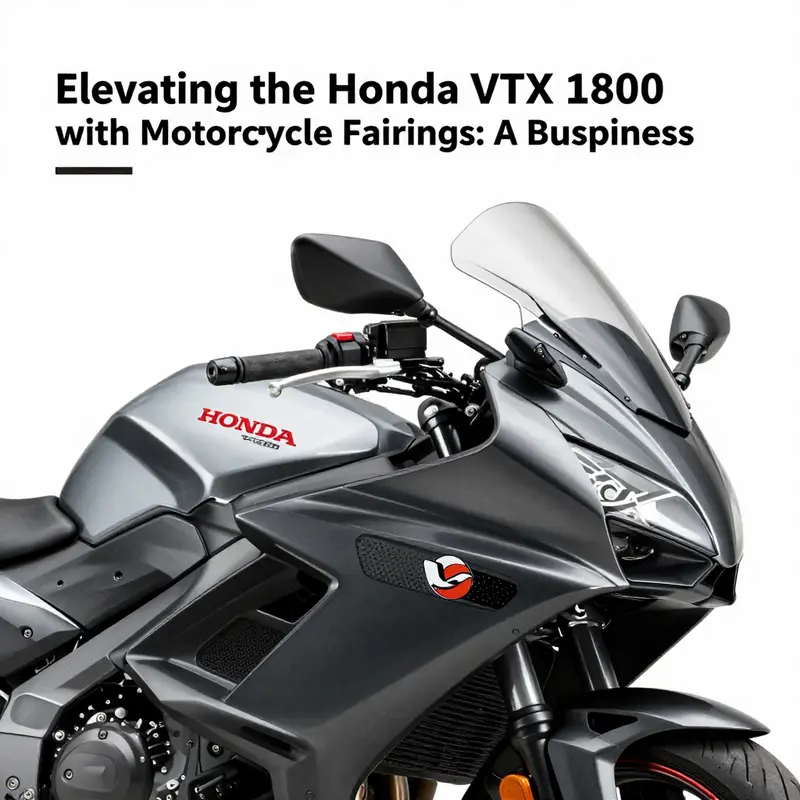
The Honda VTX 1800 stands as a landmark in the cruiser family, a machine built for long, quiet highway miles and a sense of timeless road presence. Yet the magic of this platform often hinges on something as simple as the way its silhouette is framed in the wind. A custom fairing—whether a full body kit or a carefully chosen partial piece—offers the chance to rewrite that silhouette while delivering tangible ride benefits. The transformation is not merely cosmetic. It is a dialogue between heritage and modern function, a way to honor the bike’s classic lines while steering its air flow toward greater efficiency, calmer wind pressure, and a rider experience that feels both serene on the highway and assertive when the road opens up. In this chapter, the focus is on how dedicated riders approach the topic of fairings for the VTX 1800, balancing aesthetics with aerodynamics, weight, and the practical realities of installation and ongoing maintenance. The narrative that follows threads through design language, material choices, and the broader ecosystem of customization that makes each VTX 1800 not just a motorcycle, but a statement in motion.
Design language plays a central role in any fairing decision. The VTX 1800 carries a generous, almost sculpture-like cruiser profile, where the front end and tank create a continuous canvas that can be framed by a fairing in a dozen different ways. Some riders prefer a traditional, factory-inspired look that tightens the upper body into a smooth, integrated form. Others crave a more aggressive, sport-forward silhouette that evokes racing lineage without abandoning the cruiser footprint. The most successful fairings in this space do more than cover pipes and cables. They shape the rider’s experience by guiding air with a gentle efficiency and by projecting a particular mood—one that says this bike can anchor a long ride yet still feel ready to meet an open stretch of road with a controlled, confident stance. The batwing-inspired family of shapes is a recurring motif here. It communicates a balance between shielding wind and preserving a broad view of the highway ahead, all while adding a sense of drama to the bike’s profile. Even without naming specific designs, the subtle curvature along the forks, the sweep of the lower edge, and the way a fairing meets the tank all contribute to a cohesive visual language that respects the VTX’s heritage while signaling an enhanced, modern presence.
If aesthetics set the direction, materials and construction decide how far the concept can go in the real world. The quality of a custom fairing rests on the choice between fiberglass, composite blends, or carbon-fiber-reinforced options. Fiberglass remains a common headline option for many riders because it offers a favorable balance of cost, formability, and repairability. It can be molded into intricate shapes that align with the VTX 1800’s generous lines, and it accepts paint with predictable results when prepared by skilled hands. Composite blends push the envelope further, combining lightweight performance with strength. These materials can deliver noticeable gains in stiffness without a proportional increase in weight, which matters when the goal is smoother highway riding and reduced rider fatigue. Carbon fiber, where it is practical, brings the ultimate in weight savings and surface hardness, but it also introduces cost and repair considerations that must be weighed after a crash or a drop. The material choice often translates into the overall behavior of the front end at speed. A well-executed fairing will feel anchored on the front wheel, reducing the sensation of wind buffeting while keeping the rider comfortable during extended sessions in the saddle.
Beyond raw materials, the shaping of a fairing is a study in aerodynamics without turning the VTX 1800 into a race bike. The objective is not to slice through air at extreme angles but to smooth the air stream so that the rider experiences steady cabin pressure, lower wind noise, and fewer gust-induced micro-buffets. Designers and builders frequently employ wind tunnel insights or computational simulations to tune the entry angles, the height of the upper edge, and the way the lower edges converge toward the forks. A well-designed fairing helps air sheets glide past the rider’s torso and shoulders, reducing the fatigue that comes with long highway stints. It also has a practical knock-on effect: when wind loads are managed effectively, auxiliary items such as gauges, switches, and lighting can be arranged to avoid unnecessary turbulence at the fairing’s interface with the cockpit. The result is a calmer, more predictable ride that still honors the VTX’s classic cruiser character.
Compatibility and integration form another layer of decision-making. Any fairing must talk to an existing engine cover, fuel tank, instrument cluster, and the bike’s electrical system. The VTX 1800’s layout is generous enough to accommodate a fairing, but the specifics of mounting points, brace geometry, and the need for dedicated brackets can vary greatly between designs. A good approach starts with a careful assessment of how the fairing will attach to the frame and how it will interact with the headlight, instrument cluster, and turn signals. Some riders opt for a full kit that provides a unified front end, lower side panels, and a tailored windscreen. Others prefer a modular route, picking one or two pieces to emphasize the front end while maintaining the stock or lightly revised side profile. The right combination can yield a visual weight balance that looks almost inevitable once installed, because it respects the bike’s inherent proportions rather than fighting them. The practicalities of installation also matter. Pre-fitment checks, alignment, and a plan for fasteners and seals are essential. Some fairings require minor structural changes or additional brackets, and others slip into the existing hardware with minimal modification. In all cases, the goal is to avoid gaps, ensure even gaps, and prevent rubbing that could lead to noise, vibration, or chafing at speed. A subtle but critical outcome of careful fitment is the reduction of air leakage, which in turn enhances the wind management strategy and makes the riding experience more coherent at any highway velocity.
Aesthetics, of course, do not exist in a vacuum. The choice of finish—paint brightness, clear coats, metallic flakes, and protective UV layers—plays a significant role in how the fairing ages and how well it withstands road grime and weather. The VTX 1800’s generous curves can truly sing when finished with a high-quality gloss or a satin treatment that emphasizes the lines rather than disguising them. Paint and finish are not purely cosmetic; they help guard the investment as the fairing endures sun exposure, rain, and the occasional stone or chip. This is where professional refinishing becomes important. Even a well-built fairing can look mismatched if the color and sheen do not harmonize with the bike’s original palette. A thoughtful builder will consider the bike as a whole—from the chrome accents on the engine to the rubber beading on the gas tank—and craft a finish that ties these elements together without forcing a clash of eras.
The broader ecosystem of customization also deserves attention. A fairing project is rarely a single-essay undertaking; it is part of an overall cadence that includes seat shaping, exhaust aesthetics, and sometimes a rebalanced stance for riders who want a slightly more aggressive posture without compromising comfort. In many cases, riders approach the subject as a multi-step plan: first establish the broad visual direction, then select a fairing family that complements the tank and seat, next evaluate airflow and weight implications, and finally address installation and ongoing maintenance. A well-considered sequence helps ensure that the final result feels cohesive rather than piecemeal. It also reduces the risk that the project will drift toward a chaotic mix of styles that erode the bike’s original personality rather than enhance it.
The human element should not be overlooked. Custom fairings are, at their core, expressions of rider taste and the day-to-day realities of riding. Some riders crave a look that makes the VTX 1800 resemble a sport touring platform, a machine built for long days and the occasional spirited stretch. Others want a nod to the cruiser roots—more traditional lines, a sense of wind protection that supports comfort on extended cruises and a harmonious silhouette that looks right at home parked next to a row of classic bikes. In every case, the outcome should feel intentional and personal, not random. The best results come when the rider has a clear sense of purpose: what ride quality do they value most, what weather conditions and road types are most common, and how far are they willing to go to achieve a look that feels right every time they swing a leg over the bike.
For readers exploring options, one practical path is to explore the broader catalog of Honda fairings as a starting point. These categories can provide a sense of the design language and mounting philosophy that tends to work well with the VTX 1800. A carefully chosen piece can anchor the bike’s front end, then allow other elements to align with the overall silhouette. It is worth noting that even with minimal changes, a well-installed fairing can alter the way the rider perceives the bike’s front-wheel geometry, the line of the tank, and the relation between the rider and the wind. This perception matters, because it informs confidence. When a rider feels that the bike behaves smoothly behind a protective yet stylish shield, attention can turn to long rides, navigation at speed, and the joy of maintenance that comes with a clean, accessible cabling and mounting framework. The interplay of form and function emerges as a central theme, with each choice listening to the bike’s legacy while inviting a new story to unfold on every ride.
As a practical touchstone, consider using a dedicated online resource hub that aggregates compatible options for Honda fairings. A focused search can reveal front-end assemblies, side fairings, and full-body packages that are designed to fit the VTX chassis without extensive modification. This approach helps maintain the bike’s integrity while opening a gateway to personalization that respects safety, ride dynamics, and reliability on long journeys. When evaluating candidates, prioritize fitment accuracy, material integrity, and the ease of attaining a consistent paint finish. It is wise to inquire about warranty coverage, return policies, and the availability of replacement parts should a panel require repair after a challenging road encounter.
In sum, the journey to a customized fairing for the Honda VTX 1800 is a balancing act between form and function. The best results honor the motorcycle’s classic proportions while embracing a thoughtful dynamic that improves air management and rider comfort. The choice of materials, the finesse of the shape, and the care put into installation all converge to create a motorcycle that feels both timeless and precisely tuned for the road ahead. For riders who value a cohesive, single-voice transformation, the path is less about chasing a trend and more about writing a new chapter of the VTX 1800’s story—one where wind and weight are managed gracefully, where appearance and aerodynamics align, and where the act of riding becomes a more effortless, more immersive experience.
Internal resource for further exploration: Honda fairings for VTR.
External reference and additional perspective: For a broader sense of marketplace options and examples of fairing kits, readers may review listings and catalogs on major resale platforms featuring VTX-related fairing kits and compatible components. See external listings here: https://www.ebay.com/sch/i.html?_nkw=Honda+VTX1800+fairing+kit
Aerodynamic Rebels: The Honda VTX 1800 Fairing Makeovers That Redefine a Classic Cruiser
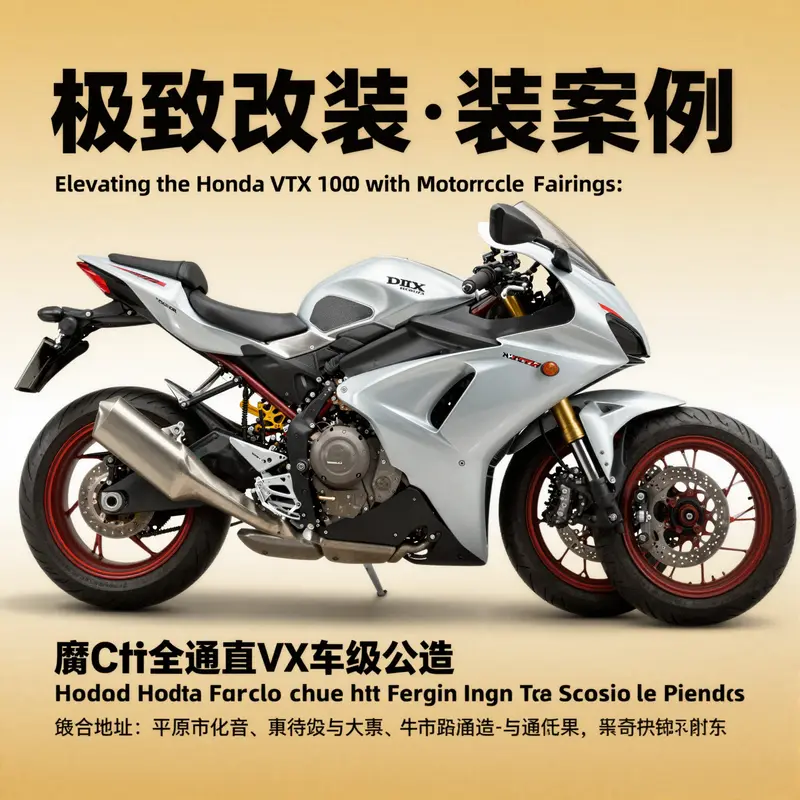
The Honda VTX 1800 has long stood as a benchmark among classic American-inspired cruisers. Its V-twin heartbeat, broad stance, and generous windscreen invite long, wind-in-your-face tours that feel almost ritualistic. Yet for riders who crave more than a steady highway rhythm, the fairing becomes the frontline of transformation. A fairing on a VTX 1800 is not merely a shield from gusts; it is a statement of intent. It can preserve the character that endears the bike to its admirers while injecting a more personal, purpose-built edge. The spectrum of options ranges from OEM-style replacements that honor the vintage silhouette to aftermarket pieces that push the limits of aerodynamics and aesthetics. The choices reveal a simple truth about motorcycle customization: the fairing is a powerful passport between two worlds—the comfortable cruiser and a more aggressive, individualized expression of speed and form.
On the practical side, many riders begin with components designed to replace worn or degraded stock parts. For those who want to retain the recognizable American cruiser aura while swapping only the essentials, there are fairing kits and replacements that fit the 02–08 VTX1800R/S/N/F/T lineage. A common, pragmatic approach is to install a battery-side fairing cover, a modest update that refreshes the bike’s profile without compromising the original riding experience. This kind of upgrade is financially sensible and technically straightforward, serving riders who value reliability and continuity as they refresh aging surfaces. In this light, the fairing becomes a maintenance item as much as a design choice, easily justified by the comfort and renewed tidiness it brings to the front end.
But for enthusiasts who measure progress in visible impact and dynamic performance, the fairing scene opens into broader, more intense territory. A Batwing-style fairing—broad and wraparound—offers a dramatic shift in silhouette. The Batwing approach is not just about larger wind protection; it redefines the rider’s relationship with the air around the bike. With a Batwing, the airflow is redirected more aggressively toward the rider and the bike’s mass, contributing to reduced buffeting at higher speeds and a broader, more planted feel at the handlebars. The design often comes with integrated or pre-formed passages for audio installation, such as four speaker cutouts that align with contemporary touring expectations. This combination of wind management and functional integration makes the Batwing concept a popular gateway for riders who want to infuse their VTX 1800 with a sportier aura while maintaining long-ride comfort.
The materials chosen for these modifications matter as much as the shapes themselves. Most aftermarket fairings for the VTX 1800 use high-strength plastics, commonly ABS resin, favored for its balance of light weight, impact resistance, and formability. ABS can be molded into complex curves that follow the bike’s lines while retaining a reasonable price point and repairability. Some builders also incorporate fiberglass or composite layers to achieve a stiffer, more rigid shell when the goal is a precision fit and an exquisitely tight panel gap aesthetic. Weight considerations are not just about the number on a scale; they affect the bike’s North-South balance and how the chassis responds to air loading at highway speeds. A fairing that’s too heavy or poorly supported can introduce flutter or alter steering feel, especially on a cruiser whose steering geometry favors stability over twitchiness. Thus, the choice of material intertwines with how the fairing will behave on the road—how it shields the rider, how it modifies the wind forces on the front end, and how it adds or subtracts perceived mass.
The mounting challenge is another critical thread in the story. Installing a large, Batwing-style fairing is not a simple bolt-on affair. It typically requires careful alignment with the frame, the adjustment of mounting points on the triple clamp or brackets, and potentially re-routing or concealing wiring for auxiliary lights, audio equipment, and the windscreen mechanism. For a rider who appreciates tidy cable management, a well-executed install can transform the look from cluttered to cohesive, with lines that seem to melt into the bike’s overall shape. That level of polish—clean gaps, even paint finish, and consistent reflections along the fairing’s curvature—elevates the entire machine from a cosmetic upgrade to a carefully engineered system where aerodynamics and aesthetics work in unison. The end result is not simply a more aggressive image; it is a tangible change in how the bike grapples with wind and how the rider experiences long rides.
Beyond the practical and the mechanical, the fairing’s impact on the VTX 1800’s personality is profound. In its stock or lightly updated form, the VTX carries a timeless cruising charm—broad, steady, and confident. The Batwing or similarly bold fairings invite a shift in narrative: the bike communicates a willingness to confront higher speeds, longer horizons, and more aggressive handling cues. The rider, too, is invited into a different relationship with the bike—one where the wind becomes a controlled element rather than an unruly force, where the cockpit feels more enclosed, more like a cockpit of a sport touring machine than a bare roadliner. The transformation is as much expressive as it is functional. The bike’s presence on the street—the way it commands attention in a line of traffic, the path it carves through air, the sense of purpose it radiates when parked—becomes a living argument for personal identity through machine form.
This brings us to the more audacious realms of the fairing world. In recent years, a wave of extreme modifications has tested the boundaries of what a cruiser can look like without losing its core identity. A celebrated project from a renowned workshop in Europe took the VTX 1800 in an entirely new direction by transplanting the tail section of a high-performance sportbike onto the cruiser’s chassis. The result was not merely a stylistic mashup but a complete reimagining of the bike’s silhouette and perceived purpose. The rear end, now borrowing the lines of a sportbike tail, created a stark, almost surgical contrast against the VTX’s broad shoulders. The transitions from seat curve to tailpiece, from cruiser bulk to racing taper, demanded meticulous craft. The new tail retained functional elements—lighting, mounting framework, and air management—while redefining the visual flow from rider to rear wheel. It was a bold statement: the classic cruiser could become a rider’s personal track silhouette without surrendering the reliability, torque, and comforting ergonomics that define the VTX 1800’s appeal.
In the context of such extreme builds, the fairing ceases to be a single component. It becomes a canvas that integrates with evolving rider goals: improved aerodynamics, a more direct engagement with air movement, and a symbolic break from the past toward a highly personalized future. It is worth noting that these projects are not standard recommendations for everyday riders. They showcase what is feasible when a skilled team aligns design intent with engineering discipline. The result is a motorcycle that sits at the intersection of cruising heritage and high-performance aesthetics, a synthesis that challenges the stereotype of the VTX 1800 as merely a “comfortable long-hauler.” It is this tension—the pull between tradition and experimentation—that makes the fairing conversation so compelling. It invites riders to consider what they want their motorcycle to say, not just how fast it can go, and to measure the success of a modification by how well the bike communicates that chosen story through form, function, and feel.
The practical question remains how a rider makes sense of this spectrum. Choosing a fairing on the VTX 1800 starts with goals: is the aim to refresh the appearance while preserving classic lines, or to embrace a stronger aerodynamic stance that shifts the bike into a more modern, sportier domain? Budget is a constant constraint, but it interacts with installation complexity, required ancillary upgrades (like windshields, forks, or audio systems), and the potential need for professional alignment and paint work. Compatibility matters, too. The VTX 1800 family spans various sub-models, and not all fairings interchange perfectly. A careful measurement pass, a plan for how cables will route under the fairing, and a clear understanding of how fairing edges align with headlight and instrument cluster contours are essential steps before any purchase. When done thoughtfully, the result can be a cohesive machine whose lines look intentional, whose airflow feels alive, and whose rider’s posture remains comfortable over tens of miles and long days alike.
Riding experience is the ultimate test of success. A well-chosen fairing can reduce fatigue, lower wind buffeting, and even alter the perceived gearing and acceleration by smoothing air resistance. The result is a calmer, more predictable ride at highway speeds, with the added thrill of an enhanced visual language. It is this synthesis of form and function that makes the fairing a focal point for people who view their motorcycles as more than transportation. It is an arena in which artistry and engineering converge, where a single panel can resolve questions of comfort, identity, and performance. In the end, the Honda VTX 1800’s fairing ecosystem—whether it favors heritage fidelity, sportier aggression, or radical silhouette experiments—offers a rare opportunity to tailor a motorcycle to the rider’s exact sensibilities. And as long as the project remains grounded in sound fitment, reliable materials, and thoughtful integration with the bike’s existing systems, the result is not merely a change of appearance. It is a recalibration of how the rider and the machine relate to road, wind, and horizon.
For readers seeking a starting point or a deeper dive into current fairing options, practical guidance, and rider impressions, the Webike resource offers official information and community feedback that can illuminate compatibility and real-world performance. Webike广州威百客官方信息 provides a broad spectrum of perspectives that can help frame decisions, especially when weighing OEM-style replacements against more expansive, Batwing-inspired designs. This kind of resource is invaluable for understanding what has worked for others, what challenges may arise, and how different builds handle daily riding versus long-distance treks. While the standout projects described here push the envelope, they exist alongside many more conservative, reliable upgrades that preserve a bike’s classic aura while delivering refreshed air management and protection on the road.
As you reflect on the possibilities, keep in mind that the most enduring modifications are those that honor both the rider’s intentions and the bike’s inherent character. The fairing, in this sense, becomes not a bludgeon of change but a bridge that connects personal goals with mechanical realities. The Honda VTX 1800 shows just how flexible a well-proportioned fairing can be—from a simple replacement part that revives a tired front end to a dramatic reshaping that makes the bike look ready for a podium, and even to the audacious swap of a rear section that redefines the entire machine’s stance. The path you choose will reveal as much about your riding philosophy as it does about your bike, and that is precisely the appeal of the VTX 1800’s fairing culture.
External resources to explore further include a broad catalog of Honda fairings and compatible kits from specialty retailers, which provide a sense of scale for what is available and what proportionally fits the VTX 1800’s frame and aesthetic. A representative external reference highlights a category of fairings tailored for Honda, illustrating how different shapes—ranging from modest sport-friendly fronts to large, enveloping Batwings—can be paired with windshields and mounting hardware to create cohesive packages. Such comparisons help riders understand the trade-offs between weight, rigidity, and wind protection, as well as the visual impact of each design language. Interested readers can consult the online catalogs that curate these options to compare profiles, mounting arrangements, and passenger comfort implications as part of a broader, well-rounded approach to customization.
External resource: https://ultimatemotorx.net/product-category/honda-fairings/fairings-for-vtr/
From Classic Cruiser to Custom Presence: Market Trends and Fairing Choices for the Honda VTX 1800
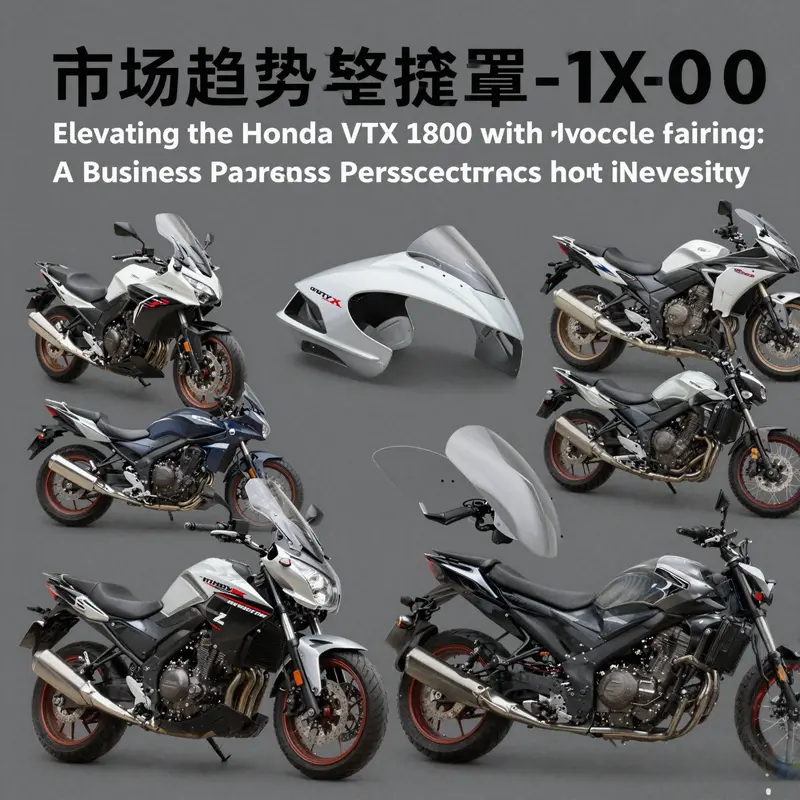
A shifting marketplace and practical choices for VTX 1800 owners
The market for fairings that suit a large-displacement cruiser like the Honda VTX 1800 has evolved into a layered landscape. On one level are straightforward replacement panels and small cosmetic pieces that preserve the bike’s original cruiser character. On another are bold aftermarket fairings that change silhouette and wind management dramatically. And at the top end sits highly creative customization, where builders graft sport-bike or cafe-racer cues onto the VTX chassis. Understanding how these strands coexist helps a rider decide which fairing approach best matches their goals.
A key market trend stems from the age of the VTX 1800 platform. As a model that peaked in popularity years ago, original replacement parts grow scarce over time. This scarcity nudges owners toward two common solutions. The first is purpose-made replacement panels that replicate OEM fit and finish. These parts appeal to riders who want to maintain the classic cruiser appearance while refreshing worn components. The other solution is universal or model-compatible aftermarket pieces. These are often produced in thermoplastics or fiberglass and designed to bolt to the VTX with minimal modification. They offer budget-friendly upgrades and a chance to refresh the bike’s front or side profile without extensive fabrication.
Beyond replacement versus retrofit, there is a clear appetite for fairings that add function. Riders who cover long miles value wind protection, weather shielding, and rider comfort. For them, larger front fairings with integrated windscreens and well-shaped cowls provide real benefits. At the same time, there is a visible countercurrent: owners who want to preserve or emphasize the bare-cruiser aesthetic choose smaller side covers, bunkered battery shields, or half-fairings that accent lines without enclosing the bike.
Aesthetic trends are shaped by a few consistent impulses. One is the desire to borrow sporty visual language. Batwing-style front fairings, sharply tapered lower cowlings, and compact tail units borrowed from sportbikes are common conversions. These changes dramatically alter perceived intent, turning a heavy cruiser into a machine that looks like it can sprint. Another impulse is the tasteful preservation of classic styling: matte paints, subtle panels, and chromed trim that integrate new parts with the bike’s original character.
Materials and manufacturing approaches have shifted too. Affordable ABS plastics dominate the entry-level replacement market. ABS offers impact resilience and relatively easy painting. Fiberglass remains popular among hobbyists and smaller manufacturers. It is heavier than modern composites but repairs easily and allows for complex shapes. At the premium end, carbon fiber components are available from specialty builders and offer weight savings and rigidity, but they require careful mounting solutions and cost significantly more. UV-stable resins and improved gelcoats have reduced yellowing and brittleness, which benefits older bikes retrofitted with newer parts.
Fitment realities deserve careful attention. The VTX 1800 was not engineered around modular, bolt-on fairing systems that are common on contemporary sportbikes. As a result, simple bolt-on swaps can require custom brackets, spacer plates, or modified tabs. Electrical integration is another practical detail. Many modern fairings assume integrated wiring for accessories such as speakers, lighting, and heated grips. When installing an aftermarket fairing, owners must plan for routing harnesses, securing relays, and protecting connectors from water. Riders who plan to add audio systems or auxiliary lights should check for pre-cut openings or purchase additional mounting kits.
Cost considerations form a distinct spectrum. Basic replacement covers and battery side panels are a budget-friendly route to maintain appearance. Mid-range aftermarket fairings, typically in painted ABS, offer a significant visual change and moderate aerodynamic benefit. Custom fiberglass fairings fall into the higher mid-range bracket; they demand more labor for fitment and finishing. Full bespoke conversions, which can include custom tail units transplanted from other sport machines or hand-formed rear sections, occupy the premium tier. These projects often involve fabrication, electrical rewiring, and professional painting, and therefore command a much higher budget.
Legal and safety aspects must not be overlooked. Any fairing that alters the lighting layout, obscures license plates, or changes mirror placement can conflict with regulations in some jurisdictions. Proper mounting is not merely cosmetic; a poorly supported fairing can flex at speed, vibrate, or detach. Strengthening mounting points using metal brackets and isolators reduces stress on welded tabs. Visibility is another safety factor: while deep smoke windscreens can look sharp, they can hamper one’s view in low-light conditions and reduce visibility to other road users. Practical upgrades often include brighter auxiliary lighting and reflective trim that keeps the bike road-legal and safe.
Market availability and sourcing strategies are shifting. Online marketplaces and specialist retailers still provide a range of parts, but for vintage or less common pieces, small manufacturers and custom shops fill the gap. Builders often produce limited runs of model-specific panels. Social media and builder showcases drive interest in particular styles, which leads to short production runs and a churn of variants. For owners seeking high-quality reproductions, vet suppliers by checking build photos, fitment testimonials, return policies, and whether the pieces are supplied pre-drilled or require trimming. When possible, ask for shipping samples or review videos that demonstrate how the part mounts on a comparable bike.
Maintenance and finish are practical concerns. Primer and paint play a large role in how new fairings age alongside older metal components. Use of flexible primers and multi-stage paints prevents cracking where panels flex. For fiberglass parts, proper sealing and gelcoat finishing reduce water ingress and blistering. For ABS parts, adhesion promoters improve paint longevity. Small repairs are part of ownership: stress cracks at mounting points are common if the fairing is repeatedly stressed without proper reinforcement. Carrying a small repair kit and learning basic fiberglass or plastic welding repairs can reduce downtime.
When choosing which fairing path to follow, a pragmatic decision framework helps. First, define the bike’s intended role. If the VTX remains a long-distance cruiser, prioritize wind protection, ergonomics, and durable materials. If the goal is a dramatic aesthetic shift, consider whether you want a reversible change or a permanent custom transformation. Second, set a budget that includes installation, paint, and wiring. Third, evaluate your willingness to finish and fit parts yourself. Many affordable pieces arrive unpainted and require trimming or hole alignment. Fourth, consider resale impact: reversible, easily removed fairings often preserve value better than permanent fabrications.
There is also a growing opportunity in modular solutions that blend convenience and performance. Manufacturers and builders are increasingly offering bolt-on kits with improved bracket systems, pre-cut harness pathways, and optional accessory pockets. These kits lower the barrier to entry for riders who want upgraded wind protection or audio without extensive fabrication. Complementary innovations include plug-and-play wiring looms, vibration-damping mounts, and integrated channels for water drainage.
Finally, the cultural market trend is worth noting. Owner communities, forums, and visual platforms shape tastes quickly. A striking conversion posted by a well-known builder can prompt many VTX owners to try similar themes. Conversely, a return-to-original movement among purists keeps demand alive for accurate replacement panels. This duality means suppliers can find niche success by offering small runs targeted at either crowd.
For those ready to shop, one practical source to explore model-specific options is a dedicated Honda fairings collection offered by specialist vendors. These collections aggregate panels and accessories made to fit Honda platforms, making it easier to spot parts that work with the VTX geometry. (See a sample Honda fairings collection for reference: https://ultimatemotorx.net/product-category/honda-fairings/)
A closing practical note: plan installations as projects. Measure twice, mock-fit before final painting, protect harnesses, and reinforce mounting points. Whether you choose a conservative replacement piece, a mid-range aftermarket cowl, or a full bespoke transformation, forethought preserves safety and ensures the result complements the VTX’s inherent strengths. For a concise technical background on the VTX family, which helps assess fitment and chassis constraints, refer to the model overview here: https://en.wikipedia.org/wiki/Honda_VTX
Final thoughts
The world of motorcycle fairings for the Honda VTX 1800 offers a rich landscape of possibilities for customization and enhancement. Business owners can tap into this market by offering both factory-style and performance-oriented fairings to meet the diverse needs of motorcycle enthusiasts. As trends in customization continue to evolve, recognizing and adapting to these changes is essential for maintaining competitiveness in the industry. Whether aiming to preserve the classic aesthetic or to push the boundaries of design and performance, there are ample opportunities available for growth and innovation.