
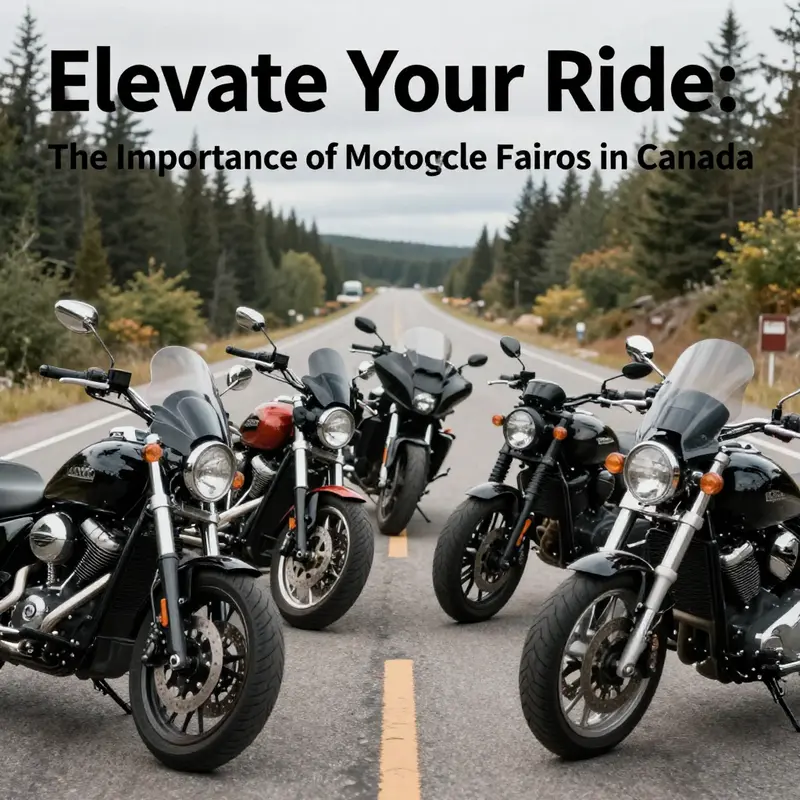
Motorcycle fairings play a crucial role in enhancing the performance, aesthetics, and safety of motorcycles across Canada. With various types available—from full fairings that shield the entire bike to half and quarter fairings that offer varying levels of protection—motorcycle enthusiasts have options tailored to their needs. This article will delve into the distinctive features of full fairings, explore the options available in half and quarter fairings, and discuss the choices and considerations for aftermarket fairings in the Canadian market. By understanding these aspects, business owners and riders can make informed decisions that align with their riding styles, preferences, and climates.
Full Fairings in Canada: Aerodynamic Craft for Speed, Safety, and Seasonal Weather
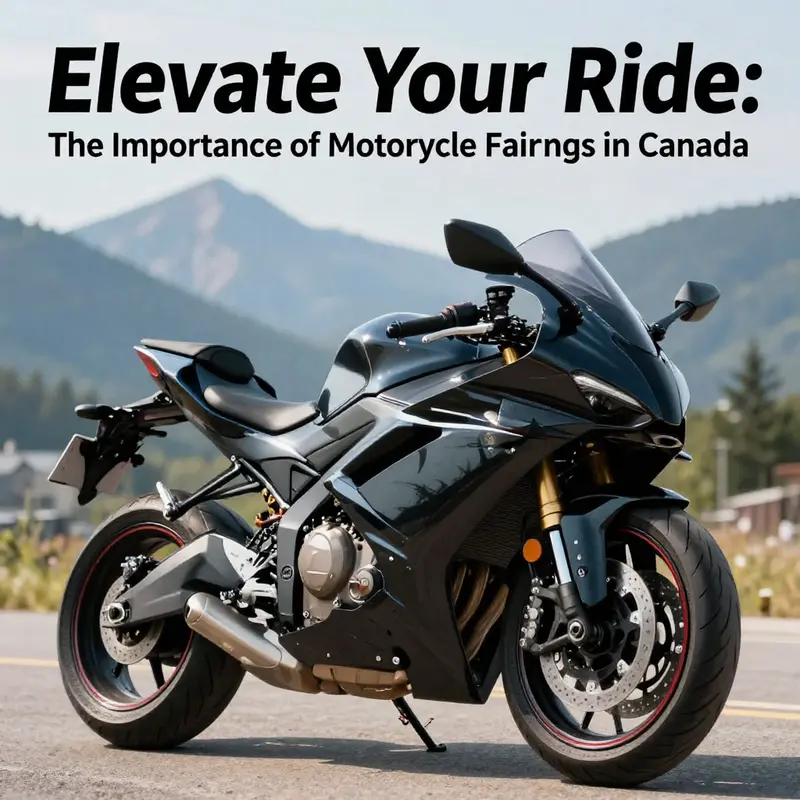
Full fairings are more than cosmetic shells; they are carefully engineered bodies that shape the air around a motorcycle, protecting rider and machine while unlocking efficiency at speed and stability at highway gusts. In Canada, where winter stretches into the shoulder seasons and rain can arrive with sudden intensity, the decision to install full fairings embodies a strategic blend of performance, protection, and practicality. The best designs are not created in a vacuum. They emerge from understanding how air behaves around a moving body, how the rider interacts with that flow, and how the machine must remain compliant with safety norms while offering a lifelike balance between form and function.
Regulatory compliance matters as soon as a full fairing is conceived. In Canada, the design has to satisfy a constellation of requirements that originate from federal and provincial safety standards. The shell must not obscure critical lighting, nor create blind spots, and it must be anchored to the frame in ways that tolerate typical road shocks. While the fine print of regulations varies by jurisdiction, the underlying imperative is consistent: visibility, structural integrity, and lighting must be maintained. For designers and makers, that translates into carefully engineered mounting points, precise alignment with the headlight and indicators, and an outer shell that remains intact under normal operating loads. The result is a fairing that looks-integral yet performs predictably across a broad spectrum of Canadian riding conditions.
When we translate these principles to the motorcycle, the fairing’s aerodynamics take center stage. Full fairings enclose the engine and frame, and their silhouette—long and sculpted along the wheelbase—shapes how air flows around the bike. The goal is to minimize form drag while preventing turbulent wake that can buffet the rider at highway speeds. This is especially important for sport and touring aspirations, where high-speed stability and rider comfort matter across long stretches of pavement. The engineers consider not just the external shape but the internal ducts that guide cooling air to radiators, intakes that feed air to the engine, and vents that relieve pressure at the tail. A well‑executed design reduces drag without compromising engine cooling or rider visibility. In practical terms, riders notice a more settled ride, improved fuel efficiency at sustained speeds, and a ride that remains smooth at crosswinds—the kind of stability that is highly valued in the Canadian open road and on routes where gusts sweep across plains or funnel through valleys.
The design conversation inevitably touches on the materials used to craft these shells. Manufacturers balance a triad of considerations: impact resistance, flexibility of the mold, and resilience in the face of Canada’s temperature swings and road-salt exposures. ABS plastic remains a common baseline due to its toughness and ease of manufacturing. Polycarbonate offers a tougher, more UV-stable alternative with better impact resistance, while carbon fiber provides stiffness and a high-end aesthetic for riders seeking performance gains and weight reduction, albeit at a premium price. The choice of material matters not only for performance but for long-term durability; a fairing that withstands freeze-thaw cycles, road spray, and direct sun must resist cracking, yellowing, and delamination. In practice, sensible Canadian builds favor multi-layered approaches that combine a rigid outer shell with a resilient core or substructure, ensuring snug panel joints and robust mounting hardware. The result is a fairing that keeps its line under the weight of wind-driven rain, while maintaining the integrity of fasteners and gaskets that keep moisture out of the chassis.
Fitment is the practical hinge on which the full fairing decision turns. A Canadian rider must verify compatibility with their exact make and model before committing to an aftermarket shell. This is not merely about mounting points; it is about the entire ecosystem of rad cooling intakes, radiator clearance, instrument cluster visibility, and the interplay with the windscreen. The advice that follows is not cosmetic. It aims to ensure the fairing performs as intended, preserving or enhancing aerodynamics, and that it integrates with existing accessories like mirrors, fenders, and faring stays. There is no universal design that fits every model, and that is where the careful checking of fitment guides and, when possible, installation services or professional fitting can save time and avoid misalignment. A well-fitted full fairing reduces air gaps and catches stray eddies that can otherwise pulse against the rider at speed, creating fatigue. It also helps keep the engine in a steady thermal envelope, which has knock-on benefits for performance and longevity in climate-controlled conditions.
The customer journey, from research to installation, is not simply about the shell itself. It is about the broader ecosystem of support, including fitment guides, warranties, and return policies that offer peace of mind when purchasing in an online or brick-and-mortar context. Some retailers provide straightforward guidance—clear diagrams, model-to-part compatibility notes, and step-by-step installation recaps that illuminate what can otherwise feel like a precarious upgrade. In many cases, the decision to buy a full fairing integrates with considerations about value and resale. If a rider anticipates swapping bikes within a few years, a modular or multi-skin fairing that offers room for future adjustments can be a prudent choice. The Canadian market has responded to this with a spectrum of options, bridging OEM-like replacements and broader aftermarket shapes that respect the regulatory framework while offering modern contours, integrated vents for cooling, and smoother transitions from the headstock to the tail. For those who want to explore ongoing offerings, there is a way to glimpse a curated set of options without commitment: the 2023 new fairings collection. This snapshot highlights how designers are incorporating evolving forms to better manage airflow around different riding postures and body positions, a reminder that aerodynamics remains in motion even as road textures and tire compounds evolve.
A Canadian perspective on full fairings also implies attention to climate resilience. The winter season, with its salt spray and irregular plowing patterns, can impose additional demands on a fairing’s seals and joints. That means the choice of gaskets, sealants, and the degree to which panels are locked into place becomes part of the decision. The shells should maintain their weather seal throughout the ride, resisting moisture infiltration that can affect electronics, under-slung radiators, or wiring harnesses that run along the motorcycle’s backbone. In the context of a northern climate, designers often consider not just the outer aesthetics but the inner geometry that influences not only the flow of air but the flow of heat. A well-delineated air path can assist radiator performance in cool mornings and still keep the engine from overheating during long climbs in the afternoon sun. The idiosyncrasies of Canadian weather—wind, rain, snow, and variable temperatures—shape the way fairings are shaped, joined, and finished. A fairing that is robust in the face of cold moisture, and that holds its gloss after a season of use, earns real-world credibility with riders who have learned to respect the road and the sky in equal measure.
Behind the scenes, the science of aerodynamics informs every major design decision, especially in the North American context. Engineers and fabricators rely on established aerodynamics principles to optimize the bodywork. They consider the way air attaches to the surface, the way it detaches at the edges, and how subtle changes in curvature can reduce the size of the wake behind the bike. Even small adjustments—like tapering a trailing edge, smoothing a seam line, or shaping a chin fairing to feed a more uniform flow to the radiator—translate into measurable gains in stability and efficiency. These choices are not arbitrary. They rest on tested methods developed through wind tunnel experiments, computational fluid dynamics, and field tests that simulate real riding scenarios. The literature in this field, including evaluations that sit at the intersection of vehicle dynamics and safety, informs manufacturers about best practices and helps ensure that Canadian riders benefit from the latest evolution in fairing design. The broader North American context, with its diverse climate zones and road conditions, fosters a design ethos that prioritizes both performance and resilience.
Durability testing enters the conversation as soon as a full fairing shapes its first prototype. Designers run panels through cycles of vibration, thermal aging, ultraviolet exposure, and impact events to verify that the shell will not degrade under the assault of road grime and winter abrasion. In Canada, where winter uses chemicals that can chemically attack certain plastics and sealants, the long-term performance often hinges on the fairing’s ability to maintain structural integrity after repeated salt spray exposure and grit. The manufacturing approach may employ protective coatings, UV stabilizers, and reinforced joints to guard against wear. The result is a shell that not only looks the part but continues to perform as the bike evolves from showroom stand to daily street and occasional long-distance trips.
The practical consequences for riders go beyond the science of form and the calculus of fit. A well-executed full fairing yields tangible benefits in daily riding: better rider protection from wind and debris, which can reduce fatigue on long commutes or touring treks; improved aerodynamics that contribute to better fuel economy and sustained speed without muscular strain; and a more stable platform for mounting additional accessories, such as windscreens, protection bars, or auxiliary lighting that must be integrated with a coherent body-of-air. The rider’s comfort translates into a broader sense of confidence, which in turn fosters a more focused riding experience. In the Canadian riding community, where riders often undertake long trips to explore the vastness of the country, that sense of confidence is not a leisure add-on but a critical factor that shapes how riders approach the road. A full fairing that fits correctly and performs consistently creates a smooth envelope around the bike and rider, one that reduces the voice of wind noise and leads to more precise handling through corners and over rutted surfaces.
From a design and engineering standpoint, the future of full fairings in Canada is not a static state but a continuum. The pursuit of lighter weight, greater stiffness, and even more efficient airflow continues to drive research and development. Companies and workshops across the country are likely to experiment with hybrid materials, improved cooling strategies, and more integrated electronic mounting opportunities that accommodate the growing suite of onboard sensors and advanced rider aids. As vehicles become more connected, the fairing itself can become a platform for data capture and sensor integration, enabling riders to benefit from real-time performance metrics while preserving the essential job of shielding the rider from wind and weather. The conversation remains anchored in core principles: aerodynamics, safety, durability, fitment, and climate readiness. When a rider selects a full fairing, within the Canadian market or beyond, they are choosing a design philosophy that values the interplay between the rider’s posture, the bike’s mechanical envelope, and the air that surrounds them. The resulting combination of form and function stands as a testament to how far motorcycle fairings have come and how far they can go as we push toward new standards of efficiency, comfort, and protection.
For enthusiasts seeking a broader primer on the engineering principles behind fairing design and North American aero considerations, the technical literature offers a robust foundation. SAE International’s vehicle aerodynamics papers illuminate how the same design thinking that informs a Canadian shell applies across markets and vehicle classes. These papers detail the methods used by engineers to balance drag reduction with cooling needs, stiffness, and crashworthiness—all critical considerations when meeting regulatory expectations and consumer demands. They provide a framework for evaluating how different fairing layouts influence the overall performance envelope of the motorcycle. The Canadian context also invites reflection on the balance between OEM replacements and aftermarket choices. A full fairing may come as part of a factory kit designed to match the bike’s lines, or it may be a sophisticated aftermarket solution built to deliver enhanced aerodynamics, greater weather protection, or a unique aesthetic. In either case, fitment accuracy, warranty coverage, and the availability of professional installation guidance remain essential. The market’s spectrum ensures riders have access to shells that align with their budgets, performance goals, and climate realities. An overarching takeaway is that a good full fairing is not simply a shell but a system. It integrates with the motorcycle’s cooling, lighting, and instrumentation, harmonizes with the rider’s stance, and stands up to Canada’s weather with a promise of durability.
This is the essence of full fairings in Canada: the craft of shaping air into a partner for the rider, the discipline of meeting regulatory demands without compromising performance, and the practical realities of riding across a country where seasons change the road’s character. It is a discipline that invites riders to think about aerodynamics not as an abstract science but as a living set of choices that determine comfort, safety, and efficiency. As the road unwinds ahead, the shell around the bike becomes more than a mere exterior—it’s an active participant in the journey, a partner that helps the rider achieve stability at speed, resilience in the face of weather, and a more balanced, enjoyable ride across Canada’s diverse landscapes.
For readers seeking deeper technical background beyond the overview, consider SAE International’s technical papers on vehicle aerodynamics. These resources illuminate the rigor behind the aerodynamic decisions that shape full fairings and their performance across different climates and road contexts. External resource: https://www.sae.org/publications/technical-papers/content/2021-01-0958/.
Half and Quarter Fairings: Practical Style and Performance for Canadian Riders
Half and Quarter Fairings: Practical Style and Performance for Canadian Riders
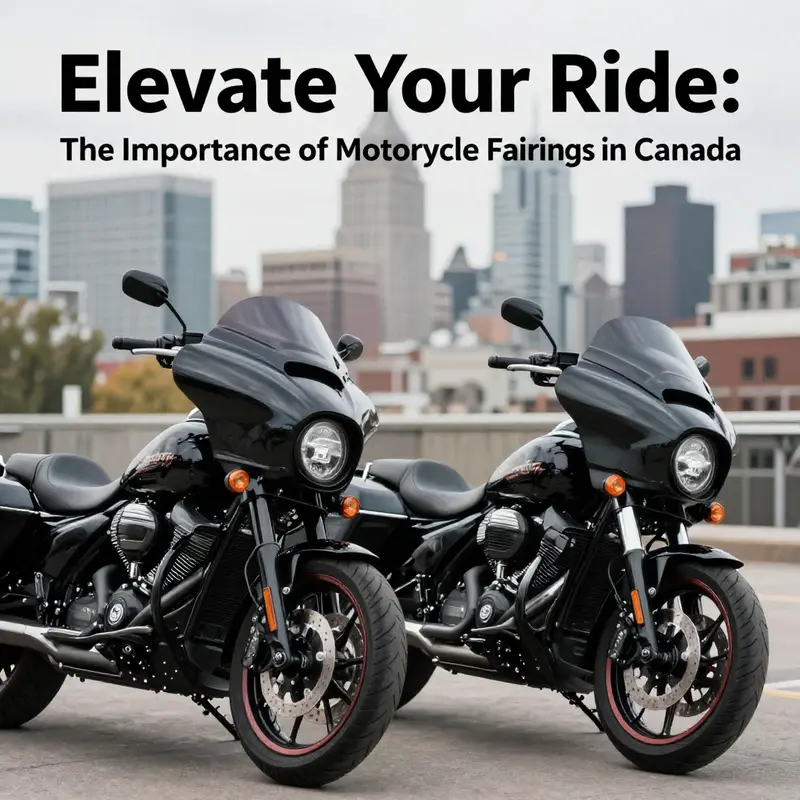
Half and quarter fairings occupy a unique position in the Canadian motorcycle scene. They deliver aerodynamic benefit without the full coverage of a sportbike cowl. They change a bike’s presence on the road. They also influence comfort during long rides and daily commutes. For many riders across Canada, these fairings strike the right balance between function and expression.
Half fairings wrap around the upper front of the motorcycle. They typically enclose the headlight and instruments and extend back toward the tank. This design cuts direct wind blast to the rider’s chest and shoulders. The result is reduced fatigue and improved stability at higher speeds. Quarter fairings, by contrast, are minimalist. They frame the headlight and offer subtle wind diversion while preserving the bike’s naked aesthetic. Both styles are popular among urban commuters, café-racer builders, and long-distance riders who want a lighter, cleaner look than a full fairing provides.
In Canada, road and weather conditions matter as much as style. Fairings must withstand cold temperatures, road salt, and variable moisture. Material choice becomes critical for longevity. ABS plastic remains a common and practical option. It is affordable, impact-resistant, and relatively easy to repair. Polycarbonate offers higher impact strength and better clarity for windscreen components. For riders who prioritize weight and premium finish, composite options such as fiberglass or carbon fiber provide improved rigidity and an upscale appearance. Each material presents trade-offs in cost, repairability, and resistance to Canadian road chemicals.
Beyond basic material properties, the way a fairing is finished influences its suitability for Canadian use. UV-stable paint and clear coatings reduce frost-line fading. Hard, flexible topcoats resist chipping when salt or gravel hits the surface. Fairings designed with thicker mounting areas and reinforced brackets tolerate repeated exposure to rough roads and rapid temperature swings. These practical design points often separate lasting products from those that do not hold up through multiple seasons.
Fitment is an essential concern. Canadian riders span a wide mix of makes and models. A bad fit can cause rubbing, vibration, or stress fractures around the mounting points. Before purchase, check compatibility with your specific year and model. Look for fitment guides and model-specific templates. Many manufacturers and sellers provide detailed diagrams and measurements. Local shops sometimes offer trial fittings or adapter brackets. Even when a fairing is advertised as universal, expect trimming or extra brackets for a perfect fit. Plan for small adjustments rather than a bolt-on, perfect finish.
Aerodynamics explain much of the performance appeal. Half fairings route airflow around the rider’s torso and down past the bike’s rear. This reduces lift at the front and eases rider fatigue on highways. Quarter fairings steer a portion of airflow away from the chest and helmet, offering lower drag without the weight of a larger assembly. Riders who regularly travel at sustained highway speeds often prefer half fairings. Those who ride primarily in cities, or who seek a custom look, may favor quarters. Consider your typical ride profile and typical speeds when choosing.
Installation approaches vary. Some fairings use existing factory mounts, while others require dedicated brackets. Typical installations include a mix of bolt-on mounts, rubber grommets, and custom brackets. When a fairing relies on the headstock or existing forks for support, check torque specs carefully. Over-tightening can crack plastic around the fasteners. Under-tightening increases vibration and loosening over time. Use thread locker where specified and consider small washers behind fastener heads to distribute pressure. If the fairing requires cutting or trimming, measure twice and trim once. Sand edges smooth before painting or sealing.
Maintenance considerations are straightforward but worth noting. Salt and grime accelerate corrosion on any exposed steel mounting hardware. Rinse fairings and mounts promptly after winter rides. Waxing painted fairings with a flexible automotive wax preserves clear coats and makes salt removal easier. For polycarbonate windscreens, avoid abrasive cleaners. Use mild soap, microfibre cloths, and purpose-formulated cleaners to prevent scratching. For fiberglass and carbon fiber, watch for stress cracks and repair early with appropriate resin kits. Quick attention to minor damage prevents expensive replacements.
Cost and value play into buyer decisions. Quarter fairings are often less expensive than half fairings. The smaller size reduces material and labor costs. However, custom finishes, higher-end composites, and paint work can raise the price significantly. Budget-conscious riders can find durable ABS or polycarbonate options that offer good protection and style. Investing in a higher-quality fairing pays off in fit, finish, and longevity. Factor in shipping and duties when ordering from outside Canada. Local suppliers and shops sometimes provide better overall value when warranty and installation services are included.
Customization is a major driver of the half and quarter fairing market. Canadian riders value individuality. Fairings allow relatively quick visual transformations. A different fairing can change the bike’s silhouette and character. Paint schemes, vents, and windscreens offer ways to tune both form and function. Many builders cut and modify fairings for a one-off look. When planning custom work, choose a base fairing with good surface quality and enough clearance for your planned modifications. If you plan serious structural changes, consult a professional to ensure safety and compliance.
Safety and legal considerations should not be overlooked. Fairings must not obscure lights, indicators, or license plates. Make sure the fairing design does not interfere with the operation of lights. Visibility and mounting integrity are essential for roadside inspections and safety checks. In some provinces, modifications that obscure required lighting or that compromise helmet visibility could prompt an inspection. Keep documentation of any modifications and retain original parts when possible.
Trends in materials and design shape the market outlook. Lightweight composites and streamlined profiles are gaining traction. Manufacturers now experiment with layered composites that combine impact resistance with lower weight. Aerodynamic touches, such as integrated vents and deflectors, improve comfort without adding bulk. These advances align with broader market growth forecasts. Analysts predict steady expansion in the global fairing market over the coming decade, a pattern mirrored in North America. This steady demand encourages retailers and local shops across Canada to broaden their half and quarter fairing offerings.
Retail channels in Canada include online shops, parts dealers, and local custom shops. Online sources offer wide selection and often competitive pricing. Local shops provide fitment expertise and often handle paint and installation. When buying online, verify the return policy and warranty terms. Check whether the seller offers fitment support or templates. Some Canadian retailers specialize in fairings and include dedicated fitment guides and customer service. If you are unsure about shipping costs or import duties, a local retailer may present a simpler, more predictable route.
For riders who prioritize quick upgrades, pre-painted fairings reduce time and complexity. However, pre-painted units require careful handling during shipping and installation. Paint chips or hairline stress cracks sometimes appear if the fairing flexes during transport. Consider unpainted kits when you plan serious bodywork or custom paint. Unpainted units are easier to trim and modify and often cost less.
The climate in Canada imposes unique demands. Winter storage is a practical necessity in colder regions. Remove fairings or protect them during long storage periods. Heat from insulated garages can fluctuate, so avoid leaving fairings under direct heating vents. Use breathable covers and avoid leaving fairings on stands where they bear weight on small mounting points. In spring, inspect the fairing mounts for stress and check fasteners and brackets for corrosion.
Resale and interchangeability affect long-term value. Choose fairings that have a good aftermarket ecosystem. Parts that are widely available and easy to match will depreciate less. If you plan to sell the bike later, conservative styling and popular colors often increase appeal. Conversely, very niche custom work can limit buyer interest. Keep original parts and document changes to preserve value and transparency.
Community knowledge plays a critical role. Canadian rider forums and local groups often share fitment tips, installation photos, and vendor recommendations. These practical resources complement official fitment guides. Many riders document trimming patterns and bracket configurations for specific models. When you find a reliable community thread, use that practical wisdom as a supplement to manufacturer recommendations. Hands-on experience often reveals small adjustments that improve fit and reduce noise.
When choosing a fairing, think holistically. Consider your riding patterns, climate realities, and long-term plans. Prioritize fit and mounting integrity. Balance material choice against repairability and cost. Seek products with good documentation and customer support. If you are unsure, consult a local shop for a pre-purchase inspection or fitting estimate. Many shops will advise on bracket kits and compatible windscreens.
For riders eager to explore fresh designs and seasonal releases, a dedicated new-products category can be useful. Browse a current collection of recent fairing releases to track trends and innovations. This helps match your aesthetic goals with the latest advances in composite construction and aerodynamics. One useful starting point is the 2023 new fairings collection, which highlights recent stylistic and material trends in aftermarket bodywork: 2023 new fairings collection.
The half and quarter fairing market in Canada continues to evolve. Riders want solutions that improve comfort, preserve individuality, and withstand diverse conditions. Material innovation, better fitment guides, and a growing aftermarket selection make today’s options more compelling than ever. Whether you choose a subtle quarter fairing or a more protective half fairing, selecting the right design will improve your ride experience and reflect your individual style.
For further reading on manufacturer accessories and specifications, consult the manufacturer accessory page provided in the detailed research materials: https://www.harley-davidson.com/ca/en/products/accessories/quarter-fairings/vivid-black-softail-quarter-fairing.html
Riding the Right Fit: Navigating Canadian Aftermarket Fairings for Style, Strength, and Weather
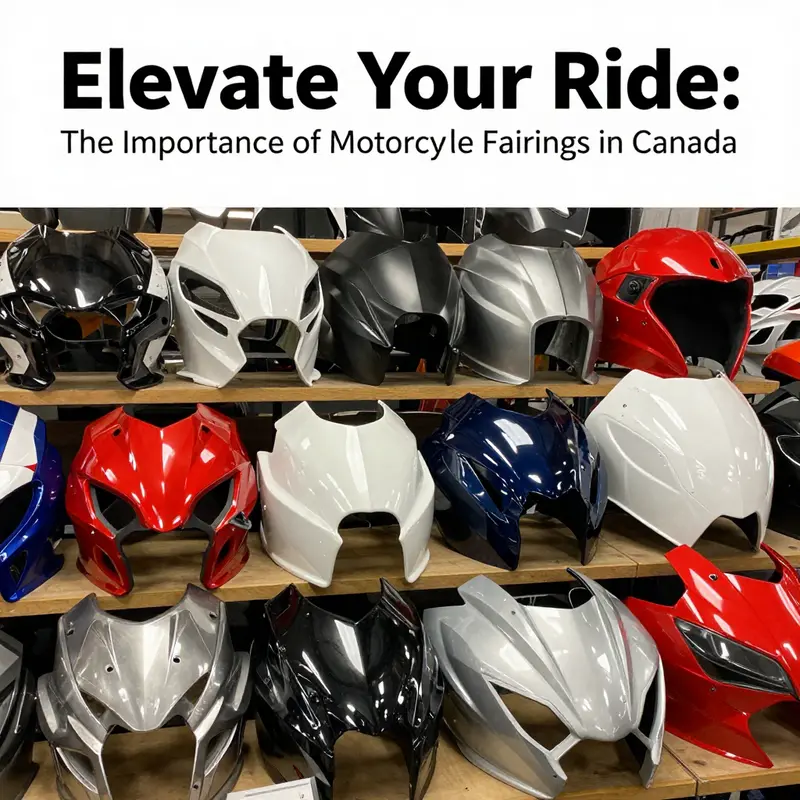
On the long, winding roads that carve through Canada’s diverse landscapes, a rider’s bike becomes more than a machine—it is a canvas where performance, protection, and personal style converge. The choice of aftermarket fairings in this context is not merely about cosmetics or a sharper silhouette; it is a decision that touches aerodynamics, weight, durability, and how a motorcycle will endure the country’s seasonal shifts. In a climate that can swing from blistering sun to icy slush in a matter of weeks, the story of choosing fairings unfolds as a practical conversation about fit, materials, and real-world use. What follows is a grounded, hands-on view of how Canadian riders approach aftermarket fairings, how to balance form and function, and how to navigate the practicalities that accompany a purchase meant to endure long commutes, weekend rides, and everything in between.
First comes fit. In the market for aftermarket fairings, the most important rule is specificity. Motorcycle bodies are built with tight tolerances, and fairings that are designed for a precise model will align with mounting points, gaps, and the contours that define the bike’s front end. When fairings claim universal fit or compatibility with multiple generations, it’s essential to ask for exact model years and engine configurations. A misfit can translate into rattling panels, misaligned body lines, or even interference with brakes, cables, or the steering head. The Canadian rider who plans to ride through frost, moisture, and road salt needs parts that stay put under vibrations, temperature shifts, and the bumpy realities of winter maintenance.
Material choice is the second pillar of a thoughtful selection. ABS plastic remains the workhorse for many riders, prized for its toughness, impact resistance, and relative affordability. The durability of ABS is especially valuable in Canada, where debris kicked up by winter roads, stray ice fragments, and winter grime can test the resilience of every panel. A well-made ABS fairing can absorb impacts and resist cracking, and it holds paint well enough to keep panels looking sharp without demanding constant refinishing. Carbon fiber enters the conversation when weight savings and stiffness become priorities. Lighter, stiffer panels can contribute to a more responsive feel at higher speeds and can marginally improve handling characteristics. However, carbon fiber comes at a premium and often carries a different maintenance profile. It may require protective coatings to shield against UV exposure and road salts that, over time, can affect resin-rich surfaces. The practical Canadian rider weighs these trade-offs against budget, riding style, and long-term ownership plans. It is not about chasing the lightest possible panel, but about selecting a combination of material traits that align with the bike’s character and the rider’s expectations for durability.
Beyond the raw materials, the engineering that underpins a well-designed fairing also matters. Aerodynamics remains a key driver for sportier configurations, where a thoughtfully shaped nose, side panels, and under-panel geometry can reduce drag and buffeting. The difference may be subtle at city speeds, but on longer highway stretches or at motorway throttle, smoother airflow reduces rider fatigue. In cold climates, where riding can include windy crosswinds and higher wind chill, even incremental aerodynamic gains can translate into a more comfortable ride. The goal is not to transform a street bike into a race machine, but to optimize for stability and rider confidence across a broad range of temperatures and road conditions. A kit engineered with careful attention to fit lines and edge radii will also yield a cleaner installation process, since proper alignment can reduce gaps that invite water intrusion or salt accumulation along seam lines.
Compatibility with Canadian weather and road conditions is not just about the panels themselves but how they integrate with protective and preventive measures. The harshness of winter can introduce a broader set of maintenance considerations. Panels that mount securely can simplify washing and de-icing routines, while surfaces that resist coating wear from road salt can extend the time between refinishes. Finishes that tolerate repeated heat cycling—from engine heat at stop-and-go winter commutes to sun exposure on bright summer days—are a practical advantage. In addition, the fasteners and mounting hardware deserve attention. Corrosion-resistant fasteners that resist salt-induced rust are essential in a climate where moisture and salt are regular seasonal guests. The goal is a durable assembly that keeps its tight seam lines and its color integrity, season after season.
Sourcing and supplier considerations also shape the Canadian fairing journey. Reputable sources that provide clear fitment guidance, model-specific notes, and responsive customer support are particularly valuable. A retailer that understands the realities of Canadian shipping—customs handling, regional distribution centers, and the potential for longer lead times in winter months—can save a rider from unexpected delays or miscommunications. It is equally important to examine the return policies and warranties offered by the seller. A fairing is an investment, and knowing the terms for exchanges or returns if a fit issue arises can provide real peace of mind during the purchase process. The broader market offers a spectrum of options, from OEM-quality replacements to more affordable aftermarket lines. In the end, the decision rests on a careful synthesis of fit accuracy, material durability, aerodynamic benefit, and how well the product aligns with one’s riding routine and budget. The Canadian rider often benefits from shopping with retailers that provide detailed fitment guides, clear return policies, and accessible customer support that can walk a buyer through the nuances of a model’s mounting points, fairing-edge clearances, and potential compatibility quirks.
Fit is only one piece of the puzzle; the other is longevity under Canada’s seasonal tests. Materials such as reinforced ABS can shrug off temperature swings, occasional salt exposure, and the rigors of year-round riding better than others. For a rider planning to leave a bike outdoors or in less-than-ideal storage during the cold season, a fairing that doesn’t warp, yellow, or craze under UV exposure is a practical advantage. Even the color and finish choices bear consideration. Lighter colors can show grime more quickly but can also reflect heat, which may help in hotter Canadian summers. Dark finishes may conceal dirt better but might fade faster if the sun is intense for extended periods. A thoughtful selection acknowledges how color, texture, and sheen hold up to climate realities as well as the ride’s daily rhythms—from morning commutes through late-season trips when the air carries a chill and a sense of late-year clarity.
The installation experience also matters, particularly for riders who enjoy doing their own work or who rely on service networks for a clean, factory-like finish. Some retailers offer installation guides or fitting tutorials that illuminate the step-by-step process, while others may provide optional installation services. For a rider navigating an irregular schedule or a longer winter vacation, having access to professional fitting can help ensure the panels align precisely with the fender, radiator shrouds, and frame components. This is not just about getting the bike to look right; it is about preserving the structural integrity of the fairing system and avoiding misalignment that could cause panel flutter or interference with the wheel, steering, or radiator airflow. In a climate where a misfit can lead to rattling or wind noise at speed, a precise fit is a cornerstone of a satisfying and safe upgrade.
The social piece of the process should not be underestimated. Community feedback—what other riders in similar climates have experienced with particular fairing lines—can provide a pragmatic lens on durability and fit. The Canadian rider particularly benefits from hearing about how a specific fairing handles snow spray, winter washdowns, or seasonal storage routines in regions where slush and salt linger longest. Reading reviews and asking questions about real-world performance under local conditions can yield insights that dry specs cannot fully capture. It is also useful to hear how a given fairing handles personalization—whether it is simple to paint to match the bike, how easy it is to replace damaged panels, and whether the finish tolerates touch-ups without obvious color bias or grain differences.
From a design and aesthetic perspective, aftermarket fairings offer a platform to express personal identity while preserving or enhancing the bike’s proportion. A well-chosen kit should complement the bike’s lines and contribute to a cohesive silhouette rather than look tacked-on. The end result should feel like a natural extension of the motorcycle’s geometry rather than an afterthought. The Canadian rider who puts time into color matching, graphics, and accessory integration will appreciate how a properly selected fairing enhances both the visual impact and the ride experience. As with any cosmetic or performance enhancement, the aim is to achieve a balanced outcome: a fairing that looks integrated, performs reliably, and endures the weather conditions that define the riding year in Canada.
For readers seeking model-specific resources, one practical path is to explore targeted model pages that assemble compatible fairing components in one place. For instance, a dedicated collection that organizes fairings by motorcycle family can help narrow down the options without sifting through incompatible listings. In practice, a rider might begin by identifying their exact model and generation, then consult fitment notes, and finally review customer feedback from riders who own the same model in Canada. This approach reduces the guesswork and aligns expectations with real-world results.
As with any major modification, there is value in approaching the purchase with a plan rather than a wish list. Start with a clear picture of your riding conditions: daily commutes in wintery conditions, weekend highway trips with occasional gusts, or a mix of urban riding and sports riding on dry days. Then map out the priorities: is the emphasis on improved aerodynamics, more protection around the engine and radiator, or a minimal, street-friendly look that preserves a naked-bike aesthetic? The answers to these questions guide the material choice, the degree of fairing coverage (full, half, or quarter), and the level of customization needed to achieve the desired outcome. In Canada, weather resistance and long-term durability carry a weight that can overshadow the allure of a lighter option with limited protection. The right choice blends the predictable realities of local roads with the rider’s personal preferences for maintenance cadence, storage, and the time they’re willing to invest in installation and care.
An essential, practical step in this journey is to verify fitment and warranty details before committing to a purchase. Some retailers provide detailed measurement guides, mounting diagrams, and even video tutorials that demonstrate the installation process. These resources are invaluable when a rider’s work week limits evenings or weekends that might otherwise be spent troubleshooting fit issues. When a warranty accompanies the product, it can offer essential protection against cracking, warping, or finishing defects that might surface after exposure to road debris or weather cycling. A warranty also provides a pathway for replacement if a panel fails during the early months of ownership, which is particularly reassuring when the product will endure Canadian winters.
In the end, the Canadian aftermarket fairing decision hinges on a harmonious blend of fit, durability, and value. The market offers a spectrum of choices, but the most satisfying outcomes come from those who approach the purchase with a clear understanding of their bike’s exact model and generation, their local climate realities, and a pragmatic view of what constitutes a good long-term investment. The fairing should shield the rider from wind and road spray, preserve engine bay cleanliness, and maintain a respectable aesthetic that complements the bike’s lines. It should be robust enough to withstand winter use, yet light enough to avoid altering the steering dynamics or cornering balance beyond what the rider has already tuned with suspension and tires. By focusing on these core considerations—fit accuracy, material durability, aerodynamic benefit, climate resilience, source reliability, and thoughtful installation—a rider can confidently embrace a fairing upgrade that improves both the look and the function of the bike on Canadian roads.
For readers seeking a broader sense of how to approach aftermarket fairings in practice, a practical step is to consult model-specific galleries and buyer guides that summarize common fitment concerns and real-world performance. An accessible external resource for general buyer guidance and user reviews in the aftermarket accessories space is available online, offering insights that complement local knowledge and hands-on experience. This resource provides a broader perspective on how fairings behave across different bikes and environments, helping riders calibrate expectations before making a purchase. To explore, visit the external resource cited at the end of this chapter for broader context and guidance beyond the Canadian market. In the meantime, model-specific pages and community forums continue to be valuable touchpoints for riders who want to confirm compatibility, share installation experiences, and compare notes about weather-related performance.
When you’re ready to dive in, consider browsing a model-focused category to compare options in a way that respects both form and function. For riders focusing on a particular model line and seeking a consolidated view of compatible fairings, the following internal resource offers curated access to a range of options designed for Honda models. It serves as a practical starting point for riders who want to understand how an aftermarket fairing line can align with their bike’s geometry and mounting geometry. Access this category to explore fairings that match your bike’s contours and mounting points, and use the integrated fitment notes to verify compatibility before proceeding with a purchase: Honda fairings.
To summarize, choosing aftermarket fairings in Canada is a balancing act that requires careful attention to fit, material performance under temperature and weather variation, and the practical realities of shipping, installation, and long-term upkeep. A well-chosen fairing adds not only to the bike’s look but also to its protection and performance, delivering a more confident riding experience through Canada’s diverse seasons. With a thoughtful approach to model specificity, material choice, and reliable sourcing, riders can enjoy a durable, aesthetically pleasing upgrade that stands up to the country’s winter storms, summer highways, and everything in between. For those who want further reading that deepens the understanding of fairing durability, aerodynamics, and buyer psychology in the aftermarket space, an external guide offers detailed buyer guides and user reviews that can complement the Canadian shopping journey. The combination of local knowledge and broad industry research provides a robust framework for making a sound, satisfying upgrade that aligns with both budget and riding goals.
Internal link reference: Honda fairings collection provides a practical portal to model-specific options and helps narrow the field to components that fit your bike cleanly while offering guidance on fitment nuances unique to your generation. This kind of targeted resource can save time and reduce guesswork when you’re crossing model years and chassis revisions.
External resource for broader guidance: https://www.motorcycle.com/
Final thoughts
Understanding motorcycle fairings—ranging from full to half and quarter options—provides Canadian riders with insights to enhance their motorcycles’ performance and aesthetics. With numerous aftermarket choices available, business owners can better serve their customers’ needs by offering diverse solutions suited for all types of riders and preferences. Investing in high-quality fairings ensures durability and functionality, particularly within Canada’s challenging climate, ultimately promoting a safer and more enjoyable riding experience.