
The motorcycle fairings market in Australia presents a unique blend of consumer demand, competitive sourcing options, and diverse product offerings. As the riding culture flourishes, understanding the various aspects of this market becomes crucial for businesses looking to thrive. This article delves into the landscape of motorcycle fairings in Australia, offering insights into sourcing, the types available, and quality standards. Each chapter builds on the overarching theme, equipping readers with the knowledge necessary to make informed decisions in this growing industry.
Riding Ahead: Navigating Australia’s Motorcycle Fairings Market Landscape
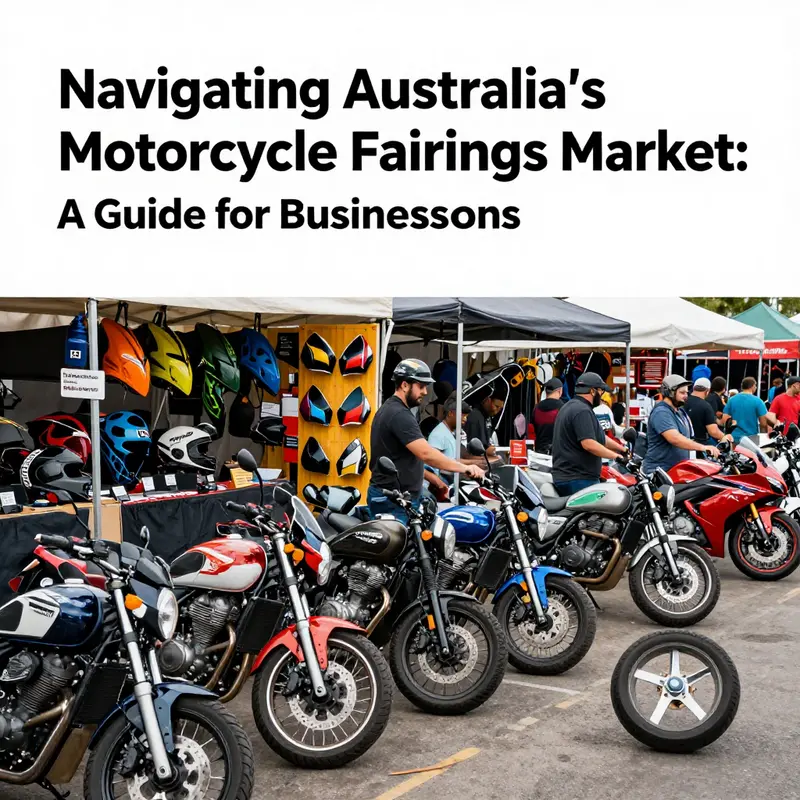
The Australian road environment folds into the motorcycle fairings market in a way that few other segments do. It is a story of endurance and performance meeting style and practical logistics. Across the coastline from Melbourne to Brisbane, and into the red dust of the outback routes, riders push for bodywork that can stand up to UV exposure, heat cycling, and the occasional encounter with gravel or washboard. The fairings that shield engines, radiators, and riders in these conditions are not merely cosmetic; they are an integral part of how the bike performs, how efficiently it runs, and how long it remains viable as a daily rider or a weekend racer. In Australia, demand for durable, high-performance, and aesthetically compelling bodywork has become a defining feature of a market that still keeps a wary eye on broader two-wheeler volumes. The sector’s resilience is visible in the way aftermarket and OEM channels now cooperate to keep fleets and personal bikes outfitted with reliable, model-specific fairings that fit with surgical precision and come with a warranty that underpins confidence in cross-border supply chains.
To understand why the fairings niche is generating steady momentum, one must acknowledge the supply chain architecture that has emerged around Australia’s import ecosystem. Guangdong, a Chinese manufacturing axis anchored by Guangzhou and Foshan, has matured into the global hub for motorcycle fairing production. The region’s factories operate within an integrated ecosystem—polymer injection molding, UV-resistant coatings, and automated painting lines—that deliver a blend of durability and finish quality that Australian buyers increasingly demand. The advantage here is not simply lower unit cost; it is the ability to tighten lead times and align production with Australia’s seasonal demand. Vertical integration across suppliers reduces the friction that used to occur when a fairing project stalled at a single plant due to capacity constraints. Australian buyers can expect shorter lead times—studies note improvements of up to 45% in some scenarios—because the supply chain is designed to consolidate components, coatings, and finishing in proximity to major export hubs such as Nansha and Shekou. A bonded warehouse network near these ports further accelerates delivery by enabling faster consolidation and even Delivered Duty Paid shipping routes that simplify import logistics for retailers and distributors here. This ecosystem, with its scale and specialization, helps explain why Guangdong-based producers account for a large share of global fairing output and remain a trusted source for the Australian market.
For B2B buyers and retailers, the sourcing decision hinges on three core pillars: material quality, model compatibility, and compliance. High-grade ABS remains the standard due to its balance of rigidity and toughness; it resists impact and load stresses while accommodating the intricacies of airflow and rider protection. The coatings and finishes require adherence to UV resistance standards to ensure that bright sun and long stints on hot Australian roads do not degrade the color or the finish. In this context, the design process becomes as important as the raw material. The most capable suppliers offer not only a bare shell but a complete finishing package that anticipates the needs of Australian riders who value aerodynamics, sound engineering, and the pride of an appearance that lasts. The market recognizes that a fairing is a long-term investment that influences fuel efficiency, ride stability, and even the acoustic signature of the bike when the fairing’s shape interacts with wind and road noise at sustained highway speeds.
Among the types of fairings, full fairings continue to be the strongest draw for sport bikes and long-distance tourers who want comprehensive protection from the elements and increased rider comfort on extended rides. Half fairings attract naked and standard bikes, delivering a blend of protection and style without the full enclosure that can add weight and sometimes complicate maintenance. The aftermarket and custom routes are growing as enthusiasts seek personalization or aerodynamic refinements that respond to individual riding styles or specific track or road conditions. In this broader landscape, a few practical concerns temper exuberance: compatibility with makes and models, the availability of replacement panels, and the assurance that a given fairing will not introduce mounting or clearance issues that could affect braking lines, radiator routing, or electrical connections. These fitment considerations drive a rigorous verification process before any purchase, especially when selecting aftermarket options that promise bespoke curves or unique finishes.
The market’s growth narrative is not just about raw materials and fitment; it is also about performance and appeal. Advancements in material science—toughened polymers that resist impact or flexural fatigue, coatings that resist chipping in dusty or salt-air environments, and finishes that remain vibrant after repeated UV exposure—are elevating the perceived value of fairings. Australia’s riders tend to favor components that combine reliability with aesthetics, a combination that aligns well with the Guangdong supply ecosystem. The broader market data underlines a clear trajectory: the Australian fairing market, as a subset of the country’s overall bike component market, reached a valuation north of USD 1.2 billion in 2024 and is forecast to climb toward USD 2.3 billion by 2033. This implies a compelling compound growth rate for a segment that already benefits from a more specialized demand than the broader two-wheeler category. While the overall two-wheeler market faced softness in 2025, with total motorcycle sales retreating to around 83,861 units, the fairings subsector benefits from a more inelastic demand among enthusiasts and operators who insist on performance and durability for their machines. The contrast speaks to a market that, even in a patchy macro environment, can generate momentum where value propositions are well defined and delivered with consistency.
A more precise driver of growth in Australia is the shift toward high-performance riding, which goes beyond mere speed. Aerodynamics, rider protection, and efficient airflow around the bike contribute to better fuel economy, more stable handling at high speeds, and even thermal management of the engine. This is particularly relevant for sport and touring models that spend long hours on the road and in variable wind conditions. The fairings that emerge from the Guangdong network are often designed with this performance lens in mind, incorporating wind tunnel feedback and CAD precision to optimize drag coefficients while preserving the visual language of the motorcycle brand. In parallel, consumer interest in customization—personal identity through appearance and colorway—stimulates demand for aftermarket fairings that offer unique finishes, decals, and textures. The market’s maturity in Australia is reflected in a growing ecosystem of distributors and installers who understand the need for accurate model mapping, quick turnaround, and a robust aftersales support framework that can manage warranty claims and return logistics efficiently.
While the macro indicators provide a promising backdrop, practical considerations shape the day-to-day experience of sourcing fairings for the Australian market. The importance of material quality intersects with regulatory compliance and environmental stewardship. Suppliers with certifications for safety and environmental standards are preferred, ensuring that the products can meet Australian regulatory expectations without complicating import procedures. For those who value evidence of technical compatibility, the ability to verify fitment against specific bike models before purchase becomes a decisive factor. This is where the broader supplier ecosystem—supported by centralized directories, technical specification sheets, and real-time production capacity updates—adds real value. The decision to work with a Guangdong-based supplier often translates into a reliable balance between affordability and quality—a balance that makes fairings more accessible to a broader segment of Australian riders and retailers, from seasonally focused sports shops to established aftermarket retailers.
The chapter’s throughline is simple: the Australian motorcycle fairings market is a specialized, growth-oriented niche within a challenging but ultimately rewarding broader market. It benefits from a highly capable international supply chain, a portfolio of material and finishing technologies that meet demanding performance standards, and a distribution infrastructure that reduces complexity for Australian importers. A critical strategic implication for Australian buyers is to emphasize a supplier’s ability to deliver model-specific fit, confirm material quality and environmental compliance, and ensure efficient, risk-managed shipping timelines. The opportunity lies in attracting more riders to higher-performance fairings and leveraging customization to create differentiating value for retailers who want to offer standout products without compromising reliability or serviceability. As global players continue to optimize their production lines and logistics networks, the Australian market is well positioned to absorb new designs and refinements that keep the riding experience compelling, safe, and visually engaging.
For readers seeking a concise ladder of industry context, the intertwined realities of supply chain dynamics, material science progress, and consumer demand in Australia suggest that the fairings subsector, while smaller than the entire motorcycle market, serves as a bellwether for how performance, durability, and aesthetics can align in a mature, export-oriented economy. The Guangdong hub remains a central reference point, not as a mere offshore supplier but as a partner capable of delivering the precision, finish, and lead-time discipline that Australian businesses increasingly demand. The market’s future will hinge on the ability to translate these global capabilities into local value—rapid availability, accurate model matching, and dependable post-purchase support—so that riders can enjoy protective shells that are not only technically excellent but also expressive of their individual riding identities. In this sense, the Australian fairings market is less about a single product category and more about a philosophy: protective, performative, and personalized bodywork that keeps pace with evolving riding cultures and the ever-changing Australian landscape.
External resource: https://www.mordorintelligence.com/industry-reports/motorcycle-fairing-market
Internal link reference: For those exploring model-specific fit options, a representative range of brand fairings is available here: BMW fairings
Finding the Right Fairing Partner: Australia’s Sourcing Options and What to Look For
Sourcing from Guangdong and Australia: choosing the right partner for motorcycle fairings
Australia’s fairing market balances performance, resilience, and style against long distances and varied climates. For retailers, workshops, and serious riders, supply choices are central. The manufacturing hub in Guangdong, China, dominates global production, offering scale, integration, and proven logistics pathways. At the same time, Australia’s smaller local supply base still plays a role for urgent repairs, bespoke fabrication, and specialist installers. Understanding the trade-offs between local convenience and offshore capacity will determine cost, lead time, quality, and compliance outcomes.
Guangdong’s advantage is structural. Cities such as Guangzhou and Foshan host clusters of specialized factories. These facilities combine advanced polymer injection molding, UV-resistant coating processes, and automated painting lines. That technical depth supports high-precision fitment and durable finishes. Vertical integration in this cluster reduces lead times by up to 45 percent compared with geographically isolated factories. Large suppliers also operate bonded warehouses near ports like Nansha and Shekou. Those warehouses enable consolidation, quality hold, and streamlined DDP (Delivered Duty Paid) shipments to Australia, simplifying import logistics for B2B buyers.
When comparing onshore and offshore options, cost and capacity are the usual starting points. Domestic fabrication in Australia typically means higher per-unit costs. However, Australian suppliers may provide faster turnaround on small runs and closer collaboration on custom projects. Offshore suppliers, mainly in Guangdong, scale efficiently and produce the majority of global output. For many Australian businesses, importing from these centers yields competitive pricing without sacrificing performance—provided buyers follow a disciplined sourcing process.
A disciplined sourcing process begins with technical due diligence. Verify engineering capacity and precision tolerances. Look for suppliers capable of ±0.05mm tolerance accuracy via multi-axis CNC and consistent injection-molding parameters. Check for modern QA protocols such as in-line dimensional checks, adhesion tests for coatings, and accelerated UV exposure testing. Ask for evidence of repeatability: production run reports, measurement logs, and third-party inspection certificates. Suppliers that can reverse-engineer complex shapes and use 3D scanning or CAD modeling are valuable for aftermarket replicas and custom designs.
Material specification matters as much as fit. High-grade ABS plastic remains the workhorse for aftermarket fairings. It offers impact resistance, formability, and consistent finish. For premium applications, manufacturers may offer dry carbon fiber or composite layups. Ensure the resin system and curing process meet your durability targets. Coating systems need UV inhibitors and flexible top coats to resist chipping on Australian highways. Ask for material certificates, test reports, and sample panels you can test under local conditions before committing to large orders.
Practical sourcing also addresses logistics and regulatory compliance. Established Guangdong suppliers often maintain bonded warehouses, enabling consolidation and export documentation at scale. This lowers the administrative burden on Australian importers. DDP shipping options move customs and duty responsibilities upstream to suppliers, which can simplify accounting and minimize unexpected delays. Still, don’t lose sight of Australian regulatory requirements: product safety standards, labelling laws, and environmental disposal rules. A reliable supplier will provide paperwork that supports compliance and import clearances.
Supplier reliability depends on several non-technical factors. Response rate, reorder rate, and communication transparency are useful proxies. A high response rate and demonstrated reorder history indicate operational stability. Look for transactional clarity regarding lead times, minimum order quantities, payment terms, and defect remediation processes. Request clear timelines for prototype approval, tooling, and mass production. Confirm who holds responsibility for shipping delays and how disputes are resolved. Establishing these terms up front reduces surprises later.
Quality control should be a collaborative process. Plan for initial samples, pilot runs, and third-party inspections. Use inspection checklists tailored to fairings: dimensional fit, mounting point accuracy, surface finish, paint adhesion, and UV resistance. Consider requiring protective packaging standards to prevent scuffs during long sea shipments. For high-value or branded orders, specify serialisation or batch marking to support warranty tracking. Insist on pre-shipment photos and measurement reports for every container to catch issues before they leave the factory.
Cost negotiations often focus on unit price, but total landed cost tells the full story. Include tooling amortisation, sample fees, shipping, duties, and inland freight to your warehouse. Compare DDP quotes against FOB plus separate freight-forwarding to see which approach exposes you to less administrative risk. MOQ (minimum order quantity) can drive the decision; some suppliers offer reduced MOQs at a premium for new buyers. If your product range includes major brands, confirm design compatibility before ordering. Custom or aftermarket fairings require exact fitment checks against the specific model year and variant.
Working with suppliers on design and brand integrity matters for reputation. Many Guangdong manufacturers can replicate premium shapes and finishes using 3D scanning and CAD. That enables faithful aftermarket replicas or custom aero parts. But IP and brand compliance must be stewarded carefully. If your business sells branded-fit replacements, ensure designs do not infringe on protected elements and that suppliers respect confidentiality. Contracts should include IP clauses and non-disclosure protections. For bespoke projects, consider phased payments tied to prototype approval to safeguard investment.
Returns, warranties, and post-sale support separate dependable suppliers from opportunistic ones. Specify warranty windows and define what constitutes manufacturing defects versus installation damage. Agree on return logistics and how defective batches will be handled. Some suppliers maintain local or regional warehouses that can support warranty exchanges in shorter timeframes. Others provide repair parts or paint kits so local workshops can manage small damages without sending units back overseas.
Finally, test the supplier relationship at small scale first. Run a pilot batch to validate lead times, packaging, and fit. Use that experience to refine quality checklists and logistics workflows. Attend trade shows or arrange factory visits when possible. Building a long-term relationship reduces friction and opens doors to improved pricing, priority production slots, and collaborative product development.
For Australian buyers seeking model-specific options, curated selections can speed decisions. For example, a focused range of Ducati fairings highlights compatibility and design choices for that brand. Linking to targeted catalogues helps buyers visualise fitment and finish.
For a practical supplier playbook and verified directories tailored to B2B buyers sourcing from China, consult the industry guide at the link below.
https://www.motorcyclefairingschina.com/supplier-guide/
Shaped for the Ride: Navigating Full, Half, and Adventure Fairings in Australia
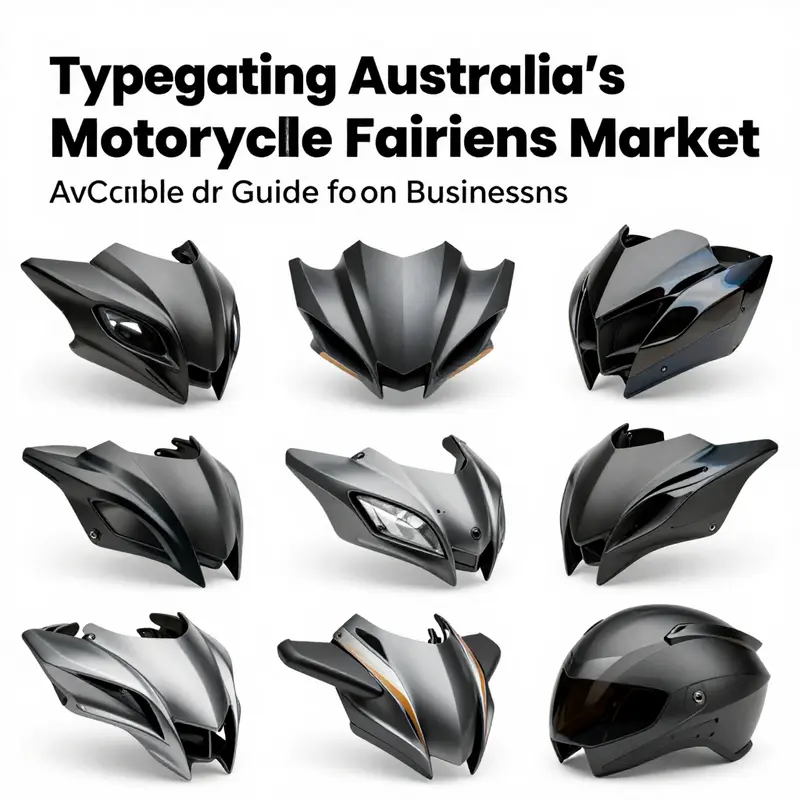
Across Australia’s expansive riding landscapes, the shape of a motorcycle is more than a fashion statement. It is a functional answer to wind, heat, debris, and distance. The Australian market for fairings has grown responsive to riders who chase performance on sun-scorched coastal highways and resilience on long, open backroads through red dust and rain. The demand is for bodywork that endures, performs, and looks the part from one season to the next. Behind this demand lies a global supply chain that has become more accessible and sophisticated, with a particularly influential hub in southern China. Guangdong’s ecosystem of factories, coatings, and advanced molding capabilities shapes most of the world’s fairings. For Australian buyers, this concentration of capability translates into a reliable option: a balance of affordability, high quality, and shorter lead times that help keep fleets, shops, and enthusiasts on the road rather than chasing parts. The market thrives on a triad of considerations—durability, compatibility, and aesthetics—and each riding style finds its answer in a different fairing approach. The broad palette of choices mirrors Australia’s mixed riding culture, where coastal highways demand wind protection and stability, while rugged interior routes reward robust protection and practical design. In this context, the decision to source from Guangdong becomes strategically appealing for B2B buyers and retailers seeking scale without sacrificing fit or finish. A vertically integrated supply chain reduces lead times and simplifies logistics, helping Australian businesses keep up with demand and maintain consistent inventory across workshops and dealerships. The data point that Guangdong-based producers account for a substantial share of global output—roughly two-thirds—underscores the region’s central role in ensuring a steady stream of parts that can be adapted to many makes and models found Down Under. In practical terms, Australian buyers are weighing material options, compliance credentials, and model-specific compatibility as they assemble a catalog of fairings that can withstand the country’s diverse riding environments. High-grade ABS remains a workhorse for many production and aftermarket lines, favored for its balance of rigidity, impact resistance, and ease of finishing. Carbon fiber or composite variants are increasingly sought after by riders chasing weight savings and a premium aesthetic, though these come at a higher price and require careful mounting and care to avoid heat or impact damage in demanding conditions. The story of Australia’s fairing market is not simply about the size of the canopy, but about how the canopy integrates with the motorcycle’s chassis, the rider’s focal point, and the route ahead. It is here that the chapter’s central question emerges: which fairing type best matches a rider’s objectives, the bike’s design language, and the logistics of import, fitment, and maintenance? The chapter that follows seeks to answer this by tracing the spectrum of available shapes and their practical implications for Australian rides, while anchoring the discussion in the realities of cross-border sourcing and domestic service ecosystems. A starting point for many readers is the simplest truth: in Australia, a full fairing offers the most comprehensive wind protection and a sleek silhouette that channels air smoothly around the rider and engine. This is the standard for sport and touring configurations where aerodynamic efficiency translates into sustained comfort on long stints in the saddle and reduced rider fatigue at highway speeds. Yet the story doesn’t end there. For riders who value a leaner, aggressive look, half fairings deliver a sharp aesthetic while preserving access to the cockpit area. They are favored on sport standards and café racer builds where visibility of the engine bay and a more exposed stance become design features in themselves. It’s a balance between protection and accessibility, where engineers optimize the upper contour to manage wind without covering every contour of the machine. Lower fairings, by contrast, form an undercarriage layer that guards the engine and exhaust from debris, while guiding airflow closer to the bike’s underbelly. They play a pivotal role in stability and fuel economy, especially when paired with other fairing elements to tune airflow around the belly and sides. In Australia, these pieces are often chosen in concert with other panels to support a stable, predictable ride across varying weather and road conditions. Adventure-touring fairings sit at the far end of the spectrum: larger, more robust, and modular enough to integrate wind deflectors, additional storage, and adaptable mounting points. They are the practical answer for dual-sport and adventure bikes that see long-distance travel, gravel, and uncertain weather as everyday realities. The emphasis is on protection, modularity, and resilience, allowing riders to customize level of wind protection and storage while maintaining a degree of off-road capability. The trend toward these larger configurations dovetails with Australia’s demand for gear that can endure outback conditions, where robust plastics, reinforced attachment points, and weather-resilient coatings matter as much as aesthetics. Alongside the official or OEM lines, the aftermarket has become a vibrant space. Riders frequently mix materials—ABS for durability and cost-effectiveness, carbon fiber for a lighter, more aggressive presence, and composites that blend stiffness with form. The installation narrative matters as well: fairings need precise mounting points, protection against vibration-induced wear, and careful compatibility checks with the motorcycle’s model and year. Importantly, many Australian shops offer fitment services or professional installation to ensure that the fairing’s lines align with the bike’s frame, headlights, and radiator intakes. When buyers assess whether a fairing will fit a particular model, they often test for clearances around the steering head, the exhaust system, and the lower engine case, and they verify how mounting brackets align with OEM points. The reality is simple: a good fit is as much about engineering precision as it is about an eye-catching surface. As readers navigate these options, a glance at the sourcing side completes the picture. Guangdong’s ecosystem supports rapid prototyping, consistent finishing processes, and a mature knowledge base in polymer injection molding and UV-resistant coatings. For Australian business buyers, the promise is not only visual appeal but consistent performance under heat, sun exposure, and the occasional salt spray along coastal routes. The integrated supply chain can translate into reduced lead times—sometimes by as much as forty-five percent compared with more fragmented producers elsewhere—while bonded warehouses near major ports enable efficient consolidation and Delivered Duty Paid shipping, easing the import process and reducing administrative friction. In the broader context, the Australian marketplace balances cost with compliance. Buyers examine material specs, such as impact resistance and temperature tolerance, and they seek certifications that address safety and environmental considerations. A well-chosen fairing system aligns with the bike’s design intent, protects valuable mechanicals, and presents a cohesive aesthetic that stands up to market scrutiny. When it comes to choosing a fairing type, many riders converge on a practical rule of thumb: start with the intended riding role and climate, then layer in the bike’s geometry and the rider’s posture. A track-oriented rider may favor full fairings paired with a snug cockpit, where wind management and rider comfort are paramount. A city rider or urban explorer with a naked or mildly dressed motorcycle may opt for a half fairing to preserve a lean silhouette and simplify maintenance access. Long-distance travelers and explorers, who encounter a mix of highway speeds and rougher back roads, will likely choose adventure-touring configurations, where modularity and rugged protection deliver the best balance. The decision framework extends beyond aesthetics and weight savings. It encompasses durability under sun exposure and road debris, ease of maintenance and patch repair, and, crucially, availability within the Australian distribution networks. In this space, the Guangdong hub stands out as a reliable source of varied, model-compatible solutions that can be adapted to many makes and years. For readers who want to explore catalogues that transcend specific brands while staying mindful of fit and style, a general fairings catalog can be consulted here: fairings catalog. This resource offers a sense of the breadth of shapes and finishes that exist within the broader ecosystem, without binding a reader to a single brand or model. Finally, the conversation about fairings would be incomplete without acknowledging the value of understanding supplier ecosystems in China. An external guide to sourcing from China—covering verified supplier directories, export protocols, and real-time production capacity—provides a broader strategic perspective for Australian importers and distributors seeking to optimize procurement, lead times, and compliance. For readers seeking this deeper dive, an external resource is available here: https://www.motorcyclefairingschina.com/supplier-guide/.
Guardians of the Shape: Quality, Compliance, and the Australian Motorcycle Fairing Ecosystem
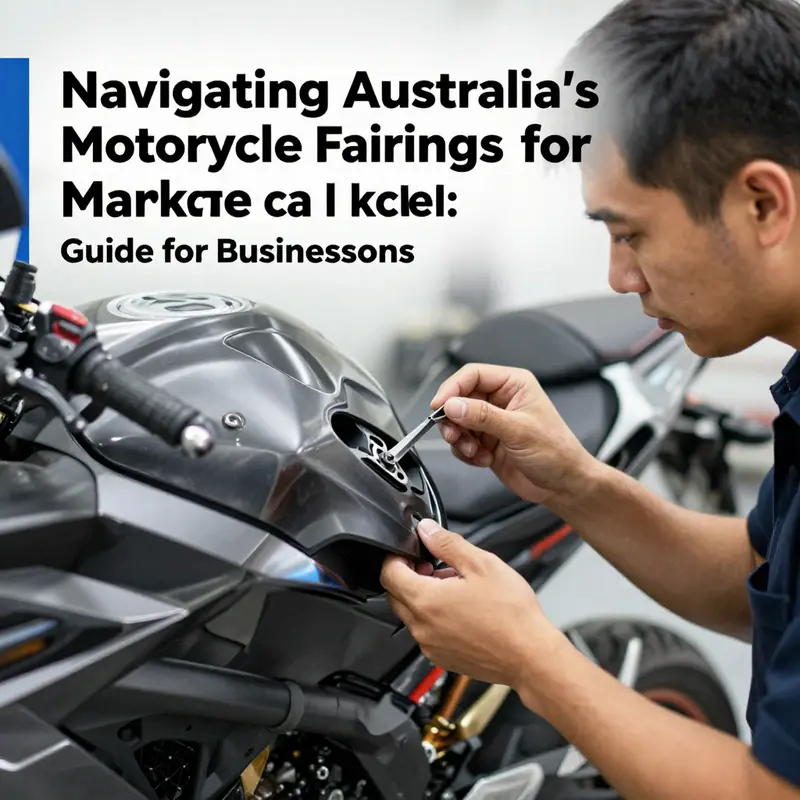
Australian riders demand more than a striking silhouette when they select bodywork for their bikes. They expect components that endure coastal salt and sun, hammering out long-distance miles on open highways and negotiating the rough edges of the outback. In that context, motorcycle fairings are not just cosmetic shells; they are functional interfaces between rider, machine, and road. The chapter that follows maps how quality and compliance shape this market in Australia, why the global supply chain—centered in the Guangdong region of China—plays a pivotal role, and how buyers must navigate a regulatory landscape that protects safety without stifling performance or style. It is a narrative of objects that look seamless but are underpinned by a complex conversation between material science, manufacturing discipline, and civil regulation.
The regulatory frame in Australia positions motorcycle fairings within the broader safety and environmental rules that govern vehicle components. Unlike items that are categorically safety-critical, such as helmets or lighting, fairings sit in a zone where compliance is mandatory but not as overtly prescriptive as certain critical components. The Australian Design Rules, administered through the National Transport Commission, set a baseline that intersects with fairing design at several important points. In practice, this means that fairings must not interfere with the operation of essential safety systems. Any modification to a bike’s body that alters the functionality of required lights—such as brake lights or indicators—must fall within the bounds of ADRs that govern lighting and visibility. ADR 43A covers lighting, ADR 45 covers lamps and reflectors, and ADR 10 addresses safety requirements for motor vehicles. The intent is not to vilify aftermarket or custom fairings, but to ensure that when a rider or a workshop changes the body of a machine, those changes do not introduce new hazards or undermine the visibility and signaling that other road users rely on. The ACCC’s consumer protection framework under the Consumer Product Safety Act 2016 further reinforces that aftermarket products marketed in Australia comply with these overarching safety and environmental expectations. In this ecosystem, the fairing is evaluated not only for fit and aesthetics but for how it behaves in concert with lighting, reflectivity, and structural integrity.
For buyers and installers, the message is clear: any aftermarket or replacement fairing must be assessed for its impact on safety-critical functions. A well-made fairing should not shade a taillight, distort a reflector, or obstruct a critical sensor or switch. It should also withstand the elements—sun, heat, moisture, and the occasional gravel road. This is where material science becomes central. High-grade ABS plastics form the backbone of most modern fairings because of their impact resistance, rigidity, and compatibility with precision molding. UV-resistant coatings protect color and gloss from sun fade, preserving both the look and the resale value of a bike. Yet material quality is not a matter of raw spec alone; it is about the entire design and production process. A responsible supplier will fuse material selection with a rigorous quality assurance regime, including dimensional accuracy to ensure fitment across a spectrum of makes and models and, crucially, repeatable performance in long-haul riding conditions. In Australia, where riders often blend touring comfort with spirited riding, the balance between aerodynamics and protection is part of the buying decision, not just the visual appeal.
The supply chain that underpins this balance is deeply global and unusually efficient. Guangdong, particularly the manufacturing clusters around Guangzhou and Foshan, has become a global hub for motorcycle fairing production. What makes this cluster notable is its integration: thousands of factories operate with advanced polymer injection molding, UV coating, and automated painting lines. The ecosystem supports a vertically integrated flow—from resin and pigments to finished panels—so that products can move from concept to customer with speed and consistency. Lead times improve because of this integration, with reductions reported up to 45% compared with more fragmented suppliers. For Australian importers and distributors, this translates into more predictable schedules and tighter cost controls, essential features in a market where demand for durable, cost-effective, and visually compelling bodywork continues to rise. The Guangdong ecosystem also maintains bonded warehouses near major ports, enabling efficient consolidation and Delivered Duty Paid shipping directly to Australian destinations. That logistical arrangement reduces the complexity of importing, minimizes the administrative burden on buyers, and shortens the distance between order and installation.
Market dynamics in Australia reflect a robust aftermarket culture. Enthusiasts value options that let them tailor their motorcycles without compromising safety or reliability. When choosing a fairing type, many riders gravitate toward full fairings for sport-oriented bikes and long-distance touring machines, while half fairings offer a practical blend for naked or standard setups. Custom or aftermarket fairings cater to personalization, sometimes focused on enhanced aerodynamics or unique aesthetics. The wider Australian market thus rewards suppliers who can combine precise model compatibility with design flexibility. Compatibility verification remains non-negotiable; even minor deviations in model fit can create gaps, stress points, or misaligned mounting points that degrade performance or safety. For this reason, manufacturers and importers often publish detailed fitment data and provide support to ensure correct installation. In the context of the Guangdong-based suppliers, the ability to reconcile rapid production with precise model-specific fitment is a testament to their design processes, tooling capabilities, and in-house testing programs.
Beyond technical performance, compliance remains a commercial differentiator. Australian buyers increasingly expect providers to supply documentation that speaks to safety, environmental stewardship, and post-purchase support. This includes material certifications, testing results, and clear information about the durability of coatings against UV exposure and chemical resistance, especially in coastal regions where salt air can accelerate aging. Environmental compliance also matters, as coatings and plastics must meet regulatory expectations for emissions and waste management during production and end-of-life disposal. It is not unusual for suppliers to align with international standards and to maintain traceability across lots, enabling buyers to verify origin, material batch, and conformity to defined specifications. The result is a market where price alone is insufficient; value is built on a package that includes fitment certainty, consistent cosmetic quality, reliable supply, and compliance with the regulatory framework that governs road safety in Australia.
For buyers navigating this landscape, the path to a sound decision is anchored in three practical considerations. First is the alignment of a fairing’s design with a rider’s model and riding philosophy. Even when a fairing exists in a general category, the exact mounting geometry, interferences with other components, and the space available for wiring and sensors must be validated. Second is the assurance of material and finish quality. A fairing must deliver consistent color, gloss, and finish over time, resisting sun fade and environmental exposure. Third is compliance and documentation. Access to documentation that confirms testing, material safety data, and environmental compliance helps build confidence that the product will perform as advertised on Australian roads and under local regulatory expectations.
Incorporating these elements into a sourcing decision becomes especially important when considering the broader supply landscape. The Guangdong manufacturing ecosystem brings scale and capability, but buyers must still perform due diligence. This includes cross-checking that the supplier offers appropriate warranty coverage, clear return or replacement policies, and post-sale support for installation and repair. The most competent suppliers in this network also provide guidance on integrative design—how a fairing interacts with mounting hardware, windshields, and bodywork from the same or different suppliers. They are able to discuss tolerances, mounting clearances, and potential modifications for optimal performance, without compromising safety or the integrity of the bike’s signaling systems. In practice, this knowledge translates into a smoother experience for Australian importers, fewer returns, and better long-term satisfaction for riders who rely on their fairings for comfort, protection, and aesthetic expression.
As this chapter is situated within a broader article about the Australian motorcycle fairing market, it is useful to connect the discussion to practical touchpoints in the current ecosystem. For readers seeking a broader sense of the fairings landscape and a catalog-style overview that includes model-agnostic fitment guidance, a category page offering a wide range of fairing options can be a helpful reference: fairings category. This link serves as a generic anchor to explore how different fairing shapes, attachment schemes, and finishes are assembled in a market that emphasizes reliability and customization, while keeping the focus on compatible, model-specific fitment in the end. The intention is not to promote any single brand but to illustrate how a well-structured category platform can support informed choices in a market that is both global and highly localized in its regulations.
Ultimately, the Australian fairing market sits at the intersection of design ambition, manufacturing precision, and regulatory vigilance. The Guangdong supply chain provides the raw force of production and scale, enabling a steady flow of affordable, high-quality components. At the same time, Australian regulations ensure that those components contribute to, rather than detract from, rider safety and environmental responsibility. The most effective buyers—whether retailers, workshops, or individual enthusiasts—are those who recognize the importance of due diligence across fitment, material quality, and compliance. They approach a fairing not as a simple shell but as a calibrated element of a motorcycle system, one that must harmonize aerodynamics, aesthetics, and safety with the road realities of Australia. The narrative of quality in this market is thus a story of disciplined engineering, transparent documentation, and an international yet cohesive supply chain that brings careful, compliant, and well-made fairings to riders who demand both performance and peace of mind. For those seeking a deeper understanding of the standards that underpin this space, the official design rules and guidelines provide an essential reference. Australian Design Rules Official Guidelines: https://www.transport.gov.au/vehicle-safety/australian-design-rules
Riding Demand: How Australian Preferences Shape the Motorcycle Fairings Market
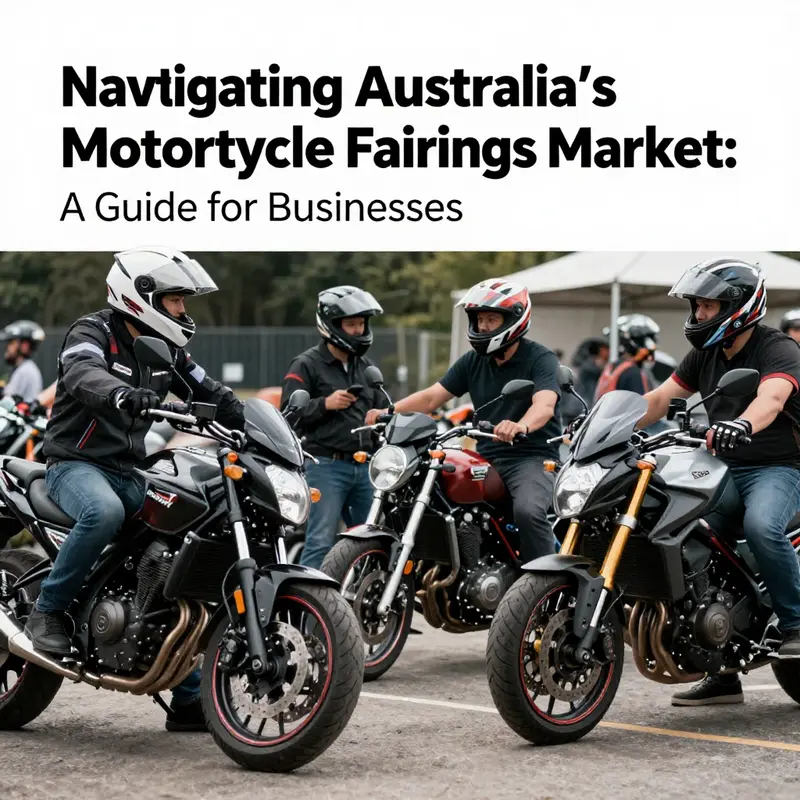
Australia’s motorcycle fairings market balances performance, durability and individual style in a way that reflects the country’s varied riding conditions and passionate rider community. Riders expect fairings to do more than look good. They want parts that resist UV and salt, stand up to long highway stints, and still fit a workshop’s time and budget. These practical expectations combine with a growing appetite for personalization. That mix drives demand for a range of fairing types, finishes and materials that suit touring along the coast, spirited weekend riding, and the occasional gravel road into the bush.
The market’s steady growth comes from a few converging trends. First, motorcycle culture in Australia remains strong, with both commuter riders and enthusiasts invested in upgrades. Second, customization has moved beyond simple decals to include full-body changes. Riders now choose fairings to express identity and to improve aerodynamics or rider comfort. Third, advances in materials and manufacturing have given aftermarket options credibility. Higher-grade ABS and improved coating systems mean lower-cost fairings can match OEM performance more closely than before.
Electric motorcycles are a shaping force in product design and consumer preference. Their different packaging and cooling requirements change how fairings are engineered for airflow, weight distribution and mounting points. Early adopters of electric bikes are looking for fairings that reduce drag, improve range, and integrate battery- and motor-access panels. As electric models gain market share, expect more fairings designed specifically for those platforms. That trend will nudge manufacturers and aftermarket designers to rethink mounting schemas, ventilation, and modular access points so routine servicing remains straightforward.
Climate and geography directly influence what riders choose. Coastal regions put a premium on UV-stable paints and salt-resistant finishes. Inland and arid areas demand materials that tolerate wide temperature swings and abrasive dust. Riders in wetter, more temperate zones prioritize splash protection and easy-to-clean surfaces. These environmental pressures shape purchasing decisions. Many buyers now ask about UV inhibitors, corrosion resistance, and scratch-resistant coatings before they buy.
Type selection—full, half, quarter or custom—usually reflects riding style. Full fairings are the default for sport and long-distance touring riders who prioritize wind protection and aerodynamics. Half fairings appeal to riders who want some wind protection while keeping a naked aesthetic. Quarter and tail-only pieces satisfy riders who want lighter weight or minimal coverage. Custom fairings have broadened the market by allowing combinations of protection, styling and brand- or team-specific graphics. For Australian consumers, the choice often blends form and function, with practical factors tipping decisions as frequently as looks.
Material choice remains critical. High-grade ABS is still the benchmark for toughness and impact resistance. It is also relatively easy to paint and repair, which appeals to owners who plan to personalize their bikes. Thermoplastic polyurethane blends and reinforced composites appear in higher-end aftermarket pieces, promising lighter weight or improved impact characteristics. Buyers who prioritize cost often opt for ABS variants that use efficient manufacturing while retaining acceptable performance. The key is to balance affordability with longevity. Many riders now ask suppliers for detailed material specs, UV testing results, and performance data for impact and flex.
Fitment and compatibility are non-negotiable items on the purchase checklist. Aftermarket fitment can vary by supplier. A loosely fitting fairing increases drag, creates stress points around mounts, and frequently requires extra work to align with OEM components. Australian riders are increasingly cautious, verifying compatibility against make, model and year before purchase. When buying aftermarket panels, confirm mounting hole patterns, headlamp cutouts, and tank clearances. Some suppliers publish templates or fitment guides, which are invaluable for avoiding returns or onsite modifications.
Aesthetics remain a major purchase driver. Buyers expect durable colours and factory-grade finishes. UV-resistant paints and multi-layer coating systems are standard asks, because fading and peeling are common concerns in Australia. Suppliers that offer pre-finished options with proven UV protection hold an advantage. Riders who plan to respray still prefer base-quality surfaces and consistent primer layers to ensure a smooth, reliable finish.
Maintenance and repairability influence long-term satisfaction. Riders in remote areas or those who use their bikes daily favor fairings that are straightforward to remove and replace. Designs that conceal fasteners or require special tools reduce convenience. Conversely, modular designs that allow damaged sections to be replaced independently can lower long-term ownership cost. Australian motorcyclists often evaluate the ease of aftermarket repair when selecting fairings, particularly if they ride off the beaten track.
Price sensitivity and value perception shape buying habits for most consumers. While some riders will always pay a premium for brand-new OEM parts, a significant portion seek aftermarket fairings that offer comparable fit and finish at lower cost. This segment is particularly active among younger riders, hobbyists and those performing restorations. For retailers and B2B buyers, the ability to source competitive, durable fairings creates margin and market differentiation. Transparent pricing, clear warranty terms, and visible quality controls help build buyer confidence.
Where buyers source products is also shifting. Many Australian businesses and private buyers now look overseas for fairings. Suppliers that demonstrate consistent quality control, reliable lead times, and simple import processes win business. For local retailers, offering a mix of OEM and high-quality aftermarket options keeps customers who want both certified fit and affordable alternatives. For consumers, the balance is between trusting a supplier’s fitment claims and the savings offered by aftermarket panels.
Information access matters. Buyers respond to technical detail, fitment guides, and clear visuals. Comprehensive photo sets, mounting diagrams, and customer-installed examples reduce uncertainty. Australian consumers are more likely to commit to a purchase when they can verify details digitally. Retailers and suppliers that provide clear, model-specific documentation reduce returns and improve customer loyalty.
Community and culture drive many choices. Riders turn to clubs, forums, and local workshops for recommendations. Word of mouth is powerful; a trusted recommendation can outweigh glossy marketing. For those who want model-specific options, hobbyists frequently consult dedicated pages to find compatible parts and proven fitment kits. One useful starting point for model-focused browsing is a collection of Yamaha YZF fairings that illustrates how model-specific offerings are presented and documented.
Finally, regulatory and safety considerations play an underappreciated role. While fairings themselves are not typically regulated like brakes or lights, safety-conscious buyers consider crash dynamics and the effect of added bodywork on handling. Buyers also expect compliance with environmental standards in coatings and manufacturing. Suppliers that make compliance visible—and that offer test data or certificates—gain credibility with both individual riders and commercial buyers.
Overall, the Australian market prizes a practical mix of protection, style and affordability. Demand will continue to favor adaptable designs that handle the country’s varied climates. As electric motorcycles become more common, expect fairings to evolve around battery and motor packaging. For now, success in this market depends on delivering reliable fitment, durable finishes and transparent technical information. For readers who want a quick view of broader market projections and consumer trends in Australia, official market forecasts provide timely context Motorcycles – Australia | Statista.
Final thoughts
Understanding the motorcycle fairings market in Australia is crucial for business owners looking to navigate this dynamic landscape. By exploring the diverse products, international sourcing opportunities, quality standards, and shifting consumer preferences, businesses can position themselves effectively within the market. Companies that leverage this knowledge are likely to thrive in an ever-evolving environment, tapping into the rich culture of motorcycle riding that resonates across Australia.