
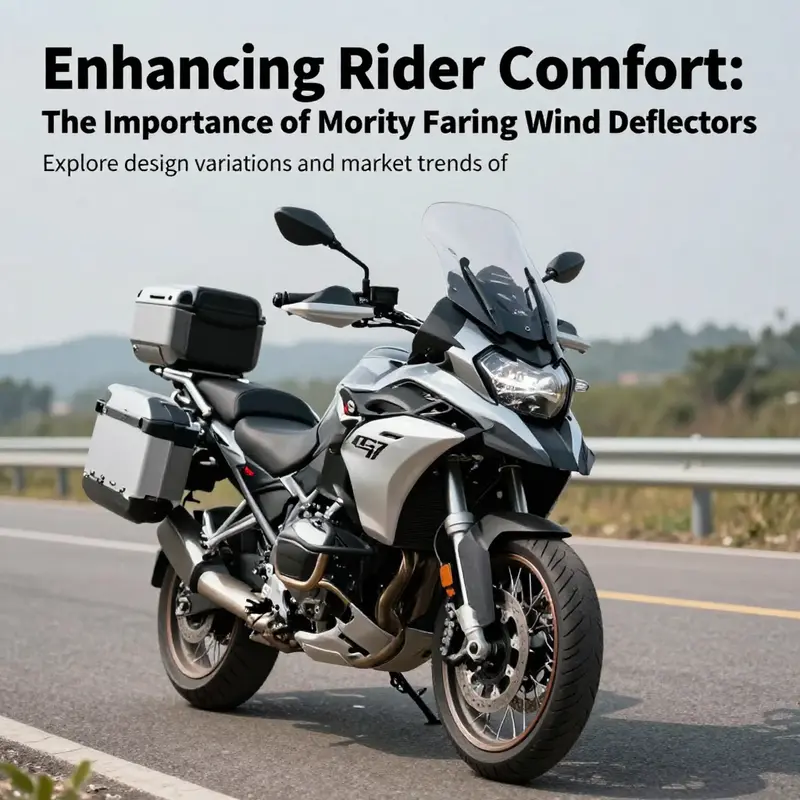
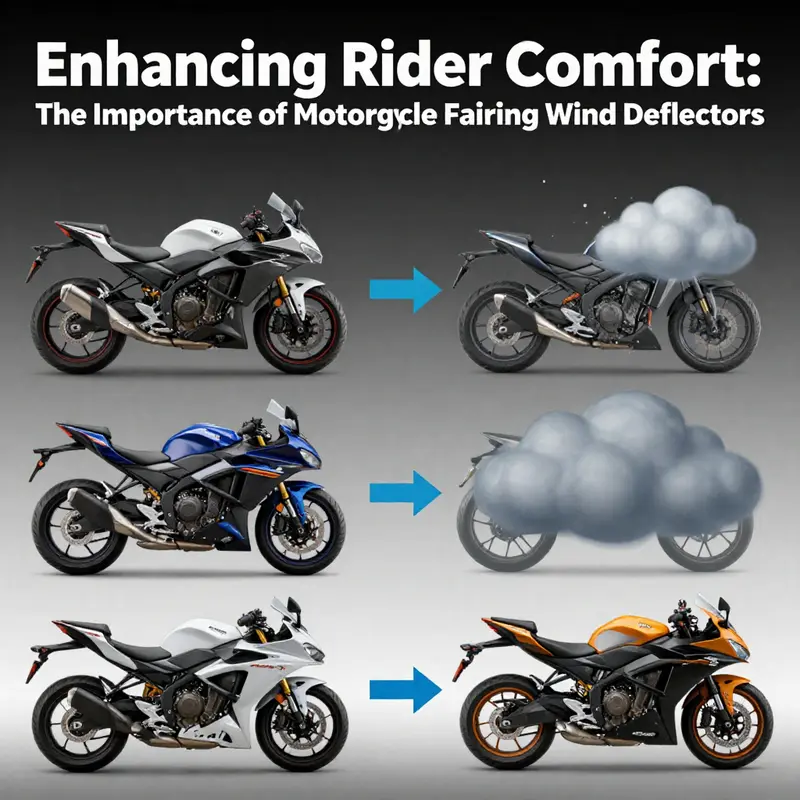
Motorcycle fairing wind deflectors have become essential accessories for enhancing rider comfort and safety. Designed to redirect airflow, they significantly reduce windblast and turbulence, leading to a more enjoyable riding experience, especially at higher speeds. For business owners in the motorcycle accessories industry, understanding these innovations is crucial for meeting rider needs and capitalizing on market trends. This article delves into the various design variations available, their functional benefits, installation specifics, the current market landscape, and performance considerations that affect their effectiveness. Each chapter offers insights that help business owners recognize opportunities for enhancing their product offerings.
Wind Deflectors and the Rider: Design Variations for Comfort and Control
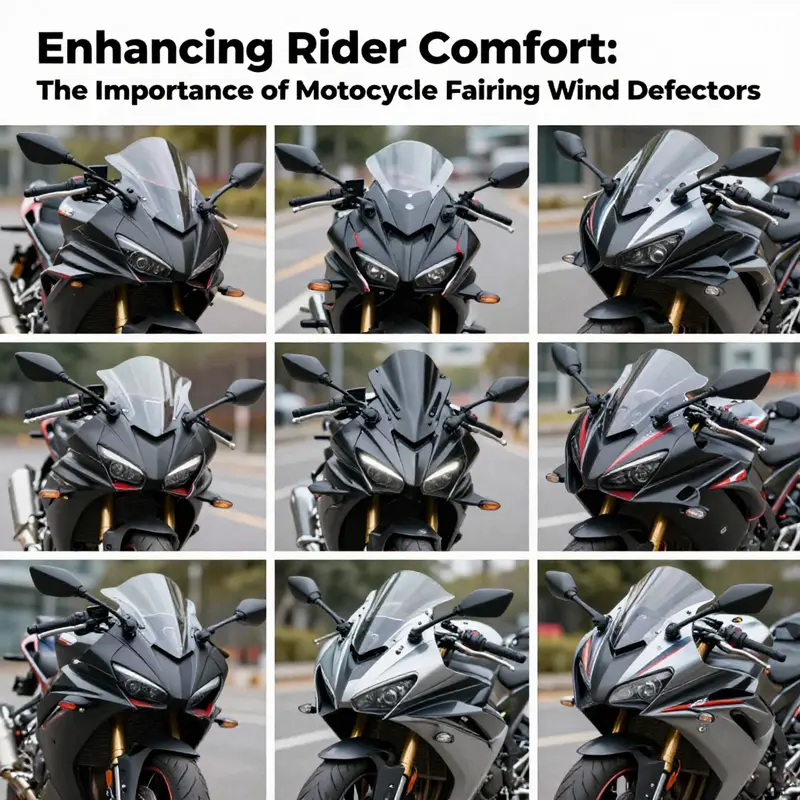
Riders who seek comfort on long rides know that wind is more than a backdrop; it is an active force that shapes fatigue, posture, and handling. Wind deflectors—whether integrated into the fairing or mounted as add-ons—affect the air reaching the rider and the bike’s overall balance at speed. The goal is to create a stable, predictable airflow that fits the rider’s posture and the bike’s geometry. Designers approach this challenge with several configurations, each offering distinct benefits and trade-offs. The result is a spectrum of options that can be matched to riding style, fairing shape, and performance goals, allowing a rider to pursue comfort without sacrificing control or visibility.
Batwing-style deflectors are among the most recognizable. Their broad upper surface meets the flow first, shaping air to move outward and upward. In practice this reduces buffeting on the chest and hands at highway speeds, providing a spacious, enveloping shield for long-distance comfort. The trade-off is a larger silhouette that can alter perceived wind angles for taller riders or influence the fairing’s aerodynamics in crosswinds. When aligned to the rider’s height and seating position, batwings tend to deliver steady protection with minimal flutter, contributing to fatigue reduction over hours in the saddle.
Fixed deflectors offer a simpler, no-move-parts solution. Mounted rigidly to the fairing, they provide a stable envelope of airflow across speeds and weather conditions. Their strengths include reliability, a clean, low-profile appearance, and straightforward maintenance. However, the lack of adjustability means the rider cannot tailor deflection to shifts in posture or sudden wind changes, trading flexibility for simplicity and cost savings.
Fork-mount deflectors take a different approach by attaching to the fork crowns or triple clamps. This placement interacts with the front wheel wake and can dampen high-frequency air fluctuations traveling up the fork. The result is crisper steering feel and a calmer cockpit, especially on choppy surfaces or at high speed. Metal construction adds durability but can influence weight distribution and front-end feel, so compatibility with the bike’s geometry is important.
Universal headlight fairings sit between full fairings and naked-bike simplicity. They offer modest shield around the headlight and upper engine area, useful on bikes without a full fairing or when a quick, test-add is desired. They cannot fully replicate dedicated wind protection, especially in heavy rain or strong crosswinds, and performance depends on how well they direct air along the torso rather than directly into the chest.
Lower fairings target the bike’s midsection and belly, smoothing the wake and protecting components while contributing to overall aero efficiency. They work best in concert with other deflector strategies, reducing underbody turbulence and supporting stability on longer fast sections.
Choosing among these designs hinges on the rider’s goals, the bike’s architecture, and the typical riding environment. Touring riders might favor batwings for enveloping comfort, while sport-touring riders may prefer fork-mounted solutions to preserve precise steering during aggressive cornering. Riders seeking simplicity may lean toward fixed deflectors paired with a suitable windscreen. For riders on naked bikes or small fairings, universal fairings offer incremental wind management without a full rework. Lower fairings can complement any setup by smoothing the air under the belly and aiding engine cooling and efficiency.
Material choices also matter. Durable plastics, polycarbonate, and reinforced composites offer light weight and good shape retention, while metal components can deliver added rigidity. Surface coatings help resist abrasion, UV exposure, and environmental wear. Aesthetics should not be overlooked; a well-integrated deflector looks like a natural part of the bike rather than a separate add-on. The best results come from balancing the rider’s posture, the bike’s lines, and the airflow’s path so they reinforce one another rather than conflict.
Practical fitment starts with careful measurement and reference to the manufacturer’s guidance. Riders should map their height, torso length, arm reach, and typical seating position against the deflector’s geometry. The goal is to place the boundary layer transition so that airflow remains attached over the torso with minimal separation. Subtle adjustments in seat height or windscreen angle can optimize air behavior, but improper installation can lead to drag, noise, or new vibration modes. After choosing a variation, follow installation instructions closely and verify alignment on the road.
In pursuing wind deflection, think of it as an aerodynamic conversation between rider, bike, and environment. The right variation helps you ride longer with less fatigue, feel steadier in gusts, and enjoy a cockpit that remains comfortable across speeds and conditions. As riding habits evolve, the willingness to test, refine, and adapt airflow becomes a practical extension of confidence.
Fairing Wind Deflectors: Comfort, Control, and Efficiency
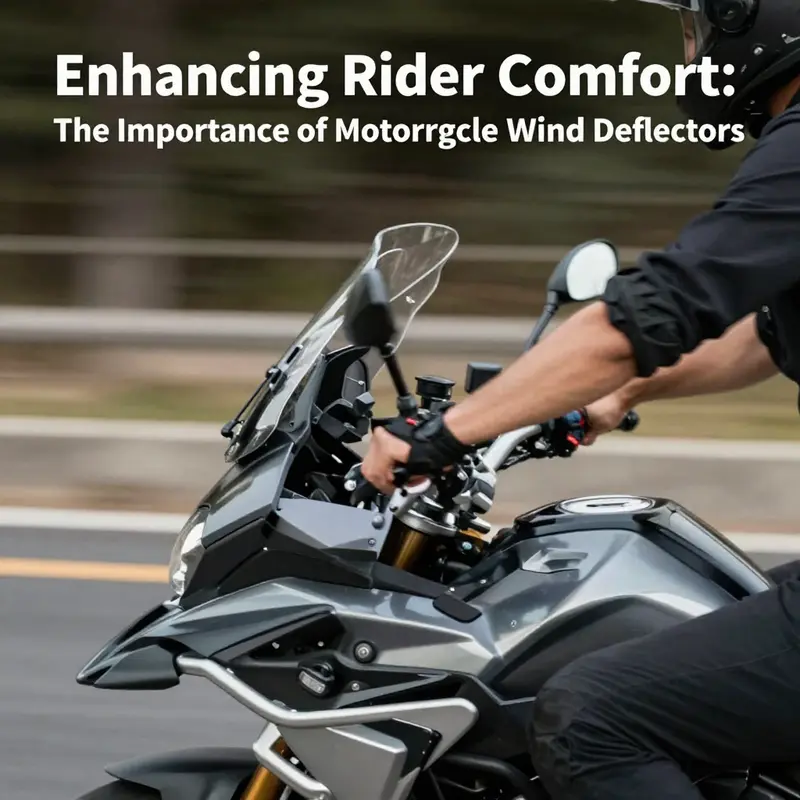
Motorcycle fairing wind deflectors are more than simple add-ons; they are aerodynamic tools designed to shape the flow of air around rider and machine. When positioned and sized correctly, a small deflector redirects turbulent air away from the rider’s torso and helmet, reducing direct wind pressure and the noisy eddies that cause fatigue and steering chatter. The effect grows with speed and duration, with noticeable gains on long rides when wind management matters most.
At the core, deflectors smooth the transitions between the fairing, windshield, and rider. By guiding air along a controlled path, they reduce buffeting and lower the aerodynamic drag of the rider-bike system. Lower drag means the engine works less to sustain speed, which can translate into cooler engine temperatures, steadier throttle response, and modest improvements in fuel economy on sustained highways.
Comfort benefits extend beyond drag: they act as a wind buffer for the head, shoulders, and chest, reducing neck strain and rider fatigue. In cold or wet weather, deflectors cut wind chill at the torso and help keep vision clearer by diverting spray and debris. For riders who prefer a clean look, low-profile or batwing designs provide protection without bulk.
Noise reduction follows from smoother airflow. Less gusty turbulence around the helmet reduces wind roar and improves cabin-like acoustic conditions, aiding concentration on long rides and making intercoms and voice commands easier to hear.
Stability and control also improve. A well-behaved airflow reduces steering fluctuations caused by gusts and helps keep the front wheel planted during fast direction changes or heavy acceleration. Some designs add a small amount of downforce that enhances front-end grip without compromising steering feel at normal speeds.
Important fit considerations apply. Deflectors must match the fairing geometry, windshield height, and rider posture. Misalignment can create new turbulence or strike the windshield, and improper mounting can stress thin panels. Riders often choose model-specific deflectors with documented compatibility, then fine-tune angle and height to balance protection and visibility.
There is a spectrum of designs to choose from: fixed deflectors for durability, adjustable units for tuning at different speeds, and low-profile variants that preserve a clean silhouette. Wider, Batwing-style deflectors provide broader protection against crosswinds and rain. Each approach involves trade-offs among protection, efficiency, and aesthetics; the best choice depends on typical riding scenarios, such as solo touring, two-up cruising, or mixed urban and highway use.
Integrating deflectors with other aero components is key to maximizing benefits. When paired with a well-shaped windshield and other fairing extensions, deflectors can shift more wind away from the rider’s breathing zone and helmet surface. However, a poorly matched setup can simply relocate turbulence. Small adjustments in angle or height often yield meaningful comfort gains, and safe, controlled testing is worth doing.
For readers evaluating options, model-specific fairings provide tested compatibility and reliable fit a starting point. Many riders also consider aftermarket kits that include mounting hardware and guides to assist alignment. In touring contexts, combining model-focused fairings with modest deflector adjustments tends to deliver the smoothest ride over long distances.
Examples and references are available for further reading, including practical reviews and comparative testing that quantify drag reduction and perceived comfort improvements with well-designed deflectors.
Precision Fit and Flow: Installing and Verifying Compatibility of Motorcycle Fairing Wind Deflectors for Long-Distance Comfort
The decision to add wind deflectors to a motorcycle’s fairing is often driven by a practical need: to tame the relentless winds that buffet a rider on long stretches of highway. But true comfort is not only about blocking air; it is about shaping the airflow so it arcs smoothly around the rider’s silhouette, reducing buffeting without creating new drag or visual obstruction. That balance depends on three intertwined factors: compatibility with the bike’s existing fairing, a secure mounting system that can withstand the demands of road vibration at speed, and a design that plays nicely with the rider’s posture, seating position, and preferred wind shelter. Understanding these elements first helps set the stage for a install that feels purposeful rather than cosmetic. When you set out to choose wind deflectors, you are not simply picking a small accessory; you are selecting a dynamic interface between machine, rider, and atmosphere. Compatibility, in particular, is more nuanced than a simple year-to-year model match. Fairings vary widely in shape, contour, and mounting points, and wind deflectors come in several families designed to attach in different ways. Some are intended to mount on the forks, providing a sturdy anchor point and a predictable path for the air to follow as it diverts toward the rider’s torso and shoulders. Others are integrated into the fairing itself, forming a seamless sonic envelope that blends with the bike’s aerodynamics. Each approach has its merits, and neither is universally superior. What matters is matching the deflector to the specific model, the fairing’s geometry, and the rider’s preferred wind profile. For a rider who spends hours at highway speed, a compatible system means predictable behavior at high speeds, consistent deflection angles, and the flexibility to adjust without compromising the fairing’s integrity or the windshields above it.
Before any purchase, the critical step is to verify fitment for the exact motorcycle in question. This involves cross-checking the deflector’s intended model range with your bike’s version, year, and any aftermarket fairing modifications. A touring or sport-touring machine, for example, may rely on a wind deflector kit designed to work with a specific fairing contour and mounting footprint. Even within the same model family, subtle changes from year to year can alter mounting anchors or clearance to nearby components. If a part is advertised as compatible with several variants, it remains essential to confirm that the exact combination you own is one of those variants. In practice, this means consulting fitment guides, dealer catalogs, and the product’s own specification notes. It also means measuring critical clearances on the bike itself to ensure there is no contact with the windscreen, switchgear, or fairing seams when the bars are turned fully and the rider is moving through normal riding positions. A cautious rule of thumb is to confirm fitment with a retailer’s or manufacturer’s data for the precise model and year, and to reconfirm after any other fairing work or accessory installation has taken place. The doctrine of model-specific design is not merely about a single bolt pattern; it is about the system’s integrity when subjected to the combined stress of wind loading and road vibration.
Beyond compatibility, the mounting system deserves careful attention. Wind deflectors come in configurations that either clamp to the fork tubes or attach to the fairing with dedicated brackets. Fork-mounted variants can provide a robust anchor and are often favored when the fairing’s own geometry leaves little room for integration. Integrated deflectors, on the other hand, are designed to ride in concert with the fairing’s lines, sometimes sharing hardware with other components to reduce bulk and improve aerodynamics. The choice between these mounting philosophies should reflect the bike’s existing architecture and the rider’s willingness to modify that architecture. It is also worth considering the materials and hardware supplied with the kit. Durable polymers or reinforced composites must resist aging under sun exposure and heat, while stainless steel or corrosion-resistant fasteners help ensure the system remains tight through rain, road salt, and vibration. A well-engineered mounting system includes all necessary hardware and indicates torque specifications or clamping ranges. Skipping steps, like over-tightening or using mismatched fasteners, can distort the deflector or bend mounting points, leading to misalignment and reduced effectiveness. A secure mount is the foundation upon which all other performance claims rest.
Material choice and aerodynamics are the next layers in the decision-making process. Deflectors are typically designed to channel air away from the rider without creating unintended flutter or buffeting. The preferred designs sheath the airflow in a controlled path that preserves visibility and reduces turbulence. Materials matter here: their stiffness, impact resistance, and clarity influence both performance and durability. Some deflectors are finished with coatings to resist scuffs and UV degradation, while others emphasize a transparent or lightly tinted profile that keeps windshields and instrumentation legible. The way a deflector redirects air also interacts with the rider’s posture—whether the torso leans into the bars, the height of the windscreen, and the angle of attack at cruising speeds. Riders who sit taller or bend forward can experience different wind patterns than riders who sit more upright. In this lighting, a deflector is not a one-size-fits-all item; it is a small aerodynamic device that should be evaluated on how well it complements the rider’s silhouette and the bike’s overall aero package.
Customization options offer a way to tailor wind deflection to personal taste while preserving function. Some riders prefer lower-profile screens and accompanying lowers that merge into the fairing to produce a balanced wind shadow without appearing bulky. Others opt for sculpted lower extensions or batwing-inspired contours that amplify sidewind protection while still allowing easy access to mirrors and controls. Aesthetics, of course, matter to riders who spend long days with their bikes, but even the most stylish additions should be evaluated for their impact on airflow. Seamless integration is the ideal outcome: a deflector that looks like a natural extension of the fairing rather than a detached appendage. When seeking this seamless effect, verify that any added pieces align with the fairing’s natural lines, do not create sharp edges that could be snagged by branches or parking lot debris, and not interfere with the bike’s lighting or reflectors. Within the broader ecosystem of fairing accessories, you will encounter a spectrum of options—from simple side wings to more elaborate lowers with built-in deflection channels—each promising a degree of wind relief. It is reasonable to expect that a cohesive configuration will minimize buffeting while preserving a clear line of sight, which is essential for safe riding in variable conditions.
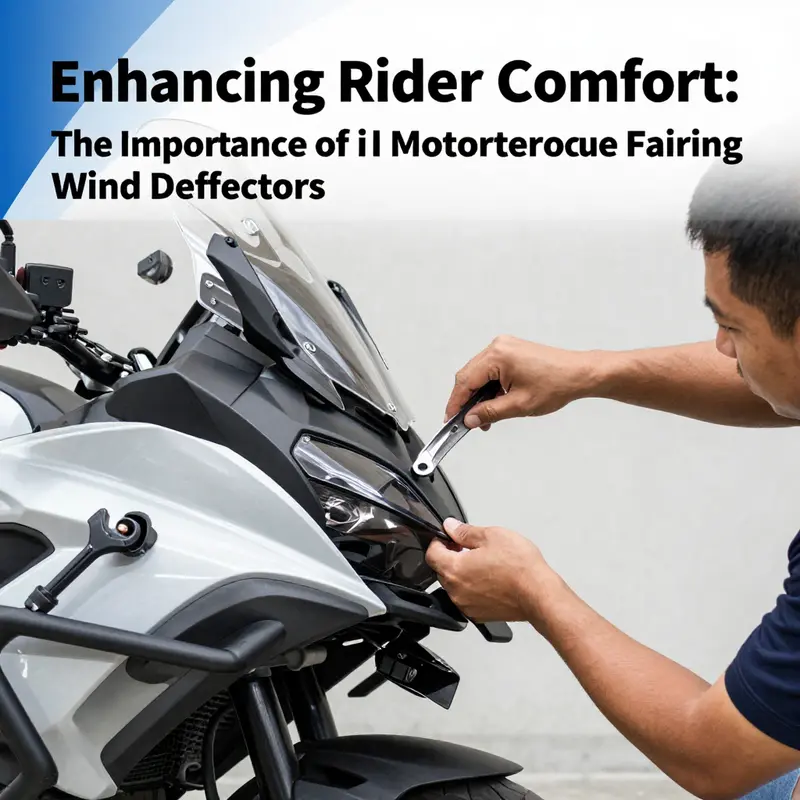
Installation, as much as compatibility, is the art of translating design intent into real-world performance. Manufacturers publish fitment guides and step-by-step instructions that outline the required tools and the sequence of steps. Following these guidelines helps ensure that the deflector seats correctly, that brackets align with mounting points, and that the deflection angle is tuned to the rider’s exposure. The process may involve removing small fairing panels, drilling where necessary, or repositioning original hardware to accommodate new brackets. For many riders, the drilling step is the most intimidating; it represents a potential permanent modification to the bike. A careful approach is to prepare the bike by cleaning the mounting areas, scoping for hidden cables, and double-checking all measurements before any hole is created. Once installed, a period of cautious testing is prudent. A short ride in a suburban setting first can reveal alignment issues or noise from flutter that were not apparent on the workbench. If the deflector chafes against the windshield, fairing, or mirrors, or if it appears to shift under load, it is a signal to recheck mounting points, alignment, and clearance. Subsequent long rides will reveal whether the deflector truly reduces headwind fatigue and whether it produces any new hotspots of turbulence. A well-installed system should feel almost invisible in day-to-day operation, while delivering noticeable relief during sustained highway speeds.
Documentation and sources of reliability deserve emphasis, especially for riders who rely on online catalogs and retailer reviews to guide their decisions. The most trustworthy path involves cross-referencing official fitment guides with dealer data and reading through rider feedback for real-world performance notes. In practice, this means prioritizing compatibility tables for the exact model and year, validating the mounting method against the bike’s fairing design, and confirming that the accessory kit provides complete installation hardware and clear torque specifications. When in doubt, contacting a dealer or the manufacturer’s support channel can save time and prevent mistakes. For those who want to explore related fairing options and to understand how different models approach wind protection, a practical step is to browse the BMW fairings category, which showcases a range of shapes and mounting philosophies that can illuminate how wind deflectors might best integrate with your own bike. BMW fairings offers a sense of the diversity in fairing design and how riders consider compatibility across models. This kind of exploration helps set realistic expectations about what a wind deflector can and cannot achieve on a given chassis.
As you navigate the practicalities of installation and compatibility, it is useful to keep in mind the broader purpose of wind deflectors: to extend comfort without compromising control. Well-chosen and properly installed deflectors can noticeably reduce wind fatigue, particularly in the chest and shoulder regions, without obstructing the view or adding excessive forward weight. They can also help stabilize the overall ride by smoothing the air stream around the rider, which in turn reduces vibration transmission and micro-turbulence that can wear on hands and forearms over long days in the saddle. The success of a deflector system, then, rests on a careful alignment of model-specific design, secure mounting, and a thoughtful approach to rider posture and terrain. When these elements align, a rider is rewarded with a steadier ride, reduced fatigue, and a sense that the motorcycle’s aerodynamics have been tuned with the same precision that defines the bike’s steering and suspension. The end product is not a dramatic change in appearance, but a tangible improvement in how the bike feels at speed—quiet, predictable, and ready for the horizon.
External resource for further reference: https://www.harley-davidson.ca/en-ca/accessories/fairings-and-fender-lowers
Shaping the Breeze: The Market Landscape of Motorcycle Fairing Wind Deflectors and Rider Comfort

Wind deflectors are more than small plastic wings tucked into a fairing. They sit at the intersection of comfort, aerodynamics, and personal customization, shaping how a bike behaves at speed and how a rider feels after hours on the road. The market surrounding these accessories has moved from niche add-ons to a measurable segment that mirrors the broader shifts in motorcycle design and rider expectations. As manufacturers and aftermarket suppliers recalibrate to balance performance with practicality, wind deflectors have become a telling indicator of how riders pursue comfort without surrendering style or visibility. The market outlook supports this view. Industry analyses place the global air deflector market on a path of steady expansion, with projections suggesting a total value in the tens of billions of dollars by the middle of the next decade. A credible forecast pegs global demand with a compound annual growth rate in the low-to-mid single digits over a multi-year horizon, reflecting incremental advances in materials, manufacturing, and installation ecosystems. This measured growth is not about rapid spikes; it is about durable demand driven by longer rides, cross-border touring, and the desire to maintain energy and focus on the road rather than battling wind fatigue. The figure indicating a market reaching a substantial scale by 2034 underscores a broader trend: wind management is an essential, ongoing element of motorcycle ergonomics and efficiency, not a transient accessory masquerading as a convenience. When riders think about extended journeys, the wind deflector becomes part of a larger system that includes fairing geometry, windshield design, seat positioning, and even riding posture. The benefits asserted by legitimate wind deflectors are consistent across genres: reduced buffeting, lower headwind fatigue, and a calmer airflow that protects the torso and shoulders from sustained gusts. The physics are simple, yet the engineering implications are nuanced. A well-designed deflector can redirect airflow to create a smoother envelope around the rider, lowering turbulent pressure and smoothing the onset of fatigue. This is especially valuable on touring and sport-touring configurations where the balance between wind protection and forward visibility is delicate. Of course, the market’s success rests not only on the physics but on the fit and integration with the motorcycle’s existing fairing system. The most compelling products harmonize with the bike’s lines, do not obstruct instrumentation or mirrors, and can be installed with a reasonable degree of accuracy by enthusiasts or professional technicians. In this sense the market diverges into two streams. The first is OEM, where manufacturers design wind deflection into new fairing assemblies or as part of factory accessory lines. The second is aftermarket, where riders or shops seek model-specific or universal solutions that can be adapted to a wide range of machines. Both streams share core priorities: durability, compatibility, and a straightforward installation path that does not require a lifetime of mechanical expertise. In terms of design, the repertoire ranges from simple, low-profile deflectors that sit adjacent to a windscreen to more complex side wings and batwing-inspired schemes that aim to broaden the protective cocoon without introducing excessive drag. The material palette typically includes tough, impact-resistant plastics such as ABS or polycarbonate, sometimes reinforced with metal components for mounting strength. These choices matter because they determine not only durability in the face of road debris but also clarity of vision through the windshield and the long-term resistance to UV exposure and weathering. The combination of materials and geometry influences performance, including how well wind is redirected at different speeds and rider heights. Because riders come in all shapes and riding styles, the market has acknowledged the need for both fixed and adjustable options. Adjustable deflectors offer the flexibility to tailor wind direction in response to seat height, reach to the handlebars, and the rider’s posture. For some, that agility translates into meaningful comfort gains on long rides; for others, a fixed solution that mirrors the bike’s aesthetic and the rider’s preferred posture is sufficient. Beyond mechanics, the market is also a mirror of consumer preferences. Riders increasingly seek products that balance form and function. The aesthetic aspect matters because wind deflectors now sit in the line of sight along the bike’s profile; a sleek, integrated look can enhance perceived value just as a robust improvement in comfort does. In many regions, this synergy between appearance and function has helped fuel resale value and enthusiast interest, turning wind deflectors into reputational accessories as much as practical devices. The distribution network for these products reflects a two-pronged approach. OEM channels continue to offer wind deflectors as part of official accessory programs, ensuring compatibility with particular models and warranty coverage that appeals to new-vehicle buyers who want assurance. At the same time, the aftermarket ecosystem thrives on platforms that connect riders with universal fitments and model-compatible options, along with retailers that publish fitment guides, installation tutorials, and troubleshooting advice. For riders seeking precision fitment or a tailor-made appearance, the emphasis falls on fitment verification and the availability of model-specific data from manufacturers or trusted retailers. This is where a careful reading of fitment guides becomes essential. It is not enough to know that a wind deflector exists; riders want to know that it will align with mounting points, clear the fairing radius, and not interfere with nearby components. The process often starts with a careful check of model-year compatibility, followed by a review of mounting hardware, thickness tolerance, and the possibility of required procedures such as drilling or modifying existing fixtures. The market responds to these concerns with design for ease of installation. Some deflectors are engineered to snap into place with minimal tools, while others use hardware kits that accommodate a variety of mounting patterns. In this landscape, consumer education becomes a critical enabler. Riders who understand the basics of airflow, wind pressure, and the way a deflector interacts with the fairing can make smarter purchasing choices. They learn to weigh the trade-offs between wind protection, airbrush-like aesthetics, and the occasional need for supplementary windshields in heavy rain or crosswinds. For those who want a gateway into customization, there are readily accessible resources that guide compatibility checks and installation steps. A practical approach often involves consulting manufacturer fitment guides or product-category pages that offer model-specific listings and notes on required tools and procedures. For riders curious about category options without committing to a single brand, there are curated resources that group wind-deflector products by fairing type, mounting style, and intended riding posture. This helps buyers understand how a given solution might align with touring versus sport-riding goals, and how it would fit with the bike’s overall aerodynamics. The convergence of OEM and aftermarket offerings has also driven competition on value and warranty. OEM wind deflectors commonly come with manufacturer-backed warranties and sanctioned fitment, delivering peace of mind for riders who want minimal risk. Aftermarket options, while sometimes lacking formal warranties, often compete on price, availability, and the breadth of model coverage. This dynamic keeps competition intense and ongoing, pushing suppliers to optimize materials for weight, durability, and resistance to weathering while maintaining or improving ease of installation. The consumer is the ultimate beneficiary of this competition. With a broader array of choices, riders can select configurations that suit long-distance comfort, weekend excursions, or daily commuting. The market grows more robust when found in markets that value long-range riding comfort and aerodynamic efficiency, particularly where climatic conditions accentuate wind exposure. In this regard, the wind deflector becomes a practical indicator of a rider’s willingness to invest in comfort and control, rather than merely seeking a cosmetic upgrade. As the sector evolves, it remains essential for buyers to verify compatibility and read installation guides carefully, as improper fit or aggressive trimming can compromise performance or even damage fairings. Trusted retailers and manufacturer resources provide the necessary clarity, helping riders navigate model-specific fitment, adjustability ranges, and the long-term durability of their chosen solutions. For those who want to explore options beyond single-brand offerings, the category approach allows a broader understanding of how deflectors interact with different fairing shapes and windscreen configurations, enabling more informed decisions that align with riding style, climate, and maintenance routines. The market’s steady growth also signals an ongoing conversation about the role of wind management in practical motorcycle ergonomics. In the end, wind deflectors are a functional intersection of speed, comfort, and design. They reflect how riders value sustained focus on the road, reducing fatigue that can cloud judgment and reaction times over long miles. They also reveal a broader industry pattern: the pursuit of smarter, more modular, and more adaptable components that can be customized to fit a wide spectrum of machines without compromising reliability. For riders, shops, and manufacturers alike, the story of wind deflectors is a story of incremental improvement that scales with the rider’s ambitions—from daily rides to cross-country adventures. And as the market continues to mature, the emphasis on precise fitment guides, durable materials, and straightforward installation remains central to turning wind deflection from a transient convenience into a trusted, lasting feature of every rider’s toolkit. To explore related categories and find compatible options, you can browse the broader fairings catalog that groups devices by compatibility and mounting approach, a useful starting point for those seeking category-wide insight rather than a single-model solution. Honda fairings provides an illustrative example of how category pages frame compatibility discussions and guide installation expectations. External market context and growth projections continue to shape how brands and retailers communicate value to riders, ensuring that wind deflectors remain an accessible, practical upgrade for a wide range of riding styles. For readers seeking additional data on market sizing and regional dynamics, see the official industry resource here: https://www.harley-davidson.co.nz
null
null
Final thoughts
Motorcycle fairing wind deflectors represent an important advancement in rider comfort technology, offering various designs and benefits that appeal to touring and sport-touring enthusiasts. For business owners, recognizing the functional advantages and the significance of proper installation can lead to better customer satisfaction and potential sales growth. Moreover, staying attuned to the diverse market landscape and performance factors will enable businesses to tailor their offerings to meet evolving rider needs. Ultimately, incorporating high-quality wind deflectors into your product line not only enhances rider experience but also positions your brand as a leader in motorcycle accessories.