
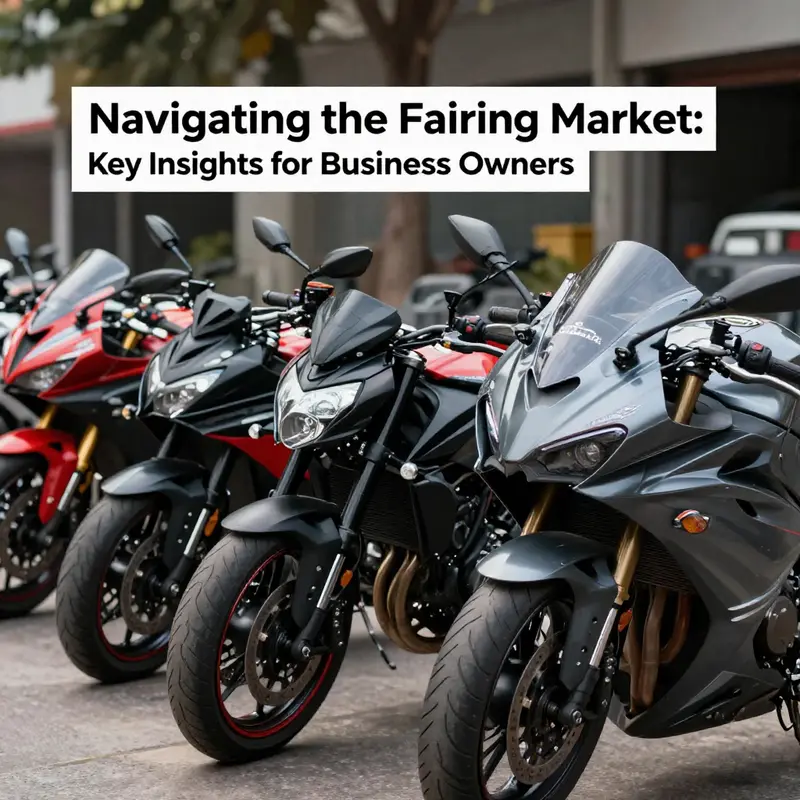
The motorcycle fairing market is a vital segment within the global motorcycle industry, influencing both performance and aesthetics. Fairings, which are aerodynamic body panels, play a crucial role by reducing wind resistance and enhancing rider protection. For business owners in this field, understanding the economic dynamics, technological advancements, and prevalent market trends is essential for strategic positioning and competitive advantage. This article delves into the economic aspects that govern fairing sales, the latest innovations that are redefining the market, and the compelling trends that are guiding consumer preferences and demands.
Riding the Margin: How Global Economics Shape the Motorcycle Fairing Market
In the world of motorcycle design, the fairing is more than a shield against wind and weather. It is a complex confluence of aerodynamics, rider protection, thermal management, and visual identity. The chapter of the fairing market that markets themselves as much by speed as by style is shaped not only by the engineering choices of designers but by the economic currents that move along with demand, supply, and strategy. The modern motorcycle fairing market—spanning OEM production and aftermarket upgrades—operates within a framework where cost, capacity, and customization collide to form a dynamic equilibrium. Projects rise and fall on subtle shifts in material costs, on the reliability of global supply chains, and on the willingness of buyers to trade a little extra weight for a sharper appearance or a few extra miles per hour of top-end performance. The forecast is clear enough: the global market for motorcycle fairings is expected to grow at a double-digit pace over the next several years, a trajectory driven by a growing appetite for performance, personalization, and broader access to upgrade options across a widening spectrum of models and riders.
At the heart of this growth is a simple but powerful observation: every decision about a fairing affects the machine’s efficiency and the rider’s experience. Aerodynamics reduce drag, which translates into better fuel economy, quicker acceleration, and more stable handling at high speeds. The aesthetic dimension matters just as much to many buyers. A fairing that matches a bike’s lines and reflects a rider’s personality can add perceived value, even if the performance delta is modest. This blend of function and form has opened a robust aftermarket ecosystem in which replacement, upgrade, and customization are not afterthoughts but essential parts of the ownership experience. When demand for sport and touring bikes continues to rise, the accompanying demand for fairings—both original equipment and aftermarket components—grows in tandem. The latest market forecasts point to a compound annual growth rate of roughly 11.7 percent from 2025 to 2033, underscoring that this is not a niche segment but a sizable, expanding segment of the broader motorcycle parts landscape.
The economic architecture of this market rests on several pillars. First, there is the macroeconomic backdrop: global economic expansion tends to lift consumer purchasing power, encouraging more investments in motorcycling as a form of mobility, recreation, and personal expression. For many regions, rising incomes translate into greater willingness to spend on aftermarket enhancements, including fairings. Second, the resilience and efficiency of supply chains matter as much as price per unit. In major manufacturing hubs, especially in Asia, supply chains have matured to the point where precision engineering for ABS plastics, polycarbonates, and other polymers can be produced at scale and exported with relative ease. The ability to source materials at scale lowers unit costs, even as models proliferate and demand for specific shapes, finishes, and colorways grows. Ports in China, including those in Fujian and Guangdong, connect inland producers with global markets, supporting both OEM pipelines and aftermarket distribution. These regions have built up a level of expertise in materials that are central to fairings—ABS plastics for high-volume, cost-efficient components and carbon fiber for premium, lightweight designs.
The market’s material ladder reflects the dual realities of affordability and performance. The majority of market volume still comes from ABS-injection molded kits that serve fleet operators, rental fleets, and replacement parts. These kits deliver durable, cost-effective solutions and align well with high-volume production and fast-turn logistics. Yet a growing minority seeks the premium, weight-saving benefits of carbon fiber composites. Autoclave-based layups and high-end prepreg processes allow for extremely stiff, lightweight fairings that maximize aerodynamics for top-tier sport machines. This two-tier material structure is not merely about price; it is about choice, performance, and the economics of scale. Carbon fiber-driven options command premium prices and longer lead times, but they offer advantages that matter on a track or in high-performance touring scenarios. The coexistence of these tiers reflects a market that is both practical and aspirational, a duality that keeps both ends of the consumer spectrum engaged.
From a procurement perspective, the economics of fairing supply are defined by a balance of price competitiveness, reliability, and capacity. For B2B buyers, price is important, but it is only one factor among many. Lead times, production capacity, and the ability to deliver designs at scale can determine whether a supplier wins or loses a contract. The typical lead times—roughly 15 to 30 days for ABS-based components and 20 to 35 days for carbon fiber parts—are a reminder that the fairing is not a commoditized item but a value-added component that requires careful planning and coordination with mold-makers, tooling houses, and fabricators. Customization is another key driver. The capacity to manage custom designs—paired with mold-making capabilities and fast iteration cycles—often differentiates top-tier suppliers from average players. In an industry where a single design can require dozens of custom elements, the ability to translate an idea into a manufacturable part hinges on a robust design-to-production pipeline. This is where the strategic sourcing approach truly matters. Successful buyers look beyond unit costs to evaluate supplier reliability, the breadth of available materials, the sophistication of the manufacturing ecosystem, and the speed at which changes can be implemented without sacrificing quality.
In this context, the market exhibits a clear pattern of diversification in both product and process. On the product side, the market extends beyond a simple shell to include integrated, model-specific kits that align with a bike’s frame geometry, mounting points, and fairing lines. This level of specificity reduces fit issues, speeds up installation, and minimizes post-purchase adjustments. On the process side, manufacturers are increasingly adopting modular, flexible manufacturing approaches that can adapt to both high-volume OEM runs and smaller, boutique aftermarket jobs. The convergence of lean manufacturing, precision molding, and rapid prototyping enables faster turnaround times, helping suppliers respond to shifting demand patterns while maintaining acceptable margins. This is particularly important in a market where consumer preferences can swing toward a particular model year or a new colorway with surprising speed.
A key consequence of these dynamics is that the market is highly sensitive to currency fluctuations, trade policies, and geopolitical risk. The cost base for fairings often depends on raw material prices, energy costs, and labor rates in manufacturing regions. A modest shift in currency can ripple through to pricing, potentially altering the attractiveness of one material option over another. For buyers, risk management means diversifying supplier bases, maintaining long-term partnerships with stable producers, and negotiating terms that include price protection, volume discounts, and favorable lead times. Companies that succeed in this space typically pursue strategic sourcing—identifying dependable suppliers who can balance quality, cost efficiency, and responsiveness with a long-term perspective. The aim is not simply to reduce price but to secure a stable supply chain that can withstand the volatility inherent in global trade.
Within this economic milieu, the role of customization becomes central. The aftermarket segment, in particular, thrives on the ability to tailor fairings to a range of models, from popular sport bikes to more specialized touring configurations. Customization is not only about color or finish; it is about achieving precise fit, integrating mounting systems with existing chassis hardware, and ensuring color-matching and texture consistency across production batches. Advances in design tools, 3D scanning, and rapid prototyping have accelerated the ability to offer bespoke solutions without sacrificing delivery speed. For buyers, this means the possibility of closely aligning a bike’s appearance with branding or personal style while preserving the structural integrity and aerodynamic benefits of the original design. The market thus rewards suppliers who can both scale for mass production and deliver customized solutions with equal reliability.
An important thread in the economic tapestry of fairings is channel strategy. Direct access to manufacturers and the ability to source from a single, reliable supply line can streamline procurement, reduce handling steps, and shorten lead times. Digital catalogs and online platforms have emerged as essential tools, enabling buyers to compare models, compare finishes, and place orders with clarity. At the same time, traditional distributors remain relevant for buyers who value local service, consistent warranty coverage, and rapid replacement parts. In all cases, the value proposition centers on efficiency, transparency, and the confidence that the parts will perform as expected once fitted to a machine. The broader implications for market participants include the need to maintain robust quality control, clear specifications, and traceability across the supply chain, so the installed fairings perform consistently under varied environmental conditions and riding styles.
All of these factors converge in a market that is both expansive and nuanced. The projected growth indicates a healthy expansion of both OEM and aftermarket segments, with a balanced demand for cost-effective, mass-produced ABS components and high-performance carbon fiber kits. The growth is not simply about more parts being bought; it is about more riders and fleets seeking to optimize aerodynamics, reduce drag-induced fuel costs, and express individuality through visible design choices. For fleet operators and service providers, this mix translates into predictable, scalable procurement needs, reliable replacement cycles, and the ability to maintain uniform appearances across large rider bases. For individual riders and custom shops, it translates into opportunities to experiment with model-specific configurations, to push the boundaries of design aesthetics, and to build a market for premium, lightweight components that enhance the riding experience without compromising safety.
The broader strategic implication of these trends is that market participants must think in terms of lifecycle value rather than single-transaction savings. A well-managed fairing program—whether for a factory-backed OEM program or a boutique aftermarket line—depends on dependable suppliers who can balance speed, cost, and innovation. It requires quality systems that ensure consistent fits across generations of models, clear documentation for post-installation maintenance, and scalable capacity to adjust to demand swings. It also implies a continuous evaluation of materials and processes: ABS plastics may deliver the best compromise between cost and performance for mass-market applications, while carbon fiber and other advanced composites will continue to appeal to high-end customers seeking the lightest possible configuration and superior stiffness. But even this tiered approach must be harmonized with the realities of logistics, inventory carrying costs, and the necessity of keeping up with evolving model lineups and regulatory requirements across different markets.
The end result is a market that rewards not only manufacturers and suppliers but also buyers who adopt a long-term, partnership-focused approach. Strategic sourcing, risk mitigation, and lasting relationships become the currency of success. The capacity to forecast demand, secure favorable terms, and maintain consistent lead times provides a competitive edge in an industry where trends can shift rapidly. As product development cycles accelerate and customization becomes more accessible, dealers and fleets that align with a steady supply chain are better positioned to meet the expectations of riders who crave both performance gains and personalized aesthetics. This is where the economics of motorcycle fairings connect directly to the everyday realities of business operations: the balance between capitalization on growth, investment in technology and tooling, and the discipline of delivering reliable, high-quality parts on time.
For readers seeking to explore practical examples of how these economic principles translate into real sourcing and product strategies, it helps to consider the breadth of options available in the aftermarket. A wide catalog of parts and finishes lets buyers select from a range of model-specific solutions without sacrificing compatibility or safety. The availability of a broad assortment of fairings across models and generations means that shops can maintain stock that serves multiple bikes, reducing downtime and accelerating service cycles. The ongoing development of simulation, testing, and quality assurance processes helps ensure that even lower-cost ABS-based kits meet established performance standards, while premium materials and fabrication methods deliver on the promises of reduced weight and enhanced aerodynamics for enthusiasts who demand the best. In this sense, the economics of fairing sales are not simply about price points but about building a resilient, adaptable ecosystem capable of meeting diverse needs in a fast-changing market.
For readers who want to connect this macroeconomic perspective to a concrete, model-specific catalog experience, consider exploring the wide range of aftermarket options available for various brands. As you navigate the catalog, you will notice how the core economics—pricing, lead times, material selection, and customization capabilities—shape the decisions you make as a buyer. An extensive, model-aligned catalog becomes not just a shopping tool but a strategic resource for optimizing total cost of ownership and the rider experience. For instance, a catalog entry that looks identical on the surface may embody a different production approach, material mix, and supplier network, all of which influence the total lifecycle cost and performance characteristics of the final installation. This is why the economics of fairing sales extend far beyond sticker price and into the realm of reliability, serviceability, and the capacity to keep a bike looking and performing at its best across years of ownership.
As we look toward the coming years, the market’s trajectory will continue to be shaped by the interplay of demand for aerodynamics and customization with the realities of global manufacturing, supply chain resilience, and material innovation. The combination of affordable, high-volume ABS fairings and premium, carbon fiber solutions creates a layered, adaptable market capable of serving a broad spectrum of riders and fleets. The ability to manage lead times, ensure consistent quality, and offer expertise in design tailoring will determine which players gain enduring trust and which models fade from view. In this evolving landscape, the fairing becomes a focal point where engineering, aesthetics, and economics converge, offering a clear lens into how a seemingly specialized component interacts with broader forces shaping the motorcycle industry. The story of motorcycle fairings is ultimately a story about coordination—across designers, manufacturers, supply chains, and customers—and about cultivating the conditions under which speed, efficiency, and expression can ride together in harmony.
For readers who want a tangible touchpoint with the widening aftermarkets landscape, an extensive catalog and model-specific options exist within the wider ecosystem. A practical starting point for exploring compatible, model-aligned options is to view dedicated aftermarket catalogs for individual brands and models. For instance, a detailed catalog focused on a popular series may present a sequence of fairings designed to fit a range of related bikes, with clear mounting specifications and color options. This sort of catalog is more than a storefront; it is a reflection of how suppliers organize complexity into usable offerings, turning the engineering of a fairing into a manageable, repeatable procurement decision. While the language of the market often centers on materials, costs, and lead times, the ultimate measure is how well a supplier can translate a rider’s vision into a durable, precisely fitted component that integrates with existing hardware and supports continued performance across miles and years.
Ultimately, the economic story of motorcycle fairings is about balancing speed with dependability. It asks whether a buyer can secure a consistent supply of high-quality parts at predictable prices while enabling meaningful customization. It asks whether a supplier can scale capacity to meet growing demand without sacrificing fit, finish, or finish fidelity. It asks whether a market that rewards innovation can also maintain the reliability essential to riders who depend on their machines for daily commuting, weekend adventures, or professional use. The answer, for now, points to a market that remains resilient and adaptive, able to meet rising demand while embracing the nuanced needs of different rider communities. The next chapters will continue to unpack these dynamics, exploring how new manufacturing approaches, emerging materials, and evolving consumer behavior will further shape the economics of the motorcycle fairing market, and how buyers and suppliers alike can navigate this complex, fast-moving landscape to achieve value, performance, and style in equal measure. For those who want a direct, model-specific sense of the aftermarket landscape, there is ample reason to explore detailed catalogs and model-focused offerings that reflect both current demand and the long-term potential of fairing customization.
To further explore model-aligned options, readers can consult the Honda fairings category to understand how aftermarket solutions align with popular platforms in the market. This category reflects how retailers structure offerings to minimize mismatch risk and maximize compatibility, a practical demonstration of the economic principles discussed above. For a concrete example of the breadth of options available, visit the Honda fairings section and discover how retailers curate parts that fit a wide array of CBR, VFR, and other lineups, illustrating how price, lead time, and customization converge in a single, accessible storefront. Honda fairings catalog.
External resource: For a deeper forecast and broader market analysis, see Market Research Future’s Motorcycle Fairing Market Report, which provides a comprehensive overview of demand drivers, competitive dynamics, and regional trends that influence pricing and procurement strategies across OEM and aftermarket segments. https://www.marketresearchfuture.com/reports/motorcycle-fairing-market-4298
Riding the Edge: How Technological Innovation Shapes the Market for Motorcycle Fairing Sales
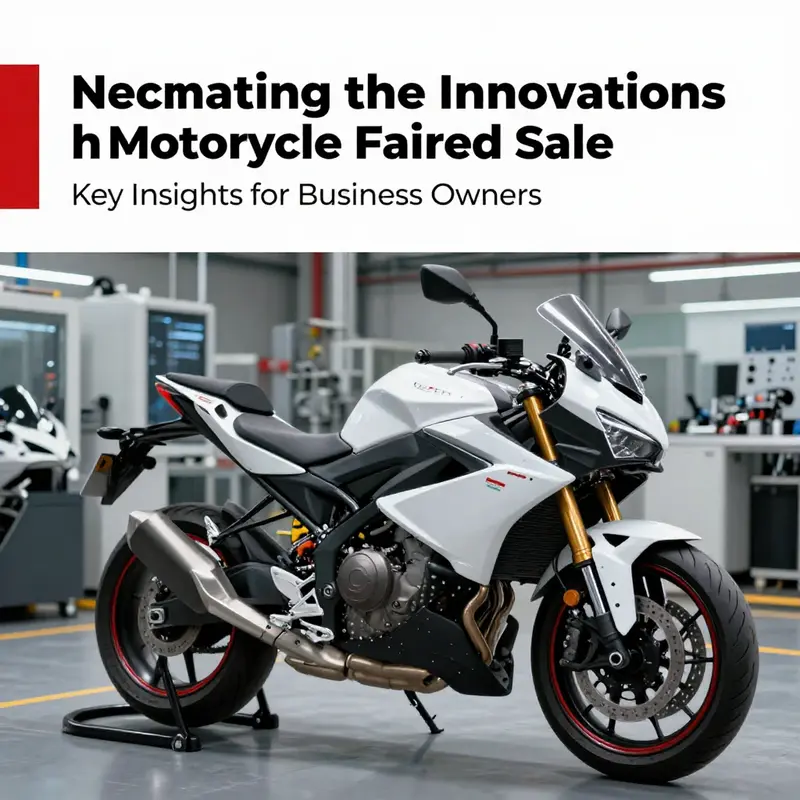
Every sport bike rider knows the fairing is more than a face that makes a motorcycle look fast. It is a carefully engineered interface between rider, machine, and environment. In the marketplace, fairings are not mere shells but high-tech modules that influence aerodynamics, weight, heat management, and even the sensory experience of riding. The current wave of motorcycle fairing sales is less about chrome and color and more about the convergence of materials science, computational design, and digital manufacturing. This convergence is reshaping what customers expect when they buy a fairing set and how suppliers recruit the attention of aftermarket shops, race teams, and everyday enthusiasts alike. The market is moving toward lighter, stronger, smarter, and more customizable options, driven by the same physics that govern top-tier performance on the race track and the comfort demanded by long-distance riders. As a result, the fairing sale ecosystem now sits at the intersection of engineering rigor and consumer desire, where innovation translates into tangible riding benefits and measurable business value for suppliers and buyers alike.
At the core of this transformation is material science. Lightweight composites have moved beyond niche applications to become mainstream. Carbon fiber and advanced polymers—often used in layered, thermoplastic, or resin-impregnated formats—offer substantial weight reductions without compromising stiffness or impact resistance. The weight savings from modern composites propagate through the motorcycle, contributing to quicker acceleration, more agile handling, and improved fuel efficiency. But weight is only part of the story. The same materials enable more sophisticated geometries, allowing fairings to wrap around the bike with greater precision and to integrate channels for cooling air, electrical harnesses, and venting. This is especially important as manufacturers and aftermarket producers seek to blend form and function. The result is a spectrum of options, from ultra-light, race-inspired shells to robust, all-weather designs that emphasize durability as much as aesthetics. In production terms, the shift toward composite and thermoplastic fairings has also spurred new manufacturing workflows. Techniques such as resin transfer molding, vacuum-assisted resin infusion, and automated lay-up processes enable consistent, repeatable results at scale. The ongoing refinement of these processes is part of a broader trend toward modular, configurable platforms that can be adapted to different bike models with minimal tooling.
Beyond materials, the design process itself has become more data-driven and precise. Advanced aerodynamic design techniques, once the preserve of wind tunnels and a few elite teams, are now embedded in mainstream development cycles. Computational fluid dynamics (CFD) analysis allows engineers to simulate airflow around virtual models, iterating shapes to minimize drag, manage lift, and optimize pressure distribution along the rider’s torso. These digital tools accelerate the design timeline and enable rapid prototyping, often preceding physical testing. In practice, CFD is used to refine contour lines, edge radii, and ventilation locations so that each fairing not only cuts through air with less resistance but also channels wind more efficiently toward rider comfort zones. The aerodynamic optimization is frequently coupled with acoustic and thermal studies, because the sound of wind and the management of heat are part of the rider’s perception of performance. A fairing that reduces wind buffeting at highway speeds while directing heat away from the rider’s legs contributes to an experience that feels both more controlled and more confident. In this sense, the fairing sale market rewards gear that balances performance gains with practical, ride-ready usability.
In parallel with heavier reliance on CFD and wind-tunnel validation, the market is embracing smart materials and adaptive surfaces. These technologies bring a new dimension to rider safety and comfort. Smart materials can respond to environmental conditions, adjusting properties such as stiffness, damping, or ventilation in real time. For example, temperature-sensitive or impact-responsive materials can stiffen after a collision, helping to maintain shape and protect underlying components. Some designs explore adaptive contouring, where material behavior shifts to optimize aerodynamics as riding conditions change. The idea of a fairing that can react to wind gusts, rider posture, or even telemetry from the bike’s control systems points toward a future where the fairing is not a passive shell but an active part of the motorcycle’s performance envelope. This direction raises considerations about durability, repairability, and cost, but it also opens opportunities for differentiated products that offer measurable safety and comfort advantages for riders who demand more from their protective gear.
The practical payoff of these innovations reverberates across the rider experience. Reduced drag translates to steadier stability at speed, lower fatigue from wind pressure on the chest and shoulders, and more efficient cooling of the engine and electronics housed within the fairing’s internal cavities. Ergonomic refinements—careful shaping of wind deflectors, sculpted inner surfaces, and integrated footboard and visor housing—contribute to a more natural, less tiring riding posture. The acoustics of wind noise, a factor often overlooked by casual riders, are increasingly addressed through acoustic damping layers and refined edge finishes. In addition, modern fairings are designed with rider customization in mind. Finish options, color-matching capabilities, and modular attachments let enthusiasts tailor the aesthetic and function to their preferences. The ability to swap panels or swap entire sections without compromising alignment or fitment makes a significant difference for shops that service a broad customer base. The market rewards not only speed and efficiency in manufacturing but also the ability to deliver accurate fitment for a wide range of models and production years. Customization, therefore, becomes a central value proposition, linking personal expression to measurable performance advantages.
A notable implication of these design and manufacturing advances is the widening gap between OEMs and aftermarket suppliers. Original equipment manufacturers continue to push fairings that are lighter, stronger, and better integrated with electronics and riding modes. Meanwhile, aftermarket producers—driven by consumer demand for personalization and occasional cost considerations—are leveraging advanced composites, digital tooling, and global supply networks to offer high-quality, customized options at scale. The balance between these segments influences pricing structures, lead times, and service levels. Consumers gain from competition—more choices, better finishes, and faster delivery—but they also encounter a complex landscape where fitment accuracy and warranty terms can vary. As a result, the market increasingly values transparent information about materials, manufacturing methods, and testing standards. Buyers now expect documentation about the materials used, the expected service life, and the limitations of each design, especially when smart materials or adaptive features are involved.
In this evolving ecosystem, the role of suppliers with direct manufacturing capabilities has grown more prominent. A company anchored in the Guangzhou–Foshan region, for example, can supply a broad spectrum of fairings and related panels through a manufacturing and distribution model that emphasizes efficiency, customization, and scale. Such firms tend to maintain direct connections with a network of engineers, designers, and quality-control specialists, enabling rapid iteration cycles and tighter control over production costs. The advantage for buyers is clear: better access to a range of materials, a quicker path from design to delivery, and the possibility to negotiate terms that reflect high-volume manufacturing realities. In practice, this means buyers can source lightweight, performance-oriented fairings without the overhead that often accompanies boutique custom shops, while still achieving bespoke finishes and model-specific fitment through modular design principles and color-matching capabilities. The global supply chain benefits too, as standardized components can be combined with model-specific interfaces to yield compatibility across a portfolio of bikes, spanning different brands and generations.
Within this broader supply landscape, digital platforms play a crucial role. Direct-from-manufacturer platforms and professional networks shorten the loop between design and sale, enabling more predictable pricing, faster lead times, and clearer communication about customization options. Buyers can access tooling, finishes, and doch to order interfaces that support bespoke requests—whether it’s a unique surface texture, a specific vent location, or a color scheme that aligns with a sponsor’s branding. In this context, the marketplace becomes a collaborative space where riders and technicians contribute ideas about fit, aerodynamics, and durability, and manufacturers respond with optimized configurations that reflect real-world feedback. The ability to communicate across time zones and languages also helps spread best practices for installation and care, reducing the risk of damage during mounting and ensuring consistent performance across markets. This is why many suppliers leverage multichannel presence, including professional networks and digital marketplaces, to reach customers who demand both high value and high reliability in their fairing purchases.
For those navigating the market, the opportunity to customize goes hand in hand with the ability to source from global suppliers who can tailor products to specific bikes and riding contexts. The idea is not merely to replace a damaged panel but to upgrade the whole front end into a more efficient, more protective, and more expressive system. Buyers increasingly expect options that optimize daylight visibility, UV protection for paints and coatings, and weather resistance for various climates. Finishes can range from matte to glossy, with protective clear coats designed to resist scratching and fading. The finish quality, in particular, matters when customers pursue both aesthetics and value; a fairing that retains its color and gloss after exposure to sunlight, rain, and road debris helps sustain resale value and rider confidence. The design language of modern fairings now often communicates a balance between aggression and refinement, a reflection of riders who care about performance yet want to reflect personal identity through their machines. The market signals this preference through an expanding catalog of finishes, textures, and assembly options, each layer adding value and differentiation to the final product.
Embedded within the supply side and the product side is a customer-centric notion of fit. Model-specific interface systems—how panels align with mounting points, how gaps are minimized, and how the speedometer and lights remain accessible—are no longer afterthoughts. Manufacturers and suppliers invest in accurate measurement data, digital twin models, and test fixtures to guarantee precise fitment across multiple iterations. In practice, this means fairings arrive with predictable curvature, mounting holes aligned to the frame, and fasteners compatible with standard tools. For shops and riders who rely on consistent, repeatable results, this translates into faster installations, fewer returns, and more time to focus on performance tuning and aesthetic customization. The end user benefits from a smoother learning curve for installation, a more reliable visual outcome, and the confidence that the protective and aerodynamic goals of the fairing are realized in daily riding conditions. This alignment of engineering rigor with consumer expectations is a hallmark of today’s thriving fairing sale environment.
To anchor these trends in market reality, it helps to recognize how information flows through the ecosystem. Buyers increasingly demand transparency about material composition, expected service life, and environmental resilience. They also seek clarity about customization options, including color, texture, and pattern matching, along with the availability of replacement panels and repair pathways. Suppliers respond with clear product specifications, standard testing results, and accessible after-sales support. The digital marketplace accelerates this exchange, enabling buyers to compare options across multiple manufacturers, estimate total cost of ownership, and plan for long-term maintenance. It is this combination of technical clarity and practical accessibility that underpins sustained growth in motorcycle fairing sales. Where once a rider might have settled for a single, factory-finished option, today there is a spectrum of choices that align with different riding priorities—speed, protection, aesthetics, and personal idiosyncrasies—while still delivering reliable performance.
One practical dimension of this innovation wave is the ability to source and customize at scale. The emergence of modular fairing systems allows a single platform to be adapted for various models or racing leagues with minimal retooling. Panels may be swapped for different textures or finishes without compromising alignment, a feature particularly valuable for shops that serve diverse clientele or for teams that need rapid on-track changes between events. This modularity also supports limited-edition colorways and sponsorship branding, enabling riders to express identity while maintaining consistency in performance and protection. The eventual convergence of modular design, digital manufacturing, and data-driven testing suggests a future in which fairings are as configurable as the bikes they adorn, with a robust catalog of options that can be assembled to suit any model, climate, or rider preference.
From a business perspective, the growth of technological innovations in fairing sales converges with broader supply-chain dynamics. A supplier that combines manufacturing depth with a direct-to-market approach can reduce costs, shorten lead times, and improve quality control. The Guangzhou–Foshan model exemplifies how regional manufacturing hubs can coordinate with global logistics networks to serve both regional riders and international customers. Such a model supports not only standard product lines but also the ability to handle high-mix, low-to-mid-volume customization. Buyers benefit from competitive pricing, faster fulfillment, and better after-sales service, while suppliers sustain growth through predictable demand planning and expansive capacity. The market’s trajectory is shaped by the willingness of customers to embrace advanced materials and digital design workflows, and by the capacity of suppliers to translate those capabilities into reliable, aesthetically compelling products that deliver measurable performance gains.
For readers seeking deeper context on the current offerings and the technology underpinning these products, there is value in exploring specialized resources that aggregate supplier capabilities and innovations. A widely cited platform provides access to a broad network of advanced fairing designers and manufacturers, offering a panorama of options from high-performance panels to customized aesthetic packages. This resource complements the pragmatic insights of manufacturers and shops by highlighting the breadth of available materials, finishes, and engineering approaches in the market. If you want to see a representative cross-section of how fairings are categorized and marketed in the digital space, you can explore a dedicated catalog that curates models by brand family and model compatibility. This reference point helps buyers compare fitment expectations, materials used, and the level of customization available across different lines. Beyond product pages, attached technical datasheets and testing summaries provide a transparent baseline for evaluating durability and performance claims.
For a concrete sense of how a major category of fairings is organized online, you can browse the BMW fairings catalog, which illustrates the way modular, brand-aligned product families are presented to buyers. This example captures the emphasis on fitment accuracy, color-matching, and finish quality that buyers now demand. It also demonstrates how a curated set of options—ranging from basic, unpainted panels to fully finished, coated sets—addresses the spectrum of buyers from hobbyists to professional shops. While the catalog is one among many, it embodies the industry’s trend toward precise documentation, model-specific compatibility, and an emphasis on reliable, repeatable installation experiences that underpin long-term customer satisfaction. BMW fairings serves as a microcosm of the broader market: a blend of technical rigor, customization potential, and accessible shopping that keeps the fairing sale ecosystem dynamic and resilient.
In summary, the current wave of technological innovations in motorcycle fairing sales reflects a market evolving in three linked dimensions: materials and manufacturing, design and validation, and customization and service. Lightweight composites and advanced polymers redefine what is possible in terms of weight, stiffness, and durability. CFD-driven aerodynamic optimization, sometimes augmented by wind-tunnel or real-world testing, ensures that every contour serves a purpose in reducing drag and enhancing rider comfort. Smart materials and adaptive concepts push fairings toward responsive performance, while modular designs and color-matching capabilities empower riders to express personality without sacrificing fitment or protection. The result is a marketplace that rewards those who can translate complex engineering into reliable, attractive products delivered with speed and clarity. For buyers, this means a broader palette of high-quality options, clearer specifications, and better access to customization. For suppliers, it means the opportunity to differentiate through technical competence and service excellence, creating a virtuous cycle that sustains growth in the post-pandemic era of global manufacturing and digital commerce.
External perspective helps frame why these innovations matter. The broader ecosystem of suppliers and manufacturers continues to rely on platforms that connect capability with demand. Access to advanced materials, coupled with digital design and manufacturing workflows, lowers barriers to entry for new players while amplifying the capabilities of established houses. The result is a fairing market that is not simply about aesthetics or marginal gains in aerodynamics. It is about delivering a coherent performance package that enhances ride quality, safety, and enjoyment while offering a route to personalized expression. This synergy between engineering and experience is what keeps the motorcycle fairing sale landscape vibrant and increasingly international. As more riders and shops adopt these technologies, the bar for what constitutes a compelling fairing continues to rise, and the market adapts in step, refining both product and process to keep pace with evolving rider expectations.
External resource: Alibaba.com – Motorcycle Fairing Suppliers & Manufacturers. https://www.alibaba.com/trade/search?fsb=y&IndexArea=product_en&CatId=&query=Motorcycle+Fairing
Winds of Change: Electrification, Personalization, and the Smart Fairing Renaissance in Motorcycle Aftermarket Sales
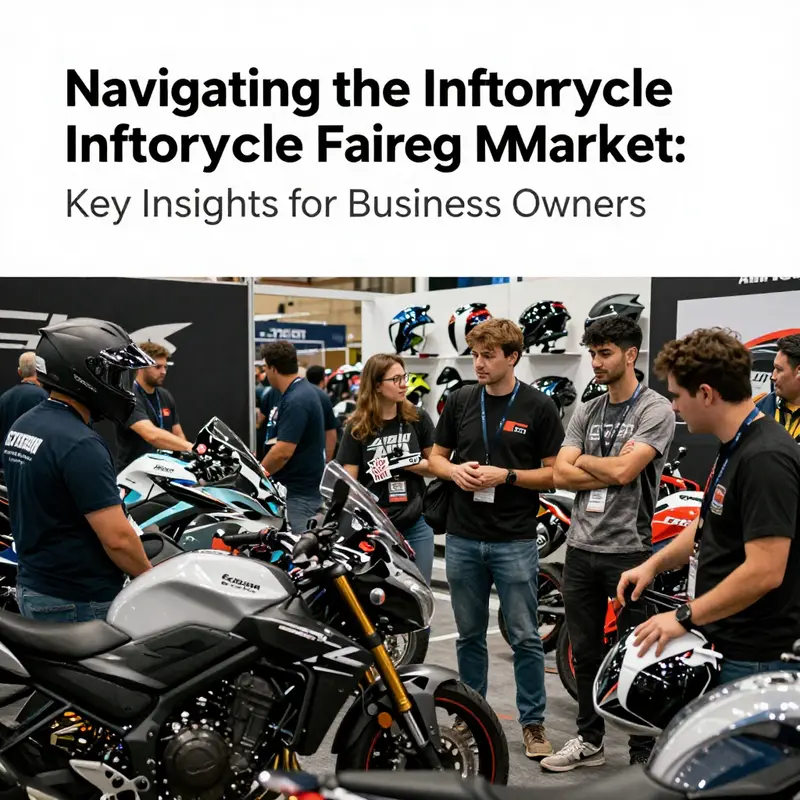
The motorcycle fairing has always served multiple masters at once: it slices wind, protects the rider, and frames a machine’s identity. In that sense, fairings are not simply cosmetic shells but aerodynamic geometry, heat-management panels, mounting rails for sensors and lights, and a narrative about how a rider chooses to engage with the road. As the market for motorcycle fairings evolves in the mid-2020s, what surfaces most clearly is a threefold dynamism: electrification reshaping performance expectations, personalization turning fairings into expressive canvases, and a broad embrace of integrated tech that folds fairings into the bike’s smarter ecosystem. Those forces do not operate in isolation; they braid into supply chains, design studios, and the digital marketplaces where aftermarket parts live or die by the speed with which a rider or shop can source, customize, and install them. In this braided landscape, a Guangzhou-Foshan operation that specializes in fairings embodies the convergence of manufacturing capability and global reach. The best-case scenarios describe a factory-floor-to-final-assembly pipeline that can deliver lightweight, heat-dissipating panels in colors and textures tuned to a model, a rider’s taste, or a regional regulation. The practice of sourcing directly from manufacturers, a core feature of platforms that connect buyers to makers, has become a practical shortcut for performance shops and for riders who want to get the most from their machines without waiting through layers of distribution. It is in this context that the market for motorcycle fairings has moved from a straightforward replacement-part function toward a sophisticated cycle of design, customization, and integration, where the catalog itself becomes a living map of rider aspirations and engineering possibilities.
Electrification has emerged as a primary driver of change, not only because electric motorcycles demand different thermal and aero performance but because the shift to electric propulsion elevates the role of the fairing as a system component. In internal combustion machine design, the fairing’s primary function rests on drag reduction at high speed and protection from wind pressure. In the electric era, where ranges are bounded by battery thermal limits and energy efficiency translates directly into usable miles, the aero profile becomes a critical variable in range optimization. Aerodynamic drag translates into parasitic losses; even small reductions in drag coefficient can extend a charge, improve charging efficiency, and shorten the time required to reach key performance thresholds. Consider the trajectory of e-motorcycle development as it straddles the line between performance and endurance. A leading Chinese manufacturer advancing a new electric model—one that advertises a substantial range alongside rapid charging—places a premium on fairings that manage heat dissipation and airflow with precision. This is not merely about slick looks; it is about shapes that guide airflow to cooling ribs, route heat away from battery packs, and minimize vortex shedding around the rider’s torso at sustained speeds. For suppliers, the practical implication is clear: fairings designed for e-motorcycles cannot be an afterthought. They must accommodate integrated cooling channels, mounting points for sensors and cooling lines, and a geometry that minimizes energy penalties while preserving the aesthetic identity of the machine. In practical terms, this means a shift toward more sophisticated materials and manufacturing processes that can deliver lightness without sacrificing rigidity, as well as a willingness to collaborate closely with original equipment manufacturers (or their ambitious aftermarket equivalents) to tailor fairings for specific battery modules and electronic architectures.
Alongside performance-driven demand, personalization has expanded the fairing market into a space where identity and lifestyle expression take center stage. The rider’s sense of self is increasingly expressed through the visual language of the machine, and fairings have become one of the most visible canvases for that expression. The shift from purely functional to experiential ownership has created a fertile ground for bespoke paint schemes, graphic layering, and modular or semi-modular designs that let riders mix and match lines, colors, and textures. The rise of mo-travel and adventure riding has broadened the appeal of touring-oriented fairings and protective components that can be swapped to reflect a journey rather than a single ride. Riders now seek fairings that tell a story—one that aligns with the landscapes they traverse and the personal narratives they carry. This consumer preference drives the market toward customization options that can be deployed in small batches or even on-demand. The result is a marketplace where design studios and aftermarket suppliers experiment with shapes that are technically feasible yet visually distinctive. The demand for customization creates a virtuous cycle: more design variation drives more SKUs, which in turn encourages more investment in digital design, color-matching capabilities, and high-end finishes such as carbon-fiber overlays or specialty textures that look different under street lighting. The ecosystem expands to include not only the surface layer of paint and decals but also the integration of functional accents—LED accents, reflectors, or even aesthetic camera housings—that still satisfy safety and regulatory constraints while amplifying personal style.
The third pillar—technological integration—transforms fairings from passive shells into active components of a modern riding experience. Contemporary fairings increasingly accommodate not just the rider’s body but the bike’s electronic ecosystem. Built-in LED lighting, integration points for dash-mounted cameras, and even forms of sensor mounting capable of supporting assistive systems are becoming common. The idea of the smart fairing is less about a single feature and more about a design language that anticipates how riders will interact with on-board devices and with adjacent infrastructure. Such integration requires careful attention to mounting points, wiring harness routing, and seal integrity. It also pushes manufacturers to consider standardization of interfaces so that accessories from different suppliers can be installed without bespoke engineering for every model. From a safety perspective, integrated lighting and visibility features contribute to urban riding safety by increasing conspicuity. For some riders, fairings will provide a platform for rider-assistance technology—cameras that feed into on-bike recording or even assistive systems that interface with lane-keeping or obstacle-detection technologies. While these trends open exciting possibilities, they also raise questions about durability, serviceability, and the long-term reliability of complex assemblies that operate in harsh weather conditions and high-velocity environments.
The convergence of electrification, personalization, and smart integration has a cascading impact on the entire supply chain. For manufacturers and aftermarket shops, the demand for higher value—premium materials, more precise tolerances, and more complex assembly processes—requires an elevated approach to production planning. Short-run manufacturing capabilities, including on-demand CNC work and rapid prototyping, become more valuable as customers expect faster turnaround for custom graphics and mounting configurations. In this context, the model of direct sourcing from manufacturers gains practical appeal. When a rider orders a custom set of fairings or when a shop curates a catalog of compatible components for a particular platform, the ability to bypass multiple layers of distributors can shave days or weeks off lead times and reduce costs. That is the kind of agility that the modern aftermarket demands. It also prompts a reevaluation of pricing strategies. The premium demanded for high-performance aerodynamics and integrated features is balanced against a broader willingness among riders to pay for a personalized narrative, a reflection of a shift from one-size-fits-all parts to bespoke pieces that enhance the ride experience as a whole.
The geography of production and trade also plays a significant role. In recent years, the growth of clusters in East and Southeast Asia has reinforced the region’s role as a hub for motorcycle parts manufacturing. The Guangzhou-Foshan belt, highlighted in several industry discussions, represents a nexus where design, tooling, and distribution converge. Suppliers in this region can leverage scalable manufacturing techniques while staying responsive to a global customer base that expects not just quality but also fast delivery. The resulting ecosystem supports both large-scale production of standardized components and nimble, smaller-batch runs for customized orders. For a market that prizes speed and personalization, this dual capability is a strategic asset. The direct-to-shop model—where a shop can order a fairing set tailored to a model year, paint code, and rider preference—becomes not just convenient but economically sensible when the supply chain is designed to accommodate it. In this environment, the fairing catalog itself transforms into a living marketplace: new shapes, finishes, and attachment points are tested in small batches, then scaled or retired depending on performance in the field.
The dialogue between design feasibility and rider expectation is further complicated by safety and regulatory considerations. Modern fairings must adhere to standards that govern crash performance, ingress protection for water and dust, and electrical safety for any integrated lighting or sensors. As designers push for more sophisticated aesthetics and tighter aerodynamic envelopes, they must also ensure that lines of force during an impact are managed in a way that minimizes rider injury and bike damage. This is where material science becomes central. The ongoing exploration of advanced composites—where carbon fiber delivers strength and low weight, while high-grade plastics manage impact resistance and cost—creates a palette from which designers can select trade-offs that match the intended rider profile, whether it be urban commuter, sporty enthusiast, or long-haul traveler. The economics of materials—cost, availability, manufacturability at scale—shape which combinations make sense for mass-market production versus custom, boutique runs. The result is a market that rewards technical proficiency in aerodynamics and heat management yet also demands artistry in color, texture, and form. The balancing act between function and expression is the core narrative of today’s fairing sales.
As the market continues to mature, the notion of value shifts. High-end, integrated, and customized fairings command a premium, but the base value proposition remains robust: fairings protect, improve performance, and reveal the rider’s story. The pricing calculus for premium fairings reflects not only the quality of the materials and the precision of the fabrication but also the breadth of services surrounding the product—the ability to offer color-matched finishes, tailored graphics, quick turnaround for customized requests, and dependable aftersales support. In the era of digital design tools and online marketplaces, customers expect accurate digital previews, scalable customization options, and predictable fulfillment timelines. This has encouraged sellers to blend traditional craftsmanship with modern manufacturing practices, creating a hybrid model that can sustain a range of customer needs—from one-off, hand-finished pieces to large-volume orders that still respect individuality.
Within this evolving landscape, catalog presence has become more important than ever. The breadth of options available to a customer—varying in shape, finish, and mounting compatibility—helps ensure that riders feel their choices are meaningful and controllable. For buyers who want to explore these options, a well-curated catalog functions as a gateway. A catalog that presents current options in a clear, navigable way reduces friction in the buying process and elevates trust. In practice, vendors who invest in design-to-delivery pipelines that can support quick customization and transparent lead times will gain a competitive edge. They can showcase a spectrum of fairing shapes that appeal to different riding styles, from aggressive track-oriented profiles to more protective touring configurations, all while offering finishes that align with contemporary aesthetic trends. The market’s appetite for options appears to be expansive enough to sustain both mass-market revisions and boutique, artisanal runs that appeal to niche enthusiasts.
The interconnectedness of these trends also underlines the importance of accessible information and reliable sourcing. For riders and shops alike, the ability to compare options, visualize outcomes, and verify compatibility is essential. Digital tools that support 3D modeling, color matching, and real-time inventory visibility help ensure accuracy in orders and reduce the risk of incompatibilities that can derail a project. The direct-link model—where buyers can reach manufacturers or specialized suppliers with relative ease—promises not only cost efficiencies but also the possibility of ongoing collaboration. When a shop knows it can request adjustments to a fairing’s geometry to fit a particular frame or a battery pack, the relationship becomes collaborative rather than transactional. This collaborative potential is the lifeblood of a market that thrives on iteration and rapid adaptation to shifting rider expectations.
In navigating this terrain, it helps to keep in sight the broader market context. The motorcycle fairing market, like the broader motorcycle sector, is buoyed by electrification and rising consumer interest in premium, customized, and technologically integrated vehicles. The interplay of these forces signals a healthy demand cycle: as new electric models enter the market with longer ranges and faster charging capabilities, the aerodynamic envelope must evolve; as riders seek to express identity, the surface becomes a canvas for personal storytelling; and as tech becomes embedded, fairings become structural elements of a connected riding experience. For readers who want to anchor these observations in broader market data, a recommended external reference is Mordor Intelligence’s Global Motorcycle Market Report, which details the growth drivers and the competitive dynamics shaping the space today: https://www.mordorintelligence.com/industry-reports/global-motorcycle-market.
From a practical standpoint, the business community that supports fairing sales must cultivate a resilient, adaptable supply chain. This means investing in design capability, embracing modular construction, and building robust relationships with manufacturers who can deliver customization at scale. It also means recognizing that the fairing is only as good as its ability to integrate with the bike’s broader platform—whether that platform is plugged into a modern EV architecture or a classic internal-combustion chassis that needs to accommodate new sensors without compromising safety. The operator who can marry design excellence with reliable sourcing will be best positioned to navigate the next wave of demand. In this sense, the fairing market resembles a compass more than a simple component line: it points toward where engineering, aesthetics, and rider culture converge. Reflecting on the industry’s trajectory, one can see a near-term future where a catalog of options—ranging from performance-focused aerodynamic shapes to protection-first touring shells, all offered with customizable finishes and integrated accessories—continues to expand. A category such as the 2023new segment, highlighted in industry catalogs, demonstrates how vendors respond to evolving styles and regulatory environments while keeping the mechanical underpinnings compatible with a broad array of frames and battery configurations. This dynamic fosters a marketplace that is not only broader in scope but also more precise in the value it offers to riders who want both performance and personality in equal measure, delivered with speed and reliability. For practitioners and enthusiasts seeking a practical illustration of how this market operates, the example of sourcing directly from manufacturers—an approach supported by regional hubs and digital marketplaces—offers a blueprint for achieving efficiency without sacrificing customization.
In summary, motorcycle fairing sales now sit at the crossroads of performance engineering, personal storytelling, and connected technology. Electrification sets the bar for aerodynamic precision and heat management; personalization turns the fairing into a signature, a way to carry one’s ethos on the road; and technology transforms the fairing from a passive shell into an active participant in the bike’s safety and information ecosystem. The result is a market that rewards not only technical know-how and material science but also design empathy and operational agility. As buyers increasingly expect both speed and specificity, the channels that supply fairings—from regional manufacturing clusters to direct-from-factory platforms—will need to balance economy with customization, standardization with flexibility. The fairing, once a marginal accessory, has become a central object in the riding experience, a piece of the vehicle that speaks to how riders see themselves and how the machine sees the road ahead. This is not a single trend but a confluence of forces that will continue to shape the shape of fairings, their availability, and their value for years to come. For those who watch this space closely, the message is clear: the wind is changing, and the fairing market is riding it with increasing sophistication, speed, and imagination. 2023new becomes a small but telling anchor in this larger story, a pointer to how catalogs adapt as the market grows in capabilities and appetite. As the narrative unfolds, the most resilient players will be those who combine design precision with supply-chain resilience, who treat personalization not as a premium option but as a core expectation, and who recognize that the fairing is a gateway to a more integrated, more expressive, and more efficient riding experience.
External reference: Mordor Intelligence Global Motorcycle Market Report: https://www.mordorintelligence.com/industry-reports/global-motorcycle-market
Final thoughts
In summary, the motorcycle fairing sale landscape is shaped by a multitude of factors that business owners must navigate to achieve success. Understanding the economic implications, embracing technological advancements, and responding to market trends are all critical for adapting to an ever-changing environment. As the demand for customized and high-performance motorcycle parts continues to rise, staying informed and proactive will position business owners favorably in this competitive market. By leveraging this knowledge, businesses can optimize their offerings and capitalize on new opportunities.