
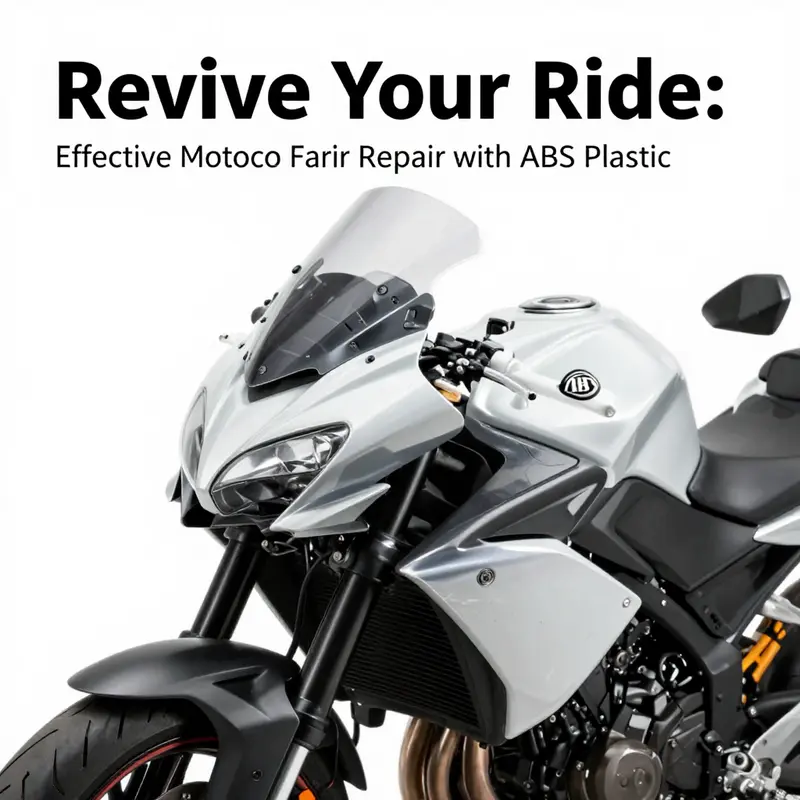
Motorcycle fairings are crucial not only for aesthetics but also for aerodynamics and protection. As business owners in the motorcycle industry, understanding the benefits of repairing fairings with ABS plastic opens new avenues for customer satisfaction and profitability. This guide covers the advantages of using ABS plastic, effective techniques for repair, and sourcing quality materials to ensure a robust repair process. By diving into these key areas, business owners will empower themselves to deliver superior service while optimizing cost-effectiveness and repair quality.
From Impact to Immaculate: Mastering ABS Plastic Motorcycle Fairing Repair for Real-World Riding
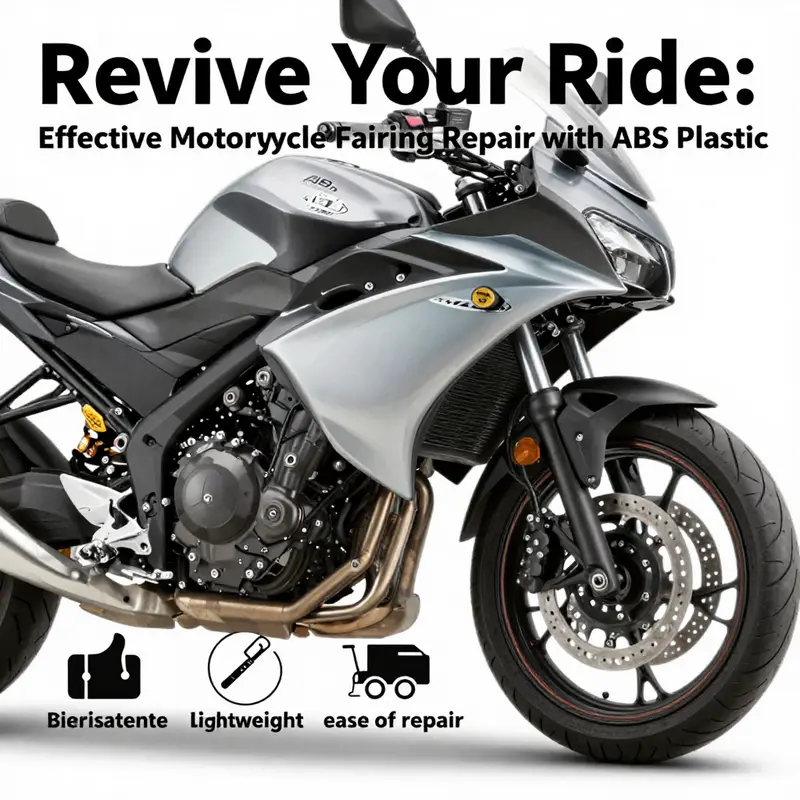
A rider glances down at the bike as a stone flicks up from the road, leaving a fresh, chalky scar across the fairing. The urge to reach for a replacement panel is strong, especially when the area near the headlight is cracked or the mounting points show signs of stress. Yet the smarter choice for many riders stands in plain sight of the workshop light: ABS plastic. It is the material that underpins most modern fairings because it offers a practical balance between toughness, lightness, and ease of repair. Repairing ABS fairings is not merely a quick fix; it is a deliberate, informed process that preserves the bike’s original look, its aerodynamics, and, importantly, its rider safety. When a panel is damaged, the instinct to replace can be expensive and time-consuming. ABS repair, by contrast, can restore structure, surface, and finish with a level of fidelity that keeps the bike’s silhouette intact and the rider protected from the elements. This chapter follows that logic, tracing the path from damage to a durable, aesthetically coherent repair that stands up to the demands of daily riding and long highway miles alike.
ABS plastic earns its reputation not merely because it is light, but because it tolerates repair in ways that other materials struggle to match. It resists cracking under normal road hazards and can be re-molded, sanded, and repainted with a seamless result. These properties give riders a practical margin for error. A small crack can often be welded or bonded without sacrificing the panel’s structural integrity; a dent can be rebuilt with a suitable filler that adheres well to the plastic surface. The compatibility of ABS with common repair techniques—adhesion, heat reshaping, and layer-by-layer finishing—transforms a damaged asset into a recoverable one. The value extends beyond dollars. When OEM or aftermarket panels are replaced, even a perfect color match may fail to recapture the subtle texture and curvature that make a particular fairing feel like part of the bike’s original DNA. Repair preserves that precision. The goal is not merely to hide damage but to reinstate the fairing’s aerodynamics, mounting accuracy, and the rider’s sense of safety as they lean into a curve or slice wind at highway speed.
Cost-effectiveness is the most immediate, tangible benefit. Replacing a single fairing panel can run into the hundreds, if not thousands, depending on the model and whether the part is in high demand or requires special finishing. Repair, when done with proper materials and care, tends to be far less expensive. It reduces downtime and protects the bike’s showroom lines, so to speak, even if the owner plans a full cosmetic refresh later. The environmental dimension often goes unspoken but is real. ABS repair extends the life of existing components, minimizing the demand for new plastic production and the energy expenditure that accompanies it. In a world that increasingly values sustainable choices, choosing to repair rather than replace aligns with broader goals of waste reduction and resource stewardship. The idea is not to cling to a shape forever but to respect the original piece long enough to avoid unnecessary waste while providing a solid, road-ready repair that does not compromise safety.
A central pillar of successful ABS repair is understanding the material’s behavior under stress and during restoration. ABS responds well to a careful sequence: clean, bond, rebuild, and finish. This sequence hinges on proper surface preparation and the selection of compatible materials. Cleaning removes oils, waxes, dust, and any mold release residue that can weaken an adhesive bond. Isopropyl alcohol is a common choice for this step because it evaporates quickly and leaves little residue. The next phase—bonding or welding—depends on the extent of the damage. For tiny cracks or chips, a two-part epoxy that cures into a hard, impact-resistant seam provides a solid fix. The emphasis is on getting adhesive into the crack so it can cure from within, forming a bond that resists flexing and shear forces. For more substantial damage, including longer cracks or broken sections, the repair often moves toward rebuilding the damaged area with an ABS-compatible filler. The filler acts as a structural proxy, filling voids and restoring the panel’s contour before any smoothing or finishing begins. The essence of this approach is not to force a perfect surface in a single pass but to anticipate progressive refinishing. Sanding, priming, and painting then follow, each step tailored to the repaired area and its surroundings. A careful hand, not a rush to an all-in-one solution, yields the best results and a repair that remains durable for the long haul.
When we talk about repairing ABS fairings, we must acknowledge the nuance of the repair’s purpose. A repair near the headlight housing or mounting points cannot merely look right; it must hold up under the mechanical realities of a motorcycle. Vibration, wind pressure, and temperature shifts test any repair. The structural zones demand a conservative approach: ensure the bond is strong, the rebuild is dimensionally accurate, and all fastener points align with their counterpoints on the bike. If the damage has compromised mounting holes or if the panel is severely deformed, the practical choice may be to replace the affected section rather than risk a repair that could slip under stress. Even here, the philosophy remains repair-first: restore what can be saved, and replace only what cannot be safely restored. This pragmatic mindset helps riders protect performance while controlling costs.
Color matching is another pivotal concern in ABS repair. ABS polymers tolerate paint steps that are compatible with automotive and motorcycle standards, but the final finish depends on surface prep, primer adhesion, and the base coat’s ability to bind evenly across repaired and original textures. A skilled repair blends edges with gentle, multi-pass sanding, followed by a primer that creates a uniform barrier between the substrate and the color coat. The color layer must be chosen with precision to avoid obvious differences in hue or gloss. Gloss levels should be matched to the surrounding fairing to avoid conspicuous patches under varying lighting. A well-executed finish conceals the repair while preserving the fairing’s visual unity, so the bike continues to read as a single, intentional design rather than a patchwork. The process may also involve clear coats to seal the finish and preserve color under sun exposure and rain. A sound repair thus becomes a subtle art: an invisible seam that stands up to the rigors of riding and that keeps the bike looking as if the impact never happened.
The repair journey also embraces the broader ecosystem of parts and knowledge available to riders. If a panel is too compromised—too cracked, warped, or weakened around critical points—the most prudent decision may be to replace that specific segment rather than chase a long, risky repair. Replacement panels are designed to maintain the bike’s aerodynamics and aesthetic continuity, and modern suppliers often offer OEM-compatible or aftermarket alternatives that specifically fit a given model and year. In many cases, replacing a single panel is faster and yields a more predictable outcome than attempting an extensive rebuild. Even when replacement is not immediately chosen, knowing the option is available supports a rider’s ability to plan a repair that aligns with long-term goals for appearance, performance, and resale value.
As this narrative unfolds, it is helpful to locate reliable sources of ABS repair knowledge and the necessary materials. An informed approach begins with a clear assessment: what is the extent of the damage, where is it located, and which repair path will deliver a safe, lasting result? For many riders, an initial consultation with a skilled technician can confirm whether a patch, a rebuild, or a replacement is the most prudent course. But even in DIY contexts, the core ideas remain the same. Work with clean materials, ensure the work area is dry and dust-free, and allow each stage to cure fully before moving on. A rushed repair often leads to a finish that fails under even modest wind or weather exposure. The discipline of patience, coupled with methodical steps, yields a repair that is both durable and visually coherent with the rest of the bike.
The decision to repair or replace should also consider environmental and economic realities. Repairing ABS fairings saves material and energy, reduces waste, and preserves the bike’s original aerodynamic properties and its value. It allows a rider to maintain the specific shape and profile that attracted them to the model in the first place. And, for those with a strong attachment to customization, repairing an existing panel can preserve custom paint, textures, or decals that may not be readily matched by a replacement part. In other words, the repair itself becomes a point of pride: a hands-on, technically informed effort that translates into a bike that looks right and feels right when ridden.
The practical steps to follow, when you are ready to begin, emerge from a simple sequence: assess, prepare, bond or rebuild, and finish. Begin with a thorough inspection to determine whether the damage is superficial or structural. Move on to meticulous cleaning, ensuring that the surface is free of grease and dust. Next, apply the appropriate repair method—bonding for cracks, or rebuilding with an ABS-compatible filler for more extensive damage. Allow each layer to cure, then gradually sand to a near-smooth contour. Prime, then apply color, checking for uniformity against the rest of the panel and the surrounding fairings. The final steps include a protective clear coat and a controlled cure period before the bike is ready to return to the street. The process is iterative and patient, but it yields a result that can endure the everyday stresses of riding and weather.
This approach to repair also invites riders to consider their broader maintenance practices. Preventive care—regular cleaning, prompt attention to minor surface issues, and cautious riding in harsh conditions—helps reduce the likelihood of future damage. When a curb scuff or a brush with debris occurs, addressing it early can prevent a crack from spreading or a dent from becoming a structural liability. Together, these habits reinforce the value of ABS as a repair-friendly material that continues to deliver performance and aesthetics across many seasons of use. The outcome is not simply a fixed panel; it is the preservation of the bike’s line, its balance, and its confidence-boosting presence on the road.
For readers who want to explore the broader world of fairing options beyond repair, it can be informative to browse the Honda fairings category, which offers a catalog of OEM-compatible panels and replacement options that align with many popular models. This is a practical resource for riders who decide that a targeted replacement is the most reliable path after a damage assessment. You can explore that category here: Honda fairings.
In sum, ABS plastic stands out as a material that makes sense for riders who value a balanced combination of repairability, light weight, and resilience. The repair journey—rooted in careful preparation, sound bonding or rebuilding techniques, and disciplined finishing—offers a path to restore not just the appearance but the performance and safety of the motorcycle. An informed, patient approach to repair respects the bike’s original design and preserves its value while delivering a durable, road-ready finish. The result is more than a fix; it is a return to riding with confidence, where the fairing once again shields the rider from wind and debris, maintains the bike’s aerodynamics, and carries the look and feel that defined the machine from the moment the owner first rolled it out of the shop. For those who want to deepen their understanding of the materials and methods behind ABS fairing repair, a detailed, step-by-step guide offers a thorough walk-through of the process, including surface preparation and paint matching. One respected resource that captures this approach outlines the full range of techniques, materials, and considerations involved in repairing ABS motorcycle fairings, emphasizing preparation, bonding, and finishing as the pillars of a long-lasting repair. You can find that in-depth guide here: https://www.motorcycle-parts.com/blog/repair-abs-motorcycle-fairings.
Restoring the Shield: Mastering ABS Plastic Motorcycle Fairing Repair
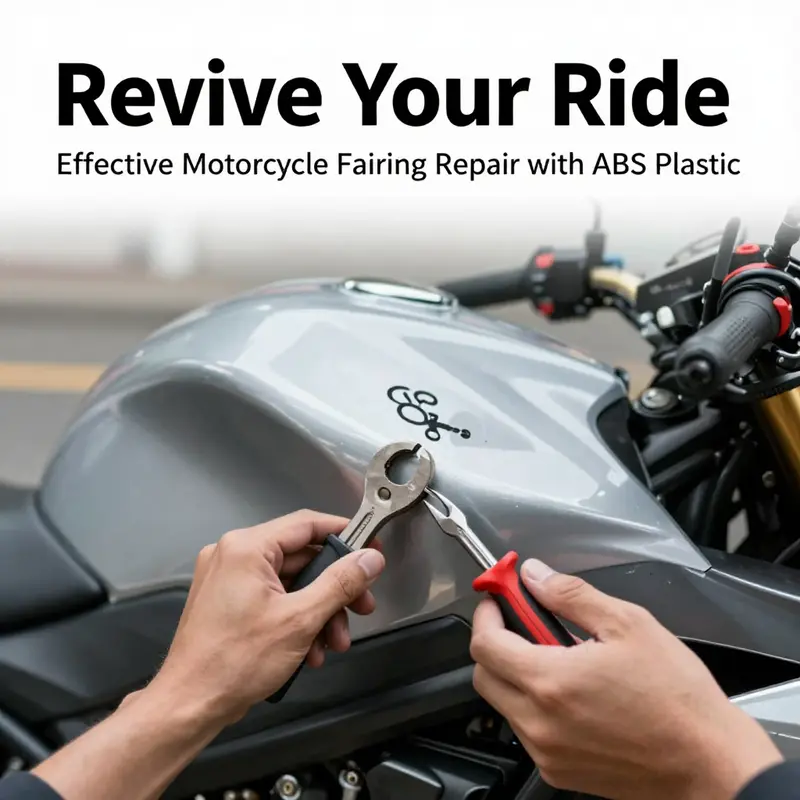
The shell of a modern motorcycle often takes a beating before its rider does. ABS plastic has become the standard for many fairings because it blends strength, lightness, and resilience with workmanlike repairability. This chapter weaves together the practical, field-tested approaches that turn damaged ABS into a durable, visually cohesive panel once more. It treats repair not as a last resort but as a principled process that preserves ride quality, safety, and the bike’s original character. The goal is not merely to hide a blemish but to restore the fairing’s structural integrity, aerodynamic function, and color continuity, so the bike can roll back onto the street with confidence rather than a reminder of a mishap.
ABS plastic, by its nature, offers a unique combination of properties that influence every repair decision. Its impact resistance helps it shrug off minor road debris without cracking, and its light weight preserves the bike’s handling characteristics. When a damage event occurs, the choice between repair and replacement hinges on the kind of damage, the location, and the fairing’s role in the bike’s structural envelope. A crack that runs through a headlight housing or a mounting point is not the same as a superficial scratch along a side panel. In the right hands, ABS repair can deliver a result that looks almost factory and feels as solid as new when the wind hits the fairing at speed.
The repair philosophy for ABS is rooted in three core ideas. First, assess and stabilize. Before any material is added or heated, clean the area thoroughly and remove oils, waxes, and dust that could undermine adhesion. Second, choose the method that suits the damage. For deep cracks and splits where the joint has truly separated, fusion through plastic welding creates a bond that often surpasses the original material’s strength. For small breaks and tight cracks that don’t compromise the structure, high-performance adhesives offer a clean, resilient fix without the heat and complexity of welding. Finally, refine and protect. After any repair, the surface must be leveled, primed, painted, and sealed to resist moisture and UV exposure. Only then does the repair resist the same wear that caused the damage in the first place.
When the damage is localized and the rest of the fairing remains sound, professional plastic welding stands out as the most reliable method for restoring structural integrity. The process begins with meticulous preparation. Surfaces are cleaned with isopropyl alcohol to remove any grease, dust, or contaminants that could prevent an adequate bond. The repair area is then clamped to keep the joint stable during welding. A specialized plastic welding tool is used with an ABS-specific welding rod or filament. The technique involves heating both the rod and the edges of the crack so that a molten bead can fuse the pieces together. As the joint cools, the bead solidifies into a continuous bond that is often stronger than the surrounding material. After cooling, the weld is ground down with progressively finer grits—starting around 400 or 600 and moving toward 2000—until the joint sits flush with the surrounding surface. The aim is a smooth, continuous surface that takes paint evenly and avoids any high spots that would catch air at speed. Successful welding also depends on controlling heat input. Too much heat can distort the panel and alter the color, while too little can leave a weak, granular seam that fails under stress.
For smaller fissures or cracks that do not threaten the panel’s load-bearing capability, high-performance adhesives offer a robust alternative. The best results come from two-part structural epoxies or acrylic adhesives designed for plastics. The bonding surfaces must be prepared with the same thorough cleaning and roughening the welding process uses. The adhesive is mixed according to the manufacturer’s instructions and applied generously to both sides of the joint. The pieces are clamped and held for the full cure time, which commonly extends to a day or more. The advantage of this approach lies in avoiding heat exposure, thereby preserving the fairing’s color and dimensional stability. However, it’s important to understand that an adhesive bond, while strong, does not always equal the tensile strength of a welded joint. It excels where the damage is non-structural or where the repair must be accomplished quickly or in a space with limited tools.
When surface damage dominates—scratches, shallow gouges, or small pits—filling and refinishing becomes the most efficient path to a seamless look. The work begins with light sanding to expose a uniform base and remove gloss from the damaged area. A high-quality automotive body filler designed for plastics is mixed with a hardener and spread over the imperfection, with a small amount of overfill to allow for sanding flush with the surrounding surface. After the filler cures, progressively finer sanding grits are used—moving from around 600 to 1000, then 1500 and finally 2000—to establish a perfectly even plane. Primer for plastic goes on next; a dedicated plastic primer ensures the coat adheres evenly to the ABS substrate. Once the primer dries, a base color is sprayed to match the bike’s original livery as closely as possible. The final step is a clear coat that seals from moisture and UV exposure while delivering the gloss and depth that make the repair hard to detect. The color matching step is delicate work. Even a small hue mismatch or a slight difference in gloss can betray the repair at speed, particularly on curved panels where light plays across the surface. In practice, many riders learn to blend edges with a gradient that fades the repaired area into the original panel rather than attempting an abrupt transition. The result should be a cohesive, showroom-like finish that remains durable under rain, sun, and the pressures of riding.
The decision to pursue replacement panels rather than repair is not a defeatist choice but a pragmatic one when damage extends to mounting points, the headlight housing, or other critical structures. A single severely compromised panel can destabilize the fairing’s fit and alignment, which in turn affects air flow and the rider’s line of sight. In such cases, replacing only the affected panel—whether a front fender, a side cover, or a headlight cover—often saves time and cost while preserving the rest of the bike’s appearance and integrity. Replacement panels are typically available in OEM-compatible ABS or compatible aftermarket variants, which helps ensure that the repaired fairing continues to function as the original design intended. A careful balance exists between the allure of a cost-effective patch and the long-term reliability of a panel that perfectly fits the bike’s geometry.
As important as the technical steps are, the process must respect the material identity of ABS plastic. ABS behaves differently from other plastics, such as polypropylene, and misidentifying the substrate can lead to weak bonds, poor finish, or adhesion failure. The repair approach, therefore, starts with a material check. If the panel is ABS, welding and certain adhesives will bond predictably, and sanding and finishing will yield a homogenous surface. If the panel is a different material, the repair options shift, and certain steps may be ineffective or harmful. The practitioner must understand that ABS accepts heat, accepts solvent-based finishes in controlled conditions, and responds to mechanical bonding in a way that supports a durable, high-quality finish.
Safety considerations run through every stage of ABS repair. The work involves heat, solvents, aerosols, and sanding dust, all of which pose risks to eyes, lungs, and skin. Safety goggles, a respirator or appropriate mask, and gloves are essential. Adequate ventilation is non-negotiable when heat tools or spray paints are involved. The environment should be clean to prevent dust from marring a finished surface, and the workspace should be well lit so that color matching and surface contouring can be performed with precision. The rider should also consider the fairing’s exposure to moisture after the repair. If moisture seeps behind the paint, it can lead to corrosion or lifting of the finish over time. A careful sealant layer, proper primer, and a durable clear coat all contribute to long-term protection against water ingress and UV degradation.
In the realm of repairs, the practical question always comes down to performance. ABS is forgiving enough to permit a wide range of repair strategies, yet disciplined technique is required to achieve results that endure. The strongest method for structural issues remains plastic welding, provided that the operator has the right tools and experience to manage heat input, weld alignment, and surface finish. Adhesives offer flexibility and speed for minor cracks, while filler-based refinishing can restore appearance rapidly with a professional sheen. Each approach has a place in a rider’s toolkit, and the choice depends on the damage profile, the bike’s use, and the rider’s willingness to invest time and money into a high-quality repair rather than a quick patch. The overarching message is clear: ABS repairs can restore both form and function when approached methodically and with respect for the material’s properties.
The practical implications for choosing a repair path extend into the broader ecosystem of the bike’s maintenance. For riders who want to minimize downtime, a small crack on a non-load-bearing panel can be repaired with adhesives and refinished surfaces in a single day. For those facing more serious structural damage, a weld repair may require a longer cycle and a professional workshop, but it yields a bond that can outperform the original in strength and longevity. For cases where the damage in the panel is beyond repair, replacing the panel is a rational calculation that considers compatibility, color continuity, and the time value of the rider’s schedule. This decision is rarely taken lightly, but when done right, it leads to a bike that looks, feels, and handles as intended.
Rider experience is at the heart of all these choices. The goal is not only cosmetic improvement but also a restoration of the bike’s aerodynamics, fit, and feel. A repaired fairing should sit with the same precision against the mounting points as the untouched part did. The aerodynamics should be undisturbed, and the panel should respond predictably to wind pressures at speed. A well-executed repair looks invisible under paint yet provides measurable improvements in stiffness and protection against future impacts. The result is a fairing that not only looks right but also behaves right when the wind is on the rider’s side and the road is demanding.
For those who want to explore options beyond repair, OEM-compatible panels can be found in the Honda fairings category. This internal resource provides a sense of the scale and variety of panels available to those seeking a near-perfect match for their bike’s original geometry and color. It’s not a universal prescription, but it offers a reliable path when the damage is too extensive to salvage with patchwork alone. The decision to repair or replace is a calculation that blends cost, time, and personal preference. It rests on careful assessment of damage, an understanding of ABS’s behavior, and a commitment to achieving a finish that holds up under real riding conditions. In that sense, ABS repair is both science and craft—a discipline that rewards patience, precision, and practical problem solving.
As with any skilled repair, the journey from damaged panel to finished surface hinges on accurate anticipation of how the material will respond to heat, to bonding agents, and to the sanding and painting sequence. The best results emerge from a plan that respects the material, acknowledges the limits of each repair method, and uses the right tool for the right job. The rider who engages in ABS repair learns to read the material’s signals: where the joint will accept heat without distortion, where an adhesive will form a bond capable of withstanding vibration and impact, and where a filler’s gentle camber can be smoothed into the surrounding plane without trace. This language—of heat, bond, and feathered finish—constitutes the vocabulary of a skilled ABS repair technician.
Ultimately, repairing ABS fairings is about preserving a bike’s identity while extending its life. The road may erase a decade of mileage, but a well-executed repair helps the machine present itself with pride. The parts of the fairing that endure are those that have been treated with care, where tools touched the surface with respect, and where the finish was coaxed into a seamless, durable gloss. The repair becomes less about fixing a single gouge and more about reaffirming the rider’s commitment to the bike’s safety, performance, and aesthetic. The ABS blueprints of the modern fairing reward patient hands and careful judgment, delivering a result that keeps the bike’s lines clean, its weight balanced, and its aerodynamic profile intact as it carries its rider back into the wind.
These narratives are not merely about techniques but about ongoing maintenance philosophy. They remind riders that the best repairs start before the crash, in proper mounting, protective coatings, and mindful riding that reduces the rate of impact events. Yet when damage does happen, ABS repair provides a toolkit that aligns with the values of durability, efficiency, and cost effectiveness. The approach described here blends professional methods with practical, at-home technique to empower riders to keep their motorcycles on the road. The result is a fairing that remains a faithful partner in performance and a visual statement of resilience. The repair path chosen—welding for structural integrity, adhesives for minor fixes, or filling and refinishing for cosmetic recovery—reflects a philosophy of disciplined care that respects ABS’s properties and the rider’s need for reliable, attractive protection.
In practice, a well-executed ABS fairing repair is a craft that grows with experience. It invites a rider to view a damaged panel not as an endpoint but as an opportunity to apply a tested sequence: confirm ABS as the substrate, remove contaminants, choose the repair method suited to the damage, and follow through with a finish that resists moisture and UV. The result is a fairing that can withstand the next road hazard without surrendering its shape, its color, or its aerodynamic function. The rider can then ride with assurance, knowing that the repair was performed with an eye for durability, a respect for the material, and a plan that balances speed with precision. In this light, ABS repair is not merely a repair technique; it is a practical philosophy for preserving performance, aesthetics, and safety on every mile of the road.
External resource: https://www.autobodysupply.com/repairing-abs-plastic-fairings-a-comprehensive-guide
Sourcing Precision ABS: Navigating Global Makers for Motorcycle Fairing Repair
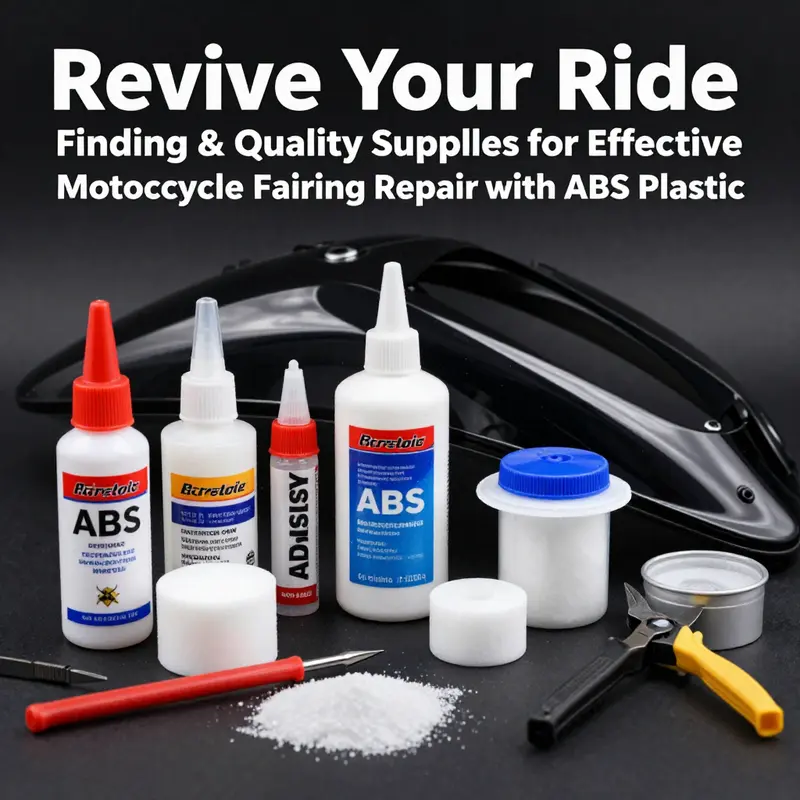
Sourcing precision ABS components for motorcycle fairing repair is less about finding a quick fix than about aligning materials, manufacturing know-how, and quality assurance with the demands of a high-performance, lightweight shell. ABS plastic stands out in this niche because it threads the needle between toughness and form. It behaves predictably under impact, holds a finish well after sanding and painting, and can be repaired and reworked without losing its structural or cosmetic integrity. In practice, the repair becomes a dialogue between the rider who wants a ride that looks like new and the supplier who provides the material and tooling that make that restoration durable. The decision to repair rather than replace hinges on a chain of considerations that begin far upstream, with the materials themselves and the factories that produce repair kits, panels, and coloring options with ever tighter tolerances. The result is a repair pathway that preserves handling and aerodynamics while preserving the bike’s appearance, a blend that matters not only for aesthetics but for the rider’s confidence and safety on the road.
To understand how to source effectively, it helps to view the landscape as a continuum that runs from raw ABS resin to finished, color-matched repair panels. The starting point is the material’s own characteristics: ABS offers a compelling combination of impact resistance and toughness, light weight, and good processability. Those properties translate into a repair that can be rebuilt rather than merely filled, sanded, and repainted. A well-executed ABS repair respects the original geometry of the fairing, preserving the seams, mounting points, and edge radii that influence aerodynamics and wind noise at speed. It also minimizes the risk of cracking under road vibration or heat cycling, which can reappear if the repair is carried out with inadequate materials or sloppy technique. In practical terms, this means choosing suppliers who can deliver not only the right resin or sheet stock but also the kinds of repair kits, fillers, and finishing compounds that are engineered to bond with ABS plastic across multiple repair scenarios. The difference between a repair that holds and one that fails often comes down to the integrity of the bond, the compatibility of the filler with the surrounding material, and the depth of the cure—factors that are directly tied to the quality standards enforced at the manufacturing level.
The sourcing journey is profoundly shaped by where these materials come from and how the supply chain is organized. In many regions, the most advanced production clusters for ABS fairing components sit in a geographic corridor that stretches across coastal and inland manufacturing hubs. China remains a central node in this ecosystem, with two provinces in particular playing pivotal roles. Guangdong, with its dense network of injection molders and plastics specialists, provides the capacity to turn raw ABS into parts that fit with minimal trimming and finishing. Zhejiang complements this capability with a long history of precision plastics processing and a robust ecosystem for automotive-grade components. The combination of resin suppliers, mold makers, and finishing studios in these provinces creates a vertically integrated flow that can deliver repair kits, replacement panels, and color-matching finishes that satisfy tight OEM tolerances while staying within practical lead times and price points. When this supply chain operates at peak efficiency, the result is not just a panel that looks right; it is a repair that feels right to the rider when the fairing is reinstalled and subjected to wind loads, heat cycling, and road grime.
Within this landscape, the most reliable sources share a few common threads. They maintain close communication with customers, translating technical needs into clear specifications. They publish documentation that confirms material grades, processing methods, and safety features in terms that a repair technician can verify in the shop. They also provide clear information about compatibility, which is essential when a rider seeks to restore a unique or aftermarket fairing that may not align perfectly with off-the-shelf panels. The best suppliers recognize that compatibility goes beyond a single model year. It involves a deep understanding of variations in fairing geometry, mounting points, fastener types, and the types of heat tolerance required to survive seasoned weather and frequent exposure to UV light. In this context, reliability becomes measurable not only by price but by things like the stability of color in sun-exposed areas, the uniformity of gloss across repaired surfaces, and the precision of edges and flatness after finishing. These are the attributes that separate a repair that looks good from one that truly integrates with the bike’s overall silhouette and wind profile.
For riders who are exploring this landscape, a practical approach is to look for suppliers located in regions with established track records in automotive-grade plastics. In the regional context discussed above, the Guangzhou area within Guangdong and nearby industrial hubs are often highlighted for their responsiveness and technical depth. The regional ecosystem supports the kind of collaborative problem-solving that repair work demands: engineers who can translate a damaged panel’s constraints into a feasible repair plan, technicians who can tune filler cures to the temperature and humidity of a workshop, and color engineers who can reproduce a finish that adheres durably to ABS with consistent light refraction under different lighting conditions. Those who engage with suppliers in this space frequently report shorter cycles from order to finished part, along with a broader range of color options and finishes, from high-gloss to matte, which helps riders avoid the need to replace entire panels to achieve a uniform appearance.
When it comes to selecting a supplier, the priorities begin with material integrity and finish, but they quickly broaden to the quality of the manufacturing process. Look for evidence of automotive-grade compliance and quality control that traces the manufacturing steps from resin to finished product. The strongest cases are built on traceability: a clear record of resin batch numbers, mold temperature profiles, cure times, and post-processing checks. A supplier that can present a concise, readable quality package reduces risk for the repair technician and speeds up the workflow in the shop. It also provides a tangible measure of reliability, which translates into better adhesive performance, longer-lasting repairs, and a reduced likelihood of moisture ingress or UV-related degradation around the repair site. The possibility of weathering and moisture-related failure is the reason many technicians emphasize the need for proper surface preparation, adhesive selection, and finishing. In particular, the repair area must be clean, dry, and free of oils or dust before any adhesive or filler is applied. A well-prepared surface, coupled with compatible products and correct curing practices, improves bond strength and helps the repair stand up to wind and vibration when the bike is back on the road.
A crucial practical element in this journey is the ecosystem’s openness to customization. Many riders want to tailor the appearance of their repaired fairing to match a model-year scheme or a personal racing livery. In the ABS repair space, there is a growing willingness among suppliers to offer modular customization options. This means not only a choice of color and finish but also the possibility of miniaturized patterns, corporate logos, or racing stripes integrated into the repair panel or replacement module. Such capabilities reduce the time and cost of achieving a uniform appearance, particularly for riders who operate bikes with aftermarket or alternative fairings. Customization, however, should not compromise performance. The finishing layers must guard against moisture and UV exposure while maintaining a surface that can be cleaned, polished, and maintained without revealing inconsistent color or texture across the repaired area.
As with any critical maintenance decision, the path from kit selection to the completed repair benefits from a structured but practical sequence. Begin with a careful assessment of the damage and the part to be repaired. A small crack or chip should be addressed with an adhesive system designed for ABS and a compatible filler that matches the local stiffness around the crack. For larger breaks or built-up dents, a filler compound that can rebuild the panel thickness may be necessary, followed by careful sanding and primer, then color and clear coats. Surface repair should emphasize maintaining edge integrity and ensuring mounting points remain true. In this context, the aim is to preserve, as much as possible, the original geometry and aerodynamics of the fairing so that the repaired panel behaves like the original under airflow and wind loads. The following steps illustrate a pragmatic workflow that a shop or a skilled DIY enthusiast can adapt without becoming a blueprint for a one-size-fits-all fix. First, thoroughly clean the damaged area with an appropriate solvent to remove grease and wax, then gently roughen the surface to create a mechanical key for adhesion. Second, apply an adhesive or a two-stage bonding system that cures to a robust, gap-bridging bond. Third, if there is a partial structural loss, apply an ABS-compatible filler to rebuild the contours in layers, allowing each layer to cure before applying the next. Fourth, sand progressively to an ultra-smooth finish and prime with a compatible plastic primer that can seal the surface and improve paint adhesion. Fifth, color and finish—choose an approach that respects the original gloss or matte look and protects the repaired area from moisture and UV. Finally, recheck the panel’s weight, fit, and alignment with its mounting points and adjacent panels to ensure a seamless transition once the bike is reassembled. The objective is a repair that integrates invisibly, so that the rider perceives the repair as part of the bike’s original structure rather than a patchwork addition.
The sourcing strategy should also consider long-term maintenance and longevity. ABS plastic does not respond the same way to every solvent or chemical cleaner, so selecting repair compounds that are compatible with the material and with future refinishing steps is important. The right repair kit will include not only adhesive and fillers but also finishing products—sandpapers with different grits, polishing compounds, and a clear protective coating—that are designed to work together. A coherent kit reduces the guesswork in a shop and helps keep the finish uniform across multiple repair sessions or across multiple panels when replacing a whole fairing segment becomes necessary. In practice, professional repair shops often maintain a small, curated set of tools and consumables that cover the most common damage scenarios: micro-cracks, large gashes, scuffs, and surface scratches. The emphasis is on modularity and compatibility, so the technician can adapt to variable damage without building a new process for every repair. This approach yields more predictable outcomes and improves the rider’s confidence, because repaired panels maintain the aesthetic and structural coherence of the bike’s design.
In the broader context of supply and repair, it is worth noting the practical importance of verification and compatibility. Before purchasing a replacement panel or a repair kit, confirm that the item is suitable for your specific motorcycle make, model, and year, especially if the fairing is aftermarket or has undergone previous modifications. A transparent checklist that includes model compatibility, color options, finish type, and documented certifications helps prevent mismatches that would otherwise lead to unsatisfactory repairs or the need for further work. The value of due diligence extends beyond cost: it safeguards performance and rider safety. The right parts and materials should align with the bike’s original tolerances, mounting interfaces, and the mechanical stresses that the fairing experiences during riding. When these align, the repair becomes a durable, functional, and visually coherent element of the motorcycle, not a compromised patch that distracts from the ride.
For readers exploring related content on compatible fairings, broader resources are available that cover a wide range of models and styling options. See the Honda fairings category for examples of how color, texture, and fitment considerations interrelate with ABS-based repairs. This resource can provide contextual reference for recognizing what constitutes a good visual match in a repair kit or replacement panel, especially when the goal is a seamless integration with the rest of the bike’s aesthetics and aerodynamics. Honda fairings category.
Ultimately, the choice of supplies and the approach to repair reflect a balance between practical constraints and the rider’s aspirations. A repair that preserves the integrity of the fairing while maintaining the bike’s performance and visual coherence is never a cosmetic afterthought. It is a functional restoration that supports safer, more confident riding. The suppliers who excel in this space do so not by selling a single solution, but by offering a spectrum of compatible options—resins, fillers, finishes, and color options—that can be mixed and matched to fit a given repair scenario. They provide documentation, technical guidance, and after-sales support that help a technician move from diagnosis to finished repair with assurance. In a market where the best outcomes depend on precise material behavior and careful workmanship, those who invest in quality control, process transparency, and practical customization tend to deliver results that endure on the road. It is through this disciplined approach—one that respects ABS’ material properties, the realities of production in modern manufacturing hubs, and the rider’s desire for a visually coherent, aerodynamically sound repair—that the chapter of ABS-based fairing repair moves from a conceptual solution to a durable, ride-ready reality.
External resource: https://www.alibaba.com/product-detail/Bajaj-Pulsar-135-Motorcycle-Full-Plastic_1600899788179.html?src=srch&lang=en
Final thoughts
Incorporating ABS plastic repairs into your motorcycle service offerings not only ensures high-quality repairs but also enhances customer trust and satisfaction. By understanding its benefits, mastering effective repair techniques, and sourcing the right materials, business owners can position themselves as reliable service providers. This commitment to quality not only boosts profits but also cements long-term relationships with your clientele. As you move forward, consider the steps outlined in this guide to elevate your motorcycle repair services.