
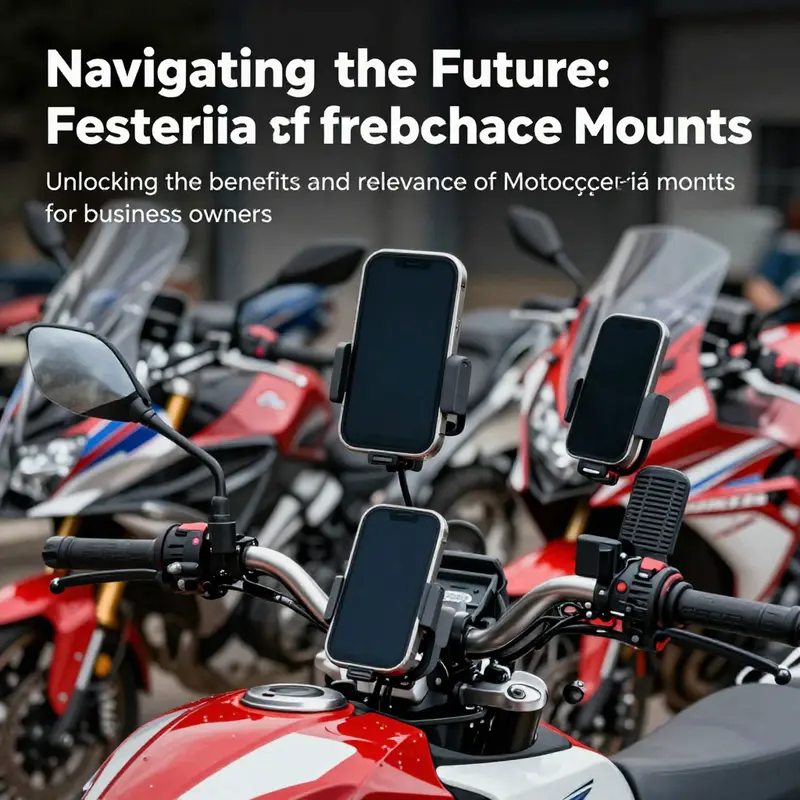
In today’s dynamic motorcycle market, the integration of technology into riding is more critical than ever. Motorcycle fairing phone mounts stand out as essential accessories, allowing riders to utilize their smartphones for navigation, communication, and entertainment. As a business owner, understanding the functionalities of these mounts provides strategic advantages, allowing you to offer products that enhance the riding experience. In the chapters ahead, we will explore secure mounting features, adjustability in viewing angles, weatherproof characteristics, integrated charging solutions, and universal compatibility, demonstrating how these elements contribute to safer and more enjoyable rides.
Locking the Ride: Secure, Vibration-Resistant Architecture of Motorcycle Fairing Phone Mounts
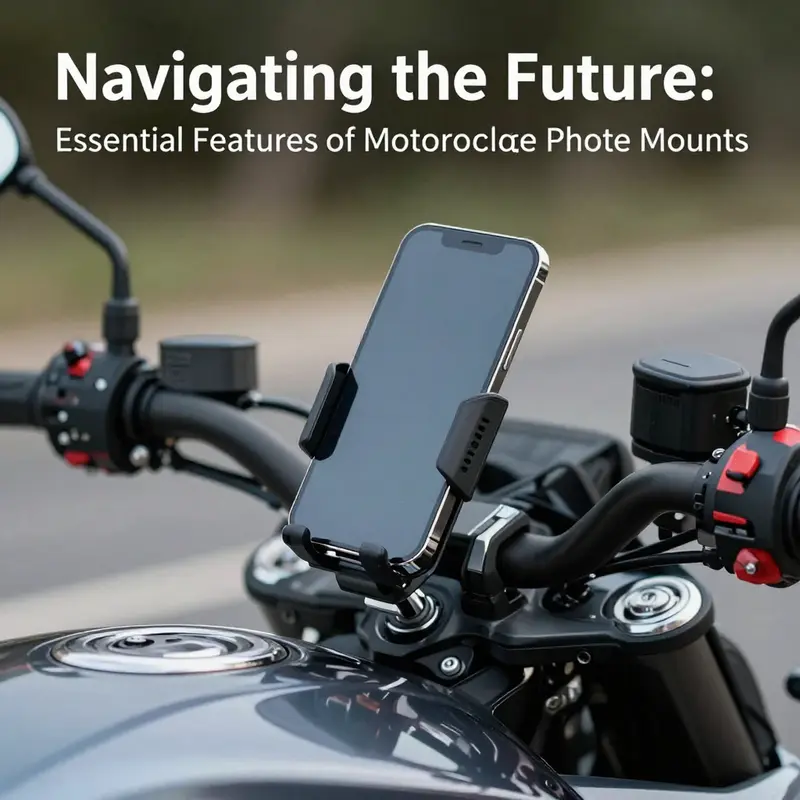
Riding exposes a phone mount to a relentless blend of wind load, engine buzz, and road imperfections. The fairing, while primarily an aerodynamic envelope, also bears the responsibility of housing the device that keeps us on course. In this arena, security and vibration resistance are not afterthoughts but the backbone of the design. A mount that simply grips the phone with friction will falter as speeds rise, as tires hiss over chattery pavement, or as a gust slams past the windscreen. The most capable systems, therefore, treat locking mechanisms, dampening, and durable construction as a single, cohesive language. They are engineered to feel invisible in use yet unyielding under pressure, preserving screen integrity, sensor accuracy, and accessibility during every mile of the ride.
Central to this reliability is the positive locking mechanism. Rather than relying on a mere pinch of friction, top-tier mounts employ a robust clamp or latch system that actively resists accidental dislodging. The mechanism often uses a two-step engagement, a secondary security latch, or a reinforced mounting arm that creates a fixed datum for the phone’s position. In practice, this means the phone remains aligned with the rider’s line of sight even as the fairing flexes, as the engine rumbles, or as the handlebars twist through corners. For riders who push into high-speed sections or rough backroads, this architectural choice makes the difference between a seamless navigation update and a hand off to fate when a sudden air trap or a deep pothole hits the bike. The result is a sense of composure: a device that feels steady, almost stationary, even when the world outside is anything but.
But a secure clamp is only part of the story. Vibration absorption sits directly behind the locking system as the second pillar of resilience. Premium mounts integrate dual vibration dampeners—soft silicone cushions paired with a secondary rubberized inner layer—that isolate the device from engine harmonics, airflow-induced vibrations, and road-origin shocks. The effect is practical and protective: the screen stays legible, internal components avoid micro-movements that could loosen connectors, and the risk of a gradual drop during a long, bumpy ride is dramatically reduced. It is not merely about comfort; it is about preserving the longevity of the device’s electrical and display assemblies. In real-world terms, the dampening system works like a tiny, purpose-built suspension for your phone, absorbing energy before it travels through the mounting interface to delicate circuits.
Material durability forms the third axis of this architectural triad. The best mounts use corrosion-resistant aluminum alloy or reinforced composites designed to weather the entire spectrum of riding conditions. Exposure to rain, spray from passing cars, UV from long days in the sun, and fluctuating temperatures all demand materials that resist degradation. The geometry must stand up to vibrational fatigue without cracking or loosening over time. Abrasion resistance matters too, because fairing contact points often rub against the mount during adjustments and micro-movements caused by speed and wind. When a mount refuses to corrode and maintains its tolerance over months of riding, it reduces maintenance cycles and keeps the device consistently accessible. Certification programs and rigorous field testing—riding simulations that mimic aerodynamic loads, UV exposure, and adhesion pull-off—provide objective assurance that the chosen materials will endure.
A mounting system worth serious attention also embraces weatherproofing. An IP67-grade rating—while it sounds technical and remote—translates directly into practical benefits. It means the electronics within the mount are guarded against immersion in water up to a meter for a half hour and protected from dust ingress that could clog seals or impede connectors. Weatherproof design is more than seals; it is about integrated pathways for charging and cable management that prevent tangling or moisture ingress. Some designs incorporate built-in, coiled charging options that keep power available without presenting a dangling risk of snagging or snagging the fairing during entry and exit from tunnels, car parks, or rain-drenched rides. The best implementations balance protection with ease of use: the phone can slide in and out readily, while the housing remains sealed and resilient.
Equally important is the universal compatibility that love of the road demands. A truly useful mounting system accommodates a broad spectrum of devices, typically from mid-sized smartphones to larger models that riders rely on for navigation and media during longer trips. This range ensures that a change of phone won’t require a new mounting solution and that the device remains within the rider’s immediate reach. Weight and balance also come into play; mounts must not shift or tilt under acceleration or braking, and their clamps should maintain their grip regardless of the device’s center of gravity. A well-designed system specifies its tolerances and test protocols to guarantee that a variety of devices, within the common size brackets, stay steadied without sacrificing quick access when a rider needs to adjust the mount or review a route.
From a practical standpoint, installation and maintenance are also integral to the sense of reliability. The most trustworthy mounts offer tool-free installation or very simple one-handed adjustments. They allow quick orientation changes—from portrait to landscape and back—so the rider can adapt to different navigation layouts or horizon lines without taking the bike off the move. This is where the synergy between a secure lock and intelligent damping becomes clear: a rider can recheck the display during a glide through a city street or a sweeping highway without worrying about a sudden shift during the transfer. The design philosophy here treats the device as an extension of the rider’s field of vision, not a bolt-on accessory that demands careful babysitting.
For readers who own bikes with particular fairing geometries, the compatibility question becomes part of the journey rather than a hurdle. When exploring mount options, it is useful to consider the broader ecosystem of fairing families and the accessories that fit them. For instance, within the world of fairings, BMX-style or sport-oriented designs often share common attachment footprints that enable cross-model compatibility. A practical way to visualize this is to explore a manufacturer’s fairings catalog and its mounting solutions in tandem with the chosen device mount. In this regard, a browse through a BMW fairings category, for example, can illuminate which mounting strategies tend to pair best with certain fairing curves and mounting surfaces. This cross-reference supports a more informed choice and helps ensure a clean, integrated appearance on the bike.
Beyond form and function, the ethos of a secure, vibration-resistant mount is a continuous pursuit of reliability. The landscape of mounting solutions rewards riders who prioritize multi-layered protection, from a robust positive locking mechanism to a resilient dampening system and durable, weatherproof materials. The intersection of these features yields a practical, durable interface that respects the rider’s focus on safety and convenience. The result is a device that remains accessible, legible, and powered, even when the ride asks the most of the machinery and the nerves. When this architecture is in place, navigation becomes a natural companion on every journey—reliable as the road itself, and almost invisible in its presence, allowing the rider to concentrate on the path ahead rather than the device clinging to the fairing.
External resource: https://www.harley-davidson.com/en_US/accessories/phone-mounts/76001071a.html
Seeing the Road Clearly: Mastering Adjustability and Viewing Angles in Motorcycle Fairing Phone Mounts
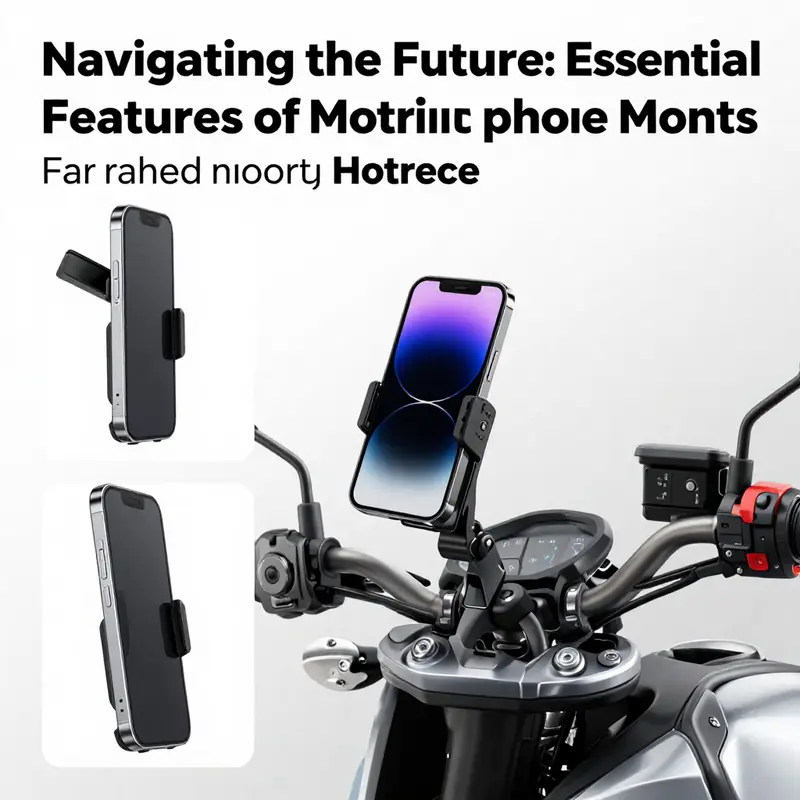
Seeing the road clearly while navigating, listening to guidance, or monitoring communications is more than a convenience on a motorcycle. It is a safety and comfort concern that sits at the core of why a fairing-mounted phone holder exists at all. When a rider chooses a mount for the fairing, adjustability and viewing angles rise from features on a spec sheet to essential tools that shape how safely and confidently you ride. The very idea of a mounting system is simple—secure the device, keep it accessible, and keep your attention on the road. But the reality of riding, with wind, bumps, and weather, makes precise positioning and durable performance indispensable. A well-engineered mount does more than cradle a phone; it creates a stable, adaptable window into navigation, media, and connectivity that is visible with a quick glance rather than a drawn-out look away from the road ahead.
The first virtue riders notice in an adjustable fairing mount is its 360-degree rotational capability. A true 360-degree function is more than a party trick: it grants instant orientation flexibility. On a long curving highway, you may prefer a portrait mode to read a narrow route instruction at the edge of your field of view, while on a long straight ride, landscape allows a broader map with fewer scrolling actions. The ability to swap orientations without stopping, without fiddling with clamps, reduces the cognitive load and the time your eyes spend off the tarmac. In dynamic riding conditions, where you might shift body position to absorb a corner or to lean into a gust, having a mounting system that holds its position while you re-angle your device pays dividends in readability and safety.
But rotation is only part of the story. The real value lies in precise angle adjustment. A mount should offer fine-tuning so the screen sits within your natural line of sight, not at an awkward tilt that forces the neck to crane awkwardly or causes glare from sunlight reflecting off the screen. The goal is to position the display so a quick glance can confirm a turn-by-turn cue or confirm a waypoint without needing to twist the head or take the eyes too far from the road. Ergonomics enters the equation here: when the device is aligned with your eye level and the horizon, you enjoy a more relaxed riding posture, which translates into reduced neck strain during hours of highway travel. The smoother that relationship is, the more usable the device becomes as a navigation companion rather than a distraction.
Engineering for adjustability also means managing the inevitable road-induced motion. Road surfaces vary, vibrations travel along the fork, and engine pulses resonate through the fairing. A mount designed with vibration damping technology decouples the phone from the bike’s micro-oscillations. This decoupling matters because even small screen shakiness can blur map text or timing cues. With such damping, the display remains legible even as the bike enters a rough patch, and the user’s eye can continue to track important information without needing to steady the device with a gloved finger or to re-aim the screen mid-ride. The material choice plays a supporting role here as well. Aluminum alloy and other sturdy composites provide the dual benefits of strength and lightness, offering a solid base for a mechanism that must resist both weather and rough terrain without creeping under load.
Security and stability are not sacrificed for flexibility. A mount that promises easy adjustability must still provide robust mounting to prevent slippage. The most reliable designs employ secure clamps and clamps that grip firmly yet are gentle enough to avoid scratching the fairing. A well-designed clamp system uses textured contact surfaces, compliant pads, and thoughtful geometry to distribute load evenly. It locks into a tight position after a minor twist of the adjustment knobs, which means you get the freedom to choose an orientation and then forget about it until you need to re-aim. When the ride changes direction, when you encounter a long sweep or a bombing gust from the side, a secure base ensures the device remains fixed in your chosen orientation rather than wandering out of view or, worse, detaching entirely.
Compatibility remains a practical consideration alongside adjustability. Riders want a fairing mount that can accommodate a range of device sizes, ideally spanning a broad midsection—from compact 3.5-inch screens to larger 6.8-inch phablets. The universal approach serves riders who upgrade devices over time or who share a bike with a passenger who uses a different model. In practice, this means the clamp and grip system must adapt to various widths and thicknesses without requiring a different accessory for each device. It also implies a mounting interface that preserves the device’s orientation and grip through weather exposure and temperature swings, since a loose grip can invite micromotions that degrade readability. Weatherproofing, including protection against rain and dust, complements the adjustability by ensuring that the rotation and tilt mechanisms remain smooth after exposure to the elements. Even with a precise angle, a device that fogs up or collects dust on its screen loses the very advantage an adjustable mount is meant to provide.
The integration with the rest of the bike’s ecosystem is another layer of consideration. A well-integrated system respects the form and function of the fairing, maintaining a clean, road-ready aesthetic while preserving the bike’s aerodynamics. The mounting arm should nestle into the fairing’s contours rather than protrude aggressively, avoiding wind flutter and minimizing stray airflow disruptions at high speeds. This minimizes additional noise and buffeting that can distract a rider and degrade the device’s visibility. The result is a seamless combination: the fairing continues to serve its primary aerodynamic role while the mounted device remains an accessible, stable companion that thrives on the ride rather than demanding constant attention to its position.
From a rider’s perspective, the true test of adjustability is practical use in real-world conditions. On a windy coastal road, the screen angle may need a few degrees of change to counter sun glare while still maintaining a clear map. In a mountain pass with variable light and fast corner transitions, you may quickly tilt the screen to optimize readability through shaded patches. For longer tours, you might set a comfortable baseline angle for daytime navigation and then adjust slightly for early morning or late afternoon lighting, all without taking your eyes off the road for more than a heartbeat. In each case, the ability to find and hold that ideal angle translates into fewer look-aways, less mental load, and a riding experience that feels more controlled and less fatiguing.
Finally, the decision to invest in a highly adjustable mount is a statement about forward compatibility and ongoing reliability. Motorcycles change with weather, terrain, and riding style, and a mount that can adapt to these shifts offers a longer useful life. It’s a hedge against obsolescence: you can evolve your device and still rely on the same mounting system to deliver safe, readable visibility. When paired with a design that emphasizes ease of use, robust construction, and intelligent angle options, adjustability becomes a cornerstone of a practical, enjoyable riding experience rather than a mere convenience.
For riders seeking guidance on selecting the right mounting system, broader considerations extend beyond angle and rotation alone. A comprehensive buying guide highlights how to balance 360-degree versatility with stability, weather resistance, and device compatibility. It suggests weighing how you ride—daily commutes, weekend touring, or spirited canyon runs—and how your device will be used during those rides. For readers who want to explore related bike hardware that complements fairing-mounted mounts, the Honda fairings catalog provides a broad view of compatible surfaces and contours that can influence mounting choices. This is a useful reference when planning a look at how the mounting system integrates with the bike’s overall aesthetic and function. Honda fairings.
As with any piece of essential riding gear, the goal is to strike a balance between flexibility and reliability. A well-chosen, highly adjustable fairing mount offers precise angle control, secure attachment, and weather-ready protection, all while preserving the rider’s ability to focus on the road. It’s not simply about having a device within reach; it’s about having the right angle, at the right moment, with the least possible distraction. When you can position a device so that navigation cues appear in a natural line of sight, when you can tilt or rotate without compromising grip or stability, you unlock a calmer ride. In this light, adjustability isn’t a luxury—it’s a practical, safety-enhancing feature that helps you stay oriented, informed, and connected on every mile of the journey.
External resource for further guidance: https://www.ram-mount.com/blog/fairing-phone-mount-buying-guide/
Weatherproofed on the Fly: Designing Durable Fairing-Mounted Phone Mounts for Real-World Rides
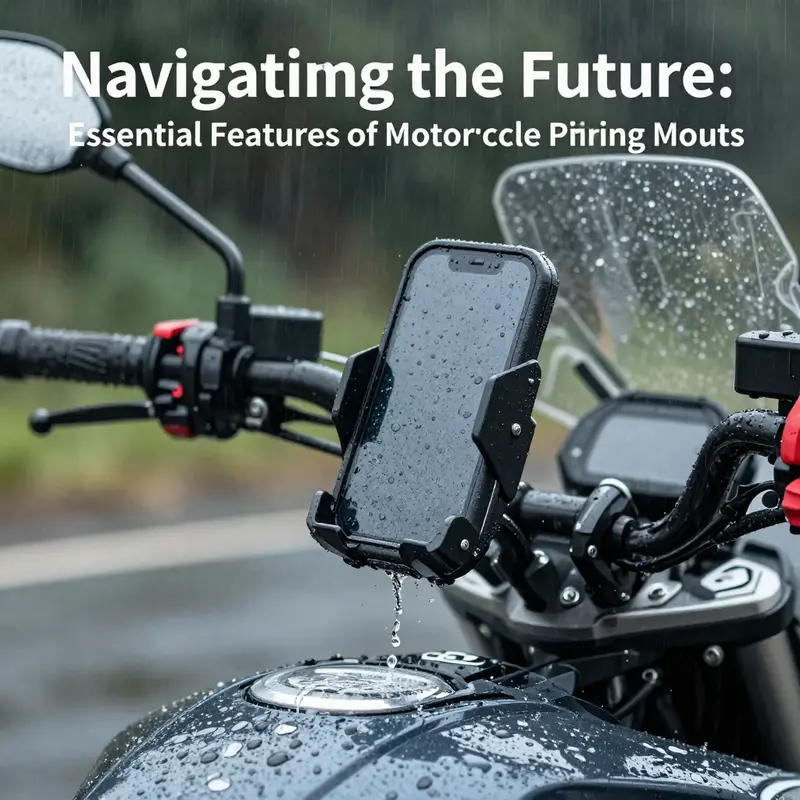
Every rider knows that a fairing-mounted phone mount lives at the intersection of aerodynamics, exposure, and reliability. It sits in a high-stress zone where fast-moving air can tug at the device, rain can race in from unpredictable angles, and heat from the sun can bake plastic and adhesives. Durability, in this context, isn’t simply about a rigid frame that won’t snap in a fall; it’s a carefully engineered balance of materials, seals, and structural anchorage that keeps the screen readable, the device charged, and the connection to navigation or music steady across miles and weather conditions. A truly weatherproof mount reads the environment the bike encounters and responds with a design that stabilizes the phone without sacrificing accessibility or ease of use. In that sense, durability becomes a rider’s quiet ally, a system that works in the background so the journey remains the focus and the device simply becomes another trustworthy tool in the rider’s kit.
Waterproof sealing is foundational. Within the scope of fairing-mounted devices, full waterproof sealing is not a luxury but a necessity, ideally rated at IPX6 or higher. This level ensures that rain, road spray, and even powerful water jets from nearby floods or wash-downs won’t push moisture into the housing or into the cable entry points. The sealing strategy relies on rubber gaskets, O-rings, and, where possible, fully enclosed housings that keep critical contacts dry. Seals must be positioned to guard ports without hindering the device’s charging connection or the mechanical lock that holds the phone in place. Rubber gaskets around the mounting foot and the device cradle help deter water ingress at the joints where vibration and wind loads are highest. Yet even the best seals can fail if the user neglects maintenance; a quick inspect-and-clean routine before a ride helps ensure gaskets stay pliable and free of grit that can compromise the seal over time.
But water resistance is only part of the story. The other half concerns how a mount behaves under aerodynamic lift. On a fast ride, the fairing generates lift that can tug upward on the mount, particularly for devices mounted higher on the windscreen or cockpit area. The most robust solutions address this with a combination of secure anchoring to the fairing’s structure and a chassis that resists flex. Designers employ reinforced brackets, often of aluminum alloy or other high-strength materials, paired with dampening features that absorb micro-vibrations transmitted through the fairing. This approach not only guards against loosening or detachment but also protects the internal electronics from the kind of repetitive micro-movements that over time can loosen screws, strain cables, or stress battery contacts. Rigidity is crucial, yet it must be achieved without transferring every vibration directly to the phone, which could degrade image stability or charging performance.
Thermal management rounds out the core durability equation. The fairing’s exposed position means the mounting area can heat up quickly in direct sun, especially during long daytime rides. Heat can degrade adhesives, soften seals, and accelerate wear on any flexible elements that form part of the anti-vibration system. Durable mounts address this with materials that resist warping, cracking, or delamination under thermal stress. Reinforced polymers, high-grade PVC, EVA foam pads, and other thermally stable components help maintain a stable cradle geometry and preserve seal effectiveness. In practice, this means the device remains consistently positioned and the charging mechanism remains reliable even after hours in the sun. Some designs also incorporate venting considerations or heat-dissipation channels that prevent the display from fading in bright conditions and keep cable attachments cool enough to avoid brittleness.
Beyond the raw materials, the manufacturing and testing philosophy behind weatherproof fairing mounts reinforces their real-world resilience. A credible mount will undergo a battery of tests that simulate the conditions a rider faces on the road: vibration tests to mimic engine and road-induced oscillations, pull-off tests to measure hold strength under lateral forces, UV exposure to gauge color and plastic fatigue, latch cycling to ensure the locking mechanism survives repeated use, and aerodynamic-load simulations to reflect lift and gust impacts. These tests aren’t about showroom polish; they are about measurable confidence that the mount will perform as intended when confronted with rain, sun, and the open road. The goal is an integrated system where the cradle, the locking latch, the weatherproof housing, and the mounting hardware work as a single, dependable unit. The end result is not a single feature but a holistic package: a mount that can be opened with one hand, closed with a secure click, and left to endure the elements without requiring constant attention.
In discussing durability, it’s also important to consider cross-bike compatibility and the way a mount behaves across the diversity of fairings in the market. A well-engineered solution recognizes that fairings come in different contours, thicknesses, and mounting points, and it therefore focuses on universal or adaptable attachment methods that do not compromise weatherproofing when adjusted. This compatibility consideration also shapes how internal cables are routed and sealed. For riders who regularly swap bikes or switch between different fairings, durability translates into repeatable performance across platforms, not just a single fit. For riders exploring compatibility across different fairings, our Honda fairings collection offers a broad range to illustrate how a robust carrier design can be adapted without sacrificing weatherproofing or serviceability. Honda fairings provide a practical reference point for understanding how a mount can balance fit, access, and protection across a common platform family.
The broader lesson from this emphasis on weatherproof performance is that a mount’s life expectancy hinges on anticipating the environment as part of the design brief. When a mount is positioned to withstand wind shear and water ingress, it also becomes a platform for reliable charging and an unobtrusive interface for the rider. Integrated charging, where features allow for continuous power delivery without compromising seals or thermal stability, is a natural extension of durability. A truly durable system uses a charging pathway that remains protected from moisture, dust, and movement. It might incorporate a concealed pass-through or a discreetly routed coil charging system that minimizes exposed cabling and reduces the risk of snagging on fairing edges or control levers. In practice, this translates to fewer mid-ride adjustments, fewer worries about rainstorms interrupting navigation, and less downtime for maintenance between rides.
The discussion of weatherproofing and durability also invites a broader reflection on the rider’s daily needs. A mount that keeps a phone legible and accessible, while resisting the onslaught of sun, rain, and vibration, enables safer navigation and a better riding experience. It becomes a quiet performance partner, one that does not demand attention until something goes wrong. The best designs reward the rider with consistent performance, requiring less ritual care and offering more confidence on unfamiliar roads or remote stretches where weather can shift in minutes. In the end, durability is less about a showcase feature and more about a dependable workflow: install once, ride hard, and watch the device stay secure and usable across seasons.
External resource: for a deeper look into the criteria riders use to choose fairing-mounted solutions, see a comprehensive buying guide that contextualizes waterproofing, durability, and practical testing in real-world scenarios: https://www.carinterior.com/fairing-mounted-phone-holder-buying-guide-how-to-choose/.
Power on the Move: How Integrated Charging Redefines Fairing Phone Mounts for Modern Motorcyclists
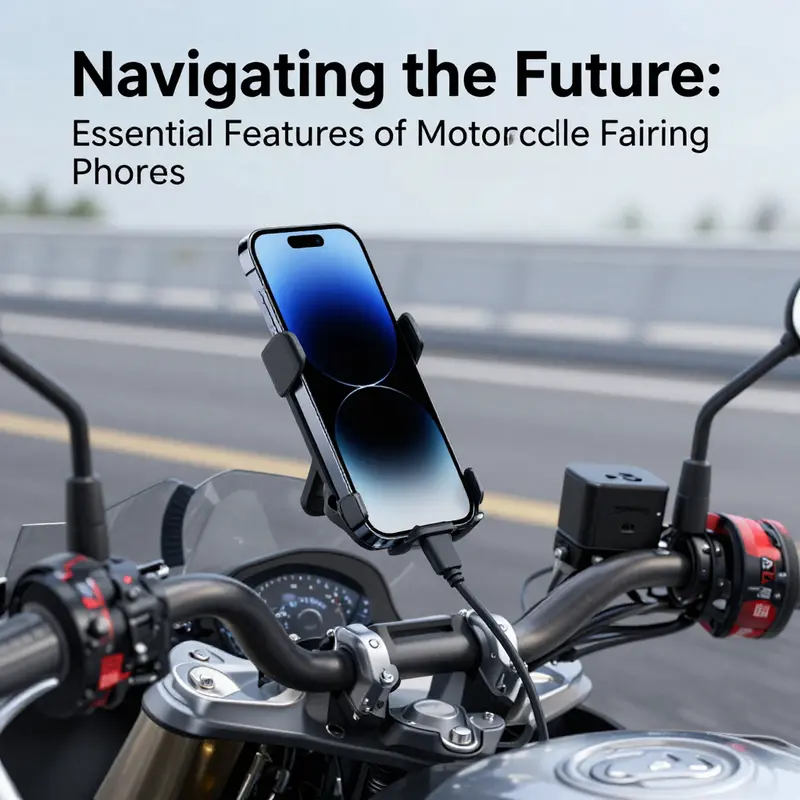
A motorcycle is a machine built for motion, a balance of speed, wind, sound, and the tactile rhythm of riding. In that delicate balance, the way a rider interacts with technology matters as much as the performance of the bike itself. Integrated charging solutions in fairing-mounted phones represent a quiet, practical revolution: they remove cables, streamline the cockpit, and keep a navigation, communication, or music device powered without demanding extra attention from the rider. The idea is simple in appearance but sophisticated in its execution. The phone sits securely in a purpose-built cradle integrated into the fairing, while a hidden power pathway delivers energy through a Qi-compatible inductive charging pad. When the phone is properly nestled in place, the charging pad engages automatically, removing the need for external cables and maintaining the clean, aerodynamic lines that fairings are designed to protect. This harmony of form and function matters because the best mounting system is the one you forget you’re using. You know you’re on a bike; you don’t want to notice the device mounting at all until navigation is needed or a call comes through in a controlled, hands-on manner. The integrated approach makes that possible by weaving the charging coil and power management directly into the mounting hardware, and by aligning the charging interface with the geometry of the phone’s body—so misalignment becomes less of a concern than with external, add-on chargers. The result is a system that looks and feels like a single, purpose-built component of the bike itself, rather than an afterthought strapped to the handlebars. This design philosophy matters not only for aesthetics but for safety. A clean, cable-free cockpit reduces snag risks at speed, during rapid lane changes, or when navigating rough urban streets. The absence of protruding wires also minimizes moisture ingress pathways, which is critical in the wet or dusty environments motorcycles regularly encounter. The hardware behind integrated charging is engineered to withstand the realities of riding: vibrations, temperature swings, and the occasional splash of rain or spray from a passing truck. High-end mounts use aerospace-grade aluminum alloys and robust polymers to resist fatigue while preserving lightness and balance. In places where electronics manufacturing shines, such as Guangdong and Zhejiang, the precision and consistency required for reliable wireless charging systems translate into mounts that stay reliable ride after ride, year after year. This regional expertise helps explain why integrated charging is increasingly seen not as a niche feature but as a standard expectation for riders who demand both durability and a modern, uncluttered ride. Weather sealing plays a central role in that expectation. When a charging pad sits behind a sealed connector and the entire assembly rides in a dry, pressurized cradle, water and dust have fewer opportunities to degrade connections or corrode components. The result is a system that stays functional across a wider range of climates and weather conditions, from humid coastal rides to dusty alpine passes. In practice, the charging pad activates when a phone with Qi compatibility is positioned within the cradle, and the system can negotiate power delivery with the bike’s electrical architecture. This means motorcycle designers and mount manufacturers must consider how the bike’s charging infrastructure shares power with lights, sensors, and other electronics. A balanced approach ensures that an inductive charger does not create voltage dips under acceleration or at engine idle, and that heat generated by charging is managed so it doesn’t degrade battery health or the mount’s seals. For riders, the practical benefits are immediate. Long tours where constant mapping is essential become less stressful when a phone remains charged without a tether to a power bank or a dedicated charger that protrudes from the handlebars. In urban commutes, the sleek mount maintains visibility without clutter, allowing riders to glance at turn-by-turn instructions and notifications with a single, natural movement. The absence of visible cables also complements the visual language of modern bikes, where the fairy-tale ideal is a machine that looks as if it could be carved from a single block of metal or composite. This visual coherence matters in a market saturated with add-ons; a mount that looks like it belongs on the bike earns acceptance not through shouting style but through quiet fit and finish. The design language of integrated charging extends beyond the hardware. It shapes how riders think about device maintenance, case compatibility, and even the choice of mounting geometry. Because the charging interface is built into the cradle, misalignment can still occur if the phone sits at an odd angle or if a bulky case introduces thickness beyond what the pad can handle. Manufacturers respond with mount geometries that accommodate common phone widths, but the real win comes from adjustable rotation and tilt that preserve both readability and reach to essential controls. A robust mounting system ideally offers 360-degree rotation and a range of angles so the rider can switch between portrait for navigation and landscape for music or video playback without taking hands off the handlebars. The practicality of integrated charging is inseparable from its reliability. A rider’s device becomes a more capable companion on the road, offering up-to-the-second navigation, weather updates, and emergency contact access, while the battery remains in healthy balance because charging takes place within a controlled, sealed environment rather than through a loose cable that could snag on branches, handlebars, or levers. The advantages extend to maintenance and aesthetics. Fewer external components mean fewer points of failure and a less cluttered fairing, which in turn reduces the need for frequent cleaning and inspection of cable runs that might otherwise wear thin or degrade seals over time. In the bigger picture, integrated charging embodies a shift toward smarter, more integrated motorcycle ecosystems where the rider’s digital tools are treated as an extension of the bike’s design language rather than as a collection of add-ons. This shift aligns with ongoing improvements in materials science and electronics manufacturing that support lighter, stronger mounts and more efficient wireless power transfer. It also aligns with rider expectations for longevity and resilience. The materials chosen—often a mix of aluminum alloys for strength and polymer composites for damping and sealing—are selected not only for their performance in the lab but for their durable behavior on the road. In regions known for precision electronics manufacturing, such as the Guangdong and Zhejiang corridors, these components are crafted to endure vibration and temperature swings, ensuring that a phone remains aligned and charged whether the ride is a quick city hop or a long, wind-blasted tour. For enthusiasts who value brand-agnostic compatibility, the principle remains universal: the mount should accommodate a broad spectrum of devices, typically within a given size range, while maintaining a secure hold that resists slip during aggressive throttle bursts or sudden decelerations. The integration challenge then becomes one of harmonizing mechanical design with electrical safety standards, including certifications that verify water resistance, impact resilience, and electrical isolation. This attention to certification not only protects the rider but also reinforces the market’s broader trust in wireless charging as a practical feature rather than a cosmetic addition. For riders exploring the variety of fairing design options, the broader ecosystem offers a spectrum of mounting approaches. Some designs emphasize a low-profile cradle that hugs the fairing’s contour, preserving the bike’s lines while offering magnetic or mechanical retention to counter vibration. Others deploy modular inserts that adapt to different fairing geometries, letting a rider switch devices without swapping the entire mount. In the end, the promise of integrated charging is not simply about keeping a screen alive; it is about delivering a more confident, less cluttered riding experience. The rider can focus on the road, the weather, and the ride—while the device quietly maintains its energy, ready to guide, entertain, or connect when needed. For those curious about how such systems fit into a motorcycle’s broader ecosystem, a useful path is to explore the fairing design categories that reflect different brands and chassis philosophies; such categories provide a snapshot of fit and finish, and how the mounting hardware can be integrated without sacrificing the bike’s aesthetic or performance. As you consider options, remember that compatibility with your fairing shape, the presence of anti-vibration modules, and safety certifications are as important as charging speed. A well-chosen mount with integrated charging becomes more than a convenience; it becomes a seamless extension of the bike’s design intent, helping riders ride longer, safer, and more connected. For further exploration of fairing designs and accessory integration, see the Honda fairings category. Honda fairings category — a doorway to understanding how specific fairing geometries influence mount compatibility and visual coherence across different bike platforms.
External resource: For deeper guidance on charging performance, heat management, and installation considerations, see the external guide How To Choose Motorcycle Phone Mount Charger Fairing: https://www.carinterior.com/motorcycle-phone-mount-charger-fairing-guide
Universal Compatibility: Designing Motorcycle Fairing Phone Mounts to Fit a Wide Range of Bikes
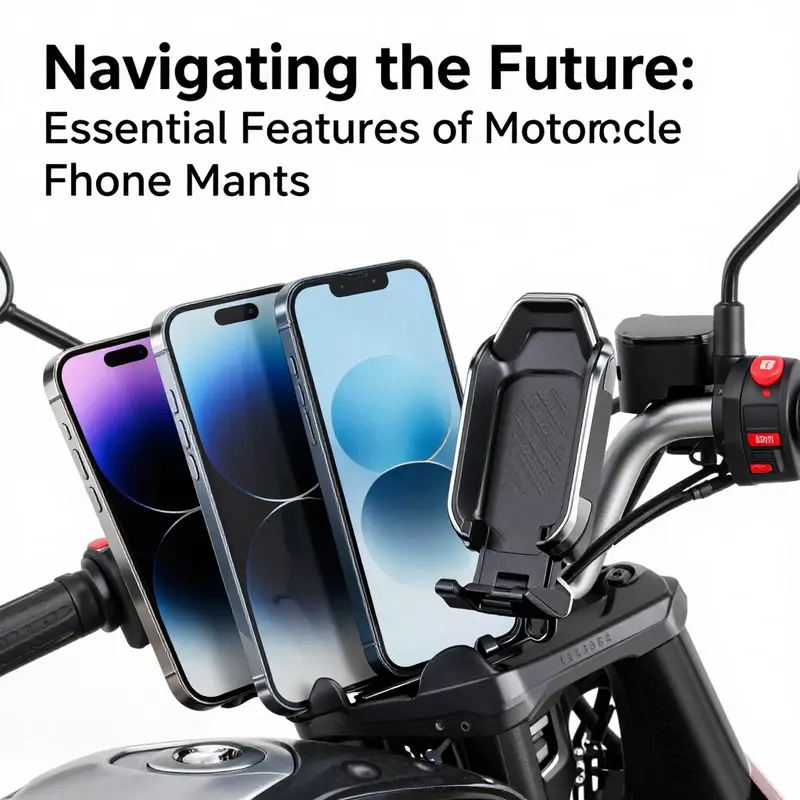
Universal compatibility in motorcycle fairing mounts means a single accessory that can attach securely to many bike shapes. Modern mounts rely on modular clamps, adjustable arms, and rubberized pads to grip diverse fairing curves without marring surfaces. The goal is stability in portrait or landscape orientations, even as the rider shifts posture, encounters rough pavement, or leans into a corner. A well-designed universal mount should sit flush with the bike’s lines, avoid obstructing airflow or lights, and remain easy to operate at a glance. Key design priorities include adjustable geometry, effective vibration dampening, weather resistance, and clear guidance on compatible device sizes and mounting points. When done right, universal compatibility delivers readable screens, reliable access to navigation and controls, and safer riding across a broad spectrum of motorcycles.
Final thoughts
The relevance of motorcycle fairing phone mounts cannot be overstated in the landscape of modern riding. Business owners have a unique chance to enhance their product offerings by embracing the essential features discussed here. From ensuring secure, vibration-resistant mounts to providing integrated charging solutions and universal compatibility, these mounts not only promote rider safety but also enhance the overall experience. By choosing the right products, businesses can cater to the needs of a market increasingly driven by technology and user experience.