
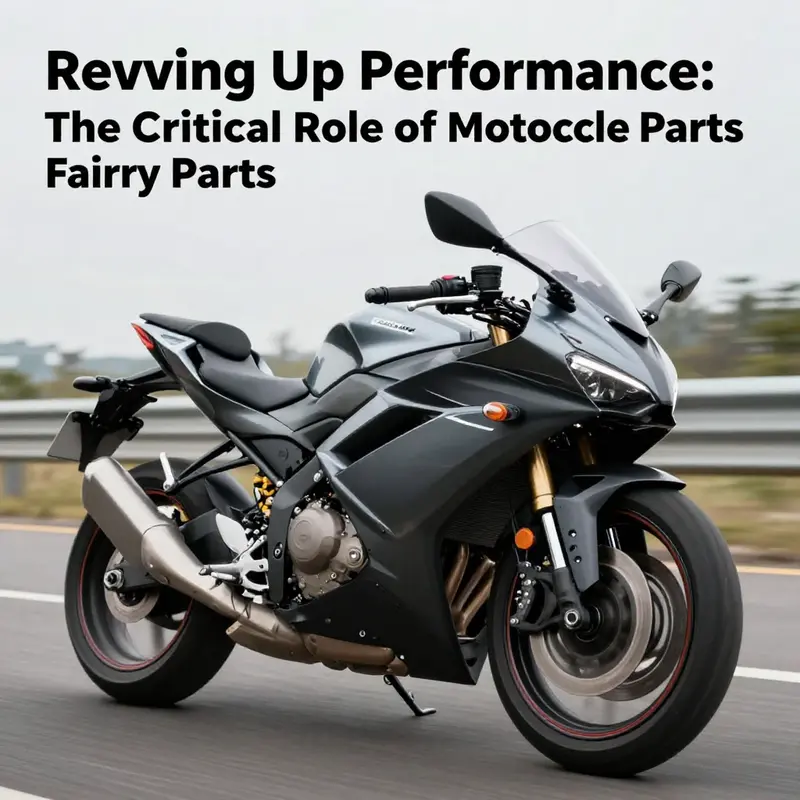
Motorcycle fairing parts are essential components that not only enhance the aesthetic appeal of bikes but also significantly boost their performance and safety. As business owners in the motorcycle industry, understanding the multifaceted roles of fairings is crucial for leveraging market opportunities. This article delves into three pivotal aspects: the aerodynamics and performance enhancements afforded by modern fairing designs, the economic impact of these components on the aftermarket industry, and the rising trends in customization that cater to the varied preferences of riders. Each chapter serves to illuminate how motorcycle fairing parts contribute to a more efficient, safer, and tailored riding experience.
Aerodynamics in Motion: Designing Motorcycle Fairings for Drag Reduction, Downforce, and Ride Stability
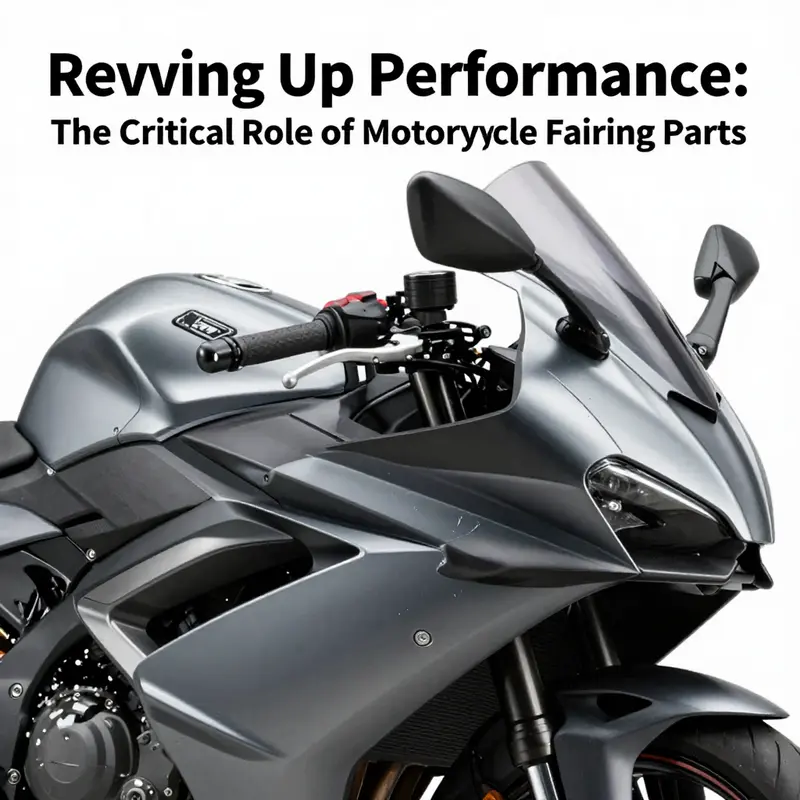
Fairings function as aerodynamic instruments that shape the air around the machine and rider. They are designed to reduce drag, provide downforce, and improve handling at speed. The front fairing splits the wind, the windscreen and side panels manage flow around the rider, and the lower surfaces help guide air under the chassis. Downforce is produced in small amounts via rear spoilers and nose or tail shapes, improving rear tire grip during acceleration and cornering without adding excessive weight or drag. Reducing drag depends on smooth transitions, careful edge radii, and clean junctions between panels; wind tunnel testing and CFD help engineers map lift and drag coefficients and refine the geometry. Materials choices balance stiffness, weight, and durability; carbon fiber offers high stiffness-to-weight, reinforced plastics provide cost efficiency, and composites are tuned to preserve aero shape under load. Manufacturing and integration considerations include compatibility with OEM mounting points, electrical connectors, and safety standards; modular fairings enable quick swaps, customization, and after-market options while maintaining aero coherence. In use, riders benefit from reduced fatigue, quieter airflow, and more stable chassis behavior at highway and track speeds. The future holds adaptive or morphing geometries and smarter materials that respond to speed and load, continuing the trajectory toward cleaner slipstreams and more confident riding experiences.
Economic Ripples: How Motorcycle Fairing Parts Drive Growth Across the Aftermarket Economy
The story of motorcycle fairing parts is not a tale of panels and paint alone. It is a narrative about supply chains, skilled labor, and the way small design decisions accelerate big economic outcomes. Fairings sit at the intersection of form and function, delivering aerodynamic benefits and rider comfort while also becoming a canvas for personal expression. In the aftermarket economy, this dual role translates into measurable value across manufacturing, distribution, and consumer channels. The parts themselves may be lightweight and modular, but their impact is heavy with implications for employment, innovation, and global trade. When a rider swaps a panel or upgrades a windscreen, the ripple effects travel beyond aesthetics. They touch mold makers in distant factories, tint suppliers and paint shops, and the digital platforms that connect buyers with sellers. In this way, fairings become a microcosm of the broader shift toward customization, efficiency, and value creation in the modern motorcycling economy.
Market dynamics in the current era reinforce how important this niche has become. Across global markets, the motorcycle fairing segment is expanding at a brisk pace, driven by a surge in enthusiast culture and a growing desire for both performance enhancement and unique styling. A rising CAGR, reported across reputable market analyses, signals not just steady demand but a sustained investment in better materials, smarter manufacturing, and sharper design philosophy. Consumers increasingly seek not only protection from wind and weather but also aerodynamic efficiency that translates into improved fuel economy, higher-speed stability, and reduced fatigue on long rides. ABS plastic and fiberglass, along with carbon fiber composites in higher tiers, are favored for their balance of durability, weight savings, and moldability. Each of these materials carries its own cost structure, yet all contribute to a more dynamic, responsive aftermarket where riders feel the tangible benefits of technical upgrades.
The demographic and cultural drivers behind demand for fairings are telling. A broad spectrum of riders—from daily commuters to weekend hobbyists and aspiring racers—are embracing customization as a form of personal branding and performance tuning. The appeal lies not only in how a fairing looks but also in how it performs. Aerodynamic refinements can reduce drag and wind buffeting, which in turn enhances steering precision and rider comfort at highway speeds. This convergence of style and performance is particularly potent in markets where riding conditions vary with climate and road quality. The result is a marketplace where modular designs and easy swap systems matter almost as much as the base kit itself. Riders want to tailor their machines quickly, with minimal downtime and without sacrificing OEM compatibility. In many cases, the ability to upgrade or replace individual panels without specialized tools becomes a strong selling point that informs purchasing decisions and increases lifetime value of the vehicle as a whole.
In this ecosystem, the supply chain layout matters as much as the aesthetics. Southern China, with its mature manufacturing clusters, has emerged as a central hub for fairing production. The concentration of tooling, polymer processing capabilities, and logistical networks in provinces such as those in the southern coastline supports efficient scale and rapid iteration. Proximity to ports and a network of suppliers for raw materials—from resins and pigments to finishing tools—allows producers to compress lead times and respond quickly to shifting demand. This cluster advantage translates into lower unit costs for high-volume configurations and more flexible options for custom or limited-run panels. It also creates a conducive environment for iterative design, where riders and distributors can collaborate with makers to refine shapes, fitment, and mounting interfaces. The result is a more resilient supply chain that can absorb volatility and keep shelves stocked across regions with divergent regulatory landscapes.
Employment ramifications flow from these production ecosystems into the broader labor market. The fairing aftermarket supports roles in concept design, mold making, injection molding, painting and finishing, quality control, and international logistics. Each stage contributes to employment stability and skill development, from high-precision machinery operators to software-driven design engineers who translate rider feedback into manufacturable geometries. As customization expands, demand grows for digital tools that enable faster prototyping, such as 3D modeling and virtual testing. This intersection of traditional craft with modern software creates opportunities for workers to upskill and participate in higher-value segments of the value chain. The economic impact thus extends beyond wages to include investment in training resources, tooling, and facilities that sustain a cycle of innovation and job creation.
Another layer of economic activity emerges through the channels that connect producers with end users. Online marketplaces and direct-to-consumer platforms have democratized access to a broader array of fairing options. Independent brands and smaller distributors now compete on customization, speed, and service as much as on price. This democratization stimulates competition, which in turn drives better quality, more durable materials, and improved safety features. The modular design concept, in particular, enables quick personalization for different use cases—daily commuting, track days, or weekend cruising—without requiring a complete replacement of the bodywork. For the consumer, this means lower switching costs and more opportunities to experiment with new looks and performance configurations. For the industry, it means a more responsive demand signal and faster feedback loops that guide subsequent product iterations. The net effect is a marketplace that rewards agility, reliability, and alignment with OEM standards, because compatibility remains a key trust signal for buyers who value durability and fit across a broad spectrum of motorcycles.
In tandem with physical goods, the economic footprint of fairing parts extends into material science and supplier ecosystems. Advanced composites and durable polymers are at the forefront of material choice, offering a balance of stiffness, impact resistance, and UV stability. This has a cascading impact on research and development budgets within manufacturing clusters, where SMEs and larger producers alike invest in process optimization, quality assurance protocols, and sustainability considerations. The push toward lighter, stronger materials dovetails with environmental goals and cost efficiency, creating incentives for factories to upgrade molding lines, implement automated inspection regimes, and pursue international certifications. Certification pathways, including CE compliance for safety and interoperability with OEM specifications, further influence procurement decisions, especially for B2B buyers who need reliability in distant markets. In practice, this means that compliance considerations are no longer an afterthought; they shape the design-to-delivery timeline, production planning, and the risk profile of orders and projects across continents.
Prices for fairing sets and individual panels reflect a balance of material costs, processing complexity, and customization levels. Wholesale packages can vary widely, with configurations tailored for volume or for specialty builds. Buyers increasingly compare the long-term value of components, weighing not only upfront price but also durability, repairability, and the ease of maintenance. Durable composites, while pricier upfront, can offer longer lifespans and reduced maintenance costs over time, strengthening the case for higher initial outlays in markets that prize performance and longevity. Conversely, premium finishes and intricate paint jobs can elevate perceived value and resale appeal, even as they add upfront costs. The pricing dynamics are further influenced by global supply chain conditions, currency fluctuations, and shifting tariffs or trade policies. In regions where export logistics are highly efficient, cost advantages can be magnified, reinforcing the attractiveness of southern Chinese production hubs and their ability to serve diverse international customers.
The competitive landscape reflects a combination of scale advantages, regional expertise, and digital reach. Large manufacturers benefit from economies of scope, maintaining multiple lines of fairing products across different vehicle families. Smaller players can carve out niches through specialization, offering improved fitment data, faster customization cycles, or enhanced safety features. The market also rewards reliability in aftersales support, the ease of spare parts access, and transparent documentation for OEM compatibility. As a result, distributors seek partners who can deliver consistent quality, predictable lead times, and responsive customer service. The alignment among design teams, mold houses, paint shops, and logistics providers becomes a kind of ecosystem fitness. When one link in the chain weakens, the entire flow can slow, but when the chain is tightly integrated, the end user experiences smoother procurement, quicker turnarounds, and a greater sense of confidence in the product. This is the essence of a mature aftermarket, where value is co-created by producers, retailers, and riders who push for better products and faster service.
A broader consequence of these dynamics is a redistribution of economic activity across regions and markets. The aftermarket ecosystem is less about a single price point and more about a spectrum of value opportunities. In high-volume jurisdictions, standardization and automation lower unit costs, enabling aggressive pricing and broad availability. In markets with more diverse demand, customization becomes a premium service that sustains higher margins and supports bespoke projects. The interplay between these extremes creates a resilient market architecture capable of absorbing shocks, such as supply disruptions or shifts in consumer sentiment toward sustainability and performance. In this context, fairing parts function as a bridge between mass production and artisanal craftsmanship, channeling investment into both the hardware and the digital infrastructure that supports it. The end result is an economy that rewards efficiency without sacrificing creativity, and that rewards those who can pair technical rigor with responsive customer engagement.
Within this economic frame, the potential for branded storytelling remains powerful, even as the market leans toward generic fit and OEM compatibility. Enthusiasts respond not only to how a fairing reduces drag or how it reshapes airflow, but also to how a company presents its values—durability, environmental responsibility, and a commitment to safety. The narrative becomes part of the product itself, shaping demand in a way that connects with riders on an emotional level. This is where marketing, design iteration, and supply chain logistics converge to create competitive advantage. The fairing aftermarket thus exemplifies a broader shift in modern commerce: value is increasingly generated through a combination of engineering excellence, seamless service, and a chain of activities that begins with material science and ends with a rider enjoying a ride with greater confidence and pride. The economic significance of these parts extends beyond the bike, reinforcing local economies and contributing to the global trade ecosystem as more riders elect to personalize, upgrade, and maintain their machines with greater intention.
Finally, the research landscape on supplier networks and manufacturing ecosystems underscores the practical realities behind these economic ripples. Sourcing guides and regional analyses highlight how clusters that specialize in polymers and composites become engines of efficiency. Buyers looking for reliability often favor suppliers with established export capabilities, robust quality control, and certifications that verify their adherence to international standards. This is not just a matter of purchasing a product; it involves navigating a complex set of expectations that includes durability, safety, and compatibility with a wide range of motorcycles. Strategic decisions surrounding supplier selection, order quantities, and customization options shape the pace of market growth and the certainty of long-term supply. The narrative of the fairing aftermarket is thus a story of interdependence: designers, manufacturers, distributors, and riders all contribute to a dynamic system where innovation is rewarded and where a small change on a panel can influence the broader trajectory of an entire sector.
For readers who want to explore a broader spectrum of fairing options and deepen their understanding of the category, the Honda fairings category offers a wide array of designs and fitment data that illustrate how modularity and OEM alignment operate in practice. This resource highlights how a well-curated catalog supports efficient procurement and enables riders to express personality through their machines while preserving performance and safety standards. As the ecosystem evolves, this kind of repository becomes a valuable reference point for businesses seeking to align product offerings with evolving rider preferences. See the detailed catalog and fitment notes in the Honda fairings category to gain a sense of how a structured product taxonomy can streamline both purchase decisions and aftermarket service.
The economic story of motorcycle fairing parts is not merely about what is sold, but about how selling catalyzes activity across design, production, logistics, and digital commerce. It is a story of clusters that turn complex polymers into working physics, of workers who translate data into durable surfaces, and of markets that reward speed, reliability, and the willingness to innovate. In that sense, fairings are a case study in modern manufacturing and retail: a modular, accessible, and performance-forward product class that anchors a vibrant ecosystem. They illustrate how a seemingly small component can drive durable growth across multiple layers of the economy, reinforcing the idea that in manufacturing-intensive regions, the pursuit of better, smarter, and more interconnected processes yields broad-based gains. The sector’s resilience and ongoing expansion rest on a simple premise reinforced by data and practice alike: when form meets function in intelligent ways, value flows across the entire chain, lifting not only the bottom line but also the communities and workers who bring these parts to life. External resource for broader context on supplier dynamics and procurement strategies is provided at the end of this chapter to offer readers additional depth and practical guidance.
External resource: https://www.made-in-china.com/products?keyword=Motorcycle+Fairing+Supplier+Guide
null
null
Final thoughts
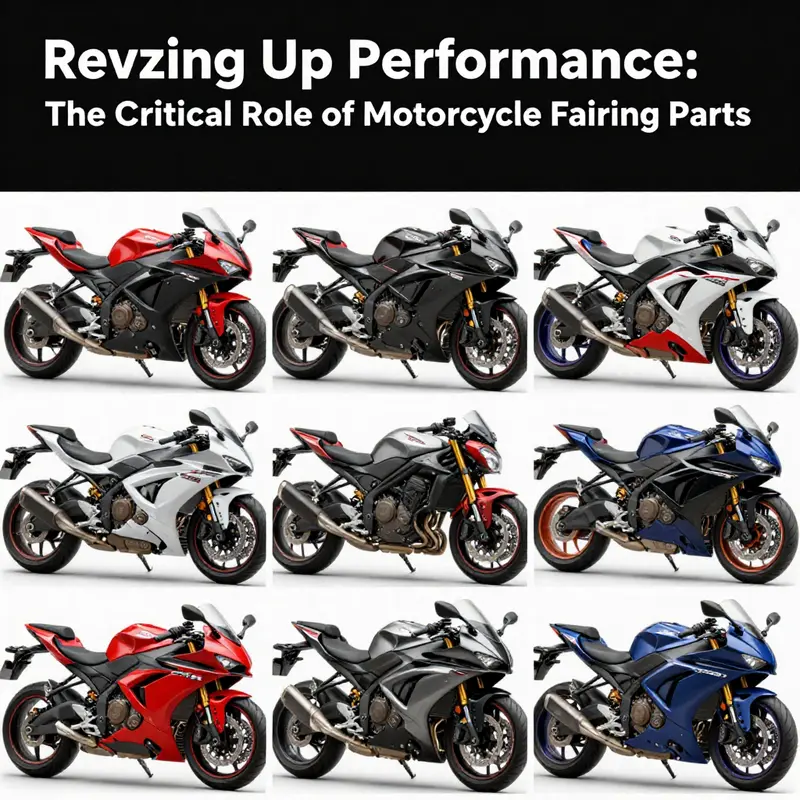
Motorcycle fairing parts are far more than just a visual enhancement; they are pivotal in optimizing performance, driving economic growth in the aftermarket industry, and offering riders personalized choices. Business owners who focus on high-quality fairing components can tap into a burgeoning market that values performance and individuality. Embracing these trends not only positions businesses for success but also helps promote a culture of safety and efficiency in motorcycling.