
Introduction
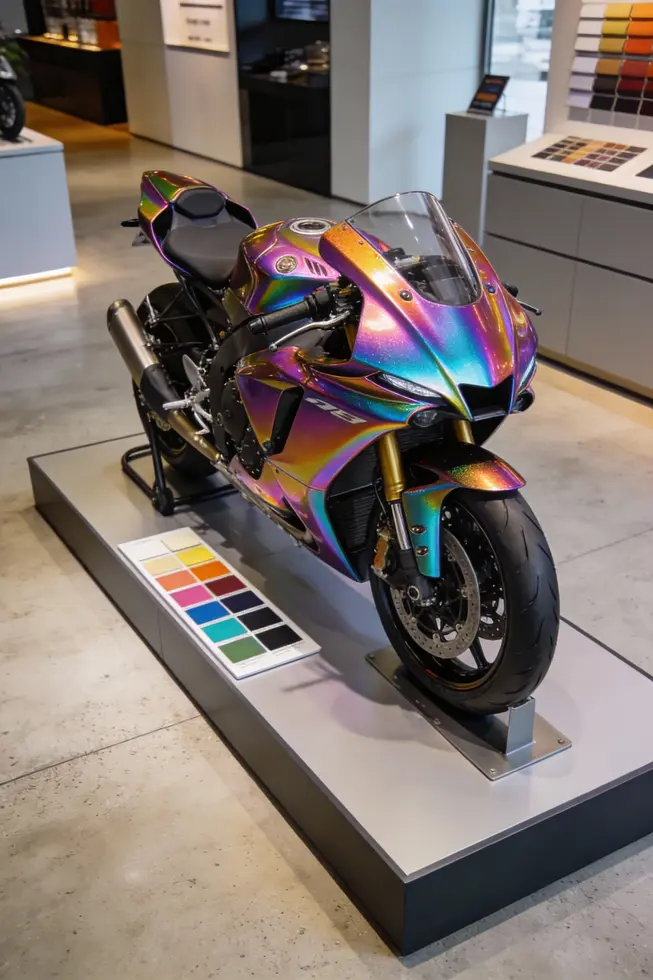
Motorcycle fairing paint is more than color; it is a strategic asset for retailers, repair shops, and customization studios. The paint you choose signals quality, drives installation efficiency, and underpins aftercare costs. Today’s market presents a spectrum of options: black, reds, silvers, blues, metallics, chameleons, chrome, carbon fiber, camouflage, candy, pearl, and matte finishes. The gloss finish delivers high shine; matte offers a modern non-reflective aesthetic; metallics and pearls add sparkle and color-shift effects that can help a model stand out. In practice, durability often hinges on the combination of pigment, clear coat, and proper surface preparation. For business owners, the decision is not merely cosmetic; it affects lead times, warranty risk, and repeat business. Preparation and application are the backbone of any successful paint program. A clean, repaired surface, proper sanding, plastic-specific primers, and thin, even coats underpin long-term adhesion and UV resistance. Many shops adopt a layered approach: primer, base color, decals, and multiple clear coats to extend UV resistance and gloss retention. The market now offers DIY and professional kits as well as pre-painted fairings that shorten turnaround times. This framework will guide you through the material choices, the preparation discipline, durability considerations, market dynamics, and the restoration and global perspectives that shape profitability and customer satisfaction.
Tables of Contents
Chapter 1: Chapter 1: Motorcycle Fairing Paint – Material Options and Finishes (Colors, Gloss, Matte, Metallic, Candy, Pearl, etc.)
- Chapter 1: Motorcycle Fairing Paint – Material Options and Finishes (Colors, Gloss, Matte, Metallic, Candy, Pearl, etc.) — Technological Innovations and Material Science
Chapter 2: Chapter 1: Motorcycle Fairing Paint – Material Options and Finishes (Colors, Gloss, Matte, Metallic, Candy, Pearl, etc.)
- Material Choices and Finishes on Motorcycle Fairings: Economic Forces, Geopolitical Currents, and Rider Identity
Chapter 3: Chapter 2: Motorcycle Fairing Paint – Preparation and Application Techniques
- Chapter 2 Reimagined: Technological Foundations and Innovations in Preparing and Applying Motorcycle Fairing Paint
Chapter 4: Chapter 2: Motorcycle Fairing Paint — Preparation, Application, and the Wider Canvas of Costs, Politics, and Culture
- Chapter 2: Motorcycle Fairing Paint – Preparation and Application Techniques – Economic, Geopolitical, and Societal Implications
Chapter 5: Chapter 3: Engineered Shield: Durability, UV Stability, and Maintenance in Motorcycle Fairing Paint
- Chapter 3: Motorcycle Fairing Paint – Durability, UV Resistance, and Maintenance — Technological Foundations: Materials, Coatings, and Application Methods
Chapter 1: Chapter 1: Motorcycle Fairing Paint – Material Options and Finishes (Colors, Gloss, Matte, Metallic, Candy, Pearl, etc.)
1. Chapter 1: Motorcycle Fairing Paint – Material Options and Finishes (Colors, Gloss, Matte, Metallic, Candy, Pearl, etc.) — Technological Innovations and Material Science
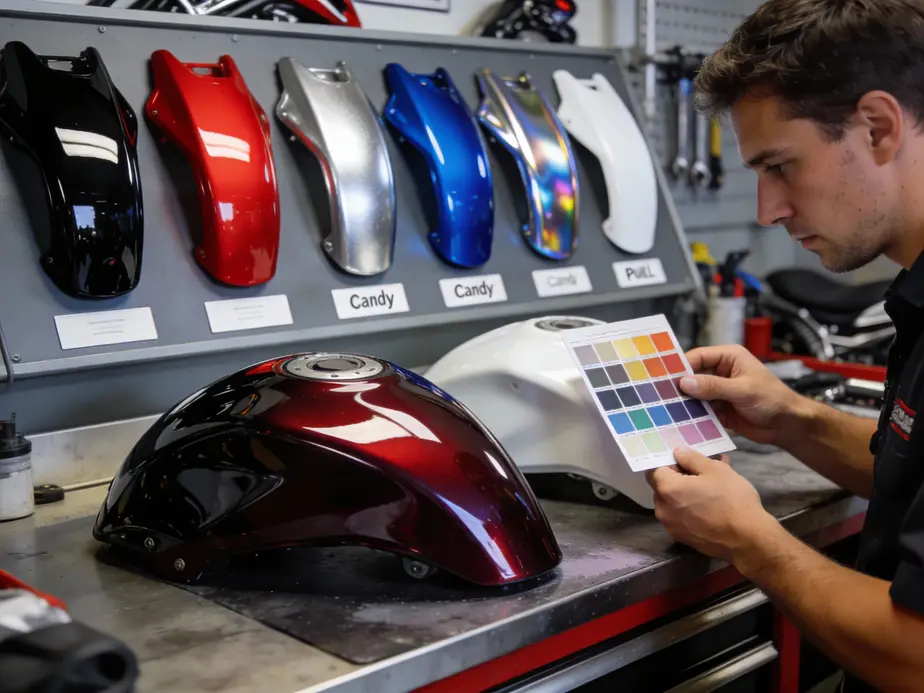
The paint that coats a motorcycle fairing is more than a color shield; it is a carefully engineered system designed to protect a lightweight, often flexing surface while delivering a visual language that communicates speed, precision, and individuality. The substrate, whether it is ABS plastic, fiberglass, carbon fiber, or a metal panel, sets the stage for how color behaves under stress—from fuel vapors and road grime to UV exposure and temperature swings. The performance goals are explicit: the coating must adhere to a substrate that can flex and vibrate, resist chemical attack from fuels and cleaners, remain color-stable and gloss-retentive through years of sun, rain, and grit, and be repairable in a way that preserves the overall look after maintenance or replacement. Every choice—from primer chemistry to pigment selection and final topcoat—carries a cascade of implications for durability, repairability, and aesthetics. The resulting finish is a composite achievement, a marriage of resin science, pigment technology, and practical application that, when done well, makes a fairing look as flawless after years of exposure as it did on the showroom floor. For readers seeking a practical blueprint, a detailed, procedure-oriented discussion exists, but the essence rests in appreciating how the paint system integrates with the substrate, the environment, and the rider’s maintenance habits. A deeper walkthrough of the practical steps can be found in industry writing that outlines the best approach to painting motorcycle fairings, and it is worth consulting for those ready to translate theory into practice: Best way to paint motorcycle fairings.\n\nThe heart of any superior fairing finish lies in its base resin system and the way it negotiates adhesion to the substrate. ABS plastics dominate modern fairings, prized for their impact resistance and light weight, yet their chemistry demands careful surface conditioning and adhesion promotion. When a primer is applied, the aim is twofold: to create a robust mechanical and chemical bond with the substrate and to act as a barrier against moisture and solvents that might penetrate and cause delamination over time. Epoxy primers offer strong adhesion and corrosion resistance, especially on substrates prone to moisture ingress, while polyurethane primers contribute flexibility and improved impact resistance. In real-world terms, this means a primer layer that can ride out flex without cracking and a base that remains bonded even after exposure to road salt or gasoline vapors.\n\nThe topcoat, the visible face of the system, commonly comes in two-part polyurethane formulations that deliver a balance of hardness and flexibility. Waterborne polyurethane topcoats are increasingly favored for environmental compliance, delivering lower VOCs while still forming durable films. Solvent-borne urethanes often provide superior film formation and cure speed in controlled environments, but they demand proper ventilation and safety practices. Across these chemistries, designers and painters balance cure speed, block resistance, and long-term durability, recognizing that a higher gloss or a more forgiving finish can trade off with micro-scratch visibility or orange-peel if application control drifts. In practice, the selection of a topcoat is not merely about shine; it is about a coherent chain of material choices—primer, color, and clear—that determines how the finish handles abrasion, fuel exposure, and UV aging while still enabling reliable repair if a panel is damaged.\n\nThe colorant system is the visual voice of the finish. Solid base colors are achieved with pigments dispersed in a base resin, producing predictable opacity and color matching. Metallic finishes rely on aluminum flakes or mica-based pigments that scatter light to create sparkle and depth; the orientation of flakes during application can influence hue, brightness, and the depth of the metallic look, with careful control needed to avoid pinholes or uneven texture. Candy colors introduce a translucent tint layered over a dark or metallic foundation, creating a sense of depth as the color seems to glow from beneath the surface. Pearlescent pigments, often mica-based, add iridescence and color-shift behavior that depends on viewing angle and lighting. Dyes versus pigments also matters: dyes can yield vivid, deep tones but can degrade with UV exposure, whereas pigments generally offer superior colorfastness and outdoor durability. In the modern practice, pigment technology has expanded toward interference and nano-encapsulated systems that promise more stable dispersion, lower VOC content, and easier batch-to-batch matching. Each choice affects not only the final look but the maintenance regimen and the ease of color repair, because deeper, more complex colors may demand more controlled repair blending to preserve uniformity across a panel.\n\nFinishes further define the character of the paint system. Gloss finishes are the default for most fairings, delivering clarity, depth, and a surface that is easy to clean. They reveal every micro-scratch, encouraging regular care and periodic polishing to maintain a pristine surface. Matte and satin options, by contrast, diffuse reflected light to hide minor surface imperfections and produce a modern, understated aesthetic. Matte finishes in particular require careful control of flattening agents and surface texture; any subsequent touch-up or refinishing must respect the controlled gloss level to avoid visible patches. Specialty effects, including candy and pearl, demand disciplined process control because variations in coat thickness, base color, or cure can shift the perceived hue and depth. Even subtle changes in clearcoat thickness or polishing can alter the luminous qualities of pearl or candy finishes, so color management and process consistency become as critical as the color palette itself.\n\nThe technological dimension of this field is not confined to color alone. Under the banner of candy, pearl, and metallic finishes lie principles of light interaction, pigment dispersion, and surface physics. Candy finishes use a translucent tint that modifies the apparent color by tinting a base layer; this is how depth is achieved. The pearlescent effect is the result of mica or similar pigments that reflect light from multiple planes, yielding a multi-dimensional shimmer that shifts with viewing angle. Metallics owe their character to aluminum or mica flakes that orient during film formation, creating bright reflections that can seem almost alive as light sweeps across the bike’s profile. The alignment and orientation of these flakes are not incidental; they are influenced by the spray technique, solvent evaporation, and thixotropic behavior of the coating system. The more advanced pigments, including interference and nano-encapsulated variants, promise color shifts with less batch-to-batch variability and improved stability under UV exposure, aligning with the industry’s push toward longer service life and easier maintenance. In short, the visual drama of a motorcycle fairing is a layered phenomenon—colorants determine hue, depth, and vibrancy; the base and primer set the stage for adhesion and resilience; and the clear topcoat seals the performance while shaping gloss, clarity, and the feel of the finish under light and touch.\n\nBeyond aesthetics, the finishing stack is a performance stack. Application processes must manage surface preparation with meticulous cleanliness, removal of any wax or mold-release agents, and the creation of a uniform surface texture through careful sanding. Typical preparation involves scuffing with progressively finer abrasives and the use of adhesion promoters to bridge the gap between plastics and coatings. The basecoat is laid down in controlled layers, with coat thickness carefully regulated to achieve color accuracy and avoid sagging. The clearcoat, often the second stage in a two-coat system, adds protection, UV resistance, and depth. Some systems employ single-stage coatings that blend color and clear properties in one layer, but for most durable, high-quality finishes, a dual-stage approach prevails because it affords better color control and easier repair, which is especially important when a panel must be blended or repainted after damage.\n\nThe practical steps tie into substrate realities. ABS, fiberglass, carbon fiber composites, and metal panels each present unique adhesion challenges. ABS benefits from surface cleaning, scuffing, and appropriate primers to produce a reliable bond. Fiberglass requires attention to any resin-rich areas and appropriate primers to avoid moisture ingress. Carbon fiber demands careful surface conditioning to avoid fiber damage while ensuring resin-to-paint adhesion, often through primers designed to accommodate the very low surface energy and the stiffness of the composite. A robust system anticipates these differences by selecting primers and adhesion promoters that match the substrate’s chemistry and by validating adhesion through standardized tests such as cross-hatch or tape tests. Long-term durability then hinges on UV absorbers, HALS stabilizers, and the overall formulation of the clearcoat to resist yellowing, embrittlement, and chemical attack from road grime and fuel vapors. In practice, a successful finish compounds multiple layers of science: it begins with the substrate, proceeds through primers and color layers, and ends with a protective topcoat that not only looks right but remains faithful to light, weather, and touch over time.\n\nEnvironmental and safety considerations accompany every choice. Regulatory frameworks governing VOC content push the industry toward waterborne or high-solids formulations, which reduce emissions but can introduce curing challenges that must be addressed through formulation and process adjustments. Handling isocyanates and other reactive components requires proper ventilation, protective equipment, and adherence to safety protocols, as exposure limits are tightly controlled in many jurisdictions. The broader sustainability conversation includes pursuing higher solids content, reducing solvent use, and exploring energy-efficient curing methods such as UV or LED-curable systems where applicable. Safety culture, regulatory compliance, and sustainable chemistry thus influence not only what formulations are used but how they are applied and cured in shop environments, shaping both process design and product performance.\n\nQuality control and color management play indispensable roles in delivering consistent results. Spectrophotometers and gloss meters quantify color and finish, guiding batch-to-batch consistency and helping to reproduce a precise appearance across panels. Film thickness controls ensure uniform color layers and even clear coverage, while durability tests—exposure to UV, humidity, temperature cycling, and abrasion—validate the coating’s resilience in real-world weather and traffic conditions. Repairability remains a practical requirement: a well-chosen system should allow spot repair and blending without creating conspicuous transitions. These quality practices are not merely academic; they translate into repeatable results, enabling a rider to maintain the bike’s visual language without frequent full resprays.\n\nLooking forward, pigment and resin innovations promise clearer color control, deeper depth, and greater environmental compatibility. Self-healing clear coats have moved from concept to niche applications, offering the potential to reduce downtime after micro-scratches. Ceramic or ceramic-reinforced topcoats may deliver superior abrasion resistance and chemical protection, while smart finishes could provide hydrophobic properties or anti-fouling behavior that make maintenance easier. The push toward sustainable chemistry is not a trend alone but a shift in baseline expectations: coatings must deliver long service life, require fewer refinishes, and be safer to apply and dispose of. These trajectories imply a market where color and performance evolve in tandem with environmental responsibility and user-friendly maintenance, all within the constraints imposed by substrate characteristics and application realities.\n\nWith these layers in mind, practical guidelines for selecting and implementing a fairing paint system emerge as a synthesis of goals and constraints. First, define performance requirements by considering exposure conditions. How intense is the sun in the bike’s usual riding environment? What is the likely frequency of fuel exposure, road salt, or cleaning regimens? These factors drive the balance between UV stability, chemical resistance, and ease of maintenance. Second, ensure substrate compatibility. The chosen primers and adhesion promoters must be tailored to ABS, fiberglass, carbon fiber, or metal substrates, recognizing that mismatches can lead to premature failure. Third, align color and effect goals with maintenance expectations. A solid color offers predictable repair outcomes; metallics and candy or pearl effects deliver visual drama but may demand more meticulous repair blending. Fourth, plan for maintenance, including safe cleaning products and routine inspections that catch micro-damage before it becomes apparent. Fifth, manage batch consistency through disciplined color control, pigment dispersion, and documented process parameters so that future repairs or panel replacements blend seamlessly with existing panels. These considerations—performance, substrate compatibility, color goal, maintenance, and batch control—form a practical framework that translates theory into reproducible results across workshops and by DIY painters alike.\n\nIn sum, the motorcycle fairing finish is a living intersection of material science and practical artistry. It embodies the science of adhesion, curing kinetics, and pigment behavior while granting riders a canvas that expresses personality and identity. The best finishes harmonize substrate behavior with color and gloss in a way that survives the road’s abuses and ages gracefully. They balance the visible drama of candy, pearl, and metallic effects with the quiet resilience of a robust clearcoat and a properly chosen primer system. They also acknowledge the evolving landscape of environmental norms and safety practices, ensuring that what looks spectacular today can still perform reliably years from now. For practitioners and enthusiasts alike, the journey from substrate to spectacle is a disciplined voyage through chemistry, application technique, and ongoing care—one that rewards precision, patience, and a readiness to learn from each repaint or refresh.
Chapter 2: Chapter 1: Motorcycle Fairing Paint – Material Options and Finishes (Colors, Gloss, Matte, Metallic, Candy, Pearl, etc.)
1. Material Choices and Finishes on Motorcycle Fairings: Economic Forces, Geopolitical Currents, and Rider Identity
Paint on a motorcycle fairing is more than a cosmetic layer. It is a language about how a bike is built, how it performs on the street, and how markets and communities respond to what we see and ride. The surface that greets the eye at first glance emerges from a chain of decisions about base materials, finishing technology, and the processes that bind color to plastic, resin, or carbon fiber. Those choices ripple outward, shaping not only the price tag of a fairing but the geographic supply chains that produce it and the ways riders express themselves in public spaces. In this sense, material options and finishes sit at the crossroads of craft and commerce, aesthetics and industry, personal taste and policy. To understand their significance, it helps to follow the arc from the raw substrate to the final gleam on a fairing, and then to the broader currents that push or pull those choices in particular directions.
The foundational decision in any fairing project begins with the base material. ABS plastic is a staple, prized for being cost-effective, lightweight, and capable of withstanding the everyday knocks of street riding. It represents a balancing point between performance and affordability, enabling broad access to aftermarket customization while preserving the structural integrity needed for rapid prototyping and mass production. Fiberglass sits a step up in durability and stiffness at a modest weight penalty, offering a reliable canvas for detailed graphics and durable repairs. Carbon fiber, by contrast, is the province of performance and high-end applications, where a premium price is justified by exceptional strength-to-weight characteristics and a modern, technical aesthetic. The contrast among these substrates is not just one of price or weight; it governs how paint adheres, how primers behave, and how coatings respond to flex under sun and wind.
Beyond these conventional materials lies a broader shift toward bio-based and chemically innovative plastics. One of the most compelling directions is the development of plastics that embed color and gloss during manufacturing, reducing or reimagining traditional painting steps. Such materials promise improved optical clarity, scratch resistance, and UV durability, while potentially easing some environmental and process burdens that come with separate primer and paint layers. The appeal here is twofold: it can lower the number of discrete operations in the production line and broaden the spectrum of applications for adventure and touring models that face long exposure to harsh elements. This approach does not eliminate painting altogether, but it reframes what “paint” means for the fairing—transitioning toward a system where color, gloss, and protection begin as an integrated property of the base composite.
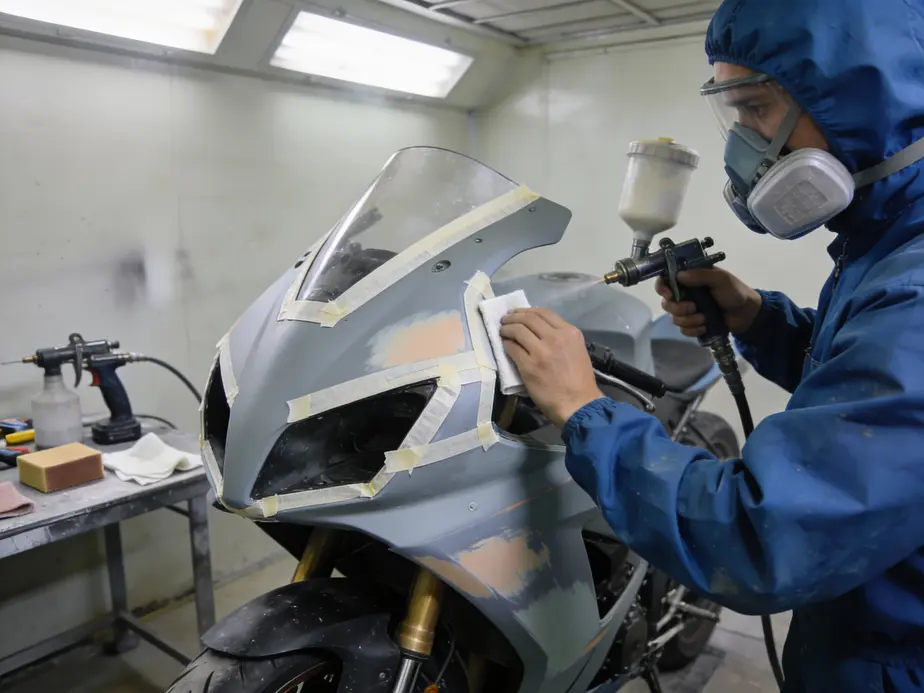
From the substrate, the discussion moves to finishes. Gloss finishes are the most familiar, delivering a high shine that amplifies the bike’s lines and makes colors appear deeper and more saturated. Gloss is typically durable, forgiving in maintenance, and compatible with a wide range of base materials. Matte finishes, in contrast, offer a contemporary, non-reflective look that has gained popularity for its stealthy, modern vibe. The flip side is maintenance: matte surfaces can reveal micro-scratches more readily and may require gentler cleaning and careful shade of light to avoid mistreatment over time. Metallic finishes layer in reflective flakes that catch the sun and create a sense of depth—an effect that often remains visually striking as the bike moves. Pearl finishes contribute color-shifting properties—subtle shifts that depend on viewing angle and lighting—adding complexity and a premium feel but demanding meticulous maintenance to preserve their character. Candy finishes, built through a multi-layer build, deliver a sense of depth and intensity that appears to glow from within. Each finish has its own orchestration of pigments, clear coats, and protective layers, and the durability story often hinges on the integrity of the underlying multi-layer system.
Durability, of course, hinges on the painting process as well as the materials and finishes themselves. A professional seven-step workflow—comprising meticulous prep and sanding, priming, multiple paint coats, decals, and 3-plus layers of clear coats—exists precisely because a single coat rarely delivers the desired balance of color, adhesion, and resistance to sunlight, impact, and chemicals. Surface preparation must be thorough: old finishes are removed, the surface cleaned, and the fairing sanded through progressively finer grits, typically starting with 400–600 grit for initial scuffing and moving to around 800 grit for a smoother base before primer. Plastic-specific primers are crucial to reduce cracking and ensure the paint remains flexible enough to cope with the fairing’s dynamics. Wet sanding steps between coats help achieve a flawless transition between layers and eliminate imperfections that would otherwise show up as micro-mist, fisheyes, or peel after assembly and exposure to UV light. When this careful layering is done well, the result is a finish that resists fading, chipping, and hazing, preserving color integrity and gloss for as long as the bike remains in service.
The economics of these choices drive a complex set of incentives. Traditional materials and paints lower the upfront cost of a base machine and broaden the aftermarket’s reach, creating a large, diverse market of designs for street and entry-level riders. Yet the allure of bio-integrated or simplified finish systems could shift the economics in meaningful ways. If fewer painting steps are required, production costs decline, and emissions associated with solvent-based processes may fall, benefiting both manufacturers and riders who care about environmental footprint. Custom paint jobs, however, remain a premium pathway that adds value through personalization but also increases labor and material costs. When paired with resilient finishes and well-executed sealing layers, the long-term repaint burden may decrease, because durable schemes resist the elements more effectively and retain color clarity longer. This dynamic shapes the market in subtle but consequential ways: consumers can access a wider spectrum of color and texture without escalating price beyond reason in some segments, while the higher-end tier can push for ever more sophisticated finishes, leveraging the prestige of color and texture as a differentiator.
Geopolitically, the materials and processes of fairing painting sit within the broader realities of global supply chains. Paints, pigments, and plastics depend on petrochemical feedstocks and, in some cases, more specialized inputs—scalars of supply, price fluctuations, and exposure to trade tensions can ripple through the cost and availability of finishes. The movement toward bio-based plastics introduces a potential diversification of supply chains, which can bolster resilience in regions that face energy insecurity or regulatory shifts aimed at reducing fossil fuel dependence. Such diversification may influence manufacturing footprints and trade balances as producers invest in new materials, adjust supplier networks, and navigate regulatory frameworks that encourage sustainable plastics or impose constraints on volatile organic compound emissions. In some markets, this could translate into different pricing dynamics, with premium finishes maintaining a niche but persistent presence while more sustainable or integrated materials become more affordable and scalable.
Societal implications flow in tandem with these economic and geopolitical currents. The ability to choose among an array of colors and finishes supports rider self-expression and brand affinity while also shaping public perception and visibility on the road. Finishes that emphasize depth and vibrancy can enhance perceived readability and conspicuity, potentially contributing to safety through better visibility, especially in low-light conditions. At the same time, the push toward sustainable materials and more efficient manufacturing aligns with broader environmental goals and regulatory pressures, resonating with urban planners and policymakers who champion lower emissions and cleaner production practices. The adoption of innovative, integrated materials also shifts the conversation about what is acceptable as aftermarket customization—how far riders can push personal expression without compromising recyclability and end-of-life handling. Societal impact extends beyond the rider to the workshop ecosystem, where local shops and hobbyists adopt increasingly advanced finishing technologies, integrating digital color matching, UV-resistant formulations, and multi-layer clear coats into their service offerings. The result is a culture that connects aesthetic decisions with principles of sustainability, labor practices, and community identities.
To navigate this landscape, riders and builders alike weigh the present benefits against future implications. The choice of material and finish influences not only how a fairing looks and performs today, but how it ages in sun, rain, and wind; how easily it can be repaired or refreshed; and how it is perceived in the marketplace three, five, or ten years down the road. A deeper emphasis on durable finishes—paired with flexible, impact-resistant substrates—means fewer repaints, less waste, and a more efficient use of resources. This translates into a more stable cost structure for enthusiasts who value longevity and for shops that rely on repeat business built around high-quality, durable finishes. It also frames a narrative about the motorcycle as a continually evolving artwork, where color, gloss, texture, and translucence accumulate into a shared culture of customization that speaks to a rider’s identity while reflecting evolving standards of production efficiency and environmental stewardship.
For readers seeking practical, hands-on guidance on finishes and color treatments, there are resources that explore the available options and their implications in more concrete terms. These discussions provide a useful bridge between the theory of material choice and the daily realities of painting, protecting, and maintaining fairings in varied environments. As this subchapter has argued, the decision tree for fairing paint encompasses substrate selection, finish type, and the multi-layer coating philosophy, all of which feed into an economic agenda, geopolitical realities, and social meanings. When a rider chooses a color and texture, they are, in a sense, selecting a position within a broader ecosystem of materials science, manufacturing policy, and cultural expression. The surface may be a mirror, but it also reflects the wider world of supply chains, environmental goals, and community narratives that shape the motorcycle’s role on the road.
In conclusion, the fairing’s material and finish are not merely about aesthetics; they are a compact system that encodes cost, resilience, and identity. The base may be ABS, fiberglass, carbon fiber, or a bio-based alternative that fuses color and gloss into the fabric of the part itself. The finish options—gloss, matte, metallic, pearl, and candy—offer distinct appearances and performance characteristics, each with its own maintenance and longevity profile. The painting process, especially the layered approach with careful surface preparation, priming, coatings, decals, and multiple clear coats, ties the whole package together, delivering durability that meets the demands of riders who push their machines to the limit. Economic factors shape what is possible in mass markets versus bespoke work, while geopolitical dynamics remind us that supply chains, regulatory environments, and material science breakthroughs can redefine what is affordable and feasible. Societal considerations remind us that color and texture are repositories of personal expression, safety cues, and environmental responsibility, turning the act of painting a fairing into a moment where technology, policy, and culture converge on the ride from showroom to street. For readers who want to see a concise overview of finishes and color options within a catalog-like context, a relevant product-category page offers a gateway to the practical palette behind these broader themes. Product category: c61
Chapter 3: Chapter 2: Motorcycle Fairing Paint – Preparation and Application Techniques
1. Chapter 2 Reimagined: Technological Foundations and Innovations in Preparing and Applying Motorcycle Fairing Paint
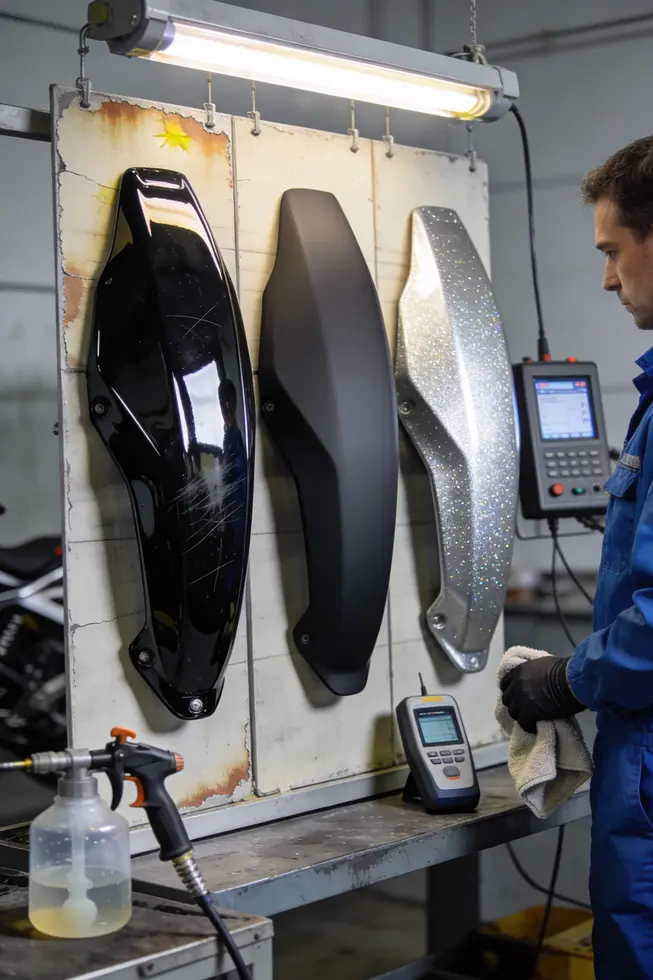
This chapter outlines the essential workflow for applying durable motorcycle fairing finishes. It covers substrate conditioning, adhesion promotion, primer selection, basecoat formulation, and clearcoat strategies, with attention to environmental control, film thickness targets, and repairability. The content emphasizes maintaining color fidelity, gloss stability, and long-term resistance to UV exposure, abrasion, and chemical exposure, while enabling consistent results across panels and repairs.
Chapter 4: Chapter 2: Motorcycle Fairing Paint — Preparation, Application, and the Wider Canvas of Costs, Politics, and Culture
1. Chapter 2: Motorcycle Fairing Paint – Preparation and Application Techniques – Economic, Geopolitical, and Societal Implications
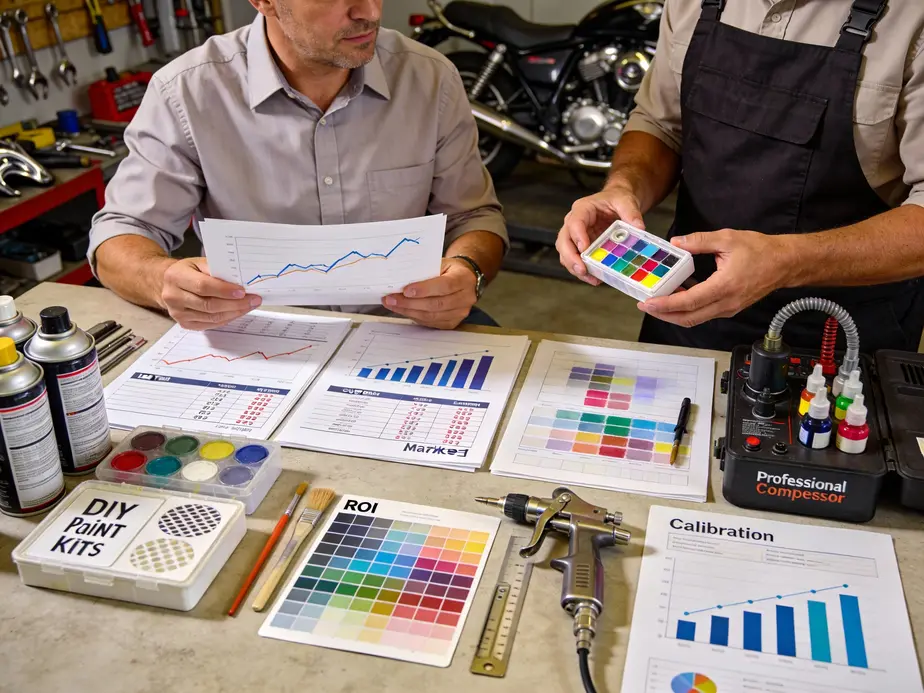
The color and finish chosen for a motorcycle’s fairings are never simply about looks. They ripple through the lifecycle of the bike, shaping rider identity, shop budgets, and the broader ecosystem around ownership. Preparation and application set the stage for durability, cost, and how the finish interacts with daily riding. In this subchapter we move beyond the studio ritual of priming and spraying to consider economic, geopolitical, and societal threads that accompany every glossy panel or matte shield. The journey from bare plastic to a lasting finish begins with a clean slate, but the decisions made along the way reverberate in ways that extend far past a single paint job. The essential truth is that a well prepared fairing is the quiet backbone of both aesthetics and longevity, and the choices around paint whether DIY, kit, or service carry implications that touch wallets, supply chains, and the riding community’s shared values.
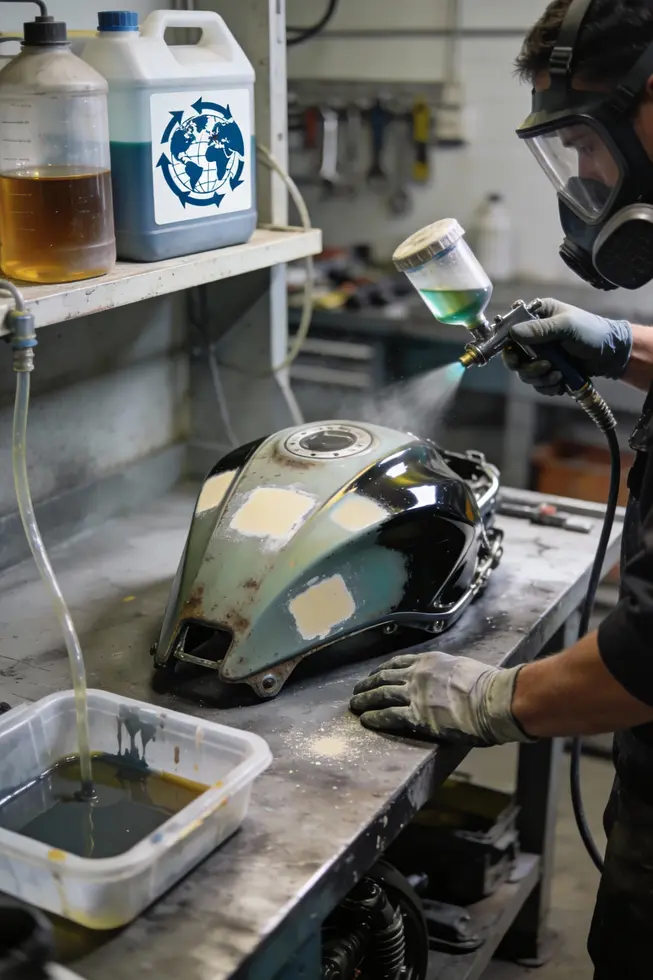
Preparation in the painting process remains the hinge on which durability turns. Cleanliness is not mere ritual; it is adhesion science at work. Every molecule of grease, wax, or road grime left on the surface can undermine a base coat, leading to micro blisters, premature delamination, or hazy color depth. The recommended approach emphasizes meticulous washing with appropriate solvents, followed by careful inspection for micro scratches or pitting. These imperfections, if left unaddressed, become focal points for coating failure under UV exposure and temperature cycling. Sanding is the next critical act, chosen not for vanity but for the leveling you must achieve to prevent orange peel textures and to ensure that subsequent primer layers grip evenly. A fine grit range roughly 400 to 600 on dry sanding, with subsequent wet sanding after priming, balances aggressiveness with the need to preserve delicate plastic structures and decals that might adorn the panels. These steps, though technically straightforward, demand patience and attention to detail. They also set a precedent for how long a finished paint job will endure in the real world, where exposure to sun, rain, and road salt tests finishes relentlessly.
Primer selection is equally consequential. On plastic fairings, a plastic specific primer improves adhesion and reduces the risk of micro cracking during flexing. Thin, even coats help minimize sags and drips while building a uniform base color that enhances depth and clarity. The avoidance of heavy coats at this stage cannot be overstated; heavy priming can trap solvent and lead to surface imperfections that surface later in the finish. The subsequent base coats, whether color or metallic, rely on a clean, consistent foundation. When the base coats are laid, the visual goal is color fidelity and depth that reflects light evenly along the bike’s contour lines. The finishing touch clear coats seals in both color and protection. In professional practices, a multi layer approach with multiple clear coats is common to produce UV resistance, chemical resistance, and a high gloss or tailored finish that resists micro scratching. Even the finishing speed is a factor; a slower, controlled spray technique yields a smoother film and avoids edge pooling that can compromise clarity and durability. The principle remains the same across finishes—gloss and metallic coatings tend to offer the most durability when protected by steady, properly cured clear layers. Matte, pearl, and candy finishes provide distinctive aesthetics but demand extra care to prevent micro scratches and to maintain an even tone across curves. For riders who want a bit of extra shimmer or color shifting effect, pearl or candy layers can create a sense of depth, but they also introduce maintenance considerations that differ from solid colors.
From the standpoint of technique, the layering sequence remains a constant: base coat, decals or stickers if desired, followed by a series of clear coats. The rationale for this order is practical as well as aesthetic. Base coats establish the color, while decals provide branding or personal motifs that can be integrated into the design. Clear coats then become protective layers that guard against UV degradation, moisture intrusion, and minor abrasion. In practice, a urethane based spray is often favored for the final clear coats on frames and fairings because it yields a durable, flexible finish that holds gloss and color depth when subjected to vibrations and temperature shifts. When the fairings are reassembled, torqueing bolts evenly is essential to prevent introducing stress fractures in the new finish. The physical act of mounting after painting is not merely mechanical; it can influence the long term integrity of the coating. The subtle shifts in tension during assembly can create micro cracks if the coating was not fully cured or if fasteners are overtightened. Thus, the painter’s hand is also the rider’s safeguard against early paint fatigue.
For the enthusiast who wants to explore the practical breadth of options, a layered, multi method approach is often the most cost effective and adaptable. Beyond traditional spraying, some riders opt for alternative methods that can still deliver durable aesthetics with different performance profiles. Powder coating, for instance, offers robust resistance to chipping and wear on smaller components or hardware that benefit from heat tolerant finishes. This method, however, is not universally suitable for flexible plastic surfaces and typically works best on metal mounts and brackets that accompany the fairing assembly. Vinyl wraps provide a non permanent but highly tunable look, enabling dramatic color shifts or complex patterns without the permanence of paint. The wrap’s lower cost and faster turnaround make it an attractive option for riders who crave change more frequently or who operate under tight budget constraints. Yet wraps must be handled with care; trimming and edge sealing are critical to avoid peel and lifting during operation, particularly at high speeds where wind shear and debris can stress the edges.
An accessible point of reference for those investigating best practices is a widely cited overview that outlines a layered, methodical approach to painting fairings emphasizing base colors, decals, and layered clear coats for depth and protection. This guidance echoes the industry consensus that methodical preparation and disciplined layering produce lasting results. It also underscores the value of deep color depth achieved through well tuned base coats and a controlled clear top. As a practical note for readers who want a consolidated framework before committing to a particular process, consider visiting a detailed guide that covers these principles, including the emphasis on a measured, field ready workflow and the importance of protecting against scratches and UV damage over time. The economic dimension of preparation and finishing cannot be ignored. For riders who pursue cost conscious options, pre painted fairing kits offer an efficient route to a polished appearance without the need for custom color matching or a dedicated paint booth. These kits can save substantial time and labor, translating into lower labor costs and faster beats for service completion. They also come with the caveat of fitment and alignment, especially on models where the fairings are not directly interchangeable or require minor trimming for a precise fit. Beyond kits, vinyl wraps provide a budget friendly method to achieve a dramatic look, with price ranges that accommodate a spectrum of design complexity and panel count. Wraps can be particularly attractive for riders who want to experiment with patterns or color shifts without committing to a full repaint. Powder coating serves as another viable option for durability, especially on smaller metallic parts that require a tougher surface than standard painted finishes. The economic picture becomes nuanced when you consider the total cost of ownership: the paint itself, primers, clear coats, color matching services if needed, masking materials, labor (DIY or professional), and the potential need for future touch ups or full resprays as the bike evolves with mileage.
These economic choices dovetail with broader resource considerations. Pre painted kits reduce the time to install and can be a smart option for bikes that require rapid return to service. The cost benefit shifts when ownership includes frequent color changes as a hobby or business model, where the ability to swap looks quickly can translate into higher perceived value and rider satisfaction. In a broader sense, the decision to pursue a particular finish is also a comment on maintenance expectations. Gloss and metallic finishes, given their depth and shine, tend to show dirt and scratches less obviously when kept under a routine care regime, and they respond well to regular washing and waxing. Matte finishes, prized for a modern, understated look, demand careful maintenance and careful handling to retain the non reflective aesthetic, since micro scratches are more conspicuous in matte surfaces. Pearl and candy finishes deliver striking color shift and depth, but they require mindful cleaning to preserve their luster and to avoid dulling over time.
Geopolitically, the global supply ecosystem for motorcycle fairing paint and its related materials has become a critical factor in pricing and availability. The components that underpin a finished coating—ABS plastic for the fairings, primers, color pigments, solvents, and the clear coats—are produced in a network of regions that specialize in injection molded plastics and chemical manufacturing. In many cases, these supply chains are concentrated in particular hubs across Asia and other regions, where manufacturing volumes and economies of scale can drive costs down. Global trade tensions, tariffs, and disruptions in shipping lanes can thus ripple through the cost structure of both DIY projects and professional services. When paint systems rely on imported pigments, resin bases, or high performance clear coats, any interruption in supply or delay at port facilities can translate into longer lead times or price volatility for riders planning projects around seasonality or show schedules. The result is a painting ecosystem that is sensitive to macroeconomic conditions, even as the rider experience remains deeply personal. Riders who are mindful of these dynamics often compartmentalize aesthetic choices from procurement realities, choosing finishes and methods that align with both their artistic goals and the realities of supply availability.
Societal implications emerge not only in how a bike looks or how long a finish lasts, but in how riders perceive their craft and how communities express themselves through color and texture. The capacity to customize fairings whether through bright candy hues, chameleons that shift with viewing angle, or carbon fiber inspired patterns offers a channel for individual identity and group belonging. This personalization extends to the public realm, where high contrast or bright finishes can improve visibility and safety, contributing to rider conspicuity on busy roads. DIY painting, in particular, cultivates a culture of self reliance and hands on learning. The do it yourself approach, while financially prudent for some, also fosters a form of apprenticeship within the riding community, where experienced hobbyists mentor newcomers through the careful steps of surface preparation, color layering, and finishing. The societal value of durable coatings reducing the need for frequent resprays and minimizing waste aligns with broader sustainability objectives. When a fairing finish endures longer, it translates into fewer repairs, less material waste, and a reduced environmental footprint over the life of the bike. Yet there are tensions to acknowledge. For example, the higher heat tolerance required for certain coatings on oil touched areas must be balanced against the risk of cosmetic or structural damage if the same coatings are used inappropriately on flexible plastic sections. The culture surrounding color and finish thus becomes a negotiation between artistry, practicality, and stewardship of resources.
In practical terms, the choice of finish and the fidelity of execution are interwoven with the rider’s daily experience. A glossy, highly reflective surface can enhance the visual drama of a well designed fairing, while a matte finish can convey a contemporary, understated mood. Both choices, however, depend on the integrity of the preparation steps and the discipline of the application technique. The trade offs are real: higher end finishes with more complex color effects may demand greater time and careful handling, and the ongoing maintenance to preserve the look becomes a recurring part of ownership. For those who value personalization but also want to respect maintenance realities, a balanced approach one that favors durable base layers, prudent finishing strategies, and periodic protective refreshes offers a practical path forward. The broader social context, then, recognizes painting not as a one off conversion but as an ongoing conversation between rider, machine, and community about appearance, performance, and responsibility.
As the discussion moves toward the next chapter, the thread that remains salient is this: preparation and application are not just technical steps; they are commitments that shape how bikes are perceived, maintained, and shared within the riding world. The choices made in a workshop how thoroughly surfaces are cleaned how evenly layers are applied and how thoughtfully finishes are protected reflect a wider willingness to invest in resilience, aesthetics, and long term value. In this light, the act of painting functionally becomes a practice of stewardship of the bike, of the materials that go into the finish, and of the communities that celebrate the art and craft of motorcycling.
Chapter 5: Chapter 3: Engineered Shield: Durability, UV Stability, and Maintenance in Motorcycle Fairing Paint
1. Chapter 3: Motorcycle Fairing Paint – Durability, UV Resistance, and Maintenance — Technological Foundations: Materials, Coatings, and Application Methods
Durability in motorcycle fairing paint is rarely a matter of a single glossy layer. It emerges from the deliberate orchestration of substrate selection, multi-layer coatings, and protective overlays that work in concert to resist abrasion, impact, and environmental assault. The fairing, typically crafted from ABS plastic, fiberglass, or carbon fiber, is not just a canvas for color; it is a dynamic surface that flexes, expands, and contracts with temperature swings and road vibrations. Each substrate has its own profile of adhesion, fatigue resistance, and susceptibility to cracking, so the application strategy must translate those material characteristics into a resilient finish. ABS, for instance, provides economical strength and a forgiving surface, yet its surface energy and flexibility demand a primer system that bonds securely without creating stress points. Fiberglass offers solid impact resistance but can demand additional care to prevent micro-cracking, while carbon fiber delivers exceptional stiffness and lightness but presents its own challenges for paint adhesion and humidity resistance. In practice, the strongest durability outcome arises when the coating stack is tailored to the substrate and designed to accommodate the thermal and mechanical realities of riding at speed and in variable weather.
At the heart of durability is the multi-layer approach. A professional, durability-focused process follows a sequence that might include careful surface preparation, primer adhesion promotion, base color application, optional decals, and multiple clear coats. Each layer serves a distinct function. The primer builds a compatible interface between the substrate and the color, filling micro-voids and equalizing surface energy to prevent delamination. The base coat delivers the color and depth, while the clear coats erect a robust shield against abrasion and moisture. A typical high-durability scheme uses three or more clear layers, each layer contributing to erosion resistance, impact tolerance, and chemical resilience. The result is a finish that not only looks correct at the showroom light but persists in the gales and gravel of real-world riding. A well-executed clear coat system also plays a critical role in UV protection; it provides a hard, chemically resistant barrier that resists solvents and oxygen diffusion, which can otherwise accelerate chalking or color fade. The value of this layered architecture becomes especially apparent over years of exposure, where sun, rain, and road salts are constant companions.
Protection from debris and minor scrapes is further enhanced by the optional addition of a paint protection film (PPF) composed of thermoplastic polyurethane. When correctly installed, PPF acts as a sacrificial shield, absorbing impacts that would otherwise scuff the paint beneath. It also carries self-healing properties for shallow scratches, thanks to the material’s elasticity and response to heat from riding or sunlight. The warranty programs around PPF in the market reflect confidence in its long-term performance, with coverage extending through years of exposure that would wear away ordinary clear coats. The combination of a fully lacquered, multi-layer paint system with PPF creates a surprisingly durable barrier that accommodates the realities of high-velocity exposure, road debris, and atmospheric pollutants. Practically, this means a rider can enjoy the aesthetic continuity of a color-and-finish scheme over a longer portion of the bike’s life, with fewer reworks and less downtime.
UV resistance—the color’s ability to resist fading, yellowing, and chalking under ultraviolet exposure—rests on a cascade of chemistry that involves UV absorbers in multiple layers, protective laminates, and deliberate pigment choices. The outermost layers are typically fortified with UV absorbers (light-stabilizing additives that dissipate ultraviolet energy as heat) so that fading is slowed even in direct sun. The integrity of the base color is preserved by the barrier properties of the clear coats, which minimize oxygen ingress and reduce the likelihood of photo-initiated polymer degradation. Laminates and vinyl overlays used on decals and graphics contribute an extra shield against ozone, humidity, and UV radiation, ensuring that the tonal character of a color remains consistent for longer. When matte, pearl, or candy finishes are used, the UV protection must be especially robust. Matte finishes, for example, do not hide wear well, so the UV shield must prevent uneven aging across the surface. Likewise, candy and chameleon effects are dependent on a precisely pigmented base and a clear top that maintains clarity; UV protection in these cases must avoid yellowing that would ruin the color depth and shifting visual effects.
Maintenance practices are the practical counterpart to the theory of durability and UV shielding. The long-term performance of any fairing finish hinges on routine care that respects the coating system and avoids strategies that prematurely erode finish thickness or clarity. Gentle washing with pH-neutral soaps is a foundational habit because aggressive cleaners can strip protective layers, especially on translucent or light colors where the base coat shows through. When gloss finishes predominate, periodic waxing with a compatible wax provides an extra layer of moisture repellence and abrasion resistance. For metallics and candy finishes, glaze removal and reconditioning should be done with products designed for the specific chemistry to maintain the depth and sparkle while avoiding micro-scratching that dulls the surface. Matte finishes demand different care: they benefit from matte-specific sealants or coatings that maintain the non-reflective look without accumulating a hazy shine or micro-scratches that dull the surface. The goal is to sustain a uniform surface texture that retains color saturation and the intended tactile feel of the finish.
Laminates and topcoats contribute a further dimension to maintenance strategy. Laminates that are applied over decals or color blocks improve abrasion resistance and can reduce the risk of edge lifting—a frequent maintenance concern on contoured fairings. Re-application of ceramic topcoats over protective films can re-up the dirt repellency and add a fresh layer of UV shielding, extending the time between more invasive refinishes. The practice of inspection should accompany cleaning routines. A careful rider or shop technician will examine edges for lifting, micro-peeling, or delamination at seams or along curves. Addressing edge lift early—by re-adhering with primers and compatible adhesives—prevents larger failures that require more extensive treatment. The durability story then becomes not only about the materials or finishes in isolation but about the ongoing maintenance discipline that protects those investments from the slow erosion of time and environment.
From a technological standpoint, the foundation rests on three core pillars: materials, coatings, and application methods. Material choice sets the stage for how the paint will behave under stress. ABS remains the most common substrate due to cost and formability, but its surface chemistry requires a primer system designed to promote adhesion and to accommodate slight flex. Fiberglass introduces different adhesion dynamics, with a higher risk of micro-cracking if the system is not tuned for thermal expansion. Carbon fiber, with its high stiffness and low mass, demands careful attention to surface preparation and to the interplay between clear coats and the underlying resin. The coatings themselves are defined by the layering approach. A base coat gives color and depth, but the protective character of the system is delivered by three or more layers of clear coat, which tune hardness, clarity, and chemical resistance. Polyurethane-based clear coats are common for their resilience and gloss, but with the addition of UV absorbers and anti-yellowing chemistries to extend color fidelity. When a protective film is included, the TPU-based PPF adds a mechanical shield with self-healing properties for minor scratches, and, crucially, it can be tailored for thickness, edge wrap, and resistance to clouding under heat. The application method—often a disciplined, multi-step process—ensures that adhesion is uniform, air entrapment is minimized, and each layer cures correctly before the next is applied.
The practical upshot of these technological foundations is that a racer or rider can select a combined strategy that aligns with performance goals and maintenance capacity. A fully optimized system—substrate compatible primer, color base, decals, three or more clear coats, and optional PPF—provides a balance of color fidelity, gloss, vibrancy, and durability that remains legible and stable across seasons. The same logic informs the choice between OEM styling—where wind-tunnel considerations and aerodynamic fidelity can favor particular, standardized finishes—and aftermarket customization, where the owner might pursue more dramatic color shifts, candy-depth effects, or camouflage patterns. In this space, the finishing choices are not simply about aesthetic preference; they influence the bike’s resistance to wind-driven temperature swings, dust accumulation, and moisture exposure—all factors that indirectly steer long-term appearance and performance.
Within this integrated framework, the availability of versatile finish options supports ongoing maintenance. For example, high-gloss finishes respond well to periodic polishing that restores gloss and helps maintain surface evenness. The maintenance regime for matte or pearl finishes, however, requires more nuanced care to preserve the non-reflective texture or the subtle color shifting that defines those appearances. In both cases, the role of UV protection remains central: preventing fading that undermines color contrast and the legibility of decals and graphics during long rides. This is particularly important for fairings exposed to direct sun at high speeds, where stray reflections can also affect visibility and rider comfort. The synergy between material selection, coating strategy, and maintenance habits explains why enthusiasts sometimes opt for a more conservative, durable palette for daily riders and reserve high-drama color schemes for show bikes or track-focused machines.
As part of the broader dialogue on durability and appearance, the organization of color and finish choices is increasingly informed by modular, compatible options. For riders who appreciate the assurance of OEM-replicated colors and shapes, color-matched fairing kits offer a reliable path with predictable adhesion and finish performance. For others, the prospect of color-shifting candy or pearlescent layers invites tradeoffs between ultimate depth and maintenance demands, a tradeoff that becomes manageable when the pigment system is paired with robust clear coats and a UV-stable base. In this sense, the fairing finish is a living system—one that must be matched to riding style, climate, and willingness to engage in care routines. The ultimate measure of success is not only a finish that looks pristine after installation but one that remains legible, stable, and resilient after months of exposure to sun, rain, and road splash.
For readers who want to explore concrete paths toward a durable, UV-stable finish in a way that catalogues the options without getting lost in jargon, a practical gateway is to review the categories that group compatible color and finish options by substrate and assembly approach. This is especially valuable when considering aftermarket or replacement fairings that need to align with existing paint schemes and protection layers. See the product category for compatible fairing components and finishes to imagine how a particular color story can be carried across the entire bodywork while maintaining structural integrity and longevity. product-category/c61/
In sum, the durability, UV resistance, and maintenance of motorcycle fairing paint hinge on a disciplined combination of materials, coatings, and application methods. The substrate choice informs surface preparation and adhesion strategy. The coating stack—primer, base color, decals, and three or more clear layers—provides the backbone of abrasion resistance and optical stability. Protective overlays such as PPF deliver additional impact protection and self-healing properties that extend life under the most demanding riding conditions. UV resistance is achieved through layered protection, UV absorbers, and durable topcoats that minimize color drift and yellowing. Maintenance routines that respect the chemistry and texture of the finish preserve gloss and depth, whether the aim is a mirror-like shine or a matte, non-glare presence. When these elements are aligned, the end result is a fairing that sustains its visual and protective performance across weather, miles, and time, turning a painting into a lasting shield that complements the bike’s mechanical rigor and riding identity.
Final thoughts
For business owners, motorcycle fairing paint is not merely a color choice but a strategic asset that drives installation efficiency, maintenance costs, and brand perception. A structured approach to color and finish—balancing aesthetics with durability—reduces warranty risk and supports repeat business. Preparation remains the most underpriced lever: clean surfaces, proper priming, and controlled layering yield longer-lasting finishes and fewer callbacks. Market awareness—between DIY and professional kits, pre-painted options, and cost-conscious restoration—lets shops tailor offerings to client segments, optimize inventory, and manage margins. As environmental and global considerations increasingly influence materials and processes, a forward-looking paint program helps a shop differentiate through quality, speed, and responsible practices. When color meets capability, fairing paint transforms from a cosmetic upgrade into a reliable driver of reputation and profit.
Upgrade your ride with UltimateMotorX’s premium motorcycle fairings—durably crafted, precision-fitted, and stylish. Meeting OEM standards for easy installation, our collection suits upgrades or replacements. Shop now for fast shipping, secure checkout, and expert support. Give your bike the ultimate quality it deserves!
About us
At UltimateMotorX, we’re rider-founded experts in top-tier motorcycle fairings. We source premium materials, partnering with trusted manufacturers for perfect fits and durability. Enjoy expert advice, hassle-free returns, and seamless shopping. Ride with confidence—style and quality guaranteed!