
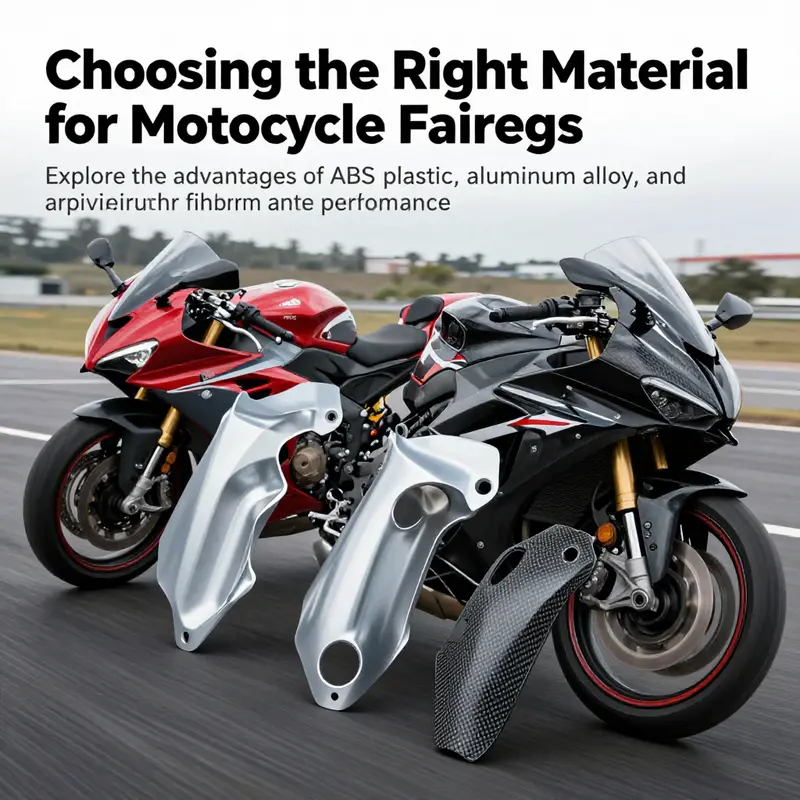
Understanding the materials used in motorcycle fairings is essential for business owners in the automotive industry. With various options available, such as ABS plastic, aluminum alloy, and carbon fiber, each material offers unique benefits that cater to different customer needs and market demands. The upcoming chapters will delve into the specifics of each type of fairing material, explore their advantages and disadvantages, and highlight the implications of these choices on durability, performance, and aesthetics, allowing you to make informed decisions for your customers and your business.
ABS Under the Skin: How a Simple Plastic Engineered for Wind Shapes Modern Motorcycle Fairings
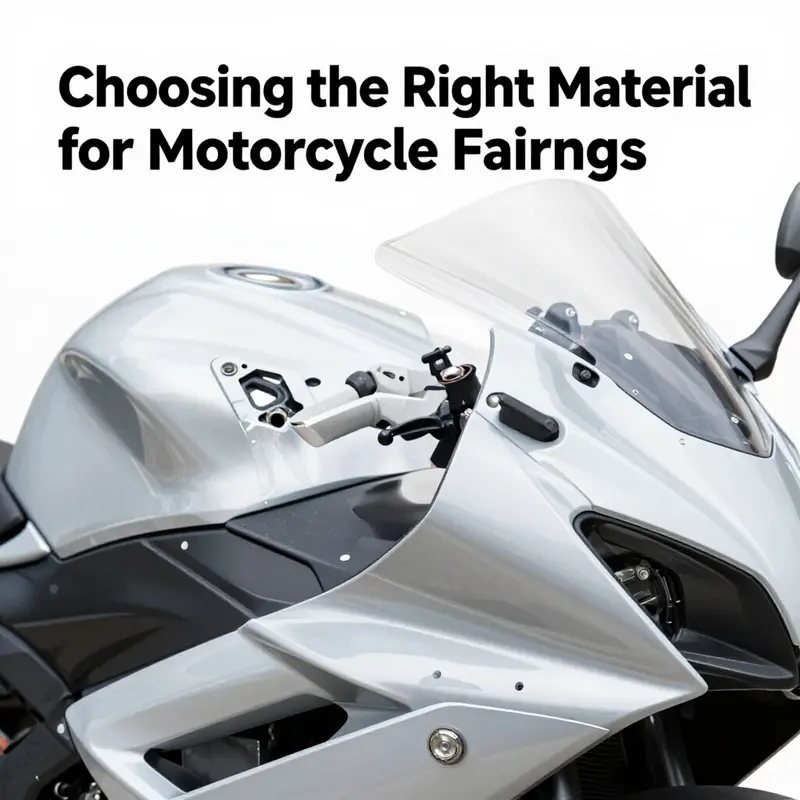
The silhouette of a modern motorcycle is more than a design choice; it is a calculated compromise between aerodynamics, rider protection, and everyday practicality. At the heart of that balance lies the fairing, a shell that slices through air, shields the rider, and houses complex geometry that can be molded into a seamless surface. Among the materials that have defined this balance, ABS plastic stands out as a cornerstone. Its prominence is not simply a matter of tradition; it is a reflection of how material science translates into real-world performance, cost efficiency, and manufacturing resilience. ABS, or acrylonitrile butadiene styrene, offers a rare blend of strength and flexibility that makes it especially well suited to the nuanced demands of motorcycle fairings. Its rigidity helps hold the shell’s delicate lines at high speeds, while its toughness absorbs energy from impacts and vibrations, contributing to rider safety and durability. In a machine that must endure a continuum of fast accelerations, highway gusts, pebbles kicked up from the road, and the occasional slide across pavement, the material provides a predictable, forgiving response that manufacturers and riders alike have come to rely on.
Lightweight, Hot-Washed: Aluminum Alloys as the Modern Pillar of Motorcycle Fairing Design
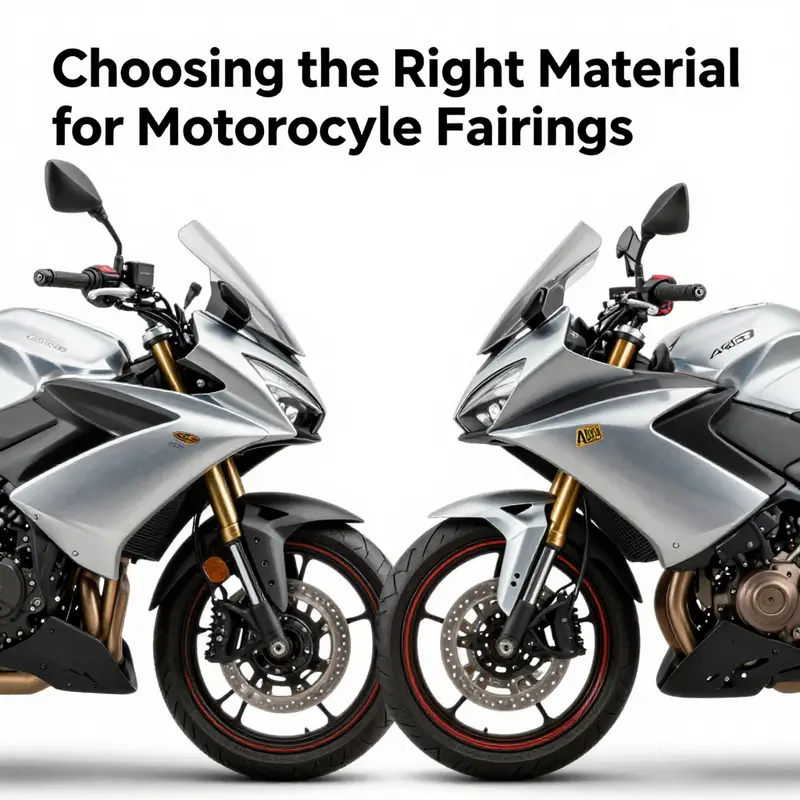
Aluminum alloy has moved from a niche choice to a credible baseline in the ongoing evolution of motorcycle fairing design. The shift is not merely about replacing plastic with metal; it represents a nuanced reimagining of how riders experience balance, aerodynamics, heat management, and long-term value on two wheels. In this chapter, we explore why aluminum alloy is increasingly considered a viable alternative to traditional fairing materials and how its distinctive properties translate into real-world performance across different riding contexts.
Weight is the most immediate and compelling argument in favor of aluminum. Aluminum’s density sits at roughly one-third that of steel, which means substantial mass savings when applied to the outer shell that surrounds the engine and rider. This mass reduction can carry through to the motorcycle’s overall dynamics: quicker steering response, more agile handling, and a more favorable weight distribution that enhances front-end feel at lean angles. For sport-oriented configurations, where every gram nudges the machine toward bolder cornering and crisper throttle response, the allure is clear. For touring setups, lighter bodywork reduces the energy needed to sustain cruising speeds and maintain stability when the wind shifts or when the bike is fully loaded with gear.
But weight alone does not define the value proposition. Aluminum’s thermal properties offer a second crucial advantage. The material conducts heat more readily than plastics or many composites, which enables more efficient heat transfer away from critical components such as the engine and braking assemblies housed behind the fairing. In practical terms, this means cooler engine covers during sustained high-speed runs and less heat buildup in the rider’s cockpit area, contributing to rider comfort and equipment longevity. Heat management is not just about comfort; it also intersects with performance, helping maintain consistent engine temperatures and limiting thermal throttling in demanding conditions.
Durability follows weight and heat. Aluminum is inherently resistant to a range of environmental stressors that can degrade plastics and certain composites. It weathers UV exposure with less embrittlement and maintains structural integrity in the face of temperature cycling and moisture. The natural oxide layer on aluminum provides a first line of defense against corrosion, and the material’s toughness helps it resist impact damage from rocks or road debris. While no material is invincible, aluminum’s resilience translates into a longer service life, reduced need for frequent cosmetic repairs, and a more durable aesthetic that can endure the elements without significant color fading or warping.
From a manufacturing perspective, aluminum offers a compelling blend of precision and scalability. The ability to shape aluminum alloy through processes such as die-casting, CNC machining, and hydroforming enables designers to craft complex, aerodynamic fairing geometries with consistent repeatability. This precision matters when the aim is a smooth external surface that minimizes drag without compromising strength. The manufacturing ecosystem around aluminum also supports rapid prototyping and customization, allowing manufacturers to test bold contours that optimize airflow while respecting mounting interfaces, radiator placement, and the rider’s ergonomics.
Sustainability adds a third layer of value that resonates with modern manufacturing sensibilities. Aluminum is 100% recyclable, with the energy required to recycle a given amount of aluminum dramatically lower than the energy needed to produce virgin aluminum. This circular capability matters not only for end-of-life considerations but also for in-process efficiency and supply chain flexibility. In a landscape where environmental stewardship increasingly informs material choices, aluminum aligns with broader goals around responsible design, lifecycle analysis, and reduced embodied energy. The environmental story supports a broader conversation about the total cost of ownership: even if initial sticker prices for aluminum fairings are higher than plastic equivalents, the long-term durability, reparability, and recyclability can yield meaningful savings over the bike’s lifespan.
The cost narrative, however, is more nuanced than a simple comparison. Aluminum fairings typically command a higher upfront price than plastic or fiberglass counterparts, reflecting the material’s inherent value in strength and heat management, as well as the more complex tooling and processing required for precise, aerodynamically tuned shells. For riders who approach the bike as a premium instrument—where performance goals include track capability, aggressive riding style, or high-mileage touring—the higher initial cost can be justified by the tangible benefits in handling, ongoing maintenance, and resale value. Moreover, aluminum’s durability translates into lower replacement frequency and reduced risk of cosmetic damage that can affect resale appeal. It is important, though, to match material choice to intended use. A sportbike committed to high-speed tracks may benefit more immediately from aluminum’s weight reduction and heat dissipation, while an occasional rider in urban conditions might find a well-tuned fiberglass or polymer composite to be an adequate and cost-efficient compromise.
The discussion naturally extends to the integration of aluminum with other materials. Modern motorcycle fairings are rarely monolithic in their material composition. Designers often use aluminum for the main structural panels and combine it with lightweight polymers or carbon fiber reinforcements to achieve a blend of stiffness, impact resistance, and aesthetic versatility. Such multi-material architectures demand thoughtful junction design, where fasteners, sealants, and surface finishes must accommodate differences in thermal expansion, paint adhesion, and fatigue characteristics. The result is a fairing system that respects the mechanical realities of the bike’s frame while delivering the visual appeal and tactile quality riders expect. In this context, aluminum does not merely replace plastic; it participates in a broader material strategy that seeks to optimize aerodynamics, vibration damping, and heat management without compromising serviceability.
Serviceability and repair considerations further distinguish aluminum from competing materials. Aluminum panels can be repaired using conventional techniques in many cases, with the option to weld or replace damaged sections as needed. This reparability can be a practical advantage for riders who frequently ride in rugged environments or who value repairability in the field. Of course, repair complexity depends on the grade of aluminum and the manufacturing method used to form the piece; some highly engineered alloys, or sections with intricate integrals, may require specialized equipment and skilled technicians. By contrast, certain carbon fiber or advanced composites may demand more specialized repair facilities and processes, which factors into the overall ownership experience. The trade-offs here are subtle: aluminum’s repairability and recyclability may offset its higher initial cost for riders who want a material that keeps pace with rugged use and evolving maintenance capabilities.
Riding application is a vital lens through which to view material choice. In sport and track-focused contexts, the reduction in mass and improved heat management directly influence acceleration, braking, and cornering stability. On long-distance touring machines, the cumulative effect of lighter, thermally efficient panels can feel like reduced fatigue for both rider and machine, especially when wind protection and engine temperatures are stabilized. For urban commuters, a lighter fairing translates to easier maneuvering at low speeds and reduced parasitic drag that might otherwise sap a bike’s responsiveness in stop-and-go traffic. In all cases, the role of the fairing extends beyond pure aesthetics. It is a functional interface that channels airflow around the rider, shields critical components, and participates in the bike’s overall thermal and mechanical strategy. Aluminum, with its unique combination of lightness, strength, and heat management, provides a coherent platform for designers to tune these interactions with a high degree of predictability.
As designers imagine the next generation of fairings, the conversation about aluminum inevitably intersects with broader material science trends. Advancements in alloy formulations, surface treatments, and protective coatings continue to widen the spectrum of performance that aluminum can deliver. The opportunity to tailor springback characteristics, fatigue resistance, and corrosion protection means that the material can be engineered to meet the exacting demands of modern motorcycles. These evolving capabilities reinforce aluminum’s relevance in premium or performance-oriented segments where riders expect longevity alongside high performance. The narrative is not simply about substituting one material for another; it is about a holistic design philosophy where weight, heat, durability, and manufacturability converge to create a more capable, resilient ride.
For readers who want to explore the practical dimension of these ideas, consider the idea of accessible, real-world design decisions. If the goal is to achieve a balance between performance and longevity, aluminum provides a credible pathway. It invites designers to experiment with wall thickness, ribbing patterns, and panel geometries that optimize stiffness without sacrificing weight advantages. It invites engineers to refine mounting strategies that respect the thermal and mechanical realities of both the engine and the radiator system. It invites riders to imagine fairings that deliver consistent protection against wind and road debris while still presenting a refined, high-tech aesthetic. In short, aluminum fairings are not merely a material choice; they are a design philosophy that embraces efficiency, durability, and elegance in equal measure.
This is not to overlook the broader market dynamics. The move toward aluminum aligns with a growing appetite for premium, performance-focused aftermarket and OEM components that promise tangible differentiation in a crowded marketplace. While carbon fiber remains the pinnacle of strength-to-weight ratio, its higher costs and repair complexities position aluminum as a pragmatic alternative for manufacturers and riders who want a high-performance material that is more accessible, easier to work with at scale, and compatible with sustainable manufacturing practices. The choice between aluminum and other materials thus becomes a negotiation among weight, stiffness, heat, cost, and the rider’s long-term relationship with the bike. It is a decision that embodies the essence of modern material science applied to two-wheeled motion: smarter, not merely lighter; tougher, not merely more rigid; and more thoughtful in how it ages with the rider.
As the discussion closes this chapter in the broader arc of motorcycle fairing materials, it is helpful to return to a practical sense of how these ideas translate into the future. Aluminum alloy is not a fixed solution but a dynamic platform that supports evolution in form, function, and aesthetics. For engineers, it offers a robust canvas for experimentation with shapes that optimize airflow, reduce drag, and enhance rider protection. For riders, it promises a combination of lighter handling, cooler components, and a design language that feels both modern and enduring. And for the industry at large, aluminum’s recyclability and scalability align with sustainability goals that increasingly shape product strategy and consumer expectations. The result is a material narrative that is both technically compelling and economically sensible—a narrative that resonates with the ongoing pursuit of performance and practicality in motorcycle fairing design.
To connect this discussion with real-world sourcing and examples, readers can explore category pages that reflect the breadth of fairing options across manufacturers and markets. External resources, such as scholarly and industry analyses, provide additional context on aluminum’s role in transportation and its evolving applications.
Weighing Prestige: How Carbon Fiber Reshapes Performance and Style in Motorcycle Fairings
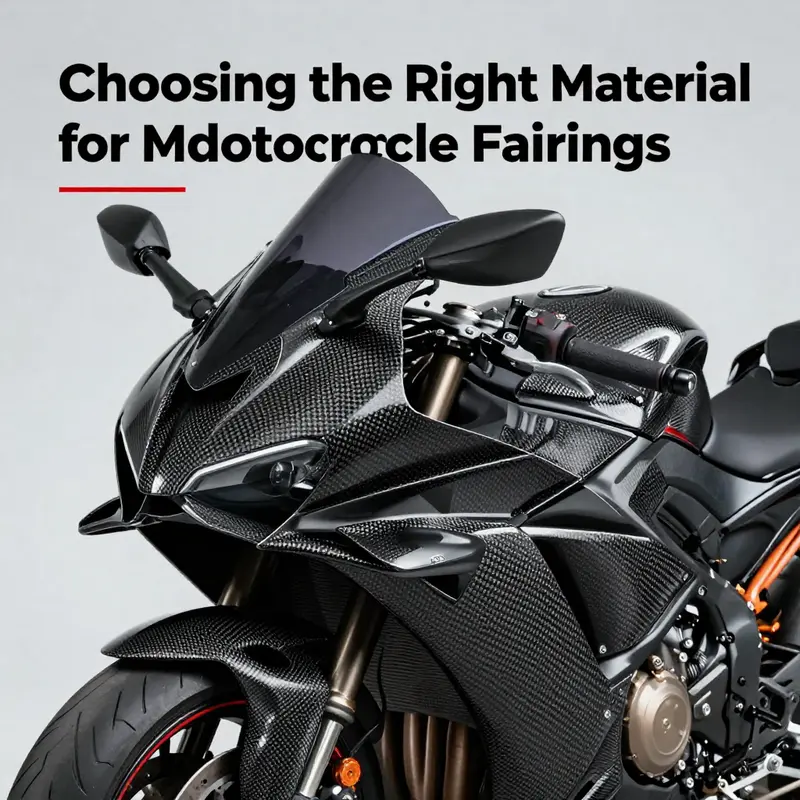
Carbon fiber has emerged as more than just a premium surface for motorcycles; it represents a shift in how riders and engineers measure the value of a fairing. The fairing, once a primarily protective shell, has evolved into a critical component that touches aerodynamics, handling, and even the rider’s connection to the machine. In many markets, the baseline remains a glass-reinforced or injection-molded plastic, prized for its cost efficiency and ease of production. Yet as riders seek sharper performance and a distinct visual statement, carbon fiber stands out as the material that reconciles lightness with stiffness, aesthetics with durability, and customization with reliability. The journey from a factory-installed shell to a carbon-enhanced fairing is not merely a switch in material; it is a redefinition of what a fairing can contribute to a motorcycle’s overall behavior on the road or the track. It is this integration of engineering advantage and sensory appeal that makes carbon fiber the focal point of a broader conversation about fairing materials and their evolving roles in modern biking culture.
Weight is the most immediate and tangible benefit that carbon fiber offers. The strength-to-weight ratio of carbon fiber is exceptional, translating into noticeable improvements in a machine’s momentum and response. In practical terms, fairings crafted from high-grade carbon fiber can be substantially lighter than traditional plastic counterparts, often by a substantial margin without sacrificing rigidity. This reduction in mass at the outer shell reduces the moment of inertia that the chassis must overcome during steering inputs and maneuvering. In a world where even marginal improvements in rotational inertia can influence turn-in and midcorner stability, carbon fiber fairings contribute to crisper handling, quicker throttle response, and a more agile feel when the rider places inputs through the handlebars. The downstream effects cascaded through the drivetrain and tires, including modest gains in acceleration, reduced unsprung mass, and sometimes improved fuel efficiency due to lighter non-optical mass at the perimeter of the bike. The practical impact is felt most vividly during aggressive cornering on the road and on the straights of a race course where every ounce matters for maintaining speed and balance.
Weight alone, however, does not define carbon fiber’s appeal. The material’s stiffness—its ability to resist bending and maintain a predictable shape under aerodynamic load—complements the weight savings and enhances the capsule-like feel of the bike’s silhouette. Carbon fiber’s rigidity allows the fairing to act as a more efficient aerodynamic surface, preserving laminar flow and reducing flutter at high speeds. In addition, the crisp geometry of carbon fiber panels helps preserve precise mounting tolerances; when a bolt-on replacement aligns perfectly with OEM beaches, the rider benefits from an unobtrusive, seamless interface that reduces the likelihood of wind noise and rattling. The aerodynamic discipline embedded in modern carbon fiber fairings is not a cold science divorced from aesthetics; it is a creative discipline where engineers shape the weave and resin system to achieve clean airflow, minimize drag, and sustain stability when the machine is leaned over at speed. The result is a visual language that communicates performance as clearly as any decal or paint job. The carbon fiber’s signature weave—whether plain, twill, or a more intricate honeycomb arrangement—offers a visual cue of precision and speed. The aesthetic appeal becomes part of the performance equation, signaling to the rider and onlookers that the machine was designed with engineering intent rather than mass-market replication.
Manufacturing realities underpin this premium performance and beauty. Carbon fiber fairings are typically manufactured from high-quality prepregs, layups of woven fiber, and curing processes that produce a dense, void-free structure. Autoclave curing, in particular, is a hallmark of quality, using controlled heat and pressure to consolidate resin and fiber into a cohesive, high-strength laminate. This process minimizes imperfections and ensures a predictable, repeatable result across panels. The outcome is not only strength but dimensional stability—an essential attribute for direct bolt-on fittings that claim 100% precise fit with OEM lines. The emphasis on manufacturing discipline aligns carbon fiber fairings with the standards long associated with high-end automotive and aerospace components. Even as the market broadens to include aftermarket suppliers, many producers highlight their adherence to rigorous quality systems and testing protocols. When a rider sees a carbon fiber fairing, they are not merely inspecting a surface; they are evaluating a component built with a disciplined process that respects tolerances, environmental exposure, and long-term performance.
Weave pattern and finish choice play a critical role in both performance perception and actual durability. The woven fabric of carbon fiber is not just a cosmetic feature; it informs stiffness and impact distribution. Plain weave tends to deliver a classic look with visible interlacing, while twill weaves offer a smoother, more subtle texture that many riders find more visually appealing. Honeycomb or multi-ply configurations can further tune stiffness and resistance to bending under load. The finishing layer, often a protective clear coat or PU coating, guards against ultraviolet exposure, chips, and environmental wear, ensuring that the glossy or matte appearance endures through seasons of riding. Beyond the surface, the actual protective qualities of carbon fiber—resistance to impact crack propagation and fatigue—depend on resin systems and the quality of the layup. A well-executed carbon fiber fairing can resist minor road hazards with a resilience that belies its delicate appearance, while also preserving the coveted glossy luster that makes carbon fiber stand out in a crowd.
Repair and maintenance present a nuanced facet of carbon fiber ownership. When damage occurs, repairs are not as straightforward as patching a thermoplastic shell. Carbon fiber panels require specialized repair techniques that involve assessing the extent of delamination, reapplying resin, and sometimes removing and replacing affected sections. The process tends to be more costly and technically demanding than repairs for more common plastics, yet the payoff is often longer-term durability and preservation of the fairing’s structural role. For riders who track their machines or ride aggressively, the trade-off is acceptable if the repair infrastructure and skilled technicians are available. Moreover, through ongoing advances in patching methods and repair kits, the gap between repair cost and overall longevity continues to narrow, making carbon fiber a more practical choice for those who demand performance without surrendering durability.
Cost remains the most visible hurdle to carbon fiber adoption, particularly for riders who view fairing upgrades as a performance expense rather than a design statement. The raw material itself is relatively expensive, and the curing, finishing, and inspection steps add to the overall price. As a result, carbon fiber fairings occupy a premium segment of the market, reserved for those who value performance and aesthetics in equal measure. The affordability equation improves when considering long-term ownership: lighter weight can contribute to efficiency over the life of a motorcycle, and the enhanced stiffness can improve ride feel and cornering confidence. Still, prospective buyers weigh the upfront cost against the expected lifecycle benefits, including the piece’s resistance to weather exposure and its relevance to high-speed riding. In many markets, this premium is perceived not merely as a price tag but as a signal of a rider’s commitment to a higher standard of engineering and craft.
Market accessibility for carbon fiber fairings has evolved in meaningful ways. While traditional OEMs rarely switch to carbon fiber in mass production, the aftermarket landscape has grown to offer carbon fiber panels and complete fairing sets that can be tailored to a rider’s preferences. The availability of certified suppliers and flexible customization options has helped broaden the appeal, even as the entry price remains higher than for standard plastics. For riders who wish to glimpse the breadth of carbon fiber styling and installation approaches, a look at the aftermarket category pages for various brands can provide context. For a sense of how carbon fiber options appear across brands, see the Yamaha fairings category. This category illustrates the range of finishes, weave choices, and mounting approaches that riders encounter when exploring carbon fiber upgrades. It offers insight into how carbon fiber is integrated with existing geometries and how finish options—from high-gloss to satin—contribute to the visual identity of a bike.
Beyond the technical and economic dimensions, carbon fiber fairings speak to a broader conversation about identity and perception on the road. The visual texture of carbon weave communicates a narrative of precision, discipline, and performance. For enthusiasts, owning carbon fiber is a way to signal willingness to invest in high-end materials, craftsmanship, and a tuned riding experience. In real terms, this translates into ride quality that feels refined at speed, a silhouette that looks leaner and more purposeful, and a sense of ownership over an upgrade that sits at the intersection of science and style. Riders who value aero efficiency may also appreciate the potential subtle improvements in drag achieved through carefully shaped carbon fiber panels. In practice, these benefits are most meaningful when combined with fitting accuracy, panel alignment, and overall bike setup, all of which are aspects that a skilled builder or shop can optimize during installation.
The carbon fiber story is also a story about sourcing, quality control, and the ethical dimensions of material choices. Sourcing high-grade prepregs and resins involves adherence to industry standards and environmental considerations. Suppliers that emphasize traceability, consistent process controls, and environmental management programs contribute to a sense of security for buyers who ride their machines at the edge of performance. In the context of competition bikes and high-performance street bikes alike, these factors inform a rider’s confidence that the fairing will deliver consistent performance and endure the demands of long sessions, weather, and road hazards.
As carbon fiber fairings move from the realm of the extraordinary into a more everyday performance option, the interplay of cost, quality, and style will continue to shape decisions in the aftermarket ecosystem. For riders who seek a tangible sense of speed in both feel and look, carbon fiber offers a compelling proposition. It is a material that does not merely cover the frame but actively contributes to the bike’s dynamic character. The decision to adopt carbon fiber hinges on a clear alignment between riding ambitions, maintenance readiness, and budget. When these factors converge, carbon fiber stands as a concrete embodiment of performance engineering—an upgrade that translates theoretical advantages into a practical, perceivable difference on the road or on the track.
In closing, carbon fiber’s ascent as a premium fairing material reflects a broader trend in motorcycle design: the pursuit of lightweight strength, precise fit, and expressive aesthetics without compromise. The material’s strength-to-weight advantage, coupled with the sophistication of its manufacturing processes and finishing options, creates a compelling package for riders who demand more from their fairings than mere protection. While ABS and aluminum will continue to serve practical roles for mass production and certain use cases, carbon fiber remains an option that transforms the rider’s experience by delivering heightened performance and a distinctive, highly sought-after look. For those curious about the broader landscape of fairing options and the way carbon fiber compares with other materials, exploring category pages and supplier catalogs can offer a tangible sense of how this premium option fits into the overall ecosystem of motorcycle fairings. The story of carbon fiber in motorcycle fairings is not simply about material choice; it is about shaping a riding experience that blends science, craft, and identity into a single, compelling package.
External resource: For an in-depth look at a carbon fiber fairing product and its manufacturing context, see this Alibaba listing on carbon fiber motorcycle fairings: https://www.alibaba.com/product-detail/Motorcycle-Carbon-Fiber-Middle-Front-Fairing_1600478977591.html?spm=a2700.details.detail-1600478977591.0.0.1b2e3f1dUoOqDk
Material Matters: How Engineering Choices Shape the Form, Function, and Feeling of Motorcycle Fairings
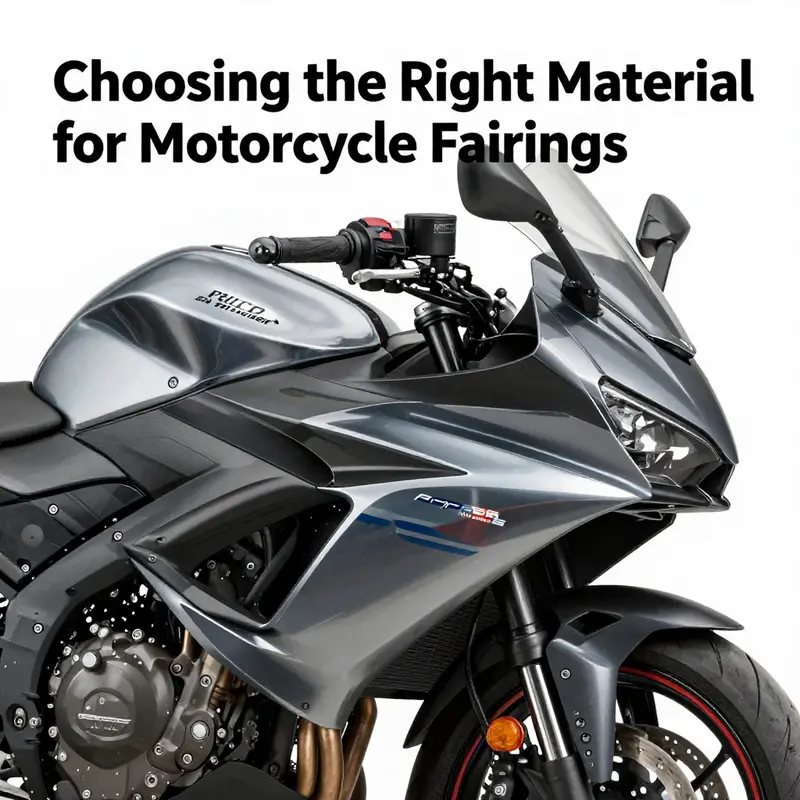
The fairing is more than a shield. It is a calibrated interface between rider, machine, and wind. It plays a subtle, persistent role in performance that riders feel more than they may consciously name. The material underneath that glossy exterior determines how well the fairing deflects air, how it absorbs impact, and how it ages in sun and rain. It also sets the limit of what designers can express—how clean the lines can be, how sharp the edges remain after years of use, and how the surface responds to polish or matte finishes. In short, material choices are not merely about keeping plastic costs down; they are about balancing a complex set of demands that hinge on physics, economics, and riding philosophy.
OEM fairings have traditionally leaned on ABS plastic as the baseline. ABS is a practical compromise. It offers solid impact resistance, good heat tolerance, and ease of molding into complex, sport-oriented shapes. The supply chain for ABS is mature, and the material supports the high-volume manufacturing that keeps street bikes affordable. ABS surfaces can be finished to a high gloss, and with modern painting and coating technologies, riders can enjoy a premium look without a premium material price tag. Yet as riders push their machines toward higher performance, longer exposure to demanding environments, or more aggressive aesthetics, the limitations of ABS begin to show. Heat cycling from engine heat and radiant sun can begin to dull edges or cause micro-cracks if the design corners or thicknesses are not carefully managed. This pushes engineers and aftermarket operators to explore alternatives that can deliver better toughness, lighter weight, or more distinctive looks without simply inflating costs.
The aftermarket scene has responded with a spectrum of options that promise new advantages. Aluminum alloy fairings have gained traction among riders who equate durability and a premium tactile feel with higher performance. Aluminum is naturally more resistant to impact damage and can withstand weather and solvents, which translates into longer life in harsh climates. The trade-off is weight and cost. Aluminum panels can add heft compared with plastic, potentially altering the handling balance and center of gravity, especially on lighter sportbikes. The manufacturing costs, however, tend to be higher because aluminum requires different forming, finishing, and joining techniques. When a rider values resilience and a tangible, metallic heft, aluminum alloys can deliver that premium sensation and robust protection. This shift is evident in aftermarket listings and broader catalogs where aluminum variants are marketed not only for durability but for a refined, high-end aesthetic that some riders instinctively associate with quality.
Carbon fiber stands at the other end of the spectrum. It is prized for its exceptional strength-to-weight ratio and its ability to shape aerodynamics with precision. Lightweight carbon fiber fairings can shave fractions of a second in track performance and reduce the energy required to propel a bike at speed. They also carry a distinctive, high-tech look that has become a signature of performance brands and premium aftermarket lines. Yet the cost of carbon fiber is a major barrier for many riders. Beyond the sticker price, carbon fiber requires specialized repair techniques and careful handling after damage. If a crack or fracture occurs, the repair path is not as straightforward as with traditional plastics or metal panels. For riders seeking ultimate lightness and a factory-approved appearance, carbon fiber remains compelling; for most street applications, the cost-to-benefit ratio often tips toward other materials.
A newer, highly versatile class of plastics has begun to reshape the conversation about fairing performance. Modified nylon, particularly toughened nylon variants, represents a material family that blends several advantages that riders had to trade off with traditional plastics. A notable example from a major Chinese polymer supplier introduced a custom-designed toughened nylon that brings together toughness, strength, and stability in a single solution. The material exhibits exceptional toughness and impact resistance, which are crucial for protecting the fragile substructure of the bike in the event of a tip-over, a minor crash, or a collision with debris. The ability to absorb energy without cracking helps preserve the rider’s safety and the integrity of the internal components housed behind the fairing.
Dimensional stability under thermal stress is another vital property. The tougher nylon formulations maintain their shape and mechanical performance over a wide temperature range. In practical terms, this means the fairing can endure engine heat, radiant sun, and ambient cold without warping or losing its precise fit. For riders who do long rides through varied climates, this stability can translate into fewer alignment issues and less need for frequent adjustments. In addition, the self-lubricating and vibration-damping characteristics of these tougher nylon materials contribute to a noticeably quieter ride. Engine buzz and road vibration are partially absorbed by the panel system, reducing transmitted noise and smoothing the auditory experience for rider and passenger alike. These damping properties can also improve perceived rigidity, because the panel acts as a chassis skin that rides more calmly with the rest of the bike.
The chemical resistance of toughened nylon adds another layer of practicality. Motorcycle fairings live in a world of oils, fuels, coolants, and a variety of solvents from cleaning routines. A material that resists chemical attack remains viable over long service intervals, avoiding surface degradation that can mar paint and invite moisture ingress. This characteristic aligns well with the realities of street use where exposure to roadside contaminants is routine. The same material’s ability to function in the face of heat and oils makes it attractive for the busiest urban riders who may not have the time or resources to replace panels frequently.
A practical difference between these advanced plastics and traditional ABS is manufacturing and repair workflow. ABS recovers well from minor damage through straightforward repair techniques and common methods of joining and finishing. Toughened nylon, with its higher toughness, may require different heat treatment, gluing, or mechanical fastening approaches. It is not merely a drop-in substitute; it necessitates engineering consideration for thickness, ribbing, and the way it joins to the rest of the bike’s structure. Yet when the design is optimized for these materials, the payoff is a panel that resists crack initiation, maintains form, and returns to service with reduced maintenance downtimes.
Another dimension shaping material choice is the intended use of the motorcycle. On a high-performance machine designed for track days, every gram of weight saved translates into measurable performance gains. Carbon fiber or toughened nylon composites can be attractive in such contexts. The lighter weight of carbon fiber, combined with precise aerodynamic shaping, can improve efficiency and speed stability through corners and straights. For long-distance touring or urban commuting, the durability and weather resistance of toughened nylon or aluminum can be more desirable. A practical rider may favor the resilience of toughened nylon that remains flexible at low temperatures, a quality that helps the panel resist brittle cracking in cold, windy rides. On the budget side, polypropylene remains a stalwart option. It offers a compelling combination of high rigidity and cost-effectiveness, with good impact resistance for everyday use. While it may not deliver the extreme performance or the luxurious finish of ABS or carbon fiber, its value makes it a recurring choice in standard aftermarket lines.
In the broader ecosystem of fairing materials, a nuanced view emerges. The selection hinges on a balance of mechanical performance, environmental resistance, manufacturing feasibility, and lifecycle cost. For high-energy applications—be it sustained track work or aggressive sport riding—a toughness and energy-absorption capacity often justify the extra expense of toughened nylon or even carbon fiber. For standard street use, PP and ABS still cover a broad spectrum of needs, with ABS offering a polished appearance and robust surface finish that many riders associate with quality. The trend toward advanced plastics, however, signals a shift in expectations: riders increasingly want panels that tick multiple boxes at once—toughness, heat tolerance, vibration control, and a clean, premium look—without compromising repairability or affordability.
The material choice also feeds the aesthetics and the identity of a bike. The surface finish that follows from ABS can be pushed to luminous gloss or aggressively satin textures, and a well-prepared substrate will accept a flawless paint job or a durable clear coat. Aluminum, with its metallic sheen, brings a tactile sense of rigidity and endurance. Carbon fiber offers a visible weave that communicates performance, while toughened nylon can be finished to present a smooth, consistent surface with a different sense of depth under light. These visual cues are not merely cosmetic; they influence rider perception and can become part of a bike’s brand language, signaling what the vehicle is capable of in terms of engineering philosophy.
If you look across aftermarket catalogs and the language used to describe new panels, a clear pattern emerges. There is an emphasis on synergy: materials that pair with specific processes, coatings, and assembly methods to create a robust, integrated system. For some buyers, the goal is a package that feels right to the touch and in the wind. For others, the aim is longevity and predictable performance in hazardous weather. The shift toward toughened plastics, with their blend of enhanced toughness, temperature resilience, and damping, reflects a broader engineering intent. The aim is not merely to resist breakage; it is to preserve rider safety by preventing sudden panel failure that could complicate a crash or trap heat against the rider’s leg. It is about preserving alignment so fairings remain as effective as possible at deflecting wind, reducing drag, and protecting internal components over the life of the bike.
In this evolving landscape, it helps to stay connected with the latest material families while recognizing the constraints of real-world ownership. A rider investing in aftermarket fairings often has to weigh the intangible appeal of a carbon fiber finish against the tangible benefit of a tougher nylon panel that can flex where needed, absorb impact energy, and resist environmental wear. The final decision tends to come down to a personal calculus: how much weight matters, how much one is willing to pay, and how one values ease of maintenance and repair in daily riding. The most compelling narratives in this market are not about a single material. They are about how different materials can be blended within a single fairing system to optimize the whole. A rider might accept a carbon fiber center panel for aero performance and switch to toughened nylon for side panels that endure more exposure and impact. The outcome is a modular philosophy of protection and performance, where the right material for each function yields a more cohesive, durable, and satisfying riding experience.
For readers curious about the current directions in aftermarket offerings, a practical entry point is to explore the 2023 new category in aftermarket catalogs. This collection showcases how manufacturers are positioning newer materials within familiar shapes, often emphasizing improved toughness, better heat resistance, and enhanced maintenance profiles. See the 2023 new category here: 2023 new fairings. This catalog lens helps in understanding how material science translates into concrete product choices on the street and on the track.
In contemplating these possibilities, it is essential to consider the broader ecosystem of materials science and engineering. The raw forms we see on a bike—whether a translucent gloss on ABS, a satin sheen on toughened nylon, the metallic gleam of aluminum, or the weave of carbon fiber—are the visible outcome of countless decisions about molecular structure, processing, and compatibility with other components. The strengths of toughened nylon in particular—its high strength with dimensional stability, its wide operating temperature range, and its self-lubricating, damping, and chemically resistant profile—illustrate how modern plastics can meet demanding performance targets without sacrificing manufacturability. These attributes, in combination with the conventional advantages of ABS and the radical possibilities of carbon fiber, underpin a mature market that continues to evolve as new formulations, processing techniques, and joining methods emerge.
To the rider, this means more choice, better perceived value, and a future where fairings can be tailored to suit not just market segments but individual riding philosophies. The chapter of fairing materials is not closed; it is being rewritten with each formulation, each trial on the road, and each aftermarket success story that demonstrates the resilience and adaptability of modern plastics and metals when faced with the wind, speed, and road grit. In the end, the material that a fairing is made from is a proxy for an engineer’s intent: to balance lightness with strength, to craft surfaces that stay true under heat and time, and to deliver a riding experience that feels as precise as the bike’s geometry. Through this lens, material choices become a language—a language that riders, designers, and racers speak in search of a more confident, efficient, and enjoyable journey on two wheels.
External resource for further reading: https://en.wikipedia.org/wiki/Polyamide
Final thoughts
In conclusion, selecting the appropriate motorcycle fairing material is crucial for meeting the diverse needs of riders and enhancing available products. ABS plastic remains a staple due to its balance of cost and performance, while aluminum alloy offers increased durability for those who prioritize robustness. For enthusiasts looking for the best in lightweight performance and aesthetics, carbon fiber represents the pinnacle of material technology. Understanding these distinctions ensures that business owners can tailor their offerings, cater to customer preferences, and ultimately drive sales and satisfaction in the competitive motorcycle market.