
Motorcycle fairing heat shields are pivotal components that significantly influence the reliability and aesthetic longevity of motorcycles. As engines work hard to deliver high performance, they produce substantial heat, which can negatively impact surrounding materials. This is where heat shields become crucial, protecting plastic and composite materials from heat damage and maintaining the motorcycle’s appearance. The implications for business owners are profound, as investing in high-quality heat shields can lead to higher customer satisfaction and fewer warranty claims. This article will elaborate on the role of these heat shields in engine heat management, delve into the various materials used, and explore industrial trends that affect market considerations, providing a comprehensive understanding for business leaders in the motorcycle sector.
null
null
Thermal Armor on Two Wheels: The Materials Behind Motorcycle Fairing Heat Shields
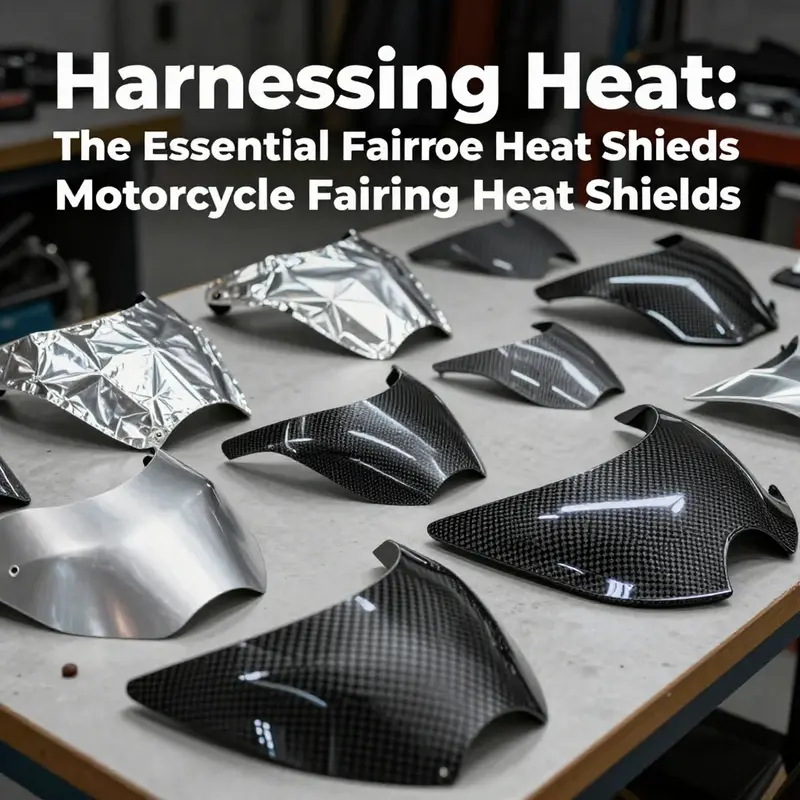
Heat shields hidden within motorcycle fairings perform a quiet, relentless duty. They guard plastics, paints, and delicate coatings from the engine and exhaust’s mercurial heat. They shield riders from radiant warmth that would otherwise make bare skin feel the sting of long rides and would accelerate aging in the fairing substrate. In the choreography of a motorcycle’s thermal management, these shields are an essential, if understated, partner to the engine, exhaust system, and cooling strategies. Rather than being merely a barrier, the heat shield is a carefully chosen material system that balances protection, weight, manufacturability, and cost. The goal is to keep hot zones from translating into cosmetic cracking, color fading, or structural fatigue while preserving the fairing’s tight lines and aerodynamic integrity. It is a compromise among several forces: the need to reflect or insulate, the desire to shed heat efficiently, and the demand for a process that can be integrated into modern production or affordable aftermarket assembly without turning into a maintenance headache for riders.
At the core of most heat shields are layered materials designed to address different modes of heat transfer. Heat can move through conduction from the engine and exhaust to surrounding components, radiate across the shield through infrared emission, and even travel via convection when heat-laden air circulates in the engine bay. The most effective shield approaches heat transfer as a symphony of barriers rather than a single line of defense. Aluminum-based systems, stainless steel enclosures, and ceramic or composite barriers each play a distinct role in that concert. The choice among them is dictated by where the shield sits in the motorcycle’s layout, what temperatures it must face, and how much weight can be afforded without sacrificing handling or efficiency.
Aluminum has long been a reliable mainstay for fairing heat shields. Its appealing combination of lightweight, good thermal conductivity, and formability makes it a practical choice for shields that must wrap around curves and weave around exhaust pipes. Aluminum shields can be shaped to follow the contour of the fairing and exhaust routing with precision, allowing for a snug fit that minimizes vibration and rattling in operation. In this role, aluminum acts not as a pure barrier but as a heat spreader, moving heat away from sensitive plastics and composite materials toward the cooler surroundings of the air stream. When properly finished, aluminum shields resist corrosion and maintain their reflective properties, helping to reduce heat radiating inward toward the rider and toward the fuel system. The surface finish can also contribute to durability against stone impacts and road debris, a practical consideration for bikes that spend long hours on mixed terrain.
Stainless steel, by contrast, brings a higher temperature tolerance and a sturdier, more rigid structure. It shines in high-output applications or in environments where heat flux is intense enough to threaten warping or accelerated aging of surrounding materials. Stainless steel shields are inherently robust and can withstand extended exposure to elevated temperatures without losing their form or effectiveness. Although heavier than aluminum, stainless steel provides longevity and a margin of safety in demanding riding conditions, such as aggressive sport riding or touring where heat sources sit closer to the fairing. In some designs, a gradient approach is used: a stainless steel core or backing for the most extreme heat zones, combined with lighter materials toward the outer edges to save weight where possible.
Beyond metals, ceramic coatings and composite materials push heat management into a new territory of insulation and thermal insulation efficiency. Ceramic coatings applied to metal substrates create a barrier that dramatically reduces radiative heat transfer. These coatings can reflect a significant portion of high-temperature radiation away from the fairing and rider, while still allowing for controlled heat dissipation where necessary. In more advanced configurations, ceramic rear layers or ceramic matrix composites couple with metallic skins to form panels that withstand rapid thermal cycling and offer low in-plane expansion. These ceramic-augmented shields are particularly valued on high-performance bikes whose exhaust routes near the underbelly of the fairing or in midsection areas of the bodywork. The result is a shield that not only withstands heat but also minimizes its perceptible presence at the rider’s position, contributing to rider comfort on long rides and endurance events.
Composites, especially carbon fiber reinforced materials, occupy a different niche in the heat-shield landscape. They combine high specific strength with excellent thermal stability, allowing shields to be thinner yet stronger. The inherent stiffness of carbon fiber composites helps shape complexity into the shield, enabling designers to produce intricate forms that fit tight packaging without adding bulk. The aesthetic benefits are often a welcome byproduct for riders seeking a premium look, but the functional advantages—rigidity, heat resistance, and low weight—are the primary reasons composites find a home in fairing integrated shielding. In practice, a composite layer is often paired with a reflective or insulating face, creating a multi-layer assembly where the outer surface reflects radiant heat and the inner layers dampen conductive and convective heat transfer.
A practical feature of many heat shields is the self-adhesive backing incorporated on one side. This simple detail dramatically expands the range of installation options for aftermarket solutions and service shops alike. Tools become unnecessary for securing a shield inside the fairing; riders can replace or upgrade shields during maintenance or customization with minimal downtime. The adhesive must withstand thermal cycling, vibration, and exposure to oils or fuels without losing bond strength. In response, manufacturers carefully engineer adhesive systems with heat-resistant polymers and compatible surface textures. The result is an installation that remains secure over years of riding, resisting peel and delamination under heat and flexing.
The process of selecting shield materials and layering is not merely about stopping heat. It is about preserving the overall performance and lifecycle of the motorcycle’s bodywork and its most sensitive components. The fairing’s own materials—plastics, composites, paints, and coatings—have varying coefficients of thermal expansion. An optimized shield minimizes differential expansion, reducing the risk of microcracking or panel distortion as temperatures rise and fall during a ride. By keeping heat away from paint and laminate surfaces, the shield slows color fading and gloss loss and helps maintain the fairing’s aesthetic integrity. This is especially important for owners who rely on the machine’s appearance as part of its identity, even as performance demands escalate.
To understand how these options translate into real-world performance, it helps to imagine heat flow as a spectrum. In some zones, heat moves primarily by radiation from the exhaust to the inner fairing walls. Reflective surfaces and low-emissivity coatings minimize the energy that reaches the plastic or composite. In other regions, conduction dominates as the heat travels through the shield’s thickness toward cooler layers. Effective shields must also contend with convection, where air movement within the engine bay can transport heat away or toward critical areas depending on the bike’s attitude and speed. The ideal material system negotiates all three modes with grace, offering a level of thermal refuge without adding unnecessary weight or complexity to the fairing’s geometry.
The performance implications extend beyond rider comfort. Engine bay temperatures influence the efficiency of nearby components and can indirectly affect cooling system performance. Excessive heat near the fairing can place added thermal load on sensors and actuators and can contribute to accelerated aging of wiring insulation and connectors. In some designs, the shield’s presence helps regulate the temperature differential at the interface between the engine and the fairing, enabling more consistent engine operation and reducing heat soak during long climbs or slow-speed maneuvers. Although a heat shield is a single component in a larger thermal strategy, its influence on reliability and ride quality should not be underestimated. A well-chosen material system supports sustained performance, contributes to predictable maintenance intervals, and enhances the perceived value of the motorcycle as a precision-engineered product.
In commercial and aftermarket contexts, suppliers commonly present heat shields as multi-layer assemblies optimized for specific riding scenarios. A typical construction might feature a reflective outer layer to fend off radiant heat, a spacer or insulating middle layer to reduce conduction, and a supportive inner skin to maintain form and provide a mount surface for attachment, often integrated with an adhesive backing for clean, tool-free installation. This modular approach makes it possible to tailor shields to different engine layouts and exhaust configurations while streamlining manufacturing and service workflows. It also accommodates a broad spectrum of riding styles—from street commuting to endurance racing—without requiring a complete redesign of the fairing. The design ethos behind these layers is simple: maximize thermal protection where it matters most while keeping the weight and cost within reason for the target market.
The durability and reliability of heat shields also hinge on production standards and quality control. In high-end or performance-oriented applications, manufacturers pursue rigorous testing protocols to certify resistance to temperature spikes, mechanical shocks, and environmental exposure. Materials are tested for their fatigue life under repetitive thermal cycling, their adhesion strength under vibration, and their resistance to corrosive elements encountered on the road. Consistency is critical because even small variations in layer thickness or bonding can alter heat transfer characteristics and the shield’s long-term behavior. When a heat shield delivers reliable protection across thousands of miles and multiple seasons, it reinforces the rider’s confidence in the entire vehicle ensemble—from the fairing’s geometry to the exhaust routing and the engine’s ability to operate within safe thermal margins.
Another important consideration is the shield’s integration with the fairing’s geometry and the bike’s overall thermal strategy. Modern motorcycles employ compact engine bays with carefully designed exhaust systems that route heat in precise patterns. A shield that fits neatly inside the fairing minimizes sharp edges and unnecessary gaps that could trap hot air or create flutter during riding. The design challenge is to achieve a balance between coverage and airflow. Some areas require dense protection, while others benefit from a lighter touch so that cooling air can pass through efficiently. In practice, engineers use a combination of finite element analysis for heat transfer modeling and empirical testing on dynos and road tests to validate their choices. The result is a shield that complements the bike’s architecture rather than forcing a compromise on performance or aesthetics.
From a lifecycle perspective, heat shields contribute to the long-term cost effectiveness of a motorcycle. While premium materials and advanced coatings may come at a higher upfront price, their durability and resistance to thermal aging can reduce maintenance costs and repaint or refinishing needs. Owners who ride in varied climates, or who undertake long tours, understand that thermal protection translates into fewer cosmetic repairs and a more stable resale value. The aesthetic consequences alone—fading plastics, warping, or cracking—can be a compelling driver for investing in a robust heat shield solution. When the shield performs as designed, the motorcycle’s external appearance remains pristine and the ride experience remains consistent, free from the subtle degradations that heat can introduce over time.
The materials landscape for fairing heat shields continues to evolve as new composites and coating technologies mature. Advances in ceramic-based barriers and ultra-high-temperature coatings expand the possible surface designs and permit even tighter packaging around exhaust components. The ongoing development emphasizes not just higher heat resistance but also improved manufacturability and reduced weight. Designers increasingly favor multi-layer systems that exploit the synergies of each material’s strengths—reflectivity, insulation, mechanical robustness—while keeping joints and interfaces simple and reliable. In this sense, the heat shield becomes a manifestation of a broader material strategy: selecting the right combination of metals, ceramics, and composites to deliver a protective envelope that is responsive to the bike’s thermal demands, the rider’s comfort, and the machine’s longevity.
For readers seeking a structured basis for understanding these choices, professional resources emphasize standardized approaches to materials selection and testing. While the specifics may vary by manufacturer, the underlying logic remains consistent: identify the chief heat pathways, quantify the maximum expected temperatures, and select a material system that can withstand those conditions with acceptable weight and cost. The result is a shield that not only blocks heat but also contributes to the bike’s overall dynamic behavior, from the handling feel to the finish durability. In practice, this means a shield that is not merely a protective layer but a carefully engineered element that harmonizes heat management with the motorcycle’s mechanical and aesthetic design language.
Looking forward, the trajectory of heat shield materials is likely to lean further into hybrid systems that combine the best characteristics of metals and composites with smart coatings that adapt to temperature changes. The goal is to deliver shields that respond to heat with minimal latency, maintaining protective performance even as riding conditions shift from cool mornings to sun-baked afternoons. The rider benefits from cooler cabins, more stable engine temperatures, and longer intervals between cosmetic maintenance. The fairing, in turn, preserves its lines and color with less risk of heat-induced distortion or paint degradation. These integrated solutions will continue to be tuned to the diverse spectrum of riding contexts—from urban commuting and highway cruising to canyon carving and endurance touring—ensuring that heat shields remain quietly central to the motorcycle experience, even as the bike’s power and packaging become more ambitious.
In sum, the materials used in motorcycle fairing heat shields embody a careful equilibrium of physics, engineering pragmatism, and rider-centric design. Aluminum delivers light, effective conduction and formability; stainless steel provides extreme heat resistance and durability; ceramic coatings and composites add insulation and radiant protection in the most demanding zones. The adhesive-backed, multi-layer configurations enable efficient installation and service, while the interface with the fairing’s geometry ensures both protection and aesthetics are preserved. The evolving material toolkit promises shields that are lighter, tougher, and more adaptable to a broader range of riding styles and climates. As the riding community continues to push the envelope of performance and durability, the heat shield will remain a quiet enabler—an unglamorous, essential defense against heat that makes the two-wheeled experience safer, more comfortable, and more durable over time.
For readers who want to explore how these principles translate into real-world product development and aftersales options, it can be helpful to observe the broader landscape of new product introductions and compatibility with current fairing designs. The market continues to favor solutions that integrate smoothly with existing fairing geometry, minimize installation complexity, and offer reliable long-term performance in a range of environmental conditions. While specific names and models evolve, the core insight remains consistent: a thoughtful selection of materials and a layered construction approach can dramatically influence heat management, rider comfort, and the longevity of the bodywork. The result is a motorcycle that not only performs better but also ages with grace, maintaining its visual appeal and mechanical reliability across countless miles.
As this chapter closes, the thread linking materials to outcomes becomes clearer. The shield is not just a barrier but a system that harmonizes material science with practical riding needs. Its success rests on choosing the right palette of metals and ceramics, arranging them in layers that communicate heat transfer paths, and integrating them with a fairing that complements both the machine’s aesthetics and its thermal realities. The rider—whether on a sport bike slicing through a mountain pass or a touring machine amassing long daylight miles—benefits from this nuanced balance. In the end, the material choices behind motorcycle fairing heat shields are a quiet testament to how thoughtful engineering translates into safer, cooler, and more reliable riding experiences. With ongoing innovation, riders can expect even more capable shields that preserve the fairing’s beauty while elevating performance and comfort across a broader spectrum of conditions.
Linking to additional reflections on how new product cycles influence heat-shield choices can offer readers a useful perspective on current trends. For a broader view of what is happening in the market and how manufacturers position new thermal solutions within existing fairing ecosystems, see the general overview of recent product introductions and design considerations in the 2023 new product category. This resource can provide a helpful bridge to upcoming chapters that examine installation, maintenance, and compatibility considerations for various fairing systems across different model lines.
External reference for industry standards and material specifications:
- Standards and technical guidelines on motorcycle fairing heat shields, materials, and applications. External resource: https://www.mpma.org.uk/resources/technical-guides/motorcycle-fairing-heat-shields-materials-and-applications
Internal link reference (one relevant page):
- Related product category that illustrates the ongoing evolution of fairing components and compatibility considerations: https://ultimatemotorx.net/product-category/2023new/
The chapter thus threads together material science, practical design decisions, and rider-focused outcomes. It presents heat shields as dynamic, technically sophisticated components rather than static barriers. The best shields emerge from a coherent strategy that sees heat management as integral to performance, aesthetics, and durability—one that respects the bike’s architecture while embracing material innovations that keep riders safer, cooler, and more comfortable as they push their machines to new limits.
Heat Shields in Motion: Industrial Trends, Materials, and Market Forces Driving Motorcycle Fairing Technologies
The motorcycle fairing is more than a sculpted shell; it is a complex interface where form, function, and safety converge at the speed of travel. At the heart of this convergence lies the heat shield—a protective layer tucked inside the fairing that keeps the blistering heat from engine and exhaust systems from compromising plastic housings, coatings, or sensitive electrical and fuel components. A high-temperature barrier is not merely a shield; it is a strategic performance layer that safeguards longevity, reliability, and aesthetics. Without it, heat-induced aging would creep across the surface, manifesting as cracking, gloss loss, or deformation that erodes both the bike’s appearance and its functional integrity. As motorcycles push into higher performance territories and as riders accumulate more miles on urban commutes, long-distance tours, or delivery routes, the demand for sophisticated heat management within the fairing becomes a determinant of perceived quality and long-term value. In this broader landscape, heat shields are evolving from simple metal plates into integrated systems built from advanced materials, optimized geometries, and assembly methods that harmonize with the fairing’s overall design language. The trend is toward heat management that is efficient, lightweight, and durable, while preserving or enhancing the vehicle’s ergonomics, safety margins, and fuel efficiency. These shifts are not isolated; they reflect broader currents in materials science, manufacturing discipline, and end-user expectations that together are reshaping how heat shields are designed, specified, and installed across the industry.
At the core of the current industrial trajectory is a shift toward high-performance materials that can contend with more demanding thermal environments without compromising weight, rigidity, and manufacturability. Ceramic-coated metals, for example, bring exceptional resistance to radiant heat and elevated temperature exposure. The ceramic layer acts as a radiant insulator, reflecting a large portion of the engine’s heat back toward the exhaust or away from the interior of the fairing. This capability helps to mitigate surface temperatures that would otherwise accelerate the aging of plastics and coatings, while also lowering the thermal load seen by adjacent components. Yet metal alone cannot achieve the weight savings demanded by modern performance bikes. Therefore, the industry increasingly pairs metals with composites and advanced polymers to form multi-layered barriers that deliver both high-temperature endurance and lightness. Composite heat-resistant polymers, when used in layered constructions with reflective or insulating films, produce a synergistic effect: the outer surface reflects radiant heat, the middle layer resists conduction, and the inner interface minimizes heat transfer to the fairing substrate. The result is a robust thermal management solution that preserves the structural integrity of the fairing while enabling more aggressive styling and aerodynamics without adding undue mass.
These material choices also reflect a practical emphasis on ease of installation and serviceability. Modern heat shields frequently arrive with self-adhesive backs or simple clip-and-stick attachment mechanisms that enable rapid, tool-free installation. This convenience matters on two fronts. First, it reduces downtime in the after-market environment where riders seek to customize or refresh their bike’s thermal protection without elaborate workshop setups. Second, it aligns with original equipment manufacturing (OEM) objectives to integrate fields like thermal management into the fairing system early in production. When heat shields are designed as integrated components of the fairing, the assembly line benefits from tighter tolerances, more predictable performance, and a cleaner aesthetic with fewer exposed fasteners. In practice, this means heat shields are no longer afterthought add-ons but essential, co-designed elements that influence material selection, bonding processes, and the overall geometry of the fairing itself. The adhesives used for self-adhesive backs, for instance, are engineered to withstand repeated thermal cycling, vibration, and residue exposure from road grime, while still allowing for occasional replacement or reapplication without damaging the underlying substrate. Such considerations reflect a broader engineering philosophy: thermal protection must be compatible with the rest of the package—weight, balance, aerodynamics, and the rider’s tactile experience all matter when evaluating a heat shield’s value.
A parallel narrative in the market is the continual search for lightweight solutions that do not sacrifice protection. The move toward carbon-fiber–reinforced polymers and other advanced composites is emblematic of this journey. Carbon-based laminates offer high strength-to-weight ratios and can be tailored for specific temperature gradients and stiffness requirements. They also enable richer design language through the fairing’s visible surfaces, an important aspect given how riders perceive quality through aesthetics as well as performance. Yet the use of carbon fiber is not a wholesale replacement for more traditional materials; it is a judicious combination where weight savings, cost considerations, and thermal performance must be balanced. Multi-material stacks that blend reflective films, ceramic coatings, and carbon-rich composites provide a robust solution that leverages the strengths of each constituent. In addition, advances in processing techniques—such as precision layup, improved cure cycles, and adhesive interlayers—improve dimensional stability under heat and during exposure to the vibrations and flexure that accompany riding. The culmination is a heat shield system whose outer profile can be as sleek as the fairing itself, reinforcing the bike’s visual language while delivering measurable thermal resilience.
Beyond material science, design integration plays a critical role in how heat shields perform in real-world riding conditions. In modern approaches, heat shields are designed with the fairing’s internal geometry in mind, such that the shield not only blocks heat but also channels it along paths that optimize airflow and minimize heat buildup in the rider’s cockpit or near sensitive components. This integrated design philosophy supports a broader objective: maintainrider comfort and component longevity across a wide spectrum of riding environments, from scorching deserts to humid urban canyons. For example, the layered construction can be tuned to direct heat away from critical fuel lines and electrical harnesses, reducing the likelihood of softening plastics or accelerated aging. More strategically, some assemblies incorporate micro-structured surfaces that influence boundary-layer airflow, potentially reducing drag and smoothing thermal gradients. These nuances translate into a more coherent thermal management story where the heat shield is not a simple barrier but a dynamic element that interacts with the fairing’s aerodynamics, the engine’s heat output, and the bike’s overall cooling strategy.
Market dynamics further illuminate why heat shields are increasingly treated as integrated, modular, or customizable elements rather than fixed, one-size-fits-all solutions. In many markets, there is growing demand across both consumer riders and commercial fleets. Urban centers with dense traffic and shorter trip lengths often generate higher heat exposure per mile due to frequent engine starts and stop-and-go conditions, making robust thermal protection especially valued. Regions with stringent emissions regulations and aggressive inspection regimes spur investment in components that minimize heat-related wear and tear, thereby extending service intervals and reducing long-term maintenance costs. In addition, commercial segments such as ride-sharing or food-delivery fleets contribute to a demand curve oriented toward repeatability, reliability, and ease of replacement. Operators seek heat shields that resist thermal fatigue, resist corrosion and grime, and can be swapped with minimal downtime, so riders can stay on the road rather than in the workshop. This shifting demand reinforces a move toward modular heat shield configurations and standardized attachment geometries that can be adapted across different fairing families with relative ease.
OEM strategies around heat shields have evolved in parallel with these market pressures. Rather than attaching heat shields as a separate aftermarket add-on, many manufacturers now embrace designs that integrate the shield into the fairing’s primary structure during production. This approach offers multiple benefits: tighter tolerances, improved protection coverage, and more predictable thermal performance across entire model lines. In some cases, this integration reduces the number of fasteners and seals, lowering assembly complexity and potential failure points. The result is a product family in which heat management is a built-in performance attribute rather than a feature added after the fact. For the aftermarket, this shift translates into new opportunities to offer compatible, easy-to-fit heat shields that align with OEM standards while still delivering the material advantages of advanced shields. The market moves toward solutions that streamline installation, enhance longevity, and deliver consistent performance across a spectrum of engine types and riding conditions.
These industry dynamics intersect with standards and certification as well. Quality management frameworks and process controls remain central to delivering heat shields that riders can trust over time. The mention you might encounter in some industry literature—ISO 9001:2000 or its successors—signals an emphasis on traceability, repeatable processes, and customer-focused outcomes. While the precise standard may evolve, the underlying principle stands: heat shield manufacturing must demonstrate consistency in material selection, bonding integrity, and performance under thermal cycling and vibration. With such assurances, heat shields become not just functional add-ons but dependable components that riders can rely on for safety and durability. The narrative here is not simply about materials that survive heat; it is about materials and assemblies that survive the rough-and-tumble realities of real-world riding while preserving the bike’s appearance and resale value.
The regional dimension offers additional texture to the market story. In high-density, climate-diverse markets, such as major metropolitan regions with intense riding demands, there is rising appetite for heat shields that are not only protective but also visually coherent with the fairing aesthetics. Riders appreciate a heat shield that blends seamlessly with sleek lines and high-end finishes, which puts a premium on surface treatment, finish uniformity, and color compatibility. These aesthetic considerations are not trivial; they influence perceived value and can impact the decision-making process for both individual buyers and fleet operators who want a consistent look across a fleet. In parallel, an emphasis on durability translates into longer-lasting performance under UV exposure, road salt, and grime—factors that compromise plastics and coatings over time. Heat shields that stand up to these environments help preserve the fairing’s finish and reduce maintenance costs, supporting a more favorable total cost of ownership. In other words, heat shields are becoming a crucial lever in the broader calculus of motorcycle value and lifecycle economics.
A noteworthy dimension of the current market is the growing emphasis on data-driven design and lifecycle analytics. As suppliers gather performance data from in-use heat shields, they can correlate material performance with temperature profiles, climate conditions, and riding patterns. This empirical insight enables more precise tailoring of layer compositions, thicknesses, and attachment methodologies to match specific use cases. Riders, fleets, and manufacturers all benefit from heat shields that better withstand heat exposure, deliver stable performance over time, and reduce the risk of unexpected failures. This data-driven approach aligns with the broader trend across the vehicle world toward predictive maintenance and design optimization. The heat shield, once a passive barrier, becomes part of a feedback-driven ecosystem where real-world performance informs future iterations and refinements. Such a loop supports a virtuous cycle: improved materials, smarter integration, better serviceability, and a more compelling value proposition for end users seeking reliability, efficiency, and visual appeal.
If one looks ahead, the direction is toward even tighter integration of heat management with the fairing’s structural and aerodynamic goals. Anticipated developments include more adaptive or tunable thermal barriers, optimized bonding systems that maintain performance under dynamic temperature changes, and modular shield sets that can be swapped without disassembly. These advances will likely be accompanied by further refinements in processing and production controls, enabling cost-effective manufacturing of high-performance shields at scale. The market’s appetite for lightweight, durable, and easy-to-service heat shields will continue to shape supplier strategies, OEM collaborations, and consumer expectations alike. In this evolving landscape, the heat shield moves from a static, protective plate to a dynamic element of the fairing system—one that contributes to performance, safety, and the rider’s experience in equal measure.
As the chapter closes on this look at industrial trends and market considerations, it is helpful to connect these ideas to the practical realities of installation and maintenance. Riders increasingly expect heat shields that can be installed quickly, with minimal risk of halting their ride or damaging the fairing. For enthusiasts who value customization, the ability to choose from modular shield configurations that match engine type, riding style, and climate offers an appealing degree of personalization. For fleets that prioritize uptime, heat shields designed for rapid replacement, minimal downtime, and predictable performance under heavy duty use become a strategic asset. The result is a market that prizes integrative design, advanced materials, manufacturability, and serviceability in equal measure. As the technology matures, the balance among protection, weight, aesthetics, and cost continues to tilt toward systems that achieve high thermal performance without compromising the rider’s experience or the bike’s visual identity.
In this synthesis, the heat shield is not simply a protective layer. It is a strategic component within a holistic thermal management approach that recognizes how heat interacts with every facet of the motorcycle—from exhaust routing and fuel lines to electronics, plastics, and paint finishes. The chapter ahead will build on this foundation, exploring how specific material innovations and design strategies translate into real-world performance across different riding contexts and powertrain configurations. The aim is to illuminate how practitioners, from engineers to aftermarket designers and fleet operators, weigh trade-offs and implement solutions that meet stringent safety and durability criteria while maintaining or enhancing the bike’s character and efficiency. For readers seeking practical grounding in how these design choices unfold in a production and usage context, consider the following resource that distills material properties, structural considerations, and common industrial uses related to heat shields for fairings. External reference: Heat Shield Motorcycle Fairing Explained – Structure, Material Properties, and Common Industrial Uses. See the external resource for a concise synthesis of the concepts discussed here: https://www.motorcyclefairings.com/heat-shield-motorcycle-fairing-explained
For an industry-driven, product-category perspective that emphasizes the ecosystem surrounding fairings and their accessory components, you can explore the broader catalog of fairing options in related product-category areas. The fairings category page offers a sense of how heat shields fit within the wider portfolio of fairing systems and how manufacturers position thermal protection as a cohesive part of the riding experience. Accessing the category page provides context for how heat shields align with other aerodynamic and protective features that riders expect from modern bikes. See the internal reference here: the fairings category page.
Final thoughts
Motorcycle fairing heat shields play an indispensable role in safeguarding the motorcycle’s appearance and performance against engine-generated heat. As the industry continues to evolve, understanding the materials and manufacturing trends behind these heat shields allows business owners to make informed decisions that enhance product offerings. Investing in advanced materials like carbon fiber composites not only improves performance but also elevates the brand reputation among discerning customers. As the motorcycle market grows, prioritizing heat management technologies will be essential for those looking to excel in this competitive landscape.