
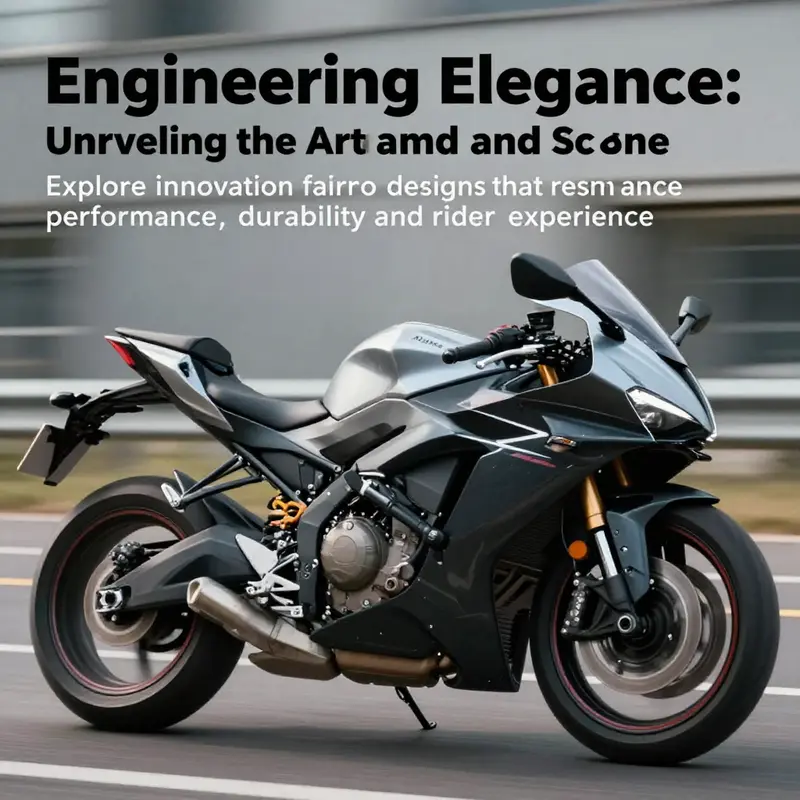
Motorcycle fairing design is a pivotal aspect of modern motorcycle engineering, significantly impacting aerodynamics, rider comfort, and appearance. For business owners in the motorcycle industry, understanding this design’s nuances can enhance product offerings and attract more customers. The various types of fairings—full, half, and quarter—each serve distinct purposes and user preferences, affecting not only aesthetic appeal but also functionality on the road or track. The materials used in fairing construction play a crucial role in performance, influencing weight, durability, and cost-effectiveness. Moreover, advanced design techniques such as computational fluid dynamics (CFD) and wind tunnel testing are transforming the landscape of motorcycle fairing, allowing for better airflow management and improved ride stability. This article breaks down these essential elements into three comprehensive chapters to help business owners navigate the intricacies of motorcycle fairing design.
Shields of Speed: How Full, Half, and Quarter Fairings Sculpt Aerodynamics, Comfort, and Character
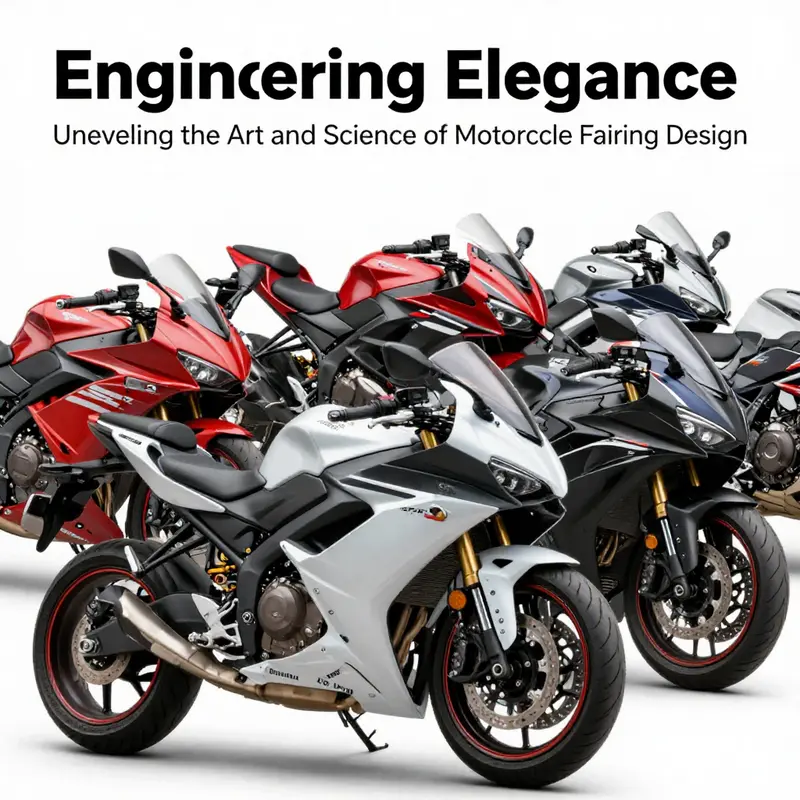
Fairings are more than a stylish outer shell. They are the bike’s first line of interaction with air, a carefully tuned system that shapes how a motorcycle slices through wind, how the rider feels at velocity, and how maintenance tasks get performed in the real world. In the world of motorcycle fairing design, the central choice often comes down to three archetypes: full fairings, half fairings, and quarter fairings. Each one creates a distinct balance among protection, weight, accessibility, and personality. When designers discuss them in the same breath, it becomes clear that the chapter of aerodynamics is really a chapter about rider comfort, control, and how a machine communicates with the road. The journey from the first sketch to the final shell is a story of trade-offs, materials science, and the ways our riding priorities—the desire for speed, the need for daily practicality, and the appetite for personal expression—shape what ends up on two wheels. Full fairings are the most ambitious expression of aerodynamic intent. They enclose the upper body, the instrument cluster, and often a large portion of the engine’s upper contours. The aerodynamic payoff is straightforward: a smoother front profile, reduced frontal area, and a carefully sculpted path for the air as it accelerates toward the bike’s surfaces. At highway speeds, the drag reduction is more than cosmetic; it translates into stability, fuel efficiency, and the rider’s energy being conserved for longer rides. For riders who chase uninterrupted, high-speed performance—whether on sport riding, track days, or long highway commutes—a full fairing is the instrument that makes those ambitions feasible. Yet the advantages come with costs. Full fairings require precise fits across a spectrum of angles and tolerances, a reality that can push up manufacturing and repair costs. The more you encase, the more there is to remove when the need arises to service or replace components behind the shell. Access to the engine, the cooling ducts, or the radiator can become a staged operation rather than a quick task. In terms of maintenance, many enthusiasts learn to weigh the upside of a clean, sealed exterior against the downside of longer service intervals or more involved patchwork if a panel is damaged. Beyond practicality, full fairings also present a design challenge: they must harmonize with the frame’s geometry, protect the rider without muffling the bike’s character, and accommodate lighting, vents, and helm-like cockpit ergonomics. The careful integration of features such as intake ducts, cooling channels, and air management flaps demonstrates how form and function work in lockstep. The material choices—ABS plastics, fiberglass, carbon fiber composites—become even more consequential here. ABS plastics provide a robust, impact-resistant shell that can be molded with high precision, offering a cost-effective route to smooth, continuous curves. Fiberglass brings a lighter option with good stiffness, while carbon fiber delivers the ultimate in strength-to-weight performance, albeit at a premium price. The material mix allows designers to tailor stiffness and flexibility where it matters most: front fairings must resist stone strikes and prevent crack propagation, while panels around the instrument cluster can be engineered for optical clarity and housing for LEDs. The balance is not merely about weight; it’s about how the shell behaves under load, how it routes air, and how it feels to lean into a corner with a larger, integrated aero profile pulling on the rider’s senses. In this sense, the software of modern design becomes inseparable from the hardware. Computational fluid dynamics, paired with wind tunnel verification, informs the contours, ensuring that the final shape channels air to produce a net gain in downforce where needed, while minimizing buffeting and turbulent wake that can induce rider fatigue. The result is a system that can deliver quiet stability at triple-digit speeds and provide relief from the gusts that threaten equilibrium on open roads. The full fairing is also a canvas for advanced technology, from integrated LED lighting that hides within the sculpted airfoil lines to modular enclosures that accommodate electronics and sensors. It is not unusual to see fairings designed with removable panels for field maintenance, enabling riders to swap sections without disassembling large portions of the bike, a nod to the practical realities of real-world ownership. Half fairings strike a different chord, offering a measured compromise between the shield of the full enclosure and the naked exposure of minimalism. They protect the rider’s upper body, the cockpit, and the upper fork area while leaving the lower engine bay and frame more accessible. This design choice reduces the wind pressure and buffeting that can pummel the rider’s chest at tempo speeds, yet it avoids the bulk and weight that a full fairing imposes. The result is a more agile profile that translates into quicker, more responsive handling—an attribute appreciated by sport-touring enthusiasts, daily commuters, and café racer builders alike. Half fairings also make maintenance friendlier. When you need to reach the valve covers, the air filters, or the oil line, the path to access is shorter and simpler than it would be behind a full shell. The weight savings are tangible, contributing to improved flickability and steadier steering under abrupt gusts or lane-change maneuvers. A well-designed half fairing can incorporate wind deflectors and smooth, uninterrupted upper curves that deflect wind away from the rider’s torso while letting heat escape from the engine bay toward the exhaust route. This is a choreography of air that respects rider comfort without demolishing the machine’s edge. Designers often balance the aesthetic of a half fairing with the motorcycle’s identity—especially on sport-tourers that rely on an ergonomic cockpit and a clean instrument cluster presentation. The half fairing’s silhouette invites a sense of motion even when the bike is stationary, signaling a readiness to dart forward while still offering a degree of shelter from the elements. Materials and construction methods for half fairings echo those of full shells, enabling a lighter build without compromising structural integrity. The choice of ABS, glass fiber, or carbon fiber sections is guided by the need to screw into the framework securely, resist vibration, and tolerate the kind of impact that a rogue stone or a curb strike can impart. In practice, the half fairing embodies a philosophy: keep the rider in command, keep service practical, and keep the wind from eroding endurance on long rides. Quarter fairings, by contrast, represent a lean, almost sculptural minimalism. They are shallow, highly targeted shells that sit near the headlight or along the upper-front sections of the bike. The appeal is unmistakable to custom builders and café racer aficionados who prize a clean, linear aesthetic and a nimble, lightweight feel. Quarter fairings deliver almost no wind protection in the conventional sense, but they shape the bike’s line, influence the perception of speed, and emphasize the machine’s frontal geometry rather than full coverage. For many riders, the priority is to showcase a minimalist silhouette that celebrates the machine’s mechanical honesty while offering a few practical benefits—improved headlight integration, easier access to bolts and fasteners, and the possibility of bespoke paint and finish that highlight craftsmanship rather than aero disguise. The aerodynamic advantage of quarter fairings is more modest, and their heat management considerations can be more pronounced since there is less shell to channel airflow through. They demand a thoughtful approach to routing and venting, especially when combined with other shields or a universal headlight fairing that can still provide some wind deflection at the rider’s torso. One practical dimension of quarter fairings is maintenance and customization. With a lighter, simpler skin, field repairs, patchwork, and color changes become less onerous, and the potential for creative experimentation grows. The café racer culture often favors this route, where the rider’s personality, the bike’s line, and the rider’s own hands-on sensibilities drive the choice. The minimalism also means attention to weight distribution, as every gram saved on a quarter fairing can marginally improve steering response and curb weight. In this sense, quarter fairings become less about shielding from air and more about shaping identity, with shells that emphasize the rider’s connection to the machine and the road. Across these three archetypes, the material conversation is a throughline. ABS plastics offer cost-effective mass production with good impact resistance, a staple for many production bikes and aftermarket kits. Fiberglass provides a blend of stiffness and lightness that can be tuned to fit specific geometries, often used for aftermarket or race-inspired builds where precise shaping is prized. Carbon fiber remains the premiere option for riders chasing ultra-low weight and maximum rigidity, especially on high-end setups and track-oriented machines. The trade-offs are familiar: carbon fiber brings exceptional strength and stiffness at a premium price, while ABS and fiberglass deliver durability and ease of repair at a more accessible cost. The choice among materials is not simply about cost; it is about how the shell interacts with the rest of the chassis, how it responds to wind pressure at speed, and how it ages under sun, heat, and road debris. The interplay of materials with form is essential to establishing a fairing’s overall performance characteristic. In modern practice, the conversation frequently centers on how to integrate these shells with a bike’s electronics suite. As designers embed more sensors, LEDs, and even adaptive lighting into the fairings, the shell has to become a conduit for power and data as well as a protective envelope. This is where the discipline of design becomes a holism: the shell, the rider, the machine, and the air itself all work in concert. Advances in computational fluid dynamics enable rapid iteration of shapes, while wind tunnel validation anchors the model to real-world behavior. The result is a fairing that is not only visually cohesive with the bike’s silhouette but that also tunes airflow to reduce drag, manage pressure differentials along the rider’s torso, and promote stable, predictable handling across a spectrum of speeds and crosswinds. The modern fairing thus functions as an aerodynamic suit, a heat shield, an access portal, and a signature of personality rolled into a single, executable aesthetic. With this understanding, the design choice becomes less about choosing the “best” fairing and more about aligning the shell with riding goals. For the sport-touring rider who spends hours on the freeway and still wants confidence in corners, a half fairing configured with integrated wind deflectors can optimize fatigue resistance without surrendering serviceability. For the rider who wants long-haul stability and the cleanest, most enclosed aero profile, a full fairing is a moving workshop of engineering where every inlet, duct, and panel is tuned. For those chasing a lean, expressive lineage—where form follows a compact, minimalist intent—a quarter fairing or a carefully selected universal headlight fairing becomes a platform for customization rather than a barrier to speed. In all cases, the story of fairing design is a narrative about how air meets machine, how air is managed to support human stamina, and how a rider’s interface with the wind can feel almost tactile in the precision of the lines and the hush of the ride. Even as technology marches toward modular systems and easy customization—where panels can be swapped with a click, or LED arrays can be integrated into the shell without compromising aerodynamics—the core question remains: what kind of shield best supports the rider’s journey? The answer is not a single flag-pole proclamation but a spectrum, a continuum from naked speed to enveloping comfort, each mode offering a different sense of speed, protection, and personality. For readers curious about model-specific kits and the practical side of building toward a preferred fairing configuration, it is useful to explore how these fairings map across brands and models. Consider the case of a particular sport orientation and its compatibility questions: the fairing kit designed for a renowned sport platform often reveals convolution between fitment, airflow management, and the bike’s underlying frame geometry. In this light, the decision to go full, half, or quarter is also a question of maintenance strategy. A track-oriented full fairing may demand more meticulous alignment work after a crash, while a half fairing can be more forgiving when it comes to field repairs. Those who lean toward café racer aesthetics often prioritize the fairing’s line and weight distribution as well as the opportunity to customize the headlight assembly and paint scheme. The fairing’s role in user experience is not merely protective; it shapes how riders perceive speed, how they communicate with the machine, and how their posture interacts with the air column that wraps around the bike at pace. This sensory dimension matters because it feeds back into rider confidence, which in turn influences how aggressively a rider negotiates the geometry of a turn or the line through a bend. The fairing thus becomes a collaborator in the riding experience. It is a tool for shaping the rider’s day, from the morning commute to the late-night dash home, and its design language—whether crisp and angular or smooth and unbroken—speaks to a narrative of speed, control, and identity that is inseparable from the bike’s overall character. When designers discuss future directions, they often point to preserving the classic virtues of protection and efficiency while exploring new material blends and smarter integration of sensors and lighting. They talk about modular and reconfigurable fairings, where a rider can adapt the shell for different riding modes, weather scenarios, or road conditions without sacrificing the aero profile. They discuss the potential of active aero elements that adjust in response to speed, wind, or lean angle, offering a dynamic envelope that can stiffen or relax as needed. They talk about further refining wind deflectors, adding micro-vents to fine-tune pressure zones across the rider’s torso, and refining the boundary layer interactions where the shell meets the air. The conversation remains anchored in the same core ideas—protection where it matters, minimum drag where it counts, and a design language that respects both the machine’s geometry and the rider’s physical limits. The end result is a family of fairings that can feel both timeless and forward looking, balancing tradition with innovation, and enabling riders to choose a path that matches their riding priorities and aesthetic preferences. In this light, the three primary fairing types can be understood as complementary tools in a rider’s toolkit. The full fairing is a comprehensive aerodynamic solution for speed and comfort on long, uninterrupted runs. The half fairing is a pragmatic, lighter option that preserves access and agility while delivering meaningful wind management. The quarter fairing is a statement of style and lightness, designed for those who value simplicity, line, and the joy of customization. The best choice depends on how a rider wants to experience speed, how often they ride, and how they plan to maintain and personalize their bike over time. For readers who want to explore more about how these shell systems are applied across models and configurations, explore model-specific fairing options such as the CBR600RR package, which offers a concrete example of how a fairing’s form and function interplay with a bike’s chassis and rider interface. fairings for CBR600RR. The broader lesson remains: the design of a motorcycle fairing is a study in balance, a discipline that seeks to harmonize air, heat, access, weight, and emotion into a single, riding-worthy surface that announces the bike’s intent before a single mile is logged. External resource for further reading: a detailed exploration of fairing types and applications that reinforces the practical considerations and performance implications discussed here can be found in an in-depth industry guide at Motorcycle.com. This external reference complements the chapter’s synthesis by offering broader case studies and methodological notes on CFD and wind tunnel validation as tools for shaping fairing geometry. https://www.motorcycle.com/technical/motorcycle-fairing-design-types-and-applications/.
Materials in Motorcycle Fairing Design: Impact on Performance and Durability
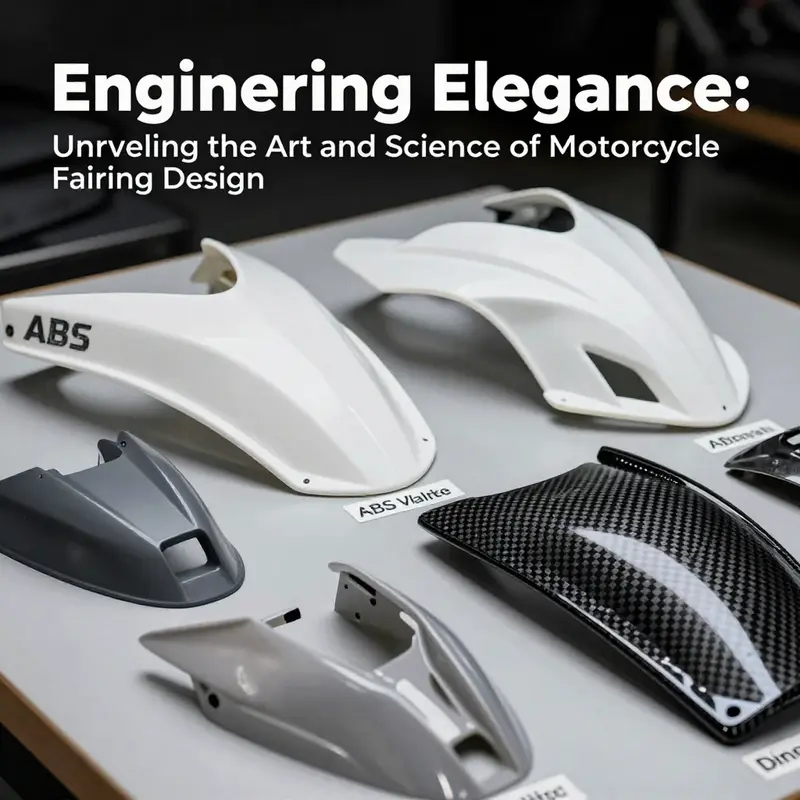
Fairing design sits at the intersection of form and function. It is where engineering choices meet rider experience, and where the material heartbeat of a bike determines how quickly air flows around the chassis, how the rider feels at speed, and how the system withstands the occasional road hazard. In this chapter, we explore how the choice of material shapes performance and durability in real riding conditions, not just in the showroom. The discussion weaves through the three main families of fairing composites—fiberglass, ABS plastic, and carbon fiber—while acknowledging how manufacturing processes, repairability, and long term resilience influence a bike’s practical behavior. It is a narrative about compromise made visible through the material a designer selects and the way that choice translates to aerodynamic stability, weight, stiffness, and the rider’s comfort in daily commutes and on the edge of performance on track days or long tours.
Fiberglass remains a durable workhorse in many fairing applications. Its long history in motorcycle design is not simply about tradition; it is about a robust energy-absorbing skin that can withstand significant impact while maintaining structural integrity. The energy that a fairing must absorb in a crash, or when a rider encounters an errant branch or gravel, is not just a matter of protecting the engine or rider but of preserving the bike’s aerodynamic envelope. Fiberglass fibers form a woven skeleton that disperses load and retards crack propagation. This resilience is particularly valuable for riders who prioritize toughness and easy field repair. The trade-off is weight. Fiberglass panels are heavier than their modern synthetic cousins, and that weight translates, in nuance, to a subtle shift in handling character and fuel efficiency at highway speeds. Yet the heavier skin can be advantageous when the objective is to maintain a stable silhouette under gusts and crosswinds, reducing flutter and fatigue in windy conditions. In a sporting enterprise or a touring cruise alike, fiberglass often proves its worth by outlasting a set of miles with less sensitivity to micro-impacts from road debris.
ABS plastic is the workhorse of mass production fairings. It brings a different set of strengths to the table. ABS offers a compelling mix of lightness, cost efficiency, and process compatibility with common manufacturing methods such as compression molding and injection molding. This compatibility enables tighter tolerances, smoother outer surfaces, and a consistency that is highly prized in street bikes built for a broad audience. The lighter weight of ABS fairings contributes to a lower overall bike mass, which in turn favors nimble steering response and improved fuel economy while maintaining strong enough stiffness to maintain a clean aerodynamic profile at typical riding speeds. The ease of repair and the relative affordability of replacement parts make ABS a pragmatic choice for riders who want to keep maintenance simple and predictable. The potential drawback is impact resistance. Under a heavy impact from a solid object, ABS fairings may crack or shatter more readily than fiberglass, and the repair options can be less forgiving in terms of cosmetic finish. Still, for many riders, the balance of low cost, easier production, and adequate durability aligns with practical needs, especially for daily commuting and weekend rides where the aerodynamics and wind protection are valued but the budget remains a constraint.
Carbon fiber represents the apex of high-performance fairing design. Its lightness and stiffness make it the preferred material where every gram and every gram of drag count. Carbon fiber panels can achieve exceptional aerodynamic efficiency because their rigidity helps maintain a pristine, smooth surface, allowing air to glide with minimal separation at high speeds. The stiffness also translates into a more stable feel at the bar and through the chassis as speed rises, reducing the propensity for flutter and deflection that can unfavorably alter steering inputs. Yet carbon fiber comes with a cost that is not merely monetary. The material’s strength does not eliminate the risk of catastrophic damage in certain high-energy impacts, and repair presents a specialized challenge that often requires skilled labor and time to restore the surface to its original finish. For many riders, carbon fiber fairings signal a commitment to performance and a willingness to invest in premium components. They find a natural home on track-focused bikes or premium sport machines where speed, feedback, and lightness are central to the riding experience.
These material choices do not exist in isolation. The fairing is a skin bound to a framework that endures harsh heat from the radiator, UV exposure from sun-soaked rides, and continual micro-abrasion from road grit. A fairing’s outer surface must stand up to solar bleaching, color fading, and micro-scratches that accumulate over tens of thousands of miles. In all three materials, UV stabilizers and surface finishes become part of the design equation. The panel’s resilience to temperature swings—rising heat near the engine and cooling drafts along the fairing’s edges—also shapes its longevity. Debris deflection, little more than a couple of millimeters of an aggressive road still being a serious concern, is influenced by how rigid or compliant the panel is. Here, the benefits of carbon fiber in stiffness blend with a cured resin system to resist flexing and maintain a flush surface, while ABS offers ease of repainting and repair for riders who prefer color customization without immediate, specialized repair work. Fiberglass sits between, offering a balance of toughness with more forgiving repair routes than carbon, while weighing more than ABS but less than dense carbon-reinforced systems.
Manufacturing realities cannot be ignored in this matrix. Fiberglass panels often benefit from layup techniques that emphasize energy absorption and durability. The processes allow for relatively quick production runs with consistent results, and repairs can often be done in a standard workshop with reasonable equipment. ABS, by contrast, shines in production efficiency. Its compatibility with high-volume molding means that companies can produce identical shells at scale with predictable surface finishes. From a rider’s perspective, this translates into uniform fit, consistent color matching, and the practical ability to swap panels without chasing a custom color or finish. Carbon fiber, while delivering top-tier performance in stiffness and weight reduction, requires precision layup, controlled environments for curing, and specialized repair strategies. The skill set needed to maintain carbon fiber fairings—matching resin systems, ensuring proper layup orientation, and finishing to avoid surface imperfections—makes it a choice for the premium tier of the market. The decision of which material to choose is not simply about weight or strength in isolation; it is about how these variables interact with manufacturing realities, maintenance expectations, and the rider’s long-term ownership horizon.
Aerodynamics ties closely to the material story, but not in a way that makes the choice simplistic. A fairing’s shape and surface finish remain the immediate drivers of drag, flow separation, and stability, but the material used influences how well that shape persists under traffic, wind gusts, and the demands of high-speed riding. A carbon fiber shell, with a smoother, stiffer surface, can sustain a sleek profile at speed with less deformation, supporting laminar-like flow regimes over a broad range of operating conditions. ABS, while more prone to micro-deformations under impact, can still deliver excellent aero performance when paired with precise tooling and high-quality paint and clear coats that maintain a uniform surface. Fiberglass can be shaped into complex geometries and tuned to deliver robust performance with a margin of resilience that benefits everyday riding. The synergy between the panel’s material properties and its geometry—how it curves over the bike, where it optimizes pressure recovery, and how it manages airflow around the instrument cluster and engine bay—defines the rider’s experience of wind protection, fatigue, and control at motorway speeds and beyond.
Rider comfort intersects with durability in practical ways. A well-chosen fairing can shield the rider from wind pressure, reduce turbulence, and channel air toward deflectors and vents that manage the flow around the rider’s torso, shoulders, and arms. In half fairings or full fairings, the balance between wind protection and access to maintenance points is a frequent decision point. The material choice can influence how that balance is achieved. ABS has an advantage in ease of repair and modification; its lighter weight combined with ease of painting and reapplication makes it attractive to riders who value customization and routine maintenance. Fiberglass provides resilience and the option for field repairs when a panel is damaged off the track or far from an authorized service center. Carbon fiber’s lightness and stiffness contribute to a more rigid aerodynamic envelope, which can improve the precision of wind management around the rider, but its repair demands can make it less forgiving for casual, daily use where minor repairs might occur during travel.
A contemporary design approach integrates computational tools with empirical testing to ensure that the chosen material supports the intended aerodynamic performance. Computational fluid dynamics can model how a panel interacts with the bike’s airflow, predicting drag coefficients and stability trends across speed ranges. Wind tunnel testing remains an essential complement, validating CFD results and helping designers observe how a fairing responds to turbulence and crosswinds in a controlled environment. The material’s surface quality, coating, and paint system are essential components of this testing. An outer layer that resists micro-scratches and maintains a smooth surface helps keep the air flowing cleanly, preserving the performance advantages offered by the panel’s geometry and its reinforcement. In this sense, the material choice is not a solitary decision but part of an integrated system that includes surface finishes, fasteners, mounting hardware, and even the way the fairing interacts with the rider’s lines of sight and seating position.
For riders seeking a practical route through these choices, the final decision often comes down to a triad of priorities: cost, weight, and durability under real-world conditions. Those who value long-term toughness and the capability to absorb energy in a crash may lean toward fiberglass. Those who want lower weight, mass production efficiency, and easy replacement options may favor ABS. Those who demand peak performance, the cleanest sheet of air, and are willing to invest in specialized maintenance may choose carbon fiber. The context matters as well: a sport-touring rider in daily commuting scenarios might prioritize a blend of light weight and durability, while a track-focused rider might optimize for maximum stiffness and minimum drag, accepting higher costs and repair complexity as part of the performance package. The material choice shapes maintenance routines, repairability timelines, and even the aesthetics that a rider enjoys, reinforcing the idea that fairing design is as much about the rider’s goals as about the bike’s engineering.
To connect these ideas to practical browsing for a rider who wants both customization and model compatibility, consider exploring the internal category of fairings that aligns with your bike’s ecosystem. For example, you can browse the BMW fairings category to see how a well-integrated system balances structural rigidity, color retention, and serviceability across a range of models. This exploration helps illustrate how manufacturers and aftermarket suppliers navigate the same material decisions in ways tailored to different chassis and riding philosophies. bmw-fairings provides a concrete sense of how a given material choice manifests in real-world product lines, helping readers gauge what a particular composition might mean for their own bike’s durability, weight, and repairability.
In sum, material choice in motorcycle fairings is a nuanced decision driven by a spectrum of factors that include impact resistance, weight, stiffness, surface finish, and the realities of manufacturing and maintenance. Fiberglass offers toughness and reparability at a moderate weight; ABS delivers light weight, cost efficiency, and scalable production; carbon fiber affords peak performance with premium costs and specialized repair needs. Each option can support aerodynamic goals and rider comfort when embedded within a thoughtful design process that values wind tunnel validation, CFD insights, and a coherent strategy for shielding the rider from wind fatigue while keeping the bike’s maintenance within reasonable bounds. The chapter’s core message is simple: choose the right material to match the rider’s priorities, the riding context, and the lifecycle expectations of the motorcycle, knowing that the engineering beneath the surface will shape the rider’s day-to-day experience as surely as the color or finish on the outer shell.
External resources and broader perspectives can deepen understanding of how these material choices shape industrial performance and rider experience. For a broad, authoritative overview of fairing design types and applications, see an in-depth guide on motorcycle fairings that connects material selection to real-world performance. This resource offers complementary insights into how designers balance drag, stability, and protection across different configurations, helping readers place the material choices discussed here within a larger design framework.
From Virtual Flows to Real Winds: Mastering CFD and Wind-Tunnel Validation in Motorcycle Fairing Design
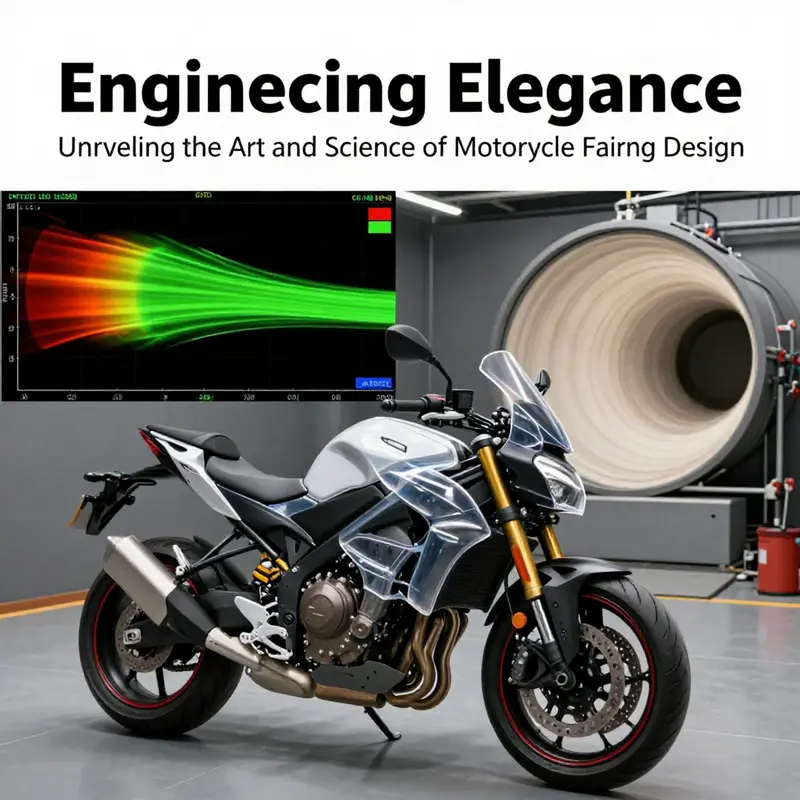
External reading and further exploration often anchor these discussions in a broader scholarly and practical context. For a rigorous treatment of CFD’s role in motorcycle aerodynamics, researchers and practitioners alike may wish to consult a comprehensive peer-reviewed study that surveys methods, validations, and case analyses. This resource provides depth on how transient flows are modeled, how turbulence influences local pressure distribution, and how those insights are translated into design recommendations that balance drag reduction with rider comfort. Access to this external manuscript can deepen understanding of the theoretical underpinnings behind the design choices described here, and it offers a framework for comparing simulation results with experimental data across a range of configurations. peer-reviewed CFD study in motorcycle aerodynamics
Final thoughts
In the ever-evolving motorcycle industry, fairing design stands as a cornerstone of innovation and performance enhancement. Understanding the various types of motorcycle fairings—from full to quarter designs—allows business owners to cater more effectively to their market, balancing aesthetics with functionality. Additionally, selecting appropriate materials can significantly impact not only product durability but also overall rider experience. Finally, leveraging advanced techniques like computational fluid dynamics and wind tunnel testing will ensure that motorcycle designs are at the forefront of performance optimization. By embracing these insights into motorcycle fairing design, businesses can better position themselves to meet rider needs, enhance product offerings, and ultimately drive success.