
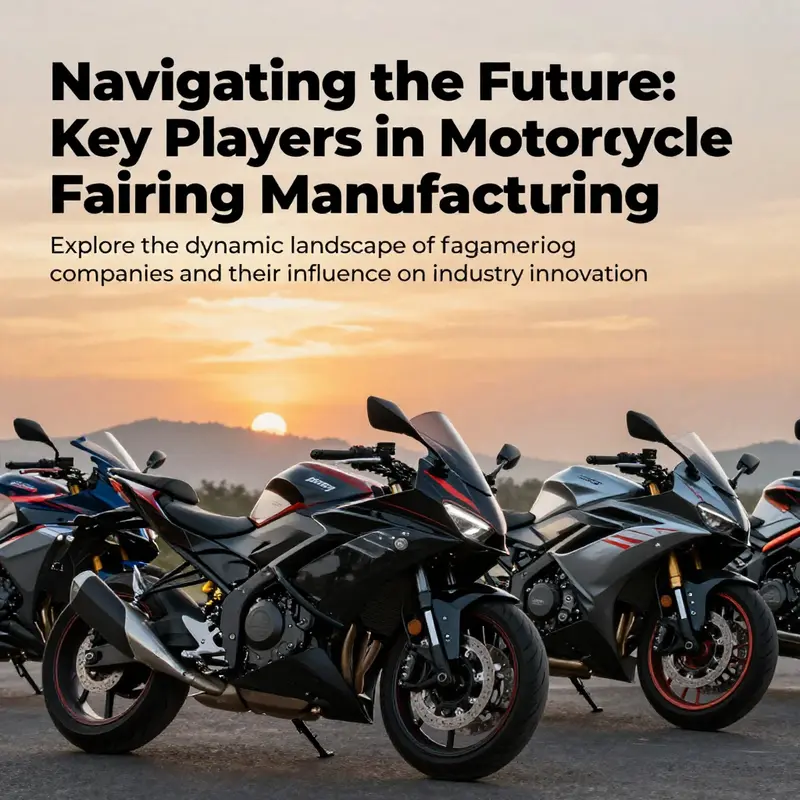
The motorcycle fairing industry plays a pivotal role in shaping the aesthetics and functionality of motorcycles worldwide. Companies that design and manufacture these essential components contribute not only to the performance and safety of motorcycles but also to the brand identities of manufacturers. This article explores the global landscape of motorcycle fairing companies, examining their technological advancements, economic impact, and the latest market trends that align with consumer preferences. Each chapter aims to provide business owners with a comprehensive understanding of how these companies operate and how they can strategically position themselves within this vibrant sector.
From Shape to Speed: Navigating the Global Network of Motorcycle Fairing Innovators

The motorcycle fairing is often perceived as a single, glossy shell perched on a frame, yet it is really the visible tip of a complex engineering iceberg. Fairings fuse form and function; they sculpt airflow, shield riders from wind fatigue, and shape the visual identity of a machine. Behind the gloss lies a web of materials science, aeroacoustics, manufacturing discipline, and supply-chain choreography that enables every curve to serve a purpose. In the broader ecosystem of motorcycle components, fairings sit at a pivotal crossroads where aerodynamic optimization, brand storytelling, and mass production intersect. The resulting landscape is neither purely design-driven nor purely machining-driven; it is a synthesis of both, calibrated to meet performance targets while satisfying the mass-market need for affordability and dependable quality.
What emerges from this synthesis is a spectrum of players that collectively define the shape of the market. At the apex are the global Original Equipment Manufacturers (OEMs), whose engineering teams craft fairings that mirror the performance ambitions of entire model lines. They collaborate with internal design studios and external suppliers to push the envelope on aerodynamics, cooling, and integration with lighting and sensors. These OEMs set benchmarks for stiffness, fit, and form, and their in-house or closely vetted supply chains determine how consistently a fairing will perform across thousands of production units. The most consequential design decisions—airfoil-like contours, strategic cutouts for air intakes, and the placement of attachment points—are the fruits of this collaboration between aerodynamics, structural engineering, and manufacturing process planning. In practice, this means that a fairing is rarely a standalone part; it is a system component that depends on seals, fasteners, brackets, under-trays, and wiring looms to behave as intended in the wild.
But the journey from concept to curb is not the sole province of the OEM. A robust network of suppliers, from specialized material firms to precision engineering houses, forms the backbone of fairing production. Among these, aluminum-wheel manufacturers, sealing technology specialists, and tire component suppliers all influence fairing performance, even if only indirectly. One global leader in aluminum components, for example, demonstrates how scale and integration matter. The ability to deliver millions of units of a related component per year signals the capacity to synchronize with major brands’ production rhythms, ensuring that fairings can be produced, finished, and installed within tight schedules. This kind of scale supports the broader claim that fairing design cannot be decoupled from the rest of the vehicle’s engineering ecosystem; decisions about weight, rigidity, and thermal behavior ripple through the entire product line.
Within this ecosystem, specific regional centers of gravity play outsized roles. The Asia-Pacific corridor, with its dense network of manufacturers and suppliers, has grown into a critical hub for fairing production. The region’s appeal lies in its combination of skilled labor, established plastics and composite industries, and a deeply embedded practice of modular assembly and subassembly work. The result is a supply chain that can quickly respond to shifts in demand—whether a surge in sportbike orders, a run of retro-styled models, or a rapid ramp of electric platforms—without compromising quality. The presence of multiple Gold Supplier–listed firms on global marketplaces is a telling sign of the region’s active role in the fairing segment. These firms often specialize in particular niches within the broader fairing family, such as lightweight panels for urban mobility platforms or rugged housings designed to resist abrasion in demanding operating environments.
Among the notable players in this broader ecosystem are firms that anchor the supply chain for fairings by focusing on adjacent, but essential, components. Some companies are primarily concerned with protective and sealing systems that keep rain, dust, and engine heat from compromising the fairing’s integrity. Others concentrate on the interfaces where the fairing meets the chassis, ensuring a precise fit that minimizes vibration and reduces rattling at speed. The quality and reliability of these ancillary systems directly influence a fairing’s effectiveness; a well-designed shell can be rendered moot by a subpar seal or a misaligned mounting point. Taken together, these relationships illuminate why fairing development is rarely a solitary sprint. It is a coordinated, multi-part project that demands cross-functional collaboration across design, materials science, and manufacturing operations.
The research landscape for motorcycle fairings, while not always naming a clean, stand-alone list of “fairing companies,” reveals a broader pattern: the most influential players are the same institutions that engineer and supply other essential motorcycle systems. Helmets, for instance, often occupy a space adjacent to fairings in the rider experience, with leading brands delivering integrated visors, electronics, and ventilation concepts that nevertheless depend on the same engineering rigor used in fairing design. This linkage underscores the reality that fairings do not exist in isolation. They are part of an interconnected dialogue about rider protection, comfort, and performance. In practice, the aerodynamics of a fairing can influence fuel efficiency and stability, which in turn informs how powertrains and chassis tuning are developed for a given model line. The consequence is clear: fairing development is inseparable from the broader dynamics of motorcycle design and manufacturing.
A crucial dimension of the market is the emergence of electric platforms and the associated shift in aerodynamic and structural requirements. As manufacturers pivot toward electrified powertrains, the weight distribution, cooling needs, and integrated electronics of the fairing must adapt. Firms with established capabilities in electric vehicle parts find themselves uniquely positioned to contribute not only shell components but also the complex air-management solutions that support battery cooling, motor protection, and sensor placement. This trend matters because it signals a longer-term shift in how fairings are conceived, engineered, and executed. The demand for adaptable, modular fairing systems that can be re-skinned or reconfigured for different powertrains without a complete redesign becomes a strategic capability rather than a luxury.
The dynamics of cost and access also shape the fairing market. A broad consumer segment seeks stylish, affordable motorcycles, and fairings that deliver visual appeal without spiraling prices. In response, manufacturers look for efficient materials, streamlined tooling, and scalable finishing processes that can yield consistent aesthetics at volume. This is where the interplay between design ingenuity and process optimization becomes a decisive competitive lever. A shell that looks premium but is produced with high repeatability and low defect rates can elevate an entire model family. Conversely, variability in fit, surface finish, or weather resistance can undermine a brand’s reputation, regardless of the underlying ride quality. Hence, suppliers and OEMs invest heavily in quality assurance, process control, and supplier development programs that monitor every step of the fairing’s journey from concept to showroom.
In discussing the global network, it is essential to acknowledge the particular companies that anchor the supply chain’s diversity. Some firms specialize in assembly and distribution, offering turnkey solutions that allow brands to reduce cycle times and bring new shapes to market faster. Others provide targeted capabilities, such as advanced sealing solutions or precision-routed tooling, that enable more sophisticated fairing geometries and better long-term durability. The mix of capabilities within a given supplier base can determine how aggressively a brand can pursue novel forms, new colorways, or integrated lighting and sensor features. As brands experiment with bolder silhouettes and more aggressive lines, the demand for reliable, repeatable manufacturing becomes even more critical. The fairing, after all, is a visible proof point of a company’s engineering discipline.
This complexity is further amplified by the globalization of production networks. A single model might draw components from several regions, with decisions about where to source raw materials, where to mold and assemble, and where to finish and ship all aligning to cost, quality, and lead-time targets. The result is a production landscape that emphasizes resilience and adaptability. When market conditions change, the ability to reallocate volumes, switch suppliers, or qualify new processes can determine which models stay in production and which require redesign. In such an environment, the fairing ceases to be merely a cosmetic layer and becomes a strategic lever for competitive advantage. The most successful players are those who knit design, materials science, and logistics into a seamless value chain that can respond to evolving rider expectations and regulatory requirements.
Within this intricate tapestry, a few practical observations emerge. First, the fairing’s performance advantages are most meaningful when integrated with the whole vehicle’s dynamics. Second, the aesthetic language of a fairing is a powerful component of a brand’s identity, influencing consumer perception and loyalty even before riders swing a leg over a bike. Third, the market rewards flexibility—being able to adapt to electrified architectures, new manufacturing techniques, and shifting consumer price sensitivities without sacrificing fit, finish, or protection. Fourth, and perhaps most subtly, the fairing’s lifecycle hinges on a robust ecosystem of suppliers, each contributing precision, materials, and process know-how that collectively ensure consistency across thousands of units.
A practical takeaway for readers who may be assessing the competitive landscape is to view fairing development as a collaborative discipline rather than a solitary design challenge. The most successful portfolios reflect a balance between bold styling and rigorous engineering. They reveal a capacity to evolve in step with evolving powertrains and rider expectations, all while maintaining the reliability that keeps customers returning year after year. For those exploring partnerships or investment, the message is clear: the value in fairings extends beyond the shell. It lies in the quality of the interfaces, the integrity of the assembly process, and the foresight to anticipate how changes in propulsion, electronics, and surface treatment will alter the fairing’s role in the vehicle ecosystem.
To connect this broader view with concrete market signals, manufacturers are increasingly curating catalogs that underscore modularity and customization. A representative trend is the emergence of new collections that emphasize scalable shapes, interchangeable panels, and adaptable mounting concepts. These shifts align with the demands of a diverse rider base—enthusiasts seeking performance and aesthetics, and newcomers who want approachable, affordable bikes with compelling styling. The cataloging movement also aligns with expansion into regional markets where local assembly and distribution networks can shorten lead times and reduce logistics risk. For practitioners and observers, this means keeping an eye on how the latest design language converges with manufacturing pragmatism, and how suppliers’ capabilities mature to support more sophisticated, interconnected fairing systems.
As the market evolves, riders and brands alike will continue to look for shells that honor wind-cheating efficiency, protective function, and expressive sculpture. The fairing is, in many ways, a manifesto of how a motorcycle communicates with the road: it proclaims speed even when still, signals intent through lines and vents, and invites owners to personalize their machines with a distinctive silhouette. This is not merely a matter of fashion; it is a synthesis of aerodynamics, materials, and assembly science that shapes every mile of riding. In the chapters that follow, we turn from the macro physics of shell design to the micro decisions that bring a given fairing to life on a production line. We will revisit how regional manufacturing ecosystems, supplier networks, and evolving propulsion technologies constrain and empower designers, engineers, and marketers alike. For readers eager to drill into practical implications, consider exploring the latest catalog options that reflect contemporary fairing language, including the 2023 new catalog, which captures the current mood of form meeting function in a rapidly changing market. 2023 new catalog.
For a broader aerodynamic reference that complements this chapter, see the detailed discussion of fairings and aerodynamics on NASA’s educational page, which offers foundational concepts about how streamlined shapes influence flow, pressure distribution, and stability under different operating conditions. This external resource provides context for why the fairing’s geometry matters beyond aesthetics and into real-world performance on the track and street.
External resource: https://www.grc.nasa.gov/www/k-12/airplane/fairing.html
Wings of Progress: Technological Breakthroughs Reshaping Motorcycle Fairings
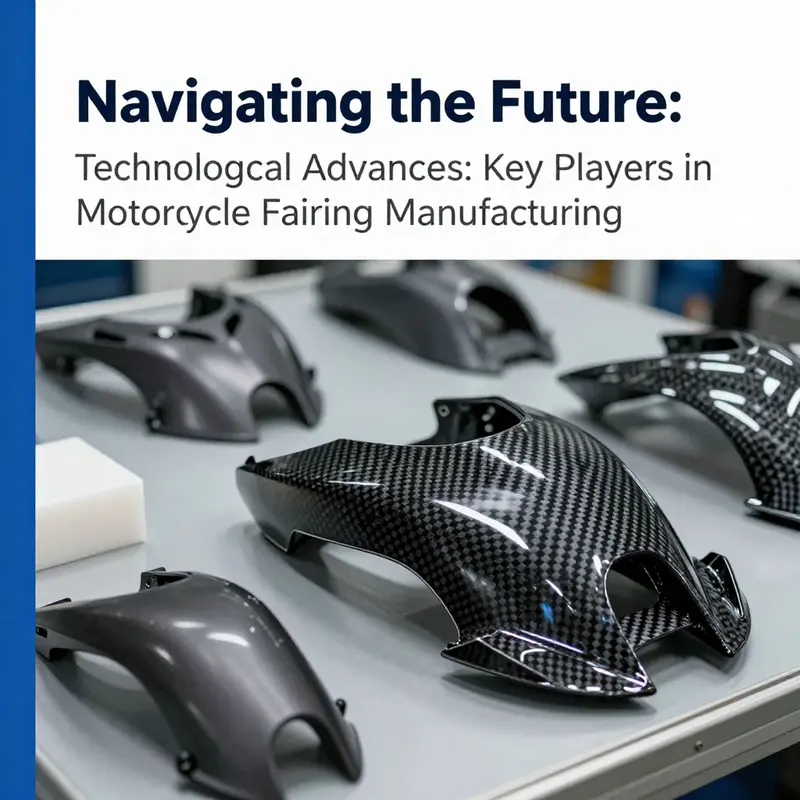
The fairing has long carried a double duty in motorcycle design: it wraps the rider in a shield of wind while shaping the machine’s silhouette. Yet in today’s market, the fairing is increasingly a cradle for innovation, a testbed where material science, digital tools, and smart systems converge to redefine what a motorcycle can do. This chapter traces how technological advances are transforming fairings from cosmetic shells into integral components of performance, efficiency, and rider experience. The arc of change is not merely about making things lighter or faster; it’s about rethinking how a fairing integrates with the bike’s powertrain, electronics, and the rider’s interaction with the road. As the sector evolves, manufacturers are trying to balance aesthetic appeal, manufacturability, and the harsh realities of mass production while also embracing customization that once belonged only to the bespoke world. In this context, the landscape is as much about fabrication methods and materials as it is about software and sensors. The result is a new class of fairings that contribute to range in electric models, to stability at high speed, and to comfort during long rides, all while maintaining an expressive look that riders crave.
Material science sits at the center of this shift. Advanced composite polymers and carbon fiber-reinforced plastics have moved from elite race shops into broader production lines. The appeal is clear: a fairing that is stiffer, stronger, and dramatically lighter can reduce the motorcycle’s overall mass, trim parasitic drag, and improve fuel economy or electric range. The physics is straightforward, though the engineering is nuanced. A lighter fairing reduces the inertia that a rider must overcome during acceleration and at corner entry, and when the rider leans, the shape can maintain favorable pressure gradients around the handlebars and the rider’s torso. Carbon fiber and high-strength composites also offer the stiffness needed to hold complex geometries at high speeds, preserving subtle aero features designed to minimize buffeting while supporting integrated components such as lighting modules and sensor housings. Still, the cost and the supply chain implications of these materials remain a reality. The best solutions balance performance gains with manufacturability, repairability, and total cost of ownership. In markets where demand for affordable, mass-market motorcycles persists, engineers often combine carbon or glass fibers with reinforced thermosets or thermoplastics, yielding fairings that approach the performance of high-end composites without overwhelming price points. This balancing act is particularly visible in the rising segment of electric two-wheelers where every gram of weight saved translates into longer range and lower energy consumption. The practical outcome is a fairing family that can shield the rider, adapt to battery and cooling layouts, and still deliver an eye-catching visage.
A broader look at materials reveals a spectrum of options that manufacturers are navigating. In practice, designers may select carbon fiber-reinforced plastics for critical load paths and high-visual-value panels, while using engineered thermoplastics for lower-cost sections that still require good impact resistance and surface finish. The trend toward multi-material architectures means that a single fairing can blend layers and interfaces to achieve optimal stiffness, damping, and aerodynamics. For example, engineering teams often tailor core materials and skin thickness to achieve targeted bending stiffness and wind-load distribution. This modular approach helps with mass production, as standardized skin panels can be joined with different internal substructures to accommodate a family of models. It also supports aftermarket demand, where riders may seek to replace or upgrade individual panels without altering the entire fairing system. Moreover, the push toward sustainable design is nudging materials engineers to explore recycled or bio-based resins and to optimize the recycling of carbon-fiber composites at end of life, aligning performance objectives with environmental considerations. In short, the material conversation is moving from a straightforward weight race to a more integrated dialogue about durability, repairability, and lifecycle impact.
The manufacturing stage reflects the same shift toward digital precision and speed. Three-dimensional printing and sophisticated computer-aided design (CAD) workflows have moved from prototyping to essential production tools. 3D printing enables rapid iteration of fairing geometries, allowing designers to test aero effects, ensure proper fit with electrical harnesses, and verify rider comfort in simulated wind conditions before any tooling is committed. CAD tools go beyond two-dimensional sketches; they provide a virtual sandbox where airflow, vibration, and thermal loads can be modeled with high fidelity. The result is a virtuous circle: faster iterations, fewer physical prototypes, and shorter development cycles that bring new shapes and configurations to market more quickly. For fairing developers, CAD and additive manufacturing also enable more precise customization. Riders who pursue unique riding postures, specific ergonomics, or bespoke aesthetics can be accommodated through digitally driven design changes and lightweight, low-volume production runs that keep inventories lean and adaptable.
The convergence of manufacturing and software opens doors to what some industry observers call the era of digital twins for aerodynamics. A digital twin is a precise virtual replica of a physical fairing, updated with data from test runs, wind tunnel measurements, and real-world riding conditions. When a fairing is deployed on a test bike, sensors collect performance data—pressure differentials, flow separation points, and surface temperatures, among others—and the results feed back into the virtual model. Engineers can then test new contour tweaks, rib placements, or venting strategies without costly rework of physical parts. This approach is especially valuable for manufacturers that serve both high-performance and budget-conscious segments, as it promotes continuous refinement without inflating development costs. It also dovetails with small-batch production and customization strategies, where each model variant may require slight aerodynamic tuning that would have been impractical in the past. The digital thread linking design, testing, and production is already reshaping how fairings are conceived, tested, and deployed across a growing range of models and markets.
Smart technology is the newest layer in the fairing’s evolution. Engineers are experimenting with built-in LED lighting systems that do more than illuminate; they signal, augment, and interface with other vehicle systems. Integrated lighting can follow the bike’s lines, offering distinct brand or model identities while contributing to visibility and safety. Dynamic air intake controls are another frontier, using sensors and actuators to modulate vent openings in response to speed, engine temperature, and ambient conditions. The intent is not simply to improve cooling but to reduce drag by optimizing how air flows around the engine compartment at different operating states. More ambitious concepts deploy embedded sensors that provide real-time aerodynamic feedback to riders or to the vehicle’s control systems. These sensors can measure pressure distributions, wind gusts, and buffeting effects, feeding data that a rider or a tuner can use to fine-tune posture, fairing alignment, and even riding strategies. The integration of smart features shifts the fairing from a passive form to a responsive system that participates in the vehicle’s performance envelope.
The practical implications of these advances extend well beyond laboratory tests. In markets where fairings must accommodate compact electric powertrains, packaging constraints intensify the need for lightweight, rigid enclosures that can shield critical components without compromising access for service or charging interfaces. The three notable companies highlighted in recent sourcing literature—Wuxi Jose Electric Technology Ltd., Zhejiang Riya Motorcycle Co., and Wuxi New Shenxi International Trading Co.—illustrate how the sector is responding to electrification and affordability pressures. Wuxi Jose Electric Technology’s emphasis on pocket bike fairings signals a capacity to tailor aerodynamics for smaller electric platforms, where weight and energy efficiency are paramount. Zhejiang Riya’s broad scope in scooters and motorcycles hints at integrated design practices that must accommodate a wider variety of powertrains and battery configurations. Wuxi New Shenxi’s focus on city street, low-cost motorcycles with fairings underscores the demand for economical, mass-producible shapes that can still deliver credible aero and aesthetic performance. Together, these examples reveal a sector navigating the tension between performance engineering and the demand for affordable mobility.
Amid these shifts, the aftermarket and accessories ecosystem continues to adapt. Riders increasingly expect fairings that not only fit their bikes with precision but also enhance the look and feel of riding. A fairing can be a canvas for branding, a platform for micro-aesthetic customization, and a practical arm of rider comfort. The move toward standardized mounting interfaces and modular panel systems helps keep replacement parts accessible while enabling model-wide improvements without tearing apart entire sets of panels. This trend matters to manufacturers who must maintain scalable production and predictable supply chains while offering bespoke or semi-custom options. In this ecosystem, brand identity remains essential, but it does not preclude adaptable engineering. The best fairings now balance a recognizable silhouette and texture with the flexibility to accommodate evolving mechanical layouts and rider preferences. The result is a more resilient product category that can absorb shifts in market demand—whether the shift comes from new emission regulations, changing consumer tastes, or the introduction of new powertrain architectures.
From a strategic standpoint, technology-driven fairings enable manufacturers to differentiate through performance, not just appearance. In the race to optimize aerodynamics, every curve and vent can be tuned for a measurable gain in stability at speed, a reduction in drag, or an improvement in rider comfort. The potential to integrate smart features presents an opportunity to deliver added value that extends beyond the bike’s core performance. A fairing that communicates with a bike’s electronic systems—adjusting ventilation, reporting aerodynamic data, or signaling energy use—adds a layer of sophistication that can justify premium positioning while also enabling better ride diagnostics for owners and technicians.
For readers who want to explore more on how leading fairing manufacturers compare and compete, a deeper dive is available in industry overviews that synthesize company profiles, product strategies, and market dynamics. This broader view helps connect the technical details discussed here with the competitive landscape and the practical realities of bringing advanced fairing technology to market. For example, a recent external resource aggregates top performers and outlines how to assess them across materials, processes, and features. External resource: https://www.motorcyclefairing.com/top-companies-2025.
The internal landscape also reflects a global and increasingly interconnected supply chain. Companies in Asia, Europe, and the Americas are adopting similar digital toolchains, but with varying emphases driven by local production ecosystems, cost structures, and regulatory environments. The import and export patterns shape which materials are readily available, how quickly new designs can be scaled, and what service networks exist to support aftermarket customization. In this context, a well-managed integration of CAD-driven design with agile manufacturing can shorten the distance from concept to street, enabling fairings that not only protect and style but also integrate a growing constellation of sensors, lighting, and cooling controls. This is the era where a rider’s personal preferences can be reflected in a fairing that is simultaneously light, strong, and smart.
Brand-specific possibilities also live in the realm of styling and fit. While the technical backbone of fairings grows more sophisticated, the demand for authentic brand cues remains a powerful driver. For riders who want to preserve the visual grammar of a favorite model, it matters that fairings align with the bike’s silhouette, reflect the brand’s language, and maintain compatibility with the vehicle’s electrical and mechanical interfaces. This is where careful design disciplines, tolerancing, and finish quality come into play, ensuring that even as a fairing embraces new materials and sensors, it still looks and feels like a coherent part of the motorcycle. For readers exploring the aftermarket landscape, one practical touchpoint is the availability of brand-aligned components that honor heritage while embracing innovation. For example, a rider contemplating aftermarket options can explore brand-aligned panels that maintain the bike’s lines and proportions without compromising integration with the bike’s systems. For more on brand-specific options, see this resource: Honda fairings.
The fairing of the future, then, is not a single material or a single device. It is a carefully engineered system that merges lightweight composites, precision manufacturing, digital design, and smart integration. It is a product of cross-disciplinary collaboration—between materials science, mechanical engineering, electrical engineering, software, and even data analytics. Manufacturers are increasingly treating fairings as interfaces: interfaces with the rider through aesthetics and haptics, interfaces with the powertrain through cooling and airflow management, and interfaces with data ecosystems through sensors and connectivity. This holistic approach makes fairings a strategic accelerator for performance and efficiency across the motorcycle spectrum, from pocket-sized urban riders to high-performance street machines.
In closing, the technological journey of motorcycle fairings reflects a broader industrial narrative: progress comes from tightening the loop between design, manufacture, and real-world use. The same tools that enable a bike to slice through air with minimal resistance also empower engineers to tailor that resistance in ways that improve range, comfort, and safety. The three notable Alibaba Gold Suppliers illustrate how a global supply ecosystem supports this evolution—from pocket bikes to city scooters, from affordable mass-market models to more specialized offerings. In the end, fairings are becoming a kind of skeletal architecture for future motorcycles, a platform that not only wraps the rider in wind but also harnesses data, materials, and intelligent systems to deliver a better ride. The next chapters will continue to explore how these architectural shifts influence design philosophy, production strategies, and rider experience across the industry.
External resource: https://www.motorcyclefairing.com/top-companies-2025
Riding the Global Ledger: The Economic Impact of Motorcycle Fairing Companies
The fairing is often perceived as a merely cosmetic shell, a shield of color and contour that frames a motorcycle’s silhouette. Yet within the industry, the fairing is a complex, critical component that threads together design intent, material science, and the economics of global manufacturing. In examining the broader ecosystem of motorcycle fairing companies, it becomes clear that these entities do more than supply parts; they enable supply chains, drive regional growth, and push innovation across adjacent industries. The economic footprint of fairing producers extends from a concentrated manufacturing heartland in a major Chinese province to distant parts of the world that rely on steady, cost-efficient access to high-quality components. This is not just a story about parts; it is a story about how specialized production clusters, advanced materials, and agile logistics converge to shape both OEMs and aftermarket ecosystems.
At the heart of this system lies a global supply chain that has become more integrated, transparent, and efficient through the last decade. Guangdong Province, a nexus of motorized mobility manufacturing, functions as a critical node in this network. The region’s cities—centers of polymer chemistry, precision molding, and automated finishing—host a dense web of factories that operate with remarkable coordination. The synergy among polymer injection molding, UV-resistant coating, and automated painting lines creates a highly capable production chain that can deliver high-quality fairings at scale. This level of specialization translates into tangible advantages for downstream actors: shorter lead times, tighter tolerances, and the capacity to customize at volume. Reported industry dynamics indicate that such concentration can reduce lead times by as much as forty-five percent when compared to more dispersed, fragmented manufacturing networks. The result is a global flow of parts that supports both original equipment manufacturers seeking reliable supply and aftermarket players who depend on consistent availability to meet consumer demand. In this ecosystem, Chinese-based fairing suppliers have assumed a position of strategic importance, accounting for a substantial share of global output. While exact figures fluctuate with market conditions, the broader narrative is clear: a robust Chinese manufacturing cadence underpins a large portion of the fairing market, enabling steady streams of components to North America, Europe, and beyond. This dynamic does not occur in isolation; it is reinforced by a global network of warehouses, logistics providers, and bonding arrangements that synchronize production with demand.
The expansion of the motorcycle fairing market itself is a force multiplier for the broader auto parts and manufacturing sectors. In 2024, the market was valued in USD XX Billion, with projections pointing toward a future that could exceed the same order of magnitude as demand grows. The anticipated compound annual growth rate remains mid-to-high range in the projections, labeled as XX percent in the current estimates, signaling sustained investment in design, material science, and process improvement. Importantly, the optimism is not solely about growing volume. It is about raising the performance envelope of every component: enhanced impact resistance, improved UV stability for outdoor exposure, and lighter, stiffer structures that contribute to overall vehicle efficiency. These material and process improvements ripple outward, driving demand for high-grade polycarbonate and ABS plastics, specialized coatings, and compatibility with various mounting schemes across a wide array of motorcycle platforms. In practical terms, this means more precise manufacturing equipment, more sophisticated quality control, and more advanced testing protocols—all of which translate into higher skilled employment and more stable, well-paying jobs in multiple regions connected to fairing production.
A cornerstone of this economic story is the modernization of logistics that accompanies rapid production cycles. The rise of Delivered Duty Paid (DDP) shipping from bonded warehouses near major ports has transformed export efficiency. Ports such as Nansha and Shekou have become multi-layered hubs where components are staged, inspected, and dispatched with remarkable speed. The net effect is a smoother import experience for downstream markets in North America, Europe, and Australia, where aftermarket distribution depends on dependable timelines and predictable costs. This logistical capability helps reduce total landed cost for many buyers and strengthens the competitiveness of the fairing supply chain on a global scale. The operational benefits are complemented by a broad ecosystem of suppliers who can source raw materials and sub-assemblies with consistent quality, reducing the risk of delays caused by material shortages or quality issues. The combined effect is a more resilient supply chain that can weather volatility more effectively than less integrated networks.
Beyond the mechanics of supply and logistics, the industry’s trajectory reveals substantial investments in research and development. Firms operating in this space allocate resources toward improving impact resistance, aerodynamics, and surface durability while simultaneously pursuing weight reduction. The materials science aspect of fairing design has grown increasingly sophisticated. Innovations in polymer chemistry enable more refined injection-molded geometries, which in turn yield smoother surfaces and better airflow characteristics. Advanced coatings provide UV protection and color fastness across a wider range of environmental conditions, extending the life of fairings exposed to harsh climates. The result is a virtuous circle: better-performing materials encourage more ambitious styling and aerodynamics, which then demand even more precise manufacturing techniques. This cycle also opens doors for smaller, specialized players that focus on niche segments within the aftermarket, as well as for larger manufacturers seeking to broaden their model coverage with accurate, repeatable components. In such an environment, even small improvements in tooling, process control, or quality assurance can translate into meaningful cost savings and reliability gains for their customers.
The economic effects ripple through regional economies as well. Industrial clusters around major manufacturing hubs create ecosystem advantages that extend far beyond fairings themselves. The concentration of engineering talent, toolmakers, mold manufacturers, and coating specialists fosters collaboration, knowledge transfer, and spinoff opportunities. Local suppliers benefit from sustained demand, and the presence of a mature logistics spine supports employment in warehousing, transportation, and related services. This clustering effect is a reminder that fairing production sits at the intersection of transportation, materials science, and global trade—a triptych that shapes labor markets, urban development, and regional competitiveness.
Another notable dimension is the dynamic created by electrification in the broader motorcycle sector. As consumer interest shifts toward electric propulsion, fairing companies are increasingly positioned to adapt to new design constraints and weight targets. Electric platforms emphasize aerodynamic efficiency and lightweight construction, and these priorities dovetail with ongoing advances in polymers and coatings. The evolution toward electrified bikes also broadens opportunities for fairing specialists who can extend their expertise to electric powertrain enclosures, battery covers, and protective shells that must balance mechanical protection with electromagnetic considerations. Even as this transition accelerates, the fundamental economic logic remains: specialized production capabilities, efficient supply chains, and the ability to translate design intent into repeatable manufacturing outcomes underpin competitive advantage in a rapidly changing market.
The economic narrative would be incomplete without acknowledging the role of this sector in enabling a broader, more inclusive aftermarket. For many independent workshops and smaller brands, access to reliable fairings at scale is a prerequisite for product diversity and consumer choice. The availability of a wide catalog, supported by robust logistics and standardized interfaces, lowers entry barriers and fosters healthy competition. In this sense, fairing producers contribute to a more vibrant marketplace where customization, repair, and maintenance are more accessible to a wider audience. Such accessibility, in turn, stimulates correspondingly diverse demand in related industries—paints and coatings, surface finishes, protective films, and mounting hardware—multiplying the economic impact across the value chain.
The narrative of risk, too, accompanies these opportunities. A highly concentrated supply chain, especially when dominated by a few manufacturing powerhouses, poses resilience challenges. Tariffs, currency fluctuations, and shifts in trade policy can reverberate through price structures and delivery timelines. Quality assurance remains a perpetual concern; the pursuit of ever tighter tolerances requires rigorous inspection regimes and traceability. These factors necessitate robust supplier relationships, transparent procurement, and continuous process improvement. Yet the same concentration that introduces risk also enables scale economies and knowledge transfer that few fragmented networks can match. In this sense, the economic health of fairing companies is inseparable from the strength and stability of the broader trade and manufacturing environment they inhabit.
In weaving together design ambition, material science, and global logistics, motorcycle fairing companies contribute to a broader economic tapestry. They fuel industrial clusters that anchor regional growth, support thousands of jobs across manufacturing, logistics, and engineering, and sustain a cycle of innovation that pushes other automotive components forward. They also help customers manage total cost of ownership by delivering predictable price performance, enabling a more efficient supply chain, and offering the customization capabilities that keep branding and styling relevant in a crowded market. This convergence of capabilities explains why a region’s manufacturing base and its educated workforce become magnets for investment, and why a company’s ability to deliver reliable, high-quality fairings can shape a brand’s perception in both OEM and aftermarket spheres. The result is a global marketplace where a single component—though often overlooked by casual observers—becomes a powerful lever for economic activity, technology transfer, and structural competition across borders.
For readers who want to explore how fairings translate into tangible, brand-level access to a broader set of model coverage, a practical touchstone is the range of category pages that showcase the kinds of styling and fitment available across brands. In this broader context, a representative catalog entry demonstrates how manufacturers bridge design language with precise fitment, ensuring that aftermarket components align with the intended ride feel and aesthetics. The interconnection between design intent, manufacturing capability, and supply chain efficiency lies at the core of the sector’s economic narrative. The result is a more resilient market that supports both established manufacturers and entrepreneurs aiming to expand coverage while maintaining consistent quality.
For further reading on market dynamics and strategy in this space, see the external resource at the end of this chapter. Internally, readers may also explore brand-specific fairings to gain a sense of how design language translates into production workflows and supplier relationships; one such entry highlights the Yamaha fairings collection as an instance of how a broad catalog translates into practical manufacturing and aftermarket opportunities. This example illustrates how a well-curated product lineup can align with the industry’s emphasis on precision, durability, and stylistic expression, reinforcing the idea that economic impact arises not just from scale but from thoughtful alignment of design, process, and distribution.
In summary, the economic impact of motorcycle fairing companies is both broad and nuanced. It encompasses the creation of regional economic clusters, the diffusion of advanced materials and manufacturing technologies, and the dynamic flow of goods through modern logistics infrastructures. It enables OEMs to bring reliable, cost-efficient components to market and empowers aftermarket players to offer diverse, customizable options. It thrives on continued investment in materials science, process automation, and sustainable production practices, all while adapting to the accelerating trend toward electrification and digital optimization. The result is a sector that not only outfits motorcycles but also outfits economies with the capacity to innovate, compete, and grow. This is the economics of style and substance in motion—where the shape of a fairing mirrors the shape of global trade and regional opportunity.
External resource: https://www.linkedin.com/pulse/global-motorcycle-fairing-market-cagr-2026-2033-john-doe-5vqgj
Riding the Curve: How Market Dynamics Shape Modern Motorcycle Fairings
The motorcycle fairing landscape sits at the intersection of engineering precision, aesthetic ambition, and evolving rider expectations. As riders seek machines that slice through air with minimal drag while projecting a bold identity, the fairing becomes not just a protective shell but a living canvas of velocity. In this chapter we explore how market dynamics, consumer preferences, and geographic factors converge to steer design, material choices, and fabrication strategies across the broader ecosystem of motorcycle fairing producers. The result is a narrative that moves beyond individual products to consider how supply chains, evolving technologies, and regional tastes sculpt a category that is both utilitarian and expressive, a space where function and form are in constant dialogue with one another. The trajectory is clear: the market is expanding, consumer demands are sharpening, and the makers behind the fairings are balancing speed, resilience, and style in a world of tightening competition and widening opportunity.
Within this dynamic, the demand for sleek, aerodynamic profiles has become a defining force. Riders increasingly equate performance with appearance, equating a well-shaped fairing to better wind management, reduced fatigue on long rides, and even improved handling at higher speeds. The pursuit of efficiency translates into fairings that favor streamlined cross-sections, carefully crafted intakes, and edges that guide airflow with minimal separation. Yet this emphasis on aerodynamics does not eclipse the importance of aesthetics. Modern aesthetics—clean lines, bold silhouettes, and color schemes that harmonize with a bike’s overall design language—drive consumer choices just as strongly as measurable gains in performance. In practice, this tension between optimal aerodynamics and visual appeal pushes designers to work across disciplines: computational fluid dynamics informs shaping decisions, while paint, texture, and finish choices translate those shapes into tangible personality on the road.
Material selection is a foundational lever in delivering both performance and appearance. The trend toward lighter, stiffer, and more resilient composites has grown alongside the push for more affordable production paths. Carbon fiber and advanced fiberglass composites offer exceptional stiffness-to-weight ratios, which can translate to real performance benefits on sport and sport-touring machines. However, cost considerations and scalability push many manufacturers toward high-performance polymers and reinforced plastics that can be molded with relative ease and at volume. The result is a tiered ecosystem where premium race-inspired lines may showcase carbon elements, while mainstream street and commuter lines leverage sturdy, impact-resistant polymers with integrated features such as aerodynamically tuned shoulder panels and removable panels for servicing. The practical implications ripple through the supply chain: material suppliers, moldmakers, and finishing facilities must align on tolerances, surface finishes, and color fidelity to meet the expectations of a market that prizes both performance data and showroom appeal.
Alongside materials, the integration of electronics and electronics-friendly design has become a notable driver of fairing development. Modern motorcycles increasingly feature advanced rider interfaces, onboard sensors, and smart accessories that demand fairings with precise cutouts, cable routing channels, and weather-sealed interfaces. The fairing thus becomes a conduit for electronics packaging, cooling pathways, and mounting points for windshields, mirrors, and auxiliary components. This convergence encourages designers to prototype with modularity in mind, enabling easier updates as new sensors or lighting technologies emerge. It also reinforces the importance of compatibility testing, from wind tunnel sessions to impact testing and UV stability assessments, ensuring that a fairing grows resilient in real-world conditions across long service lives.
The market’s growth projection reinforces this multi-faceted development path. Analysts point to a compound annual growth rate of roughly 10.12 percent from 2026 to 2033, with the market expected to reach about USD 2.5 billion by 2033. These numbers reflect a healthy appetite for both OEM production and aftermarket customization. They also underscore how firms positioned across different regions can capitalize on diverse demand signals. In emerging economies, where motorcycles often serve as primary transportation, fairings emphasize protective function, weatherproofing, and cost efficiency. There, durability, ease of maintenance, and affordable parts come to the fore. In markets with higher purchasing power and a culture of customization, styling, color options, and premium materials may be the deciding factors for buyers who want their bikes to convey a particular personality while maintaining aerodynamic benefits.
Geography matters in telling this story. The Middle East and Latin America, among other regions, are witnessing rising motorcycle adoption, with riders seeking capable touring setups, sport-touring versatility, and commuter practicality. In these markets, fairings must balance wind protection with ease of repair, accommodate varied weather conditions, and align with local riding styles and road conditions. In practice, this translates into fairings that offer robust impact resistance for rougher urban environments, more practical luggage integration for touring categories, and styling cues that resonate with regional tastes. Manufacturers and suppliers that can tailor solutions to these distinct needs—without sacrificing core aerodynamic and protective benefits—stand to gain traction in a landscape where regional preferences can swing demand, sometimes rapidly.
This is where the supplier landscape becomes a critical differentiator. A portion of the market is anchored by suppliers that operate on global platforms, offering a breadth of access to materials, tooling, and finished fairing components. The presence of suppliers with Gold Supplier status on large procurement networks signals capacity for consistent production volumes, quality control processes, and scalable logistics that can meet the demands of both original equipment manufacturers and the aftermarket segment. In practice, such suppliers facilitate a broader ecosystem in which design ideas can be translated into manufacturable parts, with the capability to move from concept to tooling, through to assembly lines and into distribution channels. Yet the market also rewards those who can translate local knowledge into globally relevant solutions—understanding regional preferences while delivering standardization that enables efficient mass production plus targeted customization.
Behind the scenes, the design and manufacturing workflow is increasingly collaborative. Conceptual sketches evolve into rough prototypes, then to wind-tunnel-informed shapes, followed by rapid tooling and injection-molded panels. The process hinges on a feedback loop that respects the rider’s sense of proportion and touch while respecting the constraints of production economics. Designers must consider not only the aesthetic and aerodynamic outcomes but also how a fairing will be serviced, repaired, and repainted. For instance, modular panel designs can simplify track-day replacements or repair work after minor incidents, which translates into lower total cost of ownership for riders and higher uptime for fleets in corporate or rental contexts. This practical orientation helps explain why some manufacturers favor push-pull collaboration with a wide network of tooling and finishing vendors—a strategy that both reduces lead times and expands the ability to offer regionally tailored colorways and graphics.
The aftermarket segment, in particular, reveals how consumer demand for personalization interacts with supply chain realities. Riders frequently replace or upgrade fairings to express their identity or to uphold a bike’s resale value. This creates a robust aftermarket ecosystem built on compatibility standards, aftercare services, and varied finish options. It also incentivizes producers to offer fairings with standardized mounting points and interoperable hardware across multiple models, broadening the appeal of aftermarket options and reducing the friction of modification. As with many consumer electronics and automotive components, the aftermarket thrives when the primary design remains adaptable, and when a brand can promise consistent fit and finish across incremental updates. In this context, the fairing becomes part of a broader narrative about a motorcycle’s lifecycle—how it is maintained, upgraded, and presented to the street, track, or showroom floor.
For readers seeking a practical sense of how these dynamics play out in real-world cataloging and model-specific options, it helps to look at how the market conveys its choices. A consumer who is drawn to a brand’s fairings can often navigate a curated selection that aligns with their bike’s model line, trim, and intended use. A convenient way to explore model-specific fairings is to review a manufacturer’s catalog in relation to a rider’s make and model. For instance, a Honda fairing catalog provides a useful window into how a unified design language translates across multiple platforms, balancing performance-oriented forms with everyday usability. This kind of reference helps riders and shops understand fitment and styling continuity across generations, and it illustrates how a brand’s design philosophy informs and constrains subsequent releases. To probe such a catalog, you can explore the Honda fairings collection for a sense of how a single line can cover a spectrum of rider needs—from sport to touring to urban commuting.
The landscape also keeps an eye on electrification and how it reshapes fairing design. As electric motorcycles gain traction, fairings must accommodate batteries, cooling infrastructure, and unique thermal management paths without compromising aerodynamics or aesthetics. The need to keep weight down while ensuring battery access and serviceability introduces new constraints and opportunities. Designers must account for ventilation openings, cable routing, and modular cooling solutions that can adapt as battery technologies evolve. In effect, fairings become a moving target, requiring ongoing collaboration among engineers, materials scientists, and design teams to balance performance, safety, and style as technology advances.
From a strategic perspective, market entrants seeking to compete effectively in this space should think about the full ecosystem. Access to reliable tooling, scalable manufacturing capacity, and a pipeline for quick color and finish changes can be as important as the raw performance of a given fairing profile. The capacity to deliver both standard configurations and customized runs—whether for OEM partners, private-label brands, or aftermarket retailers—creates resilience in the supply chain. And because consumer preferences are evolving toward a blend of modern aesthetics and practical features, the most successful producers are those who view fairings not as a single product line but as a gateway to a broader rider experience. This includes seamless integration with lighting, windshields, aerodynamics packages, and even branding elements that reflect a rider’s personal story.
In sum, the market trends and consumer preferences shaping motorcycle fairings reveal a field that is both technical and expressive. The growth trajectory signals opportunity across traditional manufacturing hubs and new markets alike. Riders want machines that feel fast even when they are standing still, and they want a look that communicates intention with clarity. Manufacturers and suppliers who can deliver on performance, protection, and personalization—across a spectrum of regional tastes and price points—will be well positioned as the market matures toward 2033. The balance of global capability and local relevance will define which fairing lines persist, adapt, or fade, and the most enduring stories will be those that blend evolving aerodynamics with enduring stylistic clarity. For readers who want a more model-specific glimpse into how these tendencies translate into real-world options, a visit to a model-aligned catalog such as the Honda fairings collection offers a practical touchstone for understanding how broad market forces translate into tangible product lines. Honda fairings catalog stands as a useful reference point for seeing how a single brand translates design philosophy into a family of choices across models and genres.
External resource: https://www.linkedin.com/pulse/global-motorcycle-fairing-market-cagr-2026-2033-7c8b4/
Final thoughts
Understanding the multifaceted nature of motorcycle fairing companies is essential for business owners looking to navigate this specialized industry. As the market evolves, staying informed about global trends, technological advances, and consumer preferences will empower businesses to innovate and cater to their customers’ demands more effectively. By recognizing these dynamics, stakeholders in the motorcycle sector can position themselves for sustained success, ensuring they remain competitive and relevant in a rapidly changing landscape.