
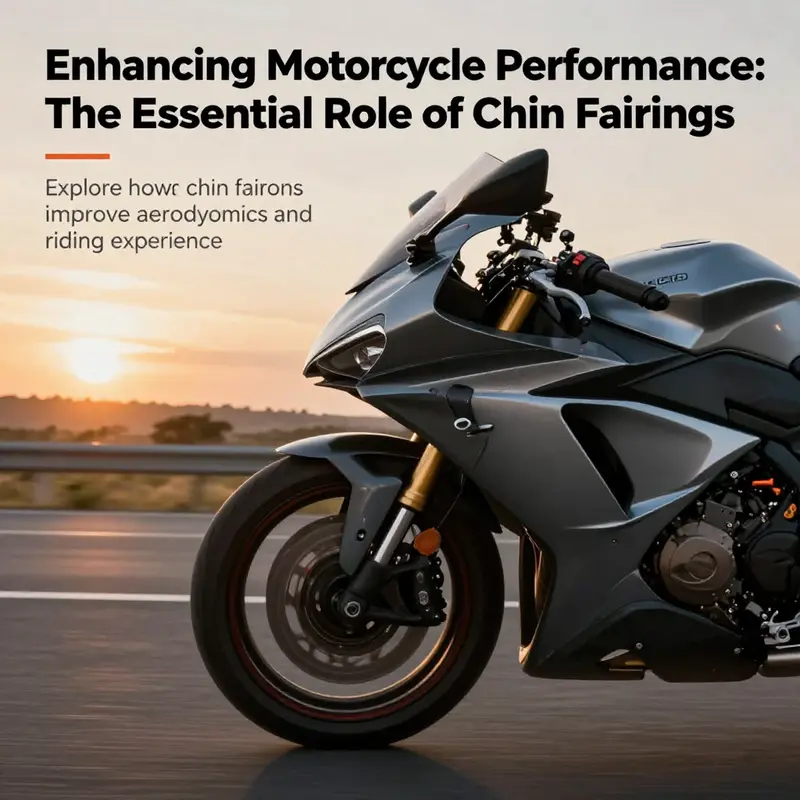
Motorcycle chin fairings represent more than just a style element; they are pivotal in enhancing aerodynamics, stability, and rider comfort. Designed specifically for motorcycles, these components influence how air travels around the bike, allowing it to cut through elements more efficiently. In this exploration, we delve into the design and aerodynamic function of chin fairings, discuss the multifaceted benefits they offer for performance and comfort, and analyze market trends that highlight their growing popularity among riders and manufacturers alike. Each chapter provides crucial insights into this vital motorcycle accessory, making it essential reading for business owners seeking to understand its value in the motorcycle industry.
Molding the Breeze: The Subtle Power of Motorcycle Chin Fairings for Speed, Stability, and Style
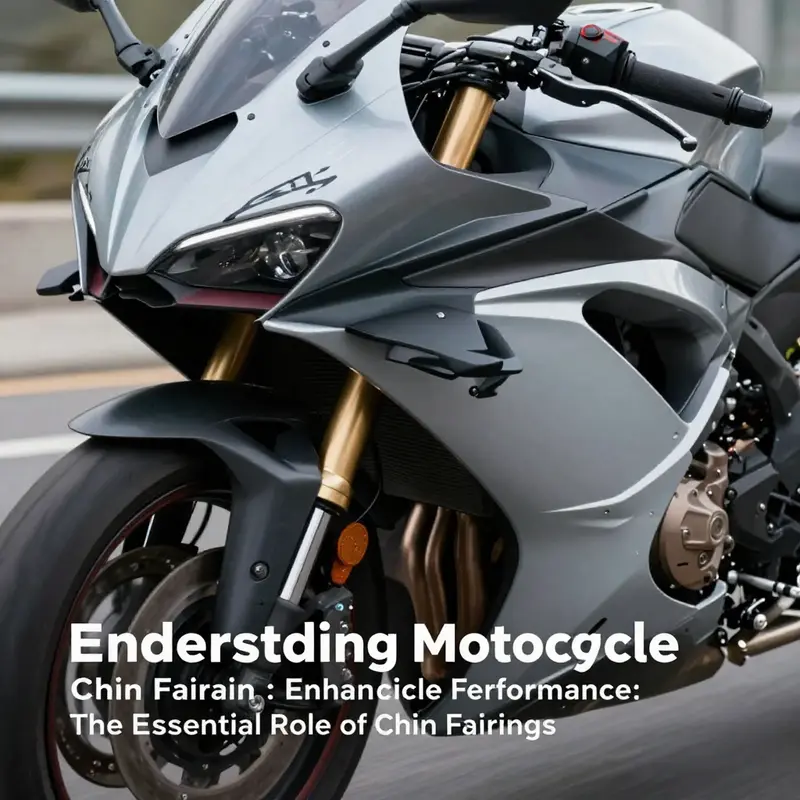
A motorcycle chin fairing might look like a modest teat of plastic wedged under the headlight, yet its bite into the air is anything but modest. It is a deliberate, sculpted piece designed to tame the air that confronts a moving front end at highway speeds. The front portion of a bike is a blunt object plowing into a continuous stream of wind, and the chin fairing acts as a micro-aero guardian, guiding that stream into a smoother path. In the simplest terms, it reduces turbulence and drag by directing air away from the front wheel and the rider’s legs, minimizing the chaotic vortices that grow behind the wheel and along the rider’s torso. This is not merely about visual polish or a marginal gain; it is about the feel of the bike at speed, the steadiness of the chassis, and the endurance of a ride that can stretch for hours with less fatigue. The chin fairing is a small component with outsized influence on how a bike behaves in gusty crosswinds, how it slices through air at high speeds, and how efficient the machine can be when the throttle is held steady on a long stretch of highway. When integrated thoughtfully with the bike’s overall frontal geometry, it becomes part of a coherent aerodynamic philosophy rather than a standalone garnish. The effect grows more pronounced the faster you ride, and the comfort gains compound over long distances where wind pressure and buffeting can wear down rider focus and control. In this sense, the chin fairing embodies a design approach that treats aerodynamics not as a single checkmark but as a continuous dialogue between front-end geometry, airflow, and rider experience. The principle is simple, yet its execution requires careful attention to shape, transition, and interaction with neighboring components such as the headlight housing, fender edges, and any intake or ducting that the bike might use as part of its cooling or venting strategy. Even without resorting to branded engineering or high-profile wind tunnel reports, the logic remains accessible: smooth the entry path for air, avoid sharp interruptions that generate vortices, and encourage the air to pass over or around the most sensitive surfaces rather than slamming into them. The payoff is a calmer cockpit, a more confident front end, and a motorcycle that feels more poised at the edge of its performance envelope. This is particularly true for sport-touring and high-performance configurations where sustained high-speed running is common; here the rider benefits from a chassis that resists flutter, a fairing that keeps the wind pressure evenly distributed across the torso, and a front end that remains easy to steer even in a chop or gust. The chin fairing, then, is not a flashy ornament but a precise instrument shaped by the same aerodynamic logic that underpins the rest of the bike’s bodywork. It sits just beneath the headlamp, tucked into the line of the lower fairing, and its silhouette is chosen to work with the bike’s overall front profile. The air that would otherwise crash into the wheel wells and the rider’s thighs now follows a controlled path, either moving upward along the fairing’s inner curve or spilling cleanly around the sides toward the intake or cooling ducts designed into the lower panel. The air flows that reach the front wheel can be a source of noise, turbulence, and unwanted lift, especially on bikes with aggressive geometry and large frontal areas. A well-designed chin fairing curtails these issues by acting as a spoiler for the flow at the bike’s nose. This effect is most noticeable once you accelerate beyond the gentle regime where many street bikes live. At these higher speeds, the air can become extremely energetic, and any separation of flow at the front end can lead to buffeting, a rising and falling pressure on the rider’s chest and legs, and a sense of the bike being buffeted by a wall of wind. A chin fairing helps by smoothing the transition from the free stream to the lower, confined geometry near the wheel, thus cutting down on the unsteady pressure pulses that travel back toward the rider. In addition to comfort, the front-end stability has a direct impact on handling. When the air flow is clean and predictable around the wheel, the rider experiences a steadier feel through the front end, which translates into more precise steering input and better feedback from the tire contact patch. This is especially valuable on long straights where tiny wind gusts can otherwise cause subtle yet exhausting micro-corrections. An aerodynamically coherent front end, in which the chin fairing plays a role, can also contribute to a slight improvement in fuel efficiency. The air that would otherwise be wasted in turbulent wake is redirected or recovered into beneficial paths, lowering the overall drag that the engine must overcome to maintain speed. While the gains from a single part may seem incremental, the cumulative effect across a rider’s journey can be meaningful, especially for those who chase steady mile-per-hour figures on highways or who value the luxury of a more relaxed ride at extended distances. Yet the value of a chin fairing is not solely about numbers. It interacts with tactile and psychological aspects of riding. A rider who feels the air flow is controlled and predictable gains confidence, and that sense of control becomes part of the enjoyment of the ride. It is the difference between a bike that feels alive and a bike that feels unbalanced or fatigued after hours of riding. The aesthetic dimension matters too. A chin fairing can contribute to the bike’s line and stance, giving the lower front a crisp, integrated look that complements the rest of the bodywork. This is especially true when the chin fairing is designed to align with the lower edges of the fairing, the radiator shrouds, and the side panels, so the transitions are smooth rather than abrupt. The interplay between form and function is a core principle here: the visual language of the bike communicates a disciplined aerodynamic intent, even to an observer who might not understand the technical details. The best designs emerge from a careful balance of function, form, and compatibility with the bike’s other aero elements. Designers and manufacturers often test candidate shapes in wind tunnels or through Computational Fluid Dynamics simulations to evaluate how air behaves around the front end. These tests help determine whether the fairing’s curves and radii are guiding air in the desired direction and whether the fairing works with the bike’s headlights and other front-end features without creating unintended glare or obstruction. The result is an integrated package where every contour serves a purpose, from the chin to the headlight to the lower fairing. In practice, a chin fairing comes in a spectrum of shapes. Some are more angular, delivering a sharp edge that can aggressively steer air away from the wheel. Others are gently curved, creating a more gradual transition that suits bikes with a softer frontal profile. The thickness and mounting geometry also vary, reflecting differences in bike design, intended riding style, and the desired balance between stiffness and weight. Materials range from reinforced plastics to composite laminates, chosen to strike a balance between impact resistance, rigidity, and weight. ABS plastic is common for many lower-cost or mid-range kits, offering durability and ease of molding. Composite options, often woven or molded from layered resins, can provide higher rigidity with a lighter weight and a premium finish. UV stability and surface finish are important considerations because the lower region of the bike is more exposed to road spray, UV light, and grime. A well-made chin fairing resists fading and cracking and maintains a consistent fit over time. The installation process for a chin fairing is typically straightforward, especially for riders who prefer not to modify the bike’s structure or electrical system. Many chin fairings are designed to bolt onto existing mounting points in the lower front bodywork. They can be a snap-in addition for bikes with matching fairings or require only minor alignment to ensure the edges meet the lines of the rest of the bike. Because many riders customize their motorcycles, these parts are often made to accommodate the space around the headlight, with cutouts or integrated brackets to avoid interference with lighting or wiring. In some cases the chin fairing will incorporate or accommodate small vent openings, drain channels, or lighting elements to maintain a clean, cohesive appearance. The goal is to integrate seamlessly with the bike’s design language so that installation feels like a natural evolution of the machine rather than an afterthought. When choosing a chin fairing, riders should consider compatibility with their bike’s existing frontal geometry, including the width and shape of the headlight assembly, the lower edge of the fairing, and the space around the fender and wheel. A precise fit is essential to prevent rubbing or misalignment that could degrade aero performance or damage components. It is also worth considering how the chin fairing will interact with other elements of the bike’s bodywork. For some riders, a chin spoiler designed to work with a particular style of full fairing or with a specific type of integrated front end will yield better aero coherence than a stand-alone piece. The broader strategy is to view the fairing as part of a field of wind management around the bike’s nose rather than as a single unit to be bolted on indiscriminately. In this sense, choosing the right chin fairing becomes an exercise in matching flow behavior, mounting geometry, and visual harmony with the bike’s complete fascia. For riders who want a ready-made sense of cohesion, the market offers a range of designs that align with common fairing families, allowing for a coordinated look without sacrificing the performance benefits that the chin fairing provides. This approach helps preserve the silhouette that riders seek while reaping the aerodynamic advantages that come from a thoughtfully designed front-end system. It is helpful to consult resources that explore the relationship between fairing design and aerodynamics, including practical guidelines on how different shapes influence drag, lift, and stability. While every bike is unique, the underlying physics remains consistent: a well-proportioned chin fairing contributes to a smoother air stream, reduces unsteady forces at speed, and supports rider comfort by minimizing buffeting. The cumulative impact—comfort, stability, and efficiency—adds up over long rides and fast freeway cruising alike. For riders who cherish the sensation of a bike that feels balanced and refined at speed, the chin fairing is a quiet but potent ally. And because technological progress in front-end aerodynamics often travels through iterative improvements across many models, it pays to stay aware of how newer shapes and multi-element front ends interact with lower extensions such as chin spoilers. The best approach is not to chase trendiness but to seek aerodynamic coherence with the bike’s overall design intent. In practice, this means evaluating how well a chin fairing integrates with the headlamp housing, the undercarriage panel, and any airflow ducts that feed cooling systems. It also means considering how the unit will fare in the real world: how it holds up to road splash, how it wears against debris, and whether its mounting hardware remains secure after vibrations and impacts. Maintenance, though often simple, matters. A chin fairing with a modular mounting system can be inspected quickly during routine service. Tightening screws and checking alignment after miles of highway exposure ensures continued performance. Cleaning the surface to remove road grime preserves the finish and preserves the smooth air path the design relies on. The rider who intends to ride in varied conditions should emphasize materials that resist scuffing and can be touched up if necessary. And while the practical benefits of a chin fairing are tangible, there is also the aesthetic dimension: a well-chosen piece can emphasize a bike’s characteristic lines, making the front end look more integrated and purposeful. In the end, the chin fairing is a small but meaningful part of a larger aerodynamic strategy. It embodies a philosophy that values flow as a partner in performance, not a passive bystander to speed. The rider who understands this will look at the chin fairing not as a single aftermarket tweak but as one piece of a broader conversation about how air behaves around a motorcycle at speed. If a rider wants to explore how a broader family of front-end components harmonizes with the chin, a visit to the online category that groups similar styling and aerodynamic themes offers a helpful reference. For example, see the Suzuki fairings category, which showcases how lower bodywork elements can align with existing front-end lines to create a cohesive aerodynamic statement. This kind of exploration helps a rider see how a chin fairing fits into the wider tapestry of bike customization, where form and function converge to deliver a smoother ride and a stronger, more confident presentation on the road. For someone seeking deeper, data-driven insight into the aerodynamic impact of fairings and air dams, the linked external resource provides a clear synthesis of theory and practical testing. It offers a structured look at how fairings influence drag coefficients, pressure distribution, and overall stability across speeds that matter for street riding and sport riding alike. The practical takeaway is straightforward: a well-integrated chin fairing can elevate both ride quality and performance, supporting a rider’s intent whether that intent is comfort over long distances, or controlled high-speed stability when the road demands it. As you consider your own machine, keep in mind that the best choice will be one that respects the bike’s design language, aligns with your riding goals, and integrates smoothly with the rest of the bodywork. Rather than chasing the latest trend, look for a chin fairing that complements the bike’s silhouette, maintains or enhances the flow of air around the wheel and down the underside of the chassis, and delivers consistent alignment with minimal maintenance. This holistic view—where the chin fairing is one element in a broader aero strategy—helps ensure that the upgrade yields real, noticeable benefits on the road, in terms of comfort, control, and efficiency, without compromising the bike’s identity or its resilience in everyday riding. In the end, understanding the chin fairing means understanding how small, well-considered adjustments to the bike’s nose can alter the course of airflow, with tangible gains for rider experience and performance. The next step is to feel the difference in real-world riding, notice how the front end behaves under different wind conditions, and appreciate how a single, well-integrated piece can harmonize with the rest of the bike’s aerodynamics to create a more confident, more capable ride. External resource: https://www.motorcycle.com/guides/how-to-choose-motorcycle-fairings-for-aerodynamics/
Under the Nose: How a Chin Fairing Shapes Speed, Stability, and Rider Comfort on Modern Motorcycles
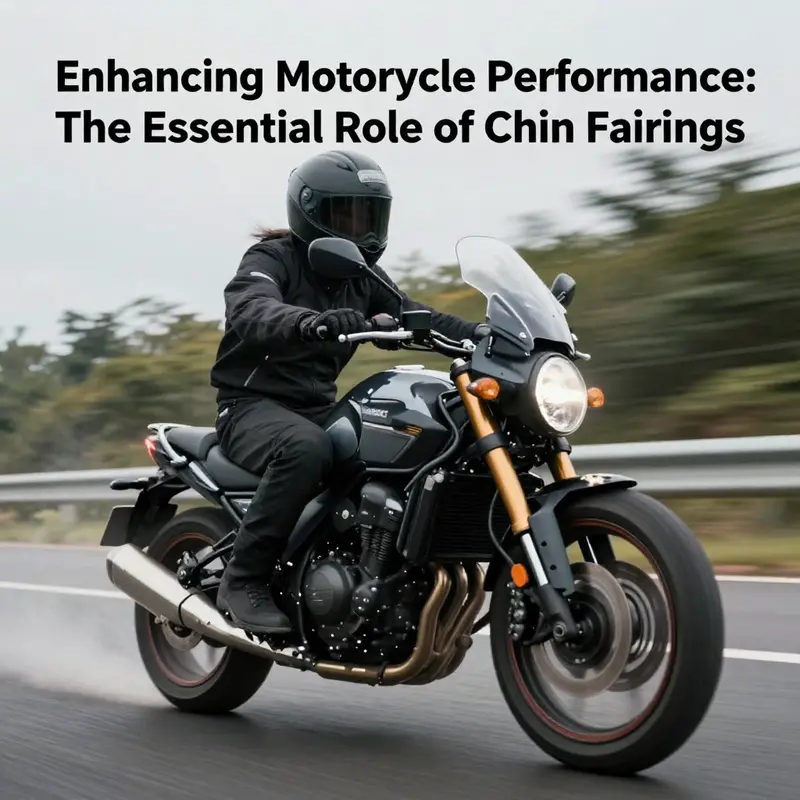
Riding a motorcycle at highway speed is as much a study in airflow as in engine temperament. The chin fairing—an aerodynamic element tucked under the forward edge of the bike’s face—appears at first glance to be a minor cosmetic flourish, a small extension that echoes the shape of a helmet’s visor or the mouth of a bird of prey. In practice, it is a carefully engineered feature that modifies how air behaves around the most exposed region of the bike: the front wheel and the lower part of the chassis. When you climb toward higher speeds, air rushing into that space no longer just passes by; it interacts with everything it encounters in its path. The chin fairing acts as a guide, a deflector, and in some designs a tiny contributor to downforce, all at once. The result is a smoother, more predictable ride that can feel almost telegraphed to the rider as the motorcycle becomes better behaved at the edge of its performance envelope. This is not merely about reducing drag; it is about shaping the entire front-end relationship between machine and wind so that the rider can concentrate on the line through a corner, the precision of a turn-in, and the calm of a stable stance on the bike’s front wheel.
To understand why a chin fairing matters, it helps to picture the front end of a sport-oriented motorcycle as an aero device in its own right. The headlight cluster, the lower face beneath it, and the opening that leads to the radiator and internal cooling channels all interact with air in a complex manner. At moderate speeds, the air flows in a relatively forgiving pattern, yet as you push past the double-digit tens of miles per hour into highway speeds and beyond, the air becomes a force that can either support stability or undermine it. The nose of the bike, if left to its own devices, can generate lift, bounce, or oscillations as air swirls around the fork seals and telescopes that connect to the front wheel. A purpose-built chin fairing is designed to redirect this flow with precision, using its shape to streamline the air and keep it off the rider’s legs and torso while also mitigating the turbulent wake behind the front wheel. The payoff is not a single metric but a blend of improved aerodynamic efficiency, steadier steering feel, and a notable reduction in fatigue caused by wind pressure during long rides.
There is a bedrock principle behind the chin fairing that guides its architecture: the air that flows around the front wheel creates pressure differentials that, if left unmanaged, can upset the bike’s steering geometry at speed. By channeling air outward and downward, the chin fairing helps keep the front end planted and the rider’s line more stable. This effect is akin to what a car’s splitter or a winglet achieves at the higher levels of performance, but it is tailored to the motorcycle’s unique dynamics. Unlike cars, motorcycles rely on a small footprint of contact patch with the road and rely on precise feedback through the handlebars to communicate with the rider. The chin fairing, therefore, is less about sheer downforce in the way a car’s aero package might generate it, and more about balancing lift and drag in a shape that reduces front-end buffeting. This yields better front-wheel traction during acceleration and through corners, which translates to improved confidence at the limit and steadier entry into turns when the speed climbs.
The aerodynamic benefits are complemented by tangible comfort improvements. Wind blast—the direct, often harsh wind pressure that pushes on the rider’s face, chest, and limbs—can induce fatigue in even experienced riders over long distances. The chin fairing acts as a shield, bending the incoming air away from the rider’s body and allowing a more relaxed posture. This matters not only for comfort but for safety; a rider who feels fatigue early in a ride tends to shift position, adjust grip, or make corrective movements that can compromise focus and control. By smoothing the wind environment at the leg and chest, the chin fairing helps the rider maintain a natural posture that reduces muscle strain and keeps attention on the road ahead. The improvement in visibility, arising from less buffeting around the head and helmet, is not merely a luxury; it is a practical enhancement that helps riders track glints of sun on wet pavement, the flicker of headlights in low light, or the subtle cues of traffic in the far lane with greater ease.
Beyond the immediate aerodynamic function, the chin fairing is often integrated into a broader aerodynamic philosophy that emphasizes harmony between the bike’s front end and the rider’s experience. In modern designs, there is a conscious attempt to couple the chin spoiler with other front-end elements so that they work as a system rather than as disparate pieces. A wider, more sculpted forecourt can be paired with a strategically shaped lower fairing to manage underbody flow, guiding air to the sides of the bike and away from the engine bay in directions that reduce drag while preserving cooling. The interplay between airflow under the chassis and the air being split around the front wheel is delicate; some designs route air through ducts and channels that ventilate the radiator more effectively, while others rely on a more passive distribution that emphasizes low drag and high stability. In either case, the objective is the same: a front end that behaves more predictably at speed, a rider who experiences less wind pressure, and a bike that feels composed in corners rather than nervous in gusts.
Of course, no aerodynamic feature is a universal fix. The chin fairing is a careful compromise between several competing demands. On the one hand, there is the drive toward greater downforce and smoother airflow; on the other, there is weight, mounting complexity, and potential consequences for cooling. A heavy chin piece can add unsprung weight and alter the front-end feel, especially if it is not counterbalanced by thoughtful integration with the rest of the fairing assembly. Designers and engineers must also consider the impact on cooling airflow. The air that passes beneath the chin has the potential to influence radiator intake and fan efficiency, and even small changes in ducting or opening geometry can alter engine temperatures during long rides in hot conditions. Therefore, the best chin fairings are not isolated appendages but elements that respond to real-world testing—wind tunnel data, CFD simulations, thermal tests, and on-road evaluation with a spectrum of riders and riding styles. The test bench may demonstrate reductions in drag coefficients, but what resonates most with riders is the feel of stability when the throttle is opened wide, the sense that the front wheel maintains its line, and the rider’s legs breathe a little easier as the wind’s pressure is redirected away from contact points.
Given the measured benefits, it is natural to consider how riders choose a chin fairing and how they adapt it to their bikes. The market offers a range of options built to fit different model families and riding philosophies. For many riders, the decision hinges on compatibility, weight, and the degree to which the wing-like shaping around the lower face enhances the bike’s aesthetic without requiring a full-scale rework of the front-end architecture. Some fairings are designed to be fitted as a modular add-on to existing full fairings, delivering the aero benefits without a radical transformation of the bike’s silhouette. Others are part of an integrated system that includes a broader front end with refined geometry to preserve clearance around the forks and radiators while still delivering the targeted airflow. In practice, a rider who values performance and comfort will weigh the marginal gains in stability and fatigue reduction against potential trade-offs in weight, cost, and maintenance. The best choices tend to be those that can be tailored to the rider’s typical conditions—urban commuting, windy highway cruising, or track days—without forcing a single solution on every scenario.
Another layer of consideration emerges when one contemplates aftermarket customization. A chin fairing can be finished in a variety of materials, from reinforced plastics to lightweight composites, offering color options and textures that complement the bike’s overall look. Some riders prefer a matte finish to minimize glare and highlight the bike’s angular lines, while others favor a glossy surface to reflect the sun and blend with a larger fairing package. The aesthetic opportunity should not be separated from function; a well-executed finish can also reduce the appearance of wear over time, preserving the fairing’s shape and the integrity of the air channels. Maintenance, too, is a practical concern. Like any exterior component, the chin fairing accumulates road grime, tar, and insect residue, and its edges and mounting points can suffer from vibrations and impacts. Cleaning should be straightforward, and mounting hardware ought to be accessible for inspection. The fasteners, grommets, and seals should withstand exposure to the elements and frequent heat cycles near the engine. A robust design includes routes and channels that minimize the accumulation of debris while still allowing for easy removal for service or adjustment. When it comes to durability, the choice of materials matters: composites resist impact better than some plastics, yet they can be more brittle in certain conditions if not properly engineered. The balance between stiffness and resilience influences how the chin fairing behaves under load, including during hard braking, emergency maneuvers, or the inevitable contact with a stray curb at low speed.
Riders who think about aerodynamics in a holistic sense will also consider how the chin fairing interacts with other components. In a system that includes an integrated, front-end architecture, the chin piece should not obscure its own airflow or disrupt the operation of the radiator. It should also complement the rider’s visibility and the bike’s lighting architecture if the design includes integrated lighting features. In such configurations, the chin fairing becomes part of a cooperative front-end language, where the shape, materials, and connections align with the bike’s overall aerodynamic strategy. The result is a front profile that looks as purposeful as it feels when the bike is in motion. For riders who value a cohesive visual and tactile experience, this synergy is often as important as the aerodynamic gains themselves. It is the difference between a cosmetic extension and a functional enhancement, a distinction that matters when a sportbike is pressed into high-speed duty or a touring bike is pushed toward the day’s end at the edge of comfort.
As with any performance-oriented modification, the decision to adopt a chin fairing should be grounded in practical testing and realistic expectations. Wind tunnel data and CFD analyses provide a language to talk about the ideas behind these components, but the rider’s direct experience offers the final verdict. Some riders report a noticeable shift in the bike’s character at speeds that once felt marginal, describing how steering feel becomes more deliberate and how the front-end feel communicates with greater clarity through the bars. Others report that the changes are subtler but still meaningful, especially during long rides where reduced fatigue translates into better concentration and safer decision-making. In either case, the chin fairing stands as a tangible reminder that the front end of a motorcycle, though compact, holds a disproportionate share of the bike’s performance potential. It is an example of how thoughtful engineering can elevate a machine’s behavior without revving the engine or altering the core suspension geometry. The best implementations are those that respect the rider’s intent, offering a refined sense of control rather than a brute change in speed or cornering power.
For riders who are just beginning to explore the world of aerodynamic enhancements, it is worth approaching a chin fairing as an investment in controllable performance. The path from concept to road involves compatibility checks with the bike’s geometry, an assessment of how air is supposed to flow through the front end, and a consideration of how the modification will age under road use. It is also a reminder that performance enhancements do not occur in isolation; they require attention to how the bike behaves in real-life conditions, including crosswinds, temperature fluctuations, and the rider’s own physical presence in the saddle. The chin fairing is a small but potent reminder that subtle changes in the bike’s shape can yield meaningful, cumulative benefits in speed, stability, and the rider’s experience of comfort. In this sense, it becomes part of a larger conversation about how modern motorcycles are designed to work with air rather than fight against it, and how riders can tune that relationship to suit their preferences and their routes.
For readers who want to dig deeper into the broader ecosystem of front-end fairings and their role in overall motorcycle performance, a broader catalog of fairing options—across brands and configurations—provides a useful resource to compare how different lines accommodate or accentuate chin-like features. If you are evaluating options for compatibility across different models or brands, explore the range of fairings that exist in the market and consider how a chin-focused element might complement or redefine the existing front-end geometry. When considering a broader upgrade, it is helpful to examine how a fairing system integrates with the bike’s electrical, cooling, and lighting systems. A well-designed chin fairing should not complicate maintenance or system access; rather, it should be an enabling component that enhances the bike’s usability and performance across a variety of conditions. As you weigh the options, keep in mind how the bike responds in corners, on straights, and in gusty winds, because those are the moments when the impact of a well-conceived chin fairing becomes most evident.
For readers who are curious about where to begin with a potential upgrade, a practical step is to assess current riding conditions and typical speeds. If you ride mostly on open highways where gusts are common and long-distance comfort matters, a chin fairing with a refined air path can provide meaningful improvements in stability and fatigue reduction. If your riding is more track-oriented, the emphasis may shift toward maximum downforce and precise front-end feedback, with weight and mounting integration taking on greater importance. In either case, the design philosophy remains consistent: control the flow of air at the front end, reduce the risk of lift, and improve the rider’s ability to stay relaxed and focused at speed. The chin fairing, in this sense, becomes a small but strategic instrument in the rider’s toolkit, one that can unlock a smoother, more confident experience across a wide range of conditions.
As this chapter has outlined, the benefits of a chin fairing extend beyond a single metric. They emerge from a careful balance of aerodynamics, rider comfort, and practical integration with the bike’s front-end architecture. They hinge on the idea that air, when guided with design intention, can support stability and reduce fatigue rather than merely impose resistance. The resulting riding experience can feel more composed at speed, more predictable on a windy day, and more enjoyable for long journeys where fatigue is a constant companion. The chin fairing thus occupies a quiet but consequential place in the rider’s world—one that rewards thoughtful selection, precise installation, and ongoing attention to how air interacts with machine and rider in the ever-changing environment of the road. For enthusiasts seeking a more nuanced, performance-minded upgrade, it is worth exploring how this seemingly modest component can reshape the relationship between rider, motorcycle, and wind, turning high-speed miles into more controlled, comfortable, and confident kilometers.
Internal link for brand-wide context: BMW fairings collection
External resource for further reading: https://www.amazon.com/dp/B0CQ5Y7XZT
Riding the Edge: Market Shifts, Innovation, and the Availability of Motorcycle Chin Fairings
The front end of a motorcycle is a crucible where performance, protection, and perception meet. The chin fairing, small in scale but large in consequence, sits just below the headlamp and ahead of the wheel to influence how air behaves as it wraps around the bike. In recent years, the market signals that drive this component have become more nuanced and ambitious. The fairing is no longer a mere shield against debris or a decorative lower lip beneath the bike’s most prominent feature. It is a purposeful aerodynamic element, designed to control separation, reduce high-speed drag, and either dampen or amplify the wind that a rider experiences at highway and race speeds. As the broader motorcycle market tilts toward bigger power, higher performance expectations, and new propulsion systems, the chin fairing rises in importance as a modular piece that can be tuned for efficiency, stability, and even rider comfort. To understand its current position and future trajectory, it helps to look at how buyers are choosing models, how manufacturers and aftermarket designers respond to evolving powertrains, and how distribution channels shape what is available to riders looking to customize their machines.
Market dynamics point toward a growing interest in larger and more capable motorcycles, with electric variants entering the mainstream alongside traditional internal-combustion platforms. This shift changes the calculus of what riders want from a chin fairing. On one hand, bigger displacement and performance-oriented bikes carry more inherent aerodynamic risk: higher speeds magnify the effects of turbulence and buffeting, particularly around the legs and torso where a rider’s feedback is most acute. On the other hand, these same machines offer more opportunity for refinements in the front-end geometry. A chin fairing can be paired with a wide-body front-end arrangement or with an integrated steering geometry to optimize airflow around the fork crowns and the wheel without compromising the access and serviceability that riders expect from modern motorcycles. In a market that prizes weight reduction and performance, the fairing’s role evolves from passive shield to active aerodynamic partner, balancing the need for downforce, clean airflow, and rider comfort.
This transitional moment is echoed in the cadence of new model introductions. The industry anticipates a surge of mid- to large-displacement offerings in 2026, with emphasis on performance enhancements, weight reduction, and affordability. Such developments influence chin fairing design in several ways. First, as new platforms push the envelope on horsepower and top speed, the fairing must keep pace with increased wind loads and more complex front-end configurations. Second, as features like smart braking systems, inertial measurement units, and connectivity become standard, fairings must accommodate sensors, wiring, and housings without compromising aero performance or reliability. Third, a growing interest in electrification introduces new aerodynamic constraints: battery packs, cooling ducts, and compact propulsion packages can alter the front-end geometry and create opportunities for tailored fairing shapes that manage flow more efficiently while preserving the appearance riders expect from a contemporary motorcycle. The result is a broader design ecosystem in which chin fairings are conceived not as standalone add-ons but as deliberate components that integrate with the bike’s architecture, from the front forks to the fairing panels above the headlight.
In practice, this means producers and designers are experimenting with fairing shapes that can be customized for different riding styles, climates, and even regional road surfaces. The adaptability of a chin fairing becomes a selling point: a rider who frequents highway corridors may value low-drag shapes that reduce fuel consumption and wind fatigue, while a track-oriented rider may seek a more aggressive profile to improve stability at high speeds and cornering confidence. The trend toward customization is not just aesthetic. It reflects a deeper engineering logic: small front-end elements can have outsized effects on overall performance when tuned to the specific mass distribution, wheelbase, and fork geometry of a given model. As with other components in the aero package, the chin fairing must harmonize with the bike’s broader air-management strategy, which increasingly includes integrated front forks and other advanced front-end configurations designed to shave seconds off lap times or extend cruising range on long rides.
The material palette for chin fairings has also expanded. Historically, reinforced plastics and composite laminates provided the best balance of strength and weight. Today, the push toward lighter, stiffer, and more durable solutions has accelerated the use of advanced composites and reinforced polymers. These materials not only shed weight but can also be shaped with tighter tolerances, allowing fairing designers to craft more precise airflow channels and more refined mounting interfaces. The durability of these materials matters, too, as front-end components encounter exposure to debris, weather, and occasional accidental contact. The modern chin fairing must resist impacts and resist fatigue while retaining clarity of finish for those riders who prize a polished appearance. Given this, manufacturers and aftermarket makers often emphasize quality control, surface finish integrity, and consistent color matching across batches to ensure that fitment remains reliable as models evolve.
One practical dimension of market dynamics is the widening of distribution channels for chin fairings and related components. The internet has expanded access to a global supply of options that can fit a broad spectrum of models. Platforms that connect buyers with aftermarket suppliers make it possible to source chin fairings and compatible lower sections even when a bike is no longer in production. This democratization of access raises the possibility that a rider can upgrade their front end with a chin fairing that borrows styling cues from high-end designs while still offering sensible fitment for a less common or older platform. Yet this expansion also presents a set of challenges. Compatibility becomes a central concern: even within a single model family, changes in front-end geometry across model years can alter mounting points, intake ducts, and wind-tunnel-tested flow characteristics. Buyers must navigate fitment data, installation guides, and, ideally, reputable testing or community feedback to avoid mismatches that could degrade aero performance or even lead to safety concerns under high-speed conditions.
Against this backdrop, the timing and reliability of availability matter a great deal. A steady cadence of production and release windows helps aftermarket suppliers plan toolings, molds, and inventory. It also helps riders who are chasing a particular aesthetic or aero target to assemble a coherent front-end setup without waiting through long backorders. The broader market signals that a rising tide of interest in larger, more sophisticated motorcycles could, in turn, lift demand for chin fairings that are versatile, robust, and able to adapt to a variety of front-end configurations. Even as the models and platforms multiply, buyers appear to be increasingly drawn to parts that offer more than surface appeal. They seek aero gains, durability in the face of road grime, and the flexibility to customize both appearance and performance as their riding needs evolve.
For those exploring the landscape of available options and contemplating how a chin fairing could integrate with other aerodynamic elements, it is instructive to consider the ecosystem around front-end design. Some bikes employ more sophisticated front-end technology, such as integrated fork components that influence how air flows around the wheel and under the nose of the bike. In these cases, a chin fairing must be conceived in concert with the broader air-management strategy—both to maintain compatibility with the advanced front-end and to ensure that the combined system delivers predictable handling. When a wind tunnel or computational fluid dynamics analysis is conducted on a new bike, the resulting data often feeds back into how the chin fairing is shaped, where it vents, and how it interfaces with other fairing panels. This collaborative design approach helps ensure that the chin fairing doesn’t merely sit in front of the wheel; it participates in a precise interplay of forces that shape stability, drag, and rider sensation at high speeds. The net effect is that the availability of chin fairings becomes a proxy for the health of the broader aero culture surrounding modern motorcycles: it signals the willingness of the market to invest in continued aerodynamic refinement, even as propulsion and electronics undergo rapid evolution.
From a consumer perspective, the stories behind chin fairings are intertwined with the narratives of customization and identity. Riders increasingly plan their builds with a clear aero and aesthetic target in mind. They may seek a lower, more streamlined silhouette to reduce drag, or they might prefer a bulkier, more sculpted profile to emphasize a certain brand identity or personal style. The choices are not only about looks; they reflect a rider’s tolerance for wind pressure, noise, and fatigue during long rides. The chin fairing thus becomes a focal point for balancing comfort and performance. It is common to hear enthusiasts talk about how a small change at the front can improve the ride dramatically, particularly on longer journeys where wind buffeting adds fatigue and distracts from the experience of riding. In this sense, chin fairings function as a bridge between the rider’s comfort and the machine’s performance envelope, tying together how the bike moves through air with how it feels to ride it.
As the market continues to mature, one practical implication for prospective buyers and builders is the importance of compatibility and fitment information. A well-constructed chin fairing needs to fit a specific headlight shape, a set of mounting points, and a front-end geometry that may differ across years or regional variants. The best options provide clear guidance about model compatibility, mounting hardware, and any required modifications. Where possible, manufacturers and retailers lean on shared standards and documented tolerances to minimize installation challenges. Where standards diverge, buyers are left to carefully assess whether a particular fairing will work with their bike’s unique geometry or whether bespoke adaptation is necessary. In this sense, the availability narrative is also a narrative about reliability in the aftermarket: better documentation, clearer fitment charts, and more accessible installation guidance all translate into a smoother, more satisfying upgrading experience for riders who pursue aero improvements.
The broader implication for the community around motorcycle chin fairings is the opportunity to connect with like-minded riders who value performance and personalization. Online communities, forums, and social channels often become accelerants for knowledge sharing—from testing impressions of different aero configurations to comparing installation approaches and long-term durability. The diversity of voices contributes to a more nuanced understanding of what works in different circumstances, whether a rider is chasing ultimate speed on a track-day surface, seeking improved comfort on a long highway ride, or simply wanting to refresh the appearance of an older machine with a modern, aero-conscious aesthetic. This social dimension complements the technical discussion, helping to ground the market trends in real-world experience and shared experimentation.
For riders who want to explore options without committing to a full front-end rebuild, chin fairings offer a modular path to adaptation. A well-chosen lower fairing component can be swapped or complemented with a different set of panels to adjust the aero balance subtly. In some cases, the same fairing can be tuned for different riding seasons by altering venting or adding small diffuser features. The result is a degree of adaptability that aligns with the evolving preferences of riders who value both performance and personal expression. The availability of such modular pieces is closely tied to the health of the aftermarket supply chain: the more robust the supply, the easier it is to try new configurations, refine air-management strategies, and iterate toward an optimal setup over time. In this sense, the chin fairing emerges not only as a product but as a component of a dynamic practice: the practice of continuous improvement through experimentation, data, and shared expertise.
Within this evolving landscape, it is instructive to keep an eye on how the broader market signals affect accessory ecosystems. If larger displacement and electric models maintain their upward trajectory, a robust demand for aerodynamic refinement will likely persist. This could incentivize manufacturers to offer more model-specific chin fairings or to design highly adaptable lower ends that can accommodate a wider range of front-end geometries without sacrificing aero performance. It may also encourage more collaboration between chassis engineers and aero specialists, leading to more rigorous testing and more precise guidelines for fitment and performance. For riders, this translates into more options that deliver measurable benefits, not just cosmetic improvements. And for retailers, it signals the importance of carrying a curated mix of products that can safely and effectively enhance the front end of a bike in ways that are compatible with a wide range of models and riding preferences.
As a closing reflection on market trends and availability, the chin fairing stands as a telling indicator of how far the motorcycle industry has come in embracing aerodynamics as a core element of performance engineering. The small, often overlooked piece at the bike’s front is now part of a broader conversation about how to balance weight, efficiency, stability, and style in a rapidly changing world of propulsion, electronics, and connected technologies. It is a reminder that innovation in motorcycle design rarely happens in isolation. Instead, it unfolds through a continuous dialogue among riders, designers, engineers, and retailers who share an interest in making the ride better—more predictable, more efficient, and more enjoyable. For readers who want to explore how different brands approach the broader category of front-end fairings and related components, an illustrative catalog of options can be found in the BMW fairings collection linked here. BMW fairings.
External resources can deepen understanding of the aerodynamic principles that underlie chin fairing design. For foundational concepts of how airflow interacts with a motorcycle’s front end, see the resource on aerodynamics. https://en.wikipedia.org/wiki/Aerodynamics
Final thoughts
Motorcycle chin fairings are indispensable for enthusiasts and manufacturers alike, offering substantial benefits in aerodynamics and rider experience. They not only improve the overall performance of motorcycles but also provide opportunities for customization and aesthetic enhancements. As market trends evolve, offering a diverse range of chin fairings can cater to a growing demand among riders seeking both style and functionality. Embracing the chin fairing concept can position businesses effectively within the competitive motorcycle industry, ensuring they meet end-users’ needs while promoting superior riding experiences.