
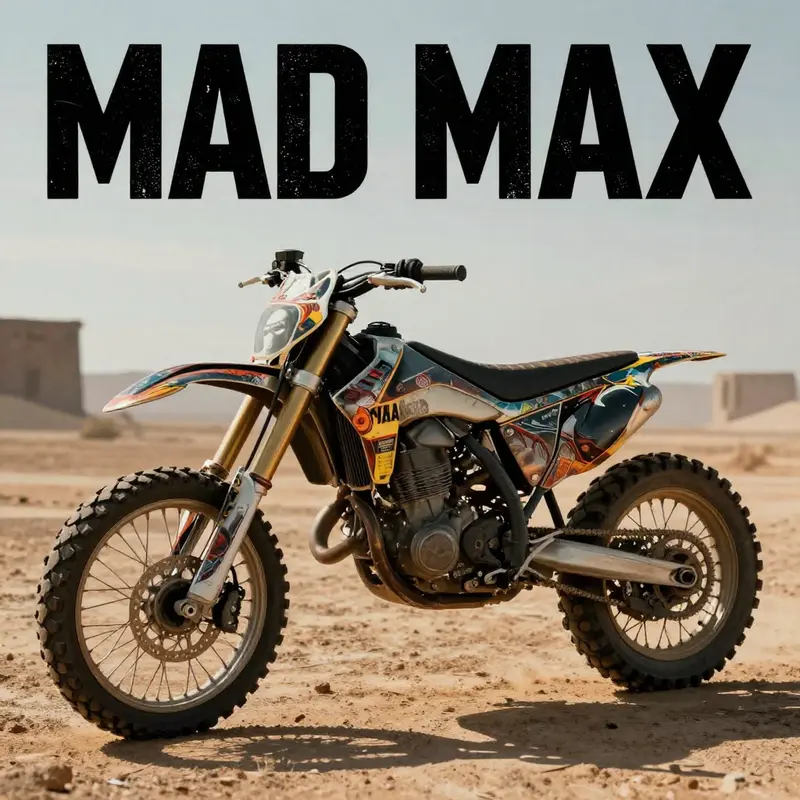
The world of Mad Max is not merely a backdrop for action; it is a meticulously crafted universe where every detail contributes to the narrative of survival and resilience. Central to this vivid landscape are the distinctive motorcycle fairings that symbolize the characters’ rugged individuality and adaptability. Throughout this exploration, we will delve into the design evolution that defines these fairings, examining the materials that give them life, their cultural resonance within customization and collecting communities, and their pivotal role in character development within the films. Each chapter will build upon the last, giving business owners insights into how they can tap into this rich area of design and culture to engage with modern motorcycle enthusiasts and collectors.
Armor and Attitude: The Mad Max Motorcycle Fairing as Post‑Apocalyptic Statement
Armor and Attitude: The Mad Max Motorcycle Fairing as Post‑Apocalyptic Statement
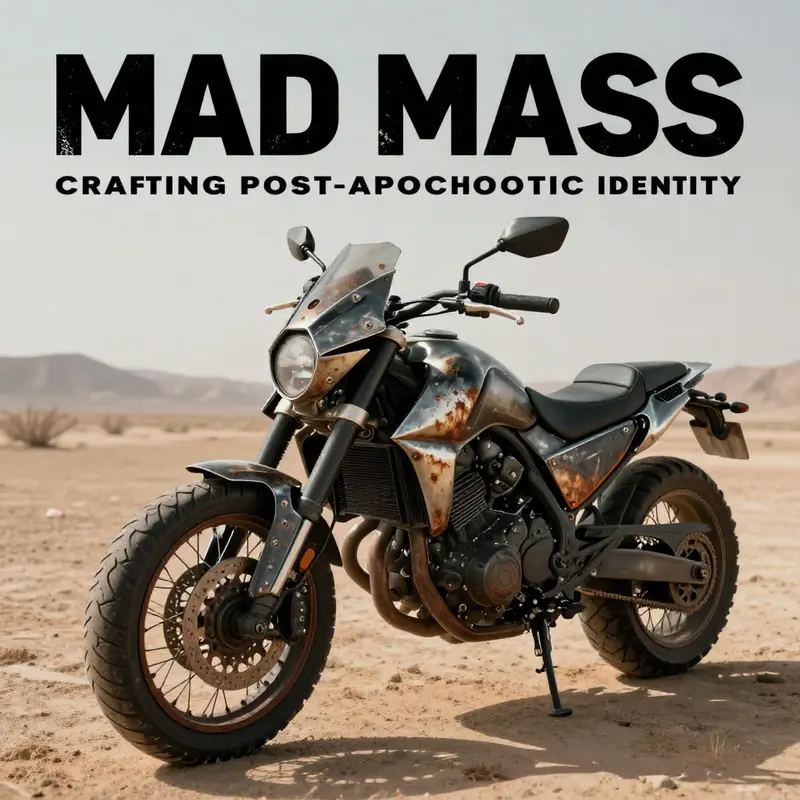
The fairing seen on the motorcycles in the Mad Max universe is more than a protective shell; it is a deliberate language of survival. In a landscape stripped of law and resources, every surface becomes a signal. The jagged plates, welded seams, and asymmetrical silhouettes of these fairings speak of necessity, aggression, and identity. They are improvisational armatures grafted onto machines meant to be fast, loud, and imposing. That visual vocabulary—raw, mechanical, and utterly unapologetic—redefines what a motorcycle can communicate. Instead of polished symmetry and aerodynamic finesse, the fairing broadcasts a philosophy: form follows fight.
At first glance the fairing’s construction appears random, a patchwork of scrap and spanners. Look closer and the choices reveal themselves. Metal sheets bent to form sharp beaks offer splash and wind deflection for the rider, while also functioning as crude armor against debris and blows. Bolts and rivets are not hidden; they are celebrated as ornament. Where modern fairings conceal fasteners and smooth transitions, Mad Max designs expose joints, turning structure into decoration. This exposed-architecture aesthetic reinforces a world where nothing is expendable and every attachment is intentional. Paint jobs, when present, are muscular, aggressive: rusted iron, scorched steel, and blood-red streaks. Each mark reads like a map of past encounters—scrapes from collisions, scorch marks from exhaust, stains from repairs—proof that the machine earned its look in the field.
The asymmetry that defines many Mad Max fairings does important narrative work. A lopsided shield suggests an on-the-go retrofit, a quick adaptation after a skirmish. It also interrupts expectations. Humans instinctively read symmetry as calm and order. Asymmetry, by contrast, implies urgency, improvisation, and unpredictability. In the wasteland, predictability is deadly. A rider whose machine looks improvised and dangerous advertises the capacity for violence and the unwillingness to be trifled with. The fairing thus functions as both armor and psychological deterrent.
Beyond intimidation, these fairings recast the motorcycle as a mobile bastion. Unlike civilian sport fairings optimized for wind management and rider comfort, Mad Max fairings prioritize protection and utility. Plates are angled to deflect objects and blunt strikes. Protruding ribs and spikes create barriers that discourage boarding and close contact. Some fairings incorporate mounting points and racks for tools, weapons, or spare parts. The motorcycle becomes a pack animal, a combat post, and a workshop. This multipurpose approach reflects the scarcity-driven ingenuity of the setting: a single vehicle must serve transportation, offense, defense, and storage.
Designers who worked on the films treated each fairing as an extension of character. The machine is a character. The Nightrider’s bike, for example, blends elegance with violence—streamlined enough for speed but spiked and scarred with a predatory attitude. The visual choices inform backstory without a single line of dialogue. A battered, heavily armored fairing implies a veteran rider who values survival above style. A more ostentatious fairing, laden with trophies and painted slogans, implies a rider who seeks status through aggression. This is important for a world where spoken words are scarce and grand gestures are cheaper and more convincing than conversation.
The aesthetic choices also reflect a philosophical stance toward materials. Salvage becomes sacred. Metal once part of a car or container gains new life as plating, brackets, or decorative teeth. Leather straps and canvas patches hold components in place while adding texture and a handmade sensibility. Welding scars are trophies; visible caches of bolts and nuts are evidence of fieldcraft. In recreations outside the films, this approach inspires makers to blend authentic reclaimed parts with modern manufacturing techniques. Designers often use carbon fiber or aluminum to mimic the look while keeping weight down—a compromise between film authenticity and real-world performance needs. The result is an object that reads as brutal and handmade while still functioning safely on public roads.
That compromise between aesthetics and function is where contemporary builders and enthusiasts find the most creative energy. The Mad Max fairing has become a touchstone for custom motorcycle culture. Builders borrow the aggressive lines, distressed finishes, and improvised hardware, then reinterpret them using modern tools. CNC-cut panels can reproduce the chaotic geometry of a movie prop but with precise fitment. Powder-coated finishes allow for controlled patinas that suggest age without compromising corrosion protection. Modular mounts and removable panels let riders switch between show and street configurations. This adaptability preserves the fairing’s narrative heft while meeting regulatory and safety requirements. For collectors and cinema fans, the balance between authenticity and usability defines the best reproductions.
The fairing’s influence extends beyond motorcycles. Its aesthetic has seeped into fashion, graphic design, and interactive media. Video games borrow the silhouette language to signal post-apocalyptic factions. Clothing lines echo the leather-and-metal textures. Even automotive concept design sometimes references the rough-hewn, reclaimed appearance to convey rebellion or raw power. This cross-pollination makes the fairing a cultural shorthand: a quick way to indicate a setting where civilization is fragile and survival is performed openly.
For workshop builders, the practical lessons of Mad Max fairings are instructive. Start with a clear function for each element. A spike should either impede boarding or serve as a grab point—not just exist for decoration. Plates should be attached so they can be removed for maintenance. Weight distribution matters; heavy armor on the front can destabilize steering. Using modern materials where appropriate reduces compromise without erasing character. For example, reinforced ABS or thin-gauge aluminum can be shaped and distressed to look like thick iron while saving weight. Fasteners that look primitive can be true high-strength components hidden beneath faux rivets. These techniques allow builders to honor the aesthetic without sacrificing rideability.
Collectors who commission film-accurate replicas often face decisions about provenance versus performance. A screen-used piece carries cultural and monetary value but is impractical for regular riding. Replicas, conversely, invite creative freedom. Builders can optimize for ergonomics, visibility, and legal compliance while retaining the aggressive silhouette. Whether aiming for exact cinematic fidelity or a personal interpretation, the goal is the same: a fairing that tells a story every time the rider appears on the horizon.
The fairing’s narrative power also stems from what it conceals. Helmets, goggles, and layered clothing complete the ensemble, rendering the rider anonymous and mythic. The bike becomes an avatar. It amplifies the rider’s presence and projects an ideal—an image of self-reliance and deterrence. In that sense, the fairing participates in a larger ritual of identity construction. Riders curate scars and slogans, add trophies, and create a persona that traffic lights and speed limits cannot erase. When a machine rolls by with a plate of jagged steel jutting from its nose, the world understands something immediate about its occupant: they are ready for conflict and have made a life where appearance matters more than reputation.
Finally, the Mad Max fairing endures because it redefines beauty for a specific context. Traditional design prizes smooth lines, efficiency, and harmony. The wasteland demands different criteria: durability, intimidation, and adaptability. Beauty becomes a function of story and survival. A dent or a scorch mark is aesthetically valuable because it signifies experience. This reframing invites a broader conversation about how objects inherit meaning from use and narrative. The fairing is not only a piece of motorcycle hardware; it is a mobile repository of memory, a statement of principle, and a mode of theater rolled into one.
Builders, fans, and designers will continue to draw inspiration from this language of reclaimed metal and visible repair. Whether reproduced with modern composites or assembled from rusted parts, the fairing’s core message remains unchanged: in a world reduced to essentials, design must shout. It must protect, persuade, and proclaim. The fairing does all three, making it an icon not simply of a film, but of an aesthetic that transforms scarcity into statement.
For those interested in modern fairing options that bridge classic silhouettes and contemporary fitment, exploring model-specific fairing categories can spark ideas; a useful place to start is a collection focused on YZF fairings: https://ultimatemotorx.net/product-category/yamaha-fairings/fairings-for-yzf/.
Further reading on the film designers’ intentions and construction techniques can be found in interviews with the creators: https://www.cnet.com/roadshow/news/mad-max-fury-road-bike-design-creators-interview/.
Rusted Armor: Material Alchemy Behind Mad Max Motorcycle Fairings
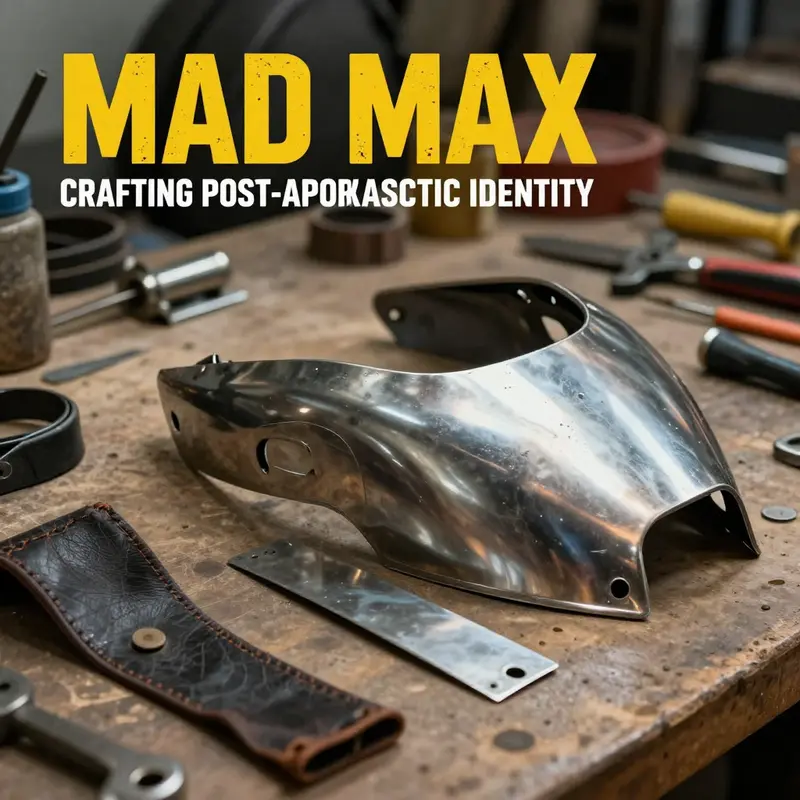
The Mad Max universe has always translated scarcity into style, turning every motorcycle into a mobile sculpture of survival. The fairing, that sweeping shield around the rider and engine, is the most visible marker of this ethos. It is not a mere aerodynamic shell but a statement forged at the edge where function and memory collide. In the post apocalyptic wilds of the films, the material palette of these fairings reads like a diary of reclamation. Fiberglass dominates the narrative, but it is never alone. Custom fabricated components, ABS plastics, and stubborn bits of metal converge to create something that feels built, not bought, and ready for whatever the desert can throw at it. The result is a look of controlled aggression, a balance between armor plate and sculpture. The material choices are as telling as the shapes themselves, signaling a design philosophy that prizes rugged resilience, ease of repair, and the ability to adapt. The description of these materials, even in a documentary or prop sense, becomes a guide to how a modern builder can approach a replica or a tribute that honors the original while speaking to contemporary hands and garages. In a sense, the Mad Max fairing is a mechanical fossil, a record of a world where every ounce of mass and every sharp edge has earned its place through use and weathering. Fiberglass is the backbone, the material that makes the aggressive lines feasible. Its versatility allows the creation of the famous toe cutter silhouette, those brutal, angular facets that slice the horizon as the bike drives toward the sand. Builders mold fiberglass in deliberate, labor intensive steps. They begin with a mold, usually a precise replica or a stylized interpretation of the film design, and lay up layers of glass and resin to build up thickness. The white gelcoat that covers the outside surface is both a protective shell and a canvas. It accepts weathering, chips, and scratches with a kind of honest fidelity. The edges are often cut back, revealing a raw, rugged seam line that reads like a scar from a hard winter. This technique is not merely cosmetic; it shapes the perceived materiality of the fairing. The surface reads as durable even when the light catches it in just the right way, and that durability is a narrative device in its own right. The white gelcoat helps the edge lines stay crisp, preserving the geometric language of the design long after exposure to sun, sand, and wind has begun to erase the softer details. Fiberglass also supports a sense of weight, a tactile reminder that this is armor meant for battles in a harsh landscape, not a featherweight showpiece. The texture created by hand layups, the slight waviness of cured layers, and the occasional imperfection are not flaws but features. They tell a story of hands shaping the material precisely where the world around them was chaotic. The material invites a painterly approach; the surface can be weathered, stamped with patina, or treated with rust-style finishes that mimic the look of decades of exposure. The dialog between color and texture is essential to achieve the quintessential Mad Max aesthetic. A coat of pigment may be deliberately uneven, with darker crevices catching dust and lighter zones catching sun. The patina is not accidental; it is a design choice that communicates the environment in which the machine operates. In many ways, the fairing becomes a canvas for narrative as much as for form. The metallic glints and dull, oily shadows evoke the mechanics beneath and the desert around. ABS plastic appears as a supporting actor in this drama. It is cost effective and easy to reproduce for smaller, lighter sections or for factory style mimics that need to fit with fiberglass features. ABS parts can be added to replicate certain shapes while preserving the essential rugged profile. For a builder who wants to maintain the filmic silhouette without the risk of heavy weight, ABS offers a practical compromise. It is also forgiving in the workshop, lending itself to modifications and quick repairs should a panel sustain a dent during a show ride or a photo shoot. Polycarbonate then picks up the baton where the windscreen and shield elements require superior impact resistance. In the Mad Max world, visibility is crucial, yet the rider must be protected from the hazards of debris, heat, and sand kicked up by a rough ride across the wasteland. Polycarbonate is favored for windshields because it resists cracking and retains clarity over time. Its clarity helps maintain a sense of presence, even as the rest of the bike wears its patina. The translucent shield lets light pass through in a way that emphasizes the aggressiveness of the rest of the fairing without diluting the vehicle’s stance. Metal elements, often steel brackets or tubing, are the quiet backbone that holds the entire ensemble together. The world depicted in the films is unforgiving, and so the mounting system must feel secure enough to survive long stretches across harsh terrain. Metal reinforcements provide torsional rigidity, distribute stress, and anchor the fairing to the frame. This is not a cosmetic choice; it is essential engineering that ensures each scrap of armor remains in place during vibrations, jolts, and the occasional crash that would be inevitable in such a rough setting. The interplay between fiberglass shells and metal supports gives the build a tactile resolve. The eye perceives a barrier against danger, while the hand understands the strength that keeps it attached to the machine. Design considerations for these fairings revolve around more than pure aesthetics. The Mad Max look embodies an extreme form of utilitarian design in which minimalism is weaponized. The fairing is stripped of unnecessary trim while retaining vital features—a striking balance of form and function. The metal core and the layered composites allow for a certain rebellious practicality. Modifications that builders commonly pursue include removing original plastics, exposing the substructure, and replacing stock fenders with rugged, stripped-down versions. Fuel tanks may be altered to sit closer to the silhouette or to create a more aggressive stance when viewed from the side. The result is a silhouette that reads as both handcrafted and battle-ready. In this context, the choice of materials relates directly to how the bike will be used. For a show build or a film prop, the emphasis may tilt toward spectacle and durability in display environments. For a rider seeking performance in a desert rally, the emphasis shifts toward ease of maintenance and the ability to repair with scavenged parts. Fiberglass is forgiving in the latter sense; it can be repaired in the field with resin, cloth, and patches that a rider might carry as spares. The combination of materials also has implications for weight and handling. While the Mad Max fairing is not designed to set speed records, its mass and rigidity matter in how the motorcycle behaves when skimming across hot sand or when braced against a gusting wind. The aesthetic choice often prioritizes a look of raw strength over pure aerodynamic efficiency. Yet, this is not a rejection of performance; it is a deliberate redefinition of performance for a world where speed is measured not only by mph but by endurance, improvisation, and the ability to survive the journey. The legacy of fiberglass in these builds is a reminder that the past speaks through the present in material form. It allows craftspeople to shape angular planes that would be impractical with smoother, more modern composites. The edge lines, the sharp facets, and the slightly imperfect edges convey the sense that the fairing has weathered more than time. They imply stories about heat, rust, and hours under a rough brush, and they invite observers to imagine the prying eyes of a desert sun or the roar of a machine in a windstorm. The final finish often embraces this narrative. Weathering effects are applied with pigments, washes, and dry brushing to highlight recesses and to evoke chipped paint, rust blooms, and oil smears. The goal is to evoke a living surface that appears operated by hand, not manufactured in a sterile factory. The combination of glass fiber, ABS, polycarbonate, and metal yields a build that can be both iconic and practical. It gives the rider a sense of protection, while the viewer senses the underlying philosophy of scarcity transformed into something intensely expressive. It is a study in making do with what exists, turning discarded scraps into a coherent, intimidating presence on the road. For builders who want a ready-made reference to the film world while staying within a contemporary workshop, there is value in examining how these materials have historically been used, how they age, and how they can be manipulated to achieve a similar effect. To explore how modern aftermarket options can be integrated without sacrificing authenticity, one can browse the collection of fairings for various models, such as the fairings-for-bmw-s1000rr. This resource provides a sense of how contemporary manufacturers and independent shops approach the logistics of reproducing shapes and textures that recall the Mad Max aesthetic while remaining serviceable for display or riding. The modern fairing ecosystem, with its mix of fiberglass, ABS, and metal hardware, offers a blueprint for how to translate cinema prop language into a practical, rideable object. It makes clear that the Mad Max look is less about a single material formula and more about a disciplined layering of choices: a sturdy base, a tactical overlay, and a weathered patina that tells a story of use and resilience. The interplay of these elements, anchored by fiberglass, lets designers push the envelope in angular geometry without losing sight of the practical necessities of mounting, protection, and repair. In the end, the Mad Max fairing is a manifesto of resourcefulness, a kinetic sculpture that reminds us that the road can be both harsh and poetic. It invites builders to treat material choice not as a constraint but as a creative instrument, capable of shaping a narrative as strong as the machine itself. As the desert winds drift past, the bike stands as a living artifact: a motorcycle that looks as if it could have crawled out from a shattered world and punched its way toward the horizon. The next chapter will delve into the weathering process—the tactile craft of aging the surface to achieve the filmic, post apocalyptic glow while preserving the integrity of the underlying structure. External reference: https://www.bikeexif.com/mad-max-motorcycle-guide-what-to-look-for-in-a-replica/.
From Screen to Showroom: How Mad Max Motorcycle Fairings Shaped Custom Culture and Collecting
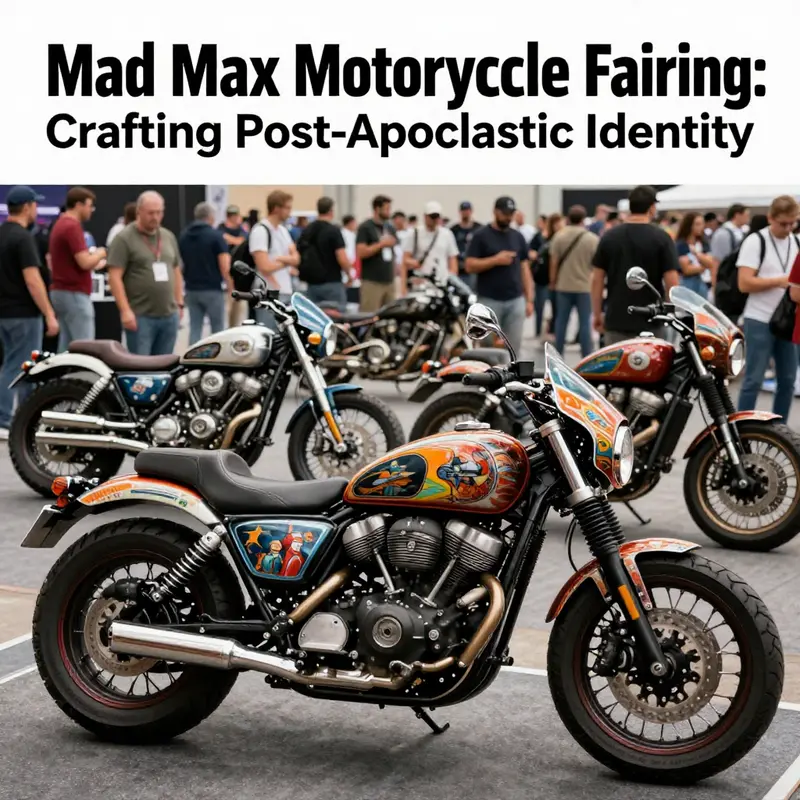
Mad Max motorcycle fairings did more than decorate film bikes; they rewired how riders, builders, and collectors imagine the machine as a cultural object. The jagged plates, welded braces, and weathered paint seen on screen distilled a visual language of scarcity, aggression, and survival. That language passed into the streets, workshops, and auction halls, where it now informs aesthetic choices, market values, and even the politics of customization. This chapter traces how those cinematic fairings migrated into real-world practice, why they resonate so strongly with builders and collectors, and how their presence has reconfigured the ecosystem around custom motorcycles.
The appeal begins with narrative resonance. A Mad Max-style fairing does not sit on a bike as mere ornament. It reads as shorthand: a story of resourcefulness, a manifesto against polished conformity. Builders adopt the look because it signals a set of values—practical improvisation, refusal of glossy consumer finish, and a readiness for conflict. Those values align with long-standing strands of motorcycle culture, where individuality and mechanical autonomy matter. Yet the Mad Max aesthetic intensifies these themes. The fairings are extreme expressions of a do-it-yourself ethic, where salvaged sheet metal, rivets, and crude armoring are elevated into a coherent visual argument. When a rider mounts such a machine, the bike becomes a moving declaration of identity.
This identity operates on two levels: aesthetic identity and cultural critique. Aesthetically, the uneven silhouettes and asymmetrical armor disrupt expectations formed by factory shapes and aerodynamic logic. Function gives way to semiotics—the fairing becomes a visual statement that the bike belongs to another logic. Culturally, those visuals echo anxieties about collapse, scarcity, and the limits of institutional protection. Riders and builders who embrace the style are often not simply chasing a trend; they are engaging with a mythos that asks what it means to persist when systems fail. That mythos also offers a form of empowerment: by transforming detritus into defense and display, makers reclaim agency.
The spread of this aesthetic into customization circles relied on multiple vectors. Film stills and promotional imagery provided clear models, but the deeper transmission happened through custom bike shows, social media, and maker forums. Builders documented their processes: cutting, shaping, patinaing, and mounting. These how-tos demystified the techniques and invited imitation. Workshops began to hybridize the brutalist look with functional upgrades: behind the battered plate, high-performance brakes, upgraded suspension, and modern engines quietly improved reliability. That blending—raw form wrapped around competent engineering—allowed more riders to adopt the look without sacrificing rideability. The result was a new subset of custom builds that married theatrical impact with mechanical sense.
Collectors responded to those builds in a different register. Where builders value performative utility, collectors value provenance and narrative continuity. Fairings from the original films, especially early-era pieces, carry a theatrical authenticity that is hard to reproduce. These items become artifacts of a shared cultural story: relics from a cinematic world that tapped a deep vein of mythic resonance. Because original screen-used fairings were often made from ephemeral materials and were modified during production, surviving pieces are rare. That rarity elevates their status in the collector market. Demand follows scarcity, and the auction rooms and private sales where such pieces change hands often treat them more like movie props than automotive components.
Yet the market offers alternatives. Reproductions and reinterpretations proliferated to satisfy enthusiasts who want the aesthetic without prohibitive prices. Dedicated manufacturers now offer plug-and-play fairings that mimic the silhouette and surface treatment while using modern materials like reinforced plastics or aluminum alloy. These reproductions democratize access: a wider range of riders can mount a Mad Max-inspired fairing on a common chassis and enter events or shows. The existence of replicas also shifts how collectors appraise originals. Where once an original might have been the only route to authenticity, plateaus of reproduction force collectors to look deeper—examining tool marks, paint stratigraphy, and documented chain-of-custody to separate true artifacts from well-made copies.
This tension between authenticity and accessibility fuels a vibrant subculture of preservation and curation. Enthusiasts form networks to exchange knowledge on identifying genuine elements. Workshops and museums that curate movie vehicles emphasize documentation: photographs from production, workshop logs, and correspondences that verify a piece’s provenance. That rigor has elevated the discourse around film motorcycles, borrowing methodologies from classic car and movie prop collecting. At the same time, community-driven directories and marketplaces help prospective buyers find reputable reproductions. These resources create a layered market where collectible originals, high-quality replicas, and creative reinterpretations coexist.
The visual grammar of Mad Max fairings has also influenced broader design trends in custom motorcycle fairs and exhibitions. Where once clean restoration or cafe-racer minimalism dominated show floors, judges began to allocate space for narrative-driven builds. Themed categories emerged, celebrating dystopian motifs, salvage aesthetics, and cinematic tributes. This institutional recognition legitimized the style and encouraged experimental crossovers: consider a sportbike chassis fitted with a rusted, welded fairing, or an old cruiser reimagined as a desert raider. Such hybrids challenge traditional criteria for judging craftsmanship. They foreground storytelling and emotional resonance alongside fabrication skill.
Within DIY communities, the Mad Max aesthetic accelerated interest in mixed-media fabrication. Builders combined metalwork with leather, rivets, and reclaimed signage, expanding the vocabulary of motorbike customization. Skills such as gas welding, patterning, and faux-aging became mainstream among hobbyists. Workshops that once specialized in polishing and repainting adapted to teach distressing techniques and appliqué of found objects. This know-how spread through workshops, YouTube tutorials, and maker meetups, leading to a broader cultural effect: mainstream acceptance of visible repair and patina as a stylistic choice.
The politics of taste around these fairings are revealing. Critics sometimes dismiss the look as parody or pastiche—flashy but insubstantial. Supporters counter that the style performs a cultural critique, revealing how scarcity aesthetics can serve as a canvas for resilience. The debate mirrors larger discussions about authenticity in art and consumer goods. Is a fabricated relic that tells a convincing story less meaningful than an original that lacks context? Those arguing for narrative over artifact claim that the affective response—how a motorcycle makes us feel and what it prompts us to imagine—matters as much as provenance.
This rhetorical shift influences how museums and curated shows present Mad Max-influenced machines. Rather than isolated display cases, curators place these bikes within narrative installations—soundscapes, projected imagery, and interpretive panels that situate fairings within a larger commentary on industrial detritus and cinematic myth. Such displays invite viewers to consider the cultural currents that brought a fictional aesthetic into real-world practice. They also help preserve the intangible aspects of the style: the stories, methods, and philosophies that gave rise to those battered plates.
On a pragmatic level, adopting the Mad Max aesthetic affects how bikes are built and maintained. Aesthetics that celebrate rust and damage may complicate resale and insurance. Rideability considerations require careful routing and sealing to prevent corrosion from degrading structural elements. Builders who want the look must therefore reconcile performative choices with engineering realities. That negotiation has prompted innovative solutions: patina coatings that look authentically weathered but resist active corrosion, modular fairings that bolt on without compromising frame integrity, and lightweight replicas that mimic solidity without excessive mass. These technical developments reflect a market adaptation to aesthetic demand.
The cultural lifecycle of Mad Max fairings continues to evolve. As new generations discover the films and their imagery circulates through digital platforms, reinterpretations proliferate. Designers who grew up on the films now approach the aesthetic with different priorities: sustainability, for instance, encourages upcycling rather than manufactured replicas. Others fuse the style with contemporary trends, creating cleaner, more minimal interpretations that retain the spirit of improvisation but with refined lines. The result is a living aesthetic that is adaptable and generative.
For collectors, builders, and casual fans, the fairing functions as a touchstone. It connects individual acts of making and collecting to a broader cultural narrative about survival, identity, and the aesthetics of ruin. Whether mounted to a weekend build or preserved behind glass, the fairing retains its power to provoke and to inspire. It challenges us to ask what we value in our machines: the sheen of originality, the force of a story, or the joy of transformation. In that question lies the ongoing appeal of Mad Max motorcycle fairings.
For those interested in how to distinguish originals from replicas and what to look for when acquiring a fairing inspired by the films, a detailed practical guide offers helpful criteria and provenance tips: https://www.bikeexif.com/2026/01/mad-max-motorcycle-guide-what-to-look-for-in-a-replica/.
For builders seeking parts that fit modern chassis, many suppliers now offer compatible fairings and kits. One place to explore contemporary fairings for a variety of models is the Ducati fairings collection, which demonstrates how aftermarket panels adapt film-inspired motifs to modern bikes: https://ultimatemotorx.net/product-category/ducati-fairings/.
The Role of Mad Max Motorcycle Fairings in Film and Character Development
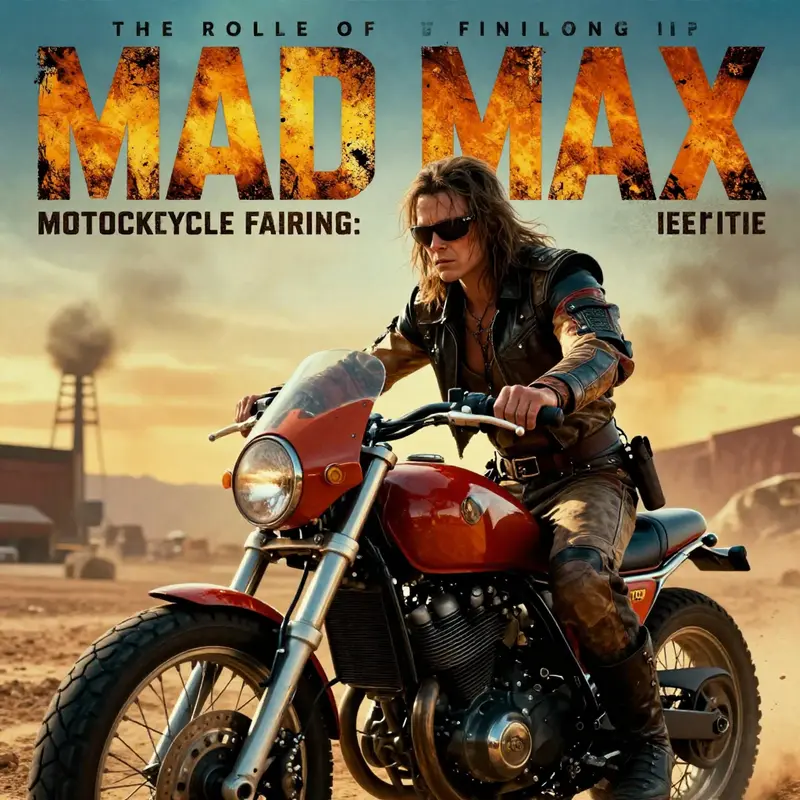
The role of motorcycle fairings in the Mad Max universe extends far beyond sheltering rider and engine. They are visual syntax, telling stories of scarcity, ingenuity, and stubborn rebellion. In the harsh glare of a desert horizon, the fairing becomes a moving sculpture that communicates a rider’s history, beliefs, and evolving loyalties. It is through these crafted shells that the audience learns how individuals survive, what they value, and how they project power when resources are scarce. The motorcycles themselves are not mere transportation; they are portable stages where identity is forged in metal, rust, and grit, and the fairing is the loudest line of dialogue on that stage. The result is a cohesive visual language that binds character to place in a world where every choice must count.
In Mad Max Fury Road, the war rigs straddle function and form with relentless clarity. The fairings are built from salvaged metal, scrap, and repurposed industrial parts, but they are more than patched debris. They are armor, weapon platform, and a signature. The aggressive geometry—sharp angles, jagged edges, and heavy studs—reads as an insurgent manifesto. Each panel carries a micro-story about its maker: where the material came from, what was once protected, and what it now protects. The aesthetic is brutal, but it is not random. It is purposeful, reflecting a world where survival hinges on clever reuse and a willingness to convert danger into design. The visual vocabulary of the fairings is a concise lexicon: a skull motif on a rolling fortress signals domination and control, while a lean, unadorned surface on a smaller machine signals pragmatism and speed.
The most iconic contrasts in the franchise emerge through fairing design. Immortan Joe’s imposing war rig features a massive, skull-like fairing that intimidates with scale and symbolism. The skull is not decorative; it is a visual decree. It marks its rider as someone who commands fear, who uses architecture as a weapon, and who projects invincibility to an audience that expects peril at every turn. The skull becomes both crest and shield, a twofold instrument of narrative persuasion. In the same universe, Furiosa’s vehicle embodies a different ethos. Her fairing is more functional and streamlined, emphasizing light weight, modularity, and repairability. It whispers of necessity rather than spectacle, a design language suited to a leader who values resourcefulness and a future still to be earned. The juxtaposition of these vehicles underlines a crucial point: the fairing in this world is not just a protective shell but a storyboard, a moving biography of its rider’s choices under pressure.
The concept of a fairing as a storytelling canvas emerges from how these machines are built. The craft discipline behind the Mad Max vehicles borrows from a long tradition of salvage art. Panels are riveted, welded, and battered into place, each dent and scratch a verse in an ongoing saga of survival. Colors—deep browns, iron grays, and rust reds—saturate the desert air and lend weight to every silhouette. The patina tells a second story: it hints at past encounters, previous owners, and the cycles of use that turned scrap into a coherent identity. In this sense, the fairing is a palimpsest, where new layers of meaning accumulate over time, yet the original intent still shines through. The interactive relationship between rider and machine deepens as the fairing’s weathered skin mirrors the rider’s evolving mood and purpose. When danger looms, the fairing seems to tighten, the metal sings with heat, and the entire machine becomes a single, cohesive organism moving toward an uncertain horizon.
Film designers have long recognized the fairing’s potential to convey character without a single line of dialogue. In the Mad Max universe, the fairing operates at both macro and micro scales. On a macro scale, the overall silhouette of a war rig signals the rider’s place in a shifting hierarchy. A taller, more menacing fairing can project authority and intimidation from across a desert amphitheater of sun and dust. On a micro scale, the detailing—the rivets, the plates, the improvised weapon mounts—tells a closer story about the rider’s hands. Each crafted element speaks to the musician’s instrument: the rider’s skill, patience, and willingness to endure pain to keep moving. The fairing, in short, is the translator of internal resolve into visible action. It is why a vehicle with minimal ornament can still feel fully alive, because the design communicates a philosophy rather than merely a need.
The visual storytelling power of the fairing is not isolated to one character. It resonates across the ensemble, reinforcing the film’s broader themes of scarcity, autonomy, and identity. Immortan Joe’s skull-equipped machine makes a rhetorical claim: that power rests on fear made tangible, and fear is reinforced by machine and man alike. Yet the world refuses to be conquered by fear alone. Furiosa’s lighter, more adaptable craft invites viewers to root for competence over dominance, to believe in the possibility of collective action rather than solitary supremacy. The fairings thus function as moral signposts, guiding audiences toward an understanding of who these people are, what they want, and what they are willing to risk to obtain it. The machines become moral instruments, and their outer shells become ethical statements about who counts as a survivor in a place where civilization has collapsed and the only currency is grit.
The production design behind these fairings deserves special attention. The design team embraced a principle that truth in the postapocalyptic setting must rest on plausible materials and believable processing. Salvage and improvisation shape every panel, every wedge, every spike. The fairings are not polished showpieces; they are working tools that have bear the scars of many journeys. This authenticity deepens immersion, allowing the audience to suspend disbelief with ease. The confluence of practical effects and practical aesthetics creates a tactile realism that is felt in every action sequence. When a rider twists the accelerator and dust erupts in a cloud, the fairing’s layers of metal and paint bite back in a chorus of sound and visual texture. It is a reminder that in a world of stripped-down technology, beauty and brutality share the same plane of existence. For those curious about how such a design process unfolds, production design resources from the filmmakers offer a rare look into the conceptual path from idea to on-screen presence. A compelling entry point for readers who want to see the genesis of these iconic shapes is the 2023new collection that showcases modern renderings and practical adaptations of postapocalyptic aesthetics. See the catalog here: 2023new.
If one looks beyond the cinema screen, the fairings of Mad Max have sparked a vibrant culture of adaptation. Enthusiasts and builders translate the cinematic aesthetics into real-world machines, using salvaged materials and robust construction techniques. The process becomes a form of homage, an act of translation from screen myth to workshop reality. Each replica or tribute panel is not a mere imitate; it is a study in narrative semantics. The maker tests how far a silhouette can travel in a single frame, how a line or a ridge can imply movement even when the machine is at rest. In this sense, the fairing is a portable stage prop that audiences can physically inhabit, a tangible bridge between film myth and the street-level craftsperson. The result is a subculture that treats the motorcycle as a storytelling platform, a kinetic sculpture on which personal mythologies are etched through color, texture, and hardware choices. The cultural resonance extends to design schools, museums, and pop-up exhibitions where visitors experience the world of Mad Max not through still frames, but through the tactile dialogue between rider and shell.
The fairing thus becomes both character extension and world-building device. Its weathered skin reflects the protagonist’s journey from distrust to tentative alliance, from isolation to a shared cause. The fashioning of spikes, armor plates, and salvaged hardware communicates resilience and a readiness to confront danger. The aesthetics encourage a viewer to infer the rider’s backstory from visible evidence—whether it is a history of scrounging, a set of loyalties, or a code of survival. The fairing’s shape itself encodes a philosophy: a preference for modularity, a readiness to adapt, and a refusal to surrender to mere inevitability. In the end, these machines are not about speed alone. They are about the speed of choice, the velocity of meaning, and the speed at which a person can become something more than human when the world ends around them.
For readers who want to see how these ideas translate into production realities, the production design gallery from the films offers a window into the minds behind the looks. The ways designers approached armor, weathering, and re-purposed components illuminate the dialogue between material reality and narrative necessity. The fairings are a compromise between what could be built in a workshop and what the story required them to convey on screen. The result is a singular, unforgettable visual grammar. It is exactly this grammar that continues to influence contemporary vehicle customization and cinematic prop making. The legacy of the Mad Max fairing story is not only in the films themselves but in the enduring vocabulary it created for postapocalyptic design. As designers and fans continue to reinterpret the aesthetic, the fairing remains a central source of inspiration for anyone seeking to understand how a machine can carry memory, intention, and revolution in a single, rugged shell. The final lesson is clear: when design is inseparable from narrative, every bolt, every seam, and every notch becomes a line in a larger epic about human grit in a world remade by scarcity. External resource for further exploration of production design: https://www.madmaxmovie.com/production-design
Final thoughts
The Mad Max motorcycle fairings not only represent a thrilling design aesthetic but also encapsulate a narrative of survival, resilience, and identity in a post-apocalyptic world. For business owners, understanding this niche can unlock opportunities in customization and collecting, where enthusiasts seek to embody that rugged individuality through their machines. By aligning with the rich cultural implications and utilizing innovative materials, businesses can attract a dedicated audience eager to embrace the spirit of the Mad Max universe in their own rides.