
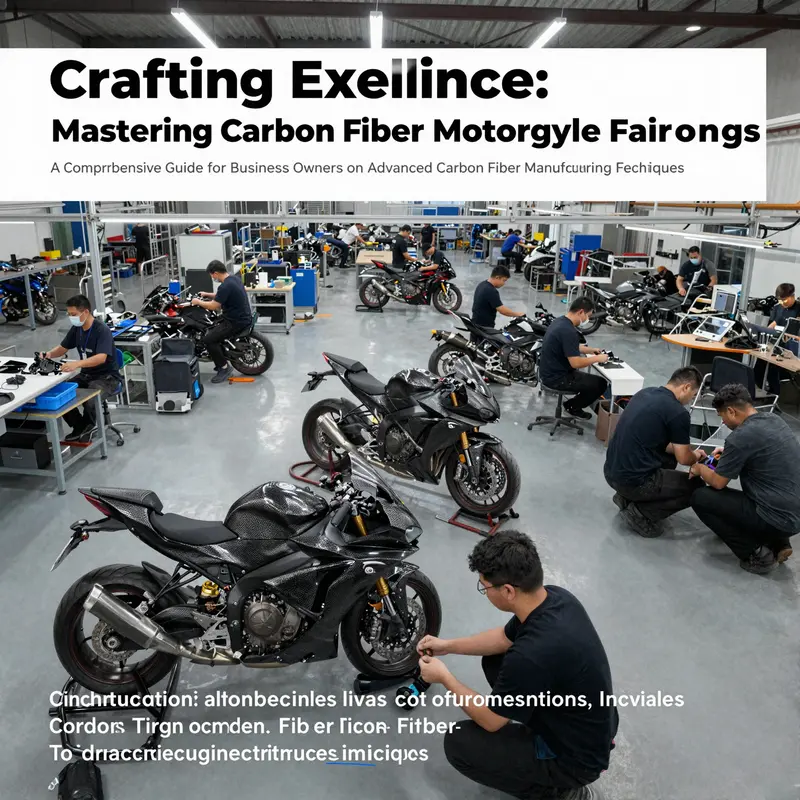
The motorcycle industry is increasingly embracing carbon fiber for its exceptional strength-to-weight ratio and stylish aesthetics. Business owners aiming to tap into this lucrative market must grasp the intricacies of carbon fiber motorcycle fairings. The journey begins with precise design and mold creation, followed by skilled preparation of pre-preg materials, and culminates in meticulous curing and surface finishing processes. This guide will delve into these essential chapters, equipping you with the detailed knowledge necessary to produce high-quality carbon fiber fairings that can enhance performance and appeal.
null
null
Precision Under Pressure: Mastering Pre-Preg Carbon Fiber Preparation for Lightweight, High-Performance Motorcycle Fairings
The preparation phase for pre-preg carbon fiber in motorcycle fairings sits at the crossroads of science and craft. It is where the material’s promise—exceptional strength at light weight—rests on disciplined technique, clean tools, and a room-temperature sense of timing. The chain of operations begins long before a single ply is laid: material selection, mold conditioning, and a mindset oriented toward repeatability. In this chapter, the preparation techniques are explored as a seamless sequence rather than as a collection of isolated tasks. The goal is not merely to replicate a process but to internalize the logic that makes each step contribute to a final part that is light, stiff, smooth, and durable. The story of prep is a story about control—the control of resin flow, the control of placement, the control of pressure, temperature, and surface finish—all working in concert to transform a fabric into a component that can withstand aero loading, ride forces, and the inevitable scrutiny of road use.
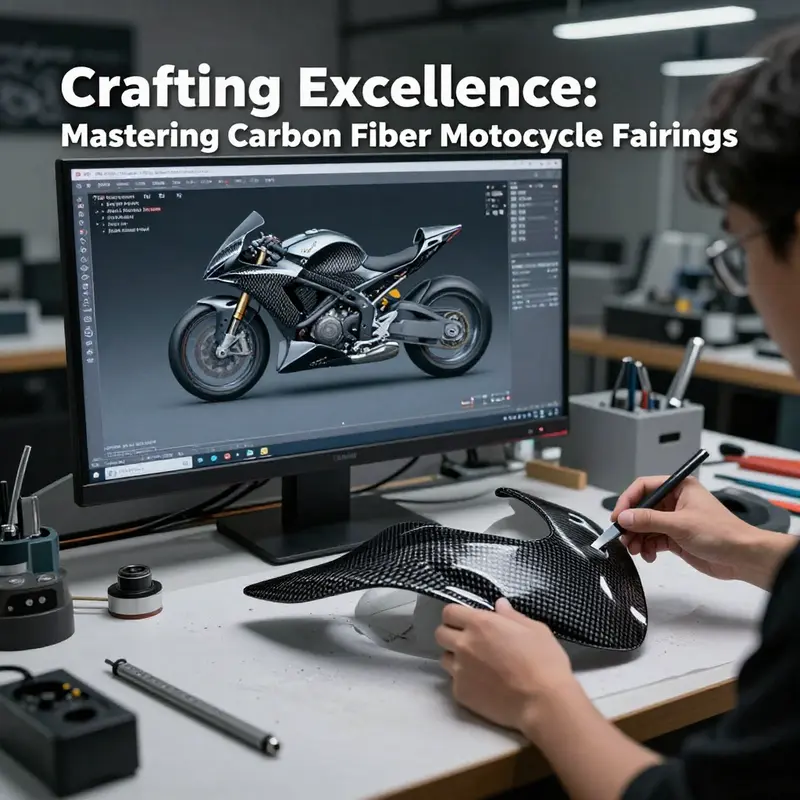
Material choice is the first decision point that cascades through every subsequent operation. Pre-preg carbon fiber refers to fabric that has been impregnated with a partially cured resin system. This impregnation is a critical accelerant for consistency. When done correctly, it yields uniform resin distribution, minimizes resin-rich zones, and promotes predictable curing behavior. For motorcycle fairings, which must carry their share of aerodynamic loads while maintaining a graceful surface for paint and graphics, the resin system and its cure kinetics must be aligned with the intended service temperature and the layup schedule. In practice, engineers and craftspeople select high-grade pre-pregs with a careful eye toward fiber architecture, such as the common 3K or 6K weaves. The cadence of the layup—how many layers, which orientations, and how those layers stack to meet stiffness and impact requirements—depends on the anticipated directional loads. The prep stage therefore begins with a model of load paths: pictures drawn in resin and fiber, not just numbers on a chart.
Once the material is chosen, the mold becomes the silent partner in the process. A high-precision mold defines the part’s geometry, surface quality, and eventual fit to the motorcycle frame. Aluminum or fiberglass molds with highly polished surfaces are typical, but the mold’s authenticity rests in more than its surface smoothness. A meticulous release-coating strategy ensures demolding without marring the surface or distorting delicate features such as edge radii and contour transitions. The mold must be prepared so that, after cure, the outer surface can accept a primer and paint with minimal sanding through to a near-perfect gloss. Surface preparation thus extends beyond flatness or shine; it is a matter of protecting the fairing’s structural integrity while enabling the aesthetic ambitions built into the design. Cleanliness is essential. Each layup requires a dust-free environment, stable humidity, and controlled ambient temperature to prevent micro-pockets of air or moisture that might later manifest as surface defects.
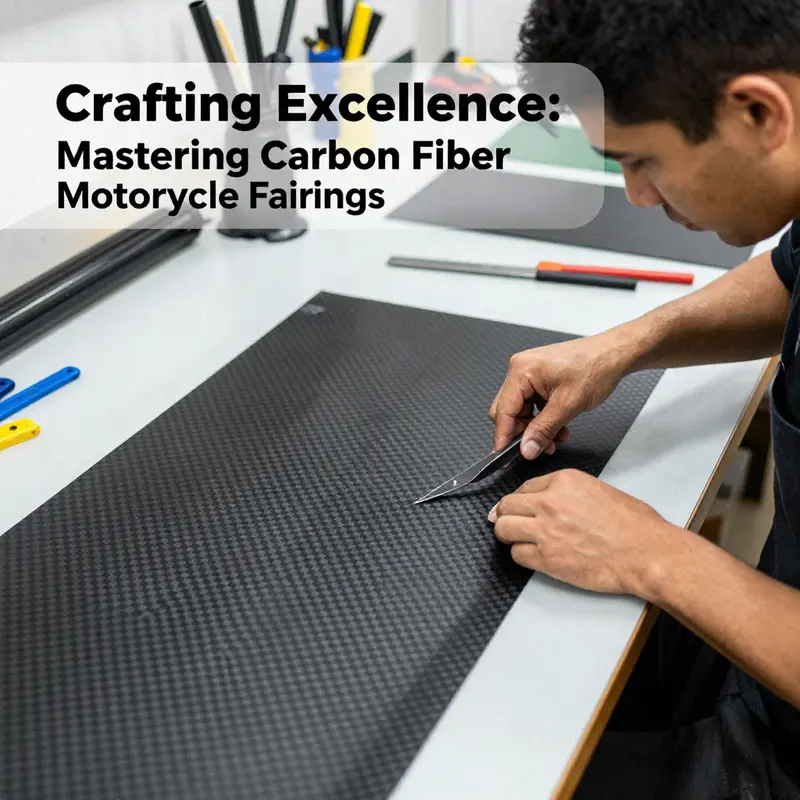
The layup phase is the heart of prep. Pre-preg carbon fiber is cut with precision to match the part’s digital layout, often using CNC-guided tools to achieve tight tolerances. The orientation of each ply—0°, 90°, ±45°, or hybrids thereof—tells a story about how the part will carry loads during riding. The rider’s wind loads, engine torque reactions, and frame flex all converge on the fairing’s geometry, and the layup must reflect that reality. Skilled technicians perform the hand layup with an almost musical rhythm, placing plies to avoid wrinkles and to ensure the surfaces align with the mold’s features. The process is a careful balance of vision and touch: too many misaligned plies can introduce wrinkles that mar the surface, while overly tight packing may squeeze out resin pockets and invite voids. When done correctly, the laminate becomes a tightly bonded assembly where the carbon fibers carry most of the load, yet the resin system holds everything together and preserves the required surface quality.
One persistent challenge in layup is controlling air entrapment. Even microscopic air pockets can become initiation sites for delamination under stress. The solution lies in meticulous handwork and, where possible, patterning that guides resin out of the boundary zones without starving the center of fibers. Although pre-pregs are pre-impregnated with resin, the resin’s viscosity and the ambient conditions can still produce local differences in distribution. The operator’s job is to anticipate and correct these tendencies during the layup: staggering the start points of layers, smoothing at the mold boundary, and maintaining consistent pressure as plies are placed. This is where experience becomes a measurable asset and why the prep phase remains a craft alongside the science of composites. The orientation strategy also evolves with the intended aesthetic. In many cases, a balanced symmetric layup around critical edges minimizes warping, ensures uniform stiffness, and yields a surface that responds predictably to subsequent sanding and finishing steps.
Vacuum bagging brings another layer of control to the prep sequence. Once the layup is secured on the mold, the entire assembly is enclosed within a vacuum bag and sealed. The bag’s role is to apply uniform pressure and to remove entrapped air as the composite transitions from a pliable stack to a rigid, consolidated laminate during cure. The procedure demands careful bagging technique: ensuring the bag conforms to curves without creating folds that trap air, maintaining an air-tight seal across complex geometries, and using bleeder fabrics and release layers that prevent resin migration and ensure a pristine surface. The vacuum pressure is chosen to maximize layer-to-layer contact while avoiding excessive squeeze that could squeeze out too much resin or distort edge sharpness. The result is a compact, void-free architecture in which the carbon fibers achieve their designed fiber-to-resin ratio. The bagging process is not merely a containment trick; it is a critical enabler of dimensional fidelity, surface finish, and mechanical performance.
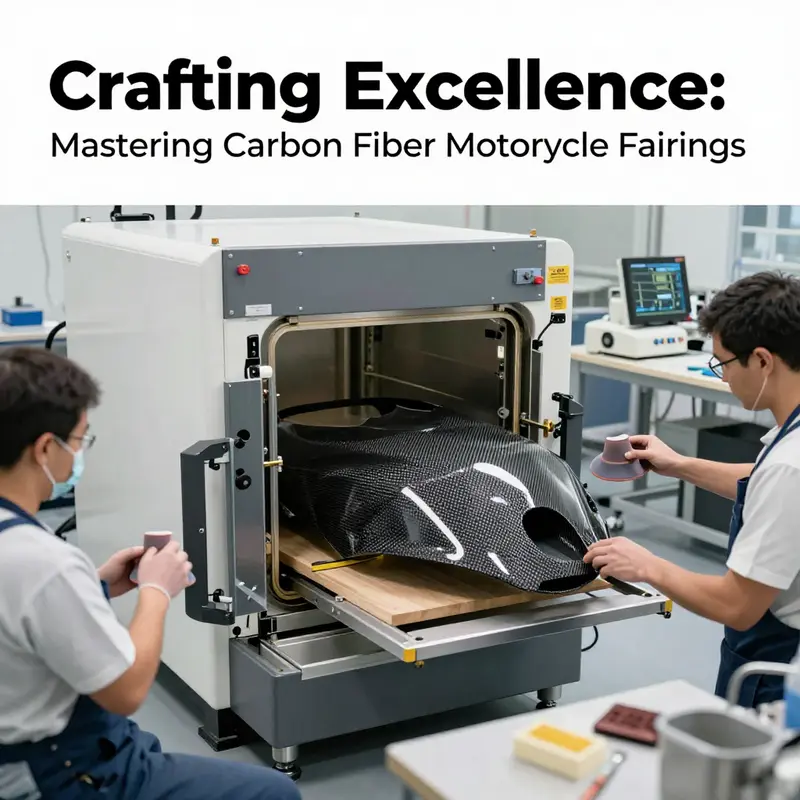
Curing is the moment when the prep transitions into a permanent structure. The vacuum-bagged mold is moved into an autoclave or a high-temperature oven where heat and pressure work together to cure the resin system fully. The temperature range, often between 120 and 180°C, and the pressure—typically several bars—are tuned to the resin chemistry in the pre-preg. The cure cycle lasts several hours and is designed to encourage complete resin cross-linking, maximize the fiber-to-resin ratio, and minimize residual stresses that could misalign the laminate or introduce dimensional drift. Autoclave curing, in particular, optimizes compaction and resin flow under pressure, ensuring a uniform cure throughout complex geometries. The outcome is a part that boasts the structural integrity needed for high-performance riding while preserving the geometry and surface characteristics defined by the mold. The real-world implication of this stage is visible in the absence of warping and in the fine surface texture ready to receive finishing work. The quality of the cure often determines the final stiffness, impact resistance, and long-term durability, making this step both an art and a science.
Post-cure handling and finishing flow directly from curing. After demolding, the part is trimmed, edges are faced, and a first check for surface defects is performed. Any delamination, resin pooling, or micro-blisters are identified early and addressed with targeted corrective actions, often involving light re-sanding or localized rework in the affected zones. The transition from cured part to finished fairing includes sanding through a progression of grits, starting with rough abrasives to shape the edge and then moving toward finer grits to prepare for priming. Wet sanding can be employed to curtail heat buildup and reduce airborne dust that could compromise the surface texture. When the surface is uniformly smooth, the pre-preg resinous surface becomes the canvas for paint and clear coatings. Here, careful chemical compatibility must be considered. The primer must bond well to the carbon and the release agent must be stripped cleanly without leaving residue that would interfere with adhesion. The painter’s role is not only to add color but to establish a uniform base that will support the final gloss and graphic work. In a well-managed prep flow, the finish layer integrates seamlessly with the underlayers, the edge lines stay crisp, and the overall curvature remains true to the mold’s geometry.
Quality control is the inevitable final curtain in this stage of production. A comprehensive inspection ensures the part meets geometry, surface quality, and mechanical expectations. Dimensional checks verify that the fairing’s contours align with the design intent and seat correctly against mounting points. Visual inspection looks for any surface defects that could undermine aesthetics or performance. More demanding workflows may include non-destructive testing to confirm the absence of internal delaminations or voids, especially in critical impact zones. This is a moment of synthesis, where the practical outcomes of design intent—weight reduction, stiffness, aerodynamics, and appearance—are verified against reality. Any deviation triggers a corrective loop that may involve additional trimming, sanding, or rework. The discipline of this stage reflects a broader truth: a high-performance fairing is the sum of all prep decisions, and the failure of one small control can ripple through the entire part, undermining safety and performance.
In the broader ecosystem of motorcycle fairing manufacture, prep is not a standalone ritual but a disciplined sequence that invites disciplined thinking about the end use. The prep phase is particularly sensitive to the environment—the workshop’s cleanliness, the stability of humidity and temperature, and the availability of precise tooling all feed into the final quality. It is here that the balance between throughput and perfection becomes evident. For enthusiasts, it might be tempting to shortcut the process, but the reliability of a carbon fiber fairing is a direct reflection of how thoughtfully the prep work was executed. The core of making carbon fiber fairings is not simply laying up layers of fabric; it is shaping a controlled chain of physical states—from a pliable stack to a stiff, durable, highly finished component. The steps of material selection, mold conditioning, layup discipline, vacuum integrity, controlled curing, precise post-processing, and rigorous inspection all cohere into a predictable, repeatable workflow that yields fairings capable of withstanding real-world stresses while preserving the aesthetic integrity that riders demand.
As this narrative emphasizes, the prep stage integrates with the overall manufacturing chain to deliver results that are stronger, lighter, and more durable than conventional materials. The role of pre-preg carbon fiber is to provide a consistent baseline from which engineers can predict performance, while the layup and curing processes translate those predictions into tangible geometry and strength. The craft of prep is about translating design intent into a physical form whose surface is a canvas for color and graphics yet whose inner architecture is tuned to carry aerodynamic loads and rider-induced forces with resilience. When these elements harmonize, the final fairing becomes not just a protective shell but a precise instrument of performance, aiding steering precision, reducing drag, and contributing to rider confidence. For readers exploring the practical dimensions of aftermarket or OEM sport components, the prep narrative demonstrates the degree of care embedded in professional fabrication—an ethic of control that scales from a single prototype to a production run.
For readers who want to explore related catalogues of fairings as part of understanding the market landscape, a general reference to the broader product category can provide context on how shapes and surfaces are designed to translate the pre-preg prep into real-world geometry. See the fairings product category for a broad sense of the shapes and mounting considerations that designers and technicians aim to meet as they finalize a part. Fairings category.
External reference for deeper technical grounding: the literature on advanced automotive carbon-fiber structures outlines how autoclave curing and precise layup patterns translate into mechanical performance in demanding service. For a detailed treatment of resin systems, cure cycles, and performance outcomes in high-end automotive structures, refer to the following external resource: Understanding carbon fiber hood range rover svr: technical specifications, grades, and application techniques. This source discusses how controlled curing and material selection influence stiffness, weight, and durability in a related but high-performance application, offering transferable insights into motorcycle fairings. https://www.autotechinsights.com/understanding-carbon-fiber-hood-range-rover-svr-technical-specifications-grades-application-techniques/
The practical upshot is that the preparation phase—precise layup, controlled curing, and meticulous finishing—defines the ceiling of what carbon fiber can achieve in motorcycle fairings. When executed with discipline, it enables designers to honor the aesthetic ambitions of the fairing while delivering the mechanical performance riders rely on. The process is not simply a toolkit of techniques but a philosophy: every ply, every seal, every pressure point is chosen to ensure the finished part behaves as a single, intelligent material system. This is the essence of production-grade prep, where science informs craft and craft informs performance, resulting in fairings that balance lightness with strength, beauty with resilience, and aerodynamics with durability across a rider’s miles.
null
null
Final thoughts
The process of creating carbon fiber motorcycle fairings captures the essence of melding technology and artistry. For business owners, understanding the intricacies from design and mold creation to preparation, curing, and finishing can distinguish your offerings in a competitive market. Each step contributes not only to the structural integrity of the fairings but also to their aesthetic appeal, ensuring customer satisfaction and loyalty. By embracing these techniques, businesses can confidently deliver products that exemplify quality and innovation.