
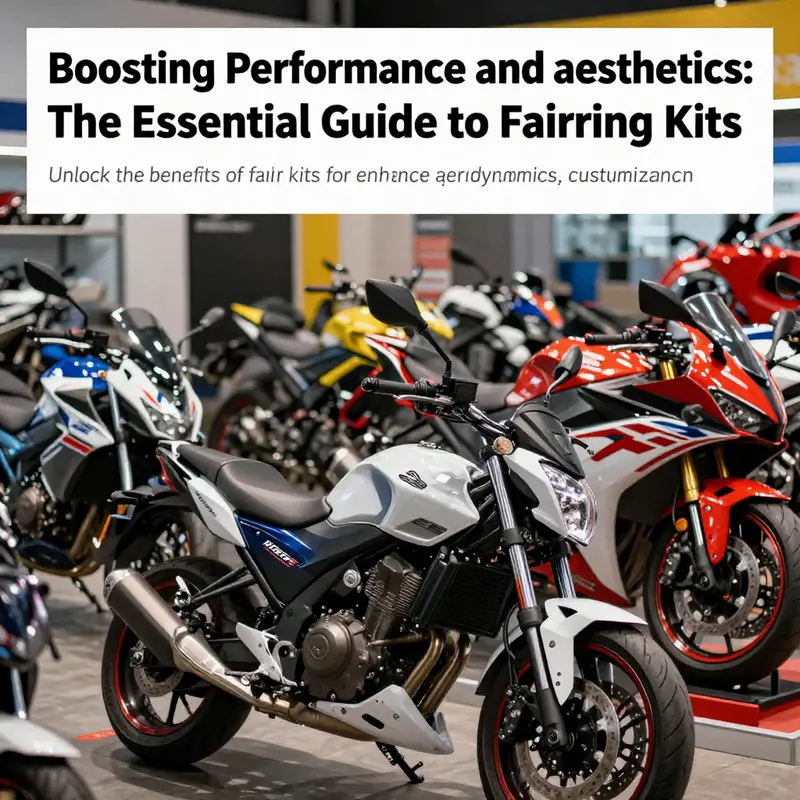
Motorcycle fairing kits serve a dual purpose, combining aesthetics and functionality for both casual riders and performance enthusiasts. These comprehensive body panels not only enhance a bike’s visual appeal but also improve its aerodynamics, leading to better performance and rider comfort. Understanding the significance of fairing kits is vital for business owners in the motorcycle industry, as these products can drive sales and customer satisfaction. Over the next chapters, we will explore the aerodynamics and performance benefits of fairing kits, delve into material science for durability, discuss customization options to attract different clientele, and outline installation and maintenance practices that ensure long-lasting service.
Riding the Edge: Aerodynamics, Comfort, and Performance Through Motorcycle Fairing Kits
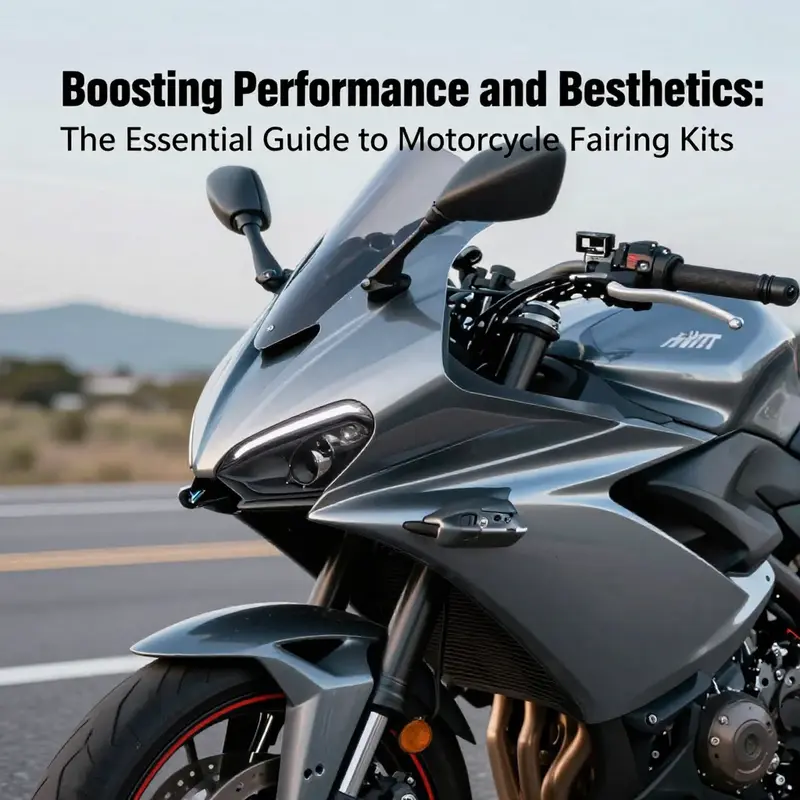
Every motorcycle starts with its silhouette, a shape that meets air in a study of form and force. A fairing kit is more than a cosmetic upgrade. It is a carefully engineered collection of panels designed to smooth that silhouette, guiding how air flows around the machine and how it interacts with a rider who is gripping the bars, leaning into a curve, or charging down a highway at highway speeds. When a kit is well designed, it reshapes the rider’s experience by reducing pressure against the shoulders and chest, quieting the wind, and letting the engine work less against a headwind that never seems to end. This is where aerodynamics becomes a practical part of riding—one part science, one part craft, and one part personal preference. The modern fairing kit blends functional performance with aesthetics, and because it influences how a bike behaves at speed, it is an upgrade that deserves thoughtful consideration for riders who spend long hours in the saddle or chase faster lap times on a track.
Drag is the enemy of speed and efficiency. When air resistance rises, the engine must push harder to maintain a given velocity. A well-executed fairing streamlines the bike’s profile, reducing drag and smoothing the path of air over the rider and machine. In real-world terms, even a modest reduction in drag translates into less engine strain at touring speeds and improved fuel economy at highway velocity. Over the long haul, that difference compounds: a rider can cover more miles with less fatigue and with a powerplant that runs cooler and more efficiently. This is not just theory. In the world of sport and performance touring, drag reduction figures—such as improvements around the 10 to 15 percent range, depending on the configuration and matching—mirror the practical benefits seen on the road and on the track. The emphasis, of course, is on pairing the fairing with the rider’s intent: the kind of riding that ranges from spirited back-road sorties to long interstate pilgrimages.
The configuration of a fairing kit matters as much as its materials. Full fairings deliver the strongest aerodynamic advantage and the most comprehensive wind protection. They envelop the front and sides of the bike, shaping the air movement in a way that creates a calmer environment for the rider. The payoff is not limited to top speed; it also includes improved high-speed stability. A rider pressing into gusts or negotiating crosswinds benefits from a more predictable feel through the handlebars and pegs, since the air flow is steadier and less prone to buffeting. Yet full fairings come with strings attached: weight, maintenance access, and the potential for greater install complexity. When a kit is too bulky or ill-fitting, it can hinder serviceability or introduce unwanted flex under load. The ideal is a precise fit that behaves as an integrated part of the bike rather than an aftermarket add-on.
For many riders, half fairings strike a favorable balance. They offer substantial wind protection for the upper body while preserving easier access to the engine and cockpit for maintenance. The effect on aerodynamics is still meaningful, with improved airflow around the rider’s torso and shoulders. This translates into reduced fatigue on long rides and better control when speeds remain high but conditions shift. Quarter fairings, the minimalist option, have their own charm. They emphasize a clean, classic look and are often favored by café racers and custom builds. They do not necessarily deliver the same wind protection as full or half configurations, but they can still alter the air path in a way that reduces turbulent flow around the rider’s helmet and upper torso. The key is to recognize that any fairing kit should be chosen in concert with riding goals, road conditions, and the rider’s posture.
A fairing’s influence extends beyond air movement. The material and build quality determine how it holds up under sun, rain, vibration, and minor impacts. High-quality kits typically rely on durable plastics such as ABS or lightweight fiberglass, materials chosen for their strength-to-weight ratio and UV resistance. In historical contexts of performance-oriented designs, aluminum components briefly appeared in some race-oriented constructions, prized for stiffness and corrosion resistance. The modern balance often favors ABS or fiberglass composites that can be molded into complex shapes with tighter tolerances, ensuring a clean, integrated interface with the bike’s frame and other bodywork. The result is a fairing that stays tight against the machine, reduces rattles, and continues to look sharp after thousands of miles of exposure to sun and weather. The visual appeal is not incidental: a well-matched color, texture, and line can emphasize the bike’s speed in a way that inspires confidence in the rider.
Along with materials, the design geometry of a fairing kit makes a decisive difference in how air flows around and above the rider. Modern projects emphasize precision, using CAD simulations and wind-tunnel testing to shape paragons of aerodynamic efficiency. The focus is not simply on minimizing drag but on controlling the flow field—where air attaches, where it becomes a wake, and how that wake interacts with the rider’s body. In practice, this means buttressing the upper chest area to reduce pressure on the neck and shoulders, guiding air to create lift in a way that stabilizes the front end, and avoiding appendages that create vortices or adverse interference with the wheel wells. It is this careful orchestration of shape and boundary layers that distinguishes a kit that truly enhances performance from one that merely looks the part.
Riders who seek a balance of performance, aesthetics, and practicality often find sport-touring half fairings or race-replica configurations appealing. These designs attempt to merge the wind protection of full fairings with the maintenance access and lighter weight of smaller panels. The appeal is not only about speed; it is about rider experience. A calmer wind environment reduces fatigue on long rides, allowing the rider to stay more alert and focused for hours at a time. The reduced buffeting makes it easier to keep a steady head position, which contributes to better control and reduced strain in the neck and shoulders. It is a subtle, cumulative benefit that translates into more enjoyable rides and fewer trips to the chiropractor after a weekend away. For some riders, the presence of a modular kit — adaptable as comfort needs change or as riding preferences evolve — becomes a crucial part of the bike’s long-term value.
The idea of modularity extends into customization. Modern kits often provide options for interchangeable colors, decals, or graphics, enabling riders to tailor both appearance and performance to a specific aesthetic or purpose. A well-chosen color and finish can influence perceived aerodynamics as much as any contour; the eye perceives a seamless integration of panels and lines, reinforcing the sense of smooth air as the bike moves. Modular designs can also facilitate maintenance by allowing components to be swapped with minimal disassembly. For riders who value individuality as much as efficiency, this modular approach offers a pathway to express personal style while maintaining a coherent aerodynamic package. It is entirely possible to imagine a kit that transitions from a race-inspired look to a touring-friendly silhouette with a swap of panels, without compromising the underlying aerodynamic logic.
The practical implications of choosing the right fairing kit extend into maintenance and compatibility. A kit that fits with precision reduces the likelihood of gaps and rattles, which can generate unwanted vibrations or create additional drag from micro-wakes along seams. Compatibility with the bike’s existing features—such as headlights, instruments, and cooling intakes—is essential. A poor fit can obstruct airflow or impede cooling, negating the performance gains. That is why a diligent buyer pays attention to fitment standards and to the reputation of the kit’s source. In the marketplace, reputable brands and certified suppliers provide products that meet safety standards, fit curves, and mounting points that align with the bicycle’s frame. This reduces the need for significant modification during installation and helps ensure a clean, professional finish that mirrors a factory look and feel. For riders who value both performance and permanence, this combination of precise fitment and reliable materials creates a foundation for a longstanding upgrade.
The conversation about aerodynamics would be incomplete without acknowledging the role of aftermarket winglets and similar appendages. Winglets promise extra downforce or stability at high speeds, but research and real-world testing reveal that their benefits are not always tangible. In some cases, winglets add weight or create unnecessary drag under certain conditions. The broader lesson is that aerodynamic gains arise most reliably from the core geometry of the fairing itself and its interaction with the rider’s posture. Aftermarket add-ons should be evaluated with skepticism and tested under real-world riding conditions rather than assumed to deliver measurable improvements. This reluctance to overpromise is a reminder that function should drive form. A fairing kit’s most meaningful gains come from thoughtful shaping, precise fit, and material choice rather than from flashy add-ons that rise and fall with marketing hype.
From the standpoint of rider psychology, a well-integrated fairing kit changes how a rider feels in the saddle. The sense of stability, the reduced wind noise, and the clean lines that run along the bike’s profile all contribute to a perception of capability. When the rider feels confident in the machine’s behavior at high speed, posture tends to improve, and that confident posture feeds back into better control and lower fatigue. The interplay between human factors and engineering is real: the best aerodynamic work takes into account how a person sits, moves, and breathes beneath the fairing. In practice, practical gear—carefully shaped, precisely fitted, and crafted from robust materials—becomes the tool that translates aerodynamic theory into a tangible riding experience.
For riders who want to connect theory with hands-on experience, the choice of kit should align with riding style, road conditions, and the rider’s willingness to invest in a high-quality solution. A track-focused rider may prioritize aerodynamics and weight savings over maintenance access, while a long-distance rider may value wind protection and comfort as much as speed. The best kits are not one-size-fits-all; they are designed to complement the bike and the rider’s approach to riding. The ultimate result is a machine that not only looks fast but feels fast, even when it is cruising at legal speeds. It is about efficiency without compromising the thrill of riding, about making the bike breathe easier while the rider travels farther with less effort and more enjoyment.
As riders ponder upgrade paths, a practical starting point is to consider how the fairing will fit with their current bike and how it can be tailored to their aspirations. A precise fit minimizes modification work and ensures a clean installation, while a design that supports modular upgrades accommodates changing preferences over time. The research points to a shared truth: the most satisfying aerodynamic upgrades arise when form and function align with the rider’s goals. And in that alignment, the fairing kit becomes less a temporary cosmetic add-on and more a fundamental component of how the bike behaves, feels, and responds on the road or track. Thus, the journey toward better aerodynamics becomes a personal journey of understanding how air, rider, and machine work together to produce a more efficient, capable, and enjoyable motorcycle.
Internal link: To explore a range of fairings and related components from a reputable supplier, see the Honda fairings collection for CBR here: Honda fairings for CBR.
External resource for further reading: For a deeper look at winglets and their aerodynamic role, see Understanding Motorcycles Winglets: Composition, Standards, and Industrial Benefits (external reference): https://www.motorcycle-technology.com/winglets-aerodynamics-performance/
Material Alchemy: Constructing Durable, Aerodynamic Motorcycle Fairing Kits
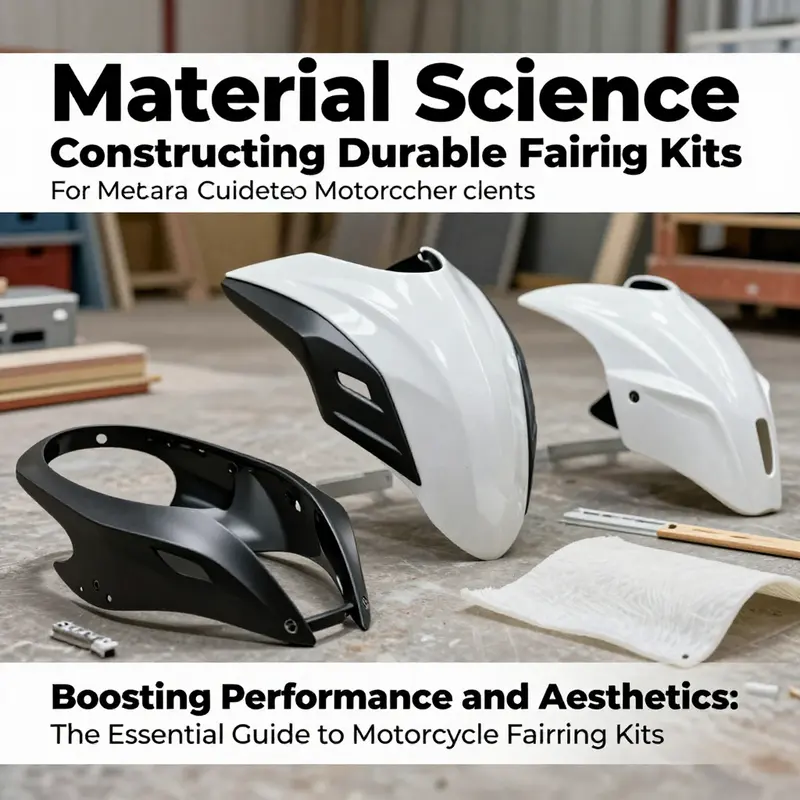
Material science is the unsung hero behind every fairing kit. When a rider plants a knee on the tank and the wind swoops in from the front, what meets the eye is only a fraction of the story. The rest unfolds in the lab and the workshop, where engineers translate physical principles into a shell that is light enough to spare horsepower, stiff enough to hold its shape at speed, and tough enough to resist weather and road debris. A modern fairing kit sits at the intersection of form and function; it is a deliberately engineered layer of protection, comfort, and performance that requires an intimate understanding of materials, processing, and long-term behavior. The way these shells are formed, the materials chosen, and the way they interact with the motorcycle’s frame and heat determine not only how the bike looks, but how it behaves on the highway.
In the spectrum of materials used for fairing kits, carbon fiber and fiberglass dominate the discussion. Carbon fiber is often championed for its lightness and stiffness, while fiberglass remains a reliable, approachable option. Each brings a distinct set of advantages and trade-offs, and each responds differently to maintenance and riding conditions. The rest of the chapter explores how designers balance these properties to deliver durability, stiffness, impact resistance, and repairability.
The practical takeaway is that material choice is a system decision: geometry, resin chemistry, curing, coatings, and interface details all influence how a fairing ages and performs over time.
External resource: https://en.wikipedia.org/wiki/Carbon_fiber
The Craft of Customization: How Modular Fairing Kits Shape Style, Performance, and Riding Experience
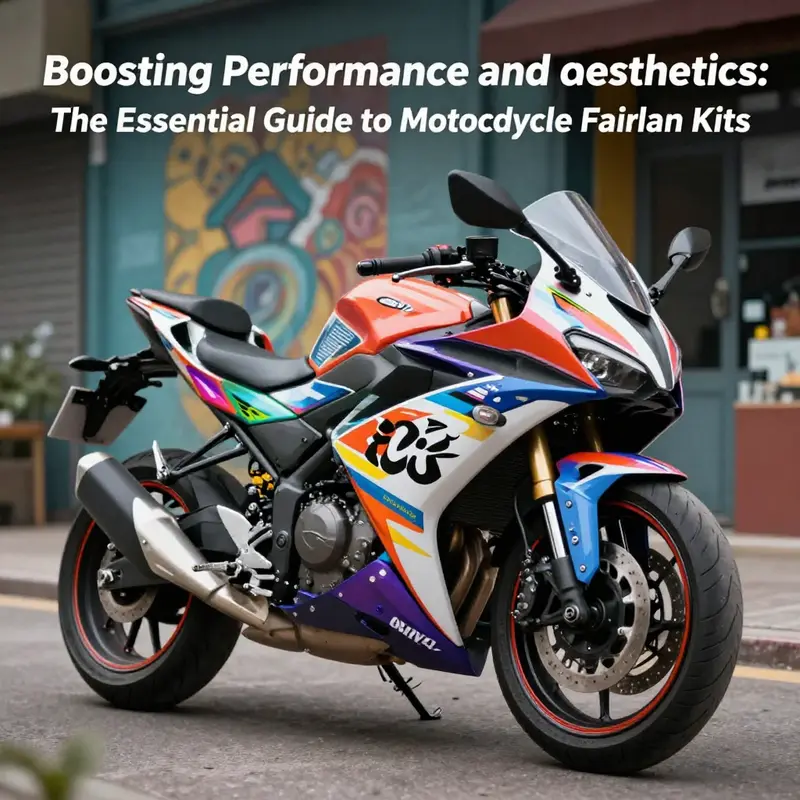
The fairing kit is more than a bundle of panels. It is a crafted invitation to shape a motorcycle into a personal statement and a tuned tool. When a rider selects or builds a kit, they are choosing not only color and graphics but also the feel of wind on the chest, the ease of maintenance, and the way the bike slices through air at speed. Modern fairing systems have evolved into modular ecosystems that merge aesthetics with performance, turning a stock silhouette into a dedicated machine for a rider’s specific needs. This chapter follows that arc of customization, tracing how modular design, materials and finishes, and aerodynamics come together to redefine what a motorcycle can be in the hands of a thoughtful rider.
At the heart of today’s customizable fairing kits is modular design. Panels, wings, and graphics can be swapped, repositioned, or removed to create configurations that serve different riding environments. A race-inspired, track-focused setup might emphasize aggressive lines and additional surface area to shape airflow more precisely, while a road-friendly configuration could minimize weight and simplify maintenance access. This flexibility is not merely cosmetic; it changes how the bike behaves in corners, on straightaways, and in crosswinds. The ability to reconfigure without replacing the entire shell means riders can adapt to changing needs—weekend track days, a daily commute, or a long tour—without sacrificing the overall look that drew them to the bike in the first place.
That adaptability is built into the construction of many modern kits. A lot of kits rely on high-grade ABS or fiberglass for durability and impact resistance, but the most forward-thinking designs push toward lightweight aluminum constructions with corrosion-resistant frames. This combination delivers a sportier feel and a tighter, more controlled silhouette while standing up to UV exposure and road grit. The emphasis on material choice is not incidental; it supports both performance and longevity. When panels can be swapped without sacrificing fit and rigidity, riders enjoy a cleaner, more professional finish that remains durable under the stresses of rotation, vibrations, and high-speed aerodynamics.
Finish options also form a central thread in customization. Interchangeable colors, decals, and graphics let a rider reflect personal style while preserving the underlying engineering. A modular kit might offer a palette of color layers or the ability to apply high-quality graphic wraps directly to the fairing surface. This is where form and function meet: a color scheme that visually communicates weight and balance, with graphics aligning to the lines of the panels to emphasize speed even when the bike is stationary. The opportunity to adjust graphics, color blocks, or decals without altering the core structure invites riders to experiment—to test a look that suits a particular track day, a meet-up, or a social ride—without committing to a single aesthetic for years to come.
The aerodynamic narrative sits close to the surface of customization. Precision engineering in fairing shapes and panel alignments reduces drag and buffeting, helping the machine cut through air with less resistance. In practical terms, that translates to more stable high-speed handling and improved fuel efficiency. Estimates from design-focused studies indicate drag reduction can reach up to about fifteen percent when the airflow is streamlined through carefully contoured fairings and properly integrated wings or strakes. This is not merely a matter of shaving seconds off lap times; it is about how a rider perceives the bike at speed—the reduced wind fatigue, the steadier steering, and the sense that the machine is carving its own path through air with minimal effort.
A well-designed kit also considers maintenance access as an integral part of customization. Full fairings provide comprehensive protection for engine and components, but they can complicate access for routine checks. Half fairings, in contrast, strike a balance by shielding the essential upper regions around the headlamp and instrument cluster while preserving easy access to the engine for servicing. Quarter fairings lean into a minimalist, café-racer or custom-build aesthetic, emphasizing clean lines and light weight. The best kits balance coverage with accessibility, ensuring that the beauty of the styling does not come at the expense of practical upkeep. When a kit reduces the friction of maintenance, it enhances the rider’s long-term relationship with the bike, encouraging more frequent checks, better lubrication, and lower risk of weather-related corrosion.
Beyond the raw materials and surface finishes, the logistics of modularity play a crucial role. Removable sections, interchangeable panels, and standardized mounting interfaces make it feasible to remix configurations as needs evolve. This means a rider who starts with a street-leaning, visually aggressive look can revert to a more subtle or even race-ready appearance for specific events, simply by exchanging parts. The modular concept also supports safer, cleaner installations—engineered quick-release mechanisms or snap-fit connections reduce the chance of misalignment or mounting errors. Precision fitment is the baseline—when panels align perfectly, the resulting finish appears seamless, and the bike gains a professional, factory-like quality that speaks to careful design and care.
From a broader design perspective, customization is a workflow that extends into the rider’s choice of catalog or supplier. A rider exploring options might gravitate toward a catalog that highlights modularity and ease of customization, offering a spectrum of configurations that align with different riding purposes. This catalog approach helps create a mental model: what a given set of panels, wings, or graphics can do for the bike’s handling, protection, and personality. It also de-risks the upgrade process by emphasizing compatibility and fitment, which means fewer surprises during installation and a smoother path to a polished finish. The notion of a modular ecosystem invites riders to think in iterations—test, adapt, and refine—much like a set of performance upgrades that can be swapped out as skills and needs evolve.
The practical benefits of customization are echoed in the way modular kits enable tailored aesthetics and performance without requiring a complete rebuild. When a rider replaces panels in a specific color or graphic, the bike instantly communicates a different identity. The same bike that once wore a sleek, race-ready look can, with a few panel swaps, assume a more classic, café-inspired tone. In this sense, customization is not about chasing trends; it is about aligning the bike’s public face with the rider’s evolving sense of self and riding philosophy. The visual language of a bike—its colors, lines, and textures—becomes a tangible expression of the rider’s relationship with speed, light, and motion. In turn, that expression can influence how a rider perceives the bike’s balance, whether they are carving a canyon road or chasing a track line.
There is also a practical educational dimension to customization. Riders learn to read the bike’s geometry through the lens of the fairing’s geometry. When panels are designed with precise fitment and modular access in mind, riders can predict how a configuration will behave. They learn how the distribution of mass changes with magazine-weight components and how the center of gravity shifts as panels are swapped. This knowledge turns customization from a visual exercise into a tactile, experiential upgrade. The result is a machine that not only looks the part but also feels like a well-tuned instrument whose handling responds predictably to a rider’s input. In this context, the best kits are those that make thoughtful trade-offs between aesthetics and performance, rather than prioritizing one at the complete expense of the other.
To anchor these concepts in the real world, imagine a widely studied setup in which a race-inspired fairing kit offers removable sections and a framework compatible with custom decals. The design enables riders to adapt the visualization of the bike’s silhouette while maintaining its iconic profile and aerodynamic advantages. Meanwhile, a modular system designed for cafés and urban riders provides far more customization options—by swapping panels and graphics, one can achieve a different vibe and a different aero balance. The overarching takeaway is that customization is not a luxury; it is a design principle that integrates style, performance, and practicality into a single, coherent platform.
In a broader sense, the culture of customization reflects a rider’s intention to build a machine that is as unique as the road is varied. It is about choosing and combining facets that matter most: how the wind feels at speed, how effortless it is to service the engine, how the bike looks when parked at a café, and how easily it can be adapted for a different kind of riding tomorrow. When designers conceive a kit with modular panels, lightweight yet durable materials, and a finish system that can accommodate decals and graphics, they are acknowledging that riders do not ride the same road every day. The result is a fairing system that is not a single product but a living platform—one that invites personalization while delivering tangible performance gains.
For readers looking to explore the options that shape these outcomes, a broad catalog of fairing components provides a practical path toward experimentation. By examining configurations, finishes, and the relative weight of panels, riders can map a journey from stock appearance to a tailored, performance-enhanced silhouette. The continuous feedback loop—rider input, testing, iteration, and refinement—ensures that each customization choice moves the bike closer to a desired balance between speed, comfort, and personality. The craft of customization, then, becomes a dialogue between rider and machine, a conversation about how wind, form, and function come together to deliver a ride that is not only faster or more efficient but also more closely aligned with the rider’s identity and aspirations.
If you’d like to explore options in a broader fairings catalog, you can browse the catalog dedicated to panel-based customization and see how different configurations interact with the bike’s geometry and aerodynamics. This resource is a practical waypoint on the path to a personalized build. browse the fairings catalog.
External reference: https://www.alibaba.com/product-detail/Honda-CBR900RR-1994-1995-motorcycle-fairing_1600872525331.html
Forging a Seamless Shield: Installation Precision and Lasting Maintenance of Motorcycle Fairing Kits
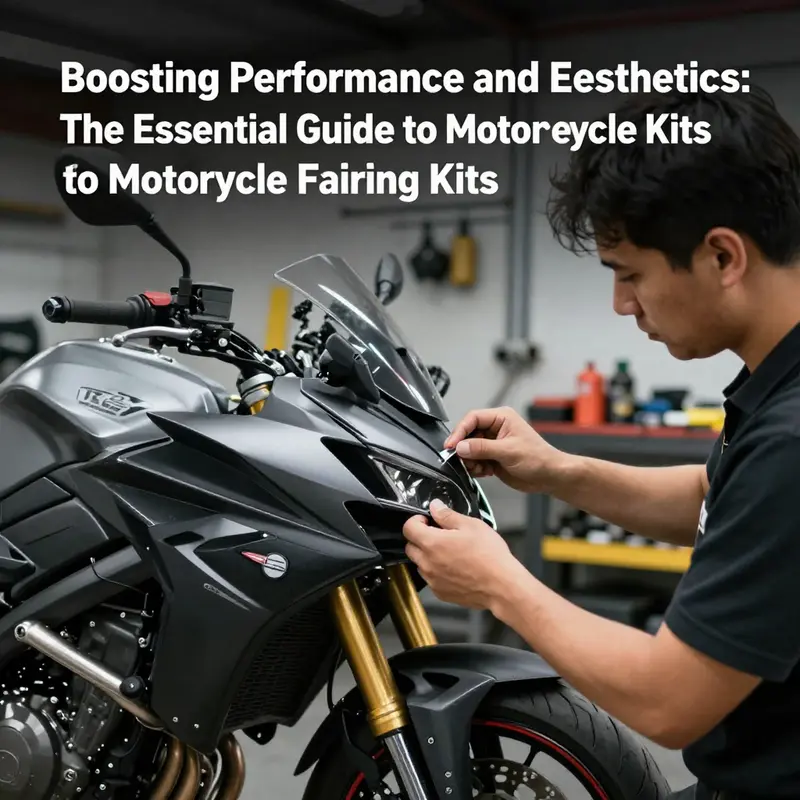
The fairing kit is much more than a cosmetic upgrade. It is a carefully engineered shield that threads together aerodynamics, rider comfort, and long-term protection for a motorcycle’s most exposed and vital components. A well-fitted kit reduces wind noise and buffeting, eases fatigue on long rides, and minimizes the spray and debris that can reach the engine, electricals, and fasteners. Yet the benefits hinge on two things that riders often underestimate: precise installation and disciplined maintenance. The panels, frames, and fasteners in modern fairing kits are designed to work as a cohesive system. If mounting is rushed or misaligned, the wind will find seams to slip through, the weight distribution can shift, and the very purpose of the kit—stability at speed and protective coverage—can fade into a misfit, squeaks, and rattles. This chapter follows a flow from compatibility and preparation through careful fitting to enduring care that keeps the kit performing as it should for years of riding.
A starting point for any installation is compatibility. Not every kit fits every model, year, or trim, and the same nominal design can require different hardware or auxiliary parts depending on the motorcycle’s configuration. Riders should confirm that the parts kit matches the specific model year and the exact variant they own. Compatibility is not a matter of guesswork; it is a practical, safety-driven question. When riders encounter kit contents that include brackets, support members, or seals that seem mismatched to their bike, the prudent choice is to pause, recheck the supplier’s catalog, and contact technical support if the fit remains uncertain. A misalignment here is not merely a cosmetic issue; it can introduce flex that worsens under load, create gaps that invite water intrusion, or even compromise the integrity of the mounting points under vibration at speed.
Beyond fitment, the installation demands a disciplined, methodical approach. The process generally begins with a clean, dry baseline: remove the existing components when needed, clear away mud and grit from mounting points, and inspect mounting lugs for damage or corrosion. The kit’s hardware—bolts, spacers, and brackets—should be laid out in the order they will be used, with an eye toward cross-model variations. A common pitfall is over-tightening, which can strip threads or crack panels, and under-tightening, which can invite flutter or misalignment. The torque specs—often provided in the installation manual—must be followed closely. In practice, this means using a calibrated torque wrench and gradually tightening fasteners in a crisscross pattern to balance load evenly across the structure. When a panel interfaces with the headlight nacelle or mirrors, the alignment becomes exceptionally sensitive. Small adjustments at the outset prevent hours spent chasing misalignment later in the process and reduce the risk of trim rubbing or panel binding as the motorcycle flexes during riding.
The “fit first, drill only if required” principle is worth repeating. Some iterations of fairing kits are designed for a precise factory-like fit that minimizes the need for modifications. Others, if only slightly mismatched to a particular model year, may require minor trimming or the use of shims to achieve a sealed, flush look. It is essential to respect that not all modifications are advisable; some alter load paths or compromise mounting stiffness. In practice, these decisions come down to a balance between achieving a clean, aero-curved profile and preserving the integrity of essential components such as the radiator shrouds, headlight assembly, and instrument cluster. When in doubt, professional installation should be considered, especially for kits that involve structural supports or engine surrounding panels. The goal is not to simplify a weekend project at the expense of safety. It is to deliver a durable, precisely aligned shell that behaves as a single aero-structured element at speed and under various weather and road conditions.
The installation journey is also a reminder of what modular and full kits can offer. Full fairings typically provide the most integrated coverage, smoothing the airflow across the front and sides of the bike. Half and quarter fairings, by contrast, can offer targeted protection and a more accessible platform for maintenance, while still delivering a notable aero benefit. The choice often reflects the rider’s use case: a sport rider chasing stability at high speed will lean toward more complete coverage, whereas a daily rider who values easier maintenance or a café racer’s minimalist aesthetic might favor lighter, selectively removable panels. The best kits, regardless of configuration, are engineered for precise fitment with minimal or no modifications during installation. They are designed so the panels align with existing body gaps, retain the bike’s natural lines, and preserve access to critical service points without sacrificing weather resistance or structural rigidity.
As with any modification, the installation should be accompanied by a mindful inspection of surrounding systems. Wiring looms, sensor housings, and fuel lines must not be pinched or stressed by new panels. The fairing’s underside and the inner edges commonly contact the radiator, belts, or engine guards; if there is any contact, it should be resolved before final torquing. Additionally, alignment checks should be performed after a brief test ride to ensure no panel shifts occur under vibration. A careful re-check of all fasteners after the first 100 to 200 miles is a good practice, since許 the bike’s frame will settle somewhat as torque is distributed and the protective film or sealants cure. The aim is to prevent the emergence of gaps that could allow water ingress, as such gaps can later invite corrosion or free the wind to create buffeting at cruising speeds, undermining the rider’s comfort and the kit’s performance.
Aesthetic considerations should not be dismissed. The general principle of a well-fitted fairing kit is that it reads as a single, composed surface rather than as a patchwork of individual parts. This is achieved through precise join lines, consistent gaps, and a coherent paint finish that flows from panel to panel. Where allowance is made for color or decal customization, the effect should be that of a professionally built body work rather than a DIY overlay. A well-executed paint and sealant strategy protects the panel surfaces from UV exposure and weathering, helping to maintain color depth and gloss. Regular cleaning and cycles of protective wax or sealant should be harmonized with the kit’s material properties. For instance, if the kit uses a high-gloss ABS or fiberglass composite, a polymer-based wax that enhances clarity without leaving hazy residues will help retain the aero surface’s readability and shine. The goal is not just to protect but to sustain the kit’s visual language as an integral part of the motorcycle’s stance.
A practical note for riders who are new to fairing kits is the availability of model-specific catalogs and community knowledge. These resources can guide a rider toward compatible configurations, common installation practices, and the typical pitfalls encountered on particular model ranges. For a practical illustration of how cataloged options translate into compatible choices, consider exploring a dedicated catalog page that aggregates models with similar fairing layouts. Such a page helps in visualizing how different configurations align with the bike’s geometry and owner preferences, making it easier to select a kit that matches both form and function. If you are exploring options tied to a specific case, you can browse a category focused on Honda fairings for CBR models to see how different panels and sub-assemblies are designed to integrate with the bike’s original frame geometry and electrical routing. This page provides a real-world frame for evaluating fitment and style in a way that is both practical and informative: Honda fairings for CBR.
Once installation is complete, attention shifts to ongoing care. The maintenance routine for a fairing kit shares much with standard motorcycle cosmetic care but adds panels that endure more exposure to the elements. Regular cleaning should use mild soap and water, applied with a soft cloth or sponge. Abrasive cleaners or aggressive scrubbing can scratch painted surfaces or degrade the panel’s surface finish, diminishing the kit’s aesthetic and potential protective properties. It is wise to wipe dry after cleaning and to inspect for loose fasteners, cracked seams, or signs of panel creep after long rides or through rough weather. The rider should listen for any new rattles or wind noises that might indicate a shift in alignment. A small loosening of a single fastener can cascade into a misalignment across several panels, especially when the bike experiences the vibrations and aero loads at highway speeds.
Protecting the surface from UV and weathering extends the kit’s life. A dedicated wax or sealant designed for motorcycle finishes, along with a regular application schedule, keeps the paint or decal work vibrant and reduces the risk of dulling or micro-scratches that can become more noticeable on a curved, multi-panel shell. For the underside and contact edges, a protective film or guard can help absorb impact from stones or debris and reduce the risk of chipping in the most vulnerable zones. In case of damage, minor scratches and small chips can sometimes be touched up with specialized repair paints; deeper gouges or cracks may necessitate replacing the affected panel or sub-assembly to maintain aerodynamic integrity and appearance.
Maintenance also encompasses ensuring the kit continues to perform its fundamental role. The fairing system can influence cooling airflow around the engine and radiators. Any obstruction or deformation of the panels can alter the intended airflow, potentially increasing drag or reducing cooling efficiency. A routine inspection should therefore include a careful look at the under-panel areas and any ducts or vents that could be impacted by shifting panels. Adequate clearance around bracketry and instrument clusters is another necessary check; a misaligned cluster or a protruding edge can interfere with rider visibility or switchgear operation. The maintenance mindset is, in short, proactive rather than reactive: a few minutes spent inspecting the kit after each long ride or weekend excursion can prevent more significant, and more expensive, issues later on.
The broader takeaway is that a high-quality fairing kit is a long-term companion for the motorcycle, not a one-off upgrade. The installation should be performed with care and verified through multiple checks, and the maintenance rhythm should be consistent and informed by the kit’s material properties and the rider’s usage. The result is a bike with improved aerodynamic efficiency, a more comfortable riding experience, and a protective shell that endures through seasons of exposure, road grit, and UV stress. This kind of synergy—between precise fit, careful maintenance, and thoughtful customization—defines what it means to treat the fairing kit as a true performance and protection system rather than a cosmetic add-on. External guidance from official mounting and care resources can further enhance safety and longevity; for instance, manufacturer pages detailing fairing installation and maintenance provide valuable, model-specific cautions and step-by-step checks that reinforce the rider’s hands-on practice. External reference: https://www.harley-davidson.com/us/en/accessories/fairings-and-protectors/fairing-support-kit.html
Final thoughts
Investing in motorcycle fairing kits provides significant advantages, enhancing both performance and visual appeal. For business owners, understanding the intricacies of fairing kits—from their aerodynamic advantages and materials to customization and maintenance—can result in better product offerings and customer satisfaction. As more riders seek to personalize their motorcycles while improving ride quality, offering quality fairing kits can be a strategic move, ensuring a competitive edge in the marketplace.