
With the growing popularity of motorcycles, understanding the market for motorcycle fairings has become essential for business owners. eBay stands out as a dynamic platform, offering diverse types of fairings and accessories tailored to various motorcycle models. This article delves into types and materials of eBay motorcycle fairings, their economic impact, customization options, and how eBay guarantees quality, providing business owners with insights necessary for making informed purchasing decisions. Each chapter will build a complete picture of the potential and practicality of sourcing fairings through eBay.
Riding the Spectrum: A Thorough Look at Motorcycle Fairings in the Online Marketplace
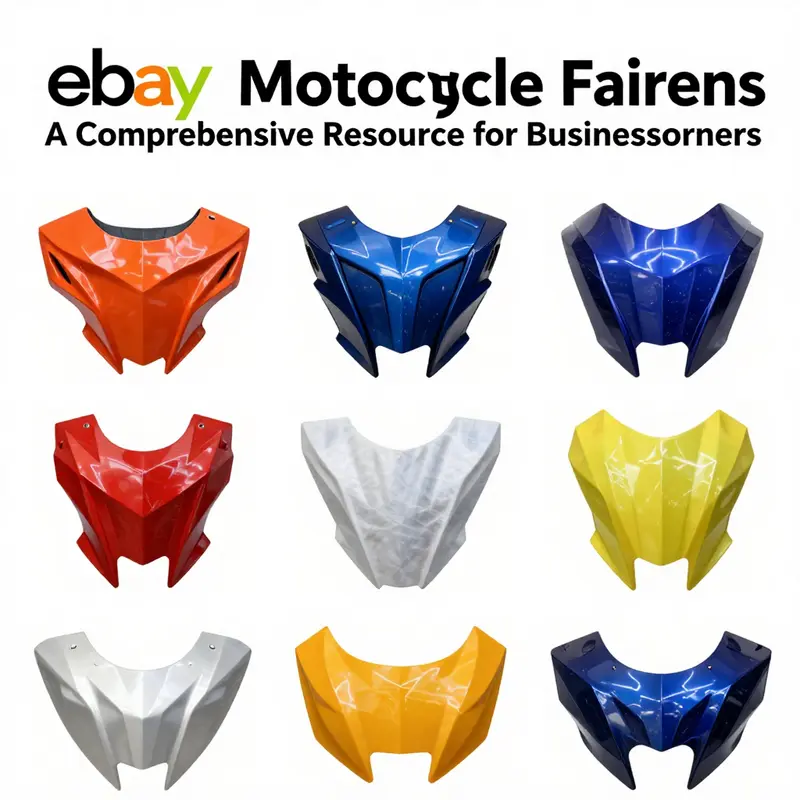
Across the motorcycle world, fairings are not mere shells. They shape how a bike slices through air, how weather can bite or shelter a rider, and how a machine communicates its character through lines and curves. When exploring a large online marketplace for fairings, riders encounter a spectrum of options that can feel overwhelming at first glance. The key is to move beyond the glossy surface and understand how different types and materials influence not just looks, but performance, durability, and long-term value. This awareness helps riders choose parts that fit their riding style, budget, and the maintenance reality of their workshop. It also reframes the purchase as a careful balance between form and function, where the goal is a fairing package that complements the bike’s original design while delivering reliable protection and practical repairability. The marketplace, with its endless listings, rewards buyers who can translate a few technical terms into a clear decision framework. In this chapter, we untangle those terms and show how types and materials interact to produce outcomes that matter on the road and in the shop.
One of the first decisions is about the scope of the fairing itself. Full fairings, the most comprehensive option, envelop the engine, frame, and fuel area. They are the quintessential choice for sport and supersport machines, where maximizing aerodynamic efficiency and wind protection matters most. The full package tends to deliver the cleanest silhouette and the most complete shield against debris and weather, creating a sense of enclosed precision that many riders crave. Yet the same attributes that make full fairings appealing also bring certain drawbacks. They are heavier, which can affect handling and acceleration when the bike is not at speed. They can also complicate maintenance access, since removing panels to reach the engine or cooling components requires planning and time. Repair costs for damaged sections can be higher, and the process often demands specialist knowledge or facilities if the damaged areas are deeply contoured or integrated with the bike’s cooling ducts. In practice, full fairings are ideal for high-speed applications, track-focused builds, or riders who want the most comprehensive protection from road spray and debris during long days on the road. They also create a dramatic, cohesive visual statement that many riders value as part of the bike’s personality.
Yet engine protection and aerodynamics are not the only concerns. Semi-fairings, sometimes called batwing designs, offer a different balance. These designs cover the front portion of the bike—often including the headlight and instruments—while leaving the sides and rear exposed. The result is a lighter, more accessible configuration that preserves some wind protection without the weight and bulk of a full enclosure. For touring, sport-touring, or daily commuting, semi-fairings can be a pragmatic compromise. They enable easier maintenance, quicker panel swaps when a panel is damaged, and more straightforward mounting, all while preserving a substantial aerodynamic envelope around the rider’s upper body. The trade-off, of course, is reduced shielding for the lower body and engine components and a modest attenuation of wind at higher speeds. For riders who spend long hours in the saddle on a variety of roads, the semi-fairing can deliver a satisfying middle ground between protection and practicality.
Another category worth understanding is the air intake fairing, a specialized subset designed to optimize the flow of air into the engine’s intake system. These components can be integrated into a larger fairing package or purchased as individual pieces to fine-tune intake efficiency. The primary aim is to ensure a steady supply of cool, clean air to the engine, which can contribute to more stable performance and a pleasing intake sound. While not as common as the broad full or semi configurations, air intake fairings illustrate how fairings serve more than cosmetic roles; they become performance-enhancers when engineered with a rider’s goals in mind. For riders who chase throttle response and engine breathing quality, these components can be a meaningful upgrade, especially on sport or sport-touring builds.
Beyond the major shapes, there are body panels and side panels that allow for modular customization. Panels enable riders to replace damaged sections without committing to a full kit, or to mix and match styles and colors for a fresh appearance. This approach is particularly appealing for riders who are repairing a crash or simply wanting a new look without the expense of a complete set. The ability to source individual pieces makes the process accessible to a wider range of budgets and skills, permitting incremental upgrades rather than a single, all-at-once investment. When combined with a thoughtful color and finish strategy, panel-level changes can transform a bike’s personality without altering its core geometry. The practical upside is clear: you can maintain the original mounting points and fitment logic, reducing the risk of fit issues that sometimes accompany wholesale replacements.
The materials chosen for fairings also shape the riding experience in meaningful ways. Fiberglass remains one of the most familiar and versatile materials on the market. It can be molded into complex shapes to achieve distinctive silhouettes, and repairs are feasible with common workshop tools and skill. Fiberglass is usually stronger than simple plastics but lighter than many metal options, and it can be more forgiving in terms of damage recovery when proper repair methods are applied. It also offers broad availability in both full kits and individual panels, enabling customization projects that start with a single, focal corner of the bike and grow into a complete aesthetic overhaul. For riders leaning into customization, fiberglass provides a reliable platform to explore custom graphics, altered contours, and personalized air management features.
Plastic, including ABS and polycarbonate blends, dominates many OEM and aftermarket fairings. The advantages here are straightforward: lower weight relative to traditional composites, easier production, and easier painting and finishing. Plastic fairings are typically less expensive than fiberglass and carbon fiber, which makes them appealing to riders who want a lighter, budget-conscious upgrade or replacement. However, plastics tend to be less durable in the face of hard impacts; cracks and shattering are more likely than with fiberglass after a misadventure on rough roads or an off-road stumble. The repair path for plastic panels can be simple or complex depending on the damage, but it often involves cosmetic fixes and the possibility of panel replacement rather than a full repair. For daily riders and those who value cost efficiency and ease of replacement, ABS or polycarbonate fairings represent a practical balance of light weight, cost, and ease of customization.
Carbon fiber stands apart in the hierarchy of materials for high-end builds. It offers an impressive blend of lightness and stiffness, which translates into tactile benefits during acceleration and cornering. Carbon fiber’s strength-to-weight ratio makes it especially attractive for riders chasing performance, track days, or the ultimate in aerodynamic efficiency. Yet carbon fiber comes with a premium price tag and a demanding repair landscape. Small damages can require careful patchwork, and more serious damage can necessitate full panel replacement. For enthusiasts who measure performance in fractions of a second and who are prepared for the maintenance implications, carbon fiber fairings deliver a level of refinement and speed potential that is hard to match. Each material type—fiberglass, plastic, carbon—carries its own philosophy of repairability, weight, cost, and finish. The choice often hinges on a rider’s priorities: whether the aim is track-ready performance, weekend cruiser aesthetics, budget-friendly replacement, or a tailored combination of these goals.
In the practical world of shopping, these choices become even more nuanced once you start comparing listings on a major online marketplace. Compatibility, fitment validation, and the presence of complete mounting hardware all affect the total cost of ownership. Some sellers offer universal fitment options intended to adapt to a range of models. Others provide model-specific kits designed to align with the precise geometry of a particular motorcycle. A critical step is to verify fitment with the exact bike model and year, or to consult fitment guides and mounting diagrams. When possible, look for listings that clarify whether the kit includes all necessary fasteners, brackets, and mirrors. Missing hardware can turn a seemingly affordable swap into a drawn-out scavenger hunt, inflating both time and expense.
Riders also encounter a spectrum of conditions in the marketplace: new, used, and refurbished panels, with varying degrees of wear and alteration. While a pristine full fairing can deliver the most dramatic transformation, it may also carry higher risk if the panel shape is slightly off or if the mounting points have softened with age. Used panels require careful inspection for cracks, repair history, and the integrity of mounting points. A well-documented history and clear photographs become your best allies in this context. Prices follow the same arc, generally reflecting the material, the completeness of the kit, model specificity, and the condition. The safety net in many marketplaces is some form of buyer protection or guarantee, but it is crucial to read the terms and understand what constitutes an eligible return when a part does not fit as expected.
The process of selecting fairings, then, becomes a dance between aesthetics, mechanical reality, and the rider’s practical constraints. A full fairing offers a bold, streamlined body that can dramatically alter the bike’s silhouette and wind behavior. A semi-fairing invites a lighter package with frequent opportunities to refresh the look through panel swaps. Air intake fairings highlight a performance mindset, while body panels enable modular, incremental changes that season the bike’s personality over time. Material choices weave into this decision with weight, durability, and repair considerations guiding the practical path. For the curious shopper, a simple framework emerges: identify the riding goals, assess the mechanical realities of maintenance access, and then align those with the material’s behavior under stress, wear, and weather. The marketplace rewards thoughtful alignment between these factors and the specific bike’s geometry, revealing a coherent approach to upgrading or restoring a machine that reflects both the rider’s ambitions and the bike’s architectural truth.
The journey through fairing selection also invites reflection on how a bike’s identity is shaped by its shell. A well-chosen fairing becomes part of the rider’s daily experience, influencing noise, airflow, and even the micro-dynamics of how wind interacts with the rider’s posture. For some, the primary lure is the look—the sharp lines, the integrated graphics, the way the bike’s coat catches light as it leans into a turn. For others, it’s the tactile feel of mounting points, the ease of panel removal for a quick maintenance session, or the confidence of a repair that can be accomplished with widely available materials rather than specialized tools. The balancing act between these dimensions is what makes shopping for fairings both a technical pursuit and a form of personal expression.
If you are searching for a more brand-aware snapshot of what fairings can look like on specific models, you can explore model-specific galleries and categories that showcase how panels contour to different frames and engine covers. To get a sense of how one brand’s fairing package tends to resolve in production-looking panels and mounting geometry, consider the Suzuki fairings category as a practical reference point for typical panel shapes and mounting philosophy. This kind of exposure helps you calibrate expectations about fitment, finish, and the visual coherence between the bike’s original lines and the aftermarket addition. Suzuki fairings offers a tangible example of how panels, side skirts, and tail sections contribute to a cohesive aesthetic while preserving maintenance access.
As a closing reminder, the market’s breadth means there is always a path that aligns with your budget and your bike’s needs. Whether you are chasing a showroom-like rebuild, a sport-focused upgrade, or a casual refresh, the fundamental questions remain the same. What level of protection do you require during daily riding or touring? How important is weight to your handling and acceleration? Do you prefer a fully enclosed wheel area for air management, or a lighter, more modular approach that keeps maintenance accessible? What is your total cost of ownership when you factor in potential repairs, paint matching, and the time investment required for installation? Answering these questions helps you navigate a craft-like space where materials, shapes, and fitment converge into a single, coherent project. The resulting choice should amplify the bike’s strengths, reduce its weaknesses, and deliver a sense of confidence that comes from a well-matched pairing of fairing type and material to the rider’s goals.
External resources can provide broader context on how different materials perform in real-world conditions and how market dynamics affect pricing and availability. For readers seeking a practical overview of common fiberglass fairings and the nuances of repairs and replacements, this external reference offers a useful perspective: https://www.ebay.com/sch/i.html?nkw=fiberglass+fairings&LHTitleDesc=0&sacat=0&LHBIN=1
Riding the Circular Circuit: The Economic Ripple of Buying eBay Motorcycle Fairings
The fairing—the sculpted skin of a motorcycle—is more than a cosmetic touch. It shapes aerodynamics, protects essential components, and defines the visual language of a bike. In the aftermarket, few parts illuminate how a single marketplace can transform price, waste, and opportunity as clearly as fairings do. On the platform that connects buyers and sellers from around the world, a broad spectrum of fairings exists—from full enclosures to partial panels and complete body kits. This diversity, paired with a structured fitment assurance and a mix of materials such as ABS, fiberglass, and composites, creates a distinct price ecosystem. The resulting dynamics ripple through the consumer budget, the secondary market, and the wider manufacturing landscape. The economic story here is not merely about dollars saved; it is about how a global marketplace extends lifecycles, fosters competitive behavior, and nudges the industry toward more transparent pricing and flexible product development.
For buyers, the most immediate impact of this marketplace is cost containment. Compared to new OEM parts or even some newer aftermarket lines, fairings sourced through a broad, global listing pool frequently come with meaningful savings. This is especially pronounced for discontinued models or hard-to-find components. The savings are not just a single discount; they accumulate through a combination of price competition, currency effects, and the ability to choose from a wider mix of condition states and configurations. A sizable portion of the value comes from the fact that these parts are not constrained by a single regional supply chain. When a listed item can travel across borders, the buyer gains leverage: the ability to negotiate, to wait for a price dip in a global market, or to snap up a bargain before a price surges tied to supply shortages. In practical terms, this means riders and builders can pursue restoration or customization projects that might otherwise be stalled by price barriers. The net effect on personal budgets is meaningful, enabling more flexible allocation of funds toward machine performance, safety upgrades, or even aesthetic experiments that can redefine a bike’s character without sacrificing financial stability.
Beyond the individual wallet, the marketplace fosters a broader circular economy. Every fairing that changes hands keeps a part of a motorcycle out of a landfill and back into use. A thriving secondary market reduces demand for new manufacturing resources, which translates into fewer emissions, lower energy consumption, and less material waste. This is especially impactful in a field with a long tail of models—many of which saw production run end years ago. When a used panel or kit finds a new home, it completes a lifecycle that aligns with the principles of sustainable consumption: reuse, repair, and extended product life. The economic ripple travels beyond a single transaction. Small sellers, independent mechanics, and hobbyists gain a foothold in the aftermarket, creating micro-enterprises that can stabilize local economies. A fitter, turning a spare part into a completed project, may invest earnings into tools, space, or education, which in turn sustains a network of service and repair work that benefits riders who prefer cost-effective upgrades to high-end, all-new solutions. The market, in effect, becomes a conduit for sustainable entrepreneurship, linking consumer savings to broader social value.
The competition inherent in a large-scale marketplace also reshapes the pricing dynamics that govern manufacturers and dealers. When listings spread across a vast audience, buyers see a broader spectrum of price points, condition notes, and timing. This transparency pressures OEMs and authorized distributors to justify pricing, offer value-added packages, or rethink what constitutes genuine value in a fairing kit. The consequence is not a race to the bottom, but a reflow of value creation. Vendors respond with clearer fitment data, more standardized material disclosures, and options that address different rider needs—whether that means lighter, more aerodynamic forms for performance use or rugged, weather-resistant builds for abuse-prone daily riding. The market’s behavior—whether buyers lean toward fixed-price listings or timed auctions—also feeds into strategic pricing models. Auctions can reveal the true ceiling of demand for scarce parts, while fixed-price listings provide predictability. In combination, they drive a dynamic where the perceived value of a fairing is shaped not only by its condition or origin but by how well it integrates with the buyer’s broader upgrade goals.
Fitment, a central concern for riders, emerges as a pivotal variable in this ecosystem. The platform’s breadth offers a practical solution to the perennial problem of compatibility. For older or limited-production models, the likelihood of locating a direct replacement increases with global reach. Yet compatibility is not purely a mechanical fit; it encompasses color, mounting points, and panel alignment with adjacent components. This is where the marketplace’s descriptive clarity becomes influential. Listings that describe mounting points, the types of fasteners required, and any known fitment caveats empower buyers to make informed decisions without incurring expensive trial-and-error repairs. When a listing carries detailed diagnostics and clear photos, the probability of a successful first-time fit rises, which shortens downtime and reduces the risk of additional shipping costs—a practical benefit that compounds across multiple transactions and repairs.
As riders explore this environment, a broader literacy about materials and construction emerges. ABS plastics, fiberglass, and composite materials each carry distinct implications for durability, weight, and repairability. ABS, for instance, tolerates impact reasonably well and responds to adhesives and repairs with predictable outcomes. Fiberglass panels can offer strength and customization flexibility but may require different repair techniques. Composites bring high-end performance potential but can demand specialized skills for restoration. The marketplace does not merely connect buyers with parts; it also connects buyers with knowledge. The better a seller communicates material properties, the more confident the buyer can be in selecting a part that will perform as intended in real-world riding conditions. In this context, the platform’s value lies not only in the breadth of inventory but in the quality of the information that accompanies each listing. Detailed, accurate descriptions reduce the cost of misfit and miscommunication, which in turn preserves buyer trust and sustains a reliable trading culture across borders.
To illustrate how this ecosystem can be navigated, consider the possibility of exploring a general category page that aggregates available panels without tying the user to a single brand narrative. This approach mirrors the broader intent of a flexible aftermarket: it foregrounds function, fit, and economy over allegiance to a particular maker. For readers who want to visualize how such a collection could be navigated, a generic exploratory path can be initiated through references to a broader category that is not bound to a single brand. In practice, this means riders can compare a range of shapes, contours, and mounting strategies within a single search session, weighing trade-offs between weight, aerodynamics, and aesthetics. The experience becomes less about chasing a single ideal part and more about assembling a coherent, affordable set of panels that harmonize with the bike’s existing geometry and the rider’s ambitions.
As buyers shape their projects, the importance of trustworthy information grows. The presence of a global marketplace encourages sellers to offer accurate measurements, facet-by-facet compatibility notes, and high-quality imaging. Buyers who invest time in evaluating listings—checking for consistent screw patterns, mirroring of left-right symmetry, and the alignment of mounting tabs with factory points—benefit from fewer conversion costs and faster turnarounds. This, in turn, supports a virtuous cycle: when buyers experience reliable fitment and predictable performance, they are more likely to participate in future transactions, increasing liquidity in the market and encouraging more sellers to participate. The result is a reinforcing loop in which price competition, information quality, and reliability collectively raise the overall efficiency of the aftermarket. In a world where a single part can be sourced from multiple continents, such efficiency translates into tangible time savings for the rider as well as cost savings that can be redirected toward maintenance, performance upgrades, or protective accessories.
For readers seeking a practical touchpoint within the broader content ecosystem, the following browse path illustrates how a generic category can be accessed without foregrounding any single maker. This approach helps readers visualize how a versatile range of panels can be evaluated side by side, encouraging a balanced appraisal of fitment, material properties, and value. 2023 new models is a useful anchor for appreciating how contemporary design cues interact with legacy geometries, and how a buyer can weigh modern contours against traditional lines in a single, coherent exploration. While this example centers on a general category, it underlines a core point: the marketplace rewards buyers who can articulate a clear set of criteria—model compatibility, color coordination, mounting approach, and project goals—and then pursue parts that satisfy those criteria across a broad inventory. The payoff is not only a lower headline price but a smoother, more predictable journey from listing to installation.
The economic effects on the wider industry extend beyond the immediate buyer-seller interface. When affordable, readily accessible fairings erode the premium on replacement parts, it incentivizes manufacturers and dealers to reassess pricing strategies and to broaden their value propositions. This can manifest as more comprehensive bundles, better-fitment guarantees, or clearer guidance about compatibility across generations. The ultimate objective is not a race to discount but a market environment in which value becomes a more transparent concept. In such a setting, new product lines might be designed with interchangeability in mind, enabling a broader range of bikes to accept common panels. That kind of engineering philosophy, born from the realities of a global marketplace, can lower the barrier to entry for owner-led builds and restorations, expanding the pool of riders who feel empowered to customize without breaking the bank.
The sustainability gains embedded in this dynamic are significant. Extending the usable life of fairings reduces the environmental footprint of the aftermarket by diminishing the frequency of new part production, along with its associated energy use and waste streams. In a market where price signals reward longevity and repairability, repair services and refinishing become viable streams of work. A small-scale repair shop can gain traction by specializing in ding repair, color matching, and texture restoration, turning otherwise neglected fairings into serviceable components that still meet rider expectations for performance and presentation. The economic impact of these activities compounds across the supply chain: more repair work sustains technicians, more refinishing activity supports local businesses, and more affordable, high-quality panels sustain a broader community of riders who might otherwise abandon projects when costs rise. In this way, the market’s structural dynamics help democratize customization, making it accessible to a wider range of enthusiasts who may not have access to brand-new parts.
What this means for the reader is a more nuanced understanding of value. Price alone cannot capture the full benefit of participating in a global aftermarket. The cumulative effects—reduced waste, extended part lifecycles, improved access to compatible panels, and the formation of micro-business opportunities—compose a broader economic narrative. This narrative is not about chasing discounts in isolation but about recognizing how a marketplace can align consumer desire for customization with responsible, efficient consumption. It is a story of how a single category of parts can catalyze changes across budgeting, shopping behavior, and industry strategy, fostering a more resilient, innovative, and interconnected community of riders and repair professionals.
External resource: https://www.ebay.com/motors
null
null
Reliable Fit, Real Protection: Navigating eBay’s Motorcycle Fairings Guarantee
Fairings are more than a trim upgrade for a motorcycle; they are the interface between wind, weather, and rider comfort. They shape how air flows around the bike, how much wind you endure on a long ride, and how the machine presents itself in the shop window of public perception. When you look at the broad marketplace for motorcycle fairings, eBay stands out as a hub where quality, price, and availability converge. The platform’s promise, particularly through the eBay Guaranteed Fit feature, can transform a potentially hazardous guessing game into a straightforward, confidence-building purchase. Yet the value of that promise rests on understanding what it does—and what it does not do—and on applying a careful, deliberate approach to every listing you consider. The goal is not merely to acquire a new look, but to secure a correct, compatible, and durable component that integrates with the bike’s structure, mounts, and intended use. In this sense, the eBay guarantee is not a luxury add-on; it is a practical tool for any rider who wants to preserve the integrity of the machine while exploring a wider spectrum of styling and materials.
The landscape of motorcycle fairings on eBay is intentionally diverse. Listings span from full fairing sets to partials and body kits, with a range of materials including ABS plastic, fiberglass, and composite blends. The choices invite customization—whether the aim is to restore a vintage look, upgrade for better aerodynamics, or adopt a modern silhouette that mirrors contemporary sport bikes. But the breadth of options also raises a core question: will the piece you buy truly fit your model, year, and configuration? This is where the eBay Guaranteed Fit feature becomes especially meaningful. It functions like a pre-purchase checkpoint, using manufacturer data to validate compatibility. When a listing bears the guarantee, it signals to the buyer that the item has been vetted against a data set that cross-references model, year, and sometimes even sub-model variations. In a world where bolt patterns, mounting points, and canopy lines can drift across a single generation, that alignment matters more than glossy photos or clever product descriptions.
The practical value of guaranteed fit emerges most clearly when the part arrives and the rider or mechanic begins the installation. A correctly matched fairing should align with the bike’s mounting hardware, sit flush against the frame, and allow the same clearance for hoses, fork crowns, and steering components as the original. It should also respect the bike’s gauge cluster, windscreen, and emission of water and rain around the rider’s torso. Without a proper match, even a visually appealing piece can cause vibrations, misaligned gaps, or interference with moving parts that compromise safety and ride quality. The guarantee’s objective is to minimize that risk upfront by steering buyers toward listings that are already verified against the maker’s fitment data. Still, the guarantee is not a blanket assertion of quality or safety. It does not certify the structural integrity of the material, the longevity of the finish, or the exact strength of the mounting points after time on the road. Those aspects depend on the producer’s workmanship and the user’s handling, installation, and maintenance.
What the guarantee does, and how to make it work for you, is twofold. First, it provides a filterable pathway through thousands of listings. When you search for fairings, applying the eBay Guaranteed Fit filter helps you quickly cull out items that have not been checked against model data. It is a practical nudge toward compatibility rather than a promise of perfection. Second, it gives you an additional layer of protection after you place an order. If a listed item does not match your bike, arrives damaged, or never ships, you are not left to navigate a gray area alone. The Buyer Protection Policy offers recourse for specific failures, including substantial misdescription and non-delivery. This policy is a critical safeguard in a marketplace where diverse sellers operate under varying degrees of expertise. It is not a substitute for due diligence, but it is a safety net that can make the difference between a rewarding restoration and a frustrating setback.
To maximize the chances of getting a high-quality, correctly fitting fairing, it pays to treat the listing as a contract that starts before you click “buy.” Begin with a clear understanding of your motorcycle’s model year, sub-model distinctions, and any aftermarket modifications that could affect fitment. Then, use the details in the listing as a map. Look for explicit mention of fitment data, such as model compatibility, year ranges, and notes about stock mounting points. If any element is unclear, reach out to the seller with concrete questions. A responsive seller who can confirm exact fitment based on your bike’s VIN, year, and sub-model is often a better bet than a listing that relies solely on generic language or broad compatibility statements. This step is especially important for universal fitment items, which can be tempting for their flexibility but demand careful measurement and consideration to avoid misalignment or hardware conflicts.
In the broader sense, the buyer’s path to a confident purchase on eBay is anchored in a combination of filters, learning from past transactions, and cross-referencing with the listing’s own documentation. The process benefits from attention to seller ratings and the body of customer reviews that accompany each listing. A high rating suggests consistency in delivering parts that align with the description, arrive intact, and fit as advertised. Reviews add a social layer of verification that complements the technical fitment data. When these indicators converge—strict adherence to fitment data, a strong seller track record, and favorable customer feedback—the likelihood of a successful substitution rises materially.
A practical approach often looks like this: search with the Guaranteed Fit filter, skim listings for clear statements about model compatibility, and then compare the presented information with your bike’s exact configuration. If two sellers offer comparable items, the decision can hinge on the granularity of the listing’s fitment notes and the seller’s willingness to supply dimension data, mounting hardware specifics, or even photographs of the part installed on a similar model. In this regard, the content and clarity of the listing become as important as the price tag. It is not merely about obtaining a price advantage; it is about acquiring a component that will align with your bike’s geometry and mounting anchors with minimal fabrication or guesswork.
Even when the Guaranteed Fit filter is applied, there is value in treating the listing as a source of practical cues for verification. For example, the listing might reference the number of bolts or the pattern of attachment points, or it may note that certain trims require subtle modifications to accommodate a different windscreen or a taller rider’s stance. Keywords and phrases such as “bolt pattern,” “mounting points,” or “requires standard hardware” are not marketing fluff; they are signals about the level of alignment you can expect and the potential for additional steps in the installation. Reading these cues with a critical eye can save time and prevent a mismatch that could otherwise lead to a costly return or a parts swap that eats into your budget.
There is also a cultural and practical dimension to this process. The cycling and motorcycle community often shares front-line experiences with particular listings, sizes, and fitment quirks. You may encounter anecdotes about how certain styles fit better on specific generations of a model, or how some fairings require trimming or a repaint after installation. While such experiences should not replace manufacturer data, they can illuminate common gotchas and workarounds that reduce the risk of a failed purchase. In this sense, the eBay marketplace becomes not only a transactional space but a collaborative forum where riders and restorers exchange practical wisdom about fit, finish, and function.
The format of the listings themselves can be a telling indicator of reliability. A listing that includes clear photos from multiple angles, close-ups of mounting points, and a close match between the product description and the actual part is more trustworthy than one that relies on generic stock images or ambiguous language. When evaluating a listing, it’s prudent to compare the product’s description with your bike’s official service data, especially for models with multiple sub-variants. The more alignment you can confirm before purchase, the less friction you will encounter when the part arrives. For those who want a tangible reference point within the broader ecosystem of aftermarket fairings, one can explore related content that delves into model-specific styling and compatibility. For instance, a dedicated collection of Honda fairings provides a clearer sense of how aftermarket pieces are described, measured, and adapted to different CBR or VFR configurations. See more in the Honda fairings collection on our partner site: Honda fairings.
Even with the best intentions and meticulous research, there will be moments when a listing proves less than perfect. The critical response is to leverage the Buyer Protection Policy promptly. If the item arrives with a discrepancy, is damaged, or fails to ship, initiating a return or filing a claim within the allotted time frame is essential. Documentation—photos of the packaging, the damage, and the item as received—will strengthen your case and expedite the resolution. The policy is designed to address genuine misrepresentations and service failures, not to overhaul a buyer’s preference or second-guess a seller’s product choice after the fact. As with any marketplace, there are exclusions and limits. Vehicles, real estate, and digital goods, among others, are typically outside the ambit of full refund coverage. Yet motorcycle parts, including fairings, generally fall within the protected category, provided the terms of the listing and the circumstances of the transaction fit within the policy’s guidelines.
In sum, the eBay Guaranteed Fit is a pragmatic ally for riders seeking to explore a wide spectrum of fairing options while guarding against the most common pitfalls of online automotive parts shopping. It is not a guarantee of perfection, but a structured filter that elevates the probability of matching a panel set to your bike’s exact geometry. To harness its potential, approach each listing with explicit fitment checks, rely on documented data, and treat the buying process as a collaborative verification exercise rather than a single-click purchase. Pair this with an informed reading of the seller’s reputation and a clear understanding of the platform’s protection framework, and you create a pathway from online catalog to installed part that feels less like guesswork and more like a designed course of action. The end result is a fairing that not only looks the part but behaves as intended—fitting securely, mounting cleanly, and performing its protective and aerodynamic function with the confidence that comes from relying on verified compatibility and a buyer-focused protection system.
As you move forward in the journey of motorcycle customization or restoration, remember that the choices you make online can be as precise and consequential as the choices you make in a shop. The eBay Guaranteed Fit feature, when used thoughtfully, helps translate the scattered inventory of a global marketplace into a coherent, bike-ready outcome. And the broader practice of careful fitment verification—cross-checking data, asking pointed questions, and relying on reputational signals—ultimately serves the rider who wants reliability, performance, and a sense of control over the visual language of their machine. The road to a successful fairing purchase is not about chasing the lowest price, but about aligning the part with the bike in a way that respects engineering realities and rider expectations. In that sense, the guarantee is not merely a consumer protection tool; it is a practical framework for making sense of a complex marketplace and turning it into a trusted extension of your bike’s identity.
External reference for further reading: https://www.ebay.com/help/motors/selling-vehicle-parts-accessories?id=4579
Final thoughts
Understanding the variegated landscape of motorcycle fairings available on eBay equips business owners with the knowledge to make informed decisions. From exploring the types and materials of fairings to assessing their economic impact, customization potential, and the quality assurance provided through eBay’s guarantees, each aspect plays a vital role in selecting the right products. For businesses keen on maintaining competitiveness while catering to consumer tastes, utilizing platforms like eBay not only broadens product offerings but also ensures quality and affordability.