
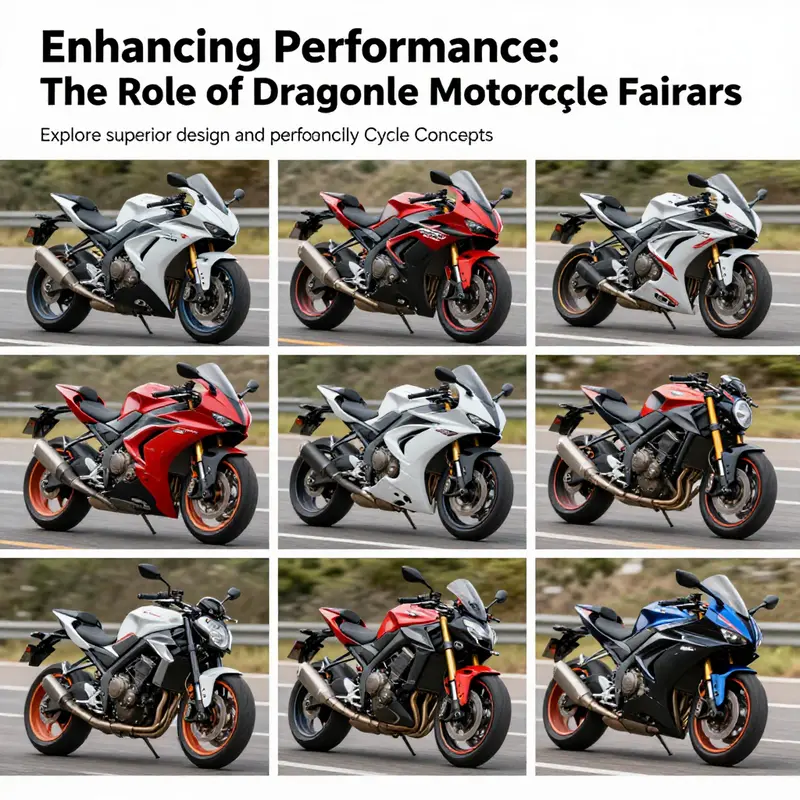
Dragonfly Cycle Concepts stands at the forefront of motorcycle fairing innovation, emphasizing high-performance and aesthetically appealing components. For business owners in the motorcycle accessories market, understanding the intricacies of dragonfly motorcycle fairings is crucial to meet consumer demands effectively. The coming chapters will delve into the importance of aerodynamics and design, the growing market demand for customization, performance testing and reliability, and the global supply chain dynamics that boost these operations. As we explore these facets, business owners will gain valuable insights into how to effectively position themselves in this competitive landscape.
Dragonfly-Inspired Motorcycle Fairings: Aerodynamics, Craft, and Rider-Centric Performance
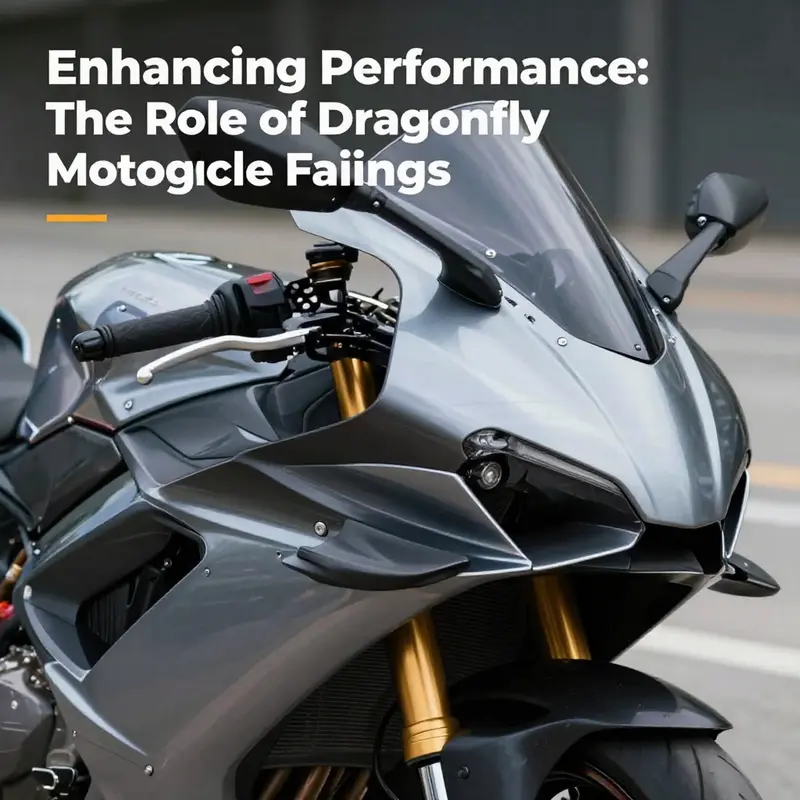
The fairing is more than a shield against wind; it is a carefully engineered interface where aerodynamics, structure, and aesthetics converge to shape a motorcycle’s behavior on the road. When designers speak of a dragonfly-inspired approach to fairings, they point to a lineage of principles drawn from nature: a shape that slices through air with minimal resistance, a skin that manages heat and durability, and a form that embraces both efficiency and personality. In this sense, the dragonfly becomes a metaphor for the way modern fairings are crafted—thin, strong, and responsive to the rider’s intent. The aim is not simply to cover the machinery but to guide the motorcycle through air with the least possible disruption, to keep the rider sheltered from turbulence, and to sustain stability as speeds climb and road surfaces vary. In such a narrative, aerodynamics and design are inseparable companions, each informing the other in a continuous loop of feedback from wind tunnel data, real-world testing, and rider experience.
At the heart of dragonfly-inspired fairings lies a commitment to streamlining the flow of air around every contour. The objective is to shape the surface so that pressure gradually reattaches to the body rather than separating abruptly, which would generate turbulent wakes that sap speed and stability. This is not a single, blunt shell but a mosaic of panels that work in concert. The panels are designed to integrate with the bike’s frame, engine, and underbody components, so the overall silhouette remains cohesive rather than piecemeal. When the surface of the fairing follows the line of the chassis with fidelity, the result is a smoother boundary layer and a more predictable airflow pattern. Riders notice this in the way the wind hugs the rider’s torso, how shoulder wind is redirected away from the helmet, and how the overall perception of speed feels steadier even when the speedometer pushes higher. These effects accumulate over hours of riding, translating into reduced fatigue on long journeys and more confident handling through sweeps and chicanes.
The aerodynamic efficiency of dragonfly-inspired fairings rests on a few core design moves that engineers repeatedly test and refine. First, the shaping emphasizes gradual transitions rather than abrupt inflections. Sharp edges can induce separation, while smoothly contoured transitions maintain a more attached flow. The geometry around the cockpit and windscreen is tuned to minimize boundary-layer thickening where the rider’s line of sight interacts with the air stream. Second, the fairing is sculpted to manage pressure differentials along the bike’s length. Long motorcycles, in particular, benefit from careful upstream shaping that reduces drag without compromising rider comfort. The result is a profile that remains stable under gusts and crosswinds, a critical attribute for riders who push toward the limits of performance. Third, vortex management plays a subtle but meaningful role. Small, strategically placed fillets and strakes can reorganize turbulence into controlled patterns rather than chaotic wake. In practice, this translates into better high-speed tracking and enhanced front-end feel, especially when entering corners with the throttle pinned and the rider seeking precise feedback from the front wheel.
The practical consequences of these aerodynamic decisions extend beyond mere top speed. Drag reduction liberates engine power that would otherwise be spent overcoming wind resistance, thereby enhancing acceleration and overall efficiency. A rider-friendly consequence is improved fuel economy during highway cruising and more consistent engine temperatures as air flows over critical components. Beyond pure performance, the fairing’s geometry also has implications for rider comfort. By shaping the wind’s path around the torso and helmet, the rider experiences less buffeting at key wind angles. This is particularly important on longer rides or in touring configurations, where fatigue can accumulate from persistent high-frequency gusts. In this sense, the dragonfly-inspired approach aligns performance with endurance, delivering a package that feels responsive at pace while remaining humane over hours in the saddle.
The materials that realize these shapes are chosen not only for their stiffness and lightness but also for durability under real-world conditions. Modern fairings leverage plastics and composite materials that resist UV degradation, maintain gloss under sun exposure, and resist cracking under impact. The lightweight nature of these materials is especially valuable because it preserves the bike’s handling characteristics, allowing the chassis and suspension to respond more directly to rider input. A reinforced internal structure contributes to the panel’s ability to absorb small hits from road debris while protecting the rider and the engine beneath. This balance of lightness and resilience is what enables a dragonfly-inspired fairing to perform across a spectrum of riding situations—from tight mountain passes where every gram of mass matters to highway stretches where stability and quiet air are prized.
Aesthetic considerations do not take a back seat to function. The visual language of a dragonfly-inspired fairing often emphasizes a clean, aggressive silhouette that communicates speed even when the bike is stationary. The gloss and texture of the surface, the depth of the color, and the precision of the joins all contribute to an impression of craftsmanship as well as capability. For riders who value customization as part of their riding experience, the finish options—ranging from deep, uniform blacks to vibrant accents—offer a chance to tailor the bike’s appearance to personal taste without compromising the underlying aerodynamics. The screens and fairing edges are designed not only to protect but also to frame the rider’s view, drawing attention to the rider’s posture and the bike’s line through the air. In the best executions, aesthetics and aerodynamics are inseparable; the form is a direct expression of function, and the function, in turn, informs the form.
The engineering rigor behind these enclosures is evident in the way fitment is conceived. A dragonfly-inspired fairing is designed to snap onto a given model with a precision that minimizes gaps and misalignments. Tolerances are tight, and the interfaces with mounting points are engineered to maintain their alignment across temperature fluctuations and road vibrations. This attention to fitment reduces local turbulence that could otherwise arise at the edge of a panel, preserving the intended aerodynamic behavior. It also contributes to the durability of the assembly, since well-aligned panels distribute loads more evenly across the framework and brackets, reducing stress concentrations over time. The rider’s comfort and the bike’s reliability thus share a common ground: both depend on the fairing’s ability to remain aligned under the pressures of high-speed wind and rough pavement.
The practical, everyday value of such a design approach is evident when riders compare notes from long journeys or spirited weekend rides. A well-executed dragonfly-inspired fairing can contribute to steadier steering and a more predictable handoff between rider input and vehicle response. The reduced flutter and smoother response translate into enhanced confidence at the edge of grip, where perceptual cues guide rider decisions. In this light, the fairing becomes a partner rather than a passive shell, amplifying the rider’s intent and widening the window where skill and machine work in harmony. This integration—airflow, structure, and rider feedback—defines the essence of the dragonfly-inspired philosophy, where every design choice is weighed against its impact on dynamic behavior, heat management, and long-term usability.
The aftermarket ecosystem surrounding model-specific fairings mirrors this philosophy. Designers aim to deliver compatibility without forcing compromises between fit and performance. A well-conceived panel system respects the bike’s radiator routing, exhaust heat, and under-fairing channels while contributing to the overall aerodynamics. The result is a product that looks cohesive when installed, with seams and joints that remain discreet and effective in reducing drag. For riders who want to explore the breadth of options available within the aftermarket, one route is to examine how different manufacturers approach model-specific fairings across popular sport and performance lines. For a broader sense of how these options vary by brand and model, you can explore the Ducati fairings category, which showcases a spectrum of tailored enclosures designed for fast, precise riders. Ducati fairings category.
The broader market context reinforces the idea that the dragonfly-inspired approach to fairings is not a niche curiosity but a generalizable strategy. As demand grows for customization and high-performance components, manufacturers invest in wind tunnel testing, high-fidelity computational simulations, and rapid-prototyping workflows that shorten the path from concept to consumer. There is a palpable emphasis on delivering more than just a cosmetic upgrade. Buyers increasingly expect enhanced airflow management, better heat dispersion around the engine, and a quiet, stable ride at speed. The fairing, in this sense, becomes a hinge point for multiple performance metrics: aerodynamic efficiency, thermal management, structural integrity, weight, and aesthetics. Each of these elements feeds into a rider’s experience, influencing everything from acceleration and cornering feel to the perception of wind pressure at highway speeds.
The dialogue about dragonfly-inspired fairings also intersects with conversations about materials science and lifecycle performance. The weight savings offered by modern composites are paired with durability improvements that resist microcracking, UV-induced embrittlement, and common impact scenarios on urban roads. This combination helps ensure that the fairing’s aerodynamic geometry remains reliable over time, even as it endures sun exposure, temperature cycles, and road debris. In practice, this means riders can count on consistent performance week after week, with less maintenance and fewer replacements required than with older, heavier enclosures. The result is a lifecycle advantage: better ride quality and sustained aerodynamic behavior across the bike’s service life.
In sum, the dragonfly-inspired motorcycle fairing embodies a holistic design ethos. It is a testament to how modern engineering seeks to harmonize shape, materials, and rider-centric considerations into a single, coherent package. The objective is not merely to reduce drag or to look fast; it is to enable riders to feel the bike’s true potential, to trust its handling at the edge of grip, and to enjoy long hours in the saddle without surrendering the thrill that comes with precision engineering. The dragonfly’s metaphor becomes a practical blueprint—a reminder that great design is, at its core, a conversation among air, structure, and human intent. As the market for high-performance, personalized motorcycling components continues to grow, this conversation will only deepen, inviting more riders to experience the synergy of aerodynamics and design that defines dragonfly-inspired fairings.
External resource: https://www.dragonflycycle.com/products/dfcc0010-black-fairing-panel
Dragonfly Configurations in Motion: The Modular Frontiers of Motorcycle Fairings and the Personalization Wave
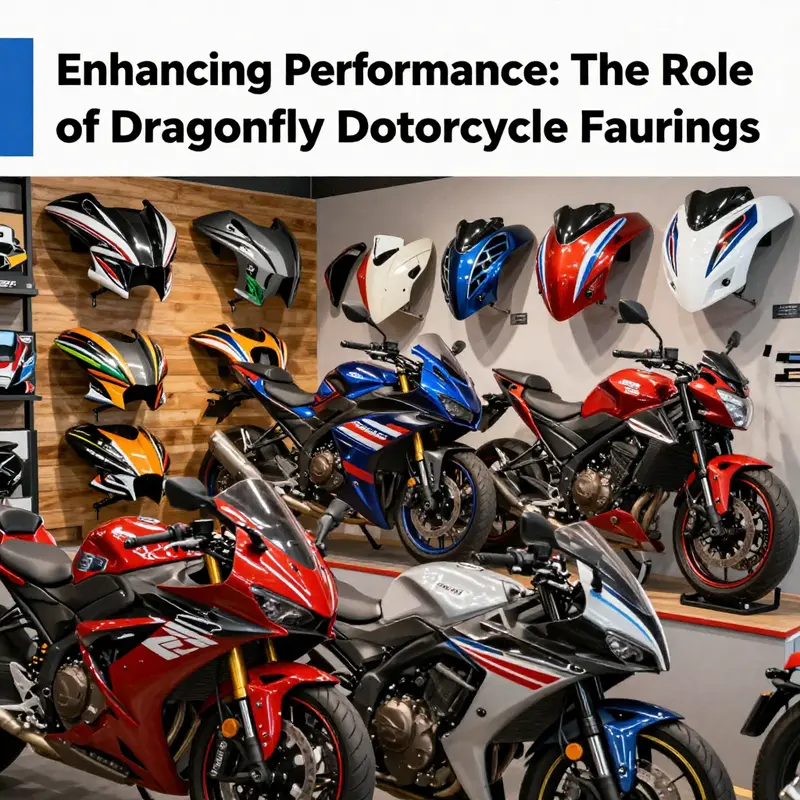
The image of a dragonfly, delicate yet purpose-built for speed and maneuverability, provides a surprising but apt metaphor for a growing chapter in motorcycle aerodynamics: the modular, highly customizable fairing system. This chapter follows a thread through design vision, market demand, and the production realities that make such adaptability not just possible but increasingly expected. It is not merely a tale of lighter panels or sleeker lines; it is a narrative about how riders increasingly demand equipment that can morph to fit different journeys, climates, and identities, all without sacrificing performance. In this sense, the dragonfly metaphor captures something essential about contemporary fairing philosophy: wings that can reconfigure without taking the rider out of the saddle, offering both protection and expression in equal measure.
Across the market, riders and builders alike are moving away from fixed, one-size-fits-all solutions. They seek configurations that can switch between a fully enclosed, aerodynamically aggressive stance and a more minimalist, city-friendly posture in a matter of minutes. This shift grows from a simple practical need—riding conditions vary, routes change, and weather is unpredictable—to a deeper appetite for customization, where the aesthetics and the functional physics of the bike can be tuned to the rider’s mood and mission. The allure of modularity lies not only in being able to strip down for warm-weather urban gnats or in keeping the wind out on long highway stints. It is also about enabling a rider to reimagine the bike’s silhouette without requiring an entirely new fairing kit for every scenario. The result resembles a system rather than a fixed body: a framework that supports alternative panels, insertable air channels, removable wind deflectors, and re-seamable textures—an architecture that can be reshaped, refined, and renewed.
The demand signals driving this modular approach are not confined to high-end race or exhibition builds. They echo a broader consumer trend toward personalization and adaptability in the aftermarket. Riders increasingly value components that can be installed or removed quickly, allowing a bike to serve touring duties on one weekend and urban commuting on the next, all with a consistent repair and maintenance footprint. A modular fairing becomes a platform for experimentation—different wind profiles, different carbon or composite materials, and different surface finishes—without the expense or commitment of a complete reassembly. This flexibility matters because aerodynamics is a moving target. Small changes in frontal area, the curvature of a chin, or the profile of shoulder lines can yield meaningful shifts in drag coefficients, engine heat management, and rider comfort. A modular system can accommodate these micro-adjustments, offering the rider a path to incremental optimization rather than a binary choice between “full fairing” and “naked” styling.
From a design perspective, the dragonfly analogy is helpful because it emphasizes balance and modular articulation. Just as a dragonfly’s wings can function as independent yet co-active surfaces, a well-conceived modular fairing uses a core shell with attachable substructures, venting ducts, and attachment points that can be toggled to reframe the air flow around the rider. The core shell remains rigid enough to maintain aerodynamic integrity at speed, while the removable components reduce weight where it matters and add protection where it counts. Important here is not a single material victory but a strategic blend of materials engineering, manufacturing agility, and assembly philosophy. Lightweight composites, high-strength polymers, and UV-stable finishes work in concert with clever joinery, modular fasteners, and standardized mating interfaces. The result is a system that feels cohesive and purposeful even as its configuration shifts.
The production ecosystem that underpins this vision is itself a narrative of gradual sophistication. Regions that have grown into hubs of motorcycle bodywork—particularly in Southeast Asia and parts of China—have cultivated capabilities that are well suited to modular, small-batch, high-precision manufacturing. Guangdong and Zhejiang, among others, have evolved from low-cost fabrication centers into sophisticated environments for polymer processing, rapid prototyping, and rapid iteration. The capacity to move quickly from concept to proto to test part—while maintaining tight tolerances and consistent UV resistance—has been a key enabler of modular design. Here, the value proposition is not only the final piece but the speed and reliability with which a concept can be proven through physical samples, tested for fit, aerodynamics, and durability, and then scaled for a broader market if it proves resonant with riders.
Riders and builders seeking these capabilities often turn toward suppliers who can offer not just parts but an integrated pathway: design insight, small-batch production, and scalable production runs that reduce per-unit costs as demand grows. This progression is particularly advantageous for modular systems, where many configurations exist within a single architecture. A modular fairing strategy can begin with a baseline package designed for broad compatibility with various models, followed by a family of add-ons and accessory panels that tailor the look and the airflow characteristics to the rider’s preferences. In this context, the modular approach becomes a way to translate design intent into practical, repeatable manufacturing, while still maintaining the possibility of bespoke, hand-finished touches for those who want something distinctly personal.
From the procurement standpoint, buyers and builders can leverage the regional strengths that have emerged over the last decade. Guangdong and Zhejiang’ s polymer processing capabilities, coupled with well-developed supply chains for automotive and motorcycle components, create a fertile ground for modular fairing systems. Advanced resin systems, layered composites, and surface-hardening finishes can be integrated into a modular design without sacrificing compatibility with existing mounting geometries or electronics. This is crucial because modern fairings are rarely just shells; they are integrated platforms that host vents, lights, switches, and sometimes even miniature sensors for rider aids. The modular paradigm preserves the ability to incorporate these features in a way that is accessible to a wide range of manufacturers and end users, rather than locking them into a single, monolithic solution.
As the market evolves, the procurement narrative grows more strategic. Buyers are looking for suppliers who can offer scalable production, consistent quality, and predictable delivery timelines—especially when working with custom or semi-custom designs. The strength of the value proposition in this context rests on a combination of design-for-manufacture discipline, efficient tooling, and an ability to accommodate evolving specifications without forcing a costly rework. The modular system is, in many ways, a platform that invites experimentation. It invites riders to imagine combinations—how a particular vent pattern might alter surface flow at high speed, or how a different panel thickness could lower overall weight without compromising stiffness or fatigue life. The capability to explore these variables in a controlled manufacturing environment helps shorten the path from concept to ride-ready reality.
In practical terms, this means a rider or builder can start with a lightweight, aerodynamically tuned core and then selectively attach or detach panels that influence the wind channel, the rider’s shielding, and even the bike’s visual identity. The core shell might provide the fortress of protection against wind buffeting, while the appendage panels shape the boundary layer and tune the flow around the rider’s body. Attach points and interface modules are designed to be intuitive, with quick-release fasteners and standardized clips that can be adjusted with minimal tools. This reduces down time between configurations and encourages experimentation. The net effect is a system that invites ongoing refinement rather than a fixed, once-per-year upgrade cycle. It is a design philosophy that respects both performance and personal storytelling—the rider’s bike as a canvas that can adapt to a changing life, a changing route, or a changing mood.
The market signals point to a future in which modular fairings become an expected option across a broader spectrum of models and price points. While the highest echelons of performance motorcycles will always push the envelope with ultra-lightweight composites and precision-engineered venting, the democratization of modular design is already underway. Contemporary riders want functional versatility without exorbitant costs. They want to upgrade surface finish, adjust airflow for different climates, and personalize the bike’s silhouette to reflect their personality. The modular system makes this possible by enabling scalable, repeatable processes that can handle small batches as easily as mass production, granting brands and aftermarket suppliers the latitude to experiment with different textures, colors, and aerodynamic variants without committing to a full redesign of the core structure.
In this context, the idea of a modular, dragonfly-inspired fairing becomes not a niche proposition but a model for mainstream design thinking. It articulates a middle ground between rigid, fixed configurations and the impracticalities of an endless inventory of full kits. The modular approach allows a company to test a concept in a controlled way, learn from rider feedback, and iterate rapidly. It also aligns with sustainability goals by enabling parts to be swapped rather than discarded as new fashions or new performance expectations emerge. If a rider wants to upgrade the look or improve airflow for a longer tour, a new panel, a redesigned deflector, or a modified vent path can be integrated without replacing the entire fairing system. In short, modularity supports longevity and adaptability in a market that increasingly prizes both.
For those ready to explore the possibilities of modular, dragonfly-inspired configurations, a practical entry point can be found in how the industry has organized its offering around familiar, user-centered categories. A clear path emerges from a baseline, scalable platform that can be extended through a family of add-ons and upgrades. The rider gets a sense of continuity—the same core profile remains, while the configuration shifts to suit the moment. The manufacturer benefits from a common tooling, a shared supply chain, and a more predictable development trajectory. The shop that builds or sells these parts gains the ability to offer value-added customization without bearing the cost of bespoke development for every single customer. In a market that values speed and personality, such a strategy can be decisive.
Ultimately, the modular fairing approach is not just about physics or aesthetics. It is about a rider’s evolving relationship with their machine. A bike becomes less a fixed artifact and more a living platform, capable of growing alongside the rider’s experiences. This is the promise of a dragonfly-inspired future: a design language that is as adaptive as it is precise, as expressive as it is efficient. It is a stance that respects the rider’s time, the machine’s performance envelope, and the shared craft of the people who design, build, and tune these systems. The market is embracing this shift, and suppliers are responding with processes that can sustain rapid iteration, coherent integration, and reliable delivery. In that sense, the dragonfly’s wings are not merely a metaphor; they are a blueprint for the next generation of motorcycle fairings—a blueprint that asks riders to imagine fewer limits, not fewer choices.
For those who want to peek behind the curtain at how modular strategies are being materialized in the real world, there is a straightforward heuristic: consider how a category of fairings can be made to accommodate multiple models and configurations without forcing a full new tooling cycle. The core question becomes how to design interfaces that are robust, repeatable, and easy to reconfigure. The best implementations balance a shared backbone with well-defined, swappable peripherals. In practice, this means standardized mounting interfaces, predictable load paths, and a component taxonomy that supports vertical integration—from material selection and surface finish to the attachment hardware and the protective sealing that keeps water and dust at bay. When these elements align, the rider experiences a seamless transition between configurations, and the system earns its keep as a durable, adaptable, and visually compelling platform.
The trajectory is clear: modular, adaptable fairings are here to stay as a mainstream option, not merely a premium add-on. They reflect a deeper desire among riders for ownership and customization without the burdens of bespoke engineering for every individual bike. They also align with the manufacturing realities of a world where tailorable production and rapid prototyping have become standard capabilities. As the industry continues to learn from rider feedback and to refine modular interfaces, a broader spectrum of models, aesthetics, and performance profiles will come within reach for more riders. The dragonfly’s spirit—agile, resilient, and capable of transforming its form in flight—will thus remain a resonant symbol for how we think about fairings. They are not just shields from the wind; they are reconfigurable skin that lets a motorcycle speak in many voices through a single, coherent architecture.
For readers who want to explore how this approach translates into real-world choices, the BMW fairings category provides a practical reference point for how modular and customizable elements can be structured within established model ecosystems. It illustrates how a rider can balance protection, visibility, and style while maintaining compatibility with a broad array of accessories and styles. This is not an endorsement of any single brand but an illustration of how market opportunities unfold when manufacturers commit to flexible, testable, and scalable designs. In the end, what matters is the intelligent integration of form and function, the disciplined use of materials and interfaces, and a design ethos that treats the bike as a platform for ongoing personal expression as much as a machine built for performance. As modularity becomes more widespread, riders will discover that the dragonfly’s wings are not merely decorative—they are the enabler of a riding experience that can adjust its temperament to match the road, the weather, and the rider’s own story.
External resource for further reading: https://www.globalmanufacturinginsights.com/china-motorcycle-fairing-suppliers-2025
Wings of Wind: Aerodynamics, Reliability, and Global Sourcing in Dragonfly Motorcycle Fairings

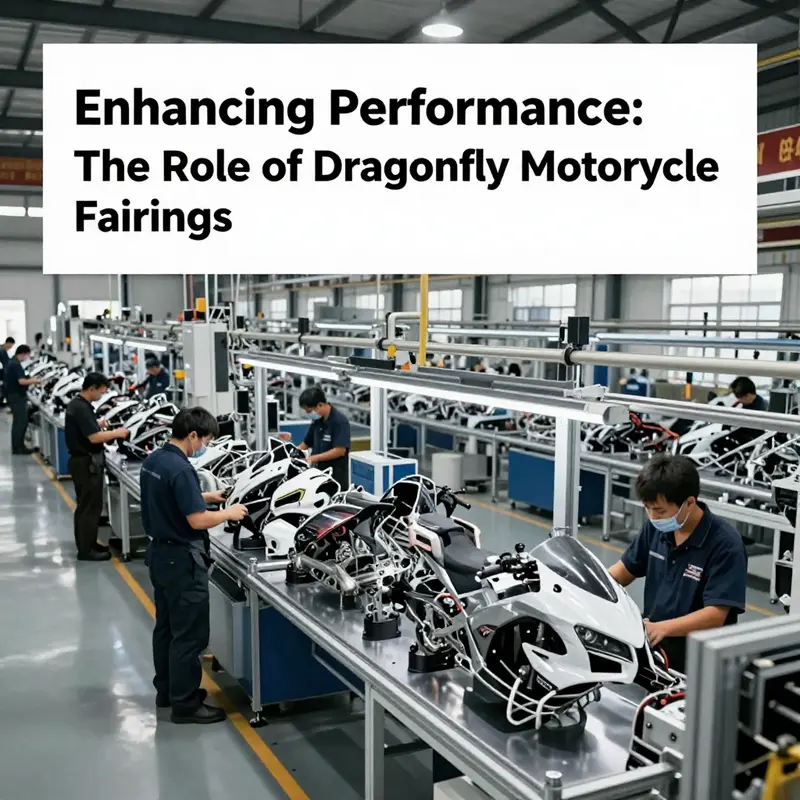
Across the spectrum of motorcycle design, the fairing sits at the intersection of form and function. It is not merely a shell that dresses the bike; it is a carefully engineered system that shapes airflow, protects the rider, and carries digital and mechanical lifelines. A Dragonfly-branded approach to fairings embodies performance and reliability. To understand its significance, riders today demand air that flows cleanly, weight that supports acceleration, and components that endure harsh riding conditions. The Dragonfly panel aims to balance aerodynamics with robustness while accommodating modern electronics for an immersive and connected riding experience. Though model codes vary, the underlying principles point to a market where performance and durability hinge on material choice, manufacturing discipline, and credible performance data. The fairing’s promise is to deliver high-speed stability without adding excess weight or maintenance burdens.\n\nAt the heart of this narrative is a practical testing philosophy. When a manufacturer states that components have undergone rigorous testing, riders read it as a commitment to real-world reliability. The performance metrics for a Dragonfly fairing emphasize high-speed stability, integrated weight and components, and the integrity of the aerodynamic and structural envelope under load. A stable profile around 90-100 mph reflects careful shaping of the nose, side panels, and transitions that minimize flow separation and buffeting, supporting predictable handling and tire and suspension performance.\n\nWeight remains a decisive constraint even for modern fairings. A Dragonfly panel weighing around twenty-five pounds is meaningful when considering the total bike-plus-fairing system and embedded electronics such as a radio amplifier. Integrated components reflect a broader industry trend toward modular multimedia and communications systems housed inside the fairing. The challenge is to manage heat, vibration, and water ingress while preserving aero efficiency. The result is an aerodynamic architecture where materials, forming methods, and bonding with embedded components determine acoustic comfort and thermal characteristics for the rider.\n\nFrom a manufacturing landscape, buyers are advised to source fairings from reputable manufacturers to secure reliability and post-purchase support. The global production ecosystem for motorcycle fairings centers on regions like China, with hubs in Guangdong, Zhejiang, and Fujian that offer capabilities from high-volume injection molding to advanced composites. Guangdong exemplifies scale and efficient logistics; Zhejiang around Rui’an emphasizes precision engineering with fiberglass and carbon fiber; Fujian provides cost-effective solutions for standardized designs. Taken together, these regional strengths shape a purchasing landscape where material durability, UV resistance, and supplier qualification matter as much as the raw panel geometry.\n\nCredible performance data—laboratory tests, field feedback, and independent lab reports—helps bridge the gap between lab metrics and real-world riding. Dragonfly’s testing protocols prioritize endurance and extreme conditions, offering a benchmark for evaluating a panel’s resilience over time rather than the first miles. The fairing is a system that intersects with electronics and mounting hardware, so data should cover material rigidity, panel fit, UV stability, connector reliability, and thermal and vibrational load paths. A credible supplier provides data, certifications, and the ability to trace materials and processes, giving buyers confidence in a long-term investment.\n\nFor readers exploring the broader ecosystem, brand-specific fairings offer a practical lens on fitment, geometry, and finish. Comparing how different brands approach interfaces with the bike frame helps highlight the balance between aesthetics and engineering requirements. The sourcing narrative extends beyond the panel to a global supply chain, where material science, injection technologies, and automated inspection enable a range of options from standardized, cost-efficient designs to carbon-intensive architectures optimized for stiffness and style. The Dragonfly approach integrates performance with a disciplined testing and sourcing framework, serving as a reference for buyers navigating a network of manufacturers and material specialists. External resources on supplier evaluation and risk mitigation can offer actionable guidance for choosing a credible partner.\n\nThis concise, credibility-focused perspective helps riders and shop owners assess fairings for long-term performance. A transparent set of data, material durability, weather sealing, and modular electronics support a dependable platform for speed and endurance. The goal is not merely to look fast, but to ride with confidence in a panel designed to endure.
null
null
Final thoughts
The insights derived from the comprehensive examination of Dragonfly motorcycle fairings highlight their pivotal role in the motorcycle accessories market. With a keen focus on aerodynamics, customization, reliability, and the robust supply chain, business owners are better equipped to address emerging challenges and consumer preferences. As the global demand for high-performance motorcycle components grows, aligning with manufacturers like Dragonfly Cycle Concepts could be a strategic move in fostering brand loyalty and ensuring competitive advantage. By prioritizing quality and innovation, business owners can not only enhance their offerings but also significantly impact rider experiences.