
Discount motorcycle fairings are revolutionizing the way business owners approach motorcycle accessories. These protective coverings not only play a pivotal role in enhancing aesthetics and performance but also represent a cost-effective solution for retailers and enthusiasts alike. As the market for motorcycle parts grows, so does the demand for fairings that deliver quality without breaking the bank. This article explores the economic implications behind discount fairings, ensures quality assurance measures, highlights technological advancements in sourcing, and examines the broader societal impacts. By understanding these facets, businesses can better position themselves in a competitive market. Each chapter delves deeper into these themes, aiming to equip business owners with insights necessary to navigate and thrive in the evolving landscape of motorcycle fairing sales.
Value in the Wind: The Quiet Economics of Discount Motorcycle Fairings
Discount motorcycle fairings exist at the intersection of function and fantasy. They promise wind protection, improved aerodynamics, and a refreshed look for riders who want the benefits of a fairing without paying the premium that often accompanies branded, OEM, or meticulously engineered aftermarket options. The economics behind these discounted components is not merely about price; it is a nuanced calculation of risk, depreciation, performance, and how a rider uses the machine. In many markets, the choice to buy discounted fairings reflects a broader shift in consumer behavior: more riders are willing to trade some degree of polish for a lower upfront cost, provided the trade-offs are understood and managed. This chapter surveys that complex landscape, tracing how cost savings are generated, where value actually sits, and how shoppers can navigate trade-offs without sacrificing the essential benefits a fairing is meant to deliver.
At heart, a fairing is an engineered boundary between rider, machine, and air. It channels flow, shields the rider from wind and debris, and can dramatically influence ride comfort at highway speeds. These functional gains are often conflated with style, which adds a second layer of value. Discount fairings exploit the same physics as their more expensive counterparts but come from different supply chains. They may originate from surplus inventory, factory overruns, or generic molds that reproduce a widely used design. The price discipline arises from economies of scale, shorter development cycles, and a willingness to forgo some refinements or brand prestige. The result is a product category that can deliver meaningful, tangible benefits to budget-conscious riders while carrying a greater spectrum of variability in durability, fit, and long-term resilience.
The economics of discount fairings hinges on cost reception across the supply chain. Molds, materials, labor, and quality controls all contribute to the final price. When a supplier plants the same mold to churn out dozens of units rather than a few, the per-unit cost drops. The temptation for sellers is to push the pricing model toward bulk sales, where price per piece slides as order volume climbs. A practical illustration appears in bulk offerings that can range widely but illustrate the principle: for orders of around twenty pieces, prices can land in a range roughly from seven hundred to fifteen hundred dollars in total. That scale makes sense when you consider the fixed costs of tooling, painting, packaging, and shipping are amortized across more units. It also reflects the marketplace’s tolerance for variability in the finished product. The economics of scale are real, yet they do not erase the gaps that can appear between a discounted unit and a premium alternative; they simply set the frame in which those gaps can be interpreted.
Still, price is not a perfect proxy for value. A one-year or six-thousand-kilometer warranty can tilt the economics in favor of discounted fairings by offering a safety net that lowers the apparent risk. Warranties acknowledge that some lower-cost production methods may carry greater exposure to defects or early wear. In practice, a warranty shifts the calculation from “Will this part last?” to “If it fails, what will it cost to replace or repair, and how quickly can I recover riding time?” For many riders, that assurance is worth more than a few extra dollars saved on the sticker. It is a reminder that the true cost of ownership encompasses more than the initial purchase price; it includes maintenance, potential downtime, and the rider’s willingness to tolerate or repair suboptimal outcomes.
What, then, should a buyer expect from discount fairings in terms of performance and durability? Universal designs, such as half fairings, offer a pragmatic compromise. They cover the headlight and instrument cluster while leaving the engine exposed. Such configurations tend to deliver essential wind protection and the easy access that riders with a preference for DIY maintenance appreciate. The downside is reduced wind buffering at higher speeds and less structural integrity compared with full-coverage fairings. These are not merely cosmetic differences; they translate into ride quality, fatigue on longer trips, and how the wind loads the mounting points under heavy gusts. For a rider who uses the motorcycle for daily commuting or short trips, a half fairing can deliver the core benefits at a substantially lower total cost of ownership. For those who chase high-speed stability or long-distance comfort, the appeal of a full, OEM-grade enclosure may still hold a premium, even when discounted, because the margin of safety and the reliability of fit can be more important than headline price.
Material selection is a central lever in the economics of discount fairings. Cheaper units frequently utilize materials that are light, easy to mold, and inexpensive to manufacture. The trade-off shows up in stiffness, impact resistance, and long-term weathering. ABS and fiberglass composites are common in lower-cost fairings; they are sufficiently robust for typical riding conditions but can be more prone to cracking, fading, or deformation under extreme heat, sun exposure, or a collision. In contrast, higher-end fairings—whether OEM or top-tier aftermarket—often employ more advanced composites or reinforced polymers designed to resist distortion and color shift. While the price gap is substantial, the purchase decision increasingly centers on how the material expected life aligns with a rider’s plans. A commuter who averages moderate mileage may find an ABS-based or fiberglass option perfectly adequate for several seasons. A sport-oriented rider who logs long highway stints or lives in harsh climates might justify a higher investment in material resilience and a longer-term warranty.
Another dimension of the economic equation concerns fitment and compatibility. The allure of discounted units can fade if the product struggles to fit the bike as advertised. Fitment is not merely about aligning screw holes; it encompasses the alignment of plastic panels with the fairing’s airflow path, the consistency of mounting points, and the way the fairing interacts with the bike’s other components when the rider leans into turns or encounters vibrations. In this terrain, online fitment guides and product data sheets play a crucial role. They help buyers verify that the chosen fairing aligns with the frame geometry, tank shape, and rider position. The reliability of these guides can significantly influence the perceived value of discounted fairings. When fitment guidance is precise, the rider experiences fewer surprises during installation and after the first ride. When it is vague, the savings on the sticker can quickly evaporate into frustration, extra hardware, or additional custom fabrication.
The role of e-commerce in enabling discount fairings cannot be overstated. Digital marketplaces harmonize supply from a diverse set of suppliers, sometimes including sellers that offer factory-direct pricing or closeout deals. The convenience of browsing, comparing, and reading customer feedback accelerates decision-making for riders who feel pressure to upgrade their machines before riding season peaks. Yet, certainty is crucial. Without the in-person assurance that comes with a well-stocked showroom, riders lean on return policies, documented fitment notes, and warranty terms to preserve the value proposition of discount buys. This is why credible sellers emphasize compatibility checks, high-resolution photos, and transparent disclaimers about differences in finish or thickness. The consumer learns to treat the price tag as one part of a broader equation that includes fit, warranty, and the expected lifespan of the component. The outcome is a marketplace where discount fairings can be a smart choice for many, provided buyers do their homework and calibrate their expectations against the specific performance profile they require.
Consider the practical implications of these choices. A rider on a budget may opt for discount fairings as a strategic upgrade that yields a better look and improved aerodynamics without the premium price. The decision becomes more complex when the rider uses the bike in a region with harsh weather or rough roads. In such contexts, the durability of materials and the resilience of the finish can determine whether the upfront savings translate into actual value a year later. A careful buyer will weigh the cost of potential replacements, the frequency of maintenance, and the likelihood of fit issues that require additional time or professional service. In other words, discount fairings are not merely cheaper shells; they are components that can influence the rider’s experience, both positively and negatively, depending on how the product is chosen, installed, and used.
An additional consideration is the total cost of ownership that often goes beyond the purchase price. While discount fairings reduce initial outlay, some buyers discover that lower-cost options may incur higher maintenance costs over time. Scratches, color fading, or panel warping can necessitate frequent touch-ups or replacements. In a few cases, parts that fail early may require professional repair or rework to achieve the same level of fit and finish expected from more premium options. The buyer who anticipates tight budget constraints may decide that a slightly longer ownership horizon, with incremental upgrades and replacements, provides a more stable financial path than a single, deep discount purchase. Conversely, riders who value quick aesthetics and short-term upgrades may view discounted options as a favorable compromise, especially when matched with robust installation instructions, a reasonable warranty, and a trusted return policy.
To tie these threads together, the market for discount fairings reflects a broader trend in consumer electronics, automotive parts, and motorsport accessories: price competition drives innovation in packaging, fitment guidance, and post-purchase support. As the global motorcycle fairing market expands, sellers and buyers alike navigate a landscape where price signals quality, but not universally. The literature and industry analysis suggest that discount fairings can deliver meaningful aerodynamic and cosmetic benefits at a fraction of the cost of premium products. Yet the value proposition depends on context: how the rider uses the bike, the climate, the terrain, and the rider’s tolerance for risk in fit and durability. For many, the math adds up in favor of discounted options, provided the purchase is paired with due diligence and a pragmatic assessment of long-term needs. For others, the premium of a higher-quality fairing may yield better ride comfort, longer service life, and fewer headaches when riding in adverse conditions. The decision is ultimately a balance of price against risk, and a rider’s personal calculus often shifts with changing circumstances, from daily commutes to weekend canyon carving.
For riders curious about the breadth of available options and the way retailers frame diversity within the category, exploring a dedicated catalog can be illuminating. The structure and presentation of a category page can offer insight into how suppliers position discounted fairings relative to OEM and premium aftermarket counterparts. It can also reveal the range of fitment notes, warranty terms, and installation guidance that accompany discounted products. As a practical note, many shoppers find it helpful to view a few representative models within a single category, compare the listed warranty terms, and assess the stated compatibility for their own bike model. A close read of the specification sheets and a quick assessment of the required mounting hardware can save time and prevent mismatches that would undermine the value proposition of the discount.
From a consumer education perspective, the chapter’s themes also underscore the importance of fitment accuracy and post-purchase support. In the absence of a well-known brand badge, buyers must rely on the credibility of the seller, the clarity of the product description, and the availability of reliable return or exchange options. In markets where consumer protection frameworks are strong, these supports function as a counterbalance to price. In other markets, they become the first line of defense against disappointment. The careful buyer recognizes that discount fairings are not universal solutions; they are a class of products with a spectrum of quality tied to the specifics of construction, material choice, and supplier reliability. The question becomes less about whether discount fairings exist, and more about how to align a particular discounted option with the rider’s expectations, usage patterns, and maintenance mindset.
As the chapter moves toward the broader market picture, it is worth noting the role that data and market analysis play in shaping decisions. Industry reports on the global motorcycle fairing market underscore growth driven by expanding rider populations and the ongoing demand for customizable aesthetics coupled with performance gains. Price sensitivity is a constant companion to this growth, but so too is the rising sophistication of online retail tools, fitment databases, and user reviews. For readers seeking a synthesis of these dynamics, a credible external market analysis can provide a framework for understanding where the discounts come from, how long they are likely to last, and what the long-term implications might be for maintenance and ownership costs. External reference: https://www.marketsandmarkets.com/Market-Reports/motorcycle-fairing-market-349818713.html. Within this broader context, the consumer’s decision to pursue discount fairings becomes part of a broader narrative about value, resilience, and the evolving economics of personal mobility.
For those who want to explore how a given category is curated and presented online, a practical touchpoint is the category pages that organize fairings by brand, model compatibility, and design language. These pages illustrate how vendors convey fitment notes, support mechanisms, and warranty coverage alongside price. They also show how a discount tier can be one among several options designed to meet different riding needs. The presence of well-structured fitment information and transparent warranty terms often correlates with higher consumer confidence in discounted offerings. In short, discount fairings can be a compelling value proposition when paired with solid guidance, reliable return policies, and a reasonable expectation of performance. The economics, while driven by price, ultimately rests on a careful alignment of product capability with rider needs and risk tolerance.
To close the loop on practical guidance, consider the following approach when weighing discounted fairings. Start with a clear assessment of riding goals: daily commuting versus performance-focused weekend riding, short trips versus long tours, and the climate in which you ride. Next, evaluate the fitment information and any online guides available. Then, weigh the warranty terms against the expected duration of ownership. Finally, recognize that the price is only one axis of value. A well-chosen discounted fairing that fits properly and holds up under typical use can deliver a satisfying blend of aesthetics and protection at a cost that fits a wide range of budgets. Engaging with curated product categories and reading customer feedback can further illuminate which options are worth pursuing. The economics of discount motorcycle fairings, after all, are about not just saving money but preserving riding confidence, comfort, and the joy of controlled wind across the road.
null
null
From Factory Floor to Front Line: How Technology Transforms Sourcing Discount Motorcycle Fairings
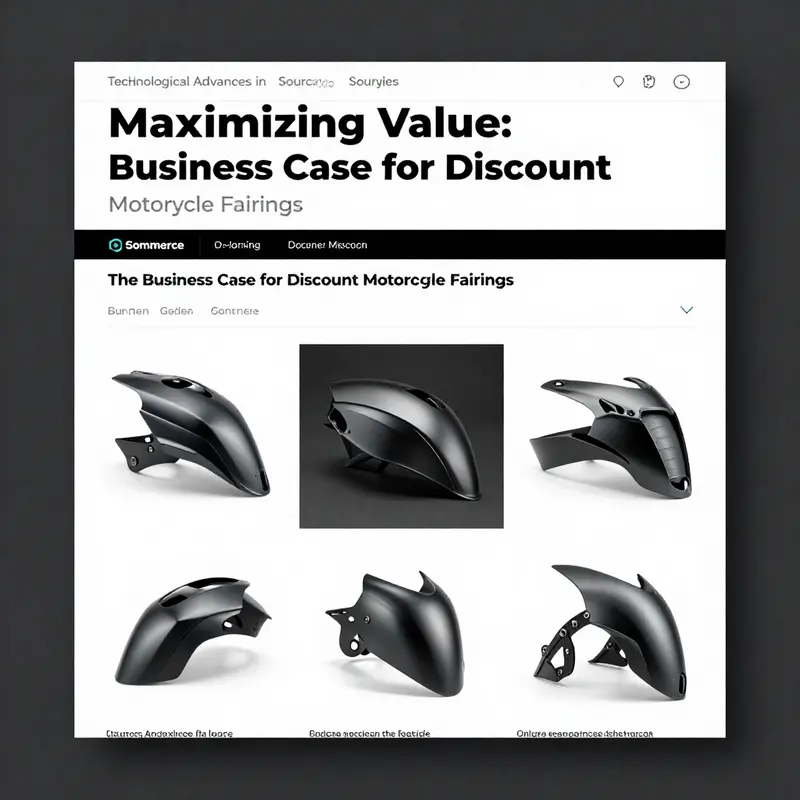
The realm of discount motorcycle fairings is being rewritten not by louder marketing or flashier finishes, but by a convergence of smarter materials, smarter design, and smarter supply chains. The chapter you are about to read follows that convergence as it moves from the factory floor into shop shelves and, ultimately, onto riders who want performance, aesthetics, and value without compromising safety or fit. The story begins with materials, moves through design and manufacture, and ends in the marketplace where digital marketplaces and information transparency enable informed purchases under tight budgets. In this evolving landscape, discount fairings are not mere leftovers or off-brand knockoffs; they are the result of deliberate engineering decisions, scalable production, and a logistics ecosystem that rewards speed without sacrificing reliability. As margins tighten and consumer expectations rise, the technology behind sourcing becomes the critical differentiator—yet it remains largely invisible to most riders who simply want a fairing that fits and looks right for a price that makes sense. The current wave is practical, not merely aspirational, and its implications ripple through every step of the value chain, from materials selection to after-sales support.
At the heart of this transformation lies materials innovation. Lightweight composite materials have moved beyond the realm of high-end race components and into the mainstream lines that power discounted offerings. Advanced fiberglass-reinforced polymers and carbon fiber blends have become more accessible through scalable production, maintenance of structural integrity, and predictable performance characteristics. The result is a fairing that resists impact, maintains stiffness under load, and reduces weight—without inviting price penalties that would undercut the appeal of discounted options. In practical terms, lighter fairings improve handling by lowering the moment of inertia and reducing the gyroscopic effect of the bike’s mass, while still delivering the protection a rider expects from a full set. These improvements matter when a rider spends hours perched behind a windscreen, where even small aerodynamic gains translate into meaningful comfort and efficiency.
Alongside new materials, aerodynamic design software has matured to the point where wind tunnel testing is not a prerequisite for every iteration. Modern computational fluid dynamics tools enable designers to simulate airflow around complex shapes, identify drag reductions, and optimize cooling paths for integrated systems. For buyers, this translates into more aerodynamic options that can be produced at scale and at lower marginal costs. The software-driven design process also supports rapid iteration, which is essential for discount fairings that must compete with established lines on price while offering competitive performance. The result is a broader range of shapes and configurations that satisfy a spectrum of riding styles, from casual cruising to aggressive sport riding, without requiring the rider to break the budget for a premium callout.
Precision manufacturing techniques complete the triad of technological advances that empower discount fairings. Computer numerical control (CNC) machining provides consistent cuts and tolerances, ensuring a snug fit to the frame and mounts. Automated layup processes for composite materials accelerate production while maintaining uniform resin content and fiber orientation. The combination of these methods yields components that meet functional requirements—rigidity, impact resistance, and attachment integrity—while enabling cost-effective mass production. The payoff is efficiency at scale: lower unit costs through repeatable processes, reduced waste, and shorter lead times. In markets driven by price sensitivity, these efficiencies translate into meaningful savings for buyers who are shopping across a broad catalog of options.
The geography of sourcing is equally important as the techniques themselves. The current climate features a pronounced emphasis on regions that can combine quality assurance with rapid production cycles. In particular, a cluster of export-oriented facilities in parts of East and Southeast Asia has built vertically integrated operations designed to manage the entire lifecycle of a fairing—from raw materials through finished parts—under one roof. Digital quality control and ISO-based compliance have become non-negotiables in these environments, not as aspirational labels but as operational norms that enable consistent output. The resulting competitive edge is twofold: suppliers can offer lower prices through economies of scale and process discipline, while buyers gain the confidence to order with smaller risk and shorter iteration times.
A notable advantage of this setup is the growing willingness to accommodate low-mMOQ pilot runs. Startups and small shops frequently need to validate a design before committing to large inventories. By supporting small-batch productions, suppliers reduce the financial exposure for new entrants and allow for quicker adjustments based on real-world feedback. This flexibility democratizes access to modern fairing technology, letting more riders and retailers pilot new styling and performance concepts without saddling themselves with excessive stock or obsolete designs. The net effect is a more dynamic marketplace where experimentation can happen at a pace that aligns with evolving consumer taste and riding needs.
Rapid customization has become more than a boutique capability; it has become a practical service that underpins discount offerings. The same modular design principles that enable a bike to be dressed in an interchangeable aesthetic also permit modular production lines to respond quickly to demand shifts. A supplier can swap materials, adjust thickness, or alter mounting geometries to fit a broader range of models, often by updating digital fitment data rather than overhauling tooling. For consumers, this translates into better-fit options that still land in the discount bin because the per-unit cost of customization has fallen. When coupled with online fitment guides and intelligent search features, shoppers can self-validate compatibility across a wide array of models, reducing returns and increasing satisfaction. In this ecosystem, the buyer’s confidence grows as more information becomes available in a transparent, digestible form.
These trends do not occur in a vacuum. They are intensified by the ongoing global shift toward electrification in motorcycles. Modular fairing designs that accommodate battery packs, cooling systems, and electronics have become a strategic feature rather than a cosmetic add-on. The modular approach supports a future where fairings can be updated or swapped to adapt to newer architectures without a complete redesign. For procurement teams, this is a decisive factor: cost-conscious buyers can pursue economies of scale while ensuring technical compatibility with next-generation powertrains. It also expands the market for discount options, because compatibility is less about a single model year and more about standardized interfaces and adaptable interiors.
From a buyer’s perspective, the digital marketplace has become the front line of this transformation. E-commerce platforms enable access to a broad spectrum of suppliers, designs, and materials, bridging the distance between the factory and the rider who wants a bargain. The online experience is not just about price comparison; it is about confidence built through data. Fitment guides, 3D visualization tools, and review ecosystems reduce the guesswork that once accompanied buying a fairing sight unseen. The ability to cross-check a model, confirm mounting points, and view compatibility with adjacent components creates an environment where a discount option can feel as reliable as a full-price alternative. In this sense, discount fairings are increasingly tied to the quality of information that accompanies them.
All of these capabilities hinge on a web of partnerships and standards. The Guangzhou Sourcing Fair, for example, is a marketplace where buyers and vetted suppliers connect to explore scale-ready manufacturing and technology-enabled production. Industry experts point to such venues as essential for understanding regional strengths, certifications, and compliance readiness. They emphasize that strategic sourcing today requires not only evaluating price and lead time but also assessing a supplier’s digital quality controls, process maturity, and ability to respond to evolving design requirements. The emphasis on certifications and process transparency makes it possible to separate credible discount offerings from lower-quality options.
To illustrate how this ecosystem translates into practical outcomes, consider the lifecycle of a new design concept. A small retailer or a workshop with ambitious plans might sketch a fairing in software, test a few segments with a pilot order, and rely on a modular frame interface to guarantee compatibility across a portfolio of bikes. If the design proves viable, a larger run follows, underpinned by precise CNC-cutting, controlled layup, and rigorous inspection. The economics then shift: the more a supplier can standardize interfaces and reuse tooling across multiple models, the lower the incremental cost of each additional unit, even as the design evolves. The result is a price point that looks attractive to buyers seeking discount options without compromising performance, fit, or the surface quality that riders expect.
This is the practical promise that researchers and practitioners emphasize when they talk about the future of discount motorcycle fairings. It is not a dream of wholesale commoditization but a carefully engineered capability to deliver value through advanced materials, better design tools, and scalable manufacturing, all anchored by digital platforms that make information accessible and trustworthy. When a rider browses an online catalog and encounters a fairing option with clear compatibility data, quantified performance estimates, and a history of consistent quality checks, that rider experiences a form of assurance that used to be the exclusive domain of premium lines. Even at discounted prices, the reliability of the product is now supported by a system rather than by luck.
For readers who want to see the latest in design iteration and collection development, the 2023 new fairings category provides a snapshot of how fresh shapes and modular concepts are being introduced to the market. It is a reminder that discount does not have to mean dated or compromised. It can mean smarter allocation of materials, faster production cycles, and better integration with the electronics and aerodynamics of modern motorcycles. If you are exploring options and want a tangible sense of the current design vocabulary, consider reviewing the latest offerings in this category as a practical reference point. 2023 new fairings
Beyond the shop floor, another critical dimension is the alignment of supplier capabilities with customer expectations. The rise of low-MOQ pilot runs, rapid customization, and modular designs requires a supplier ecosystem that tracks and communicates in real time. Online fitment guides, component catalogs, and interactive support tools help reduce post-purchase friction and returns. This is particularly important for discount products, where price sensitivity coexists with a demand for dependable performance. Buyers increasingly demand clear documentation of material composition, cure cycles, and mounting specifications, as well as evidence of quality control systems and traceability. In response, manufacturers and distributors invest in digital twins of their production lines and in cloud-based data aggregation that enables traceability from raw material batch to finished part. The result is a more resilient supply chain that can absorb shocks, adjust to demand surges, and maintain quality even at scale.
The sourcing narrative also has a strategic, global dimension. The interplay between cost leadership and quality assurance in a high-volume, price-sensitive market requires a careful balance of regional strengths, certifications, and logistical agility. Suppliers with vertically integrated facilities in key regions can offer competitive pricing while maintaining consistent output and reliable lead times. Buyers, in turn, can leverage these advantages by building diverse supplier portfolios and by using data-driven procurement strategies that align with demand signals from e-commerce platforms and fitment databases. The aim is not merely to chase the lowest price but to secure a bundle of value: dependable fit, acceptable weight, predictable performance, and a warranty framework that gives riders confidence in discounted investments. This is where the full value proposition comes together—the combination of material science, computational design, precision manufacturing, and a responsive logistics network that makes discounted fairings viable for a broad spectrum of riders.
The narrative would be incomplete without a nod to the broader market dynamics that shape these developments. The growth of online communities, influencer channels, and professional reviews contributes to an information-rich environment where buyers can compare alternatives with a level of granularity that was not feasible a decade ago. The transparency associated with digital sourcing reduces the information asymmetry that long plagued budget purchases. It is now possible to understand not only the price and the fit but also the production practices, the supplier’s quality history, and the degree of customization possible within a given price tier. In this sense, discount motorcycle fairings have matured into a technologically driven product category, where the price advantage is reinforced by the reliability gained through modern manufacturing, measurement, and management systems.
If there is a caveat to this optimistic view, it lies in maintaining vigilance over quality as production scales. The ease of ordering online can obscure subtleties in material grade, finishing tolerance, or fit particulars that matter to a rider who wants a pristine aesthetic and a precise silhouette. Therefore, the best practice for both buyers and suppliers is to embed verification into every step of the process. Preproduction samples, third-party testing, and clear return policies are not conveniences but essential safeguards. In the long run, those safeguards help sustain discount offerings by ensuring that cost savings do not come at the expense of safety and reliability. In a market where a fairing may be the first line of defense for a rider against wind and debris at highway speeds, that balance matters more than any single factor of price.
External research and industry guides reinforce this strategic approach. They highlight the importance of evaluating suppliers for regional strengths, certifications, and compliance readiness, helping buyers identify partners capable of delivering both value and consistency. The synthesis of these insights with practical procurement practices—such as pilot runs, modular design adoption, and robust online fitment assistance—forms a blueprint for responsibly embracing discount fairings as a legitimate, scalable option for a wide range of riders. For readers seeking further context on global supplier evaluation and the role of Chinese exporters in this ecosystem, a detailed analysis is available through external research, which offers a framework for strategic sourcing and supplier qualification. External reading: https://www.sourcinginsider.com/strategic-sourcing-of-motorcycles-key-chinese-exporters/
Riding on a Budget, Reconsidering Safety: The Social Footprint of Discount Motorcycle Fairings
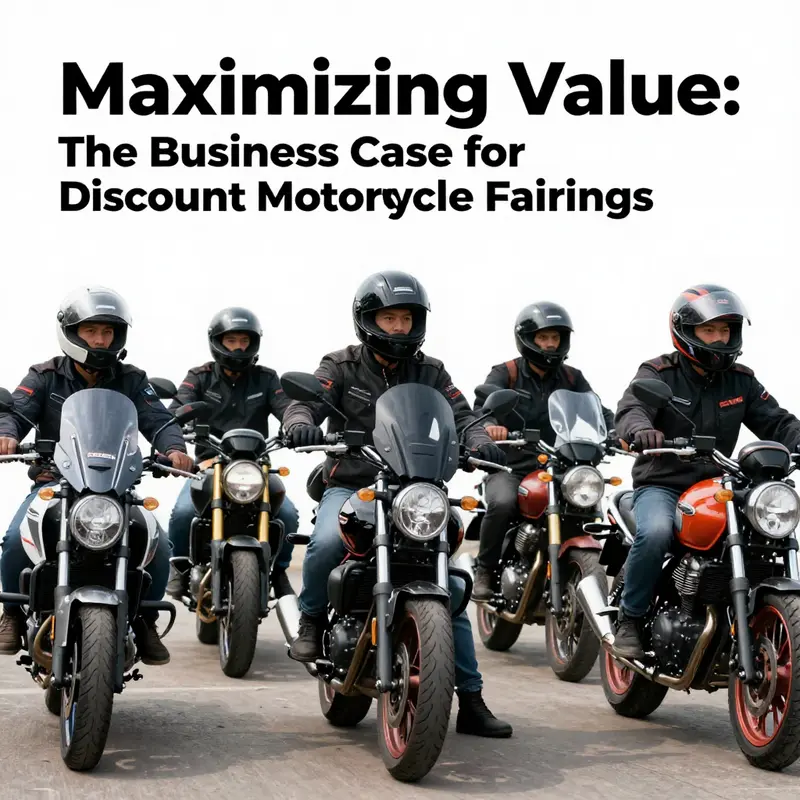
Riding a motorcycle is a dialogue between speed, protection, and identity. In that conversation, fairings serve as a translator: they speak aerodynamic efficiency while signaling style. When discount fairings enter the market, they shift that conversation in notable ways. Prices drop, access broadens, and a wider slice of riders can slip into a protective layer that was once out of reach. But price is not the only variable; the social math changes as well. The discussion that follows peers into the ripples beyond price tags, asking how cheaper plastic and composite shells affect safety norms, repair culture, environmental footprints, and the everyday choices of millions who ride on city streets, coastal highways, and rural lanes. It is not a sermon about virtue or brand loyalty. It is a map of how discount fairings touch the fabric of riding communities, how they reshape risk, and how individuals and institutions respond.
Affordability and accessibility sit at the core of the social story. When a fairing that once cost a small fortune becomes a discounted option, more riders can protect themselves without sacrificing fuel or cap space for other necessities. This widening of the safety net aligns with broader goals of public health and mobility. In practical terms, lower prices make it feasible for new riders to complete a protective setup—helmet, jacket, gloves, and a sturdy fairing—without resorting to makeshift solutions or delayed purchases. The result can be a gradual normalization of protective gear as a baseline, not a luxury. Yet price alone cannot guarantee safety. The market’s pressure to move inventory quickly can tilt the calculus toward lower-cost manufacturing, mass production shortcuts, and shorter testing cycles. In the worst cases, this economic push may corner buyers into choices that compromise long-term reliability. The tension between affordability and durability is not a theoretical concern; it translates into safety outcomes on the road.
Quality concerns naturally accompany the rise of discount options. The crowded marketplace includes products that skim safety testing, rely on cheaper materials, or forego rigorous inspection. Riders who replace a damaged shell after a crash may discover that the replacement fails in a subsequent impact, or that the misfit interferes with air flow, vibration dampening, or even wheel clearance. The possibility of a higher risk profile in the wake of a low-cost purchase is not merely hypothetical. It forces a reckoning for healthcare systems, insurers, and communities that bear the cost of injury. The risk is not simply personal; it becomes collective when a wave of ill-fitting or under-tested fairings disrupts traffic safety standards or creates unpredictable vehicle dynamics. The moral question then shifts from “Can I afford this?” to “What are the trade-offs between immediate savings and longer-term safety?” Consumers who balance these questions often turn to reviews, compatibility checks, and fitment guides. These tools, increasingly available online, act as a counterweight to price pressure by offering evidence, warnings, and alternatives. They also highlight an important shift: quality is not only about the part itself but about the ecosystem that surrounds it—customer feedback, supplier accountability, and aftermarket support.
From a safety perspective, the impact of inexpensive fairings goes beyond the shell itself. Correct aerodynamics matter, especially at highway speeds where even small changes in drag can alter fuel efficiency and engine load. Poorly designed or ill-fitting fairings can create turbulence that degrades stability or affects cooling. In some cases, a misaligned piece can even leave sharp edges exposed, posing a risk to the rider in a slide or a tumble. The safety equation becomes more complex when we consider maintenance and compatibility. Discount fairings may rely on thinner connectors, less durable mounting hardware, or adapters that require careful, expert installation. When installation is rushed or misinterpreted, vibrations increase, fasteners loosen, and the fairing can shift during acceleration or braking. The cumulative effect is a subtle shift in risk that riders, service providers, and communities must navigate. For enthusiasts who value performance, even small sacrifices in fitment quality can erode the perception of reliability that underpins safe riding habits.
Yet discount fairings also carry a bright counterpoint. They lower barriers to entry, enabling more people to participate in motorcycling in a manner that emphasizes protection and personal responsibility. For many would-be riders—especially younger riders or those in economically challenged situations—affordable fairings can be a first practical step toward maintaining a bike’s protective envelope. This democratization has social benefits. It can widen the circle of people who learn and adopt safe riding practices, cultivate a culture of bike maintenance, and participate in local riding communities. When people feel that they have a stake in their own safety, they may be more inclined to pursue training, secure gear properly, and engage in regular maintenance. The ripple effects extend into social spaces far beyond the garage: club gatherings, street events, and ride-alongs become more inclusive. In this sense, discounted fairings contribute to a broader social goal of equitable access to transportation resources, enabling a diverse range of riders to engage with motorcycling as a form of mobility rather than a luxury.
The environmental dimension of discount fairings deserves careful attention. Cheaper production often correlates with the use of less durable materials or less energy-intensive processes. While this can reduce upfront costs and waste during manufacturing, it can also mean more frequent replacements and higher long-term consumption. The environmental math, then, is not straightforward. If a lower-priced fairing wears out faster, the cycle of replacement could increase waste and demand for raw materials. On the other hand, broader access to affordable protective gear could discourage riders from resorting to makeshift, unsafe shields or from riding without any fairing at all. Properly managed, a discount fairing ecosystem can promote responsible consumer behavior: buyers comparing options, choosing compliant products, and recycling or disposing of worn components responsibly. The shape of this environmental footprint depends on how retailers, manufacturers, and regulators align on safety standards, testing regimes, and end-of-life stewardship. The upshot is that discount fairings can be a force for sustainability when paired with transparent information, robust warranties, and sound repair practices.
Technology has a moderating role in this social landscape. The rise of e-commerce platforms, with detailed fitment databases, user reviews, and AR-enabled visualization, can help buyers navigate the tension between price and safety. Online fitment guides reduce uncertainty about compatibility, allowing riders to verify that a fairing will align with their bike’s geometry, mounting points, and clearance. These tools encourage responsible decision-making by offering objective checks before a purchase is made. They also reinforce accountability in the aftermarket supply chain, motivating sellers to provide accurate product data, durable packaging, and customer support. As more riders rely on these digital resources, the market tilts toward informed, value-driven choices rather than impulsive purchases driven solely by price. This shift can help preserve safety standards while preserving the accessibility that discounts enable.
To connect these ideas back to practical implications, consider how riders, shops, and communities can navigate the discount fairing landscape responsibly. Prospective buyers should prioritize compatibility, material quality, and evidence of safety testing. They should seek reputable sellers, read multiple reviews, and look for fairings that offer clear installation instructions and warranty terms. For those who want to explore affordable options without sacrificing context, a careful approach to source selection matters as much as the initial price tag. Shops can support this environment by providing transparent product data, offering fitment consultations, and maintaining robust return policies that reduce the risk of misfit parts driving unsafe riding decisions. Communities can reinforce a culture of safety by promoting standardized checks, encouraging riders to join basic maintenance workshops, and highlighting resources that help explain how different fairings influence aerodynamics and integrity.
For readers seeking a tangible anchor in the marketplace, a broader browse of options that avoids brand-name emphasis can be instructive. The ongoing expansion of categories that host affordable alternatives demonstrates the market’s willingness to cater to diverse needs. This is where the internal link to a 2023 new arrivals category can be informative. It offers a snapshot of how new, budget-conscious options appear in the catalog, signaling that affordability and innovation can coexist without eroding safety standards. 2023new is a reminder that the market continues to evolve, presenting opportunities to compare configurations, materials, and mounting methods. It also underscores the importance of staying informed about what constitutes a safe and compatible fit for one’s specific bike model, rather than treating all discounted options as interchangeable.
At the level of policy and industry norms, discount fairings illuminate the ongoing conversation about safety benchmarks, testing transparency, and consumer protection. Regulators and consumer groups increasingly emphasize a minimum standard for protective equipment that riders can reasonably rely on, even when price is a major consideration. The social contract here is clear: as long as cheaper options exist, there must be parallel commitments to clear information, quality signals, and responsible distribution practices. This ensures that affordability does not erode trust or safety. For riders, that translates into a decision-making framework that weighs price against protection, durability, and repairability. For manufacturers and retailers, it means embracing honest labeling, accessible documentation, and a willingness to stand behind products with warranties and clear return options. When these elements align, discount fairings can contribute to a more inclusive riding culture—one that respects safety as a shared value rather than an individual privilege.
In closing this reflection, the social footprint of discount motorcycle fairings is not a single verdict but a spectrum of outcomes. They widen participation and encourage protective practices, while simultaneously raising legitimate concerns about quality and safety. The challenge for the market is to balance these forces with transparent information, credible testing, and robust after-sales support. The rider’s responsibility remains central: ask questions, verify fit, and prioritize protection over impulse purchases. The industry must respond with accountability, and communities should foster dialogue about best practices, safety norms, and sustainable choices. When these components come together, discount fairings can become more than a price signal. They can be a lever for safer riding, broader access, and a more resilient motorcycling ecosystem that serves diverse riders without compromising the very thing that makes riding worthwhile: safety on the road.
External reference: MarketsandMarkets Market Forecast: Motorcycle Fairing Market Growth and Safety Implications. https://www.marketsandmarkets.com/Market-Reports/motorcycle-fairing-market-156438721.html
Final thoughts
In summary, discount motorcycle fairings represent a significant opportunity for business owners seeking to enhance their product offerings at competitive prices. By understanding the economics of these fairings, ensuring quality through rigorous checks, leveraging technological advancements, and recognizing their societal impact, businesses can not only meet customer demands but also boost their profitability. As the industry evolves, staying informed and adaptable will be key to capitalizing on the growing market for affordable motorcycle accessories.